



In 20 years of ministry, I’ve pastored through plateau and expansion, church conflict, and capital campaigns. Yet, nothing prepared me for pastoring in a pandemic in 2020.
The days of lockdowns and social distancing turned up the intensity of every decision. Once decisions were announced, reactions were visceral on both sides. It was exhausting.
Of course, there were also many people who displayed deep spiritual maturity and extended an abundance of grace.
I kept a list of lessons learned in those days. Here are a few of my favorites:
- Pastors need tender hearts and thick skin.
- Leaders are forged in fire.
- There is no substitute for clear communication.
- God can turn your mountains of worry into molehills of insignificance.
- Be a fountain, not a drain.
- If you don’t have Christian community, find it now.
- Don’t make the preacher lie at your funeral.
These lessons are learned in the fire. We will make mistakes and smell a bit like char.
Why I still read leadership books
Books make us better thinkers and communicators—two indispensable qualities of effective leadership. Reading expands knowledge, sharpens perspective, and deepens our command of language, all of which shape how we lead.
But leadership cannot be learned from books alone. Leadership is ultimately learned by leading people.
I’m allergic to most leadership books. Too many are little more than simplistic formulas dressed up as wisdom. But a few leadership books strike the right balance between telling a compelling story and offering practical wisdom. Here are some I recommend.
Nouwen on leadership
In the Name of Jesus: Reflections on Christian Leadership by Henri Nouwen is a leadership jewel.
Sign up for our weekly edition and get all our headlines in your inbox on Thursdays
Reflecting on his transition from academic life at Harvard University to serving those with intellectual disabilities in the L’Arche communities near Toronto, Canada, Nouwen meditates on the challenges of Christian leadership. From his own desire to be relevant, popular, and powerful, he offers wisdom on how to overcome such temptations.
The core of the book is Nouwen’s invitation to speak about Christian leadership in the 21st century at the 15th anniversary of the Center for Human Development in Washington, D.C. Yet, Nouwen did not travel or speak alone. Bill, a member of a L’Arche community, accompanied him every step of the way. “Bill’s presence most likely had a more lasting influence than my words,” Nouwen wrote.
Iorg on leadership
In Leading Major Change in Your Ministry, Jeff Iorg tells the story of relocating Gateway Seminary. Iorg moved the school 400 miles while remaining fully operational.
He led a complete organizational overhaul—from creating more than 80 new job descriptions to implementing a new compensation strategy, upgrading the technology infrastructure, and even changing the school’s name.
I was most impacted by a reflection on the statement, “You can’t lead if you can’t inflict pain.” Leaders seek real change, and that is often painful. All pain-inducing leadership decisions must be filtered through the seminal question, “Does God want us to do this?”
Marshall and Payne on leadership
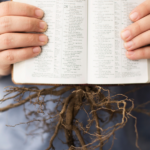
The Trellis and the Vine: The Ministry Mind-Shift that Changes Everything by Colin Marshall and Tony Payne is a must-read for church leaders. The book is built around the idea most churches are a mixture of trellis and vine.
The basic work of the church is to preach the gospel and see people converted, transformed, and brought to maturity. That’s the work of planting, watering, fertilizing, and tending the vine.
However, just as some sort of framework is needed to help a vine grow, so churches need structure. All churches have some kind of trellis that gives shape and support to the work. As the ministry grows, the trellis needs attention.
Marshall and Payne press the question: What’s the state of the trellis and the vine at your church? Perhaps trellis work has crowded out work on the vine, leaving leaves less green, flowers less profuse, and a lack of new shoots.
The church tends toward institutionalism. When the focus shifts toward preserving traditional programs, the goal of discipleship is lost.
Bolsinger on leadership
Tod Bolsinger has become one of the most helpful contemporary voices on adaptive leadership.
Canoeing the Mountains reminds leaders that yesterday’s maps rarely solve tomorrow’s problems, while Tempered Resilience argues God often shapes leaders through prolonged seasons of uncertainty rather than immediate success.
Bolsinger also has four wonderful little—they truly are little—books in the Practicing Change Series.
Leadership is never mastered
Leadership is never mastered in the latest conference or newest book. In fact, leadership is never mastered at all. It is learned through difficult conversations, intense conflict, and seasons of trial. Those fires forge leaders. Books help us learn from leaders who have survived a flame or two.
Jeff Gravens is pastor of First Baptist Church in Sulphur Springs. The views expressed in this opinion article are those of the author.








We seek to connect God’s story and God’s people around the world. To learn more about God’s story, click here.
Send comments and feedback to Eric Black, our editor. For comments to be published, please specify “letter to the editor.” Maximum length for publication is 300 words.