


Perhaps you didn’t know it, but if you’ve read your English Bible recently, there was cause for celebration.
This year, 2026, is the 500th anniversary of the first New Testament translated directly from the Greek and printed in the English language.
Have you ever thought about how your English Bible came to be? It’s a story full of sacrifice, perseverance, intrigue, and betrayal. It’s a story of one man’s faithful obedience to God that is still bearing fruit today.
Tyndale’s time
William Tyndale was born in Gloucester, England, in the 1490s. It was the age of Henry VIII, Copernicus, Michelangelo, and Magellan.
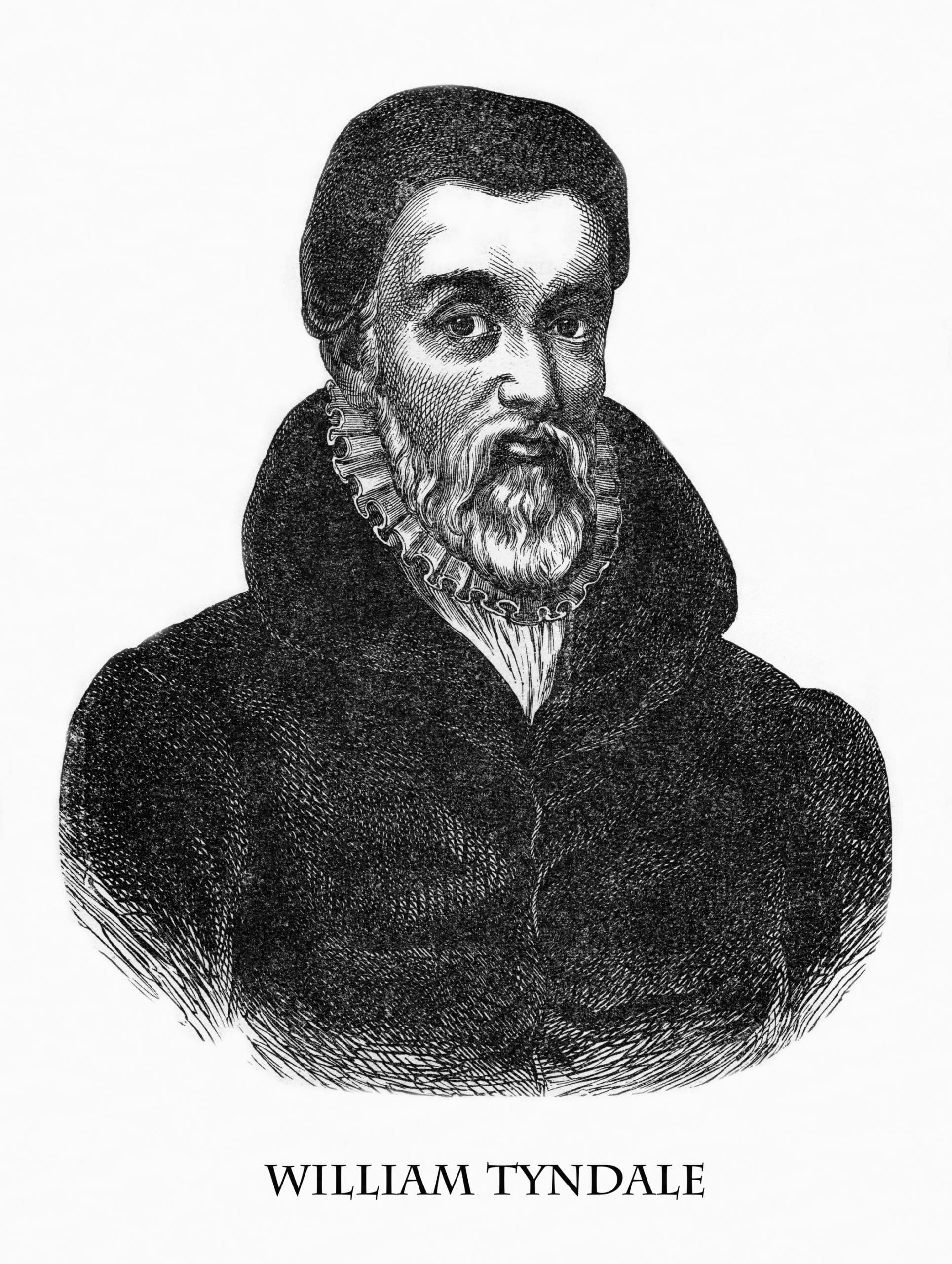 Educated at Oxford, where he received his master’s degree and ordination as a priest, Tyndale then moved on to Cambridge to study Greek. The study of Greek had recently been stimulated by the ground-breaking work of Desiderius Erasmus, who published his Greek New Testament in 1516.
During his studies, Tyndale discovered not only a passion for the Scriptures, but also a deepening conviction that the Church desperately needed reform. At the very same time, a German monk named Martin Luther nailed his 95 theses to the church door in Wittenberg, Germany. The Protestant Reformation had been ignited.
Joining the conviction of Luther and other reformers, Tyndale contended the Bible must be recognized as the sole authority for faith and practice in the Church. He preached salvation comes by grace alone through faith in Christ. He openly criticized Church leadership for straying far from these foundational truths.
He judged that much of the Church’s leadership behaved more like lords of the Church than shepherds of Christ’s flock. Truth be told, most bishops and priests were woefully ignorant of the Scriptures. Their obedience was to Church tradition and the pope.
Tyndale’s call
This provides context for one of Tyndale’s most famous quotes. In his Book of Martyrs, John Foxe recorded Tyndale’s debate with a “divine.” The cleric became so frustrated with Tyndale’s constant references to the Scriptures, the great doctor shouted, “We were better to be without God’s law than the pope’s!”
Sign up for our weekly edition and get all our headlines in your inbox on Thursdays
Tyndale replied with equal fervor: “I defy the pope and all his laws! If God spare my life, ‘ere many years I will cause a boy that driveth a plough shall know more of the Scriptures than thou dost.”
With those words, Tyndale’s calling was clarified and his destiny foreshadowed.
Tyndale was determined to create a faithful translation of the Bible into English. His fervent hope was that anyone in England, whether noble or common, could either read the Bible for themselves or hear it read and understand it.
Such free access to the word of God would hopefully lead them to a saving knowledge of Jesus Christ and teach them how to order their own lives and society according to Christ’s teachings.
Tyndale’s trouble
But there was a major problem with Tyndale’s dream. Translation of the Bible into any language without a licensefrom a bishop was illegal in England.
Church law established the Latin Vulgate as the official translation, and translating it into any common language without authorization was a crime. The reason for this, according to Church authorities, was the need to preserve accuracy and leave the teaching and preaching to those who were learned and could handle the Bible correctly.
The reformers’ perspective was that keeping the Scriptures out of the common language of the people preserved power and protected the status quo. Yet whatever control the Church had maintained up to the dawn of the 16th century was fast disappearing because of one formidable tool—the printing press.
In 1523 Tyndale went to London to entreat the bishop there to give him a license to translate and print an English Bible. His request was denied. His criticism of the Church was getting him into hot water. Church officials were reluctant to associate with him. Some wanted him tried as a heretic.
So, Tyndale quietly slipped out of his beloved England in 1524 and traveled to Germany, where he hoped he would have the freedom to finish his translation and have it published. He was constantly on the run, hiding from the spies of his enemies who wanted him arrested. But Tyndale could not be swayed from his mission. He took the risks and trusted his life to God.
Tyndale’s trial
After less than a year in Wittenberg and barely escaping arrest in Cologne, Tyndale eventually made his way to Worms, where he found a printer willing to work with him.
In 1526, Tyndale’s first edition of an English New Testament was published. Some 3,000 copies were printed in a small format and then smuggled back into England with the help of German merchants willing to hide them among their shipments of cloth and wheat.
Tyndale immediately began working on another edition of his New Testament, which he published in 1534 in Antwerp, Belgium, while also working on his translation of the Old Testament.
He never finished the Old Testament. A spy named Henry Phillips finally located Tyndale. He pretended to be an admirer of Tyndale’s work, earned his trust, and then betrayed him to the authorities on April 21, 1535.
By the time of his trial in August 1536, Tyndale had been in prison for 501 days, and he was very ill. He knew he had finished his course. His conviction was certain despite his efforts to defend his ideas and actions in many letters with Church officials and people of influence, including Thomas More.
Not only had he translated the New Testament into English and published it, but he had also published other books such as The Obedience of the Christian Man and The Practice of Prelates, treatises openly critical of the Roman Catholic Church.
He was convicted of heresy in August 1536, and in early October 1536, he was strangled at the stake, and his dead body burned. According to Foxe’s Book of Martyrs, Tyndale’s last words were, “Lord, open the King of England’s eyes.”
Tyndale’s vindication
That prayer was marvelously answered. In September 1538, Henry VIII, who had now separated the Church of England from Rome, ordered an English Bible be placed in every parish in the land. Called the Great Bible, it contained the whole of Tyndale’s New Testament plus the portion of the Old Testament he had completed before his death (Genesis to Chronicles).
Virtually all of Tyndale’s translation work was also incorporated into the Geneva Bible of 1560. The King James Bible of 1611 utilized about 90 percent of Tyndale’s New Testament and 70 percent of his Old Testament work.
Scholars have said Tyndale was the head and heart of the English Reformation.
How might we honor him on this 500th anniversary of his monumental work? I know what Tyndale would say. Read God’s Word and put it into practice—for your own good, for the good of others, and for the glory of God.
Deirdre LaNoue holds a Ph.D. in Religious Studies with a concentration in church history from Baylor University. The views expressed in this opinion article are those of the author.








We seek to connect God’s story and God’s people around the world. To learn more about God’s story, click here.
Send comments and feedback to Eric Black, our editor. For comments to be published, please specify “letter to the editor.” Maximum length for publication is 300 words.