



Celebrating 140 years of the Baptist General Convention of Texas, annual meeting speakers kept legacy, unity amid diversity in a changing world, and being a convention of welcome top of mind for messengers.
In her closing address, children’s pastor of Trinity Baptist Church in San Antonio and BGCT President Debbie Potter, urged Texas Baptists to continue to be “a convention that makes room.”
Potter noted in thinking about Texas Baptists’ 140-year story, she couldn’t help thinking of her own story and how unlikely it was for her to be serving as BGCT president today.
“You see, I was not raised Baptist. I did not grow up in a Baptist church. I did not grow up in a Baptist family, and I did not attend a Baptist university,” she explained.
She did grow up as a “preacher’s kid,” though, and loved watching her father pastor, she recalled.
Her family had a history spanning generations in another denomination until a painful political scandal involving her pastor-father caused them to become denominationally homeless in the late 1980s.
Her father’s removal impacted the entire family, Potter noted, saying, “At the college that I went to, I wasn’t welcome anymore.”
Though it was a dark, and painful time for her and her family, her parents had taught her, “No matter what happens in life, God is in control.”
They trusted God, but in this time of “humiliation” Potter’s family struggled. They knew they needed to be in church hearing from God, but going to church was difficult. They’d sneak in the back after the music started, listen to the pastor, and then leave.
Sign up for our weekly edition and get all our headlines in your inbox on Thursdays
“I knew I wanted to hear God’s word,” Potter said, “but didn’t know if I wanted to be around the people of God’s word very much, after what happened.”
She said, “For about 10 years, we were like Moses. We wandered in the wilderness from church to church trying to find a place. … Then, in the late 90s, we walked into a Baptist church.
“And when we walked into that Baptist church, something happened. And it became our church home,” Potter said, noting within a year of being there she felt called to ministry.
“I walked through a door. I was accepted, by Baptists. Now I have been serving children for over 30 years in Baptist churches, and I am grateful to God,” Potter said.
She acknowledged her journey to being president of the BGCT may not have been what anyone might expect, “including me,” she said.
“Yet, somehow along the way, God opened a door, and you welcomed me through it.” Potter said she wanted Texas Baptists to know what an honor that has been, noting as a woman in ministry whose journey has had “twists and turns,” she’s never taken the opportunity to serve lightly.
Potter said she prays Texas Baptists remain a convention that “welcomes people, encourages people, makes room for new voices, and recognizes that God calls people from many different backgrounds to serve his kingdom,” noting, “God has a way of calling we might never expect.”
Potter continued, “I am grateful, not that you just gave me a place at the table, but that you made me feel I belonged at the table,” suggesting perhaps “that is one of the greatest gifts we can offer one another as Texas Baptists—not simply a place to sit, but a place to belong, a place to serve, a place to use our gifts, and a place to be part of something bigger than ourselves.”
The legacy of Texas Baptists
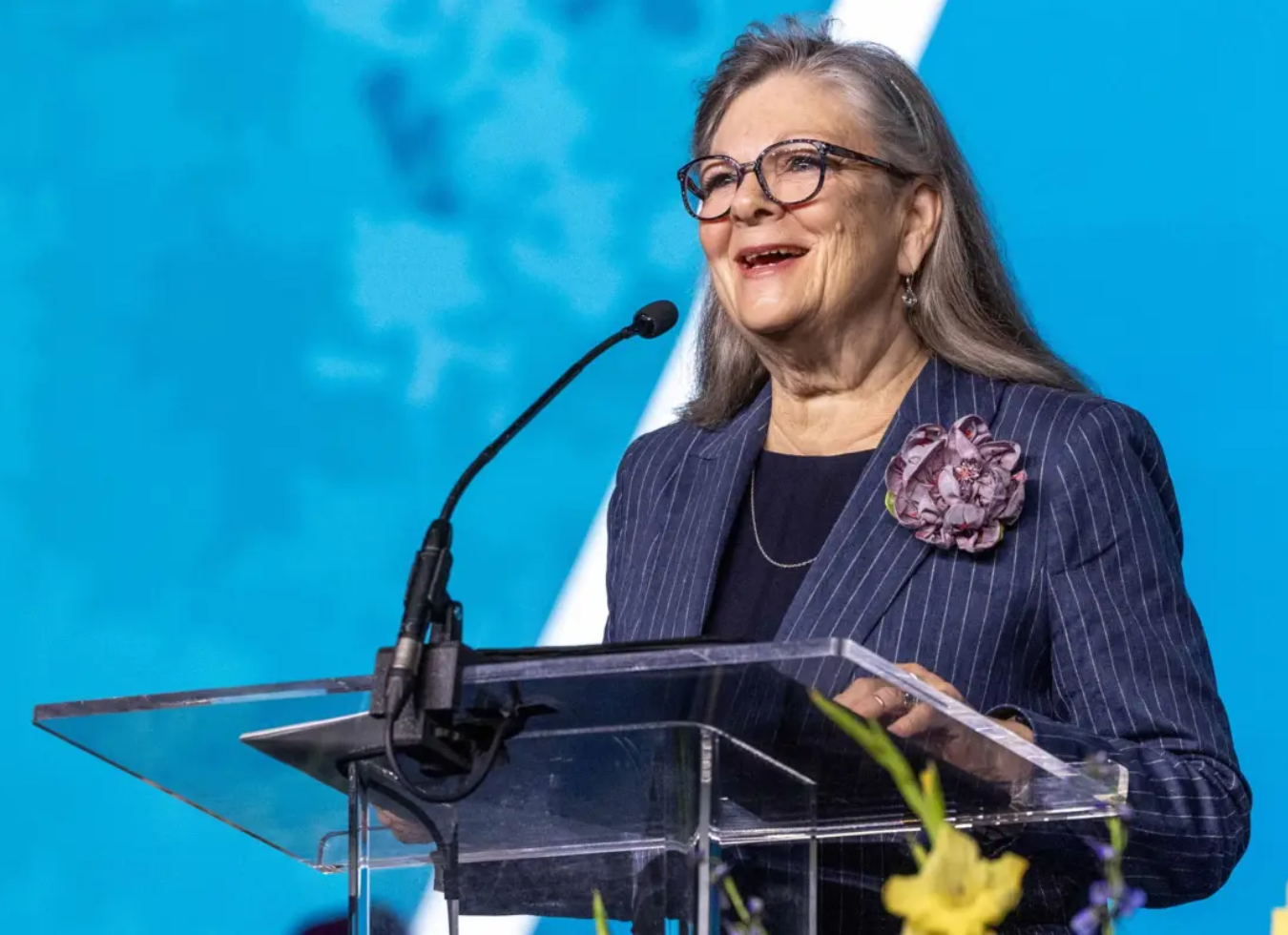
Karen Bullock, retired professor of Christian history and director of the Doctor of Philosophy program at B.H. Carroll Seminary, traced the history of Texas Baptists from their earliest beginnings to the present time.
Bullock pointed out some of the annual meetings’ attendees likely could trace their own family histories back to great-great grandparents who attended the first joint session of the Baptist General Convention of Texas, held in Waco in June 1886.
Texas Baptists have chosen to serve God together since then, she said, while noting “the brothers and sisters were joining hands and hearts” long before the convention was formed.
As early as 1820, “we have sermons,” Bullock said, citing the preachers and sites of these early Baptist gatherings. The year 1837 saw the founding of the first missionary Baptist church in Texas at Washington-on-the-Brazos, a church which continues to this day, “and you can go to church there, too.”
The first Black Baptist church, now known as Avenue L Baptist Church, was formed in Galveston in 1840, she noted.
In the years preceding statehood in 1845, Bullock said Texas Baptists “played a huge role” in Texas’ formative actions. In the blacksmith shop of Baptist Noah T. Byars, “the Texas Declaration of Independence and the Constitution of the Republic of Texas were written,” she said. And, Texas President Sam Houston became a Baptist in 1854 and joined the church in Independence, where he carved his initials in the pew.
Baptists were experiencing an “explosion of growth” when Texas became a state, Bullock said—forming associations, newspapers, mission societies, prep schools, and colleges, and holding convention meetings.
She highlighted the contributions of Black Baptists throughout the cooperative enterprises of Texas Baptists, noting enslaved Black Baptists attended in 1848, the first meeting of the Baptist State Convention in Anderson, and contributed financially to mission causes in China and Africa.
In 1868, the Baptist General Association was launched in Chatfield.
After Reconstruction, four state conventions remained, two newspapers, and two educational ventures—Baylor College and Waco University—that competed for faculty, financing, and loyalty. All these Baptist entities “united in Waco on June 29, 1886, and that’s what we celebrate today.”
Bullock asserted: “With wisdom and vision, Baptists intentionally laid aside personal preferences and strivings, in order to join their resources to form what is called now, today, the Baptist General Convention of Texas—its name taken from those two competing conventions—convinced that they could do more united than they could separately.”
Additionally, the colleges merged to become Baylor University at Waco.
Bullock detailed numerous achievements of Texas Baptists through the years since the establishment of the BGCT,making specific note of the contributions of Black and Hispanic Baptists, as well as the contributions of women.
Disagreements—at times severe and on one occasion involving a pistol—arose and divisions threatened to derail the mission. Texas Baptists “cannot claim always to have been unified,” she asserted, yet Texas Baptists “have remained fairly good stewards of our core biblical beliefs and commitments.”
Texas Baptists aren’t primarily conventions, Bullock noted, or even churches: “They are individuals. They are believers in Jesus Christ, called out ones to fulfill the Great Commission and to love their neighbors.” None of what the convention accomplishes could be done without the individual Baptists who give, volunteer, and serve, Bullock said.
“Baptists, historically, have held that Jesus Christ is head of the church, so these dear Baptists, generations of them, have served his causes and his mission across this great state in both large—institutional—and small ways,” she pointed out.
Bullock listed out the great diversity among Texas Baptists—from language, ethnic identity, economic status, rural or urban, blue and white collar—asserting Texas Baptists don’t only acknowledge the diversity but embrace it.
The legacy Texas Baptists stand on is powerful, she said, but “our past is here with us, all around us. It has made us who we are. … It takes great courage and great effort to confront ourselves. … The possibilities ahead are endless.
“So then, who shall we be, my friends?” she questioned.
God “calls us to love him and to love our neighbors, and to do it as one. Why?” she asked, continuing: “So that the world may know that we are his disciples.”
Confident that he who began the good work will carry it to completion, she beseeched the Lord, “Make it so in our generation, too.”
The future of Texas Baptists
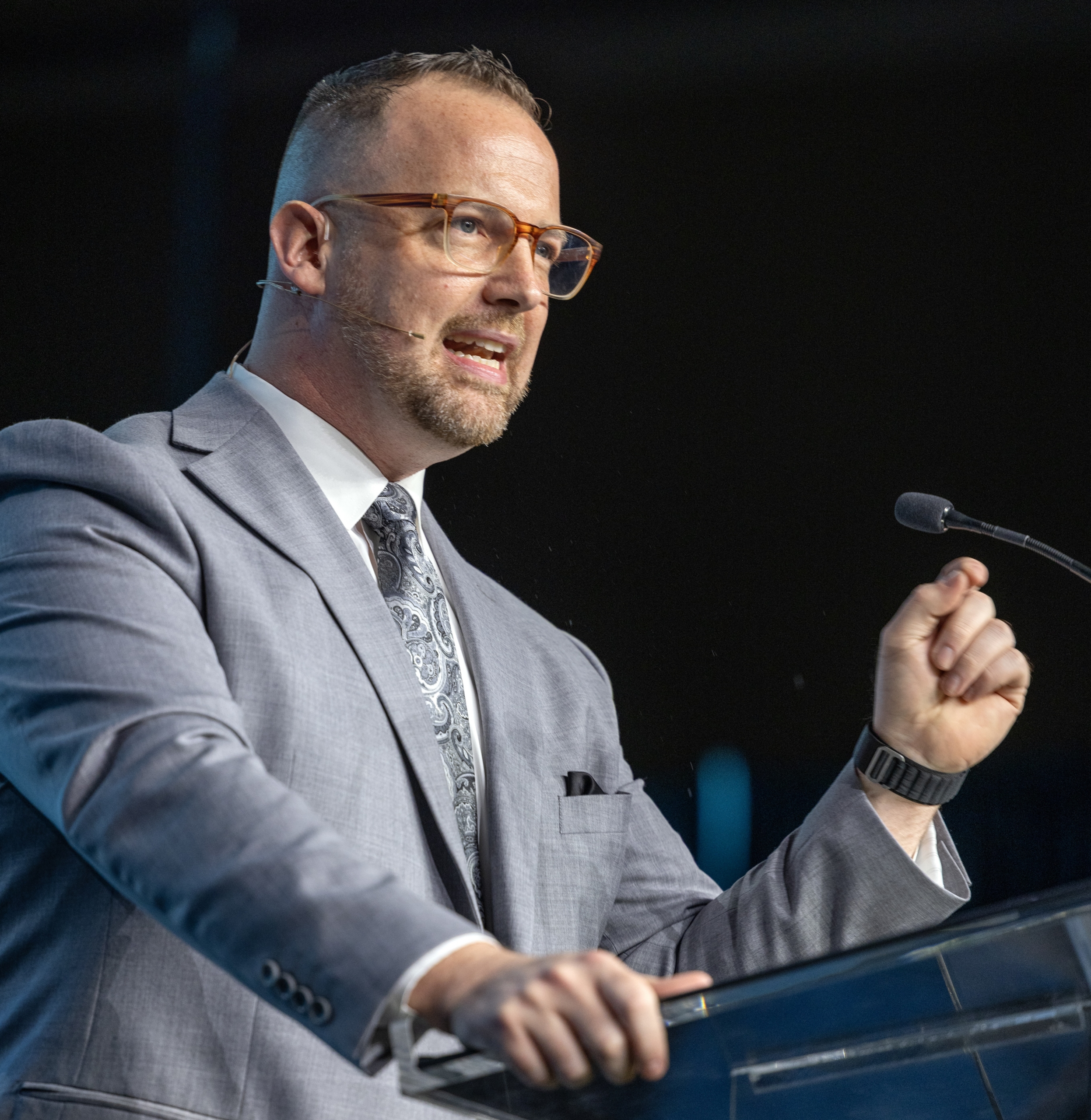
Joseph Adams, BGCT first vice president and pastor of First Baptist Church in Mount Pleasant gave the opening message. He warned messengers not to believe Texas Baptists’ 140-year history means “we’ve got this thing on lock.”
On the contrary, he noted, modern life is in a constant state of change. “We do not” have things under control, he asserted.
Adams urged messengers to think of future Texas Baptists 150 to 200 years down the road. “What will they be looking at upon [sic] what we have left them?” he asked.
“I pray they don’t just simply say they had beautiful buildings; they had impressive budgets; they had wonderful convention meetings,” he continued, noting the possibility of preserving buildings while “los[ing] the burden” and of maintaining programs while “neglect[ing] the people that are involved.”
Adams said he prayed future Texas Baptists would look back on today and say, “They loved Jesus, they loved people, and they never stopped making disciples for the cause of Christ.”
He called messengers to live out the Great Commandment found in Matthew 22, reminding them, before they are pastors, church leaders, or whatever role they hold, they are to be “followers of Jesus Christ” who love the Lord their God “with all, not part” of their hearts, soul, and mind.
“He deserves preeminence over every single one of our lives. Where does God rank [for you]?” he asked.
Adams asserted, “Our first calling is not to a position. It is to a person,” and that “should be our distinguishing mark.”
Pointedly, he asked Texas Baptists to check whether they are loving God or themselves, and whether they are serving God or themselves.
Acknowledging differing on secondary issues is a Baptist trait, Adams urged Texas Baptists not to get sidetracked.
As Baptists, “You’re not going to tell me what to do, and I’m not going to tell you what to do. But we’re going to try to tell each other what to do. Amen and amen? And if you don’t do it my way, you’re wrong,” he teased, noting that it should not be the differences that bring Texas Baptists together.
Rather, Texas Baptists should unite around loving Jesus Christ so much, “we want to see his mission go forward.”
In closing, Adams noted, “the greatest thing we can leave behind is not a convention that remembers our name, but a generation that knows his name.”










We seek to connect God’s story and God’s people around the world. To learn more about God’s story, click here.
Send comments and feedback to Eric Black, our editor. For comments to be published, please specify “letter to the editor.” Maximum length for publication is 300 words.