Connect360: The Messiah Is on the Scene

  • Lesson Five in the Connect360 unit “God Fulfills His Promises” focuses on Luke 4:14-30

Jesus began by declaring, “The Spirit of the Lord is upon me” (4:18).

His audience understood the Holy Spirit descended upon individuals for a limited time, temporarily providing leadership, power or an ability.

For example, Gideon saved Israel by the Spirit’s indwelling (Judges 6:34–7:25), and the Holy Spirit left Saul following his rebellious disobedience (1 Samuel 16:14).

As they listened, Jesus’ friends and neighbors probably enjoyed the recitation, perhaps even acknowledging a similarity between Isaiah’s passage and Jesus. After all, he had a growing reputation as a rabbi from God (John 3:2).

Continuing the reading, Jesus declared Isaiah’s purpose: proclaiming “good news” (cf. the same root word in Luke 2:10).

Many Old Testament prophets foretold hardship; good news was sometimes unusual, but quite welcome.

Those to receive the good news are the “poor,” but not limited to those in financial or social difficulty.

The word is derived from the Greek ptosso, meaning “to crouch,” whether from fear or distress.

Meanwhile, Jesus’ audience may have mentally noted the “poor” they knew personally.

Jesus continued: “He has sent me to proclaim liberty to the captives.”

“Captive” can be interpreted as “prisoner of war,” or one “captured at spear point.”

Jesus’ audience certainly identified with this part of the message since they perceived themselves as prisoners of Roman occupation.

This passage blessed them with its timeliness, and they probably nodded vigorously in agreement, yet missed the deeper truth: humanity is imprisoned by sin (Romans 6:20; 7:23), something far more detrimental.

Isaiah’s message also promised “recovering of sight to the blind.”

The Gospels attest to specific moments later when Jesus healed physically blind eyes (Matthew 9:27–30; 12:22; Mark 10:46–52; Luke 7:22; John 9:1–7), and he may already have healed some with blindness since Matthew 4:23 reports, “He went throughout all Galilee … healing … every affliction among the people.”

Perhaps his audience marveled at the similarities between Jesus’ publicized acts and this ancient passage.

But it’s doubtful they recognized the blindness mentioned here could be the inability to “see” sin the way God does. Jesus knew he would give sight to those who can’t find their way in the darkness of depravity.

Isaiah’s next announcement was to liberate (i.e. “forgive” or “release”) the “oppressed,” a word connoting a bruised or broken heart or body (e.g. grief, depression, or demon possession).

However, he wasn’t merely proclaiming liberty, he was providing liberty.

Lastly, Isaiah’s passage determined: “to proclaim the year of the Lord’s favor” (Luke 4:19).

This harkened to the year of jubilee described in Leviticus 25:39–41, wherein every fifty years, servants of indebtedness should be freed and debts erased.

To learn more about GC2 Press and the Connect360 Bible study series, or to order materials, click here.


Connect360: At Last

  • Lesson Four in the Connect360 unit “God Fulfills His Promises” focuses on Luke 2:21-38.

“Are we there yet?”

I imagine many have heard those words from the backseat of a car traveling down the road on a long trip. We have uttered this lament from time to time, too.

The greater the destination, the higher the anticipation of the arrival.

A family member who lives far away, a vacation to a beloved theme park, or even just the trip back home can seem so far away we feel like we will never arrive.

With the advent of mobile technology, car rides have changed—at least as far as entertainment is concerned.

Gone are the days of staring out the window watching the world fly by.

Children and adult passengers have endless entertainment at their fingertips now.

Perhaps they help the time pass by more quickly than when we were without tablets and screens with internet connection.

Simeon and Anna are pictures of waiting. Both are awaiting the arrival of something, or someone, very special.

Do they know exactly what the coming of the Savior will be like? Probably not.

They are devoted Jews, faithful in following the Torah and seeking God.

They know God can and will bring salvation. They know they are not there yet. There is still brokenness, pain and death.

Nevertheless, they watch and wait. When will the curtain come up on the stage of the world? When will the main act begin? When will the Lord return to Israel as he promised?

They know who has made the promise. They know where it will take place. They just don’t know when.

Then one day … at last! A young couple walked into the temple with a baby boy.

Jesus’ parents, along with Simeon and Anna, offer us an example of how God’s people should respond to his work in the world.

Mary and Joseph were faithful to obey God’s commands from the Law to the angel’s words to them.

Simeon and Anna never gave up hope but continued in a life of intercessory prayer for God to begin his saving work.

Jesus was presented at the Temple in accordance with the Law.

And at the end of Luke’s gospel, Jesus would present himself at the Temple again to be the sacrifice for the redemption of all who are under the Law—for all creation (19:45-48; 21:37-38).

To learn more about GC2 Press and the Connect360 Bible study series, or to order materials, click here.


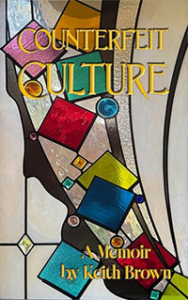
Review: Counterfeit Culture: A Memoir

Counterfeit Culture: A Memoir

By Keith Brown (KB Books)

How can intelligent, well-educated, committed Christians striving to walk deeply with God be drawn into a religious culture that regulates every aspect of life?

How can they bring themselves and their children into a community that discourages education beyond basic homeschooling and controls what to wear, what to eat, how to behave, how and where to birth children, and which ones can stay and who must leave when they turn 18?

Keith Brown answers those questions in Counterfeit Culture: A Memoir, written after she and her lawyer-husband left a religious community after nearly 30 years.

The author starts Part One with her journal entry the night before they would leave after giving Homestead all they had—their money, their land on the Brazos River, their legal and business skills, their parenting freedom, their alone time with God, and so much more.

The LSU graduate then begins at the beginning with her challenging childhood outside the church, her college years, her marrying a CPA-lawyer and strong Christian man and their life in Dallas.

The grooming begins when Curtis Brown writes a resolution on parental rights and home schooling for the platform committee at the 1984 Republican State Convention in Austin and is approached by a leader of Emmaus Christian Fellowship.

The couple’s longing for a church home, Curtis’ work with Christian political leaders, the idyllic description of what was later renamed Homestead Heritage and a five-year period of “homogenized” courtship ultimately lures them to turn over all of their assets to Fellowship and move to Waco.

Part Two details changes needed to fit into the community of “order + honor = the patterns of God.” These unwritten patterns regulate “lifestyle, education, entertainment, boy/girl relationships and family structure” but allow leaders to live by different standards, to meddle in families and to create a culture of “tattling” by family and friends that causes public discipline and fear.

In retrospect, the mother of nine expresses regret at not standing up for her children, especially the cruelty to their second son Jonathan who wanted to be a Marine and courageously left his family to fulfill his dreams and ultimately helped give the Brown’s the courage to leave.

In Part Three, Keith takes the reader through unveiling the truth, the differing treatment of their children and leaders’ children, the takeover of their sons’ horseback riding business and one of their children’s birthday parties, the disfellowship of one son without telling him, the rage when Curtis attempts to help with serious financial and business issues and the shunning that follows.

The heartbroken mother tells how one daughter left after Brother Tzafrir said it wasn’t God’s will to marry the man she loved, and her parents missed her wedding day. But among other things, God gives Keith a powerful dream showing how “Jesus Saves” and an encounter with a woman who offers the only assurance she received in 30 years that Jesus loves her.

Part Four paints a picture of “Life After Bondage” and a powerful testimony of God’s love, grace and his still small voice in Keith’s heart. Finally, gone is the fear, shame, blame and isolation that provided her no time to think or meditate or become the person he called her to be.

In Counterfeit Culture: A Memoir, Keith Brown pens a well-written, quick read that presents an honest, heart-felt, heart-wrenching, heart-written, behind-the-scenes look at what can happen when good people fall prey to manipulation, man-made rules, false doctrines and authoritarian leadership. Yet, at its very heart, the Brown’s story is about redemption and God’s grace and faithfulness.

I highly recommend the book, especially to anyone who has a friend or loved one involved in or considering such a counterfeit culture.

Kathy Robinson Hillman, former president

Texas WMU and Baptist General Convention of Texas

Waco


Review: When I Am Afraid

When I Am Afraid: Discover4Yourself, Inductive Bible Studies for Kids

By Kay Arthur and Janna Arndt (Harvest House Publishers)

If getting young people involved in Bible study proves no easy task, finding a topic that meets a deep need in all children—and adults—proves even more arduous. But we would expect nothing less from the writing duo of the late Kay Arthur and Janna Arndt.

In one of Arthur’s final offerings, When I Am Afraid uncovers a deep need in everyone and directs readers to explore for themselves God’s answers and directions regarding fear.

Through Bible-based games and activities, 8- to 12-year-olds will dig into God’s word for themselves. They will peruse short passages, fill in blanks, and provide thoughtful, written responses to questions about fear.

The young Bible student explores “Camp Braveheart”—symbolizing time spent in the biblically based, kid-approved vacation of God’s word. The wisdom of seeing fear and insecurity from God’s perspective plays out in a summer camp theme.

Each of the six chapters consists of a unique, week-long Bible study. Key passages direct older children and preteens to take courage in the realization of Jesus’s presence. They are encouraged to cry out to him, as he holds all power and authority.

Conversely, Chapter Four points to the fear of the Lord as the beginning of wisdom. A definition of what that fear looks like, as well as why God deserves such fear crystalizes. The fact that we ought to fear God and not man turns up here. But rather than merely reading about this, the student’s own age-appropriate Bible investigation reveals the fact.

The learning, comfort and fun of each chapter revolves around activities particularly appealing to children. This includes the presentation of the gospel for young readers who do not know the Lord. Whatever the child’s spiritual state, crossword puzzles, fill-in-the-blanks, and an occasional drawing compel the individual to draw deeper into the text, soothing the fearful soul with the balm of God’s word.

Weekly studies direct young people to consider their reasons for fear. Then each reason—attached to a passage of Scripture—leads to biblical exploration in God’s word. Scriptural guidance unfurls, as the comforting canvas of the Bible raises like a tent over the young Bible camper. Strength and courage emerge as the character qualities that replace fear. Scripture outlining and games direct each hiker to that end.

Parents who enjoy Precept-Upon-Precept’s solid Bible studies and wish the same for their children will find just that with Kay Arthur’s Inductive Bible Studies for Kids. Oh, that we could all say with the apostles: “I have no greater joy than to know that my children walk in truth” (3 John 4, KJV), and “that from childhood [they] have known the sacred Scriptures” (2 Timothy 3:15, HCSB). When I Am Afraid furthers this goal.

Bethany A. Noland

Rockwall


Connect360: Jesus’ Birth and Ancestry

  • Christmas Lesson in the Connect360 unit “God Fulfills His Promises” focuses on Luke 2:4-7; 3:23, 31-34, 38.

Bethlehem is the place where God came to us.

It is a place of mystery and wonder—far removed from the 21st century world we live in.

It is also a place so ordinary it can seem close to everyone.

Angels appear to ordinary people—shepherds. A government gives orders and sets up laws that must be obeyed. A mother and father marvel at the gift of their first-born, a son.

Mary and Joseph got to Bethlehem as a family going about ordinary life.

The magi in Matthew’s gospel got to Bethlehem by a special knowledge and learning about the stars and planets.

The shepherds got to Bethlehem by way of a dramatic heavenly visit.

Whatever path we take to Bethlehem, the child of the manger invites us all. Consider again this incredible story and allow the Spirit of God to herald the good news in your own life.

The incarnation of Christ at Christmas—the Creator becoming one of the created.

No other world religion can make this claim.

Due to their flawed belief systems, other religions teach ways for humanity to get to God or to appease God. We know all our good works, piled one on top of the other, could never get anywhere near God or what he requires of humanity.

So, God had to come to us. Jesus is not a person in whom humanity can take any pride or credit. Jesus is the person to whom we owe everything, and when we offer him everything, we find we lose nothing.

This God-becoming-human talk can be difficult. The early church struggled with what the incarnation meant.

Even today, this truth of our faith remains a mystery we cannot escape. Nevertheless, the incarnation is a core part of our identity as Christians. We must come to terms with and be able to communicate this truth as clearly as possible.

In the fourth and fifth centuries, the church, through ecumenical councils, penned beliefs about the Trinity and about Christ that have become the foundational pillars of our understanding about God and his relationship with people.

The Council of Chalcedon in A.D. 451 had the primary purpose of combating the turmoil and controversy rampant in the church relating to the person of Jesus Christ.

Fast forwarding 1,560 years since the Council of Chalcedon, people today still struggle with who Jesus was and how it all worked together.

Historians and people today never seem to argue or doubt Christ’s humanity or existence; just his nature seems open for debate.

What came out of the Council of Chalcedon in A.D. 451 continues to be the way we believe and talk about the incarnation of Christ.

The word the bishops, monks, and church leaders used to describe Jesus from then on is a hypostatic union.

Union refers to the joining of the two natures—hypostatic refers to the Son of God, the logos, who became human through the work of the Holy Spirit in Mary.

Therefore, we have a perfect union between human and divine—one integral, eternal, divine person. The incarnation is just that simple and complex at the same time.

Nevertheless, this is what the world unknowingly longs for.

Jesus the incarnate Son of God is who we must accept to be Christians.

To learn more about GC2 Press and the Connect360 Bible study series, or to order materials, click here.


Equip: Resources on the Book of Micah

The prophet Micah ministered in the southern kingdom of Judah in the turbulent decades at the end of the eighth century B.C., about the same time as Isaiah and just after Amos and Hosea had been preaching in the northern kingdom of Israel.

In the aftermath of Israel’s fall to Assyria, Micah was preaching to a congregation trying to accommodate an influx of refugees and struggling to understand we can’t love God faithfully without loving our neighbors. Micah’s teaching about true worship continues to have deep relevance for the church today.

Broadly speaking, the book alternates between judgment and salvation, with warnings dominating Chapters 1–3 and promises dominating Chapters 4–7. Much of the book takes the form of a court case with testimonies, accusations and defenses from all parties.

The poetry is full of word plays—you might need to pull out an atlas for these—and vivid images, including comparing leaders who abuse their authority—whether through action or inaction—to cannibals.

The theology of justice, righteousness, human leadership and God’s rulership is rich, and the hope of restoration and peace is inspiring.

Good resources can help sift through the language, history and poetry, so we can hear the message of Micah more clearly and more faithfully preach and teach this important book in our own contexts. Here are a few I recommend.

New International Biblical Commentary: Preaching from the Minor Prophets and Minor Prophets I by Elizabeth Achtemeier

Elizabeth Achtemeier was one of the great biblical preachers of the last century. She is the source of several aids for preaching Micah and other Old Testament texts well.

Her book on Preaching from the Minor Prophets can be a great starting point, because it gives very practical help for sermon writing—everything from recommended commentaries and background information on the biblical books, to sermon title ideas, to discussion of important theological themes.

As you figure out where you need to dig deeper, her commentary in the New International Biblical Commentary series provides passage-by-passage exegesis of a biblical book that, as Achtemeier says, highlights the hope God’s kingdom will come on earth and challenges us to be part of God’s work in the world.

Apollos Old Testament Commentary: Obadiah, Jonah, and Micah by Elaine Phillips

This commentary gives a more intense analysis of the biblical text, beginning with a translation and notes on the Hebrew.

Phillips carries the historical context and meaning of Micah forward, however, considering how it developed in the rest of Scripture and in the life of the church.

Significantly, she also draws out the relevance of Micah’s placement in the canon—asking, “What difference does it make that it comes after Obadiah and Jonah?”

Her attention to the whole of Scripture—Old and New Testament both—is helpful as we think about the call to preach “the whole counsel of God.” None of these books stands alone.

International Theological Commentary: Micah: Justice and Loyalty by Juan I. Alfaro

Micah is a prophet who compels us to consider—and love concretely—those who are vulnerable, “other” and outside.

In many ways, white Westerners who enjoy the many privileges of freedom, democracy and a stable economy are not well-suited to understand the prophet fully. We need to read the book with our Christian brothers and sisters in other contexts. This commentary helps us do just that.

Juan Alfaro guides us through the Micah’s historical and literary aspects, and he does so with the perspective his ministry background in the Philippines and with the Hispanic community of San Antonio gives him.

This commentary will challenge you to hear Micah with new ears and to live out the challenge of Micah 6:8 more faithfully.

And if you want more

Micah is such a rich book. So, perhaps it is unsurprising so many wonderful resources exist that help us study it and proclaim it more faithfully. I’ve tried to reflect a range of affordable and accessible resources here, but I could have gone on and on with my list.

For example, Stephen G. Dempster’s Two Horizons Old Testament Commentary on Micah includes careful exegesis and theological reflection to draw out the connection between God’s word to Micah’s earliest audiences and God’s word to the church today.

James Nogalski’s commentary in the New International Commentary on the Old Testament series dives even deeper into the language and context of Micah, while also exploring the formation of the book and its relationship to the other Minor Prophets, also known as “the Book of the Twelve.”

For a look at Micah from a feminist angle, you could try Julia O’Brien’s volume in the Wisdom Commentary series.

Gary Smith’s NIV Application Commentary covers Micah alongside Hosea and Amos from a conservative evangelical perspective and with lots of attention to how God continues to speak words of rebuke, comfort, forgiveness and hope through these ancient prophetic voices.

My encouragement to you is to read Micah—as I hope you will all the books of the Bible—with both the Holy Spirit and with people who are different than you are. God created the world to be a tremendously varied place, and sometimes it’s the shock of varied perspective that God uses to illuminate the message of Scripture.

Rebecca Poe Hays is associate professor of Christian Scriptures (Hebrew Bible/Old Testament) at Baylor University’s Truett Theological Seminary. An ordained Baptist minister, she has served congregations in Tennessee, Alabama and Texas. She is married to Joshua Hays, who serves as associate pastor of First Baptist Church in Waco, and is the mother of two young children. The views expressed in this resource article are those of the author.


Review: In the Low: Honest Prayers for Dark Seasons

In the Low: Honest Prayers for Dark Seasons

By Justin McRoberts & Scott Erickson (Baker Books)

Depression. Anxiety. These are common maladies. No one wants to talk about them. No one wants to experience them.

But what if finding God, finding ourselves, flowering and flourishing as God’s beloved creation could come through depression and anxiety? That still isn’t enough—or shouldn’t be—to make a person want to experience depression or anxiety, but knowing those dark places can be redeemed or even redemptive is a gift of grace.

It’s also a gift of grace to know it makes perfect sense to experience depression or anxiety as a result of being in a world at odds with its Creator. This is how depression and anxiety point to healing. When we are depressed, we are not broken but are responding to what is broken.

Justin McRoberts and Scott Erickson hold open this possibility, McRoberts through his prose and poetic prayers, Erickson through his symbolic art.

In the Low really is as the subtitle states: honest. It also is vulnerable and deep as depression, but far from hopeless or morose. Its many meditative prayers surprise with hope and redemption.

McRoberts shares his own struggle with church hurt and confesses to hurting others as much as others hurt him. He is open about having tried to cope through alcohol. Through his own struggle with what he calls “the Low,” McRoberts suggests it’s not something to be avoided as much as it is an opportunity to see oneself, the world and one’s place in it through God’s eyes.

In the Low is McRoberts’ and Erickson’s third collaborative book on prayer. Prayer: Forty Days of Practice and May It Be So: Forty Days with the Lord’s Prayer were their prior collaborations.

As with their previous books on prayer, McRoberts is a gracious companion in his prose, leading readers into a fresh understanding and appreciation of prayer and God’s desire to communicate and connect with us. Likewise, his prayers paired with Erickson’s symbolic depictions encourage contemplation and evoke a desire to draw close to God.

The book closes with a plea to those ready to throw in the towel: “Please stay.”

Yes, if you are in the Low, please stay. Keep reaching out until you find someone who will listen, who will cry with you, who will pray with you, who will go to God with you. Read this book. And keep reading it.

Eric Black, executive director/publisher/editor
Baptist Standard


Connect360: The Prophet Who Will Prepare the Way

  • Lesson Three in the Connect360 unit “God Fulfills His Promises” focuses on Luke 1:57-80.

It was now Zechariah’s turn to be filled with the Holy Spirit—Mary and Elizabeth had been the primary ones impacted by the Spirit of the living God—to be empowered to give a beautiful prophetic psalm.

He had learned his nine month lesson from doubting God. Then the baby came, and Zechariah was still mute.

Eight more days … perhaps the longest wait of all, before his name was given and Zechariah got his voice back.

Have you ever been on a silent retreat?

I have talked with fellow ministers who have described going away for silent reflection and listening to God.

Most extroverts like me might believe it is impossible to be silent for any period of time.

Years ago, I had a friend give me a journal he told me was a listening journal.

When I would do my daily quiet time, I would try to write something each day I felt God was saying. The result was an intentional practice to allow God to speak into the silence.

By writing down the lessons learned, it allowed me not to only review what the Lord was saying to me, but also gave me the opportunity to share with those around me who needed to hear from the Lord as well.

For Zechariah, nine months of listening to God resulted in the Benedictus.

After Zechariah confirmed his son was to be named John, he could speak again. The people in their village marveled at this and asked, “What then is this child going to be?” (1:66).

Zechariah told us as he began with the faithfulness of God.

God is the one with all the verbs in the passage.

His plan is being put into action. Salvation will come from no one else.

Luke reiterated this in his second volume, Acts, when Peter declared before the Jewish leaders, “Salvation is found in no one else, for there is no other name under heaven given to mankind by which we must be saved” (Acts 4:12).

Like the Exodus generations ago, God had come again to his people to bring salvation.

The song continued that God’s plan began long ago. While Zechariah seemed to be focusing on the restoration of the kingdom of Israel, we hear him reveal God’s goal is not just for a nation, but for a nation of priests that will serve the Lord in holiness and righteousness as he intended with the Israelites (Exodus 19:6).

In the New Testament, we find God offered this calling to the church: “But you are a chosen people, a royal priesthood, a holy nation, God’s special possession, that you may declare the praises of him who called you out of darkness into his wonderful light” (1 Peter 2:9).

To learn more about GC2 Press and the Connect360 Bible study series, or to order materials, click here.


Review: Light in the Shadow of the Valley of Death: Stories of Ukrainian Christians During the War

Light in the Valley of the Shadow of Death: Stories of Ukrainian Christians During the War

Edited by Roman Soloviy (Langham Global Library)

Twelve Ukrainian Christians hold onto light amid a profoundly dark time. The news is not full of updates from the front like it was in the first months of the war between Russia and Ukraine. Even if it was, it wouldn’t carry the light these 12 writers bear in their contributions to a much-needed perspective on what it means to be a Christian during war.

The 12 writers of Light in the Valley of the Shadow of Death: Stories of Ukrainian Christians During the War include a seminary rector, a pregnant mother, theologians, military chaplains, a widow and a pastor.

Their stories begin before Russia’s full-scale invasion on Feb. 24, 2022, and carry through the following days, weeks, months and now years. They are harrowing, raw, heavy and vulnerable. They do not shy away from expressing anger, fear, guilt or shame.

Some fled Ukraine. Some stayed. Some joined the Ukrainian military. For most or all, comfort and security were stripped away, leaving concern only for bare necessities and for family.

Theirs are not thoughts after the conclusion of hostilities or during days of official peace. Nor are they calls from the sidelines or Monday morning quarterbacking. These are reflections from within the crucible.

These 12 testimonies are active, ongoing, in-the-moment questions and experiences without knowing the outcomes. They are written and lived amid hope, not amid hope realized.

The writers do not soft-pedal their questions of God or their pain. In so doing, they challenge comfortable and safe Christianity. They also reveal how strikingly the Ukrainian people continue to do theology, philosophy, biblical study and reflection, ministry and art—even amid war, sharpened and focused by the war.

Some, like Kseniia Trofymchuk, discovered what it means to be a refugee. This experience taught Kseniia: “A person is always more than a checklist of needs” (p. 90). Refugees do have needs, but they are people who are more than their needs.

Pavlo Horbunov, crediting deception as the starting place of war, points out: “There is no sense in saying that everyone has their own truth. No! Everyone may have their own interests, but there is only one truth” (p. 102). War can focus the mind.

Denis Gorenkov’s contribution is a literary jewel that should be read and read again—a parable structured on the Genesis 1 creation narrative.

Tucked within the stories are lessons all can learn from, such as the three things that helped Yevhen Yazvinskyy overcome fear as he served on the front line.

I don’t know how these 12 individuals had the capacity amid their circumstances to write such profound testimonies. Since they did, we owe it to them to read, to reflect on and to grow from their stories.

Eric Black, executive director/publisher/editor
Baptist Standard


Equip: Encouraging leaders through progress pains

I once was on staff at a large church, not too far from where I serve now. One afternoon, I walked upstairs in our education building. The lights were off, but there was just enough natural light to make out our pastor, Mike, standing at the end of the hall. He wasn’t moving—just staring blankly out the window.

When I asked what he was doing, he shook his head slowly. He was frustrated. The trustees had refused to act on a decision the church already had voted to approve. He was leading well but meeting unnecessary pushback.

It wasn’t a matter of incompetence or poor leadership. It wasn’t “growing pains.” It was progress pains. I would come to experience the very same thing time and again in my own pastorates.

What are progress pains?

We’ve all heard of growing pains—the struggles of increasing size or scale. But progress pains are different. They’re the challenges, friction and resistance that naturally arise when an organization (or person) is getting healthier and maturing in depth, even if the improvement doesn’t show up as numerical growth.

Progress pains surface when a community begins to align more closely with its mission, when standards are raised, when hidden dysfunctions are addressed, when new patterns of health replace old habits of convenience. These changes are real but not always visible.

For leaders, this is uniquely draining. The adjustments you’re making often are small but necessary, and the resistance you encounter isn’t usually about logic. It’s about emotion and people’s comfort with change.

Unlike seasons of rapid growth, there are no flashy signs to energize you—no swelling crowds, no sudden surge of resources. Those may come later, but only if you and your people press through the struggle now.

Encouragements for leaders in the midst of progress pains

The content of Canoeing the Mountains, one of the best leadership books I’ve ever read, and my own experience as a pastor have taught me leading through progress pains requires four key commitments.

1. Start with conviction.

Before you step into a season of change, decide what is right. This isn’t just about what you will do, but also about who you are and what you’re about.

If you don’t carry a deep conviction about the change that’s needed, you’ll approach it loosely and without resolve. But if you are convinced the direction is right and necessary, nail it down, and keep remembering it when the resistance comes.

2. Stay close.

People react to change in unpredictable ways. Sometimes their pushback isn’t even about the issue at hand, but about old wounds, personal tensions or insecurities. Don’t let that create a gap between you and them.

Staying close doesn’t mean surrendering your convictions or catering to every insecurity, but it does mean providing a safe place for people to process their fears without breaking relationship.

3. Stay the course.

At some point, through prayer, counsel, wisdom and experience, you as a leader must chart the next steps your church or organization needs to take. That is the course.

It may require small adjustments along the way, but the overall direction must hold. You’ll hear many reasons to turn back or to stop halfway. One of the greatest temptations is to think, “This far is far enough.” But if the path is wise and right, don’t abandon it. Stay the course.

4. Stay calm.

This may be the most important one.

So much can be accomplished simply by refusing to panic. Fear will whisper that everything is falling apart. The enemy will use others to get your spirit all twisted up. Don’t give in.

Stay calm, keep perspective and, more often than not, you’ll find what felt impossible works itself out with time and steady faithfulness.

A final word

That’s why, in these moments, leaders must remember: Leading through progress pains means keeping your conviction clear, staying close to your people, carrying calm into anxious spaces, and staying the course when it would be easier to turn back.

Trust the process. It will work out.

Josh King is pastor of Valley Ridge Church, formerly known as First Baptist Church of Lewisville. The views expressed in this opinion article are those of the author.


Equip: Resources on the Books of 1 and 2 Kings

First and Second Kings form the conclusion of the section named Former Prophets (Joshua, Judges, Samuel, Kings) in the Hebrew Bible. They relate the history of the Israelites from the death of King David to the destruction of Jerusalem (960-586 B.C.).

The Books of Kings provide information on the reigns of the Israelite and Judean kings for more than 350 years.

The importance of the content of 1 and 2 Kings is clear.

These books describe the division of the united monarchy of Israel after the death of Solomon. That disruption never was healed fully. The significant long-term result of this division is demonstrated 1,000 years later in the conversation of Jesus with a Samaritan woman (John 4).

They recount the interrelated events of the northern kingdom (Israel) and the southern kingdom (Judah). This means they provide the historical background for the ministries of many of the prophets, including Amos, Hosea, Isaiah, Jeremiah and others.

They relate the account of the most significant spiritual revival during the entire Old Testament period. This occurred in the time of King Josiah (2 Kings 22-23).

Finally, these books narrate the most devastating event to the people of God recorded in the Old Testament—the capture and destruction of Jerusalem and the temple by the Babylonian army.

Two suggested resources

I want to suggest two resources that have proven invaluable in my own studies of the historical context of these books.

The classic A History of Israel, Third Edition by John Bright enjoys a broad consensus as being the best resource of its kind.

The Holman Bible Atlas, Second Edition by Thomas V. Brisco is the best comprehensive source for the overview of the historical contexts of both the Old Testament and the New Testament.

Brisco, a Baptist scholar, was a long-time professor at Southwestern Baptist Theological Seminary before his service as dean of the Logsdon School of Theology, where he was the chief academic officer at Hardin-Simmons University at his retirement.

Brisco utilizes text, illustrations, graphs, maps and tables to convey effectively information very beneficial to both the scholar and the lay student of Scripture.

A preaching/teaching example

In my ministry at South Main Baptist Church of Pasadena for 40 years, I naturally utilized these two books as texts for preaching and teaching.

Charles Dickens began his novel A Tale of Two Cities: “It was the best of times; it was the worst of times.” I did a series of Bible studies from the Books of Kings titled “The Best of Kings and the Worst of Kings.” I discussed bad kings, such as Jeroboam I, Manasseh, Jehu, as well as good kings, such as Hezekiah and Josiah.

A large section of these books is devoted to the story of two great prophets of old Israel, Elijah and Elisha (1 Kings 17 to 2 Kings 8). I used the prophetic material in these books as wonderful patterns for ministry in our contemporary life.

Elijah represents speaking truth to power. Elisha embodies visionary leadership combined with compassionate ministry. Obadiah is faithful to God even while working in the administration of wicked King Ahab. Huldah provides sound counsel and spiritual wisdom to King Josiah.

Commentaries

Most Old Testament interpreters would prefer to write a commentary on Exodus or Isaiah rather than on 1 and 2 Kings. Having said that, some excellent interpreters have produced a Kings commentary. I mention three of them I have used extensively and recommend heartily.

New American Commentary: 1 & 2 Kings by Paul House

Paul House, taught at Southern Baptist Theological Seminary and Beeson Divinity School at Samford University.

House has something for everyone. For the student/scholar, his 85-page introduction to 1 and 2 Kings is comprehensive in its discussion of all relevant literary, structural and canonical (the specific place in the overall flow of Scripture) issues. For the proclaimer/teacher, he provides a brief but good and understandable explanation of each text/paragraph in these books.

Smyth & Helwys Bible Commentary: 1 and 2 Kings by Walter Brueggemann

Walter Brueggemann was a prominent Old Testament interpreter who taught at the Eden Theological Seminary (1961-1986) and the Columbia Theological Seminary in Decatur, Ga. (1986-2003). He authored more than 100 books, including an introduction to the Old Testament and a massive Old Testament theology.

Brueggemann’s commentaries are insightful because, in addition to his excellent language and grammatical work, he emphasizes the “big picture” significance of the subject matter.

In his Kings commentary, he points out the three major focal points as Jerusalem—specifically the temple; Torah as the measuring standard of determining “good and evil” of the various kings; and the indispensable role of the prophets.

The commentaries in the Smyth & Helwys series employ two divisions in their treatment of each biblical passage: Commentary and Connections. Brueggemann uses that format effectively on 1 Kings 19 when he asserts God ministered to a despondent Elijah and brought him “from despondency to fresh energy and militancy.” He then emphasizes God provides resources for all who stand courageously for him.

New Interpreter’s Bible, Vol. 2: “1 & 2 Kings” by Choon-Leong Seow

Choon-Leong Seow, a native of Singapore, received a Master of Divinity from Princeton Theological Seminary, where he taught more than 30 years, and a Ph.D. from Harvard University. He is currently a professor of Hebrew Bible at Vanderbilt University in Nashville.

One of Seow’s chief contributions to biblical studies has been in the area of the “history of consequences.” This focus certainly is applicable to the material in the Books of Kings.

I especially appreciate Seow’s treatment of the reign of Solomon (1 Kings 1-11). He balances the affirmation of Solomon, who asked God for wisdom and built a temple, with the recognition of mistakes he made and his unfaithfulness to God.

Ron Lyles is pastor emeritus of South Main Baptist Church in Pasadena, Texas, where he was the senior pastor for 40 years. He has been an adjunct professor at Hardin-Simmons University’s Logsdon School of Theology and Houston Christian University and is an adjunct professor at Baylor University’s Truett Theological Seminary and Stark College and Seminary. He also was a writer for BaptistWay Press, now GC2 Press. The views expressed in this resource article are those of the author.


Connect360: God Will Send His Son

  • Lesson Two in the Connect360 unit “God Fulfills His Promises” focuses on Luke 1:26-38.

Although the divine announcement to Mary came from the same angel who gave Zechariah a similar message, this message came to a different location and to a very different set of circumstances.

Zechariah was in fervent prayer for a child. Having children at this point in Mary’s life was out of the question.

Zechariah was in the Holy Place in the Temple in Jerusalem. Mary was in her hometown of Nazareth, a small obscure village in Galilee.

Zechariah was a priest, and his wife Elizabeth was from the line of Aaron. Mary was betrothed to Joseph of the house of David.

Then we get to the heart of the miracle. For Zechariah and Elizabeth, the birth of John was a remarkable answer to decades of prayer, waiting, ostracism and shame.

For Mary, Jesus’ birth was truly miraculous.

While there was Old Testament precedent for elderly, barren couples having a child in their old age, a virgin birth was completely unheard of.

Mary’s description as a virgin who was betrothed is mentioned twice prior to her name being revealed.

There was no question in Luke’s mind or ours, this miracle birth was solely God’s doing.

Jesus would be born into history, not out of it. Luke was not condemning normal family relationships or saying Mary was a pure, holy vessel for God to use.

In Mary’s eyes, her virginity was an obstacle for God.

For us, we see the second Adam did not have a father like everyone else either (1 Corinthians 15:45–49).

A new work was taking place that was just as astonishing as creation itself.

The Creator was becoming the creation.

While Jesus did not have a dad like you or I do, he did have a mom—and even Jesus would learn from and need his mom throughout his earthly life and ministry.

Gabriel’s greeting announced the favor God bestowed upon her and gave her a promise.

Like Moses who needed assurance of what God said would happen (Exodus 3:12), the promise of God’s presence with Mary came at the very beginning of her conversation with God’s messenger.

Gabriel’s message was not a wish for God to be with Mary, as we would say “The Lord be with you.”

He gave a statement of fact, brimming with confidence in God’s true nature.

The promise was also not given with any qualification. God made the commitment to Mary, just like Mary already made a commitment to Joseph.

To learn more about GC2 Press and the Connect360 Bible study series, or to order materials, click here.