Reading John’s Gospel with Peter

I actually decided to bring a pair of Bibles with me in case I got the chance to talk with him again. When I was thinking about what I could do to keep our conversation going, I wasn't very sure what the best approach would be. However, I remembered that I've heard several different church leaders and friends say that the Gospel of John was a great read for people unfamiliar with the faith.

That idea confused me because it would seem that all the metaphors and analogies in John would confuse someone who hadn't spent years listening to sermons. However, when I talked over my concerns with a friend on the phone, he assured me that there were several important ideas that were very easy to pick up from the text without needing to know every detail.

I didn't know how Peter would respond to the idea of reading the Bible, so I planned on making small talk for a while to find out what he thought and see if I could sneak in a chapter of John whenever I got the chance. However, Peter was really excited about the idea of reading the Bible, so we actually took turns reading through the chapters of John out loud. We got through 11 chapters all in one day! I was surprised out how straightforward Jesus is about believing in him for the forgiveness of sins in John; that idea is repeated emphatically in every single chapter.

Peter didn't seem to take reading the Bible lightly, because he was asking me questions about parts of the chapter that he didn't understand or words that couldn't be understood very well from the sentence's context. I had to get moving on to the next part of my day, so I stopped the reading there and asked him if he had any questions. He didn't, but he still seemed very enthusiastic about what we were doing, and we agreed to meet later. I left my extra copy of the Bible with him to keep until the next day, and I plan on letting him keep it. He said he would hide the Bible somewhere very safe.

From my earlier talks with Peter, I know that he isn't a believer, even though he comes from some sort of a Christian background, since he has been to church regularly with his family, whom I've never met. He thought that he was a Christian since he came from a Christian family, so it's obvious that no one has really gone through the gospel very clearly with him. I am cautiously optimistic that something really good will happen in his life through our time together. Pray that the seeds being planted will grow into a relationship with Jesus Christ.

Simeon Snow, a recent Houston Baptist University graduate, is serving with Go Now Missions at Segue Refugee Partners Ministry in the Dallas area.


Experiencing a Bhutanese wedding

A few days ago, I had my first experience attending a traditional Hindu Bhutanese wedding.

My missionary friend Matt and I had received a phone call about it when there was only an hour left in the marriage ceremonies, but we still were able to have a great experience interacting with the family's culture.

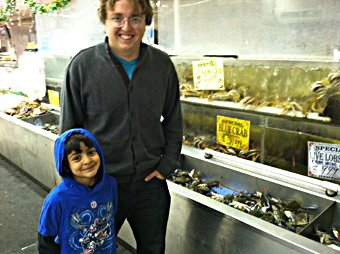
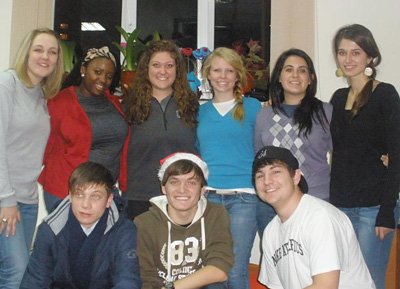
Student missionary Simeon Snow enjoys learning about Bhutanese  culture at a wedding.

The wedding is not actually all one ceremony. There are alternating ceremonial times between pronouncements of union and times for the friends and family of the couple to give gifts and blessings to the family.

A Hindu priest officiated, and a lot of the ceremonies involve putting tikas—religiously significant marks—on the foreheads of both the husband and wife. By the time all of their family and friends had placed tikas on their foreheads, the couple look like they are flowers with a 3-inch diameter circle of beautiful red on their foreheads.

The people at the wedding were very pleased to see us. I knew several faces in the crowd from my time in the apartment complex, and Matt seemed to know almost everyone. The family fed us a full meal of rice, meat, pastries and sugar balls. While we ate, we made small talk, and Matt introduced himself to a few of the adults and children whom he did not know.

While most of the crowd spoke Nepali, we were able to have insightful conversation with some of our friends who knew English very well and were able to explain to us different parts of the wedding processions.

All the women wore beautful sakis, and the room was full of colorful ribbons and pictures. The centerpiece of the room, in front of the husband and wife, had an oil lamp with a candle, two plates covered in tika clay (with which the blessings were placed upon their foreheads) and a floral bouquet.

Several children ran around the room having fun—normal for almost all Nepali gatherings, regardless of formality. Two of them were striving for control of Matt's iPhone because they wanted to play a driving game on it.

Once the ceremonies had concluded, we drove a family back to their apartments near where we live. The two kids who had been fighting over Matt's phone were in the car of us, still negotiating their turns.

It was a wonderful time for us to catch up with several of our Hindu Bhutanese friends in a loving setting. We pray for God's blessings on the new couple and their family. And we pray their community would become connected with the love of Jesus Christ.

Simeon Snow, a recent Houston Baptist University graduate, is serving with Go Now Missions at Segue Refugee Partners Ministry in the Dallas area.


Making connections

Out of all of the young people I’ve met there, Peter has been the best. He has been the guy that I have connected with the most at the soccer fields, and I’ve been having some great interactions with him lately.

A week and a half ago, it had been raining, and nobody was at the soccer fields. So, I was visiting one of the Bhutanese houses during my soccer time. While inside, I heard a voice from outside ask, “Hey, is Simeon in there?”

I peeped my head out of the apartment and saw Peter at the bottom of the stairs. He had seen my bicycle chained to the staircase and wanted to say “hi.”

During our conversation, I heard him mention his church once or twice, so I asked him if he was a Christian. He said that he was, but when I asked him about what made him a Christian, he said that he was a Christian because his parents and grandparents were Christian. As we talked, I was able to share the gospel with him and chat a little more before leaving.

The next day, I ran into Peter in exactly the same way. But this time, he came to the top of the stairs, and we spent the next four hours answering his questions about Christianity—everything ranging from “What about bad Christians?” to “Will we have Xbox in heaven?”

I've seen him one time since then, and he’s been as friendly as ever. I’ve been praying frequently that he would come to know Jesus, and I hope I might get a chance to disciple him. However, it seems that there might already be people in his life that would be ready to take up that task. The last time I talked to him, he said that some of his friends were trying to get him hooked on Christian rap, and he asked me about an artist named Lacrae.

I’m particularly interested in Peter coming to faith because he has a lot of the marks of a powerful Christian. He loves people more than status and material things, and he is weak and unglamorous. In my experience, the weaker a Christian feels and looks, the more potential there is for the working of God’s power in his life. I think he would make a big difference for God’s kingdom if he comes to know Jesus.

Simeon Snow, a recent Houston Baptist University graduate, is serving with Go Now Missions at Segue Refugee Partners Ministry in the Dallas area.


Building relationships with refugees

I have been working with Bhutanese refugees for more than a month now, learning a lot about myself, Bhutanese culture and God's heart for missions.

I arrived in the Dallas area not knowing what to expect and have met some amazing people with a heart for missions and desire to serve the less fortunate. Matthew Johnston and Elizabeth Hall lead Segue Refugee Partners Ministries, the nonprofit organization where I'm serving. They have been connecting with Bhutanese refugees for more than a year.

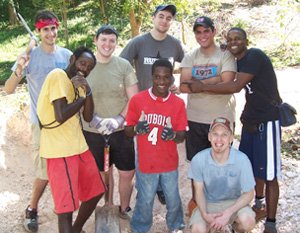
Simeon Snow and friend

A few centuries ago, the king of Bhutan asked the king of Nepal to send him people to farm the southern portion of his kingdom. They grew to become a rather large population and, 30 years ago, the king of Bhutan began a movement to forcibly remove them from the country in order to remove the perceived cultural threat to his kingdom. So, these Nepali-descended Bhutanese traveled back to their country of origin to be settled in refugee camps. Eventually, the United Nations decided to help these people find homes in other countries. One of these locations is right here in northeast Dallas.

Segue's vision is to build partnerships and relationships between these Bhutanese refugees and American Christians who are willing to relate and help out in whatever way they can. The refugees have a variety of needs, from help them deal with insurance-related issues regarding health care to finding jobs in the city. The hope is also to lead the refugees from a Hindu background into a relationship with Jesus Christ.

The families I have met are very sweet. From the moment a guest walks into one of their apartments, the families do their very best to make the guest feel at home. The traditional form of greeting is to place your palms together in prayer-like fashion and say "Namaste" while bowing. The women love to offer their traditional tea, and sometimes the family will even put together a meal for a guest—usually rice, meat, vegetables and some sort of soup.

Please pray for the success of Segue in reaching out to the Bhutanese refugees. Pray that American Christians will connect with the refugee. Pray for the growth of the local Bhutanese churches that have sprung up. And pray for the Hindu Bhutanese to come to know Jesus.

Simeon Snow, a recent Houston Baptist University graduate, is serving with Go Now Missions at Segue Refugee Partners Ministry in the Dallas area.


God our refuge & strength

The trip to Moldova was my first time to leave the United States. I was scared to get on the plane, afraid it would crash or something. I had to be still and know that God would guide me and protect me. After we landed, when the team I was serving on got to the border, we found out we would not be able allowed to go into Transniestria.

I learned the importance of being still before God but at the same time being ready to act. God was teaching me that sometimes you may have plans to serve him, but he may have different plans. God’s plans were not for us to go put boots on the feet of orphans in Transniestria. It was to bring love to the children in Moldova. So again, I had to be still to recognize the needs of others.

We learned some of the girls in Moldova are trafficked and at the age 16, the boys are put out of the orphanages. We are also learned about the poor sanitary conditions in some of the orphanages. James 1:27 tells us to love and serve the widows and the orphans, and that is exactly what we did. Jesus said, “Whatever you have done for the least of these, you have done for me.” So we went to Moldova and served God and loved God.

The lessons I learned from Psalm 46 on the mission trip served me well even when I was returning home. On the trip back to Houston, I lost my carry-on bag that included my wallet, $40, my Bible, my prayer journal, my souvenirs from Moldova, my camera, my house keys and other valuables. I had to be still and know that those were material things, and that God had greater things for me. To make matters worse, I arrived home to find out my roommate—the best roommate I ever had—was leaving. Again, I had to be still and know that God had a plan.

Then things got worse. The next day, the roof of my house fell in, and I was devastated. At first I was depressed, thinking I would have to move. When I finally was still, God provided a way for me to get my roof fixed. Finally, to bring my week of disaster to an end, I got my grades for the semester. I had failed all of my classes.  I thought I was going to have to take a semester off from school. When I finally was still, God came through. I was able to change my major, and now I am able to graduate earlier.

Jeremiah 29:11 says, “For I know the plans I have for you … plans to prosper you and not to harm you, plans to give you hope and a future.” So, we have to be still and know that he is God. He has a plan.

Justin Cathey, a student at Texas A&M University-Kingsville, served with Go Now Missions in Moldova.


Take my plans, Lord

It was the best present ever—loving on orphans and spreading the gospel to hundreds of children in Moldova. God blessed me tremendously with the opportunity to go witness to orphans in Eastern Europe. Little did I know, I would be blessed financially before I even left home. I would grow spiritually during the trip. And I would see a clear demonstration of the sovereignty of God.

Caitlin Hiett with one of the orphans she was able to minister to in Moldova.

Once I got the call to "go" to Transniestria with Go Now Missions, the thing I was most nervous about was fundraising. I questioned whether I would be able to raise the money I needed to go. I already doubted the provision of God.

The week before we were scheduled to leave, I was seriously worried that I would not have the necessary funds. That was a terrifying thought. That next week, God blew me up with people asking to support me. Every day, something new happened, and a week later, I was fully funded and ready to get into Transniestria. At the end of the week, I was in awe. God proved himself faithful.

My team was ecstatic when we finally arrived at the border crossing and were ready to enter Transniestria to deliver warm winter boots to orphans. After about four hours of waiting for an answer from the border patrol, we were denied entry into the country. We were told that after the election and the political unrest settled down, we would be able to enter. So I wasn't worried. I had faith. We all did. Every day, we held onto the hope that at any second we would receive the phone call that we could head to the border and start the mission we came here to accomplish. On Wednesday, we finally got an answer—but not the answer we wanted. We were told that we would not be able to enter Transniestria.

I was genuinely sad. I was thinking about the kids and the amazing opportunity of placing boots on the feet of orphans and the fact that I would not be able to do the very thing I had raised money for and had my heart set on doing.

Caitlin Hiett, a student at the University of Mary Hardin-Baylor, and her team in Moldova.

And I was angry. I'll admit that I wrestled with God about this one. I could not understand why he would send me around the world and set this passion in my heart to sit one-on-one with an orphan and then take the opportunity away. I thought that it was common sense that my team is here, in Eastern Europe, following a call God placed in our hearts—to place boots on the feet of orphans, pleasing God—and for some reason, God's plan was to not have us do that. It made no sense to me.

After a long time of questioning and wrestling, I finally was slapped in the face by truth. I was making this trip all about me—my plan, my orphans, my boots, my experience.

As it turned out, God's plan was so much better than mine ever could have been. I got to meet the other team in Moldova and create relationships and have conversations with amazing people whom I would not have met otherwise. My team got to go to different orphanages and share the Christmas story with hundreds of children. We may not have had boots, but we gave these children the thing they need most—Christ and our time.

I got to dance and play with children who rarely get interaction with Americans. The local church in Transniestria distributed the boots and got to share in Russian the gospel with the kids there.

Maybe my language barrier would have been a hindrance to sharing the word of God. Or maybe God had planned for them to do it so that it would give their church a doorway into the orphanages that are in so much darkness and filled with pain. God used this time in Moldova to stretch me and show me the importance of trusting him in every situation. Again, God proved himself faithful.

To say that I learned a lot during this mission trip would be an understatement. I was reminded once again of the provision of God. He takes care of his children. As I was hugging the necks of those orphans, I couldn't help but think of my Heavenly Father who will never disown me or abandon me. I pray that the orphans that I met will understand the love of a Father who will always be there, loving them and caring about every hair on their heads.

That's where I want to be, in the hands of my Father. We serve a faithful Father who always has our best interest in mind, and I can live and I can grow in that truth. So here I am, Father—your servant, ready and willing for the next call that gets placed in my heart because I know you will continue to provide for me and continue to keep me in the palm of your hands. And you promise that you'll never let me go.

Caitlin Hiett from the University of Mary Hardin-Baylor served with Go Now Missions in Moldova.


God had other plans in Moldova

By Bailey Starnes

The theme of our mission team's trip to Moldova seemed to be the sovereignty of God. Because of political unrest, we were not able to enter Transniestria or perform our initial mission like planned. But God had other plans.

Bailey Starnes, a student at the University of Mary Hardin-Baylor, with a Moldovan orphan.

At first, I had lots of trouble surrendering my plan and accepting the Lord's. We went on with our week, singing, playing and loving on hundreds of precious orphans. The blessings came so fast I could barely journal about them all fast enough.

Children's Emergency Relief International has a program for orphans aging out of the orphanage called the Transitional Care Program. This is a sponsorship program that allows people to support the orphans so they will have a chance at a normal life after graduating from the orphanage. At the end of the week, our team got to go to the CERI office and see firsthand how the Transitional Care Program worked. Every Friday, the Transition students, ages 16 to 20, attend a Bible study where they are able to fellowship with other kids in their same situation, and more importantly, where they go to learn about and worship the Lord.

What a true blessing that we got to go and see how the Lord rescues these orphans from the streets or from the high risk of being sex-trafficked. 

Moldovan orphans in prayer during the Go Now Missions team program.

For me, this was such a real picture of God's love. I got to see, firsthand, a group of about 40 teenagers passionately worshipping God. After being in the orphanages all week, showered with blessings, overwhelmed with sadness, and moved by simple smiles—this image of worship was so humbling for me. All the young kids' faces I had seen all week stayed with me on that Friday evening as I worshipped with the Transitions kids. I couldn't help but see hope for all the precious faces that were burned in my heart from earlier in the week. I also couldn't help but see how God so graciously had this plan for us the whole time. 

Bailey Starnes, a student at the University of Mary Hardin-Baylor, served in Moldova with Go Now Missions.


Lessons learned in Haiti

My recent trip to Haiti was my first time in a Third World country, and it changed my life.

Brianna Smith with her team in Haiti.

I was part of a Go Now Mission team that included students from Tarleton State University and Wayland Baptist University. While we were there, we built rubble houses for the people to live in permanently. To make a rubble house, we built a frame and made walls with rebar and chicken wire. We then filled the walls with rubble and then added concrete. Each house is very strong and can withstand a very strong earthquake.  I am going to be honest, though—building those rubble houses was the hardest thing I have ever done in my life! But it was worth it to see the family we made it for smiling at us every day, and it was a blessing getting to play with their children on our breaks. A lot of the people there do not have permanent houses, so it was a joy to build them a permanent home. The people there were very friendly and loving to us.

While we were there, my friend and I were talking to a Haitian woman. She kept pointing to her house saying "handicap." She urged us to come inside. On the floor lay a very thin little girl on a small mattress. Surrounded in her own urine, the girl moaned and groaned. I looked down to get a closer look and I saw that her leg was twisted and was almost the size of my pinky. Her foot was also bent out of shape, and she was mentally disabled, as well. My heart hurt for her, and I was not sure what to do. Her mom took out a piece of paper and rubbed it. I thought she wanted money, and I did not have any at the time. So, I apologized and went back outside.

Brianna Smith with new Haitian friend.

While we were all talking, I felt as though the Lord was telling me that we should go pray for her. So a few of us went with our translator and were able to pray for this little girl. After praying, our translator explained to us what that paper was the mother was holding. Her daughter had to go to the hospital that morning, and that paper was her prescription for the medicine she so desperately needed. The mother told us that she did not have any money, so we were able to go pay for the medicine for the girl. It was such a blessing to see God work in that way, and the mother was so grateful and gave us all a kiss and hug!

God is doing great things in Haiti, and being there opened my eyes to a whole lot of things. It opened my eyes to how blessed I am and how I can use my blessings to bless others. It taught me that poverty is sad, but the people are happy. I learned that is their life, and it is not bad, it's just different. And it amazes me to see God provide for the poor and how much faith they have in him. It gave me joy to help the Haitian people. Even though by the end of every day I had nothing left to give, the Lord gave me strength to keep on giving. God is good.

Brianna Smith, a student at Tarleton State University, served with Go Now Missions in Haiti.


Jamaica: Poverty in paradise

Usually, when people think of Jamaica, they think about the glamorous luxury resorts and vacationing in the Caribbean. They forget Jamaica has impoverished citizens who are holding on for dear life.

Kevin Zarate, a Texas A&M University-Kingsville student, talks with a man in Harmons, Jamaica, duing a Go Now Missions trip.

I was able to serve in Harmons, Jamaica, which is considered the valley of the country. The view of glorious mountains looked as if God hand-painted the scenery, but I also saw poverty. Houses that were being constructed for a family of four are smaller than my dorm room.

I went to build houses for families who may have not had a decent house or even a roof over their heads. Our team spent a week in Jamaica, waking up early each morning to roosters crowing. Service projects ranged from working at the green house to hauling cargo up hills, doing construction, sorting clothes and even going to the infirmary to offer some of the locals a listening ear so they could tell their story.

The building project was hard labor in intense heat. I was tremendously tired, but what kept me pushing forward and kept me from giving up was thinking about the people I would be helping. They live for days not knowing what they will eat. One person told me, "If you don't go out and look for food, you'll die here." That broke my heart.

Kevin Zarate and some of the Jamaica Go Now Missions team members

In America, we open a full refrigerator and say there's nothing to eat when some people in Jamaica literally have nothing to eat. There is no running water, so people travel into the center of the city to pick up water from barrels and carry it up hills and hills. They just keep going.

I was so blessed to be there and experience God's glory through the island, because although the people absolutely had nothing materially, they had God. They had the most extraordinary faith in God, to provide them shelter and just the basic needs. How many people in the States can say they have everything and still depend on Christ? It was just so uncanny to see these people raise my spirit and learn to depend on God, not just in school or selfish reasons, but to depend on him in every aspect of my life.

To allow God full control of my life is what the Jamaicans taught me. They have a saying: "No problem." Maybe some of us should learn from that saying and know that there should never ever be a problem when God has us in his hands. It's like I told the team I was serving with, "We come into the country with the mindset of serving, but what is remarkable is that we are the ones being served. We are the ones that are privileged to be there, not the other way around." 

Jamaica will always be in my heart, and I will continue to pray for them. 

Kevin Zarate, a student at Texas A&M University-Kingsville, served with Go Now Missions in Jamaica.


Speaking a universal language in Haiti

As our team arrived at the Port-Au-Prince airport, I couldn't help but notice the darkness surrounding us. This country is still hurting, still broken, and still yearning for a glimpse of hope in the destruction of the earthquake nearly two years ago. My heart grew weary, knowing there was no way we could help all of them. We were only 13 people, and the nation of Haiti needs a God-sized miracle.

Miranda Moon, a student at the University of Mary Hardin-Baylor in Belton, on a GoNowMissions assignment in Haiti, with new friend. (Photos by Coley Taylor)

We piled into the van and began our drive through Port-Au-Prince to the house of Pastor Jean Alix. Along the way, we saw many people displaced and living in tent cities, many buildings still on the ground, and people still roaming the streets, searching for hope in voodoo, and looking for any valuable things they might find as they walk.

The first day that we got to go into the village of Guibert, my heart was touched as I saw the school children in their precious blue uniforms, and I saw the faces of the 32 boys who live in the boys' home. When we first got there and were gathered as a team, my teammate Jeff picked up one of the boys, named Mackenlay. As soon as Jeff put him down, Mackenlay ran into my arms and gave me the biggest hug a 4-year-old can give. I could've held him all day. That was the moment I knew that it was all worth it. God is so ever-present in Haiti, and his hand constantly was felt in the village of Guibert. God's love in those people made me feel at home. As we began our tasks, which ranged from cleaning a storage room to pouring concrete, my heart knew that I was supposed to be there.

At the end of our work, we got our first opportunity to really meet the boys. Each person on our team was just surrounded with love, laughter and hugs. In Haiti, the people speak Creole/French, and with only one person on our team who knew how to speak one of those languages, the language barrier was the biggest difficulty we faced. But to me, it didn't matter because of the universal languages that exist—play, love and laughter.

As the week continued, we took on new tasks, such as sanding and bleaching horrifying amounts of mold off the ceiling and walls of thelittle boys' room; mixing, pouring and passing buckets of concrete to create new walls and columns in the central room of the orphanage; and painting the new storage building and the little boys' room. We knew little thing that we did was going to make a positive impact in the lives of the boys and in the kingdom of God.

On Sunday, we were blessed with the opportunity to worship at the church in Guibert where Jean Alix is pastor. We discovered the beauty of worship is another universal language. We all worship one God, one Creator, one King, through song, dance, prayer and lifestyle. The presence of God in the church there was amazing. We couldn't help but to join our Haitian friends in making a joyful noise to God.

The next day, we finished the boys' room and began begin moving the 14 "little" boys' (ages 4-12) things into their room. Since the earthquake, they have been sharing beds and rooms with the older boys, and that didn't really leave much room for anything else. Three of these boys also finally got a room that was for them! All they had known was sharing beds and rooms. It was beautiful watching the older boys help move and clean and prepare the room for the little ones, and to watch joy of the little ones.

On Tuesday, our last day with the boys, we spent a lot of time in the room just soaking up the joy of it all. We celebrated Christmas with the boys and gave them presents. They were overjoyed getting crayons, hats, pencils and coloring books, when most of America isn't even content getting iPads, cars, laptops and 80-inch TVs. It was very exciting and humbling to watch them enjoy their gifts, and then use their crayons to color Christmas cards for people they have never met and probably will never meet. They wrote things such as: "I love you and I am praying for you." It filled my heart with joy. These boys know how to love—really love. Not only do they love the people who care for them, each other, and strangers that they may not ever meet, but these boys love Jesus. It is evident in the way they live and interact with people.

Haiti TeamI told the team that it was difficult to say goodbye to the boys, but it made it a little easier knowing that their needs are being met, especially spiritually. They are learning in school, they get to eat hot meals, they have safe rooms to live in now, their building is being reinforced in case of another disaster, and most important, they are surrounded and being raised by people who love the Lord. The village of Guibert is a gleaming light of hope for all of Haiti.

Join me in praying that these boys would be used in radical ways for the kingdom of God, and praising God for the things he has done and undoubtedly will continue to do in Haiti.

Miranda Moon, a student at the University of Mary Hardin-Baylor in Belton, served in Haiti with Go Now Missions over Christmas break.


Finding fulfillment

This is the second time God has led me overseas. One thing I really felt him showing me is that people all around the world are the same. People everywhere are searching for fulfillment. And just like in America, most people overseas are looking for it in the wrong places.

We who know God are so blessed to know where true fulfillment lies. In America, we are even more blessed to have easy access to God’s word.

God used my experience during winter break to remind me the whole world needs him just as much as I did and not to not take for granted the blessings he has given me as an American.

Jonathan Roman, a student at the University of Texas at El Paso, served with Go Now Missions in East Asia.


In Haiti, homes that Jesus built

Twelve other people and I recently had the opportunity to spend a week in Guibert, Haiti, doing construction at a boy's orphanage. Our work including pouring concrete, putting new windows into one of the rooms and painting two other rooms, one of which became a new living area for the youngest boys at the orphanage.

Stuart Harris with children at the orphanage in Guibert, Haiti.

Throughout the week, I couldn't help but feel some pride over the work we were doing. Many of the boys had never had much room to live in, and some had even had to share a bed for the past couple of years. With the new room we were painting, we gave many of the boys their own bed for the first time, plus a bigger room with more space for them to sleep in. I felt like we were doing this great work for a country that was in desperate need.

One day late into the week, I was reminded of a verse in Deuteronomy 8. God was speaking to the Israelites before he brought them into the Promised Land. He told them: "Beware lest you say in your heart, 'my power and the might of my hand have gotten me this wealth.' You shall remember the Lord your God, for it is he who gives you power to make wealth, that he may confirm his covenant that he swore to your fathers, as it is to this day."

God's desire was to keep his people from becoming prideful, and his way of doing that was to remind them that he—not their own strength—was the source of everything they accomplished, even the things they built with their own hands.

Harris and friends

Group that ministered in Haiti through GoNowMissions.

I realized that my pride had been souring the whole week, thinking that it was my gifts and the work of my own hands that had built these walls. The truth was, God had been doing an amazing work long before our team ever got to Haiti, and he would continue working long after we left. Since the earthquake hit two years ago, God has provided 42 new houses for people in the village where we were working, plus the surrounding area. The church where the orphanage was located, although small in size, was filled with the life and joy of people knowing and worshipping Christ, and our team did nothing to create that. With all of the problems with poverty, hunger, and voodoo worship in the country, God was rebuilding homes, feeding his people, and raising disciples that honored and glorified his name as a nation.

We may have offered our hands to help build a house for a few orphans, but God was the one giving them a home when they had nothing. We may have laughed and played with the boys all week, but he is the one who fathers them and gives them a hope and a future. I went to Haiti to offer an amazing service, but I can't offer the eternal life that God can through faith in his Son. He has been working in Haiti for many years, and simply let me be a witness of what he was doing. For that, I am thankful.

Stuart Harris, a student at the University of Texas, served in Guibert, Haiti, with Go Now Missions.