Bethlehem Baptist Church, Mansfield

This is a special edition of Deep in the Hearts of Texans featuring historic Black Texas Baptist churches in celebration of Black History Month.

The following responses were provided by Rev. Dr. Michael Evans Sr.—pastor of Bethlehem Baptist Church in Mansfield for more than 30 years, mayor of Mansfield and past president of the Baptist General Convention of Texas. The congregation meets at 1188 W. Broad Street.

When and why was Bethlehem Baptist Church founded?

Bethlehem Baptist Church was founded in 1870 and predates the city of Mansfield by 10 years. The church was founded by liberated former slaves. Bethlehem served as the primary worship place for these newly manumitted people who sought to express their freedom, not only physically, but spiritually and psychologically from the bonds of chattel slavery.

What was a struggle during the church’s history?

The main struggle during the early history of the church was helping former slaves rise out of the mental and emotional terror of being owned, bought and sold like cattle. The group grappled with economic survival.

What was a triumph?

Bethlehem prides itself on serving as the beacon light of hope for people who had various needs, spiritually and economically. The church has served as the catalyst for economic development, educational enrichment and the gathering place for those who fought for equal rights under the law.

What was a significant moment?

A significant moment in the life of the church was when the congregation moved from worshipping under a brush arbor to an actual physical structure in the late 1890s.

Another significant moment was in 1976 when the church relocated to the last remaining structure constructed by the Mansfield Independent School District during the years of segregation. It was that building that afforded our church members access to indoor toilet facilities.

What makes Bethlehem proud?

Bethlehem is proud of being known in the Mansfield community as the “Community Church.” It has long prided itself on serving as the place to meet the needs of the community on various levels, including offering food, shelter and the basic needs for subsistence.

Artist’s rendering of Bethlehem’s Pioneer Place, opened in 2019.

What is the church’s impact on its community?

Bethlehem serves literally thousands of pounds of groceries to needy families annually. The church prepares backpacks filled with food for local school children. Bethlehem continues to be involved in advocacy efforts for the marginalized and the less fortunate.

The gymnasium is opened for free play on Mondays through a program called Bibles and Basketball, where neighborhood kids can play in a safe environment and experience a weekly devotion.

Our church is known for working in tandem with the city to help improve the living conditions of people who will be fined for property code violations.

The church constructed Pioneer Place, a 134,000-square-foot independent living apartment complex for indigent senior adults with plans to add an assisted living and hospice facility in the future.

Bethlehem hopes to be intricately involved in the development of an entire neighborhood that will include mixed-use retail development and diverse housing options to include a corner grocery store, amphitheater and other community amenities.

We believe God has called us to be the presence of Christ to the world, and with his guidance, we will be empowered to do extraordinary work in our growing city.


Minnehulla Baptist Church, Goliad

This is a special edition of Deep in the Hearts of Texans featuring historic Black Texas Baptist churches in celebration of Black History Month.

The following responses were provided by Dr. Ira Antoine, pastor of Minnehulla Baptist Church in Goliad and Texas Baptists’ director of bivocational ministry, and life-long church member Shelia Edwards. The congregation meets at 3572 Highway US 59.

When and why was Minnehulla Baptist Church founded?

According to the community, family storytellers and oral tradition, Minnehulla was founded around 1870. This was not long after the emancipation of the enslaved Blacks in Texas.

The original name was Minnewee, which was also the name of the nearby creek. No one knows why the name changed to Minnehulla, but it seems to have been after a flood destroyed the brush arbor structure in the early 1900s.

Why the church was founded would include the need for worship and some independence from their former masters. They wanted to recapture some of their culture and heritage that had been forbidden for so long.

The church founders found a way to make worshipping God unique to them and their own, including some of their rhythms and beats passed down secretly from their ancestors.

What was a struggle during the church’s history?

Minnehulla’s struggles included financial resources, a need for property and male leaders. Even after acquiring property, due to poorly made facilities, the bad weather and storms kept destroying their places of worship. Yet, through these struggles, the church learned the meaning of true faith. They had to pick up and start over as many times as needed.

What was a triumph?

One triumph of the church included and still includes the faith and strength of the people. No matter the challenge, the church family always has trusted God and pulled together to triumph over ongoing adversity. This becomes normal when you have had to fight for what was right so many times.

Our church family is conditioned never to give up, to hold to God’s plans for us and to overcome every time.

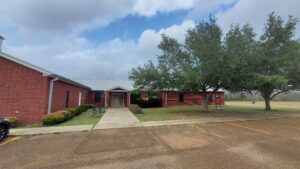
Recent photo of Minnehulla Baptist Church, Goliad (Photo provided by Dr. Ira Antoine).

What was a significant moment?

A new brick facility was constructed between 1997 and 2000. The significance of that event never can be overstated.

The previous church building was destroyed by fire. The membership continued to meet, trust God and persevere. God allowed a small band of faith-walkers to purchase more than nine acres of highway-front land and construct a brick building that could weather the storm.

One memorable part was having a horse-drawn carriage transport some of the elders to the new building from the previous location. The membership, friends and other congregations followed on foot, singing and praising God for the journey the church had taken.

We walked over rugged, over-turned soil, and each step was a victory in Jesus. It was proof of the power of God and that he did new things for his followers.

What makes Minnehulla proud?

Each time we see a child we watched grow up in the church and accept Christ as their Lord and Savior is one of the proudest moments. Also, when young adults who once were part of our congregation as children stop former youth leaders in town and share how Minnehulla changed their life. They want their children to experience what they experienced at Minnehulla.

Minnehulla is also proud to be a strong missionary sending agency. During Rev. Ronald Edwards’ 17-year tenure, the church planted five other churches and supported seven existing churches.

The church also has sent missionaries across the United States and to South America, Spain, Africa, England, Germany, Italy, the Bahamas and Canada. Minnehulla currently supports MAP missionaries in Uganda and Tanzania.

What is the church’s impact on its community?

Goliad is a small, rural community where everyone knows each other. Suppose you were to stop a resident on the street and ask them about churches in the community. They will probably bring up Minnehulla.

The citizens of Goliad have a sense of ownership in this church. Many physically worked on constructing the current facility. So, they don’t think twice about calling when they are in need.

Our congregation does not turn anyone away. If we don’t have the resources in-house, we research and find organizations that can help. Minnehulla is a church that accepts all, and the community knows it. We often say God has called us to be a resource to the region.


David Chapel Missionary Baptist Church, Austin

This is a special edition of Deep in the Hearts of Texans featuring historic Black Texas Baptist churches in celebration of Black History Month.

The following responses were provided by Pastor Joseph Parker of David Chapel Missionary Baptist Church in Austin, with additional information by Editor Eric Black. Parker is the church’s seventh and longest tenured pastor having served more than 30 years. The congregation meets at 2211 E. Martin Luther King Jr. Boulevard.

When and why was David Chapel Missionary Baptist Church founded?

In 1924, a few Christians living in the community of Ceiling Hills—located just south of the city of Austin, near the banks of the Colorado River and near what is now the Austin-Bergstrom International Airport—became concerned about the way the boys of the community were observing the Lord’s Day by playing marbles. As a result of their concern, a meeting was called by neighbors at the residence of the Horace Davis family.

A subsequent meeting was called, and under the able supervision of two ministers—Rev. Ben Wroe and Rev. Connie Alexander—a church was organized on April 27, 1924. The church was named Davis Chapel in honor of the Horace Davis family on whose farm it was organized. There were 28 persons who made up the first membership roll.

In another meeting, the Rev. L.M. Marshall was called to lead this newly organized body of Christians. A blacksmith shop was the first dwelling used until Oct. 30, 1926, when the pastor and his members moved from the Ceiling Hills Community to the racially segregated East Austin/Chestnut Community of the city of Austin.

A tabernacle was erected at the corner of 14th Street and Chestnut Avenue. The name of the church was changed to David Chapel. In 1940, the old tabernacle was torn down and a new stucco structure was built. In 1959, a new facility was built five blocks north at Chestnut Avenue and 19th Street—now Martin Luther King Jr. Boulevard.

What was a struggle and a triumph during the church’s history?

In 1958, David Chapel’s membership outgrew its building and sought funding from white-owned banks in Austin to buy a nearby tract of land and build a new facility. The banks refused to lend the money.

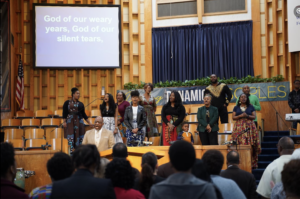
Worship service at David Chapel Missionary Baptist Church in Austin (Screen shot from the church’s Facebook photo album).

Fortunately, the Saint John Regular Missionary Baptist District Association—an association of African American churches in Central Texas organized in 1867 that still exists—loaned David Chapel the money.

On the first Sunday in January 1959, the congregation moved into the new edifice, and the congregation was able to pay off the mortgage fully 10 years later.

The planning and construction of the new edifice also were provided by persons of African American descent. In fact, The Austin Chronicle pointed out the project was “an all-Black enterprise in the thick of Fifties Southern segregation.”

The architect was John S. Chase, the first African American to graduate from the University of Texas at Austin with a degree in architecture. Since “no architectural firms would hire him … David Chapel became his first big project,” The Austin Chronicle noted.

Chase’s plans for the building originated from his master’s thesis, “Progressive Architecture for the Negro Baptist Church.” The building contractor was Oliver B. Street.

Austin-based online magazine Sight Lines described Chase’s design of David Chapel as “reflect[ing] the essence of Chase’s thesis on modernist architecture for the Black church, how design had the effect of freeing congregants from a fraught past, and how the church’s building could reflect forward-looking aspirations. It is one of the most significant works of modernist architecture in Austin by any measure.”

David Chapel has outgrown its current space and now is planning to relocate and build new facilities on a 17-acre tract of land the congregation owns in East Austin on Springdale Road near Martin Luther King Jr. Boulevard.

What makes David Chapel proud?

David Chapel strives to be a prayerful, loving and tithing church with a heart for the community that shows its love for Christ by offering God’s hospitality, hope and healing to its members and others.

The church is recognized widely as a voice for the community and a church consisting of Jesus-followers led in a community-oriented direction, using its ministries and human and financial resources to become a bastion of leadership for the Chestnut Neighborhood, for the Eastside, for the Black community and for Austin at large, Central Texas and beyond, being a church with a heart for the community, near and far.

What is David Chapel’s impact on its community?

David Chapel conducts numerous ministries, including Celebrate Recovery, feeding ministries, financial assistance and education, prenatal education, legal ministry, community development, incarceration ministry, a cold weather shelter and many more.

The congregation was also involved in developing a Leadership Development Academy and Texas Congregations United for Empowerment.


Mount Pisgah Missionary Baptist Church, Richardson

This is a special edition of Deep in the Hearts of Texans featuring historic Black Texas Baptist churches in celebration of Black History Month.

The following responses were provided by Elaine Johnson of Mount Pisgah Missionary Baptist Church in Richardson. Johnson was selected by long-time Mount Pisgah church historian Jesse Arnold to succeed him.

The congregation, which also goes by “The ROCK,” meets at 1020 S. Sherman Street in Richardson.

When and why was Mount Pisgah Missionary Baptist Church founded?

On Jan. 1, 1863, President Abraham Lincoln issued the Emancipation Proclamation which freed all slaves in the Confederate states.

Rev. Robert Butler, a white circuit preacher, gathered a few missionaries on the third Sunday in June 1864 under a large elm tree in White Rock Settlement of Dallas County, on a farm near White Rock Creek owned by Billie Wilburn. White Rock Settlement was an unincorporated community on the northern edge of Dallas County.

The law prohibited slaves from congregating without the presence of a white man. The group named the church Mount Pisgah Missionary Baptist Church, which comes from Deuteronomy, 34:1—“And Moses went up from the plains of Moab unto the mountain of Nebo, to the top of Pisgah, which is over against Jericho.”

Pisgah is the mountain peak Moses stood upon looking over into the Promised Land. The founding members possibly had a vision of what was to come. Exactly one year after Mount Pisgah was formed, the Emancipation Proclamation was read.

The original church building today, now the meeting place of Camino Del Misionero. (Photo courtesy of Mount Pisgah Missionary Baptist Church in Richardson.)

Texas slaves did not hear the “news of freedom” until June 19, 1865, when Major General Gordon Granger read Military Order Number 3. The notification officially became the

first 19th of June celebration, currently known as Juneteenth. The announcement came on Mount Pisgah’s first church anniversary.

After slavery was abolished, there was little opposition for the purchase of land in White Rock Creek Settlement by freedmen, as the whites owned more land than could be farmed without slave labor. Freedmen began buying land, building homes, churches and schools, paving the way for the future.

Mount Pisgah’s first members traveled as far as five miles to church, sometimes taking over an hour to travel to the church via horse, wagon or by foot on dirt roads. After the earliest meeting under the elm tree, members began worshiping under a brush arbor—a pavilion-like structure.

The first deacons were John Hoffman, Dan Howard, Sam Fowler, William Phifer, Tobe Howard and Jack Saunders.

What was a struggle during the church’s history?

There were two particular struggles in our history. The first and most obvious was slavery. Mount Pisgah was formed one year prior to the enslaved people of Texas hearing of their freedom. Butler and the enslaved congregation held church services despite the cruel and inhumane treatment slaves often endured, even unto death.

The second struggle was the loss of land in May 1983. Mount Pisgah lost almost half an acre of its original property to eminent domain for the development of Spring Valley Road and Preston Road in Dallas.

What was a triumph?

We’ve had many triumphs. Forming Mount Pisgah during slavery in Texas is top of the list.

Another was purchasing property, which is now 14000 Preston Road in Dallas and is still owned by Mount Pisgah.

In June 1888, the congregation voted to purchase land. On Nov. 14, 1888, the church’s first deacons purchased land situated in Dallas County on the waters of White Rock Creek from former slaves William and Elvira Wilkerson for “a bargain price of $10 for one acre.”

Mount Pisgah later purchased a larger location at 11611 Webb Chapel in Dallas.

What was a significant moment?

As with triumphs, we’ve had many significant moments. One is the establishment by Jesse Arnold—Dallas educator, historian, archivist, musician and church trustee—of the Mount Pisgah Archives in 1992.

Mount Pisgah Missionary Baptist Church’s current building. (Photo by Eric Black).

In January 2004, the Bernice Smith Scholarship Ministry was formed to provide scholarships for deserving Mount Pisgah high school graduating seniors. Since 2004, Mount Pisgah high school graduates have attended various colleges and universities throughout the United States.

Within the Bernice Smith Scholarship Ministry, multiple scholarships have been opened, including the Aretha Ford Community Service Scholarship, Rickie Wright College/Graduate Students Scholarship and Charles Mitchell Music Scholarship.

The scholarship ministry initiated the DFW College Tour, conducts college readiness workshops and provides first-year college students a monthly stipend.

In 1990, the Helping Hands Ministry was formed and partnered with the Holy Cross Church—a white congregation—to feed homeless individuals at the Austin Street Shelter in Dallas County. The ministry has provided hot meals monthly for more than 300 homeless individuals, reaching more than 92,400 people.

In 2012, Mount Pisgah’s mission stretched as far as Ghana, West Africa, by providing financial assistance to build and maintain a water well that provides clean water to a village of more than 500 people in the rural village of Adope Kpando in the Volta Region of Ghana. This effort was led by Associate Minister Rev. Kwasi Torvike.

Mount Pisgah celebrated her 150th anniversary in June 2014. The service included the annual church anniversary picnic on the church grounds. The anniversary choir produced and released an album titled “Worship on the ROCK.”

A Texas Historical Marker was placed at the original location in 2019.

What makes Mount Pisgah proud?

Mount Pisgah is proud of her longevity—more than 158 years of continuous ministry.

Since its founding, Mount Pisgah has sought to be a light in the community, and we believe our longevity is solid evidence we have made a noteworthy difference in Dallas County and in the lives of our parishioners, both past and present.

What is Mount Pisgah’s impact on its community?

Mount Pisgah is the oldest African American Baptist church in Dallas County and the third oldest African American Baptist church in Texas.

Mount Pisgah has contributed significantly to the development and growth of the community. We have given many local, state and national officials, veterans, professional athletes, successful entrepreneurs, educators, brilliant students, doctors, lawyers, architects and countless productive citizens. Their contributions have helped to make the Greater Dallas area an attractive destination for corporations, businesses and families.

We have participated in numerous community service and outreach projects, including Helping Hands, Ghana Water Well, Stephen Ministries, Love in a Shoebox, Back to School Project, North Texas Food Bank donations, Thanksgiving baskets, Angel Tree Project, Operation Care International Christmas gifts, College Aid, college tours, National Natural Disaster Projects and many more.

We provided fresh produce and meat for more than 400 people weekly for several months during the height of the pandemic.

Mount Pisgah has offered her facilities to minority and developing congregations to support diversity in the community. Camino Del Misionero currently meets in our original location at 14000 Preston Road in Dallas.


Buddy Camper: Helping Christians with their financial plans

Buddy Camper, after a career in newspaper and magazine ownership, helps Christians improve their finances and churches and ministries raise funds. He is a member of Hideaway Community Church in Hideaway, as well as the Baptist Standard board of directors.

From deep in the heart of one Texan, he shares his background and thoughts on being a Christian in the marketplace. To suggest a Baptist General Convention of Texas-affiliated leader to be featured in this column, or to apply to be featured yourself, click here.

Background

At age 19, I became editor of the Grand Saline Sun, our hometown newspaper. When we graduated from college, my wife and I founded The Allen American. Allen had about 1,600 residents then, but the town grew rapidly. Later, we formed Texas Publishing Company and owned newspapers and magazines across the state.

What other businesses have you been in and what were your positions there?

I’ve been involved in a wide variety of business ventures throughout the years. In the late 1980s, I wanted to do something totally different and checked out the coffee industry. After exporting coffee from Mexico and Central America, we ended up with a farm in Honduras. That was a lot of fun … until Hurricane Mitch washed away the coffee trees.

In what business are you in currently?

My son has always been interested in finance. When he became a certified financial planner and opened his own company, I began learning from him.

My particular passion has been helping Christians become financially secure, so they can give more, serve more and avoid money worries.

With the help of another donor, we established a nonprofit ministry to provide financial education without cost to Christians. We brought in Christian professionals in all areas of finance, so we could teach church members everything from Medicare to investment management and estate planning.

Since then, we’ve helped hundreds of Christians improve their finances. We’ve also raised millions for churches by building endowments, and we’ve supported missions around the world.

How long have you been in that business?

I started in the financial field in 1998. Our nonprofit ministry began in 2005.

Where did you grow up?

After attending elementary school in the Pleasant Grove area of Dallas, we moved to East Texas when I was in eighth grade. I’ve always preferred small towns.

Where were you educated, and what degrees did you receive?

A blazing hot summer as a roughneck in the oil fields convinced me to go to college. Writing seemed to be the closest thing I had to a talent; so, I majored in journalism.

I received an Associate of Arts degree from Tyler Junior College and a Bachelor of Journalism degree from The University of Texas in Austin.

How did you come to faith in Christ?

A young girl named Patricia Willmon—now my wife of 56 years—attended Bible Baptist Church in Grand Saline. I followed her there, soon became a believer and have been a follower of Jesus ever since.

About the marketplace

Why do you feel called into the marketplace?

I feel a calling to help Christians with their finances and teach that it’s God’s money; we are his stewards. We know both love of money and lack of money can ruin lives. It’s an honor to be able to serve fellow Baptists in this unique way.

How does being a Christian influence your decisions in the marketplace?

Everything we do in the marketplace is designed to help church members. We want them to be financially free, so they can take care of their families as we join together to spread the word of God. It’s the reason I do what I do.

What is your favorite aspect of the marketplace? Why?

My favorite aspect is getting to work closely with truly good people. I’ve come to know and love many wonderful Christians through this ministry. I’ve been privileged to work with the Baptist General Convention of Texas on its pastoral grant program. The people I serve become part of my extended family. I wouldn’t trade “jobs” with anyone.

What one aspect of the marketplace gives you the greatest joy?

My greatest joy has been working one-on-one with pastors. Money tends to be unimportant to most pastors. I help them make informed decisions, so they can live well, retire well, provide for their families and have financial peace of mind. Many of my closest friends are Baptist ministers. They are a sincere, genuine, Jesus-loving group.

I also am joyful, because I see giving increase when our team works with a church. We emphasize the blessings of giving. Our “Outlive Your Life” program teaches how leaving something to God’s kingdom in your estate can help save souls long after the donor has passed on.

In one case, we showed a wealthy Christian ways to maximize his investments. Our advice and his extra funds helped him donate $1 million toward a new church sanctuary. I smile every time I pass that building.

What one aspect of the marketplace would you like to change?

The financial industry targets people with high net worth. Often, it’s the average family who needs help the most. Plus, financial advisers don’t get paid unless they sell. Many times, I’ve seen the interest of companies and salespeople placed above their “customer.” That’s sad.

We won’t let that happen if people contact us. Our “second opinion” has helped many families make better choices.

How has your place in the market or your perspective on the marketplace changed?

For more than 18 months, we couldn’t teach in churches because of COVID-19. During this time, I started concentrating on helping pastors design their personal retirement plan.

Each minister’s situation is unique; so, I’ll spend several hours getting to know the family, analyzing their finances, determining their goals and showing them ways to avoid the potential pitfalls they face now and in retirement. Next, we work together on a comprehensive plan that we will update as the years go by.

By the time we finish, they know their ideal time to retire and what to expect during their retirement years. Our goal is for them to maintain their current lifestyle and never run out of money. We show them how to have financial stability, so they can concentrate on doing the Lord’s work.

In the future, I’d like to help as many church leaders as possible. I’m fortunate to be able to go anywhere in the state and work for free to help a fellow Baptist retire.

If you could get one “do over” in the marketplace, what would it be and why?

If I had a “do over,” I’d start doing what I’m doing a lot earlier in life.

About Buddy

Why are you Baptist?

My family belonged to another denomination, but I visited a Baptist church when I was in high school. Over the years, I’ve studied many religions and visited all types of churches. The Baptists matched up best with my beliefs.

What is your favorite Bible verse or passage? Why?

“Be still and know that I am God” is a favorite passage. We get caught up in the world and all its busyness. But we find God in silence and stillness. Quiet time is the best time.

My other favorite passage is 1 John 4:16: “God is love.”

Who is your favorite person in the Bible other than Jesus? Why?

Paul is my favorite. He treated everyone the same—both Jew and Gentile, both lowly and powerful. He wanted everyone to know Christ. No hardship could stop him from his mission.

Who were/are some of your mentors, and how did/do they influence you?

I’ve always had mentors, because it’s important to learn from the best.

Current mentors include pastors who have become close friends. I get to associate regularly with mentors such as Charlie Wilson of Central Baptist Church in Crandall; Ronny Marriott of First Baptist Church in Burleson; Jerry Carlisle, former pastor and president of the Texas Baptists Missions Foundation; and retired pastors Danny Howe and Jerry Campbell.

These guys are true servants of the Lord. who love the people who depend on them for spiritual guidance. I try to “be like them” when it comes to helping folks financially.

Name something about you that would surprise people who know you.

Most people don’t know I’m an instrument-rated pilot or that I’ve played over 400 golf courses around the world.


Brandon Cofield: Called to live a life showing God’s grace and mercy

Brandon Cofield is an associate attorney with a Houston law firm and member of Good Hope Missionary Baptist Church in Houston. From deep in the heart of one Texan, he shares his background and thoughts on being a Christian in community leadership. To suggest a Baptist General Convention of Texas-affiliated leader to be featured in this column, or to apply to be featured yourself, click here.

Background

Where did you grow up?

Houston.

How did you come to faith in Christ?

As the son of a pastor, I was surrounded and nurtured by our church family growing up. At age 8, I knew I wanted to take my relationship with Christ to the next level. That summer, I was baptized, and I have been on my journey ever since.

Where were you educated, and what degrees did you receive?

• University of Minnesota, 2012, Bachelor of Science in nutrition sciences.
• University of Kentucky, 2015, Master of Public Health.
• Texas A&M University School of Law, 2020, Doctor of Jurisprudence.

About community life

What is your sense of calling to be a Christian engaged in the community?

I believe as Christians we are called to live a life that shows God’s grace and mercy. As a result, I always strive to do the most I can with what God has blessed me, so others will see the goodness of God through me.

Although I am far from perfect, I hope my presence in the community will be a source of positivity and kindness that stands out in our society.

I earned my law degree from Texas A&M University, where I fought against injustices along the Texas border and assisted entrepreneurs in securing intellectual property protection. Now, as an attorney, I help my clients resolve complicated disputes by helping them to navigate the judicial system.

This year, I ran for election to the Houston Community College board of trustees.

Where have you led in your community, and what was your role there?

Prior to law school, I worked with community leaders and key stakeholders to improve outcomes for urban minority youth and other disenfranchised populations while working for the Houston Health Department. I also was involved with Big Brothers Big Sisters and the Houston Livestock Show and Rodeo.

Currently, I serve on the Rotary Club of Houston’s board of directors, where I am responsible for coordinating the club’s polio eradication fundraising efforts. I also am actively engaged with the American Heart Association, where I developed and implemented a fundraising campaign that raised awareness of the prevalence of heart disease.

How does being a Christian influence your decisions?

My faith has an influence on many of the decisions I make daily. Specifically, I try to hold myself to the higher standard of morality set forth in the Bible, instead of just considering what is illegal under our judicial system.

Also, my faith gives me confidence in my decision-making, because I believe all things do work together for good to those who love God and to those who are called according to his purpose.

What do you love about your community? Why?

I love how resilient my community is. I am amazed by the many creative and innovative ways my friends, family and neighbors have navigated through the pandemic financially, emotionally and spiritually.

Name the three most significant challenges and/or influences facing your community.

• Access to education.
• Access to health care.
• Violence.

What are your community’s greatest contributions?

Our greatest contributions are two-fold. On a macro level, my community adds to the rich and diverse tapestry of cultures Houston is known for. Historically, the Third Ward has produced many prominent Houstonians from Congresswoman Barbara Jordan to Beyoncé. However, the future is even brighter, as there are many current residents following in the footsteps of giants—such as Dr. Thomas Freeman and Rev. Lawson—who have yet to make their mark on the world.

On a micro level, my community contributes to the lives of its individual residents by providing the resources and support at community centers—such as the S.H.A.P.E. Community Center and Change Happens—to sustain the culture and identity of the neighborhood.

About Brandon

Why are you Baptist?

I am Baptist because I grew up in a Baptist household, and I am the son of a Baptist pastor. However, over time, as I began to read and grow spiritually, I confirmed my personal beliefs align with the Baptist teachings, and that is why I remain a member of the Baptist church community.

What is your favorite Bible verse or passage? Why?

Hebrews 12:1-3. This passage is the foundation of one of my favorite sermons I remember from my childhood. My interest in sports made the reference to running a race particularly interesting to me as a child.

Today, the passage continues to resonate with me as I ran a political race and am finding there are many opportunities to be led astray.

Who is your favorite person in the Bible, other than Jesus? Why?

I always have been intrigued by the transformation and impact of Paul.


Ryan Jespersen: A ‘big tent Baptist’ who loves the church

Ryan Jespersen recently was elected executive director of the Dallas Baptist Association. From deep in the heart of one Texan, Jespersen shares his background and thoughts on the associational ministry of the church. To suggest a Baptist General Convention of Texas-affiliated leader to be featured in this column, or to apply to be featured yourself, click here.

Background

Where else have you worked, and what were your positions?

I was a pastor for seven and a half years, a position I thought I always would hold, at Grace Temple Baptist Church (2006–2013) when God called me to a series of positions in denominational life.

I was director of urban missions for the Baptist General Convention of Texas from 2013 to 2017 and director of denominational relations for Dallas Baptist University from 2017 to 2021.

Where did you grow up?

I grew up in Duncanville.

My grandparents on the Jespersen side were from Lincoln, Neb. After being moved around the country several times with the Kresge Company—later Kmart—they decided they needed to settle down.

The most logical thing to do would have been to move back to Nebraska where both of their parents were, and where my great grandfather Jespersen was highly established in the community. Yet they chose to begin a Ben Franklin store in Duncanville on Main Street in 1964, which is still there today.

The street adjacent to the store now is named for my grandfather, and wherever I go in the Southwest Dallas area, I am asked if I am related to “the Jespersens of Duncanville.”

One of the interesting things about my life is I always have said to the Lord I would go anywhere he called, and yet, up to this point I never have lived further then about 10 miles from where I grew up. I hold that loosely in my life, realizing God could call me across the world, and I would be willing to go, but I am thankful to have been able to stay so close to home.

How did you come to faith in Christ?

On Aug. 8, 1986, during Vacation Bible School, I walked down the aisle to give my life to Jesus Christ. I was 7 yearsold, so I didn’t know much, but I knew I had a need for a Savior, and Jesus could save me.

I grew in my faith and was not baptized until a few years later when I had a greater understanding.

Where were you educated, and what degrees did you receive?

• Duncanville High School was such an important part of my experience, and I am a proud Duncanville Panther, as are my dad, uncle, aunts, siblings and many cousins.
• Dallas Baptist University, Bachelor of Arts.
• Southwestern Baptist Theological Seminary, Master of Divinity.
• Gordon Conwell Theological Seminary, Doctor of Ministry.

About ministry

Why do you feel called to associational ministry?

For me, the call to associational ministry did not become evident until more recently. What I realized is the three full-time positions I held post-seminary, though incredibly important ministry in themselves, were preparing me to lead the Dallas Baptist Association.

DBA is one of the two largest local Baptist associations in the country. So, when the position first came open, I did not feel at all worthy to apply. I was approached by a few people I sent my resumé, still not feeling worthy but realizing the work of assisting and coordinating with churches to reach an area as populous as Dallas and Rockwall counties was an important work, one I was being moved to do.

Tell us about your association—where it’s located, the key focus of its work and ministry, etc.

Dallas Baptist Association is not a parachurch organization, as wonderful as those can be. We are made of more than 480 churches, with an office in East Dallas close to the geographic center of the association.

Our work as an associational staff is successful when our churches are reaching their communities with the gospel—carrying out the Great Commission to make disciples of Jesus Christ.

I am following in the footsteps of one of the most respected associational leaders in Baptist life over the last 20 years—Bob Dean. He never made the association about himself; thus, the association is strong. The lack of his daily presence did not create an unfillable void, because he made it about the work, not himself.

To meet the great need of reaching a large and diverse area with hundreds of thousands of people who don’t have a saving knowledge of Jesus Christ, we need strong churches, including new, revitalized and replanted churches.

To get the number of churches we need, we need healthy and spiritually formed leaders. One of our major initiatives will be the identification and development of new leaders, paying close attention to the development and health of our existing church leaders.

What do you like best about leading your association? Why?

I love working with our staff and our churches. We have some great staff who are passionate about what they are doing and have been so gracious to me as I have started. Long-time staff are helping me understand our work better.

The greatest joy for me is to be able to wake up in the morning and figure out how we will help our churches reachour two-county area best with the gospel.

Something else that always has been a passion for me is camp ministry. DBA owns what may be the largest Baptist encampment in Texas—Mt. Lebanon Baptist Encampment. I am actively involved in oversight of the camp, along with an on-site director and staff. Camp and retreat ministry can be life changing for so many people; thus, having a part of the job dedicated to camp ministry has been a real joy for me.

How do you expect your association and/or its mission to change in the next 10 to 20 years?

Jesus says the church never will be overcome (Mathew 16:18).

If I have one plan over the next 20 years, it is to tie the association as close to the churches as we can. If a Baptistbody moves away from its churches, then it no longer is fulfilling its ultimate purpose of combining resources to do what one church cannot do alone.

As I have been praying and thinking every day about our work, one of the things that keeps coming to mind is, “Look at the map.” We constantly are going to be looking at where we have people not being reached effectively by a church.We will look to start new churches and help revitalize existing churches in those areas.

We also will look to see where strong existing churches can begin new ministry. We are praying for the leaders and workers necessary to see those churches begun. I think if we focus on that, and pray God puts the right people in those areas, then we will see a gospel movement across Dallas and Rockwall counties bringing many to a saving knowledge of Jesus Christ.

About Baptists

Why are you Baptist?

Winston Churchill once said, “Democracy is the worst form of government except for all those other forms that have been tried.” The same can be said for Baptists if you think about it.

Our system of voluntary cooperation, autonomous churches, churches calling our pastors and leaders, and pooling our money to send missionaries certainly is not a perfect system, but I believe it is the best system.

What are the key issues—opportunities and/or challenges—facing Baptist churches?

Churches face a number of challenges—such as declining attendance, declining respect in the community, dwindlingresources—but perhaps the greatest challenge churches face today is the lack of spiritually formed, missional leadersdesiring to step into or stay in ministry roles, particularly in the role of pastor.

What are the key issues facing Baptists as a church or denomination?

Our greatest challenge is the need to be together and to be able to disagree without being disagreeable.

I am a “big tent” Baptist. I have a good relationship with people from a variety of Baptist backgrounds, and Dallas Baptist Association is made of all those backgrounds. If people who love Jesus and believe the Bible want to see a lost world come to faith in Christ, I want to try and work with them.

Are there issues we simply cannot compromise on? There certainly are. DBA has dealt with those in the past and will not compromise in the future.

However, I realize some are going to come at things like ministry style, church governance and certain areas of theology differently than I or fellow pastors would. That is not only OK, but it is to be celebrated. We can work togetherin the midst of our differences.

What would you change about the Baptist denomination—state, nation or local?

If I could change anything, I would get us in the room together more. The reason we see so little fighting at the local association level is we are together more. We know each other and care for each other. Therefore, when we have adisagreement, we do not put it on social media. We pick up the phone, or we drive across town, and we talk about it.

Instead of using our phones to tweet, we need to use them to call a brother or sister and talk through our differences.

About Ryan

Tell us about your family.

I am married to Joanna, and we have two wonderful children, Rachel and Mary Kate.

What is your favorite Bible verse or passage? Why?

Right now, probably Ephesians 3:20-21. God can do so much through a church on fire for him.

Who is your favorite Bible character, other than Jesus? Why?

Peter. He had great triumph and at times great failure, but God always used him. Peter reminds me God can use aperson who is passionate, yet makes mistakes, to do his incredible work.

If you could get one “do over” in your career, what would it be, and why?

I would pray more and worry less. That probably sounds like a “do over” in all of life, but when I spend time ingenuine prayer—seeking after God not only in my personal life, but for the work of the ministry—I find myself to be somuch more effective.


Gail Linam: Fostering the discovery of truth

Gail Linam is academic dean and institutional accreditation liaison for Dallas Baptist University, where she has served since 1988. She also is an active member of First Baptist Church in Arlington.

From deep in the heart of one Texan, she shares her background and thoughts on Christian higher education. To suggest a Baptist General Convention of Texas-affiliated leader to be featured in this column, or to apply to be featured yourself, click here.

Background

Where else have you served, and what were your positions there?

Following my graduation from Baylor University, I was a public school educator in the Austin Independent School District. Prior to my tenure at Dallas Baptist University, I had the great privilege of serving 17 years as minister of childhood education at Calvary Baptist Church in Waco. Boys and girls and their parents hold a special place in my heart.

For many years, I was a writer of preschool curriculum for the Baptist Sunday School Board in Nashville; an author of preschool/children’s books for Broadman Press; and a conference speaker for churches locally and nationally, including two weeks annually at Glorieta Baptist Conference Center.

In 2005, I was privileged to serve as president of the Baptist Association of Christian Educators, culminating with the celebration meeting of the organization’s 50th anniversary at Second Ponce de Leon Baptist Church in Atlanta, Ga. Almost 1,000 Baptist educators comprised the membership of this once strategic organization supporting ministers of administration, education, youth and children in Baptist churches, as well as educators from Baptist colleges and universities.

In 1988, Gary Cook invited my husband Dennis and me to come serve with him at Dallas Baptist University. In that era, few women held strategic administrative leadership roles at the university level. Dr. Cook was a groundbreaker for women.

Throughout the decades to follow, Dr. Cook placed his trust in me and appointed me to serve in various capacities at the DBU. Initially, he appointed me dean of the College of Education, then vice president for undergraduate affairs, and academic dean. Subsequently, I was named provost of the university, serving in that capacity for 13 years.

Where did you grow up?

I was born in Waco.

I fell in love with my husband Dennis at Waco High School when I was 15 years old. Since then, we have served the Lord together joyfully.

How did you come to faith in Christ?

Columbus Avenue Baptist Church was central in our family’s life. Even though my dad had no college degree, the church nominating committee asked him to teach a men’s Bible study class because of his leadership and great love of Scripture.

During the day, my dad was a barber shop owner, where he built relationships with countless members of the community. I still can picture my dad, after 12-hour workdays, opening his Bible on the table following our family dinner to study the Bible passage and prepare for the next Sunday’s lesson.

It also was not unusual to hear a knock at the door when a client came by the house to hear more about following Jesus after seeds had been planted at the barber shop.

I was 10 when I gave my life to Jesus at a Billy Graham Crusade in Fort Worth. I felt him very keenly in my life. At times, I would line up my dolls and tell them stories about Jesus. Since Jesus was the Master Teacher, I wanted to become a teacher like Jesus, sharing the good news.

Where were you educated, and what degrees did you receive?

I graduated from Baylor University’s College of Education in Waco. Later, sensing a deep desire to enrich learning at the university level, I earned both my master’s and Ph.D. degrees in foundations of education from Southwestern Baptist Theological Seminary.

About education

Why do you feel called into education?

I experience such pleasure in helping others discover enriched lives through meaningful learning. Whether as a public school educator in Austin, a minister of childhood education at Calvary Baptist Church in Waco, or an administrator at Dallas Baptist University, my deepest desire has been to foster discovery of the truths that help the learner better understand, value and appropriate the riches of the knowledge God brings into our lives through quality education.

How does being a Christian influence your work in education?

True Christ-centered education enriches life and fosters deeper understanding of God’s plan for his people in our world. Just like Paul, believers are equipped to share the good news according to their individual callings.

Quality learning brings meaningful, purposeful change in our lives, and in the world around us, as we seek to become all Christ desires for us to be. When I teach, I pray for the Holy Spirit to help me to reflect Jesus and his relevance for daily living.

What one aspect of education gives you the greatest joy?

Discovery! What awe I feel when I experience a bond with learners in discovering new truths about God and this amazing, needy world in which we live. We cannot change the whole world, but we surely can invest deeply in learners, shaping one life at a time, so they can then go out and respond to needs as Jesus would wherever he leads them.

What is your favorite class to teach? Why?

I am dean of the general studies course required for all traditional age students titled “Developing A Christian Mind.” Twelve to 13 sections of this course are taught each semester, equipping students to see the world and its challenges with their faith woven into every element of their life experience.

How has your place in education or your perspective on education changed?

I’ve seen the profound impact of quality, Christ-centered higher education on the lives of the students God leads to DBU. The administrative abilities of both women and men are much more recognized and utilized today.

Another gifted female Christian educator, Norma Hedin, currently serves as DBU’s chief academic administrator in her role as provost. Through her high calling to this role under the leadership of DBU’s current president, Adam Wright, God continues faithfully to equip graduates whose influence will reach around the world.

Global vision and outreach are essential for servant leaders called by God to bear witness to Christ in every field.

About Gail

Why are you Baptist?

Certainly, no denomination ever will be perfect models of our Savior. But we forever can be thankful our Baptist founders gave their lives for religious freedom.

I rejoice that the Bible is the source of our truth. Our denomination’s long-held commitment to personal as well as collective Bible study and reflection provide individuals and churches with a “solid rock” on which to stand, regardless of this tragic era in our world.

Being part of the larger Baptist family is a spiritual birthright we value at DBU. In DBU’s Ford Village, the university houses the Center for Baptist History and Heritage, which helps to introduce faculty, students, staff and guests to the rich heritage that is ours as Baptists.

Who were/are your mentors, and how did/do they influence you?

Alma May Scarborough was my Baptist Sunday School Board editor for a preschool teachers’ guidebook for which I wrote annually many years. Alma May’s delight in laying a spiritual foundation for babies, creepers and toddlers provided invaluable insights as we created meaningful teaching guides for preschoolers in the church.

Alma May also wrote many songs for young children learning about Jesus. Now deceased, her picture in my home is an inspiration to me every single day. Over the decades she was part of my life, Alma May modeled how to be a life-long learner and possessed an endless capacity to love until the last days of her life.

Another significant mentor in my life is Gary Cook, DBU’s chancellor. In Dr. Cook’s first chapel address after his inauguration as DBU president in 1988, he utilized a quote from medical missionary Albert Schweitzer to inspire the DBU family to become servant leaders. Schweitzer shared: “I don’t know what your destiny will be but one thing I know: The only ones among you who will be really happy are those who have sought and found how to serve.” I personally and regularly experience the truth of Dr. Schweitzer’s words.

Ultimately, Dallas Baptist University points our students to Christ as the perfect example of One who serves.

Other than the Bible, name some of your favorite books or authors, and explain why.

In the dark days unfolding now across the globe, I’ve found inspiration from Nancy Koehn’s powerful book Forged in Crisis: The Making of Five Courageous Leaders. The narrative offers revealing and timely truths from the lives of Ernest Shackleton, Abraham Lincoln, Frederick Douglass, Dietrich Bonhoeffer and Rachel Carson. Each faced crises that ultimately revealed qualities that fortified these historical leaders through difficult times. Their examples elucidate ways in which we may mentor students in our service as educators.

What is your favorite Bible verse or passage? Why?

Philippians 3:14 inspires me. Every day, I pray for the Holy Spirit to accomplish in me the heartfelt commitment expressed in this verse that reads, “I press toward the mark for the prize of the high calling of God in Christ Jesus.” Ours is a “high calling.” Only our best is good enough in service to the King of kings.


Bea Mesquias: Committed to leading and empowering women

Bea Mesquias has been the executive director and treasurer of Union Femenil Misionera de Texas since 2016. From deep in the heart of one Texan, she shares her background and thoughts on missions and ministry. To suggest a Baptist General Convention of Texas-affiliated leader to be featured in this column, or to apply to be featured yourself, click here.

Background

Where else have you served in ministry, and what were your positions there?

I was the first Hispanic woman to serve as director of the Woman’s Missionary Union of the Corpus Christi Baptist Association (1988 to 1992), where I worked with Anglo, Hispanic, Black and Korean women.

During my tenure at the Corpus Christi Association, I was invited to the National 100th Woman’s Missionary Union Celebration representing all ethnic groups. I was the only Hispanic woman. There were more than 30,000 people present, and 350 missionaries were commissioned. Five women from the Corpus Christ Association and one woman from Harlingen were among them.

I was also the first Hispanic woman to servea as Woman’s Missionary Union director of the Rio Grande Valley Baptist Association (2000 to 2009). I worked with Anglo and Hispanic women in the colonias—poor and unincorporated communities—doing missions and Vacation Bible School every year. At Christmas, we took hundreds of toys for the children and did health care clinics for the adults.

I was president of Union Femenil Misionera de Texas (2008 to 2012). We train women in leadership and discipleship. We do missions in different parts of Texas, and serve homeless people with food, haircuts and sharing the gospel.

I was president of Convención Bautista Hispana de Texas, the first woman to serve in this position two terms (2012 to 2015). During my tenure, we built a home for a family previously living in a cardboard house.

Where did you grow up?

Robstown, Texas.

How did you come to faith in Christ?

I attended Vacation Bible School at age 9. As a young person, I served in my church youth groups.

Where were you educated, and what degrees did you receive?

I have a nursing degree from Del Mar College in Corpus Christi, and a degree in business administration.

About ministry life

Why do you feel called into ministry?

As a nurse, I wanted to help people get better. Working with Union Femenil Misionera, I have encouraged women to get education to empower women, to teach women to do Bible studies, and lead people and women to serve Jesus Christ. I also want to help homeless people see men and women get off the street and live a better life.

What is your favorite aspect of ministry? Why?

Seeing women turn their life to Jesus Christ and serve in their church. I also enjoy seeing women get an education and the blessing of women starting their own business.

What one aspect of ministry gives you the greatest joy?

When Union Femenil Misionera helps young students get scholarships to attend university and when UFM is able to help them complete their degrees. I also enjoy seeing young people do missions in Texas where there has been hurricanes and floods.

What one aspect of ministry would you like to change?

I would like to be able to get grants to have a paid person to work full time. Right now, we all are volunteers and encourage women to send money to the “Bea Mesquias Offering.” The offering was named by two pastors. The money received is used to do mission work and help students get a college or university education.

How do you expect ministry to change in the next 10 to 20 years?

We need to have a paid full-time person with a passion for missions and a degree to lead all the organizations under UFM and work with volunteer people.

If you could launch any new ministry—individually, through your congregation or through another organization—what would it be? Why?

National UFM to teach Hispanic women from other states to love and serve in missions, and teach women from other states to start children’s organizations.

What’s the most significant challenge facing your ministry?

Money is a great need, so we can do more training and mission work, and be able to buy supplies.

What do you wish more laypeople knew about ministry or, specifically, your ministry?

I would like laypeople to know of the week of prayer and how the “Bea Mesquias Offering” money is used to give scholarships to young people to get an education, and to assist pastors to do missions in areas where people need to know about Jesus Christ.

For UFM de Texas to do training at no cost, we need the money to buy supplies and to help women travel the state. Women who attend training go back to their churches and start UFM and children’s organizations.

If you could get one “do over” in ministry, what would it be, and why?

Be able to give women the book I am teaching from, so they can refer to it when they go home.

What are you going to do now that you’ve retired from your home health business?

Continue doing God’s calling. I know God has something special for me to do.

About Hermana Mesquias

Who were/are your mentors, and how did/do they influence you?

Pastor Hector Hernandez trained my husband and me in discipleship.

Pastor Samuel Orta and his wife Gloria Orta took my husband and me on our first mission trip in Mexico. There is where my love for missions started.

Josefina Uranga taught me how to do Bible studies, pray, give and do missions.

Other than the Bible, name some of your favorite books or authors, and explain why.

Priscilla Shirer’s Elijah: Faith and Fire studies are very encouraging and easy to read.

Sarah Mae’s Psalm 40: Crying Out to the God Who Delights to Rescue Us teaches God really cares.

What is your favorite Bible verse or passage? Why?

Philippians 4:13—“I can do all things through Christ who strengthens me.”

I am living proof. Without money, I built a very successful home health company over 25 years that has 10 branches in Texas. I started the business so I could do missions. Yes, with Christ I can do all things.

Who is your favorite person in the Bible, other than Jesus? Why?

The Apostle Paul. He was humble, ran the race and won the race. He encouraged so many great leaders and taught them to serve.

Name something about you that would surprise people who know you.

How old I am and still serving God.


Lanny Hall: A lifetime in leadership, government and academia

Lanny Hall served 50 years in education and government—11 of those in government. He was the president of Wayland Baptist University, Howard Payne University and Hardin-Simmons University. He serves as chancellor and president emeritus of Hardin-Simmons University.

From deep in the heart of one Texan, Hall shares his background and thoughts on Christian higher education. To suggest a Baptist General Convention of Texas-affiliated leader to be featured in this column, or to apply to be featured yourself, click here.

Background

Where did you grow up?

I was born in Fort Payne, Ala. When I was in the first grade, my family moved to Fort Worth. Most of my public school years were spent in Northeast Tarrant County.

How did you come to faith in Christ?

Conversations about faith and salvation were common in my wonderful Christian home. During my early years, my dad was a Baptist deacon and was a part-time song leader in two churches.

I still fondly recall flannel-board lessons in the primary department of the Second Baptist Church in Fort Payne, Ala. and in Parkdale Baptist Church in Haltom City, Texas. The biblical account of Samuel’s interaction with Eli spoke to me in a powerful way. Sermons and Sunday school lessons piqued my interest, stirred my heart and provoked my thinking.

As if it were yesterday, I remember a conversation with my sweet mother in my bedroom when I was 7 years old. I asked her about the steps to salvation. A short time later, I “walked the aisle” after our pastor Orvel Brantley preached a Sunday evening service at Parkdale Baptist Church. In another week or two, I was baptized. My decision was real, my young life was changed, and a new life in Jesus followed.

Why did you feel called into leadership?

I felt God’s leading me to a path of leadership, and I remember struggling with what God would have me do in life.

I recall in my late teens responding during a time of invitation, requesting our pastor pray with me about whether I was being called to full-time Christian ministry. My pastor, mentor and special friend Dwaine Greene encouraged me and devoted serious prayer to such a decision.

Over time, I experienced the Lord leading me to become a teacher, and that I should eventually explore government service and administration in public secondary and higher education.

In addition to your most-noted position, where else did you serve in leadership?

In addition to being a political science teacher and professor and a university president, I served as an aide to Congressman Jim Wright in Washington and as special assistant to the U.S. House Majority Leader. I was elected to three terms in the Texas House of Representatives, followed by serving as a deputy executive director of the Teacher Retirement System of Texas.

When did you retire from full-time academic leadership?

I retired from full-time service at Hardin-Simmons University in 2016.

How have you occupied yourself since then?

In addition to holding the positions of HSU chancellor and president emeritus, I have assisted universities in fundraising and consulting. Carol and I have traveled and enjoyed much more time with family.

Where do you live now, and in what church do you participate?

We live in Abilene and are members of Berry Lane Baptist Church there.

About leadership

What was your favorite or most joyful aspect of leadership? Why?

Dreaming big dreams for universities and developing action plans to achieve them. It was also a joy to see students realize their goals and to observe students following the Lord’s leadership in their lives.

What part of leadership delivered the greatest heartache or headache?

Fiscal and personnel challenges can be exceedingly stressful.

What would you tell the young you, just starting out in leadership?

1. Start out as you hope to finish up.
2. Pay attention to the little things, realizing what General Colin Powell says, “There are no little things.”
3. Read the 139th Psalm on a regular basis.

What do you wish more people knew about leadership or, specifically, your leadership?

I wish more people knew of the dedication of the staff and faculty at the universities where I have served.

How do you expect leadership to change in the next 10 to 20 years?

Competition for resources will become more and more fierce. The ever-present assault on values will intensify. Polarization will continue at the local church and at denominational levels. Leaders will need to understand their core values and be committed to model and follow them.

What was the impact of leadership on your family?

On the positive side, my roles in leadership gave my family opportunity to meet very interesting and successful people. We hosted many wonderful Christian leaders in our home and enjoyed rich and meaningful conversations.

On the negative side, the demands of serving in leadership in the rough-and-tumble worlds of government and higher education take an inordinate amount of time. Much of that time would have been spent better with family.

If you could get one “do over” in leadership, what would it be, and why?

I would avoid procrastination—doing the uncomfortable tasks first.

About Baptists

Why are you a Baptist?

I strongly believe in the priesthood of the believer, Baptists’ devotion to missions and the Great Commission. I believe in Baptists’ commitment to the words of Jesus in John 14:6—“I am the way and the truth and the life. No one comes to the Father except through me.”

What were the key issues facing Baptists during the heart of your leadership?

Baptist higher education is filled with land mines. I was disheartened many times by “extremists” on the right and on the left. If those extremists on either side were unhappy with me at times, I felt I was doing my job correctly.

During my government service, I had the same feeling, relative to partisan extremists. One of my professors in my doctoral work at the University of Texas in Austin often said, “If you want to be effective as a college administrator, you must have a high tolerance for ambiguity.” The same is true about Christian life and leadership.

The key is to maintain forward motion through the mine fields of ambiguity, without compromising one’s principles.

What key issues do you see for Baptists going forward?

Extremists will continue to apply pressure. God’s word will continue to be challenged. As has always been the case, Baptists must resist indoctrination and work to learn to develop spiritual discipline to think for themselves.

During new student orientation at Howard Payne University each year, a wise friend and colleague Paul Butler asked and answered two key questions: “What is the best thing about university life?” After pausing, he answered, “It’s the freedom that you have.” He then asked, “What is the worst thing about university life?” Again, he paused and then answered, “It’s the freedom that you have.”

For 25 years that followed, I asked and answered those same two questions at each orientation at Wayland, Hardin-Simmons and Howard Payne.

Freedom must be exercised with responsibility by Baptist leaders and church members—by all of us who follow Christ.

What would you change about the Baptist denomination—state, nation or local?

I would want us all to spend less time fussing and splitting hairs, and spend more time on the Great Commission.

About Lanny

Tell us about your family.

The love of my life and my wife of 53 years is Carol Bardin Hall. She has been a rock in my life and is the most pleasant person I know. I am so blessed to have her with me. We discovered each other at youth camp at Camp Copass in 1962.

God blessed us with two children. Our talented daughter Lana Carol McCutchen lives in Abilene and is married to Johnathan McCutchen. They have two beautiful daughters Lilly and Ada who have brought great joy to our lives.

We lost our only son Chad Lanier Hall when he was 35. He blessed us with a third beautiful granddaughter Chloe Michelle, who lives in Amarillo.

Who were/are your mentors, and how did/do they influence you?

Dwaine Greene, longtime pastor of Birdville Baptist Church, was a hero, mentor and lifetime pastor. He became my pastor during my junior year in high school and was the greatest influence in my life—other than my parents—until his death. He encouraged me to respond to God’s leadership in my life to be a public servant. I continue to use the lessons he taught me.

The late Congressman Jim Wright gave me the opportunity to realize a significant goal of working on Capitol Hill in Washington, D.C. I still can hear him tell me, “Loyalty is a two-way street.” He also stressed helping those who cannot help themselves is a worthy endeavor.

Bill Pinson, former executive director of the Baptist General Convention of Texas, modeled leadership strength with humility in Christian service. He was masterful in leading the BGCT. I am so thankful for his ongoing influence on my life.

My former boss Don Newbury gave me an enormous gift when he invited me to become executive vice president and chief academic officer at Howard Payne University. I learned from him you can have fun while tackling very difficult challenges in the university presidency.

My parents Doyle and Rachel Hall wanted the best for me. While they could not afford to provide the resources I needed for my college education, they affirmed, encouraged and supported me in my life dreams.

My fifth-grade teacher Mary Sieber, a devout Nazarene, demonstrated grace and affirmation to me that lives on in my heart.

Other than the Bible, name some of your favorite books or authors, and explain why.

Future Diary by Mark Victor Hansen helped me to structure my dreams.

A Goal is a Dream With a Deadline by Leo Helzel. I enjoy planning and reading books on goal setting and visioning.

What is your favorite Bible verse or passage? Why?

Proverbs 3:5-6 and Philippians 4:13. These were my mother’s favorite Scriptures, and she often would remind me of them. These two Scriptures inspire me to persevere, to keep on and to try to follow God’s leadership in my life.

Who is favorite your person in the Bible, other than Jesus? Why?

From the first time I experienced the Samuel story in that flannel-board lesson, I have loved the story of God’s leadership in the life of young Samuel. I pray I will continue to be able to say as Samuel said, “Speak, Lord, for your servant is listening.”

The Apostle Paul is a hero. While I cannot relate to his dramatic conversion on the road to Damascus, I identify with his humanness and his struggles as a Christian. I often am reminded by his words, “I was not disobedient to that heavenly vision” (Acts 26:19). That inspires me to strive for obedience in my life.

Name something about you that would surprise people who know you well.

I enjoy singing and playing the guitar and ukulele, and would like to sing baritone or bass in a gospel quartet. I once was in a singing duo with my best high school friend Lee Feris. We sang many times in high school and college. One of our favorite songs was “I Believe.”


Bobby Contreras: Committed to the whole pastor

Bobby Contreras has been the lead pastor of Alamo Heights Baptist Church in San Antonio since 2018 and is vice chair of the Baptist General Convention of Texas Executive Board. From deep in the heart of one Texan, he shares his background and thoughts on the church and ministry. To suggest a BGCT-affiliated minister to be featured in this column, or to apply to be featured yourself, click here.

Background

Where else have you served in ministry, and what were your positions there?

We came to San Antonio to serve as the campus life director with Youth For Christ in the Alamo Heights area. I also served as the program director for Blueprint Ministries.

I serve as the chaplain for Alamo Heights Fire and Police Departments.

Where did you grow up?

El Chuco Town, The Sun City. I was born and spent my formative years “down in the West Texas town of El Paso.” We moved to San Antonio 14 years ago. I feel I am still “growing up” every day.

How did you come to faith in Christ?

My parents made the best decision for my younger brother and me when they attended a home Bible study where, for the first time, they heard about Jesus and the life found in him. As a family, we began going to a church community where, while in the fourth grade, Ms. Doris walked me through the good news of Jesus, and I said, “Yes,” to following Christ.

Where were you educated, and what degrees did you receive?

I currently am taking online classes through Southern Baptist Theological Seminary.

About ministry life

Why do you feel called into ministry?

James Robertson was my youth pastor from sixth grade to 12th grade. James was super intentional about not just teaching the gospel at youth group, but lived it out. He taught, discipled and empowered us as young people to do the same.

I knew in high school I wanted to do that as a vocation one day. I didn’t know what that would look like or where it would take me, but felt called to continually go.

What is your favorite aspect of ministry? Why?

People. “Give me a job teaching rebels your ways so the lost can find their way home” (Psalm 51:13 MSG).

I love connecting with folks and hearing their stories. I love the intersection of our stories and Jesus. Listening, sharing and teaching about Jesus drives me daily.

What one aspect of ministry gives you the greatest joy?

Serving alongside Hannah and our daughters. We seek to move as a family that reflects Jesus in all we do—at the church campus, in our neighborhood and all throughout our city.

What one aspect of ministry would you like to change?

Change is happening when it comes to the way we view our Sunday mornings together. I would like to commit to playing a part in the push.

Tim Timmons puts it this way: “The church is not a place you go to, it’s who we are. We spend 10,080 minutes in a week, and 80 of those are spent gathered in a room, which is awesome … but there are 10,000 other minutes in a week. … The church gets to be the church all the time—gathered and then scattered—all in the name, power and authority of Jesus.”

This has changed my approach to ministry—the way we teach, set up programs and move as the church body.

How has your ministry or your perspective on ministry changed?

The need for local pastors to rally around each other for encouragement and prayer. I have seen and experienced the benefits when pastors of different churches constantly meet together with no agenda other than to drink good coffee, have great conversation and pray for one another.

We must continue to do this, intentionally looking forward into the future as we seek health for pastors, their families and the communities we serve.

I write more about this at thewholepastor.org.

About Baptists

Why are you Baptist?

I like to say I didn’t choose to be Baptist, but Baptists chose me. It has been my experience, the Baptist tradition has been passionate about reflecting the love of Christ to others. I can get behind that.

Texas Baptists today point to the “GC2 Movement.” Jesus calls us to love God and love others. At our Baptist church, we articulate it this way: We seek to connect people to people while connecting people to Jesus.

What are the key issues facing Baptists—denominationally and/or congregationally?

As we inch toward 2022, my prayer and hope is Baptists would stand as leaders whose marks are repentance, grace, forgiveness, peace, kindness and hospitality. There are enough issues in this world. May we as the body of Christ seek to bring healing through Christ’s leading.

About Bobby

What did you learn on the job you wish you learned in seminary?

Actually, I did learn something at seminary all seminaries should emphasize.

One of the first classes I took at Southern was called “Personal Spiritual Disciplines” with Don Whitney. Dr. Whitney stressed the importance of pastors spending time in God’s word for personal benefit before preparing for sermons and teachings. I learned so much during that term. I now continually participate in Bible reading, prayer, fasting, silence and journaling daily.

What is the impact of ministry on your family?

My family is everything. The ministry has humbled me to realize my first priority is Hannah and our daughters. I echo Paul in saying, “I have yet to have figured it out … but one thing I do is press on.”

Hannah and our daughters fuel me to be a better man, follower of Jesus, husband, father and pastor.

Name something about you that would surprise people who know you.

February 3, 2019: Early detection of testicular cancer saved my life! I am an advocate for everyone to know the health of their bodies and love to cheer folks on to live spiritually and physically healthy lives. Don’t wait. Get checked out.

Running clears my heart and mind. I am seeking to become an avid ultramarathon runner.

EDITOR’S NOTE: A correction was made to show Contreras is the vice chair of the Baptist General Convention of Texas Executive Board.


Jan Daehnert: ‘A networker and encourager’

Jan Daehnert is the director of ministry guidance and adjunct professor of biblical studies and ministry at Dallas Baptist University, where he has served since 2001. From deep in the heart of one Texan, he shares his background and thoughts on Christian education. To suggest a Baptist General Convention of Texas-affiliated leader to be featured in this column, or to apply to be featured yourself, click here.

EDITOR’S NOTE: This interview was edited for length and clarity.

Background

Where did you grow up?

I grew up in San Antonio, where I graduated from Brackenridge High School in 1959. My mom and dad provided well for us, as we lived for a time in public housing—Victoria Courts. I grew up with two older brothers, Bob and Don.

How did you come to faith in Christ?

Calvary Baptist Church was my home and foundational church for more than 22 years. Robert McGinnis and Edward Garrett were my discipleship pastors through those years.

Our church moved once during that time to establish a church plant near Fort Sam Houston Military Base, where we reached out to lost soldiers and developed believers who went around the world to serve our Lord Jesus.

One Sunday morning, our Bible teacher Mrs. Anne Moses asked our Sunday school class of 9-year-olds to describe what was unusual about the painting behind her. It was an allegorical painting by English painter William Hunt in which Jesus stands knocking at a door (Revelation 3:20).

I could not see anything unusual, but Mrs. Moses said, “There is no handle on the outside. The handle is on the inside. The only way for the door to open is for someone on the inside to open the door. That door represents your heart. The only way for Jesus to come into our lives is for us to open the door from the inside. You have to invite Jesus into your heart.”

That was the day I invited Jesus into my 9-year-old heart. I am so grateful he entered and has been walking with me faithfully ever since. I have wandered off the path many times, but he always has been ready to continue the journey once my heart returned to him.

Where were you educated, and what degrees did you receive?

• Howard Payne University, Bachelor of Arts in religious studies. I met my precious wife Carol at Howard Payne and began my experience as a pastor of a small rural congregation in Coleman Baptist Association.
• Southwestern Baptist Theological Seminary, Master of Divinity.
• Fuller Theological Seminary, Doctor of Ministry with a focus on leadership development for congregations dealing with ministers’ health issues.

I wanted resources to assist churches in the Baptist General Convention of Texas who were walking through issues related to conflict management. I taught seminars in local congregations while assisting them during interim periods when they were searching for a new pastor.

This ministry developed into a training process related to the Center for Congregational Health in North Carolina. I served on a faculty of five who had the responsibility of training more than 320 pastors to serve Texas Baptist churches during interim periods. This ministry is particularly helpful after the previous pastor has served more than 15 years.

What are some other places you have served?

I served as director of the Baptist Student Union at the University of Mary-Hardin Baylor, (1967–1970) as well as North Texas State University, now the University of North Texas.

I also served eight years on the BGCT division of campus ministry staff, 10 years as the human resource director, three years as director of bivocational ministries, and five years as associate and then director of the Minister/Church Relations Office.

I also have been the bivocational interim pastor in 49 Texas Baptist churches.

About education

Why do you feel called into education?

Mainly, because I have worked with congregations that struggled with educating or training their members to learn and develop as disciples of Jesus Christ. Jesus issued a challenge to all believers (Matthew 28:18-20) to develop “disciples,” not just church members or committee members for the church.

It seems many congregations are satisfied with having members attend church services, give some money, do some kind of religious activity during the week and be done.

This means most of Christian education is not working, and I am about the business of addressing this topic by working and mentoring new, young ministers called to service in and through the local church.

I desperately want these new leaders to know Jesus and how to be “equippers” (Ephesians 4:11-12) of all church members—to know Christ and him crucified first. Then, I want future church leaders to know how to apply the principles in Acts 2 where the church gathered, worshipped, studied the word of God, met human and spiritual needs, and invited folks outside the community of faith to know this same Christ.

How did you become part of Dallas Baptist University?

I began teaching at DBU part time in 2001, just before I retired from 38 years of serving the Baptist General Convention of Texas. In 2013, DBU President Gary Cook asked if I would serve full time in the College of Christian Faith, where I was until May 2021, when I retired once more and now work part time as minister guidance director, along with teaching five classes a year.

What is your favorite aspect of education? Why?

My favorite part of being in education is the need to keep learning each and every day. There was a time I wished I could just “get it all together” and be a master of all insights and wisdom. Then, I decided to “grow up” and realize I never could have it all together, because the world is moving so fast, and culture adjusts in light years at times.

Being part of a faculty that demands the best means I need to read, worship, listen to the best professors and hear my students as they let me know where they need help and direction. As an 80-year-old guy, that is a stretch, particularly in the world of technology.

What one aspect of education gives you the greatest joy?

Watching my students be challenged, think critically, and grow spiritually—all of those bless me. Yet, the greatest joy is when I see the Lord bring young men and women together as they form a bond in self-discovery and mutual love and support.

Today is difficult for young Christian men and women to find each other in marriage, with little help from broken homes and from congregations who are just as bewildered as moms and dads to know what to do for wisdom and advice.

When brave couples endure and find each other, then marry and start a family, I am the happiest prof on campus. After all, next to deciding to follow Christ, I find this decision to be the most important students ever will make.

What one aspect of education would you like to change?

Reinforcing the family’s role in education. I would try to connect the role of parents and the family in preparing a student for public or private education, and to keep the responsibility on parents to take responsibility for a student’s development.

Name the three most significant challenges and/or influences facing education.

1. Access to changing technology.
2. Access to learning environments for poor or disadvantaged people.
3. The changing value systems of the modern family.

About Baptists

Why are you Baptist?

First, because the church that reached out to my family and me to lead us to Jesus was a Baptist church—Calvary Baptist Church in San Antonio.

Baptist is only one way of doing church, yet it still is the nearest thing to how church was done in the New Testament: local and self-directed community of faith based on the authority of Scripture, committed to soul competency, believes and practices the priesthood of believers—no one other than Christ is the ultimate authority—committed to personal evangelism and has a vision for reaching a lost world for Christ, believes in the lordship of Christ, and is committed to religious liberty.

I became so weary of the fight among Baptist churches in Texas for the last 30 years that I almost left Baptists for good. However, as I started training young ministers at Dallas Baptist University for service in congregations, I discovered a renewed sense of commitment to Baptists—Texas Baptists in particular—because of one specific book, Unfinished Business: Returning the Ministry to the People of God, by Greg Ogden.

The concept is based on Ephesians 4:11-12, where the Apostle Paul challenges all church leaders to equip all of us in the church to share in the ministry with each other, not leaving it up to trained and paid staff.

As a member of Plymouth Park Baptist Church in Irving, it is my responsibility to share my faith with lost people as much as it is a task for my pastor. One reason churches are not growing in America is we burn out our staff members over this issue.

What are the key issues facing Baptists—congregationally and denominationally?

Denominationally: Learning to trust each other again, learning how to disagree agreeably, and being focused on missions, especially to unreached people groups—the largest number of people full-time missionaries are not reaching.

Congregationally: Making Matthew 28:18-20 a reality by making kingdom disciples, not just church members. We are losing the battle in reaching the lost and developing believers by not making and developing disciples of and for Jesus Christ.

What would you change about the Baptist denomination—state, nation or local?

Continue to create a spirit of trust with Southern Baptists of Texas. Our world is too lost to be divided over issues dealing with hurt pride and egos. I am grateful for those in both conventions who try to communicate and share a kingdom vision with each other, and who pray for each other instead of talking about each other in negative conversations.

About Jan

Of what church are you a member?

Carol and I have been members of at taught Sunday school at Plymouth Park Baptist Church in Irving since 1975. I have served on the missions committee, chair of the personnel committee, and assisted the current personnel committee to design a process for the church to accomplish while looking for a new pastor.

Who were/are your mentors, and how did/do they influence you?

My college professor A.J. Quinn changed my life through mentoring. My home pastor Edward N. Garrett led me with kindness and support all the way through ordaining me to the pastoral ministry in 1962.

Dick Maples, a long-time pastor in Texas, guided me and believed in me more than any other person on this earth. I am grateful to God for Dr. Maples.

Wayne Davis, Gary Cook and Adam Wright serve as my constant mentors at Dallas Baptist University. I love these men, because they believe in me, trust me and pray for me.

What is the impact of education on your family?

It helped us to see the world with a kingdom perspective—a big lens.

What is your favorite Bible verse or passage? Why?

Luke 15:1-32, because it is the gospel in a nutshell. The Father, Son and Holy Spirit are portrayed throughout the chapter, and verse 20 is the only place in the entire Bible that depicts God our Father getting in a hurry and rushing toward us with loving, open arms when we start our journey back to him.

Who is your favorite person in the Bible, other than Jesus? Why?

Barnabas, the man of encouragement. I cannot do some things well, but I can encourage others and have spent my life as a networker and encourager.