Letters: Wisdom of 2 weddings

A few years ago, my wife and I attended a wedding in the Netherlands. A service was held in a church and then one was held in a government office. The first was to acknowledge the union before God; the second formalized it for the government.

At the time, we thought this was a rather sad commentary on Dutch society. Lately, I have come to see the wisdom in it.

While I teach the importance of separation of church and state in certain Bible studies, I am still in the minority on this subject. Hopefully, more folks will come to understand the importance of what Kyle Henderson is saying.

Tom Macy

Windsor, Colo.

‘True biblical understanding’ of marriage needed

It is interesting to see evangelicals in the United States struggling with issues of marriage and its connection to government authority.

Perhaps a true biblical understanding of how it functioned in Jesus’ very Jewish world can emerge. Protestants have been bound to the Roman Catholic understanding of marriage since the emergence of the wedding/marriage as one of the Roman Catholic sacraments in the second century AD.

Europeans in all of their diversity of practice recognized this many decades ago.

Lorin L. Cranford

Miami, Fla.


Kathy Hillman: Upward and Onward


“I press on toward the goal for the prize of the upward call of God in Christ Jesus.”
“I’ve got my eye on the goal, where God is beckoning us onward…”
–Philippians 3:13-14 (Message and NASB)

kathy hillman130Kathy HillmanThe decorations have been packed away, the greeting cards read, the leftovers eaten, and every thank you said. Memories of Christmas 2014 have been placed in our hearts. With the loss of their tradition-driven grandmother this year, our grown children proposed downsizing gift giving. I reluctantly agreed.

One Christmas before Marshall, Michael, and Holly married, my sister gave each of them a package marked “from your ancestors.” They loved the tokens from previous generations since, they said, “You don’t have to write thank you notes to ancestors.” So, I decided to give ancestor presents.

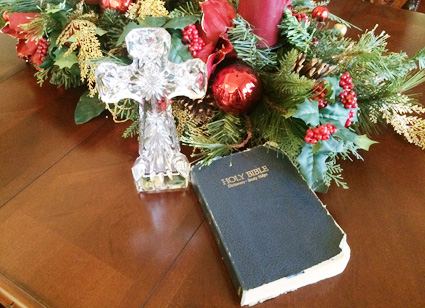
The gifts allowed our family to look back and make past stories part of the present and the future. Two special ones went to Michael’s family. Jennifer received Grammy’s lovely Waterford crystal cross, and Michael “got back’ the well-worn King James Version Bible he received as a first-grader at Columbus Avenue Baptist Church. He immediately pointed out to his sons Ephesians 6:1, marked with yellow highlighter, “Children, obey your parents… .”

hillman bible425This Christmas I gave my daughter-in-law, Jennifer, Grammy’s lovely Waterford crystal cross, and my son Michael “got back’ the well-worn King James Version Bible he received as a first-grader at Columbus Avenue Baptist Church.The two presents remind me of my friend Randy Lofgren’s favorite phrase, “Upward and Onward.” He closed notes, letters, meetings and conversations with the charge. The cross encourages us to climb upward with our eyes on Christ. The Bible serves as “a lamp unto our feet and a light unto our path” as we move onward.

Like our family, Texas Baptists have a wonderful heritage. But also like our family, we must move upward and onward. New Year’s resolutions help set those directions. Facebook friends confirm major areas for personal goals—improvement, involvement, organizing, relationships and finances.

As Texas Baptists move upward and onward together, we also make New Year’s resolutions that seek to offer equal emphasis to the Great Commandment and the Great Commission. These include:

Improvement. Relocate BGCT offices to facilities strategically located and right-sized for current needs.

The Christian Life Commission already has been repositioned in Austin. The transfer of most staff from the current Baptist Building to leased space in Dallas likely will occur in August. Meanwhile, the Texas Baptist Historical Collection will move to Waco.

Involvement. Emphasize the Texas Baptist Hunger Offering effort on Mother’s Day while affirming other fund-raising methods.

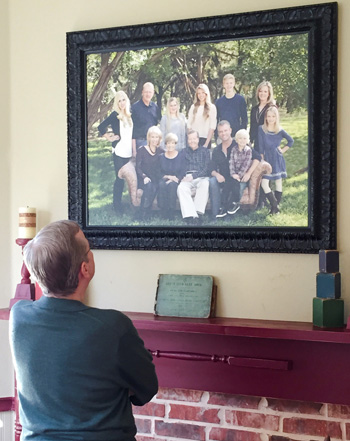
hillman lofgren350Randy Lofgren gazing upward.As the first mother and grandmother to serve as BGCT president, I can imagine sadly how not being able to plan the next meal for my children or grandchildren would feel. Texas is second among states in the number of hungry children with one in four living in food-insecure households. Worldwide, almost 70 percent of childhood deaths are associated with malnutrition and related disease. Through the offering, we work with Baptist partners to meet immediate needs and help families long-term.

Organizing. Align the staff to most effectively carry out the mission of the Baptist General Convention of Texas to “encourage, facilitate and connect churches in their work to fulfill God’s mission of reconciling the world to himself.”

To this end, the Executive Board will hear ideas about realignment at the February meeting.

Relationships. Pray for every lost person in Texas.

Through the Pray for Every Home Texas plan, Texas Baptists will be encouraged to prayer walk and pray for 5 different households a day for 20 days to reach 100 of their closest neighbors and then do it again.

Finances. Increase awareness of the financial operations and the need for giving among individuals and churches.

When the BGCT recently decreased funding to educational institutions, many Texas Baptists expressed concern. However, some churches have reduced their giving or give little or nothing to the Cooperative Program or Mary Hill Davis Offering. Individuals sometimes don’t know how much their congregations give. To find out, call the BGCT at (888) 244-9400 and ask for the finance office.

texas baptist voices right120Will we as individuals keep all of the New Year’s resolutions we make? I hope so. Will we as a state convention keep all of our resolutions? I pray so.

Sadly, my friend Randy Lofgren, who spent a lifetime leading and making music in Texas Baptist churches, passed away the day after Christmas. A special picture of Dr. Lofgren gazing upward reflects his philosophy of moving onward under God’s guidance. I pray that we as individuals, churches and a state convention will adopt that same philosophy.

“Upward and Onward, Texas Baptists!”

Kathy Hillman is president of the Baptist General Convention of Texas. She also is director of Baptist collections, library advancement and the Keston Center for Religion, Politics and Society at Baylor University.


Right or Wrong? African-American churches and community

Is claiming African-American Baptist churches emphasize community action and community ministry more than their Anglo counterparts accurate? If so, why and how has this emphasis become so integrally woven into the tapestry of African-American churches?

Historian Edward Wheeler has suggested the African–American church agenda, from its beginning as an independent church, has been greatly concerned about the “uplift of the race.”

Without the societal and government services now available, there was no other assembled organization that could care for the needs of the people but the church. The church and its members looked after the hungry, the homeless, the ill, the unclothed, the untrained, the illiterate, the widows and orphans, and people afflicted by a host of other maladies that beset human-kind. There has been an “ought-ness” about responding to the needs of others, both as an act of humanity and in obedience to the love of Christ.

‘Poor saints’ offering

I vividly recall the church of my youth and other African-American churches with which I was acquainted receiving a “Poor Saints” offering. It is now a mission or benevolence offering, but the intent remains the same—to provide a way of assisting those in need. The plethora of government agencies and programs has reduced the emphasis in some churches, but not totally.

In addition, other independent organizations and businesses developed in response to addressing human needs. They included burial societies, lodges, clubs and private organizations, insurance companies and banks, and benevolent clubs. All of them responded to meeting human need. In time, churches formed Baptist associations and conventions for addressing these needs. Long before the governments took an interest in education for African-Americans, the churches—both individually and collectively—became the fund raisers for education from grade school through college.

We often hear the term HBUCs—historically black universities and colleges. These were church-sponsored institutions sometimes resulting from the collective work of associations and conventions. It should be noted that white Baptists of the North, along with other benefactors, were instrumental in helping these schools get started and have continued support.

Morehouse College, for example, met at Friendship Baptist Church until it was able to secure land of its own. Morehouse was established for African-American males by whites from the North. Spellman College was founded in Friendship Baptist Church in a similar way for young women. There was a time when HBUCs numbered in the hundreds. The Civil Rights movements opened all public facilities to all people and removed the strain of churches in funding African-American education.

‘Uplift of the race’

In the founding of the National Baptist Convention of America (1895), three former conventions of emphases were merged—the Baptist Foreign Mission Convention (1880), the American National Baptist Home Mission Convention (1886) and the National Baptist Education Convention (1893). This larger convention became the collector of receipts and the promoter of programs and emphases for the uplift of the race.

The question is often asked, “Why aren’t African Americans more interested in missions abroad”? The answer has been very simple. We have been carrying the burden of needs for the “uplift of the race” in America.

Emmanuel McCall, interim pastor, Friendship Baptist Church

Adjunct faculty member, McAfee School of Theology

Atlanta, Ga.

If you have a comment about this column or wish to ask a question for a future column, contact Bill Tillman, consulting ethicist for “Right or Wrong?” at btillman150@gmail.com.


Down Home: The ghosts of Christmas (just) past

If I told you I’m still haunted by Christmas shopping, that would be an overstatement. But I definitely sense somebody looking over my shoulder.

Throughout the years, Christmas shopping often felt like a nightmare.

Sometimes, I figured I had a better chance of winning the lottery than finding a decent space in the mall parking lot. I don’t even buy lottery tickets.

Then, when I finally entered the mall, I realized parking was the easy part. The joint was filled with hazards in the run-up to Christmas. Young parents with strollers. Children running amok. Aggressive speed-shoppers. Go-slow-and-clog-the-escalator pokey shoppers. Piped-in holiday music that sounds like a cardboard smoothie for the ears. Irritated sales clerks. Picked-over products.

Jesus just got fed-up and left

Talk about ruining the Christmas spirit. By the time I finished my mall shopping, I usually decided nobody “took the Christ out of Christmas.” Jesus just got fed-up and left.

This year, I joined a bazillion of my fellow countrypeople and shoppers worldwide. I picked up my laptop and shopped from the comfort of my recliner. I haven’t seen final statistics, but analysts predicted online shopping this year would top the record set in 2013 by 15.5 percent

To be fair, I must admit Joanna, my wife, does most of our Christmas shopping. She draws up the lists and keeps track of how much we’ve spent on every family member. She also buys most of the stuff. This year, I think she did the majority of her shopping online, too. I’m surprised she’s not on a first-name basis with the delivery-truck drivers in our corner of Dallas County.

We also eased our burden by starting early. On vacation, we picked up stocking-stuffers for our daughters and sons-in-law. When we drove out to Nashville to visit our younger daughter, Molly, we stopped at a toy store to shop for our grandson, Ezra, whose mom is our older daughter, Lindsay.

But after Thanksgiving, we realized we better get busy if we were going to get our shopping done. We felt a unique urgency, because we didn’t know when Molly would deliver her first baby, but we wanted to be ready.

Of course, I shopped for Jo. But I also drew the assignment of gathering gifts for several of the guys on our list. And since we’re oldyweds, I helped Jo by ordering some of my own Christmas gifts.

When it comes to shopping, the Internet is a thing of beauty. Just type in what you’re looking for—like “men’s shirts”—and ta-da! More shirts than you can shake a collar stay at.

Going online

You might think shopping online is cut-and-dried. Search for the item you want to buy, click on the picture of it to put it in your digital “shopping cart,” fill out the forms for your billing and shipping addresses, type in your credit card information. And you’re done.

You would be wrong.

For the next several weeks, you get regular emails. The first ones come from the company that sold you the stuff. And then they come from the shipping company that is delivering the stuff. They arrive with frequent regularity, and they can be annoying. But I took comfort in knowing the gifts were in transit and would arrive before Christmas.

But that’s not all.

Here’s the creepy part: I’m reading an article from a newspaper or magazine on my laptop, and the company that sold me gifts for my dad and one of my sons-in-law is still trying to sell me sweaters and shirts. The very same sweaters and shirts I already bought.

And then I’m on another website, and the Bible-seller is there, too, asking me to buy another Bible.

This goes on and on.

Oh, I realize I could open a file in my computer and purge things called my “cookies” and my “cache,” and these merchants probably would lose track of me. But now it’s kind of a spooky game. Where will old merchant-shopper-Internet relationships appear next? And what will they try to sell?

The ever-present nature of all these tailored ads reminds me of a lesson my dad used to drill.

You never know…

“Son,” he’d say, “you better behave wherever you go, because you never know when someone who knows you will show up.”

For awhile, I figured that was just a old dads’ tale—something he made up to keep me in line when he wasn’t around. But then we traveled from our home in Texas to the Royal Gorge in Colorado. We walked across the suspension bridge to see the other side—which looked a whole lot like the first side, by the way. As we returned, we looked up and into the eyes of the Zielke family, who lived about five blocks from our home.

After we exchanged pleasantries and headed on across the bridge, Daddy looked over at me. He didn’t elaborate. He just asked one question: “See what I mean?”

I still recall that lesson when I think I’m on my own. Even when I’m far from home. And I’m awfully glad I only bought shirts and sweaters and a Bible online this Christmas.


2nd Opinion: Pastors, stop signing those marriage licenses

Pastors should stop signing state-issued marriage licenses. They should stop immediately. Individuals and organizations whose agenda is murky at best are hijacking the marriage debate. We have stopped asking the right questions and started reacting to the debate swirling around us.

kyle henderson130Kyle HendersonOn the one hand are people who want to radically redefine marriage in the eyes of the state. They are advocating for open and equal access to the benefits given by the state to married individuals. They want tax benefits, inheritance rights and parental privileges that automatically are given to people who marry.

To this group, pastors and churches need to have a simple and clear answer: “Blessings on you. I don’t need to get a benefit from the government that you cannot get. My contracts should not be better than your contracts. Your kids should be as protected as my kids.”

The only way I can with good conscience say this is if I am no longer part of the civil process. No functionary of any religion ought to be able to finalize a marriage contract between individuals and the state. It is an abhorrent intermingling of church and state. Until the state sees this clearly and changes its rules, we should abandon the system voluntarily.

It was convenient for many years for pastors to officiate weddings and then for the state to recognize those marriages. It was easy, but it was a bad idea.

We haven’t learned the lesson

Somehow, we still have not learned the lesson. We did not learn it at the time of Constantine and the huge influx of the unsaved into the church because it was the “state thing to do.” We did not learn it at the time of the Reformation, when the state executed Baptists for teaching baptism was only for those who professed faith in Christ. We did not learn it in the early American colonies, when Baptists were beaten, whipped, exiled, taxed and imprisoned for not accepting the official “state church.”

We have not learned it, and the church has suffered.

On the other hand are individuals who want to take a stand for “biblical marriage.” This group makes me just as uncomfortable. They seem to overlook the chaotic and base descriptions of marriage in the Bible. Is Abraham really a model here? Is David or Solomon? Think of the models—polygamy, kidnapping and forced marriage, concubines and levirate marriage. These groups so often glide over the difficult descriptions and ignore the pain and stain of marriage as we have known it.

I don’t want to be painted by their brush, either. Can we ignore the traditional configurations of marriage, which viewed women as property? Can we overlook the way the church/state collusion used the Bible to denigrate people of different races and keep people from marrying in the cause of racial purity?

We believe Scripture teaches us the laws of God. We believe these laws are not arbitrary but God’s best design for our lives. God teaches us about human relationships. Specifically, God teaches us about marriage. The Bible is filled with the crazy lives of broken people who get it wrong more often than they get it right. Still, through it all, God continues to lift up the ideal created in the Garden.

‘Ephesians 5 marriage’

Ephesians 5:20-33 lifts up the highest ideal of marriage. I never talk about “biblical marriage” but instead talk about “Ephesians 5 marriage.” This passage compares the relationship of a husband and wife to the love Christ has for the church. It begins in mutual submission. It is characterized by love, respect and devotion. It honors God’s intent in creating male and female. It is unabashedly pro-sex. It sets the parameters of covenant marriage. It is sacrificial, loving, lasting and committed.

Our society has been redefining marriage for a long time. There was a time society expected couples to care for each other, but now privacy laws shield medical information from spouses. There was a time when couples had to live together to be married, but now cohabitation is optional. There was a day when getting out of a marriage required a cause, but now “no-fault” divorce has eroded longevity in marriage and, I believe, much happiness.

Somewhere along the way, we parted waters. We have been using the same word but different meanings.

The church needs to shake itself free of old definitions of marriage. We must reject the state’s contract view. We must reject society’s view of a traditional oppressive marriage and instead reassert the high ideal of Scripture. Jesus says, “Give to Caesar what is Caesar’s and to God what is God’s.”

‘Declaratioon of Marriage’

Couples should get married according the tenets of their beliefs and then merely register their relationship with the state. In Texas, this system already exists; it is called “Declaration of Marriage.” Many other states have similar paths. We just need to direct people toward them. In some states, people will need a state official to perform the ceremony. This is a small price to pay for us to regain our footing in regard to the “marriage debate.”

We should not fear the coming changes the state has planned but instead see it as a clear opportunity to lift up an alternative we believe was designed by God.

Kyle Henderson is pastor of First Baptist Church in Athens, Texas. Baptist News Global distributed his column.


Editorial: In the New Year, remember: The kingdom of heaven is at hand

A few weeks ago, our Bible study class wrapped up a survey of the Apostle Paul’s letters to his protégé Timothy. Although the epistles present advice to the young pastor in Ephesus, our class members are closer to the age Paul attained by the time he wrote them. It seemed we filtered our reading through the lenses of life experience. None of us has been beaten, run out of town or imprisoned for our faith. And I don’t think anyone has been shipwrecked or bitten by a snake. But you don’t reach our age without enduring heartaches, disappointments and grief.

knox newEditor Marv KnoxSo, we resonated with Paul’s concluding declaration of hope: “But the Lord stood with me and strengthened me, so that through me the proclamation might be fully accomplished, and that all the Gentiles might hear; and I was rescued out of the lion’s mouth. The Lord will rescue me from every evil deed, and will bring me safely to his heavenly kingdom; to him be the glory forever and ever. Amen” (2 Timothy 4:17-18).

Bold words from a saint near the end of a hard life. Paul suffered mightily for the gospel. He lived a nomadic existence, subject to the perils of first-century travel. He felt the full weight of the Jewish religious hierarchy and the Roman government. Worse, he endured malicious disrespect from competitors within the church. By the time he penned these words, he was queued up in the Roman judicial system, heading for what he certainly knew would be martyrdom.

Yet all Paul saw was God’s rescue and provision. He recalled not persecution and rejection, but gospel advance. Based on other passages, we know Paul expected to die soon. Still, he believed God would rescue him from “every evil deed” and deliver him to God’s “heavenly kingdom.”

God is present

Paul reminds us reality extends beyond what we see, past the tangible people, places, situations and events in our lives. God is present. Even amidst pain and disappointment. Even when we cannot see.

Hope puts its full weight down on God. It’s not wishing for desired outcomes. Hope is trusting God in all outcomes.

Not coincidentally, our class finished studying the Timothy letters on the second Sunday of Advent and immediately turned our attention to Christmas, when we celebrate the birth of Jesus, the Hope of the World.

Christmas delivers hope, but not because of the baby in the manger. Christmas delivers hope because God took on flesh and descended to Earth, incarnating—embodying—God’s presence among us. Jesus came to express God’s everlasting love to humanity. He came to provide an eternal bridge to that love by saving us from our sins and restoring our loving relationship with God.

The hope of Christmas is not the manger, but the cross.

And even though that hope is eternal, it’s also present. It’s not just the sweet bye-and-bye, but also the here-and-now. That’s good news as we enter a new year.

At least four times in the Gospels, Jesus declares: “The kingdom of God (or heaven) is at hand” (Matthew 3:2, 4:17, 10:7; Mark 1:15). To be sure, Jesus talked about eternity. But he insisted eternity already is present. Relationship with God is here. Now. Life change is available this moment. To demonstrate, he repeatedly healed the sick, fed the hungry and comforted the afflicted. He didn’t promise them a reward in another life; he relieved their suffering immediately. He delivered hope.

We will be judged by how we deliver hope

In one of his final teachings, Jesus said his followers will be judged by how well they bring kingdom reality to the hungry, the thirsty, the stranger, the naked, the sick and the prisoners (Matthew 25:31-46). We will be judged by how we deliver hope.

And that’s a strong admonition for Christians on the precipice of a new year. To be faithful to the Hope of the World, we must deliver hope to the world. Tangible hope. Spiritual hope.

The two are bound together. Tangible, physical hope is vital. And it also lends credence to spiritual hope.

Surveys of American adults consistently show most people think they’ll go to heaven, and few believe in hell. No wonder argumentative evangelism rarely produces new Christians. Most unbelievers see truth as relative; they’ll let you keep yours, but leave theirs alone. And you can’t scare hell out of them, because they think they’re heaven-bound.

So, we’ve got to show them exactly how the kingdom of heaven is at hand. Jesus explained: “And as you go, preach, saying, ‘the kingdom of heaven is at hand.’ Heal the sick, raise the dead, cleanse the lepers, cast out demons. Freely you received, freely give” (Matthew 10:7-8).

Throughout 2015, may we perpetually demonstrate the “at-handedness” of the kingdom of heaven. Present and the eternal hope hang in the balance.


Vermont: Seeing God at Work

On my recent mission trip to Bennington, Vt., I saw God work in miraculous ways, and it took almost no time at all.

jenifer wilkes130Jenifer WilkesOur mission team worked alongside Summit Church, and the congregation’s collegiate director repeatedly reminded us to pray before we acted. Throughout the week, we saw just what the power of prayer could do.

Our first day after arrival, we went to Rutland to help with the preview service of a new congregation, Rutland City Church. On our way and even after we arrived, we prayed for God to move and for people to show up. About 65 people attended the service, and five accepted Christ as Lord and Savior, which is huge for any church in Vermont. According to the collegiate director, Lauren Cartwright, only about 30 people typically show up for this kind of event.

A couple of days later, we took a tour of Southern Vermont College and ate lunch in the dining hall. By this point, Lauren had not come in contact with one believer on this campus. While we were there, we had conversations with many students. At least four professed to be believers and said they wanted to get plugged into some sort of college ministry. So, we introduced them to Lauren. One student came to the game night the following evening.

lauren cartwright200Lauren Cartwright, collegiate director at Summit Church in Bennington, Vt.A few days later, we set up at a music shop and played live music. While some people did that, three groups rotated between prayer-walking, staying in the store, and setting up witnessing cards at a coffee shop. That night we had two really huge conversations. One was with a guy named Andrew who said he had grown up Christian but now doesn’t believe in God.

Later, I had a conversation with a guy named Steve. I don’t remember a lot of what I had said to him. I just know I prayed for the Lord’s help, and that is what I got. I found out he grew up as a Jehovah’s Witness and had been baptized. But since he started smoking pot and having relations with women outside of marriage, he was kicked out of his house and the Jehovah’s Witnesses. He still goes to the worship services, but no one is allowed to talk to him.

We talked about forgiveness and how Jesus forgives us no matter what we have done. Later on in the conversation, I asked him what he thought it meant to be saved or to follow Christ. His answer was being honest with yourself and everyone else around you. So, I talked to him about what it truly means to have a relationship with and to follow Christ.

There are other wonderful things that happened in Vermont, and it was obvious God was moving every step of the way and in every conversation. At the end of the trip, Lauren told our group that she had seen more spiritual activity in those 10 days than in the five months she has been there.

Jenifer Wilkes, a student at Tarleton State University in Stephenville, served with Go Now Missions in Vermont.


Opinion: A Top 10 list of religion stories for 2014

WASHINGTON (RNS)—It was a topsy-turvy year in 2014, and here are my picks for the top 10 religion stories of the year:

james rudin130Rabbi A. James Rudin1. Islamic extremist groups, especially the Islamic State and Boko Haram, dominated the year’s news with atrocities that included beheadings, crucifixions, mass killings and persecution of religious minorities, including Christians in Africa and the Middle East. A gruesome highlight was Boko Haram’s kidnapping of 200 Nigerian girls and then forcing the captives to convert to Islam. Despite U.S. military action against the group and Pope Francis’ call for their defeat, a long struggle lies ahead.

2. The pope continued to reshape both the global Roman Catholic Church and the Vatican’s central leadership. Denounced by religious conservatives and applauded by moderates and liberals, Francis removed archconservative Cardinal Raymond Burke from his powerful position in Rome and also fired the authoritarian commander of the Swiss Guards. The pope addressed a host of subjects, including evolution, poverty, marriage and divorce, homosexuals and the role of women in the church.

3. The decline of religious identity and observance in much of Europe and the United States continued in 2014. Surveys and polls documented significant losses in both congregational membership and personal commitment. At the same time, many religious communities are flourishing across the Global South.

temple mount425Tension continued surrounding the status of Jerusalem’s sacred Temple Mount in 2014. (Wikipedia Image)4. The Israeli-Palestinian conflict attracted headlines because of the war in Gaza. Islamic militants staged terrorist attacks inside Israel, including a lethal assault on worshippers at prayer in a synagogue. And tension continued surrounding the status of Jerusalem’s sacred Temple Mount. At year’s end, a viable “peace process” appeared more elusive than ever.

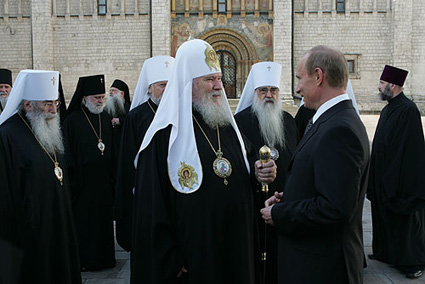
5. Twenty-five years after the collapse of the self-proclaimed atheistic Soviet Union, Orthodox Christianity is surging in Russia, led by its religiously devoted president, Vladimir Putin. Church buildings neglected under communism are being rehabilitated, and observers see signs of a spiritual revival among Russians under the age of 40.

putin orthodox bishops425Russian President Vladimir Putin meets with members of the Russian Orthodox Church Holy Synod. (Wikipedia Image)6. The past year saw significant gains for the homosexual communities. Thirty-five states and the District of Columbia now allow same-sex marriages, up from 17 just a year ago. And there were advances in key areas involving legal and social equality, employment, child adoption, hate crimes and bullying.

7. Violent clashes continued between Buddhists and Rohingya Muslims in Myanmar. The Buddhist majority claims the Muslims are mostly illegal immigrants from neighboring Bangladesh. Although Buddhists frequently are perceived as a nonviolent community, the Buddhists in Myanmar have engaged in bloody clashes with Muslims amid accusations of “ethnic cleansing.”

8. Clergy wrongdoing, both sexual and financial, crossed religious lines during the year. Many Catholic communities still were reeling from the sordid revelations and costly court cases involving priests who sexually abused young people. The Chicago Archdiocese released more than 21,000 pages of evidence related to such clergy abuse. Mark Driscoll, leader of a Seattle-based megachurch network in five states, resigned in October following a series of charges that included financial misconduct, plagiarism and a harsh hyper-macho theology. In the nation’s capital, Barry Freundel, a prominent Orthodox rabbi, was accused of voyeurism and secretly spying on naked women in the mikvah, the ritual bath. Freundel was fired from his congregational position and suspended from his university teaching job.

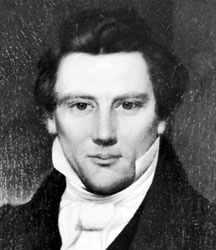
joseph smith216Joseph Smith, founder of the Church of Jesus Christ of Latter-day Saints.9. Mormon leaders publicly acknowledged the church’s founder and prophet, Joseph Smith, had at least 40 wives, including a girl who was just 14. The report admitted that for Smith’s first wife, Emma, polygamy was “an excruciating ordeal.” The disclosures were part of a Mormon “transparency” campaign to counter criticism of the church, its early leaders and some of its teachings.

10. Notable deaths during the year included 110-year-old pianist and Holocaust survivor Alice Herz-Sommer; Jewish public intellectual Leonard Fein; mysticism scholar Rabbi Zalman Schachter-Shalomi; and Bishop John J. Nevins, the first Catholic bishop of Venice, Fla., and a pioneering leader in Catholic-Jewish relations.

Rabbi A. James Rudin, the American Jewish Committee’s senior interreligious adviser, is the author of Cushing, Spellman, O’Connor: The Surprising Story of How Three American Cardinals Transformed Catholic-Jewish Relations. His column was distributed by Religion News Service.


Editorial: As people of faith, expect more in 2015

Compare the week from Christmas to New Year’s Day to a lookout point on a scenic highway. It’s a great place to stop, stretch and survey the scenery. If you pay attention, you can scrutinize significant markers on the road just traveled and scan the horizon for adventures ahead.

Each of us will remember personal events from the past year. I’m fairly certain I’ll recall 2014 for a child who arrived, a woman who departed, something that didn’t happen and a big decision.

knox newEditor Marv Knox• Eleanor, our second grandchild, arrived Dec. 4. She’s the first baby born to our younger daughter, Molly, and her husband, David. She’s swaddled sweetness. And Joanna and I can hardly wait to spend the coming years getting to know her.

• Helena Loewen Moore, my grandmother, left for heaven this fall. Grammar was 103 years, six months and 21 days old when she died. I mostly remember her as the vigorous woman who took me for long walks and warbled hymns. If Eleanor lives to be as old as her great, great grandmother, their lives will span 207 years.

• For the first time in four years, neither of my parents spent even a single day in intensive care. Praise be to God.

• Late this summer, after years of hard work, fervent prayers and bountiful tears, Baptist Standard Publishing decided to close FaithVillage, our resources website/social network. Perhaps FaithVillage arrived ahead of its time. I hope one day to turn on my computer and visit a site very much like it, touching millions of Christians around the globe.

You can pause to contemplate 2014 developments imbedded in your memory. Every year writes stories on the pages of each life.

The year past

The year just ended also coded monumental stories on the transcript of history. We’re bound to remember 2014 for:

• The Ebola crisis, which ravaged West Africa, jumped the Atlantic and demonstrated the vulnerability of a small planet populated by highly mobile people.

• The rise of extreme militant Islam—known as the Islamic State, or ISIS or ISIL—in Iraq and Syria. Also, systematic beheadings staged as ISIS fund-raisers/intimidation snuff films/recruitment videos

• Other violent terrorist groups, such as Boko Haram in Nigeria, al-Shabaab in Sudan and the Taliban in, among other nations, Pakistan, where they slaughtered schoolchildren in mid-December.

• Deaths of a black teenager, a black man and a black child. We may not recall the names of Michael Brown, Eric Garner and Tamir Brown, but we won’t be able to forget their deaths disproved America is a post-racial society.

• Revelations of U.S.-sanctioned torture, inflicted since 2001 by the CIA.

• U.S. political division, clearly represented by results of the mid-term elections, which set up a titanic battle between the Democratic White House and the Republican-controlled Congress.

• An airplane that veered off course, never to be found, but presumably resting on the bottom of the Indian Ocean.

• An airplane shot down over Ukraine, civil war in that Eastern European nation and the specter of Russian empire-building.

• Thousands of Latin American children and teenagers who teemed across the United States’ southern border.

• The military tar-babies of the late 20th/early 21st centuries, otherwise known as Iraq and Afghanistan.

• The political battle over immigration reform, stalled again.

• An improving economy that lowered unemployment but still left a widening gap between the rich and poor.

• The tragic suicide of one comic genius, Robin Williams, and the public shaming of another, Bill Cosby.

The year ahead

A litany of letdowns from 2014 is enough to divert wind from the sails of the most diehard optimist. Even more dispiriting is the apprehension we’ll be reviewing a similar list for 2015 a year from now.

Still, as you consider the mishaps, catastrophes and atrocities of the past year, ponder words from one of Texas Baptists’ great gifts to the church (and world), gospel artist Cynthia Clawson.

Near the end of a Christmas concert, she observed: “As people of faith, we don’t expect much anymore.”

She’s correct, you know. Life’s destruction and disappointment beat us down. We review the malignant machinations of a year like 2014, and our God shrinks. We consider the obstacles, challenges and outright evil looming in 2015, and our hope shrivels.

“As people of faith, we don’t expect much anymore.”

What if we decide that won’t be true in the coming year? What if we expect more of God, ourselves and others?

Human nature being what it is, and the world broken as it is, 2015 probably will produce as much carnage as its elder brother, 2014. But what if we refuse to let that define us? What if we reject the ensmallment of God? What if we decline to allow circumstances to handcuff our spirits?

We may not heal all the world’s ills. We won’t even get close enough to inoculate for many of them. But living out of vibrant, expectant faith, we can make a difference in our homes, offices, schools, churches, communities—even our state and nation and selected corners of this big old world.

With God all things are possible

Once upon a time, Jesus encountered a young man who expected too little of himself, much less of God. Jesus told his followers an eternal truth about salvation, which also applies to divine expectation, “With people this is impossible, but with God all things are possible.”

The Apostle Paul likewise possessed expectant faith. He promised the early church—and us, “I can do all things through him who gives me strength” (Philippians 4:13).

Missionary pioneer William Carey lived a large faith. He is known for launching the Baptist missions movement. He admonished: “Expect great things from God. Attempt great things for God.”

As 2014 draws to a close, let’s expect more of ourselves and of God in 2015.


In Touch: A busy December

Hello, Texas Baptists. I had the privilege of worshipping at First Baptist Church of Hewitt Dec. 7. Thanks to Pastor Roy Marshall for the opportunity.

I attended the annual pastors’ and wives’ Christmas fellowship at Galveston Baptist Association Dec. 8. It was a wonderful evening. Their director of missions, Dale Hill, is a great leader and friend.

hardage david130David HardageThis is Houston Baptist University’s 50th season for men’s basketball. It is definitely a milestone for the Huskies. Make this a great season, gentlemen!

If you have not seen Blair Blackburn’s book A City on a Hill, you are missing out. This book beautifully depicts the architectural history of Dallas Baptist University.

Mark your calendars for Jan. 22-23. The Winter Texan Retreat & Missions Training will take place at the Valley Baptist Missions Education Center. Click here for more information, and RSVP to thevbmec@gmail.com by Jan. 19 to attend.

The 2015 Everlasting Choir Celebration will take place on two dates in two locations. The first is March 5-6 at First Baptist Church of Amarillo, and the second is March 19-20 at First Baptist Church of Bryan. I hope you will join us. Click here to learn more.

Hardin-Simmons University is offering a doctorate in leadership. This degree merges an academy of scholars with community practitioners to develop enlightened, ethical leaders. Learn more about this great educational opportunity by clicking here

texas baptist voices right120I will be at First Baptist Church of San Angelo January 28. If you are in the area, please join us for worship. I would love to see you!

As Christmas approaches and this year comes to a close, I can’t help but reflect on the tremendous blessing it is to serve you in the capacity I do. I am beyond grateful for the opportunity. As the Lord guides the Baptist General Convention of Texas into the future, I am encouraged, motivated and ready. Please continue to pray for the convention. We covet your prayers and appreciate your support.

Merry Christmas and Happy New Year to you all!

David Hardage is executive eirector of the Baptist General Convention of Texas Executive Board.


Richard Ray: What treasures will you give to Jesus?

This Christmas has been exciting. I have been to several church Christmas parties. I have been Christmas caroling. And I have eaten more Christmas cookies than I should.

richard ray130Richard RayI have been shopping, spent time with family and mailed out Christmas cards. I will conduct a Christmas Eve service, when we will spend time honoring the true reason we celebrate Christmas. I have hosted an associational Christmas party, where we sang songs, gave away gifts and shared the Christmas story. When I get into my car, I have the radio tuned to the Christmas channel, so even as I drive, I can maintain the Christmas spirit.

On Christmas day, my children and grandchildren will come to the house, where we will read the Christmas story and open presents. I will get to see their faces shine in excitement and joy as they receive those gifts under the tree. Christmas joy will abound in the hearts of so many this Christmas, but for so many more, it will not.

Many of God’s children will decorate, put up a Christmas trees, wrap gifts and then wait for Christmas morning. I know we as Christians realize Christmas is not about gifts, trees and decorations, but I fear the rest of the world may not understand.

The very first Christmas took place in Bethlehem some 2,000 years ago, and the only gifts were presented to our Savior. The Wise Men gave gold, frankincense and myrrh. It was a gift to honor the newborn King. What these wise men showed us is we should present gifts to our Savior, who was born to die and then rise again so that our sins could be forgiven and our souls could receive salvation.

Jesus presented himself to us as a gift. Likewise, we must present ourselves to him as a gift. If we are to show the world how to celebrate Christmas, then we must lay our gold, frankincense and myrrh at our Savior’s feet, just like those Wise Men of old.

texas baptist voices right120Matthew 2:10-11 says, “When they saw the star, they were filled with joy. The Wise Men went to the house. There they saw the Child with his mother, Mary. They bowed down and worshipped him. Then they opened their treasures. They gave him gold, frankincense and myrrh.”

What treasures will you open up this Christmas and give to Jesus Christ? Those treasures will show the world who Christmas is truly all about.

Remember, God has called you to serve him, but God has not called you to serve alone. Let us be your advocate, your resource and your prayer partner as you fulfill your calling. Until next time, please visit our website, www.bivocational.com.

Richard Ray is executive director of the Bivocational/Small Church Association and director of missions for the Tri-Rivers Baptist Area. You can reach him at brother_ray@juno.com.


Christmas meditation: Blessed peace, when all is well

It was December, that month when all heck breaks loose, when the calendar fills to overflowing and the expenses pile one on top of the other like leaves covering the lawn in the fall. What is it with December, that month when Christians turn their attention to a quiet stable and a silent night, when peace is tossed around like sugar cookies?

eric black130Eric BlackHis car broke down on his way to work. As he stood on the shoulder of the road, a cold rain falling on his shoulders, he dutifully called his boss to let him know he would be late. Two hours later, he walked into the office and received a pink slip, the same pink slip 150 other people received from the plant supervisor.

He walked back out the way he came in, stopping to look up into the still-falling rain. He pulled his phone out of his pocket to call his wife, to give her the news about the car and about the layoffs.

She was on her way to get the kids. School let out early that last week before Christmas. She said she loved him before they ended the call. The kids jumped in the car, and she smiled for them, asking them about their day.

When they got home, the kids found ways to entertain themselves. She went to the bedroom and sat on the bed. That strange pain in her side wasn’t getting better. A few minutes later her phone buzzed, the nurse calling to make an appointment with her doctor.

As the family cleaned up after dinner, a rare evening when they could all eat together, the TV news showed reports about ISIS that slid into updates on Ebola that slid into breaking news about Boko Haram kidnappings that slid into news of another mass shooting, this one in a small town up north.

Weary of the news, they switched to the Christmas music channel to hear songs about peace on earth and goodwill to men.

They put the kids to bed and got ready for bed themselves. They talked about the day, their shoulders and minds as heavy as the things they talked about. When they couldn’t turn the problems in any new directions, he reached for the Advent book full of stories and Bible readings about hope, love, joy, and peace. She settled into the pillow behind her back.

He read:

“See, I will create

new heavens and a new earth.

The former things will not be remembered,

nor will they come to mind.

But be glad and rejoice forever

in what I will create,

for I will create Jerusalem to be a delight

and its people a joy.

I will rejoice over Jerusalem

and take delight in my people;

the sound of weeping and of crying

will be heard in it no more.

Never again will there be in it

an infant who lives but a few days,

or an old man who does not live out his years;

the one who dies at a hundred

will be thought a mere child;

the one who fails to reach a hundred

will be considered accursed.

They will build houses and dwell in them;

they will plant vineyards and eat their fruit.

No longer will they build houses and others live in them,

or plant and others eat.

For as the days of a tree,

so will be the days of my people;

my chosen ones will long enjoy

the work of their hands.

They will not labor in vain,

nor will they bear children doomed to misfortune;

for they will be a people blessed by the Lord,

they and their descendants with them.

Before they call I will answer;

while they are still speaking I will hear.

The wolf and the lamb will feed together,

and the lion will eat straw like the ox,

and dust will be the serpent’s food.

They will neither harm nor destroy

on all my holy mountain,”

says the Lord.

(Isaiah 65:17-25)

When he finished, there was a long silence as they stared straight ahead. Without looking at each other, they reached across the bed for each other’s hand, and finding the fingertips, their hands slid together and held tight, the silence broken by the exhalation of each.

She was about to speak when he laughed. “What,” she asked with a smile.

“Of all the things to read today: ‘New heaven and a new earth.’ ‘They will not labor in vain.’ ‘The wolf and the lamb will feed together.’ And to read this today, when the car broke down, I got laid off, the report from the doctor. … And that’s just our bad news. What else could go wrong?”

He could feel her looking at him as if to will his question back into his mouth. Before she could speak, he said, “I know, I know. Plenty. Things are just crazy right now.”

They held hands through another long pause.

She broke the silence this time. “Do you remember when we moved here?”

“Yeah.”

Even though it felt like our guts were being ripped out, that complete peace got us through.

“It seemed crazy. We had good friends and a nice house. We loved what we were doing, but God wanted us to do something different. We couldn’t explain it to anyone. It sounded crazy when we heard ourselves talk about it. It sounded crazy to me.”

He chuckled, remembering.

“As much as we didn’t want to move, we knew it was what we needed to do. We had prayed so much about it, and when everything fell into place and we made our decision, we had such a peace about it. We never second-guessed it. Even though we had to sell our house, even though we had to leave everything we loved, even though it felt like our guts were being ripped out, that complete peace got us through.”

Like an out-of-body experience, he sat with his eyes fixed on the middle of nowhere. For a moment, he couldn’t feel her hand in his. His lungs filled with air more freely than they had all day as he heard God’s voice again. It wasn’t like hearing his wife or hearing his own voice in his ears when he spoke. It was deeper, more solid than that.

He heard it again, God telling them to go, to trust. And he wasn’t afraid again. And she knew he heard it. She knew it in his hand as it relaxed in hers.

He squeezed her hand and looked over at her. When their eyes met, they smiled at each other.

“It’s true,” he said. “All those things we read, one day that’s how it will be. And somehow knowing that makes everything all right now.”

They fell asleep and slept soundly, as soundly as their house built on piers reaching down to the bedrock, as soundly as Jesus sleeping in the front of a boat tossed about on a stormy sea.

Do not be anxious about anything, but in every situation, by prayer and petition, with thanksgiving, present your requests to God. And the peace of God, which transcends all understanding, will guard your hearts and your minds in Christ Jesus. (Philippians 4:6-7)

Eric Black is pastor of First Baptist Church in Covington, Texas.