René Maciel: Sing those carols this Christmas

I have always loved singing. My mom was a singer. She always sang in the choir and was one of those moms who sang around the house. It was in high school, when I had a chance to have a lead part in the musical “Celebrate Life”—now I am telling my age—that I really started singing a lot.

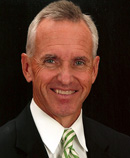
rene maciel headshot130René MacielMusic and singing always have drawn me into worship. A.W. Tozer said, “Worship seeks union with its beloved, and an active effort to close the gap between the heart and the God it adores is worship at its best.” Maybe that is why I enjoy Christmas carols so much. Carols close the gap and allow me to listen to God’s Spirit speaking to me in a deeper way. Christmas carols declare hope to a world that needs hope. This is the music that brings so many into a different frame of mind.

What a great time to sing like the angels, “glory to the newborn king.”For a full month, we get to sing and hear Christmas carols everywhere we go. In churches, shopping centers, cars and maybe at work. David Music at Baylor University said: “Carols are known across cultural, ethnic, national and even religious boundaries. … Another important characteristic of Christmas carols is that they are one of the few elements of American culture in which public religious expression is still readily accepted.”

carolers188It’s time to sing. It’s time to make a joyful noise. Christ has come; he has come for us to proclaim the message of God to our world. God had a redemption plan, and that plan was the Christ child. So, we can rejoice and unashamedly sing those Christmas carols: “Joy to the world, the Lord has come,” “Born is the king of Israel,” “O Come, let us adore him,” and then “Go, tell it on the mountain.”

Texas Baptists, don’t miss this opportunity at this time of the year to sing. Sing those carols. Get your caroling group together, and don’t be afraid to hum or sing loudly those beloved tunes. Let Texas see you rejoicing, and let them hear you sing, “Christ has come.”

Hark, the herald angels sing

Glory to the newborn King!

Peace on earth and mercy mild

God and sinners reconciled.

Joyful, all ye nations rise

Join the triumph of the skies

With angelic host proclaim:

Christ is born in Bethlehem

Hark! The herald angels sing

Glory to the newborn King!

texas baptist voices right120


René Maciel is president of the Baptist General Convention of Texas and president of Baptist University of the Américas in San Antonio.


Guest editorial: Church the way it used to be?

On a recent visit back to my hometown in Oklahoma, I heard about a church that has adopted the motto, “Church the Way It Used to Be.” Later, I did an Internet search for this phrase and learned, sadly, other churches are using the same motto.

Wingfield 2015Mark WingfieldWhile I understand this phrase likely refers to worship style and music choices and Bible basics, it also speaks to the yearning of so many Christians to return to the simple faith of their childhood. Or what appeared to be a simple faith in their childhood.

This yearning isn’t new. After all, the song Give Me that Old-Time Religion was written in 1873.

While on this pilgrimage to the place where I was raised from ages 10 to 17, I took time to drive around town, once again, and visit the old haunts—the schools, the neighborhood, the site of the church that was so formative in my own life. Only the church isn’t there anymore. It long ago moved to a new location, and most of the former buildings I remember now have been torn down. What remains on that site is a sad sight.

And I had to acknowledge even if those old buildings still were standing, that’s not the church where I would want to be today. The relocated church is thriving, but it has gone one direction while I have gone another. Church “the way it used to be” is a reality neither for that church nor for me. It is an illusion, a moment in time that has passed but continues to influence the present.

Two things I’ve recently heard preached by my own pastor have helped me work through this nagging nostalgia.

The first he spoke at a wedding, where he told the bride and groom marriage is like watching the characters in a play. Over time, the bride and groom will change—they must change and grow—while retaining the basic commitment they made at the marriage altar. One of the fundamental rules of playwriting is the characters cannot be the same at the end of the play as they were at the beginning.

And then there was a recent Sunday morning sermon where our pastor reminded us the way forward is not backward. Sounds simple enough, right? But how often do we find ourselves longing to “restore” the church to the way we once knew it? And even if we could, would we fit in there today? The way forward is forward. Time marches on, and we, the characters in God’s universal drama, will not end the story where we began it.

In the book of Revelation, Jesus declares, “Behold, I am making all things new.” Remember, Jesus failed to “restore the kingdom” to Israel in the ways his disciples had hoped. They wanted someone to move them back to the glory days. Jesus was intent on moving them forward to a glory they had not known.

We may fear the future because it is not the past. But on reflection, we may see the past no longer can hold us.


Mark Wingfield is associate pastor of Wilshire Baptist Church in Dallas and author of Staying Alive: Why the Conventional Wisdom about Traditional Churches is Wrong. Baptist News Global distributes his column.


In Touch: Looking for young Texas Baptist leaders

Hello, Texas Baptists. Sometimes, some of us confuse the words “want” and “need.” Oh, I think we really do know the difference. Yet we blur the lines a bit and, maybe, a bit too often. For example, I want the athletic teams I follow to do well, but I don’t really need them to.

hardage david130David HardageThere also are occasions when our wants and our needs really do coincide. I want to be fed and clothed and, it just so happens, I need these things as well. As I think about the future of our Texas Baptist family—and I do that a lot!—I have concluded what I/we want and need are very much in line with one another. And this particularly is true when it comes to engaging the next generation of the Baptist General Convention of Texas.

I very much want the generation that is coming behind me and the one behind them to be aware of what we are doing and the difference we are making. At the same time, a need the convention has is for these same men and women to put that awareness into action. A genuine need we have is for them to act on those matters of which they have become aware.

To put this another way, I want those Texas Baptists who are in their 20s and 30s and 40s to be informed about the missions and ministries of our collective Baptist family. Additionally, there is a need for them to be involved in this work. This means we need them to serve on our Executive Board and to be willing and available to serve on other boards, commissions and councils. We need them to become leaders—not down the road, but today.

texas baptist voices right120Therefore, I am asking you to let me know of people who could and would come alongside us in service. Please send me (david.hardage@texasbaptists.org) or Steve Vernon (Steve.Vernon@texasbaptists.org) their names and contact information.

This is one of the reasons we have begun our Leadership Texas Baptists class. The next one begins in September, and David Adams (david.adams@texasbaptists.org) on our staff can answer all your questions about this group. Please consider becoming a part. You are wanted and needed.      

David Hardage is executive director of the Baptist General Convention of Texas Executive Board.


Editorial: Add the Texas Baptist Hunger Offering to your Christmas list

Have you finished buying Christmas presents yet? If your shopping list doesn’t include the Texas Baptist Hunger Offering, please add one item—which will bless people around the world.

knox newEditor Marv KnoxMore than any moment in recent memory, the Texas Baptist Hunger Offering needs your support. During the first 10 months of this year, Texas Baptists contributed $543,518 to the offering. That’s a drop of about 15 percent compared to the same period last year and a decline of more than 34 percent from the year before that.

A decreasing hunger offering represents heartache—on top of starvation and destitution—in a world of increasing need.

If the current pace of contributions continues, the offering will take in less than $700,000 this year. That total is more than 12.5 percent below the $800,000 goal, which is far too low in light of the world’s agony.

Support for Middle Eastern refugees—particularly Syrians fleeing civil war and persecution—stands out in this year’s hunger offering. It has allocated $21,000 to a Lebanese Baptist ministry, the Lebanese Society for Educational and Social Development, to provide relief for Syrian families. An additional gift of $15,000 from the Eula Mae and John Baugh Foundation has enabled the European Baptist Federation to minister to Syrians pouring into Serbia.

Those needs are vital, but they are not comprehensive. Others range from food distribution in Midland, to food for pregnant teens in Richwood, an education project in McAllen, supplies for a dental ministry in Alvin, and life-skills education and community gardens in North Texas. They also include feeding programs for underprivileged families in Missouri and Virginia, a jobs-skills program in New York City and food for children in the Bronx.

The needs span the globe, too. Your gifts can provide medical coverage for needy families on the West Bank, training for hunger-relief workers in Turkey and sewing supplies in Romania. Also included is education for orphans in the Congo, food distribution in Kenya and language classes in Uganda. The offering supports job opportunities in India, seedlings and livestock in Sri Lanka, ministry to sex slaves in Bhutan and a water filtration project in Indonesia.

The Texas Baptist Hunger Offering delivers at least four significant benefits:

• It provides aid—primarily food and hunger relief—to some of the poorest people in Texas, across the United States and around the world. These are the folks Jesus meant when he talked about serving “the least” (Matthew 25).

• It supports worthy ministries across the geographic spectrum. Some, such as Syrian refugee relief, make the news globally. Some, such as small ministries in poverty pockets across Texas, serve almost anonymously. But they all need support.

• It guarantees every penny of your gift goes to support hunger relief and fight poverty. That begins at home. All the costs of the Texas Baptist Christian Life Commission, which administers the offering, are supported by Texas Baptists’ Cooperative Program unified budget. But that guarantee extends on down the line, because the offering is channeled through Baptist ministries, out of reach of corrupt governments and questionable intermediaries.

• It fuels the gospel. The Christians who operate the relief ministries serve people in Jesus’ name. Their ability to feed people and alleviate suffering validates the gospel they proclaim to the recipients. So, not only are people fed and served, but also many place their faith and lives in the Savior—because you supported the offering.

Because the plight of the Syrian refugees is so grave and has been played out on our television screens, many people want to give specifically to ease their plight. This aid is vital. But so is the support that reaches needy people in Texas’ cities and rural areas, as well as the aid that goes to others globally.

This year, you may want to contribute matching year-end gifts—one designated for refugee relief in the Middle East and Europe and another to the overall offering. And you might want to multiply your gift by encouraging your church to take up a collection before the end of this month.

Your support will help the Texas Baptist Hunger Offering finish strong this year and get a solid start on 2016, when we’ll need to raise at least an additional $800,000. You know the needs won’t go away at the stroke of midnight on New Year’s Eve. As Jesus said, the poor always will be with us. That means we always will be responsible for keeping our global sisters and brothers, wherever they may live.

For a bounty of information about the offering and how to give, click here.


Letters: Concern about climate motives

I would like to share comments regarding “Why climate change requires a spiritual rebirth””

People have a responsibility to be good stewards of God’s creation. Leaders acting together to create a more sustainable environment is great on the surface, but my concern grows with the underlying motives: 

• “Our real foe—the environmental danger to our planet”? 

God created everything, which includes carbon dioxide (essential for organic/plant life) and other gases. With all due respect, our real foe is the devil and everything that stands in conflict with God. Climate changes started long before use of fossil fuels. Tornados, hurricanes, and flooding won’t stop. Noah saw climate change. The disciples witnessed God’s power to calm storms. Who is control? 

• “Instead of new aircraft carriers and faster bombers …”? 

We could argue all day about government expenditures. There are programs giving benefits to noncitizens or people who choose not to work (unbiblical), and pointless research projects. The Chinese, Russians and our other “foes” will welcome it. Starving children don’t need a solar panel. They need food. Our government pays farmers not to grow crops.

• “People of faith must act swiftly …”? 

A vague statement, where leaders in Paris are talking about spending hundreds of billions to change a climate but at the same time balance poverty, food production and sustain all these efforts ’til kingdom come. People of faith should act swiftly to ask more questions of our leaders and scientists and not just assume our leaders are seeking God’s wisdom and discernment. Blind faith will lead us anywhere, not necessarily towards God’s will.

Carl Beard

New Braunfels


UT-Rio Grande Valley: Give thanks

Recently, the Baptist Student Ministry at the University of Texas-Rio Grande Valley hosted one of its biggest outreach events of the year.

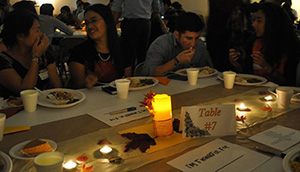
UTRGV 300Students representing at least 15 nationalities participated in a Thanksgiving meal at the University of Texas-Rio Grande Valley’s Baptist Student Ministry.A local church prepared a traditional Thanksgiving dinner for students. More than 200 students attended, and we counted about 15 nationalities gathered in our building to experience this tradition. It was an incredible experience to see the international community join us that night. 

alexandra granda130Alexandra GrandaMany students were at BSM for the first time, and we purposely mixed and sat students in different tables. This allowed students to socialize and meet new peers, and I believe this made the event even more significant. Some international students were there for the first time, and they had the opportunity to see the Christian community have fellowship. 

As I near the end of my second semester with this ministry, I am thankful to God for allowing me to be part of this. The love of Christ is reflected every day through my peers, local churches and our students who volunteer and genuinely care to reach the lost in our campus.  What are you thankful for? 

Alexandra Granda is serving with Go Now Missions as a campus missionary intern at the Baptist Student Ministry at the University of Texas-Rio Grande Valley.


Down Home: Grandfather and grandson, a tale of two laps

When I was a little boy, one of my favorite places in the whole wide world was sitting “in the hole in Popo’s lap.” More than a half-century later, I’m enjoying a similar relationship from another perspective.

Popo was my mother’s father, or as I might’ve said it back then, my mama’s daddy. He lived in a small town in northwestern Oklahoma, and we lived in the Texas Panhandle, about 135 miles away. So, we saw each other fairly regularly. This was fortunate, because I believed the best day began waking up in Popo’s and Grammar’s guest bedroom and ended sitting in the hole in Popo’s lap, watching TV.

Popo created the hole in his lap by crossing his legs with one ankle resting on the other knee. It created the perfect recliner for a little boy who adored his grandfather.

Years later, I’ve been amazed he let me sit there so long. His ankles must’ve been way tougher back then than mine are today. I think my foot would go to sleep and feel like falling off. But Popo never seemed to mind, and I always felt secure and happy in his big ol’ lap.

I thought about Popo and the hole in his lap the day after Thanksgiving, when my almost-5-year-old grandson, Ezra, and I went out to the movies.

We figured we’d rather watch The Peanuts Movie and eat pizza than stay home and look out the window at the pouring rain.

We arrived at the theater in time to catch the trailers for every child-appeal movie scheduled to come out between now and next summer.

I pulled off my coat and cap and stuffed them in the chair beside me and plopped down. Ezra just stood there.

“What’s up, buddy?” I asked. “It’s OK to sit down. Right here. Beside me.”

“I want to sit in your lap, Marvo,” he told me.

“Well, that’ll be fine,” I replied, lifting him into my lap. (I’m not as terrific a grandfather as Popo, because I didn’t create a hole in my lap.)

Ezra leaned back against my chest, crossed his legs above my knees and burrowed in. When the trailers ended, I asked if he wanted to sit in his own seat. He shook his head quickly, placed his hands on my forearms and stared at the screen. I didn’t ask again.

Ezra laughed out loud at Charlie Brown, Lucy, Snoopy, and the whole gang and all the sight gags Peanuts fans have been laughing at almost since I was his age. I enjoyed the movie, too. But the best part was the proximity to my grandson, who normally lives four hours away but occupied the same space for about two.

Since our trip to the movie, I’ve pondered which I’ve loved more—being a grandson or a grandfather. Both offer wonderful delights. Pure, undiluted fun and joy. The primary difference, of course, is knowledge and attendant concern.

When I was sitting in Popo’s lap, I could not fully appreciate that moment. I couldn’t imagine being a father, much less a grandfather. And I couldn’t comprehend Popo’s life was any more complex or the world any less wonderful than our love and our time together.

When Ezra sits in my lap, I try to will myself to think only of that moment. And it is splendid. But I also recognize the complexities of life and growing up and living in a chaotic, changing, unpredictable world. Of course, I also appreciate the grace and beauty of redemption, reconciliation and renewal that Ezra never will fathom until he also experiences brokenness and disappointment and sorrow.

I know all that—pain and ecstasy, joy and sadness, laughter and tears, faith and doubt—lie ahead for the little boy in my lap. And I pray. God Almighty, do I ever pray.


Editorial: Should your pastor know what you give?

How would you feel if your pastor knew how much you contribute to your congregation?

It’s a divisive topic. People get touchy about religion and about money. So, when you combine money and religion, the sparks often fly. But you can be sure the burden of congregational contributions weighs on many pastors’ minds in December. Churches not only wait on Christmas, but also on finding out if year-end gifts will be sufficient to meet the annual budget.

knox newEditor Marv KnoxIn the latest edition of The Christian Century, Dave Davis, a pastor from New Jersey, presents the case in favor of pastoral knowledge.

“Ministers need to understand the financial reports better than anyone else around the table,” Davis insists. “Does understanding a congregation’s finances include knowing how much each congregant gives?”

Ministers are “split down the middle” on that question, he speculates. After almost four decades working closely with Baptist pastors, my guess is most would prefer not to know.

Pastors who take this position generally offer three reasons: (A) They don’t want their knowledge of giving to influence the quality of pastoral care. (B) They don’t want to be accused of favoritism. And (C) they don’t want church members to feel they think “too much” about money.

To be sure, knowledge of congregational contributions can’t help but play on the knower’s mind. My wife formerly served as a church financial secretary. We scrupulously avoided talking about the specifics of her job, and she never spoke of anyone’s giving. But I could read her agitation when some members yammered about the budget in church conference. Conversely, I also understood when she admired other quiet, little-known members. Joanna has vowed she never would serve as financial secretary in her own church again. “Knowing is too much,” she explains.

A case for knowing

Still, Davis makes a case for why pastors should know how much congregants give. He cites three basic reasons

First, the pastor can pay closer attention to members’ spiritual health. “One of my colleagues … compared not knowing to a doctor not knowing a patient’s blood pressure,” he explains. That’s a great point. Gratitude, generosity, commitment and obedience—all reflected in faithful giving and particularly tithing-plus-giving—are strong elements of spiritual vitality. If a pastor is missing this important information, understanding members well is impossible.

Second, the pastor can offer timely and effective care to church members in need. Davis lists several family crises—from the burden of college tuition, to job loss, to marriage failure—for which declining contributions provide an early indicator. “I believe that I ministered more sensitively because I was aware of these financial changes in the givers’ lives,” he explains.

Third, intimate knowledge of congregational giving enables the pastor to provide strong leadership as the congregation faces financial challenge. For example, knowing key givers are aging and understanding patterns of pledging enabled Davis to “help shape the conversation” about the church’s finances and members’ stewardship, he notes.

Gentle accountability

A fourth reason for pastoral knowledge mirrors the first. A pastor who knows members’ giving history can hold them accountable. This must be done gently, with love and respect, and accountability should be implemented for spiritual growth, not punishment or shame. But accountability provides a key ingredient of discipleship and maturity.

Some who argue against pastors knowing giving history cite Jesus: “But when you give to the needy, do not let your left hand know what your right hand is doing, so that your giving may be in secret. Then your Father, who sees what is done in secret, will reward you” (Matthew 6:3-4). However, that admonition is to the giver, not to others. Biblical support for knowledge comes from the practice of the early church itself, such as the fraud of Ananias and Sapphira (Acts 5:1-11).

Pastoral knowledge of members’ contributions will remain sensitive as long as people care about money—until hell freezes over. Financial knowledge can have a corrosive effect if it is not handled with grace, respect, integrity and love. But many churches—and members themselves—would be better off if pastors know how much members are giving. And if members know pastors know.


2nd Opinion: Why climate change requires a spiritual rebirth

PARIS—Representatives from 195 nations have gathered to grapple with the greatest moral issue of our time—the war against Earth. French Foreign Minister Laurent Fabius warned, “It is life on our planet itself which is at stake,” and there is an “absolute urgency” to turn things around.

This is not political rhetoric or religious apocalypticism. It is science drawing nations together around our real foe—the environmental danger to our planet. If our forays into space the past 40 years have demonstrated anything, they have instructed us Earth is very special in the universe. Yes, we have discovered exoplanets we hope might some day reveal other forms of life. But for now, and in our neighborhood, Earth stands alone.

We are being urged as a species to wake up and get out of our anthropocentrism—our preoccupation with all things human—at the expense of all our relations with whales and dolphins, elephants and tigers, birds and redwoods, rain forests and rivers, oceans and lakes.

Will we take this opportunity to wake up from denial? Many Americans seem to prefer denial to truth. Yet only the truth will set us free and get us working.

Think how much shared work there can be between people of Asia, North and South America, Africa and Europe if we were to put aside our usual war-oriented budgets in favor of this real battle to defend the Earth and the survival of our species and other living things. Instead of new aircraft carriers and faster bombers, why not invest immediately in alternative methods of agriculture, energy, production and transportation that respect the Earth and future generations still unborn?

Scientists tell us rising seas will swamp huge areas of many great cities, from Shanghai to New York. Much of Florida will disappear. Millions of people will be thrown into extreme poverty by drought and the disappearance of soil and flooding.

We are told if the planet heats up by 3.9 degrees Fahrenheit (a path we are currently on), 600 million people will be displaced. Where will they go? Who will welcome them? How would they get there? If the planet heats up by 3.5 degrees, 280 million people will perish.

We are being told 800,000 to 1 million years ago was the last time our planet hosted greenhouse gases equivalent to what we now are producing. “We are now really in unchartered territory for the human race,” said ‎Michel Jarraud, chief of the World Meteorological Organization.

Solutions must come from the Paris conference, but they also must come from rapid education and change of values, from what the Gospels call “metanoia” or change of consciousness. This is where spirituality comes in.

I define spirituality as “waking up,” and I am not alone in this. Both Jesus and the Apostle Paul talked about “waking up.” We humans, especially in the West, have been in a deep sleep, mesmerized by our own doings and gadgets and projections. But the crisis at hand is a wake-up call.

Our religions must change and be part of the solution and not the problem. My work for 45 years in bringing back the creation spirituality tradition has obvious implications for renewing Western religion but also for other religions as well.

As I pointed out in The Coming of the Cosmic Christ, published 27 years ago, there is no such thing as a Buddhist rain forest, a Catholic ocean, a Lutheran sun, a Baptist moon or an atheist cornfield. When it comes to Earth, we are all guests—but guests responsible for right livelihood and right citizenship and thinking outside our own tribes to the survival of all beings and all our children for generations to come.

People of faith must act swiftly and work with, not against, science. Pope Francis’ encyclical Laudato Si’ is a good example of this effort. Science, too, must work out of wisdom paradigms of justice and compassion. Education must be reborn similarly. The wisdom of indigenous tribes is indispensable for this change of consciousness, for they have been in communion with Earth and her creatures for thousands of years. They are leaders in a more-than-human awareness.

We all will rise or fall together. The greatest opportunity our species ever has faced invites us now to grow up and reach deep within ourselves to ignite the creativity we are capable of, to work side by side with people of other tribes and religions and no religions to combat our one foe—denial born of narcissistic species-centeredness.

Ancient Scripture says: “This day I call the heavens and the earth as witnesses against you that I have set before you life and death, blessings and curses. Now choose life, so that you and your children may live” (Deuteronomy 2:19).

What will we choose? Will we choose life and creativity and a new stage in humanity?

Matthew Fox is a theologian and author of 32 books. His column was distributed by Religion News Service.


René Maciel: Finding Christ in this holy season

 So they hurried off and found Mary and Joseph, and the Baby, who was lying in the manger. (Luke 2:16)

The holiday season is upon us. As I have grown older, it always seems to come so fast. I love this time of the year, especially all the memories of past Christmases. The lights, the gifts, my mom’s tamales and for my family instilling in us the significance of Christ coming in the form of a baby. I would sing, “the little Lord Jesus, asleep on the hay.”

rene maciel headshot130René MacielI still am drawn by all this season brings, but now it calls to me differently. Advent is a time of waiting and preparation for the coming of Christ. It is a celebration of Jesus’ birth and his return in glory. So now, I celebrate his coming to us, and I rejoice that one day he will come again to celebrate my return to him. A Child has come.

The Scripture says in Luke, “… and they came with haste and found Mary and Joseph, and the Babe lying in a manger.”

This is a great time to find the Christ and celebrate his birth and his coming to earth to find us. Have you been seeking him or looking for him to be found in your life? The shepherds found him, the angels found him, the wise men found him, and maybe you will find him this Christmas.

It is a wonderful season to be still and seek his presence and purpose for our lives. Thomas Merton said, “Those who pay no attention to the coming of the Savior fail to admit that they need a Savior.” Christ came into the world to bring salvation, to bring hope, to restore us into a right relationship with the Father. A relationship of hope and sonship. A relationship of knowing our Creator. What a gift that we can experience and be reminded of each Christmas and all through the year.

texas baptist voices right120We do not need to go far this Christmas to find the Christ child. He doesn’t come in lights and gifts or even in family gatherings. He is here, ready to meet you. He is within us. He is near. The Word became flesh and made his dwelling among us. Let us go in haste and find Christ this season. He is waiting right there to be found in your life.

Prepare yourself. The Lord is come!

René Maciel is president of the Baptist General Convention of Texas and president of Baptist University of the Américas in San Antonio.


Right or Wrong? Be not anxious

Jesus’ command to “be not anxious” (Matthew 6) sounds good in the abstract. But how does it help contemporary Christians make decisions?

Terrorist attacks continually disrupt life in our world. They remind us of the terror and violence that can operate in our world. Worries about personal safety and security seem to be ever present in the news. Even with these kind of events happening around us, everyday worries tend to abound—making ends meet, health concerns, pleasing our bosses, getting everything done on schedule, taking care of our families and so forth.

Jesus seemed to expect these daily needs would bring us the most worry. So he asked, “Why do you worry?” He reminded us, “Your heavenly Father knows what you need.” Was Jesus prescribing a flippant attitude toward taking care of our daily affairs? I don’t think so. But Jesus seemed to be saying worry won’t do anything to help, and it just might cause harm. This isn’t news in our modern society, where stress-related disease brought on by our tendency to worry is yet another of the daily concerns many of us face.

Perhaps we are tempted toward two opposite responses to difficulties in our lives. We either wring our hands in worry, or we try to rely completely on our own strength, wisdom or money to fix things. Jesus warned self-reliance isn’t the solution to all our problems, either. Just before he told us not to be anxious, he warned relying on money to save us could leave us as slaves to our finances.

What is the answer? Instead of falling into either the temptation toward self-reliance or the temptation toward anxiety, Jesus asked us to trust our heavenly Father. The Apostle Paul clarified this teaching in Philippians 4, where he wrote we should, rather than being anxious or worried, present our requests to God. Paul explained the result of our prayerfulness is peace rather than anxiety.

So, we don’t throw up our hands in defeat or throw out our backs trying to take care of every concern on our own. Instead, we continue to seek God’s kingdom and prayerfully trust God to take care of those things we cannot.

Emily Prevost

Director of ministry guidance and assistant professor of leadership

East Texas Baptist University

Marshall


2nd Opinion: Being content in an age of ‘more’

Have you ever been in a place where you were totally content? That’s a hard place to be. It goes against our natural inclinations. Our natural lean is to reach and strive for the next best thing.

jonathan waits130Jonathan WaitsA lot of companies’ bottom line depends on this. How many times have you watched people lined up to get the newest cell phone? (How many times have you been in one of those lines?) The kick is 99 percent of the people in line already have a perfectly good cell phone. It’s just not the latest and greatest. 

About a year and a half ago, we bought a new van. While it’s not over-the-top loaded with features, it does have a lot more bells and whistles than any vehicle we’ve owned. We should have been content with our new toy. And we were—for a little while. But then we started thinking about how nice it would have been to get the next van up in terms of features. We could have had two DVD players, and there would be no more fighting over movies. In other words, we weren’t totally content any longer. I’ll bet you can think of more times than you have fingers when you have done the same thing.

Our tendency toward discontentment

This tendency toward discontentment always has been a part of us. In the Garden of Eden, the serpent sowed seeds of discontentment in Adam and Eve. Remember Genesis 3:6? “So when the woman saw that the tree was good for food, and that it was a delight to the eyes, and that the tree was to be desired to make one wise, she took of its fruit and ate, and she also gave some to her husband who was with her, and he ate.” When they saw all these things specifically through the lens with which the serpent fitted them, they went beyond what they currently had from God—which was the whole garden, by the way—and gave in to their desire and ate.

This tendency toward discontentment is not limited to individuals, either. It can affect whole cultures and nations. Consider how Israel responded to God’s miraculous delivery after 400 years of slavery in Egypt. They almost immediately complained Moses had led them out in the desert to starve to death and wanted to go back to Egypt and into slavery. Then, when they got tired of the miraculous food God provided for them every single day, they complained again and wanted to go back to Egypt—and slavery—where at least they had good food to eat. They should have been perfectly content in light of all God had done for them, and yet the first place they went time and time again was to discontentment.

Maybe you aren’t quite so melodramatic when your fits of discontentment strike, but I have a suspicion you have them all the same. I know, by the way, because I do. But come on: We both know this is no way to live. When discontentment rises, happiness vanishes. And who wants to go through life unhappy all the time? Wouldn’t it be better to live so what you really want is what you already have? Wouldn’t it be better to live with deep-seated contentment?

What’s the secret?

The best question to ask at this time of year is this: What’s the secret of being content?

The answer is found near the end of the Apostle Paul’s letter to the Philippians. In chapter 4, he lands on a word of thanks to the church for their care for him while he was sitting in prison awaiting his trial and probable execution. In other words, he wasn’t exactly in the most desirable place in the world. Yet after thanking them for their willingness to help meet his needs, he writes: “Not that I am speaking of being in need ….”

Not in need? He was in prison awaiting an unjust trial and execution. We can conclude he needed a few things. Given the context, a somewhat more interpretive translation might be: “Not that I am speaking of being discontent ….” You see that, right? Discontentment comes when we move a want over into the category of need. Those two are not interchangeable, and our list of genuine needs is much, much smaller than most of us would image. In this country, we are trained to think that we need a car, and we need air conditioning, and we need a TV, and we need a phone, and we need the Internet. Wrong. We need food, water, air and shelter. Everything else is luxury.

No, Paul wasn’t in need. Nor was he discontent. But why? Because he discovered the secret of being content. “For I have learned in whatever situation I am to be content. I know how to be brought low, and I know how to abound. In any and every circumstance, I have learned the secret of facing plenty and hunger, abundance and need.” Fantastic. What is it?

Philippians 4:13

The answer is a verse that is both incredibly familiar and wildly misapplied. “I can do all things through him who strengthens me” (Philippians 4:13). But wait! Isn’t that an athletic rallying cry? No, nor is it a blank check to do whatever we want as long as we’re “doing it with God’s strength.” This verse is really the secret of contentment. OK, but what exactly is the secret?

The answer comes just a bit earlier in the text. Paul commands his readers not to be anxious about anything. He could just as easily have said: Don’t be discontent. Well, what are we to do instead? In everything—that means everything—let your requests be made known to God by prayer and supplication. So the secret of contentment is to pray? Not exactly. What comes next? Paul tells us how we should approach God—with thanksgiving. This is the heart of the secret. We bring our hearts to God with thanksgiving. We go to God with grateful hearts—which, looking back even a bit further in the text, we are able to do because of our constant rejoicing in him—and we come away with his peace that leads to contentment.

Fine, but why go to God for this? Well, because we trust him. We trust him because he’s proven himself trustworthy over and over and over again. As we learn to trust him with gratitude for the things he’s done and will yet do, we develop the spiritual muscle of being content, of being at peace, of experiencing joy, of being deeply grateful to God regardless of our circumstances. Or to put that all a bit more succinctly: The secret of contentment is grateful trust in God.

Jonathan Waits is pastor of Central Baptist Church in Church Road, Va. He loves connecting the dots between the Christian worldview and culture. Baptist News Global  distributed his column.