Texas Baptist Voices: God remains close to those searching for home

At the risk of stating the obvious, there are many strong feelings about immigration this election cycle, bringing with it fear, anger and resentment.

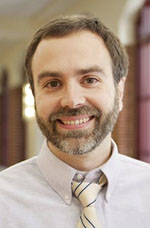
Myles Werntz 150Myles WerntzBut long before this year, our country learned to fear immigration. In 2002, immigration services were rehoused under the newly created Department of Homeland Security. Immigrants, legal or otherwise, were now overseen by the same department tasked with defending the country from terrorists. And understandably, our vision about immigrants became colored by those suspicions.

But even this was not when we as a country learned to fear immigrants. Before immigrants were categorically a security threat, we saw them as an economic threat. Through many celebrated legal channels and programs, such as the longstanding bracero program of the 20th century, tens of thousands of Latino workers came into American industries. In the 19th and early 20th century, European immigrants filled the mines and slaughterhouses, angering American nationals.

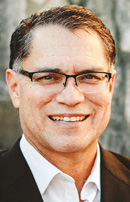
texas baptist voices right120And before immigrants were named an economic threat, they were seen as a threat to American culture, bringing in new languages and ideas. Between 1882 and 1965, Asians largely were barred from immigrating to America, only able to immigrate sporadically in-between. Between 1925 and 1965, immigration numbers were crafted carefully to maintain a certain vision of American culture that would not have to consider other visions seriously.
Immigrants, in other words, always have been suspected for one reason or another.

But for Christians, this should not be, if for no other reason than immigration is intertwined with the story of Scripture. From Adam and Eve’s exile from the garden to Abraham’s journey out of Ur, to the Children of Israel’s wandering in the wilderness after Egypt, the Old Testament speaks of a people on journey and without a home. Through exile and return, Israel continues its pilgrimage, never receiving a home to call its own for more than a few generations.

In the New Testament, we find ourselves following Jesus, cast down into Egypt as a child and cast out of his hometown as an adult. We watch as Paul and the other apostles migrate from region to region as missionaries. We stand in awe as the Holy Spirit uses travelers in Jerusalem to spread the gospel back out across the Mediterranean world. Over and over, the New Testament letters address those “scattered across the world,” those who have no lasting city (Hebrews 13:4) and those who look forward to rest from their travels.

In other words, in Scripture, immigration is part of God’s good dealings with the world.

But yet, in looking at America’s history of immigration, it is alternately one of welcome and suspicion, of opportunity and rejection. What is needed is not, I think, another reminder that “we’re all immigrants” or “everyone is from somewhere else,” but a closer and clearer look at the ways in which God remains close to those whose lives are bound up in the search for home. This is the story Scripture tells of the people of God, and a story the people of God must remember as their own.

It is in wandering that the people of God became the people of God, and it is all those seeking a new home whom the people of God must reach out to today.

Myles Werntz is the T.B. Maston chair of Christian ethics at Hardin-Simmons University’s Logsdon Seminary.


Guest editorial: Reject fear, despair to confront climate crisis with faith

No matter where we are, the climate crisis is not far from home.

For some time, the world’s most vulnerable, in the Global South, largely have borne the brunt of suffering and climate-induced devastation. Those who have the power to change things have so far all but ignored “the cry of the poor and the cry of the earth,” as Pope Francis wrote in his encyclical a little over a year ago.

But just this summer, the United States—one of the world’s wealthiest nations—has seen historic droughts, unprecedented floods in Louisiana and wildfires in California, killing many and displacing tens of thousands.

Global warming—unless checked by action far more radical than anything comprehended by mainstream politics—is on track to undermine so many food and natural systems that it threatens to collapse human society as we know it, within the lifetimes of many alive today.

The need for action commensurate with this truth is slowly breaking into the mainstream of the climate discussion, but not quickly enough.

No stomach for truth

Although the climate emergency poses an urgent existential threat, Hillary Clinton, the possible next president of the United States, has put forward a climate plan that seeks to cut emissions only 30 percent from 2005 levels by 2025. Meanwhile, scientists with the U.N. Intergovernmental Panel on Climate Change warn we already are in imminent danger of breaking through the upper limit of 1.5 degrees Celsius of warming set forth in the Paris agreements.

The reality of the present moment is so harrowing, it is no wonder many choose not to engage with it at all. But “the truth does not change with our ability to stomach it,” to quote the great Catholic writer Flannery O’Connor.

Fear, despair, hopelessness and depression all are natural—even highly rational—responses to our present situation, and I am familiar with all of them. I have found very little in today’s culture or within the current climate movement to help us stomach this truth.

Faith prohibits fear

Yet my faith explicitly prohibits fear: “Yea, though I walk through the valley of the shadow of death, I will fear no evil: for thou art with me” (Psalm 23:4).

As such, people of faith ought to be the first to confront this new reality and to throw themselves into building the kind of climate movement we need—a movement built not on the fear of pain, privation or death, but on a fierce love of life.

While many U.S. environmental groups hailed the release of “Laudato Si’” last year, few political leaders have heeded Pope Francis’ urgent call for the development of policies that “drastically reduce” greenhouse gas emissions “in the next few years.”

This does not mean such action would be impossible, given sufficient political will. About a year after graduating from college, I abandoned my career plans to volunteer for an organization that seeks to respond with a World War II-scale mobilization of our economy and society.

Sustainability by ’25

The Climate Mobilization’s Victory Plan envisions the United States achieving ecological sustainability by 2025—by abandoning the reckless “throwaway culture” that is endangering creation, devastating the poor and sacrificing the future of life on Earth.

In “Laudato Si’,” Pope Francis quotes Orthodox Patriarch Bartholomew: “It is our humble conviction that the divine and the human meet in the slightest detail in the seamless garment of God’s creation, in the last speck of dust of our planet.”

A day before the pope’s latest call for action on the Catholic Church’s World Day of Prayer for the Care of Creation, Patriarch Bartholomew also urged us to rise to this occasion: “We call everyone to mobilize forces and especially to pray in the fight to protect the environment in its broadest sense, that is as a harmonic conjunction of the natural environment and culture of mankind.”

We cannot say it is too late, too difficult or too unrealistic to act. The Christian view is that as long as there is a speck of dust left on Earth, it will be worthy of our humble love.

Anya Grenier is head of media for The Climate Mobilization. Religion News Service distributed her column.


Joseph Parker: Leading urban ministry in a complex setting

Joseph Parker will celebrate 24 years as senior pastor of David Chapel Missionary Baptist Church in Austin on Sept. 29. For 10 years prior to that, the native of Birmingham, Ala., who began his career as an attorney, was an associate minister/pastor at the congregation.

Background

• How did you come to faith in Christ?

I grew up in the home of a Christian pastor and wife, who taught me about salvation and Jesus; I accepted Jesus at the age of 7 years in 1959.

• Where were you educated, and what degrees did you receive?

Birmingham, Ala., public schools

Morehouse College, bachelor of arts in political science/pre-law

The University of Georgia at Athens, master of public administration

The University of Texas at Austin, doctor of jurisprudence

Baylor University’s George W. Truett Theological Seminary, master of divinity

Gordon-Conwell Theological Seminary, doctor of ministry with emphasis on urban ministry in a complex setting

Ministry/church

• Why do you feel called into ministry?

It was a long, thoughtful, meditative and prayerful journey that ultimately led to a compelling, “can-no-longer-run” submission. This compulsion has stayed with me over 34 years.

• What is your favorite aspect of ministry? Why?

Teaching, which I believe is my area of giftedness, and the joyful opportunity to pour into people spiritually as they take their journey of Christian discipleship.

• What one aspect of congregational life would you like to change?

I would like to change the attitudes of congregational members about their personal discipleship development.

• Name the three most significant challenges and/or influences facing your congregation.

In my urban context of Austin, (1) the geographical location of our congregation’s physical site, (2) an “out-flux” to and growth in suburban areas rather than within the city limits and the attendant challenges of white gentrification in Austin’s urban core—particularly surrounding our current facility and (3) internal “balancing” of interpersonal relationships and ministry to five generations while continuing to attract younger generations.

About Joseph

• Who were/are your mentors, and how did/do they influence you?

My father, Joseph C. Parker Sr., a Christian/Baptist pastor, with whom I had a close relationship, who was my pastor until I was 24 years; and in my further ministry development, E.K. Bailey, who was my pastor for three years and mentor for years afterwards until his death, who “softened” me up to begin seriously considering my call to ministry as I experienced a “new” approach to ministry in the black church; and James Obey Sr., my “father-in-the-ministry” and pastoral predecessor, under whom I accepted my call and served under for 10 years before I succeeded him upon his death. In the law, attorney Tom Long was my mentor who trained me in being a civil litigator.

• What did you learn on the job you wish you learned in seminary?

More about how to develop congregation members to be Christian disciples.

• What is your favorite Bible verse or passage? Why?

Proverbs 17:17, because I value friendship and brotherhood and have had good relationships in that regard.

• Who is your favorite Bible character (other than Jesus)? Why?

Joshua, because my “ascendance” to the pastorate is similar to Joshua’s succession relative to Moses.

Read other “Deep in the Hearts of Texans” columns on …

Bob Roberts 

Dante Wright

• Brent McDougal

Darin Wood

Kyndall Rae Rothaus


BGCT president: Revival!

“Revival” is not a word you hear very often. Growing up in a Southern Baptist church in Tucumcari, N.M., as a kid, I would hear that word on a yearly basis, and I also attended and preached a few revivals as I grew up in my faith.

rene maciel headshot130René MacielI was visiting with a pastor friend of mine last week, and he told me he had just completed a four-day revival. I was a little surprised and interested in hearing about the revival. I haven’t heard of many churches conducting revivals any more or at least using that name.

A dictionary definition of the word revival is “an evangelistic service or a series of services for the purpose of effecting a religious awakening; the act of reviving.”

When I worked at Baylor University a few years ago, I regularly would play basketball at noon with several Baylor faculty and staff. I never will forget one day as we were playing, a basket had just been scored and we all headed down the court with our heads turned to the other basket.

All of the sudden we heard a loud thud. It was one of the guys. He was having a heart attack. When we reached him, his facial expression was strained, his color was changing and his breathing was fading. He was dying and needed reviving. Immediately, someone began CPR, and fortunately, the gym was equipped with a defibrillator. In moments, the man was revived, restored and alive. They rushed him off to the hospital for greater care, but he had been revived, right there on that basketball court. We all saw it happen, and we were thankful to see him alive.

Another definition of revival is “restoration to life, vigor, and strength.”

It is truly sad to see and hear about churches across our state and country that are on their last breath. For some reason or another, they have stopped being the church, the body of Christ, and they have allowed many horizontal distractions to drive their attention and efforts. They have taken their focus off of bringing glory to God, a vertical approach that in Colossians says, “seek the things that are above, set your mind on things above.” They are slowly losing members, losing connection to the community and have turned their focus inward. They are strained, and changing and fading fast. They are dying and in great need of being revived.

That reviving has to be a church-concentrated effort to seek to bring God the glory each time they meet for the listener to experience a real encounter with Jesus Christ. When focus is given to its programs, good books and good works, then the church is in jeopardy of slowly moving away from lifting God up and on a road to a slow and steady decline that can eventually lead to death.

I love what James MacDonald says in Vertical Church, “Instead of seeing ourselves as people trying to connect with people, let’s see the church as people trying to connect with God and help others do the same.”

I think we need to get back to using the term “revival.” We need that new life, that new breath and that new passion that only God can give. God knows we need to be revived.

Praying for revival!

René Maciel is president of the Baptist General Convention of Texas and president of Baptist University of the Américas in San Antonio.


2nd Opinion: Why you should not vote in this presidential election

Many years ago, my father was driving in the mountains of Colorado. As he rounded a corner, he was confronted with a large truck coming toward him in his lane. Apparently the truck was trying to pass another vehicle and stayed in the oncoming lane too long.

Terry Austin 150Terry AustinMy father was forced to decide between the lesser of two terrible options: He could smash the oncoming truck head-on, or he could steer off the road and plummet down the side of the mountain. If you have ever driven in the Colorado mountains, you are aware it is not like driving into the bar ditch in West Texas.

He chose the lesser of the two, and, fortunately, his car was halted by the pine trees about 100 feet down the cliff. He lived to tell the story.

Unpleasant, no matter what

Sometimes life forces us to make a choice between two bad things, and the result is going to be unpleasant, no matter what choice we make.

Many people are feeling that way about the upcoming presidential election. There is not a good choice. Approval ratings for both candidates are at historic lows and are destined to get worse with the ongoing name-calling, mud-slinging and third-grade behavior that is characteristic of this year’s campaign.

Each candidate has a small hard-core group of voters who wave their flag obnoxiously high, but for the most part, you hear people say, “I could never vote for …,” and they name one of the candidates. More people are voting against someone this year than the number of people who are voting for someone.

Much of the campaign rhetoric consists of saying, “If this person is elected, terrible things will happen to our country.” I get it. We have two bad choices. I feel like my father must have felt as he steered his Buick over the edge of the cliff. He didn’t have a better choice.

Legitimate options

But we do have options. There are some legitimate options that keep us from being forced to choose between the lesser of two evils.

The most obvious option is that when you go to vote, you will find other candidates’ names on the ballot. At least 1,751 folks have filed the paperwork necessary to be considered a candidate for president. Obviously, you will not have to read through hundreds of names while in the voting booth, since most of those people will have long departed the race, but there will be other names for consideration.

I have not studied all the other candidates, and I’m sure you haven’t, either. However, I’m confident there is not one I would consider a much more viable option than the two main party nominees. Most of them are narrowly focused in their platform, and none of those focuses scratches my itch.

Just don’t vote

However, there is still another option that keeps us from having to decide between the lesser of two evils. That option is not to vote. That’s right; just don’t vote in the presidential election—although that doesn’t mean you should also avoid all the other issues and races on the ballot. Skip the top of the ballot, and don’t check either name.

In suggesting that you not vote, I realize I’m going against the grain of what is typically considered good citizenship. One of the rights we have as Americans is to vote. People have fought and died, and many others have sacrificed in countless ways so I can vote. My vote is to be cherished, and I must not ever let it be wasted.

However, in suggesting that you not vote, I don’t believe it is a waste, nor is it bad citizenship. It is simply using your vote for a purpose other than electing the next president. In fact, let me suggest two things you can accomplish by not voting.

Make a statement

First, it is an opportunity to make a statement that needs to be made, especially by and to Christians. By not voting, I can place my hope in something other than the president of the United States. The Christian faith is very clear that we are not to trust government as our source of safety and supply.

If I remember correctly, the first time I ever saw a Hebrew National Hot Dog was at Fenway Park in Boston. Their slogan caught my attention: “We answer to a higher authority.” It’s catchy advertising for a hot dog, and as followers of Jesus, we should brandish about a similar sentiment.

This is a much-needed word to American Christians. We have come to the point where folks believe a professing, Scripture-understanding, caring, Christ-witnessing president is not a Christian, but a vulgar, greedy, dishonest man who claims his favorite Scripture is “Do unto others …” is the one who will lead us to our Christian promised land.

It seems to me that if I am not trusting in our next president to be our savior, then it is fine to make that proclamation by withholding my vote.

Start a protest

A second reason to not vote in the upcoming presidential election is to make a protest. If the Democratic and Republican parties can nominate any unacceptable candidate they want and expect us to all fall in line come November, they will have no reason to change. By withholding our vote, we can make a statement we are not playing that game any longer.

If enough of us withhold our votes, they eventually will have to listen. In fact, if enough of us join the protest, we can start another viable party—but I’m not advocating or expecting that to happen.

Another way to “count”

Now, many of you are going to argue by reminding me that withholding my vote is not going to make any difference. If that’s true, why do we see so many commercials saying, “Your vote counts”? What I’m saying is that my one vote counts just as much by withholding it as it does by throwing it away on an unqualified candidate.

In fact, if we are so unhappy with the choices we have this year, voter turnout should be at an all-time low. If the major political parties can’t get enough people to vote for their candidate, they will be forced to reconsider how they choose candidates. The reason we have such bad candidates is because the nominating process is broken, and unless we speak up, it never will change.

Revolutionary movements typically begin with one—or perhaps a few—person(s) standing up and saying, “No more!” Perhaps by withholding your vote, you can be that person who is willing to stand up and say, “No more!”

If you choose not to vote, no doubt, people will say you have no right to complain about the one who is elected. Hogwash! (I’ve always wanted to use that word.) Just because I’m too smart to waste my vote on a bad candidate does not mean I renounce my freedom of speech. The truth is, after a few months in office, your candidate will probably give me plenty of reasons to say, “I told you so.”

It is a sad day to feel like you must hold your nose when voting for president. However, instead of checking the box for the lesser of two evils, perhaps it is time for us to stand up and be counted in a different way. Perhaps it’s time to start an “I’m not voting” campaign as a way of demanding the system be repaired.

I’ll design the buttons if you will set up the phone bank.

Terry Austin is the principal partner of Austin Brothers, and he is co-pastor of Bread Fellowship in Fort Worth. He has written several books and preached in numerous churches in Texas and around the country. He also has been a denominational leader. 


Editorial: Don’t waste your citizenship—vote

Talking Texans into voting in political elections is a semi-tough sell.

On one hand, most of us are civic-minded folks, and we like to do our duty. But on the other hand, we already know who’s going to win around here.

knox newMarv KnoxWe are a red state. The reddest of the red. Republican of the Republicans.

The last time Texas voted for a Democratic presidential candidate was 1976, when Jimmy Carter claimed the Lone Star State’s electoral votes. Just think; you could be a late-middle-aged Texas Democrat and never voted for a candidate who won Texas.

And the last time a Democrat won a statewide office was 1994, when Lieutenant Governor Bob Bullock, Attorney General Dan Morales and Comptroller John Sharp all won.

According to Politifact, Texas owns the nation’s longest statewide Republican winning streak. 

So, why bother? If we already know how the voting is going to turn out—Republicans will win all the statewide offices, and Texas won’t play a role in electing the next president—why get up and go vote?

Several reasons, actually:

• Christian duty.

Jesus said his followers should fulfill all the duties of citizenship. When asked about paying taxes, Jesus said, “Render to Caesar the things that are Caesar’s, and to God the things that are God’s” (Mark 12:17).

Along with paying taxes and serving on jury duty, voting is one of the duties of citizenship required of all Texans and Americans. According to Jesus, we should be exemplary citizens, and that means voting.

• Democracy matters.

Voting in free elections is a vital aspect of American heritage. It’s helped make this country strong for 240 years. One way to help prop up that strength is to stay engaged in the political process.

Americans will undermine their freedom if they grow apathetic and decide voting doesn’t matter. In fact, we’ve already undermined it to a significant degree by failing to turn out to vote in primaries, often turning them over to the extremists of both parties. This is why we often feel we face such lousy choices in the general elections.

• Elections are broad.

We hear all about presidential candidates, and in selected years, candidates for governor and Senate dominate the media and get our attention. But in every election, we vote for all kinds of local officials, from council members, to school boards, to sheriffs and judges.

Casting informed votes in all these elections is a challenge. Some local newspapers and television stations provide strong pre-election coverage, but even then, you’ve got to pay attention. That said, these elected officials often shape the quality of our daily lives as much or more than the big-ticket politicians. If you skip an election because you don’t think your presidential vote counts, you silence your voice for everything.

• Conscience counts.

When you vote in political elections and cast your ballot for state and local referenda, you exercise your conscience. Even when you think you’re going to win or know you’re going to lose, it’s a vital part of both being human and living a faithful Christian life.

And that raises an important point. On any given Sunday, many faithful Christians sit on the same pews as other faithful Christians whose votes they cancel. Both vote the way they do because of how they hear God and understand Scripture. Rationally, we might think they can’t both be correct, but they both can be faithful. And faithful always is correct.

• You never know.

All streaks eventually come to an end, so you never know when a vote you thought you “wasted” actually makes a difference. This could be true in 2016, when both presidential candidates seem to be chugging uphill and more states’ electoral college votes are at play than have been available in many years. That scenario should offer cautionary advice to Texas Republicans and hope to Texas Democrats. Your vote might matter now more than it has in many years—maybe your entire lifetime.

One final word: Why talk about voting in early September rather than mid-October, much nearer to Election Day? Good question. If you’re not already registered to vote and you don’t register on time, you won’t get to vote. Election Day is Nov. 8, and the last day to register is Oct. 11. To register, or to find out more about voting this year, visit the VoteTexas.Gov website.

Follow Marv on Twitter: @marvknoxbs


Kyndall Rae Rothaus: Called to ministry to help make faith accessible

Kyndall Rae Rothaus has been senior pastor of Lake Shore Baptist Church in Waco for the past year. She is the fourth pastor featured in the Baptist Standard’s new “Deep in the Hearts of Texans” column. To suggest a Baptist General Convention of Texas-affiliated minister to be featured in this column, or to apply to be featured, click here

Background

Where else have you served in ministry, and what were your positions there?

I was the pastor of Covenant Baptist Church in San Antonio, and before that, I served as the interim pastor at a United Church of Christ church in West and as a resident chaplain at Baylor University.

Where did you grow up?

I grew up in Oklahoma.

How did you come to faith in Christ?

I grew up in church, surrounded by the stories of the Bible. I remember taking my faith so seriously from a very young age! When I was 5, I told my parents I was ready to “ask Jesus in my heart,” and I was baptized that same year. I still have journals from my childhood full of prayers and my early exploration into Scripture. I memorized a lot of Bible passages as a child, and as a teenager, I was reading Leviticus and Numbers and the prophets, trying to make sense of it all! It’s probably fair to say I was an unusual child.

I didn’t express emotion all that well, but I was very sensitive to people’s pain, so underneath my calm exterior, my empathy and compassion were often very active, which drew me toward a helping profession and also toward a kind of faith that puts the compassion of God front and central.

Where were you educated, and what degrees did you receive?

I received my bachelor of science degree in theology from Southern Nazarene University and my master of divinity degree from Baylor’s George W. Truett Theological Seminary.

Ministry/church

Why do you feel called into ministry?

I feel called to ministry because I have a desire to help make faith accessible to the doubting, the confused, the wounded and the ostracized. I feel called because I know I have a peculiar knack for absorbing Bible stories and bringing them to life for others in ways that both comfort and challenge, and it would be a squandering of that gift to remain silent. I feel called to ministry because I want the world to know God is love.

What is your favorite aspect of ministry? Why?

I love those unexpected conversations when someone feels safe enough to tell me what is really going on in their life or in their mind. It’s those particularly vulnerable and human moments that sing to my soul and tell me all the hardships of ministry are worth it, because I have the privilege of bearing witness to the intimate struggles of so many people of goodwill, and where I can, lending my support and care.

How has your ministry or your perspective on ministry changed?

Over the years, I have slowly become more authentic, less afraid and increasingly free. I’ve embraced my creative instincts and my quirks as a part of who I am as a minister. I’m still learning to be gentler with myself.

The focus of my ministry has shifted some as I have fallen deeper and deeper in love with populations of people I consider marginalized. There are people who linger on the outer edge of the church or have given up on church altogether, and I keep finding them to be front and center of my life. I’m not so much on a mission to convert them as I believe I am on a mission to convert the church universal to turn around and see them, too—and not just see them, but embrace them as brothers and sisters.

How do you expect congregational life to change in the next 10 to 20 years?

I believe congregational life will transition to being less institutionalized and more organic. I’m not sure what that will look like specifically, but churches and denominations already are seeing some of our structures fading away.

I don’t think that has to be a bad thing. I think the death of one thing can be fertilizer for the new thing God is growing.

If you could launch any new ministry—individually, through your congregation or through another organization—what would it be?

Goodness, that’s a hard question. I have so many ideas and not enough time.

I would launch a support network for survivors of sexual assault, with a particular focus on healing through arts, self-expression, friendship, story-telling, free access to good therapy, etc. Or maybe I would develop resources to help churches address abuse and assault. Or maybe I would start an effort to house homeless youth.

I would write five more books—some poetry, some stories.

I would start a community initiative to encourage civil discourse to help heal the polarization in our country. I would make the church a more welcoming and supportive place for those who are grieving. I would launch a No Fear campaign based on I John 4:18, helping us be less afraid of those who are different from us. I would open a house for women who have been victims of sex-trafficking. I would start groups that empower women to use their voices.

Why?

Because I can. Because someone’s got to do it. Because God dwells among the hurting.

Then again, I haven’t told you one of my most frequent daydreams, which is that I move into the woods and open a simple retreat center that allows me to be a part-time hermit who spends most of her days praying and writing.

I would say that my passionate justice-driven side and my quiet contemplative side haven’t quite learned to harmonize yet. I often feel like they are pulling me in separate directions. Once they learn to tango together, ask me again, and we’ll see what shape my daydreams have taken then.

What do you wish more laypeople knew about ministry or, specifically, your ministry?

This sounds simple, but I wish laypeople knew that ministers aren’t going to be perfect. We are juggling so many expectations, and often the expectations are in contradiction to one another! It’s impossible to please everyone, but goodness knows, too many of us try to do it anyway. What I strive to do is take each person and his or her individual concerns seriously and be open to learning from each person, but I also try to balance what I hear with my own sense of purpose and calling.

I have to be willing to change my own mind the more I learn, but I also have to hold onto my own integrity, meaning I must stay true to myself and my conscience, no matter how many people wish to persuade me in a different direction.

About Baptists

What are the key issues facing Baptists—denominationally and/or congregationally?

I think one of the key issues facing Baptists is whether we will hold fast to our four fragile freedoms (Bible freedom, soul freedom, church freedom, religious freedom), which often seem fragile indeed. We are facing a time where our commitment to local-church autonomy and the freedom of the individual conscience are being tested as churches and denominational bodies argue over our different perspectives regarding same-sex marriage. Our character is being tested as we work hard to respect one another even while we may disagree.

Another key issue in my opinion is whether the church will be willing to bind up wounds. As we know, denominations across the country are in decline, and millennials are rather rapidly leaving the church, but many of them are leaving because they have been hurt by their church experiences. Will we make it our mission to hear their pain, to take their scars seriously, and to work toward healing, even when it requires uncomfortable humility and repentance on our part?

About Kyndall

Name something about you that would surprise your church.

I am not exactly quiet about this, but some people who only see me in a public role might be surprised to know I am extremely introverted. I love being alone, and I like for things to be still and quiet so I can think. On a Myers-Briggs assessment, I have essentially no extroversion points. As a child I was extremely shy, and though I have developed better social skills since then (I hope!), being friendly and chatty does not come naturally to me at all. I have to work really hard at it, and I am utterly exhausted at the end of a party.

I am also generally very afraid to try new things. Occasionally, people say I am fearless, but that is not true. I can do a lot of avoiding and procrastinating when I am afraid! But I have also decided I will not be the sort of person who lets fear rule her. At the end of the day, I’m going to act in spite of my fear. The more I have done this, the more I have experienced some of my fears disappear. The more I have done this, I have also learned that some of my fears probably aren’t going to budge. They may always be with me, but never again will I let them run the whole show.


Read other “Deep in the Hearts of Texans” columns on …

Bob Roberts

Dante Wright

• Brent McDougal

Darin Wood


Voices: Taking back our selves from our soul-stealing (de)vices

In 2005, I was moving a mattress up three flights of narrow stairs to an international student’s apartment. “Helping” me was one of our American students. I put “helping” in quotes, because he held his end of the mattress with one hand and his phone with the other hand, texting the entire time.

Black2016 150Eric BlackI couldn’t understand texting and was pretty annoyed by his divided attention, especially given the precariousness of our situation. Exasperated, I asked, “How much do you text in a day?” He replied coolly: “I don’t know. I probably send several hundred a day.”

What? And one-handed at that!

Less than 10 years later, I joined the smart-phone revolution, which sounds funny in 2016. Revolution? What rock had I been living under? I broke down and plugged in because more and more of our church members were texting me. I also wanted a more streamlined way to keep track of expenses, sermon research and other work-related things, and a smart phone made that possible.

What I didn’t know when I was on the outside looking in was what effect plugging in would have on me. Over the last couple of years, I have watched as the promise of connection to others became connection to “it.”

texas baptist voices right120What “it” does

“It”—my phone and all the things my phone can do—captured my eyes first, my mind second and then my soul.

And not only my eyes, mind and soul. “It” is taking my children, too.

I recently listened to a parent describe the wonderful spirit of her son, his care for others and his natural ability to be a friend. I listened as she described the complete shift in his personality once he plugged in to a couple of popular games he plays on a phone or tablet. Most disturbing for her is how he responds when she must pull him away. He resists and wails and curls up until he begins thinking of how to get more screen time.

Like an addict looking for another hit.

Our children are not the only ones jonesing for another hit of pure backlit bliss. We are, too. We’re in this shape because our biochemical selves are being rewired to need more mobile stimulation.

Mobile devices and game systems “affect the brain’s frontal cortex—which controls … impulse control—in exactly the same way that cocaine does,” psychiatrist Nicholas Kardaras said in the New York Post. Chemically, such stimulation raises dopamine in the nervous system to an addictive level. Other researchers report the same findings, which a simple online search demonstrates.

So, what to do?

None of us wants our children to grow up addicted. At the same time, none of us wants our children to fall behind their peers or society. Staying current on technology seems like a necessary evil. Yet how do we stay current while protecting our children?

During an interview aired on PBS, filmmaker/researcher Delaney Ruston asks the question: “What should the rules be? Because we don’t have any right now.”

As a person of faith, I think we do have a rule. “Love the Lord your God with all your heart, with all your soul, with all your mind, and with all your strength.” (My quote squeezes the original Deuteronomic source with Jesus’ quote in Matthew.) This rule applies to all of us, regardless of age.

If we are to love the Lord our God with our physical being—which is not the literal meaning of “heart” or “strength” but is supported by the Apostle Paul in his teaching that our bodies are the temple of the Holy Spirit—then we must take notice of the current biochemical research on screen time.

Take time to unplug

If screens are negatively affecting our God-given ability and call to connect with other human beings in a God-honoring way, then we need to unplug. Technology is not worth abdicating our stewardship of what God has given us in our bodies and the relation of our bodies with other bodies.

If we are to love the Lord our God with our mind and soul, which is the spiritual part of who we are, then we must recognize the co-opting of our souls by the things of this world. We must acknowledge how they diminish our God-given abilities, replacing them with temporary stimulation. We must take back our time, our minds and our souls, giving them to God for God’s purposes.

I have deleted all game apps from my phone. I am limiting my Facebook, Instagram and Twitter activity to a block of time between 8 a.m. and noon with the intent of limiting it further in the near future. I am also re-engaging a weekly Internet fast during which I do not interact online for an entire day.

I am taking these steps for myself and also to lead the way for my children into a future free of dependence on the stuff of earth and filled instead with hunger for the things of God.

If you unplug, why and how?

Eric Black is pastor of First Baptist Church in Covington, Texas, and a member of the Baptist Standard Publishing board of directors.


2nd Opinion: Explaining our leadership failure—career vs. vocation

We’ve clearly had a failure of leadership in this country. The political system is not working as it should. Big problems are not being addressed.

But what’s the nature of that failure?

Read the full column in the New York Times.


Guest editorial: 5 reasons Noah’s flood doesn’t explain a young Earth

Eden once boasted a beautiful garden with four rivers. Genesis 2 says so, and we trust the Bible. But when you ask young-Earth creationists if they’re aware science has been unraveling their position for decades, you’re labeled a heretic. Not a nice feeling.

Geologists Carol Hill and Stephen Moshier have developed commonsense young-earth-defying conclusions, mostly based on a description of Eden’s landscape then and now. Caution: It takes intellectual courage to think through the implications of their work. It can alter long-held assumptions.

Here are five scientifically impossible points to consider. If you champion an Earth at most 10,000 years old and believe a super-majority of Earth ’s fossil-bearing sedimentary rock was deposited during the single year of Noah’s flood, problems definitely arise.

Landscape

Hill and Moshier argue the biblical landscape of Eden closely resembled the Iraqi landscape of today. The Tigris and Euphrates Rivers still flow, but can the Pishon and Gihon be identified? Some say the Pishon is the dried-up Wadi Batin, and the Gihon is the Karun River. Even if misidentified, the point made here still is valid.

Flood geology claims Noah’s deluge constructed all the sedimentary/geomorphic features seen today and rapidly moved the continents into their present tectonic configuration, causing mountain ranges to heave upwards to their present heights, all in a single year around 3000-2900 B.C.

If this happened, how did Eden’s four rivers stay intact physically, with their landscapes matching the pre-flood terrain of Genesis 2:10-14? In light of a watery catastrophe’s aftereffects, it strains credulity for the rivers as seen today to exist. How would their courses not have been obliterated? Yet the rivers’ locales sync with those mentioned in the biblical text. Even at the epicenter of the flood, the rivers ran through ancient Mesopotamia the same way as through modern Iraq, casting considerable doubt on the whole “flood-waters-rearranging-the-entire-globe” scenario.

Pitch

Noah waterproofed the ark’s gopher wood surface with pitch. Hill and Moshier confirm pitch is abundant near the town of Hīt, on the Euphrates River of Noah’s day and ours. Sediments still entrap hot springs of tar as it gushes up slowly from the depths. So Noah’s glue, mentioned specifically in Genesis 6:14, came from the pitch lakes of Hīt as it surfaced from below.

Flood geologists disagree, however, since they say the sediment layers sandwiching the pitch didn’t exist yet. Why? Because they were laid down after flood waters did their work. So, in Noah’s day, the pitch apparently pooled on the surface without coming up from below. This goes against every known process of how it’s formed, but the pitch extant today actually wells up from deep sediments and fault lines constructed, it’s said, by the one-year flood. Scientifically, you can’t have it both ways.

Location

Oil drilling to 32,000 feet in the Persian Gulf runs into Precambrian basement rock after passing through four other layers. Hill and Moshier validate this. But if all sedimentary rock layers formed during the flood, as claimed, Eden’s location today lies six miles down from where the four rivers’ original headwaters were located, buried by Noah’s flood and sitting on the Precambrian basement. Is this true?

Neither the Bible nor subsurface geology indicate this. The ancient and modern landscapes are the same, as the rivers indicate, with the modern existing on top of the six-mile-deep strata, hence, the ancient as well. This means sediment deposition already existed as a geological process before some watery cataclysm took place. Noah’s flood was not the sediment-creating mechanism that reconstructed the entire planet’s geology. And Eden never got buried; it was on top of the six miles of hardened sediments back then, too.

The Grand Canyon

Geological features like raindrop prints, ripple marks, mud cracks, tracks and fossils have been preserved whole and are seen clearly in the Grand Canyon’s layers of rock sediment. Geologists Hill and Moshier are credentialed to describe the conditions under which these are formed, which have nothing to do with global devastation caused by flooding.

• Raindrop prints only form when rain hits wet sediment and the prints continually are exposed to drying air, not water.

• Ripple marks appear in sediments subjected to the to-and-fro motion of waves and form only in shallow water, not deep.

• When wet mud shrinks and dries after baking in the sun, mud cracks form and turn to stone, as calcite crystals eventually fill the cracks, requiring much time with no ruinous additional water.

• Birds and reptiles leave tracks impressed in soft mud or wet sand, with delicate features like claw marks often preserved in detail, something a flood’s sloshing currents could only destroy, not preserve.

• And in the case of invertebrate creatures actually turning into fossils inside debris-flow sediments, this doesn’t imply Noah’s flood at all, just a flood. To know for sure these resulted from the Genesis flood is too big a leap, since most found in the canyon were preserved by typical marine conditions.

The canyon’s 5,000-foot sedimentary sequence contains all these structures and more. So, how were they all produced, one layer atop another, when exposure to drying air, rippling calm, shallow waters, and lengthy times are the only conditions under which they can be created? Rapid and tumultuous flood waters couldn’t produce these geological occurrences, especially when some features appear in one rock layer, while others occur in layers above and below.

Mount Ararat

According to Hill, the Mount Ararat region is made up of two kinds of lava, and it shows evidence of flowing lava cutting across five sedimentary rock layers. Logically, the lava flows came later and must be younger than the rock layers into which they intruded.

So, if all the fossil-rich sediments comprising the Ararat region first were laid down by Noah’s flood, then turned to rock, then were cut through by lava, then stopped and cooled the lava flows in time for the ark to land safely near the top of this brand-new, volcanically created 17,000-foot mountain, it’s more than rational to conclude this could not have transpired in a single year. It’s a physical impossibility, and the Bible itself merely states, nothing more, that the ark landed on the mountains (plural) of Ararat, a region already known to the pre-flood Sumerian culture of Noah’s day to exist. Hence, the claims of flood geologists appear erroneous, both geologically and historically.

Conclusion

Does geology trump God’s word? No. At times, it corrects settled and truncated biblical interpretations. General revelation is empowered to do this because God’s revelation “through what has been made” doesn’t lie to us any more than God’s word. What our senses perceive is not diametrically opposed to what the Scriptures say.

If we’d been with Noah, our perceptions would compel us to revise what we’ve inferred wrongly about how the pre-flood world worked. One thing inferred wrongly for so long is that geology vindicates a 10,000-year-old Earth . It doesn’t, and a hard, honest look at the evidence settles the matter.

Given scores of similar geochronic scenarios, it’s not radical to conclude scholarly mishandling of geological data to sustain a cherished “biblical” assumption is unconscionable. At the popular level, however, Christians remain blissfully ill-informed about what the data convey.

Think of it this way: The Bible never talks about sedimentary rock per se, a distinction only developed among rock types a century and a half ago. Nor does it ever claim all sedimentary rock was formed during Noah’s flood. All that is merely a human construct, presupposed by advocates to make flood geology feasible on its own terms. For the sake of keeping their interpretational system intact, it’s as if young-Earth creationists are unknowingly declaring, “God’s general revelation lies.” Not so.

Hill and Moshier cite the Bible to undermine the entire young-Earth creation system. The geological processes about which young-Earth creationists theorize are scientifically impossible over a 10,000-year timespan, much less one year. But young-earthers continue to invoke exceptional processes in order to produce a post-flood world as they envision it. But Genesis never records these quasi-miracle-like processes; they are only inferred for the sake of a system. That should settle the matter.

Hal Ostrander is adjunct professor of religion and philosophy at Wayland Baptist University in San Antonio.


BGCT president: San Marcos Baptist Academy, South Texas School of Christian Studies

I am looking forward to our Texas Baptist annual meeting Nov. 13-15 in Waco. We will celebrate our institutions and the incredible gift we have with each and every one of them. Make plans to join us at the annual meeting, and please stop by each of the displays this year, because we will be “Celebrating Service.”

rene maciel headshot130René MacielSan Marcos Baptist Academy was born from a December 1905 meeting of Baptists of Southwest Texas when two pastors voiced the need for a Baptist school in the southwestern area of the state.

A committee was appointed to select a location and secure bids for the contemplated school, and on the recommendation of J.B. Gambrell and J.M. Carroll, a committee that had selected a location and secured bids agreed to establish an academy in San Marcos. The citizens of San Marcos voted to support the school financially, and 57 acres were given for the campus.

In September 1906, the Conference of Southwest Texas Baptists elected trustees, who then chose Carroll as the first president of San Marcos Baptist Academy. The school was chartered by the state July 10, 1907, and construction of the first building began later that year. The academy opened its doors to 200 students in September 1908 and graduated 11 in May of 1909. A year later, the school became affiliated with the Baptist General Convention of Texas.

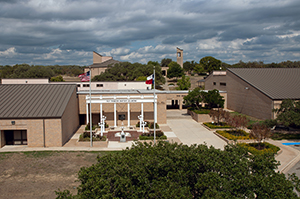
SMBA 300San Marcos Baptist AcademyLocated on a 220-acre Hill Country campus, San Marcos Baptist Academy offers a fully accredited college preparatory curriculum in a nurturing atmosphere for boys and girls in middle school and high school. The academy welcomes boarding students from around the world, across the United States and all over Texas, as well as day students from San Marcos and surrounding areas.

The only secondary school among Texas Baptist educational institutions, San Marcos Academy is led by President Jimmie Scott, whose tenure at the school in various administrative roles spans five decades. It has been accredited by the Southern Association of Colleges and Schools since the early 1900s.

With a current coeducational enrollment of 275, the academy offers an impressive variety of student programs, including a century-old Junior ROTC unit; competitive athletics for all ages; equestrian training; accommodations for students with mild to moderate learning differences; and a technology-enriched teaching environment that includes a laptop initiative and distance learning opportunities.

For more information, click here.

Another Baptist educational institution that filled a void in South Texas is the South Texas School of Christian Studies, a name selected in 2014.

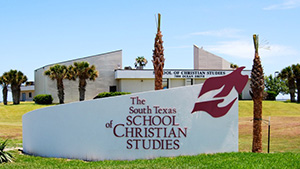
STSCS 300South Texas School of Christian StudiesThe school actually dates back to 1946, when the pastor of First Baptist Church in Beeville, Aubria A. Sanders, gathered some pastors and proposed the BGCT establish an institution of higher learning in Beeville. The trustees ultimately settled on Ward Island in Corpus Christi, previously a U.S. military radar station, and called it the University of Corpus Christi.

From 1947 to 1973, UCC was a four-year Baptist university, but Hurricane Celia in August 1970 nearly destroyed the campus and prompted an agreement with the city of Corpus Christi and the state of Texas to create Texas A&I University-Corpus Christi on that campus in the fall of 1973. That school has changed names and currently is Texas A&M University-Corpus Christi, located on more than 200 acres, but the BGCT retained 10 adjoining acres for religious education.

Those 10 acres were placed in the hands of the local Baptist association’s Christian Education Activities Corporation, which in 1980 opened its main building. That corporation eventually became the Baptist Learning Center of South Texas.

Undergraduate classes in religion began in the fall of 1977, when the Baptist Learning Center and Brownwood-based Howard Payne University reached an agreement to enable ministry-minded students to attend classes on Ward Island and gain academic credit through Howard Payne.

In 1997, Baptist Learning Center partnered with the Logsdon School of Theology at Hardin-Simmons University to offer the master of divinity degree in Corpus Christi. In 2011, the learning center partnered with Hardin-Simmons to provide bachelor’s degrees for South Texas students.

In the summer of 2012, the South Texas School of Christian Studies, led by President Tony Celleli, purchased a three-acre campus in McAllen and also solidified a new undergraduate partner through Hardin-Simmons. The South Texas School also has started the process of becoming a fully accredited institution and currently holds candidate status with the Association for Biblical Higher Education.

The school now offers certificate, undergraduate and graduate programs through Howard Payne University and Logsdon Seminary. In 2015, it experienced its highest student enrollment to date during its summer/fall terms.

For more information, click here.

René Maciel is president of the Baptist General Convention of Texas and president of Baptist University of the Américas in San Antonio.


When we work together, no church is too small

“Together, No Church is Too Small” is the motto I want see lived out in many of God’s churches today.

richard ray130Richard RaySo often, a church feels it is too small to make a difference in the world, much less the kingdom of God. These churches often settle for less when they should be expecting more. All throughout God’s word, we find God uses the smallest of things to deliver the greatest of harvest.

The mustard seed in Matthew 13:31 came to symbolize small beginnings, denoting the smallest weight or measure, a tiny particle. This mustard seed is something small that does its part to expand and grow the kingdom of God.

Luke 12:31-32 describes God’s church as a “little flock,” noting: “But seek his kingdom, and these things will be given to you as well. Do not be afraid, little flock, for your Father has been pleased to give you the kingdom.” This “little flock” of followers would change the world for Christ.

In Matthew 7, Christ says the way that leads to eternal life is “narrow,” and “few” find it. In Luke 10, Christ states that the laborers are “few.”

Christ uses the few, the small and the little, even as little as a mustard seed, to deliver his message of salvation to a truly great harvest. In the eyes of Christ, there is no small church.

The Bivocational/Small Church Association realizes Christ uses the small church to deliver his message of salvation. When small churches come together, no church is too small to do all things in Christ. At times, you may feel your church is as small as a mustard seed; however, you were not planted alone in the field to be harvested. You are planted by God with thousands of other mustard seeds, thousands of other small churches, and together, these small churches that God planted will grow the Kingdom of God, just as God intended from the very beginning.

The Lord has called you to serve, but he has not called you to serve alone. Contact me at tririversdom@gmail.com or at (432) 202-1526 for more information on how the Bivocational/Small Church Association can minister and serve you.

Remember, “Together, No Church is Too Small.”

Richard Ray is executive director of the Bivocational/Small Church Association and director of missions for Tri-Rivers Baptist Area.