




My story is like many others. When my wife and I got married and came to the United States, we told our parents we would be back in two years. Our plan was to study at a seminary in Dallas and after our graduation to return to the city where we were born, grew up and where most of our relatives and friends live.
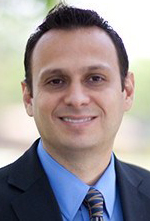 Octavio EsquedaNineteen years later, we still live in the United States and most likely we will never go back permanently. Just like many others, through the years, our temporary residency here became a permanent one.
Although it was not our original desire, through many circumstances, we have sensed and confirmed the Lord wants us to live where we are now. We lived in Texas 13 years, and we now are on our sixth year in California. The Lord gave us a great Texan boy and a precious Californian girl.
It has been difficult to be away from our loved ones, and it’s sad to realize our children are growing up away from our extended family. However, our God has been good to us; he gave us the opportunity to pursue graduate studies here and to serve him in many different ways. I enjoy my teaching ministry, and I believe by God’s grace I am privileged to do what I like and to serve students from all over the world.
Unprecedented racism
Nevertheless, in the last few months, I have seen and experienced racism in the United States like never before during my time here.
Unfortunately, because of anti-immigrant, anti-Mexican and anti-minorities’ sentiments, many people now feel free to express insults they would not have said before. The political rhetoric has affected the way many people feel, and now they imitate the aggressive tone of the president and of many politicians from both political parties.
For example, I have seen how my son, the son of another Biola University professor, and the daughter of another seminary professor have been verbally abused at school—and some even at church—just because they are Latinos. Sadly, I want to believe their classmates only repeat what they hear from their parents without reflecting about the emotional damage they are inflicting.
My wife and I were born and grew up in Mexico. We are grateful and glad for our nationality and ethnic identity. We registered our children at the Mexican consulates, and they also are Mexican citizens. However, a few years ago when it became evident the United States was our permanent home, we decided to become American citizens. We likewise are grateful for the privilege of living in this country and the opportunity to contribute to its society. As a result, our family has dual citizenship, and we constantly face the tension to value the good of both countries and to be concerned about what happens in both nations.
Sign up for our weekly edition and get all our headlines in your inbox on Thursdays
Political & social polarization
The immigrant tension becomes evident when Mexicans no longer perceive us completely as one of them, and in the United States we always will be considered foreigners, even though we are now American citizens.
Nineteen years ago, we became “Hispanics” when the plane that brought us here to study crossed the border, and we belong to what is considered a minority group—even though in places like Los Angeles, we are the majority. Perhaps the most difficult situation for me as a father is to realize my children also will carry with them the labels of “foreigners” and “minorities,” even though they were born in the United States; they are victims of the political and social polarization of our times.
Many consider my son and other children who have suffered racial discrimination part of the group called “bad hombres,” regardless of their American citizenship. The easiest thing for me to do would be to attempt to abandon my distinctiveness and blend in with the majority group, but this situation would take away my identity as a human being and my cultural values.
Furthermore, members of minority groups cannot remain “neutral” in terms of racial issues. For example, Hispanics, African Americans, Asian Americans, Indian Americans and many other groups are considered “people of color,” and they carry with them, even unwillingly, the baggage that comes with their cultural characteristics. In this way, the dominant and privileged group appears to be “colorless” and “culture-free,” and they can choose whether to get involved in racial issues and discussions.
Heavenly citizenship
This situation has led me to value even more the people of faith described in Hebrews 11. Our faith reminds us this life is not all that exists, and now in Christ we have a new heavenly citizenship that unites all believers. This reality does not invalidate our national citizenship or prevent us from active involvement in trying to serve our society, but it does give us an eternal and broader perspective.
I have found comfort in these passages:
• “All these died in faith, without receiving the promises, but having seen them and having welcomed them from a distance, and having confessed that they were strangers and exiles on the earth … But as it is, they desire a better country, that is, a heavenly one. Therefore, God is not ashamed to be called their God; for he has prepared a city for them” (Hebrews 11:13, 16).
• “For our citizenship is in heaven, from which also we eagerly wait for a Savior, the Lord Jesus Christ” (Philippians 3:20).
To be a Christian is to be an immigrant. It means to live with the tension of having two nationalities—three for me and many others. Our main loyalty is to Christ, but we also remain committed to our fellow citizens here on earth. Christ commands us to love our neighbors, regardless of their color, nationality or even religion.
In this climate of social uncertainty, followers of Christ are called to be the aroma of Christ that brings refreshment to our environment. As Christians, we should build bridges that promote unity and that lead people to Jesus. Only when we receive and accept the call to live beyond our national loyalties can we fully become effective ambassadors of the heavenly kingdom.
The last few months have been difficult, but they have taught me to be an exile on the earth and to have the faith of those who long for the heavenly city.
Octavio Javier Esqueda is professor of Christian higher education at Biola University’s Talbot School of Theology. He lived in Texas 13 years, when he taught at Southwestern Baptist Theological Seminary in Fort Worth and was a member of Park Cities Baptist Church in Dallas.







We seek to connect God’s story and God’s people around the world. To learn more about God’s story, click here.
Send comments and feedback to Eric Black, our editor. For comments to be published, please specify “letter to the editor.” Maximum length for publication is 300 words.