


“… we hear them declaring the wonders of God in our own languages” (Act 2:11)
It was the day of Pentecost. God-fearing Jews and others converted to Judaism from afar came to stay in Jerusalem for the holiday. The disciples were together in one place for prayers, waiting for the fulfilment of the promise of the coming of the Holy Spirit on them. 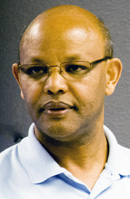 Bedilu YirgaIt suddenly happened, and they started to speak in different languages so that the crowd around them could understand them. The people in the crowd were amazed and begun asking each other: “Are not all these men who are speaking Galileans?8Then how is it that each of us hears them in his own native language?” (Acts 2:7-8) There were as many as 16 languages spoken that day. The question of the day was, “What does this mean?” (Acts 2:12)
As an immigrant who came to this land speaking a different language, I want to share my view of the work of God that was declared in different languages and the opportunity that came with it.
The Genesis account tells us that with different languages sent by God, people were scattered. Here in Acts, however, we see God using different languages to carry the same message and declare the works of God. The message made the crowd wonder, ask questions and open themselves to hear the gospel. Language reflects the culture, values and worldview of the community that owns it. God used those languages that day for his purpose, and he is doing the same today. Different languages—the same declaration!
The world has come to us
We hear Texas Baptists saying, “The world has come to us.” This means the mission field is not far away as it used to be. Because of migration, people of many languages, cultures and origins have come to the United States.
Texas alone had 4.4 million foreign-born residents in 2013, representing 16.7 percent of the state’s total population, 26.4 million. The foreign population in Texas in 2000 was 13.9 percent of the total, and in 1990, it was 9.0 percent. The trend is fast growing. The number of Texas children born in the States with one or both foreign-born parents was 2.3 million in 2013. If we add 4.4 million foreign-born with their 2.3 million children, they collectively represent one-fourth of the total population in Texas. According to the U.S. Census Bureau, the number of languages spoken at Texas homes is 171. The number of languages spoken in our Baptist churches is 69.
What does this tell us? God is doing great things by using migration for his purpose. Different languages are declaring his superb works. There are seven intercultural fellowships and many ethnic churches connected to and supported by our Texas Baptists. These Baptist General Convention of Texas-supported ethnic churches are sending indigenous missionaries to their homelands while reaching out to their own people in diaspora.
More to be done
Sign up for our weekly edition and get all our headlines in your inbox on Thursdays
But more is yet to be done. The following can enhance the work of ethnic church planting:
• Equip ethnic churches to plant new ethnic churches.
Each ethnic group has its own understanding of church and church planting. This is due to culture and prior practices. We need to engage them with our Texas Baptist church-planting program while allowing them to play a leading role in church planting in their cultural community. It takes a great amount of contextualization to be successful in evangelizing different language communities through church planting.
• Provide more funding for ethnic church planting.
Texas’ ethnic population is exploding. In order to keep up with this growth, there must be strong financial support for the new ethnic church planting to maintain continued growth. More and more ethnic groups need to hear the great work of God in their different languages.
• Revitalize our ethnic church-planting strategies.
Texas Baptists have rich experience when it comes to planting and growing ethnic churches. Our ethnic churches are indebted to the BGCT staff, pastors and Texas Baptist churches for their faithfulness, dedication and caring services. Different methods and strategic actions have been applied. But we need to be flexible and continuously design and redesign our methods to adapt to the current situation of ethnic groups coming to Texas.
 It is time to encourage and cooperate with ethnic churches Texas Baptists planted, so they can plant new ethnic churches in their communities. They have the calling to do so, but they need to be empowered. The Texas Baptist family is in a better position today than ever to do the equipping of Texas ethnic churches the best way.
Remember: It is different languages, same declaration!
Bedilu Yirga is senior pastor of the Ethiopian Evangelical Baptist Church in Garland and second vice president of the Baptist General Convention of Texas.








We seek to connect God’s story and God’s people around the world. To learn more about God’s story, click here.
Send comments and feedback to Eric Black, our editor. For comments to be published, please specify “letter to the editor.” Maximum length for publication is 300 words.