Cuba continues crackdown on freedom of religion

The Cuban government continued its repression of freedom of religion last year, a new report from an international human rights organization focused on faith freedom revealed.

Christian Solidarity Worldwide documented 624 separate cases in 2024 of attacks on freedom of religion or belief. Most of those cases involved multiple violations of faith freedom, bringing the total number to 1,898.

Violations include arbitrary detention, intrusive surveillance, repeat interrogations, threats, harassment. In the case of some children, they also involved physical and verbal abuse at school because of students’ religious beliefs.

“The Cuban government has continued to use oppressive measures to exert control over the population in a crackdown that has been ongoing since 2021,” CSW stated in its report, “No Respite: The Systematic Suppression of Freedom of Religion or Belief in Cuba.”

Seeking to silence dissident voices

The violations involve a wide range of religious groups—Protestants, Roman Catholics, Jehovah’s Witnesses, Afro-Cuban religions and both registered and unregistered groups.

“Those considered by the government to be dissidents were repeatedly and systematically blocked from attending religious services, usually through short-term arbitrary detention,” the report stated.

In some cases, religious leaders and congregations who sought to respond to humanitarian needs—which became particularly acute in many parts of Cuba last year—were harassed and fined, and the aid they offered was confiscated, the report noted.

The government systematically denied Cuban political prisoners access to religious materials and religious visits, in violation of the Nelson Mandela Rules—the United Nations Standard Minimum Rules for the Treatment of Prisoners.

“The government appeared especially intent on targeting religious leaders and individuals who offered spiritual or material support to families of political prisoners,” the report stated.

The report noted the willingness of religious leaders to address human rights “despite the efforts of the government to silence independent or critical voices.”

“While some Cubans, no doubt, are more cautious and many have seen no other option than to go into exile, there remain many who, even in the face of threats, harassment and the possibility of imprisonment, continue to speak out against injustice and up for those in their communities who are suffering,” the report stated.

Call to stand with the people of Cuba

CSW called on the international community—“especially Cuba’s friends and neighbors in Latin America”—to voice concerns about Cuba’s human rights and religious freedom violations and to support the Cuban people.

“Ultimately, the future of Cuba lies with its people; those around the world who believe in the principles of democracy and fundamental human rights must stand with them in their peaceful pursuit of political and social change,” the report concluded.

In its 2025 annual report, the U.S. Commission on International Religious Freedom recommended the U.S. Department of State continue to designate Cuba as a Country of Particular Concern for its “systematic, ongoing and egregious violations of religious freedom.”

“In 2024, religious freedom conditions in Cuba remained dismal,” the commission’s report stated. “The government supplemented its oppressive legal framework with legislation further restricting freedom of religion or belief, harassed religious leaders and congregations, and wrongfully imprisoned individuals for peaceful religious activity.”

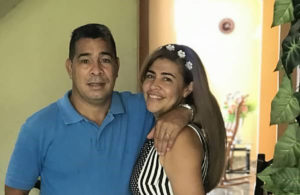
Cuban Pastor Lorenzo Rosales Fajardo is pictured with his wife Maridilegnis Carballo. He was imprisoned since July 2021 for his involvement in peaceful demonstrations. He was released in mid-January as part of a mass amnesty. (Photo courtesy of CSW)

In January, Lorenzo Rosales Fajardo, an evangelical Cuban pastor who had been imprisoned since 2021 for participating in peaceful protests, was released as part of a mass amnesty.

At the time, the Cuban government announced plans to release more than 500 political prisoners as part of a Vatican-brokered deal after the White House announced the State Department would remove Cuba from its list of state sponsors of terrorism.

While it applauded Fajardo’s release, the U.S. Commission on International Religious Freedom pointed to the continued imprisonment of other religious leaders.

“We urge the U.S. Department of State to make clear to the Cuban authorities that those who remain wrongfully imprisoned must be released and to remain vigilant to confront any future harassment, intimidation or detention by the Cuban government,” the commission stated at the time.


Persecuted Vietnamese Highlanders seek freedom

An East Texas-based organization that played a key role in securing the release and resettlement of the Mayflower Church—persecuted Chinese Christians detained in Thailand, who eventually relocated to Texas—hopes to do the same for Vietnamese Christians in a similar situation.

Freedom Seekers International has worked more than two months to help free members of the Vietnamese Highlands Montagnard Christian Church from immigration detention centers in Thailand.

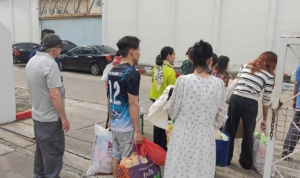
After supporters of Freedom Seekers International provided bail payments, 26 of The Highlanders were released in early May following 73 days in detention. (Courtesy Photo)

To escape religious persecution, members of the church fled Vietnam on foot in 2019, entering Thailand without passports or other documentation to seek the protection of the United Nations High Commissioner for Refugees.

“And like the Mayflower Church, their journey to an immigration detention center in Thailand was for the same reasons, persecution because their home government did not want them to worship Jesus, followed by arrest by the Thailand immigration police due to illegal residence in Thailand,” wrote Tim Conkling, a Taiwan-based missionary with Asia Mission Partners and founder of Connecting Families.

Rounded up during a prayer meeting

Sixty-four members of the Vietnamese Highlands Montagnard Christian Church gathered on Feb. 24 in a house to pray for the family of one of their members whose mother died in Vietnam.

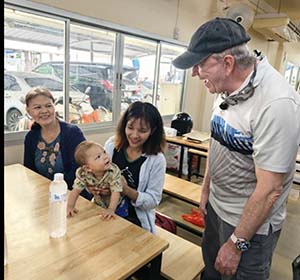
Tim Conkling, a Taiwan-based missionary with Asia Mission Partners and founder of Connecting Families, visits with some of the released members of The Highlanders. (Photo courtesy of Connecting Families)

“When the group prayed, Thailand immigration police arrived at the scene and broke up the prayer meeting,” wrote Conkling, a missions partner with Freedom Seekers International. “The police arrested all of the church members and then took them to prison for processing.”

Several adults who already had bail release papers from a previous detention were released, along with some of the children in the group.

Forty-eight members of the church—including three pregnant women, one of whom later gave birth—eventually were processed into the Suan Phlu Bangkok Detention Center and the Bang Khen Immigration Detention Center.

The Center for Asylum Protection in Thailand advocated on behalf of “The Highlanders,” as the group has become known. After supporters of Freedom Seekers International provided bail payments, 26 of The Highlanders were released in early May following 73 days in detention.

Ten Highlanders still detained

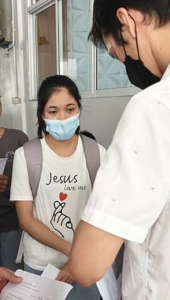
Iris, a member of the Vietnamese Highlands Montagnard Christian Church, wore a shirt expressing her faith in the love of Jesus, but her eyes showed the stress of 73 days in detention. (Photo courtesy of Connecting Families)

Conkling helped the released members of the Vietnamese church—including another dozen released after the first group—relocate to rented single-family dwellings in a suburb of Bangkok.

He took the two pregnant women who had been detained to a hospital for prenatal exams. He also took another woman to the hospital who had been suffering from constant headaches and vomiting.

“There are still 10 refugees in the International Detention Center in Bangkok,” Conkling reported on May 22. “All are adults and have their UNHCR cards, so they are recognized as refugees by the United Nations.

“Three will be released next week, and three have been denied bail release due to unresolved issues with the Vietnam government. The remaining four will be released sometime in the future, but we are not certain of the date.”

Advocating for admission to the U.S.

In the meantime, Deana Brown, founder and CEO of Freedom Seekers International, is working to persuade U.S. government officials to allow The Highlanders to relocate to Texas.

The same East Texas organization that housed the Mayflower Church until they relocated to Midland has committed to provide lodging for The Highlanders, said Brown, a former Southern Baptist missionary.

“I’m confident that churches will help with other support—ESL, securing jobs, getting kids in school, teaching them to drive, connecting with medical facilities—everything that FSI did with the Mayflower Church,” she said.

Brown already has secured the support of Rep. Nathaniel Moran, R-Tyler, who was part of a bipartisan effort to obtain Priority-1 visas with the U.S. Refugee Admissions Program for members of the Mayflower Church in 2023.

Both she and Conkling are optimistic Secretary of State Marco Rubio, who was part of the effort to help the Mayflower Church when he was serving in the Senate, will respond favorably to The Highlanders.

“Secretary of State Marco Rubio has been given authority to let in refugees on a case-to-case basis,” Conkling wrote.

“Because Secretary Rubio was actively involved in protesting the Thailand government returning the Uyghurs to China, we feel like he will be possibly favorably disposed to considering this church’s case.”

In early February, Thailand forcibly deported 40 of the 350 Uyghurs who fled China in 2014 and had spent a decade in a Thai detention center. Rubio protested the action and offered the refugees political asylum before they were returned to China.

When the Thai government did not accept the offer, the United States imposed sanctions on the particular Thai governmental officials involved in the deportation.

Reasons to admit Highlanders outlined

Conkling outlined reasons The Highlanders meet the criteria for admission to the United States:

  • “Their persecution histories have been recorded and vetted by the UNHCR, and they were granted refugee status because of religious persecution against Christians. Had the present U.S. administration not curtailed the State Department’s Welcome Corp program, these Christian refugees would have been sponsored to come legally to the United States.”
  • “They are in constant danger in Thailand, and neither the UNHCR nor the U.S. government is in a position to protect them from the same fate as the Uyghur refugees.” Some members of the church have expressed fear of being abducted by members of the Vietnamese secret police and being forcibly deported to Vietnam.
  • “Their documented persecution in Vietnam arises for Christian religious reasons, as well as historical association with assisting U.S. troops during the Vietnam War.”
  • “Freedom Seekers International has already secured housing for the group, should they be allowed to come to the U.S., and would accept the responsibility to raise the additional sponsorship funds needed for their relocation, just as they successfully did with the Mayflower Chinese Church refugees in 2023.”

Both Conkling and Brown encouraged Christians in the United States to contact members of the Senate and House of Representatives to advocate on behalf of members of the Vietnamese Highlands Montagnard Christian Church.

“If the Lord works out the details,” Brown said, she hopes to fly to Thailand in early June to spend time with The Highlanders and connect with ministry partners who are helping them.

While The Highlanders remain in Thailand, they are not permitted to work. Conkling said concerned Texas Baptists who wish to donate to their support in the interim can do so online through Connecting Families by clicking here.

Brown added Christians can support The Highlanders now and in any future relocation by donating here.


Commission notes violence against Nigerian Christians

WASHINGTON (BP)—Almost daily, news surfaces of Islamic extremists or Fulani militants killing Christians in northern or central Nigeria, with law enforcement either lacking or inadequate to intervene.

Even so, the U.S. Department of State largely failed to pay attention to the religious dimension of violence in Nigeria in recent years.

“The U.S. government has not acknowledged the horrific persecution of millions of Nigeria’s Middle Belt Christians reportedly by Fulani herder militants,” international human rights lawyer Nina Shea told the House Foreign Affairs Subcommittee on Africa at a hearing in March.

She particularly took exception to former Secretary of State Antony Blinken’s testimony before the House Appropriations Committee, stating attacks against Christians in Nigeria “have nothing to do with religion.”

“He overlooked all evidence to the contrary, some of which was included in his own State Department’s International Religious Freedom Report,” she said.

Nigeria’s size, population and underdeveloped infrastructure make full and accurate data on religiously motivated attacks difficult to obtain, U.S. Commission on International Religious Freedom representatives said at a Capitol Hill hearing on religious freedom in Nigeria, but the country is the deadliest in the world for Christians.

About 62,000 Christians have been killed for their faith in Nigeria since the year 2000, Commissioner Vicky Hartzler said, referencing research by Genocide Watch.

In April, more than 240 Christians were massacred in attacks on villages in Plateau and Benue states during Lent and Easter, some as they worshiped, news agencies and religious liberty advocates reported.

‘The attacks are not random’

Wissam al-Saliby, president of 21Wilberforce, said Shea “is right to challenge the State Department’s assertion that the violence in Nigeria’s Middle Belt is unrelated to religion.”

Wissam al-Saliby

“It is true that multiple factors—such as competition over land, climate change, and ethnic tensions—play a role in the conflict. Violence between herders and farmers is a longstanding problem in Nigeria and across Africa,” al-Saliby acknowledged.

“However, we see a clear and consistent pattern to the violence in the Middle Belt: predominantly Christian farming communities are repeatedly targeted by armed groups often identified as Fulani herdsmen, who are largely Muslim,” he added.

“The attacks are not random. They frequently involve the destruction of churches, the slaughter of entire Christian families, and the displacement of thousands of Christian villagers. Survivors and eyewitnesses consistently describe attackers shouting Islamic slogans and targeting Christian symbols and leaders.

“To ignore these religious markers is to ignore the lived reality of the victims and to mischaracterize the ideological motivations of many of the perpetrators.

“Dismissing the religious element also undermines U.S. credibility on issues of international religious freedom, particularly when Nigerian church leaders and civil society organizations are pleading for the global community to recognize the religious persecution their communities are facing.”

U.S. can make a difference in Nigeria

Commissioner Maureen Ferguson told Baptist Press the United States can play a role in driving Nigeria to provide the religious freedom protections the African nation’s constitution stipulates.

USCIRF Commissioner Maureen Ferguson speaks at USCIRF hearing encouraging U.S. action against religious persecution in Nigeria.

Consistently since 2009, the U.S. Commission on International Religious Freedom has asked the State Department to designate Nigeria a Country of Particular Concern for egregious, systemic and ongoing religious liberty violations. The designation could carry a host of U.S. sanctions against the nation, including financial restrictions.

Ferguson encourages the U.S. Senate to confirm Mark Walker, a Southern Baptist from North Carolina, as U.S. ambassador-at-large for international religious freedom, which she believes is a first step in drawing the U.S. State Department’s attention to Nigeria.

“The appointment of former Congressman Mark Walker as the ambassador-at-large for international religious freedom was an excellent appointment,” she said.

“We hope the Senate will quickly confirm him because that will help focus things at the State Department on this very important issue.”

Nigeria was last designated a CPC in 2020, but was dropped from the list in 2021. Ferguson believes Secretary of State Marco Rubio might be inclined to revive the designation.

“What I would say is that Secretary Rubio has been a champion of international religious freedom and the protection of religious minority groups from persecution and violence,” she told Baptist Press.

“The secretary of state has been an absolute leader on that during his time in the Senate. So, I’m confident that he will bring that to the State Department. I just think we’re still kind of in a transitional period because there’s all this reshuffling at the State Department.”

The Biden Administration did not issue a Report on International Religious Freedom his departing year in office, and former Secretary of State Antony Blinken did not issue a new list of CPCs.

There is no indication when the new administration will issue its first report.

Ferguson spoke to Baptist Press on the 22nd birthday of Leah Sharibu, the lone schoolgirl who remains captive among 104 kidnapped on Feb. 19, 2018, by the Islamic State-West Africa Province from a government school in Dapchi, Yobe state. Her captives threatened to hold her as a slave for life because she refused to renounce her faith.

“There is an indication that she’s still alive,” Ferguson said of Sharibu, who was taken at age 14. “I believe she’s borne children in captivity and suffered abuse.”

While Nigeria’s constitution stipulates a respect for religious freedom, the country’s religious landscape defies it. Islamic Shari’a law is enforced in 12 of Nigeria’s northern states, with harsh punishment for blasphemy.

‘People are dying every day’

The government is unable to protect religious groups from violence, particularly in rural areas, USCIRF said, citing banditry and interreligious violence.

Dangerous to Christians are Islamic terrorists, including ISWAP, Boko Haram, militant Fulani and the newly emerging Lakawara.

Violence against Christians, moderate Muslims and minority religious groups is escalating in Nigeria in the meanwhile, USCIRF highlighted in its May 5 hearing on Capitol Hill, offering testimony from commissioners, scholars and political leaders who have long advocated for religious freedom in Africa’s most populous nation.

Frank Wolf

“People are dying every day. It is getting worse, and it has been going on for years,” said panelist Frank R. Wolf, former USCIRF commissioner and U.S. congressman. “And I’ll tell you, the Christians you meet there, they are amazing.”

Wolf, who has worked alongside Rubio in Congress, believes as does Ferguson that Rubio has a “deep concern about religious freedom.” The new secretary of state would want to do everything possible, Wolf said, to address religious violence in Nigeria.

“The U.S. needs to do something that actually will help prevent further killings of Nigerian Christians and moderate Muslims,” Wolf said.

While some have asserted acknowledging the religious aspect of violence in Nigeria fuels division, al-Saliby of 21Wilberforce insisted it simply is an “accurate diagnosis” of the situation.

“Only by acknowledging the full scope of the problem, including its religious dimensions, can policymakers craft appropriate responses that support vulnerable communities and promote long-term peace and coexistence,” he said.

 “The U.S. must take seriously the cries of Nigeria’s Christian communities in the Middle Belt and re-evaluate policies that fail to confront the full reality of religiously motivated violence.”

With additional reporting by Managing Editor Ken Camp.


Afghans who fled Taliban face repatriation

About 14,000 Afghans who came to the United States to escape the Taliban—including religious minorities who experienced persecution in their homeland—face forced repatriation in less than two weeks.

U.S. Department of Homeland Security Secretary Kristi Noem announced April 11 the termination of Temporary Protected Status for Afghan nationals who relocated to the United States, effective May 20.

Afghan children receive loving attention at Vila Minhya Pátria, operated by Baptists in Brazil. (Photo courtesy of Fernando Brandão)

Homeland Security instructed the Afghans—some of whom assisted U.S. military or western nongovernmental organizations in Afghanistan—to leave the United States.

After the U.S. military withdrawal from Afghanistan in August 2021, more than 1 million Afghans sought refuge in 98 countries.

Assistant Secretary Tricia McLaughlin said conditions in Afghanistan no longer merit U.S. protection.

“Secretary Noem made the decision to terminate TPS for individuals from Afghanistan because the country’s improved security situation and its stabilizing economy no longer prevent them from returning to their home country,” McLaughlin stated.

‘Situation in Afghanistan remains dire’

Less than a month earlier, when the U.S. Commission on International Religious Freedom convened a virtual hearing on “Religious Freedom Conditions in Taliban-Controlled Afghanistan,” panelists came to a starkly different conclusion.

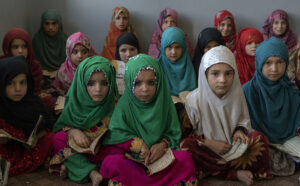
Afghan girls read the Quran in the Noor Mosque outside Kabul, Afghanistan. With no sign the ruling Taliban will allow them back to school, some girls and parents are trying to find ways to keep education from stalling for a generation of young women. (AP File Photo/Ebrahim Noroozi, File)

Human rights and religious freedom in Afghanistan have deteriorated since the Taliban regained control in 2021, and recent executive orders by President Donald Trump could make matters worse, expert panelists testified at the hearing.

On April 28, the commission issued a statement expressing alarm about Pakistan’s “rapid and ongoing repatriation of Afghan refugees,” which has affected 80,000 people. At the same time, the commission expressed concern about Homeland Security’s announcement regarding the termination of TPS for Afghans in the United States.

“The situation in Afghanistan remains dire for those who do not share the Taliban’s strict interpretation of Islam, including Christians, Shi’a Hazara, Ahmadiyya Muslims, and Sikhs,” said Stephen Schneck, chair of the U.S. Commission on International Religious Freedom.

“We are deeply concerned that religious minority communities will be in grave danger, especially women and girls, as Taliban officials seek retaliation against Afghans returned by the Pakistani government’s forced and accelerated repatriation efforts.”

Need to ‘protect vulnerable populations’

Legal protections for refugees and asylum seekers need to be strengthened to protect vulnerable groups, including individuals who are persecuted for their faith, said Wissam al-Saliby, president of 21Wilberforce, a human rights organization focused on international religious freedom.

Wissam al-Saliby

“It is important that the legal and institutional frameworks that protect refugees and asylum seekers are strengthened in the United States, in Europe, in Pakistan where they are repatriating a lot of Afghan refugees, in my home country of Lebanon, and everywhere else in the world,” al-Saliby said.

“These systems that were put in place after the Second World War have very specific definitions for persecution and they are important to protect vulnerable populations including Christians and those who have converted to the Christian faith and would have faced persecution in their home country.

“I experienced this first-hand when, a decade ago, I was assisting asylum seekers who converted to the Christian faith in Lebanon and came from other Arab countries. In addition to protecting their lives, the legal and institutional frameworks gave hope to them and their children.”

In a May 1 news release about the plight of Afghan refugees, 21Wilberforce stated: “Returning religious minorities to a country where they are likely to face systematic repression and possibly extrajudicial punishment runs counter to both international human rights U.S. norms and U.S. commitments to religious freedom.”

 The statement from 21Wilberforce continued: “Protections for religious minorities under U.S. immigration and asylum law are grounded in the recognition that persecution for one’s faith is a fundamental violation of human rights.

“The United States has legal obligations under international and domestic law to process asylum claims and protect individuals fleeing persecution, including those targeted for their religious beliefs.”


International missionaries face new restrictions in China

BEIJING (BP)—The Chinese Communist Party enacted new restrictions on foreign missionaries there May 1, preventing them from preaching, evangelizing and establishing various religious organizations among other activities without official government approval.

Establishing schools, appointing clergy, using the internet to conduct illegal religious activities and producing, selling or distributing Bibles and religious audio-visual products are among activities punishable by law for foreigners and Chinese nationals that aid them, according to the rules posted online by China’s National Religious Affairs Administration.

The rules are among the latest in the Communist nation’s drive to Sinicize Christianity and other religions under the leadership of President Xi Jinping. The Chinese Communist Party cited national unity in justifying the rules.

State-run churches, such as the Protestant Three Self Church and the Chinese Catholic Patriotic Association, are tightly controlled.

Human rights and religious liberty violations noted

China is one of the most severe state persecutors of Christians and other religious groups, requiring clergy to pledge allegiance to the Chinese Communist Party and socialism, resist certain religious activities and extremist ideology and resist infiltration by foreign forces using religion.

The U.S. State Department annually names China as a Country of Particular Concern for egregious religious freedom violations, and the 2025 Open Doors’ World Watch List ranks China as 15th among the 50 worst places for Christians to live, citing Communist and post-Communist oppression.

Under Xi’s Sinicization, the Chinese Communist Party allows five organized religions and tightly controls all aspects of them, including their houses of worship, beliefs, activities, leadership, language and even how the adherents dress, according to a September 2024 factsheet from the U.S. Commission on International Religious Freedom.

“Enforcement of such Sinicization policies has consistently resulted in systematic, ongoing, and egregious violations of religious freedom and related human rights, including genocide, crimes against humanity, mass incarceration, enforced disappearances and the destruction of cultural and religious heritage,” USCIRF wrote in “Sinicization of Religion: China’s Coercive Religious Policy.”

In April, the Chinese Communist Party-sanctioned China Christian Council and the National Committee of the Three-Self Patriotic Movement announced the upcoming publication of the book Sinicization of Christianity, China Aid announced.

The book is marketed as emphasizing harmony with Chinese culture and socialist society, China Aid reported, but is seen as a tool in the implementation of Xi’s “Five-Year Work Plan for Further Advancing the Sinicization of Christianity (2023–2027).”


Texans on Mission responds to crisis in South Sudan

Crossing the border from Uganda to South Sudan reveals the difference between poverty and extreme poverty.

When Mitch Chapman first visited South Sudan a couple of years ago, he said God “showed me poverty that I’ve not seen anywhere else.” And as director of Texans on Mission Water Impact, Chapman has spent much time in Africa.

“Even in comparison to the places we’re working in Uganda, South Sudan is so much poorer and in so much worse shape,” he said.

In April, Texans on Mission created a nonprofit in South Sudan to address the extreme water needs. The Texas-based ministry is the primary funder, and Chapman is on the board of directors.

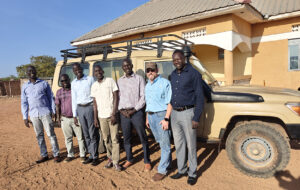
Mitch Chapman (2nd from right), director of Texans on Mission Water Impact, is pictured with some members of the South Sudanese on Mission team. (Texans on Mission Photo)

The nonprofit’s eight-person staff is made up of people with South Sudan roots who have worked with Texans and Ugandans on Mission. The new entity, South Sudanese on Mission, is headquartered in Nyamliell. It is basically a one-year project to determine longer term viability, Chapman said.

“Our goal this year is to try to do 35 well rehabs with four or five new wells, depending on what can be negotiated,” he said. “And that would mean 40 new Bible studies and 40 hygiene classes.”

Rehabilitation of existing but nonworking wells is a priority. In Aweil West County, Chapman said there are 684 water wells and 285 are nonoperational. Texans on Mission did not drill those wells.

Before the beginning of a civil war in 2013, “organizations went and drilled a lot of wells over there, but we found out a lot of them weren’t deep enough, and they didn’t use good quality materials,” Chapman said.

Following the model established in Uganda

South Sudanese on Mission will refit those nonfunctioning wells and start Bible studies and hygiene classes in each village, following the model established in neighboring Uganda.

Chapman and local leaders spent the first week in April on staff training and administration. “But by Week 2, we’d already started to meet [for] Bible studies at four of the rehab sites.”

The Bible studies are started “independent of how many churches there are in an area,” he said. “We start a Bible study, and the people take it upon themselves to pick the church they want to go to. We don’t dictate whether it’s a Baptist church, a Methodist church or Pentecostal.

“We just teach the word [of God], and our lessons are very much about discipleship and spiritual growth. When we determine there’s not a church in the area, then we go to local church associations and encourage them to sponsor a church around the well site.”

The South Sudanese team also includes a hygiene specialist who makes sure the people “know how to wash their hands, how to clean the wellhead, how important it is not to let the goats drink from the water spigot itself,” he said. “It’s a critical component of the holistic effort.”

The work is now in an implementation phase. “We haven’t rehabbed or drilled the first well, but we’re already at work teaching the Bible, making disciples and teaching good hygiene practices.”

The biggest challenge facing the ministry is political instability, so Chapman asked Christians to pray for the South Sudanese on Mission staff and more generally for the people of the country.

“We have no involvement with either side in the political dispute,” he said. “But the political situation does impact the lives of the people and the effectiveness of our work.

“Pray that we can help meet the water needs in South Sudan, lead people to faith in Christ, and develop believers for service to God and their neighbors.”


Commission exposes blasphemy law in Russia

Since its full-scale invasion of Ukraine in 2022, Russia has increased its enforcement of a law that criminalizes “insulting the religious feelings of believers” as part of the government’s campaign to present itself as the defender of “traditional values.”

“Authorities have subjected those accused of blasphemy to fines, pretrial detention, imprisonment, mandatory community service, deportation, compulsory psychological treatment, and other forms of ill treatment,” a report from the U.S. Commission on International Religious Freedom states.

Russia has cracked down on perceived offensive expression toward religion, religious texts and religious leaders, the commission reports in “Prosecuting Blasphemy in Russia,” released April 14.

In doing so, Russia violates basic principles of religious freedom, Article 18 of the Universal Declaration of Human Rights, and the International Covenant on Civil and Political Rights, the commission report states.

In 2013, Russian President Vladimir Putin signed into law a bill that amended Article 148 of Russia’s Criminal Code to criminalize “insulting the religious feelings of believers.” Between 2013 and 2020, arrests for violations of that law produced only 32 convictions, the report notes, but that changed after Russia’s assault on Ukraine in 2022.

“The war refocused the efforts of Russia’s domestic security apparatus to aggressively suppress independent civil society and dissent, especially on the internet,” the report states.

“Authorities began expending considerable time and resources to surveil online content and investigate complaints from ordinary citizens, including about perceived blasphemous content.

“Combating perceived religiously offensive expression served a special role in Russia’s wartime policy objectives of protecting so-called ‘traditional values’ and bolstering anti-Western sentiments.”

Flying the ‘traditional values’ flag to rally support

Putin has used defense of “traditional values” as a way to unify Russia’s ethnically and religiously diverse population and to justify his authoritarian practices, including “systemic, ongoing and egregious violations of religious freedom,” the report asserts.

Since the full-scale invasion of Ukraine, “protecting so-called ‘traditional values’ became a matter of national security, taking on new ideological and policy significance for the Russian government,” the report states.

“President Putin has used the protection of so-called ‘traditional values’ to justify his country’s 2022 invasion and occupation of Ukraine” and has directed Russia’s domestic security services to defend “traditional values” as a national security priority, the report notes.

“Overall, Russia’s prioritization of protecting ‘traditional values’—coupled with the state’s broader crackdown on opposition to the government, especially online—has resulted in law enforcement more rigorously investigating and prosecuting alleged incidents of blasphemy.”

In addition to the law in the Criminal Code against “insulting the religious feelings of believers,” Russia also has a provision in its Administrative Code to punish the “intentional public desecration, damage, or destruction of religious or liturgical literature, items of religious worship, signs, or emblems of belief symbolism or attributes.”

Authorities also use provisions in the Criminal Code criminalizing “hooliganism” and in the Administrative Code calling for the punishment of “incitement of hatred or enmity” to prosecute perceived religiously offensive speech or actions.

“While states have a duty to combat hate speech and incitement to discrimination, hostility, and violence against individuals or groups, international law sets a high standard for restricting freedom of expression—including on the basis of religion—which Russia does not consistently meet when prosecuting religiously motivated cases through its hate speech laws,” the report states.

Rebuke, maybe; prosecution, no

The commission cites examples of blasphemy law enforcement involving individuals accused of burning a copy of the Qur’an or the New Testament, displaying religious symbols in irreverent ways, posting nude photos taken against the backdrop of a house of worship or a cemetery, or desecrating symbols of Russian military glory.

“While certain offensive statements and actions may warrant public rebuke, prosecuting perceived offensive expression toward religion violates the right to freedom of religion or belief and the right to freedom of opinion and expression under international human rights law,” the report states.

The U.S. Commission on International Religious Freedom has recommended every year since 2017 the U.S. Department of State designate the Russian Federation as a Country of Particular Concern.

Under the International Religious Freedom Act of 1998, the Country of Particular Concern designation is reserved for nations engaged in systemic, ongoing and egregious violations of religious freedom.

The State Department designated Russia as a Country of Particular Concern in 2021, 2022 and 2023 for violations of religious freedom both in Russia and Russian-occupied areas of Ukraine.


Explainer: The changing landscape of global aid

An expert on global development urged anti-hunger advocates to understand what U.S. foreign aid looked like before and after President Donald Trump’s inauguration.

Baptists and other evangelicals have spoken out on the effects federal cuts to foreign aid are having on global ministries and their inability to make up for overwhelming needs, exacerbated by abrupt loss of funding.

“There’s a huge amount of hunger in the world, and in today’s political environment, there are lot of things going on that are going to exacerbate global food insecurity and hunger and necessitate that we all take action,” Kate Weaver, advocate board member for Baylor University’s Collaborative on Hunger and Poverty, told participants of the collaborative’s annual summit.

Even before the presidential inauguration, acute food insecurity was high, explained Weaver, associate professor at the LBJ School of Public Affairs at the University of Texas in Austin, who co-directs innovations for peace and development.

To understand the current situation better, Weaver set the “lay of the land” of U.S. international development aid by asking questions about what U.S. foreign aid looked like before Jan. 20, when the U.S. Agency for International Development became the target of big federal government cuts.

How much aid does the United States give?

  • Less than 1 percent of the United States’ total annual budget was spent on all foreign aid—development, humanitarian and military. Foreign aid is not only development aid and humanitarian assistance. Foreign aid also includes military spending, which accounts for about 20 to 30 percent of total foreign aid. Excluding miliary aid, the U.S. spent about $69 billion on development and humanitarian aid, 0.72 percent of foreign aid dollars in 2024. That sounds like a lot, Weaver acknowledged, until viewed alongside the amount spent on defense—more than $900 billion.
  • Yet, surveys show the average citizen believes allocation to foreign aid falls between 10 and 25 percent of the federal budget. When they understand such a small piece of the budget is going to alleviate global poverty and underdevelopment—“two factors we know that drive” violence and unrest—individuals often approve of the spending, Weaver said, noting the importance of accurate, contextual messaging.
  • Additionally, only about 0.24 percent of gross national income was spent on foreign aid in 2024, even though in the 1970s the U.S. signed a treaty with several other major donor countries who all agreed to spend 0.7 percent of GNI on foreign aid in order to “have any chance” of alleviating international poverty. Few countries ever met or exceeded that goal, Weaver noted, though several Scandinavian countries have, at times, met the threshold.

Who controls aid?

  • Congress controls foreign aid allocations.

Who does the United States give aid to?

  • The United States has given global aid to countries (over 150); farmers—with about 20 percent of international aid dollars coming back to U.S. farmers for surplus sent to suffering international locations; multilateral organizations—“global institutions that have at least three member states,” such as the World Health Organization; “hundreds of thousands” of nongovernmental aid organizations and nonprofits, which often are religiously affiliated. Prior to recent actions, USAID was at the center of this network, providing 60 percent of the country’s global development spending.
  • In 2024, the United States provided 41 percent of all international humanitarian aid and 40 percent of all global health aid. “Think about what happens when you suddenly take away 41 percent of all the global humanitarian aid, and relatively quickly,” Weaver urged.
  • Almost all USAID aid went to nongovernmental organizations, so concerns of corrupt governments exploiting the aid largely are unsupported.

A flawed system points back to ‘us’

The United States does not always give without strings attached. In fact, 40 percent of aid is “tied aid,” with conditions attached.

This aid—required to be spent back on goods, such as seeds, contractors and services provided by the donor country—might have stretched further, had recipients been free to identify cheaper goods available locally or to hire local extension agents with local expertise.

“If we want to take a look at waste, corruption and fraud,” Weaver suggested, “let’s take a little look in the mirror.”

She noted aid isn’t perfect. In fact, she said: “Aid is highly, highly flawed. But not all of that waste, fraud or corruption comes from other countries. Sometimes that comes from our own practices. And we need to face that reality, if we’re going to fix the system.”

Additionally, Weaver explained, giving often aligns with national interests, so much of the funding goes to middle-income countries, like Israel or Ukraine, rather than to countries with the highest rates of poverty and the greatest need.

What has happened in the last 70 days?

“What’s happening in the aid world today is a near complete dismantling of the entire system,” Weaver said. “On inauguration day, President Trump surprised everyone by saying that he wasn’t just going to ask for a cut to foreign aid, he was going to try to eliminate it.”

She noted one of his first acts was an executive order placing a 90-day freeze on all foreign aid “and promising a comprehensive review of USAID and the entire aid system.”

“DOGE immediately entered the Ronald Reagan Building in Washington, D.C. USAID workers were furloughed or fired, and it became clear the intention was not a comprehensive review to create efficiencies, but to demolish USAID,” she said.

It seemed like USAID should be low on the list of problems President Trump would take on, Weaver said. Few Americans had foreign aid as top-of-mind before the executive action.

So in many ways, USAID was “low-hanging fruit” to test the power of executive mandate—“how much an executive can go in and demolish an agency that was created by Congress, that Congress is the only entity that has the power to create a federal agency, and to suspend contracts which means basically using executive authority to overhaul appropriated funds from Congress,” she suggested.

The U.S. Constitution does not give the executive branch that authority. But Trump went ahead, reneging on contracts Congress already had signed, virtually eliminating foreign aid.

“And because Congress didn’t do anything, he got away with it.” Now “the experiment” of how far executive power could be pushed is playing out in the courts.

Between Jan. 20 and April 8, more than 10,000 USAID jobs were eliminated, Weaver noted, through a difficult, erratic process.

The promise was to take 90 days to review foreign aid, but within 24 hours, the cuts to thousands of programs were initiated, not by careful review, but through the use of a 220-word wordlist, eliminating anything with those particular words, like “women,” she explained.

“All women’s health programs were gone with the stroke of a pen.”

Then there was an announcement that USAID would be downsized, moved to the Department of State, and as of a couple of weeks ago, “they pretty much announced that USAID is going away, in everything but name,” Weaver noted.

Key bureaus were eliminated, including everything related to democracy assistance, governance, most health programs and others. The sectors that remain relate to infrastructure, finance and private sector development.

“That’s where we are today” with U.S. aid, Weaver explained.

Unfortunately, she continued, other countries around the world also are facing similar situations at home and are reducing foreign aid, exacerbating the loss of USAID and creating “a shock to the (global aid) system.”

She acknowledged some countries with the capacity to begin providing for some of these needs have become highly dependent on aid. They can take agency and make changes to account for these cuts, but not overnight.

That these changes happened so quickly as the result of a one-and-a-half-page executive action “boggles the mind.”

PEPFAR, established by President George W. Bush to address the AIDS crisis in Africa, has been eliminated, which will lead to many babies being born with HIV who otherwise wouldn’t have been, she said. Many other agencies and initiatives are at risk.

“The ripple effects are huge,” Weaver said.

Hundreds of thousands of individuals related to the distribution of foreign aid in the countries and in Washington, D.C., have lost their jobs, beyond the 10,000 jobs cut from USAID directly.

Data and resources for communicating data used to plan how best to address humanitarian needs have been defunded. Websites formerly used to access the data are locked down. Information and data are disappearing.

Aid organizations have been scrambling to compile and preserve what they can access, but research that has been relied upon to formulate predictions and create efficient plans to address hunger and poverty for more than 40 years is now scarce or inaccessible, Weaver explained.

Food security

Even before the cuts since Jan. 20, global food security already was slipping. Acute food insecurity has remained “very high,” Weaver said, noting the World Health Organization announced in 2024, 1 in 11 people worldwide faced hunger in 2023. In Africa it was 1 in 5. In Austin it’s about 30 percent who face food insecurity.

If these cuts remain in effect, hundreds of thousands of people will starve.

There’s an indelible tie between hunger and poverty and regional instability. Aid was designed to keep the donor nation more secure by helping to prevent regional conflicts that might broaden and pull in the donor country and to build global goodwill, establishing “soft power.”

If these cuts remain in effect, hundreds of thousands of people may starve, and the U.S. might be less secure.

In the “whiplash” of rapidly changing orders, “it’s imperative that we … stay engaged on it,” and work to get Congress to act, Weaver said.
Palm Sunday airstrikes hit Ukraine, Myanmar and Gaza

Separate military airstrikes on Palm Sunday in Ukraine, Myanmar and Gaza claimed dozens of lives, destroyed a church building and severely damaged a hospital.

A Russian airstrike killed at least 34 people in the northeastern Ukrainian city of Sumy in the deadliest attack of the conflict so far this year.

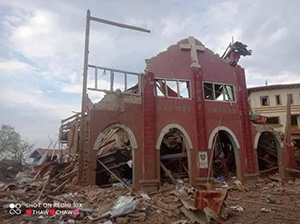
The Tatmadaw Burmese military bombed the Mindat Baptist Church in Myanmar, totally destroying the building.

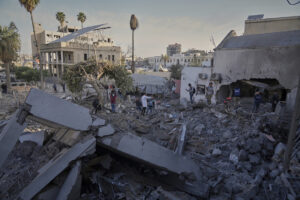
An Israeli airstrike on Gaza City partially destroyed the Al-Ashli Hospital, also known as the Ahli Arab Hospital.

The Gaza City hospital was founded by the Anglican Church Missionary Society and currently is owned by the Episcopal Church Diocese of Jerusalem, but it was owned and operated from 1954 until the early 1980s by the Southern Baptist Convention’s Foreign Mission Board.

“On this Palm Sunday, we mourn as Jesus mourned as he entered Jerusalem—weeping as children are dashed to the ground as separate aerial strikes destroy the Mindat Baptist Church in Myanmar, families headed to worship in Sumy, Ukraine, and the further destruction of the Al-Ahli hospital which remains an important Baptist legacy center of care in Gaza City,” Elijah Brown, general secretary of the Baptist World Alliance, wrote in an April 13 text message.

“As we decry that which brings violence, in resurrection hope we hear again Jesus’ call to live as active peacemakers who believe the wounds of Jesus are deep enough to heal the wounds of this world.”

‘Act of terrorism against the Christian community’

The Tatmadaw Burmese military bombed the Mindat Baptist Church in Myanmar, totally destroying the building. (Courtesy Photo)

Roy Medley, executive director of the Burma Advocacy Group and general secretary emeritus of the American Baptist Churches USA, called the bombing of Mindat Baptist Church in Myanmar by the Burmese military a “war crime” and “yet another act of terrorism against the Christian community in Burma.”

“Their choice of Palm Sunday—the beginning of the holiest week of the year for Christians—was purposeful and part of their ongoing attempt to destroy the Christian faith in Burma,” Medley said.

“Our current administration, which prides itself in its defense of religious freedom, needs to speak and act forcefully against the State Administration Council and the Tatmadaw for this war crime.

“We again call for increasing sanctions that stop the flow of funds and materiel that allow them to pursue war against the people of Burma. And we urge that relief funds for the recent earthquake not to be channeled further through the junta.”

‘A faith that bombs cannot destroy’

Merritt Johnston, executive director of BWA Women, said she received a video from a BWA Women leader showing a church service in Sumy, Ukraine, interrupted by a nearby bomb blast and shattering glass.

“We are heartbroken by this violence and continue to pray for just peace,” said Johnston, director of communications for BWA.

“On this Holy Week, when we turn our hearts to the peace we have through Christ’s resurrection, we grieve for those who live daily with the tyranny of violence, even in places that should be sanctuaries.

“We call upon our global Baptist family to stand in prayer with our sisters and brothers who are suffering as they continue to serve their communities with a faith that bombs cannot destroy.”

The Ukrainian Council of Churches and Religious Organizations issued a statement condemning the attack at the beginning of the seasons when Jews observe Passover and Christians celebrate Easter.

“Such actions demonstrate that nothing is sacred for the state that declares itself to be ‘Holy Rus.’ Basic respect for the value of human life is absent, not to mention respect for the holidays of Christianity and Judaism,” the council statement reads.

The statement notes Orthodox, Catholic and Protestant Christians all are observing Easter on the same day this year.

“We, heads of Ukrainian Churches and Religious Organizations, strongly condemn the terrorist attacks by the Russian Federation on Ukrainian cities and villages and call on the world’s leading nations to take all possible measures to stop Russia’s military aggression against Ukraine and to strengthen Ukraine’s capabilities to defend itself and protect life,” the council statement reads.

“We call on all people of goodwill to pray for the victory of truth and a just peace for Ukraine.

“Our condolences go to the victims of Russian state terror and we beseech the Almighty for just retribution against the perpetrators of this and all other acts of Russian terror against the people of Ukraine.”

Attack on Gaza hospital condemned

The Episcopal Church Diocese of Jerusalem issued a statement condemning “in the strongest terms” the Israeli military’s missile attacks on the hospital in Gaza City.

The outpatient and laboratory wards of the Al-Ahli Arab Baptist hospital are seen after being hit by an Israeli army strike, following a warning issued by the army to evacuate patients, in Gaza City. (AP Photo/Jehad Alshrafi)

“The twin strikes demolished the two-story Genetic Laboratory and damaged the Pharmacy and the Emergency Department buildings,” the statement reads. “It also resulted in other collateral damage to the surrounding buildings, including the church building of St. Philip’s.”

The Israeli military gave the hospital 20 minutes notice, ordering all patients, employees and displaced people to evacuate the hospital premises prior to the bombing, the diocese reported.

“We thank God that there were no injuries or deaths as a result of the bombing. However, one child who previously suffered a head injury tragically died as a result of the rushed evacuation process,” the diocese statement reads.

“The diocese of Jerusalem is appalled at the bombing of the hospital now for the fifth time since the beginning of the war in 2023—and this time on the morning of Palm Sunday and the beginning of Holy Week.

“We call upon all governments and people of goodwill to intervene to stop all kinds of attacks on medical and humanitarian institutions. We pray and call for the end of this horrific war and the suffering of so many.”


Russian Palm Sunday attack on Ukraine condemned

A Russian airstrike on Palm Sunday killed at least 34 people in the northeastern Ukrainian city of Sumy in the deadliest attack of the conflict so far this year.

Merritt Johnston, executive director of Baptist World Alliance Women, said she received a video from a BWA Women leader showing a church service in Sumy interrupted by a bomb blast and shattering glass.

“We are heartbroken by this violence and continue to pray for just peace,” said Johnston, director of communications for BWA.

“On this Holy Week, when we turn our hearts to the peace we have through Christ’s resurrection, we grieve for those who live daily with the tyranny of violence, even in places that should be sanctuaries.

“We call upon our global Baptist family to stand in prayer with our sisters and brothers who are suffering as they continue to serve their communities with a faith that bombs cannot destroy.”

The Ukrainian Council of Churches and Religious Organizations issued a statement condemning the attack at the beginning of the seasons when Jews observe Passover and Christians celebrate Easter.

“Such actions demonstrate that nothing is sacred for the state that declares itself to be ‘Holy Rus.’ Basic respect for the value of human life is absent, not to mention respect for the holidays of Christianity and Judaism,” the council statement reads.

The statement notes Orthodox, Catholic and Protestant Christians all are observing Easter on the same day this year.

“We, heads of Ukrainian Churches and Religious Organizations, strongly condemn the terrorist attacks by the Russian Federation on Ukrainian cities and villages and call on the world’s leading nations to take all possible measures to stop Russia’s military aggression against Ukraine and to strengthen Ukraine’s capabilities to defend itself and protect life,” the council statement reads.

“We call on all people of goodwill to pray for the victory of truth and a just peace for Ukraine.

“Our condolences go to the victims of Russian state terror and we beseech the Almighty for just retribution against the perpetrators of this and all other acts of Russian terror against the people of Ukraine.”

U.S. Secretary of State Marco Rubio called the attack “horrifying.”

“The United States extends our deepest condolences to the victims of today’s horrifying Russian missile attack on Sumy,” a statement Rubio issued from the U.S. Department of State reads.

“This is a tragic reminder of why President Trump and his Administration are putting so much time and effort into trying to end this war and achieve a just and durable peace.”

EDITOR’S NOTE: The Baptist Standard also has learned about Palm Sunday airstrikes in Gaza and Myanmar. This article will be updated as more complete information is available.


Letter urges return of Ukrainian children

Texas Baptists’ Christian Life Commission Director Katie Frugé added her name to a letter from other Christian leaders calling for President Donald Trump and his administration to require abducted Ukrainian children’s return in negotiating peace between Russia and Ukraine.

In a public Facebook post about the letter Frugé noted: “As a mother, my heart breaks at the thought that almost 20,000 Ukrainian children have been forcibly taken by Russia, their identities erased, & families separated.”

Last year her team at Texas Baptists hosted Ukrainian leaders at their Dallas office, she explained.

The meeting allowed her team “to hear their stories, pray with them, and offer our support.”

In her post, Frugé said the group from Ukraine gave her a book she still treasures, “cowritten by the children of Ukraine detailing their horrific experiences during the war.”

“I wept reading their stories,” she noted.

She said she was “honored to join other faith leaders urging President Trump and Secretary Rubio to prioritize the missing children and their safe return as the US works towards peace between Russia and Ukraine,” and expressed gratitude that momentum for the children’s return is building.

According to her post and the letter, “President Trump included the importance of their safe return on a March 19 phone call with President Zelenskyy.”

The letter, signed April 3, was addressed to President Donald Trump and Secretary of State Marco Rubio.

The letter

Letter writers cited their Christian faith as the motivation for their concern for vulnerable children and why they advocate for the children’s safe return, noting “since Russia’s full-scale invasion of Ukraine in 2022, Russian President Vladimir Putin has intentionally targeted the most vulnerable—children.”

“President Putin has ordered the systematic forced transfer of nearly twenty thousand Ukrainian children to Russia and Russian-controlled territories,” the letter reads, including the links.

“These children, ranging in age from four months to 17 years old, have been subjected to political re-education, military training, and forced assimilation into Russian society.”

The letter also notes: “Many have been placed in Russian families, illegally adopted, and had their birth certificates altered to erase their Ukrainian identities. The Russian government has denied Ukrainian children access to their families, subjected them to physical abuse, and failed to provide them with adequate food and care.”

The letter points out the abduction of 20,000 Ukrainian children isn’t just a “tragedy” but a “deliberate and systemic act of injustice,” made all the more atrocious by Russia deliberately targeting for deportation, “orphans, children with disabilities, and those from low-income families, knowing they are least able to resist.”

Fewer than 6 percent (1,256 children) of the more than 19,000 children deported to Russia since 2022 have been returned to Ukraine, the letter credits Save Ukraine with reporting.

As faith leaders, the signatories pointed to Scripture as the ultimate guide for their actions, specifically highlighting Genesis 1:27—every child is made in God’s image; Zechariah 17:10—defend the poor, the widow, the orphan and the foreigner; Matthew 22:39—love your neighbor as yourself; and Isaiah 1:17—seek justice for the oppressed.

In bold print, the letter writers proclaimed: “No peace deal should be finalized until Ukraine’s children are returned home.” They backed up the imperative with the Geneva Convention, which “explicitly protects children during wartime, and the deportation or forced transfer of a population is a violation of international law, potentially constituting crimes against humanity.”

They urged the administration, “as leaders of the free world, to ensure that Ukraine’s children are returned home without precondition in advance of peace talks.”

“Now is the time to lead with courage and moral clarity,” by ensuring the children are returned before a peace deal is finalized, the authors concluded.

The letter was signed by Myal Green, president and CEO of World Relief; Brent Leatherwood, president of the Southern Baptist Convention’s Ethics and Religious Liberty Commission; Daniel Darling, director of the Land Center for Cultural Engagement at Southwestern Baptist Theological Seminary; Walter Kim, president of the National Association of Evangelicals; Frugé and 35 other Christian leaders.


Religious leaders minister amid violence in DR Congo

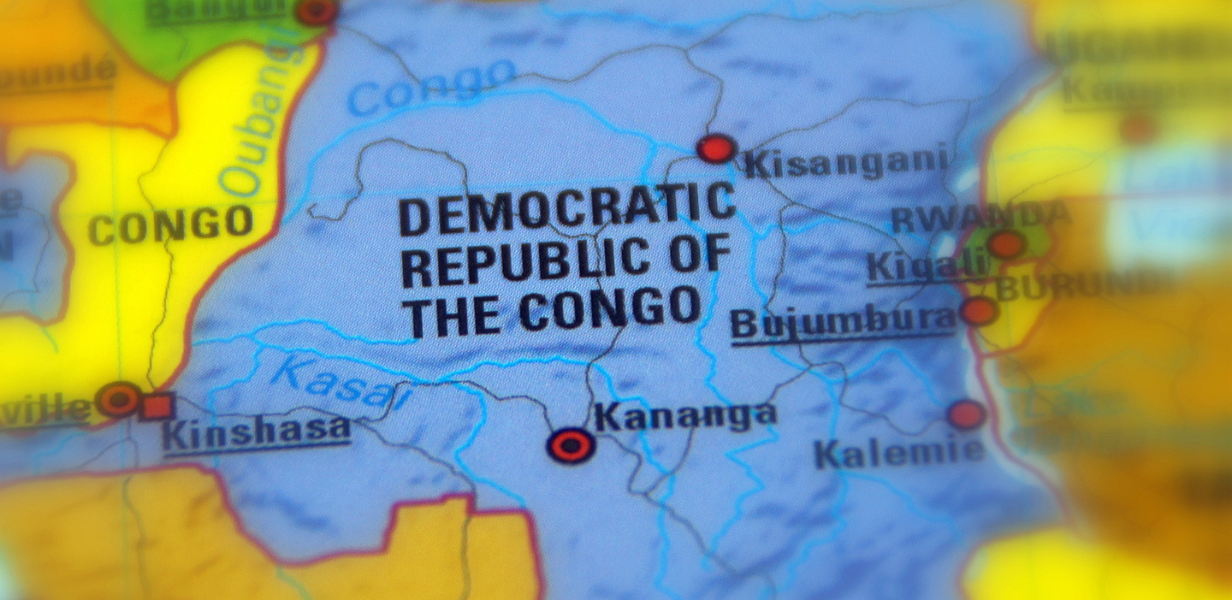
GOMA, Democratic Republic of Congo (RNS)—Pastor Allan Ngwaba has been offering daily counseling sessions, both in churches and homes, to people affected by the violent conflict in the Congo.

The professional counselor and pastor at Rivers Pentecostal Church in Goma said many civilians he has met with are experiencing severe post-traumatic stress disorder since the violence and killings in the country escalated earlier this year.

Their suffering, he said, is often a result of losing multiple loved ones, exposure to horrific images, witnessing human cruelty, the constant threat of death and a lack of basic necessities, such as food and shelter.

“You need to listen to them during counseling sessions as they express their anger and cry uncontrollably about what has happened to them,” Ngwaba said.

“Once they have been able to express themselves, you can begin discussing how to accept their situation, understand why the conflict occurred and explore the best ways to move forward and overcome their circumstances.”

About 7.3 million internally displaced people

The enduring conflict in Eastern Congo, which has devastated the region for decades, is rooted in the aftermath of Rwanda’s 1994 genocide and the fierce competition for control over the nation’s mineral resources. The minerals are used for manufacturing batteries that power electric vehicles and other electronics.

Starting in January, the March 23 Movement known as M23—a Tutsi armed rebel group—began a new offensive against Congo government armies. M23 has gained control of new areas, including Eastern Congo’s two largest cities, Goma and Bukavu, along with several smaller localities.

The Congolese government said the ongoing fighting has killed at least 7,000 people since January. About 7.3 million are estimated to be displaced within the country—an all-time high—and 86,000 have fled to nearby countries, according to the United Nations Refugee Agency.

According to the UN, M23 is supported by up to 4,000 Rwandan troops. However, Rwanda denies that claim, saying its forces are in the region to defend against threats posed by the Congolese army and hostile militias.

Providing psychosocial support

Amid the violence, Ngwaba is among many local Christian leaders who are increasing their efforts to provide psychosocial support to those affected.

“These sessions are designed to heal the emotional and social wounds caused by armed conflict,” he said. “They aim to discourage victims from succumbing to depression, contemplating suicide or losing hope,” emphasizing psychological care is closely linked with physiotherapy.

His congregation and others in the area are also holding regular gatherings to pray for peace. Hundreds of Christians come to the daily gatherings in many areas of Eastern Congo.

“Our only hope is prayer, because rebel soldiers are everywhere, and everyone is threatened by their presence,” said Grace Nsimba after leading a prayer session.

Peace through prayers

Nsimba, a 35-year-old mother of three, lost her husband and a brother during a fight between the Congolese army and M23 on Jan. 27, during the takeover of Goma.

“People are devastated and dying because of this war. What we need now is peace, and this can only be achieved through prayers,” she said.

“We are praying for our lives and for those who have lost loved ones, those suffering because of the war and those who are traumatized by the horrifying things they have witnessed. We pray for an end to the conflict, hoping that the warring parties will stop the violence and save millions from death and suffering.”

In Bukavu, residents have been gathering for interfaith services to pray for peace following the capture of the city by M23 in mid-February.

Uniting in prayer

Monsignor Floribert Bashimbe, vicar general of the Archdiocese of Bukavu, said the interfaith services, led by local religious leaders and officials, aim to unite the community.

Worshippers pray for an end to the conflict, uplift each other spiritually and address critical humanitarian needs in areas where daily struggles for basic necessities are impacting residents, although the city did not see as much heavy fighting as Goma did.

“We have come together in prayer, asking God to grant our leaders the wisdom, strength and humility to make sound decisions that will reduce loss of life and alleviate the suffering of the people, ultimately leading to security in the region,” Bashimbe said.

Bashimbe also urged young people and fighting factions to cease destroying property, including looting and burning houses, schools, government buildings and health centers. He encouraged trained counselors and religious leaders to assist those recovering from traumatic experiences and noted the importance of helping people rebuild their lives.

Seeking to negotiate peace deal

Some religious leaders also have engaged with rebels to attempt to facilitate a peace agreement.

In February, Monsignor Donatien Nshole, the secretary general of the Bishops’ Conference of the DRC, was involved in such discussions. He said M23 leaders told his delegation they were not seeking to divide the country and were not involved in the illegal exploitation of resources.

M23 has claimed its goal is to protect ethnic Tutsis in Congo, who have suffered from the long-standing tensions between Hutus and Tutsis that culminated in the 1994 Rwanda genocide, during which more than 800,000 Tutsis and others were killed. The rebel group also vowed to advance to the capital of Congo, Kinshasa, to overthrow the government.

During the meeting, the religious leaders urged the rebels to reopen infrastructure, like the airport and port, to facilitate the delivery of humanitarian supplies, he said.

“We still believe that the solution to this crisis is not military,” Nshole, a Catholic priest and political figure, said after the meeting.

However, residents are growing increasingly desperate for a resolution, grappling with the daily fear and uncertainty of life as rebels continue to advance.

“The longer these leaders remain in disagreement, the more lives are lost and suffering continues,” Nsimba said. “We must amplify our prayers for these leaders to come together and reach an agreement to end the conflict, so we can finally reclaim our peace.”