God and games the Cunningham family business

RIO DE JANEIRO (RNS)—Randall Cunningham is not only Vashti Cunningham’s father, but also her coach—and her pastor.

That’s a lot of father-daughter time in any family, but in this one, it’s part of the family business—producing elite athletes who also are deeply committed Christians.

Randall Cunningham, 53, was a quarterback, primarily for the Philadelphia Eagles and the Minnesota Vikings, before he retired in 2001. Felicity Cunningham, his wife, is a former professional ballerina.

Their eldest son, Randall Cunningham II, is a track-and-field star at the University of Southern California, and second child Vashti, 18, is making her Olympic debut Aug. 18 in the women’s high jump.

“She has the genetics,” Randall Cunningham told the Portland (Ore.) Tribune. “God has blessed her. …  The strength, the jumping—she has that.”

She also has her parents’ faith. Randall and Felicity Cunningham are co-pastors and founders of Remnant Ministries, a nondenominational Christian church with about 1,200 members that grew out of a weekly Bible study the couple held in their Las Vegas living room.

Randall Cunningham also coaches a local high school football team and owns a marble and tile business. In between, he coaches his children in the high jump, a sport he competed in when he was their age.

“Most of it is mental training,” he told CBS Sports in Rio. “Mental training is about the inner being, in my opinion, and (Vashti) trusts God. A lot of athletes are strong Christians, because when you exhaust yourself with believing in yourself, you have to believe in the Truth. You can’t rub a rabbit’s foot. The rabbit’s foot is not going to do anything for you. But when you pull on the true and living God, there’s power in that.”

The Cunninghams named Vashti for the Persian queen in the biblical book of Esther, who refused to allow her husband to parade her before drunken guests at a banquet.

“I think there is strength in the name, because I’m not easily persuaded,” Vashti Cunningham told the Los Angeles Daily News. “And I personally will not do anything that I don’t think is right.”

She appeared relaxed as she waited for her event in Rio. Her personal best is 6-feet, 6-and-one-quarter inches, and she’s told her father she is aiming for 6 feet, 7 inches.

“I try to stay calm and focus on what I have to do,” she said before qualifying for Team USA in July. “Trust God and let things happen.”


Olympic swimmer Simone Manuel gives glory to God

RIO DE JANEIRO (BP)—When Simone Manuel became the first African-American to win an individual medal in swimming, earning gold in the women’s 100-meter freestyle, she was quick to credit God for that accomplishment.

“All I can say is all glory to God,” Manuel said through tears in a post-race interview. “It’s definitely been a long journey these past four years. I’m just so blessed to have a gold medal. … I’m just so blessed.”

Manuel tied Canada’s Penny Oleksiak in the race with an Olympic-record time of 52.70 seconds. Manuel previously won a silver medal in Rio, her first Olympics, as part of the women’s 4×100-meter freestyle relay.

Simone Manuel 150Simone Manuel “Coming into my first Olympics, I didn’t think I was going to be getting a gold medal individually,” Manuel said. “My goal was just to get more experience, swim as fast as I can. And after prelims and semifinals and seeing where I was sitting, when I came in tonight, I was like, ‘I want to get on that medal stand.’

“Just surpassing that goal and getting an American record on top of a gold medal is super exciting for me.”

Manuel and her family are part of The Church Without Walls—Brookhollow Baptist Church—in Houston. Her pastor, Ralph West, is an adjunct professor of preaching at Baylor University’s Truett Theological Seminary.

“It makes me proud to see Simone give God the glory in this monumental moment in her life,” West tweeted after the race.

Manuel insisted the medal was not just for her, but for those who have come before her and inspired her.

“And for all the people after me who believe they can’t do it, I just want to be an inspiration to others that you can do it,” she said.

After her gold medal performance in the women’s 4×100-meter freestyle relay, Manuel posted a message on Twitter saying she feels honored to represent the United States.

“God is working in me! I am so blessed and grateful,” she tweeted. “Thank you all so much for your support.”


Olympic volleyball player seeks God amid trials

RIO DE JANEIRO (BP)—Micah Christenson spent the past year playing professional volleyball in Italy. He thought it would be fun, until he got there.

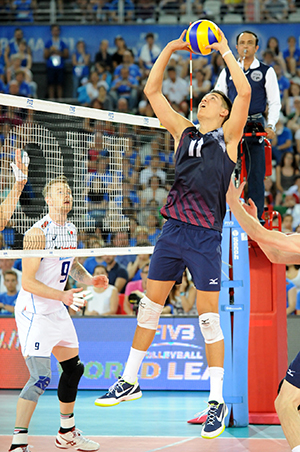
Micah Christenson playing 300Micah Christenson is representing the United States at the Rio Olympics, but he is most concerned about representing Jesus Christ on a daily basis. (Photo courtesy of FIVB)He couldn’t speak the language and was living alone for the first time in a foreign country. He didn’t have any friends on the team. And then he got sick the first week.

“I’m throwing up, and I’m sitting in my apartment alone,” he said. “I’m like, man, this is a lot harder than I thought. I can’t talk to anybody, because there’s a language barrier. I can’t ask somebody where the eggs are in the grocery store.”

Learning to depend on God

But during that time, Christenson said, he learned what it meant to depend on God.

“It really allowed me to really just surrender to God and to give everything to him, because I really had no control over what things were happening there,” he said. “I was just begging God to take everything, just trying my best to trust in everything that he had for me there.”

‘Gift from heaven’

A member of the U.S. men’s volleyball team competing in the Olympics and native of Hawaii, Christenson has Christian parents to thank for giving him a foundation of faith at an early age. His full name is Micah Makanamaikalani Christenson, and his middle name means “gift from heaven.” His mother needed surgery while she was pregnant with him, and his survival was questionable.

He attended church and Sunday school regularly, learning about the Bible and the gospel. When he left the island to attend the University of Southern California, however, he realized the time had arrived for him to make his own decisions about what he believed. He no longer could just go along with what his parents had taught him.

Involved in sports ministry

He got involved early in Athletes in Action, a campus-based sports ministry, eventually becoming a student leader.

“I’m so grateful that I chose God, because that choice has really sparked something inside of me, and I feel the Holy Spirit working inside of me all of the time,” Christenson said.

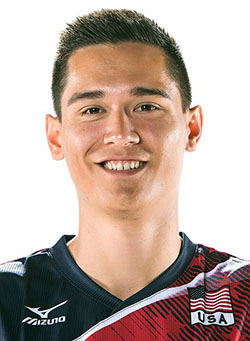
Micah Christenson 250Micah ChristensonAs for volleyball, Christenson comes by it naturally. The sport is huge in Hawaii, and his mother played in college. He started playing young, participated in youth and junior national teams for the United States and played at the University of Southern California before turning professional and moving to Italy.

Count it all joy

The challenges he faced there gave him the opportunity to spend more time reading the Bible, and he began to understand the words in James1:3, “Consider it pure joy when you face trials of any kind.”

His situation gradually improved, helped in part by a group of friends from the national team with whom Christenson would participate in a weekly Bible study over Skype. And about halfway through the year, his U.S. teammate and fellow believer Reid Priddy joined him in Italy, giving him even more opportunity for Christian fellowship.

This year in Rio marks Christenson’s first Olympics experience. Regardless of the outcome, Christianson insisted, he wants to shine God’s light around him by being steady and faithful in all that he does. When it comes to relying on God and living for him, Christianson said, “That’s enough.”


Three-fourths of world population lacks religious liberty, ambassador says

WASHINGTON (RNS)—The U.S. State Department warned that religion-based terrorists as well as some governments across the globe are threatening the liberties of religious minorities.

“One of the best ways to deny these murderers their victory is by ensuring that those they have sought to destroy not only survive, but thrive,” said Deputy Secretary of State Antony Blinken, announcing the 2015 Annual Report on International Religious Freedom.

Although the report often has focused on serious violations of religious freedom by governments across the globe, Blinken said it also details the “major threat” by groups like Daesh (another name for the self-identified Islamic State), al-Qaida, al-Shabab and Boko Haram.

“There is, after all, no more egregious form of discrimination than separating out the followers of one religion from another—whether in a village, on a bus, in a classroom—with the intent of murdering or enslaving the members of a particular group,” he said.

The document, in its 18th year, includes details of how almost 200 countries are faring in protecting the religious liberty of their citizens.

Ambassador notes restrictions on freedom

David Saperstein, ambassador-at-large for international religious freedom, said 24 percent of the world’s countries—in which 74 percent of the world’s population lives—have serious restrictions on religious freedom, based on government policies or hostile acts by individual organizations or societies.

He highlighted the report’s emphasis on laws around the globe about blasphemy and apostasy: “No one region, country or religion is immune to the pernicious effects of such legislation.”

The report notes people are imprisoned with death sentences in Mauritania and Pakistan for allegedly criticizing the Prophet Muhammad or desecrating the Quran, while Saudi Arabia has overturned a poet’s death sentence for apostasy charges, but he instead was sentenced to eight years in prison and 800 lashes.

Saperstein cited the example of a boy who was playing soccer in Syria, “said a bad word out of his frustration” and was detained by the Islamic State for cursing God.

“In a matter of days, he was marched out into a public square and murdered by a firing squad in front of a crowd of hundreds, including his parents,” said Saperstein. “Chilling stories like this show how terrorist organizations have committed by far some of the most egregious abuses when claiming individuals have engaged in apostasy, blasphemy or cursing God.”

Nations punish offenders for blasphemy

State actions based on blasphemy charges include Iran’s executions of prisoners of conscience for their beliefs, Pakistan’s arrests of Muslims and Christians, and fining an avowed atheist in Muenster, Germany, for bumper stickers that challenged Catholic beliefs.

Saperstein, who has visited 25 countries in the year and a half he has held his State Department role, said the United States is working with governments and other organizations to press for changes in the laws. He cited Iceland dropping its blasphemy law last year as a model for others.

But he also credited those outside government for taking action to fight blasphemy laws, as well as working to protect religious minorities in other ways. He praised groups, including Muslim youth, who formed human rings around synagogues facing anti-Semitic threats and Muslims who attended Masses in France in solidarity with their communities after the recent beheading of a Catholic priest.

The State Department also designates “Countries of Particular Concern,” which are known for ongoing religious freedom violations. In February, it announced the current list of those countries—Burma, China, Eritrea, Iran, North Korea, Saudi Arabia, Sudan, Tajikistan, Turkmenistan and Uzbekistan.


France and Germany search for solutions to Islamist challenge

PARIS (RNS)—Violent Islamist attacks in France and Germany have piled pressure on the two governments to search for new ways to confront the grim challenge they now face—radicalized Muslim youth.

The murder of a French Catholic priest last month, coming after three massacres that claimed 232 lives in the past year and a half, has provoked calls for tough measures such as the internment of thousands of suspected radical Muslims—measures critics warn would be unconstitutional.

Germany, until recently spared the worst of these attacks, has had several “lone wolf” attacks this year that have claimed 10 dead and left police baffled, because the assaults seemed unpredictable. Germany also has to contend with a rising tide of nationalism among its Turkish minority after the failed coup against Islamist-leaning Turkish President Recep Tayyip Erdogan.

In both countries, politicians are concerned the failure to integrate some young Muslims into mainstream society has created a resentment radical Islamist recruiters can exploit.

But solving that is a long-term project, and leaders face strong pressure to take action now.

Directing attention to mosque associations

Since security in both countries already has been ratcheted up, attention has turned toward the large established mosque associations that claim to speak for their Muslim communities.

National mosque associations represented in the French Council of the Muslim Faith or DITIB, the mosque network for ethnic Turkish Muslims in Germany, have come under increasing criticism for failing to play their part in integrating Muslim youths.

Paris has begun discussing several measures to overhaul its relations with the country’s Muslim minority, Europe’s largest at 5 million. Muslim leaders are open to more cooperation with the government, but some prominent personalities have warned there are limits to what the religious community can do.

“Reforming Islam is good idea, but it’s an illusion to think that this will eradicate radicalization of young people,” Tareq Oubrou, the Bordeaux imam who is one of the leading Muslim personalities in France, said after hearing the government’s proposals.

“It’s not enough to build a mosque with local financing to make it moderate, nor that an imam is trained in France. Many foreign imams are much more moderate than some French imams of the second generation who have been trained in France.”

Prime Minister Manuel Valls announced a tougher stand, both against the Islamic State group in the Middle East and against radicalism at home.

“We will win, because France has a winning strategy for fighting against Islamic totalitarianism, the world’s enemy No. 1, which we are fighting in Syria and Iraq and also in France,” he said.

Ban foreign donations to French mosques

One of his ideas is a temporary ban on all donations from abroad to French mosques, generally believed to be a factor fueling the spread of radical Islam in France.

Instead, France would resurrect a plan for a state-sponsored foundation to centralize domestic and foreign donations and distribute them in a transparent way to finance mosques, he said.

A decade ago and amid much fanfare, an earlier conservative government launched the Foundation for Islamic Charities to do just that. But it never worked, because the main established Muslim organizations—all of which receive money from abroad—squabbled over how to run it.

This time around, the foundation will be expanded to go beyond the discredited mosque associations to involve prominent French Muslims from other walks of life.

A group of 41 such Muslims—politicians, professors, doctors, lawyers and entrepreneurs—published an appeal this month accusing the French Council of the Muslim Faith of failing to represent the country’s Muslims and saying they were ready to join in the new approach Valls announced.

Personal contacts—not mosques—inspire radicalization

While the idea has popular support, a recent inquiry by a French Senate commission concluded these funds had little to do with terrorism.

“These proposals assume that radicalization comes from mosques, which is not true,” said Sen. Nathalie Goulet, a co-author of the commission report. Radical Islamists are usually inspired online or by personal contacts, she said.

Also, the bulk of foreign donations flow not from Saudi Arabia or the Persian Gulf to radical mosques in France, but from Algeria, Morocco and Turkey to mainstream mosques, she stressed.

Valls and Interior Minister Bernard Cazeneuve also hinted they might favor a concordat with the Muslims, a contract that would allow state funding in exchange for official influence over the Islamic community.

Among other things, this would help train imams in France so they reflect the country’s democratic values rather than radical ideas from abroad.

“France should become a center of excellence for teaching Muslim theology in Europe,” he said.

Violation of church-state separation

After a few days of debate, President Francois Hollande stepped in to quash the idea.

“The financing cannot come from the state,” he said, reminding them that France’s system of church-state separation banned that.

Valls rejected some proposals from conservative opposition politicians, such as the call for detention camps, as too extreme.

“My government will not be the one that creates a Guantanamo a la francaise,” he said.

Influx of refugees in Germany

German Chancellor Angela Merkel  reacted with less drama to the attacks.

But pressure is mounting there because of last year’s rapid influx of refugees from the Muslim world, which has challenged state and local authorities to integrate them better than Germany did the Turkish minority that began coming in the 1960s.

Because they originally came as “guest workers,” Germany long failed to focus on integrating its Turks. Many among the 3 million-strong minority now fit in well, but some still seem to be much more Turkish than German.

This has led to concern about badly integrated “parallel communities” that could be breeding alienated youths who could turn radical.

Criticism focused on Turkey religious affairs department

Critics have increasingly linked this integration problem with the country’s established Muslim organizations, especially DITIB, the German branch of Turkey’s religious affairs department in Ankara, which sends Turkish imams to work in more than 900 Islamic centers around the country.

The toughest accusations are coming from German Muslims who accuse DITIB of advocating a conservative Islam not adapted to life in Germany. They also question its independence at a time when Erdogan’s rule is becoming increasingly autocratic.

“DITIB says it is a German association, but it takes its orders from Ankara,” said German Commissioner for Immigration, Refugees and Integration Aydan Ozoguz, an ethnic Turkish politician.

Bassam Tibi, a Syrian-born political scientist, called DITIB a “stooge” of Erdogan’s Islamist-rooted AKP. “They have no interest in an Islam suited to Europe.”

Lale Akgün, a former German Parliament deputy born in Turkey, accused DITIB of mobilizing German Turks to attend rallies in support of Erdogan after the failed coup. DITIB itself rejects suggestions that it is Ankara’s puppet.

After three attacks in July, Merkel held a news conference to give her reaction.

“Fear cannot be our guide for political action,” she declared while sketching out a nine-point program for more security. Among them was an “early warning system” to flush out radicals among the refugees, closer surveillance of social media and the use of army troops to help police deal with terror incidents.

Colleagues from her Christian Democratic Union party also urged DITIB to show more loyalty to Germany and not act as Ankara’s agents.

But Merkel, who needs Turkey’s help to block Middle Eastern refugees from streaming toward Germany as they did last year, passed over those calls in silence, avoiding opening up a dispute with Erdogan.


Olympian Michael Phelps’ rehab ‘Purpose-Driven’

RIO DE JANEIRO (BP)—Baptist mega-church pastor Rick Warren’s The Purpose-Driven Life significantly influenced Olympian Michael Phelps during rehab after his second arrest on a drunken driving charge.

“It’s turned me into believing that there is a power greater than myself, and there is a purpose for me on this planet,” Phelps said about the book in an ESPN feature.

Considered suicide

The most decorated Olympian ever, Phelps entered the Rio Olympics with 22 medals, including 18 gold to his credit. Originally, he retired after the 2012 London Olympics. He was arrested in September 2014 for his second driving-under-the-influence offense while attempting a comeback. In the days following the arrest, Phelps locked himself in his room, eating and sleeping little, as he evaluated his life, he told ESPN.

“I just figured that it was the best thing to do to just end my life,” Phelps said.

Ray Lewis influential

But after a conversation with his friend and former Baltimore Ravens linebacker Ray Lewis, and at the encouragement of other loved ones, Phelps decided to enter rehab at The Meadows outside Phoenix. Lewis gave Phelps a copy of Warren’s book before he left.

Phelps spent 45 days at The Meadows, often calling Lewis to talk about some of the content he was reading and sharing with others in rehab.

Working to restore broken relationships

After completing the program, Phelps worked to rebuild his fractured relationship with his father, Fred, who divorced Phelps’ mother when Phelps was 9.

He also resumed his training, eventually qualifying for his fifth Olympics. Phelps’ U.S. teammates elected him as the flag bearer for the opening ceremony in Rio.

Warren book made a difference

Phelps credits The Purpose-Driven Life for much of the good he experienced in life during and after rehab.

“It helped me when I was in a place where I needed the most help,” he said.

Since its 2002 release, The Purpose Driven Life has sold more than 40 million copies and has been translated into 50 languages, including Afrikaans, Arabic, Farsi, Rwandan, Sango, Swahili and Zulu, according to Bible Gateway.


Steele Johnson and David Boudia have faith in their diving

RIO DE JANEIRO (RNS)—Steele Johnson almost died on the diving platform.

In 2009, at age 12, he was practicing his favorite dive, a triple reverse somersault in a tuck position, when he cracked his skull on a concrete platform, sliced open his scalp and fell 33 feet into the pool.

His coach pulled him out and held his head together all the way to the hospital. Today, he still has some memory loss.

But Johnson, a Christian, has spoken of how his faith helped him recover and placed him in medal contention in Rio.

“I wanted to be the kid that had the big injury and came back from it and made the Olympics and all that stuff,” Johnson told the Indianapolis Star in June. “So, it’s kind of embarrassing. But now I’ve kind of realized that God had his hand over all of it to help me come to the realization, like, that’s not why at all.

“He gave me this ability to dive. God kept me alive, and he is still giving me the ability to do what I do.”

diving 300Steele Johnson and David Boudia dive in the synchronized men 10m platform during the 2016 U.S. Olympic Team Trials Diving in June. (Photo by Brian Spurlock-USA TODAY Sports)His teammate at the Rio Olympics is David Boudia, a three-time Olympian and a fellow Christian. They won a silver medal in platform diving in Rio.

But in July, when the pair qualified for the Olympics—Johnson’s first and Boudia’s third—Johnson was so overwhelmed he doubled over with emotion before getting out of the pool.

“It’s cool because this is exciting, this is fun, but this is not what my identity will be for the rest of my life,” a dripping Johnson told NBC Sports. “Yeah, I’m Steele Johnson, the Olympian. But at the same time, I’m here to love and serve Christ. My identity is rooted in Christ, not in the flips we’re doing.”

Boudia, who is six years older than Johnson, also said his diving is driven by his faith.

“We can’t take credit for this,” Boudia told NBC Sports. “To God be the glory.”

Of the pair, Boudia has the most experience in talking publicly about the connection between his faith and his sport. He has written an entire book about the subject, Greater Than Gold: From Olympic Heartbreak to Ultimate Redemption, that hit stores a few days before the Olympics began.

In it, he tells how he went from a not particularly observant Catholic upbringing to evangelical Christian through the help of his Purdue University diving coach, Adam Soldati.

“I am not a diving coach who happens to be a Christian,” Soldati said in a talk he gave at his church just after the close of the 2012 London Olympics, where Boudia won a gold medal in singles platform diving. “But rather, I am a Christian, follower of Christ, who happens to be a diving coach.”

In his book, Boudia talks about how he was engaged in “a destructive lifestyle” at Purdue and sought his coach’s guidance. He credits his gold medal to his conversion to evangelical Christianity.

“Whatever happens at the end of this Olympic Games is completely out of my control,” Boudia said in 2012. “God is totally sovereign over everything.”


Evangelical archer Mackenzie Brown takes aim at first Olympics

RIO DE JANEIRO (RNS)—East Texan Mackenzie Brown may be the only woman on Team USA’s archery squad, but she is just one of the guys in another way. Like her coach and many of her fellow bowmen, Brown, 21, is an evangelical Christian.

“I am so beyond ecstatic to be going to Rio this summer for the Olympic Games!!” Brown said in a tweet after qualifying for the team in July. “I’m so grateful for all of the support and love from y’all! God is so good all the time!”

No one doubts Brown’s right to a place on the team; she is ranked fourth in the world. But it has refocused attention on Team USA’s archery coach, Kisik Lee, who blends his Christianity with his coaching. He has been involved in the baptism of at least seven Olympic-bound archers, including 2016 team member and 2010 silver medalist Brady Ellison.

At the 2008 Olympics in Beijing, Lee reportedly ran a morning hymn-sing and Bible study and regularly worshipped with athletes at the interfaith center.

“I just want to show them who I am,” Lee told The New York Times in 2008. “I’m the witness of Jesus, not just an instructor. So, I have to encourage them how, how we can change in Christ.”

In 2007, Lee was warned by United States Olympic Committee officials to separate his evangelism from his coaching. He reportedly no longer holds Bible study classes at the sport’s Chula Vista, Calif., training center, where athletes come to live and train. However, his personal website still includes numerous references to his faith and draws links between religious faith and performance.

So, Brown should fit right in.

“There is nothing better than seeing your kid do something that she loves,” her mother, Stacey Brown, told the Tyler Morning Telegraph. “This is a God-given ability she has.”


Olympic gold medalist finds source of happiness in God’s gifts

RIO DE JANEIRO (BP)—Take a close look at Caeleb Dressel during some of his swimming competitions, and you may notice a Scripture reference written across his face.

The Bible verse changes with each event, but a favorite one for the 19-year-old is Isaiah 40:31: “But those who trust in the Lord will renew their strength; they will soar on wings like eagles.”

That verse served as the inspiration for the large eagle tattoo on Dressel’s left shoulder, and the Scripture references he wears are not just for him.

Caeleb Dressel 300Caeleb Dressel won a gold medal as part of the U.S. men’s 4×100-meter freestyle relay team.“It’s the reason I’m in the sport—not just to go fast times, but to inspire people and show them where I find my happiness with what God’s given me,” Dressel said in an interview last year after U.S. Nationals.

Dressel made a big splash in his Olympic debut Aug. 7, winning a gold medal as part of the U.S. men’s 4×100-meter freestyle relay team. Swimming the first leg ahead of teammate Michael Phelps, Dressel turned in a personal-best time of 48.10, just .02 seconds behind the leader to keep the U.S. team close. Phelps then pulled the U.S. team ahead for good.

Not bad for a guy who gave up the sport for nearly six months his senior year of high school because he simply wasn’t enjoying it.

“Coming out of that, I started swimming again and really just put all my trust in God and knowing that he’s going to take care of everything for me, good or bad,” Dressel said. “I really learned a lot, and I really learned to see the light at the end of the tunnel and trust what God is doing, whether it be a rough point in your life or a top pinnacle in your life. You’ve just got to take pauses and really trust what he’s doing.”

Dressel was brought up in a Christian home, but since moving away from Green Cove Springs, Fla., and attending the University of Florida, his faith has become more personal, because he knows his beliefs are solely his and not just his parents’. He worships at Campus Church of Christ in Gainesville.

His absence from swimming in high school was a difficult time for him, and Dressel admits he wrestled with some “mental demons” during that period and struggled in his walk with God. But eventually, he returned, both to the pool and to his commitment to Christ.

“It’s what I’m meant to do,” Dressel said about swimming. “I found my passion for the sport. I really love the sport. You get to meet a whole bunch of new people. You get to create new relationships. You get to share some of the best memories of your life with these people that I’m with.

“Swimming is my life, and I wouldn’t want it any other way. This is what I’m supposed to be doing, and God gave me the talent, and I’m going to do that for him, myself and my family and all my friends.”

With that newfound passion, Dressel excelled as a swimmer. He earned consecutive NCAA national championships in 2015 and 2016 in the 50-yard freestyle, and added another NCAA title in 2016 in the 100-yard freestyle. He earned his spot on the Olympic team by placing second in the 100-meter freestyle at the 2016 Olympic trials.

In addition to wearing Scripture references on his face, he often posts verses and references on Twitter. One tweet from several months ago seems especially relevant to the challenges and successes Dressel has faced: “When you avail yourself of God’s grace and power, your comeback is always greater than your setback.”


Gymnast Jake Dalton focuses on faith over fear

RIO DE JANEIRO, Brazil (RNS)—Olympic gymnast Jake Dalton isn’t one of those athletes who points heavenward after every successful vault through the air.

But the 24-year-old bears other outward signs of his Christian faith, including two tattoos—a pair of praying hands on his right side and the words of a New Testament verse on the other.

He had his left side etched with Philippians 4:13—“I can do all things through Christ who strengthens me”—months before traveling to the Olympic trials in 2012.

Dalton since has  become a four-time world medalist and won more than a dozen national medals prior to Rio.

“It was kind of my last little thing to remind myself to do everything that I could to be ready for that team and try to get on that team, and whatever happens, it was God’s plan to happen, whether I made the team or not,” he said of the Bible verse tattoo.

Dalton, a fitness advocate, also wears a favorite necklace in the shape of a kettle bell with the words of Psalm 28:7: “The Lord is my strength.”

The Reno, Nev., native grew up playing different sports but was focused mainly on baseball. But he thinks divine intervention led him to concentrate on the floor routines.

“My baseball coach told me to do gymnastics because it would help with my pitching arm,” he said.

Since the London Olympics, Dalton had a physical setback. He underwent surgery last year for a shoulder injury.

“My biggest question and fear was, ‘Was I able to get back fast enough to get ready for the Olympic Games?’” he recalled.

Dalton said his faith—especially daily prayer—helped him overcome his fears about competing.

“A lot of it is scary, so I actually do pray throughout most of my workout,” he said.

That spiritual practice calms him down but also energizes him.

“If I’m a little nervous to do something, it kind of allows me to put my trust in my faith and allows me to get through workout a little bit better,” he said.

When Dalton’s busy schedule permits, he and his wife, Kayla, sometimes attend JourneyChurch, an Evangelical Covenant congregation in Norman, Okla., or watch the live-stream of its worship services.

As he prepares to flip through the air and seek the perfect landing, Dalton said, he will continue to try to focus on faith rather than fear.

“Usually, you’re afraid to get hurt. So, my thought process is, if that’s God’s plan that I’m going to get injured, there’s going to be a reason for it, and it’s going to make me stronger,” he said. “I’m ready to go and just put my faith that God’s going to carry me through and keep me safe.”


Churches resist restraints on evangelism in Russia

WASHINGTON (RNS)—Several U.S.-based religious denominations remain defiant in the face of new laws that would ban them from proselytizing in Russia.

The so-called “Yarovaya laws” forbid preaching, proselytizing or distributing religious materials outside of specially designated places. The laws also give the Russian government wide scope to monitor and record electronic messages and phone calls.

The Russian Duma, or parliament, passed the legislation, billed as anti-terrorism measures, June 24. Russian President Vladimir Putin signed them into law July 7.

Religious freedom panel decries the measures

The U.S. Commission on International Religious Freedom, a bipartisan government panel that makes policy recommendations, condemned the new laws.

“These deeply flawed anti-terrorism measures will buttress the Russian government’s war against human rights and religious freedom,” said Thomas J. Reese, a Jesuit priest and chair of the commission. 

“They will make it easier for Russian authorities to repress religious communities, stifle peaceful dissent, and detain and imprison people.”

House churches banned

The new laws require a government permit to engage in proselytizing activities and ban those activities outside any registered religious organization, such as a church. Russia has numerous house churches, which are illegal under the new law.

Violations will result in fines of $780 for an individual and upward of $15,000 for an organization, and they can lead to deportation.

Religious organizations directly affected by the new laws are those with strong evangelization programs in Russia—the Church of Jesus Christ of Latter-day Saints, International Society for Krishna Consciousness, Jehovah’s Witnesses, Seventh-day Adventists and other Protestant organizations with Baptist, Pentecostal and independent Christian roots.

Russian Orthodoxy a ‘bulwark of Russian nationalism’

Only about 1 percent of the Russian population is Protestant; the majority religion is Russian Orthodox Christian.

“The Russian Orthodox church is part of a bulwark of Russian nationalism stirred up by Vladimir Putin,” David Aikman, author of One Nation Without God, told Christianity Today. “Everything that undermines that action is a real threat, whether that’s evangelical Protestant missionaries or anything else.”

An LDS spokesman said the 15.6 million-member church has no plans to recall about 30 missionaries currently assigned in seven Russian locations—a low number of Mormon missions for a country Russia’s size.

Members of the Jehovah’s Witnesses have 2,500 congregations in Russia. The Russian government has shut down several Witness organizations since the beginning of the year, most recently shuttering the church’s administrative center in St. Petersburg.

The new law effectively bans the Witnesses’ practice of going door-to-door to preach and hand out tracts.

Witness officials have called the Russian government’s focus on its activities “a deliberate misapplication of Russia’s law on extremist activity.”

Eric Baxter, senior counsel for the Becket Fund for Religious Liberty, described the law as “very restrictive on its face.” Baxter served on a mission for the LDS church in St. Petersburg from 1992 to 1994.

“Despite decades of enforced atheism under the USSR, in my experience the Russian people are people of deep faith,” he said. “Religion inspired their art, their literature and their music, and I think that the natural human instinct to share their faith will prevail and Russians will find the freedom to live their faith.”


A cough saved her life; Christians can rescue other Ebola orphans

JUI, Sierra Leone—Aminata, an orphaned survivor of the Ebola pandemic that ravaged West Africa two years ago, would have been buried alive if she had not coughed.

Today, U.S. Christians can rescue Ebola orphans such as Aminata from the crushing ravages of poverty. 

Aminata, age 14, is one of 60 children nurtured at the Interim Care Center for Ebola orphans and survivors at Hope Center in Jui, Sierra Leone. Restore Hope, a global church network and transformation ministry involving several Texas Baptist churches and partners, has been caring for orphan children and survivors throughout the epidemic. 

A story of Ebola

Aminata recently met Cindy Wiles, executive director of Restore Hope. Wiles recorded Aminata’s story, which has been edited for length and clarity:
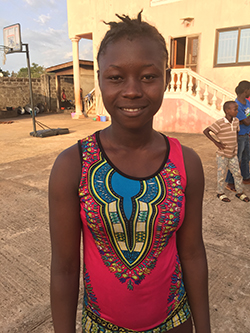
Aminata 250Aminata, age 14, is one of 60 children nurtured at the Interim Care Center for Ebola orphans and survivors at Hope Center in Jui, Sierra Leone. (Photo courtesy of Restore Hope)“Before Ebola came to Sierra Leone, I lived with my mother, father and sister in Rogbangba. I loved attending school.

“My older sister, who was 14, came home sick, and all of our family was exposed. Everyone was afraid. My father got the Ebola next. My sister and my father died quickly.

“My mother was frightened. Everyone was afraid to be taken to the Ebola treatment center, because those who go never come back. And so we ran away from the village, so no one could find us and send us to the Ebola center.

“But it was too late. The Ebola had gotten my mother, and she died. My grandparents got it from her, and they died. Everyone in my family died.

“I was alone and I was so sad and scared. I had nowhere to go. The only thing I could think to do was go back to my village. I was going from house to house begging for food. But everyone was afraid of me and yelled at me and drove me away.

“An old man felt sorry for me, and he took me into his house. He was not related to me, but I called him my stepfather. But I had not escaped the virus. I soon became very sick with fever and terrible pain in my stomach. Then came the vomiting and the blood. I became sicker and sicker. I became so sick, I could not even move. The emergency men came to take me to the Ebola treatment center.

Almost buried alive

“By the time they got to me, they thought I was dead. So, they prepared to bury me. They sprayed my body, face and head with bleach. I was unable to respond. They put me in a body bag and zipped it up. They were taking me to bury me in the Ebola grave with the other dead. But the bleach made me cough, and they heard me.

“So, they unzipped the bag and transported me to the Ebola treatment center. I was placed in a room with 20 other Ebola patients. The room was full of sickness and bleach. I was helpless, waiting to die.

“Every person in the room died. All 20 of them. I was No. 21. The pain in my stomach was unbearable. I was so weak and frightened. I still have very bad dreams, and it makes me cry and scream in the night. I still cannot see well out of my right eye.

“After three months, my body began to feel better, except I still had the bad pain in my stomach. I was very weak and thin, so they kept me there two more months.

“When they thought I was strong enough, they took me back to my village. I began looking for other members of my family, like my uncle. But none survived. They were all dead.

Home, but alone

“Our family house was empty. No one would come near it. The people feared me. If I came near their house asking for food, they yelled at me, threatened me and drove me away. No one would talk to me. They ran from me. Even the old man drove me away.

“I ran back to the house where my family had lived and locked myself in. I cried and cried. I was all alone, and no one could care for me because they were afraid of me.

“A man who worked for child welfare found me. He, too, was an Ebola survivor. He wanted to help me. He put me in his car and drove me to the child welfare office. They told him to take me straight to the Interim Care Center at Hope Center.

“Again, I was so scared. I began to cry. I did not know what ICC was. I thought it might be like other orphanages where children are taken so that they can be sold as slaves. So, when we got to Hope Center, I refused to get out of the car, because I was sure things were only going to get worse. I screamed and cried, holding on to the car.

“But when I saw the other children all together, I wanted to be with them. They were not afraid of me, because many of them also are survivors of Ebola. At ICC, I get school. The matrons and caregivers take good care of me. They encourage me and feed me good food. The pain in my stomach has gotten better, but it still hurts some, and my body has grown strong and healthy again. We play. We sing. We study. We are happy together.

“I still sometimes wake up crying in the night and scream out in my sleep. But the caregivers and the matrons are here for me. Now I feel safe. Now I am happy.

“I know someone will care about me”

“They say I will have to go back to my village. The old man has tried to help me. He took me to a doctor about my eyes, but he does not have the money to pay for treatment.

“I am not sure what is going to happen to me when I leave the ICC. But Mama Cindy Wiles and Daddy Wiles are going to sponsor me. So, I know someone will care about me.

“I would like to grow up to be the president of Sierra Leone, because if I was president, children in this nation would not have to suffer. I would help those who are suffering, because I have been through death, and I know how it feels to suffer.”

And now, a brother

As Aminata told her story, a boy named Abdul listened. Wiles and her husband, Dennis, sponsor Abdul, and she told Aminata they would sponsor her, too.

“She began to cry, and she laid her head on my chest and held me close,” Wiles recounted. “I said, ‘Aminata, since Abdul is my African son, and you are my African daughter, you now have a brother.’ Both of them jumped up and grabbed each other, held each other and sobbed.”

Later, Wiles asked Abdul what he was thinking. “Her story reminds me of what happened to my own mother and father when they were put into a hut with 50 other people and burned alive,” he said. “I am very happy to have a new sister.”

An opportunity to rescue a child

“Scores of Ebola victims and orphans need American sponsors,” Wiles reported.  “In a culture of superstition and animism, the stigma and fear affiliated with the placement of these particular children is very challenging. Working with child welfare services and a partner Christian organization, Restore Hope and their local partner prepare the recipient family to receive the child and continue in intensive integration counsel for six months after placement. 

“With sponsorship in place, the child can continue to receive Christian nurture, intervention and support until they graduate from senior high school through the extensive programs of Restore Hope.”

Pastors of nearby churches serve as on-site coordinators for the program and provide oversight for all sponsored children,” Wiles said.  

“These pastors and their program assistants become highly involved in the life of each family—even if that family is of Muslim or animistic faith,” she said. “Almost all of the children in the sponsorship program have come to faith in Christ. Many of their family members have as well.” 

Restore Hope serves more than 325 orphans sponsored in Sierra Leone through its programs.  

“It is our goal to send each of these children into a home placement with sponsorship,” Wiles said.

Through sponsorships provided by American believers, Restore Hope can ensure the orphans receive food, school supplies, tuition, uniforms, hygiene and basic health care and Christian nurture. And the cost is just $1.23 per day, Wiles said, adding sponsorship is only $37 per month. 

The program also allows sponsors to correspond with their sponsored child several times per year and to bless the child through holiday and youth camp programs that provide discipleship opportunities. Restore Hope’s holistic community programs seek to help the Sierra Leonean families through other interventions that enhance their capacity for financial stability, provide skills training and engage them in caregiver cooperatives. 

“It takes very little financial investment to make a world of difference in the life of a child,” Wiles noted. “For less than the cost of a small soda at a U.S. drive-through restaurant, these kids can receive a hope and a future.”

For more information on the Orphan Sponsorship Program, contact Restore Hope at  http://www.restorehopetoday.org/contact-us/ or by phone at (817) 276-6494.