Trump denounces Nigeria, points to possible military action

President Donald Trump announced on social media the United States is designating Nigeria a Country of Particular Concern due to the “mass slaughter” of Christians at the hands of “Radical Islamists.”

In a subsequent post, Trump indicated he instructed the Department of War to prepare for possible military intervention, going into Nigeria with “guns-a-blazing.”

“Christianity is facing an existential threat in Nigeria,” Trump wrote. “Thousands of Christians are being killed. Radical Islamists are responsible for this mass slaughter.”

The Country of Particular Concern designation is reserved for nations guilty of “systemic, ongoing, egregious violations of religious freedom.” The U.S. Secretary of State typically announces the designation, acting under the president’s delegated authority.

“The United States cannot stand by while such atrocities are happening in Nigeria, and numerous other Countries,” Trump posted on social media. “We stand ready, willing, and able to save our Great Christian population around the world!”

Sanctions likely, military action possible

In his post—first released on his personal account and later on the official White House account—Trump suggested he would pursue economic sanctions against Nigeria.

Trump stated he was asking Rep. Riley Moore, R-W.Va., a member of the House Committee on Appropriations Committee, and Rep. Tom Cole, R-Okla., committee chair “to immediately look into this matter, and report back to me.”

In a later post first appearing on Truth Social, Trump raised the possibility of direct military intervention.

“If the Nigerian Government continues to allow the killing of Christians, the U.S.A. will immediately stop all aid and assistance to Nigeria, and may very well go into that now disgraced country, ‘guns-a-blazing,’ to completely wipe out the Islamic Terrorists who are committing these horrible atrocities,” Trump wrote.

“I am hereby instructing our Department of War to prepare for possible action. If we attack, it will be fast, vicious, and sweet, just like the terrorist thugs attack our CHERISHED Christians! WARNING: THE NIGERIAN GOVERNMENT BETTER MOVE FAST!”

Call to ‘strengthen peace efforts’

International religious freedom advocates applauded the decision to designate Nigeria as a Country of Particular Concern, without endorsing Trump’s threat of military action.

“The crisis in Nigeria is indeed worthy of the urgency and moral imperative that the Trump administration is conveying. However, U.S. military intervention would not only escalate the violence; it would undermine those most capable of bringing peace—the Nigerian people themselves,” said Wissam al-Saliby, president of 21Wilberforce.

“True and lasting security cannot be imposed by force,” al-Saliby asserted.

“Government corruption and fecklessness are among the roots of the failure to protect citizens, and this cannot be bombed away,” he said.

“The most effective way to protect lives, steward resources wisely, and prevent deepening anti-American sentiment is through sustained investment in conflict prevention, peacebuilding, and support for local initiatives that promote reconciliation, justice and accountable governance.

“As Christians, we believe every person is made in the image of God, and that peace rooted in justice is both a moral calling and a practical necessity. We urge U.S. policymakers to pursue strategies that expand and strengthen local peace efforts rather than replace them with military might.”

‘Engage positively’

Christian Solidarity Worldwide noted “particularly acute” violence in Nigeria’s Plateau State, including the raiding of a hospital that led to the repeated gang-rape of two Christian girls who were abducted.

The Country of Particular Concern designation “should be regarded by the Nigerian government as an encouragement to address grave violations of freedom of religion or belief that have persisted for decades with greater urgency,” said Scot Bower, CSW chief executive officer.

“We urge Nigeria to engage positively, and to view this designation as an opportunity to secure the assistance needed to trace and hold funders, facilitators and perpetrators of religion-related violations to account, and to close the protection gap by tackling every source of security definitively.”

Vicky Hartzler, chair of the U.S. Commission on International Religious Freedom, affirmed the CPC designation for Nigeria and applauded Trump “for speaking out on the religious freedom crisis in Nigeria.”

“The U.S. government can now develop a tough plan with Nigeria to ensure that perpetrators of violence are held to account, people of faith are protected, and those held hostage are released.”

Asif Mahmood, vice chair of the commission, also called on the U.S. to “hold the Nigerian government accountable for allowing the enforcement of blasphemy laws in 12 states.”

Official denies Christians are targeted

Last month, a high-ranking Nigerian official told the Baptist Standard the presence of violence in his country is perpetrated by “some extremists,” but he rejected the assertion Christians are targeted.

Mohammed Idris Malagi, minister of information and national orientation for Nigeria, insisted: “It is sad that this has been characterized as a religious conflict. We don’t believe that it is. It never has been a religious conflict. It actually is an extremist conflict.”

Malagi asserted both Muslims and Christians are victims of extremist violence, and disputed statistics about the scope of the violence reported by multiple international human rights groups as “not supported by the facts on the ground.”

“Nigeria will continue to fight extremists that perpetrate violence toward both Christians and Muslims,” he said.

Nigeria is “a country governed by laws,” where religious freedom for all its people is guaranteed in the constitution, Malagi insisted. Islamic Sharia law in 12 northern Nigerian states applies only to the Muslim population, he asserted.

‘Religious conflict … reached a critical juncture’

Dapo Ipaddeola, senior network coordinator for the Global Freedom Network, offered a significantly different perspective.

“The ongoing religious conflicts and violence in Nigeria, particularly in the Middle Belt and Northern regions, have reached a critical juncture,” he said in a prepared public statement.

“Attacks on Christian communities, widespread killings, kidnappings, and destruction of properties have sparked widespread concern.”

Attacks on entire communities—including non-Christians—represent a “new dimension” to the violence in Nigeria, Ipaddeola stated.

“Reports from human rights organizations, eyewitness accounts, and church bodies indicate that Christian communities in Nigeria’s Middle Belt and Northern regions are facing unprecedented levels of violence and persecution,” he stated.

In his statement—issued prior to Trump’s social media posts—Ipaddeola called on the international community to condemn violence in Nigeria, support humanitarian efforts, ensure accountability and urge the Nigerian government “to address root causes, such as poverty, inequality, and religious extremism.”

“The international community should support dialogue and reconciliation efforts, ensuring the rights and concerns of all parties are respected,” he stated. “By working together, we can prevent further violence and promote peace and stability in Nigeria.”


Study looks at religious repression by Axis of Upheaval

China, Russia, Iran and North Korea form an “Axis of Upheaval” whose members collude to repress religious freedom both within—and often outside—their borders, a new study says.

“As societies around the world become less free, religious freedom is under global assault, which is also being increasingly coordinated among autocrats, who share their playbooks,” a 74-page report from the McCain Institute of Arizona State University states.

The State of Religious Freedom Worldwide” focuses on four authoritarian governments—China, Russia, Iran and North Korea—that “collude to advance their agenda on the world stage—discriminating against religious practices and attacking those who participate ‘illegally,’” the institute’s report states.

‘League of tyrants’ engage in persecution

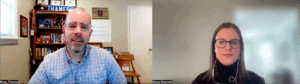
International human rights lawyer Knox Thames and Alexis Mrachek of the McCain Institute respond to questions about a new study focused on religious repression by China, Russia, Iran and North Korea. (Screen capture image from Zoom call)

In writing the foreword to the study, international human rights lawyer Knox Thames refers to China’s Chairman Xi Jinping, Russian President Vladimir Putin, Iranian President Masoud Pezeshkian and North Korea’s Supreme Leader Kim Jong Un as a “league of tyrants” whose regimes are “world-class religious persecution machines.”

“Not without reason, these four authoritarian regimes are globally renowned for their oppression: they brook no dissent and relentlessly crack down on any political opposition,” Thames writes.

He expanded on that idea in a Zoom interview with the Baptist Standard.

“The commonality is fear of some type of idea that would lead individuals to pursue something beyond what the regime wants them to think,” Thames said. “They are afraid of religion. They are afraid of faith. … They are afraid of their own people.”

The four authoritarian regimes “are able to bring to bear the power of the state to crush any religious activity that they deem illegal or unorthodox,” he said.

‘Industrial-scale persecution’

Thames noted the “industrial-scale persecution” in China of Uyghur Muslims and Christian churches that “don’t play by the Chinese Communist Party’s rules.”

He also cited Iran’s theocratic repression of women who refuse to wear hijabs and persecution of the Baha’i faith and the country’s Sufi and Sunni communities. In North Korea, the government requires worship of the nation’s “Supreme Leader.”

Russian Orthodox Patriarch Kirill in the Christ the Saviour Cathedral in Moscow, on Jan. 7, 2021. (AP Photo/Alexander Zemlianichenko)

Alexis Mrachek, senior program manager of the human rights and freedom program at the McCain Institute, wrote the chapter in the study on religious repression in Russia and the territories it controls, including occupied areas of Ukraine.

Mrachek pointed to the relationship between the Russian Orthodox Church and the Putin regime as an example of the distinction between religious nationalism and freely practiced faith.

“Of course, Russia calls itself a Christian nation. They are officially Orthodox Christian. But really, that is the state’s religion, and it’s all tied into the politics and power that Putin holds, together with Patriarch Kirill, who is Putin’s crony” Mrachek told the Baptist Standard.

In Russia, religious identity and national identity are promoted by the state as “one and the same,” she noted.

Recommendations for action

The McCain Institute report includes multiple recommendations for the U.S. government, including:

  • Integrate international religious freedom and human rights into foreign policy and diplomatic engagements.
  • Expand designations, sanctions and legal measures against nations and leaders of governments that perpetrate severe religious persecution and repression.
  • Enforce corporate responsibility and apply economic pressure on countries that violate international standards of protection for freedom of religion and belief.
  • Strengthen congressional oversight of actions promoting international religious freedom.
  • Amplify support for civil society, religious minorities and freedom of information.
  • Counter authoritarian propaganda and influence.

The McCain Institute issued the report on the 27th anniversary of the International Religious Freedom Act of 1998, legislation that established freedom of religion or belief as a core objective of U.S. foreign policy.


Samaritan’s Purse to play a larger role in Gaza aid delivery

(RNS)—Franklin Graham confirmed Samaritan’s Purse, the international humanitarian relief organization he heads, is ramping up its role in delivering aid to Gaza as the embattled Gaza Humanitarian Foundation is being shut down.

“I don’t have all the specifics, because these details about the plan are still being developed,” Graham told RNS in an Oct. 25 phone interview from Greensboro, N.C., where the organization’s new Boeing 767 took off for Israel loaded with humanitarian supplies.

Graham said he understood the Gaza Humanitarian Foundation—with which Samaritan’s Purse worked earlier—was being phased out.

“It’s being folded,” said Graham, a longtime supporter of President Trump who has served as one of his evangelical advisers. “They operate with government funding, and I think their government funding has run out. It’s not going to be carried forward.”

The Gaza Humanitarian Foundation, created by Israel and the U.S. to deliver aid in the ravaged Gaza Strip, had come under heavy criticism for its militarized distribution sites, where more than 1,000 Palestinians were killed by Israeli forces as they approached the sites.

Reuters recently reported many European nations were opposed to the Gaza Humanitarian Foundation having any future role in Gaza.

‘Asked to pause operations’

Gaza Humanitarian Foundation spokesperson Chapin Fay responded in an email, “GHF was asked to pause operations during the hostage release phase which is still ongoing.”

The group, which began delivering aid to Gaza in March, ceased operations since the ceasefire deal between Israel and Hamas was signed nearly two weeks ago.

While acknowledging the Gaza Humanitarian Foundation was being paused, Fay did not say the organization is shuttering.

“While the situation remains fluid on the ground, GHF has been instructed to remain ready to re-engage and specifically not to take any actions that would preclude us from resuming operations immediately,” Fay said.

Johnnie Moore, the evangelical PR guru who has served as Gaza Humanitarian Foundation chairman, recently stepped down.

Delicate ceasefire in place

The fragile ceasefire deal—brokered by the United States, Qatari and Egyptian mediators—has been strained by violent flare-ups and tensions over the exchange of deceased Israeli captives.

All the living captives have been returned to Israel, and Israel has released some 2,000 imprisoned Palestinians.

The Gaza Strip remains in ruins after a devastating two-year campaign that damaged or destroyed 90 percent of buildings, razing hospitals, universities, mosques and water and sewage plants. Israel has killed more than 68,000 people, according to the Gaza Health Ministry, and thousands of corpses remain buried under the rubble.

The Gaza ceasefire plan names the United Nations, the Red Crescent and other international institutions as the entities responsible to deliver aid to some 2 million Palestinians.

Immediately following the ceasefire, Israel allowed more aid to enter Gaza, where a global hunger monitor warned in August that famine had taken hold. But that aid has since been restricted in the wake of ongoing clashes.

‘Don’t like to be tethered to incompetence’

Samaritan’s Purse would prefer not to work with the United Nations to deliver aid, Graham said.

Franklin Graham speaks in Israel on Jan. 23, 2024. (Photo courtesy of Samaritan’s Purse)

“If we have to, we can work with anybody,” he said. “But they have such a bureaucratic organization, it just really slows you down. We don’t like to be tethered to incompetence.”

On Saturday, Graham prayed with the aviation team before it took off. The new Boeing 767 airlift, which was carrying 290,000 packets of Ready-to-use Supplementary Food, used to treat acute malnutrition, as well as blankets and solar lights, was due to land at Israel’s Ben Gurion Airport later Saturday.

It was not clear how the supplies would be delivered to Gaza.

In the wake of the Oct. 7, 2023, Hamas attack on Israel that killed 1,200 people, Samaritan’s Purse began assisting Israel’s recovery, as well. It donated 42 ambulances and is building nine community centers and bomb shelters in the north of the country.

Samaritan’s Purse has also deepened its relationships with the Israeli government and is now working with the U.S. State Department to assist Gaza in a larger way.

The faith-based operation, one of the U.S.’s largest humanitarian relief organizations, also benefits from its close ties to U.S. Ambassador to Israel Mike Huckabee, a former Southern Baptist pastor. Graham said Huckabee’s wife, Janet, is a longtime volunteer with Samaritan’s Purse.

Graham confirmed all the aid donated to Gaza was privately funded. However, he said, Samaritan’s Purse would be open to accepting government funds.

It also is considering building an emergency field hospital in Gaza, a service in which it has developed unique expertise. In the past, it has erected temporary hospitals in Ukraine, Sudan and Myanmar, among other hotspots.


U.S. missionary reportedly kidnapped in Niger

NIAMEY, Niger (BP)—An evangelical Christian missionary from the United States was kidnapped late Oct. 21 in Niamey, Niger, less than 100 yards from the presidential palace, CBS News reported.

Several news outlets, including Crosswalk and the Long War Journal, identified the missionary as Kevin Rideout of Serving in Mission International.

Rideout was taken from his home by three unidentified, armed men suspected to be jihadists, according to news reports.

Baptist Press requested comments from SIM’s U.S. office in North Carolina, but had not received a reply by deadline.

Embassy issued security alert

The U.S. Embassy in Niger issued a country wide security alert Oct. 22 in response to the kidnapping.

“American citizens remain at a heightened risk of kidnapping throughout Niger, including in the capital city,” the embassy alerted Americans there.

“Due to heightened concern about the threat of kidnapping, the Embassy has modified its security posture to require armored vehicles for all travel of Embassy personnel and family members, restricted movements of Embassy personnel and family members, and instituted a mandatory curfew and routine accountability. All restaurants and open-air markets are off-limits to U.S. Embassy personnel and family members.”

The U.S. State Department issued a statement regarding the kidnapping, but did not name the victim.

The State Department is “aware of reports of the kidnapping of a U.S. citizen in Niamey, Niger. Since we were alerted of the situation, our Embassy officials have been working with local authorities,” the Associated Press quoted a department spokesperson.

“It is a top priority for the Trump Administration to look after the safety of every American, and we are seeing efforts from across the U.S. government to support the recovery and safe return of this U.S. citizen.”

Tony Lynn, a North American Mission Board Send Network catalyst who formerly served in Niger, requested prayer for Rideout and his family in a Facebook post.

“Missionary kidnapped this week in a country we called home, with our children, for years,” Lynn posted with a Rideout family photo. “Pray w/ us for his rescue/release. He is a pilot w/ SIM International.”

Persecution increased since military coup

Christian persecution has increased in Niger since the July 2023 military coup by Gen. Abdourahamane Tiani, head of the presidential guard unit.

The coup interrupted the work of a Southern Baptist mission team from Harmony Hill Baptist Church in Lufkin, which returned safely home that August.

Coup instigators, calling themselves the National Council for the Safeguarding of the Country, closed Niger’s borders and airspace and enacted a curfew, preventing the team from returning July 30 as originally planned. The team sheltered in place while leaders in the United States and abroad worked to get them home.

Persecution watchdog group Open Doors ranks Niger as the 28th most dangerous country for Christians globally in its 2025 World Watch List. The jihadist group al-Sunnah wa Jama’ah is a major driver of the persecution, Open Doors said of the country where Christians number about 69,200, comprising an estimated 0.2 percent of the population. Islam is the majority religion there.

“The presence of radical Islamist groups has led to frequent attacks and kidnappings, significantly limiting the freedom and safety of Christians,” Open Doors wrote. “It’s also led to a rise in attacks on Christian property, such as churches, schools and health-care centers.”


Ministry offers trauma healing to women in Ukraine

More than 1,000 women in Ukraine recently attended conferences, workshops and seminars designed to offer Christ-centered trauma healing.

Leonid Regheta, pastor of River of Life Church in Plano, facilitated the events in Kyiv, Odesa and Kharkiv in his role as Eastern European missions director for Hope International Ministries, with support from Texans on Mission and several Texas Baptist churches.

“We were able to see how God moved. There were a lot of tears. There were a lot of prayers. There were a lot of hugs. There were a lot of testimonies,” said Leo Regheta, Eastern European missions director for Hope International Ministries. (Photo courtesy of Leonid Regheta)

While wailing sirens warned Ukrainians of approaching drone missiles and cities experienced rolling blackouts, women gathered from around the war-torn country looking for emotional, psychological and spiritual peace.

“We had a strong prayer team here in the U.S., as well as locally in every place we went to. Sometimes, we had a conference or seminar going on as the prayer teams were uplifting us and asking God for protection,” Regheta said.

“We were able to see how God moved. There were a lot of tears. There were a lot of prayers. There were a lot of hugs. There were a lot of testimonies.”

One woman told Regheta she attended hoping to receive some help in coping, but she never expected the “breakthrough” she experienced.

Over the last three and a half years, Hope International has conducted 10 conferences in countries with large concentrations of Ukrainians—Poland, Germany, Latvia, Italy and Belgium, as well as in Ukraine.

Park Cities Baptist Church in Dallas and LakePointe Church in Rockwall were among the first congregations to provide start-up financial support for Hope International’s trauma healing ministry in Ukraine, Regheta noted.

The trauma healing events follow a “culturally nuanced and accepted format,” while also incorporating “best practices” from outside of Ukraine, Regheta said.

Encouraging long-term ministry locally

Rather than bringing in large teams from the United States, Hope International works with local Christian mental health professionals—as well as local churches and pastors—to support their work.

“One of our main approaches to ministry is to encourage long-term, sustainable, efficient ministry locally,” Regheta said.

As part of that emphasis on supporting local churches, Hope International has worked in partnership with the Baptist Union of Ukraine to offer summer retreats for pastors and their families the past two years.

At the same time, while trauma healing events sometimes are scheduled in churches, they often meet in a “neutral site” such as a civic center, making them more accessible and inviting to non-Christian participants.

Mental health professionals who lead sessions follow a “Christ-centered, biblically based approach,” he noted.

Prayer constitutes a significant part of the trauma healing events in Ukraine. While non-Christians are not compelled to receive prayer, “many of them do,” said Leo Regheta, Eastern European missions director for Hope International Ministries. (Photo courtesy of Leonid Regheta)

“We understand true healing comes from Jesus,” Regheta said. “New life comes from him.”

He recalled one woman who told him she felt like she was “in the Sahara Desert,” because it seemed as if everything in her experience had become dry and lifeless.

“Sometimes resurrection needs to happen—emotional, spiritual resurrection,” he said. “And that is something only Jesus can provide.”

Prayer constitutes a significant part of the events. While non-Christians are not compelled to receive prayer, “many of them do,” Regheta said.

He recalled praying with some women who lost a husband in the war and others who had a son who was killed. The trauma of living in a nation at war and suffering loss drives some people to seek God, while it drives others to become angry with God or doubt his goodness, he said.

“We come with Jesus to invite others to become closer to him,” Regheta said.

Hope Trauma Healing Center opens in Kharkiv

In addition to participating in the three events in Kyiv, Odesa and Kharkiv, Regheta joined in the formal opening of the Hope Trauma Healing Center in Kharkiv on Oct. 7.

Leo Regheta, pastor of River of Life Church in Plano and Eastern European missions director for Hope International Ministries, joined in the formal opening of the Hope Trauma Healing Center in Kharkiv on Oct. 7. (Photo courtesy of Leonid Regheta)

“We realize there are only so many trips per year we can make. So, why not pray and work on establishing something on the ground locally that will be manned by local psychiatrists, psychologists, trauma healing therapists and Christian volunteers,” Regheta said.

The center, built in partnership with Kharkiv’s mayor and with financial support from Texans on Mission, will provide consistent, localized mental health support to people dealing with trauma.

“It takes time to walk alongside somebody. It takes intentional effort to help them deal with their emotions, with their feelings, with their devastation, with their grief. And it takes time for all that to be processed,” Regheta said.

Rand Jenkins, chief strategy officer for Texans on Mission, sees involvement in trauma healing in Ukraine as part of the mission organization’s decades-long commitment to disaster relief and recovery.

“Texans on Mission is supporting trauma healing work in Ukraine because we recognize that true recovery after war goes beyond physical rebuilding—it requires tending to the mind and soul,” he said.

“In Ukraine, where families are still reeling from the psychological scars of invasion, displacement and loss, we understand that trauma doesn’t fade on its own. It fractures relationships, silences hope and paralyzes communities.”

‘Restoring dignity, rebuilding relationships, rekindling faith’

Texans on Mission works with Hope International Ministries because the two groups share a common commitment to working with pastors and churches in the communities being served.

“These leaders speak the language, understand the cultural context, and carry the trust of their people,” Jenkins said.

Rather than “parachuting in solutions,” Texans on Mission and Hope International are “equipping local ministers with trauma-informed care tools so they can walk alongside their congregations with compassion and competence,” Jenkins said.

“Healing trauma isn’t just about counseling. It’s about restoring dignity, rebuilding relationships and rekindling faith amidst brokenness. By empowering local leaders, we are helping to plant sustainable, Spirit-led recovery that will outlive any short-term aid program.”

Jenkins views the work in Ukraine as “a quiet but powerful witness—that even in the darkest valleys, the church can be a place of refuge, restoration and resurrection.”

Regheta expressed appreciation for the support Texas Baptist churches, ministries and individuals have provided. He requested their continued prayers as Hope International seeks to bring comfort to hurting people in Ukraine.

“Pray for the reality of God’s presence in the midst of war, in the midst of grief, in the midst of tragedy and in the midst of trauma,” he said. “We don’t just want to talk about Jesus. We want Jesus to manifest himself in the midst of what we do.

“We’re trying to do what we can. But we’d rather let Jesus speak through us.”


Hearing focuses on state control of religion in China

WASHINGTON (BP)—Chinese Pastor Ezra Jin Mingri—one of 22 pastors jailed in China on erroneous charges—lived in the United States with his wife Chunli Liu and their children before returning to China in 2007 to plant Zion Church.

His wife, who has remained in the United States to raise their children, who are U.S. citizens, is appealing for prayer as the United States advocates for her husband’s release.

The U.S. Commission on International Religious Freedom noted Chunli’s comments Oct. 16 among testimony of the Chinese Community Party’s religious persecution, including transnational aggressions, during the virtual hearing it hosted on the atrocities.

Chinese Communist Party officers raided the home of Zion Church Pastor Sun Cong in its increasing crackdown on unregistered churches. (CSW Photo)

Commission Chair Vicky Hartzler, joined by Vice Chair Asif Mahmood, is among those condemning the persecution of Jin and others.

“I condemn these arrests and I call for the release of Ezra Jin and of all those who have been detained by the CCP for exercising their right to practice their faith,” Hartzler said in opening the hearing. “China’s treatment of religious groups blatantly contradicts international human rights standards.

“No government has the right to dictate the beliefs of its citizens. No government has the right to choose which religious leaders are legitimate.

“No government has the right …  to impose its political interest onto its citizens’ conscience and its citizens’ faith. And no government has the right to imprison religious leaders for leading their religious communities.”

Christians branded as ‘disruptors’

Among those appearing before the commission was Jin’s friend Corey Jackson, founder and president of The Luke Alliance, advocating for the religious freedom of persecuted Christians in China.

“The CCP intends to control every area of your life including your heart, your mind, your soul and your emotions. They want to control your gathering in public, in private, online, even gathering with your own children to teach them about your faith,” Jackson told USCIRF.

“So how should we respond? Our concern should go beyond prisoners of conscience to the 99 percent of other Christians who do not make the headlines. There are between 80 (million) and 100 million Protestants in China, maybe 10 million Catholics, potentially more. Xi (Chinese President Xi Jinping) brands Christians as disruptors, and in reality, they are a cohesive force for good in society.”

Jackson, a former North Carolina Presbyterian pastor who served several years in China in ministry, documents on the Luke Alliance website the arrest of Jin and 21 others held at Beihai No. 2 Detention Center in Guangxi Province.

The Luke Alliance also posts an open letter from Chunli, describing Jin’s commitment to the ministry. Before his arrest and since 2018, Jin had been forbidden to leave China under a CCP-issued exit ban, and he had been subjected to constant surveillance.

“I feel a mixture of shock, sadness, worry, anxiety and anger,” Chunli wrote. “I firmly believe that Pastor Jin simply did what any good pastor would do. In whatever circumstance, online or in-person, he did what every pastor in the universal church does: preach the gospel to everyone and proclaim his faith in Jesus Christ. He is innocent!”

‘Dissent is occurring … every single day’

In the hearing, “State-Controlled Religion in China,” Commissioner Stephen Schneck posed the question of whether USCIRF’s advocacy under the International Religious Freedom Act, as well as sanctions imposed by the U.S. State Department, has exacted any improvements for persecuted Christians and other religious adherents in China.

Schneck, who is in his fourth year at the commission, said: “I have to say that in the course of those four years, I’ve seen things only get worse and worse in regards to China. Sinicization is continuing apace. The genocide of the Uyghurs and the cultural genocide of the Tibetans is continuing apace.

“And I’m really wondering if, over these four years, USCIRF has had any effect at all. If any of the recommendations that we’ve made to Congress, if any of the recommendations that we’ve made now to two different administrations, have had any success at all in changing the situation of religious freedom in China.”

Annie Wilcox Boyajian, president of Freedom House and a speaker at the hearing, assured commissioners of their positive impact.

“I would jump in and say ‘yes, and.’ There are a whole bunch of recommendations that the religious community has made for decades that haven’t ever been fully implemented,” Boyajian said.

“The other thing to remember is dissent is occurring, and just because we don’t necessarily see it from where we sit here in the United States, it happens every single day.”

Advocacy makes a difference

Boyajian noted Freedom House’s China Dissent Monitor, sourced from on-the-ground contacts and others, to document dissent from religious communities.

“We have seen more than 400 instances over the last three years where people see religious restrictions and choose to worship anyway, or where they’re even actually protesting,” Boyajian said. “This comes back to, from our perspective, the deep and utter importance of raising individual cases because we do hear that it makes a difference.

“And when USCIRF encourages the State Department to designate China as a Country of Particular Concern, it matters. The Chinese government cares about that. They raise it in meetings.”

The commission’s hearing followed U.S. Secretary of State Marco Rubio’s Oct. 12 statement urging China to release Jin and others.

At its hearing, USCIRF also heard from additional advocates and Congressional leaders including U.S. Sen. James Risch, chairman of the Senate Foreign Relations Committee; U.S. Rep. James McGovern, a member of the Congressional-Executive Commission on China and the bipartisan Tom Lantos Human Rights Commission; Rushan Abbas, founder and executive director of the Campaign for Uyghurs, and chairwoman of the Executive Committee of the World Uyghur Congress; and Norgay Tenzin, a research analyst with the International Campaign for Tibet.


U.S. urges release of jailed Chinese pastors

BEIJING (BP)—China falsely claimed Oct. 13 to protect religious freedoms after U.S. Secretary of State Marco Rubio urged the country’s government to release several pastors arrested in house church raids.

“The Chinese government governs religious affairs in accordance with law, protects the religious freedom of the citizens and the normal religious activities,” Foreign Ministry spokesman Lin Jian said Monday at a regular briefing, MSN reported. “We firmly oppose the U.S. interfering in China’s internal affairs with the so-called religious issues.”

China persecutes Christians and other religious groups through an intensive campaign to control religious activities and communication, claiming churches oppose the government, several religious liberty watchdog groups have reported with extensive evidence.

Rubio called for the release of an estimated 20 house church pastors and leaders arrested in at least seven cities since Oct. 10, Christian Solidarity Worldwide reported, as the Chinese Communist Party raided several locations of Zion Church, an unregistered Protestant congregation.

“We call on the CCP to immediately release the detained church leaders and to allow all people of faith, including members of house churches, to engage in religious activities without fear of retribution,” Rubio said, naming Senior Pastor Ezra Jin Mingri among those arrested.

“This crackdown further demonstrates how the CCP exercises hostility towards Christians who reject Party interference in their faith and choose to worship at unregistered house churches.”

China and U.S. in trade policy dispute

The exchange comes as U.S. President Donald Trump spars with China over trade policy, threatening a 100 percent tariff on China in addition to a 55 percent tariff already in place. Trump threatened the increase after China announced export controls on rare earths, effective in November. China holds 49 percent of the world’s rare earths, including 17 metallic elements considered crucial for modern technology and energy, NBC News reported.

Rubio called for the release of leaders after China initially arrested 30 leaders, with about 20 remaining in custody as recently as early Oct. 14, CSW reported.

“CSW sources suggest these arrests form part of the largest nationwide crackdown on house churches in decades, and many Chinese house church leaders have openly expressed support for Zion Church despite facing significant pressures themselves,” CSW stated.

“One church member also pointed out that repression targeting house churches typically intensifies whenever relations deteriorate between China and the West.”

Sean Long, a Chinese Zion Church pastor studying in the U.S., told the Associated Press the leaders may face charges of “illegal dissemination of religious content via the internet,” although it’s not currently known whether the pastors are charged with any infraction.

“This is a very disturbing and distressing moment,” the AP quoted Long. “This is a brutal violation of freedom of religion, which is written into the Chinese constitution. We want our pastors to be released immediately.”

‘Cease harassment of unregistered churches’

Zion Church has perhaps 5,000 members who worship at 100 sites across 40 cities, Long told AP, with services held in apartments, restaurants and even karaoke bars. Jin was handcuffed and arrested the morning of Oct. 11 after officers raided his home in Behai, Guangxi Province the previous evening and searched the home throughout the night, CSW reported.

CSW’s CEO Scot Bower also urged China to release the pastors and leaders.

“CSW echoes calls for the immediate release of Pastor Jin and the other leaders and members of Zion Church who were detained in this latest crackdown,” Bower said.

“We call on the Chinese Communist Party to cease its harassment of unregistered churches and religious groups, and to guarantee to all religious and belief communities, in law and in practice, the right to publicly manifest their religion or belief in worship, observance, practice and teaching without interference.”

Commission cites China as among worst violators

China’s religious freedom policies are among the worst in the world, the U.S. Commission on International Religious Freedom said in its 2025 Annual Report.

Through its “sinicization of religion” policy, China requires the “complete loyalty and subordination of recognized religious groups to the CCP, its political ideology, and its policy agenda,” USCIRF wrote in its report.

China is widely condemned for its stringent restrictions and persecution including unwarranted arrests, forced disappearances, high-tech surveillance of churches, suppressed speech, removal of crosses, confiscation of religious materials and the criminalization of Bibles and evangelism.

The U.S. State Department as recently as 2023 named China a Country of Particular Concern for systematic, ongoing, and egregious violations of religious freedom, as defined by the International Religious Freedom Act.


Aid to Gaza resumes, including from faith-based agencies

(RNS)—With President Donald Trump announcing “the war is over” on Oct. 13—and Israel and Hamas trading hostages for Palestinian prisoners—aid from the United Nations and faith-based agencies began to flow into the Gaza Strip, with hopes of stemming a humanitarian disaster.

Trump’s 20-point Gaza ceasefire plan names the United Nations, the Red Crescent and other international institutions as the entities responsible to deliver aid to Palestinians who are in the grips of a profound humanitarian crisis.

It does not cite the Gaza Humanitarian Foundation, a private entity created by the United States and Israel to circumvent the United Nations, which the latter alleged was allowing Hamas to steal aid.

Over the past 36 hours, the United Nations, which has seen its agencies hampered or outright banned by Israel during the two-year war, resumed its work in Gaza.

The United Nation’s Office for the Coordination of Humanitarian Affairs reported that “for the first time since March, cooking gas entered the Strip,” and frozen meat, fresh fruit, flour and medicines also crossed into Gaza throughout the day on Monday.

Israel broke an earlier ceasefire agreement in mid-March, leading to an 11-week halt of all humanitarian relief entering Gaza. Since then the Israeli government has been allowing a small amount of aid into Gaza but has been unable to stamp out spreading starvation.

U.N. has 60-day plan for humanitarian relief

Tom Fletcher, undersecretary-general for the U.N. humanitarian affairs office, briefed the media late last week on 60-day plans to immediately scale up distribution of food and medicine, repair water and sewage lines and provide thousands of tents, tarps and other supplies to the strip, which now lies in rubble.

“This is the plan. We can deliver it. We’ve done it before, and we will do it again,” Fletcher said.

Until last week, the Gaza Humanitarian Foundation was operating four militarized distribution sites.

But Sunday night, The Associated Press reported that three of its four distribution points, where more than 1,000 Palestinians were killed by Israeli forces guarding from the perimeters, have been abandoned. Palestinians had torn down the structures, dragging off wood and metal fences.

The report cited an unnamed official suggesting that the Gaza Humanitarian Foundation no longer would be involved, but the group denied it was shutting down.

In an email to RNS, a spokesman said: “There will be tactical changes in GHF operations and temporary closures of some distribution sites may occur. There is no change to our long-term plan.”

But it wasn’t clear if the Gaza Humanitarian Foundation was prepared to continue to function without the Israeli military in the vicinity.

Nor was it clear why Palestinians would choose to receive aid from militarized sites guarded by U.S. contractors, especially given the number of Palestinians killed approaching those sites, when they could revert to the U.N.’s civilian delivery system that included some 400 distribution locations before the war.

Samaritan’s Purse in ‘wait-and-see pattern’

Samaritan’s Purse, which joined the Gaza Humanitarian Foundation—primarily to provide supplemental food packets and first aid at its distribution sites—suspended its flights from North Carolina to the region.

“We’re in a wait-and-see holding pattern,” said Ken Isaacs, vice president of programs and government relations for Samaritan’s Purse.

“We want to help the people of Gaza in any and all ways that we can, and we’re waiting to see what the finalized results of the peace agreement are so that we know where and how are the best ways to help.”

The lifting of restrictions on aid was welcomed by a host of humanitarian groups, including Catholic Relief Services. Bill O’Keefe, executive vice president for mission, mobilization and advocacy at CRS, said the organization was “aggressively ramping up.”

“We are anticipating deliveries of large supplies of shelter materials that we’ve had in Jordan and Egypt, and we’ve secured more warehouse space,” O’Keefe said.

“We reopened our office in Gaza City and are really doing everything we possibly can to meet as many needs as we can as quickly as we can.”

Catholic Relief Services has a staff of 65 in Gaza, all of them Gazan residents, but its work has been slowed significantly by Israel’s restrictions on aid. When Israel has allowed in aid, it has mostly privileged the Gaza Humanitarian Foundation.

O’Keefe said his staff has seen a big opening for aid and hopes the end of hostilities will allow even more.

“There are lots of questions in terms of how many access points will be opened,” he said, adding, “We hope all of them.”


BWA names first ambassador to the Middle East

The Baptist World Alliance appointed Nabeeh Abbassi, a leader in the Jordan Baptist Convention, as its first ambassador to the Middle East.

The BWA trustee committee unanimously approved the appointment, which includes a five-year term of service and membership within the BWA Leadership Council.

“This is a sign of our commitment to the historic witness of the church from Jesus to today in this region and our prayers in action for peace and wellbeing,” said Elijah Brown, BWA general secretary and CEO.

“We are thankful for Dr. Abbassi’s years of faithful service and dedication to the Lord, and I look forward to working closely with him to continue the incredible work of Baptists in the Middle East.”

BWA ambassadors serve as volunteer leaders who provide pastoral presence, specialized expertise and global representation in advancing strategic ministry priorities.

Working under the guidance of the BWA general secretary and alongside a designated BWA staff liaison, ambassadors serve as catalysts for strengthening relationships, equipping churches and elevating the global witness of the Baptist family.

Focus on building bridges

Abbassi, will focus on building bridges between local churches and the global Baptist family, strengthening relationships with governments and faith leaders, and amplifying the voice of Middle Eastern Baptists in the global public square.

“I receive my appointment as the first BWA ambassador to the Middle East with gratitude and humility. It is not an honorary title but a call to serve as a bridge builder, a companion in reconciliation, and a witness for religious freedom and just peace,” Abbassi said.

Newly appointed Baptist World Alliance Ambassador to the Middle East Nabeeh Abbassi and European Baptist Federation General Secretary Alan Donaldson are pictured with Jordanian dignitaries at the EBF 75th Anniversary Celebration Gala Dinner in Amman. (Photo courtesy of Laith Farage)

“I see this role as an opportunity to bring local churches into closer fellowship with the global Baptist family and to represent their voice before governments, religious leaders, and wider society so that the gospel may shine with greater clarity and compassion.

“My prayer is that the Holy Spirit will guide us as faithful witnesses of Christ, working together for unity in the church, the flourishing of gospel witness, and the deepening of Baptist partnership across the Middle East and the world.”

In addition to several pastorates, Abbassi served as chairman of the Amman Baptist School board of trustees, president of Jordan Baptist Convention, founder of the Arab Center for Consulting and Training Services and regional director for Christar in the Middle East, North Africa and Europe.

Abbassi’s new role was announced when the 2025 European Baptist Federation Council convened in Amman, Jordan, Sept. 24-27.


Pastor continues to serve in Ukraine after losses

KYIV, Ukraine (BP)—“I’m alive,” Pastor Mark Sergeev’s oldest son Christopher, 13, called from debris that seconds earlier was the third floor of the Sergeev family home in Kyiv.

Everyone was accounted for except Sergeev’s youngest and 8-year-old son Aaron.

Pastor Mark Sergeev, his wife Jane and their three sons, who were asleep in their home on the third floor — blown away (at right) — in a Russian missile attack, survived uninjured.

“I think I’m going to take my kids down to the first floor,” Sergeev’s wife Jane had said moments earlier. Their three sons sleep on the third floor, and the first floor was the closest the family had to a bomb shelter.

 “In the moment that she told me that, in a second, the rocket came, fell down,” Sergeev said days after the explosion.

The rocket was a 550-pound Escondare Russian missile, one of 48 missiles Forbes reported Russia rained across Ukraine in a 12-hour span overnight Sept. 27-28, in addition to 593 drones. Ukraine neutralized as many as 611 of the weapons, Forbes reported, but the Escondare was evidently among five missiles and 30 drones Forbes said struck 16 locations across Ukraine.

“We’re OK,” Sergeev heard Christopher scream again. “I picked up my phone and started recording the video and going up. I found my youngest son Aaron.”

Sergeev dug Aaron from the rubble, alive. The family, including their 10-year-old son Nathan, made it to the street outside.

“When we got out on the street, I saw, it’s a miracle,” Sergeev told Baptist Press. “It’s only one wall that saved our lives. A couple of feet more, and I think the kids would have to be dead.

“I told Christopher: ‘If God has not put his angel at that wall, you would be dead. But now, you’re standing here and smiling.’”

Second home lost to the war

At least four people died in Kyiv that night, Forbes reported. The 13 injured in the city were among 70 injuries nationwide in the barrage. Russia is intensifying air strikes and targeting utility plants as winter nears.

Pastor Mark Sergeev, his wife Jane and their three sons, who were asleep in their home on the third floor — blown away (at right) — in a Russian missile attack, survived uninjured.

This is the second home Sergeev, pastor of Kyiv Ecclesia Church, has lost to the war. Russia confiscated his first home in Melitopol, he told Baptist Press, as well as his first church, Melitopol Christian Church, founded by his parents some 30 years ago in southeastern Ukraine. The family moved to Kyiv and planted Ecclesia in September 2024.

Colby Barrett, a U.S. engineer and documentary producer, spoke to Baptist Press along with Sergeev on Zoom as the family recovered. Barrett, who chronicles the struggles of Ukraine’s church community in the documentary series Faith Under Siege, traveled to Kyiv to hear Sergeev’s story.

“The drywall in his house, it’s all gone. All the windows are gone. The force of the explosion was so strong, it blew all of the drywall off, and nobody should have survived that, especially the kids on the third floor,” Barrett said. “It’s not physically possible, so God’s hand was right there.”

Chose to remain and minister

Sergeev chooses to remain in Ukraine and minister to the nation as it defends itself against Russia.

“Everybody in this world has a calling. I understand that I have a calling for Ukraine. Somebody has to be here,” Sergeev said. “And I see how many miracles happen here, right now—how many people come into the church.”

Sergeev baptized more than 10 soldiers, all new believers, within the past two months at Ecclesia, he said, as the church continues to grow. Soldiers, reservists and their families often visit the church.

“Some of them never before believed in God, but now they’re giving their lives to Christ. That’s why I understand that this is a very important opportunity for us as the pastors to lead and help them,” Sergeev said.

“It’s encouraging me to do another wave, to do something, to build a church. That’s why I’m still here with my family.”

Ecclesia was just ending its monthly three-day fast Oct. 4 when Sergeev spoke with Baptist Press. His family is living in a home provided by an Ecclesia member, and he believes the church’s and family’s perseverance are a testimony of faith for his children and future leaders.

“I want America to know that Ukraine is still a conservative Christian country,” he said, referencing the people of the nation that upholds religious freedom.

“We still have a stronghold of Christianity in Europe. We’re still fighting for our family values. We’re building churches.”

Pastor views the war as a spiritual battle

Sergeev asks Americans to pray for Ukraine, as he believes the war is a spiritual battle of Satan attacking the church.

“I want to ask, still pray, still stand with us, because this battle is not only about this piece of land,” he said. “This is a spiritual battle. The enemy came to destroy, to kill kids, people, cities, to destroy cities.”

Barrett continues to chronicle Ukraine’s Protestant and Evangelical churches as they suffer persecution in Russia’s war on Ukraine. He hopes to add additional installments to the four-part Faith Under Siege series currently streaming on Angel.com and the Angel app.

“We are incredibly grateful that the A Faith Under Siege series is available exclusively on Angel,” Barrett said in a press release. “Witnessing how Christians in Ukraine have held firm through torture, drone attacks, and even the abduction of their children by invading Russian forces has deepened my own faith.”

‘I want to be in the center of God’s will’

Barrett, working on the documentary series with executive producers Steven Moore and Anna Shvetsova, appreciates the faith and faithfulness of Christians in Ukraine.

“Every time I come here, it is just so uplifting,” Barrett said. “In the U.S., if it snows a couple inches, church is canceled. Mark, right after his house was bombed, goes to two different services, led two different services.

“There’s video of him that day. He’s wearing black pants, and there are still drywall stains on his pants. He’s dirty, he’s sweaty, but just no fear,” Barrett said. “This is crazy with faith, with the love of God, and just surrender.”

Sergeev believes it is God’s will that he continues to spread the gospel in Ukraine.

“God is preparing something. He has a plan, 100 percent,” Sergeev said. “Even if tomorrow my life will be ended, this is his plan. He understands. But I want to be in the center of God’s will, whatever he wants to do right now.

“That’s why I’ve not escaped from the country.”


Nigerian official disputes reports of anti-Christian violence

A high-ranking Nigerian official dismissed reports by international human rights organizations about widespread violence against Christians in his country as “not supported by the facts on the ground,” but some Nigerian Christian leaders disagreed.

Past and present members of the U.S. Commission on International Religious Freedom—along with multiple human rights groups—have called Nigeria “the most dangerous country in the world for Christians.”

However, in an Oct. 6 interview with the Baptist Standard via Zoom, Mohammed Idris Malagi, minister of information and national orientation for Nigeria, insisted Christians are not targeted in his country—except by “violent extremists,” whom the government opposes.

 “It is sad that this has been characterized as a religious conflict. We don’t believe that it is. It never has been a religious conflict. It actually is an extremist conflict,” he said.

Disputes accuracy of reported numbers

Malagi dismissed as inaccurate a report by the International Society for Civil Liberties and Rule of Law that in the first seven months of this year 7,087 Christians were killed in Nigeria and 7,800 Christians were abducted.

Based on the information it accumulated from varied sources, the group reported 30 Christians a day killed and 35 a day kidnapped during a 220-day period.

“The statistics you have reeled out are not supported by facts on the ground,” Malagi said. “Yes, we have to understand there actually is violence in Nigeria perpetrated by some extremists, targeted at both Muslims and Christians in our country. Nigeria strongly condemns that and fights that with all its available resources.”

Malagi denied that more than 18,000 churches have been burned in Nigeria since 2009, as multiple sources reported.

‘Making sure attacks like this don’t happen again’

Likewise, he dismissed as incorrect a report by Amnesty International that—in the two years since Nigeria’s president assumed his office—10,217 individuals have been killed in Benue, Edo, Katsina, Kebbi, Plateau, Sokoto and Zamfara States, with more than half of those killings (6,896) occurring in Benue State.

“We have seen some of these numbers flying around here and there, including the ones from Amnesty International, but let me say we still dispute these numbers,” he said.

When asked if the government had a report of its own, documenting when and where violence is occurring and to what extent it is happening, he said it’s a complicated situation, and reporting is “a work in progress.”

“What’s more important to us is making sure that attacks like this do not happen again,” he said. “We’re calling on our international partners to join hands with us to ensure that Nigeria returns to normalcy.”

‘Numbers may differ, but the pain is real’

Victims of a gunmen attack pray for peace at the internal displaced camp in Bokkos, north central Nigeria, Wednesday, Dec. 27, 2023.(AP Photo/Sunday Alamba)

Joseph John Hayab, chairman of the Christian Association of Nigeria in the northern states and Federal Capitol Territory, said any discussion of religious persecution in Nigeria “must be approached with honesty, empathy and a commitment to truth.”

“While there may be variations in the statistics presented by different organizations, the reality remains that many Christians in parts of the country continue to face harassment, denial of opportunities, and targeted attacks because of their faith. These experiences cannot be ignored, even as we continue to hope and work for a more just and peaceful nation,” Hayab said.

The government should acknowledge the reality of suffering, he emphasized.

“The numbers may differ, but the pain is real. What matters most is not the figures, but the human lives lost, the families displaced, and the communities living in fear,” said Hayab, country director for the Global Peace Foundation-Nigeria.

“These are human and moral realities that deserve the government’s honest attention and collective national empathy.”

‘Act decisively to protect every citizen’

Archbishop Daniel Okoh, president of the Christian Association of Nigeria, issued a public statement Oct. 8 affirming many Christian communities in parts of Nigeria “have suffered severe attacks, loss of life, and the destruction of places of worship.”

“These realities are painful reminders of the urgent need for government and security agencies to act decisively to protect every citizen,” Okoh stated.

The Christian Association has “established mechanisms for recording incidents of religiously motivated killings, engaged with international partners, written to the International Criminal Court in the Hague, and hosted global Christian organizations” to raise awareness, he noted.

“Our concern remains that these cries for justice and protection are too often met with delay or denial,” Okoh stated.

Middle Belt an ‘epicenter of attacks’

Gideon Para-Mallam, a pastor and peace advocate, asserted, “Nigeria practices the undeclared policy of denial when it comes to the persecution of Christians in the country.”

“The Middle Belt has become the epicenter of attacks that disproportionately target only Christian farming communities,” Para-Mallam said.

“Attackers often come in droves with military-grade weapons to raid these villages at night destroying homes and churches. Many pastors are targeted and killed. Farmlands are destroyed, and survivors are forced to flee.”

Malagi insisted the violence in the Middle Belt is “largely due to competition for resources, for land, especially between farmers and herders.”

“Criminal elements” and “violent extremists” are mostly responsible, he said, and it is “not a religious conflict per se.”

Para-Mallam offered a different perspective, asking, “If it were a farmer-herder class, why is it that only the farmers who are often of a particular religion—Christianity—get killed in such high numbers?”

‘Nigeria will continue to fight extremists’

The government in Nigeria is committed to ridding the country of extremist violence, Malagi said.

“Nigeria will continue to fight extremists that perpetrate violence toward both Christians and Muslims,” he said.

“We agree completely that Muslims and Christians and people of all faiths in this country have been attacked, and many of them have been killed. The Nigerian authorities are not taking this kindly. … A number of measures have been taken.”

Nigeria is making progress in stopping violence perpetrated by Boko Haram, the Islamic State-West Africa Province and other radical jihadists, he said.

Nigeria’s federal government has taken significant steps to protect citizens by enhancing the military presence in the Middle Belt, Malagi said.

The government also is engaged in peacemaking and long-term reconciliation initiatives in the region, as well as promoting interfaith dialogue, he added.

‘More needs to be done’

Hayab commended the federal government for progress made in the past two years, but he called on the government to do more.

“It is important to acknowledge that the current administration has shown some improvement compared to the previous government, particularly in its efforts to engage faith communities and promote national unity. This progress is commendable,” he said.

“However, more needs to be done to guarantee genuine freedom of religion as enshrined in the Nigerian Constitution. True democracy can only flourish when every citizen, regardless of faith, can serve God freely without fear, intimidation or discrimination.”

When questioned about the sophisticated, military-grade weaponry used by militant herdsmen in the Middle Belt, Malagi said the government believes they are coming “from outside our borders.” Stopping the flow of arms will require “the cooperation of our neighbors and the international community,” he said.

“We are taking steps to ensure that we mitigate that significantly so that we can provide security for the lives and property of our people,” Malagi said.

State governments and the federal government are working collaboratively in law enforcement to rid the country of criminal elements and extremists, he said.

Okoh acknowledged with appreciation the government’s efforts to respond to Nigeria’s security challenges, but he urged the authorities to “redouble” efforts to provide “equitable protection for all.”

Secular state or Sharia law?

Malagi called Nigeria a “very secular state” and “a country governed by laws,” where the religious freedom of all its people is guaranteed in the constitution.

“Every member of our society is free to practice his or her religion,” he said.

When asked whether the enforcement of blasphemy laws and Sharia law in 12 northern Nigerian states violate the country’s constitution and Article 18 of the Universal Declaration of Human Rights, he insisted Sharia applies only to the Muslim population—not others.

The “Nigerian Constitution is supreme,” and it supersedes any regional laws, he said.

Hayab disagreed, saying, “The continued misuse of Sharia and blasphemy laws in some northern states remains a serious concern.”

“In the Christian faith, salvation is instantaneous. Therefore, anyone who embraces Christianity should not be subjected to Sharia law,” he said.

“Sadly, there are still cases where Christian converts are held to ransom under such laws, denying them freedom of faith. This practice amounts to persecution and violates both the spirit and the letter of Nigeria’s constitutional guarantees.”

In states with Sharia law, churches find it “almost impossible” to acquire land, and renting buildings for Christian worship is “a major challenge,” Para-Mallam said.

‘Tools of religious and political intimidation’

More severe persecution of Christians arises from the imposition of blasphemy laws, he added.

Women react under the bridge during a march in solidarity with the victims of the Christmas Eve 2023 attack, in Jos, Nigeria, Saturday, Jan. 6, 2024. (AP File Photo/Sunday Alamba)

“Blasphemy laws have become tools of religious and political intimidation and extreme persecution, as anyone accused of blasphemy may end up being lynched without fair hearing and trial,” Para-Mallam said, noting perpetrators of mob violence seldom are prosecuted.

“On paper, Sharia law is supposed to be for Muslims alone. But it’s not practicably so. We have it on record many Christians have been dragged to Sharia courts and have Sharia laws applied to them.”

In spite of the well-documented attacks on Christians on Christmas Eve in 2020, 2022 and 2023, Malagi rejected the idea that Christians are targeted, except by some extremists who also have attacked Muslim gatherings and mosques.

“Generally, Christians are not living in fear in Nigeria,” he said.

Christian casualties outnumber attacks on Muslims

Hayab agreed both terrorists and bandits have killed some Muslims and attacked worshippers in mosques, but Christian casualties remain far greater.

“While it is true that some Muslims who reject extremist ideologies have also suffered attacks, it must be acknowledged that the Christian community bears a heavier share of these incidents,” he said.

“As a nation, we must rise above these divisions and work together to promote understanding, justice, and mutual respect.”

Malagi acknowledged the criminal element and that extremists “want to exploit religious differences,” but “Muslims and Christians largely live side-by-side in harmony” in Nigeria.

“We want Christians in the United States—and, indeed, Christians all over the world—to know that Nigeria’s situation is a very complex one,” he said. “It is not driven by any systematic religious persecution of Christians.”

‘Nigeria belongs to us all’

Hayab urged the government to do more to protect all its citizens from persecution and to ensure religious freedom.

“I have called on the federal government several times to continue strengthening its security and reconciliation initiatives and to ensure that no Nigerian is denied freedom of worship or equal opportunity on the basis of religion, and we will continue to do so,” Hayab said.

“Nigeria belongs to us all, and we must join hands to build a nation where peace, truth and fairness define our coexistence, and where every citizen can freely serve God without restriction.”

Okoh offered a similar call and voiced a similar hope.

“Nigeria’s healing will not come from denial or blame, but from courage: the courage to face our collective failures, to grieve together, and to rebuild trust within our communities,” he stated.

“Only then can our nation rise from its wounds and embrace a future of genuine peace.”


List highlights global lack of access to the Bible

Somalia tops the list of countries where access to the Bible is blocked by law, actions of religious extremists or acts by other nonstate actors, the Bible Access Initiative announced Oct. 2.

“Bible access in Somalia is not just limited; it is outlawed,” a profile of the nation produced by the Bible Access Initiative stated. “Under a strict interpretation of Sharia law, it is illegal to print, import, store, or distribute Bibles.”

The analysis notes local Christians in Somalia “face life-threatening consequences for possessing Christian materials, and Bible access is considered unsafe and severely restricted across the country.”

In addition to legal restrictions, since more than 70 percent of the population in Somalia lives in poverty and suffers from widespread food insecurity, “basic needs often eclipse the possibility of purchasing a Bible—even if it were possible.”

Rounding out the Top 10 countries on the initiative’s restricted Bible Access List are Afghanistan, Yemen, North Korea, Mauritania, Eritrea, Libya, Algeria, Iran and Turkmenistan.

‘Stark reality of the lack of Bible access’

 “A modern famine persists—not due to apathy, but because of barriers that prevent people from accessing the Bible,” said Wybo Nicolai, co-creator of the Bible Access List.

“These barriers differ in form, but the result is the same—millions cut off from God’s word. Many have never seen a Bible in their language, format they prefer, or price range they can afford, or have no way to safely obtain one.”

The Bible Access Initiative—a collaborative of global Bible agencies and mission partners—developed its list to highlight “the stark reality of the lack of Bible access for an estimated 100 million Christians around the globe,” the initiative stated in announcing its report.

Open Doors International and the Digital Bible Society founded the Bible Access Initiative, which counts among its partners Frontlines International, Bible League International, Biblica, Bible League Canada and OneHope.

“While the Bible Access Initiative believes every individual on Earth has an inherent right to access God’s word and to own a copy of the Bible if they so desire, the Bible Access List proves that unfettered access to the Bible is not a universal standard,” said Ken Bitgood, founder and CEO of the Digital Bible Society.

Shortage of Bibles in many countries

The initial assessment, which the group plans to issue annually, focuses on 88 countries, showing where access to the Bible is most restricted and where its shortage is greatest.

The Democratic Republic of Congo ranked No. 1 on the initiative’s Bible shortage list, which spotlights countries where Christians want a Bible but do not have access to one. Other countries in the top 5 of the Bible shortage list are Nigeria, Ethiopia, India and China.

The Bible Access Initiative compiled the data for its Bible Access List by integrating quantitative data analysis, survey research and qualitative validation review with experts and in-country sources.

Primary research included global surveys, expert interviews and field observations. Data analysis was drawn from world Christian databases, Open Doors’ World Watch List, World Bank indicators and Bible translation repositories.

The data considered barriers to access due to religious persecution, political oppression, socioeconomic challenges, church context dynamics and displacement due to conflict.

In addition to the Bible Restrictions List and the Bible Shortage List, the initiative also produced detailed country profiles providing context for lack of Bible access and shortages.

“One size doesn’t fit all when it comes to solving the issues of Bible access globally,” said Jaap van Bezooijen, who oversaw research and systems development for the Bible Access List.

“Our mission with the Bible Access List is to provide a clear, reliable global picture so the church can respond strategically.”