Ukrainian Baptists suffer pastoral leadership loss

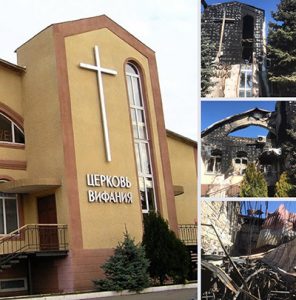
LVIV, Ukraine (BP)—About 400 Ukrainian Baptist congregations have been lost in Russia’s war on Ukraine, Ukrainian Baptist Theological Seminary President Yaroslav Pyzh said.

While volunteers at six humanitarian relief We Care Centers across Ukraine are helping internally displaced people winterize their homes, replacing roofs, windows and doors, Pyzh said the real challenge for Ukrainian Baptists is to rebuild pastoral leadership in places pastors have been displaced.

“Since the war started, six months already, we lost about 400 Baptist churches. And so, the real build is the rebuilding of leadership capacity, because if you rebuild buildings and you have no pastors to lead churches, I don’t think it’s going to do any good,” Pyzh said Aug. 12. “So, the real challenge is not so much rebuilding walls and windows and doors.

“The real challenge is similar to Nehemiah’s challenge,” he said, referencing a biblical story. “It’s not only rebuilding the walls of Jerusalem. It’s rebuilding the nation, … of worshipping God. … That’s the same thing here in Ukraine.”

‘Bridge the gap in leadership that we lost’

Many pastors were displaced from war-torn areas, Pyzh said, leaving few to bring godly hope in the midst of fear and hopelessness. About 2,300 Baptist congregations existed across Ukraine before the war began in February, according to the All-Ukrainian Union of Churches of Evangelical Christian Baptists.

“Our main challenge in the future, when the war will be over, is to bridge the gap in leadership that we lost,” Pyzh said. “And sadly, the longer the war goes, the more the gap’s going to be.

“The church is not buildings. It’s people leaving that place and relocating to the United States, and with people relocating to Germany, or people relocating to other places. And with those people, pastors left too.”

While the United Nations High Commissioner for Refugees estimates a third of Ukrainians have been displaced from their homes, many pastors have remained and churches have responded greatly to wartime needs, Pyzh said.

“The biggest thing the community has in these moments of being destroyed and bombed is fear; it’s hopelessness,” Pyzh said. “And the only one who can relieve and bring hope to the hopeless are pastors, churches, Christians.”

Serving at ‘We Care Centers’

Pyzh estimates as many as 150 Ukrainian Baptist Theological Seminary graduates and students are working at the We Care Centers that he said will need to bring spiritual light and salt to the war-ravaged communities while also helping structurally rebuild communities and provide needed supplies. The seminary is training volunteers to serve as counselors to internally displaced residents and those who have remained.

Southern Baptist donations are helping fund the support of We Care Centers, but Pyzh said donations have greatly diminished as the war has continued. Care Centers grew from local church ministry outreaches established in concert with local governments and are housed in buildings governments are providing at no cost.

“We’ve stepped in and tried to help them be more effective in what they do and actually sharing some of the resources that we’ve received from Southern Baptists. So, we’re using these resources that we’ve received from Southern Baptists,” Pyzh said.

“Instead of the seminary directly dealing with humanitarian relief (as in the initial months of the war), we work with these care centers and help them.

“The basic idea of care centers is to provide a platform for churches to cooperate with each other to serve the community. That’s the basic idea. It’s not only responding to the needs of the war, but actually creating something that can stay within the community for a long time.”

God will ‘be faithful in the future’

Ukrainian Baptist Theological Seminary, providing education at no cost to students during the war, plans to work with about a dozen care centers by the end of the year, Pyzh said. With Ukraine’s inflation rate of nearly 30 percent, the seminary has halted tuition fees and is concentrating on raising funds to support its educational efforts.

Pyzh, who is the founding pastor of Journey Church in Lviv, encourages Christians to continue praying for a miracle of peace and victory, to pray specifically for the rebuilding of church leadership, to continue giving to humanitarian relief efforts in Ukraine and to consider establishing scholarships to support Ukrainian seminary students during the war.

In one of his latest videos, Pyzh expressed continued hope.

“The same God that was faithful in the past will be faithful in the future. So, in the midst of all the struggle that we’re going through right now, we’re looking forward with great hope, knowing that God is with us through you,” he said on the video. “Thank you for your help.”


Iraqi Christians still displaced eight years after ISIS invasion

NINEVAH PLAINS, IRAQ (BP)—Christians largely remain displaced from the once vibrant Nineveh Plains eight years after the Islamic State decimated the region, a Christian charity working in the area said.

Of the estimated 100,000 or more Christians who fled their homes in the 2014 invasion, perhaps 20,000 have returned to date since repatriation efforts began in 2017, said Max Wood, chairman of the nondenominational American Foundation for Relief and Reconciliation in the Middle East.

“It was very peaceful until ISIS came along. It’s got its own charm. It’s just horrible that so many people have had to flee that area in 2014,” Wood said after the eighth anniversary of the invasion that refugees remember as The Black Day. “We learned about The Black Day from working with refugees in Jordan.”

Remembering those who died or were displaced

About 200 refugees gathered at the American FRRME’s Olive Tree Center in Madaba, Jordan, Aug. 6 in prayer, dance, poetry and song to commemorate those who died or were displaced in the invasion. About 40,000 Christians displaced from the Nineveh Plains are in Jordan, Wood said, where the government prevents their employment. Iraqi Christians rely solely on humanitarian aid.

Stavro, a Christian teenager who was 6 years old when ISIS invaded northern Iraq, shared his memories of the invasion.

“A part of us died that day. We had to flee our city overnight, because if we stayed, we would have starved or died. We walked many miles to get away, with so many dead people, burned houses, and bodies,” Stavro said during the commemoration in 2021.

“We asked our parents when we could return to our joys, our schools, and normal life, but we had no answer. We didn’t know how we would survive, but we believed God was with us. We came to Madaba, [and I] fell in love with this city, [where] we prayed that the war would end and for all nations to know God.”

‘An ongoing humanitarian crisis’

Susan Greer, executive director of American Foundation for Relief and Reconciliation in the Middle East, said Iraqi Christians are still suffering eight years after the invasion, and more than five years after ISIS was defeated in northern Iraq.

“This is an ongoing humanitarian crisis,” Greer said. “Eight years later and these people are still suffering, not only from the trauma of what ISIS fighters did to them and their families, but from an acute lack of reconstruction and reconciliation efforts in a region that continues to be plagued by violence and security threats.”

Those who remained in Iraq during the invasion “were forced into slavery, captured, forced to convert to Islam, or were killed. To this day, many of the missing still have not been accounted for,” she said. Those who fled and haven’t returned cite “lack of financial aid, services, livelihoods, security and social cohesion” as primary reasons keeping them away.

The Foundation for Relief and Reconciliation in the Middle East is one of numerous nongovernmental organizations, many of them Christian, working to help displaced Iraqis return home and restore their livelihoods.

Wood encourages Christians to pray for displaced Iraqi Christians and those who have returned to the region, to educate themselves about the plight of Iraqi Christians, and to financially support reputable organizations helping internally displaced persons and refugees.

One of Top 15 most dangerous places for Christians

As recently as 2003, between 800,000 and 1.4 million Christians lived in the Iraqi Kurdistan Region of northern Iraq, the U.S. State Department said in its 2021 Report on International Religious Freedom. The number has dwindled to 250,000, the State Department said, including about 2,000 evangelical Christians.

Most Christians there, about 67 percent, are Chaldean Catholics, an eastern rite of the Roman Catholic Church. Another 20 percent are members of the Assyrian Church of the East, and the remainder are Syriac Orthodox, Syriac Catholic, Armenian Catholic, Armenian Apostolic, Anglican and other Protestants.

Christian persecution watchdog Open Doors ranks Iraq 14 among the 50 countries where it is most dangerous for Christians to live, where Islamic oppression plagues an estimated Christian population of 166,000.

“Iraq remains plagued by conflict, despite the recent territorial losses of the Islamic State group, which continues to gravely affect the country’s minority Christian population,” Open Doors said in its report. “However, encouragingly, there has been a substantial drop in reported incidents of violence in the last year.”


Ukrainian seminary professor faces difficult decisions

Old Testament scholar Slava Gerasimchuk understands more about the Hebrew Exile now than before the Russian invasion of Ukraine forced him and his family from their home.

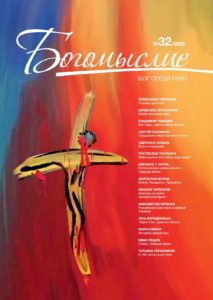
The summer issue of the theological journal Bogomyslie (Thinking About God) centered on the theme, “God Among Ruins.” It focused on the Russia-Ukraine war.

For more than five months, Gerasimchuk, professor of Old Testament at Odesa Theological Seminary in Ukraine, and his family have lived as refugees in Moldova.

“It’s not home,” Gerasimchuk said of Moldova during a recent trip to the United States. “Even though I was born and grew up there, I’ve lived outside of Moldova more than I have lived in Moldova. For me, Odesa is my home now.”

When the seminary published the summer issue of its journal Bogomyslie (Thinking About God), editors selected “God Among Ruins” as its theme. Writers explored theological responses to the war in Ukraine.

For his part, Gerasimchuk wrote about his article, “The Time of the Silent Harps,” about a Song of Exile, Psalm 137. The psalm describes the mourning of exiles in Babylon, who hung their harps on willows and asked, “How shall we sing the Lord’s song in a strange land?”

He noted the United Nations reports at least 12 million Ukrainians have left their homes, with 5 million living as refugees in other countries and 7 million living as internally displaced people. So, the theme of living in exile has particular resonance for many Ukrainians.

“I think the parallels are more obvious to the refugees who are outside of Ukraine,” he said, noting particularly the issue of family separation for many women and children whose husbands, sons and fathers remain in Ukraine.

Many Ukrainians can relate to the pain and anger of Psalm 137 and other imprecatory psalms, as God’s people cried out to the Lord asking him to punish their enemies, he observed.

‘Feeling of detachment … never leaves you’

In early April, Gerasimchuk’s wife Tetiana participated in an online roundtable discussion, “The Russia-Ukraine War: Women’s Voices,” providing the perspective of a Ukrainian family living as refugees. Unlike her husband, who holds a Moldovan passport, she was born in Odesa and spent most of her life there.

“You are uprooted, and you start to live in a place where you don’t belong,” she said. “No matter how many good, nice and kind people you meet on your way or how comfortable your conditions are at the moment, the feeling of detachment is always there and never leaves you.”

She described living with uncertainty and the inability to make plans for the future, comparing it to “solving an equation with too many unknowns.”

Even though her family seems to be safe in Moldova, “No one can guarantee Moldova is not the next dish on Mr. Putin’s menu,” she said.

At the same time, she expressed a measure of survivor’s guilt, knowing her family lives in relative comfort while others in Ukraine exist in constant peril, she noted.

Repurposed as center for practical theology

During a July speaking engagement at Magnolia Baptist Church in Anaheim, Calif., Gerasimchuk explained how Odesa Theological Seminary has reshaped itself as a center for practical theology.

“We are all learning right now to live in the new reality of war,” he said. “Even though the war had been with us for eight years, it had been concentrated in one corner of the country—the Donbas area in eastern Ukraine.”

After the Russian invasion, the seminary expanded its mission beyond traditional theological training, initially distributing food and water, offering transportation to help families evacuate and delivering medicine and basic health care supplies.

The seminary now sees advocacy and communication as part of its mission—“To share the truth about the Russian-Ukrainian war,” Gerasimchuk said.

The seminary has continued to offer theological training classes, primarily through online instruction, successfully completing the 2021-2022 academic year and graduating 45 students. Currently, the seminary is enrolling students for the next academic year.

To help Ukrainian Christians apply practical theology, seminary leaders are participating in online seminars, conferences and other programs focused on specific needs, Gerasimchuk noted.

Oleksandr Geychenko, president and rector of Odesa Theological Seminary, took part in an online roundtable discussion on March 22, “The Russia-Ukraine War: Evangelical Voices.”

“Many people fit their life into a suitcase,” he said regarding the rapid evacuation many Ukrainians experienced soon after the invasion began.

In reflecting on an observance of the Lord’s Supper with Ukrainian Christians in mid-March, Geychenko said: “I knew God was and is in the midst of this suffering of our people. He is sharing the pain and sorrow of all those who have been impacted by this cruel and inhuman war.”

Institute holds private doctoral graduation ceremony

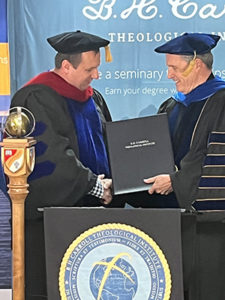
Slava Gerasimchuk (left) receives his diploma from B.H. Carroll Theological Institute President Gene Wilkes. (BHCTI Photo)

In a brief respite from the reality of suffering, Gerasimchuk was grateful for an expected time of celebration in Texas. He had completed his doctoral studies with the B.H. Carroll Theological Institute, but travel restrictions prevented him from journeying to the United States for the May graduation ceremony.

On July 26, he visited the B.H. Carroll Theological Institute offices in Irving to receive his diploma, hoping he might be able to visit with one or two of the faculty.

To his surprise, the institute held a graduation ceremony just for him. Stan Moore, founding senior fellow, and Karen Bullock, distinguished professor of Christian heritage and director of the Ph.D. program, placed the doctoral hood on Gerasimchuk. Institute President Gene Wilkes presented his diploma.

“It was very special. It certainly was the highlight of my trip,” he said. “I know they were doing it not only for me, but also for Ukraine and for our seminary there.”

Wilkes characterized the graduation as “a small ceremony, but Dr. Gerasimchuk’s impact will be felt internationally as he and others return to rebuild the seminary in the future.”

Gerasimchuk looks forward to bringing the diploma and hood home, knowing his wife and family will be “over the moon” with joy.

‘At a crossroads’

At this point, he and his family face hard choices about returning to Odesa.

“We are kind of at a crossroads at the moment,” he said.

Some family members are eager to return, including his 19-year-old daughter who wants to go back to the university in Odesa to pursue her studies in architecture and his homesick mother-in-law.

Having made two 10-day trips to Odesa in the past five months, Gerasimchuk recognizes the continuing danger there.

“Almost every three to four hours, you would hear air-raid sirens. … If we knew that Russia was aiming only at military targets, that would be one thing. But they are destroying civilian buildings, as well. That’s why you never feel safe,” he said.

Once Gerasimchuk returns to Moldova on Aug. 11, his family will be praying about what to do next.

“It’s really a difficult decision,” Gerasimchuk said. “My main prayer request while talking to my friends here in the States is to pray that God will give wisdom in this regard—to know what we are supposed to do.”


Human trafficking report highlights inequity, war’s impact

WASHINGTON (BP)—Incorporating the leadership of survivors and programs to address societal inequities are two essentials in the fight against human trafficking, the U.S. State Department said in its 2022 Trafficking in Persons Report.

Baylor and CBF help churches respond to trafficking
Human Trafficking

Russia’s war on Ukraine has greatly increased the number of people vulnerable to traffickers’ snares, the U.S. said in releasing the report. The 634-page report highlights global human trafficking in forced sex and labor, including government-sponsored trafficking, in nearly 200 countries ranked by their progress in fighting the crime.

The United States is one of 30 Tier 1 countries, signaling conformance to minimum anti-trafficking standards under the Trafficking Victim Protection Act of 2000. Tier rankings do not indicate the extent of human trafficking in any particular country named, but ranks the level of engagement of standards established by law, the report stipulates.

The report signals that the U.S. must do more to fight human trafficking at home and abroad, a representative from the Southern Baptist Ethics & Religious Liberty Commission said.

“Human trafficking—modern-day slavery—is a horrific reality of our time,” said Hannah Daniel, policy manager of the ERLC’s Washington office.

“This report exposes the ways that the Chinese Communist Party is using forced labor in its Uyghur internment camps and rightly urges the United States to prioritize these concerns, particularly as it engages with China on climate change. The report also demonstrates the significant danger and trauma that many around the world face when they are displaced from their homes.

“As we face an unprecedented scale of displacement around the world, the United States must do more to combat human trafficking and address the root causes that create such vulnerabilities where it can thrive.”

Joining the U.S. in the Tier 1 ranking of countries doing the most to fight human trafficking are Argentina, Australia, Austria, the Bahamas, Bahrain, Belgium, Canada, Chile, Colombia, Cyprus, the Czech Republic, Estonia, Finland, France, Georgia, Germany, Guyana, Iceland and Lithuania.

Countries ranked in Tier 3, those furthest from meeting minimum standards established by law, are Afghanistan, Belarus, Brunei, Burma, Cambodia, China, Cuba, Curacao, Eritrea, Guinea-Bissau, Iran, North Korea, Macau, Malaysia, Nicaragua, Russia, Sint Maarten, South Sudan, Syria, Turkmenistan, Venezuela and Vietnam.

Nearly 100 countries are ranked Tier 2, and another 34 are on the Tier 2 Watch List of countries making significant efforts to meet compliance standards.

In the midst of humanitarian crisis

The 2022 report comes in the midst of a humanitarian crisis, U.S. Secretary of State Antony Blinken wrote in the report’s introduction.

“Russia’s senseless continued invasion of Ukraine and its devastating attacks across that country have inflicted unfathomable pain and suffering and forced millions of Ukrainian citizens and others to flee seeking safety. We are deeply concerned about the risks of human trafficking faced by individuals internally displaced by the war, as well as those fleeing Ukraine, an estimated 90 percent of whom are women and children,” Blinken wrote. “The food insecurity and other broader effects of Russia’s war exacerbate trafficking risks around the globe.

“Let us stand together and press for accountability from those leaders who condone and support human trafficking, create conditions ripe for mass exploitation, and perpetuate this fundamental insult to human dignity. Those that perpetrate, condone or support this crime must be held accountable.”

Minimum legal standards require governments to prohibit severe forms of human trafficking and punish such acts; to prescribe more severe punishment when trafficking involves fraud, force, coercion, rape, death or sex trafficking of minors incapable of consenting; in most severe cases, prescribe punishment that deters the offense and reflects its heinous nature; and make serious and sustained efforts to eliminate severe forms of human trafficking.

Kari Johnstone, senior official and principal deputy director of the Office to Monitor and Combat Trafficking in Persons, indicated the importance of engaging survivors in anti-trafficking efforts and strategies, as well as addressing the impact of societal inequities on potential targets of human trafficking.

“As a critical means to continuously improve anti-trafficking efforts, stakeholders should engage with survivors of human trafficking; to listen to, learn from, and lift the voices of those with lived experience,” Johnstone said in the report’s introductory comments.

“The Department of State continues to prioritize the integration of survivor expertise into our work. Another key priority, which also requires the counsel of survivors, is increasing our efforts to meaningfully incorporate equity in our anti-trafficking work.”


Baptists in Brazil welcome refugees from Afghanistan

Brazilian Baptists have welcomed more than 100 refugees from Afghanistan to Vila Minhya Pátria—the Homeland Refugee Village—where they receive care, learn skills to prepare them for long-term residence in Brazil, and see the love of Christ in action.

After the U.S. military withdrawal from Afghanistan and the Taliban subsequently reclaimed control, Human Rights Watch reported it triggered an accelerated human rights crisis.

Fernando Brandão, executive director of the National Mission Board for Baptists in Brazil, welcomes Afghan refugees to the Homeland Refugee Village. (Courtesy Photo)

“After the Taliban’s takeover of Afghanistan, we felt the pain of the Afghan people who would once again go into distress due to the rules imposed by the extreme group that regained power,” said Fernando Brandão, executive director of the National Mission Board for Baptists in Brazil.

Since last September, the Brazilian government has granted humanitarian visas to people affected by serious and widespread human rights violations in Afghanistan.

Brandão, who recently was in the United States to attend the Baptist World Alliance annual gathering, noted Brazilian Baptist involvement in receiving refugees followed contact from a BWA representative. The BWA contact forwarded a letter from an American nongovernmental organization working in Afghanistan and seeking places to receive refugees.

“We were challenged to host a group of 89 Afghans,” Brandão said.

Baptists in Brazil also responded to requests from the Guarulhos Social Service office, after an unexpectedly large number of families had arrived at the international airport with nowhere to go.

Accepting the challenge by faith

Brazilian Baptists agreed to welcome Afghans before they had a place that could accommodate the families they expected to receive.

However, a couple heard Brandão preach at First Baptist Church of Atibaia in São Paulo. In his sermon, he talked about the opportunity to care for people in need. The couple responded to the challenge.

A couple provided Brazilian Baptists the loan of property at no cost to house Afghan refugees. (Photo courtesy of Fernando Brandão)

“God had already awakened their hearts to this mission back in September 2021, when they watched the Afghans’ escape in the news,” Brandão explained. “The couple had a space that worked as a kind of inn with 82 chalets, a central restaurant, a leisure area and all the necessary structure. And they made this entire structure available through a loan agreement, at no cost.

“God began to work a miracle there, and it all became a confirmation of what he was doing. The project is now a reality, and it has been a fantastic experience, to see the smile and hope reborn in each family that we have with us.”

The Vila Minha Pátria, supported by Brazilian Baptists’ National Mission Board and Foreign Mission Board, received its first families on April 19.

Afghan children receive loving attention at Vila Minhya Pátria, operated by Baptists in Brazil. (Photo courtesy of Fernando Brandão)

“Since then, we have already welcomed 112 people,” Brandão said.

The refugees not only receive shelter, food and health care at Vila Minha Pátria, but also learn Portuguese and participate in classes about Brazilian culture.

“Six people have already left the village, because they had some Afghan friends with jobs in São Paulo,” Brandão said. “We have requests to welcome more families that have arrived in São Paulo every day.

“The physical capacity of the village is 150 people, but we need to have more people on our team, so we can serve more people than the ones we already have with us.”

Brandão cited the example of one Afghan man to illustrate the impact Christian love in action is having on refugees. Using a translation app on his cellphone, the man told Baptists at the village: “For my people, religion is more important than people. But for you, people are more important. You can love us in a way that our own people could not.”

‘What it means to live the love of God’

Brazilian Baptists view the refugees’ arrival in their country as a gift from God.

“God has given us the privilege of taking care of people who lived in a country closed to the gospel. And, today, through daily practice, we have communicated what it means to live the love of God,” Brandão said.

“Taking care of them is obeying God’s direction for us. It has been a faith experience. We believe that we will still see extraordinary things from God. Every day, they have become more special to us. We will do everything in our power to make this experience very special in their lives.”

After refugees spent a relatively brief time in the village, Brazilian Baptists plan to enlist churches, associations and individual families to sponsor them as they are mentored, participate in job training and work toward independence, Brandão explained.

“We are a people moved by the love of God, who drives us to love our neighbors and put ourselves in their shoes. Offering shelter to refugees is sharing the love we ourselves have received,” Brandão said. “It is fulfilling what the Bible says in receiving, welcoming and showing love.”


Boesak: Global Christians can learn lessons from South Africa

BIRMINGHAM, Ala.—Global Christians can learn lessons from South Africa’s struggle to dismantle apartheid—including what South Africa still has failed to accomplish, activist Allan Boesak told the Baptist World Alliance annual gathering.

“A revolution that does not make room for reconciliation is an incomplete revolution,” said Boesak, a Reformed minister who was instrumental in forming the United Democratic Front.

He delivered the keynote address and also participated in a panel with Randall Woodfin, mayor of Birmingham, Ala., and Andrew Westmoreland, president emeritus of Samford University at the BWA annual meeting.

“There is a witness to be borne,” Boesak said. “I have seen and shared the suffering of my people under apartheid. In their cries, I have heard the voice of God.”

“Reparation and restoration” are essential to achieve “reconciliation that is real, radical and revolutionary,” he said.

The ‘heresy’ of white supremacy

Boesak described the principles that provided the foundation for apartheid as “heresy” and a “pseudo-gospel,” because white South Africans saw themselves—and only themselves—as bearing the image of God.

An idolatrous understanding of white identity prevents those who accept it from seeing their own sinfulness and need for forgiveness, he said.

“It is so hard for white people to ask forgiveness, because the sacralization of white supremacy means that white people have turned themselves into God,” Boesak said.

Following that line of thinking, he continued, if white people are God, then nonwhite people could not possibly be their equals.

“If we are not equal, reconciliation is not possible,” he said. And without reconciliation, “healing and wholeness are not possible.”

Christians in South Africa who resisted apartheid grew to “understand racism in its historical, structural, systemic dimensions and manifestations,” he said.

“Dealing with racism means dealing with power relations and with domination, subjugation and exploitation,” Boesak said.

In time, the anti-apartheid movement came to understand race as “no more than a social construct designed for political control, psychological manipulation and social engineering,” he said.

‘Fight for the freedom of those who oppress us’

As the prophetic church in South Africa grew in its understanding of the image of God, it also became more committed to seeing how whites needed emancipation from the bonds of racism that shackled them, he said.

“We cannot fight only for ourselves,” Boesak said. “Our revolution is only complete if we fight for the freedom of those who oppress us, as well.”

He insisted healing and reconciliation cannot be achieved unless the oppressor acknowledges his guilt and takes steps to repair the damage caused by oppression.

Boesak pointed to the story of Zacchaeus in Luke’s Gospel as a model for reconciliation that is “real, radical and revolutionary.”

When the little Jewish tax collector who worked for Rome encountered Jesus and hosted him in his house, he acknowledged to Jesus his guilt and the rights of his victims to restitution, Boesak noted.

When Zacchaeus offered to pay back four times what he had taken from others, he essentially was removing himself from the position his wealth provided him and placing himself on the level of those he oppressed.

“There is no reconciliation without equality,” Boesak said.

When Zacchaeus pledged to make reparations to those he abused and oppressed, “it was not only a pivotal moment; it was a transformational moment,” Boesak said.

Jesus said: “Today salvation has come to this house, because he too is a son of Abraham.”

Jesus was declaring that by making reparations, not only was Zacchaeus restored to the covenant community, but also his household was released from the curse of generational guilt, Boesak said.

‘When we say Jesus, we say justice’

During the session in which he appeared on a panel with Woodfin and Westmoreland, Boesak described how he left the pulpit of a South African Dutch Reformed church to enter public service at the invitation of Nelson Mandela.

In addition to Mandela’s powers of persuasion and the opportunity to help turn what he had been preaching about into reality, Boesak said, he “read the Bible”—noting particularly the examples of the Old Testament prophets.

“You’re not a preacher until you take what you say in the pulpit out into the streets,” he said.

Most of all, he grew to see he could carry out the command to “seek justice” by entering public service, and in doing that, he was following Jesus.

“When we say Jesus, we say justice. When we say justice, we say Jesus,” Boesak said. “The more we say Jesus, the more we have to say justice. The more we have to say justice, the more we have to say Jesus.”


BWA condemns invasion of Ukraine and coup in Myanmar

The Baptist World Alliance general council condemned the “unprovoked and unjustified” Russian invasion of Ukraine and the military coup in Myanmar that has led to “a campaign of terror and violence.”

At its annual gathering in Birmingham, Ala., the BWA general council adopted resolutions calling for “peace with justice” in Ukraine and “the establishment of a true democracy that respects the rights of religious and ethnic minorities” in Myanmar.

Calling for ‘peace with justice’ in Ukraine

Bethany Baptist Church in Mariupol, known in peacetime for its active social and evangelical ministry, now bears the scars of bombardment. Though charred, the cross remains. (From BWA Facebook Page)

The resolution on Ukraine states the BWA general council is “horrified by the huge loss of life, especially the targeting of civilians, and the destruction of property and infrastructure—including the wanton destruction of undefended houses of worship—that has resulted from indiscriminate Russian attacks on Ukraine’s cities, towns and countryside.”

It expresses grief for soldiers—both Ukrainian and Russian—who have been killed or injured, and it laments the more than 14 million people who have been displaced forcibly from their homes.

The resolution voices concern about the “ongoing restrictions on freedom of religion or belief occurring in Russian-held territories of Ukraine,” and it “rejects the nationalist ideology in Russia that has led to its aggressive action in Ukraine and its threats to other neighboring states.”

At the same time, it commends those religious leaders and others in Russian “who have condemned their country’s war in Ukraine as contrary to the values of the gospel.”

It calls on the European Union, G7 and other intergovernmental entities “to redouble their efforts to support Ukraine” and voices support for “a peaceful resolution to this war.”

However, it insists “it must be a peace with justice and that this must include the restoration of all pre-2014 Ukrainian territory and reparations made for war damage.”

The resolution states the BWA general council “prays that all who are concerned about truth today will be given the grace to be courageous in standing up for what is right and condemning the suffering and injustice caused by this war and the expansionist nationalist ideology that gave rise to it.”

The resolution commends the Ukrainian Baptist Union and other Christian groups in neighboring countries “for their generous hospitality, humanitarian aid and spiritual help for refugees, supported by the European Baptist Federation, the Baptist World Alliance Forum for Aid and Development, and the generosity of the global Baptist family.”

Finally, the resolution “assures the leadership, pastors and churches of the Baptist union in Ukraine of the continuing solidarity, support in prayer, practical help, and giving of the global Baptist family in all that they are dealing with in this time of war.”

“With them, the global Baptist family, trusting in God’s promises, looks to a time when ‘war will be no more’ and true peace and reconciliation between nations can prevail,” the resolution states.

Condemning the military coup in Myanmar

Pastor Cung Biak Hum was shot dead in the Chin state of Myanmar. (Facebook Photo / Asia Pacific Baptists)

The resolution on Myanmar condemns the Burmese military—the Tatmadaw—and the State Administration Council junta for dismantling civil and religious freedoms after the February 2021 coup.

“Since the coup, the military has terrorized communities in Kachin, Karen, Kayah State, Chin State and Sagaing Region by burning villages, destroying churches, and detaining pastors and religious leaders,” the resolution states.

The resolution offers support for “the November 2021 call of the United Nations Security Council for an immediate end to the violence” and prayers for “Baptists and other Christians ministering in persecuted communities and among displaced persons.”

The BWA general council also:

  • Presented the Denton and Janice Lotz Human Rights Award to global peace activist and justice advocate Daniel L. Buttry, global consultant with International Ministries of the American Baptist Churches.
  • Accepted the application of membership from the Missionary Baptist Conference, USA.
  • Elected Samuel C. Tolbert, president of the National Baptist Convention of America, as a vice president.
  • Inducted Emmanuel McCall, who worked for the Southern Baptist Convention Home Mission Board and served as national moderator of the Cooperative Baptist Fellowship, to the General Secretary’s Leadership Council.
  • Approved a change to the bylaws and considered for approval next year changes to the constitution that would alter language regarding membership in BWA and ministry partnership with BWA.


BWA resolutions condemn racism, commend reparations

BIRMINGHAM, Ala.—The Baptist World Alliance general council adopted resolutions that denounce racism as “a sin against humanity and God” and call for reparations for chattel slavery.

At its annual meeting in Birmingham, Ala.,—a city known decades ago for racist attacks on Black churches but currently led by a Black mayor—the BWA general council called for “restorative racial justice” that requires “individual and corporate repentance, lament, and recognition of wrongs done and suffering imposed on oppressed people.”

The general council approved without opposition the resolution on “Restorative Racial Justice and Flourishing Freedom,” urging BWA member bodies and ministries to identify ways to “lament, repent, reconcile, and transform individuals and structures; speak out against all forms of prejudice; and engage in theological reflection, dialogue and advocacy concerning restorative racial justice.”

Recognizing the broad scope of racism, the resolution states, “There are countless examples of racial prejudice on every continent, including the mistreatment of Indigenous people and their land.”

It encourages Baptist conventions, unions, mission agencies, churches and agencies “to refrain from participating in racially oppressive systems and to exercise their prophetic responsibility.”

‘Repair the damage’

The resolution on “Slavery Reparations” acknowledges “important local, national and global conversations about chattel slavery, its enduring generational impacts, and the possibilities of reparations to repair the damage for wealth stolen from centuries of forced labor.”

It “laments that many Baptist clergy, laypersons, churches and institutions supported chattel slavery with spurious theological claims and/or enriched themselves from the trans-Atlantic slave trade and/or enslavement of their fellow humans.”

The resolution recognizes the continuing “economic, political, psychological and spiritual impacts of chattel slavery,” and noted that enslavers—rather than enslaved individuals—received reparations after emancipation.

Biblical basis for reparations

It notes both biblical and historical examples of reparations in response to unjust situations. The resolution specifically mentions a half-dozen references to reparations in the Old Testament—in Exodus, Leviticus, Numbers, 2 Samuel, Proverbs and Ezekiel—as well as the New Testament story of Zacchaeus in the Gospel of Luke.

It also points to the commands in the Torah regarding the sabbath year and year of Jubilee, noting the Law “included freeing persons from bondage (with payment) instead of creating a system of lifelong, hereditary enslavement.”

Several members of the general council spoke to that aspect of the motion, pointing to the need for Baptists to develop a more thorough theological examination of reparations and the concept of Jubilee.

The BWA resolution “calls on older Baptist churches, colleges, unions and other institutions to thoroughly study their own history and publicly acknowledge institutional  and leadership ties to chattel slavery, and then explore ways to repair the damage from previous support for and profiting from slavery.”

No need to wait ‘for government to lead the way’

Initially, the resolution committee recommended language saying BWA “encourages” those entities to study their history, acknowledge ties to slavery and explore reparations. However one member of the general council suggested the language was not strong enough and proposed an amendment changing “encourages” to “calls on.” The amendment passed.

Brian Kaylor of Missouri presented the recommendations of the resolutions committee to the annual Baptist World Alliance gathering in Birmingham, Ala. (Photo / Ken Camp)

The resolution also urges “Baptist individuals and institutions to participate in reparation conversations in their own communities and national governments.”

One general council member asked how much the reparations would be, to whom they would be paid and whether the payment would be a one-time grant or an ongoing series of payments.

Resolutions Committee Chair Brian Kaylor, editor of Word & Way in Missouri, said the resolution purposely did not endorse any specific reparation plan, but instead called on Baptists to determine the best approach in their own contexts.

“We don’t need to wait for government to lead the way,” Kaylor said. Rather, Baptists can lead by example, exploring their own institutional histories and developing their own plans to repair the damage done, he explained.

The resolution on reparations passed with 84 percent voting in favor, 7 percent voting against and 9 percent abstaining.

‘An issue of right and wrong’

Racial injustice should make Christ’s church angry, Pastor John K. Jenkins Sr. from First Baptist Church in Gardendale, Md., told a worship service held during the BWA annual gathering.

While politicians, pundits and entertainers have spoken against racist systems, churches—particularly predominantly white churches—“remained shockingly silent,” he said.

“This is not an issue of white and black. This is an issue of right and wrong,” Jenkins said.

He challenged Christians to heed the call of Psalm 106:3 to “uphold justice” and “do righteousness.”

Speaking at a luncheon sponsored by Baptist World Aid, Mueni Mutinda discussed “decolonizing aid” as “a matter of justice.”

Mutinda, public policy adviser on climate change at Canadian Foodgrains Bank, said, “The church has played a major role in the colonial project.”

“The history we have inherited is not our fault, but it is absolutely our responsibility,” she said.

Mutinda challenged Christian aid organizations to consider how classifying and categorizing people groups and countries continues to perpetuate divisions and power dynamics that foster inequality. She urged Christians to “reimagine an alternative future” with “our identity in Christ” as the defining characteristic rather than race or class.

‘A Call to Live in Flourishing Freedom’

Prior to the annual gathering, the BWA Executive Committee approved a 38-page theological document submitted by its racial justice action group, “Restorative Racial Justice: A Call to Live in Flourishing Freedom.”

The “ancient sin” of grasping as one’s own what belongs to others often has been “aided by the sinful lie of racism—to posit one’s self or one’s group as if it is inherently superior,” the document approved by the BWA Executive Committee states.

“The gospel of Jesus redeems us from the sinful chains of inherent superiority for the freedom of inherent co-dignity in the image of God that receives its ultimate expression in ‘every nation, tribe, people and language standing before the throne and before the Lamb’ in the fullness of worship and equality,” the document states.

“Crucially, this freedom is not the eradication of those elements that have most often contributed to racism—nation, tribe, people or language—but the celebration of this beautiful diversity of co-dignity in equality.

“To live with this vision of flourishing freedom requires repentance, reorientation, restoration and the pursuit of just righteousness. In doing so, it sets both the captor and captive free.”

The document notes multiple resolutions and other statements by BWA throughout its history, but it also acknowledges “the desired outcome of the eradication of racism and racial prejudice has not been realized.”

The BWA Executive Committee approved a series of “racial justice convictions, commitments and actions.”

It includes a statement in which BWA confesses:

  • “Its complicity, knowingly or unknowingly, in the perpetuation of racial injustice through its administrative and organizational structure.”
  • “Its failure to follow up deliberately and systematically in a sustained way on its commitment to join the struggle against ethnic conflict and engage in efforts to eradicate racism wherever it emerges.”
  • “Its sin of commission, omission and collusion by way of corporate responsibility with Baptists (conventions, unions, mission agencies, churches, members) who historically might have actively participated in racialized oppressive schemes, systems, structures, and operations and failed to exercise their prophetic responsibility by speaking truth to power and advocating for the liberation of God’s people guided by the kingdom value of gospel truth and flourishing freedom.”

In the document, BWA pledges to “conduct its own inventory to see if it has contributed in any way by commission or omission to racial injustice” and “as appropriate, identify ways to lament, repent, reconcile and transform structures that can make a lasting impact on BWA operations and ministry.”

Among other actions, BWA pledged to seek to develop resources and encourage the global Baptist family to inventory their resources to support efforts of restorative racial justice around the world and commit $100,000 to “empower restorative justice engagement within and by our BWA family.”


Global challenges require a global Baptist family

BIRMINGHAM, Ala.—Since their last in-person meeting, the Baptist World Alliance and its member bodies have responded to a global pandemic, religious persecution, civil unrest and war, the international fellowship’s CEO said.

The challenges Baptists across the globe encounter “are too big for any one of us to face alone,” General Secretary Elijah Brown told the BWA annual meeting in Birmingham, Ala.

“Global challenges require a global church,” he said.

According to a vulnerability index BWA developed, one of four Baptists worldwide face persecution, war, violence and hunger, Brown said in his report to the assembly.

About 13.5 million Baptists live and minister in the most vulnerable contexts, he noted.

Responding to global pandemic

Due to the COVID-19 pandemic, the 2022 meeting marked the first in-person BWA annual meeting in three years. This year’s meeting in Birmingham drew 400 in-person attendees and about 100 registrants who participated online.

COVID-19 claimed the lives of at least 1,411 Baptist pastors, and Africa accounted for more deaths than any other region, Brown noted.

A survey of BWA members revealed more than half (53 percent of respondents) said one of the greatest challenges their churches faced was restrictions in gathering, and nearly half (48 percent) named financial challenges.

In terms of needs in their nations and local communities, 57 percent listed joblessness, 42 cited depression and mental health issues, and 37 cited social tensions the pandemic brought to the surface.

Crisis prompts creativity and innovation

In spite of the challenges the pandemic presented, churches and Baptist unions ministered in innovative ways, Brown noted.

“God uses crises as a crucible for Holy Spirit creativity,” he said.

The 22nd Baptist World Congress, which became a virtual event due to the pandemic, drew 4,600 registrants from three-fourths of the nations in the world and at least one participant from every BWA member body.

“It was the most globally diverse gathering in the history of BWA,” Brown said, adding it likely was the most diverse assembly in the 400-year history of Baptists.

The BWA World Congress featured 100 hours of virtual content provided by 350 contributors from 70 countries, Brown said.

A century after BWA provided its first emergency grants in response to what was then called the Spanish Flu, the alliance distributed 132 emergency aid grants to 82 countries, Brown reported.

In 2021, Baptist World Aid distributed $521,780 for 47 projects in 29 countries, making a difference in the lives of more than 219,000 people, he said.

Coup in Myanmar, war in Ukraine

In terms of social unrest, Brown particularly noted the February 2021 coup in Myanmar that led to extreme religious persecution and the February 2022 Russian invasion of Ukraine.

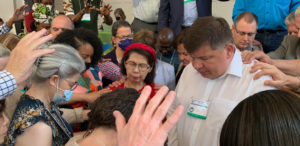
Attendees of the 2022 Baptist World Alliance annual gathering pray for Myanmar (Burma) and Ukraine. (Photo by Eric Black)

Vernette Myint Myint San, a Baptist physician, presented a devotional at a worship service prior to the session when Brown delivered his report. She described how the coup led to “crimes against humanity,” including torture, indiscriminate killing and the destruction of entire villages by the military.

She described the need to hold accountable those who commit atrocities, but to do so with the goal of restorative—rather than punitive—justice.

“The cross is the model and the framework for restorative justice” that “makes room for the recognition of wrongdoing, for repentance and for reconciliation,” she said.

Igor Bandura, a leader of the Ukrainian Baptist Union, said at least 400 Baptist churches in Ukraine are in what is now territory occupied by Russian forces, where there is no real religious liberty.

While he praised the Ukrainian soldiers who are fighting to protect their homeland and preserve freedom, he said the church’s role is to “fight spiritual battles.”

“We must keep our hearts from being hardened by hatred,” he said. “We don’t want to become like our enemies.”

Brown reported the global Baptist family contributed $4 million for relief within Ukraine and for ministry to refugees who have fled their homeland. One million displaced Ukrainians have been served by BWA member bodies and their churches, he said.

Alan Donaldson, general secretary of the European Baptist Federation, said when the invasion of Ukraine occurred, “The church awoke from its COVID slumber.”

Baptist church members in countries surrounding Ukraine who had been practicing social distancing for two years greeted refugees “with hugs, tears and smiles of unmasked faces,” Donaldson said.

During the BWA annual meeting, which ends July 15, the BWA general council will consider resolutions related to Myanmar and Ukraine, as well as racial justice and reparations for chattel slavery.


Ukrainian religious freedom hinges on national survival

BIRMINGHAM, Ala.—Religious liberty in Ukraine depends on the country’s survival as an independent nation, Igor Bandura of the Ukrainian Baptist Union told the Baptist World Alliance annual gathering.

“If Russia wins, Ukraine will disappear,” he warned.

And if Ukraine falls to Russian aggression, the religious liberty of its people will be imperiled, he asserted.

Russia’s current leadership and genuine religious freedom “are mutually exclusive,” Bandura said. The Russian regime now in power “does not respect freedom and independence,” he added.

In areas of Ukraine under Russian domination, pastors have been beaten, church buildings destroyed and families separated, Bandura reported.

Even so, Russia’s invasion of his country has drawn together its citizens and instilled in them a resolve to maintain their freedom and independence, he insisted.

“Our nation is united. No one is willing to surrender,” Bandura said.

Grateful to the global Baptist family

He expressed gratitude to the global Baptist family for their “support, solidarity and prayers” during difficult times in Ukraine.

“Thank you for standing with us in these dark days,” Bandura said.

Baptist churches in Ukraine were able to respond quickly, setting up church-based shelters and respite centers for internally displaced people almost immediately after the war started because they organized for ministry three weeks prior to the invasion, he said.

“God had prepared us for this,” he said.

BWA General Secretary Elijah Brown affirmed Bandura and Ukrainian Baptists for the timely and innovative ministries they offered. The “lessons learned” and the trail blazed by Ukrainian Baptists already are “lighting the way” for emergency responses elsewhere in the world, Brown said.

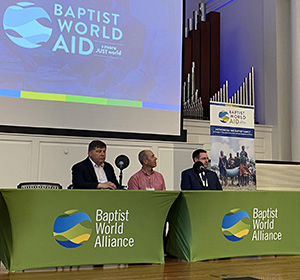
During a panel discussion, Igor Bandura (left) of the Ukrainian Baptist Union; Alan Donaldson, general secretary of the European Baptist Federation; and Elijah Brown, general secretary of the Baptist World Alliance, respond to questions about the global Baptist response to the crisis in Ukraine. (Photo / Ken Camp)

When asked during a question-and-answer session about Russian Baptists’ response to the invasion of Ukraine, Brown pointed to a “generational divide.”

During a trip to Russia in May, Brown said, he noted participants in the Russian Baptist Youth Congress voiced solidarity with Christians in Ukraine and passionate support for the Ukrainian people.

When he and BWA President Tomás Mackey met with Russian government officials, as well as with Russian Baptist leaders and representatives of the Russian Orthodox church, they called for the immediate cessation of violence toward Ukraine, the creation of humanitarian corridors for relief, protection of religious freedom and agreements to establish a just peace.

“We are one family, and we love all its members,” Brown said. “But we are of one perspective: This is an unjust and sinful invasion.”

Baptists from Lebanon, Nepal and Nigeria participated in a panel discussion spotlighting the multiplied international impact of the attacks on Ukraine, often called “the breadbasket of Europe” for its grain production.

People in the Middle East, Southeast Asia and Africa who already were in dire situations have experienced food insecurity and dramatically increased fuel prices since Russia began its assault on Ukraine, they said.

‘Theology of interdependence’

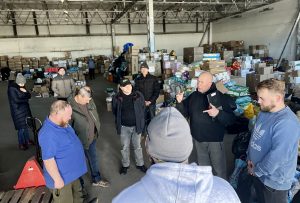
Volunteers pause for prayer before beginning their work at a warehouse and distribution center in Chelm, Poland. (TBM Photo / John Hall)

Alan Donaldson, general secretary of the European Baptist Federation, noted European Baptists treasure their independence and autonomy, but they also gained deepened appreciation for their interdependence as they cooperated to respond to needs in Ukraine and the refugee crisis that resulted from the Russian invasion.

Donaldson voiced hope that lessons about the value of interdependence learned in times of crisis will result in a more fully developed “theology of interdependence” that endures in peacetime.

Baptist World Aid Director Marsha Scipio reported BWA received more than $4 million to help Baptists in countries surrounding Ukraine respond to the needs of at least 5 million refugees and 7 million internally displaced people.

Rachel Conway with BMS World Mission noted Phase One emergency relief continues in some places. As some Ukrainians in neighboring nations return to their country and others seek to make new lives for their families outside their homeland, Phase Two will focus on recovery, resettlement and—eventually—rebuilding.


Cuba fails to meet international religious freedom standards

The constitution Cuba adopted three years ago fails to meet freedom-of-religion standards based on international law, and the rights it established are unenforceable, a new report from the U.S. Commission on International Religious Freedom concluded.

The commission released its report, Constitutional Reform and Religious Freedom in Cuba, less than a week before the one-year anniversary of nationwide protests in Cuba and government retribution against those who participated in the peaceful demonstrations.

“Despite constitutional protections for religious freedom that exist on paper, independent religious communities in Cuba continue to experience violations” of freedom of religion or belief, the commission’s report states.

“The constitution fails to meet international standards, its rights are not enforceable, it fails to be supreme law, and it yields to laws that can conflict with constitutionally established rights.”

Based on a survey of faith leaders and other research, the commission concluded the Cuban constitution fails to meet 34 of 36 freedom-of-religion standards established in international law, and it only partially meets the other two.

“Cuba’s new constitution, approved in April 2019, dilutes [freedom of religion or belief] guarantees compared with the previous constitution,” the report asserts.

The survey revealed 95 percent of respondents agree freedom of expression in religious pastoral practice is partially or totally repressed in Cuba; 93 percent of the faith leaders said they were victims of state repression; and 84 percent agreed freedom of assembly is impeded.

The report asserts the constitution “reduces the possibility of legal reforms” to enable religious freedom, and the absence of a court structure and judicial appeals to protect constitutional rights leave any constitutional protections unenforceable.

Cuba ‘not governed by its constitution’

Furthermore, the constitution “has no practical validity whatsoever over legislation that restricts rights” and no superior authority over laws adopted at the local level that restrict constitutional rights.

“The removal of the sovereignty of the people, the explicit subordination to lower-level laws in its text, the impossibility of reforming constitutional laws due to the absence of a court of constitutional guarantees or a process for the protection of these rights, and the definition of the Communist Party as the ‘superior’ power of the State, without regulation in the constitution, make it incompatible with the internationally accepted concept of a constitution,” the report states.

For all practical purposes, rights related to freedom of religion or belief cannot be defended, and Cuba “is not governed by its constitution,” the commission’s report asserts.

“There are no legal mechanisms or legislation to protect against discrimination, hostility, or violence on religious grounds,” the report states.

Cuba has “a long history” of applying “inferior and often opaque laws” rather than constitutional protections, as well as administration actions ordered by the State Security and Communist Party, the report says.

“These are carried out in blatant violation of the many principles in the previous and current constitution,” the report states. “As a result, religious institutions and individuals are repressed, fostering deep distrust of the government by faith leaders and laypeople.”

The commission’s report particularly noted increased repression of religious freedom and human rights in 2021, including the detention of individuals who participated in peaceful protests on July 11 and November 15. Research showed 869 people remained imprisoned in March 2022 in connection with the protests.

‘A sop for international consumption’

The Cuban constitution and many of the nation’s laws are “a showcase for international consumption” enabling the government “to boast of its socialist system and guarantees of human rights to international organizations such as the UN,” the report concludes.

Randel Everett, founding president of the 21Wilberforce human rights organization, commended the commission for its report. He particularly applauded the report for noting Cuba’s constitution and laws “largely function as a sop for international consumption” rather than to protect its citizens.

Randel Everett 150
Randel Everett

“In a deeply religious nation, the Cuban Communist party ruthlessly governs at will, repressing religious individuals and institutions, among others, through comprehensive tactics including harassment, threats, physical attacks, confiscation of property, frequent police summons, defamation and accusations of illegal or immoral behavior, and detention and imprisonment,” said Everett, former executive director of the Baptist General Convention of Texas.

“We cannot forget the many religious prisoners of conscience detained in Cuba including Protestant Pastor Lorenzo Rosales Fajardo, recently sentenced to eight years in prison for participating in last summer’s peaceful protests, and Loreto Hernández García, a leader of the Association of Free Yorubas [independent Santeria community], who was forced to return to prison in June after he was ordered expelled from the hospital where he had been receiving medical treatment.

Last November, Secretary of State Antony Blinken announced he was placing Cuba—along with Algeria, Comoros and Nicaragua—on the Special Watch List for governments that engage in or tolerate “severe violations of religious freedom.”


Court upholds sentence of imprisoned Cuban pastor

A Cuban court reportedly upheld the sentence of a Protestant pastor who was convicted of charges related to peaceful protests last summer.

Pastor Lorenzo Fajardo and 14 others had appealed their convictions on charges stemming from the nationwide protests on July 11, 2021.

During the June 22-23 court hearings, only the prosecution’s side was allowed to present evidence, the Christian Solidarity Worldwide human rights organization reported. All the sentences were upheld.

“This is a farce,” Maridilegnis Carballo, the pastor’s wife, told CSW.

Last month, the Cuban government notified Fajardo’s family he had been sentenced to seven years in prison. Previously, a document the government sent to the United Nations indicated he had been sentenced to eight years.

The document the Cuban government sent to the UN claimed Fajardo, pastor of the nondenominational Monte de Sion Church in Palma Soriano, was involved in a violent attack on the Cuban Communist Party headquarters in Palma Soriano that left several people wounded.

Fajardo disputed the charge, pointing to video and photographic evidence that showed armed police and Black Beret paramilitary personnel attacking him and other unarmed peaceful protesters.

During Fajardo’s initial detention at Versalles State Security, he reportedly was beaten by guards and lost a tooth due to physical abuse. The following month, he was moved to Boniato Maximum Security Prison.

Anna Lee Stangl, head of advocacy for CSW, said her organization was “disappointed but not surprised” Cuban authorities rejected Fajardo’s appeal.

“They have continued to inflict misery on this innocent man and his family, as well as many others who should never have been imprisoned for exercising their fundamental rights to peaceful association and assembly,” Stangl said.

CSW continues to “call on the authorities to reconsider this unjust decision” and to release Lorenzo and others detained in relation to last summer’s peaceful protests, she said. The international community should continue to follow the case and hold Cuba accountable, she added.