



WASHINGTON (BP)—Religious nationalism, transnational repression, and state control of religious groups are among growing trends in the persecution of Christians globally, International Christian Concern said in its newly released 2026 Global Persecution Index.
Terrorism, authoritarianism, restrictions against women, and the use of Western-based technology in global persecution are also on the rise, ICC said in its July 2024–July 2025 study of 26 countries in five regions.
“This report sheds light on the tactics, actors, and systems being used to intimidate, silence, and displace believers—often with devastating consequences,” ICC President Shawn Wright said July 7 in releasing the report. “These trends are not abstract. They represent real men, women, and children who suffer for the name of Christ.”
Growth trends, nationalism
Despite persecution, Christianity continues to grow globally and in unexpected places, according to the report.
“The Iranian house church movement remains one of the fastest growing in the world, driven by underground networks and digital evangelism,” ICC reported. “In China, believers meet in homes and encrypted online gatherings despite constant surveillance, proving again that faith can endure even where freedom does not.”
In reporting trends, ICC noted the ill effects of religious nationalism particularly in India, where militant Hindu groups aligned with the government have targeted Christian and Muslim minorities; and in Myanmar, where Buddhist nationalism is used as justification to assault ethnic minority regions and destroy entire Christian and Muslim villages.
ICC reported religious nationalism among persecution in all five regions studied—namely Africa, Latin America, Middle East and North Africa, South Asia, and Southeast Asia.
“Globally, growing religious nationalism continues to erode religious freedom,” ICC said in its report. “Across the world, religious conformity has become a dangerously important litmus test for national identity and belonging.”
Governments are increasingly looking beyond their borders to pursue and punish religious minorities and dissidents abroad, fueling transnational repression. Turkey, for example, is using global intelligence networks to find and kidnap critics and religious minorities abroad, and China targets members of unregistered Christian groups who have fled to areas of Asia, Africa, and the West, ICC said.
Sign up for our weekly edition and get all our headlines in your inbox on Thursdays
State control expanding
State control of religious groups is tightening and expanding, as authoritarian regimes view religious freedom “as a direct threat to their survival,” ICC said in its report.
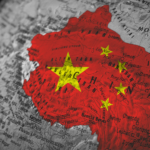
In China, registered churches must promote Communist ideology. In Iran, the hardline government imprisons Christians and others who dissent from the ruling ideology.
In Nicaragua, the government has escalated its persecution of Catholics, seizing church property, closing religious schools, and jailing clergy who attempt to serve God independently of government restrictions.
Africa is the epicenter of terrorism, ICC said, suffering jihadist violence fueled by Boko Haram, ISWAP, al-Shabab, Islamic State groups, and al-Qaida affiliates in Nigeria, Niger, Mali, Somalia, the Sahel region, and central Africa.
“Thousands of Christians have been killed or displaced in attacks designed to eradicate the Christian presence from contested territories,” ICC wrote.
Authoritarianism adversely impacts women in particular, with women in Afghanistan almost entirely excluded from public life, barred from education, employment, and mobility by religious decrees. Because of authoritarianism, ICC said, Christian women in Egypt have no access to justice when raped and socially persecuted.
Technology aids repression
Many countries increasingly rely on Western technology to fuel repression, ICC said.
“Investigations have shown that Silicon Valley technology firms have supplied key hardware and software used in China’s surveillance of Uyghurs, Christians, and other religious groups, effectively enabling religious persecution through Western innovation,” ICC wrote.
“Meanwhile, repressive states such as Iran and Russia have exploited Western markets and financial loopholes to circumvent sanctions, sustaining their security services and mechanisms for religious control.”
Studied in the report are the Democratic Republic of the Congo, Eritrea, Nigeria, and Somalia in the African region; Cuba and Nicaragua in Latin America; Azerbaijan, Egypt, Iran, Saudi Arabia, and Turkey in the Middle East and North African region; Afghanistan, India, Nepal, and Pakistan in South Asia; and China, Indonesia, Malaysia, Myanmar, North Korea, and Vietnam in Southeast Asia.
There are also special profiles on Russia, Nigeria President Bola Ahmed Tinubu, Nicaragua President Daniel Ortega, Syria President Ahmed Al-Sharaa, and India Prime Minister Narendra Modi.
Download the free report here.










We seek to connect God’s story and God’s people around the world. To learn more about God’s story, click here.
Send comments and feedback to Eric Black, our editor. For comments to be published, please specify “letter to the editor.” Maximum length for publication is 300 words.