





Food insecurity is a widespread problem that demands evidence-based, on-the-ground solutions, panelists told a Christian community development conference.
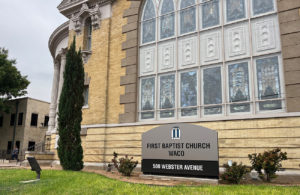
“You can’t solve a problem from a distance,” said Jeremy Everett, founder and executive director of the Baylor Collaborative on Hunger and Poverty, in introducing the panel for the No Need Among You Conference at First Baptist Church in Waco.
The panel, featuring Kathy Krey and Stephanie Boddie of Baylor University, focused on food insecurity and how organizations can more effectively move forward.
Boddie defined food insecurity as the “lack of consistent physical and economic access to food that is food for a healthy and active life.”
“We also want to think about it not just on an individual level, but also on a community level,” Boddie said.
Although food insecurity typically is thought of as a constant state of life, Krey explained that it more often occurs according to a pattern.
“[It’s] episodic,” she stated. “We think of more chronic conditions. It’s really driven by economic realities.”
Krey also explained that in communities that frequently experience food insecurity, households feel the weight of economic upsets with their dietary needs first.
For example, a home that has a consistent source of food but a tight budget may lose access to healthy foods if the price of a bus pass goes up.
Sign up for our weekly edition and get all our headlines in your inbox on Thursdays
‘Basically taxed for being poor’
In food deserts—areas that lack access to healthy foods and grocery stores—transportation usually is limited, and people are forced to rely on convenience stores for their day-to-day needs, Boddie explained.
“You’re basically being taxed for being poor,” she stated, explaining the cost of unhealthy food is higher at these locations than the cost of healthy foods at unattainable stores. “The dollar doesn’t go as far.”
As staff members and affiliates of the Baylor Collaborative on Hunger and Poverty, the panelists and moderator all have spent a significant amount of time researching programs that seek to end food insecurity through food justice—equitable access to healthy, nutritious, affordable food.
“No one sector or one organization can end hunger by themselves,” Everett said. “These problems … are too intertwined with each other and with society. The only pathway forward for us to sustainably change our communities … is if we get the public sector, the government, to work with business … and faith communities.”
Everett, who attended the White House Conference on Hunger, Nutrition and Health in September, explained organizations need to be working toward collaboration when putting down their roots.
“Here’s what we’ve learned from the USDA,” he said. “If you believe you have a best practice, an intervention that is successful and worthy of replication … you have to have research. You have to have a program evaluation done of this implementation … so that it can become an evidence-based intervention.”
Krey reemphasized that evidence-backed research is the only way programs can gain federal support, and also explained it is just as valuable to organization leaders.
“One thing that is one of our goals is to understand what’s working and what’s not working,” Krey said. “It’s not something that is really easy to do, but it’s worth it.”
‘Go beyond the walls’
Boddie explained how churches can actively participate in the fight against hunger.
“The role of the church in addressing food insecurity really goes back to how churches serve the least of these,” Boddie said.
She then went on to challenge churchgoers and leaders to look within their home congregations for people who may be unknown resources for action.
“Who’s in your congregation? What are some of the skills that they have,” Boddie asked. “Most of us have at least two gifts in us that we can develop, and how can those gifts meet the needs? As a church we need to go beyond the walls. … How can we go beyond the walls?”
One way churches traditionally have served the hungry is through food pantries, but in recent years, it has become increasingly difficult to sustain pantry operations.
“We need to look at the problems or challenges we have and not expect one solution,” Krey explained.
When it comes to making widespread change, Everett agreed.
“Food pantries are not our solution to hunger in America,” he said. “They’re an important role, [but] you want that food pantry to be supplemental.”
Programs like the Supplemental Nutrition Assistance Program, Meals-to-You and Breakfast After the Bell were all examples given during the panel of programs that work well. Breakfast After the Bell has been known to triple children’s participation in food security services provided in schools.
“There are meaningful things we can do that piggyback off of [child nutrition] programs. Could we close the gap even more? Could it do even more,” Krey asked. “Instead of thinking we have one solution to the out-of-school hunger program … how can we supplement it?”
The panel concluded by emphasizing the power of research when looking to expand the reach of program efforts.
“When you pair proximity with research … we’re better able to identify what the causes of hunger and poverty are. We’re more likely to get it right,” Everett said.
“It’s going to take all of us working together,” Krey added.
As Boddie noted, in Christian institutions, fighting poverty is about serving others. And in the end, Christians can only best serve others when they recognize the gifts and the God-given skills of those around them.
“There are gifts that you have that God wants you to grow,” Boddie said. “What are the ways that God has gifted your local congregation, and how are you able to grow in those gifts?”











We seek to connect God’s story and God’s people around the world. To learn more about God’s story, click here.
Send comments and feedback to Eric Black, our editor. For comments to be published, please specify “letter to the editor.” Maximum length for publication is 300 words.