Truett Seminary, BaptistWay Press make resources available
March 23, 2020
Baylor University’s Truett Theological Seminary, Texas Baptists’ Great Commission Team and BaptistWay Press are offering free resources to help church leaders during the ongoing COVID-19 crisis.
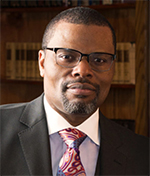
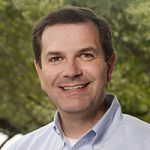
“We are living in a changed and changing world,” said Matt Homeyer, assistant dean for external affairs at Truett Seminary and director of the Truett Church Network. “Who would have thought, even two weeks ago, that we would be facing the leadership challenges and life adjustments with which we are dealing?”
In response, the Truett Church Network launched a series of daily Zoom and Facebook Live webinars on pastoral leadership March 23.
The first, “Pivott: How to Thrive in the Midst of Change” featured Matt Steen, co-founder of Chemistry Staffing, and can be viewed here.
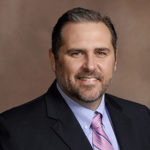
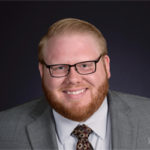
“Leading Through Crisis” is the topic of a seminar featuring Robert Creech, professor of pastoral leadership at Truett Seminary, at 3 p.m. on March 24. To join the webinar on Zoom, click here or on Facebook Live here.
“Preaching to a Dispersed Congregation” is the topic of a seminar featuring Scott Gibson, professor of preaching at Truett Seminary, at 3 p.m. on March 25. To join the webinar on Zoom, click here or on Facebook Live here.
The Truett Church Network is also one of several sponsors of a twice-weekly free webinar from the Center for Healthy Churches on “Being the Church in the Midst of Crisis.” The webinar will be offered each Monday and Thursday at 10 a.m., beginning March 26. The first webinar, “Pastoral Care in a Pandemic,” features panelists Steve Scoggin from Wake Forest Baptist Medical Center and Guy Sayles, retired pastor of First Baptist Church in Asheville, N.C. To register, click here.
The Baptist General Convention of Texas and BaptistWay Press are making free Bible study materials available for download.
Resources for preschool and children are available at no cost through Texas Baptists’ Great Commission Team and BaptistWay Press. To download preschool resources, click here. To download resources for children, click here.
Downloadable no-cost Bible study materials for adults on the theme “Faith > Fear” are offered by BaptistWay Press here. Resources include study guides, teaching guides, premium teaching plans and premium commentary by David Ritsema, senior pastor of First Baptist Church in Waxahachie.
EDITOR’S NOTE: The article posted on March 23 was edited March 24 to include new information in the 7th paragraph.
Updated: Baylor student and two faculty test positive for COVID-19
March 23, 2020
A Baylor University student and two Baylor faculty—each who had traveled to another state—tested positive for COVID-19 and are in self-isolation.
The Waco McLennan County Public Health District announced March 18 that two Baylor faculty members were among local residents who had tested positive for the novel coronavirus, and the next day the university learned about the student from public health officials.
The two faculty had been to New York City on non-university travel over spring break, but had not been on the Baylor campus since their return, the university noted.
“The student returned to Waco after traveling out of state to an area with high community transmission but self-isolated away from the Baylor campus. Our faculty members also did not return to the Baylor campus and have been in self-isolation since traveling home,” Baylor President Linda Livingstone wrote in a March 19 statement posted on the university’s website and on social media.
“Let us all join together and continue to pray for the current health and recovery of these members of our Baylor Family, as well as thousands of others around the country and world who have been impacted by this terrible crisis.”
Livingstone reminded students and their families to practice personal health protection and observe social distancing.
“Note that COVID-19 affects all age groups—even college-aged students—and the social distancing guidelines are for the health and welfare of everyone,” she wrote.
On March 16, Baylor had announced it was extending online instruction for the remainder of the spring semester and postponing May commencement exercises. Baylor will confer degrees in May on all students who satisfy their academic requirements, and spring graduates will be invited to participate in commencement ceremonies at an August ceremony.
On March 24, Baylor announced both McLennan County and the City of Waco had issued a shelter-in-place order until April 7, and Dallas County—home to Baylor’s Louise Herrington School of Nursing—is under a similar order. At that point, McLennan County reported 23 confirmed cases of COVID-19.
Other Texas Baptist universities adapt
Other universities related to Texas Baptists also have continued to move to online-only instruction, change schedules and make additional adjustments related to COVID-19:
Hardin-Simmons University
In a video distributed to students and others on March 19 and posted on the Hardin-Simmons University website, President Eric Bruntmyer announced HSU would “extend online learning indefinitely.”
Bruntmyer also announced the university would make diplomas available to spring semester graduates as soon as they complete all of the graduation requirements, graduates would be invited to participate in public commencement exercises either in December 2020 or May 2021.
“Please know we are praying for you, and we are here for you. Our campus is not the same without you,” he said.
Houston Baptist University
On March 19, Houston Baptist University posted notice on its website it was postponing commencement ceremonies for May graduates.
“Be assured that, for students who are graduating this semester, degrees will still be officially conferred in May. Graduates are invited to participate in a commencement ceremony in August,” the university announced.
The ring ceremony hosted by the HBU Alumni Association will be held Aug. 6 and will recognize both May and August graduates.
Previously, HBU had informed students “remote delivery of residential courses” was extended through the end of the spring semester, and final exams also would be delivered remotely.
Wayland Baptist University
Wayland Baptist University announced March 19 on its website all classes would be offered online-only through the end of the spring semester and residential students at the Plainview campus would be required to move out of the dorms.
Two days earlier, Wayland announced graduation ceremonies would be canceled through May 9. Those included commencement exercises in Plainview, Wichita Falls, Arizona, Alaska and Hawaii and in Altus, Okla. Students affected by the cancellations will be eligible to participate in the next available Wayland graduation ceremony.
“Future graduation ceremonies scheduled beyond May 9 continue to be evaluated, and a decision for those ceremonies will be made in the near future as the situation develops,” the announcement stated.
Baptist University of the Américas
Baptist University of the Américas began March 23 offering students instruction exclusively online or through a virtual platform on their Blackbaud portal account until notified otherwise. Faculty and staff began working remotely two days later.
The school announced it was cancelling the BUA Student Formal, originally scheduled April 17.
On March 24, President Abe Jaquez announced on the school’s website that BUA was postponing its scheduled May 16 commencement ceremony. Degrees will be awarded when students complete the necessary requirements, and the school plans to “look for ways to have our commencement ceremony later in the year for any graduate that wishes to participate,” he stated.
Dallas Baptist University
At Dallas Baptist University, online-only instruction began March 23. That same day, President Adam Wright announced classes would be conducted exclusively online for the remainder of the semester, and nonessential employees were directed to work from home in compliance with City of Dallas and Dallas County shelter-in-place mandates.
DBU has canceled its May commencement exercises “based upon the guidance we have received from federal, state, and local health officials,” Wright stated. “DBU will still confer degrees in May for those who satisfy academic requirements and will invite our spring graduates to participate in our August commencement ceremony,” he continued.
East Texas Baptist University
At East Texas Baptist University, online-only classes began March 15.
On March 25, the university announced it would continue online-only courses for the remainder of the spring semester
“Please understand that, at this time, there are still no confirmed cases of COVID-19 among ETBU students, faculty, staff or university community members, and there have been no cases reported in Harrison County. However, we are following the recommendations of the federal, state and county government authorities, as well as the Centers for Disease Control and Prevention, and we are hopeful that by taking every precaution necessary, we can help minimize the impact of the coronavirus on our nation and around the world.” according to a statement on the school’s website.
Howard Payne University
At Howard Payne University, online-only instruction began March 23, with in-person classes tentatively scheduled to resume April 13. Large events—including all Holy Week activities—were cancelled through April 12, the HPU website stated.
University of Mary Hardin-Baylor
The University of Mary Hardin-Baylor began offering online-only instruction March 23. The next day, UMHB announced in light of Bell County’s “Stay Home Stay Safe” directive, online-only instruction would continue through the end of the semester. No official decision regarding spring commencement ceremonies had been announced as of noon on March 25.
EDITOR’S NOTE: This article, originally posted on March 20, was updated on March 25 to reflect the latest available information.
Longview pastor Glynn Stone dies in one-car crash
March 23, 2020
LONGVIEW (BP)—Glynn Stone Jr., senior pastor of Mobberly Baptist Church in Longview, died in a one-car crash March 19 in Longview.
“We know this news is shocking and hard to understand. Processing this information is likely confusing and painful, and we would be remiss to ignore the fact that there is a plethora of emotions among you,” the church said in a statement posted on its website. “In times like these, we believe trusting the Lord and turning to him in prayer is the best response.”
The Longview Police Department still was compiling the accident report Friday, a police spokesperson told Baptist Press, and could give no details of the crash.
Stone was pronounced dead about 5:15 p.m. Thursday at Longview Regional Medical Center, the Longview News-Journal reported. Stone was alone in the car during the afternoon accident. His wife Angie was with him at the hospital when he was pronounced dead, according to the newspaper.
“It was a one-vehicle wreck,” the News-Journal quoted B.H. Jameson, Gregg County Precinct 1 justice of the peace. “For whatever reason, [Stone] veered off of the road at Alpine Road and hit a bridge column.”
After requesting prayer for Stone’s wife Angie and the couple’s three sons Trey, Luke and Colt, the church opened its Longview worship center for prayer Thursday evening.
“We will share further details at a later time,” the church said. “Right now, we are focused on ministering to Pastor Glynn’s family, our staff and our members.”
Stone had been pastor of Mobberly since 2007. He was treasurer of the 2016 Southern Baptist Convention’s Pastors’ Conference, chairman of the 2015 SBC Committee on Committees, and had served as an International Mission Board trustee.
With campuses in Longview and Marshall, Mobberly Baptist Church averaged 2,119 in Sunday worship attendance and baptized 230 people in 2019, according to the 2019 SBC Annual Church Profile.
God cares for immigrants, author tells Baylor students
March 23, 2020
Throughout the Bible, God demonstrates special concern for immigrants, a Guatemala-born author reminded Baylor University students.
Until recently, several Baylor departments sponsored Neighbor Nights, where students shared a meal and learned about the culture of other students as part of the university’s Good Neighbor Project.
The Diana R. Garland School of Social Work and its Center for Church and Community Impact hosted an event where Karen Gonzalez, author of The God Who Sees: Immigrants, the Bible, and the Journey to Belong, spoke.
Gonzalez, who works as human resources director for World Relief, said she was encouraged to see students gathered to learn more about immigration in the United States.
“I have a lot of hope the church will rally around this issue,” she said.
Lessons from Ruth
Scripture expresses God’s care for immigrants, Gonzalez noted. From Hagar—the one whom everyone else ignored but God saw—to Jesus and his parents finding refuge in a foreign land, God shows mercy and compassion for the foreigners, she explained.
Speaker and author Karen Gonzalez touched on the command God gives for the care of immigrants even if the laws of other countries interfere or prohibit having compassion for them. She explained one of the best examples for that is found in the Book of Ruth. (Photo/Isa Torres)
Gonzalez focused on the story of Ruth, the Moabite woman who moved to Judah with her mother-in-law, Naomi.
“In the first five verses [of the Old Testament book of Ruth] you already hear about the survival of women in ancient times,” Gonzalez said. “To those challenges, you have to add the people of Bethlehem did not love the Moabites.”
When Ruth told Naomi she would go wherever Naomi went, Ruth became an immigrant, Gonzalez said.
Some Old Testament passages warned Israel against certain people, she noted. She pointed to Deuteronomy 23, which prohibits Ammonites and Moabites from entering the assembly of the Lord. But Gonzalez also pointed out other verses like Deuteronomy 24:19-24, in which God commands Israel to care for people on the margins of society, particularly immigrants, orphans and widows.
While many stories in the Old Testament speak of Israel not obeying God, the book of Ruth shows God’s people obeying God by treating Ruth with justice, she said.
“This is a quaint story where everyone does what they’re supposed to do,” Gonzalez said. “It is what I call a blessed alliance, in which everyone brings something to the table.”
Ruth added her savviness, hard-working ethic and compassion, while Naomi brought her kindness and her advantage as a cultural insider, she noted.
How would Ruth be treated at the southern U.S. border?
The way immigrants are recognized in Ruth differs from how immigrants seem to be perceived in the United States right now, Gonzalez observed.
“Unlike today, when immigrants do the jobs nobody wants to do, Ruth was able to do the job everyone else did,” she said.
Boaz understood his power should be used to help others, Gonzalez said.
“Nobody was superior to others and no one abused someone else,” she maintained. “But what would have happened if Ruth arrived at our southern border now?”
Immigration takes place for several reasons, including the desire to seek a better life, seek employment and be reunited with family members, she explained.
Others seek refuge or asylum, she added. People flee their homes if they face persecution because of their race, religion, nationality, political opinion or belong to a particular social group.
Of all the people seeking refuge, only about 4 percent ever are resettled, Gonzalez reported.
Gonzalez explained the difference between refugees and asylum seekers comes not because of the reasons people flee their home countries, but because of where they solicit aid. Asylum seekers present themselves at a port of entry, while those seeking refuge solicit the aid of one country while in a different one.
Both are completely legal, she said. But only less than 10 percent of asylum seekers to the United States are successful.
Immigrants face challenges, dangers
Once immigrants come into this country, they are more likely to become victims of crime than U.S. citizens. Since they see their status as vulnerable and may not fully understand their rights or the civil process, immigrants face more cases of abuse than those born in the country, Gonzalez said.
Besides falling victims of crime or abuse in their home country and at the countries where they immigrated, many asylum seekers suffer from violence while journeying to the U.S., she said.
She noted 70 to 80 percent of immigrant women crossing the border between Mexico and the United States are victims of sexual assault.
The history between the United States and immigrants carries with it some antagonism, Gonzalez observed.
In 1882, President Chester Arthur signed the Chinese Exclusion Act. The Immigration Act of 1917 restricted immigration by imposing literacy tests and creating new categories of inadmissible people. Then in 1924, the Johnson-Reed Act signed by President Calvin Coolidge prevented immigration from Mexico and placed other limits.
The Johnson-Reed Act was created to preserve ethnic homogeneity and found support from groups like the Ku Klux Klan. While in jail, Adolf Hitler learned of the 1924 Immigration Act and found it inspiring.
A year later in Mein Kampf, Adolf Hitler wrote: “There is currently one state in which one can observe at least weak beginnings of a better conception. This is of course not [Germany], but the American Union. The American Union categorically refuses the immigration of physically unhealthy elements, and simply excludes the immigration of certain races.”
When other nations accused Germany of abuse against Jews, the Nazis simply cited American laws against African-Americans and other minorities in defense of their government.
The Virginia General Assembly passed the Racial Integrity Act of 1924, which defined as “white” a person “who has no trace whatsoever of any blood other than Caucasian.”
“What was known as the ‘one drop’ rule seemed a little too extreme for the Nazis, who formed their ideas from our laws,” she said.
U.S. laws change; God’s love never changes
Christians must shape the laws they follow according to God’s desires, Gonzalez said.
“Immigration is a political, social and economic issue, but it also certainly is a biblical issue,” Gonzalez stated. “It is a biblical issue because immigration deals with people, and people are made in the image of God.”
Laws that allowed certain horrible things in the United States at one time no longer are legal today, so the laws of a country cannot be taken absolutely, she observed.
“U.S. laws are not God’s,” Gonzalez insisted. “U.S. laws change or are repealed frequently.”
What does not change and is never repealed is the love God has for the field worker whose labor cost prevents produce’s prices from going higher, or the family who ran through the night hoping to find refuge in the United States, she said.
“Immigration is good for countries and for their economy,” Gonzalez observed. “But even if it were not, God commands us to welcome and do justice for immigrants.”
Baylor Collaborative partners to deliver food to rural students
March 23, 2020
WACO—The Baylor Collaborative on Hunger and Poverty has joined in a national effort with the U.S. Department of Agriculture, McLane Global and PepsiCo to deliver food boxes to students in a limited number of rural schools closed to help curb the spread of COVID-19.
Jeremy Everett is founding executive director of the Texas Hunger Initiative at Baylor University., now part of the Baylor Collaborative on Hunger and Poverty. (Baylor University Photo)
The Baylor Collaborative on Hunger and Poverty, McLane Global and PepsiCo will begin distribution to the students next week and quickly will increase capacity to nearly one million nutritious meals per week.
In addition to distribution, PepsiCo will provide $1 million in funding to the Baylor Collaborative on Hunger and Poverty to support school districts and to identify the children most in need.
“We are grateful to come alongside USDA, PepsiCo and McLane Global to ensure that children impacted by school closures get access to nutritious food regardless of where they live,” said Jeremy Everett, executive director of the Baylor Collaborative on Hunger and Poverty.
“We know from firsthand experience that families with children who live in rural communities across the U.S. are often unable to access the existing food sites. Meal delivery is critical for children in rural America to have consistent access to food when school is out. This is one way that we—as citizens of this great nation—can respond to our neighbors in need.”
Provide food, limit exposure to COVID-19
The boxes will contain five days of shelf-stable, nutritious, individually packaged foods that meet USDA’s summer food requirements. The use of this innovative delivery system will ensure rural children receive nutritious food while limiting exposure to COVID-19. USDA will reimburse private sector partners for the same rate as a Summer Food Service Program site.
“School closings in response to COVID-19 mean that millions of students who depend on school meals may not have their nutritional needs met. And because nutritious food is essential for students to learn and grow, we’re working with Baylor to help fill this critical gap,” said Jon Banner, Executive Vice President, PepsiCo Global Communications and President, PepsiCo Foundation.
“Our $1 million contribution to Baylor will immediately help identify children most at risk, and then PepsiCo’s nutrition program Food for Good will provide at least 200,000 meals per week for them. It’s one way we will help nourish young people across the country and support their development in the midst of this crisis.”
More than 32,000 boxes of food were delivered to students in selected rural counties throughout Texas who participated in the Meals to You pilot program, spearheaded by the Texas Hunger Initiative at Baylor University—now part of the Baylor Collaborative on Hunger and Poverty. (Photo / Ken Camp)
USDA will utilize best practices learned through a summer pilot program in 2019 to deliver food boxes to children in rural America.
Baylor will coordinate with the appropriate state officials to prioritize students who do not currently have access to a SFSP site and have an active outbreak of COVID-19.
“McLane Global was proud to take part in the success of the summer Meals-2-You home delivery pilot program in 2019,” said Denton McLane, Chairman, McLane Global.
“It was a great opportunity to bring private industry best practices together with the USDA to combat rural hunger. Given the rapid disruptions driven by COVID-19, we can work together to swiftly take this model nationwide. McLane Global is ready to do its part to support the fight against hunger through this crisis.”
Initial capacity is limited, and additional vendors are requested and encouraged to ensure more food can be provided to more rural children as additional schools close. USDA has created a single contact for those who have suggestions, ideas or want to help feed kids across the country at FeedingKids@usda.gov.
USDA allows flexibility during school closures
Last week, U.S. Secretary of Agriculture Sonny Perdue announced proactive flexibilities to allow meal service during school closures to minimize potential exposure to the coronavirus. During an unexpected school closure, schools can leverage their participation in one of USDA’s summer meal programs to provide meals at no cost to students.
Under normal circumstances, those meals must be served in a group setting. However, in a public health emergency, the law allows USDA the authority to waive the group setting meal requirement, which is vital during a social distancing situation.
“Feeding children who are affected by school closures is a top priority for President Trump and this Administration. USDA is working with private sector partners to deliver boxes of food to children in rural America who are affected by school closures,” said Secretary Perdue.
“Right now, USDA and local providers are utilizing a range of innovative feeding programs to ensure children are practicing social distancing but are still receiving healthy and nutritious food. This whole of America approach to tackling the coronavirus leverages private sector ingenuity with the exact same federal financing as the Summer Food Service Program. USDA has already taken swift action to ensure children are fed in the event of school closures, and we continue to waive restrictions and expand flexibilities across our programs.”
Website lists school food resources
In a related development, to help families with children find food sites in their local communities, the Baylor University Collaborative on Hunger and Poverty has launched a website that provides a running list of school closures accompanied by the meals schools will have available.
The COVID-19 TX Food Resource website is available here. The spreadsheet can be found under the “School Food Resources” tab.
As new food sites are opened, the list will be updated by the Baylor Collaborative on Hunger and Poverty with information gathered by the Texas Hunger Initiative, Feeding Texas and Communities in Schools of Texas.
“We are working with state and local officials to ensure all children in Texas have ample food access during school closures due to COVID-19,” Everett said. “In most communities, parents and guardians can take their children to pick up a sack breakfast or lunch from their local school or designated pick-up site. This website will keep communities updated on site locations and times when food will be available. We are grateful for so many people from Washington D.C. to your local school nutrition teams stepping up for the children of Texas.”
Important information regarding meal access:
Children need to be present to receive free meals.
Meals are available for children and teenagers under the age of 18.
If schools are serving both breakfast and lunch, these meals are not necessarily served at the same time. Refer to the “School Food Resources” tab for site-specific distribution information.
If a school district or community is not represented, visit the “Share with Us” tab and provide information. As appropriate, it will be added to the site.
If an individual or family needs food resources, they can complete the form on the “I Need Help” tab. If the Baylor Collaborative knows of resources in the area, the individual will be contacted.
COVID-19 forces churches to get creative quickly
March 23, 2020
Increasingly stringent public health guidelines regarding the COVID-19 outbreak not only forced Texas Baptist churches to make rapid adjustments to worship, but also to think creatively about how to minister in the weeks ahead.
After county judges in several metropolitan areas strongly recommended all gatherings of more than 250 people be canceled—and in Dallas County, expressly prohibited gatherings with more than 500 people—a significant number of churches announced online-only worship for March 15.
Some churches with attendance significantly below the 250-person threshold—or in parts of the state without recorded cases of COVID-19—gathered for Sunday morning worship, while taking special precautions to avoid the spread of infection and noting the usual schedule of activities was subject to change.
But by later in the day, most were scrambling to make alternative plans for upcoming weeks after the Centers for Disease Control and Prevention issued new recommendations that organizers cancel or postpone gatherings of 50 people or more for the next eight weeks. Later, officials strongly advised individuals to avoid groups of 10 or more.
Learning to worship virtually
Multiple churches that had video recording capability—and some that learned how to do it on the fly—offered worship services online.
Churches also used social media to communicate information about local sites where students who were out of school could receive healthy meals. Many public schoolteachers who are members of Texas Baptist churches offered to help parents who suddenly found themselves homeschooling their children for an indeterminate time.
Michael Evans
Michael Evans, pastor of Bethlehem Baptist Church in Mansfield, posted a video on March 14 announcing all meetings at the church would be cancelled for two weeks, but a worship service would be available to view on social media, the church’s website, its mobile app and on YouTube.
On Sunday morning, a small praise team—who “kept an appropriate distance from each other”—replaced the full choir of more than 50 voices that typically sings at Bethlehem Baptist, he said.
The church used multiple avenues to inform members about the video worship service and urged them not to attend, “but we did not lock the doors of the church,” said Evans, president of the Baptist General Convention of Texas.
So, when the scaled-down group of worship leaders gathered to broadcast the Sunday morning service, more than 50 worshippers joined them in person.
About 300 typically attend the church’s 7:45 worship service, but more than 1,000 viewed the service on Facebook, and about an equal number watched the 11 a.m. service, Evans noted.
‘Bringing God’s house to your house’
Steve Wells, pastor of South Main Baptist Church in Houston, similarly posted a video on March 14 announcing the church’s campus would be closed at least through March 27, and worship services for two weeks would be available via webcast, “bringing God’s house to your house.”
Steve Wells
In times of economic recession and global pandemic, Christians need to show their neighbors the peace that Christ offers and demonstrate through faithfulness what it means to trust God, Wells said in his March 15 sermon.
“People around us in the coming days are going to be anxious and afraid, and some of them are going to panic. And they’re going to need more counsel than just, ‘Please don’t buy out the toilet paper aisle,” which means we’re going to have to live out our faith,” he said.
In a phone interview, Wells noted South Main members seemed to appreciate the “shared experience” and “familiar rhythms” an 11 a.m. Sunday webcast offered.
At the same time, while church leaders were discussing additional video broadcasts including a Bible study and Wednesday evening prayer time, the church also was “ramping up the phone chains” to discover pastoral care needs, keep members connected and allow them to “hear a familiar voice,” he added.
“People need more touch points, not fewer touch points, during unusual times like this,” Wells said.
One of the blessings of a shared experience like the current pandemic is that ministers who may not typically contact each other are reaching out to share ideas about how to worship and minister in an unfamiliar context.
“There is a grace-filled community of people working together,” he said.
Make a ‘heart-to-heart’ connection
In Nederland, First Baptist Church met together for worship on March 15, but cancelled other activities and implemented multiple precautions—including posting hand sanitizer dispensers at all entrances and throughout the sanctuary.
Jason Burden
First Baptist in Nederland cancelled in-person worship services on March 22 and will “take it week by week” in the immediate future regarding schedule adjustments, Pastor Jason Burden said.
For however long the limitations on public gatherings continue, Burden said, “We want to ramp up our online presence.”
Earlier in the year, Burden had begun recording twice-daily devotionals at 7 a.m. and 7 p.m. with a smartphone, posting them on social media.
“As it turns out, that served us well in preparing us for this time,” he said. “It’s become a meaningful electronic gathering place for our people.”
When natural disasters hit the community in the past, First Baptist in Nederland opened its facility in response to community needs. In this situation, the church is caring for its community by closing its doors to group meetings for a time, he noted.
Limited opportunities for in-person fellowship and worship make it even more important for individual Christians to reach out personally and discover needs to which the church can respond, said Burden, first vice president of the BGCT.
“Just because we can’t be together face to face and connect that way, it doesn’t mean we can’t have a heart-to-heart connection in a meaningful way and be available to one another,” he said.
‘See the possibility to do meaningful ministry’
First Baptist Crowell—a congregation in rural Foard County, about 80 miles west of Wichita Falls—averages about 50 in weekly attendance. So, the congregation met for worship on March 15, but the church streamed its service live on social media for the first time.
Chris McLain
The church already had the capability to make video recordings of worship services, which it makes available to local nursing homes, and audio recordings that it posts on its website. However, since it lacked the ability to use its audio-visual equipment to broadcast a service live, Pastor Chris McLain decided to experiment with Facebook Live.
“I just used a couple of hymnals and propped up my phone on the front pew,” he said.
That approach provided a serviceable broadcast that not only reached homebound members, but also was viewed by others in the community, he noted. It also prompted the pastor to order a tripod and microphone for his smartphone.
Moving forward, McLain said, his church will comply with the revised public health recommendations. On March 22, a small group—fewer than 10 people—will gather at First Baptist in Crowell for a service the church will livestream on social media and later post on its newly created YouTube channel.
McLain also has used social media to emphasize “the church is not ‘closed’” just because it is not gathering for in-person worship. Church leaders are available to pick up and deliver essential items from the pharmacy or grocery store for individuals who need help, he stressed.
“We see the possibility to do meaningful ministry,” he said.
Helpful links to information about COVID-19
Resources from Wheaton College and Saddleback Church
TBM places all disaster relief volunteers on alert
March 23, 2020
DALLAS—Texas Baptist Men has placed all of its disaster relief volunteers and mobile kitchens on alert in the midst of the coronavirus pandemic sweeping the globe.
As TBM places its network of disaster relief volunteers on alert to respond to the COVID-19 pandemic, volunteers check supplies and prepare to be called into service. (TBM Photo)
The Dallas Morning News reported 79 confirmed and presumptive positive cases of COVID-19 in Texas, as of 9 p.m. on March 16. Gov. Greg Abbott said he expects “an exponential increase” in that number as the spread of the virus follows the same pattern as other places worldwide. More than 182,000 people have the virus globally.
The spread of the disease has led to the closure of a variety of businesses across the state, as well as the increase of social distancing and churches choosing to meet online rather than in person. People have cleared entire shelves of products such as toilet paper and meat in some places.
“In the midst of uncertain times, we can always count on two things: God loves us, and TBM will be prepared to respond to needs,” said Dwain Carter, director of TBM disaster relief. “Our volunteers are the best in the world at what they do. If there’s an opportunity to deliver help, hope and healing, we will do just that.”
Fully staffed with ample food supply, TBM can provide 200,000 meals a day through its kitchens. TBM leaders are in continuous contact with national, state and local leaders to see where the ministry can serve.
In the event a prolonged widespread response is needed, TBM is in the process of putting its training online, making it easier than ever before for people to go through TBM Disaster Relief orientation as well as basic food handling. To sign up to be notified when the training is available, visit https://www.tbmtx.org/crisis.
TBM is working strategically with partners throughout Texas to identify pockets of significant need in the midst of the pandemic.
“When disasters strike, the vulnerable are most likely to suffer,” Carter said. “In this case, that could be seniors on limited incomes, children and people living in poverty. We want to make sure everyone has a warm meal in their stomachs and hope in their hearts. Together with God’s strength, we will get through this situation.”
TBM’s ability to respond to disasters relies on financial support from donors. To contribute financially, send a check designated “disaster relief” to Texas Baptist Men, 5351 Catron, Dallas, TX 75227, call (214) 275-1116 or click here.
Family wants Sandefer name and remains removed from HSU
March 23, 2020
ABILENE—Family members of a longtime president of Simmons College have asked Hardin-Simmons University to remove their family’s name from all its buildings and to allow the remains of Jefferson Davis “Prexy” Sandefer to be relocated from the campus to “a more suitable resting place.”
“This is a letter I never thought I would write; however, I believe HSU is headed for financial and spiritual bankruptcy due to poor leadership, unwise financial decisions and a disregard for HSU faculty, students and alumni,” Jeff Sandefer of Austin wrote in a March 5 letter to the HSU board of trustees, saying he was writing on behalf of himself, his father’s widow and his sister.
He also pledged the family’s financial support for any legal action “by any member of the HSU community who has been or will be wronged and wishes to contact regulators or accreditors with their concerns.”
A university spokesman offered this response from HSU on March 17: “We are aware of and have made contact with Jeff Sandefer about his concerns. Hardin-Simmons University will continue to work toward a resolution with the Sandefer family. While we continue to respect the concerns the Sandefer family has raised, our priority as a faith-based institution has always been and will continue to be ensuring our students are prepared to learn, grow and lead—personally, professionally and spiritually. This is where our attention is currently focused, particularly in light of coronavirus disease 2019 (COVID-19) and our commitment to keeping Hardin-Simmons University’s campus community safe and healthy.”
Long-time president of Simmons College
Jefferson Davis Sandefer Sr. was named president of Simmons College in 1909 and served in that role for 31 years. (https://www.hsutx.edu/about-hsu/dr-jefferson-davis-sandefer-sr/)
J.D. Sandefer was president from 1909 to 1941 of what was then known as Simmons College. He is buried near one of several buildings on the HSU campus bearing his family’s name, where one side of the monument marking his grave bears the inscription: “A good name is rather to be chosen than great riches” (Proverbs 22:1).
He was president of the Baptist General Convention of Texas from 1920 to 1923, and immediately thereafter was elected vice president of the Southern Baptist Convention.
“While Prexy Sandefer would be proud of HSU’s faculty and its hardworking students, he would be embarrassed by its low graduation rates, abysmal starting salaries for graduates and acceptance of almost any student, as long as he or she is able to qualify for a student loan,” the letter from his family stated.
“My father and grandfather, both of whom served as HSU trustees, would never tolerate financial malfeasance, a raid on the endowment or disregard for the 64 percent of the faculty and 550 alumni who declared ‘no confidence’ in the president and board. My aunts would be particularly saddened by the gutting of HSU’s most important religious programs.”
HSU cuts multiple programs and faculty
On Feb. 7, a majority of the HSU board voted to close the Abilene and San Antonio branches of Logsdon Seminary, once current students have completed their degrees. Later, the university announced a $4 million operating deficit required it to cut multiple faculty and programs.
The Logsdon School of Theology on the Hardin-Simmons University campus. (Photo / Ken Camp)
Under a reorganization, the Logsdon School of Theology will become part of the Cynthia Ann Parker College of Liberal and Fine Arts, which also will include the School of Music, the Department of Counseling and Human Development, and the Department of Fine Arts.
Two former deans of the Logsdon School of Theology—Vernon Davis and Don Williford—asserted the trustees’ actions appeared contradictory to the original intent of the donors whose gifts made both Logsdon Seminary and the Logsdon School of Theology possible.
Williford—who wrote a 14-page letter citing his concerns—particularly noted net income from the Charles W. and Koreen Logsdon Endowment Fund were “intended to help train young ministers.”
A “frequently asked questions” section on the university website with answers provided by HSU subsequently reported the current value of endowment gifts to the Logsdon School of Theology and Seminary as $32,463,000, with an annual distribution of $1,623,000.
Restricted endowments given specifically for Logsdon Seminary amount to $792,786, which produce $39,640 in distributions annually, the university reported. Student tuition payments and support from the Baptist General Convention of Texas provide an additional $1,368,254 per year.
HSU reported spending $2,462,000 on salaries, employee benefits, travel, supplies and equipment related to the Logsdon School of Theology and Seminary in the most recent financial year, plus an additional $1,797,000 in overhead costs.
So, the total costs of $4,259,000 minus $2,991,254 from endowment distribution, tuition and BGCT financial support leaves $1,267,746 in unfunded costs the university must absorb, HSU reported.
The HSU board of trustees took action to “ensure that Hardin-Simmons University is a viable, financially stable institution that can move forward with boldness,” according to a statement issued Feb. 28, following the group’s second meeting in less than three weeks.
Saying HSU is “at a critical juncture” in its 129-year history, the board noted its fiduciary responsibility to preserve the institution and its commitment to “making difficult decisions” that will ensure the university’s future.
“The Hardin-Simmons University Board of Trustees has full confidence in President [Eric] Bruntmyer, the administration, and the strategic financial plan known as The Way Forward,” the board statement from Chair Laura Moore said.
“We also have confidence in our recent Board decisions, which were made to ensure that Hardin-Simmons University is a viable, financially stable institution that can move forward with boldness.”
EDITOR’S NOTE: This article originally was posted March 16. The 4th paragraph was edited March 17 after HSU provided a statement in response to the Standard’s request.
BGCT youth give their spring break to serving others
March 23, 2020
WACO—Construction sounds filled the air March 12 and 13 at 11 work sites in Waco—the tum, tum, tum of hammers; the scree of power saws; the clank of aluminum ladders being moved; the scratch, scratch, scratch of paint scrapers; the talk, talk, talk of teenagers.
Noah, a senior from First Baptist Church in Plano, has participated in seven Bounce trips. When asked why he keeps coming back, he said: “The obvious part, I love construction. It’s something I’m very passionate about, but the most rewarding part is seeing the community have hope again. It’s so much more than cutting wood or putting up some drywall. The biggest reason I do it is because it restores hope.”
On his first trip, Noah worked alongside a firefighter, who helped him overcome his fear of ladders. By the end of the trip, he knew he loved construction. Largely as a result of Bounce, Noah plans to pursue a degree in civil engineering.
Each spring break, Bounce Student Disaster Recovery deploys students and adults around a community for renovation and restoration of homes whose owners can’t afford the cost or who physically are unable to do such work. David Scott, Texas Baptists’ Bounce director, coordinates these spring break mission trips, as well as summer trips.
“Through Bounce, we want to make it easy for a church to mobilize their students for meaningful and challenging mission service, “ Scott said. “We take care of all the details—food, lodging, projects, program—so youth pastors or youth volunteers can provide their students with a significant hands-on experience.”
In the past, Texas public schools shared the same spring break week. This year, spring breaks were split between two weeks, resulting in two weeks of Bounce. Eight churches participated in the first week, and two churches were scheduled for the second week before it was canceled due to concerns about COVID-19. One church arrived in Waco early and completed a project for Bounce.
The student count was 114 students in the first week, and 20 students were scheduled for the second week. Adults numbered 54 in the first week, with 14 scheduled for the second week. In addition to the number of students and adults participating in construction projects, at least 16 volunteers helped in various ways.
Ministry partners support Bounce
Texas Baptist Men disaster relief volunteers prepared meals, and they also provided two shower units—one from Ellis County TBM and the other from First Baptist Church in Comanche, which is part of the Heart of Texas Baptist Area.
Meadowbrook Baptist Church in Robinson housed BOUNCE participants.
“We are grateful to partner with the students and adults serving through Bounce over spring break,” said David Cozart, executive pastor of Meadowbrook. “It has been a blessing to see the excitement of students serving in the Waco community, worshipping and connecting with others. We look forward to June when the summer Bounce teams will be here.”
Students removed and replaced rotten siding, repaired porches and painted. One house needed a window replaced and other windows resealed. Grassroots Community Development, a Waco charity whose mission is “to inspire and cultivate healthy neighborhoods,” provided materials.
During evening worship services, Carlos Montoya, the associate pastor of Fielder Church South Oaks Campus in Arlington, challenged participants to love their neighbor as they love themselves. Jesus saw the crowds and had compassion on them; “Jesus was in the ministry of seeing people,” he said. He challenged students to pay attention to people, pursue friendship and pray for opportunity to share life and the gospel with people.
Also during worship services, participants were introduced to the Cooperative Program, Texas Baptist River Ministry, Go Now Missions and Baptist Student Ministries. After the Thursday evening worship service, students and adults put together hygiene kits for River Ministry to give out to people they serve.
Students were able to choose ministry positions that included: an evangelism reporter—a person who kept track of conversations and contacts; lunch luggers, who made sure lunches made it to the work site; team docs to make sure everyone had sunscreen; hydration specialists to make sure everyone had enough water; and a team chaplain, who gave a devotional at the work site.
“There are any number of meaningful things I have seen happen at Bounce missions,” Scott said. “We see quality of life improved for the people we serve. In many cases, they have been victims of disaster or they live in a situation where they are unable to make needed repairs to their home, which can be a disaster for them. They live with a sense of hopelessness. We love being able to mobilize students to restore hope and reflect Christ. We also have a deep desire to cultivate a love for mission service and ministry in the lives of students. We want them to be missional beyond a week of Bounce.”
Texas Baptist universities respond to COVID-19
March 23, 2020
Several Texas Baptist universities extended spring break by one week—at least for students in on-campus classes—due to the COVID-19 pandemic and announced plans to provide online-only classes.
Schools also asked any faculty, staff and students who remain on campus to practice social distancing and good hygiene practices as recommended by the Centers for Disease Control and Prevention. Within a few days, many universities began implementing plans to help as many students as possible move from on-campus housing.
On March 16, Baylor announced all instruction would be offered online through the end of the semester, and the university postponed May commencement exercises. Baylor will confer degrees in May, and spring graduates will be invited to participate in an August commencement ceremony.
Howard Payne University announced it would postpone all large events through April 12.
Spring break at Wayland Baptist University’s Plainview campus already was scheduled March 16-20, but Wayland cancelled participation in spring break mission trips. Wayland Baptist also announced it would cancel graduation ceremonies through May 9.
Transition to online instruction
Most schools instructed faculty to use the extended spring break to prepare for remote course delivery, although exact timeframes and strategies varied from one university to another.
ETBU moved all its courses online—initially through March 22 and later extended to April 5.
HBU initially advised students classes would be offered remotely, in an “online or alternative format,” beginning March 23 “until further notice.” On March 17, HBU announced it was continuing remote delivery of residential courses through the end of the semester.
Similarly, BUA will resume instruction March 23 through online and virtual platforms “indefinitely.”
UMHB announced March 19 it would shift all classes to an online format beginning March 23, with tentative plans for students to return to campus and resume face-to-face instruction April 6, if conditions allow.
DBU and Wayland announced classes would resume March 23 in an online-only environment at least through the first week in April, pending further developments.
Effective March 18, DBU began posting a chapel service on its Facebook page. The university plans to make the chapel services available live at 10 a.m. on Monday and Wednesday.
Hardin-Simmons University and Howard Payne University announced online/remote learning would begin March 23 and continue through April 13.
Baylor noted its decision applied to all campuses and locations related to the university, including Truett Theological Seminary.
Baylor established a COVID-19 Task Force that will continue to “review events, conferences and other large gatherings through the end of the spring semester,” according to a statement from the university.
All Baylor student meetings and activities were suspended for three weeks, and Truett cancelled its scheduled chapel services.
“Meanwhile, would you please join me in praying for those who have been impacted by this serious disease and in asking the Lord to grant healing of body and peace of mind to those who are sick and distressed because of COVID-19?” Dean Todd Still wrote in a message to Truett Seminary students.
EDITOR’S NOTE: Originally posted at 6 p.m. on March 13, the article was edited at 6 a.m. on March 14, again at 1 p.m. on March 18 and finally at 11:30 a.m. on March 19 to reflect updated information.
Texas UFM continues stepping out in faith
March 23, 2020
LUBBOCK—With “Steppin’ Out in Faith” as their theme, members of Unión Femenil Misionera of Texas met in Lubbock to celebrate God’s blessings and hear reports on new initiatives that demand continued faith—including the launch of Unión Femenil Misionera de las Américas.
UFM leaders presented several projects, some of which explore new areas and others that continue work others started long ago.
Bea Mesquias, executive director/treasurer, reported on ways Texas UFM has connected with and helped guide UFMs in other states. Last year, Mesquias announced an ongoing project with other states to start a national UFM.
UFMs in California, Florida, Lousiana, New York and New Jersey joined the effort.
Along with Texas UFM, those groups have formed UFM de las Américas, which will also work with UFMs in Latin America, Mesquias said. Gloria Zapata of Texas UFM will serve as president of UFM de las Américas, which plans to meet in May and continue laying its groundwork.
“We’re glad of where God is leading us to do things and where he’s opening doors,” Mesquias said.
New publication launched
One of those new opportunities builds on a foundation laid nearly seven decades ago, when Woman’s Missionary Union of Texas began publishing Nuestra Tarea under the direction of Doris Diaz, Mesquias noted. When Diaz went to work at national WMU, the Spanish-language missions publication also transitioned nationwide.
Bautista Mexicano also granted Texas UFM a platform to report its work. But eventually, Bautista Mexicano ceased publication. Spanish-language articles published in Missions Mosaic of WMU were just translations of the same articles written in English, Mesquias said.
When Mesquias suggested starting a publication uniquely for UFM, it sparked interest among many other Hispanic Baptist women, she said. In deciding on a name for the publication, Mesquias thought it fitting to call it Nuestro Tiempo—Our Time.
Myriam Chairez was elected president of Unión Femenil Misionera of Texas. (Photo courtesy of Texas UFM)
“It is our time to stand up, proclaim the Good News, pray for missions, do missions and give to missions,” Mesquias said. “So, we knew it was our time, because everything has come together.”
The first quarterly issue of Nuestro Tiempo includes stories of missionaries and provides ideas about how others can serve in missions. The magazine also addresses mental health issues, which Mesquias said tend to be ignored in many Hispanic families.
As Mesquias and other UFM leaders interact with churches across the state, they want to learn about other issues Hispanic Baptists deal with and hope to address those issues in the magazine.
At the annual meeting, Texas UFM also elected as officers Myriam Chairez of Harlingen as president, Ana Ramos of Houston as first vice president, Maxi Portales of Fort Worth as second vice president and Melida Musquiz of Houston as secretary.
Zorzoli urges Baptist women to take a leap of faith
March 23, 2020
LUBBOCK—When faced with obstacles, Alicia Zorzoli challenged Hispanic Baptist women to take a “leap of faith.”
Zorzoli was the keynote speaker at the 103rd annual meeting of Unión Femenil Misionera de Texas, held March 6-7 in Lubbock. Women from throughout Texas gathered to explore the implications of the conference theme, “Steppin’ Out in Faith.”
Just as the Apostle Paul experienced obstacles in his second missionary journey, Zorzoli recalled facing a roadblock at the beginning of a mission trip to Chile.
Just before she could board her flight, an agent told Zorzoli something was wrong with her documents. While everyone else accompanying her could board the plane, she had to find another way to get to Chile.
She reflected on the experience of Paul, as recorded in Acts 16-18. Paul wanted to visit Asia on his second missionary trip, but the Holy Spirit prevented it. When Paul, Silas and Timothy sought to enter Bythinia, the Spirit also turned them away. They went to Troas with nowhere else to go, “but God was showing he had other plans,” Zorzoli said.
When told she could not board the airplane to Chile, “the opportunity appeared for us to take a leap of faith,” Zorzoli noted. “But taking that leap also requires we make a decision first.”
Not free from problems, but blessed results
One of Zorzoli’s mission partners informed her she could take a taxi across the Andes Mountains. After boarding the taxi, two other passengers joined her in the taxi—one who was sent back to Chile after legal issues in Argentina related to drug use and another who hoped to traffic prohibited items across the border.
“A leap of faith does not keep us from not dealing with problems,” Zorzoli said. “That was the case for me and for Paul.”
Both she and the first century apostle wanted to serve God, but they had been prevented from serving in the way they hoped to do it, she asserted.
“But while the leap of faith does not imply problems will end, a leap of faith does end with a marvelous result,” she said.
In Troas, Paul saw a man from Macedonia in a dream who implored him: “Come over to Macedonia and help us.”
Paul did not find the man from Macedonia, but he discovered a group of women praying by the river in Philippi, Zorzoli observed. One of those women, Lydia, listened closely to Paul and then invited him to her house. The group that met in Lydia’s house grew into a church Paul deeply loved.
“We know because of what he wrote to them that he ‘loved and longed for them with the compassion of Jesus Christ,’” Zorzoli said, quoting from Paul’s letter to the Philippian church.
See the wonders of God
Most of the New Testament letters written by Paul served to help churches resolve conflicts, but Paul’s writings to Philippi mostly show the joy he had for them, Zorzoli noted.
“My experience was similar,” she said. “I do not know if God would have given me the ministry he gave if I had not taken that step.”
Talking about faith at church seems easy until problems appear, she added.
Sometimes, faithfulness does not require a great leap. It may just require a believer to take a small step, she observed.
“But it will always require us to leave what is known and head toward the unknown,” said Zorzoli. “It will cost us to leave our comfort zone.”
As they obey God, Christians cannot expect an end to problems, but they can expect to see the wonders of God, she concluded.
“It will be more than what you and I could have ever dreamed,” Zorzoli said.
 In response, the Truett Church Network launched a series of daily Zoom and Facebook Live webinars on pastoral leadership March 23.