Lubbock Impact rethinks ways to serve the working poor
April 24, 2020
LUBBOCK—A mother with a low-paying job who ran short of food for her family found the help they needed—and the love they longed to find—at Lubbock Impact.
The woman recalled an incident from her own childhood. Her mother told her and her siblings to get dressed, saying, “We’re going out to eat.”
The excited children climbed into the car, thinking they were going to a restaurant. Instead, they arrived at a soup kitchen.
“We were so mad,” she recalled. “But it turned out to be a delicious meal … and the people were so kind to us.
“Today, I’m doing the same thing with my own kids. You’ll never know what that one night meant. We felt loved.”
Keeping it real
Lubbock Impact—a multi-faceted community ministry—served more than 98,000 meals in its soup kitchen during its first decade. And in spite of restrictions due to COVID-19, the ministry has found new ways to show Christ’s love to its community.
Rory Thomas
“The most important thing about Lubbock Impact, is that we are real. The best way to impact the lives of others is by being real,” said Rory J. Thomas, the ministry’s director. “This means meeting needs of people and softening their heart so they know Jesus.”
Lubbock Impact started in March 2007 at Trinity Baptist Church. Although it had once been a thriving congregation, Trinity’s membership had dwindled to 21 senior adults and a couple of college students. But the small church called Dan Reynolds as pastor with the intention of making community outreach its mission.
When Reynolds asked Bacon Heights Baptist Church to enter into partnership with his congregation, four families from that church arrived to assist Trinity, including Thomas and her family.
“It was one of the best things that could have happened to our children. Because of Lubbock Impact, they developed a heart for missions,” she said.
Soup kitchen continued to grow
By October 2007, Trinity opened a soup kitchen that served about 50 people each Wednesday evening. That ministry grew to serve about 300 per week.
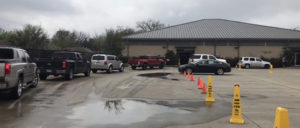
Before social distancing and bans on gatherings went into effect to stop the spread of COVID-19, clients crowded the facility at Lubbock Impact for Wednesday evening meals. (Photo courtesy of Lubbock Impact)
Last year, the Texas Baptist Hunger Offering awarded $2,000 to Lubbock Impact on Giving Tuesday, the week after Thanksgiving.
“This recognition has helped spread the word about our ministry” Thomas said. “During this time, our clients are already in a bad situation, but the money they can save by not buying food can go to pay rent and utilities.”
In addition to the soup kitchen, Lubbock Impact normally provides 15 other programs to serve its area—although the current COVID-19 crisis has forced the ministry to adjust.
The hygiene closet grew out of a request from a concerned individual who wanted to give shampoo and sleeping bags to the homeless. In addition to providing essential toiletries throughout the year, a Christmas hygiene bag typically is offered to about 400 people.
The family clothes closet, normally open once per month, serves about 400 per year. Clothes and shoes are available for men, women, children and babies. Clothes for job interviews give confidence and a feeling of pride, Thomas noted.
The free medical clinic came about when a pastor talked with his doctor about “doing something” at Lubbock Impact. It averages about 25 to 30 clients each Wednesday night.
An eye clinic provides examinations and eyeglasses.
A dental clinic serves about 500 each year, providing clients complete exams, x-rays, extractions and referrals for more serious problems.
An emergency food pantry provides staples for families going through hard times.
COVID-19 presents challenges and opportunities
The COVID-19 crisis—and the schools and businesses that have closed their doors as a result—have created challenges and opportunities for Lubbock Impact.
Lubbock Impact volunteers in masks and gloves prepare to deliver meals to clients’ cars during a Wednesday evening drive-through event. (Photo courtesy of Lubbock Impact)
“We serve the working poor of the Lubbock area,” Thomas said. “COVID-19 has been especially difficult for our clients. Low-paying jobs, people laid off, factories shut down … all produce changes for families. With schools closed, single mothers must stay home to care for children. Therefore, if jobs are still open, they can’t work.”
In place of its typical Wednesday soup kitchen, Lubbock Impact implemented a drive-through service, providing a “meal and more,” Thomas explained.
Instead of the usual large staff of volunteers, four or five volunteers in masks and gloves—and maintaining a proper social distance from others—load casseroles and desserts into cars for families to eat at home.
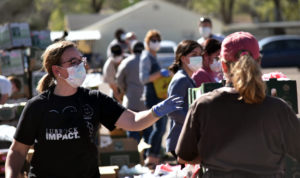
Lubbock Impact volunteers in masks and gloves take all the appropriate precautions to prevent the spread of COVID-19. (Photo courtesy of Lubbock Impact)
Local churches and businesses continue to provide support by bringing groceries and supplies for the drive-through.
“In some ways, this pandemic has brought opportunities to our area,” Thomas said. “People want to help others. They know we’re all in this together.”
Recently, Texas Baptist Men selected Lubbock Impact as one of the first recipients of a grant to help Texas Baptist churches and ministries that have seen a drastic rise in the need for food distribution during the COVID-19 crisis.
Once the restrictions are lifted and safe to resume normal activities, Lubbock Impact will return to the kind of personal one-on-one relationships that characterize the ministry. For example, during normal Wednesday evening meals, a volunteer sits at each of the round tables and engages in conversation with clients.
During the conversation, Thomas asks the volunteer to notice details about the clients. Are they wearing flip-flops on cold winter days? That indicates they need shoes. What about a coat? Is it heavy enough to keep them warm during the winter? If not, volunteers invite them to Lubbock Impact’s clothes closet.
Thomas encourages volunteers to look at their eyes. Do they show fear? Do they look unusually sad? If so, they are referred to a licensed counselor. And if their eyes show obvious sign of infection or other disorders, volunteers help them schedule an appointment with the eye clinic and receive free glasses.
Carolyn Tomlin teaches the Boot Camp for Christian Writers and writes for the Christian magazine and newspaper market.
TBM helps San Antonio church feed unserved people
April 24, 2020
SAN ANTONIO—When the San Antonio Food Bank made supplies of emergency groceries available, 10,000 cars packed the parking lot—many of them filled with people who have lost their jobs as a result of the shutdown during the COVID-19 pandemic.
But for some of the city’s most vulnerable, enduring such a line is impossible. The city’s senior citizens that battle physical limitations daily are stuck making a difficult decision.
“We’ve got about 1,400 families on our list,” said Rob Johnson, pastor of Christian Family Baptist Church. “Most of those families are 60-plus years old. They’re being told to stay at home. But they need food. Now they have to compete with all these other people.”
Seemingly overnight, the congregation retooled its food ministry—which receives ongoing support through the Texas Baptist Hunger Offering—specifically to make sure people aren’t falling through the cracks.
Dramatic increase in food distribution
The church increased distributions from monthly to weekly and scheduled appointments so people can maintain proper social distancing.
For each of the last three weeks, the church has provided food for at least 60 households. A small number of mask-wearing volunteers work like a fine-tuned instrument, orchestrating a delicate balance of efficiency and social distancing. In a matter of minutes, each family is warmly greeted, given bags of food and prayers are offered.
Johnson said the outreach is a targeted effort.
“We see ourselves as a special operation,” he said. “We know there are small groups of people the big system doesn’t work for. That’s what we do.”
On April 21, the church expected to serve 66 families but ended up providing food for 90. The food distribution, scheduled to end around lunchtime, lasted all day.
TBM provides assistance
The congregation is the first recipient of a grant from Texas Baptist Men to help Texas churches that have seen a drastic rise in the need for food distribution during the COVID-19 pandemic. The grants aim to help congregations serve more people quickly. Christian Family Baptist Church is using the $1,000 grant to purchase additional food.
TBM Disaster Relief Director Dwain Carter presented the grant to the pastor and joined in serving.
“This is simply amazing what this church has done,” Carter said. “In a matter of days, they saw the drastic increased need in their community, changed everything about their hungry ministry and are meeting the needs of some of the most vulnerable people in the city.
“In Matthew 25, Jesus says whatever we do for the hungry and thirsty we did for him. This congregation is truly serving in the name of Christ in a mighty way. It’s an honor to support them and minister alongside them.”
While Texas leaders are trying to open the state back up for business gradually, the pastor is still seeing new people ask for food. The church will continue to meet the need.
“The new people who are coming are saying ‘I’ve never had to ask for food before,’” Johnson said. “Some people have three to four families in their home.”
TBM seeks to help ‘strategic partners’
As companies have reduced or halted operation during social distancing and shelter at home orders, more than 1.2 million Texans have filed for unemployment benefits. The quickly shifting economic situation has left normally financially stable families looking for assistance.
As a result, demand for food is doubling and tripling in areas. Thousands of cars are lining up each day at drive-thru food distributions at food banks and church ministries statewide.
“This disaster is affecting the entire state,” Carter said. “While medical professionals are on the frontlines of fighting the disease, churches are on the frontlines of meeting the needs of people who suddenly can’t make ends meet. They don’t know how they’re going to feed their children. We pray these grants help ministries deliver help, hope and healing.”
In addition to Christian Family Baptist Church in San Antonio, other TBM grants are being awarded to City Church in Amarillo, the Mission Centers of Houston and Lubbock Impact. Additional ministries and churches also will be given grants as they are identified.
“These are strategic partners that are staples of their communities,” Carter said. “People know them and are turning to them for help and hope. We want to strengthen these efforts through prayer and financial support.”
Group’s alternative plan would cut ties between BGCT and HSU
April 24, 2020
Two months after Hardin-Simmons University’s board of trustees voted to close Logsdon Seminary and eliminate multiple academic programs as part of The Way Forward financial plan, a group of concerned alumni, donors and others sent trustees its own 14-point proposal called “The Better Way Forward: A Plan to Save Hardin-Simmons.”
In addition to urging trustees to reverse The Way Forward plan and reinstate Logsdon Seminary, another part of the plan proposed by the group calling itself “Save HSU” calls on the university to restructure its board of trustees.
Specifically, the group wants to eliminate mandated Baptist General Convention of Texas representation on the board of trustees, require at least 51 percent of board members to be HSU graduates, and allow alumni to nominate and elect one-third of the board.
BGCT executive leaders were asked for a response but chose not to comment at this time.
Institutions related to the BGCT fall into two categories. Messengers to the BGCT annual meeting elect a simple majority of the governing boards of affiliated institutions, such as HSU. A few institutions relate to Texas Baptists through contractual agreements that allow the institutions more control over their boards, while still allowing some BGCT representation.
A relationship with the convention—and the way in which an institution relates to the BGCT—has a direct impact on funding from Texas Baptists. (See related article here.)
Financial support and trustee representation
In an April 17 blog, Save HSU leaders asserted “the BGCT’s influence over the HSU board has been flagrantly disproportionate to the convention’s level of giving and support to the university.”
The university reported $49,783,087 in total budgeted operating expenses in the 2019 fiscal year. HSU received $866,776 in cooperative giving from Texas Baptist churches through the BGCT in 2019, according to the office of the convention controller.
The Save HSU group cites lower figures, which appear to reflect the base support the BGCT provides through the Cooperative Program to each of its affiliated institutions, without factoring in the theological education support universities and seminaries also receive. Still, total BGCT funding in 2019 constituted less than 2 percent of the university’s operating expenses.
“Clearly, the BGCT’s influence is proportionally out of balance with its giving. We believe that in light of recent events HSU should fundamentally reevaluate her relationship with the BGCT, because the relationship has not only caused the erosion of an independent trustee board, but also has endangered academic freedom—both of which consequences have resulted in a less healthy university,” leaders of the Save HSU group stated.
‘Outside and outsized influence’
The group repeated its previously stated charge that BGCT Executive Director David Hardage met with President Eric Bruntmyer, “a few West Texas pastors” and “a couple of trustees” regarding Logsdon Seminary.
“This private meeting can be a threat to accreditation itself, because accreditation agencies take very seriously the independence of a board,” the Save HSU group’s leaders stated.
The group asserted HSU could make up the loss of revenue from the BGCT “by getting its ballooning administrative costs under control, increasing recruitment and retention and being more careful about not getting into protracted, expensive construction projects.”
“It is time for trustees at Hardin-Simmons to take full control of the university and hold the BGCT’s leadership accountable for undermining the existence of Logsdon Seminary. We believe this will ensure that future board decisions are made free of outside and outsized influence by an organization that gives an increasingly small percentage of HSU’s revenue,” the group’s leaders stated.
“The real question is not whether Hardin-Simmons can live without the BGCT’s annual contributions. Rather, it is whether Hardin-Simmons can afford the cost of continuing to receive them.”
BGCT Executive Director responds
In February, Hardage told the Baptist Standard: “For several years, numerous church leaders from all over the state began expressing concerns about some theological positions at Logsdon, and those concerns were shared with leaders of both the seminary and the university privately and in small group settings. Certainly, others from Texas and beyond did not share those concerns.
“However, as I understand it, a full theological discussion regarding Logsdon was not a part of the HSU board of trustees decision to close the seminary. Apparently, the stark, negative financial realities facing the seminary negated the need for such a discussion.
“Personally, I was never a part of any conversation with anyone who wanted Logsdon to close and was surprised when I heard the news. I continue to pray for all those whose lives and families have been impacted by the decision to close the seminary. I also continue to pray for and believe in university leadership and hope for a very bright future for HSU.”
Other proposals
In addition to the proposal calling for the HSU board of trustees to be restructured with no mandated BGCT representation, the Save HSU group’s Better Way Forward plan also urged trustees to:
Re-examine the university’s founding documents.
Create open and safe forums to discuss university changes.
Recognize, celebrate, value, listen to and work with faculty.
Recruit and prepare students for leadership in the world.
Protect students’ freedom of speech.
Restore trust with alumni and donors.
Establish a culture of transparency and integrity.
Internally review all standards of accreditation to ensure compliance.
Evaluate current HSU leadership.
In addition to the April 6 letter to the board of trustees, leaders of Save HSU also sent a letter to HSU Board Chair Laura Moore on April 16, inviting her to meet with them by video conference to discuss their concerns.
HSU responds
In response to the Better Way Forward proposal, the university issued a statement April 13. It said the HSU board of trustees and administration “have full confidence” in the decisions reflected in The Way Forward, noting they “went through a detailed process to determine steps needed to evaluate and enhance the university’s financial condition.”
“The Way Forward is Hardin-Simmons University’s next chapter and long-term strategic plan to guide the university’s community of students, alumni, faculty and staff to be good stewards of our resources and to embrace the change required of us as we boldly prepare for the future. Being good stewards has required us to close a longstanding HSU operating deficit,” the statement from the university said.
In the next few years, the actions taken by the administration and board “will help bring the university’s expenses in line with revenue to fulfill current fiscal responsibilities while also preserving the university’s future ability to serve the greatest number of students in a cost-effective way, create new and innovative programs and invest in needed technology and infrastructure,” the university stated.
Explainer: How Texas Baptists support higher education
April 24, 2020
Many Texas Baptists know their churches’ Cooperative Program gifts help support Christian higher education institutions around the state, but how much money do schools receive? How is the level of support determined?
Nine universities—Baptist University of the Américas, Baylor University, Dallas Baptist University, East Texas Baptist University, Hardin-Simmons University, Houston Baptist University, Howard Payne University, the University of Mary Hardin-Baylor and Wayland Baptist University—and two seminaries—Logsdon and Truett—have received Texas Baptists’ cooperative giving funds in recent years.
In 2019, those 11 educational institutions received $7,332,898 through Texas Baptists’ cooperative giving, according to information provided by the BGCT controller’s office.
Overall funding for higher education through the BGCT decreased 5 percent from 2015 to 2019, reflecting Cooperative Program receipts from churches. Still, in the past five years, the universities and seminaries collectively received $38,192,987.
Two broad categories
Funds the Baptist General Convention of Texas distributes to the universities and seminaries primarily fall into two categories—base institutional support and theological education support.
Base institutional support for the nine universities related to Texas Baptists totaled $4.28 million in 2019. Last year, the nine universities collectively received $1.7 million in theological education support, while Logsdon Seminary and Truett Theological Seminary together received $1.2 million.
A significantly smaller amount from the BGCT provides some scholarship assistance to children of Texas Baptist ministers. Five universities accessed $80,000 in 2019.
Affiliated universities—those that allow messengers to the Baptist General Convention of Texas annual meeting to elect a simple majority of their governing boards—each received $535,524 in base institutional support from Texas Baptists’ cooperative giving in 2019.
Two universities—Baylor University and Houston Baptist University—relate to the BGCT through contractual agreements that allow messengers to Texas Baptists’ annual meeting to elect a minority percentage of their governing board. Baylor and HBU each received $265,681 in base institutional support through the BGCT in 2019.
Theological education support funds paid to universities and seminaries provide scholarship support for undergraduate and graduate students who are preparing to serve in church-related ministry vocations such as pastor, church staff, missions or chaplaincy.
The amount of theological education support varies from one school to another and from one year to another based on the number of students preparing for ministry and the semester hours taken.
In 2019, theological education support ranged from $38,825 for Houston Baptist University to $683,825 for Dallas Baptist University. Last year, Truett Theological Seminary received $962,250 and Logsdon Seminary received $241,800.
The Way Forward for HSU involves balance, provost says
April 24, 2020
Ask Provost Chris McNair about the future of Hardin-Simmons University, and he often returns to the theme of balance—between mission and market demand, between residential education and online instruction, and between traditional liberal arts courses and innovative new majors.
Hardin-Simmons developed The Way Forward strategic financial plan to place the institution on firm financial footing so it can continue in the years ahead to offer students an education enlightened by Christian faith, McNair asserted.
The evaluation process that led to The Way Forward involved asking hard questions about how central each academic program was to the university’s mission and how sustainable it was financially. And that led to the decision to begin the process of closing Logsdon Seminary.
“No one wanted to see Logsdon Seminary close,” McNair said. “It was not a spur of the moment decision. A lot of thought and planning went into it.”
Cutbacks and restructuring
To address the university’s more than $4 million operating deficit, trustees in early February approved The Way Forward, a plan that included eliminating 11 graduate degree programs, five undergraduate majors, four undergraduate minors and two certificate programs.
The Way Forward plan reorganizes the university into five colleges and schools: the Cynthia Ann Parker College of Liberal Arts, the Holland School of Science and Mathematics, the Kelley College of Business and Professional Studies, the College of Health Professions and the Patty Hanks School of Nursing.
The Logsdon School of Theology becomes part of the Cynthia Ann Parker College of Liberal Arts, along with the School of Music, the Department of Counseling and Human Development, and the Department of Fine Arts.
Chris McNair
While the financial and market analysis of the university that led to The Way Forward carefully examined recent years, it included a general look back as far as the 1970s, McNair noted.
“There has been an ebb and flow, with some good years and some bad years,” he said, noting the value of assets and donor contributions have been affected by the oil and gas economy in Texas.
Some alumni, donors and supporters of HSU have criticized the administration for not giving the campus community a greater voice in making the decision. Some questioned whether the university communicated the significant financial problems sufficiently and appealed to donors for additional gifts.
McNair, who became provost two years ago, noted town hall meetings already were being held when he was named interim dean after Tommy Brisco retired from that role in December 2017.
“Town halls were scheduled with faculty and staff in order for them to give their suggestions,” he said.
Leaders of Logsdon Seminary were asked to develop a plan to make the graduate programs financially sustainable, but they were unable to present a workable model, he said.
“That’s not a criticism. Seminary education is struggling around the country,” McNair said.
Development officers and administrators “worked hard” to find additional gifts, but raising enough endowment to produce sufficient annual distributions to make Logsdon Seminary sustainable was beyond the capability of the university’s donor pool, McNair said.
Dollars and cents
Once the “teach-out” program for students currently enrolled in Logsdon Seminary programs is completed in 2023 and the seminary is closed, the university anticipates between $400,000 and $600,000 in annual cost savings.
On its website, HSU posted responses to frequently asked questions regarding campus changes caused by The Way Forward plan. That FAQ reports the university’s budgeted operating expenses in fiscal year 2019 were $49,783,087. HSU reported $143,857,000 in restricted endowment funds and $50,850,000 in unrestricted endowment funds at the time the web pages were developed.
While most endowment funds are managed by HighGround Advisors, formerly known as the Baptist Foundation of Texas, “we don’t just use one manager,” McNair noted.
Another section on the website that deals specifically with questions regarding Logsdon reported the current value of restricted funds given to the Logsdon School of Theology and Seminary as $32.46 million, which produce an annual distribution of $1.62 million. The reported value of restricted endowments specifically for Logsdon was less than $793,000—about 2.4 percent of the total. They provide less than $40,000 in annual distributions, accounting for about $320 per student annually in endowment scholarships.
The website reported HSU spent $2.46 million on employee salaries and benefits, travel, supplies and equipment related to the Logsdon School of Theology and Seminary and close to $1.8 million in Logsdon’s overhead costs.
Total costs related to Logsdon minus the annual distribution from endowments leaves more than $2.6 million that have to be funded in other ways. Tuition payments—including support from BGCT—provides less than $1.4 million, leaving more than $1.2 million in unfunded costs for the Logsdon School of Theology and Seminary.
“Tuition is significantly discounted by us,” McNair said.
By the numbers
Looking at enrollment over the last five years, the website reported an overall decline of 34.3 percent in the Logsdon School of Theology’s undergraduate programs and a 16.2 percent decline in Logsdon Seminary graduate programs.
Photo by Julie Sorrels
A detailed look at enrollment reveals a somewhat more complex picture. According to information the university provided to the Baptist Standard, enrollment in Logsdon Seminary graduate programs increased 3.4 percent from fall 2014 to fall 2018, from 148 to 153.
Enrollment in the Master of Divinity degree program grew about 13 percent, from 85 in 2014 to 96 in 2018.
Overall enrollment for Logsdon Seminary peaked at 175 in 2016 and at 99 for the Master of Divinity degree program in 2017.
Enrollment in the Doctor of Ministry degree program declined from 34 students in fall 2014 to 27 students in fall 2019, reaching its peak enrollment at 44 students in fall 2016. The family ministry studies program enrollment declined from 25 students in fall 2014 to 17 in fall 2019, with a peak enrollment of 29 in fall 2015. Enrollment in the Master of Arts in Religion program never exceeded single digits, reaching its highest enrollment in fall 2017 with 7 students.
HSU trustees voted in October 2018 to close seminary extension campuses in Coppell, Lubbock, Corpus Christi and McAllen.
Undergraduate enrollment in the Logsdon School of Theology declined from 70 in fall 2014 to 46 in fall 2019. Enrollment peaked at 80 students in fall 2017 before dropping to 57 the next year.
Overall enrollment in Logsdon Seminary graduate programs far outpaced enrollment in the three Logsdon School of Theology undergraduate majors—Bible and biblical studies, ministry and youth ministry, and religion.
However, the high cost of operating a seminary and the university’s need to retain undergraduate Bible courses as part of its mission led to the decision to close Logsdon Seminary and direct assets toward the Logsdon School of Theology’s undergraduate programs, McNair noted.
Looking ahead
Elements of the three current undergraduate programs offered by the Logsdon School of Theology will be incorporated into the new major in Christian Studies, McNair said.
Bible classes have been a graduation requirement for all undergraduate students since 1902, the HSU website reports.
In the future, course offerings and academic programs will continue to be evaluated as part of The Way Forward, McNair said. The evaluation will include examination of enrollment, the number of students graduating with a particular major and operating expenses. At the same time, the university will find a way to offer programs vital to its mission.
“The fine arts will never be big revenue generators, but they are central to our focus as a liberal arts university,” he said, noting the undergraduate Logsdon School of Theology falls under that umbrella.
McNair anticipates HSU will continue to expand its online course offerings, but he emphasized it will not become an online-only school.
“I am a fan of traditional residential education. My parents sacrificed to send me here in the early 1980s,” he said. “I do not want us to become completely dependent on online courses, but there certainly is room for growth there.”
Academic programs will “ebb and flow” in the years ahead, just as they have throughout the university’s history, he noted, but a commitment to providing “quality education in a Christian environment is always foundational to everything we do.”
COVID-19 forces church ministries to asylum-seekers to adjust
April 24, 2020
Social restrictions continue changing due to the COVID-19 pandemic, and for immigrants seeking asylum in the United States, those changes add more instability to their situation.
Churches in Texas with ministries for asylum seekers have been forced to make adjustments, said Jorge Zapata, coordinator of missions and Hispanic ministries at the Cooperative Baptist Fellowship of Texas and founder of Hearts4Kids.
“Many of us have increased our ministries to neighborhoods of lower-income Hispanic families in the Valley,” Zapata said.
Limited border crossing
Several weeks ago, the United States began limiting travel across its borders to essential travel. More recently, Mexico also began limiting travel from its border with the United States.
Immigrants seeking asylum, who already had to wait in Mexico while their cases were resolved under the Migrant Protection Protocol, also were able to cross the border until recently, Zapata explained.
Jorge Zapata
Now they also must remain in Mexico, which shifts more responsibility to churches in Mexico that until recently shared the ministry with churches in the United States once immigrants were able to cross.
“Right now, we are supporting churches in Mexico who can minister to immigrants,” Zapata said.
Zapata’s connections with pastors and churches around several border towns that go from the Lower Rio Grande Valley in Texas to California have all experienced changes. All of them continue their ministry with immigrants exclusively through churches in Mexico, he noted.
Some U.S. churches still send funds to churches in Mexico; others have found immigrant families in the United States who are being affected by COVID-19 and support them in some way.
Stress increases for immigrants
Stay-at-home orders from county officials vary from place to place, but the police are stopping some, asking them to explain why they are out of their homes.
“I know of some cases where individuals have been pulled over by officers three times while they were out in their cars,” Zapata said. “For many immigrants in the area, that can be really stressful.”
Families who need to go out to get food from church pantries—and even those who receive food from churches delivered to their doorsteps—fear that by stepping outside their homes, they could face legal problems with the local government or immigration agents, he noted.
Hispanic immigrant families also form an essential part of the service industry, which makes them vulnerable. Their need for income forces them into continued interaction with other people at a time when they should limit those interactions.
“People live day by day, week by week and paycheck by paycheck,” Zapata said.
Access to healthcare also is limited, so any unnecessary exposure to the outside seems almost out of the question for them—and more so when law enforcement is involved, Zapata added.
He noted—and immigration lawyers confirmed—that immigrants who show symptoms of COVID-19 safely can seek medical attention without fear of deportation.
Directing support to families and churches in need
The ministries Zapata is a part of are directing funds toward helping families, pastors and churches who need some assistance while everything else is shut down.
Churches that minister to low-income families also are experiencing more hardships now due to a significant drop in offerings, he noted.
“Everyone is in need right now,” Zapata said.
Churches in Mexico have accepted responsibility for ministry to immigrants, but they also must follow limited interaction with asylum seekers in Mexico according to guidelines from the Mexican government, he said.
“If a church has food or any other item they want to provide to a shelter of asylum seekers, then they need to go drop those items outside of their shelter and have someone come outside to pick them up,” he added.
Difficulty in receiving financial support
But the responsibility increases when many pastors and churches in Mexico begin feeling pressure from the lack of resources coming in every week.
Churches and ministries from the United States that provided food, clothing, healthcare items or construction materials now are limited to sending funds. But many churches in Mexico lack bank accounts or credit cards, so that makes it difficult for churches to receive them.
Pastors across the border from California who work with asylum seekers ran out of funds recently. When Zapata and Fellowship Southwest asked how they could support them, the pastors said the only food they would buy for themselves would be rice and beans. The rest of the money would be exclusively used for asylum seekers.
“Everything is on hold, except the ministry in the lives of immigrants” Zapata said. “For churches who had planned a mission trip to the Valley or across the border, then we ask they still use those funds to help the ministry of the ones who remain working here.”
Worship suspended but ministry continues
At Iglesia Bautista West Browsnville, where Carlos Navarro is pastor, the church’s ministry to immigrants—Golán—closed its doors about three weeks ago in order to follow the recommendations of the city.
Like other churches in the area, Navarro also traveled to Mexico up until less than three weeks ago to minister to migrants there, before Mexico also limited travel across its border.
Because of the networks Navarro built in the past years with government officials, he knew which decisions would be made regarding the city’s response to COVID-19, he said.
Work done to serve immigrants transitioned to feeding the homeless population in downtown Brownsville.
“There are close to 30 homeless people in the area, among them we know there are two or three immigrants who could not leave because everything else began shutting down,” Navarro said.
The church takes clothing, food and hygiene items twice a day for people in downtown Brownsville, he said.
Helping during crisis
With extensions in Southwestern Spain and Southern Mexico, Iglesia Bautista West Brownsville keeps a deep connection with areas where COVID-19 had already upended the economy and the healthcare capabilities of other nations, Navarro confirmed.
The association of hotel owners in Sevilla partnered with Golán Internacional so several meals could be distributed in the city.
Through other organizations in Europe, Golán Internacional also has provided ingredients for the preparation of meals which are then distributed to children, families and senior adults, Navarro said.
“Imagine what it would be like to suddenly have absolutely nothing to eat, that is what happened to many people in Spain,” Navarro affirmed. “We’re trying to give them something that will help them as they deal with this crisis.”
Out of all the Hispanic churches in the area, Iglesia Bautista West Brownsville is the only one still open right now, he said.
“This definitely affects most churches who depend on the support they receive from people every week,” he mentioned. “Many pastors and their families do not have income right now.”
Through local and state networks, Navarro said the church provides similar support for families in the area as the ministry they support in Spain.
“Thankfully through these networks God has been preparing us for this during the past two years,” Navarro said. “We see how God has moved around us and we are thankful for that.”
Because of God’s provision and preparation, Iglesia Bautista West Brownsville finds itself in a position to help others during this crisis, stated Navarro.
Moved to Mexico to minister
Other groups and ministries that previously ministered to immigrants have left the area already, both Zapata and Navarro confirmed. So, the need for support increased as the pandemic grew.
As Mexico prepared to limit travel across its border, Pastor Lorenzo Ortiz of El Buen Samaritano went across the border planning to stay until travel restrictions are lifted, said his daughter Ruth Ortiz, who is a missionary for the River Ministry of the Baptist General Convention of Texas.
Pastor Lorenzo Ortiz of El Buen Samaritano moved to Mexico after both the United States and Mexico began limiting their borders to only essential travel. Pastor Ortiz will remain in Mexico and minister to more than 170 asylum-seekers until travel restrictions are lifted. (Photo provided by Lorenzo Ortiz)
“He’s responsible for many things regarding some shelters where asylum seeking immigrants stay, so it was impossible for him not to be there during these travel restrictions,” she said.
From Monday to Saturday, Ortiz’ father will travel to Monterrey at least once a day to help migrants in Monterrey get to the border, where they can present themselves. Although asylum cases are postponed, asylum seekers still must present themselves at the border to receive another hearing date.
Sometimes, Lorenzo Ortiz will make the two-and-a-half-hour trip to Monterrey twice a day, his daughter said.
Pastor Ortiz is one of the few ministers in Northeast Mexico who still is allowed by the government to interact with asylum seekers in the country, Zapata noted.
His ministry includes finding a place for immigrants to shelter, finding and providing essential needs, transporting them to and from different locations, and providing pastoral care.
Ortiz provides shelter for immigrants in three locations—two in Nuevo Laredo and one in a ranch called El Derramadero, a few hours away from Saltillo. Iglesia de Dios en Derramadero in El Derramadero, where Ortiz’ aunt Eva Reyes Marquez is pastor, provides shelter to those who came looking for asylum in the United States.
Immigrants staying there go out looking for jobs and eventually pay for their own expenses too, but the church provides for them until they can find employment somewhere, Ruth Ortiz said.
Drug cartels follow and often extort asylum-seeking immigrants in Mexico, she noted.
“Cartel members have posed as police officers and stopped my dad on the road, and they have also gone to visit shelters, but thankfully nothing has escalated yet,” Ruth Ortiz said. “My mom and I are also definitely concerned about my dad because he is exposed to many people who may be carrying COVID-19.”
In Mexico, Pastor Ortiz works with close to 170 people at the shelters, but those numbers often can reach more than 250 people as well, she said.
PTSD common among asylum seekers
Whether asylum seekers flee their home countries because of financial hardships, violence, sex abuse or any other reason, most share a common trait—post-traumatic stress disorder, said Olga Harris, a licensed professional counselor.
“The reasons they come here are very different than those who come for the American dream,” Harris said. “They come here because of fear, because they are running away from a real threat.”
Harris recalled one of her patients who had a transportation business in Central America, which was enough to provide for his family. A gang located him and demanded 60 percent of his profits in exchange for his safety and the safety of his wife and daughter.
“He lived under fear, and every day, he could not tell whether that would be his last day,” Harris said.
The man left home and came to the United States, Harris said. While he was granted asylum, he already had started the petition to bring his wife and daughter before the government put on hold processes because of COVID-19.
Ministry and assistance provided by churches may seem like a drop of water in the desert for the situations most asylum seekers deal with, Harris said, but often that little bit helps them keep going another day.
“Even if it is just a drop, we must keep doing what we are doing because we alone are not it,” Harris said. “The drop of water we provide may add to other support others give them and that drop may fill one cup of water.”
Though asylum seekers in Mexico had the opportunity to return to their country, Zapata said, most decided staying in Mexico was a better option than going back.
“They’ll say: ‘We’re going to stay here, because we are dying in our own country from violence and hunger, and we risked our lives to come to the border. So, we’re not afraid of the coronavirus,’” said Zapata. “They really trust in God, who brought them here and will continue to protect them while they wait.”
Garland Acteens stay on mission during pandemic
April 24, 2020
GARLAND—Missions discipleship is personal for Mary Lou Sinclair and her Acteens group—even amid a pandemic.
Sinclair has been Acteens director at Freeman Heights Baptist Church in Garland more than 20 years. During that time, five of her Acteens have been named National Acteens Panelists, and three others have been selected as Top Teens.
They also have traveled extensively over the years to participate in mission trips, state and national Woman’s Missionary Union annual meetings and Blume, a national missions gathering for girls.
A close-knit group that reflects the church’s multicultural community, the Acteens describe themselves as family and thrive on frequent fellowship among the teens and their adult mentors. Based on their close connections, the 6th through 12th grade girls refuse to let coronavirus-induced social distancing and sheltering in place derail their missions and ministry focus.
Virtual meetings include prayer times
“We can’t begin to understand what is happening right now,” Sinclair acknowledged. “But we, as Christians, can be sure that there will be some good that comes out of all of this.”
Acteens at Freeman Heights Baptist Church in Garland meet via Zoom video conferencing amid coronavirus-induced social distancing and sheltering in place. “It’s been really neat that we have the ability to use technology for our Acteens meetings,” noted Marisol Sandoval, one of the group’s Acteens leaders. (Photo courtesy of Marisol Sandoval)
On a practical level, Sinclair asked Marisol Sandoval, one of Freeman Heights’ youth ministers, to set up virtual Acteens meetings online to keep the group connected.
Sandoval, a former Top Teen who grew up as a member of Sinclair’s Acteens, now serves alongside Sinclair as an Acteens leader. In order to help transition the group’s meetings to video conferencing, “I had to learn everything I could about Zoom,” she said.
“It’s worked out pretty awesome. The girls are adapting well,” Sandoval added. “They want to be with us. They want to see us. They want to hear from us. It’s been really neat that we have the ability to use technology for our Acteens meetings.”
Sinclair said their virtual meetings still include several typical features such as “praying for people in our church, praying for national and state WMU, having our lesson and having Bible study.”
Along with using available tech options to stay in touch, the teens and their leaders continue to plan a variety of missions projects, including a virtual prayer walk of their neighborhood using GPS mapping. They also plan to sew protective masks for residents in area apartment buildings and send letters of encouragement to members of a local Chinese Christian church who may be feeling ostracized as some Chinese-Americans are harassed on social media and elsewhere.
Sinclair said the goal of the letters simply is to say to fellow Christians, “We’re praying for you, we’re so thankful that you’re here and safe and we want you to know that we care about you.”
Still involved in missions action
Long before the widespread impact of the coronavirus crisis, the Freeman Heights Acteens have been known as one of the most active youth mission groups in Texas Baptist life.
Freeman Heights Acteens typically spend several hours a week volunteering at the ROC (Re’Creation Outreach Center), a community ministry center that provides a food pantry, clothes closet, after-school tutoring, Bible studies and other ministries and activities for children, youth and families in the area. “This group of girls has become servants, not just those who are served,” affirmed Adam Wood, director of the ROC. (WMU photo by Pam Henderson)
The girls regularly volunteer at the ROC—the Re’Creation Outreach Center. The community ministry center provides such resources as a food pantry, clothes closet, after-school tutoring, Bible studies and a host of other ministries and activities for children, youth and adults.
Even while observing social distance restrictions, the Acteens have helped fill bags of groceries for families to pick up at the door of the ministry center.
“The ROC is really the home base for several faith communities in the Garland area. Ultimately, it’s a hub of gospel ministry within the area,” said Adam Wood, director of the ROC and lead pastor of The Neighborhood Church in Garland.
“One of the marks of effective community ministry is when the people you are serving become people who serve. One of the places we’ve seen that most is with this strong group of teenagers,” Wood said. “This group of girls has become servants, not just those who are served. I think it’s in large part because of their connection with Mary Lou and the Freeman Heights youth group.”
As her Acteens navigate a new normal, Sinclair plays a huge role in encouraging their ongoing missions commitment.
“Mary Lou is one of those people who does whatever’s needed,” emphasized Larry Venable, her longtime pastor at Freeman Heights. “What she has done with Acteens is fabulous, just teaching them spiritually, getting them involved in mission activity and growing. … She’s definitely captivated by her relationship with Christ and the gospel.”
Opportunities for spiritual growth
What previously was a typical Acteens gathering at Freeman Heights Baptist Church in Garland has now shifted to video conferencing and social media. “The girls are adapting well” to the virtual Acteens meetings, said Acteens leader Marisol Sandoval. “They want to be with us. They want to see us. They want to hear from us.” (WMU photo by Trennis Henderson)
Nayely Vallejo, one of the National Acteens Panelists nurtured by Sinclair, also helps lead Acteens alongside her mentor. Affirming the opportunity to “just live on mission with my fellow Acteens girls, showing people who Christ is and showing people our servants’ hearts,” Vallejo said, “Because of Mary Lou and because of how she’s raised us as GAs and Acteens, it’s just natural for us to serve everyone any chance we get.”
With this summer’s national WMU annual meeting cancelled and Blume postponed until 2021, Sandoval said their Acteens “are sad, but they’re fine.”
While coping with social distancing, loneliness and disappointment, “I think there’s been a lot of growth spiritually,” Sandoval reflected. “This has definitely taken us out of our comfort zone. We know from looking in the Bible that whenever we’re taken outside of our comfort zone, there’s growth and we learn to trust in God. We learn how important relationships are.
“It’s hard because we can’t really go and hug them,” she shared. “That’s one of the hardest things for this social distancing because you just want to hug them and just comfort them and you have to trust God that he’s there to comfort them and love on them.”
Before the current crisis erupted, Sinclair said she was involved in event planning with a group of state WMU leaders who “talked about being the hands of God and being able to use the tools that we have in our hands to do ministry.”
During a recent follow-up video conference call, “we talked about how the things in our hands are totally different than what they were before,” she said. “But God finds a way and we just have to be looking for how he can use us to do his ministry.”
Even amid the turmoil of a global pandemic, pursuing new and creative ministry opportunities is precisely what Freeman Heights’ Acteens continue to do—just as Mary Lou Sinclair faithfully has taught them.
Houston church honors Easter tradition with virtual choir
April 24, 2020
South Main Baptist Church in Houston met two seemingly irreconcilable goals—refrain from gatherings to protect public health and keep alive a beloved Easter tradition at the church—by putting together a virtual choir.
The offertory anthem during South Main’s worship service on Easter Sunday morning—as presented on the church’s Facebook page—featured a 65-voice virtual choir of church members singing the “Hallelujah Chorus.”
Virtual choirs—in which individual singers record and upload videos of themselves that are then synchronized and combined into a single choral performance—have become a social media phenomenon since stay-at-home orders across the country to halt the spread of COVID-19 began several weeks ago. However, American composer and conductor Eric Whitacre pioneered the technique more than a decade ago, said Carey Cannon, minister of music at South Main.
Cannon noted inviting members of South Main to sing the “Hallelujah Chorus” from Handel’s “Messiah” was a longstanding part of Easter Sunday worship long before he joined the church’s staff in 2013.
“How could we not do the Hallelujah Chorus on Easter?” he asked.
Given the short timeline, members of the pastoral ministry team at South Main had “varying levels of confidence” in the church’s ability to include a virtual choir of its members singing the “Hallelujah Chorus” in its online Easter worship service, but Cannon felt certain it could be accomplished, said Susan Moore, minister of administration for communication at South Main.
“The main thing I learned from this was when Carey has a vision for a project, let him run with it,” Moore said.
With a little help from his friends
Cannon enlisted the help of Joshua Lee Turner, a professional musician in New York who mixes and produces his own music videos.
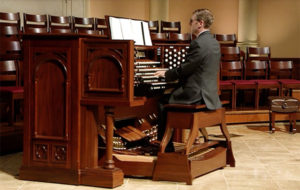
Yuri McCoy, organist at South Main Baptist Church in Houston, provides accompaniment for the virtual choir’s rendition of “The Hallelujah Chorus.” (Video Screen Capture)
Cannon—former minister of music at Providence Baptist Church in Charlotte, N.C., and associate conductor of the Charlotte Children’s Choir—knew Turner from their time together in North Carolina.
Turner agreed to edit and produce a video of the virtual choir if Cannon could get it recorded and send him the elements he needed.
First, Cannon made a recording of himself conducting the “Hallelujah Chorus,” accompanied by organist Yuri McCoy, and sent it to four section leaders of the sanctuary choir at South Main who recorded themselves singing the bass, tenor, alto and soprano parts.
Each member of the choir then received a digital file of the recording for his or her voice part, along with a PDF of the musical score. Cannon invited the choir members to record themselves on a smartphone or computer singing the Hallelujah Chorus and then send that recording to the church.
Overcoming obstacles
The first obstacle Cannon discovered was lack of equipment. Not everyone who had a computer or smartphone had headphones or earbuds with a microphone to go with it.
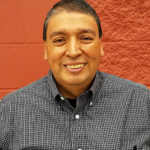
Carey Cannon
Once he was able to round up the necessary equipment, members had to get over their reluctance to record themselves singing a classical piece of sacred music—preferably with as few bloopers and outbursts of frustration as possible.
“I’m pretty sure my name is mud as far as some people are concerned right now,” Cannon said.
The first week, response was slow, he acknowledged. But by the time he reached Turner’s deadline for receiving recordings, 65 people participated.
“Some of the choir was pretty uncomfortable,” Moore said. “And yet, they did it.”
Cannon sent the digital files to Turner, who spent at least 10 hours on audio and 10 hours on video, mixing and producing a broadcast-quality presentation using Avid Pro Tools and Adobe Premiere software.
“He hit it out of the park,” Cannon said.
Viral response, national exposure
The virtual choir presentation was incorporated into the Easter worship service on Facebook Live, which then was posted for later viewing on both the church’s Facebook page and its website.
If the number who watched the livestream at 10 a.m. on Easter didn’t quite live up to Cannon’s expectations, the viral reaction later exceeded his wildest dreams—particularly after the choral presentation was part of a national newscast.
Steve Wells, pastor of South Main Baptist Church, told a neighbor who works for the Houston NBC-TV affiliate that the church was including the virtual choir singing the “Hallelujah Chorus” as part of its online Easter worship. She forwarded the information to the network, and the national NBC Nightly News April 12 broadcast included a clip of the choir’s performance.
“Of course, we appreciate the exposure for our church, but we’re more grateful for the gospel impact,” Cannon said. “On Easter Sunday evening, viewers of a national TV news broadcast experienced … a celebration of the Resurrection.”
South Main Baptist Church produced a brief “behind the scenes” video of how the virtual choir presentation was developed—both to satisfy curiosity and as an aid to other churches that are considering a similar project. View the video here.
Chaplains minister to soldiers at the heart of the outbreak
April 24, 2020
NEW YORK—When the COVID-19 outbreak hit New York City, makeshift medical facilities were set up across the city to treat patients, and the military arrived to help overwhelmed law enforcement officers maintain order, run testing facilities and ensure safety.
Joshua Choquette, a chaplain endorsed by Texas Baptists and captain in the Air National Guard, volunteered to go to New York City to minister to military personnel stationed there.
Doug Carver, executive director of chaplaincy for the North American Mission Board said a growing number of Southern Baptist chaplains also have been mobilized in support of Guard units in multiple states.
“They are distributing food to the needy, coordinating community relief efforts with local religious leaders and advising their senior military leaders on the safety, health and spiritual welfare of their troops,” Carver said.
Serving military at temporary medical center
Joshua Choquette, a chaplain endorsed by Texas Baptists and captain in the Air National Guard, volunteered to serve in New York City.
Choquette and two other Texas Baptist-endorsed chaplains began serving in 15 sites in Manhattan, Bronx, Brooklyn and Staten Island. The largest—the Jacob K. Javits Convention Center—was turned into a temporary medical center with more than 4,000 beds for COVID-19 patients.
Choquette cared for the military stationed in these sites, providing counseling, spiritual guidance and worship services.
He reported a large number of personnel asking spiritual questions, and he noted the worship services had large attendances.
For many people in New York, it marked the first time they have thought about their spiritual security in a long time, Choquette said. In the midst of a strong secular culture, fear and anxiety caused by turbulent times has caused many to ask deep questions, he noted.
“People are relying a lot more on prayer,” Choquette said. “And that’s people who aren’t even spiritual. It has put them a lot closer to death, or maybe they’ve lost a loved one, and so they have questions they’ve never had before.”
‘No end date … lot of unknowns’
In addition to supporting the spiritual needs of the military stationed in the city, Choquette also helped the military leadership refocus from a mission-based to needs-based mindset. The military traditionally operates around concrete missions with absolute goals, he explained.
“One of the ways this mission is unique is that there is no end date. There’s a lot of unknowns, which is not usually how the military operates,” he said. “And that lack of knowledge, along with the stress of worrying about their families, creates a lot of fear.”
The current mission, which has no end date and no clear goal for the military beyond maintaining order, requires a focus on the soldiers’ needs, he said.
As a chaplain, Choquette listens to individual problems and needs, and though he maintained confidentiality, he was able to convey general concerns and feelings to the leadership and suggest changes to boost mental and emotional health.
Just before Easter—when many predicted the impact of the virus would peak in the city—Choquette noted the cry for death to be pushed back across New York City, just as Jesus pushed back death with his resurrection. He prayed that this parallel of death and life would not be lost on the city’s residents and they would come to faith in Christ.
Prayer requested
Choquette was a Wiccan for 11 years, until “God hit … with full force,” he said. Since then, he has been devoted to sharing the hope and love he found in Christ with others.
He has been a military chaplain more than six years and has been serving in that capacity full-time for three years. He serves in the New York Air National Guard as 109th Airlift Wing chaplain and was endorsed by the Texas Baptists’ chaplaincy program in 2016. He volunteered to move down from upstate New York to New York City during the COVID-19 crisis, even though it meant being apart from his wife and four daughters for an indeterminate time.
Choquette asked Texas Baptists to pray for him and the other chaplains who are facing emotional hardships, such as being unable to see family for long periods of time. He also asked for prayer for chaplains who return home from hospitals every night and worry about potentially spreading the virus to their families.
Above all, Choquette encouraged churches to continue providing community and support despite being physically separated. The first churches often could not congregate due to persecution, and yet their numbers grew exponentially during that time, he said. Choquette implored churches to use this time wisely and to minister to those around them who do not have an eternal hope.
“The best thing we have is prayer and unity,” he said. “In many ways, this is an opportunity for the church. We need that closeness and support for each other, and we need to share it with the world.”
With additional reporting by Brandon Elrod of the North American Mission Board.
Baylor cuts costs in response to pandemic
April 24, 2020
WACO—Baylor University will implement a hiring freeze, eliminate some vacant positions and delay construction on most major capital projects as part of an effort to cut costs by up to $80 million in the next fiscal year.
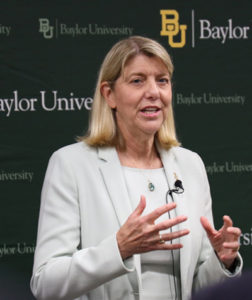
Baylor President Linda Livingstone announced the cost reductions April 14, pointing to the impact of the COVID-19 pandemic on the university’s revenue sources.
“Despite Baylor’s overall strength and resilience, we are now experiencing declines in many essential sources of revenue, which is coupled with an increased need for student financial aid and uncertainty about future enrollment due to COVID-19,” Livingstone said.
“In other words, most of our previously reliable sources of revenue—tuition and fees, fundraising, athletics and income from our investments and endowment—are certain to be significantly affected.”
Baylor already slowed its rate of spending and reduced costs by $16 million through May 31, allowing the university to address credits and refunds to students’ interrupted spring semester and other costs related to COVID-19, she noted.
‘Immediate and difficult decisions’
Looking ahead to the 2020-21 fiscal year, the Baylor President’s Council in concert with the board of regents set a goal of $65 million to $80 million in cost reductions from the university’s projected $750 million budget.
Baylor President Linda Livingstone responds to questions during a news conference after a board of regents meeting. (Baylor File Photo / Matthew Minard)
“Simply put, we need to make immediate and difficult decisions to address the serious financial realities we face in the months and, potentially, years ahead,” Livingstone said.
Baylor will implement an immediate hiring freeze and eliminate some vacant faculty and staff positions, reduce the use of adjunct faculty and temporary employees, postpone a decision on merit increases for faculty and staff, and decrease defined contributions to participants in Baylor’s retirement plan.
The university will initiate “a strategic review and reduction of operating, or non-personnel, budgets” in all areas, including administrative divisions and athletics, Livingstone said.
“Construction of the Mark and Paula Hurd Welcome Center and the Baylor Basketball Pavilion will be deferred until economic conditions improve,” she announced. Architectural and planning work will continue on both projects, she noted.
“The renovation of the Tidwell Bible Building will continue, given that the project was fully funded from external sources,” she added.
One year ago, Baylor announced a $15 million lead gift from the Sunderland Foundation of Overland Park, Kan., to renovate and restore the Tidwell Bible Building, built in 1954. At their February meeting, Baylor regents approved the final phase and total budget of $21.2 million for the project.
Other major capital expenditures will be postponed, and the university will make “aggressive efforts” to refinance existing debt at lower interest rates “once market conditions become favorable,” Livingstone said. Major contracts also will be renegotiated for cost savings.
“While these initial budget reductions are all-encompassing, we also recognize that we are in an era of significant financial uncertainty,” Livingstone said. “If the country’s economic climate deteriorates further, or we experience substantial enrollment declines, or there’s a recurrence of COVID-19 in the upcoming fall or winter, the university may be forced to take additional budgetary actions.”
She asked for prayers for the university, its leadership team and its board of regents as they “make difficult decisions not for Baylor to merely survive, but to thrive once the COVID-19 pandemic is completely addressed.”
West Dallas ministry meets needs with drive-through service
April 24, 2020
DALLAS—New moms in West Dallas know they can depend on Brother Bill’s Helping Hand for solid information about how to care for their babies—and for the one-month supply of disposable diapers they receive when they complete parenting education classes.
Typically, expectant women and mothers of newborns attend three days of classes to learn the basics of baby care before Diaper Day, a celebration when they receive a month’s supply of diapers and other infant-care supplies as a reward for their participation in the nonprofit ministry’s educational program.
When group gatherings had to be cancelled after multiple confirmed cases of COVID-19 throughout the Dallas area, leaders of Brother Bill’s Helping Hand decided the two days of instruction mothers completed before stay-at-home orders went into effect would have to be sufficient. Providing diapers and other essential supplies to families with infants took precedence over the final day of classes.
“That’s when we made the decision to move to a drive-through experience” for Diaper Day, said Wes Keyes, executive director of Brother Bill’s Helping Hand.
Gloved volunteers prepare to deliver diapers and other infant-care supplies to new mothers during a drive-through event at Brother Bill’s Helping Hand ministry in West Dallas. (Photo courtesy of Brother Bill’s Helping Hand)
Instead of a graduation party, Diaper Day in mid-March was a drive-through event, as gloved volunteers loaded supplies into cars for parents, he explained.
Brother Bill’s Helping Hand focuses on three key components—educational programming, healthcare and the essentials of life, particularly food for families in need, said Keyes, a member of Cliff Temple Baptist Church in Dallas.
The ministry—founded seven and a half decades ago by Bill Harrod, a Baptist preacher who saw needs among his West Dallas neighbors and wanted to meet them—now serves about 300 families a week at its grocery store and about 3,000 patients a year at its community clinic.
Churches around the state help support Brother Bill’s Helping Hand through gifts to the Texas Baptist Hunger Offering.
‘Our time to shine’
COVID-19 and restrictions mandated to control its spread compelled the ministry to adapt quickly to changing circumstances, Keyes noted. Families in need throughout West Dallas, Oak Cliff and the surrounding areas have grown to depend on Brother Bill’s Helping Hand for multiple services.
“This is our time to shine. A lot of ministries have become very narrowly focused and specialized. We’ve been a jack-of-all-trades for a long time,” he said.
In the current COVID-19 crisis, the ministry made changes rapidly to find ways to continue to meet a variety of needs in unconventional ways.
“We’re best known for our grocery store. That’s been our on-ramp to everything else,” Keyes explained.
Cars and trucks line up outside Brother Bill’s Helping Hand ministry to receive groceries. (Photo courtesy of Brother Bill’s Helping Hand)
Brother Bill’s Helping Hand offered its first weekly drive-through grocery distribution on March 14. Qualified families receive a month’s supply of food and other necessities.
“We’re providing about $300 worth of fruit, vegetables, meat, frozen food, eggs, milk and other essentials. We even have toilet paper,” said Keyes, a graduate of Baylor University’s Truett Theological Seminary.
Brother Bill’s Helping Hand put into place strict guidelines to protect volunteers, he noted. Each person who enters the ministry’s building is screened and has his or her temperature checked. No more than 30 masked and gloved volunteers are allowed in the ministry’s building at a time, and they seek to maintain six-feet distance between them as they work.
Grocery recipients are asked to open their car’s trunk or back door for when they arrive at the drive-through. That way, when volunteers deliver the groceries, they don’t have to touch the vehicles.
‘We’re not going away’
Partner congregations in the area, including Park Cities Baptist Church in Dallas and Parkway Hills Baptist Church in Plano, have provided in-kind donations of peanut butter, jelly, sandwich meat and bread to help Brother Bill’s serve families with young children who need quick and easy lunches.
Rather than complete forms in personal interviews to qualify for the groceries, Brother Bill’s implemented online registration for the first time. It proved so successful, the ministry hopes soon to begin offering its English-as-a-Second-Language classes through online platforms.
“In the past, we had said, ‘A lot of the people we serve don’t have computers.’ Then we realized nearly all of them have cell phones. Those are powerful tools we can use,” Keyes said.
Working with its partners at Baylor Scott & White Health and Methodist Health System, Brother Bill’s also is using Telehealth to deliver some services and to pre-screen patients who need in-person medical attention.
“This is a crazy and ridiculous time, but we took action quickly,” Keyes said. “A lot of people have had to shut down services now. But we’re not going away any time soon.”
River Ministry adapts to changes along closed border
April 24, 2020
When the United States/Mexico border was closed March 20 to help slow the spread of the COVID-19 virus, it marked significant changes for Texas Baptist River Ministry missionaries who have been seeking to share God’s love with immigrants, refugees and local residents along the Rio Grande.
In El Paso, when a “Stay Home, Work Safe” order led to the temporary closure of schools and nonessential businesses and travel limitations, River Ministry missionary Jesus Galarza saw a huge shift in his work.
Normally, Galarza runs a feeding ministry out of a local school. With the schools closed, Galarza has been unable to continue this ministry. Furthermore, mission trips Galarza had planned with churches had to be canceled or postponed. At this time, he is unsure when these trips will be able to resume.
Galarza asked churches to pray for him and his ministry during this difficult time. Spiritual help is the most important thing churches can give right now, he explained. Pray also for the mission trips that will take place later in the year, after the virus has passed, and that they will be fruitful, he asked.
Serving at-risk individuals
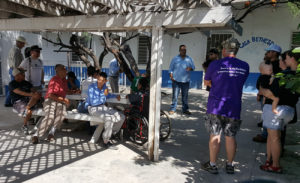
Volunteers minister to residents of Casa Bethesda in Piedras Negras. (Photo courtesy of Jeff Bray)
Gloria de la Pena is River Ministry missionary in Piedra Negras, Mexico, who works with women’s prisons, orphanages and migrant camps, coordinating mission trips with churches to serve these at-risk people.
With mission trips no longer happening, de la Pena asked churches to pray for the people in these facilities. One of the orphanages, Casa Bethesda, houses 26 special-needs children, some of whom could be more susceptible to COVID-19.
She expressed hope that during the time of social distancing and working from home, people will turn to God and then find ways to minister safely to those in their immediate surroundings. De la Pena encouraged churches to ask God to turn setbacks into blessings.
“Pray that everyone can use this quiet time working at home to look to the Lord, learn to have more gratitude and a happy heart, and love our families, friends and all the people who need to know about Jesus,” she said.
Unable to enter immigrant camps
River missionary Cristina Lambarria serves in Matamoros, Mexico, where she works in immigrant camps, providing food, clothing and other resources, including English classes. However, she and her team have been unable to enter the camps because of the risk of infection. It is both unsafe for them because of the crowded living conditions and unsafe for the immigrants, who could be exposed to the virus, she explained.
“Nobody can go into the camps right because we want to protect them. If one gets sick, everyone will get it. They are in communication all the time. They cannot be like us in their homes. The restrooms are outside, and they have to cook in a communal kitchen. So, we decided not to go in the camp right now,” Lambarria said.
Lambarria asked churches to lift up the immigrants in prayer, asking God to protect them from the virus. She also asked for prayer as workers look for ways safely to get food and other resources to the immigrants in the camps.
A vulnerable context
Shon Young is a River missionary in Del Rio, where he is the president of Val Verde Border Humanitarian Coalition. Val Verde was formed in April 2019 when Border Patrol agents approached local churches about ways to respond to the increased number of immigrants passing through Del Rio.
The coalition provides supplies and helps immigrants reach their final destination in America. Val Verde has served thousands of immigrants, asylum seekers and refugees, but with the border closure, both needs and strategies to meet those needs have grown more complex.
“There are so many variables, and we are really trying to keep our eyes and ears open to the chance to minister to those in crisis,” Young said. “Please pray for the border and the congregations on both sides of the river. It is already a vulnerable context with problems that vary from the rest of Texas and adding an extra layer on it will be difficult. Please pray for pastors of the churches that already run on a tight budget and that their churches will continue to support their work even in an atmosphere that people are not able to work or are working less.”








 “Of course, we appreciate the exposure for our church, but we’re more grateful for the gospel impact,” Cannon said. “On Easter Sunday evening, viewers of a national TV news broadcast experienced … a celebration of the Resurrection.”