Hospital chaplains serve in the midst of a pandemic

DALLAS—Texas Baptist chaplains remain hard at work in the midst of the COVID-19 pandemic. Protocols have changed, where bedside conversations have been replaced by phone calls, and hugs have given way to encouraging smiles, but the gospel message remains the same.

“The coronavirus has drastically altered the healthcare setting and life at the hospital, not just for the doctors and nurses but also for our chaplains, whose main role is to offer comfort, provide support and offer hope,” said Candace Zelner, a chaplain at Baylor University Medical Center in Dallas.

“Those things remain unchanged, but the way we do ministry has radically changed. Chaplains have been asked to innovatively use research and collaborate with other chaplains systemwide as we try to figure out the best way to support and care for our patients.”

Chaplains at Texas Baptists’ partner health care institutions are supported by gifts to Texas Baptists’ Cooperative Program. More than $618,000 is given annually to the four health care partners to provide spiritual care to patients and families across Texas.

Hospital workers face increased stress

Mark Grace, chief mission and ministry officer for Baylor Scott & White Health, has observed an increase in patients, staff and families seeking out spiritual guidance in troubled times.

A chaplain counsels and prays with a patient at Baptist Hospitals of Southeast Texas in Beaumont. Since COVID-19, most chaplains have been limited to phone visits with patients, but they have ministered extensively to hospital staff on the front lines. (Photo courtesy of Texas Baptists)

Grace explained that by June 2020, there were 2,800 more staff visits across the Baylor Scott & White Health network than all of 2019. Doctors, nurses and all those working in the hospital are facing increased stress as they struggle to treat a virus with no known cure and risk contamination themselves as they interact with patients.

In addition to providing spiritual counseling and support to those who need it, the health system’s Mission and Ministry Office also engaged with the local community to help churches adjust to online services. They also produced 25,000 facemasks and 5,000 face shields for use in medical centers and non-profits.

For Zelner, who serves as the bereavement officer in addition to her role as a chaplain, visitation restrictions have been the hardest change to hospital procedures.

Usually, Baylor University Medical Center is full of families and friends visiting patients, but visitors have been severely restricted to prevent the potential spread of the coronavirus. For non-COVID-19 patients, one visitor is allowed per 24-hour period. For patients battling COVID-19, visitors are not allowed, except in end-of-life situations, where one visitor is allowed.

Chaplains innovate to help grieving families

Zelner, who has studied the effects of grief during this pandemic, explained that, while these measures keep people safe, they often prevent grief from being processed. To combat this, Zelner has compiled bereavement packages to help families dealing with a loss. In the package, there is a letter signed by all of the doctors, nurses and hospital staff who worked directly with the deceased family member. There is also an EKG strip of the patient’s heart rhythm from before they died.

Zelner called the daughter of a man who had recently died from COVID-19 to explain the bereavement package. The woman was excited to receive the package and said she would make copies of the EKG strip to pass out to other family members.

“With all the changes that the coronavirus has brought, the one thing that has not changed is our capacity and our ability to journey with our patients and our families,” Zelner said.

“This bereavement package we have put together gives us an opportunity to offer hope and comfort in a way that is different but still important.”

An expanded version of this article first appeared in Texas Baptists Life, a magazine produced by Texas Baptists’ communications office.

Logsdon dean named HSU Faculty Member of the Year

ABILENE—Robert Ellis, who learned earlier this year the seminary where he was dean would close, recently found out his peers at Hardin-Simmons University named him Faculty Member of the Year.

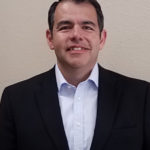
Robert Ellis

Ellis is professor of Old Testament and Hebrew and has been dean of HSU’s Logsdon School of Theology and Logsdon Seminary since 2018.

“To be chosen as faculty member of the year by my peers is one of the most significant affirmations of my life. My father, who taught at HSU for 36 years, received this award during his service at the university. Now, as I begin my 27th and final year at Hardin-Simmons, I am deeply honored to be in his company and in the company of the other remarkable recipients of this award through the years,” Ellis said.

“Teaching at Logsdon has been a high privilege, and I am grateful for the opportunity of service here and thankful for visionary university leaders and donors who through the years have supported ministry preparation at HSU.”

‘A bright shining light’

Myles Wertnz, formerly the T.B. Maston Chair of Christian Ethics and Practical Theology at Logsdon and now founding director of the Baptist Studies Center at Abilene Christian University, offered congratulations in a social media post, writing: “Bob is one of the best people I know, and I’m proud you were my dean.”

Ellis embodies the HSU motto of “an education enlightened by faith,” said Kyle Tubbs, president of the Logsdon Alumni Council.

“Dr. Ellis has been a bright shining light to thousands of Hardin-Simmons students over the years. What an honor for the faculty to recognize his brilliance through this award,” Tubbs said. “I am deeply grateful for his leadership, faithfulness and integrity. He is one of my Baptist heroes!”

Major time of transition

On Feb. 7, Ellis found himself in the middle of a firestorm and a major time of transition after HSU announced its board of trustees voted to close Logsdon Seminary.

In a Feb. 12 letter to the “HSU family,” President Eric Bruntmyer explained the closing of Logsdon Seminary was “strictly a financial decision” reached after extended analysis, discussion and prayer. He also explained current seminary students would be provided a “teach out” program to allow them to complete their degrees and full-time faculty would be provided a one-year contract.

A few days later, the university provided additional details, announcing it was eliminating 11 graduate degree programs, five undergraduate majors, four undergraduate minors and two certificate programs to address a more than $4 million operating deficit. HSU further announced it was reorganizing its academic programs into five colleges and schools, and the undergraduate Logsdon School of Theology would become part of the Cynthia Ann Parker College of Liberal and Fine Arts.

Ellis began serving as Logsdon dean in spring 2018. He spent two years on the HSU faculty in the mid-1980s before going to teach at Southwestern Baptist Theological Seminary. He returned to the HSU and Logsdon faculty in 1996.

Ellis earned his undergraduate degree from HSU and both his Master of Divinity and Doctor of Philosophy degrees from Southwestern Seminary. He spent two years in post-doctoral studies at the University of Cambridge.

He served two decades on the Baptist General Convention of Texas’ Theological Education Council.


Brownsville church feeds families during pandemic

BROWNSVILLE—Working with multiple partners, a small-membership Hispanic church in Brownsville is providing food to hundreds of vulnerable families and individuals each week during the COVID-19 pandemic.

Drive-through food distribution events at Igleisa Bautista Horeb not only serve Brownsville residents, but also families from other Cameron County communities. (Photo courtesy of Iglesia Bautista Horeb)

Like most churches, Iglesia Bautista Horeb in Brownsville suspended in-person Sunday worship services for a few weeks, shifting temporarily to online-only worship. But the church never stopped meeting needs.

“We started the food distribution within our own church, to care for our senior adults,” Pastor Olber Roblero said. “When we saw the need here, we opened it up to the community.”

When Iglesia Bautista Horeb resumed in-person worship on Sundays, it began offering two services—one specifically for senior adults and others in high-risk categories for COVID-19 and one geared toward younger worshippers.

“We continue with online worship on Wednesday and face-to-face worship on Sunday. And throughout the week, we’re feeding the community,” Roblero said.

Drive-through distribution kept growing

Iglesia Bautista Horeb launched a weekly drive-through food distribution on the church property. Donations from a local business enabled the church to give away 50 bags of food the first week in May.

Volunteers deliver 100 food boxes each week to the doorsteps of homebound senior adults and low-income mobile home community residents, including some who have tested positive for COVID-19. (Photo courtesy of Iglesia Bautista Horeb)

By mid-May, that number had grown to 300 food boxes. In recent weeks, the church—which averages 60 in attendance—has distributed 500 food boxes at the drive-in event.

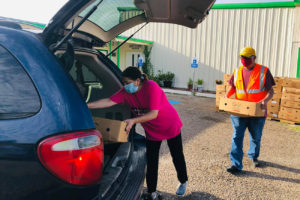
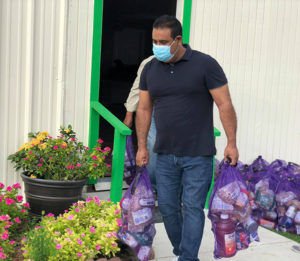
Volunteers also deliver another 100 food boxes each week to the doorsteps of homebound senior adults and low-income mobile home community residents, including some who have tested positive for COVID-19.

Iglesia Bautista Horeb received a $1,000 Community Transformation Initiative grant from the Texas Baptist Christian Life Commission and Woman’s Missionary Union of Texas.

The church also developed ongoing partnerships with the Brownsville Wellness Coalition, Urban Strategies, World Vision and the U.S. Department of Agriculture’s Farmer to Families food box program that make the weekly food distribution possible.

“We are so blessed,” Roblero said.

Ministering to body and spirit

The church’s ministry extends beyond its immediate community. The drive-in food distribution not only serves Brownsville residents, but also people throughout Cameron County, including Harlingen and San Benito.

Volunteers not only provide food, but also offer to pray with area residents during food distribution events at Iglesia Bautista Horeb in Brownsville. (Photo courtesy of Iglesia Bautista Horeb)

The church posts announcements about the food distribution on its Facebook page and encourages others to spread the news by word of mouth.

“When we say we will be open at 9 in the morning, by 6 o’clock people already are in line,” Roblero said.

Recipients are encouraged to stay in their vehicles and allow mask-wearing volunteers to load the groceries for them in their trunks or back seats. Volunteers also are available to pray with anyone who requests prayer.

“Some ask for prayer because people are losing their jobs,” Roblero said, noting others mention health concerns and other issues.

“If they don’t want to roll down their windows to talk, that’s OK. We show them the love of Christ through our actions.”

‘This is essential work’

Volunteers follow appropriate health and safety protocols—maintaining social distance, wearing masks and using hand sanitizer frequently.

Volunteers work during food distribution day at Iglesia Bautista Horeb in Brownsville. (Photo courtesy of Iglesia Bautista Horeb)

Even so, Roblero recognizes any contact can be risky, particularly in a hot spot like the Rio Grande Valley. The four counties in the Rio Grande Valley have reported 43,000 cases of COVID-19, and the number of confirmed deaths due to the virus topped 1,300 in mid-August.

Still, Roblero points to the example of Jesus, who offered a healing touch to lepers in spite of the risks.

“Pray for the safety of our volunteers,” he said. “This is essential work, and they are on the front lines.”

Although the church hasn’t actively recruited volunteers outside its membership, several individuals from the community have shown up to volunteer on distribution days, Roblero noted.

One community volunteer thanked the pastor at the end of a drive-in food distribution for the opportunity to serve, indicating he would be back to help again.

“I was surprised when he didn’t show up for a couple of weeks after that,” Roblero recalled.

Then during a weekly drive-in distribution, a woman rolled down her car window and called out to the pastor, asking him to come speak to her. She told him her husband had volunteered earlier, and it meant a lot to him. He had died the week before of COVID-19.

“This is life and death we’re dealing with,” Roblero said. “The church needs to be a light in the community at a time like this.”


Restarting school in a pandemic a serious test, panelists say

Exams for students may be several weeks away, but the time of testing for schools began much earlier, according to Houston pastor who serves on his local school board.

“In Houston, we’ve been through hurricanes, but this coronavirus is something completely different. We thought Harvey was our big test. But COVID-19 is a test like none other,” said John Ogletree, outgoing president of the Cypress-Fairbanks Independent School District board of trustees and senior pastor of First Metropolitan Baptist Church.

Ogletree, who also is president of Pastors for Texas Children, participated with Carol Burris, executive director of the Network for Public Education, in an Aug. 11 virtual panel discussion on “Restarting School During a Pandemic,” sponsored by Good Faith Media. Cameron Vickrey, associate director of Pastors for Texas Children, moderated the discussion.

“There is no one-size-fits-all” answer to the question of when to resume school and how it should be done, Ogletree said.

‘A complicated question’

Burris agreed that decisions about when schools return to in-person, in-classroom instruction defy easy answers and depend largely upon the prevalence of COVID-19 in a particular community or area.

“Of course, teachers are essential workers. The question really is: Do they do their work in person with children, which I think everyone understands is the very best possible scenario, or do they—at least for a while—do their work virtually online? It’s a very complicated question,” she said.

“We don’t want to be irresponsible. At the same time, I believe where schools can open, they should,” she said, adding those schools that open soon can become models to help other districts learn what does and does not work.

Virtual instruction cannot take the place of public school classrooms that offer instruction to children from varied backgrounds and income levels who interact with each other, she added.

Schools in areas that have extremely low rates of infection “have a moral obligation to begin to provide in-person instruction,” she said. However, she said, it would be “foolhardy” to begin classroom instruction in areas with high rates of COVID-19.

“We know that the kids who are hurt the most by virtual instruction are our youngest students,” Burris said, pointing to data that shows prolonged screen time actually can damage brain development in young children.

Since the youngest students also appear to be least at risk of COVID-19, she recommended opening kindergarten and elementary schools first, while limiting class size to allow for social distancing.

Districts face multiple challenges

In addition to considering COVID-19 infection rates, districts also must consider the challenges of putting safety protocols in place and providing necessary resources to allow sanitizing and social distancing, Ogletree said.

John Ogletree, pastor of First Metropolitan Baptist Church and outgoing president of the Cypress-Fairbanks Independent School District, responded to questions during a panel discussion on “Restarting School During a Pandemic.” (Screen Capture)

Cypress-Fairbanks ISD approved $44 million in technology enhancement to provide every student a laptop computer, he added. The district sent a survey to parents giving them the option of having their children enrolled either in classroom or virtual instruction. To date, 34 percent selected in-person classroom instruction, and 43 percent chose the virtual learning model.

“We’re still trying to get responses back from the others,” he said.

Teachers in the district will go through three weeks of staff development to prepare for the unusual learning environment, and students are scheduled to begin school on Sept. 8.

Ogletree noted the challenges virtual learning presents for non-Anglo students in low-income areas where internet access may be in short supply and parental supervision of lessons may be difficult for parents working multiple jobs.

Ask, ‘How can we help you?’

He particularly decried the politicization of the pandemic.

“We’re in a national pandemic. It is tragic that wearing a mask is political, and putting business over science, which is a false dichotomy,” he said. “Both have to be considered. There will be no business if this pandemic, if the spread of this virus, continues like it is.”

Even during the pandemic, churches can adopt local schools and encourage their teachers and administrators, Ogletree said. When students return to school on Sept. 8, First Metropolitan Baptist Church will send a gift to every teacher in the school the congregation has adopted, along with a message of hope, he noted.

“When you develop a relationship with a school, ask them, ‘How can we help you?’ Be there for them,” he said.

Speaking particularly to pastors and other faith leaders, Ogletree urged: “Now is the season to engage our public schools, our parents and our teachers. Right now, they need a touch—a touch that only you can give to calm their fears. … We can get through this pandemic, but it’s going to take all of us working together, and there is something you can do in the school that’s close to you.”

Additional panel discussions on public education are scheduled at 1 p.m. on Aug. 18 and Aug. 25 at the Good Faith Media Facebook site here.  


Network offers hope to terminated pastors and families

TYLER—Deanna Harrison knows the pain ministers and their families face after being fired by a church. She and her husband learned the hard way.

In 2008, Scott Harrison—who had been a pastor more than 30 years—faced abrupt involuntary termination by the Missouri church he had served seven years. It followed what his wife characterized as “a coup d’etat” carried out in a two-week period.

“It was such a brutal thing to experience,” she said. “I had never felt so alone. … I felt like I had no one to talk to.”

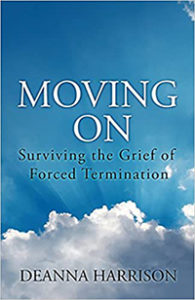
The pain her family experienced instilled in Harrison a deep desire that no other minister or spouse feel that sense of isolation. Several years after her husband was fired, she wrote a book, Moving On: Surviving the Grief of Forced Termination.
“I spent a lot of time talking with pastors and pastors’ wives. You’d think it would leave me feeling emotionally drained, but I felt energized,” she said.

The response from the book was so overwhelming, Harrison sensed God calling her to launch a ministry for terminated ministers and their spouses, and Pastor’s Hope Network was born.

The network seeks to provide “hope and help for pastors in transition” through partnerships with nonprofit agencies, churches, businesses and counseling services. David Dykes, senior pastor of Green Acres Baptist Church in Tyler, serves on the network’s advisory board, and some Texas Baptist churches are listed among its partner organizations.

‘I’ll be your community’

“We’re building a network of people with skills that can benefit pastors and who have a love for ministers,” Harrison said.

“When the average church member loses a job, he goes to his pastor, to friends and maybe to a small group at church to talk about it and find support. When a minister loses his job, he loses his whole community. We’re building a network that can come alongside the minister to say: ‘I’ll be your community. We don’t want you to feel forgotten.’”

Harrison understands how devastating the loss of a ministry position can be not only to a pastor, but also to the minister’s family. In addition to her decades of experience as a pastor’s wife, she also grew up as a minister’s child. Her father, Bob Longshore, served in the stewardship office of the Baptist General Convention of Texas.

Looking back, Harrison noted she would have benefited from counseling in the time immediately after her husband was fired. So, one of the goals of Pastors’ Hope Network is to provide subsidized counseling for ministers and their families.

While Texas Baptists Counseling Services offers that kind of assistance to ministers in BGCT-affiliated churches, Pastors’ Hope Network seeks to serve ministers of all denominations and those who serve nondenominational churches.

The network includes financial advisers and people with business experience who donate their services to help ministers restructure household budgets, reassess retirement options and manage money more effectively.

Not a ministry placement service

Pastors’ Hope Network also helps ministers prepare resumes and find short-term employment, but it does not function as a placement service to connect ministers to churches.

“That’s not our role. We’re not trying to get a pastor into his next ministry position,” Harrison said.

The network is not focused on making judgments about the reasons for termination. Harrison acknowledged “every story has two sides, and then there’s the truth in there somewhere.”

Rather, Pastors’ Hope Network seeks to help ministers discover transferable skills they have used in church settings and learn how to apply them in other jobs, she said.

“We want to connect them to transitional employment—a place where they can heal and find direction before they go on,” Harrison said.

Since Pastors’ Hope Network launched in January 2019, it has assisted 56 ministers—25 of them in Texas and the rest in 19 other states.

Harrison noted the network not only works with pastors and other ministerial staff who have been fired, but also ministers who face premature retirement when their positions are eliminated. As churches cope with the continuing COVID-19 pandemic, she expects their number to increase.

“We’re told some churches will be closing their doors within the year,” she said. “We anticipate more ministers who are let go for economic reasons.”

Scott Harrison—who has served mostly in interim ministry positions several years—recently joined the staff of a Denver, Colo., church. While Deanna Harrison will relocate from East Texas to Colorado, Pastors’ Hope Network will maintain its close ties to the churches and individuals in Texas who support it.

“The need is so widespread,” she said. “Our real goal is to walk alongside ministers and their families and to introduce them to a caring community of partners who can help.”

For more information, click here or contact Deanna Harrison at deanna@pastorshope.net.   


COVID-19 prompts innovation at Georgetown church

GEORGETOWN—Crestview Baptist Church in Georgetown enjoys some distinctive advantages in terms of facilities and resources that have helped it thrive during a global pandemic. But Pastor Dan Wooldridge believes its greatest assets are creativity and commitment.

Dan Wooldridge

“We’re not going to close down and hide under the bed until this is over. That’s just not in the DNA of this congregation,” Wooldridge said.

Instead, the church has continued to discover new ways to adapt and meet needs in a changing environment—from providing an online version of its summer day camp to making its building available for remote learning sites once school resumes.

Like many congregations, Crestview Baptist suspended in-person worship services in mid-March. Crestview focused on expanding its online presence through streaming worship services on Facebook, YouTube and the church’s website.

“We offered online services with a band, praise team and preaching on Sunday morning, Sunday evening and Wednesday,” Wooldridge said. The church also began posting daily video devotionals and promoted online Bible study opportunities.

Church began to ‘regather’ on Mother’s Day

The church’s PieceMakers quilting ministry created masks for people who needed face coverings—first for health care workers, and later for worshippers when Crestview began to “regather” on-site on Mother’s Day.

Members of Ablaze, a youth choir at Crestview Baptist Church in Georgetown, and their parents work at Liberty Baptist Church in Voca during a one-day mission trip. Youth and parents traveled in a caravan as family units to maintain social distancing. (Photo courtesy of Corey Ash)

At that point, the church benefited from a decision made several years ago to equip its facility for livestream worship in multiple on-campus venues so it could accommodate overflow crowds.

“At the time, we wanted to delay building a new worship center until we retired our indebtedness,” Wooldridge said. “Instead of satellite campuses around town, we set up our whole campus here like a satellite.”

More than 300 have gathered most Sundays for in-person worship since it resumed at Crestview. Even blocking every other pew and maintaining at least six feet between worshippers from different households, the church could accommodate twice that number if necessary by opening additional on-campus worship sites, Wooldridge noted.

Hand sanitizing stations are set up throughout the facility, and the worship centers are disinfected between services.

Worship leaders give a “gentle nudge” to encourage worshippers to wear masks, and all greeters and ushers wear them, Wooldridge said.

While mask-wearing is encouraged throughout the building, it is only mandated in one venue—the fellowship hall—which is designated for those who want to be in an environment where everyone is wearing face coverings.

Resuming Bible study, thriving financially

Since most of the educational space at Crestview is divided by movable walls, the church has been able to make adjustments for on-campus Bible studies while allowing for social distancing, Wooldridge added.

When COVID-19 forced Crestview Baptist Church in Georgetown to cancel its in-person weeklong summer day camp, the church created Camp Crestview Reimagined as an at-home, online alternative experience. (Photo courtesy of Robert Stephens)

Between worshippers who gather in-person and those who view online services and Bible studies, attendance is significantly larger now than before the pandemic—and the church reached a high attendance of 956 in Bible study not long before the mid-March lockdown. More than 20 people have joined Crestview since that time.

While some churches have suffered financially during the pandemic, giving at Crestview surpassed budget requirements for the first half of the year and has continued at a record pace, Wooldridge reported.

Many members give online or mail checks to the church office during the week. Others place their offerings in receptacles at the exits of the worship centers.

“At some point, I do want to get back to passing the offering plate during the service,” Wooldridge said. “I see giving the offering as an act of worship.”

Camp Crestview Reimagined

In May, the church put on hold its popular Camp Crestview weeklong summer day camp, originally scheduled in June. However, it was rescheduled for early August as a virtual event.

Children participate at home in Camp Crestview Reimagined. (Photo courtesy of Robert Stephens)

Camp Crestview Reimagined includes age-appropriate activities for children in kindergarten through second grade and third through sixth grades presented either on the Internet or a DVD. Every child who is enrolled receives a packet of camp supplies.

More than 1,000 children are participating—including children out of state who have family connections to Crestview and are able to join this year due to the online format.

The virtual format also enabled Crestview to share the day camp experience with Maranatha Baptist Church, a congregation in the New York borough of Queens that primarily serves immigrants from Romania and other Eastern European countries.

When school starts, Crestview hopes to make space available throughout its campus for remote learning.

Since the church has quality Wi-Fi throughout its facility, it will provide learning space for students who have laptops but lack reliable Internet access at home—or who have noisy preschool siblings and need a quiet place to do their schoolwork, Wooldridge explained.

“I am blessed with the most creative staff anywhere,” he said. “They continue to create additional ways for us to intersect with our community.”


TBM meets needs in the Valley after Hurricane Hanna

WESLACO—Texas Baptist Men disaster relief teams are continuing to meet needs across the lower Rio Grande Valley in the aftermath of Hurricane Hanna.

Corky Houchard from First Baptist Church in Frisco works with a TBM mud-out crew in the Rio Grande Valley after Hurricane Hanna. (TBM Photo)

Hurricane Hanna made landfall along the Texas coast as a Category 1 storm and poured rain across the lower Rio Grande Valley, knocking power out to thousands, knocking over trees and flooding homes.

A TBM chainsaw team, mud-out teams, emergency food-service team, shower and laundry unit, chaplains and an incident management team are serving in the region. Based at First Baptist Church in Weslaco, TBM volunteers are delivering help, hope and healing from Brownsville to Weslaco, leaders of the group said.

“We have amazing volunteers who will respond even in the midst of a pandemic,” said Dwain Carter, director of TBM disaster relief. “They saw people in need and stepped up to help. This is their calling. They are sharing the love of Christ.”

Curt Neal leads a TBM mud-out crew from First Baptist Church in San Antonio as they work on a home in the Weslaco area. (TBM Photo)

TBM retooled its protocols and procedures to serve safely during the COVID-19 pandemic. Volunteers are wearing face masks, practicing social distancing where possible and have their temperature checked daily.

The teams’ work is having an impact today and into eternity, Carter said.

“We’re removing fallen limbs,” he said. “We’re cleaning out homes and eliminating mold. Yesterday alone, four people professed Christ as their Savior for the first time. People are finding healing through a relationship with Christ.”

Carter thanked First Baptist Church for hosting the volunteers.

“First Baptist Church in Weslaco is always stellar to host us every time we’re here,” Carter said. “They are a pillar of this community. They seek to meet needs and share the gospel every chance they get. We’re honored to partner with them.”

To support TBM disaster relief financially, click on TBMTX.org/donate or mail a check to Texas Baptist Men, 5351 Catron Drive, Dallas, TX 75227.


Baylor Collaborative receives grant for milk incentive program

WACO—The U.S. Department of Agriculture announced a grant of nearly $1 million to the Baylor University Collaborative on Hunger and Poverty for a pilot program designed to encourage Supplemental Nutrition Assistance Program participants to purchase and consume milk as part of a healthy, balanced diet.

Jeremy Everett

“We are excited to partner with USDA to explore creative ways to reduce food and economic hardship for families in Texas and around the country,” said Jeremy Everett, executive director of the Baylor Collaborative on Hunger and Poverty.

“Our hope is that the Healthy Fluid Milk Incentive will strengthen families’ food budgets so they can get the proper nutrition they need to thrive.”

Through a cooperative agreement with the Baylor Collaborative, SNAP participants shopping at select grocery stores in Texas will receive incentives for purchasing qualifying milk.

“Making nutritious foods more accessible is a USDA priority, and we are always looking for ways to leverage innovative strategies to help achieve that goal,” said Pam Miller, administrator of USDA’s Food and Nutrition Service.

Miller called the pilot program “a win-win for both participants’ diets and America’s dairy farmers.”

The Healthy Fluid Milk Incentive pilot was established by the 2018 Farm Bill to encourage milk consumption as part of a healthy diet. The program is expected to be fully operational by May 2021, and incentives will be tested for one year.

The Baylor Collaborative on Hunger and Poverty received the $930,000 grant through a competitive process and will be partnering with South Plains Hunger Solutions Coalition and Lowe’s Supermarkets to develop and test incentives at local Food King grocery stores in Littlefield, Lubbock and San Angelo.

Once the Healthy Fluid Milk Incentive is operational, shoppers using SNAP benefits at these locations to purchase qualifying fluid milk (pasteurized, unflavored and unsweetened cow’s milk —skim or 1 percent) will receive a coupon for additional free milk.

The Healthy Fluid Milk Incentive pilot builds on the success of previous incentive programs, which have been shown to impact households’ purchasing decisions and diet. The Healthy Incentive Pilot found that SNAP participants receiving incentives for purchasing fruits and vegetables consumed 26 percent more fruits and vegetables per day than those that did not receive an incentive.


Texas Christian women’s advocate still waits for apology

WILLIS—Shirley Taylor, an East Texas-based Christian advocate for women’s equality, has been waiting 10 years for the Council on Biblical Manhood and Womanhood to apologize for promoting what she considers “a gender-based caste system.”

But she hasn’t been holding her breath.

“There are too many reputations involved, too much money and too much power for them to give up their cherished position,” said Taylor, who noted the 10th anniversary of the 2010 Seneca Falls 2 Christian Women’s Rights Convention passed on July 24 without comment from the council.

Danvers Statement and male headship

The 2010 convention—named for the historic 19th century women’s rights convention—called on the Council on Biblical Manhood and Womanhood to apologize for teachings in the Danvers Statement about “male headship” in the family and church.

The Danvers Statement on Biblical Manhood and Womanhood—drafted in December 1987 and published by the council the following year—presents the “complementarian” view of gender roles in the home and church. Complementarianism teaches that God granted men and women equal worth but assigned them different roles of headship and submission that complement each other.

The Council on Biblical Manhood and Womanhood did not respond to a request from the Baptist Standard for comment.

Shirley Taylor

Complementarian teachings and the Danvers Statement have had a “tremendous influence” on evangelicals in general and Southern Baptists in particular, Taylor said.

Women and girls who join Southern Baptist churches need to realize “their membership comes with restrictions” that do not apply to men and boys in the same congregations, she asserted.

In 1998, the Southern Baptist Convention amended its Baptist Faith & Message to include an article on “family” that stated “a wife is to submit herself graciously to the servant headship of her husband.” The 2000 revision of the Baptist Faith & Message’s article about the church added a statement that “the office of pastor is limited to men.”

Complementarian teaching permeates Southern Baptist seminaries. Current members of the Council on Biblical Manhood and Womanhood include Al Mohler, president of Southern Baptist Theological Seminary; Daniel Akin, president of Southeastern Baptist Theological Seminary; and Jason Duesing, provost of Midwestern Baptist Theological Seminary.

In 2009, the board of trustees at Southwestern Baptist Theological Seminary adopted the Danvers Statement as a guiding document in the seminary’s policy manual. Trustees at Southeastern Seminary had adopted it earlier, and Midwestern Seminary subsequently adopted it.

Male headship and abuse

Among other issues raised in the 2010 call for an apology, the Seneca Falls 2 declaration states, “We are concerned about wife abuse, girlfriend abuse and abuse to female children that takes place in many homes where evangelical men are taught that they have earthly and spiritual authority over women.”

The declaration also states, “We are concerned that men who are taught that they have male headship over a home and church do not feel that they are accountable for abusive attitudes and actions toward women.”

Investigative reporting by the Houston Chronicle and San Antonio Express-News revealed more than 700 victims of clergy sexual abuse in Southern Baptist churches in 20 years.

Some Southern Baptist pastors and leaders—including SBC President J.D. Greear and Ethics & Religious Liberty Commission President Russell Moore—have been at the forefront of addressing clergy sexual abuse issues and calling for accountability in churches.

Sexual abuse in churches “is a gospel issue,” Southern Baptist Convention President J.D. Greear told the capacity crowd at Caring Well: Equipping the Church to Confront the Abuse Crisis. “The credibility of our witness and, even more importantly, the souls of our people are at stake.” (Karen Race Photography / BP)

Greear appointed an SBC sexual abuse advisory group and led the SBC to adopt changes to its governing documents and create a standing Credentials Committee to consider whether churches that mishandle sexual abuse claims are in “friendly cooperation” with the convention.

Moore led his agency to make sexual abuse the focus of its 2019 annual conference and has spearheaded the SBC’s “Caring Well” initiative to prevent abuse and provide care for its victims.

However, they continue to hold a complementarian view of gender roles that Taylor believes can provide the foundation for abuse to occur.

“There’s definitely a link” between teachings about male headship and abuse of women, she insisted.

“I worry about the effect it has on pastors who counsel women,” she said, noting some pastors encourage women in abusive situations to continue to submit to their husbands and allow the abuse to continue.

Street evangelist for women’s equality

Taylor—who worked 15 years at the Baptist General Convention of Texas, primarily in its church starting center—felt God calling her 12 years ago to become an advocate for women.

“I felt the call to get up and go, and I got up and went,” she said, adding that she tried to effect change in Baptist life but grew frustrated with it.

Taylor, who lives in Willis, has worked on the office staff of a Disciples of Christ church in Conroe for 14 years and currently worships at a United Methodist church in Montgomery, but she still considers herself a Baptist by conviction.

She launched the Baptist Women for Equality blog and worked with Christians for Biblical Equality to host a conference in Houston in 2012.

Taylor is the author of several books, including Women Equal—No Buts: Powered by the Same Source. Now, she calls herself a “street evangelist for women’s equality.”

“I don’t speak for any organization. I’m completely on my own,” she said. “I just strike up conversations with strange men—when you get older, you can do that. And I give away copies of my books. Only two people have ever turned the books down, and I have given hundreds of books away.

“I just give them the good news. What they do with it is up to the Lord and them. That’s what an evangelist does, and I felt called to this.”


Hispanic Baptist Convention meets virtually

The Hispanic Baptist Convention of Texas celebrated its 110th anniversary and held its annual meeting virtually due to the COVID-19 pandemic.

Jesse Rincones

When it became clear the traditional in-person gathering could not be held as originally planned, Convención officials worked rapidly to put together the virtual annual meeting on short notice, Convención Executive Director Jesse Rincones said.

“When the circumstances change, we have to adjust to address the needs of our congregations,” Rincones said.

Normally, messengers to the annual meeting elect officers, approve a budget and deal with other business items. The virtual format required Convención to grant its executive committee authority to make some decisions and to postpone other matters until the 2021 annual meeting, he noted.

Meeting needs in challenging times

The meeting—centered on the theme “From Generation to Generation”—included various reports on Hispanic Texas Baptist work during a time when congregations face a series of challenges due to the ongoing pandemic.

For months, Rincones said Convención stayed in touch with ministers, leaders and churches through emails and phone calls.

Convención provided information to member congregations regarding the stimulus package passed by U.S. Congress.

It also offered a series of webinars in Spanish for 116 people and webinars in English for 93 individuals, as well as webinars geared specifically toward pastors.

Current resources provided by Convención can be found online.

Rincones reported the number of cooperating churches increased from 63 churches to 97 churches last year.

Information about Convención’s budget is posted online.

Teach your children well

While the Hispanic Convention continues to face a year filled with unprecedented circumstances, Convención President Tony Miranda said Texas Baptist Hispanic churches must focus on teaching the next generation what truly matters.

He pointed out the Great Commandment in Deuteronomy 6:4-9—to love God with all of one’s being—was given with instructions about how to keep it foremost in the minds of God’s people and to teach it in each home.

“As we know and learn that, we must also pass it on to the next generation,” he noted.

But a disconnect between younger generations and the church shows congregations and their leaders have a lot of work to do to pass on that knowledge, said Miranda.

“As leaders prepare for ministry, they must prepare to serve for various generations, not just one,” Miranda remarked. “We must involve all generations in all aspects of the church.”

Need for change and renewal

Connecting with younger generations requires change and renewal, which means churches must exercise wisdom in letting go of unnecessary traditions and focusing on relationships, he added.

“We recognize that God will express himself in whichever way he chooses to … (in) the next generation,” Rincones said during a panel with other Hispanic Baptist leaders.

Through personal relationships with pastors and church leaders, members of the congregation will see how ministers treat others and how they lead with humility, panelists noted.

Passing the knowledge and love of God to the next generation starts with the pastors and other ministers, they added.

“Include youth in your leadership,” Miranda said. “Help them discern their calling.”

As some Hispanic communities struggle with the issue of different languages, Rincones acknowledged relationships have primary importance. Respect, listening and investment matter more than everyone speaking the same language, he observed.

Everyone will leave a legacy, Rincones said. “Some will leave a good legacy, and others will leave a not-so-good legacy,” he noted.

As Christians serve God and others, following the Great Commandments, they are called to do so understanding the fruits of all their works is borne in those who will come after them, Rincones said.

“The legacy is not for us. That is for those who will come after us,” he said. “The focus of the pastors should always remain in helping people grow and not the ministries of the church, because Jesus said he himself will build his church.”


TBM deploys disaster relief teams after Hurricane Hanna

Texas Baptist Men is deploying multiple volunteer disaster relief teams to the Weslaco area in the wake of Hurricane Hanna.

Volunteers include mud-out teams to clean flooded homes, personnel to staff a shower and laundry unit, a chainsaw team, chaplains, assessors and an incident management team.

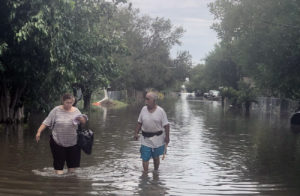
Hurricane Hanna made landfall July 25 in South Texas and blew across the lower Rio Grande Valley. TBM volunteer disaster relief teams will be ready to serve as soon as the rain ceases and the water recedes. (TBM Photo / Leslie Carter)

Hurricane Hanna made landfall July 25 in South Texas and blew across the lower Rio Grande Valley. It continues to dump rain across the region, and the forecast calls for continued rain for several days.

The volunteer teams will be ready to serve as soon as the rain ceases and the water recedes.

“Hanna has significantly impacted large portions of South Texas and continues to drop rain on the area,” said TBM Disaster Relief Director Dwain Carter, who rode out the storm in the area. “Our teams are preparing … to deliver help, hope and healing as soon as the region clears and work can begin. Please keep South Texas in your prayers.”

Carter is in ongoing communication with city and regional leaders, as well as pastors from across the area as assessors continue to evaluate the situation.

In an effort to keep TBM volunteers as well as those they serve safe from COVID-19, the teams serving will be smaller, wear masks and practice social distancing. Temperatures will be taken, and each volunteer will have more housing space than typical.

“We want to share God’s love in the hardest days of people’s lives,” Carter said. “Part of that is making sure everyone remains healthy and gets the help they need. In the coming days, TBM volunteers will help South Texans take their first steps in recovering from Hurricane Hanna.”

To support TBM disaster relief financially, click on TBMTX.org/donate or mail a check to Texas Baptist Men, 5351 Catron Drive, Dallas, TX 75227.


Barbecue Baptist Church delivers meals and message

NAVASOTA (RNS)—Before the barbecue trailer, there was the toilet paper popemobile.

With toilet paper hard to come by as stay-at-home orders took effect in many states earlier this year to flatten the curve of the coronavirus, Chad McMillan put the pastor of First Baptist Church in Navasota, on a trailer surrounded by plexiglass, “like the popemobile,” he said.

He handed the pastor a T-shirt gun loaded with toilet paper, each roll wrapped with a Bible verse.

“And I said, ‘I want you to shoot toilet paper rolls to bless the community,’” said McMillan, the church’s pastor of students, evangelism and missions.

The toilet paper distribution went so well, he added a pulpit, sound system and piano so he could hold pop-up worship services while flinging the TP.

McMillan joked about adding a barbecue pit, too.

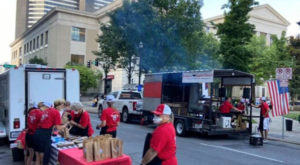
Barbecue Baptist Church—an outreach of First Baptist Church in Navasota— prepares ministry and meals in Louisville, Mississippi, during a road trip stop in June. (RNS Photo courtesy of Barbecue Baptist Church)

Then he did—and Barbecue Baptist Church was born.

Barbecue Baptist Church, an outreach of First Baptist, aims to bring a warm meal, a little levity and a reminder that people care to its community and beyond.

The church borrowed a catering trailer from a member and made an announcement on the local news in April: “Anybody who invites us to come, we will come to your house, and we will do a short worship service and give you a free barbecue meal,” McMillan said.

“People were staying in their homes, churches weren’t meeting and it was a real need people had,” he said.

In the first five weeks, Barbecue Baptist Church traveled around the county, serving about four meals a day, four days a week, McMillan said. Sometimes it would find a group of 20 people. Sometimes it would find a single elderly woman sitting on her porch.

Workers with Barbecue Baptist Church, an outreach program of First Baptist Church of Navasota, prepare food during a road trip stop in Nashville in June 2020. (RNS Photo courtesy of Barbecue Baptist Church)

Last month, the outreach decided to take the show on the road from Navasota to Nashville, visiting first responders and medical professionals in six different states across the South in seven days. On that trip alone, McMillan said, its team smoked 800 to 1,000 pounds of pork using post oak wood, offering a Central-Texas style of barbecue.

Along with the barbecue, McMillan said he’s been sharing a message of hope based on a passage from the biblical book of Romans—about suffering producing perseverance; perseverance, character; and character, hope.

And he tries to share some humor.

That’s “not to make light of what’s happening,” he said, “but to try to give people a moment of levity and joy to know that God loves them, and we love them.”

McMillan said Barbecue Baptist Church is planning another road trip soon and hopes to continue even after the coronavirus pandemic ends.