Ukraine retreat offers peace in midst of trauma

Leo Regheta led 160 pastors and their families for a weeklong retreat in prayer and a peaceful time with God along the Black Sea in Odesa, Ukraine.

The group was aware of the war taking place to the east, describing how at night hundreds of drones would cover the skies “like swarms of flies.”

All the pastors, their wives and children were from the front lines of Ukraine.

During the retreat, worship—led by young adults—included prayer gatherings for men, art therapy, storytelling for women, seminars on healing and programs for children and teenagers.

Conversations on anxiety, fear and loss created an environment of sharing, praying and encouragement during the retreat.

“Some of them came up to us and said they have never vacationed on the beach their whole lives,” Regheta said.

“All of them came from the frontline zones. All of them came from the daily experience of hearing sirens and watching things get bombed.

“One pastor was looking down as he said: ‘I’ve seen things in my life that no human being should have seen. I have picked up bodies of young soldiers, so young, they didn’t have a mustache growing on their lips.’ So, people were traumatized.”

Another account was of a family of refugees who escaped with all their documents packed, saying, “We are not sure there will be a home for us to go back to.”

The inspiration for trauma healing care

Regheta and his team at Hope International Missions are familiar with the dangers that come with visiting and serving in the region and caring for refugees of the war in Ukraine.

“Our ministry has been doing mostly summer camps and leadership training for over 25 years,” Regheta said.

“A couple of years before the [2022] wars started, we were invited to Ukraine. We were already there doing camps and leadership training,” he continued.

“When the war happened, things broke loose. We got requests for gas money from our church partners as they were taking people to safety. They were taking people to the border. Other people were picking up from the border.”

A team of female volunteers was sent to Krakow and Warsaw, Poland, to meet incoming trains with women and children during the first weeks of the war.

The team met a director of a refugee center who served many of the men, women and children who fled. The connection birthed an opportunity for Hope International Missions to create a summer camp for children suffering from trauma from the war.

“You could see that they are still processing the trauma,” Regheta said.

A few weeks after working with kids, the discussion to include trauma healing for women began. Female refugees said they were struggling with their mental health and were in as much need as their children.

“God has put our organization in touch with Christian psychologists, trauma therapists and other Christian leaders who are doing those very things,” Regheta said.

“We did 10 conferences for women and trauma healing in Poland, Germany, Belgium, Italy, Latvia and then Ukraine. Our organization has been inside Ukraine seven or eight times since the war started.”

Regheta is going back to Ukraine in October with Hope International Missions to host two major trauma healing conferences for women in Kharkiv and Odesa. They are expecting 600 women throughout Ukraine to attend the weekend conferences. The event also will include partners from Ukraine and a trauma healing practitioner from the United States.

A local connection

In Plano, where Regheta serves as pastor of River of Life Church and connects with refugees from Ukraine weekly, he knows firsthand how the trauma of the war has affected the youngest of his congregants.

“I met a couple of families here in North Texas that are still recovering, and their children are still recovering,” Regheta said.

“One family came to our church and their older daughter, who must have been 6 or 7 at the time—that was two years ago—she was grabbing onto her mom’s skirt, hiding behind, and I said: ‘Hello, little princess. How are you?’

“The youngest one came out and gave me a high-five. The older one kept hiding. The mom says, ‘She’s still recovering from what happened in Kyiv.’ Those kinds of observations and experiences gave us the first face-to-face understanding of how bad the trauma is.”

In April, Dallas Mayor Eric Johnson phoned Regheta to inform him the city of Dallas would become a sister city to Kharkiv. The city officially signed a memorandum and in March, Kharkiv Mayor Ihor Terekhov came to Dallas by invitation of the city, where he also had a chance to meet volunteers and leaders of Texans on Mission.

The Dallas mayor’s office is working with the mayor of Kharkiv and Hope International Missions to set up a trauma healing center in Kharkiv, locally run by residents in Kharkiv.

“We realized to help people more long term, we need to really invest into trauma healing for them. And our organization, being a Christ-centered, biblically based organization, we understand the real transformation comes from the Lord,” Regheta said.

“The real healing only comes from Jesus. He is not just putting a bandage on something that hurts. He is healing from the inside.”

But Hope International Missions still is looking for support from churches and individuals.

Regheta added that they are grateful for the support they have received from individuals, churches, ministries like Texas Baptists and others.

To support Hope International Missions’ efforts through fiduciary donations or giving of materials like biblical trauma healing lessons or laptops, or books, visit https://www.him4nations.org.



East Texas layman building children’s home in India

Andrew “AJ” Ireton owns a small construction company in Van Zandt County, but his clients know he won’t be available for a couple of months. The Baptist layman will be building a children’s home in eastern India.

About a year ago, Ireton met Pastor Maduh—whose full name is withheld for security reasons—at a conference at Rose Heights Baptist Church in Lindale.

At a conference in Lindale, Andrew “AJ” Ireton learned about a ministry to at-risk children in India. (Courtesy Photo)

Maduh leads Global Kingdom Ministries in India, where he is pastor of a church and currently shelters 25 at-risk children in a rented house. Some are orphans, while others were rescued from sex trafficking.

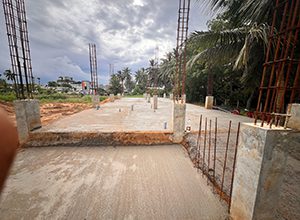
At the conference, Ireton learned Maduh was building a children’s home/safe house that also will provide a place for his church to meet. But construction stalled soon after the foundation was completed.

Ireton saw it as the perfect intersection of his construction experience—including building on a mission trip to Mexico—and his sense of God’s calling to minister to children in need.

“It was a divine appointment all the way around,” he said.

Ireton grew up attending First Baptist Church in Stanton with loving adoptive parents. However, he struggled with depression and said he “believed the enemy’s lie that I would never amount to anything.”

“This path led me into sin and addiction until January 2018, when in a Texas jail cell, I encountered the Lord in a powerful way,” he wrote in a recent newsletter to ministry supporters.

‘Vision of children crying out in need’

Construction stalled on a children’s home/safe house in India soon after the foundation was completed. (Courtesy Photo)

God gave him “a vision of children crying out in need of safety and care,” he wrote. “From then on, I dedicated my life to serving the Lord wholeheartedly.”

Ireton has made international mission trips previously. So, customers of Trinity Handyman Service understand he sometimes is not available for several weeks at a time. And East Texas businesses understand when he contacts them seeking ministry support.

“I’ve been calling in favors, dotting every I and crossing every T to get ready,” he said.

When Ireton packed up his equipment to leave for India, about half of the money required to complete the first phase of the construction project was in hand.

“We’re stepping out in faith and trusting that the Lord will provide the rest of the funds once I get down there,” he said.

Ireton knows his wife Meagan and their four children will be “living on bare minimum” until his return, but they support his commitment to go where he believes God leads.

“When the Lord opens a door, sometimes he kicks it in,” he said.

For more information and updated prayer requests, email GKingdomministries@gmail.com.


Church-starting leader JV Thomas dead at age 94

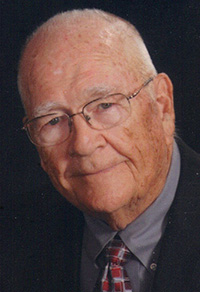
James Virgil “JV” Thomas Jr., who led Texas Baptists’ church-starting initiatives to new heights, died Aug. 27 in Colleyville. He was 94.

Thomas was born March 13, 1931, in San Benito to James Virgil and Agnes Thomas. He spent his childhood in Shepherd.

He attended East Texas Baptist College, graduated from Southwestern Baptist Theological Seminary and earned a Master of Liberal Arts degree from Southern Methodist University.

In his early 20s, he felt called by God to vocational ministry. He was pastor of Texas Baptist churches in Harleton, Smyrna, Aubrey, Cleveland and Corpus Christi. He also served as the director of missions of the New Bethel Baptist Association.

Thomas joined the Baptist General Convention of Texas staff in June 1969. For the next 24 years, he served as the director of church extension before retiring in March 1993.

Thomas was instrumental in developing creative strategies and innovative approaches to church planting. They included the Key Church strategy—beginning with First Baptist Church in Arlington and its Mission Arlington ministry started by Tillie Burgin—and the development of western-heritage cowboy churches.

He helped recruit and train a new generation of pastors and leaders focused on helping churches start churches to reach every socio-economic, ethnic and language group in Texas.

‘Heart and mind’ of Mission Texas church starting

When BGCT Executive Director William M. Pinson Jr. challenged Texas Baptists to start 2,000 churches in five years as part of the Mission Texas emphasis, Thomas played a key role.

In fact, Pinson called Thomas “the heart and mind” of the Mission Texas church-starting effort.

“His compassion, dedication, innovation, creativity and organizing ability guided the effort to reach the goal of 2,000 new churches,” Pinson said.

Working with State Missions Commission Director Charles McLaughlin and Missions Division Director Charles Lee Williamson, Thomas led the church extension staff “to implement the strategy of reaching the Texas mission field with its rapidly growing, diverse population for Christ, and thereby strengthening the Texas mission base to help reach a lost world for Christ,” Pinson said.

“The BGCT did not start these churches. Existing churches did that. And JV Thomas and staff developed creative ways for Baptist associations and the BGCT to help provide the resources for churches to start churches.

“In so doing, JV wrote new chapters in the story of church planting by Baptists. Only God knows the impact that this has had on making and maturing disciples for the Lord Jesus Christ.”

William Tinsley, former assistant executive director of the BGCT, was among the church planters Thomas recruited.

“Only heaven will measure the influence of this unlikely leader who came from obscure beginnings and ended up spearheading church planting movements that extended from Texas to the ends of the earth,” Tinsley said.

“We should not be surprised. People like JV Thomas have always been God’s chosen way to work in the world.”

Thomas was preceded in death by his childhood sweetheart and wife of almost 60 years, Lucy Jarboe Thomas, and son Timothy Thomas.

Survivors include his wife, Marion Thomas; daughter Teresa Krimm and husband Mike of Dallas; son Terry Thomas and wife Mary Fox-Thomas of Andrews, N. C.; 11 grandchildren; and numerous great- and great-great grandchildren.

Memorial gifts in his honor can be made to the Texas Baptists Church Starting Fund through the Texas Baptist Missions Foundation at 7557 Rambler Road, Suite 1200, Dallas, TX 75231 or online at www.missionsfoundation.org.


New laws about NDAs, education go into effect in Texas

Laws restricting nondisclosure clauses in sexual abuse settlement agreements and setting aside classroom time for prayer and reading religious texts in public classrooms are among statutes that went into effect Sept. 1.

The new laws resulted from legislation passed during the 89th Texas Legislature.

The statute regarding sexual abuse settlements—known as Trey’s Law—makes unenforceable any provision in a nondisclosure agreement that would prevent a person from disclosing facts related to abuse of themselves or another individual.

The law is not a blanket ban on nondisclosure agreements or confidentiality provisions in sexual abuse settlements, but it delineates the narrow parameters in which nondisclosure agreements would be enforceable.

The law is named for Trey Carlock, a victim of child sexual abuse at Kanakuk Ministries who later took his life. His sister, Elizabeth Phillips, advocated for passage of Trey’s Law.

“My brother, Trey, was silenced to his grave. He endured institutional abuse on top of sexual abuse as a child,” she said. She and other advocates launched an online community to “support survivors’ voices” to coincide with the law going into effect.

“I hope this can bring healing to the many people who have been suffering in the shadows dur to predatory NDAs,” she said.

‘Culture of concealment … serves no one well’

Texas Baptists’ Christian Life Commission supported Trey’s Law and advocated for its passage in the Texas Legislature.

Katie Frugé

“As Christians, we are called to bear one another’s burdens—but we cannot carry what we do not see. Survivors of sexual abuse must have both the freedom to pursue justice and the right to share their stories without being forced to choose between them,” CLC Director Katie Frugé said.

“Preventing survivors—especially through the use of nondisclosure agreements—from disclosing facts related to their abuse fosters a culture of concealment that serves no one well. While we recognize that legitimate privacy concerns exist, survivor autonomy must remain paramount.

“When the identity of an alleged perpetrator is shielded, the risk of reoffending increases, and institutions may fail in their duty to protect the vulnerable. Such provisions should be void as a matter of public policy in Texas.”

Frugé, who also directs Texas Baptists’ Center for Cultural Engagement, also noted churches can help provide healing and support to survivors when they are allowed to speak freely.

“When survivors are free to share their stories, their faith community can offer meaningful support and stand with them on their healing journey,” she said.

“This bill affirms the fundamental dignity of survivors by ensuring they do not need to sacrifice transparency for justice, nor justice for the right to speak truth. In doing so, it strengthens both our legal system and our ability to live out our faith authentically.”

Prayer and Bible reading in schools

SB 11—another law that went into effect this week—allows school boards to adopt policies setting aside designated time for silent prayer or reading religious texts in public school classrooms.

The new law requires trustees of each school district to take a record vote on whether to adopt such as policy within six months of Sept. 1.

While proponents of the law emphasize participation requires parental consent and is to be voluntary in nature, Attorney General Ken Paxton’s office on Sept. 2 issued a statement saying, “In Texas classrooms, we want the Word of God opened, the Ten Commandments displayed, and prayers lifted up.”

The statement from the Office of the Attorney General states, “For Texas students considering how to best utilize this time, Attorney General Paxton encourages children to begin with the Lord’s Prayer, as taught by Jesus Christ.” The statement goes on to quote Matthew 6:9-13 from the King James Version of the Bible.

Charles Foster Johnson

Charles Foster Johnson, founding executive director of Pastors for Texas Children, questioned Paxton’s moral authority to offer such recommendations.

“Given Attorney General Ken Paxton’s personal history, our pastoral counsel to him would be to reflect on his own religious practice, rather than cramming it down the throats of our Texas teachers and children. Jesus would reject his authority, and we suggest you do also,” Johnson said.

Ten Commandments in classrooms

Some—but not all—Texas public schools will begin posting a prescribed version of the Ten Commandments in classrooms this week, as a result of SB 10.

This 5-foot tall stone slab bearing the Ten Commandments stands near the Capitol in Austin, Texas, in this July 29, 2002 file photo. (AP Photo/Harry Cabluck, File)

U.S. District Court Judge Fred Biery issued the preliminary injunction Aug. 20 in Rabbi Mara Nathan, et al, v. Alamo Heights Independent School District, et al. The injunction blocks implementation of Ten Commandments statute in 11 school districts.

SB 10 requires a donated poster or framed copy of the Ten Commandments at least 16 by 20 inches to be displayed in every Texas elementary and secondary school classroom. The state-approved language of the Ten Commandments is an abridged version of Exodus 20:2-17 from the King James Version of the Bible.

Opponents of SB 10—and plaintiffs in Rabbi Nathan v. Alamo Heights—pointed out Jews, Catholics and Protestants number the commandments differently, and their wording varies. So, they asserted, the required language favors the Protestant approach as the state-sanctioned version.

Additional laws regarding education

A voucher-like education savings account program allows families to direct public funds to private—often religious—schools also launched Sept. 1.

“With $1 billion in funding for the 2026-2027 school year, the program will be the largest day-one launch in the country,” Gov. Greg Abbott stated.

In addition to voicing strong support for the education savings account program and the law mandating display of the Ten Commandments, Abbott also applauded SB 12, known as the Parental Bill of Rights.

Abbott said it “strengthens parental rights” by “protecting parents’ rights in directing their child’s upbringing and medical decisions, and refocusing [public school] curriculum on core subjects and U.S. founding documents.”

Abbott also hailed SB 13, which he said, “increases parental oversight of school libraries by requiring parent-led advisory councils and giving school boards final authority to approve, retain, or remove materials.”


Singing Men of Texas journey to six Baltic countries

Over the past five decades, the Singing Men of Texas have participated in numerous mission trips, but the upcoming Baltic Sea tour marks a first for the musical group—presenting eight concerts in six countries.

More than 100 Texas Baptist church musicians will participate in the Sept. 15-26 mission trip in partnership with evangelist Michael Gott.

The North Central chapter of the Singing Men of Texas will present concerts in Stockholm, Sweden; Tampere and Turku, Finland; Tallinn, Estonia; Riga and Liepaja, Latvia; Klaipeda, Lithuania; and Gdansk, Poland.

Most of the countries the group will visit have “a long history of good choral music” but a small evangelical Christian presence, said Rief Kessler, president of the North Central chapter of the Singing Men of Texas.

First exposure to Singing Men of Texas

Ukrainians packed to capacity the multiple venues where the Singing Men of North Central Texas performed during their 2015 missions tour with international evangelist Michael Gott. (File Photo)

The group presented concerts in Ukraine several times and performed in Poland last year at the invitation of churches ministering to Ukrainian refugees. However, the upcoming tour will be the first opportunity for audiences in several of the Baltic countries to hear the Singing Men of Texas.

“We don’t know what their expectation of us may be,” said Kessler, minister of music at First Baptist Church in Temple. “We don’t want our message to be buffered by what they think of us. We pray the message of Jesus as our hope—the only hope for salvation—will be received.”

The group will travel from one port to another on the MS Nordstjernen, a Norwegian Artic exploration vessel built in 1956.

“It’s not a cruise ship. It’s a working vessel,” Kessler said. “We’ll be crossing the open sea, and some of our group—including me—are a bit anxious about seasickness, because it won’t be equipped with the stabilizers that modern passenger ships have.”


The living accommodations may lack luxury and the schedule will be demanding, but Kessler said the Singing Men of Texas are looking forward to singing about Christ in six nations.

The group is encouraging Texas Baptists to pray for their Baltic tour—particularly for “open hearts, smooth logistics and God’s presence in each city.”

A daily prayer guide can be downloaded here.


Pastor Strong Cohorts find ‘soul care’ at retreat

DALLAS—Pastor Strong Cohorts experienced “soul care” and community at a recent retreat in Buena Vista, Colo.

The Aug. 3-7 retreat marked the conclusion of a ministerial health and spiritual development process for the 47 Texas Baptist church leaders that began in April.

 “We end with the retreat on purpose after four or five months together in the trenches of learning and growing and being shaped and formed and gaining clarity of who we are, as Christ followers and as leaders, and then we come together at this moment of respite and rest and just soul care,” said Kevin Abbott, Texas Baptists Area 5 representative and director of Pastoral Health Networks. “It’s a beautiful way to end.”

The Pastor Strong Cohorts, made up of “pastors who are serving in kingdom work and the local church,” met once a month to focus on “elements of mental, spiritual, emotional or physical health” in ministry, he explained.

Spiritual formation in a ‘safe community’

Abbott said cohorts intentionally are designed to “introduce [pastors] to those areas of health that are so important.”

“The spiritual formation of us as leaders and pastors is crucial,” Abbott said. “We believe with the [Pastor Strong] Cohorts, it’s important to get information, but you need to take that and process it in a safe community together, and then you need to be coached through it, and have accountability and that leads to transformation.”

San Antonio Cohort Participant Calvin Copeland said being a part of the Pastor Strong Cohorts “has been nothing but rewarding the entire time.”

He said he loved his cohort’s meetings and how participants engaged in genuine discussion about their ministry.

‘Something I’ve always longed for in ministry’

“[We were] sharing our hearts,” Copeland said. “We weren’t talking about congregation sizes, and we weren’t talking about how much money we were raising, but we were talking about what it meant to us to impact the lives of others.

“For the first time, there was none of the performance things that I have seen over the last 40 years of being in ministry, but there was a real connection.

“Quite frankly, it’s something that I have always longed for in ministry. … There was a time that I was done with ministry, and so Pastor Strong really did re-energize me in believing that we really can make a difference.”

The cohorts made an impact because “they deal with soul care” and help pastors “understand why we’re doing what we do and how to manage our bitterness and our wounded places and our hurt places,” Copeland said.

‘Be authentic with God’

Scripture teaches that Christ loved the church by washing believers with the water of the word to remove every wrinkle, stain and blemish, “so he can present us back to himself without any of those wrinkles and stains and blemishes again,” Copeland said.

“I just love the fact that this is a group that gets that we’re on a constant journey for healing. People call it transformation, but I don’t think you can be transformed without getting healed. Clearly, this cohort, Pastor Strong, gets that.”

Copeland encourages other pastors to get involved with Pastor Strong because it will “help you to identify how to be more authentic because they’ll model it.”

“It’ll be an initial shock to your system to be in a room full of pastors who are authentic and genuine, but you stay there long enough and you will be able to do the same thing, and there is nothing more transformative for us to be authentic with God because that’s when we get to see his authentic self,” he said.

“Many of us don’t know what we’re struggling with until we’re confronted, or until we find a friend who wants to sit with you and just let you share, and that’s what Pastor Strong does for you.”

‘We could be ourselves’

Jose Perez, church planter from Cleveland in Southeast Texas, said the Pastor Strong Cohorts encourage and teach pastors that “you’re not alone.”

“Pastor Strong? I guess in one word, you could say it’s a community,” Perez said. “Being a pastor personally, I know that a lot of times we feel isolated.”

Pastors deal with “a lot of stuff” in their congregations, and many feel they have nobody they can talk to, he said.

“Pastor Strong is a community where we could talk to each other. … We could be ourselves with them, and they could totally understand.”

Perez participated in one of the pilot programs for Resilient Cohorts—now Pastor Strong—Abbott developed when he was on staff at the Union Baptist Association. When Perez first learned about the program, he “fell in love with it,” he said.

“I know it transformed my life, and I would like to see other lives be transformed as ours was, as well,” said Perez.

‘It encourages our spirit to keep on’

By walking through the cohorts, Pastor Strong creates a sense of unity for pastors and reminds them of the call God has put on their lives, Perez said.

“No matter if we’re Hispanic, Anglo, African-American, we’re all called by God to do his service for his people,” Perez said.

“I love it because we find out that there’s other people going through the same thing, and we just all share our stories, and it encourages our spirit to keep on and keep on loving our congregation, but above all, to obey what God has for our lives. [Pastor Strong is] uniting the body of Christ to continue to encourage them and get stronger, and also to replicate churches with the same DNA that they are now teaching us.”

Pastor Strong is “just life-transforming,” he said, but “not only for the pastors, but also for our congregations” because they receive “a refreshed pastor” and are encouraged to begin serving in the church.

‘Time and space to hear from the Lord’

Troy Allen, senior pastor of First Baptist Church in College Station, said the retreat was valuable because it gave him some “time and space to hear from the Lord” and be encouraged to “stay in the fight.”

“I think that’s something that’s really great about this retreat is just having time to be away and to just spend time with God, and giving him that space that a lot of us don’t necessarily have, to really intentionally listen to the Lord and what he has to say to us,” Allen said.

The cohorts “remind us that he has us where he has us for a reason, to encourage us and to encourage one another to continue to stay in the fight and continue running the race that he’s laid out before us,” he added.

Concluding the cohorts with a retreat that’s “strictly devoted to rest and recharging and rejuvenation is incredibly important” to leading well in ministry, Allen said.

“When pastors are mentally, emotionally, physically and spiritually healthy, they’re better leaders, they’re better pastors and are able to care for people better because they’ve cared for themselves,” he said.

“I imagine that the guys that are here are going to be able to go back and serve their churches a lot more effectively because they’ve just had some downtime where they haven’t had to answer a bunch of questions and solve a lot of problems … but just have time to worship together, time to pray and reflect.”

‘Go back and replicate what we’ve experienced’

David Smith, executive director of Austin Baptist Association, said he is “always looking for ways to provide value and serve the pastors of our association,” and Pastor Strong “met an immediate need” in that regard.

When Smith learned Abbott had joined Texas Baptists’ staff and brought Pastor Strong with him, he said, “Whatever you’re doing, I’d like to be a part of.”

When he found out Pastor Strong Cohorts were starting in San Antonio, Houston, College Station and Dallas, he asked if he could bring a group from Austin to participate.

“And very graciously, they said, ‘Absolutely, this would be great,’” Smith said. “It works out well. Most of the days, [sessions are] about 9 a.m. to 3 p.m. We’ll get up, leave Austin about 6:30 in the morning, grab coffee, visit on the way there, go through the training with some extraordinary leaders, and then head home and debrief.”

Smith said his hope for his pastors is that “we can take [what we learned] back to Austin and begin other groups and really have an opportunity to impact pastors across the association.”

“We talked about this last night at dinner: ‘What does it look like for us to go back home and to replicate what we’ve experienced here?’” Smith said. “There’s a lot of excitement around the table.”

‘My people are noticing a difference’

Abbott said the cohorts have made a “powerful impact” in the lives of participating pastors.

“We’ve seen many [pastors] come back after four or five months of this and say, ‘Kevin, I’m leading differently,’ or ‘I see leadership through a different lens,’ ‘My people are noticing a difference when I teach and preach and when I lead meetings and how I do discipleship,’” he said.

Abbott hopes the cohorts create community and lower the number of pastors leaving ministry.

“We’ve had several pastors come in and out of the cohort, and they’ve been very honest and raw moments throughout it saying, ‘Kevin, I wasn’t going to be a part of this cohort, but I’m glad I did because I was thinking about leaving ministry altogether, and this band of brothers, this cohort, this process, kept me in the game,’” Abbott said.

“The best thing about Pastor Strong is you learn this: You’re not alone.”


Federal district judge blocks Ten Commandments mandate

A federal district judge in San Antonio blocked implementation of a law mandating the display of a prescribed version of the Ten Commandments in every Texas public school classroom.

(Bigstock Image)

U.S. District Court Judge Fred Biery issued the preliminary injunction Aug. 20 in Rabbi Mara Nathan, et al, v. Alamo Heights Independent School District, et al.

Biery ruled SB 10, due to take effect Sept. 1, violates both the Establishment Clause and the Free Exercise Clause of the First Amendment and “crosses the line from exposure to coercion.”

Texas Attorney General Ken Paxton called the Ten Commandments “a cornerstone of our moral and legal heritage” and “a reminder of the values that guide responsible citizenship.” Paxton said the state will appeal the court’s “flawed decision.”

SB 10—signed into law by Gov. Greg Abbott on June 21—requires a donated poster or framed copy of the Ten Commandments at least 16 by 20 inches to be displayed in every Texas elementary and secondary school classroom.

Law stipulates state-approved language

The state-approved language of the Ten Commandments is an abridged version of Exodus 20:2-17 from the King James Version of the Bible.

Opponents of SB 10—and plaintiffs in Rabbi Nathan v. Alamo Heights—pointed out Jews, Catholics and Protestants number the commandments differently, and their wording varies. So, they asserted, the required language favors the Protestant approach as the state-sanctioned version.

In addition to Alamo Heights ISD, the legal action also names the North East, Lackland, Northside, Austin, Lake Travis, Dripping Springs, Houston, Fort Bend, Cypress Fairbanks and Plano school districts in the San Antonio, Austin, Houston and Dallas metro areas as defendants.

Plaintiffs represent a broad cross-section of families from a variety of religious traditions—including Jewish, Protestant, Hindu and Unitarian Universalist families—as well as atheists and agnostics.

Austin pastor among plaintiffs

James Griffin Martin, pastor of First Baptist Church in Austin, and his wife Abigail are among the plaintiffs, along with Mara Richards Bim, a justice and advocacy resident and candidate for ordination at Royal Lane Baptist Church in Dallas.

In summarizing the Martins’ objections to the mandated display of the Ten Commandments, Biery wrote: “The Martins believe that scripture, including the Ten Commandments, must be taught—especially to children—within the context of a family’s church and particular faith tradition. Learning about and navigating scripture within the context of their faith is critical to ensuring that their children’s understanding of religious texts aligns with the Martins’ Baptist teachings, religious beliefs, and values.”

In presenting the Martins’ position, Biery also stated: “Baptist faith tenets oppose the imposition of religious doctrine in schools and counsel instead that it be taught at church and within the family. Indeed, separation of church and state is a core Baptist principle and one of the Four Fragile Freedoms of the Baptist tradition.”

In his decision, Biery compared SB 10 to a similar Louisiana statute, which was struck down by the Fifth Circuit Court of Appeals as unconstitutional.

“The Texas and Louisiana statutes require the display of the same specific version of the Ten Commandments in public school classrooms,” Biery wrote.

Biery rejected the school districts’ motion to dismiss the plaintiffs’ First Amendment claims. In his decision, he quoted statements by Texas legislators that made clear the religious purpose behind SB 10. He also determined the plaintiffs “sufficiently stated their Establishment Clause and Free Exercise claims.”

Judge offers rationale for blocking SB 10

In granting the preliminary injunction, Biery stated, SB 10 “impermissibly takes sides on theological questions and officially favors Christian denominations over others.”

The classroom displays of the Ten Commandments “are likely to pressure the child-plaintiffs into religious observance, meditation on, veneration, and adoption of the State’s favored religious scripture, and into suppressing expression of their own religious or nonreligious backgrounds and beliefs while at school,” Biery wrote.

The school districts failed to meet the burden of strict scrutiny by demonstrating a “compelling interest” in infringing on a constitutional right and doing so in a “narrowly tailored” manner, he determined.

“There are ways in which students could be taught any relevant history of the Ten Commandments without the state selecting an official version of scripture, approving it in state law, and then displaying it in every classroom on a permanent basis,” Biery wrote.

In conclusion, he added: “Ultimately, in matters of conscience, faith, beliefs and the soul, most people are Garbo-esque. They just want to be left alone, neither proselytized nor ostracized, including what occurs to their children in government-run schools.

“Even though the Ten Commandments would not be affirmatively taught, the captive audience of students likely would have questions, which teachers would feel compelled to answer. That is what they do.”

Plaudits from advocates for church-state separation

Plaintiffs in the case were represented by Americans United for Separation of Church and State, the American Civil Liberties Union, the ACLU of Texas and the Freedom from Religion Foundation.

Lead plaintiff Rabbi Mara Nathan welcomed the ruling, saying, “Children’s religious beliefs should be instilled by parents and faith communities, not politicians and public schools.”

Rachel Laser, president and CEO of Americans United for Separation of Church and State, also applauded the judicial decision.

“Today’s decision will ensure that Texas families—not politicians or public-school officials—get to decide how and when their children engage with religion,” Laser said.

The decision sends “a strong and resounding message across the country that government respects the religious freedom of every student in our public schools,” she added.

Holly Hollman

Holly Hollman, general counsel and associate executive director of the Baptist Joint Committee for Religious Liberty, affirmed the federal court decision.

“This ruling affirms a core constitutional principle: public schools cannot be used by the government to impose religion on children,” Hollman said.

“Faith is most deeply formed in families and religious communities, not by state mandates. Government-imposed displays of sacred texts risk coercing students into religious practice and undermine the religious freedom of every family.

“We urge Texas officials to respect this ruling and the First Amendment’s promise that all children can attend public schools without pressure to adopt a state-endorsed faith. Religious liberty is strongest when the government stays neutral in matters of religion, leaving these sacred choices where they belong; with parents, communities, and individuals.”

Victory for religious freedom protections

John Litzler, public policy director for Texas Baptists’ Christian Life Commission, affirmed the importance of the Ten Commandments—and the importance of protecting the religious freedom of all people.

John Litzler

“We believe the Ten Commandments to be a divine revelation from God to his people, and we strive for all people, including Texas school children, to know and embrace God’s truth. However, today’s ruling echoes many of the same concerns we discussed with legislators as they sought to pass this legislation,” Litzler said.

“Specifically, posting religious texts in public schools, whether from the Christian faith or another religion, can infringe on student’s religious freedoms. SB10 picks winners and losers, even from faith traditions that hold the Ten Commandments sacred, by elevating a particular Protestant version of the text while excluding Jewish and Catholic versions.

“It can be a slippery slope to allow the government to decide which religious teachings from various faiths are required to be displayed in public schools. The court’s ruling is in line with U.S. Supreme Court precedent regarding the Ten Commandments and religious freedom, and it follows a recent opinion from the United States Court of Appeals for the 5th Circuit addressing a law in neighboring Louisiana that is very similar to SB10.”

Paul Brandeis Raushenbush, president and CEO of the Interfaith Alliance, called the ruling “a victory for the Constitution, for Texas families, and for true religious freedom.”

“Public schools should never be used to impose one religious viewpoint on all students,” Raushenbush said.

“By rejecting SB10 as a violation of the First Amendment, the court ensures that public schools remain places where every student belongs, regardless of their and their families’ particular religious belief. And that the home and house of worship be the location for religious instruction, not outsourcing that sacred responsibility to the public school.

“As a pastor, a parent of children in public school, and an American, I applaud the court for defending the constitutional promise of religious freedom for all.”

Charles Foster Johnson

Charles Foster Johnson, founding executive director of Pastors for Texas Children, offered a word to the Texas lawmakers who supported the Ten Commandments displays in public schools

“All this Ten Commandments legislation is about one thing and one thing only: politics,” Johnson said. “It has nothing to do with moral or spiritual uplift. It is an attempt to use the public institutions of our community and neighborhood schools to advance a narrow political agenda.

“If the Texas Legislature worked half as hard on keeping the Ten Commandments as they do on flashing them around for political power, Texas would be a much better state.”


Singing Men of Texas mark 50th anniversary

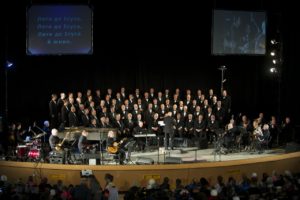
AUSTIN—The Singing Men of Texas celebrated their 50th anniversary Aug. 15 with a concert at Riverbend Centre in Austin.

The concert featured 360 singers and orchestra members, with representatives from all six regional chapters, and welcomed 1,840 attendees.

Musical selections ranged from “I’ll Fly Away,” arranged by Michael Lee, to “How Great Thou Art,” arranged by Dan Forrest.

The Texas Country Boys—a small ensemble originally formed in 2015 for an evangelistic concert tour across Ukraine—provided pre-concert music. The group returned to tour along the eastern border of Ukraine in 2017.

The Texas Country Boys perform at events across the Dallas/Fort Worth area, presenting a variety of musical genres: old-school country, new country, jazz, blues, top 40, gospel, and praise and worship.

50 years of glorifying God through music

Sam Prestidge 200
Sam Prestidge

Sam Prestidge, who served the Baptist General Convention of Texas as state music director from 1960 to 1994, established the Singing Men of Texas in 1975.

The Singing Men of Texas exist to glorify God through music, proclaim the gospel of Jesus Christ, and provide an opportunity for Christian growth, inspiration, fellowship and mission service, organizers said.

Tom Tillman, director of music and worship for Texas Baptists, welcomed attendees to the concert. He read a State of Texas resolution from the Texas House of Representatives recognizing the Singing Men of Texas’ anniversary and their “dedication to musical excellence, their commitment to sharing the gospel and their faithful service.”

Tillman recognized special guests who attended the concert: Lisa Prestidge Phillips, daughter of Sam Prestidge, and Jackson Dyer, 2025 Prestidge Endowment Scholarship recipient and Hardin-Simmons University senior.

‘Joy of worshipping together’

Tillman also recognized charter members of the Singing Men of Texas: Robert Bailey, Don Blackley, Larry Caudle, Jim Clayman, Nathan Cook, Ron Davis, Wayne Gadman, Jim Holcomb, Bill Ingram, Jack Jones, Joe Jones, Ed Miller, Larry Shields, Vaughn Tatum, Tim Timmons and Dan Turner.

Turner said “the greatest thing” about the musical group is the community cultivated within it.

“There are many things about Singing Men that changed my ministry that were so effective, and [they] came from other ministers of music,” Turner said.

“The singing was great, but the sharing was especially important, of what other guys were going through and ideas that they had. The greatest thing [about Singing Men of Texas is] the association with all those men. Those that are still here and those that have gone before us have blessed my life immeasurably.”

He said celebrating 50 years of singing with SMOT means celebrating “a lot of memories” and “the joy of worshipping together with men [who are] committed to that.”

History of gospel outreach

Throughout its history, Singing Men of Texas have participated in outreach efforts across Texas and the United States. The group traveled to Australia, Brazil, Canada, Mexico, Eastern and Western Europe, China and Spain, performing concerts tours and conducting personal evangelism in the surrounding communities.

In 2017, the Singing Men of Texas presented concerts in eastern Ukraine, and more than half of the 12,000 who attended made recorded commitments to Christ. (File Photo courtesy of Singing Men of Texas)

In 1982, 82 men across chapters traveled to Brazil for a 14-day tour where they performed concerts in nine cities, kicking off in Salvador at the Brazilian Baptist Convention annual meeting. They recorded a worship album on this trip.

An album was also recorded on a mission trip to Australia in 1985. The North Central chapter recorded their album “Let God Be Praised and Glorified” that same year.

In 2010 and 2012, Singing Men of Texas participated in “four separate evangelistic projects at the invitation of the Ukraine Baptist Union,” where they saw a combined 8,870 faith decisions made.

According to a support raising letter from Tim Studstill, former director of music and worship at Texas Baptists, in May 2012, in each concert the Singing Men of Texas “sang for nearly an hour, and then Texas Evangelist Michael Gott presented a clear gospel message… [and] every person who attended was offered a free CD with music by the Singing Men and a message by Michael Gott, as well as a free Russian/English New Testament.”

According to a November 2012 article, “the evangelistic concert series” that year “recorded 4,305 decisions for Christ.”

“Everywhere we went, the presence of the Holy Spirit, the preached word and the prayers of those back home drew hundreds to Christ,” Studstill wrote. “We were blessed to be vessels of that message and a part of what God is doing in Ukraine.”

In addition to serving on missions around the world, Singing Men of Texas have performed at venues and events such as the Southern Baptist Convention annual meeting, the Morton H. Meyerson Symphony Center in Dallas and Carnegie Hall in New York City.

At the anniversary concert in Austin, the Singing Men of Texas sang original compositions, hymns and contemporary worship songs to celebrate the 50 years of proclaiming Christ through music.

Proceeds from the concert will support the Prestidge Endowment Scholarship Fund, a scholarship awarded annually to a student preparing for full-time music and worship ministry at a Baptist university.


Baylor group takes time before school to help flood victims

WACO—A new semester is on the horizon for college students, faculty and staff across the country, but a group from Baylor University wanted to do something tangible to help others in need before classes start.

Mark Magers, a Baylor University alum, serves with BearAid in San Angelo under the leadership of Texans on Mission. (Photo / Chad Warner / Baylor University)

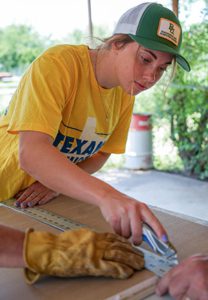
Four students, 17 faculty and staff members, and one alumnus from Baylor spent a day alongside Texans on Mission volunteers rebuilding homes in flood-devastated San Angelo.

“We care deeply about being able to serve when we can and to help our neighbors in need, and there certainly has been lots of that as a result of the July Fourth storms,” said Molly Simpson, assistant director for service at Baylor and a member of the San Angelo team.

Baylor’s disaster relief group is called BearAid, and they worked in two houses cutting and hanging sheetrock and insulation after being quickly taught what to do by Texans on Mission volunteers.

“They gave us some training at each site and we got to work,” Simpson said.

‘Baylor answered the call to serve’

Sabrina Pinales, director of missions and discipleship with Texans on Mission, worked alongside the BearAid team.

“We are so thankful that Baylor answered the call to serve with Texans on Mission,” she said.

Baylor University student Alyssa Carrol serves with BearAid in San Angelo under the leadership of Texans on Mission. (Photo / Chad Warner / Baylor University)

“Volunteers are essential in rebuilding a community after a disaster,” and the Baylor group has been “a tremendous blessing to families impacted by the recent flooding,” Pinales said.

Sarah Walker, senior coordinator for service at Baylor, said BearAid had already “started to explore what it would look like to partner with Texans on Mission to do some work together this fall” and realized there was “a short window of time before our semester begins that we could take some faculty and staff” to San Angelo.

“We hope this can lead to more opportunities for cooperation … in the upcoming semester and beyond,” Walker said. “We have a really solid group of students who care a lot about other people and want to serve others.

“I’ve been working with the BearAid leadership team to talk through what that could look like to do some future trips with Texans on Mission this fall, such as day trips or weekend trips.”


Mexia church experiences new life after dry season

MEXIA—Earlier this year, there was dirt in the baptistery at First Baptist Church in Mexia. That’s how long it had been since it had been used.

The church had lost about 100 people per decade since the 1990s. It was down to about 115 when Robert Blackmon arrived as pastor last fall. All the ministerial staff had left, as well as the audio/visual team and the praise team.

The search committee chairman was honest about the church’s situation, but Blackmon saw potential.

Robert Blackmon is pastor of First Baptist Church in Mexia.

“I had read a lot about churches in this situation and done a lot of case studies and written about church revitalization,” Blackmon said.

“But the reason I came here was because it seemed like God was giving me an opportunity to put that study into practice and see if God’s word could actually do what I thought it could.”

Over the past few months, God’s movement at First Baptist in Mexia has been no more evident than inside that same baptistery, where a custodian recently spent three hours vacuuming and scrubbing to prepare for what would become 12 successive weeks of baptisms at the newly revived church.

‘We just want somebody to love us’

There were still people in the congregation who remembered the church’s better days, and Blackmon said they did not want to see that completely fade away. At the same time, some expressed to Blackmon that they “kind of felt like God had abandoned them a little bit, or that he had removed the lampstand, if you want to use Revelation language,” he said.

“Preacher,” someone in the congregation told him upon his arrival, “we just want somebody to love us.”

“To have somebody here who was excited about what God could do, it reminded them that even though they’d gone through a dark valley, God hadn’t left them in the process, and he still had a plan for them and they could still make a difference in their community,” Blackmon said.

He started with a commitment to pray, preach the Bible and love God’s people, he said. A monthlong sermon series through Haggai tackled the topic of church revitalization.

The children’s ministry at First Baptist Church in Mexia has grown from around five to more than 30 since last year.

The children’s ministry at First Baptist in Mexia has gone from around five to more than 30 since last year.

“I was really honest about where I thought the church was and what some of [the] issues were and how God’s word could address those things,” Blackmon said.

People who had been hurt by recent conflict in the church needed their new shepherd to listen to them as they processed what had happened, they said. They loved their church and wanted to move forward, but pain was a hindrance at first.

The church began praying together more faithfully, and Blackmon started making a lot of hospital visits.

“People have responded well to that, because they know that I love and care about them,” Blackmon said. “I think they feel God’s love and care through that kind of attention.”

A brighter future

About 200 people now worship at First Baptist in Mexia each Sunday, and the children’s ministry has grown from around five to more than 30. On Easter Sunday, the 350 people who attended marked the largest attendance at any service since the 1990s, the pastor was told.

“To have somebody here who could lay out a plan and say: ‘You’re not the only ones who have ever gone through this, this is really common, even in Southern Baptist churches. And God has turned those churches around, and he can do the same thing here,’” Blackmon said. “That gave them a lot of hope that was lost over the last few years.”

Church members have begun the image repair needed in the community, now spreading excitement about FBC Mexia, as well as sharing the Three Circles evangelism method to spread the name of Jesus. It has become unusual for the church to have a worship service that doesn’t include a baptism.

“We had a young man in his 20s who was coming from a life of sin, and he started coming on Sunday mornings and felt the conviction of the Holy Spirit,” Blackmon said. “He was baptized. I started a discipleship group with young men in the church, and he meets with us every week, goes through a Bible reading plan, keeps a journal, prays with us.”

Giving has increased enough for the church to consider hiring additional staff members.

“I think a lot of people have been faithful here for a very long time and just needed a little bit of direction and vision, but now that they have that, they are the ones jumping in and making ministry happen,” Blackmon said. “My job is really to equip the saints for the work of the ministry, and they are the ones who are out there doing it.”


Richardson marriage ministry delivers community impact

First Baptist Church of Richardson went without a marriage ministry several years. In 2024, Pastor Ronny Marriott decided it was time to make a change.

First Baptist is working in partnership with nonprofit Communio, a ministry that “trains and equips churches to share the gospel through the renewal of healthy relationships, marriages, and the family.”

While at First Baptist Church of Burleson, Marriott had the privilege of working with the nonprofit before and during COVID-19.

Marriott said the partnership with the nonprofit started just before the COVID-19 pandemic in an effort to come up with strategies to meet the needs of the community.

“Their focus is on helping marriages that are in trouble. So. they are really about strengthening marriage in churches and the community,” said Marriott, president of the Baptist General Convention of Texas.

“They have had success doing that in other states. So, we were approached to be a pilot church in our area, and they provided grant money to help us launch this. With direct marketing, they were able to help us pinpoint marriages struggling in our community.”

When COVID-19 hit, Communio assisted the church with meeting digital needs and event hosting for engagement.

“We did virtual date nights. You could sign up and have cooking segments. We had comedians. We couldn’t go out or go to restaurants,” Marriott said.

When the pandemic ended, the church hosted date nights on Wednesday nights and taught line dancing.

Members of First Baptist Church Richardson gathered together for a marriage event. (Photo / FBC Richardson)

“One night, we even did a murder mystery night,” Marriott said.

“So, our goal was to get people on campus to go, ‘OK, these guys can have fun.’ We hit them with a sermon. We did a little bit. Our thing was, ‘Hey, we do this because God loves you, and so do we, and we would love to have you join us for Sunday worship.’”

Marriott hopes that engagement with First Baptist Church Richardson and Communio will assist in decreasing divorce and family violence rates.

A missional church

First Baptist Church of Richardson is more than 160 years old. Marriott said that a church of this age comes with its challenges.

“Churches of that longevity can struggle to become institutionalized and over-programmed. So, trying to move us to be a more mission-minded church,” Marriott said.

Support from Communio helped the church host events like the one during Christmas and Easter events in 2024 and 2025.

“We did a big thing at Christmas. We do a big musical and a snow day for families and kids. We had bounce houses and fake snow,” Marriott said. “Saturday during Easter weekend we had an ‘EGG-stravaganza.’”

The church’s Christmas musical, Carols, attracted 200 more attendees than the previous year due to efforts to distribute a record-breaking 6,000 door hangers, connect with neighbors and build a presence in the community.

After the Easter weekend event, more than 1,000 people showed up, including many who were not church members.

The Communio strategy for the church is to connect with families at least seven times. The same families brought their children to events at First Baptist in Richardson, which led to more families, friends and loved ones showing up.

A couple connecting during a marriage event. (Photo / FBC Richardson)

The relationship building that took place would often lead to attending Sunday morning worship and consideration for membership.

“We just want to get them on our campus. And it gives us a database of prospects, and it gives us a chance to reach out,” Marriott said.

The events serve as an opportunity for the congregation to reach out to guests and invite them to classes on topics related to support for personal matters like finance and familial issues.

“Everything we do, inviting these couples, connects to something else. If they are on campus and they meet our people, they find this is a safe place to be,” Marriott said.

Reflecting on one year in Richardson

Marriott celebrated one year as pastor in Richardson on Aug. 4. At age 60, his years of experience taught him that time and patience is essential when leading a church through change.

“When I was in seminary, they really encouraged you, when you go to a new church, spend the first year building relationships and don’t make any changes,” Marriott said.

“I was at my second church to pastor, and I had a deacon come to me a month in and say: ‘You know, I’m sure they probably told you that you need to ease in, but we’ve been waiting for you for two years. We want you to go.’ So, I changed my philosophy. Take advantage of that honeymoon. Just don’t do anything crazy.”

Marriott did a listening tour with small groups within the congregation to gauge the hopes and dreams of the members. He led by example with a wife who is eager to relate to the members.

“My wife is very extroverted, so we do a lot of stuff as a couple. She’s out greeting people every Sunday just to get to know them, open up our home, that kind of thing. So, we try to build on those relationships as we get down the road,” Marriott added.

As Marriott continued meeting with the congregation, he was asked about the vision of the church.

“When God tells us, we will know that. But let’s discover that together. And I find out by asking a lot of questions: Why do we do this? Is there a better way to do it? And what do we need to stop doing?” Marriott said.


Eastland pastor Kevin Burrow nominee for BGCT president

Kevin Burrow, senior pastor of First Baptist Church in Eastland, will be nominated for president of the Baptist General Convention of Texas at Texas Baptists’ annual meeting, Nov. 16-18 in Abilene.

Shawn Brewer, pastor of First Baptist Church in Paradise, announced his intention to nominate Burrow, praising him as a “man of prayer.”

Burrow is “a Texas Baptist through and through,” said Brewer, who preceded him as pastor at First Baptist in Eastland.

“He has developed a real heart for prayer, particularly corporate prayer. He recognizes prayer is a major need in our churches today,” said Brewer, a regional director for the 6:4 Fellowship. The group, which takes its name from Acts 6:4, is a network of pastors who commit to prayer and the word of God.

Meeting weekly for an hour of prayer

Since January 2024, First Baptist in Eastland has met each Sunday at 7 p.m. to spend an hour in corporate prayer—even on Super Bowl Sunday, Burrow noted.

“It has changed the DNA of our church. … It has become the most important hour of my week,” he said.

Seeing what God has done in his church when it gave priority to prayer, he hopes to share that story with Texas Baptists.

“I know Texas Baptists’ leadership already are people of prayer,” he said. “I’d like to see us do even more to help churches become praying churches and pastors become praying pastors.”

The prayers of God’s people became intensely personal last August, when Burrow’s wife Ashley went into cardiac arrest. Today, she is “alive and well,” he said.

“She endured 90 minutes of CPR,” Burrow said. “There were many of our Texas Baptist people around the state who prayed for her. We walked together through that experience as a family and as a church family.”

As they have gathered to pray, members of First Baptist in Eastland have seen relationships mended, families reconciled and friends receive the salvation Christ offers, Burrow said.

The church prayed for local schools, particularly in regard to an anticipated teacher shortage. The district is beginning the new school year having filled all open faculty positions, he noted.

However, he added, at least half of every prayer gathering is spent in adoration, confession and thanksgiving before requests are voiced to God, Burrow said.

“We are seeking God’s face before seeking God’s hand,” he said.

Alum of Wayland and Truett

Burrow grew up in Tulia and received his undergraduate degree from Wayland Baptist University. He earned both a Master of Divinity degree and a Doctor of Ministry degree from Baylor University’s Truett Theological Seminary.

He was college pastor of Emmanuel Baptist Church in Pullman, Wash., beginning in 2014, until First Baptist Church in Eastland called him as senior pastor in March 2018.

Burrow was vice moderator for Tri-County Baptist Association, and he has served on Texas Baptists’ resolutions committee and the BGCT Committee on Nominations for Boards of Affiliated Ministries.

He and his wife Ashley have four children—Jaxton, Karis, Truett and Colette.

Debbie Potter, incumbent first vice president of the BGCT and children’s pastor at Trinity Baptist Church in San Antonio, already was announced in April as a nominee for Texas Baptists’ president.

Also previously announced are Joseph Adams from First Baptist Church in Hughes Springs as a nominee for first vice president and Ariel Martinez from Del Sol Church in El Pastor as a nominee for second vice president.