Family’s support helps Baylor protect Black Gospel music

WACO—A professor’s search-and-rescue mission to prevent the loss of musical history and a family’s desire to honor the wishes of their late husband and father combined not only to preserve a distinctly African American art form, but also give it the academic attention it previously lacked.

Baylor University recently dedicated the Black Gospel Archive and Listening Center at Moody Memorial Library. It serves as the permanent home for the Black Gospel Music Restoration Project’s collection of recordings from that genre’s Golden Age, 1945 to 1975. The physical collection includes more than 10,000 vinyl LPs, along with a vast holding of digitized material representing about 1,900 artists.

Robert Darden, professor of journalism at Baylor University, is founder of Baylor’s Black Gospel Music Restoration Project. (Photo/ Baylor Marketing and Communications)

“We’re told it is the largest Black Gospel music collection accessible to the public,” said Bob Darden, the Baylor journalism professor and former Gospel Music editor for Billboard Magazine whose vision birthed the Black Gospel Music Restoration Project.

In 2009, the Prichard Family Foundation established the Lev H. Prichard III Traditional Black Music Restoration Endowed Fund. Earlier this year, Ella Prichard and the family foundation gave $1.5 million to establish the Lev H. Prichard III Chair in the Study of Black Worship. The endowed faculty position will further the work and research of the restoration project, as well as advance scholarship in Black worship and preaching.

“Outside of the [restoration project’s] original donor, Charles Royce, it’s pretty clear that the Prichards are the primary angels for this project,” Darden said. “But it’s not just the money, as significant as that has been and as generous as the Prichard family has been. It’s Ella’s support as a former university regent and influencer, helping an old journalism professor learn how to work with administration and lobby for the project. She is our greatest advocate.”

Chain of events leads to restoration project

In February 2005, Darden wrote an op-ed article in the New York Times describing the influence of Black Gospel music on many musical genres. He explained unless the original recordings and memorabilia from the Golden Age of that genre were preserved, vitally important history would disappear.

“It would be more than a cultural disaster to forever lose this music,” he wrote. “It would be a sin.”

That article sparked a $350,000 gift by Royce, a Connecticut businessman with no previous connections to Baylor. Ella Prichard, in turn, read an article about Royce’s donation and the fledgling Black Gospel Music Restoration Project, which she pointed out to her husband Lev, founder of the Prichard Oil Company and Apco Minerals.

“Lev was the music lover in the family,” she recalled.

In particular, he enjoyed Black music in all its forms. Growing up in Oklahoma, his family employed a Black woman as a live-in cook and frequent babysitter for their son.

“If they went to the movies together, he sat in the Black balcony with her. If his parents were away for a weekend, he went to church with her,” Ella said. “It may not have been altogether unique, but it certainly was not typical for a white child in Oklahoma to be reared with one foot in Black life.”

As he grew older, Lev’s appreciation for Black culture led to his passion for traditional Black music—jazz, blues and gospel.

Honor Lev Prichard’s memory

So, when the Prichards’ high-school-age grandson planned a campus visit to Baylor University, Lev—in spite of failing health—insisted on accompanying him, on the condition he could visit with Darden and learn more about the Black Gospel Music Restoration Project.

“An entourage from the development office trailed down to the studio [in the Ray I. Riley Digitization Center] with him. Lev sat down in the studio. The door was closed, and for the next 45 minutes he listened to music while the development officers cooled their heels in the hallway,” Darden recalled. “When he emerged, he said something to the effect, ‘I want to help make sure this happens.’”

Prichard gave an initial donation to the project. After his death in April 2009, his family and its foundation decided to honor his memory by establishing the endowed fund to benefit the restoration project.

Donating to the project was an easy decision, but attaching Lev Prichard’s name to it required some serious family discussion and deep thought, Ella recalled.

“Lev couldn’t stand recognition for giving. It made him so uncomfortable,” she said.

However, after his death, many beneficiaries of his anonymous gifts spoke about how his generosity made so many good things possible.

“As the things he had quietly done came to light, we had to get used to that,” she said.

She and Darden both praised Pattie Orr, dean of Baylor University Libraries when the Black Gospel Restoration Project launched, for her vision and support. Likewise, they expressed appreciation to her successor, John Wilson, and to Jeffry Archer, the current dean who committed resources to the Black Gospel Archive and Listening Center.

“At a university, different disciplines tend to operate in silos. Libraries are the only institution on campus everybody trusts, because they exist to serve everyone. When it comes to academic turf wars, libraries are Switzerland. They don’t have an agenda,” Darden said.

‘Opened doors to the Black community’

Ella Prichard and the Prichard Family Foundation established an endowed fund to help support the Black Gospel Music Restoration Project at Baylor University and gave $1.5 million to the university to establish an endowed chair in the study of Black worship. (File Photo / Ken Camp)

Ella Prichard—a longtime advocate for social justice who wrote editorials in the Baylor Lariat when she was a student calling for the integration of Baylor University—sees the Black Gospel Music Restoration Project and the endowed chair in the study of Black worship as significant for the university.

“I’ve always wanted Baylor to be a school for all Baptists. This has opened doors to the Black community in ways nothing else has,” she said, noting Black churches and worship are “a major part of the story of Black culture.”

Prichard—a longtime member of First Baptist Church in Corpus Christi and now a member of Wilshire Baptist Church in Dallas—commended Baylor for naming its Commission on Historic Campus Representations. She particularly applauded Baylor President Linda Livingstone and her administration for taking steps to implement the commission’s recommendations to address the university’s historic links to slaveholding and racial injustice.

“Baylor has done a phenomenal job addressing its own history of racism,” she said.

The endowed chair in the study of Black worship and the programs the chair oversees will provide scholars opportunities to explore the contributions of the Black church within an interdisciplinary context.

‘A perfect fit for Baylor’

Unlike most art forms, Black sacred music does not have a prominent professional journal where peer-reviewed papers can be published or platforms where scholars can conduct seminars, Prichard noted.

“It’s been neglected by the academy,” she said. “It’s a perfect fit for Baylor.”

In 2015, the Black Gospel Restoration Project became part of the permanent Musical Crossroads exhibition at the Smithsonian Institution’s National Museum of African American History and Culture.

Both the physical collection and digital archives continue to expand exponentially, and Archer already has pledged Baylor University Libraries will devote additional space to it as needed.

The Prichard family has celebrated the way the project has grown from an effort at preserving vinyl recordings to a multidisciplinary research initiative.

“The vision just keeps widening,” Ella Prichard said. “My life has been enormously enriched by the experience. It took so many people for it to get to this point, and every link in the chain of events was important.

“Bob and Mary Darden are convinced it was providential. I guess I’m not quite as Calvinistic as that. But there’s no question the right people entered the project at the right time each step of the way. It had to have God’s hand on it.”


TBM handles logistics to address foster care housing

Texas Baptist Men disaster relief volunteers are helping address an out-of-the-ordinary emergency by helping the Texas Department of Family and Protective Services care for children in the foster care system.

Texas faces an acute shortage in available licensed homes where children and youth in foster care can be placed, and the situation has grown worse since the beginning of the COVID-19 pandemic.

During the first half of this year, more than 500 children spent at least one night in an unlicensed state-operated placement, such as an office, hotel or church building. In June, 415 Texas children spent at least two consecutive nightsin unlicensed placements.

The Texas Legislature passed SB 1896—signed into law by Gov. Greg Abbott—that prohibits children from sleeping in the state agency offices.

TBM volunteers are loading, unloading and assembling furniture for homes where children in foster care are being housed until they can be placed with a family. (TBM Photo)

As a short-term solution, the state is leasing homes where DFPS staff temporarily can care for children who enter the foster care system until they are placed, so the children and youth won’t have to spend the night in an office. When the needs arise, the state agency has to furnish the homes on short notice—often in as little as 48 hours.

Last month, a representative from the DFPS Office of Faith-based and Community Engagement contacted TBM to ask for logistical assistance.

“They may have furniture available that has been donated in San Antonio, but it needs to be in Houston or wherever,” said Rupert Robbins, TBM associate director of disaster relief.

So, the state agency asked TBM volunteers to take responsibility for loading, unloading and assembling the furniture.

“At this point, we’ve completed three projects—in San Antonio, Houston and Belton,” Robbins said. “The social workers are doing more than they ever signed on for, and this is a way we can help them out of a bind and love on them a little bit.”

Mickey Lenamon, TBM executive director and CEO, sent an email to all registered volunteers Nov. 18 requesting help in handling the furniture.

“Some items are as large as couches. Others are small as chairs. Construction of the furniture is simple,” Lenamon wrote. “In other words, anyone who wants to help can. No experience is necessary.”

About 70 volunteers throughout the state responded to the appeal, Robbins said. Also, Kingsland Baptist Church in Katy agreed to handle any needs in the greater Houston area, he added.

“It’s a privilege we have. We get to watch God work and to love on people,” Robbins said.


South Texas Hispanic church prospers through pandemic

ROBSTOWN—When churches resumed in-person worship after months of online-only services due to COVID-19, many congregations continued to struggle financially and have yet to reach pre-pandemic attendance levels.

New Life at the Cross Church, a Texas Baptist congregation in Robstown, meets outdoors for a Wednesday evening service. (Photo courtesy of New Life at the Cross Church)

But one predominantly Hispanic congregation in South Texas grew by every measure throughout the last 20 months.

“It can only be attributed to God. There’s no logical explanation for it apart from that,” said Raul Elizondo, pastor of New Life at the Cross Church, a Texas Baptist congregation in Robstown.

Elizondo founded what was then called New Life Baptist Church in his living room more than two decades ago.

“A couple of years ago, we were doing pretty well. We had outgrown our building, and we decided to put it up for sale and relocate,” he said.

From rejoicing to questioning

The church sold its property on Northwest Boulevard in Calallen in March 2020, and it made plans to meet in portable buildings at its new location on acreage in Robstown on Easter Sunday, April 12.

A few hours after the church closed on the sale of its property, its leaders began to hear about Texas school districts closing due to the COVID-19 virus. Soon, Gov. Greg Abbott declared a state of emergency for all Texas counties.

“I went from a time of rejoicing to saying, ‘Lord, what did we do?” Elizondo recalled.

On Sunday, March 18, the pastor told his congregation they would suspend in-person worship services temporarily and begin streaming services in English and Spanish online for “a few weeks.” The next day, Gov. Abbott issued an executive order that essentially placed Texas under a lockdown.

“We had 30 days to move to our new location—during the lockdown,” Elizondo said.

Since it was providing an “essential service,” the church successfully moved to its new site but made plans to continue to provide online-only worship and Zoom Bible study for an extended period to ensure its members’ safety.

Dramatic increase in giving

Elizondo told church leaders to expect decreased giving, and he assured them he would take on a part-time job if necessary to avoid putting the church in a financial bind.

Marco Barron (center) leads worship during the Spanish-language service at New Life at the Cross Church, a Texas Baptist congregation in Robstown. (Photo courtesy of New Life at the Cross Church)

“Amazingly, our giving increased. It went up about 30 percent,” he said. “People gave more when they didn’t have to see me in person. It’s humbling.”

The church began allowing members who wished to meet in-person for worship services to gather in mid-summer last year, but it did not fully reopen until January.

Both the English-language service and the Spanish-language service not only filled the allotted space in a portable building, but also filled multiple overflow spaces.

“On a really good Sunday before COVID, we might run as many as 240 combined in two services,” Elizondo said. “On Mother’s Day this year, we had 300.”

Attendance has continued to rise, and members have continued to give. New Life at the Cross Church received a loan from the Baptist Church Loan Corporation, and construction recently began on its new building. Barring delays due to supply chain disruptions, the church hopes to move into its new facility next summer.

‘It’s a God thing’

New Life at the Cross Church, a Texas Baptist congregation in Robstown, has baptized 22 new believers this year.

“We could seat 150 in our old sanctuary. There will be 600 seats in the new one,” Elizondo said.

So far this year, New Life at the Cross Church has baptized 22 new believers. While the congregation continues to be predominantly Hispanic, more than 15 percent of its members are Anglo, and some African American families also attend.

“So, we hope to become more multiethnic and multicultural,” he said, noting the Spanish-speaking members represent multiple nationalities. “COVID did not stop the Great Commission.”

Elizondo takes no credit for the congregation’s growth at a time when many other congregations continue to struggle.

“It’s not a strategic plan. It’s a God thing,” he said. “It shouldn’t have worked the way it did. God has moved and led. We’re just grateful to be on the journey.”


Vernon pastor learns lessons from preaching 100 straight days

VERNON (BP)—There are many lessons Toby Castleberry, pastor of Calvary Baptist Church, received after closing out a series on the Gospel of John Nov. 14.

One is to be aware of what you say, as in declaring that you will preach for 100 consecutive days. It sounds good, and more than that, God placed it on Castleberry’s heart to do so starting Aug. 7. But don’t think your own strength will be sufficient.

He said that became apparent to him about 30 days into the endeavor.

“It felt like I had a tiger by the tail at that point,” he said, adding that it became about the ability to focus and trust God would carry him through each sermon.

“You pray for this day, you work for this day, you study for this day, and you preach for this day. I think I had six funerals during this time, and your day is already pretty crowded,” he said. “Yet, things worked out and God always provided.”

The final 10 days were tough physically, Castleberry said, something perhaps only pastors can appreciate. To the layperson, he’s only standing and talking. Exhaustion was very real, though.

“Trying to explain this is kind of tough,” he said. “It’s a ‘heavy’ kind of tired.”

The series titled “So Loved” focused on John 3:16 and began at 6 p.m. each night in addition to Sunday mornings. Calvary Baptist averages 220 in its Sunday service, with nightly gatherings ranging between 75-100. Online attendance included all 50 states and 49 countries, with repeat viewers popping up in places like Russia, Pakistan, Great Britain, India and Ecuador.

New believers come to Christ

For Castleberry, the biggest number is eight—the number of individuals attending in person who prayed to receive Christ. Two families also joined the church. Furthermore, a sizeable group attended at least 85 of the gatherings, with a handful hearing all 100 while sitting in Calvary’s sanctuary.

One of those with perfect attendance was Sue Mitchell, a longtime church member, who at 89 years old still drives herself and works as a real estate agent in town.

Richard Jackson was pastor at North Phoenix Baptist Church when Castleberry made his profession of faith in Christ there as a boy. Jackson now lives in Brownwood, and the two stay in touch. Jackson asked Castleberry early on how he planned to space out preaching 100 days through one book of Scripture.

To be honest, Castleberry hadn’t really thought that part through. But, his 50th sermon put him exactly halfway through, with his final message on Sunday, Nov. 14, focused on the final two verses. Sermons along the way averaged covering 7-8 verses.

He doesn’t plan on undertaking a similar feat anytime soon, but won’t shy away from it if he feels that’s what God wants him to do.

“There’s something about consistently looking into God’s word,” he said. “It was tremendous to hear of the ways people learned and grew.

“God’s word is perfect, and the more time we can spend in it, he’ll bless it. You can’t run fast enough, jump high enough or preach long enough to explain the glory of Christ. If we had 300 nights, it wouldn’t be enough.”


North Texas Christian artist paints with a purpose

IRVING—Whether she is painting on the walls in an orphanage in Africa with her bare hands or illustrating Christ’s victory over death on a canvas in dim lighting during a Good Friday worship service, artist Robin Oas uses each canvas as an opportunity to draw attention to Jesus.

While serving as the artist in residence at First Baptist Church in Irving the past seven years, Oas has created large-scale paintings designed to bring the gospel to life, including the artwork and banner displayed during the church’s Easter celebration. (Photo courtesy of Robin Oas)

While serving as the artist in residence at First Baptist Church in Irving the past seven years, Oas has created large-scale paintings designed to bring the gospel to life.

Through visual storytelling, her creativity has captured the attention of audiences at various women’s ministry events, church services and conferences.

“I was raised in a family of artists, and my parents were so encouraging and allowed me to jump in and create art with them at a young age,” Oas recalled. “Growing up, I remember my dad using art to illustrate the Bible lessons he was teaching in Sunday school, and I saw the impact of using art to connect people with the gospel at a really young age.

“Through the years, it was a combination of talent running in my family and a lot of hard work to learn about the process of creating and fine-tuning the skills.”

Her initial experience creating artwork before an audience was less than altogether voluntary.

In addition to her paintings, Robin Oas has created set designs for Vacation Bible Schools at churches around the state. (Photo courtesy of Robin Oas)

“As people began taking notice of my art, a pastor in California asked me to paint while he preached, and I told him that I would pray about it. Well, even before I said yes, my name was printed in the bulletin. So, I had to just jump in—even though I was completely unsure of how it would turn out,” she said.

“It’s so funny to look back now and see how God used that experience to reach people and draw them to him.”

Soon after Oas relocated to Texas, it didn’t take long before she was asked to create large-scale stage designs for Vacation Bible Schools, choir musicals and nativity scenes for churches around the state.

Desiring to give back and use her gifts as a way to share the gospel around the globe, Oas frequently partners with His Voice Global to help raise awareness and funding for various mission projects through the proceeds of her artwork and coloring books.

His Voice Global is a mission organization that works in parts of the world with high concentrations of vulnerable women and children. It focuses on encouraging and equipping communities in South Sudan, Kenya and Uganda with practical, physical and spiritual transformation through the hope of the gospel.

“Most people wouldn’t think of art as a ministry or a way to share the gospel, but it really is,” Oas said. “After one of the events, I heard there was a visitor who really took an interest in a live painting being done during the sermon, because it helped him understand the message, and he gave his life to Christ that week as a result.

“Hearing stories of how God can use moments like that is something that only he can do, and I love how he uses art to connect people with the gospel.”


CommonCall: Oasis in a food desert

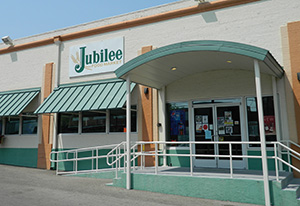
Jubilee Food Market in northwest Waco and Southpoint Community Market in South Dallas look dramatically different, but they share some common traits.

Both are nonprofit businesses designed to serve low-income food deserts. Organizers created both after listening to community residents. And both are designed not only to meet physical needs, but also tangibly demonstrate the love of Jesus.

More than 40 years ago, Jimmy and Janet Dorrell bought a house in that low-income neighborhood at a time when it was a hotbed of drug-dealing, prostitution and other criminal activity.

They committed themselves to “incarnational” ministry—being present in the community, building relationships, listening to their neighbors and earning the right to be heard when they presented the gospel. Those relationships led to a series of ministries focused on community transformation and formation of the nonprofit Mission Waco.

No easy access to healthy groceries

Several years ago, the Dorrells’ neighbors pointed out the need for a grocery store in their area. A convenience store sold processed and packaged foods at inflated prices but few fruits and vegetables.

The closest full-service grocery store was more than two miles away—an impossible distance for elderly residents to walk and an impractical destination for residents who depend on buses for transportation.

Jubilee Food Market provides an underserved community access to healthy food. (Photo / Ken Camp)

Mission Waco tried for four years to purchase a convenience store building that once housed a grocery store. But the owners refused to sell at a reasonable price.

Then a storm hit the neighborhood. High winds ripped away part of the roof of the old building, flooding its interior. The owners contacted Mission Waco, and the nonprofit bought the building.

At a neighborhood meeting, more than 60 community residents offered their ideas about how the building should be used. The overwhelming majority affirmed the idea of a grocery store that offered healthy and affordable food.

With the help of Christian volunteers who offered their expertise in construction, grocery store operation and management, Mission Waco put together a plan for renovating the building and operating the nonprofit business.

‘Investing in the community’

Mission Waco sold “shares” in Jubilee Food Market to churches, individuals and organizations as a way for them to invest in the community. (Photo / Ken Camp)

To raise much of the needed $925,000 to get the market off the ground, Mission Waco sold “shares” to churches, individuals and businesses.

“Instead of seeing it as a gift, we wanted them to see it as investing in the community,” Dorrell explained.

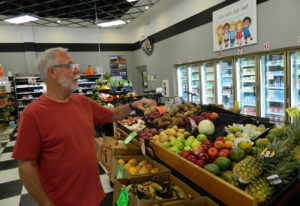
Jubilee Food Market opened its doors in November 2016. From its beginning, Mission Waco determined the nonprofit store would not sell liquor, tobacco or lottery tickets, and it would carry an ample supply of fresh fruit and vegetables. Considering grocery stores typically operate on a slim margin, organizers recognized making the market self-sustaining would be challenging.

“The average neighborhood person spends $8.25 each time they come here,” Dorrell said, noting the market could not stay afloat if it depended only on the business of residents within walking distance.

“So, we invited church folks from around the city to come here—not every time they need groceries, but on a regular basis,” he said. Some churches, such as Highland Baptist in Waco, regularly designate a particular week each month as the time when they encourage members to shop at Jubilee.

Continued conversations with people in the neighborhood also led Jubilee Food Market to expand its ethnic food offerings—including specialty meats, such as oxtails at the request of African American families and cabrito (goat) at the request of Hispanic customers.

‘It begins with listening to the neighborhood’

Jubilee Market also hosts an annual health and fitness fair in conjunction with more than 80 local sponsors—hospitals, businesses, churches and agencies.

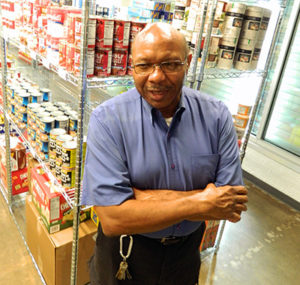
Jimmy Dorrell, co-founder and president emeritus of Mission Waco, listened to his neighbors. They asked for a grocery store in their area where they could buy fruits and vegetables. Jubilee Food Market developed from that vision. (Photo / Ken Camp)

“If we want to see long-term improvement in the community, there has to be a health component,” he said, noting the prevalence of diabetes, hypertension and other ailments in low-income areas. “We want to create a neighborhood where people are eating better, exercising and taking care of themselves.”

Dorrell—who stepped away from his role as executive director of Mission Waco two years ago but continues to serve as president emeritus—already has visited with at least 15 groups from around Texas, as well as visitors from Michigan and California—who want to start nonprofit groceries in food deserts.

“I have a passion for replication,” he said.

Dorrell emphasizes to visitors the principles of Christian community development, which focuses on empowerment and leadership development within the community.

“It begins with listening to the neighborhood,” he stressed.

Making an impact in South Dallas

Chris Simmons began serving the South Dallas community and listening to its people in 1988. A year later, Cornerstone Baptist Church called him as pastor.

When he arrived, people described the area west of Fair Park as a “war zone” of gang violence, drive-by shootings, drug-dealing, homelessness and entrenched poverty.

The unhoused still frequent the area, and the average annual household income in the neighborhood remains at less than $16,000.

However, due in large part to the community development initiatives Cornerstone launched under Simmons’ leadership, the crime rate decreased dramatically.

About four years ago, Cornerstone began focusing on a small shopping center on South Boulevard that served as a center of gang activity.

“We went to the owners to see if they would sell to us,” Simmons recalled. The owners said the church could buy the property, but it would cost $200,000.

“For an inner-city church like ours, $200,000 might as well be $2 million,” Simmons lamented.

Working with multiple partners

However, he approached other churches in Dallas Baptist Association, presenting a vision for repurposing the property to make it a positive presence in the community. Valley Ranch Baptist Church in Coppell, Park Cities Baptist Church in Dallas and Lake Pointe Church, a multi-site congregation based in Rockwall, contributed the bulk of the needed funds within two weeks. Together with additional donations from other churches, Cornerstone was able to purchase the property.

Meanwhile, The Real Estate Council Foundation designated the neighborhood surrounding Cornerstone Baptist Church as a focus for revitalization. In partnership with Cornerstone, CitySquare, St. Philip’s School and Community Center, and others, TREC launched the Dallas Catalyst Project and began securing grant support from various sectors to revitalize the area.

“We listened to residents to see what they needed. The first thing they mentioned was a laundromat,” Simmons said.

‘An environment for gospel conversations’

So, TREC’s Young Guns auxiliary for up-and-coming real estate professionals worked with Cornerstone to help open the Cornerstone Community Laundromat in part of the building Cornerstone had secured.

Even during the COVID-19 lockdown, the laundromat continued to operate Monday through Saturday as an essential service to the community, offering access to six washers and six dryers on a “pay-as-you-can” basis.

By providing computer access and WiFi, the laundromat also served neighborhood residents even when local libraries were closed due to the pandemic. It also offers space for several Bible studies to meet each week.

“It’s a place where people gather for an hour and a half to two hours every week, so it creates good opportunities to build relationships,” Simmons said. “It creates an environment for a lot of gospel conversations.”

Once the laundromat was operating, TREC began working with Cornerstone to work on the second need area residents identified—a place to buy affordable groceries within walking distance of their homes.

Developing a small nonprofit grocery store

TREC’s Associate Leadership Council worked with Cornerstone to develop a small nonprofit grocery store—the Southpoint Community Market—as its 2020 class project.

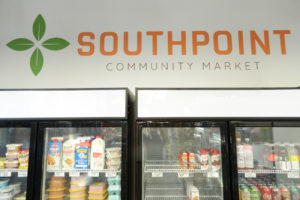
Cornerstone Baptist Church in Dallas launched Southpoint Community Market in cooperation with The Real Estate Council Foundation and other partners. (Photo / Ken Camp)

The 800-square-foot market began operating three days a week—Thursday through Saturday—beginning in mid-June.

Because the volume is so low, rather than purchase food from large-scale grocery suppliers, volunteers carefully watch for sales and purchase items for resale from commercial groceries.

“We sell small quantities to keep prices affordable. We’ll repackage eggs and sell a half dozen at a time. We’ll sell a whole watermelon, but we’ll also sell it by the slice,” Simmons explained.

When Cornerstone discovered another building, where it opened a community bike repair shop, had been infested by bees, the church hired someone to move the hive to another location and began selling locally produced honey at the market.

Southpoint Community Market also rents shelf space to small cottage industries, such as individuals who sell homemade seasoning, pickles and pies.

A ministry of the church

Pastor Chris Simmons of Cornerstone Baptist Church in Dallas sees the Southpoint Community Market not only as a means to community development, but also as an opportunity for gospel witness. (Photo / Ken Camp)

“It’s a family-friendly place where parents can come with their children to buy some groceries without having to walk past a big display of beer, wine and alcohol,” Simmons said.

While the market depends heavily on volunteer staff now, the church is committed to creating jobs for neighborhood residents—hiring within its ZIP Code and paying workers at least $15 an hour.

In time, Cornerstone plans to open a commercial kitchen in adjoining space where the church can teach culinary education and nutrition classes, and budding entrepreneurs can start small businesses.

Simmons also wants to see a small coffee bar open inside Southpoint Community Market, to create a welcoming environment where people can sit and visit.

“We want to develop relationships and provide a place for gospel-centered conversations,” he said.

“Above all, this is a ministry of our church. We see it as another way for the church to reach out to the community.”


Attorney general opinion requested on gambling law

An Arlington legislator has asked Texas Attorney General Ken Paxton for an opinion that could affect how—and whether—commercial poker clubs operate in the state.

Rep. Chris Turner, D-Arlington, wrote to the attorney general Nov. 18 requesting an opinion on what constitutes an “economic benefit” under a section of the Texas Penal Code concerning gambling.

Section 47.02 of the Penal Code stipulates it is a defense to prosecution if a person is engaged in gambling “in a private place,” if “no person received any economic benefit other than personal winnings,” and if the risks of losing and chances of winning are the same for all participants “except for the advantage of skill or luck.”

In his letter to the attorney general, Turner asserted various fees could be considered an “economic benefit” under the Penal Code, such as a seat rental in a card room, a table and ball rental in a pool hall, or a lane rental in a bowling alley or axe-throwing bar.

He also questioned whether a membership fee at a country club would fall into that category if players wagered on a round of golf.

Turner stated he understands the law is “intended to keep third parties to any wagering activities from taking a commission from those not personally involved in the wagering activity.”

“This would, for example, include taking a cut of an individual’s winnings from a hand of poker or their winnings from a sports bet,” he wrote.

‘Crystal clear’

rodger weems130
Rodger Weems

Rodger Weems, chairman of Texans Against Gambling, asserted the meaning of “economic benefit” is clear, and commercial poker clubs should be prosecuted when they violate the law.

“Both the law and the plain meaning of the words are crystal clear. An ‘economic benefit’ is anything of financial value that changes hands,” Weems said.

“Commercial poker clubs skirt the law authorizing ‘kitchen-table poker’ by charging membership fees or seat fees, and claiming they fall under the friendly poker exception because they do not take a rake or cut at the end of the game. These establishments are mistaken. It is past time that Texas had some serious law enforcement on these establishments.”

In 2018, Rep. Genie Morrison, R-Victoria, asked Paxton to offer an opinion on whether poker clubs that don’t receive a rake—a set amount or percentage of the value at risk in gambling—but charge a membership fee or receive other compensation from gamblers playing poker are operating legally.

At that time, Paxton’s office declined to offer an opinion, citing a pending lawsuit. The suit —Austin Card Room v. FSS Venture—involved a poker club in Austin that sued another poker club in San Antonio, alleging unfair competition.

A September 2019 article in The New Yorker noted after the lawsuit was filed, “it went dormant, with neither side pushing for a trial.” The writer reported “many in the Texas poker community” viewed the suit as a “canny product of … [an] alliance among competitors.”


BUA regresa a casa libre de deudas

La Baptist University of the Américas (BUA, o Universidad Bautista de las Américas en español) comenzará un nuevo capítulo a mediados de diciembre cuando cierre la venta de la propiedad en la que ha estado durante los últimos seis años y se traslade sin ninguna deuda a las instalaciones reacondicionadas en 60 acres a lo largo de la Interestatal 35, que ya son suyas.

Abraham Jaquez 150
Abe Jaquez

“Es un nuevo día para BUA”, dijo el presidente Abe Jaquez. “La venta de la propiedad de Barlite Boulevard nos permite estar libre de deudas y regresaremos a la casa que los líderes escolares imaginaron para nosotros hace años”.

“Esta es una victoria para BUA, para nuestros exalumnos, para los bautistas de Texas y para toda la comunidad hispana en Texas”.

Hace cinco años, BUA dejó los ocho edificios que había ocupado desde 1965. Consolidó las operaciones, trasladó las clases y las oficinas administrativas a un edificio de oficinas médicas remodelado. BUA nombró a la instalación Edificio Baugh en honor a un importante benefactor, la Fundación Eula Mae y John Baugh.

En ese momento, los líderes de BUA dijeron que el edificio Baugh serviría como sede de la escuela hasta que pudiera recaudar fondos para construir sobre el terreno que era suyo en la Interestatal 35.

Diez años antes, BUA había recibido una donación de $1 millón y un préstamo sin intereses de $2,5 millones de la Fundación Christ Is Our Salvation (Cristo Es Nuestra Salvación), establecida por la familia de Paul y Katy Piper. Esos fondos le permitieron a BUA construir la Piper Village, una comunidad de viviendas para estudiantes en la propiedad de BUA.

Practicando una buena mayordomía

Ahora, en lugar de incurrir en deudas a través de nuevas construcciones, BUA ha renovado esos edificios poco utilizados, convirtiendo las viviendas para estudiantes en aulas y oficinas administrativas.

“Estamos agradecidos por todos los que hicieron posible el edificio Baugh, proporcionándole a BUA un lugar propio hasta que pudiéramos regresar a nuestra casa de 60 acres”, dijo Jaquez. “Entiendo que el edificio en Barlite Boulevard estaba destinado a servir a la escuela durante un período de transición de aproximadamente 10 años. Así que este movimiento nos coloca cinco años antes de lo programado.

“Vemos esto como la Fase Uno de muchas. Estamos reutilizando propiedades que ya tenemos que no se estaban utilizando en su totalidad, retirando nuestra deuda y mudándonos de casa. Creemos que estamos practicando una buena mayordomía de lo que Dios ha provisto”.

“En los últimos meses, BUA se enteró de una nueva e inesperada provisión de Dios”, añadió. Jerry Carlisle, presidente de la Fundación de Misiones Bautistas de Texas, anunció en septiembre que un donante anónimo había dado 1,6 millones de dólares para establecer la Beca de Dotación TBMF Bill Arnold en la BUA en honor al fundador de la fundación.

“Honramos nuestro pasado y estamos agradecidos por todos los donantes—individuos, fundación, iglesias y la Convención General Bautista de Texas—que han permitido a la BUA llegar a este punto”, dijo Jaquez.

“Ahora, Dios ha abierto una nueva puerta de oportunidades para la escuela, y caminaremos hacia el futuro que Dios ha preparado para nosotros”.

Ya publicado en inglés en https://baptiststandard.com/news/texas/property-sale-retires-bua-debt-enables-relocation/.


Property sale retires BUA debt, enables relocation

Baptist University of the Américas will begin a new chapter in mid-December when it closes on the sale of the property it has occupied the past six years and moves debt-free into repurposed facilities it already owns on 60 acres across Interstate 35.

Abraham Jaquez 150
Abe Jaquez

“It’s a new day for BUA,” President Abe Jaquez said. “The sale of the Barlite Boulevard property allows us to be out of debt, and we will be returning to the home the school’s leaders envisioned for us years ago.

“This is a victory for BUA, for our alumni, for Texas Baptists and for all the Hispanic community in Texas.”

Five years ago, BUA left the eight buildings it had occupied since 1965. It consolidated operations, moving classes and administrative offices into one remodeled medical office building. BUA named the facility the Baugh Building in honor of a major benefactor, the Eula Mae and John Baugh Foundation.

At the time, BUA leaders said the Baugh Building would serve as the school’s home until it could raise funds to build on the acreage it owned across Interstate 35.

Ten years earlier, BUA had received a $1 million gift and a $2.5 million interest-free loan from the Christ Is Our Salvation Foundation, established by the Paul and Katy Piper family. Those funds enabled BUA to construct Piper Village, a student housing community, on the BUA-owned acreage.

‘Practicing good stewardship’

Now, rather than incur debt through new construction, BUA has renovated those underutilized buildings, converting student housing into classrooms and administrative offices.

“We are grateful for all who made the Baugh Building possible, providing BUA a place to call our own until we could get to our 60-acre home,” Jaquez said. “My understanding is the Barlite Boulevard building was meant to serve the school during a transitional period of about 10 years. So, this move puts us five years ahead of schedule.

“We see this as Phase One of many. We are repurposing assets we already hold that were not being fully utilized, retiring our debt and moving home. We believe we are practicing good stewardship of what God has provided.”

In recent months, BUA learned of a new and unexpected provision from God, he added. Jerry Carlisle, president of the Texas Baptist Missions Foundation, announced in September an anonymous donor had given $1.6 million to establish the TBMF Bill Arnold Endowed Scholarship at BUA in honor of the foundation’s founder.

“We honor our past and are grateful for all the donors—individuals, foundation, churches and the Baptist General Convention of Texas—who have enabled BUA to reach this point,” Jaquez said.

“Now, God has opened a new door of opportunity for the school, and we will walk into the future God has prepared for us.”


CommonCall: Ministry outside the box

WACO—A big-steeple, well-established church and a maverick ministry to teenagers in the skateboarding subculture may seem unlikely partners.

Forest Davis goes airborne, skating in front of the Middleman Ministries board wall in Waco. (Photo by Cory Romeiser, courtesy of Middleman Ministries)

But leaders of Columbus Avenue Baptist Church in Waco and Middleman Ministries see their partnership as an answer to prayer.

Middleman focuses on reaching out to “square-peg kids—creative types, musicians and artists” who find community in a skateboarding culture with few rules, said John Barnard, the ministry’s founding executive director.

Barnard, who spent nearly two decades in congregational youth ministry, understands both skater culture and church culture.

“I was a skateboarder before I was a Christian,” he said.

In fact, a church’s willingness to welcome him and other skateboarders—allowing them to use its facilities as a place to ride—ultimately led him to commit his life to Christ.

Later, when he was youth minister at Graceview Baptist Church in Tomball, Barnard began giving away skateboards he kept in the trunk of his car. The decorated boards—on which he painted the word “middleman”—offered him the opportunity to tell anyone who received one how Jesus came to be the mediator between a holy God and rebellious humanity.

Loving without judgment

Barnard and his wife Mandi moved to Waco in October 2016 to work fulltime with Middleman Ministries, seeking to connect teenagers on the margins with adult Christian mentors who love them without judgment.

The ministry operates according to the instructions Jesus gave his disciples when he sent them out: “Freely you have received; freely give” (Matthew 10:8).

Mentors give away free brightly decorated skateboards and Bibles featuring the Middleman helmet logo on the cover. They give time and attention to teenagers who may not always fit in, building relationships with them.

“Everybody needs somebody. We want kids to know: ‘You are valued. You are important,’” Barnard said. “We help teenagers realize their identity, purpose and community in Christ. We develop mentors, who in turn invest in teenagers at the street level.”

Barnard developed partnerships with several churches around the state that offer financial support. The Southern Baptist Convention’s North American Mission Board provided a trailer Middleman uses to transport its modular skate park, complete with metal folding ramps it can set up in church parking lots and other locations. A supporter in West Texas gave Middleman an old Ford Super Duty van to haul the trailer to skate camps and youth events.

When the Barnards moved to Waco, they began developing relationships with the teenagers who used the newly constructed Sul Ross Skate Park.

Partnership with local church

Leaders of Columbus Avenue Baptist Church in Waco had been praying about how the congregation could reach young people who frequented a skate park near the church building. Middleman Ministries offered an answer to those prayers. (Photo by Ken Camp)

The skate park is located at 500 N. 14th St. in Waco, near Columbus Avenue Baptist Church. Church leaders recognized the potential for ministry at the skate park.

“We tried a variety of projects and events to build bridges with the kids at the skatepark—grilling hot dogs and hamburgers, offering water bottles—but nothing took off,” Pastor Josh Vaughan said. “We saw no fruit from it.”

Last fall, Vaughan and his staff met to discuss the spiritual gifts listed in Ephesians 4. As they considered the gifts listed in that passage and evaluated their congregation, they realized the church had an abundance of spiritual gifts in some areas. However, the only individual clearly gifted as an evangelist already had been sent out as a church planter.

“We need to pray that God will send an evangelist to the church,” Vaughan recalled telling his staff. “Then about a week later, our youth minister told me, ‘There’s a guy you should meet.’”

Vaughan agreed to meet with Barnard to learn about Middleman Ministries.

“When we met, I realized he had built the bridge we had been trying to build,” Vaughan said.

Barnard told Vaughan about his dream of building a garage where mentors and teenagers could work together on skateboards. When Barnard said his ministry was hoping to find a building it could use within view of the skatepark, the pastor said, “Let’s take a walk.”

Vaughan showed Barnard a 1,500 square-foot bus barn with three bays the church owned but no longer needed. Columbus Avenue Baptist offered Middleman Ministries the bus barn, along with office space in a facility the church was using for storage.

Middleman moved and set up its office in the space on the corner of 12th and Columbus, decorating it to look like a retro-style 1980s skateboard shop.

“It was housing chairs. Now, it’s housing ministry,” Vaughan said.

Where teens find community

Middleman is working with Columbus Avenue Baptist to convert the bus barn into a welcoming place where teens can find community and where mentors can share their lives and their faith with young people.

Will Bowden builds an outdoor table in the Middleman Ministries woodworking shop, located inside the former bus barn at Columbus Avenue Baptist Church in Waco. (Photo courtesy of Middleman Ministries)

“We want to show hospitality—provide a place where kids feel safe,” Barnard said.

After Barnard entered into the partnership with Columbus Avenue, a second property three blocks away with seven bays became available. Middleman will use that facility as a garage where teens and mentors can work on cars together.

Recently, Middleman launched a new aspect of its ministry. It receives old vans from churches than no longer need them. Mentors and teens restore the vehicles. Then Middleman gives them to other skateboarding ministries around the country.

“It’s kinetic learning. They learn by doing—lessons about restoration, redemption and vision. Making skateboards provides a creative outlet. By working on old cars, they learn about restoring value to what some may not see as valuable,” Barnard said. “We’re an analog ministry in a digital world—working with wood and metal and giving away paper Bibles.”

Through skate camps and youth events, hands-on skill development and one-on-one mentoring, Middleman is shaping the lives of young people.

“We have a lot of fun with our outside-the-box ministry,” Barnard said.

Read more articles like this in CommonCall magazine. CommonCall explores issues important to Christians and features inspiring stories about disciples of Jesus living out their faith. An annual subscription is only $24. To subscribe to CommonCallclick here.


Martínez, a la caza del tesoro de la historia

WACO—Puede que las cajas llenas de archivos antiguos no entusiasmen a mucha gente, pero Bobby Martínez las ve como un tesoro enterrado: recursos valiosos que revelan la historia y la herencia de los bautistas hispanos de Texas.

Boxes filled with old files may not excite many people, but Bobby Martinez sees them as buried treasure—valuable resources that reveal Hispanic Texas Baptists’ history and heritage. (Photo / Ken Camp)

Martínez, estudiante de doctorado en el departamento de religión de la Universidad de Baylor, quiere arrojar luz sobre las personas, eventos e instituciones que dieron forma a la vida de los bautistas hispanos de Texas.

Puede que las cajas llenas de archivos antiguos no entusiasmen a mucha gente, pero Bobby Martínez las ve como un tesoro enterrado: recursos valiosos que revelan la historia y la herencia de los bautistas hispanos de Texas.

“Hay una tradición bautista más amplia que la historia bautista anglosajona que típicamente se nos enseña”, dijo. “Quiero poner en primer plano la compleja historia de los bautistas hispanos”.

Está trabajando como pasante en la Colección Histórica Bautista de Texas en Waco, catalogando y revisando meticulosamente los registros de la Convención Bautista Hispana de Texas y documentos relacionados.

Martínez, graduado de la Universidad Howard Payne y del Seminario Teológico Truett de Baylor, está sirviendo como becario de la Iniciativa Teológica Hispana, un programa diseñado para alentar a los estudiantes de doctorado latinos.

El programa, con sede en el Seminario Teológico de Princeton, involucra a un consorcio de dos docenas de escuelas, incluyendo la Escuela de Divinidad de Harvard, la Escuela de Divinidad de Vanderbilt, la Escuela de Divinidad de Brite, la Universidad de Duke y el Seminario Teológico Fuller.

“A veces siento que me sobrepasa”, dijo Martínez. “Llevo el peso de saber que estoy en una compañía selecta. Al mismo tiempo, me encanta hacer el trabajo”.

“Tiendo a cuestionarme a mí mismo, porque los espacios de la academia no están hechos para mí. Pero lo he conseguido, y estoy agradecido a los profesores que han creído en mí”.

Examinando cajas y cajas de material

Martínez está revisando material en más de 60 cajas de material de archivo, examinando los artículos página por página para identificar y organizar los registros disponibles.

Ernest Atkinson, misionero de la Junta de Misiones Domésticas de la Convención Bautista del Sur durante 40 años, colocó 26 cajas de archivos personales, fotos y otros registros en la Colección Histórica Bautista de Texas.

Atkinson sirvió 28 años en el Instituto Bíblico Bautista Mexicano—luego conocido como Seminario Teológico Bautista Hispano—como profesor, bibliotecario y decano.

Las cajas que Martínez ya ha examinado incluyen las actas de la Convención Bautista Mexicana de Texas—luego Convención Bautista Hispana de Texas—desde 1910 hasta la década de 1980, junto con los registros de la institución de San Antonio ahora conocida como Universidad Bautista de las Américas.

Descubrir recursos desconocidos, descubrir lagunas

Alan Lefever, director de la Colección Histórica Bautista de Texas, dijo que sólo sabía en términos generales qué materiales de archivo relacionados con la historia hispana de los bautistas de Texas había en la colección antes de que Martínez comenzara a trabajar en el proyecto.

“Él ya ha sido capaz de identificar material significativo y descubrir lagunas en el registro histórico que necesitamos llenar”, dijo Lefever.

Jesse Rincones, director ejecutivo de la Convención Bautista Hispana de Texas, expresó su agradecimiento a la Iniciativa Teológica Hispana por hacer posible el inventario y la catalogación de importantes registros históricos.

“Sabíamos que teníamos muchos recursos, pero nunca hemos tenido los voluntarios o el personal disponible para revisarlos de manera metódica”, dijo Rincones.

“Cuanto más viejo me hago, más me doy cuenta de lo valiosa que es nuestra historia. … A medida que aprendemos acerca de los desafíos que los bautistas hispanos en Texas han superado, descubrimos la fidelidad de los que nos han precedido, y se nos recuerda la fidelidad de Dios a lo largo de nuestra historia.”

‘Quiero contar la historia de nuestra gente’

Martínez está particularmente interesado en leer todo el material disponible relacionado con dos figuras clave en la historia de los bautistas hispanos de Texas del siglo XX: José Grijalva y Leobardo Estrada.

Grijalva fue decano del Instituto Bíblico Bautista Mexicano de 1962 a 1981 y presidente del renombrado Seminario Teológico Bautista Hispano de 1989 a 1993. De 1981 a 1989, fue consultor nacional de desarrollo de liderazgo étnico para el Home Mission Board.

Estrada fue coordinador de misiones lingüísticas de la Convención General Bautista de Texas, presidente de la Convención Bautista Mexicana de Texas y predicador en el programa radial “La Hora Bautista”.

“Quiero contar la historia de nuestro pueblo”, dijo Martínez. “Es una historia complicada”.

Espera que su disertación doctoral crezca a partir del trabajo que está haciendo—tal vez explorando cómo las controversias en la historia relativamente reciente de los Bautistas del Sur y de Texas afectaron a los bautistas hispanos de Texas.

“Quiero que los bautistas de Texas y los bautistas hispanos de Texas se apropien de la historia y se pregunten: ‘¿Qué vamos a hacer con ella?’”

Un trabajo de amor

Martínez se ve a sí mismo como dentro y fuera de la organización cuando se trata de la vida de los bautistas hispanos de Texas.

Martínez es nieto de un pastor bautista mexicano. En cierto modo, la historia que está descubriendo y que espera registrar es la historia de su familia y de otras familias como la suya.

Al mismo tiempo, como “niño militar” que pasó algún tiempo en Alemania y Virginia y creció asistiendo a la Primera Iglesia Bautista en Copperas Cove, sus experiencias personales han sido en iglesias predominantemente anglo. Actualmente, asiste a la Iglesia Bautista del Calvario en Waco, donde participa en el ministerio con los jóvenes.

“Realmente no he sido parte de Convención, así que puedo ser algo objetivo al ver su historia. Al mismo tiempo, es en cierto sentido autobiográfico cuando miro la historia de los bautistas hispanos de Texas”, reconoció. “Me apasiona. Es una labor de amor”.

Martínez quiere conectarse con cualquier persona que tenga registros y recursos adicionales más allá de los que se encuentran en la Colección Histórica Bautista de Texas—particularmente la familia Grijalva o Estrada. Puede ser contactado en el (254) 371-5383 o en el (254) 754-9446.

Publicado previamente en inglés en https://baptiststandard.com/news/texas/martinez-on-treasure-hunt-for-historical-insight/.


Family lives with ups and downs of fostering and adoption

MISSION—There’s a sense of energy when you walk through Faith and Gerald Varlack’s front door. It’s more than a house; it’s an experience.

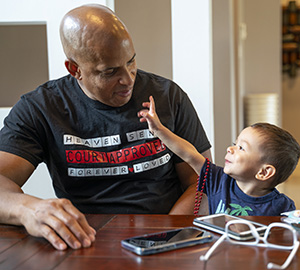
Gerald Varlack plays on the floor with his adopted son. (Buckner Photo by Mark Sandlin)

Maybe it’s the original art or the comic book collection displayed on the brightly painted walls of blue, orange and green in their open-concept home in Mission. Or maybe the music playing in the background.

Perhaps it’s the bright sun filtering through large windows and onto a lifetime of family photos of the couple with their three adult biological children—Cherish, Japheth and Adriel.

More likely, though, the energy in the house comes from the constant movement and laughter of three children all under age 3.

The couple adopted the 2-year-old boy after fostering him since he was a newborn. They currently are fostering the other two and hope to adopt one of them soon.

The experience that is the Varlack home can be credited to the family’s personal vibrancy. Faith and Gerald both are educators—she teaches choir, and he teaches math—as well as artists. All members of the family are active musicians.

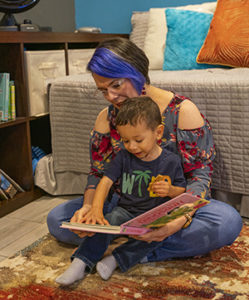
Faith Varlack reads to her adopted son. (Buckner Photo by Mark Sandlin)

Faith and Gerald Varlack participate in the music ministry of Calvary Baptist Church in nearby McAllen, and their three older children have been vocalists in school and church since childhood.

But adding to the energetic feel of the home is the couple’s admission they’re also roller coaster riders of sorts. As they say, it comes with the territory of God’s calling for them to serve as foster and adoptive parents.

“When you walk into the Varlack home, it’s a little bit of chaos since we’ve gotten the last placement in here. But it’s a home filled with love,” said Melanie Mata, the Varlacks’ Buckner case manager and adoption worker. “Everyone is very hands-on, very attentive, very patient with one another. Everyone helps out and picks up the pieces.”

When Faith first approached Gerald about her desire to foster a few years ago with another agency, Gerald responded with a single question: “Why do you want to do this?”

“He’s the more logical one,” Faith said.

Riding ‘an emotional roller coaster’

By 2018, though, the couple had prayed through their mutual decision to become foster parents through Buckner.

Gerald Varlack firmly believes: “The orphan finds mercy in God, and God cares about the orphans. It’s really what we should be all about.” (Buckner Photo by Mark Sandlin)

“We finish the trainings, we get certified, and we get our first placement, a couple of boys,” Gerald recalled. “And that placement is very … What’s the word I would use, Faith?”

“An emotional roller coaster?”

“An emotional roller coaster,” he agreed. “The pendulum shifted from high excitement and then high anxiety and then back and forth between those two.”

Gerald described the highs: “God was giving us this opportunity, and we looked at it as ministry with caring and compassion, everything like when we talk about what it means to be a Christian and what it really means. … ‘Widows and orphans,’ right? The orphan finds mercy in God, and God cares about the orphans. It’s really what we should be all about. I guess for me I was feeling, ‘Wow, this is what my faith in action looks like.’”

But, like any roller coaster, there were dips. After seven months of caring for the boys, the Varlacks realized their foster children needed a higher level of care than they could supply.

“They were amazing kids,” she said. “That [honeymoon] phase ended and then we thought, ‘This is above our ability’ and we had to let that placement go. Then it was a lot of questioning ourselves if we failed and a lot of regret, to the point that Gerald asked, ‘I don’t know if I want to do this anymore.’”

Part of Gerald’s disappointment, Faith explained, stemmed from his passion. “He really gave everything, I mean everything. Those were his boys. It was hard, getting him to want to foster again.”

But Buckner foster care staff found another placement, a brother and sister who were soon to be reunited with family. Since the placement was temporary, both Buckner and the Varlacks felt it might be a good transition to a more positive experience for the foster parents and children.

“They said the little boy was very aggressive, and he wouldn’t talk to anybody,” Faith said. “But in one month’s time, he was talking and smiling, and that was because of Gerald. In his heart, he was saying: ‘I’m not going to fall in love again. I’m not going to do it.’ Yet, he still was so amazing with them. It was a great experience, and Gerald was more open to the next placement.”

From foster care to adoption

Gerald’s eyes light up as he confirmed her words. “After that one, after the little boy and the little girl, that’s when this guy came,” he said, looking at the couple’s newly adopted son. “He was our third placement, right out of the hospital.”

As a foster mother, Faith Varlack enjoys every child in her home, recognizing her calling is “to love them while we have them.” (Buckner Photo by Mark Sandlin)

The child came into their lives in 2019 as an emergency placement at just 3 weeks old and eight weeks premature.

“He was a preemie, so every hour and a half to two hours he needed to eat,” she said. “We had a solid three months of no sleep. We were zombies that summer. With those kinds of experiences, you can’t help but fall in love, right?”

When the couple learned the boy probably would not return to his birth mother because of decisions she was making, they were determined to “fight for this baby” and adopt him. But his adoption proved to be another roller coaster, as efforts to reunite him with his birth mother floundered while she struggled with drug use and jail time.

It eventually led Faith to the emotional realization that a foster parent’s job “is to love them while we have them.”

“And that was a hard lesson,” she said between tears. “But that was a lesson I learned with Gerald. I’m trying not to get emotional. It’s so hard. But when I let it go and I let God have control … it was easier for me to actually take the next placement, and the next placement, because it’s not about me controlling it. It is about whatever God wants.

“When the adoption finally happened, I was like, ‘OK, God, you chose us, you decided we were the ones that were the best home for him.’ It’s a big responsibility, but it was also a big ‘Wow.’”

‘Baby Moses’

While their son’s recent adoption has proven to be a high point in the family’s roller coaster ride, the addition of a baby in late March provided a butterfly-in-the-stomach moment for them.

The Varlacks had indicated they would be willing to adopt an infant, but the day the baby arrived, they were presented with a quick-response proposal by CPS: Would they be willing to make the decision to adopt this child they’d never fostered—or even seen?

The infant came to them under the Texas Safe Haven Law—commonly referred to as the Baby Moses Law—that allows parents unable to care for a newborn the ability to bring the child to a designated safe place, with no questions asked.

Faith recalled the phone conversation. “They said: ‘There’s a baby, and it’s under the Baby Moses law, so it’s going to go to adoption. Are you interested?’” she said. “I was like: ‘What? You’ve got to be kidding.’”

The family’s response was immediate. “Well, just throw our name in there, and we’ll see,” she told the caseworker. “I doubted it would happen because there’s just so many people. And then he called back and said: ‘They chose you. CPS chose you.’”

Faith Varlack rocks a baby she and her husband currently are fostering and whom they hope to adopt soon. (Buckner Photo by Mark Sandlin)

“We got the call on Friday, and then he came to us on Saturday,” she said. “Again, I felt that same responsibility, like God chose us, because there’s a lot of people that could have been chosen in the situation. He thought we were good enough, deserving enough to raise this child.”

The Varlacks hope to adopt “Baby Moses” in the near future.

Cherish, 24, is their oldest daughter. She said her parents’ commitment to children has given her a lot of respect for them.

“In that way, my opinion of them hasn’t changed much,” Cherish said. “They’re great, but I think I have a lot more respect for them and now know how much work it was to have three toddlers at the same time.”

Reflecting on their foster and adoptive journey—all of the roller coaster’s ups and downs—Faith reflected on how it’s been a spiritual journey as well.

“It’s so hard to believe. I’m pinching myself,” she said. “We have six children right now. and we’ve fostered over 12, but my prayer is that these boys would feel loved, and not just loved by us but loved by God. I know God has a purpose for them.”

She gives thanks for “the opportunity to be in their lives” and prays “that they will just be happy and really, really will serve God.”

“I want them to do really great things,” she said. “I really have dreams for them to do that, because I don’t think it was an accident that they were with us.”