Hardage to retire as BGCT executive director

DALLAS (BP)—David Hardage, executive director of the Baptist General Convention of Texas, has announced plans to retire following more than 10 years of service.

Hardage was appointed as executive director in January 2012 by the BGCT Executive Board. Prior to his service with the BGCT, Hardage had served as director of development for Baylor University’s Truett Theological Seminary. He also served as the director of the Waco Baptist Association and pastored churches in Texas and Oklahoma.

Before his role as executive director, Hardage was deeply engaged in denominational life, serving as chairman of the BGCT State Missions Commission, chairman of the BGCT Missions Funding Committee and trustee at East Texas Baptist University and Latham Springs Camp and Retreat Center. He also served on the BGCT Committee on Committees.

Hardage received his bachelor’s degree from Baylor University. He also earned a master of divinity from Southwestern Baptist Theological Seminary and a doctorate from Midwestern Baptist Theological Seminary in Kansas City, Mo.

Hardage’s tenure as executive director was preceded by Randal Everett, who held the post from 2008 to 2011, and Charles Wade whose service spanned from 1999 to 2008, among others.

During Hardage’s tenure, the ministry of the convention was reorganized into five ministry centers, and he led the BGCT to embrace what he called the “GC2” movement, focused on the Great Commission and the Great Commandment,—“sharing Christ and showing love.”

Hardage oversaw the sale of the Baptist Building on Washington Avenue east of downtown Dallas and the relocation of the convention’s offices to their current location off of Walnut Hill Lane in Dallas.

A hallmark of Hardage’s tenure was his weekly visits to Texas Baptists’ churches across the state and beyond. Within months of assuming his role, he began traveling by invitation to visit congregations, meet with pastors and church leaders and share the story of what God was doing through the collaborative ministry of the convention.

“My favorite part of my role has always been visiting our churches and connecting with their pastors,” Hardage said.

At the height of the COVID-19 pandemic, when his travels were slowed, Hardage recorded 55 video greetings from his home to connect with and share support for church leaders.

“I really can’t overstate his positive influence upon Texas Baptists,” BGCT President Jason Burden said. “It’s not possible to say words that are powerful enough or strong enough to express my admiration for him. … His grace and demeanor and his vision for Texas Baptists over the past decade have put us in a much healthier place and a much more productive place, and I’m just thankful to God that David has given himself to serve us.”

Hardage was honored for his 10 years of service at the 2021 Texas Baptist annual meeting in Galveston, where a video featuring past Texas Baptists’ executive directors and officers, current staff and pastors and institutional presidents from around the state was shown to recognize Hardage’s contributions to the Convention.

“There’s a sweet spirit of unity and peace in the convention right now,” Craig Christina, associate executive director of Texas Baptists, said during the service. “Brothers and sisters, that doesn’t happen by accident. That happens because of the sagacious leadership of Dr. David Hardage, who is a true peacemaker. He has a big tent vision of leading the movement of God’s people that is Texas Baptists, and we would not be where we are today without his leadership.”

Hardage’s wife, Kathleen, and children, Rebekah and John, joined Hardage onstage during the surprise recognition.

In remarks to the Executive Board and ministry staff, Hardage expressed gratitude for his time with the BGCT and looks forward to the days ahead.

“I’m very excited about the future for Texas Baptists,” he said. “Thank you for giving me the privilege and honor of serving our Texas Baptists family. It’s been a real blessing.”

Hardage asked for prayer as he discerns what the Lord’s will is for his next step in ministry. He will stay on with Texas Baptists through fall 2022 to aid with the transition.

BGCT officers already have begun the process of forming an executive director search committee. The committee is composed of seven board directors, eight at-large members, and board officers choose the committee chair. A formal announcement of the committee will be made in the coming weeks.



Retired medical missionary still making an impact

Access to pure water eliminated deaths due to water-borne diseases in multiple Mexican villages, and about 2.5 million nutritious meals have been provided to hungry people, thanks to a pair of nonprofit organizations that grew out of the vision of veteran medical missionary Lee Baggett and his colleagues.

Manos Hermanas provides sacks of corn to provide for the immediate needs of hungry people in Mexico and seed corn for future harvests. (Photo courtesy of Manos Hermanas)

Baggett is president of Manos Hermanas, based in Guadalajara, Mexico, and executive director of Hands in Service Ministries in Amarillo—partner organizations devoted to meeting physical needs in Christ’s name.

When Baggett began his studies at Wayland Baptist College, he was a self-described “preacher boy.”

“I felt called to preach. I was not going to stoop to being a doctor,” he said.

However, God used his experiences as a summer missionary to redirect his life. In Juarez, he and his future wife, Ruthie, and other student missionaries helped teach people about water-borne diseases and how to prevent them.

“Ruthie helped a mother bury her baby in a shoebox after the child died of dehydration caused by diarrhea,” he recalled.

Missions volunteers taught local residents how to purify a 55-gallon barrel filled with contaminated water simply by adding two tablespoons of readily available chlorine bleach.

“When we arrived, the news reported about 200 children a day were dying of dehydration,” Baggett said. “In our area, when we left, there had been no more deaths due to dehydration.”

Serve according to needs

At a student missions conference at Glorieta Baptist Assembly, Baggett committed to follow God’s leading into medical missions.

After he graduated from Wayland and married, the newlywed couple relocated to Mexico, where Lee entered medical school and Ruthie worked as a schoolteacher.

As a medical student in 1964, Baggett began serving with the outreach clinics of the Hospital Mexico Americano in Guadalajara. That experience taught him a lesson he has applied for nearly six decades: Serve according to people’s needs, wherever the needs are.

In 1994, Baggett helped found Manos Hermanas as a broad-based lay nonprofit organization that responds to medical and humanitarian needs throughout Mexico.

Manos Hermanas provides nutritious food for orphanages and homes for the elderly in Mexico. (Photo courtesy of Manos Hermanas)

Manos Hermanas helps individuals and local groups who care about meeting local needs by working in cooperation with businesses, other interested people and government officials at federal, state, regional and local levels. Manos Hermanas seeks to improve the lives of people in some of the most isolated and underserved areas of Mexico.

The Baggetts retired from the International Mission Board in 2002. Five years later, they left the Guadalajara hospital’s outreach program and returned to Texas.

“When we left, we knew of about 300 nurses, doctors and dentists doing medical outreach,” Baggett said.

From 1974 to 2007, the Hospital Mexico Americano’s medical outreach clinics served about 140,000 medical patients and more than 35,500 dental patients. The program resulted in 5,327 recorded professions of faith in Christ.

A couple of years after the Baggetts relocated to Texas, they and Don Sewell—a former missionary to Mexico who went on to lead Texas Baptist Partnerships and the Faith in Action Initiatives for Baylor Scott & White Health—founded Hands in Service Ministries.

The nonprofit organization’s purpose is to promote awareness, enlist volunteers and raise funds for Manos Hermanas, which has served more than 25,000 people in the past 28 years.

Working with multiple ministry partners

Ministry partners include the Christian Life Commission’s Texas Baptist Hunger Offering, Texas Baptist Men, Baylor Scott & White’s Faith in Action Initiatives and the Texas Baptist Missions Foundation.

Manos Hermanas and its ministry partners drilled four deep-water wells serving communities in Zacatecas, worked with hospitals in the United States to provide medical equipment for charitable clinics at multiple sites in Mexico, fitted more than 150 leg amputees with prosthetic limbs, and drastically improved childhood nutrition through simple supplements such as a daily tablespoon of an alfalfa extract concentrate.

TBM has worked with Manos Hermanas to provide lifesaving water purification and decontamination, as well as facilitate delivery of food supplement shipments.

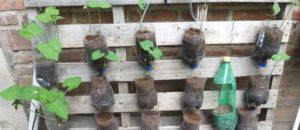
The Texas Baptist Hunger Offering provides funds to help Manos Hermanas personnel teach family gardening techniques, such as vertical gardens. (Photo courtesy of Manos Hermanas)

Through its partnership with Amarillo Baptist Association, HIS Ministries has received hunger offering funds that not only provide food baskets for people in need, but also enabled Manos Hermanas volunteers to train and equip Mexican families for gardening, small-animal husbandry and poultry-raising.

In a quarterly report, Baggett quoted Lidia, whose family benefited from laying hens: “Our family now has a source of good protein for our diet in our own home, without having to buy at a high price in the supermarket.”

Manos Hermanas teams taught families with limited space how to grow vertical gardens by planting seeds in soil-filled plastic bottles mounted on old wooden pallets.

In another quarterly report, Baggett noted gardening classes had to be temporarily suspended when group meetings were prohibited due to a spike in COVID-19. However, 22 families that already had received instruction continued to benefit from the gardens they had started.

“They produced crops for their families and seed to share with others,” the report stated.

God provides the tools and resources

The hunger offering and the Texas Baptist Missions Foundation also provided funding to enable families to build ecological latrines. One quarterly report includes a testimony by Isabel, whose family now has a sanitary outhouse.

“We are glad that now we do not have to go out to the corral behind the trees,” she said. “It is dangerous, especially at night in the cold while my two children are sick.”

All Manos Hermanas services are based on community needs and provided with no distinction as to sex, race, creed or political affiliation, Baggett noted.

“It has been our privilege since the beginning to watch our Lord provide all the tools and all the resources we have needed to work with multiple teams of colleagues alongside each local team to help their people meet their needs,” Baggett said.

Citing 1 Peter 4:10-11, he added: “Our Lord is fair. He always provides what is needed for each task he gives us. It is his kingdom, not ours.”


Baylor study indicates children safer in faith-based care

WACO—Preliminary findings of Baylor University researchers indicate children in the care of faith-based providers are significantly safer than children cared for by secular child welfare agencies.

Byron R. Johnson, director of Baylor’s Institute for Studies of Religion, and William Wubbenhorst, nonresident fellow in Baylor’s program on prosocial behavior, presented the research, “The Association of Christian Childcare Administrators: Keeping Children Safe,” as a study of the well-being of children under the care of faith-based agencies.

They examined insurance data and other information about incidents between 2015 and 2020 involving children in the care of 12 organizations affiliated with the Association of Christian Childcare Administrators.

Examined insurance loss ratios

Researchers calculated insurance loss ratios to compare children in residential care. The selected faith-based agencies reported a total of $2.98 million in premiums paid for general liability, profession, physical/sexual abuse and property policies. Total losses paid out by insurance companies was $1.42 million, yielding a pure loss ratio of 48 percent.

“All the losses reported were related to property. None of the losses were attributed to abuse,” the report stated.

In comparison, researchers pointed to an insurance company that provides coverage to comparable agencies. During a comparable five-year period, that company reported a pure loss ratio of 222 percent.

“The lower insurance ratios for ACCA organizations, in comparison to a comparable loss ratio from an insurance company involved with insuring these types of organizations, provide preliminary evidence that FBCOs (faith-based community organizations), as represented by the sampled population of Christian child welfare organizations, keep foster children comparatively safer than most other child welfare agencies,” the report stated.

The Baylor researchers cited “the focus on relationships and relationship-building character of these mission focused organizations” as a major factor associated with the more favorable insurance loss ratios.

Debbie Sceroler, senior director of domestic foster care and adoption for Buckner Children and Family Services, agrees a sense of mission serves as the motivator for faith-based providers—in particular, Christian agencies.

“The difference for a faith-based foster care agency is the commitment to the teachings of Jesus Christ,” Sceroler said. “For Buckner Children and Family Services specifically, it’s the basis of our entire mission: ‘To follow the example of Jesus by serving vulnerable children and families.’

“We proudly let our faith guide us, and as a result, it is what guides families to come foster with us and social workers to come serve with us. Families are drawn to Buckner because of our mission and their alignment with it. They too feel a deep calling to care for vulnerable children. Likewise, our staff come to be part of a ministry.

“Serving children in foster care is more than just a job—it’s their purpose. And having the support of a faith-based agency is what allows them to persevere and handle any challenge.”

Surveyed faith-based agencies

Baylor researchers also surveyed the 12 faith-based agencies concerning the types of services provided, the staff/youth ratio for residential programs, the number of reportable incidents, substantiated allegations of wrongdoing and the number of youth who died under their care.

Based on the survey data, the 12 agencies serve about 1,500 youth per year. All provide long-term placements; and 10 of the 12 provide short-term placement. Nine provide case management services.

The average youth-to-staff ratio in residential programs for eight of the nine agencies was 3.82 youth per staff member. A ratio of six youth to one adult is the minimum level of care required by state licensing guidelines.

According to the surveys, the agencies averaged 1.9 reportable incidents per agency per year—about 1.5 percent of the youth served annually. Of the 106 reportable incidents in five years, only 9 incidents were substantiated.

No deaths of youths under residential care were reported by any of the 12 agencies during the five-year period.

The results of the study do not surprise Albert Reyes, president and CEO of Buckner International.

“The study points to the effectiveness and level of excellence provided by faith-based providers of foster care,” Reyes said.

“The requirements of the state are seen as the minimum threshold of essential care. Our faith and values call for us to do more, and our vision calls for us to strive for excellence in serving vulnerable children.”


Lexi Rubio’s parents testify before congressional committee

The parents of 10-year-old Alexandria “Lexi” Aniyah Rubio—one of 19 children killed by a gunman at Robb Elementary School in Uvalde—testified virtually before a June 8 U.S. House Committee on Oversight and Reform hearing on gun violence.

Felix Rubio and Kimberly Mata-Rubio presented video and written testimony to the committee. They introduced their daughter Lexi—great-granddaughter of Julian Moreno, longtime pastor of Primera Iglesia Bautista in Uvalde—as a straight-A student with a promising future cut short by gun violence.

Mata-Rubio introduced herself as “a reporter, a student, a mom [and] a runner” who always has read to her children. Her husband is a veteran who served two tours in Iraq and has worked the last seven years as a patrol deputy with the Uvalde County sheriff’s office.

They were among several parents of children killed or injured at mass shootings in Uvalde and Buffalo, N.Y., who pleaded with members of the House committee to enact gun control measures.

Lexi Rubio

Speaking both for herself and her husband, Mata-Rubio urged lawmakers to recognize their daughter “not as a number,” but as an “intelligent, compassionate and athletic” girl who was “shy unless she had a point to make.”

“When she knew she was right, as she so often was, she stood her ground. She was firm, direct, voice unwavering,” her mother said. “So, today, we stand for Lexi, and, as her voice, we demand action.

“We seek a ban on assault rifles and high-capacity magazines. We understand that for some reason, to some people, to people with money, to people who fund political campaigns, that guns are more important than children. So, at this moment, we ask for progress.

“We seek to raise the age to purchase these weapons from 18 to 21 years of age. We seek red flag laws, stronger background checks. We also want to repeal gun manufacturers’  liability immunity.”

Recalling the events of May 24

Mata-Rubio recalled how she and her husband attended an awards ceremony at Robb Elementary the morning of the shooting. Their daughter received a Good Citizen Award and was recognized for receiving all As.

“At the conclusion of the ceremony, we took photos with her before asking her to pose for a picture with her teacher, Mr. Reyes. That photo, her last photo ever, was taken at approximately 10:54 a.m.,” Mata-Rubio said.

“To celebrate, we promised to get her ice cream that evening. We told her we loved her, and we would pick her up after school.”

That never happened.

After leaving her daughter at school—a “decision that will haunt me for the rest of my life,” she said—Mata-Rubio went to the Uvalde Leader-News, where she works as an assistant editor and reporter.

After first learning about a shooting on Diaz Street, near Robb Elementary, on a police scanner at the newspaper, Mata-Rubio and her husband received word from their 8-year-old son Julian’s teacher that he was safe.

“My dad picked up Julian from the civic center [where evacuated children were reunited with relatives] and took him to my grandmother’s house. One of our Robb kids was safe,” Mata-Rubio said.

“We focused on finding Lexi. Bus after bus arrived. But she wasn’t on board. We heard there were children at the local hospital. So, we drove over to provide her description. She wasn’t there.”

Much later, Lexi’s parents received the news their daughter was among the 19 students and two teachers who were killed at Robb Elementary.

‘Lexi would have made a positive change’

Mata-Rubio told lawmakers she and her husband wanted them to understand about the life that was claimed by gun violence.

“If given the opportunity, Lexi would have made a positive change in this world,” she said, noting her daughter dreamed of attending St. Mary’s University in San Antonio on a baseball scholarship.

“She wanted to major in math and go on to attend law school. That opportunity was taken from her. She was taken from us. …

“Somewhere out there, a mom is hearing our testimony and thinking to herself, ‘I can’t even imagine their pain,’ not knowing that our reality will one day be hers, unless we act now.”


Sanchez: LGBTQ youth need to feel heard and understood

David Sanchez wants Christian parents to embrace their children who raise questions about their gender identity or sexual orientation—even when they cannot embrace what the culture is communicating to their kids.

“Kids need to know their parents love them, no matter what,” said Sanchez, director of ethics and justice with the Texas Baptist Christian Life Commission.

Every family situation is different, and appropriate responses vary from parent to parent, he said.

But when young people initiate a conversation about gender and sexual orientation with their parents, Sanchez believes, a good place to start is James 1:19: “Everyone should be quick to listen, slow to speak, and slow to become angry.”

“First of all, listen. Young people need to feel like they are heard and understood,” he said.

Spend time together

At the same time, if a young person “comes out” as gay, transgender or nonbinary—or simply begins asking questions about sexual orientation or gender identity—that subject should not dominate every conversation with parents, he added.

“Make sure you are spending time with your kids—as much as they will let you into their life, be part of their life,” Sanchez said. “Don’t let it [gender and sexuality] be the only thing you talk about.

“If a child comes out, that would be a great time for a family vacation, just to spend time together.”

Understandably, parents take the issue seriously—perhaps even as a matter of life and death. The American Academy of Child and Adolescent Psychiatry reports suicide is the second leading cause of death among children, adolescents and young adults ages 15 to 24.

The 2022 National Survey on LGBTQ Youth Mental Health—a study of 34,000 self-identified LGBTQ individuals ages 13 to 24—revealed 45 percent seriously considered attempting suicide in the past year, and 58 percent reported symptoms of depression. The same study showed youth who identify as transgender or nonbinary considered suicide at a higher rate than other LGBTQ young people.

Biblical teachings about gender

In a presentation about gender issues Sanchez has delivered at several Texas Baptist churches—both to youth and adult groups—he identifies “seven truths” to consider.

  • The word of God is not a weapon to win arguments. Sanchez points to 1 Peter 3:15, which says Christians should be ready to “give an answer” when asked to defend the gospel, but do it “with gentleness and respect.”
  • God made people male and female. Both the creation account in Genesis 1 and Jesus’ teaching as recorded in Matthew 19:4-6 emphasize humanity is created male and female.
  • Male and female are God’s good design. God’s design is not dependent upon individuals’ feelings at a particular point in their lives, Sanchez asserts. It is a reason to celebrate, because God created each person, and every individual is “wonderfully made” (Psalm 139:14). And the gender God chose for each individual is not an accident, Sanchez adds.
  • Both male and female are made in God’s image. A struggle in some area of life does not mean the person is created any less in God’s image.
  • The gospel—the good news—applies to all. No person is beyond the reach of God’s love and grace. No sin with which people struggle makes them unredeemable.
  • Most biblical truths are not gender specific. There is more to identity than gender. While people are created male and female, that is not all they are, Sanchez asserts. They also are individuals created with the capacity to live as children of God, disciples of Christ and temples of the Holy Spirit.
  • Men and women in Scripture do not always fit today’s cultural stereotypes. For example, Deborah was a prophet and judge who went into battle. Esau was a hunter and outdoorsman; his brother Jacob cooked with this mother. Furthermore, expectations about masculinity and femininity vary from one culture to another.

Set an example of surrendering to Christ as Lord

As parents deal with their own children who may be struggling with gender identity—or who may declare themselves gay, lesbian or bisexual—Sanchez recommends they practice patience and humility.

“It’s not going to be an easy journey,” he said. “Be open to family counseling.”

Along the way, parents can set a positive example of Christian discipleship by modeling a lifestyle of worship, grace, love and total surrender to Jesus Christ as Lord, Sanchez said.

“It really comes down to the issue of lordship,” he said. “It’s not about giving up one thing. It’s about surrendering the whole of one’s life to Christ. That’s something all of us can be modeling for our kids.”

David Sanchez is in the process of evaluating resources on issues related to sexuality and gender. Videos he has identified as helpful include:

https://www.youtube.com/watch?v=yhcrMyRv3wg — a sermon by J.D. Greear

https://www.youtube.com/watch?v=fwdf54MOmwE

and https://www.youtube.com/watch?v=eKuftYuby5I — both featuring Preston Sprinkle

https://www.youtube.com/watch?v=TUQHJNs3590  — with Kathy Grace Duncan  


Use tragedy for God’s purpose, family tells church

HOUSTON (BP)—Three days after a grandfather and four of his grandsons were found murdered at the family ranch, family members stood before Houston Northwest Church and encouraged others not to lose hope or forget that God is gracious.

“I lost my best friend. He kept me sharp,” said Glen Collins of his brother, Mark.

Mark Collins, 66, was found dead at the property west of Centerville alongside his grandsons Waylon, 18, Carson, 16, Hudson, 11, and Bryson, 11. The group had gone there June 2 to do some fishing at the conclusion of the school year. Investigators believe they were killed by a prison escapee who then stole their truck and was killed later that evening by police in a shootout.

Hundreds of mourners gathered the next day at a baseball field in Tomball, northwest of Houston, to commemorate the victims. Waylon Collins was a recent graduate of Tomball High School and an umpire for Little League baseball.

‘God is still God’

Speaking June 5 at Houston Northwest Church, Glen Collins urged attendees and viewers to find comfort in the Lord, as he has.

“My message is encouragement,” he said. “This is my home and you are my people, and this is where I find solace and comfort. God is still God, and we’re not.

“There was a purpose when his Son suffered so much more than my family [has]. … That purpose is why I know I will see my loved ones again.”

Keith Mitcham, Mark Collins’ brother-in-law, also addressed the congregation.

“Evil did visit our doorsteps,” he said. In those times, he added, it is important to remember where to gather strength in tragic situations.

“Jesus said, ‘Abide in me.’ And by abiding in him, we’re letting Christ abide in us. We’re connected to the vine. You realize that serving God is easier, then, because you’re no longer the one producing the fruit. You’re just connected to the vine.

“Yes, we live in an evil world, but God is sovereign. For him to have allowed this to happen, there’s a greater good that he will accomplish through all of this.”

A cross, flowers and a box to hold letters of encouragement for the family sit at the start of the driveway to the property, Mitcham said. A sign will soon be added to the fence announcing Romans 5:20—“But where sin increased, grace abounded all the more.”

Heartbroken but hopeful

Houston Northwest Pastor Steve Bezner said the comments mirrored the faithful disposition of the Collins family.

“They are just heartbroken,” he said. “But they are hopeful, because they believe in a God larger than any tragedy.”

Glen Collins’ words reflected that assessment.

“Let me tell you how we make it through this—because we have a hope grounded in the cross. That is our saving grace.

“… Let’s use this for God’s purpose, to bring others to his Son.”


Nebiye Kelile nominee for BGCT first vice president

Nebiye Kelile, pastor of both Pathway Church and Orchard Hills Baptist Church in Garland, will be nominated for first vice president of the Baptist General Convention of Texas.

David Foster, the groups and connections pastor at Shiloh Terrace Baptist Church in Dallas, will nominate Kelile, incumbent BGCT second vice president, at Texas Baptists’ annual meeting in Waco, Nov. 13-15.

Kelile is able to “bridge multiple groups” culturally and generationally, Foster said.

“He is the pastor of two different congregations in the same location that are reaching two completely different demographics,” Foster said. “There are not many who are able to do that, and he can do it quite well.”

Ethiopian Evangelical Baptist Church sponsors Pathway Church—a cross-cultural start-up congregation geared toward Millennials and Generation Z—and is the host site for Orchard Hills Baptist Church, a traditional congregation comprised primarily of senior adult Anglos.

Foster praised Kelile as a gifted preacher who can “apply the word of God to the people of God,” and as an important young voice in Texas Baptist life.

“He is a receptive learner while also being a strategic thinker,” Foster said.

‘A good season’ to take on new tasks

Kelile was born in Ethiopia but grew up in California, where his family moved when he was 2 years old. He helped an immigrant church in Sacramento develop an English-language ministry to reach and disciple the next generation before moving to the Dallas area to start Pathway Church.

Half a year into his term as BGCT second vice president, Kelile agreed to allow his nomination as first vice president, noting it is “a good season” to take on additional responsibilities, both in terms of his family and his two congregations.

He noted the two congregations in recent months have begun collaborating “on kingdom business”—not only enjoying fellowship, but working on purposeful missions initiatives and leadership development.

That’s the kind of cross-cultural, multigenerational, cooperative work Kelile likes to see in Texas Baptist life.

“I love to serve, and I love being a part of something bigger than myself,” he said. “It is wonderful to be part of a convention that is about seeking to accomplish its vision and mission together.”

‘Healthy churches … need healthy leaders’

As the pastor of a church filled with Millennials and Generation Z, many of whom did not grow up in Baptist churches, he wants members of Pathway Church to become more aware of Texas Baptists and involved in convention life.

At the same time, he wants the BGCT to continue the initial steps it has taken to respond to the concerns and facilitate the involvement of Millennial and Generation Z pastors in Texas Baptist life.

Kelile noted he is encouraged by Texas Baptists’ emphasis on church health and leadership development.

“The church needs to think about its future, and if we’re going to have healthy churches, they need healthy leaders,” he said.

Particularly in light of recent news about sexual abuse in the Southern Baptist Convention, he wants Texas Baptists to “make sure we have integrity in our own ministries.”

“We can’t exempt ourselves from what we see in the national convention. Our priorities as shepherds and church leaders need to be in order,” he said.

Kelile is optimistic about what lies ahead for Texas Baptists.

“I am excited for what the future holds,” he said.

Kelile and his wife Hiwot have four children—Lydia, Daniel, Haset and Zaema.


HSU trustees adopt faith statement on sexuality and marriage

Hardin-Simmons University’s board of trustees adopted a statement of faith rejecting transgenderism and same-sex marriage.

“As the nation’s cultural context changes in ways that with increasing frequency conflict with historic Christian teaching, we believe it is important that we expressly proclaim our beliefs earnestly and transparently as a university committed to providing excellence in education enlightened by Christian faith and values, as has been our purpose from inception of the university,” a statement on the university’s website says.

The HSU statement of faith—adopted May 19—affirms historic orthodox Christian doctrines about the Triune God, Jesus Christ, the Bible, humanity, salvation and the church.

References to ‘genetic male’ and ‘genetic female’

It also includes a statement on sexuality saying, “We affirm that God created the human race with two genetic sexes as defined by karyotype, male and female.” Karyotype refers to the size, shape and number of an individual’s chromosomes.

The university statement on marriage reads: “We believe that marriage has been established by God to be a life-long, covenant relationship between one genetic male and one genetic female. We also believe that sexual activity is intended by God to be expressed solely in the context of a loving marriage between one genetic male and one genetic female.”

The statement of faith also says, “We believe that every person has been fearfully and wonderfully made by God and should be afforded love, kindness, compassion and dignity.”

“As a Christian university, we have certain biblically based values that are the foundation of what we believe. We are called to share that with the world, while also showing God’s love,” HSU President Eric Bruntmyer said.

The HSU website includes an explanation saying trustees believe the statement of faith “clearly states the Christian beliefs that undergird and inform the university’s vision and mission and highlights the principles that define what we envision in providing ‘excellence in education enlightened by Christian faith and values.’”

Five days before BGCT Executive Board action

The university trustees adopted the statement five days before the Baptist General Convention of Texas Executive Board recommended messengers to Texas Baptists’ annual meeting adopt a statement of faith that—among other things—declares gender “a gift from God” and defines biblical marriage as “one man and one woman in a covenant relationship with the Lord and one another.”

The statement of faith for the GC2 movement—an emphasis on the Great Commission to share faith in Christ and the Great Commandment to show love—was presented to the BGCT Executive Board as setting parameters for collaboration with the BGCT.

However, the background section of the document presented to the board added the statement of faith “may also be used to vet the beliefs of candidates for BGCT elected/appointed committees, boards or scholarships.”


Marriott nominee for BGCT 2nd vice president

Ronny Marriott, pastor of First Baptist Church in Burleson, will be nominated for second vice president of the Baptist General Convention of Texas.

Cory Hines, president of Howard Payne University, said he will nominate Marriott at the BGCT annual meeting in Waco, Nov. 13-15.

“Ronny is the kind of leader that our Texas Baptist churches need for the days ahead,” Hines said. “He is committed to his Lord, his family, his church and his community.”

As pastor, Marriott has “been instrumental” in leading his church to minister to people in its community, Hines said.

‘A heart for the next generation’

Marriott “has a heart for the next generation,” he added, pointing to his service on Texas Baptists’ Theological Education Council and to the residency program First Baptist Church launched under his leadership.

“He would serve and lead us well, and we would be honored if he were elected as the second vice president for the BGCT,” Hines said.

As a lifelong Texas Baptist, Marriott expressed his desire to serve the convention and offer the benefit of what he has learned from 25 years in the pastorate and 35 years of ministry.

“I have a few gray hairs, and I hope I’ve gained some wisdom along with them,” he said. “I know a few things, because I’ve seen a few things.”

Marriott applauded what he sees as Texas Baptists’ focus on helping pastors, particularly during the shutdown caused by the COVID-19 pandemic and its continuing aftermath for churches.

“I would like to see even more emphasis on providing help and encouragement to the pastor’s spouse, children and whole family,” he said.

First Baptist in Burleson launched its pastor-in-residence and artist-in-residence program for young ministers about four years ago after being challenged to “call out the called” and to support those who feel led to pursue vocational ministry, Marriott said. The two-year program not only offers practical experience in the context of a local church, but also provides residents leadership training and a monthly stipend, he noted.

Denominational service noted

Marriott has served First Baptist in Burleson since 2016. Previously, he was pastor of First Baptist Church in Temple, First Baptist Church in Corpus Christi and Sunset Canyon Baptist Church in Dripping Springs. He also was pastor of Shady Oaks Baptist Church in Hurst, a congregation he had served earlier as youth pastor. He began his ministry career as youth pastor at Northlake Baptist Church in Dallas.

In addition to Texas Baptists’ Theological Education Council, he has served on the BGCT Executive Board, the Christian Life Commission and the board of trustees at Howard Payne University.

In Tarrant Baptist Association, he has served as chair of the credentials committee and as a member of the personnel and finance committees. He has written curriculum for both BaptistWay Press (now GC2 Press) and Lifeway Christian Resources, and he has served as an adjunct professor at Dallas Baptist University.

Marriott earned his undergraduate degree from Howard Payne University and holds a Master of Divinity degree and Doctor of Ministry degree from Southwestern Baptist Theological Seminary.

He and his wife Robin have three children—Molly, Morgan and Ryan.


Cowboy church pastor prepares to pass the reins

Gary Morgan isn’t quite ready to ride off into the sunset yet.

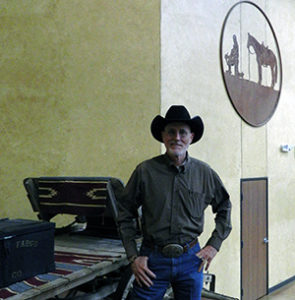
The Cowboy Church of Ellis County for several years was the largest cowboy church in North America. Gary Morgan became the congregation’s pastor in May 2001, the year after its founding. (Photo / Ken Camp)

But when he reaches the end of the trail as pastor of Texas Baptists’ flagship cowboy church next year, he’s glad to know his congregation will be in good hands.

The Cowboy Church of Ellis County was among the first western-heritage congregations affiliated with the Baptist General Convention of Texas. For several years, it was the largest cowboy church in North America. Morgan became the congregation’s pastor in May 2001, the year after its founding.

From the start, the church appealed not only to cowboys who compete in rodeo events or who work with horses and cattle for a living, but also anyone who identifies with cowboy culture.

“We welcome people from every walk of life, but our church has always particularly drawn blue-collar working people—country folks who felt left behind by traditional churches” when those congregations became more affluent and sophisticated, Morgan said.

Regularly scheduled “buck-out” events and team-roping competitions, along with a big annual full-scale rodeo, attract people who identify with cowboy culture.

The casual atmosphere at worship services—a country band leading music and most people wearing boots, jeans and cowboy hats—also helps people who relate to the western heritage feel at home.

Not always understood

The cowboy church movement was not always understood or appreciated by traditional churches in its early years, Morgan acknowledged.

“Some people misrepresented us as the ‘beer and barbecue church,’” he said.

For the record, that description never accurately described the Ellis County church’s means of attracting people—at least, not the part about beer.

However, Morgan noted, the Cowboy Church of Ellis County—and western-heritage congregations in general—were designed to remove barriers that might have prevented people who “hung out at beer halls and barbecue joints on Saturday night” from feeling welcome in church the next morning.

Through the years, neighboring congregations generally have grown to understand much more about the nature of the cowboy church, he observed.

“I believe we’re perceived in the community now as a seriously biblical church and a strong Bible-preaching church,” he said.

‘Chasing a boulder rolling down a mountain’

“We welcome people from every walk of life, but our church has always particularly drawn blue-collar working people—country folks who felt left behind by traditional churches” when those congregations became more affluent and sophisticated, said Gary Morgan, pastor of the Cowboy Church of Ellis County. (Photo / Ken Camp)

The Cowboy Church of Ellis County—and the western-heritage church movement—experienced explosive growth during the early years of Morgan’s pastorate in Waxahachie.

“My experience in ministry up to that point had been like pushing a boulder up a mountain. Those first few years here (at the Cowboy Church of Ellis County) were more like chasing a boulder rolling down a mountain. The challenge was just keeping up with what God was doing,” Morgan said.

More than 200 cowboy churches currently are affiliated with the Baptist General Convention of Texas, said Jason Bryant, Texas Baptists’ western heritage consultant and church starter. Since 2000, Texas Baptists have invested more than $6.2 million in Cooperative Program funds to help churches start 193 cowboy churches.

The peak years for Texas Baptists’ efforts in starting western-heritage churches were around 2007 to 2010, when they averaged 12 to 15 new church starts per year. In 2019, the last year before the COVID pandemic, they started four.

With little more than half of the BGCT-affiliated cowboy churches reporting, those congregations drew more than 18,000 in Sunday worship attendance and baptized 1,264 new Christians in 2021, Bryant said.

Since 2000, Texas Baptists’ western-heritage churches have reported more than 22,500 baptisms, he added.

The Cowboy Church of Ellis County was averaging about 1,500 per week in worship before the pandemic and consistently baptized significant numbers of new believers. Post-pandemic, the church is drawing about 1,000 for in-person worship.

“We’re starting to see lots of new faces again—12 to 15 people visiting most Sundays,” Morgan said.

Need to develop disciples

However, several years ago, Morgan and other cowboy church pastors discovered a troubling gap between drawing a crowd on Sunday and retaining newcomers long enough to see them develop into mature disciples of Christ.

“We were doing a good job of bringing a lot of people in the front door, but we were losing them out the back door,” he said. “We started doing some soul searching. We realized in the beginning, we were more intentional about building churches than in growing Christians. And that bit us.”

Recognizing they needed to do a better job of integrating newcomers into the life of the congregation and developing them into mature followers of Jesus, Morgan and other cowboy church pastors came to realize “traditional churches were doing some things for a good reason.”

In particular, they recognized the need to involve worshippers in small-group Bible studies devoted to discipleship and relationship-building with mature Christians.

“People need community with other believers. They need to know their meaning and purpose. They need to find their place of service in the church and in the broader kingdom of God,” Morgan said.

So, Morgan helped the national American Fellowship of Cowboy Churches develop a discipleship curriculum suited to western-heritage churches.

“Without a doubt, you have to get people in the doors of the church,” he said. “But we have to be intentional about starting them on a path of discipleship.”

Making changes, preparing for transition

In addition to a renewed emphasis on discipleship, Morgan said, the Cowboy Church of Ellis County also had to modify its philosophy about paid staff.

“In the beginning, we tried to do nearly everything with volunteers,” he said. “We still believe volunteers are the backbone of the church, but there came a point where being the only paid minister on the staff just about ate my sack lunch.”

Gary Morgan isn’t quite ready to ride off into the sunset yet. But when he does, he’s glad to know “there are young bucks in the chute, ready to go.” (Photo / Ken Camp)

While the Ellis County church still has a relatively small staff for a church its size, it has added several ministers to serve alongside Morgan.

With his retirement planned next year, Morgan and the church’s elected elders developed a transition plan for leadership. Chris Maddox, the church’s executive pastor, will become lead pastor when Morgan retires.

“It’s good to know there are young bucks in the chute, ready to go. It’s time to hand the reins over to them,” Morgan said.

When he retires, Morgan and his wife Donna plan to spend more time with their three grown children and two grandchildren. Beyond that, they will pray about where and how God wants to use them in their next chapter of life.

“A lot of preachers work for a lifetime and don’t experience a genuine movement of God,” Morgan said. “I’ve had the chance to see God do something new and genuine.

“It’s been a good ride.”

This article originally appeared in CommonCall magazine. 


Texas Baptists minister in wake of Uvalde school shooting

Texas Baptists are responding following a mass shooting at Robb Elementary School in Uvalde, where 19 students and two adults were killed by a gunman May 24.

Joe Aguilar, Texas Baptists area representative for the Rio Grande Valley, was meeting with church leaders nearby and responded to the call to provide pastoral care following the shooting.

He was onsite Tuesday evening and prayed with members of law enforcement outside the school building.

“They went through a lot,” Aguilar said.

People from the community gathered outside the school awaiting information from officials who still were processing the scene.

“It’s a small town. Everybody knows everybody,” Aguilar said. “They are going to need a lot of help.”

Pastoral care in a specialized setting

Aguilar worked with Department of Public Safety Chaplain Mario Samaniego to coordinate trained chaplains from around the area and to provide comfort to families and officials. He explained that in times of tragedy, it is essential that appropriately trained chaplains are available to provide the care people will need.

“You want to make sure the people that are providing care are trained, because we want to give the best help, the best assistance, to these families who are in their worst part of life. And not just anybody is prepared for something like this,” Aguilar explained.

As chaplains provided specialized care to law enforcement and immediate family members, local pastors sat with extended family members, teachers and school counselors and prayed with them. Local pastors provided a familiarity and a comfort, Aguilar explained.

“They are the familiar faces. So, the pastors there can be that voice of comfort,” Aguilar said. “They will be there long after everyone else leaves.”

Already on-site were Tony Gruben, pastor of Baptist Temple Church in Uvalde; Neftali Barboza, pastor of Iglesia Bautista Nueva Jerico Uvalde; and Sonny Garza, pastor of Primera Iglesia Bautista San Diego and a Texas Baptist Men chaplain, among others.

Bobby Smith, director of Texas Baptists Chaplaincy Relations, confirmed chaplains from the San Antonio area with special training in trauma and disaster spiritual care were on standby and awaiting instructions.

He stressed that in a situation like this, it is important to work through the proper channels to provide the help most needed.

TBM chaplains among those responding

May 25, pastors and chaplains continued to arrive to minister to those in need. Among them were Bobby Contreras, pastor of Alamo Heights in San Antonio and vice chair of the Texas Baptists Executive Board, and additional chaplains from TBM.

TBM chaplains are specially trained to minister in the aftermath of disasters. Typically, they serve after tornadoes, hurricanes and other natural disasters, but TBM chaplains have served after other situations such as the 9/11 terrorist attacks.

“Our chaplains will offer a shoulder to cry on, an ear to listen, an encouraging word and an offer of prayer,” TBM executive director/CEO Lenamon said. “They serve as a reminder to the community that people care about them and God cares about them.”

David Hardage, Texas Baptists executive director, reached out to pastors and associational leaders in the aftermath of the shooting and offered his full support. In a statement Tuesday evening, he called for Texas Baptists to pray for those impacted and offered added help in the days ahead.

“Our Texas Baptists family joins many others in praying for the families of those whose loved ones were senselessly killed in today’s Uvalde school shooting. We stand ready to help in any way that’s needed,” he said.

Additional response opportunities will be made available at txb.org.


TBM chaplain in Uvalde: ‘It’s devastating for everybody’

A shooting at a Uvalde elementary school that left 19 students and two teachers dead has shaken everyone in town—families, children, teachers and neighbors.

 People gathered around Robb Elementary Tuesday night trying to figure out just what happened in their hometown. They shed tears and shared hugs with broken hearts and raw emotions.

“The city is in shock, in mourning,” said Sonny Garza, a Texas Baptist Men chaplain serving in the aftermath of the shooting.

Garza is one of four TBM chaplains ministering in Uvalde in the aftermath of the shooting. Working alongside law enforcement and churches, the chaplains are helping people work through their emotions as well as offering to pray with them.

Few people have turned down Garza’s offer to pray.

“I seek to comfort them,” Garza said.

TBM chaplains are specially trained to know how to minister in the aftermath of crises. They most often serve after natural disasters such as tornadoes, hurricanes and floods, but have also served after disasters such as a fertilizer plant explosion and the 9/11 terrorist attacks.

Ministering to Uvalde families whose children have died has been the most difficult, Garza said. They are seeking to come to grips with the reality that their young children are dead, and emotions are running high.

Garza said he relies on the Holy Spirit to guide his actions and words. He speaks “very few words” but listens to people share their stories and offers to pray with them when he feels led.

 “It’s devastating for everybody,” he said.

 TBM Executive Director/CEO Mickey Lenamon urges people to continue praying for Uvalde in the wake of the third-deadliest school shooting in the nation’s history.

 “People have lost their sons, daughters, nieces, nephews, friends and neighbors,” Lenamon said. “The pain is deep. This tragedy will leave a lasting imprint on people of all ages.”

 TBM chaplains will continue serving as long as needed.

John Hall is TBM director of communications. This article initially was published March 24 and updated March 26.