Report stresses urgent need, opportunity with emerging adults

DALLAS—The Baptist General Convention of Texas has both an urgent need and a tremendous opportunity to involve Gen Z and Millennials in Texas Baptist life, two task force representatives said.

Scotty Swingler, associate pastor of students at Sugar Land Baptist Church near Houston, and Chris McLain, pastor of First Baptist Church in Bandera, presented a report from Texas Baptists’ Gen Z/Millennial Task Force to the BGCT Executive Board at its September meeting in Dallas.

Texas Baptists have a bright future, provided they are intentional about “loving, involving and prioritizing Gen Z and Millennial believers,” Swingler said.

Gen Z adults were born in 1997 or earlier, and Millennials were born between 1981 and 1996, he explained.

In a data-driven report, Swingler told the board:

  • According to the 2020 U.S. Census, the average age in Texas is 34.
  • The median age of Protestant ministers in the United States in 2017 was 54 years old, compared to age 44 in 1992. Thirty years ago, one-third of senior pastors were younger than 40. Today, only one-seventh of all senior pastors are younger than 40. There are more senior pastors older than 65 than younger than 40.
  • Slightly more than one-third (36 percent) of Millennials are church members, down 14 percent from the generation that precedes them.
  • Barna Research reports 42 percent of Gen Z are religiously unaffiliated, and 13 percent identify as atheist—double any preceding generation.

However, he reported some encouraging news about Gen Z. Nearly 6 out of 10 (58.2 percent) of Gen Z evangelicals attend church weekly—more than any other generation, according to studies by Public Religion Research Institute and Washington College.

“If there is going to be a revival in the American church, Gen Z will lead it,” Swingler said. “When it comes to church, Gen Z adults are all in or completely out.”

Swingler commended the BGCT Executive Board for electing a Millennial, Bobby Contreras from Alamo Heights Baptist Church in San Antonio, as its next chair.

At the same time, Texas Baptists’ Gen Z/Millennial Task Force included no Gen Z representatives, he lamented.

Key themes of discussion identified

McLain, who introduced the motion at last year’s BGCT annual meeting that led to creation of the task force, reported on its work.

He identified several themes that emerged during task force discussions:

  • Invite emerging adults to the table. “Learn from them. Equip them. Commit to relevant coaching and mentoring for them.”
  • Share the story. Develop new communications models and strategies, and involve Gen Z in the conversation when they are created. Gen Z values authenticity in story-telling, he noted.
  • Commit to organizational innovation. Make the BGCT as nimble an organization as possible, so that it can respond rapidly to changing needs. Leverage institutional relationships to help keep a widely diverse state connected. Keep in mind small congregations in rural areas or small communities, where most ministers gain their first experiences in church leadership.
  • Value spiritual growth. Avoid the dangers of extremes and seek to maintain unity around core commitments. Avoid rhetoric that immediately will cause Gen Z to turn away. “Build on strengths,” he said.

Chris McLain, pastor of First Baptist Church in Bandera, reports on key themes and possible recommendations emerging from discussions of the Gen Z/Millennials Task Force. (Photo / Ken Camp)

The task force considered a long list of recommendations, both short-term and long-range, McLain said. While the final recommendations to Texas Baptists’ annual meeting have not been finalized, he mentioned a few likely possibilities:

  • Conduct listening sessions around the state.
  • Build out a more robust communications strategy and provide a platform where emerging adults can share their stories.
  • Keep track of how many emerging adults attend the 2022 BGCT annual meeting and set a goal to double that number the following year.
  • Launch an emphasis to engage emerging adults in the intergenerational family life of churches.
  • Consider exploring the viability of Texas Baptists launching a pastoral residency program.


Disaster relief leads to marriage for volunteers

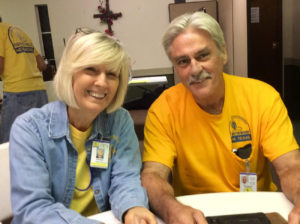
Dianne Crouch said her “first date” with future husband Rick was working on a “mud-out” disaster relief mission.

She met Rick in Weslaco through her work with Texas Baptist Men and his with New Mexico Disaster Relief.

The mud-out “date” occurred later in Groves after Hurricane Harvey in October 2017. One month after they removed water-soaked flooring and damaged sheetrock from a home, they were married.

Dianne had been a TBM volunteer since 2011, three years after becoming a widow. She began by volunteering on a flood recovery team and then switched to the incident management team handling administration.

“I love the opportunity to be able to serve the volunteers that the Lord sends to go out and to be his hands and feet,” she said. “We are one big family.”

‘Conventional dating wasn’t an option’

Rick lived in Albuquerque, N.M., and started working with the New Mexico team in 2014. He worked with flood and fire recovery, as well as chainsaw and feeding teams. He also was their team chaplain most of the time.

“Since Rick and I lived in two different states, conventional dating wasn’t an option. So, I received permission from the New Mexico blue cap (on-site disaster relief leader) to work with their team in Groves for a week doing mud out,” Dianne said.

“I arrived on Sunday morning and met Rick at the church they were attending that morning. Then we attended another service at the church where they were staying. Then spent the rest of the week serving the Lord together doing mud out. It was an awesome time.”

One month later, Rick arranged for Dianne to stay with some friends in Albuquerque, and she “drove up so we could spend some time getting to know each other.” They married on Nov. 28, before Dianne returned to Texas.

‘Both felt this was the Lord’s will’

“We both felt this was the Lord’s will and the direction he wanted us to go,” she said. “Six months later, we moved to my home outside of Aransas Pass, and Rick started serving with TBM.”

Dianne and Rick Crouch, who met when working on a mud-out disaster relief mission after Hurricane Harvey, serve together as Texas Baptist Men volunteers. (TBM Photo)

Rick said he volunteers because the “love of Jesus Christ has so deeply transformed me that I am compelled to go out and share that love with others.” Dianne said she shares the call.

The “act of sharing with others continues to change, build and transform me,” Rick said. “It’s that act of giving that gives so much back to me. I also volunteer to be part of a team of men and women working together to bring hope and comfort to families devastated by disasters. The fellowship within those teams is very special.”

Rick said he has “learned that it takes no special talents or skills to be a volunteer, only a desire to serve, getting out of your comfort zone in order to help someone experiencing disaster in their life.

“Every disaster is a bit different except for hurting people needing hope and guidance in putting their lives together again,” he continued. “That’s when we (TBM volunteers) come alongside. We listen, pray and help evaluate their situation.

“That first contact has a huge effect on their hearts and minds. People are so grateful, and as you often work with them for days as you are working on their home, you’ll witness God working in their lives. Sometimes slowly but often a flood of the Holy Spirit will come upon them, and they want to know Jesus as you do.”

The Crouches now live in Aransas County and attend Oak Ridge Baptist Church in Portland.

“To share Christ is the greatest moment in my life while working in disaster relief, to share what Jesus has done for me. Your story is powerful,” Rick said.


Baptist Women in Ministry: Broken systems can be reshaped

ABILENE—Too often, men have overlooked and silenced women who have sought to proclaim the gospel or exercise leadership in the church, Meredith Stone told the Texas Baptist Women in Ministry Conference.

Women in ministry have been treated as “forgettable,” “ignorable,” “disposable” and “invisible,” the executive director of national Baptist Women in Ministry said to the Sept. 16 conference at Abilene Christian University.

The perspective of women frequently has been discounted or dismissed, Stone said.

“We don’t hear from women. We hear about women,” she said.

Stone cited the story of a slave girl whom the Apostle Paul and his companions encountered in Philippi, challenging her audience to “see the invisible woman” in the narrative recorded in Acts 16:16-19.

The girl had a spirit of divination, from which her owners profited. She followed Paul and his traveling party, crying out, “These men are servants of the Most High God, who proclaim to you the way of salvation.” When she continued to do this “many days,” Paul was “annoyed” and cast the spirit out of her.

‘Victim  of a broken system’

Stone noted the story was told entirely from the male perspective. The girl—unnamed in the Scripture—was treated as little more than a plot device by the narrator and as an annoyance by the protagonist, Stone asserted.

“Her pain and needs were not acknowledged,” she said. “She was the victim of a broken system. She was treated as property.

“But she was made in the image of God and open to the revelation of God. … She was different. Her difference enabled her to see things from another perspective. She proclaimed the gospel, but she did it in a different way and not in the normalized voice.”

Stone cited findings from the State of Women in Baptist Life Report 2021. The survey revealed 86 percent of respondents reported they experienced obstacles in ministry because they are female. About 6 in 10 (59 percent) said they felt overlooked or silenced in their ministry settings. At least 7 in 10 (72 percent) said they had to demonstrate greater evidence of competence than their male counterparts.

“These statistics reveal brokenness,” Stone said. “The system created by men and for men is broken.”

However, Jesus showed another way, she said. Instead of treating women as forgettable, ignorable, disposable or invisible, he highlighted them, cited them examples to be remembered, respected and honored them, and entrusted the message of his resurrection to them.

“The system is broken, but it can be reshaped by following the example of Jesus,” Stone said. “The system can be renewed, but it’s going to take all of us.”

‘Go to the potter’s house’

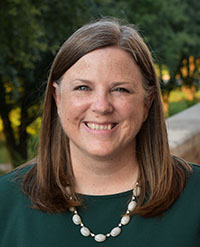
Lynn Brinkley, associate director of national Baptist Women in Ministry, encouraged conference participants to “go to the potter’s house” as described in Jeremiah 18.

“The potter’s house is the destination for those who have been wounded,” Brinkley said.

Lynn Brinkley, associate director of national Baptist Women in Ministry, encouraged conference participants to “go to the potter’s house” as described in Jeremiah 18. (Photo / Ken Camp)

Sometimes, women in ministry are clay in the hands of the Master Potter, and sometimes they seek to take on the potter’s role, she said.

“We have been like potters at the wheel, reshaping broken places in our own lives,” she said, pointing specifically to the disruption and isolation the COVID pandemic caused.

Whether making adjustments in the midst of a public health crisis or responding to injustice, churches cannot afford to take the position, “If it ain’t broke, don’t fix it,” she noted.

“Women in ministry are broken, and some things need fixin’,” she said.

Oppressive systems, patriarchal structures and toxic narratives have wounded women who felt God’s call to ministry but were ignored, disregarded or disrespected, she noted.

Describing “lumps in the clay” the potter must smooth out, Brinkley said, “We have been blemished by systems that hurt us.”

Churches, individuals and society in general all “need fixin’,” she said, but God is capable of renewing and reshaping.

“The Lord is near the brokenhearted,” Brinkley said. “God is able to restore broken things. … Divine hands are at the wheel, shaping and forming us into new vessels.”

But to become a usable vessel, women who are being shaped for ministry must commit to spending time on the wheel and enduring the fire, trusting God with the outcome, she said. God not only can renew, reshape and reform individuals, but also can do the same to denominations.

“The Bible shows us God can do anything but fail,” Brinkley said.

She challenged women to go where God calls.

“Go and become change agents. … You may be broken, but you are still useful,” she said. “You are a gift to the church.”


Baylor prof records stories of Baptist women in ministry

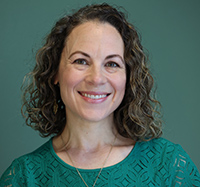
Mandy McMichael of Baylor University has spent the past two years interviewing Baptist women in ministry, asking them to describe their experiences.

Mandy McMichael is associate director and J. David Slover assistant professor of ministry guidance at Baylor University. (Photo / Baylor University)

“It has inspired me, how dedicated these women have been to living into their calling, no matter the cost,” McMichael said.

McMichael, the J. David Slover assistant professor of ministry guidance at Baylor, hopes to create an oral history collection that can be a resource and tool for young Baptist women moving forward.

“They just don’t know the stories of women who have come before them,” she said. “Some of them still haven’t heard a woman preach.”

Meredith Stone, executive director of Baptist Women in Ministry, emphasized the value of the stories being gathered.

Meredith Stone

“Because of the long-standing discrimination against women’s leadership among Baptists, bias against women is embedded in the foundations of a Baptist expression of faith,” Stone said. “Hearing and recording the stories of Baptist women’s callings helps us to know where we have been, so that we can form a vision for where we need to be.”

McMichael acknowledged that reality and wanted to provide a resource to help students struggling with their own calling to ministry.

 “That’s part of what I wanted to do for my students … give them this collection of stories to say, ‘You’re not alone, and there’s not one way to do it,’” she said.

‘Not a closed collection’

With the support of Baylor’s Institute for Oral History, each interview has been recorded and transcribed. By December, McMichael hopes to complete 60 interviews, but she expects her research will continue to be a work in progress even after that.

“It’s not a closed collection. It will always—in my view—be open to having more stories added to it,” she said.

McMichael’s research has been funded by a two-year grant from Louisville Institute, which has allowed her to expand her vision for the project.

“I’ve interviewed some women who are in seminary now, all the way to women who have retired from ministry,” she explained.

In the long run, McMichael hopes to build an interactive, in-depth database that also will allow users to access related resources.

“There will also be an annotated bibliography that lives with the oral history collection. So, you’ll have … primary sources of women telling their stories, but you’ll also have books, articles, podcasts that have been done about women in ministry,” she explained.

While the development of her catalog is a hope for the future, McMichael touched on the hope her project has provided in the present.

“Hearing people’s stories is sacred to me. Being trusted with their joys and their struggles is something I don’t take lightly. I have cried in interviews. I have laughed in interviews. But I leave each interview full of hope for the church,” she said.

“I think that that’s one of my favorite things about being a scholar, about being a writer, is saying: All of life is complex and complicated, and we should look for the similarities and how we can reach across divides.”

Answering the call ‘outside of traditional channels’

Still, she acknowledged the bias within the Baptist tradition against women in church leadership roles.

“I’m seeing those themes of … women sometimes having to go outside of traditional channels to get the same support and just to find a way to work,” she said. Some Baptist women who feel called to the pastorate have “had to reimagine the places that they’re serving as pastoral ministry roles, she noted.

Stone also commented on the lack of denominational backing for women in ministry.

 “Even among more supportive communities, there is often a disconnect between beliefs about women’s equality that are professed and what is practiced in our congregations,” she stated.

McMichael underscored that same idea.

“This has been said before in other places, but I’ll say it again: Baptist churches who support women in ministry, who theologically agree that women can be called to serve in every level of leadership in the church, need to hire women,” she said.

“Support is great, but these women want to serve, so give them places to serve. … Hire women to serve in denominational leadership besides [ministry to] children, youth and women.”

In some circles, women in ministry are “demonized” by people “who think that they are out there just trying to prove a point or champion a cause,” McMichael observed.

Call for churches to ‘expand their imaginations’

“When you slow down and listen to their story … they are people who are called by God to do this work in the world, just like male ministers are,” she said. “It’s a calling. It’s a vocation. And it’s been good to step into that and listen.”

McMichael hopes churches will consider providing places of service to women who feel called to ministry.

 “There are so many churches that are looking for ministers and so many women who feel called to ministry looking for places to serve,” she said. “Wouldn’t it be great if all those churches looking for ministers would expand their imaginations enough to hire the women who want to come and serve alongside them?”

As her two-year grant draws to a close, McMichael reflects on what she has learned through her interviews.

“This has been a hope-filled project for me, not because everything has worked out perfectly all the time, but because I am confronted with the evidence of God’s work in the [lives] of women and the way they have used their gifts to serve God—even when so much has been stacked against them,” she said.

“I just really hope, yes, that my students will feel less alone, but also that any attention that’s brought to their stories will result in other people taking down a few of those roadblocks and making their path just a little bit easier.”

McMichael continues to seek Baptist women in ministry to interview. Email Mandy_McMichael@baylor.edu or call (254) 710-6353.

Lauren Turner, a student at the University of Mary Hardin-Baylor, is serving this semester as an intern with the Baptist Standard.


Food insecurity down nationally but not in Texas

The percentage of households nationally that lack consistent access to food decreased last year, but food insecurity in Texas continues to outpace the national average, a recently released study by the U.S. Department of Agriculture revealed.

At the national level, 10.2 percent of households in 2021 were considered food insecure, compared to 10.5 percent the previous year—the lowest rate of food insecurity since measurement began in 1996, according to the USDA Household Food Security Report.

Craig Gunderson, the Snee Family Endowed Chair at the Baylor Collaborative on Hunger and Poverty and professor of economics, pointed to the national findings as “great news.”

“In 2020, there were 38 million food-insecure Americans, which fell to 33 million in 2021,” Gunderson said. “Disparities in food insecurity also fell as rates for Hispanics and Black persons fell substantially from 2020.”

However, Gunderson added, the United States still has “a long way to go” to eliminate food insecurity, noting “33 million food-insecure Americans is still too high.”

In Texas, the prevalence of food insecurity remained essentially unchanged from 2019 to 2020 at 13.4 percent, outpacing the national average over the same period. One in seven Texans—1.5 million households—faced the threat of hunger, officials with Feeding Texas noted.

“Far too many Texans are still seeing the impact of the pandemic and food inflation on their dinner tables,” said Cecilia Cole, CEO of Feeding Texas, a network of 21 regional food banks across the state.

While disparities in food insecurity fell nationally, a Feeding America study showed 1 in 4 Black Texans and 1 in 4 Hispanic Texans faced food insecurity, compared to 1 in 14 white Texans.

The Map the Meal Gap study also showed children are more likely than others to face hunger, with 1 in 5 Texas children living in food-insecure homes.

“That’s a sad statistic, but the good news is that we have the tools to solve hunger in Texas,” Cole said. “Hunger-fighting programs like school meals are available and should be strengthened to support more equitable outcomes in our state.”

The Texas Baptist Hunger Offering helps reduce food insecurity by supporting food pantries, job training programs and economic development initiatives sponsored by churches, associations and their ministry partners.


Former Baylor President Ken Starr dies at 76

Ken Starr, the former independent counsel in the Clinton administration Whitewater investigation who later became president and chancellor of Baylor University, died Sept. 13 at age 76.

Starr, former U.S. Solicitor General and a U.S. circuit court judge, died at Baylor St. Luke’s Medical Center in Houston due to complications from surgery, a statement from his family said.

Starr 130
Ken Starr

Starr was elected president of Baylor University in February 2010, and he concurrently held the title of university chancellor beginning in November 2013.

Baylor’s board of regents removed Starr as president in May 2016, citing the university’s “fundamental failure” to handle sexual violence complaints appropriately under his leadership. He soon resigned as chancellor and later stepped down as a professor at the Baylor Law School.

However, for six years, Starr oversaw significant expansion at Baylor, including construction of McLane Stadium, the Hart Track and Field Stadium, the Paul Foster Campus for Business and Innovation and Elliston Chapel, along with renovation of three residence halls.

He also led in fundraising for the university, beginning with his first major project—completing ahead of schedule the $100 million President’s Scholarship Initiative.

During Starr’s time as president, Baylor also took significant steps toward becoming a top-tier research university, expanding the Baylor Research and Innovation Collaborative and establishing the Robbins College of Health and Human Sciences.

Praised for public service and scholarship

“Judge Starr had a profound impact on Baylor University, leading a collaborative visioning process to develop the Pro Futuris strategic vision in 2012 that placed Baylor on the path to where we are today as a Christian Research 1 institution,” President Linda Livingstone said.

“Judge Starr was a dedicated public servant and ardent supporter of religious freedom that allows faith-based institutions such as Baylor to flourish,” Livingstone said.

Noting she and Starr served together as deans at Pepperdine University, she added, “I appreciated him as a Constitutional law scholar and a fellow academician who believed in the transformative power of higher education.”

Livingstone expressed condolences on behalf of the university and the Baylor Family to Alice Starr and the rest of Starr’s family.

“May God’s peace and comfort surround them and give them strength now, and in the days to come,” she said.

Tommye Lou Davis, Starr’s chief of staff at Baylor, spoke of the “great honor” to serve alongside him.

“His warm, inclusive personality brought the campus uniquely together. He was deeply loved by students, highly respected by faculty and staff, and greatly admired by alumni and the broader Baylor family,” Davis said.

“Judge Starr’s brilliant mind, affable personality and tireless efforts on behalf of the university have left an indelible mark on all of us fortunate enough to have worked with him. I will always be grateful for his friendship, dynamic leadership and selfless service to Baylor University.”

Kenneth Winston Starr was born July 21, 1946, to William D. and Vannie Trimble Starr, and he grew up in San Antonio.

He earned his undergraduate degree from George Washington University, a master’s degree in political science from Brown University, and his Juris Doctor degree from Duke University.

Starr argued 36 cases before the U.S. Supreme Court, including 25 as U.S. Solicitor General from 1989 to 1993. He was U.S. Circuit Judge for the District of Columbia Circuit from 1983 to 1989.

From 1989 to 1993, he was the independent counsel who led an investigation into the Whitewater real estate investments of President Bill Clinton. The inquiry expanded into other areas, including suspected perjury by Clinton regarding his relationship with Monica Lewinsky.

The allegation in the Starr Report that Clinton lied about the sexual relationship with Lewinsky in a sworn deposition led to Clinton’s impeachment.

After Starr left Baylor University, he worked with the Lanier Law Firm and was a commentator for Fox News.

Starr is survived by his wife of 52 years, Alice; son Randall P. Starr and wife Melina; daughter Carolyn Doolittle and husband Cameron; daughter Cynthia Roemer and husband Justin; nine grandchildren; a sister, Billie Jeayne Reynolds; and a brother, Jerry Starr.

Lori Fogleman of Baylor University contributed to this article.


Texas Baptists and Send Relief launch Laredo ministry center

LAREDO (BP)—A new ministry center will open in Laredo as part of a partnership between Texas Baptists’ River Ministry and Send Relief.

The center will serve Laredo and the wider Rio Grande Valley area by connecting churches to ministry opportunities on the U.S.-Mexico border.

“Send Relief is grateful to be partnering in Laredo with the Texas Baptist River Ministry,” said Josh Benton, vice president of North American ministry at Send Relief.

“Our ministry centers serve in communities all over North America by meeting physical and spiritual needs in Jesus’ name, while also offering compassion ministry training for churches and volunteer mission teams. Because of its proximity to the border, the Laredo ministry center is in a prime location to mobilize churches to serve vulnerable families there.”

Send Relief, a collaborative compassion ministry of the North American Mission Board and the International Mission Board, has opened 19 other ministry centers across North America and Puerto Rico, each designed to meet the specific needs in their local area while training churches to replicate the ministry in their own communities. This will be Send Relief’s first center to open in Texas.

Texas Baptists’ River Ministry has worked along the Rio Grande for 55 years, connecting churches in Texas to projects along the Texas-Mexico border and supporting 15 missionaries who work in cities on both sides of the border.

Laredo is home to one of the oldest border crossings in America’s history and serves as the United States’ largest land-based entry point. In addition to its more than 260,000 residents, the city sees millions of vehicles crossing the Texas-Mexico border each year.

Osvaldo Lerma, a former Texas Baptists’ River Ministry missionary, will lead operations as Send Relief’s Laredo ministry center director. Lerma has deep ministry roots in the area and is excited to see how God will use the center. He emphasized building connections with the local churches and equipping the churches to carry out compassion ministry in their communities.

“We are here to strengthen local churches, encourage local pastors and provide support to the communities in need,” Lerma said. “When we put all of that together, we will be helping churches advance the Great Commission.”

Josue Valerio, director of the Texas Baptists’ Center for Missional Engagement, believes River Ministry’s knowledge and connections in the Valley coupled with Send Relief’s national network and resources will be a powerful tool to reach even more people in the area.

“The goal of this center is to serve families of all shapes and sizes in the Rio Grande Valley. We want to engage the local churches in impactful ministry for their community,” Valerio said. “We are so excited to be working with [Send Relief] on this project. They are bringing a lot of knowledge and expertise.”

Lerma asked for prayer for the ministry center as it launches.

“Pray that this center will have a big impact and that many lives will be touched,” he said.


Couple shares astronomy interest with HPU Summer Scholars

A Howard Payne University alumni couple contributed to their alma mater this summer by sharing their passion for astronomy with several of the university’s youngest students.

Brad Riza, a retired U.S. Air Force chaplain, and his wife Joy, a retired science teacher, participated in the university’s Summer Scholars program for students entering fourth, fifth and sixth grades.

The couple brought special solar telescopes, allowing the students a rare view of the sun’s surface. Brad Riza, formerly director of missions for Paluxy Baptist Association and associate director of chaplaincy relations for Texas Baptists, now serves as resident astronomer for Badlands National Park in South Dakota.

HPU’s Summer Scholars and Young Scholars programs are held each summer on the university campus. The Young Scholars program is open to students entering first through third grades.

Julie Welker, professor and communication department chair at HPU, directs the programs each year.

“The Rizas’ presentation was a great way to kick off the weeklong camp and get the kids excited for learning,” she said. “We’re extremely grateful to alumni and other community members who invest in our students each year.”

Young Scholars teachers included Tasha Carter, art teacher at Early High School; Dalton Hutchins, assistant tennis coach with the Brownwood Independent School District; Sarah Langford, instructor of mathematics at HPU; and Nancy Romig, associate professor of English at HPU.

Teachers in the Summer Scholars program included Dalton Hutchins; Tami Hull, science teacher and robotics coach at Early Middle School; Kristen Hutchins, professor of biology and chair of HPU’s biological sciences department; and Frank Ritter, engineering, chemistry and robotics teacher at Early High School.

 “I am grateful for these teachers who devote their expertise to our summer camp each year,” Welker said. “Our students love the hands-on activities and getting to learn in a university environment.”


Search committee asks Texas Baptists to pray daily

The Baptist General Convention of Texas executive director search committee is asking Texas Baptists to pray daily for their work in the months ahead.

The committee also is encouraging Texas Baptist churches to participate in web-based regional listening sessions in November to help shape an executive director position profile.

The search committee held its first online meeting Aug. 28 to get acquainted, discuss its assignment and develop a general timeline for the search process, said David Mahfouz, chair of the search committee and pastor of First Baptist Church in Warren.

The committee is “in a season of prayer” and will meet in person for the first time Oct. 17-18 in Dallas, he said.

“We are in no rush to fill the role,” he added, noting David Hardage has committed to continue as executive director through the end of the year. “We will follow a very deliberate process to find the individual God is leading us to.”

Gary Cook, chancellor of Dallas Baptist University, delivered the devotional to the Aug. 28 online meeting. Cook described how DBU benefitted from enlisting individuals to pray daily for the university early in his time as its president, Mahfouz recalled.

“We are asking Texas Baptists to pray for us,” he said. “We are asking all Texas Baptists to enter into this season of prayer for the executive director search process.”

At its October meeting, the committee plans to look at data to learn more about who Texas Baptists are and to consider projections about the state’s future, Mahfouz said.

Scheduling listening sessions in November

In November, the committee will schedule a series of regional webinar-style listening sessions to “gather information from Texas Baptists that will assist the committee to develop a position profile,” he said.

The current position profile is more than a decade old and needs to be updated, he noted.

“We want to give every church possible the opportunity to provide feedback,” Mahfouz said. “We want to hear from everyone. We want to hear their hearts.”

An in-person listening session also may be held in conjunction with the BGCT annual meeting, and the committee will consider additional sessions if needed, he added.

After receiving input through the listening sessions, the committee will work through the end of the year to develop the executive director position profile, he explained.

“We plan to release the position profile for the next executive director and to then start receiving resumes in January,” he said. “We will then enter into a time of evaluating resumes and interviewing potential candidates who fit the job profile.”

Since Hardage will retire at the end of the year, and the committee will not begin receiving resumes until January, the BGCT Executive Board will consider a recommendation at its Sept. 19-20 meeting regarding leadership during the interim period, Mahfouz said.

Once the search committee selects its nominee for executive director, that person will be presented to the BGCT Executive Board for election.

“For now, we ask Texas Baptists to pray daily—for our committee, for our convention, and for revival to come to our state,” Mahfouz said.

In July, officers of the BGCT and its executive board named the search committee. The BGCT Executive Board chair and vice chair selected seven members of the board to serve on the committee, and the BGCT president and vice presidents chose eight at-large members of the search committee.


International Friends ministry makes a global difference

RICHARDSON—More than 50 years ago, members of First Baptist Church in Richardson decided to make a global impact without leaving home. They committed to befriend internationals in their community and help them learn English.

The International Friends ministry began Nov. 13, 1969, under the direction of Mary Dickson, offering its first English-as-a-Second-Language classes with 11 teachers and 11 students.

In the decades since then, students from more than 75 countries—including some closed to traditional missions outreach—have benefitted from the services International Friends provides.

Through the years, more than 400 volunteers have offered instruction in conversational English, grammar, vocabulary, writing, current events and citizenship.

‘It brought the world to us’

Jo Hamner began working as a volunteer with International Friends soon after the program launched. After taking several years off to concentrate on her work as an elementary school ESL teacher, she returned to International Friends and has continued as a volunteer ever since then.

At age 9, she felt God calling her to missions, and she eventually went to Baylor University with the intention of preparing for missionary service. Hamner’s life took a different turn when she married and raised two children, but the International Friends ministry rekindled her early sense of calling to missions.

“When this started, it brought the world to us,” she said. “I can honestly say it is the thing I have enjoyed most in my Christian walk.”

Some International Friends students are Christians. Others come from Muslim, Buddhist or nonbelieving backgrounds.

“We never proselytize,” Hamner explained. However, when asked why they volunteer their time, teachers freely talk about how their love for God and God’s love for all people motivates them to serve.

Often, students involved in International Friends are most effective when it comes to sharing their faith with friends and family—both in the Richardson area and in their homelands.

A student at the nearby University of Texas at Dallas became a Christian through her involvement in International Friends. On the day she was baptized at First Baptist Church, several of her family and friends attended the worship service.

When her teacher asked if they also were Christians, the student smiled and said, “Not yet.”

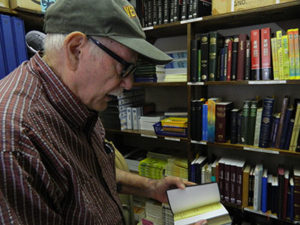
Charles Luke coordinates Bible distribution for the International Friends ministry, maintaining careful inventory of Bibles and New Testaments in more than 50 languages. (Photo / Ken Camp)

Hamner recalled a student from a predominantly Muslim country in the Middle East who introduced her to her niece when the younger woman expressed an interest in Christianity. The student’s niece accepted Christ as her Lord and Savior, and she was baptized at First Baptist Church in Richardson, where she still is an active member.

The International Friends ministry makes available at no cost a Bible to students—either exclusively in their own language or printed alongside an English version of Scripture.

Charles Lake—who coordinates the Bible distribution—and his wife Joyce began working with International Friends in 2004 after being enlisted by former director Laura Ritchey.

“We were invited by the kind of person that nobody could say ‘no’ to,” he recalled.

Lake keeps careful inventory of Bibles and New Testaments in more than 50 languages. When International Friends was at its pre-pandemic peak, the ministry distributed about 100 copies of Scripture a year, he said.

Adapting to changing circumstances

Starla Willis has been involved with International Friends about two decades and became director in 2020. So, adapting the ministry in response to the COVID-19 pandemic consumed the early part of her tenure as its leader.

“COVID was definitely a challenge for us,” Willis said.

Starla Willis has been involved with International Friends about two decades and became director in 2020—just in time to adapt to COVID restrictions. (Photo / Ken Camp)

After about five decades of teaching and ministering essentially the same way, International Friends had to shift rapidly to online delivery of lessons, she noted.

After an extended period of online-only instruction, International Friends now offers in-person, online and hybrid classes. The online classes not only serve students in the Dallas area, but also have involved students from as far away as Brazil and China.

“COVID opened doors we didn’t even realize could open,” Willis said.

Ron Evans, missions pastor at First Baptist Church in Richardson, hopes to see additional doors open beyond the weekly International Friends classes at the church facility and even its online outreach.

“ESL is a fantastic tool to take the gospel to the nations,” he said.

Evans sees International Friends—which he calls “a longtime, staple, cornerstone ministry of the church”—as one of many ways the church can fulfill its vision: “to be a people who bring healing and wholeness to our community and beyond as we are being transformed by Jesus.”

Vision continues to expand

This summer, First Baptist Church sent missions team to the Rio Grande Valley to work with Vanessa Lerma, a Texas Baptists’ River Ministry missionary in the area, and area churches. Volunteers led backyard Bible clubs for children and youth and to minister to the children’s parents.

“We can begin to build relationships and earn the right to speak into their lives. At that point, sharing the gospel is a natural part of the conversation,” he said.

In time, Evans hopes First Baptist Church can help churches in the Rio Grande Valley develop ESL programs similar to International Friends.

In its 50-plus-year history, First Baptist’s International Friends ministry has provided classes that served international students at area colleges and skilled high-tech workers drawn to Richardson’s Telecom Corridor. International Friends also has ministered to refugees who resettled in the Dallas area—notably the Vietnamese “boat people” who fled Vietnam beginning in the mid-1970s.

But Evans wants to see First Baptist minister even more effectively to refugees who are resettling in the region by developing apartment-based ESL ministries.

“For some, entering the church building is a barrier. I’d like to see us move beyond the four walls of the church, in addition to what we do through International Friends,” he said.

At this point, First Baptist is seeking to develop relationships and train teams who can take what the church has learned through its longstanding International Friends ministry and minister where many newly arrived internationals live.

“We hope to go out into the community and do ESL in a different way,” he said. “We want to build off of our 50-plus-year experience and add to what we do through International Friends.”

This article originally appeared in the summer 2022 issue of CommonCall magazine. 


Texas Baptists join prayer for Uvalde prior to first day of school

Texas Baptist leaders are joining the Uvalde Ministerial Alliance in calling churches across the state to participate in a time of prayer on Sunday, Sept. 4, for the community’s families and children as they prepare for the first day of school on Sept. 6.

The call to prayer is in response to the mass shooting on May 24, when 19 students and two teachers were fatally shot at Robb Elementary School.

The Uvalde Consolidated Independent School District delayed the first day of school to Sept. 6, but as students and teachers prepare to return to school, worries over safety, grief and student development remain.

“The [Uvalde Ministerial] Alliance is urging churches to pray for the people that are grieving. It’s a process, and the whole city [was affected],” said Rolando Rodriguez, director of Texas Baptists en Español.

Families who were affected directly will need particularly high levels of support during this time, he added.

Photo courtesy of TBM

Since the tragedy at Robb Elementary School, Rodriguez has been involved with local Uvalde churches in planning long-term care strategies. In partnership with Pastor Neftali Barboza of Iglesia Bautista Nueva Jerico, he hosted a training event for children’s ministers the weekend immediately following the mass shooting.

Recently, Baptist General Convention of Texas Executive Director David Hardage met with pastors and church leaders to discuss how Texas Baptists can continue best supporting the churches and community.

The Uvalde Ministerial Alliance hopes churches will join them in praying for all of the families affected, as well as children and teachers returning to school. Churches also are encouraged to pray for the Uvalde authorities as they make decisions, particularly those regarding safety and security.

Carlos Gutierrez, pastor of Primera Iglesia Bautista in Uvalde, agreed, saying only God can bring healing to the community.

“There are so many things that we as human beings cannot do, that we cannot accomplish. In fact, we rely totally on God to get through so many things, and there are so many things that only God can do for the church, for our communities, for the families,” Gutierrez said.


Ukrainian student travels difficult road to Wayland

PLAINVIEW—A tear of joy ran down Mariia Syzonekno’s cheek when the 19-year-old freshman from Dnipro, Ukraine, walked into Gates Hall to begin her journey through Wayland Baptist University.

But just getting to the university may have been the hardest part.

“I have no words, I think,” she said. “I am so excited about how it happened. I can’t imagine that this has happened to me.”

Having traveled from her home in eastern Ukraine to Poland before making her way to the United States and specifically Plainview, Mariia was greeted at the door by Debbie Stennett, coordinator of international student affairs.

She received a Wayland T-shirt and a bouquet of sunflowers and yellow roses. Stennett explained the sunflower is the national flower of Ukraine, and the yellow rose is symbolic of Texas.

Flanked by Sherman and Tammy Aten, the Wayland alumni who connected her with the university, Mariia was also welcomed by Shaney Brewer, director of undergraduate admissions, and Coralyn Dillard, director of health services, along with the admissions office staff.

Couple helped student fulfill her dream

The impromptu welcome was the culmination of a years-long effort by the Atens to help Mariia come to the United States to study. The couple’s international music ministry brought them into contact seven years ago with the student. Her father, Sergei Dnipro, is pastor of Central Baptist Church in Dnipro.

“They have become kind of our adopted family,” Sherman Aten said.

About three years ago, Mariia mentioned to the Atens that she would like to study in the United States, so they went to work trying to make that happen. In fall 2019, she was accepted to another university, but she never made it there.

“COVID hit, and things just started to dwindle,” Aten recalled.

The pandemic would not be the only setback. Mariia remembers the night that bombs began to fall—first at the airport and then closer to her home in Ukraine’s fourth largest city. It looked like her dream of studying in the United States would be a casualty of the war.

But a meeting the Atens held with Bobby Hall, president of Wayland Baptist University, changed all of that.

“I didn’t try Wayland,” Aten admitted. “But I talked to Bobby Hall a few months ago and told him what was happening. He said, ‘We would love to make something happen.’ He and Dr. (Claude) Lusk (Wayland’s senior vice president of operations and student life) have made this incredible thing happen. So, that’s why she is here.”

“We have long been so proud of the international music ministry of our alumni, Tammy and Sherman Aten,” Hall said. “In conversation with them about Sherman becoming a Wayland trustee, they made me aware of Mariia’s circumstance in war-torn Ukraine, and we discussed how we might work together to bring her to Wayland.

“The Atens’ lengthy ministry in Ukraine coupled with their dedication and that of others has brought us to this day, and we praise the Lord that Mariia is now safely with us here in Plainview.”

‘The Lord was putting it all together’

Mariia was overwhelmed by her journey to Plainview as well as how God brought everything together.

“It is amazing, and I am so excited about how it happened,” she said. “I can’t imagine that this has happened with me. I was so excited when Sherman wrote me an email that Wayland Baptist University wanted to invite me. I do not have the words to explain what I thought.”

Equally amazing is her recent journey. Mariia was supposed to travel to Kyiv to secure the papers necessary to come to the United States, but that trip became impossible. An alternate plan was developed and carefully executed.

“Like clockwork, the Lord was putting it all together,” Aten said. “Mariia would have to get to the U.S. Embassy in Warsaw.”

With her father not permitted to leave the country and her mother remaining behind to care for her younger sibling, Mariia had to make it to Poland on her own. She embarked on her journey more than a week before her arriving in the United States.

“She had to take a bus trip to Warsaw,” Aten explained. “It was a 17-hour trip to the border, traveling over horrible roads. The roads were already so unbelievable. I can’t imagine what they were like after being bombed.”

She faced another setback when she reached Poland.

“She made it to the border, but there was a 10-hour delay there,” Aten said. “We don’t know what that was about, but she did make it to Warsaw for her appointment.”

The next miracle was a smooth appointment at the U.S. Embassy in Warsaw.

“Her visa was accepted and approved, “Aten said. “She had to wait a couple of days for her passport.”

Mariia had never flown before. Her inaugural flight took her from Poland to Paris, to Minneapolis to Dallas-Fort Worth International Airport. That’s where the Atens picked her up, but even that was a challenge. The Metroplex received more than nine inches of rain, causing street flooding. Through the storms, they drove to the Atens’ home in Granbury.

After a few hours to recover from jetlag, they began the last leg of Mariia’s journey. They drove to Plainview, where she was greeted Tuesday afternoon, Aug. 23.

“It’s just amazing,” the student said.

“We had been working on this for two and a half years, but it wasn’t going to happen until people like Dr. Hall, Claude Lusk and Debbie Stennett stepped in,” Aten said. “It’s all about God’s timing.”

Phillip Hamilton is communications manager at Wayland Baptist University.