Tallowood team helps build church in Mexico

TETULA DEL VULCAN, Mexico—There’s a new lighthouse of hope in Tetula del Vulcan, Mexico.

Tallowood Baptist Church in Houston joined with members of Fork Hill Baptist Church in Heath Springs, S.C., and Carmel Baptist in Charlotte, N.C., to build Primera Iglesia Bautista there.

After five days of work, the new chapel already had become the reference point for that part of the city. From a distance, steam could be seen spewing gently from the volcano that has not erupted for close to 100 years, but a new energy seemed to be brewing.

More than 200 people turned out for the dedication of Primera Iglesia Bautista in Tetela del Vulcan, Mexico. Attendance was so high, not everyone could fit inside the newly constructed building.

“They loved our logo, and it is now painted on the front of their building,” said Eddy Hallock, minister of missions for Tallowood. “This group of faithful Christians has met in a small wooden building with compact dirt floors, whose interior is lined with plastic to prevent water seepage. Frankly, it was sad.”

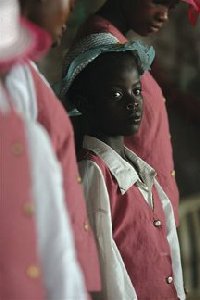
A teenaged girl told Hallock, “Since I was a little girl, we all dreamed of having a nice building where we could worship the Lord.”

Her dream now has come true.

“It was a beautiful sight to see over 200 people present for their dedication service,” Hallock said. “Many people were outside the new building because there was not enough room on the in-side. Better than the building it-self was the fact that several gave their hearts and lives to the Lord Jesus Christ and believed in him as Savior and Lord. Others re-dedicated their lives to Christ, while some came forward at the service asking for prayer.”

Mission trips where a chapel is built have some very interesting aspects to them, Hallock pointed out. In addition to the almost-instant camraderie among participants, the rapidity with which the building is built commands the attention of the people of the neighborhood, who walk the streets and stop to look at the new construction on a daily basis.

“This is an obvious opportunity to ask people if they have seen it and begin to talk about the Lord Jesus Christ and the difference he can make in our lives,” Hallock said.

It was not just people at the construction site whose lives were changed, however.

“The first day we arrived, I gave a young man who managed our hotel a New Testament. When I came in that afternoon, he was reading it. The same thing happened the next two days. On Friday evening, I asked Jose Rivas from our Hispanic church to go with me to talk to Julio and Delfina. We witnessed to them, and at the end, Jose led them in a prayer to receive Christ as Savior and Lord,” Hallock said.

Missionaries Pam and Pablo Gomes, sent out from Tallowood, have been mentoring Pastor Julian Bello and his wife, Ariceli.

“They talked to me a few years ago about building a possible chapel in this place. God provided the funds through a special gift, and the building was made possible. For less than $14,000, we built a 20- by 40-foot building that housed 166 people on the day of its dedication,” Hallock explained.

The construction of the church made a big impact on the local community, he continued.

“The local people and workers cannot believe Americans, men and women, would build a church for them at no cost,” Hallock said. “The testimony of the Christian life and how it should be lived in action and attitude are evident through our people.”



Arlington church and its partners seek to restore hope to Sierra Leone

ARLINGTON—A Texas-based initiative to bring hope to a people on the other side of the globe began in an elevator.

Gabriel Herrera, Sada Herrera, Sharon Hill and Ron Hill lay hands on missionaries during a commissioning service at First Baptist Church in Arlington.

The first week after Cindy Wiles’ husband, Dennis, became pastor of First Baptist Church in Arlington, she met Alusine Jalloh, a professor at the University of Texas at Arlington and head of the school’s African studies program. Jalloh’s office was in the same building as the church’s office.

When they met, Wiles recognized his name as Fulani because she had worked among Fulani villages five years and knew it as a common name.

“I was more interested due to the fact that God had spoken to me and my husband through a series of events to tell us that his desire was for us to lead First Baptist Church Arlington to adopt the Fulani of West Africa,” she said.

Wiles and Jalloh, who is from Sierra Leone, developed a friendship while First Baptist Church developed ministries to the Fulani in Niger, Senegal, Guinea and New York City.

Now Wiles is launching Project Restore Hope: Sierra Leone. The ministry is a combined effort from all the entities that make up Global Connection Partnership Network, where she serves as executive director. Among the partners in the effort are Buckner International and Baylor University’s Louise Herrington School of Nursing, along with several academic schools at UT-Arlington.

Child being treated for a skin infection in Sierra Leone.

Wiles and three other members of First Baptist Church, all former International Mission Board personnel who served in Sierra Leone, made a trip to the West African nation to see what form the ministry would take.

The trip confirmed for Wiles that Sierra Leone was at once a place in need and a place where Christians could make a difference.

“I was encouraged by the appointments, the encounters we had, particularly with government leaders,” she said. “What I saw was a nation that was willing to acknowledge its insufficiencies that really had already made some major steps to strategically address the problems that existed, not having the resources to implement what they were imagining.

“Another thing that really encouraged me was a migration of displaced Sierra Leoneans, particularly professionals, back to Sierra Leone to address the infrastructure issues that exist there.”

The war created untold numbers of orphans. Project Restore Hope’s plan is not to set up a system for American families to adopt but to equip the people of Sierra Leone to care for the children themselves.

Another facet is that the recently ended war in the nation changed the religious climate.

“From a Christian perspective, the major thing that concerns me is that Islam has become the answer,” Wiles said.

While the population of the nation was 40 percent Islamic prior to the conflict, estimates now range upward of 60 percent Islamic, with the Central Intelligence Agency putting its estimate at 80 percent.

Another consequence of the war is that the population of the capital Freetown has in-creased dramatically, with many people living in ravines or cardboard boxes. Orphans and street children exist in numbers too large to count.

The people also have been left with scars that are more than skin deep, as they have either had acts of violence perpetrated against them or their families or they are the ones who committed acts of violence against others.

The people have been left with scars that are more than skin deep.

“It’s a psychologically and spiritually wounded nation,” Wiles said.

It also is a nation without an infrastructure to deal with those types of issues. There are no social workers, no psychologists and only one psychiatrist for a nation of 6 million people, she said.

“They weren’t prepared to deal with the trauma they’ve been forced to deal with as a nation,” Wiles lamented.

The war created untold numbers of orphans. Project Restore Hope’s plan is not to set up a system for American families to adopt but to equip the people of Sierra Leone to care for the children themselves.

To that end, Jollah and the School of Social Work at the University of Texas at Arlington are creating a curriculum to train people in Sierra Leone as social workers and counselors.

Also, land on the grounds of the Evangelical College of Theology has been given to Global Connection Partnership to begin the construction of an orphan village.

The first step will not be the construction of orphan cottages, however, but a training facility, called House of Hope, for future caregivers to orphans.

After the training, orphan cottages will be built. A medical and dental clinic also is planned for the center, as well as facilities to house volunteers.

Already, First Baptist Church has sent four missionaries to Sierra Leone. Ron and Sharon Hill, who accompanied Wiles on the vision trip last fall, are returning to Sierra Leone. They served as missionaries in West Africa 35 years with the IMB, including five years in Sierra Leone. They were the last missionaries left in Sierra Leone.

“They endured the war with national believers and were finally evacuated off the top of a beach hotel by helicopter just as U.S. troops hit the shore of Freetown, which was under rebel siege,” Wiles said.

Even after the evacuation, Hill stole back into Sierra Leone to encourage the pastors and believers there.

Gabriel and Sada Herrera also will serve in Sierra Leone. He is a dentist, and she is a registered nurse. They will help meet physical needs, but he also will work to develop programs targeting youth.

While more help is needed, Wiles said this isn’t a typical missions situation where something needs to be constructed. Psychologists and other mental and traditional health care workers may be the larger need at the moment, she noted.

For more information, call (817) 276-6494.


On the Move

Danny Becknell to Clearfork Church in Luling as pastor.

Mark Caswell to First Church in Denton as minister to students from First Church in Anna.

Craig Christina to Shiloh Terrace Church in Dallas as pastor from First Church in Jackson, Tenn.

Kevin Cornelius to First Church in Karnes City as pastor.

Lance Cypert to Faith Temple Church in Poetry as pastor.

Wayne Dishman to First Church in Devine as pastor.

Bobby Fletcher to Grayson Association as director of missions from First Church in Dorchester, where he was pastor.

Frank Flores to Gethsemane Church in Carrizo Springs as pastor from Primera Iglesia in Cotulla, where he was interim pastor.

Justin Holcomb to First Church in Alpharetta, Ga., as student pastor from First Church in Conroe.

Justin Horton has resigned as minister of students at Second Church in Corpus Christi.

Andy Johnson to First Church in Thorp Springs as pastor.

Chris Lovejoy to Georgetown Church in Pottsboro as minister of worship from First Church in Collinsville.

Wayne McCrary has resigned as pastor of Clearfork Church in Luling.

Heath Powers to First Church in Winters as pastor from First Church in Runge.

Marcie Raymond has resigned as music director at First Church in Refugio.

Beau Stringer to First Church in Floydada as minister of students.

Kimberly Stutts to Northside Church in Corsicana as minister of benevolence and missions.

Kay Williams to First Church in Schulenburg as summer youth minister.

Chase Willingham to Northside Church in Corsicana as summer youth intern.

Kelly Wolverton to Adamsville Church in Lampasas as pastor from First Church in Hico.

Robby Wynn has resigned as pastor of Trinity Memorial Church in Marlin.


New Haven Ministries provides tons of hope

MINERAL WELLS—New Haven Ministries goes through a ton of food each week. Actually, it’s more than two tons.

The food pantry serves about 600 families a month, distributing 5,000 pounds of food a week. More than half of those served are elderly people on fixed incomes who cannot afford to drive to the pantry. In response to the need, the pantry van travels Palo Pinto County.

“The people are scattered,” New Haven Executive Director Jim Rhodes said. “They’re in pockets.”

The pantry runs off in-kind and monetary donations such as those that come through the Texas Baptist Offering for World Hunger. While canned goods and other items help, Rhodes said, the funds are even more helpful. He can buy food in bulk for 14 cents a pound—far below prices accessible to the general public. For roughly the price of 500 canned goods, Rhodes purchases nearly 3,600 pounds of food. 

In addition to food, New Haven also provides clothing to people in need. Giving away clothing enables people to buy food with money they may otherwise have used to purchase clothes for work.

“I feel like anything we give them helps release the funds that can increase the quality of life for them.”

New Haven’s efforts are avenues through which other needs can be met, Rhodes said.

The ministry works through a network of churches to identify people with hunger needs. If volunteers discover other needs when they deliver the food, they let churches know.

Recently, one volunteer delivered food to an elderly woman. During the trip, she discovered the woman’s house needed extensive work. The volunteer called a local church, and its members quickly attended to the home.

Rhodes understands the ministry cannot meet every need in the county, but volunteers try to meet as many as they can.

“There are plenty of great things people can do,” he said. “That’s just what I’m called to do.”

Meeting the needs of others is part of Texas Hope 2010, a Baptist General Convention of Texas initiative to share the gospel with every Texan by Easter 2010. The Texas Baptist Offering for World Hunger is a critical part of this effort.

Congregations are encouraged to take a collection for the world hunger offering during the last service of months with five Sundays. Promotional materials, including videos, are available at www.bgct.org/worldhunger. To give to the Texas Baptist Offering for World Hunger online, visit www.bgct.org/give


Online micro-loan program for Third World business inspires student loan program

CORPUS CHRISTI—Inspired by an Internet program that allows donors to provide small loans to entrepreneurs in developing nations, a South Texas school launched a similar pilot program to help ministerial students complete their education without an oppressive debt load.

The South Texas School of Christian Studies—a host extension campus for Howard Payne University’s undergraduate program and the master of divinity program from Hardin-Simmons University’s Logsdon Seminary —created the micro-loan program to provide students interest-free loans and offer donors a personal way to make relatively small gifts to benefit specific students.

“We realize some students are struggling. Prices are going up, and the economy is tight,” said Suzan Benson, director of business and finance at the Corpus Christi school.

As school officials began to brainstorm ways to help students, someone offered the example of Kiva Loans—an Internet company that allows people to make online contributions to provide micro-loans that help Third World entrepreneurs launch small businesses.

Following that model, the school decided to set aside space on its website to post photos and brief profiles of students.

Once the site is populated, donors will be able to choose a student, decide on a level of support—from $50 to $300—and contribute online to an interest-free loan for the selected student.

“Donors can give based on their interests. Some may choose a bivocational minister. Some may select a woman in ministry. Or members of a particular church may want to support a person with a connection to that church,” Benson said.

When a student pays back the loan, the donor will choose how the repaid money is used—either directed toward a micro-loan for another specific student or contributed to a general student-loan pool.

School officials anticipate loans will be available for the spring 2010 semester, depending on donor response.

“This is a new program, and we don’t really know what to expect,” Benson acknowledged. “Our big concern is that we don’t want students leaving here with a load of debt that will cripple their ministry. We’re just looking at innovative ways to help.”


Baylor engineering students form national nonprofit

WACO—A university-based Christian organization that mobilizes engineering students to serve the people of developing countries is expanding to become a national nonprofit organization.

Baylor University’s Engineers with a Mission has expanded to Global Appropriate Technology Ministries. The organization will serve as a nonprofit engineering consulting agency for foreign mission projects around the world.

Engineers with a Mission uses engineering students to serve the people of developing countries with their technical skills through culturally appropriate technology projects and mission-oriented trips abroad. (PHOTO/Courtesy of Baylor University)

“What we envision this new nonprofit to be is kind of a sourcing agency for mission projects that if, for example, you need a civil engineer and electrical engineer to come out and build a water purification system or install solar panels for an orphanage in Africa, we can provide that,” said Brian Thomas, senior lecturer of electrical and computer engineering at Baylor, who acts as the faculty adviser to Engineers with a Mission.

“The engineers would usually volunteer their time and expertise. However, in some cases, the money we raise will be used to pay them at least a portion of their salaries and travel expenses.”

Engineers with a Mission uses engineering students to serve the people of developing countries with their technical skills through culturally appropriate technology projects and mission-oriented trips abroad. Thomas founded the pilot chapter at Baylor in 2004.

Thomas said the idea is that Global Appropriate Technology Ministries could provide mission trips with engineers of all disciplines, from electrical engineers to mechanical to civil engineers.

Baylor’s Engineers with a Mission also is expanding the scope of its ongoing work in Honduras.

With 10 students and two Baylor faculty, participants in an upcoming mission trip will split into two smaller groups and serve in two locations.

In the first village, Danta Uno, located in the north central part of Honduras, Baylor engineering students will install a circuit breaker that will allow residents to have electricity 24 hours a day, rather than just a few hours at night.

Last year, Baylor students installed a microhydroelectric generator, which supplied small amounts of power to the village. The students also installed power lines to the homes and electrical meters. However, the metered system no longer will be used after students install the new circuit breaker. The village will be on a fixed-rate tier system for electricity.

In the second village, Pueblo Nuevo, a group of Baylor engineering students will install another microhydroelectric generator, which should provide electricity to about 60 homes. The electricity generated will be used for home lighting.

Most of the residents are poor farmers and light their homes using homemade “candils”—glass jars of kerosene with a cloth wick cut from old clothing. They are costly, give poor light and are a fire hazard. The trip will be the third time a Baylor engineering group has traveled to Pueblo Nuevo.


Around the State

Howard Payne University will hold its Young Scholars and Summer Scholars programs June 15-19. The events involve children entering grades 1-6 and will run each day from 9 a.m. until noon. The cost is $150. Younger children will receive innovative instruction in reading, music, science and physical education. Older children will learn computer graphics, speech/ debate, science and physical education. For more information, call (325) 649-8517.

The 23rd annual bivocational and smaller church ministers’ and spouses’ statewide conference will be held July 10-12 at the University of Mary Hardin-Baylor . The theme is “Simple Solutions for Tough Times: Living by Faith.” Among the topics for pastors will be counseling, helping people deal with addictions and sermon preparation. In the music/worship track, topics include high-tech worship, worship software and working with children. Other topics include church security and liability, missions in the smaller church and changing communities. Topics of women’s interest and Spanish-language seminars will be included. A teens’ conference will run concurrently and feature a concert by the Nick Gainey Band on Friday. The $90 registration fee includes room, meals, and tickets to two concerts. Tickets for The Hubbard Family concert on Friday or the David Meece concert on Saturday can be purchased separately for $10. Youth under age 18 are free. A scholarship golf tournament will be held Friday morning. For more information, call (214) 828-5387.

Thirteen East Texas Baptist University students received their bachelor of science in nursing degrees during spring commencement. Graduates (left to right) Christine Chen, Bethany Gilley, Jessica Gish, Kerstin Jefferson and Rebekah Hood participated in lighting their Nightingale lamps during the traditional pinning ceremony. ETBU nursing instructor Martha Dudley lit the lamp of each graduate.

Robert Creech, pastor of University Church in Houston 22 years, has been appointed professor of Christian ministries and director of pastoral ministries at Baylor University’s Truett Seminary . He will replace Levi Price, who is retiring. Creech earned his Ph.D. in New Testament studies from Baylor in 1984.

Dallas Baptist University honored Albert Black Jr. and Dennis Jeter as recipients of its Good Samaritan Award at its annual DBU-Oak Cliff Partner-ship Dinner. Black, raised in South Dallas, is a successful businessman who gives back to the community. Jeter is the owner of Jeter & Sons Funeral Home in Oak Cliff. Both men are active in their churches.

Trevor Brown, a junior from Baytown, was awarded the Wallace Roark Prize in Christian Doctrines at Howard Payne University’s Christian doctrines colloquy. Also presenting papers at the colloquy were Jonathan Adams, Crystal Brown, Bethany Elmore and Jeffri Malone.

Anniversaries

Bob Parker, fifth, as pastor of First Church in McGregor, May 3.

Hulen Street Church in Fort Worth, 50th, May 31. John Mark Yeats is interim pastor.

Bryan and Lorna Price, 10th, as summer resort missionaries working with Alpine Resort Ministries in Creede, Colo., June 14. They are members of First Church in Pittsburg, where he served almost 20 years as minister of music/associate pastor.

Samuel Buhl, 10th, as pastor of True Love Church in Cameron.

Deaths

Gaye Smith-Tanner, 62, May 13 in Lubbock. She died of cancer and its complications. A minister’s wife, she supported her husband, Wil, in his ministry in Dallas and Lubbock churches. He is pastor of Pilgrim Church in Lubbock and a member of the board of directors of the Baptist Standard. She was a Sunday Bible study teacher and congregational family ministry team leader at the Lubbock church. A native of San Antonio, she was a former member of Macedonia Church there. She is survived by her husband; daughters, Tracie Patrick-Lee and Tiffany Downs; son, Johnny Patrick; stepsons, Gary, David and Wilburn Tanner; stepdaughter, Donna Tanner; sister, Bessie Carraway; brother, Rogers Smith Jr.; and five grandchildren.

Sam Pearis IV, 78, May 24 in Universal City of pulmonary fibrosis. A 27-year veteran of the U.S. Air Force, he flew more than 170 combat missions in Vietnam. He retired from the Air Force in 1980, but during his service was awarded the Legion of Merit, the Distinguished Flying Cross, the Air Medal, the Meritorious Service Medal and the Air Force Commendation Medal. For three years following his retirement, he was a volunteer member of the San Antonio Baptist Association staff, promoting missions and recruiting volunteer missionaries. In 1984, he became the Mission Service Corps director for the Baptist General Convention of Texas, recruiting self-supporting missionaries to serve all over the world. During his time of service, the ranks of the MSC grew from 100 to more than 1,250. With his wife, Polly, as his assistant, they served until retirement in 2002. In 2003, they retired to Universal City and were active in First Baptist Church there. He also was a charter member of the Baptist Health Foundation of San Antonio board of trustees. He is survived by his wife of 54 years; children, Tamara and Barry; brothers, John and Herbert; six grandchildren; and two great-granddaughters.

Revivals

Oplin Church, Clyde; June 14-17; evangelist, Herman Cramer; music, Ernie Overstreet; pastor, James Teel.


IMB receives funds from BGCT; blog claims to the contrary ‘erroneous’

A recordkeeping glitch prompted some Baptist bloggers erroneously to accuse the Baptist General Convention of Texas of escrowing funds from the Lottie Moon Offering to improve its cash flow.

However, officials at the Southern Baptist Convention Executive Committee and the Texas convention confirm the BGCT has forwarded more than $9.95 million in Lottie Moon funds to the IMB since Jan. 1, and those gifts have been wired to the SBC Executive Committee for distribution on a monthly basis as the state convention has received them from churches.

Lottie money

Lottie Moon money kerfuffle apparently over.

“Each month, we send the designated gifts we have received for all the SBC institutions to the SBC. We follow this same timeline for any institution on whose behalf we receive designated gifts,” BGCT Treasurer Jill Larsen said.

BGCT records show wire transfers of designated gifts—including Lottie Moon Offering funds—on Jan. 15, Feb. 6, Mar. 23, April 14 and May 20 totaling $10.18 million.

Same-day transfers 

“With wires, SBC receives it the same day we send it,” Larsen explained.

By February, the BGCT had sent more than $6 million in designated funds for the IMB to the SBC Executive Committee. The problem arose in March, when the SBC Executive Committee reported no designated gifts to the IMB forwarded by the BGCT. In fact, the BGCT had sent the money but without the necessary remittance form indicating how it was to be distributed.

After the matter became a topic of public discussion in the blogs and after being contacted for comment, the IMB issued this statement: 

“The IMB is thankful for the gifts of Southern Baptists to the Lottie Moon Christmas Offering flowing through the Baptist General Convention of Texas. There was a temporary delay in the receipt of funds related to the installation of a new software system in the BGCT offices.  Funds were received from BGCT prior to that delay and have been received since the implementation was completed. We remain grateful for the sacrificial giving of Southern Baptists to reach a lost world for Christ."

That reporting error—and apparent discussion of it by unnamed sources associated with the IMB—prompted an entry by Bart Barber, pastor of First Baptist Church in Farmersville, on his blog—praisegodbarebones.blogspot.com —titled “BGCT Refusing to Release Lottie Moon Funds, Sources Report.”

“Sources within the International Mission Board report that the Baptist General Convention of Texas is escrowing Lottie Moon Christmas Offering funds to safeguard BGCT cash flow,” wrote Barber, whose church in recent years withdrew its affiliation from the BGCT and affiliated with the Southern Baptists of Texas Convention.

“Although the official BGCT budget has shown increasing hostility toward SBC ministries since the 1990s, this event would constitute a rare occasion of BGCT’s taking action to blockade funds designated by BGCT churches to SBC causes.”

Barber’s entry subsequently was posted on sbctoday.com , and it prompted further postings on blogs by some other Baptists.

However, in the comments section, Barber’s blog also includes a detailed explanation submitted by Clark Logan, vice president for business and at the SBC Executive Committee, explaining the circumstances of the reporting error.

"Inaccurate and unfair"

In his comments, Logan characterized the initial blog entry and some subsequent comments as “inaccurate and unfair to the BGCT, the IMB, and the SBC Executive Committee.”

Logan noted the BGCT’s “consistent history of forwarding funds to the SBC Executive Committee,” and he confirmed the BGCT had forwarded more than $6.3 million in designated receipts for the IMB in the first two months of 2009, and the Executive Committee received an additional $3,301,826.17 for the IMB from the BGCT March 23.

However, the BGCT did not send with the funds in March a remittance form or any paperwork showing how the money should be applied.

“Apparently the implementation of new software at the BGCT complicated their ability to compile and issue the needed distribution report until after April 1. Therefore, even though the SBC Executive Committee was in possession of the designated fund sent on March 23, “$0.00” was reported because the proper application of those funds had not been verified by the BGCT,” Logan wrote. “Distribution and reporting of Designated Funds cannot be made by the Executive Committee until the distribution paperwork is received from the state conventions.”

Since the paperwork was not received until after the end of March, the amount received was not posted until April, he explained. The April report included both the April gifts and the gifts tendered on March 23.

“For these reasons, any claim that the BGCT ‘held money’ is erroneous,” he wrote.

“The business and finance division of the SBC Executive Committee works closely with the finance offices at all of the entities. Persons in those offices would have knowledge of or opportunity to access all of the above information. Anytime there is a question, I believe all of those offices would welcome the opportunity to respond to any inquiries from interested Southern Baptists. I wish our office had been called about this matter before various erroneous theories were proposed.”

Mea culpa … almost

In a subsequent blog posting, Barber acknowledged his error.

“I apologize for contributing to this imbroglio. A couple of telephone calls before clicking ‘Publish Post’ and I could have helped to right a misunderstanding of someone else’s making rather than becoming an unwitting accomplice,” he wrote.

Barber insisted he posted the initial entry because he trusted his sources, he considered the matter of missions money an important subject—and because he admittedly was ready to believe the worst about the BGCT.

“The story not only came from a credible source, but it matched up precisely to the reality that I could imagine to be most likely. Thus I posted without performing more research,” he acknowledged.

“And the entire situation puts me in the bitter-tasting situation of having somewhat wronged an institution that I dislike and owing it an apology. So, to the BGCT, I apologize for not taking greater care in reporting damaging information about you. I will endeavor, whenever criticizing you in the future, to exercise greater caution to stick to the many publicly verifiable items on which we disagree.”


Church has shaped its community by meeting needs—for 118 years

ABILENE—Abilene bears the stamp of First Baptist Church.

In 1891, the church helped start Abilene Baptist College in cooperation with Sweetwater Baptist Association; the school now bears the name Hardin-Simmons University. In 1924, West Texas Baptist Sanitarium opened; it now is Hendrick Medical Center. In 1939, the church was instrumental in founding Hendrick Home for Children.

All are key dates in the history of both the church and the city, but one of the most important roles First Baptist Church played in influencing the city’s development was starting at least 14 Baptist congregations.

The husband-and-wife team of Rob and Tiffany Fink have written a book titled Love Unbounded: The Influence of the First Baptist Church of Abilene, Texas, chronicling how the church played a key role in shaping the city which has grown with it.

O.C. Pope served not only as pastor of First Baptist Church in Abilene (pictured in this 1883 photo), but also as the first president of Abilene Baptist College, which grew to be Hardin-Simmons University. (PHOTO/Courtesy of First Baptist Church in Abilene)

Tiffany Fink is an assistant professor of history at Hardin-Simmons University; Rob Fink is a visiting assistant professor of history at McMurry University. They are members of First Baptist Church.

First Baptist Church was founded in 1881, when Abilene itself was still being shaped to a great extent. Is First Baptist Church in Abilene still making an impact on the city? Can any church today have that same impact on its community?

The historian in Tiffany Fink takes her back to the church’s original focus and reason for striving toward beginning these bedrock entities.

“People in Abilene and First Baptist Church found purpose in meeting needs,” she said. They looked around and saw a need for medical care and formal education, as well as spiritual needs and sought to meet those.

Pastor Phil Christopher of First Baptist Church in Abilene said churches today need to take the same approach.

“Churches need to have a vision to meet needs. At that time contextually, it was a need for institutions. Now, the needs are single moms and rising divorce rates, so we see a need for a counseling center,” he explained. “The impact churches can have is just as pronounced. It’s just different,”

Tommy Brisco, dean and professor of Old Testament and archaeology at Hardin-Simmons’ Logsdon School of Theology, agrees churches not only can affect their communities in dramatic ways, but also need to.

“Lots of churches and institutions are doing it,” Brisco said. “One that jumps out is the work of Tillie Burgin of First Baptist Church in Arlington, and also Jersey Village Baptist Church in Houston where Ed Hogan is pastor. He and his church have a heart to meet the needs of people.

“I’m interim pastor at First Baptist Church in Levelland, and if you took the church out of that community, it would leave a large hole. It’s not a matter of scale or size, but of vision.”

The quandary for churches is that while a vision to meet needs seemingly is a timeless need, the nature of those needs changes—in some communities very quickly.

“One of the major considerations many churches are having to make right now is whether to stay downtown, which in many cities is declining, or moving out of those areas,” Mrs. Fink said.

“And it’s not just the landscape that changes, but the culture,” Brisco added. “With the expanding Hispanic culture, how do we respond to that? That becomes one of the real questions that has to resolved if we are to continue to be relevant.”

One way to keep in touch with the needs of the community is to take the time to look, Rob Fink said. He recalled a meeting where 40 people were discussing needs of the community, but they adjourned to get in their cars and just drive around. They all came back with a new awareness of how many children were running around unsupervised. A day care was started.

The pastor plays a key role in the impact a church has on its community, Brisco said.

“One of the things that is clear in my mind is that the pastors of these churches are connectors,” he said. The pastors have to be not just leaders in the church, but active in the community as well. They also have to be not only people of vision, but also people who will see that the job is done, Brisco continued.

It is important for churches to realize that the culture has changed the way evangelism is done, said Bob Ellis, associate dean of Logsdon Seminary.

“There was an era when Baptist churches grew through evangelistic revivals—y’all come,” he said. “The way we do evangelism now is through caring for people and meeting needs.”

That’s one of the things he likes best about the Texas Hope 2010 initiative launched by the Baptist General Convention of Texas.

“Everybody hears the gospel, and nobody goes hungry,” Ellis said. “It’s all about extending love to others. That’s what we’re called to do as followers of Christ. If we can redefine Christian as being the presence of Christ, we will see a renewing of their spirits.”


Homeless men from Waco help repair homes in Galveston

GALVESTON—Four men from Mission Waco’s homeless shelter joined four Baylor University students and two-dozen other volunteers with Waco’s Church Under the Bridge on a recent mission trip to Galveston.

Volunteers worked three days on five homes, repairing damage caused by Hurricane Ike.

“The group bonded as they worked alongside each other, eating meals together and hearing one another’s stories of each day’s work,” said Jimmy Dorrell, director of Mission Waco.

Including homeless people in meaningful ministry fits into Mission Waco’s philosophy of honoring the dignity of the poor and working to empower them, Dorrell explained.

Men from Mission Waco’s homeless shelter served alongside Baylor University students and other volunteers on a recent mission trip to Galveston. (PHOTO/Courtesy of Mission Waco)

“Instead of feeling sorry for those struggling on our streets, we try to find ways to help them give back to their own communities, nation and world. These men were ecstatic to use their skills to help others who had experienced loss. They had something to offer and their talents were needed and used,” he said.

The backgrounds of the four homeless men illustrate the individuality of the homeless population in general, he noted. One man is a licensed plumber who “just ran out of money” on the way to see his family and was stranded for weeks without a job, Dorrell explained.

One suffers from mental illness. One grew up in a meth lab operated by his family until it was raided and his parents were incarcerated. The fourth man “had struggled with numerous issues, but his conversion to Christ had changed his whole worldview, and now he was trying to find stability in Mission Waco’s supportive housing program,” Dorrell said.

“All of these men were accepted and included in every aspect of the trip, with no exclusion or fear from other mission goers. They didn’t need a food pantry or clothes closet or handout. They most wanted to be seen a person with human dignity, having value and gifts which could be shared for the sake of others,” Dorrell said. “They were not ‘homeless men’ on this trip. They were individuals, with names, personalities and personal opinions.”

Ministries to poor people based only on pity can lead to dehumanization and dependency, he stressed.

“The poor can contribute and help. In fact, their spiritual and emotional maturity depend on it. They have talents, time, and hearts of compassion like all of us,” he said “And each time they are included as an equal member and loved and accepted, something deep inside happens that moves them past the stereotypes of ‘those people.’”


Christian camp helps refugees make ‘€˜Segue’€™ to life in United States

ROYSE CITY—Thousands of international refugees are being brought to Dallas to transition into new lives. A new program, Segue, is seeking young adults undergoing their own transitions to help with that process.

The program began last summer as Eddie Walker, the owner and administrator of Sabine Creek Ranch outside Royse City, sat on a plane returning from a mission trip to China.

“What I got on the plane ride home is that it’s crazy to make trips like this if I’m not doing more at home,” he said.

Eddie Walker (left), owner and administrator of Sabine Creek Ranch outside Royse City, and Rob Marchett (right) have launched Segue, a program to help refugees make the transition to life in the United States. (PHOTOS/George Henson)

Not long after that, friends from Rockwall called to ask if Walker would go with them to an apartment complex in Garland to lead a couple of songs as a part of their ministry to Bhutan refugees.

While there, Walker heard the story of these Hindu refugees who had spent the last 17 years in a refugee camp in Nepal after fleeing the ethnic cleansing in their own country.

Walker was hooked and began to learn more of their story and their struggle. The United States is slated to accept up to 60,000 Bhutanese, and up to 4,000 a year come to the Dallas area. When they arrive, they receive four months of support; then, they are on their own.

“So in these four months where they start at absolute zero—they don’t even know what the thermostat on the wall is—they have to learn English, setup a bank account, find a job, get a driver’s license. It’s like throwing them into the deep end of the pool,” Walker said. “And they are clamoring for anyone to help.”

The opportunities for ministry are unlimited, he said.

“I’ve been active in ministry and missions for basically my whole life, and I never had a clue of the need,” Walker said.

He worked closely with North American Mission Board missionaries  who serve among the Bhutanese people in North Texas.

“It’s a massive flood of people, almost too much to handle,” Walker said.

So, he began to ponder how to plug people into this ministry.


“How do you get people involved? It’s very relational. It’s not programmatic, there’s nothing to build, no project to complete,” he asked.

And the Segue initiative began to form. Walker needed a team of people who could serve on a daily basis with the refugees so that relationships could be formed as a basis for sharing the gospel.

The plan is for about 30 young adults to live dorm-style at Walker’s Sabine Creek Ranch, doing the work of missionaries during the day—helping the families register their children for school, get to doctor appointments and whatever else is needed. The term will be for the typical school year of from September to May.

Prime candidates are recent high school graduates looking for a break before college or college graduates seeking a break before beginning graduate school.

The larger group will be broken up into teams of five to six people who will take on either a people group or an apartment complex. Other than the Bhutanese, there are also refugees from Somalia, Iraq and Burma.

“The thing is, we can’t take the gospel into these countries, but God is bringing these people to our doorstep,” Walker pointed out. “They’re still plugged into their families there, so you reach a guy here and he’s able to share with his family back there. It’s an opportunity a career missionary would literally die to see.”

Rob Matchett, who has a long history working with college students, will head the program. He said the Segue program was just what he was looking for when Walker asked him to consider overseeing it.

“We were looking to do something that involved living in community and something with missions and something that would involve our kids in that kind of environment,” he said.

He said he and his wife, Misti, were considering moving with their two young children to Slovenia to work with missionary children when this opportunity came along.

“We’re going to be training people in missions whether that is going to be their career field or not, Matchett said. We’re looking to find people going into business, medicine or whatever.”

The participants will need to find their own support, estimated to be about $850 a month, which will cover their room, board and training, Matchett said.

But the rewards will be great, Walker emphasized.

“There are families coming here every day, and they are trapped in apartments watching Hispanic television that they don’t understand a word of just because the people look more like them. These people will have the opportunity to show them a better life and the love of Christ,” he said.

“They will be developing relationships that just couldn’t happen in a short-term mission trip or a summer mission opportunity. Those things are important, and I would never say they are not, but this is a special opportunity,” Walker said.

Annetta Box, a graduate of Houston Baptist University and Southwestern Seminary, is one of the three team leaders already recruited.

“I tell people that there are three things that really pulled me to Segue: One, the fields are white unto harvest and the workers are few; two, you never have to question God’s heart concerning his will for the poor and needy; and three, I never want to do anything solely for the sake of money.

“I had been praying that God would give me someone to serve that couldn’t serve me back, and there is absolutely nothing these families can do for me. They struggle to buy a bag of rice,” Box said.

For more information about Segue, call (888) 382-9877.


Former president’s scrapbook returns to Wayland

PLAINVIEW—Just in time for Wayland Baptist University’s centennial celebration, a unique possession of one of the school’s former presidents has returned to the campus.

A large leatherbound scrapbook once belonging to J.W. “Bill” Marshall, Wayland president from 1947 to 1953, arrived recently after being stored in a leather goods shop in Easthampton, Mass. Handtooled floral designs adorn the front cover, along with the words “Wayland College” and “J.W. Bill Marshall, President.”

The book first surfaced in late 2008 when Leon King, owner of Howie V. Leather Designs, was packing up the business in order to relocate the plant, which specializes in manufacturing motorcycle accessories.

A hand-tooled leatherbound scrapbook once belonging to J.W. “Bill” Marshall recently was returned to Wayland Baptist University by a leather company in Massachusetts. (PHOTO/Wayland Baptist University)

Believing the scrapbook held some historical significance, King called on his son, Nicholas Fournier, for help.

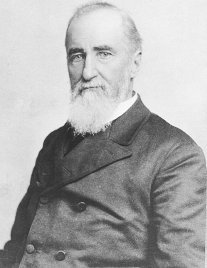
“At this point, using the power of the Internet, I Googled ‘J.W. Bill Marshall’ and found a nice Wikipedia article about Mr. Marshall and his place in history as the president of the first four-year university to voluntarily integrate,” Fournier wrote in an e-mail explanation to Wayland. “I then figured out that what was Wayland College is now Wayland Baptist University.”

That Internet search led Fournier to the public relations office, where he informed the staff of his find and of the family’s desire to return the scrapbook to Marshall, his family or the university. Since Marshall died in 1977 with few descendents, the university wanted the book returned for its archives.

The scrapbook contains a few black and white prints, mostly images from the university such as campus buildings, a shot of administrators around a campus water well and some farmland photos.

Two photos depict groups of international students, a particular fondness of Marshall, who came to Wayland from the role as personnel secretary at the Foreign Mission Board of the Southern Baptist Convention.

Marshall was one of the university’s best-known presidents, having initiated a then-controversial ban on smoking on campus and later leading the integration initiative, calling it “maximum Christianity, applied as well as advocated.”

Wayland became the first four-year university in the former Confederate South to integrate voluntarily, doing so in the summer of 1951 with the admission of four black schoolteachers who needed summer coursework to maintain their certification.

His worldview changed the Wayland landscape, as he brought students of other nations to Wayland to study and influence American students with exposure to other cultures.

In a chapter from the new history book The Wayland Century, Marshall is credited with greatly promoting international relations in several ways.

“Marshall wanted to see an increased number of international students at Wayland. And he did. In 1947-48, Wayland had 12 international students. A year later, the school enrolled 22 …and by 1952, Wayland had 35 international students,” the book reads. “Marshall later recalled that at one time during his tenure, Wayland had a higher percentage (5 percent of the total student body) of international students than any other college in North America.”

Though his scrapbook may hold some mystery, Marshall’s impact on Wayland was clear, according to University Historian Estelle Owens, who compiled years of research for the history book. The international student presence affected the music department, with the International Choir formed in 1949 as Wayland’s premier performance group. Members wore costumes from overseas and sang in many languages, bringing in foreign students to help teach the words.

Marshall also led the university to its first distance-learning venture, hosting a language school in Guadalajara, Mexico, in 1948, for students and faculty members. Wayland also achieved four-year senior college status in 1948 under Marshall’s leadership, and the school nickname was changed from Jackrabbit to Pioneers.