Texas Baptists reject call to allow non-Baptists on HBU board

MCALLEN—Messengers to opening business session of the Baptist General Convention of Texas annual meeting rejected a proposal that would have allowed Houston Baptist University to elect non-Baptist trustees, and they approved — with two amendments from the floor — a massive overhaul of Texas Baptists’ annual meeting.

Messengers on Nov. 8 turned aside a BGCT Executive Board recommendation that the state convention revise its agreement with Houston Baptist University, allowing HBU to elect a minority of non-Baptist Christian trustees.

HBU Vote

Messengers on Nov. 8 turned aside a BGCT Executive Board recommendation that the state convention revise its agreement with Houston Baptist University.

HBU has related to the convention by special agreement since 2001. That agreement allows HBU to elect 75 percent of its own trustees, with the BGCT electing the remaining 25 percent. All trustees HBU elects must be Baptist but not necessarily from BGCT-affiliated churches.

The revised agreement would have allowed up to one third of the trustees elected by the university — one-fourth of the total board — to be non-Baptist Christians.

Ed Seay, chair of the trustee board and pastor of First Baptist Church in Magnolia, noted HBU is the only evangelical university in the Houston—soon to be the nation’s third-largest city. Seay emphasized the diverse population of Houston and the need to reach out to evangelical Christians in the city by providing them a minority voice on the school’s governing board.

Clyde Glazener, pastor of Gambrell Street Baptist Church in Fort Worth and a BGCT past president, expressed concern that denominations historically have lost institutions after they allowed similar moves.

“They never take the step without eventually losing” the school, he said. “It’s like a flat roof. It’s not a question of if it’s going to leak. It’s a question of when.”

Bob Fowler, a messenger from South Main Baptist Church in Houston and a past chair of the BGCT Executive Board, characterized the recommended change as “well-reasoned and appropriate.”

He emphasized the need for HBU to be able to relate effectively to other evangelical Christians, and he expressed appreciation for the way the school’s trustees came to the BGCT “with no demands, only a request” that non-Baptists be allowed a presence on the board.

But another past chair of the Executive Board, John Petty, pastor of Trinity Baptist Church in Kerrville, expressed his concern that allowing non-Baptists to serve on Baptist institutional boards is a “slippery slope” toward a diminished commitment to Baptist identity.

Pointing to the size of Union Baptist Association — larger than some state Baptist conventions — he said he found it hard to believe HBU could not find enough well-informed, engaged Baptists to serve on its board.

Seay insisted the university remains committed to its Baptist identity. The motion will “in no way diffuse our Baptist identity or direction,” he said.

But Andy Pittman, pastor of First Baptist Church in Lufkin, voiced concern that having non-Baptists on the board would “allow non-Baptists to set the agenda … hurting the future of Texas Baptists.”

Stacy Conner, pastor of First Baptist Church in Muleshoe, asked whether the revised agreement would allow non-Baptists to serve as officers on the trustee board.

Seay said the agreement included no restriction prohibiting it, but he deemed it unlikely.

However, Conner said, if non-Baptists eventually could rise to a position of leadership as officers on the board, their influence no longer could be considered a minority presence.

In other business, messengers approved an extreme makeover of the BGCT annual meeting focus and format — but not quite as extreme as a study committee recommended.

Kyle Henderson, pastor of First Baptist Church in Athens, chaired the committee appointed to study ways to increase participation at the annual event. He compared the annual meeting to a Thanksgiving family dinner that fewer and fewer people were participating in each year.

“Look around. There are a lot of empty seats around the family table,” he said, noting only 8.5 of the churches eligible to send messengers to the annual meeting attended the McAllen gathering. At mid-afternoon on the opening day, only 754 messengers had registered, along with 775 visitors.

The study committee recommended two measurable goals focused on the number of churches participating in the annual meeting rather than the number of people in attendance—double the percentage of participating churches by 2013 and involve every Texas Baptist church at least once every five years.

Key recommendations included:

• Showcase one area of ministry each year. Focus on a different theme annually, rotating between five key areas—evangelism/missions, education/discipleship, advocacy/care, Baptist identity and Baptist community. Every fifth year, schedule “The Gathering”—a three-day summer event that would bring together Texas Baptist ethnic groups and interest groups. The committee also recommended a multi-site event in 2017 using video simulcast technology, involving as many Texas Baptist institutions as possible.

• Plan beyond the current year. Coordinate and plan the annual meeting starting 18 months in advance of the event to secure speakers, gather resources, facilitate institutional cooperation and build momentum.

• Adopt a planning matrix with a clear purpose statement and values. The committee expressed its belief the purpose of the annual meeting should be “mobilizing, encouraging, informing and uniting Texas Baptists to accomplish the Great Commission.”

Several of the value statements — lengthen the meeting to three days, include a service project and schedule plenty of time for fellowship —sparked little discussion.

However, messengers rejected two proposals included in the list of values, turning aside proposals to limit business discussion to targeted breakout sessions and eliminating resolutions.

Steve Wells, pastor of South Main Baptist Church in Houston, characterized the recommendation about moving business discussions to breakout sessions and having votes without discussion in general sessions as “a bad plan,” and he made a motion amending the committee’s recommendations by removing that proposal. After extended discussion, the amendment passed.

Ken Coffee, a messenger from First Baptist Church in San Antonio, also made a motion amending the committee’s recommendation by removing the proposal that would have done away with resolutions.

Coffee noted resolutions provide a way for the BGCT to go on record regarding important issues — a tool that proves helpful when critics accuse the convention of not taking a stand on those matters.

He also voiced concern some would characterize elimination of resolutions as “one more way to keep people from voicing opinions.” After discussion, the amendment passed.

With those two issues out of the way, the committee’s proposal passed overwhelmingly.

In other business, messengers:

• Elected Victor Rodriguez, pastor of South San Filadelfia in San Antonio as president; Jerry Carlisle, pastor of First Baptist Church in Plano, as first vice president; and Sylvia DeLoach, veteran missions leader and member of First Baptist Church in Richardson, as second vice president.

• Approved a revised unification agreement with the Hispanic Baptist Convention of Texas.

• Granted recognized status to the Vietnamese Baptist Fellowship.

• Approved recommendations from a committee on border violence. They included a day of prayer and other prayer initiatives, retreats for Mexican pastors and spouses to offer them encouragement, and a partnership with the group No Mas Violencia that sponsors programs for schools, churches, civic officials and law enforcement.

John Hall of Texas Baptist Communications contributed to this article.


Texas Ranger Josh Hamilton tells story of ups and downs

DALLAS (ABP) — Texas Rangers outfielder Josh Hamilton told a Texas Baptist mega-church Nov. 7 that he would not have overcome the alcohol and drug addiction that nearly cost him his baseball career without God's help.

Coming off a season in which he won the American League batting title and led the Rangers to their first World Series, Hamilton, 29, told worshippers at First Baptist Church in Dallas that the best part of his MVP-caliber year was the platform it gave him to talk about his faith in Jesus Christ.

Josh Hamilton (Photo by Keith Allison)

"That's what I enjoyed most about the entire year," Hamilton said. "Not the awards, not going to the playoffs, going to the World Series … but it was about sharing Christ with as many news people as I could, preferably live so they can't cut out Jesus' name."

Hamilton, who recounts his faith story in a 2008 book titled Beyond Belief, told the congregation he went to church on and off while growing up, but most of his interests revolved around sports. He accepted Christ after his rookie season but did not become grounded in his faith.

After injuries suffered in an automobile accident forced him out of baseball, Hamilton started hanging around tattoo parlors, where his friends introduced him to alcohol and drugs.

"It was the biggest mistake of my life," Hamilton told worshippers.

After that, he said, he was on and off of drugs for the next three years but got suspended from baseball after failing a couple of drug tests.

He stayed clean for several months, got married and started a family before a relapse forced a separation in his marriage and a restraining order against him to keep him out of his home.

He hit bottom when his grandmother confronted him for using drugs in her house and for the first time made him understand how he was hurting people who loved him. He pulled a Bible from a closet and recommitted his life to Christ.

Hamilton said the experience brought about a complete reordering of his priorities, which before than had been exclusively about baseball.

"When I recommitted my life to Christ, the priorities made a drastic change," he said. "It went God first, humility, family, sobriety and then baseball, if it ever happened again."

But all that didn't prevent another well-documented relapse when he went to Arizona to prepare for the 2009 season.

"For three weeks I stopped reading my Bible," he said. "I stopped doing my devotions. I stopped praying. I stopped fellowshipping with my accountability partner for three weeks. And I thought I could take one drink. And that one drink led to about 20."

Hamilton said he has to take safeguards to keep from falling off the wagon. For one thing, he doesn't carry cash or credit cards. If he needs to buy gas for his truck, even though it is inconvenient, he calls his wife to meet him at the gas station and then returns the credit card to her after filling up his tank.

He also consciously surrounds himself with people who care about him and want the best for him.

"It's an every day battle," he admitted. "I've got to get up every morning and take my cross up. I've got to just wake up in the morning and tell myself with God's help and Christ's help I'm going to be a responsible man, husband, father today."

His support system extended to his Ranger teammates, who rallied around him after winning the American League Division Series by dousing his head with ginger ale instead of the traditional championship celebration involving champagne.


–Bob Allen is senior writer for Associated Baptist Press.


UMHB students participate in poverty simulation

BELTON—In the course of 28 hours, a group of University of Mary Hardin-Baylor students begged for food, dug through trashcans looking for aluminum cans and spent a night outdoors when temperatures hovered in the 40s as they participated in a poverty simulation on the Belton campus.

Taylor Bela (center), a freshman at the University of Mary Hardin-Baylor, joins other participants in trying to keep warm during a chilly night in Belton.

In conjunction with Missions Emphasis Week, the UMHB Baptist Student Ministry helped about 20 students experience what it’s like to live in poverty.

Senior nursing major Amber Schladoer, a co-director of the special events committee with the BSM, believed the poverty simulation conveyed an important message to students.

“We based a lot of our poverty simulation on one that some of the girls on our committee experienced with Mission Waco,” Schladoer said. “We did as much as we could do on campus.”

At orientation, students learned facts about poverty in the United States and around the world.

Sophomore mathematics major Evan Mullins arrived with a backpack filled with what he considered the essentials he would need for an overnight trip. He was surprised when he was told he couldn’t keep it all.

“They told us we could pick three items to keep,” Mullins said. “I chose to keep my jeans, my sweatshirt and my sleeping bag.”

Participants received $25 in “simulated welfare money” and had to choose how they would spend it. Items of clothing were $3 each, meals were $6, and rent to stay indoors for the night was $20.

University of Mary Hardin-Baylor students huddle under blankets at the Sesquicentennial Plaza on the UMHB campus during a poverty simulation. (PHOTOS/Carol Woodward/UMHB)

Students were given a list of items to collect and things to do if they made it through the night. One task on the list was rummaging through trash for aluminum cans.

Students were asked not to tell anyone who asked that they were participating in a simulation, but to respond they had “fallen on tough times.” The committee wanted participants to be treated the same way anyone else rummaging through the trash would be treated.

Students were split into groups to keep each other company and motivate one another to complete the experience.

In each group, one person was selected at random to be homeless. The homeless could not keep any personal items, and they received no simulated money. They had no sleeping bags, toothbrushes or warm clothes, unless someone in their group decided to share.

In the middle of the night, UMHB police woke Mullins and his group and instructed them to move. After settling at another area for the night, participants were jarred from their sleep when a sprinkler system soaked them.

Freshman graphic design major Taylor Bela, a participant in the poverty simulation, said staying the night outside in the cold weather was difficult.

“I only had shorts on, so it was an intense experience,” Bela said.

She not only slept outside, but also spent part of a day in the campus dining hall asking other students for food.

“The hardest thing for me was having to ask other students for food,” Bela said.

“I feel like I should be able to provide for myself. I could go get a job and make money for myself, but in this situation I couldn’t.”

The poverty simulation was designed to help participants understand what poor people experience each day.

“It’s so hard,” Bela said. “A lot of times, we don’t think about how hard it would be, because we have the things we need. A lot of people don’t have those things, and they face these hardships every day. I can’t imagine how hard it is for them.”


Singing Men of Texas touch hearts, share gospel in Ukraine

The  Singing Men of North Central Texas  have returned from a concert tour of Ukraine, Oct. 17-30. The trip was not without its challenges. The trip had been planned for April 2010 but had to be cancelled because of the closing of all European airports by the ash plume from the Iceland volcano. Then fire destroyed the 1,300-seat sanctuary of Central Baptist Church in Dnipropetrovsk the day before the choir’s scheduled performance.

A A woman in Ukraine enjoys a musical performance by the Singing Men of North Central Texas.

 “The response to the gospel message through music and the spoken word was overwhelming because of God’s timing, the prayer support of our churches and families at home, the spiritual preparation of our music and ministry teams, and the incredible advance work from the Ukraine churches,” said Tim Studstill of the BGCT music and worship team.

“This was truly an example of believers joining together to accomplish great things for God’s glory.”

Central Baptist Church in Dnipropetrovsk, Ukraine, burned the night before the Singing Men of North Central Texas were scheduled to perform a concert there.

The touring church musicians and their ministry partners pledged $25,000 to help rebuild the church, and the Baptist General Convention of Texas music and worship team is challenging Texas Baptists to raise another $50,000.

Contributions can be designated “SMOT-Ukraine Fire” and mailed to BGCT Music and Worship, 333 N. Washington, Dallas 75246.

An audience packs a church in Kherson, Ukraine, to hear a concert by the Singing Men of North Central Texas and a sermon by international evangelist Michael Gott

More than 4,500 people registered faith commitments at eight venues in Ukraine. International evangelist Michael Gott, who helped arrange the trip, has ministered in Ukraine more than 20 years with English schools and evangelistic meetings.

Don Blackley of Lake Pointe Church in Rockwall is the director of the group, one of six sponsored by the BGCT music and worship team.

Video IncludedSee a video of the group's concert here.

Blog postings from the trip can be found here .

International evangelist Michael Gott delivers a sermon on the trip to Ukraine.


Members of the North Central Texas chapter of the Singing Men of Texas perform a concert.


Adoptive mother of three says not to call her a hero

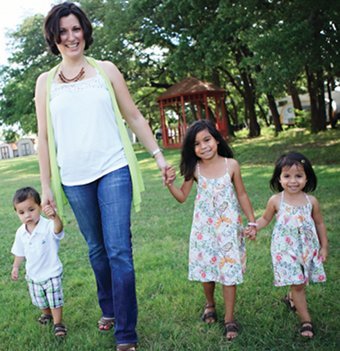
ROUND ROCK—Most people who meet Angela Richardson have trouble connecting her up-beat, breezy attitude to her role as a foster mother-turned-adoptive mother who cares for three emotionally wounded children.

Richardson welcomes the challenge, but she resists any suggestion she’s special.

“I don’t feel comfortable when people call me a hero,” she said. “I was willing, and I showed up. God did the rest.”

Last year, Angela Richardson opened her home to two sisters and a brother who had endured severe abuse and neglect. In February, she adopted the three siblings. (PHOTO/Children at Heart Ministries)

In 2006, a friend at church introduced Richardson to Children at Heart Ministries’ STARRY foster care program. Richardson attended an orientation meeting and was hooked.

In February 2009, she received a phone call about two sisters and a brother who needed a temporary home. The siblings—ages 2, 3 and 7—had been severely abused and neglected by their parents.

“The shape they were in was worse that I could imagine and like nothing that I had ever seen,” she said.

For months, Richardson comforted the children through screaming, crying night terrors. And, although her hugs took much longer to be returned, she held them and encouraged them each and every day.

“My son wouldn’t hug. He would cower or hide. And my youngest daughter would just stand there like a rag doll,” she said.

“It was very sad, but I knew they would come to trust me eventually.”

Trust didn’t come easily. The children disliked police and feared most adults. But in time, they opened up to their foster mother, eventually disclosing even more details about their harrowing ordeals, Richardson said.

“One time, I had to go into the bathroom and cry after a conversation we had,” she said. “Their situation was so much worse than anyone knows.”

On Feb. 12, Richardson officially adopted all three, marking the end of one journey but the beginning of another.

Each day means untangling knots left behind by the children’s former lives.

“I tell them all the time that my job is to keep them safe, love them and be here for them,” Richardson said.

“I have learned through this process to be more flexible and rely on my faith.

“My faith is what really brought me through, because this tested me emotionally, spiritually and in every way possible.”

Richardson encourages prospective foster parents to attend an orientation session and talk to other foster parents to find out why they open their homes to foster children.

“Why do they do something that’s completely counterintuitive to our culture?” she said.

“Out there, it is about self and what can I get out of it. This is very much about what you can give back. You will hear foster parents say, ‘I did this to help them, and it’s amazing how God uses some of these children to actually help you.’”


Sharing faith close to home

LUBBOCK—Evangelism opportunities may not be right under every Christian’s nose, but they’re probably not much further than that—possibly even in the house next door.

Evangelism opportunities may not be right under every Christian’s nose, but they’re probably not much further than that—possibly even in the house next door.

In a state where about 11 million people indicate they have no connection with a church, Texas Baptist ministers indicate evangelism opportunities are abundant. If statistics prove true, odds are, a Christian has at least one neighbor who is not a Christ-follower.

Despite the reality that Texas is a mission field in need of people willing to share their faith, nationwide surveys repeatedly have reported fewer than 10 percent of Christians regularly share their faith. Some cite fear of rejection as the reason for not evangelizing. Others believe they don’t have enough knowledge to share their faith. Still others indicate they simply do not know any non-Christians.

Jim Brown, pastor of Monterrey Baptist Church in Lubbock, said Christians need to remember the Great Commission calls Christians to take the gospel to their neighbors, as well as to the ends of the earth.

“Right here before me is an opportunity Jesus is giving me to reach somebody,” Brown said. “You just have to look around your neighborhood. There are people everywhere.”

Students from the Baptist Student Ministry at Angelina College pray with a man during a mission trip to Galveston. (BGCT FILE PHOTO)

Monterrey Baptist Church has used an effort called “four by four” to refocus its local evangelism efforts. The campaign encourages Christians to identify four individuals or families in their social sphere who they believe do not attend church and write their names on a note card. Christians then are urged to pray for those people at least four times a week, invest in those people’s lives at least four times a year and invite them to at least four church opportunities a year.

The approach is simple, Brown said, but it’s been effective. The church baptized more people this year than last year, including some people who were directly influenced by the “four by four” effort. Adults are trying to share their faith. Students have connected with it, surveying their classmates and recognizing them as people with whom they can build a relationship.

“We’re just trying to change the DNA of our church, … the way our people think of the Great Commission,” Brown said. “We really want to make them more aware of the Great Commission. This seems to be a way that works.”

Perspective and purpose are keys for doing evangelism effectively, said Scott Willingham, local church evangelism director for the Baptist General Convention of Texas. Christians need to be conscious of seeking opportunities to share their faith, he said.

As part of Project Jerusalem at First Baptist Church in Garland, members deliver packets of information about their church and New Testaments to about 400 homes near the downtown church campus.

“When we’re intentional about looking for something, we’re more likely to see it and take advantage of it,” Willingham said. “It’s true in many aspects of life, and it’s true in evangelism. If we’re purposeful about living our lives for Christ and seeking opportunities to share the gospel, we can more easily recognize the opportunities that God sends our way.”

God brought community residents to Primera Baptist Church in Mission when a few youth began attending Wednesday events. Eli Sanchez, then youth minister and current pastor of the church, noticed the young people were interested in skateboarding. His recognition of their interests changed the congregation forever.

“We really didn’t know anything about skateboarding,” Sanchez said. “That really wasn’t our model for church. But we began to change that.”

The church began constructing skateboard ramps for young people in the neighborhood. The youth in the church did much of the work, which encouraged them to take pride in the skate park they were building. It gave them ownership of it and encouraged them to invite their friends.

More and more youth came. Church members built relationships with the skateboarders and their parents, coupling skateboarding and efforts to share the gospel. The congregation built the only air-conditioned skate park in the Rio Grande Valley and held skateboarding competitions that included Christian testimonies and gospel presentations.

During a recent skateboarding competition that was part of ValleyReach—a Texas Baptist effort to share the gospel throughout the Valley before the BGCT annual meeting—10 young people made decisions for Christ and 15 others asked for prayer.

Christians need to remember the Great Commission calls Christians to take the gospel to their neighbors, as well as to the ends of the earth.

“Those skaters came for a reason and for a purpose,” Sanchez said. “They kicked it off. Those four turned into eight. Those turned into 20. In a year, we had 200.”

Bacon Heights Baptist Church in Lubbock is seeking to foster a similar connection with its community. For several years, the congregation planned to move south of the city and unintentionally became disconnected from the community around it. After a series of events delayed the move, the church sensed God’s calling to stay in its current location.

That meant the congregation needed to rededicate itself to its community, particularly within its ZIP code. For one year, church members prayer-walked every block of the area, asking God to guide them and lead them to a person of peace on each block.

Pastor Jerry Joplin encouraged church members in the ZIP code to lead the focused outreach, believing they would be the most effective missionaries there because they live there.

After a year of prayer, the congregation increased intentional efforts to build relationships with people in the area. It has engaged the three elementary schools, volunteering to feed teachers and paint walls.

The church still is early in its efforts to reconnect with the neighborhood, Joplin said. But the church is committed to making a difference for Christ in its ZIP code.

“We have turned the corner in having a passion and having compassion, seeing the fields are white for harvest,” Joplin said.

Willingham praised the way Brown, Sanchez and Joplin allowed God to guide them and their churches to see their neighbors as Christ does—people God loves and with whom he wants a relationship.

“A church that reaches out to its neighbors begins with leadership,” Willingham said. “It takes leadership like Jerry, it takes leadership like Eli, it takes leadership like Jim to help people, ministers who are committed to sharing the gospel. When God’s people are led to a biblical vision, they begin to live a biblical lifestyle that impacts that the lives of others.”


Church, hospital, nonprofits join forces to provide care for community in Mexico

GAINESVILLE—A number of Baptist groups have come together to bring health care to a Mexican community where there is none.

The people of El Arenal, in the state of Jalisco, have to drive three hours to Guadalajara for medical care. When that information came to Pastor Juvel Garcia and his wife, Silvia, of Primera Iglesia Bautista in Gainesville, they decided something needed to be done.

Pastor Juvel Garcia and his wife, Silvia, along with Don Sewell, director of Faith in Action initiatives for Baylor Health Care System, select equipment for shipment to a clinic in El Arenal, Mexico.

Mrs. Garcia, who practiced medicine in Mexico, said she learned of the need when she went to Mexico last year. “They told me they had a big problem without medical assistance,” she said.

She learned many who made the trip to Guadalajara waited as long as three days to be seen in the emergency room. Many gave up and made the long drive back to El Arenal without ever seeing a doctor.

“The idea emerged to begin a medical facility in El Arenal,” she continued. “We want to give medical resources to the people who have no money.”

The Garcias also stressed the clinic will be a place for people to hear the gospel. “One of the purposes is evangelism. If people come to the clinic for a medical consultation, they can also wait 20 minutes to hear about Christ,” Mrs. Garcia said.

Baylor Health Care System’s Faith in Action Initiatives is helping that idea become a reality. Baylor Health Care is donating four hospital beds, two stretchers, an neonatal incubator, two wheel chairs, desks, file cabinets, lobby chairs and other equipment.

“This fits perfectly with the purposes of the Faith in Action Initiatives office,” Director Don Sewell said. “It deals with getting the strengths and assets of Baylor Health Care System outside our walls to those who need it most.”

The donated items will have a “second life” at the Mexican clinic, he added.

They are stored in a Gainesville warehouse now, waiting for clearance from the Mexican government.

The Garcias are being helped on this side of the Rio Grande by Hands in Service Ministries. Officially, the hospital equipment from Baylor was donated to the nonprofit organization. Hands in Service, in turn, will donate the medical equipment to Manos Hermanos, a Mexican nonprofit lay organization that will give the equipment to the clinic in El Arenal.

The Mexico-Americano Baptist Hospital in Guadalajara will have an ongoing relationship with the clinic.

“It’s a whole lot of people in the Baptist family working together to bring health care to people who have none,” Sewell said.


Church implodes buildings to make way for project

DALLAS (ABP)—One of the Southern Baptist Convention’s most historic and prominent congregations officially has embarked—with four simultaneous Oct. 30 building implosions—on what it is calling the biggest church renovation-and-expansion project in modern history.

Members of First Baptist Church of Dallas joined dignitaries gathered to observe the demolition of the buildings, which stood on land the congregation will use for a $115 million project to build a new, modern sanctuary and recreate the church's historic campus.

For the first time in 83 years, as dust clears from the implosion of four buildings Oct. 30, the morning sunlight shines unobstructed on the historic sanctuary steeple of First Baptist Church in downtown Dallas. (PHOTO/Jonathan Ivy/Courtesy of First Baptist Church in Dallas)

“The last time anyone has seen this view of our church was 1927,” said First Baptist Pastor Robert Jeffress. “And now, we are seeing the sanctuary in a whole new light.”

“This is a very positive (thing) for the city of Dallas,” said Dallas Mayor Tom Leppert, who attends First Baptist Church.

“The best part of the story is yet to come. This change is a new gateway into an important part of Dallas. It will give the entire downtown area a different feel.”

Demolition experts used 450 pounds of dynamite to bring down the church’s Burt Building—which dated from 1927—as well as its Christian Education Building, Ruth Ray Hunt Building and Veal Building.

Those structures—some of which originally had been built as office buildings that the church acquired and converted—soon will be joined by the Truett and Mary C buildings, to be demolished by wrecking ball.

Once debris is cleared, construction will begin on a facility that includes a glass-enclosed sanctuary seating 3,000 as well as educational facilities and a large public green space surrounding a cross-topped fountain.

The project is one of several massive building projects ongoing or recently completed in downtown Dallas, and church officials expect it to be completed in time for Easter 2013.

“As I look around downtown, I see spectacular temples of commerce, culture and government—many new, some restored to former glory, and all intended to stand for generations,” Jeffress said. “The kingdom of God needs a home to equal them—a spiritual oasis in the middle of downtown.”

Demolition experts took special care to shield the church’s historic sanctuary from potential blast damage by boarding up its stained-glass windows and erecting a massive earthen berm to prevent pieces of debris from bouncing off the street and damaging the sanctuary. The ornate worship hall—much of which dates to 1890—served as home base for two legendary Baptist pastors, the late W.A. Criswell and George W. Truett.

Once the new sanctuary is completed, the historic building will continue to be used for weddings, funerals and other special services.

Church officials say they already have pledges secured to cover the project’s price tag.


Standard develops FaithVillage online community for Christian young adults

Faith Vilage
DALLAS—Baptist Standard Publishing is building a $5 million community— FaithVillage, an interactive Internet presence designed to provide high-quality Christian resources and a social network to serve 20 million evangelicals ages 18 to 44.

The site will provide a single location where users can access:

• A social media platform with personal pages, groups, forums and blogs.

• News, information and other articles.

• Video, music, podcasts and Web-based seminars.

• A digital marketplace that will feature books, music, ministry resources, Christian gifts and other merchandise from vendors, as well as user-generated content.

The site’s unique design—a street scene with buildings such as “Grove Theater” for video resources and “City Pod Studios” for audio—provides users a visual sense of visiting a physical community where they can enter buildings to find a wide array of content.

“The driving vision for FaithVillage.com is to provide a vibrant online community that expands personal faith, fosters robust sharing of ministry resources and deepens collaboration among vital Christian causes,” said Brad Russell, senior editor and chief operating officer of the new venture.

Through the social media platform, users will be able to reserve their own “lofts,” where they interact online with other users in a safe, secure environment free from offensive ads or unwelcome comments common on some social media sites.

Churches will be able to use the platform to create user groups for Bible studies and discipleship and collaborative groups for missions and ministry teams and committees, as well as providing their members a safe and enjoyable place for social networking.

FaithVillage will enable ministries, institutions and nonprofit organizations a vehicle to connect with global online audiences and network with like-minded ministry partners.

The idea for FaithVillage grew out of the Baptist Standard’s desire to inform, inspire and engage the rising generation of Christian leaders, said Marv Knox, editor of the Standard and publisher of FaithVillage.

“We became open to broadening the vision of the Baptist Standard as we faced the disappointing truth that traditional newspapers are not reaching a young audience,” Knox said. “Our staff and our board of directors began to ask, ‘What can we do to meet the needs of young adults?’”

The Standard conducted nationwide research of evangelical Christians ages 18 to 44 to explore how they use the Internet, how they practice their faith and how those two factors intersect. Additional research involved looking at evangelical Christian sites already on the Internet.

The Standard discovered a potential market of 20 million young evangelicals—and found that what those Christian young adults said would be helpful and what they would like to find online does not exist in any single, easy-to-navigate location on the Web.

Among respondents, 82 percent said they belong to social media sites. Half said they had visited a faith-oriented site in the previous six months, but half said they were not satisfied with available Christian websites.

Those findings led to the development of the FaithVillage concept—an idea that will require $5 million to become reality.

“Because we receive no Cooperative Program funds, we are raising the money to build out the site and operate it for three years until it can become self-sustaining,” Knox said.

To date, $1.1 million has been raised, including a $1 million gift from the Christ is Our Salvation Foundation, founded by Paul and Katy Piper, and another significant gift from an anonymous donor.

“Our board believes in this so deeply, and is so convinced now is the time to move forward, that it authorized a $2.1 million loan from our reserves to build FaithVillage now,” Knox said. “We will continue to raise money to repay that loan.”

While the audience for FaithVillage reaches beyond Texas Baptist life and the scope of the site extends beyond traditional journalism, the Baptist Standard remains committed to its 122-year-old mission as the news journal of the Baptist General Convention of Texas, Knox emphasized.

“The news operation is not going away,” he said. “That’s a commitment that reaches back more than five generations. One of the buildings in FaithVillage will be the newsstand, and the Baptist Standard will be featured prominently there, along with other news sources.

“Beyond that, we will continue to provide the news through multiple avenues of delivery, including the Standard’s own website, apart from FaithVillage.”

The public launch for FaithVillage is scheduled in October 2011, Russell said. Partner churches, organizations and individuals who enlist as “FaithVillage Fans” will be invited to test the site late next summer. Reservations for “loft space,” will be available about that same time, he added, but prospective content or merchant partners should make contact now. For more information, e-mail brussell@faithvillage.com or call (214) 630-4571, ext. 15.


ETBU biology students trust God, gain experience

MARSHALL—East Texas Baptist University biology major Lauren Charron had the sought-after opportunity to conduct undergraduate research at the University of Texas Southwestern Medical School. But the summer internship almost didn’t materialize.

“I had applied to eight different summer research programs and was denied acceptance,” said Charron, a senior from Grand Prairie.


Haley Banks

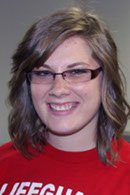
Lauren Charron

“I was disappointed, but I knew that God had great plans for me. I surrendered to and trusted him with my summer.”

She landed her research position after a phone call and conversation with the dean of the UT Southwestern Graduate School for Biomedical Sciences.

“I sent her my resume and transcript, which she forwarded to the principal investigator in the immunology lab,” she said.

“I was offered the position and became part of the summer undergraduate research fellowship program.”

Charron wants to become a biomedical researcher—an interest that grew from personal experience.

“My mother has Crohn’s disease, which is an autoimmune disease,” she said.

“Seeing how this disease has affected her life has pushed me to go into research so that I can hopefully find a way for people with autoimmune diseases to be able to live full and healthy lives.”

Charron found her Christian faith challenged and strengthened by the internship.

“Being from a small Baptist school, I am able to openly and frequently talk about the love of my Savior and the many things with which he has blessed me. However, in my experience this summer, I found that most people do not believe in God. Some even looked down on those who do have faith, because they believe that if you have science you do not need God,” she said.

Another ETBU biology major, Haley Banks of Palestine, worked in a research internship at M.D. Anderson Cancer Center. It marked her second consecutive summer working at M.D. Anderson.

“The goal of the project that I was working on was to discover the mutational status of DNA,” said Banks, who hopes to become a pediatric cancer researcher.

“ETBU has prepared me for graduate-level research. The education that I am receiving at ETBU has helped me understand the context of what was happening in the lab I worked in.”

Charron said, “In graduate school you have to learn things on your own. I have had classes at ETBU that have made me think critically, thus pushing me to find information on my own.”

Charron and Banks both noted the benefits of the summer internships.

“I now have a brief understanding of what my life will look like during the lab years of graduate school as well as the career I hope to pursue,” Charron said.

Banks added, “This experience has not only been humbling and eye opening, but I have gained a new respect for how hard doctors and nurses work to find a cure for cancer.”

Charon plans to graduate in May and hopes to attend UT Southwestern Graduate School for Biomedical Sciences.

Banks has been invited back next summer to M.D. Anderson to continue her research.


DBU families spend weekend serving community

DALLAS—Parents of Dallas Baptist University students had the opportunity to see for themselves what their children have learned about servant leadership—and join in service alongside them—during Family Weekend.

More than 350 students, parents and family members took part in the DBU 2010 Family Weekend, and more than 60 joined members of the DBU staff for a Saturday-morning service project at Mission Arlington.

“I think it’s important for the parents to see another glimpse of the value DBU places on serving the community and sharing the gospel,” said Christy Gandy, director of global missions at DBU and coordinator of the Family Weekend service project.

Tillie Burgin, founder of Mission Arlington, speaks to Dallas Baptist University students and their families before they begin a day of service as a part of DBU's annual Family Weekend. (PHOTO/Courtesy Paul Metzgar/DBU)

After a morning on the DBU campus spent getting to know members of the Student Life staff and meeting DBU professors, the students and their families loaded buses and headed for Mission Arlington.

After Mission Arlington founder Tillie Burgin and her son, Jim, greeted the team, volunteers went to work clearing out storage rooms to make space for the upcoming Christmas season.

“It was nice to be able to be together and work together and serve the Lord,” said Hannah Cheves, a freshman from San Antonio.

Growing up as the youngest of three children in a close-knit Christian household, Cheves noted how different her experience at college had been compared to her older siblings who attended large state schools.

“When my parents took my brother to college, the school basically told them, ‘Your child is 18, and you have no say in their lives now,’” Cheves explained. “But at DBU, everything is so family-oriented. Kids are not pressured to kick their parents out of their lives so quickly.”

At the end of their time at Mission Arlington, the team met for prayer and headed back to campus, having experienced more than just typical college life.

“It was great to be together as a family,” Cheves said, “and to work together and serve the Lord.”

–Sally Waller contributed to this article.


Standing strong: Buckner marks 10 years in Kenya

NAIROBI, Kenya—Dickson Masindano will take all the help he can get for the Buckner International ministries he oversees in Kenya. But he wants everyone to know his goal is less, not more.

Children at the Seed of Hope orphanage and school in Kitale, Kenya, peer around the corner after class. Buckner operated the home and nearby community programs in this region since 2007.

Ask Masindano where he’s headed with Buckner Kenya, which opened ministries here in 2001, and the passion pours out of him. “It’s all about self-sustainability,” he said. “Our goal is to do more with less.”

And by less, he’s talking about less dependency on outside sources of revenue to keep operations going. That’s why the Buckner ministries in Kenya are diversifying and developing strategies that can stand on their own. From the urban slums of Nairobi to rural communities like Kitale, Busia and Bungoma, the Buckner Kenya staff is planting crops, generating bio-fuel by recycling cow dung, and operating health clinics that charge nominal cost-recovery fees for their services.

As the Buckner ministries in Kenya have grown over the past decade, the need to find additional sources of in-come also has grown. Today, the Buckner Kenya staff includes more than 80 employees, from house parents at the two orphanages, to farm workers and schoolteachers. It includes nurses, social workers, counselors, cooks and accountants.

Buckner Kenya started like Buckner’s work in so many other places—at the re-quest of an existing organization. The Baptist Children’s Center in Nairobi opened in 1989, the result of several groups coming together as the wave of orphans from AIDS/HIV was starting to hit Africa.

Children living at the Baptist Children’s Center, operated by Buckner International, stand outside the home. Today, the home is the mainstay of Buckner’s work in Kenya and includes the Munyao Memorial Baptist Chapel, Baptist Health Clinic, a school for 300 children from the nearby Mali Saba slum, a technology education center and a farm. (PHOTOS/Scott Collins/Buckner)

By the late 1990s, leaders at the center realized they needed professional advice on running the or-phanage.

That’s when they heard about Buckner and asked for help.

When Buck-ner International staff from Dallas visited the Baptist Children’s Center in 2000, it was home to about 60 children living in two crammed houses. And while the center’s staff did the best they could, it was obvious the children’s home needed help.

That’s when Dickson Masindano showed up from Abilene. Masindano was finishing his master’s degree at Hardin-Simmons University and was headed back to his home country when he was introduced to Buckner. By the time he got on an airplane bound for Kenya, Masindano was the first Buckner Kenya employee. Buckner Kenya applied for nongovernmental status in 2000. The next year, Buckner Kenya became operational, with the Baptist Children’s Center as its first ministry.

Today, the campus of the Baptist Children’s Center is a bustling hive of activity. While the orphanage is the mainstay of the work, the site is also home to Munyao Memorial Baptist Chapel, Baptist Health Clinic, a school for 300 children from the nearby Mali Saba slum, a technology education center and a farm.

Along with the work taking place at the Baptist Children’s Center campus, Buckner also sponsors about 90 children in foster and kinship care throughout Nairobi. Add that to the 22 children living at the orphanage, and Buckner has more than 110 children in residential care on any given day in the city—far more than 10 years ago, but with far fewer living in an institutional setting, always a goal of Buckner ministries.

Tony Wenani, di-rector of the Baptist Children’s Center programs, said the children living at the orphanage to-day are among the “most vulnerable children in Nairobi. Many of them have been abused or neglected.”

Children stand outside the Herbert H. Reynolds Ministry Center in Cherangani, Kenya, on their first day of school. Buckner opened the center last year, which now serves as a preschool, houses Buckner foster care and kinship care staff, and provides a water well for the community and the Greater Zion Medical Center. (PHOTO/Scott Collins/Buckner)

Many are orphans due to the death of their parents from AIDS.

The goal of the Baptist Children’s Center, Wenani said, “is to keep the children at (the center) for as little as possible. We want to put them in families.”

Like the Buckner programs themselves, both Masindano and Wenani want the children and families to become self-sustaining as soon as possible.

“Initially, the (Baptist Children’s Center) model was keeping the orphans here, but we know better now,” Wenani said. “They become too dependent on the institutional setting if they live here. The best thing we can do is find ways that we can keep them in the community.”

To accomplish that goal, the orphanage has become more of an assessment center where children are cared for and counseled while the Buckner staff determines the best place for each child. Most children move from the center to foster or kinship care, where they live with a trained foster family or with relatives, all under continued monitoring from Buckner caseworkers.

“A child should be able to look back and say, ‘If it were not for Buckner, where would I be?’” Masindano said. “We want to give them an inheritance, because in Africa, an inheritance is very important. So, we can give them an inheritance of a basic education.”

That inheritance is also being offered for children living near the center who attend its school. The families pay a school fee—what Masindano calls “cost sharing.” The school enables Buckner to reach into the entire community.

“All children are vulnerable regardless of where they live,” Wenani said. “So, we want to offer holistic care to the children here and in the community as a package. There is too much emphasis placed on orphans sometimes and not enough on vulnerable children who are at risk of being abused or neglected. We are trying to prevent that.”

And while both Masindano and Wenani emphasize self-sustaining models for Buckner and the families they serve, they want groups from the United States to know they still are desperately needed in Kenya.

“We need the groups to keep coming and providing medical, technical and educational support,” Wenani said. “That’s very, very important. Sometimes the most important thing you can do is just play with the children and spend time with them.”

Sammy Nyongesa estimates the tomatoes growing in the greenhouse at Seed of Hope Orphanage in Kitale will top 2,600 pounds a year. More than 40 acres of corn and beans encircle the children’s home, and in a stall at the back of the campus are two new calves that soon will join the growing herd of cows furnishing milk for the children.

Nyongesa is the farm manager at Seed of Hope, and the work he and his crew do is moving the orphanage and its ministries closer to self-sustainability. Like Tony Wenani in Nairobi, Director Esther Ngure is creating independence for the Seed of Hope ministries in Kitale and the children who live there.

Located in northern Kenya, Seed of Hope was founded by German evangelical missionary Carsten Warner. Three years ago, Warner approached Buckner about taking over the ministries when he moved back to Germany, with the promise that Warner would continue raising support for the work—a promise he is keeping.

Since then, Buckner has expanded work in and around Kitale. Current ministries include the Seed of Hope orphanage; foster and kinship care; two medical clinics; a school for children in grades 1 through 8; an early childhood center known as the Kay School after Roy Kay, grandfather of donor Katy Reynolds; a church located on the school grounds; and the 40-acre farm.

Nearby in the village of Cherangani, Buckner opened the Herbert H. Reynolds Ministry Center last year, which serves as a preschool for neighboring children, houses the foster/kinship care staff that oversees more than 50 children in the community, a water well for the community, and the Greater Zion Medical Center, built by the Greater Mount Zion Baptist Church in Fort Worth and opened this past summer.

Ngure said about 70 children live at the Seed of Hope Orphanage.

And while the campus is the center of ministry for Buckner’s work in Kitale, multiple programs serving the community extend the ministry’s reach far beyond the orphanage. Programs like home-based care enable needy families to receive support. Currently 12 families, mostly parents who are HIV positive, receive assistance.

“The goal is to ease the burden of the families who have a heart to help their children but don’t have the financial support to take care of the children,” Ngure said. That small investment allows the children to stay with their families rather than being moved to an orphanage or left homeless. She added that the hope is to have “well-balanced children who become good parents who are able to stand on their own as adults.”

Ten years after he started all this in Kenya for Buckner, Dickson Masindano knows the key for the next 10 years and beyond is self-sustainability, wherever Buckner starts new programs. That remains a primary criterion for him.

“We need to do that for the betterment of ourselves,” he said. “If you’re not doing something about self-sustainability, you will just leave empty buildings.”