Great Commission can be fulfilled, Keller pastor asserts

AMARILLO – The Great Commission can be fulfilled within the century or even possibly within the decade, Bob Roberts, pastor of NorthWood Church in Keller, told the Baptist General Convention of Texas annual meeting.

Bob Roberts, pastor of NorthWood Church in Keller, spoke at the Baptist General Convention of Texas annual meeting.

Watch Video Here.

As the world moves faster along highways of global connection—via the Internet, airplanes and social media—the challenge of evangelism and worldwide missions changes, he explained. From "every person getting to hear" the gospel, it now takes on a new question: "Do they understand the message?"

Roberts recalled the rich, nontraditional history of Texas Baptists, one steeped in passion, boldness and creativity.

"Now what would it look like if we were to take that same sense of passion, that same conviction, that same belief and see the Great Commission fulfilled?" he asked, adding emphatically, "It will happen."

In order to see that take place, "We need to look at two things—the Great Commission and the 21st century," he said. He referenced Acts 1:8, corresponding to Hope 1:8, a Texas Baptist initiative to spread the gospel through missions and outreach.

Concerning the 21st century, he outlined four specific points regarding its platform for fulfilling the Great Commission:

Christians today live in a global public square.

"There is no privacy," he noted, adding that everything is wired and connected. "The whole world is listening, and it's not a bad thing; it's a good thing. … It gives us an opportunity to think about what we say and how we are saying it."

Collaboration is key.

"When the Great Commission is fulfilled, it's because we connect the whole body of Christ around the world. It's not just about us going. It's also about us receiving those who are coming to America," he said.

Learn from Christians in places where the faith is experiencing explosive growth.

Western-culture evangelical leaders need to learn from the church outside Europe and North America, he said.

"I think we need to take the posture of a student and of a pupil and say, 'Help us—we need help.'"

Christians need to examine their relationship with other religions.

Roberts described an idea he calls "multi-faith"—learning to get along with one another "without compromising the message" of Jesus.

"We're so arrogant and harsh with the truth," he said. "Truth never makes a man haughty and arrogant; it makes him humble and broken and gentle and kind, because if he has the truth, he wants men to know the truth. And if that's the case, he's going to be broken before people, not cocky and arrogant and mean-spirited and—sometimes—Baptist."

Since God has brought all religions into Texas communities, Texas Baptists need to focus on building relationships and "loving them here" before heading halfway across the world, Roberts said.

"Faith is validated or vilified by its impact on the society," he explained.

And that can happen anywhere, all across the world.

"We want to start preaching to people. But if you're serving together — you're building the common good in a city — and you start talking about Jesus, it changes," he said.

He concluded with imperatives toward fulfilling the Great Commission.

Christians should "quit wondering about when Jesus is coming back" and just "get busy," he said. Furthermore, Christians must be filled with the Holy Spirit and make disciples.


Foundation of true disciples needed to ‘Ignite Hope’ in Texas

AMARILLO—A cannon cannot be fired from a canoe, Milfred Minatrea told Texas Baptists at an "Ignite Hope" evening rally at the Baptist General Convention of Texas annual meeting. The key to a cannon—or any powerful force—is solid ground.

"To ignite hope across Texas, it will take a firm foundation," he said.

The foundation for the work that God intends to do in Texas is available in the churches, but it needs to be strengthened by an effort to move individuals from second-order missions to first-order missions, said Minatrea, founder and executive director of the Missional Church Center in Irving.

Milfred Minatrea, founder and executive director of the Missional Church Center in Irving, spoke at the "Ignite Hope" evening rally at the Baptist General Convention of Texas annual meeting.

Second-order missions involved gathering groups of believers to engage in a single mission event with a scheduled time and addressing a specific need, such as a trip abroad or work at a local shelter, he said. While useful, second-order missions events are limited in their scope and resources.

Instead, churches need to use those events to propel their members into first-order missions, Minatrea insisted. This model sees mission activity as a part of daily life, with individuals scattered throughout a community engaging in various forms of service, addressing relational opportunities with others more than ministry needs.

To move to this model, Christians need to abandon their traditional segmented view of life, with the church as one of many elements in the world, Minatrea said. Rather, believers should see the church as intersecting every aspect of life and become missional believers.

"We as Texas Baptists need to rethink the way we understand the church in the world," Minatrea said.

Instead of churches asking for the lost to enter their sanctuaries, "The Father is saying to us, 'I have already placed you out there with lost people,'" he said.

One of the reasons for this absence of "missional" thinking is the lack of emphasis on disciple-making. Far too often, Minatrea stated, the church focuses on providing mass instruction and exhortation, but they do not become engaged in individual, daily accountability.

"Disciples are not made in mass or in class," Minatrea quipped. "Missions depends upon our effectiveness in making disciples of Jesus Christ."

Every church needs individual attention, accountability and challenge to cause individual believers to reflect the actions and heart of Christ, he said. Disciples become disciple-makers themselves and view the world through missional eyes. In turn, they provide a foundation for disciples ready to engage their world with the hope of Christ.


Fort Worth pastor calls Texas Baptists to find motivation in giving God glory

AMARILLO—Texas Baptists should find hope and motivation in the glory of God, James Hassell told the Baptist General Convention of Texas annual meeting.

Hassell, pastor of preaching and pastoral care at Agape Baptist Church in Fort Worth, preached the BGCT convention sermon, based on Colossians 3:12-17.

The glory of God should be Texas Baptists’ highest motivation, Fort Worth pastor James Hassell told the Baptist General Convention of Texas annual meeting in Amarillo. (PHOTO/Eric Guel)

Many people today subscribe to a philosophy best expressed by the late Steve Jobs, Hassell said. In a 2005 commencement speech at Stanford University, the co-founder of Apple Computers said: "You have to trust in something—your gut, destiny, life, karma, whatever. This approach has never let me down, and it has made all the difference in my life."

This "trust-your-gut philosophy" is not enough, Hassell said. Rather than living on karma and relying on destiny, individuals should realize Jesus wants to transform Christians' instincts and intuitions to align with his will by the power of the Holy Spirit.

"There has to be then something more to what drives our hope and what motivates us in life than what we consider to be our destiny," Hassell said.

"I would submit to you in light of the text in Colossians, the glory of God must be the highest motivating factor of our lives."

Hassell recalled the legacy of hope in Christ and motivation of the Baptist forefathers who established the first Baptist churches, association and institutions in Texas in the 1800s. He pointed to notable figures in Baptist history such as George W. Truett, J.B. Gambrell, J.M. Dawson, B.H. Carroll, R.C. Buckner and R.E.B. Baylor.

"In fact, it was Dr. Truett whose hope in the Lord fortified even this convention at crucial times in our history," he said. "Dr. Truett said, 'A church that is not missionary is not worth the ground on which it stands.' It's that missional, outward-looking, sustaining hope in the head of the church that motivates us.

"The hope of the Lord Jesus Christ has sustained this convention and the hope of Christ will change and continue to sustain this convention," he continued. "But I will submit to you that our motivation to give glory to God will sustain us, not because of our denominationalism, not because of the way we do things the way that they've always been done, not just because of the fact that we're a free convention.

"No, the hope of Christ motivates us because the Lord has placed in our hearts that truth that every believer in Christ—man, woman, black, Hispanic, Anglo—all have the privilege and responsibility to be a priest to our neighbors."


President urges Texas Baptists to heed God’s call

AMARILLO—Sometimes, revival may start with a whisper— the voice of God calling someone into the desert, Victor Rodriguez told the Baptist General Convention annual meeting. Often, in the midst of dry desert places, he added, God prepare the way for his perfect plan to unfold.

In his presidential sermon to the convention, Rodriguez, pastor of South San Filadelfia Baptist Church, emphasized the importance of heeding God's call while addressing the evangelistic mission and future of Texas Baptists.

Victor Rodriguez, president of the Baptist General Convention of Texas and pastor of South San Filadelfia in San Antonio, challenged Texas Baptists to heed the call of God. (PHOTO/Eric Guel)

Rodriguez encouraged listeners with the story of Philip in the New Testament book of Acts, who was moved by the Holy Spirit to go from the bustling city of Samaria into the solitude of a hot, windy desert.

"Imagine what he was thinking: 'What am I doing here in this desert?'" Rodriguez said.

Yet it was in that place where God knew another traveler would pass—the Ethiopian eunuch who was searching for answers. From there, Philip was able to introduce him to Jesus Christ.  

"I love this story because it is action, movement. The Lord just takes someone from some place to another place," Rodriguez said. "In obedience, Phillip goes into the desert alone. … We see no bargaining, no questions, no 'why's."

In the same way, Texas Baptists must be sensitive—and responsive—to the call, "Arise and go." God may whisper such a command in order to lead his people in a better direction. And it often means going through different seasons, he added. 

"Sometimes we go through lonely deserts. There are many deserts in life (and) there are many deserts in the life of a church. …when the church stops growing, when no one seems to agree with you as a leader as far as the direction that God is leading you," Rodriguez said.   

But the journey often serves for an underlying purpose—for learning, for changes, and more positively, a reminder that "God is not through."

God is at work in the midst of the desert, Rodriguez said. Philip's obedience to respond to God's call led to one man's salvation, which in turn led to revival. The eunuch went back to spread the gospel in his homeland.

"What seemed like an insignificant little whisper eventually took the gospel of Jesus Christ into the continent of Africa. And it started the historic church in Africa," he said.  

Concerning the BGCT's journey, Rodriguez highlighted the theme of this year's annual meeting—to "ignite hope" through missions and evangelism—and related a story from his childhood.

When his brother went fishing, he always observed one thing. If another fisherman across the lake caught a fish in a different spot, he would quickly lift his line and head to that location—"where the fish are."

Similarly, ministries, churches and church leadership may need to change a few things or go a different direction in order to fully embrace the evangelistic mission of reaching souls for the kingdom.

"You may be experiencing great revival, (or) you may be experiencing that desert-like season in your ministry," Rodriguez said. "But rest assured," he encouraged, one thing would never change—the gospel of Jesus Christ.  

"Ministry is very basic. We have to offer Jesus Christ," he emphasized. 

"We must continue to preach the word. The only thing that God has called us (to do)—as a convention, as a church—is to preach Jesus. Jesus is the only person that's going to give us hope as a convention, that's going to bring us a future as a church, that's going to ignite hope in people's hearts."

And with that in heart and mind, he said, Texas Baptists must be willing to heed the call, "Arise and go."


Panhandle Reach represents a partnership to spread hope

AMARILLO—Donning their cowboy boots and hats, members of two Amarillo-area cowboy churches mounted their horses and proudly rode into the arena on the south side of the city during the Panhandle Cowboy Church Ranch Rodeo finals—not only for the love of the competition, but also from the desire to see their neighbors know the love of Christ.
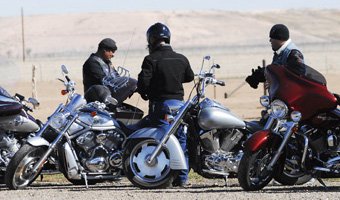
Community Heights Baptist Church in Lubbock sponsored a motorcycle rally that concluded at Palo Duro Cowboy Church in Canyon.

The Palo Duro Cowboy Church in Canyon and the Saddle Mountain Cowboy Church in Channing partnered with the Baptist General Convention of Texas to hold the ranch rodeo finals where 14 teams from the cowboy churches and local ranches competed in front of 500 people in events like wild cow milking, sorting, cow mugging and branding.

"The whole purpose is to bring Jesus Christ to people who may have not ever been introduced to the Lord," said Bobbi Norwood, a member of Palo Duro Cowboy Church and a volunteer at the rodeo.

"For some of these guys, this is the only opportunity they get to hear the word and to learn about Jesus Christ. Some of these cowboys are out there with just the horses, cows and them. So (with the rodeo), they get an opportunity to come to town and hear about the Lord and hopefully make a decision in their lives."

The ranch rodeo was part of Panhandle Reach, a partnership involving 112 Panhandle churches and ministries to reach out to those living in the area with the love of Christ through more than 20 outreach projects during the weeks leading up to the Baptist General Convention of Texas annual meeting in Amarillo.

St. John Baptist Church and Joshua Tabernacle Baptist Church joined to offer a block party with events for children such as a bounce house and a barbecue contest for adults that raised funds to purchase shoes for needy Amarillo children. (PHOTO/John Hall)

At least 432 people made first-time professions of faith in Christ, and another 584 rededicated their lives to Jesus.

The outreach efforts focused on sharing the hope of Christ with people in the western-heritage culture, Hispanic families, college students, high school and middle school athletes and coaches, bikers and many others.

"Panhandle Reach is about strengthening Panhandle churches in reaching the lost and unchurched to the glory of God," said Scott Willingham, BGCT church evangelism director and Panhandle Reach coordinator.

Panhandle Reach kicked off in early September with a back-to-school rally and Hispanic parents' conference sponsored by Iglesia Bautista Hispana in Dumas 47 miles north of Amarillo. The church was able to share the gospel with more than 200 parents and students through the two events.

"These kinds of events are important, because they give the church an opportunity to work together, grow in number, mature spiritually and minister alongside each other joyfully. These events also help us show our community that there is a church that preaches the word of God," said Ernesto Rodriquez, pastor of Iglesia Bautista Hispana.

The church saw 18 people begin relationships with Christ, and four will be baptized at the church Oct. 30, Rodriquez said.

Iglesia Bautista Nueva Vida in Hereford hosted a two-day evangelism conference to train church members to reach their communities for Christ more effectively. Participants had an opportunity to hear from evangelists and trainers like Gilbert Herrera, Ruben Hernandez and Sammy Fuentes. The effort drew more than 250 people from Hispanic Baptists churches and towns such as Friona, Bovina, Muleshoe, Morton, Littlefield and Hereford.

"What the conference did, it united our little churches to work together," said Pablo Garcia, pastor of Iglesia Bautista Nueva Vida. "God showed me that we didn't have to go to Amarillo in order to do a meeting of this sort—that it could be done in other little towns and be a witness not only for the lost, but also for the brethren in the churches. Working together, we can do more."

Wayland Baptist University and 20 churches throughout the area worked in partnership with the Baptist General Convention of Texas youth evangelism department to sponsor a BMX youth outreach event featuring the Real Encounter evangelism team.

The Saturday before the BGCT annual meeting, St. John Baptist Church and Joshua Tabernacle Baptist Church, both in Amarillo, partnered to conduct a block party and health fair in the park with the help of the BGCT as part of Panhandle Reach.

Between children playing in bounce houses and adults competing in a barbecue contest that raised money to buy shoes for Amarillo children in need, church members young and adult shared the hope of Christ through word and song.

"We wanted to connect with the community through health care, as well as music and testimony," said Larry Rhea, interim pastor of St. John Baptist Church.

Another 101 volunteers from many churches and various parts of the state spent Oct. 20-22 ministering to 3,800 offenders in the Potter and Randall County jails as well as the Neal and Clements prison units north of Amarillo through a partnership with Bill Glass Champions for Life Ministry.

More than 263 offenders made professions of faith in Christ during the rallies, and another 405 renewed their commitment to Jesus. The BGCT also is partnering with Texas Baptist Men's Inmate Discipler Fellowship in the coming weeks to follow up on the decisions made during the prison outreach, providing a way for the offenders to be encouraged and taught how to grow in their journey with God.

Big Al Alceves participated in a motorcycle rally sponsored by Community Heights Baptist Church in Lubbock. Several church members rode up from Lubbock and joined other area bikers to ride to the Palo Duro Cowboy Church in Canyon for a rally, barbecue lunch and evangelistic message by Alceves.

The BGCT youth evangelism department partnered with Wayland Baptists University and 20 churches in the Plainview area to host a BMX youth outreach. The Real Encounter evangelism team that uses BMX bikes and skateboard tricks as a platform to present the gospel, shared their faith with more than 500 students, recorded 40 professions of faith in Christ and 30 rededications.

At a Fellowship of Christian Athletes game day rally at West Texas A&M University, more than 400 students from towns throughout the Panhandle had an opportunity to worship, fellowship with other athletes and hear a message about Christ's saving grace and empowerment brought by Evangelist Jon Randles. More than 77 students began a relationship with Christ, and nearly 140 more stated again that they want Christ to rule all parts of their lives.

At the university, the Baptist Student Ministry grilled more than 500 burgers to connect with students on the campus and have an opportunity to share the hope of Christ.

More than 1,016 people made either first-time decisions for Christ or rededications, and hundreds more gospel seeds were sown as nearly 4,500 lives were touched in some way during the Panhandle Reach efforts, organizers said.

"It often takes someone seven times to hear the gospel before accepting Christ," Willingham said. "In Panhandle Reach, we did a lot of sowing, being the first, second, third and fourth times of sharing about this hope. But with the sowing and the reaping, we rejoice together."

Prophetic communities speak from societal margins, Orozco says

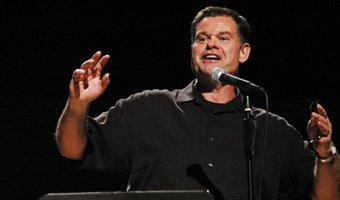
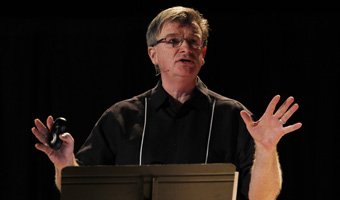
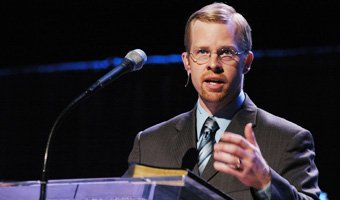
AMARILLO—The church as prophetic community—not the voice of the isolated prophet—holds the greatest potential for bringing God’s message of justice to a rapidly changing world, Ellis Orozco told a Texas Baptist gathering.

The work of building churches as prophetic communities may be the most critical task facing the 21st century church, Orozco, pastor of First Baptist Church in Richardson, told the Texas Baptists Committed breakfast. The self-described mainstream Baptist group met in conjunction with the Baptist General Convention of Texas annual meeting in Amarillo.

“For American Christianity, the Old Testament image of the lonely prophet thundering his message from the mountaintop has been formative. I’m not sure it’s accurate, but it is certainly popular,” he said.

Some American preachers like to see themselves in that role, fancying the romantic image of the persecuted prophet in isolation—“a Lone Ranger without even Tonto to comfort him,” Orozco said. But the typical preacher who views himself in those terms rarely fits the profile.

“The sins he rails against are carefully chosen, so as to offend mostly those outside his congregation. And his hand-picked pulpit belongs to a congregation that applauds, if not demands, that type of preaching,” he said.

“In short, he rarely risks anything with his preaching. And in the end, his sermons are more self-serving than sacrificial.”

While churches still need preachers who provide thoughtful reflection on contemporary issues, Orozco insisted, “the work of the pastor and church leadership in the 21st century is not so much to thunder prophetic utterances as it is to build prophetic community.”

Prophetic communities operate from the margins, not the power centers of society, he insisted.

“The church cannot serve a sociopolitical ideology and Christ at the same time,” Orozco said. At a time when the political left and right both wrestle for positions at the center of power, Christians should not succumb to that desire.

The prophetic preacher should strive to build the kind of prophetic community that can tell the difference between the voice of culture and the voice of God, he said.

“This is why the prophetic community becomes imperative in the new millennium, because it is the community—the church, not the preacher—who can be a prophetic force, speaking and acting from the margins in a shrinking and dynamically changing world,” he said.

Jesus built prophetic community among his followers and gave them a model prayer that demonstrates his radical ethic—a prayer filled with petitions “for God to show up in the world to make that which is wrong right,” Orozco said.

“Jesus’ prayer is a radical and dangerous prayer—a prayer that calls for the world to be turned upside-down by a new and thoroughly prophetic ethic,” he said. “In the early church, it was repeated with fear and trembling. It is a prayer that fuels the prophetic community.”

The American church has been pushed to the margins of society by powerful forces—and that is where it does its best work, Orozco insisted.

“There is much turbulence and violence and despair at the power centers of our world,” he said. “And I believe that the church stands ready at the margins to be a prophetic community speaking and doing God’s justice in the world. Everything depends on it.”


BGCT approves renegotiated agreement with Baylor University

AMARILLO—Messengers to the Baptist General Convention of Texas annual meeting approved a renegotiated agreement with Baylor University, replacing a 20-year old agreement that sets the terms for the relationship between the university and the state convention.

The renegotiated agreement—approved with only a smattering of dissenting votes at the Oct. 24 meeting— gives Baylor greater influence in determining the composition of its governing board.

Texas BaptistsFor 20 years, the BGCT has related to Baylor through a special agreement the convention and university reached after Baylor changed its charter. That agreement included the stipulation, “All members of the board of directors shall be Baptists.”
However, the 1991 agreement also stated, “The BGCT recognizes that Baylor is an independent, nonprofit, nonmember corporation under the laws of the State of Texas with the full legal right, power and authority to amend or rescind its articles of incorporation or bylaws without approval or consent of the BGCT or any other party.”

In February, Baylor opened membership on its board of regents to non-Baptist Christians. In response, the BGCT Executive Board in May directed Associate Executive Director Steve Vernon to invite Baylor University President Ken Starr to develop a process for renegotiating the relationship agreement.

A six-member committee—with Roger Hall, Ed Jackson and Bill Brian representing the BGCT and Buddy Jones, David Harper and Ramiro Peña representing Baylor—negotiated the revised agreement.

Brian, an attorney and member of First Baptist Church in Amarillo, pointed to the preamble of the new agreement that placed a renegotiated agreement within the context of a desire on the part of both Baylor and the BGCT to “continue and enhance their longstanding and mutually beneficial relationship.”

Jackson, a retired engineer from First Baptist Church in Garland, acknowledged the negotiating process as “not a Pollyanna assignment” but had its share of “low points and rough spots.” However, he presented the final outcome as a positive way to move forward.

Roger Hall, retired BGCT treasurer from First Baptist Church in Midlothian, emphasized the negotiating team’s desire to simply and streamline the agreement and provide a framework to “foster future cooperation.”

Since 1991, Baylor University has elected 75 percent of its board of regents, and messengers to the BGCT annual meeting have elected 25 percent.

Under the revised agreement, the school’s BGCT-elected regents will be nominated by a five-member committee composed of two people designated by the convention, the president of Baylor or a person the president designates, the chair of the Baylor regents or a person the chair designates and one additional member designated by the regent chair, with the stipulation that individual must be a member of a BGCT-affiliated church.

Previously, the five-member group that nominates BGCT-elected Baylor regents consisted of four people named by the BGCT Committee on Nominations for Boards of Affiliated Ministries and either the chair of the Baylor regents or a person he designates.

After originating with the five-person committee, the nominees for regents will go to the Committee on Nominations for Board of Affiliated Ministries and then on to the state convention annual meeting for consideration.

The revised agreement also states Baylor has the right to confirm —“or not to confirm with good cause”—regents elected by the BGCT as set forth in the university’s governing documents.

“Because the BGCT’s authority is a delegation of authority from Baylor and because of issues related to Baylor’s accreditation, the BGCT agrees that it will consider Baylor’s best interests as the only criterion in the selection of Baylor … (regents), subject to a requirement that the individual person elected shall be a member of a BGCT church,” the agreement states.

Les Hollon, pastor of Trinity Baptist Church in San Antonio, asked what necessitated the change from a four-to-one BGCT/Baylor ratio in the group from which regent nominees originates to a three-to-two Baylor/BGCT ratio, with the Baylor regents retaining the right to reject an elected regent.

In terms of the change in composition of the nominating group, Brian explained, “Baylor wanted more input into nomination” of regents at that early stage.

Both he and Jackson pointed out a BGCT-elected regent could be rejected only for substantive cause. Jackson also noted that while Baylor will have an advantage in step one of the process, the second and third steps—the Committee on Nominations for Board of Affiliated Ministries and the state convention annual meeting—are 100 percent BGCT.

David Lowrie, pastor of First Baptist Church in El Paso and past president of the BGCT, spoke in favor of the renegotiated relationship agreement. He compared it to a couple who renew vows after many years of marriage.

Just as changes in those renewed vows reflect how the husband and wife have changed since their wedding, the renegotiated agreement with Baylor acknowledges that both the university and the state convention have changed in the last two decades, Lowrie said.


Meeting needs, sharing gospel focus at Hispanic rally

AMARILLO—Hispanic Texas Baptists reported on God's faithfulness and looked ahead to new initiatives in evangelism, missions and ministry during a rally on the eve of the Baptist General Convention of Texas annual meeting.

Teo Cisneros, vice president for development at Baptist University of the Americas, preaches at a rally preceding the BGCT annual meeting in Amarillo.

Jesse Rincones, president of the Hispanic Baptist Convention of Texas, noted the Hispanic Baptist Convention of Texas approved a new agreement with the BGCT in 2010.

"One of the fruits of that agreement is that now our convention can have its own initiatives for funding and resources for its programs and collaborations that it wants to do," he said.

Rincones announced 2012 would focus on missions with the convention's collaboration with Shoes for Orphan Souls, a ministry of Buckner International. Hispanic Texas Baptists hope to collect 2,012 pairs of new shoes for the ministry at Convención next June in San Antonio.

A new collaboration with Frontera Solutions will provide a telephone medicine program for Hispanic pastors and families around the state, many of whom don't have health insurance, Rincones announced.

The program gives participants unlimited access to doctors via telephone who can make diagnoses and call in prescriptions for families. Through this program, families also receive discounts on prescriptions.

Hispanic Texas Baptists need to look at ways to bless the spiritually lost, not seek blessings for themselves, Teo Cisneros, vice president for development at Baptist University of the Americas, said in the rally sermon from the first chapter of the New Testament book of Acts.

"Statistics show that baptisms are at their lowest point in 20 years," he continued, "And in Texas, the second most populated state with 26 million people, 50 percent are lost. The gospel hasn't changed. It still has power. The blood of Christ hasn't changed. It hasn't lost its power to save. My question to you tonight is, 'What can we do?'"

Too many Christians aren't asking the right questions, he said, comparing churches with the disciples who asked Jesus when he would restore the kingdom of Israel or argued over who would sit on his right hand side.

"What we should be asking is, 'How can we bless the lost? How can we reach the lost?' not 'How can I be blessed?'" he said.

Churches also often don't seek the right power, Cisneros insisted, stressing the importance of seeking the Holy Spirit.

"If you don't look for divine power, the power of the Holy Spirit, you won't be effective in reaching the lost," he said.

Finally, he said, churches aren't looking in the right direction.

"Because of our limited view, sometimes we ignore certain groups of people," he said. "But Jesus says to make disciples of every nation. The Greek word for every nation is 'ethnos,' meaning all people or all ethnicities."


Work of the Holy Spirit emphasized at African-American Rally

AMARILLO—The Holy Spirit moves throughout the world, changing hearts and transforming lives. And the Spirit carries out God's purpose while working through his people, Larry Rhea told the African-American Fellowship Rally prior to the Baptist General Convention of Texas annual meeting.  

Rhea, interim pastor of Saint John Baptist Church in Amarillo, reminded listeners of the promise Jesus gave in Acts 1:8 that his people would receive power when the Holy Spirit came upon them.

Gregory Pride, pastor of Joshua Tabernacle Baptist Church in Amarillo, preached at the African-American Fellowship Rally in Amarillo. (PHOTO/Robbie Rogers)

"And you will be my witnesses," Rhea read from the passage—"to the ends of the earth."

The Holy Spirit moves as his people are obedient and walk in faith. Faith, Rhea noted, is demonstrated through action.

That faith rests in Jesus Christ, whose shed blood on the cross made evident God's will—to redeem the souls of humankind.

"He poured out his love in compassion, breaking the hearts of sinful men," Rhea said. 

As hearts are changed, they become ripe for the work of the Spirit—regeneration, sanctification, consecration and new life in Christ. This is the story of all of the redeemed, he said.

"Holy Ghost power is about changing individuals," Rhea said. "Jesus is anxious to save, and his desire is to fill the redeemed with his power."

This power comes upon every believer, working through them to then reach out to others. In this way, the work of the Spirit is viral, Rhea said.

"We can go all over the world with power," he said. "We are to change the world one life at a time."

Christians must hold fast to a hope—a desire to see the lost saved and for God to receive the glory.

"We are clothed with power when we love the glory of God and long for his presence, to press forward with compassion for the lost and hurting people," Rhea said.

This concept ties in with Texas Baptists' commitment to Hope 1:8, an initiative underscoring the Acts 1:8 mandate encouraging believers to live out their faith through missions and outreach. 

 Michael Evans, president of the fellowship, affirmed Rhea's message and reminded listeners of the importance of collaboration. 

"Together we can save souls. We can positively impact the lives of all Texas Baptists," he said. "We are serving with a group of pastors and lay men and women who share the same hope, the same dream. And we will see that happen."


Texas Tidbits

TBM volunteers describe the activity of God. God has honored Texas Baptist Men volunteers in recent months by using them to bring people to Christ, speakers reported at a TBM Rally held at Second Baptist Church in Amarillo on the eve of the Baptist General Convention of Texas annual meeting. Ralph Rogers, a member of Paramount Baptist Church in Amarillo, said the church's disaster relief teams have served in a number of places, including Amarillo, Possum Kingdom, Bastrop, Tuscaloosa, Ala., and Minot, S.D. More than 4,000 homes were affected by flooding in Minot, and Paramount mud-out teams served for 30 days there, assessing damage, cleaning homes, praying with victims and sharing the gospel where possible.

HSU holds line on tuition. Hardin-Simmons University trustees voted to keep tuition for new incoming full-time or part-time students at the current $715 per semester hour rate. The action represents a double-freeze, HSU Vice President for Enrollment and Marketing Management Shane Davidson noted. "No. 1, tuition will not go up for freshmen and transfers, and No. 2, students can lock in the rate as long as they remain full-time students," he said. Since the fall 1993 semester, HSU students have been able to lock in their freshman tuition rate until they graduate and may continue at the same rate even in master's-level classes. Some current students studying for their master's degrees still are paying the $535 per semester hour tuition rate they paid in 2007, Davidson noted.

Elshtain joins Baylor institute. Jean Bethke Elshtain, recent recipient of the Democracy Service Medal from the National Endowment for Democracy, has joined the Baylor University faculty as visiting distinguished professor of religion and public life at Baylor's Institute for Studies of Religion. Elshtain—a prolific author—also serves as the Laura Spelman Rockefeller professor of social and political ethics at the University of Chicago Divinity School. Elshtain is a past recipient of the Goodnow Award, the highest honor bestowed by the American Political Science Association for distinguished service to the profession. She has served on the board of the National Humanities Center and on the President's Council of Bioethics. Currently, she is a member of the Council of the National Endowment for the Humanities and the Scholars Council of the Library of Congress. At Baylor, Elshtain will conduct and produce new scholarship about the intersection of religion and public life, working alongside faculty as well as undergraduate and graduate students from political science, philosophy and the Honors College.


Around the State

Dallas Baptist University will hold homecoming festivities Nov. 14-19. Events begin Monday with an alumni dinner for the College of Education. On Thursday, the master of arts in counseling program will hold its alumni dinner, and the Mr. Big Chief competition will be held in the Burg Center at 8 p.m. At 4 p.m. Friday, a pep rally and parade will be held, followed at 6 p.m. by the alumni homecoming banquet. David Fletcher, professor of religion at DBU 41 years, will be named an honorary alumnus. Ronald Jones, mayor of Garland, will be named a distinguished alumnus. At 8 p.m., the Homecoming Extravaganza will kick off, with songs and performances from DBU alumni. A variety of activities are planned for Saturday, including reunion luncheons at 1 p.m. and a 4:30 p.m. tailgate party. At 7 p.m., the Patriot basketball team will play LeTourneau University in the Burg Center. For more information, call (214) 333-5628.

Lorin Vega, a student at Amarillo College, receives a hamburger from Texas Baptist volunteers during a cookout sponsored by the school's Baptist Student Ministry. Volunteers served about 450 students. (PHOTO/Eric Guel)

Abilene Association will honor several people and a church at its annual meeting, Nov. 1 at First Church in Abilene. Evelyn Dorsett, a member of First Church in Abilene, will be named the layperson of the year for her service through the association's social ministries. First Church in Tuscola will be honored as the church of the year; Charles Maciel, who recently retired as pastor of Ambler Church in Abilene after 27 years of service there and 44 years in bivocational ministry, will be named pastor of the year; and Marsha Langford, who served Belmont Church in Abilene more than 23 years before beginning a recent role as ministry assistant at the Abilene-Callahan Baptist Area Resource Center, will be named staff person of the year. The afternoon session begins at 4 p.m., and a meal will be served at 5:30 p.m. The evening session begins at 6:30 p.m. Richard Darden, pastor of Shining Star Fellowship in Abilene, will preach the annual sermon. Truman Turk is director of missions.

Hardin-Simmons University presented several awards during homecoming activities. Billie Martin was the recipient of the John J. Keeter Jr. Alumni Service Award. The Distinguished Alumni award was presented to Elizabeth Abernethy, Charles Douglas and Robert Moates. Athletic Hall of Fame inductees included Jimmie Keeling, football coach; George Hine Jr., sports information director; Kirk Rogers, football; and Gary Marable, tennis player and coach.

East Texas Baptist University has added several faculty members including Bernadette Bruster, English; Kristen Bugos, music; Katie Edwards, kinesiology and associate athletic director; Ellen Fineout-Overholt, nursing and dean of professional studies; William Griffith, chemistry; Judy Hogberg, education; Gerald Nissley, psychology; Elizabeth Ponder, manager of instruction and information services; Scott Ray, dean of school of business; Laci Wallace, kinesiology; and Connie Wyszynski, nursing.

Howard Payne University has announced a new scholarship for students entering the master of education in instructional leadership program. At its highest level, the scholarship would cut tuition almost in half. The program is for students who wish to become certified principals in Texas. Instrution for the 36-hour, non-thesis degree is delivered entirely online, and residency at the university is not required. It can be completed in as little as 22 months. For more information, call (325) 649-8205.

Anniversaries

Jack Burton, 60th in ministry, Oct. 21. A reception was held in his honor at Woodlawn Church in Austin, where he was pastor 23 years prior to his retirement in 1997. Since retirement, he has served four churches as intentional interim pastor, and currently is pastor of SkyView Church in Austin. A graduate of Southwestern Seminary, he has been pastor of churches in Kansas, New Mexico and Texas.

Deaths

Boyd O'Neal, 86, Sept. 24 in McKinney. He served almost 40 years as a Southern Baptist missionary in Brazil and eight years on staff at the International Mission Board headquarters in Richmond, Va. Born in Novice, he was the youngest of 13 children. While a student at Howard Payne College, he worked two full-time jobs and hitchhiked every Sunday to Silver Valley, where he was pastor. He and his wife, Irma, were appointed by the Foreign Mission Board to Brazil in 1949. During his time there, the state where he worked went from having 12 struggling churches to 52 thriving ones. He also directed the construction of a Baptist camp there and then served as camp director 32 years. After retiring from foreign service in 1988, he served as director of volunteers for the IMB. He retired in 1996 and moved to McKinney, where he was a member of First Church. He was preceded in death by seven brothers, five sisters and a great-grandson. He is survived by his wife of 66 years; daughters, Melba Hogue, Betty Brown and Becky Gore; son, James; seven grandchildren; and five great-grandchildren.

Homer Wright, 99, Sept. 28 in Texarkana. A retired pastor and former volunteer prison chaplain, he was a member of First Church in Red Lick. He was preceded in death by his wife, Evelyn. He is survived by his son, Kenneth; daughter, Joyce Stone; five grandchildren; three great-grandchildren; and one great-great-grandchild.

W.J. "Doc" Isbell, 89, Oct. 4 in Bessemer, Ala. After working 17 years as a veterinarian, he became Baptist Brotherhood secretary for the Alabama Baptist Convention. During 13 years there, he developed the Royal Ambassadors Boys Camp at Shocco Springs. In 1968, he joined the Southern Baptist Convention's Brotherhood department as director of the men's division. In 1977, he accepted a position with Texas Baptist Men, where he was instrumental in building a hospitality house for prisoners' families to use during visits to Huntsville. He later became executive secretary of the men's department of the Baptist World Alliance and visited world Baptist men's work and wrote a Baptist Men's manual for all churches throughout the alliance. He is survived by his wife, Nell; son, Jay; daughter, Cissy Isbell; brother, Roy; sister, Lee Wood; two grandsons; and three great-grandchildren.

Kim Hall, Oct. 21 in Hot Springs, Ark. He was pastor of Hunters Glen Church in Plano almost 22 years. During his 35 years of ministry, he also served churches in Louisiana and Mississippi. He served on the Executive Board of the Baptist General Convention of Texas and on its mission funding committee. He served in numerous positions with Collin Association. He was a chaplain for the Plano police and fire departments. He was the founder of Advance International, which partners with New Orleans Seminary and the International Mission Board to provide theological education to Christian leaders in remote areas of the world. He is survived by his wife, Martha; sons, Hunter and Daniel; sisters, Lydia Willis and Myrna Tarver; brothers, David and Joey; and two grandchildren.

Revivals

First Church, Devers; Nov. 6-10; evangelist, Herman Cramer; music, Sam Craig; pastor, Harry McDaniel.

First Church, Normangee; Nov. 13-16; evangelist, Mike Satterfield; music, Richard Mabry; pastor, Bob Shirley.

Event

Wylie Church in Abilene recognized Oscar Fanning as pastor emeritus, Oct. 2. He served the church as pastor more than 20 years.


On the Move

Tommy Brisco to Lawn Church in Lawn as interim pastor.

David Eaton has resigned as minister of music at Second Church in Corpus Christi.

Charles Maciel has retired as pastor of Ambler Church in Abilene for health reasons after serving the church 27 years.