Wayland president emphasizes working together

PLAINVIEW—“Let’s clean up the kitchen so we can start cooking,” said Wayland Baptist University President Donna Hedgepath, quoting her grandmother as she addressed the Wayland family during Convocation 2024.

“We can and we will accomplish great things together,” the 14th president of the university said.

Referencing Ecclesiastes 4:9-12 and the strength of a cord with three strands, she continued, “With God as that third strand, nothing is impossible.”

Noting her theme, the new president said, “I want to share that success with you, my new Wayland family,” because we are “Better Together.”

“This academic year, you can expect updated technology in all the computer labs and most of the classrooms on the Plainview campus,” she said. “In addition, Wayland has received a generous donation to fully equip and update our media arts programs. This upgrade will make us competitive with any other programs in this area.”

She noted her husband, Pete, is taking the lead on remodeling Pete’s Place, an underutilized patio area originally designed as a student hang out.

“It’s so beautiful, it has so much potential, and we know that the students will love using it if we really make it a great place.”

She said utilitarian updates such as heating and cooling systems, plumbing, roofing and furniture replacement are “occurring as we speak. God is providing and we are taking care of business. The plan is to start a renewal of beauty.”

Hedgepath said Wayland will begin the development of a new strategic plan this year, “a plan that hits the big dreams, as well as continued needs for facilities, technology and programs.”

She expressed a need to focus on increasing retention and graduation rates: “That huge group of freshmen who stood earlier, just made my heart race. I want them all to stay. I want you to come back. I want you to graduate.”

She said her vision is on “increasing the reach of our mission—ways to elevate Wayland in a way that continues to glorify God in every endeavor we pursue.”

Sharing her background

The president’s remarks were often personal.

“Once you get to know us, you will see quickly that my husband and I are very different,” she said. “We have different interests and experiences. We have a very strong, loving marriage that doesn’t focus on the differences but on what we do have in common—faith, family and food.

“Those are important, but at the center it has always been Jesus. We plan and hope to share more of our life journeys and testimonies over the coming years, and I look forward to hearing about yours as well.”

Hedgepath said getting to this point in her life “did not magically happen, nor was it easy.”

“As the daughter of parents from far western Kentucky, I grew up on the Mississippi River. I mean, right on the river. We were called river rats,” she said.

“I guess you could say I was raised right, meaning my parents expected me to listen, show respect, do my part, go to church, make good grades in school, stay out of trouble, choose a good friend group, go to college, and so on.

“I was introduced to Jesus by my parents and through my church from Day 1. I learned early that true joy comes from my relationship with Christ.”

“We didn’t have a lot of material things,” she confided. “I guess you could say we were socio-economically challenged, but the beauty was that I didn’t really know it. We did not have what you would call a nice home, but I thought it was perfect.

“We took pride in what we did have. I always felt it was my responsibility to find my own way. I witnessed my mom and dad work so hard to make ends meet, something I carry with me to this day. I stand on the premise that a strong work ethic will take me farther than those who settle for doing the minimum. Your work ethic is something no one can take from you.”

Grit’s role in getting here

The president said she’s been told she has grit.

“I like the word grit. It’s a close cousin to tough,” she said. “Part of the constant dialogue in my head comes from my dad, saying, ‘You need to be tough.’ At the time, it annoyed me, but looking back, I see how he was setting me up for my future in higher education leadership.”

She said her late father wanted his daughter to fly, “to have dreams and pursue them.”

“He often told me not to settle, whether it was a career choice or a relationship, and he was always very honest with me about my choices,” she said. “You know, I really miss my dad, so you’ll hear me referring to him often. His dialogue continues in my head.”

Recalling her first day as a freshman at Campbellsville College, she spoke of how scared she was when her parents dropped her off.

“They left me with no car, I didn’t have a checking account, I didn’t have any friends, I didn’t even know anyone,” she said. “I still look back on that day as one of the toughest days of my concluding childhood. I remember it vividly, leaving home and family and making a completely new start.

“I think I cried most of the rest of that day, but I was that kid that wasn’t afraid to ask questions. So, I managed to get a class schedule, books and find the dining hall. I guess you could say the rest is history. A small Christian college changed my life.”

“How to respond to the bad times will prove to be our biggest opportunity to testify and display Christ’s love and presence in our lives,” she said. “I would never in a million years wish things like poverty or racism or gender bias or childhood trauma, … the list could go on and on. I would never wish that on anyone.

“But if and when you do experience them, lean on God’s wisdom and love to respond and persevere. If you take anything away from my words today, I pray you understand and claim the fact that you are made for more. Wayland is made for more.”



Tyler couple’s ministry to kindergarteners spans decades

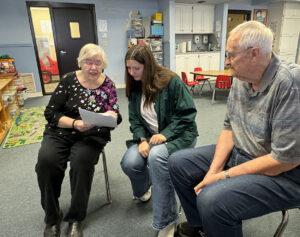
TYLER—Generations of kindergarteners have memorized Bible verses and learned about Jesus’ love for them in Pat and Charles White’s Sunday school class at First Baptist Church in Tyler.

The church recently recognized the couple for their decades of service to preschoolers and children. The beginning of the school year marks 50 years Pat White has taught the kindergarten Sunday school class.

But the couple’s involvement in ministry to children actually began a few years earlier, when her husband was teaching a fifth-grade Sunday school class and she taught 3-year-olds at First Baptist Tyler.

Since one boy in the 3-year-old class was deaf, she learned enough American Sign Language to teach him each week’s Scripture memory verse and the Bible lesson.

“I graduated with him, teaching the 4-year-olds the next year and then the 5-year-olds,” she said.

When the boy’s family moved from Tyler to Austin, she settled into teaching the kindergarten class. After about 10 years with the fifth graders, her husband joined her.

“It got to the point where those fifth-grade kids were getting too smart for me. I came down to kindergarten to help Pat, where the kids were more on my level,” he said with a grin.

‘Felt called to teach kids’

For Pat White, the hours spent in preparation, outreach and instruction for kindergarten Sunday school class became a passion project.

“I fell in love with it,” she said. “I felt called to teach kids.”

In fact, after several years teaching professionally at higher levels, she went back to school to earn her master’s degree in early childhood education.

Her last few years in public school classrooms were spent teaching English-as-a-Second-Language to children in pre-kindergarten through second grade.

Teaching kindergarteners means providing multiple learning stations each Sunday. Pat White enjoys exercising creativity in developing a variety of crafts, games and activities designed to reinforce concepts presented in the Bible lesson.

“God gives me ideas,” she said.

“She’s the thinker and the organizer,” her husband commented. “I handle the snacks.”

“And the kindergarten class is known for its snacks,” Katie Goodrum, director of preschool ministry at First Baptist Tyler, interjected.

Charles White grew up attending First Baptist Tyler until he left to study accounting at Texas Christian University in Fort Worth. His work for an oil company took him and his wife to New Orleans and Pittsburgh before moving back to Tyler in 1969. On two occasions, he served on the church staff as business manager.

He doesn’t recall any men who served in the preschool area and few who worked with children when he was growing up. He has been glad to be able to correct that deficiency for the last several decades.

“I think it’s good to have a man in the classroom at this age level,” he said. “It’s good for the kids to see a man here.”

He especially enjoys seeing how much the kindergartners “grow and mature” from the time they enter class in August until they move up to the first-grade class a year later.

Teaching kindergarteners to good to others

The Whites particularly like to involve the kindergarteners in activities that benefit others, such as assembling sacks of food for families at Thanksgiving or sending cards to homebound church members.

“We want them to recognize the need to do something for other people,” Pat White said.

Pat White shows Katie Goodrum, the preschool director at First Baptist Church in Tyler, the mailing list of kindergarteners who receive letters from her and her husband Charles each week. (Photo / Ken Camp)

In addition to the hours spent preparing hands-on learning activities and the Sunday mornings spent interacting with the children, she also mails a letter on Monday or Tuesday each week to every child in her Sunday school class.

“I’ve mailed letters to 311 students since I started doing it in 2008,” she said. “If a child visits the class and I get an address, they’ll get a letter from me each week unless a parent asks me to stop.”

Each letter reinforces a key idea from the previous lesson and introduces the next week’s Bible story. It also presents a question about the upcoming lesson, along with the Bible verse where the child can find the answer.

“The letters mean a lot to the children,” she said, noting some children have told her years later how much they looked forward to getting mail from her each week.

‘Generations have been blessed’

The Whites noted it is satisfying to see children they taught in their kindergarten class make a profession of faith in Christ and be baptized when they are older.

They also have the satisfaction of teaching kindergarteners in recent years whose parents they taught decades earlier.

“When I think of Charles and Pat, I think of years of faithful service, loving children and welcoming them into the church with grace and joy every Sunday,” said Casey Cockrell, minister of discipleship at First Baptist Church in Tyler.

“Their dedication, not just in the visible aspects of their service, but also in the countless hours of behind-the-scenes work, is a testament to their love for Christ and others.

“Generations have been blessed by their faithful service, and it’s a joy to see my two daughters and others stand to celebrate the Whites.”

In October, Charles White will turn 90, and his wife will turn 85. If they even raise the question of whether it’s time to step down from teaching, Goodrum shakes her head firmly and says, “No.”

“They are rock stars as far as I’m concerned,” she said. “To have this kind of consistency in the preschool area, we are so blessed.

“I don’t have to scramble on Sunday morning. I have the easy job. I get to sit back and watch the kids learn.”


Christian Women’s Job Corps alumni serve with Hagar’s Heart

Christian Women’s Job Corps of Greater Arlington Executive Director Brandi Dalton met Hagar’s Heart founder, Jennifer Jones, at a networking event some time ago.

CWJC—a ministry of Woman’s Missionary Union—teaches job skills and life skills to low-income women. Hagar’s Heart is an Arlington-based organization dedicated to supporting, educating and empowering domestic violence survivors through self-care initiatives.

The complementary nature of the organizations in providing services for women led to Jones becoming a speaker at CWJC events for the last couple of years.

Hagar’s Heart Founder and Executive Director Jennifer Jones with CWJC of Greater Arlington Executive Director Brandi Dalton. (Courtesy Photo)

At one such event, Dalton learned Hagar’s Heart held a standing volunteer service day the third Saturday of every month.

“I immediately thought, hmm,” Dalton said, “Our alumni meet the third Saturday of every month.”

Since CWJC alumni have received such an investment in their lives through Christian Women’s Job Corps, they are encouraged to “pay it forward” by investing in others, she explained.

So, Morgan Farr, CWJC of Greater Arlington alumni coordinator, organized an alumni service project with Hagar’s Heart for Aug. 17.

Hagar’s Heart aims to give back to domestic abuse survivors what was taken from them by their abusers—their self-worth and trust.

Personal understanding

Jones said she started Hagar’s Heart because she is a survivor of domestic abuse, herself.

She was an educator more than 20 years, but about six years ago, life circumstances brought her life in education to a close.

Jones sensed even then there was something else God was calling her to: “You know God always provides the way.”

She was no longer in an abusive relationship when the COVID-19 pandemic swept across the country, but it occurred to her that just because she was able to escape didn’t mean every woman experiencing abuse could.

In fact, the lockdowns of COVID meant exactly the opposite, Jones said. Women were trapped with their abusers and couldn’t get away.

This realization led her to find a fiscal sponsor and found Hagar’s Heart “right then and there,” she said.

Domestic violence is an isolating experience, Jones stated. She explained she was out of her abusive relation for 13 years before she could admit, even to herself, she’d been abused.

“I didn’t think it happened to people like me,” she said.

Handmade message bracelet for an “I See You” box. (Courtesy Photo)

She had a job and could anticipate abusive behavior and side-step it, because she had a place to go. So, she believed it was “just a bad marriage,” not abuse. But in working through the trauma she’d experienced, a counselor helped her understand, “even once is too many times.”

Even one time being called names or experiencing physical abuse, even one time being locked out of one’s home or made to leave is too many, she continued.

Statistics show domestic violence happens to 1 in 3 women and 1 in 4 men. That illustrates it’s not only happening in a certain ZIP code or to people of a certain ethnicity, Jones said.

Society is ignorant about who can be affected by domestic violence, she said. “I was ignorant that it could happen to me.”

Jones saw a need to transform how society—especially the women who are affected by it—understands domestic violence. Hagar’s Heart seeks to do that by educating and empowering survivors, rebuilding self-worth.

Seen, worthy, loved

Taking its name from the Genesis 16 story of Hagar—where God meets her in her escape from the abuse she’d suffered, and she names God, El-roi, the God who sees—Hagar’s Heart emphasizes three statements: “You are seen. You are worthy. You are loved.”

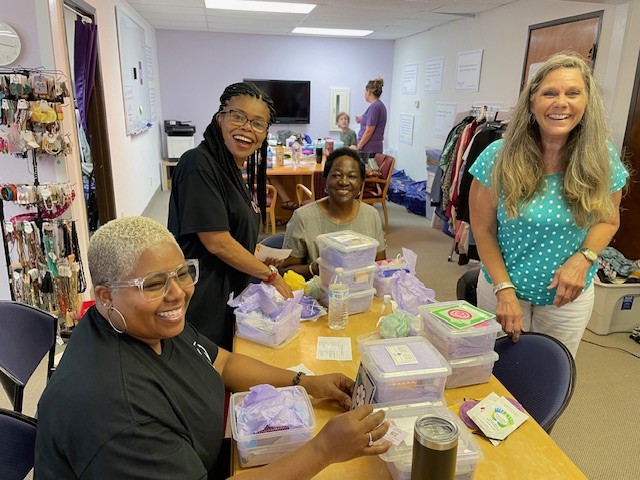
The CJWC alumni who served Aug. 17 joined in the mission of rebuilding self-worth by helping to pack “I See You” boxes. They will be distributed to women at eight women’s shelters in the area.

These boxes are filled with personal care products, including fragranced lotions and soaps, ethnic hair products (if needed), chocolate, handwritten notes, journals, and a handmade bracelet—items that don’t just meet a physical need but an emotional need to feel worthy, as well.

The shelters provide for physical, counseling and legal needs, while “I See You” boxes and the other services Hagar’s Heart provides help to reach the intangibles—reminding the women they are worth more than what standard, utilitarian items alone might communicate, Jones explained.

These special boxes gently speak to women’s hearts.

Earlene Moore (standing on left) and other CWJC alumni pack “I See You” boxes at Hagar’s Heart. (Courtesy Photo)

Giving back

Earlene Moore, a CWJC alumna, participated in the project. She came to CWJC in 2015 when she decided to close her baking business.

Moore said she appreciated the job skills, particularly computer skills, she learned there to help her get back into the workforce after being self-employed for several years.

“It’s a beautiful thing to be able to give back to others,” Moore said. Yet, she still was having second thoughts about going to Hagar’s Heart to help, because she had so many other things going on that week.

“So, anyway, I went on, and I’m so glad,” she continued. When she learned what they were doing and how meaningful it was and began going down the checklist packing boxes, she decided this project will not be a one-time thing.

“Our group was making sure the boxes had everything they needed,” she said, “nail clippers, lotions, handwritten notes, … everything you and I take for granted.”

But as she packed, she thought about the joy the boxes will bring the ladies who will receive them—from knowing someone was thinking about them and they care—and she started praying over the boxes.

“Then the lady next to me said, ‘Are you praying?’ And I said ‘yes.’” So, the other lady started praying, too, Moore explained.

“I See You” box contents. (Courtesy Photo)

Moore already has spoken with group leaders at her church and will call her friends and family to make plans to help fill more “I See You” boxes.

“Once I find something that’s really wonderful and that’s really helping someone, I go all in. So, that’s kind of where I am,” Moore stated.

CWJC of Arlington utilizes 60 to 65 volunteers every semester to teach classes, serve on information technology teams to keep computers up to date and running, serve on mentor teams as journey partners, serve on teams that process donations for professional clothing boutiques and help with no-cost shopping, and assist in other areas.

Each semester they serve 14 daytime and 14 evening students, because that’s how many computers they have in their computer lab, Dalton stated.

Moore said she wished more people would get involved with giving back.

Another alumna, Barbara Jones, said, “I can tell you that CWJC is more than just free training classes. It is a life change.

“… I know it was God that led me to CWJC. I not only improved my office skills, but most importantly grew in my Christian walk.

“We are always looking for ways to help our community, and there have been many lasting relationships in our sisterhood.”


Preaching Lab provides resources and creative ways to lead

“Every Sunday, we want to create something that changes someone,” Wes Hamilton, lead pastor at Hulen Street Church in Fort Worth, told attendees during The Art of Preaching & Teaching Lab.

The lab, held at the Texas Baptists’ office in Dallas on Aug. 6, drew 65 attendees, including lead pastors, youth ministers and other church leaders.

David Miranda, then director of Millennial/Gen Z Ministers Network, and a team of volunteers coordinated the preaching lab, which was hosted by The Pastor’s Common.

Launched by Miranda in 2019 in collaboration with David Foster, Jordan Villanueva and Abraham Quiñones, The Pastor’s Common is a Texas Baptists ministry dedicated to providing opportunities for emerging ministry leaders to be heard, resourced and find community.

Miranda said the labs’ purpose is to create a space for unity among pastors and leaders, and also offer resources that will bless their church or ministry.

“Pastors tend to be autocritical because there is so much stress and identity tied to [preaching],” Miranda said.

“We want to alleviate and mitigate any type of self-inflicted wounds from the pulpit and just show them that we’re all in this and know there’s no real expert, we’re all learning at the same time.”

Strengthen preaching, improve church health

During the lab, attendees learned how to strengthen their preaching abilities and improve church health from three keynote speakers.

Hamilton addressed creative preaching that encouraged attendees to bring clarity to their sermon’s text in an unexpected or surprising way.

“Creativity is an ability we all possess. We all possess this ability because we were made in the image of a God who is a creative God,” Hamilton said. “While we are all creative like God is creative, we never will create like God does. God creates something from nothing. We only create something from something.”

Hamilton suggested that because a pastor’s source material—Scripture—never changes, creative preaching is “nothing more than finding fresh ways to say ancient things.”

He warned attendees not to let creativity overshadow God’s word.

“Creativity is always helpful, but it’s never essential [because] God’s word never comes back void,” Hamilton said.

Meghan Hendrickson, BSM director at Dallas Baptist University, said she gleaned a fuller understanding of generosity as it pertains to ministry from Hamilton.

“God invites us to be generous not only with our finances, but also with our time, our prayers, our relationships and our creativity. I had never considered creativity as an act of generosity, but that is so true,” said Hendrickson, who is scheduled to speak at the 2024 Texas Baptists annual meeting, Nov. 10-12 in Waco.

“I’m walking away encouraged to continue pursuing creativity in my own life of ministry and to create space to encourage others to exercise their own God-given creativity in ministry.”

Preach to serve the congregation intergenerationally

Al Curley III, youth and young adult pastor at Cornerstone Church in Arlington, spoke of crafting a message to serve the congregation intergenerationally by being intentional to find common interest or insight for multiple generations in the church.

“The beautiful thing about intergenerational preaching is that it doesn’t put one generation in front of the other. We’re all on the same playing field, and your job as the preacher is to get the different generations to look at one another in empathy, sympathy and adoration … for the goal of cooperation and collaboration for the advancement of the kingdom of God,” Curley said.

Curley presented to attendees Holly Catterton Allen’s definition of intergenerational: comprehensive mutuality, equality and reciprocity that makes individual and collective transformation more likely.

He taught attendees that intergenerational ministry and preaching work hand-in-hand to find and communicate ways for every generation to engage in conversations about Jesus and faith relationships.

Curley told attendees in order for their churches to survive, they need to be having conversations about Jesus outside of the physical space of the church, and intergenerational preaching can achieve that.

“People are growing and declining at the same time, and it takes place throughout the duration of their lives. So, no matter how old you are, you haven’t arrived, and no matter how young you are, there’s something I can learn from you,” Curley said.

“I think that’s by God’s design that we can learn from one another, no matter how young or old we might be.”

Nathaniel Ledyard, a student leader at Lake Church in Arlington’s college ministry, attended the lab alongside his college minister to learn more about pastoral ministry. He said he found Curley’s talk on intergenerational preaching particularly impactful, inspiring him to encourage community within his ministry.

“I think I’m going to try to make it very apparent that, to further the kingdom, we need community just as God has called us to have,” Ledyard said. “This was my first time attending, but it’s definitely been a very big eye-opener seeing other peoples’ perspectives on leading and teaching and how to best serve a community.”

Vital importance of prayer emphasized

Jason Paredes, lead pastor at Fielder Church in Arlington, concluded the lab with a message on “The Role of Prayer and Power of Preaching.”

“The most important thing you can do is pray, not prepare your sermon, because ultimately the greatest thing that will change the heart of man is the Spirit of God, not my words … so that your faith won’t rest on the wisdom of men but on the power of God,” said Paredes.

Paredes encouraged attendees to look to Mary and Martha’s story in Luke 10 as an example of the role of prayer in a movement of the Holy Spirit. He suggested sitting at the feet of Jesus and waiting on his instruction is where life change will happen.

“Prayer isn’t what I’m supposed to do before the work. Prayer is the work,” said Paredes. “The amount of time you linger at the feet of Jesus, that’s what’s going to make the difference.”

The Pastor’s Common is set to host its Sabbath Retreat on Oct. 28-29 at Park Cities Baptist Church in Dallas.

Miranda said there are so many engagements pastors are involved in it becomes easy for pastoring to become a job and not a calling tied to their relationship with God. So, he said, the Sabbath Retreat is intentionally set toward the end of the year to allow attendees to focus on areas they need rest.

“We want to return them back to, as Revelation says, to their first love, which is God and from God. Everything stems from that,” said Miranda.

Miranda emphasized the hope of The Pastor’s Common is that attendees would walk away from The Art of Preaching & Teaching Labs knowing their ministry matters and they are not alone, but have support in leading their churches.

“In the kingdom of God, we are always better together, and I see that proven true each time The Pastor’s Common gathers. I always walk away encouraged and ready to keep walking by faith,” Hendrickson said.


Cedar Hill church baptizes 31 students on one Sunday

When Community Missionary Baptist Church issued an open invitation for high school and college students to be baptized, Senior Pastor Oscar Epps and other leaders at the church’s Cedar Hill campus didn’t know what to expect.

Senior Pastor Oscar Epps (right) and NextGen Pastor Jeremiah Austin baptize 15-year-old Alayna Hadnot and 30 other students. (Courtesy Photo)

Epps, the church’s founding pastor, and Jeremiah Austin, the congregation’s NextGen pastor, baptized 31 students at the same Sunday worship service.

“It’s the first time we’ve ever done anything like this,” Austin said.

The church began by letting its high school and college students know all who had committed their lives to Christ could be baptized at an upcoming worship service.

But first, they needed to complete an online baptism class and pass a test to demonstrate they understood what baptism symbolizes.

“It was a great thing to see how our students responded,” Austin said.

Most students completed the class and took the exam within a week after it was announced, he noted.

“Most of the test was multiple choice, but there was one question—‘Why do you want to be baptized?’—where they had to write a paragraph,” Austin explained.

Doubly significant date

The church scheduled the baptism for a particular Sunday for two reasons, he noted.

“It was the last Sunday before the college students went off to school,” Austin said. “It also was the Sunday we already were scheduled to observe the Lord’s Supper. So, after being baptized, the students could ‘seal the deal’ by taking communion.”

Deacons and deaconesses helped the students prepare for their baptism. On that high-attendance Sunday, more than 900 people attended worship at the church’s Cedar Hill campus, in addition to those who worshipped at its DeSoto location.

“We had reserved seating for the students, along with their family and friends,” Austin said.

The atmosphere in the worship service was “dynamic,” he noted.

“The congregation already has said they hope we do this as an annual thing,” Austin said. “We didn’t know how many we would see baptized, but God was faithful to us.”


Texas Baptist Sunday school leader Bernie Spooner dies

Bernie Spooner—considered “Mister Sunday School” to a generation of Texas Baptists—died Aug. 9 in Dallas. He was 89.

Spooner served 22 years with the State Missions Commission of the Baptist General Convention of Texas as director of what initially was known as the Sunday School Division and later the Bible Study/Discipleship Division.

While on Texas Baptists’ staff, he was instrumental in the early development of Bible study curriculum published by BaptistWay Press, now known as GC2 Press.

William M. Pinson Jr., BGCT executive director emeritus, said Spooner “exemplified the Christian servant leader in multiple ways.”

“Deeply dedicated to Christ and devoted to the Baptist family, in his quiet, creative, effective way he contributed to the mission of our Lord in an amazing variety of ways. Local churches, Baptist universities and seminaries, the Baptist General Convention of Texas and multiple other entities benefited from his thoughtful input,” Pinson said.

“Serving with him was a joy. He combined leadership and teamship beautifully. Always thoughtful and encouraging, his can-do approach led to success. He took general ideas and goals and fleshed them out into effective ministries. Never flashy but always humbly creative, he had an amazing ability to bring dreams of ministry to reality.

“Deeply devoted to Pat, his wife, the two of them made a winsome ministry team. I thank God for Bernie Spooner and the wonderful contributions he made to my life and to the lives of multitudes around the world.”

Chris Liebrum, vice president for external affairs at Howard Payne University, served with Spooner at the BGCT, including working directly for him 15 years as youth ministry consultant.

“Bernie Spooner was one of the most influential leaders in my life,” Liebrum said. “In 1985, I went to work for him, and the relationship of boss developed over years to becoming one of my best friends.

“His influence on Christian education has not only touched thousands of Texas Baptists, but has reached all over the U.S. and around the world. If I had a Mount Rushmore, Bernie Spooner would be on it.”

Inaugural graduate school dean at DBU

Prior to serving at the BGCT, Spooner worked 15 years as minister of education and administration at several churches, including Travis Avenue Baptist Church in Fort Worth. He also served two years as associate professor at New Orleans Baptist Theological Seminary.

After he retired from the BGCT staff, he became inaugural dean of the Gary Cook School of Leadership and professor of Christian education at Dallas Baptist University.

“We were thrilled to have Dr. Spooner join us at DBU after he retired from the BGCT,” DBU Chancellor Gary Cook said. “He was truly a servant leader who inspired us all.”

During his time at DBU, Spooner helped to develop eight master’s degrees and one Ph.D. program, and he was involved in publishing eight textbooks.

Bernard Myrick Spooner was born Oct. 15, 1934, in Pine Hill, Ala., to Earl and Lomie Spooner.

He graduated from Mississippi College with a degree in business and economics. While a student at Mississippi College, he met Patricia Fowler. They married in 1957, and they spent the next few years in Quantico, Va., and Oceanside, Calif., when Bernie was in the U.S. Marine Corps.

After sensing God’s call into Christian ministry, he earned a master’s degree in religious education and a doctorate from Southwestern Baptist Theological Seminary.

In 2021, the Texas Baptist Missions Foundation created the Bernard and Patricia Spooner Endowed Scholarship to support the staff and ministries of Texas Baptists’ Discipleship, an office within the Center for Church Health.

Spooner served two decades as secretary of the corporation for the BGCT.

He was preceded in death by a daughter, Myra Joan Bush, and by his older brother, Bill Spooner.

He is survived by his wife of 67 years, Patricia; a daughter, Jane Spooner Vanderhoef and her husband, David; four grandchildren; and two sisters, Betty Gambino and Jean Bowling.

Visitation will be at 10 a.m. Aug. 17 at Plymouth Park Baptist Church in Irving, with a memorial service following at 11 a.m. Memorial gifts may be made to the Bernie and Pat Spooner Christian Education Scholarship fund at Dallas Baptist University.


BUA, Texans on Mission partner to grow Christian leaders

Baptist University of the Américas and Texans on Mission have entered an agreement to work together to develop Christian leaders for a global impact.

Leaders from both groups signed a memorandum of understanding July 30 outlining the cooperative effort. It seeks to pair BUA’s longstanding ability to train leaders for churches and ministries with Texans on Mission’s ability to deploy volunteers for maximum impact.

BUA will educate, train and develop leaders who will seek to take the gospel to the next generation of Texans and people around the globe. Thanks to the school’s cross-cultural curriculum, BUA alumni are positioned to serve in unique places globally.

Texans on Mission will help expand those educational opportunities, as well as give students practical opportunities to serve through disaster relief and water impact ministries.

“This partnership represents a significant step forward for both BUA and Texans on Mission,” BUA President Abe Jaquez said.

“Students will gain extensive awareness of the work being done by Texans on Mission and how they can contribute to similar efforts in their future churches and communities. By integrating their initiatives with BUA’s educational programs, a unique and impactful synergy is being created.”

For more than 75 years, BUA has met the growing need for Spanish-speaking and Latino Christian leaders to take the gospel across Texas and around the world as demographics continue to shift.

The school has provided pastors for up to 75 percent of the Hispanic Baptist churches in Texas, and its curriculum has empowered alumni to serve around the world. The training particularly has been helpful in Central and South America, as well as Arabic regions that have cultural and language connections.

Since 1967, Texans on Mission—historically known as Texas Baptist Men—deployed Christian volunteers to deliver help, hope and healing in Christ’s name. The ministry largely is known for its disaster relief and water impact efforts through which it has responded to every disaster in Texas, most across the United States and many around the world.

Texans on Mission’s global imprint has grown in recent years as it has established significant efforts in places like Poland, Ukraine, Israel, Uganda and Peru.

“The world needs beacons of hope more than ever,” said Mickey Lenamon, chief executive officer of Texans on Mission. “BUA students want to be that in the name of Christ, and we’re excited about how they can pursue that calling through Texans on Mission ministries.”


Lamar University student drowns at BSM retreat

A 23-year-old Lamar University graduate student drowned Aug. 10 while attending a Baptist Student Ministry retreat at the Toledo Bend Reservoir.

According to reports, the student was swimming in a cove with a group when he went underwater and did not resurface.

The Newton County Sheriff’s Office identified the student as Noah Roden. The sheriff said Roden drowned at 4:36 pm on Saturday, and his body was recovered at 9:25 am on Sunday.

“We are devastated by this student’s passing,” said Darin Ford, director of the Lamar BSM. “What was supposed to be a time of fellowship and growth has turned into a tragedy. We are just in shock right now.”

The Lamar BSM had been hosting a two-day leadership retreat at a lake house on the reservoir in advance of the upcoming fall semester.

Classes are scheduled to begin on campus on Thursday, Aug. 22. The home where the students gathered was about a two-hour drive from the university.

Ford said Roden had been an active member of the Lamar BSM for about a year.

Mark Jones, director of Texas Baptists’ Center for Collegiate Ministry, said he was thankful Ford was able to personally connect with Roden’s family members.

“Darin was able to speak directly with the student’s family and expressed our deepest condolences from the Texas Baptists family,” Jones said.

“Right now, we just want to love on these family members, BSM students and leaders and anyone touched by this horrific accident.”

Jones was working with Lamar BSM leaders to mobilize counselors to be available to meet with BSM students and others impacted by the tragedy.

A memorial service honoring Noah Roden will take place in the coming days.

“Our hearts are broken, but we sense God’s presence and are so grateful for this student’s faith walk through the Lamar BSM,” Jones said.

“Though we may not understand why this tragedy occurred, we know that God is good, he is in control, and we have an opportunity to point others to him, even in their grief.”

EDITOR’S NOTE: When the article originally was published on Aug. 14, the student’s name was withheld to allow time for all family members to be notified. It was updated at 5 p.m. on Aug. 15 to identify the deceased student.


Houston layman seeks to transform health care in Ukraine

A Ukraine-born Houston Baptist layman is seeking to help his homeland rebuild its health care system by offering young Ukrainian medical professionals continuing education opportunities in the United States.

In addition to professional development, Rostyslav Semikov also makes sure the Ukrainian health care workers are exposed to the gospel as they interact with Christian medical specialists and educators.

Visiting health care professionals from Ukraine receive a warm welcome at West University Baptist Church in Houston. (Courtesy Photo)

“I invite them to church. And I invite them to visit with outstanding Christian professionals in the field, who share not only their professional expertise, but also about their spiritual path and their faith—their testimony of how they combine science and their faith,” he said.

When they return to Ukraine, Semikov—a physician, cancer researcher and bioscience entrepreneur—hopes the medical professionals will “be salt and light” in their nation.

“They are the future leaders of our country,” Semikov said.

Semikov, a member of West University Baptist Church/CityRise Church in Houston, is the co-founder and director of the Peace and Development Foundation.

The foundation brings Ukrainian health care professionals to the United States for two- to three-week learning experiences at institutions such as the University of Texas MD Anderson Cancer Center and Johns Hopkins University.

Since 2022, the foundation has enabled about 80 Ukrainian medical personnel to spend time at more than 20 top U.S. medical and educational institutions and attend several professional conferences.

Inspired by similar ministry nearly 20 years ago

Semikov found inspiration in the work of Ronald Hoekstra, a neonatal-perinatal pediatrician from Minneapolis, Minn., nearly two decades ago.

Hoekstra first traveled to Ukraine to introduce medical personnel there to a multispecialty team approach to caring for prematurely born babies. Semikov served as his translator and helped him connect with hospitals in Ukraine.

With Semikov’s assistance, Hoekstra then selected two neonatal pediatric doctors, two gynecologists and two nurses from Ukraine to travel to Children’s Minnesota Hospital in Minneapolis for training.

“Besides sharing professional experience with them as a top expert in the field, he was also a follower of Jesus—a committed believer—and he brought them to the church where he goes,” Semikov said. “He shared with them what he does and told them he was doing it for God’s glory.”

The program continued to grow and made a significant impact on neonatal care in Ukraine, he noted.

Semikov saw the opportunity to use a similar approach for other health care workers, as well as professionals in other fields such as business and law.

In 2011, he was instrumental in the formation of the Alliance of Christian Professionals to help young doctors, lawyers and entrepreneurs “grow professionally and also develop spiritually, to serve God and people through our professions,” he said.

Peace and Development Foundation formed

When funding conferences and training opportunities became challenging, Semikov and a few others saw the need to create a charitable foundation to carry on the work and expand its mission to include peacemaking initiatives.

Rostyslav Semikov is co-founder and director of the Peace and Development Foundation. (Screen capture image)

The Peace and Development Foundation first was formed in Kyiv in July 2016 and then established in Houston in 2020 after Semikov relocated to Texas.

In the immediate aftermath of the heightened Russian assault on Ukraine in February 2022, the foundation also raised about $200,000 to provide humanitarian and medical aid for displaced people in Ukraine.

In December 2022, Bill Frist—a transplant surgeon and former majority leader in the U.S. Senate—worked with Seth Karp, surgeon-in-chief of the Vanderbilt University Medical Center, to facilitate a visit of Ukrainian health care professionals to Nashville, Tenn.

The Peace and Development Foundation enabled eight Ukrainian doctors to make the trip to observe health and lung transplant operations and learn transplant protocols at the Vanderbilt University Medical Center.

Last year, in addition to several visits to major hospitals in the United States, the foundation helped:

  • Five Ukrainian doctors attend the annual meeting of the American Association for Cancer Research in Orlando, Fla.
  • 10 Ukrainian physicians attend the American Society of Clinical Oncology annual meeting in Chicago.
  • A group of Ukrainian surgeons and cancer researchers attend the Society of Immunotherapy for Cancer annual meeting in San Diego.

Some of the visiting physicians were from Okhmatdyt National Children’s Hospital in Kyiv. In July, a Russian attack on the children’s hospital claimed the lives of 27 civilians, including four children. Another 117 people, including seven children, were injured.

Visited Houston in the spring

In April, seven Ukrainian oncologists and cancer scientists attended the American Association for Cancer Research annual meeting in San Diego.

They also visited the Stanford University Medical Center, the Louisiana Cancer Research Center and MD Anderson Cancer Center in Houston.

Other visiting Ukrainian family physicians visited several educational institutions and hospitals in the Houston area.

During their visits to Houston, Semikov invited the visiting medical professionals to attend the West University Baptist Church campus of CityRise Church with him.

Stephen Spann (center), founding dean of the Tilman J. Fertitta Family College of Medicine at the University of Houston, hosts a meal for visiting young health care professionals from Ukraine. (Courtesy Photo)

He arranged for them to meet two other members of West University Baptist—Stephen Spann, founding dean of the Tilman J. Fertitta Family College of Medicine at the University of Houston, and James Tour, professor of chemistry, computer science, materials science and nanoengineering at Rice University.

The group of Ukrainian family physicians toured the Fertitta Family College of Medicine, met with Spann in his workplace and enjoyed a meal with him.

Tour, who teaches a Sunday school class at West University Baptist, and his wife Shireen host students for lunch after church every Sunday. Sometimes, they meet in the Tours’ garage to accommodate the large numbers who are eager to discuss spiritual issues with a renowned scientist.

James Tour (2nd from left), professor of chemistry, computer science, materials science and nanoengineering at Rice University, visits with a group of visiting young health care professionals from Ukraine in his “gospel garage.” (Courtesy Photo)

“He is a great example for our young people,” Semikov said.

The Ukrainian visitors enjoyed a question-and-answer time with Tour in what Semikov called his “gospel garage.”

In particular, interacting with dedicated Christians such as Spann and Tour who are experts in their fields enables the Ukrainians to see how intellectual inquiry and faith in God can coexist, he said.

During seven decades of Soviet communist domination of Ukraine, its people were indoctrinated in atheistic teaching, and professing Christians were denied educational and occupational opportunities, Semikov noted.

For example, after his father—who was pursuing a Ph.D. in physics—became a Christian, he was given an ultimatum. He either could renounce his faith, or give up the opportunity to defend his dissertation and receive his doctorate.

“He had to withdraw from the Ph.D. program,” Semikov said.

The Peace and Development Foundation actively seeks to bring together professional excellence, scientific inquiry, Christian faith and moral integrity, he added.

“I believe if we have leaders who are experts and who are people of integrity, that’s the way we can be salt and light in society,” he said.

Investing in the professional development of the rising generation—and introducing them to the gospel—can make a huge impact on Ukraine, he asserted.

“There may be few of them, but they can make a big difference to impact other people’s lives and bring glory to God,” he said.


Stark College president called as co-pastor in Georgetown

GEORGETOWN—After nearly 30 years with their beloved pastor, Crestview Baptist Church in Georgetown decided on a novel approach to moving forward with a successor.

Pastor Dan Wooldridge and Tony Celelli, president of Stark College and Seminary in Corpus Christi, will co-pastor for the next year, until Wooldridge’s retirement.

Dan Wooldridge

The church needed a new associate pastor a couple of years ago, Wooldridge said. However, he suggested to the personnel committee that the church specifically consider hiring an associate pastor with the intent of becoming his successor as senior pastor, because he planned to retire in the not-too-distant future.

According to Wooldridge, the church put a lot of research and thought into the succession plan, because they knew the transition to a new pastor after a long-term pastor can be quite difficult.

“When a long-tenured pastor retires,” Wooldridge said, “the transitions often, maybe not every time but often, have been very rough.

“We wanted a continuity,” Wooldridge explained, where the handoff could go more smoothly.

The church wanted the new pastor to have time to understand the congregation and why it does what it does, with the outgoing pastor there to provide support, both to the congregation and the new pastor as they get to know one another.

Lead up to co-pastoring

Last summer, at the Texas Baptists Family Gathering in McAllen, Wooldridge ran into Celelli, who had served as youth minister at Crestview Baptist Church in 1995, not long after Wooldridge was called there as pastor.

He’d kept up with Celelli, but he’d never asked Celelli back to Crestview to preach after he moved on to other ministries. He asked Celelli if he’d fill in for him for a couple of weeks in August 2023.

On one of the days Celelli was to preach, the son of a young man Celelli had served as youth minister in the 1990s was set to be baptized. The family was delighted to have Celelli perform the baptism, Wooldridge said.

The personnel committee began to ask whether they might be able to call Celelli, Wooldridge said. But knowing his dedication to Stark College and Seminary, Wooldridge doubted that course would be likely.

Because it was not his desire to choose his successor, Wooldridge told the selection committee, while they certainly could try to pursue Celelli as a candidate, he would not be part of that process.

He may have favored Celelli, but the church needed to call who God led them to, he asserted.

Crestview Baptist Church Photo

Before he became a candidate, Celelli provided consulting to the church on how to go about the co-pastor transition they had decided upon. Celelli had expertise in this area from working with several churches who’d attempted similar transitions, Wooldridge explained.

During the course of working together in a consulting capacity, the call to the church became clearer and clearer to the candidate, Wooldridge suggested, and culminated with Celelli accepting the call as the new co-pastor of Crestview Baptist Church on Aug. 5.

Transition year explained

A release to the congregation explained: “You will begin to see Pastor Tony around campus starting August 12, 2024.

“During the initial phase of the transition period, Tony will concentrate on getting to know the church, its members, ministries, and the community here in Georgetown, TX. During this period of orientation, you will also see Pastor Tony in the pulpit as he and Pastor Dan will share preaching duties among other aspects of ministry.

“During the second phase of transition, co-leadership, Pastors Tony and Dan will share all pastoral duties. In the final phase of transition, as we celebrate 30 years of faithful service of Pastor Dan, Pastor Tony will take on the leadership of Crestview Baptist Church with the support of Pastor Dan.”

Each of the phases will last four months, Wooldridge said. In the third phase, responsibilities will switch so that he will function essentially as Celelli’s associate pastor. At the end of the transition year, Wooldridge’s ministry at Crestview will conclude.

The church release also stated Celelli will remain president of Stark College and Seminary during the transition and expressed gratitude to the school for its mission.

During the call process, Celelli explained to the congregation the technology he utilizes and the trust he has in the vice-presidents at Stark—with whom he has worked for 11 years—which will support his efforts to lead both the seminary and the church effectively.

As long as he is doing both satisfactorily, Celelli will hold both the title of Stark College and Seminary president and co- /senior pastor of Crestview Baptist Church, he said in an email.

Celelli explained to the congregation he will manage this task “carefully,” “intentionally,” “honestly” and “humbly.”

Wooldridge named First Baptist Church in San Antonio, Fielder Road Baptist Church in Arlington, Pioneer Drive Baptist Church in Abilene and Green Acres Baptist Church in Tyler as other Texas Baptist churches who have adopted a similar co-pastor transition model.


Mission ‘stay-cation’ brings missions home

First Baptist Church in Waxahachie has a long history of robust mission action, but it’s been a while since the youth have participated in a mission trip.

NextGen Director Whitley Shaw said she knew the church’s youth needed to take on a more intentional mission project, but she thought, “We weren’t quite ready to go off anywhere.”

Last fall, Buckner International President and CEO Albert Reyes spoke at the church, piquing her interest in the many ways Bucker serves people.

Shaw said she reached out to Buckner not long after Reyes spoke at the Waxahachie church to schedule a tour of the Buckner campus and learn more.

She learned about the Healthy Housing remote build projects on the tour and “immediately thought that was something our church could do, because of the talent we have in our church and the way our kids are excited to serve.”

Idea leads to action

But, it was Chet Haynes, worship pastor, who first mentioned Buckner as an avenue to a “mission trip.”

Whitley Shaw, NextGen director (behind), and Belle Winn help sort shoes at Buckner. (FBC Waxahachie Photo)

At his suggestion, Shaw connected with Chris Cato, missions director for Buckner International—to begin to plan for a remote build project—and with Laina Wells, volunteer engagement coordinator for Buckner Children and Family Services to discuss the other pieces of the service week.

Wells “gave the go-ahead” to plan for a group from First Baptist Waxahachie to hold a backyard Bible club the next summer for the kids who are served through Family Pathways and Foster Care—as a part of the “mission trip” idea beginning to take shape, Shaw explained.

She said it was exciting to partner with Buckner. Collaborating and bouncing ideas off Cato, Wells and others encouraged her confidence to follow where God was leading.

“God has really ordained every step of this,” Shaw said, “opening doors.”

“Even when we started talking about the backyard Bible clubs,” she continued, the Buckner response was: “Nobody’s ever done something exactly like this. Can you tell me more what your idea is?”

First Baptist Church Waxahachie students bring a section of framed wall to the subfloor for installation. (Photo / Calli Keener)

In addition to the remote build on the First Baptist Waxahachie campus and backyard Bible clubs for the Family Pathways kids, the mission week also included a day for both the build team and the Bible club team to work together at Buckner. They processed shoe donations for Shoes for Orphan Souls and spent a day serving locally in Waxahachie.

While there’s not a “Buckner mission week package,” Buckner is in First Baptist Waxahachie’s “backyard,” Shaw noted. So, partnering with them in several areas of ministry offered the church’s NextGen ministry the mission stay-cation Shaw hoped to achieve.

Trust God’s plan

While fewer kids than the church had hoped to serve participated in backyard Bible clubs, Buckner and the church team still found the partnership meaningful.

Wells commented, while things didn’t always work out the way they were planned, “The lesson in this is also that God will still meet the one and leave the 99.” The kids who were there were supposed to be there and got what they needed, she said.

“To be honest,” she said in an email, “as staff were dropping in, I feel like we were more blessed than the kids because the intentionality and presence was SO FELT. Jesus was truly in the room and working through each and every one of them.”

She explained their central theme was “leaving room for God to do what He wanted despite our plans, trusting that it’s enough, and we do believe the impact was made.”

Shaw said 25 youth and 20 adults served in at least one aspect of the mission trip during the week. Adults who didn’t help with Bible clubs or building prepared and served meals.

Assembling framing by sections. (Photo / Calli Keener)

Some of the skilled builders who helped oversee the youth on the construction team and teach them building skills, which most did not have going into the project, are active Texans on Mission volunteers.

Texans on Mission loaned the church a shower truck for the youth, who stayed on the church campus all week, to supplement single locker room shower stalls, increasing the kids’ knowledge of this valuable ministry, too.

Passing on skills and missions-mindedness

“It’s really cool, too” Shaw said, “because some of our, essentially, master builders who’ve come and helped—they could’ve knocked it out in two days and been done, but it’s really cool to see our adults teaching and showing, and the kids did it.”

The church raised $17,000 of the funds for the $45,000 estimated cost of the build from a cake auction in the spring, which paid for the framing materials, food, transportation to Buckner in Dallas and a fun Friday activity for the kids.

The adult builders who participated had most of the tools needed, so that cut down on estimated build costs, as well.

The rest came from the church mission budget, approved by the mission team.

Steve Garrett, whose professional background is in project management, served as project manager for the build. He and his wife, Amy, also helped oversee students, staying on campus as sponsors all week.

Garrett explained despite coming to understand the full scope of the remote build project as they went, the project worked well for First Baptist Waxahachie, “because we were able to build a part of the home here and involve the kids.

“But then also go down to the Rio Grande Valley in South Texas and finish building the home with a group of adult volunteers, and then actually meet the family [who is receiving the home].”

Volunteers and other church members dedicated the build with scriptures on the framing. (Photo / Corbin Keener)

Blessed in the blessing

Those additional volunteer groups would go to the Valley the week following the remote build youth mission week to reassemble the home and rough-in plumbing and electric under the supervision of contractors in the Valley.

Then the next week, contractors in the Valley will complete the installation of plumbing and electrical and get everything ready for the last volunteer group to come finish out the build, Garrett explained.

Excluding planning, First Baptist Waxahachie will have worked on the project for four weeks. That includes the week before the remote build—when the builder heavy weights came to cut materials to specifications and set up for youth and supervisors to assemble—the NextGen mission week and the two weeks in the Valley when adult volunteers will work to complete the build.

“It was pretty evident that the enemy did not want this week to go over,” Shaw mentioned, with thing after thing going wrong. But, the “kids have been amazing, just their attitudes and encouragement to one another have been great.”

“We’ve only cried a few times,” she said, “all happy tears.”

Calli Keener is a member of First Baptist Church in Waxahachie.


Pastor Care facilitates journey of healing and hope

Haynes Searcy carried a burden of pain and shame from childhood, a secret so dark it led him down troubled paths, even while serving in ministry.

“I held onto things I was ashamed of,” he acknowledged.

When Haynes Searcy needed counseling, he contacted STCH Ministries and its Pastor Care program. (Courtesy Photo)

Haynes’ journey with STCH Ministries began at a crucial point in his life when he needed refuge. The trauma he had carried for years was overwhelming.

He knew about STCH Ministries and its Pastor Care ministry through his church. Trusting them, he reached out for help.

“When I reached the point where I knew I needed help, I reached out to STCH Ministries, and they connected me with an awesome counselor,” Haynes said. “It was important for me to meet with someone who wasn’t in my area, because I didn’t want to talk to someone I previously knew, and STCH Ministries was able to do that. It was good.”

Dealing with a childhood secret

Haynes held a secret from his childhood that impacted him deeply.

“I was abused by a family member when I was 7 or 8 years old,” he said. “I never said anything to anyone, because I loved that family member. I was also introduced to pornography and other unhealthy things, thinking they were normal.”

These early experiences led to addictions that followed him into adulthood and his marriage.

“My wife didn’t live a life like mine and had no clue,” Haynes said. “I was able to hide it all, thinking I had given it to the Lord until one Thanksgiving morning.”

That Thanksgiving, everything came crashing down. The trauma Haynes had suppressed resurfaced.

“I began reliving some things from my past,” he recalled. “My counselor later said this moment was God telling me that it was time to deal with it. I had been preaching God’s word on Sundays, but I had unforgiveness and hate in my heart. It was time to practice what I preached.”

While in counseling, Haynes was asked to write his story.

“There were things from my childhood I had forgotten about that only came out as I began to think back and tell my story,” he said. “It was hard.”

Before and after he received counseling made possible by STCH Ministries’ Pastor Care program, Haynes Searcy said his wife Kim was a constant source of support. (Courtesy Photo / STCH Ministries)

His wife, a constant support, helped him even when he did not feel he deserved it. During this time, Haynes stepped down from his role as a youth pastor to focus on healing.

“My church was very gracious and understood I needed a break while I went through counseling,” he said.

The process of healing brought significant changes to Haynes’ life.

“I can forgive those who have passed on, which is hard to do,” he said. “I’ve shared my story with other men, and there are pastors like me who feel there’s no place to go. STCH Ministries cares for the people who come to them. If you’re on the fence about getting help, just make the call.”

Able to share his story with others

Haynes emphasized the importance of seeking help, especially for pastors.

“It’s OK to take a break if you need to get help through counseling,” he encouraged. “It’s OK to stop and breathe while you receive help. On this side of things, I’m able to breathe and help other men with their addictions.”

Haynes Searcy (left), pictured with son Nicholas, received counseling to help him deal with childhood trauma, thanks to STCH Ministries Pastor Care program. (Courtesy Photo / STCH Ministries)

Haynes—who serves on the staff of E320 Church in Victoria—sees God’s plan in his experiences as he reflects on his journey.

“I know what I experienced in childhood and the healing process is all a part of God’s plan,” he said. “I’m thankful I can share my story and minister to other men who have been through the same hurt. It helps them and me.”

Many men have approached Haynes, thanking him for sharing his story.

“There aren’t very many men who will be vocal about trauma from childhood,” he said. “But when I’ve shared my story, many men have come up to me afterward and said: ‘Thank you for sharing your story. The same thing has happened to me.’”

Haynes expressed his appreciation for the support he received from STCH Ministries and gratitude to its donors.

“I’m so grateful for the people who support STCH Ministries, because it helps pastors like me get through struggles,” he said. “Many pastors, families and individuals need a refuge, a place to go for help. We find that in STCH Ministries because of the continued support.”

Haynes’ story is a testament to the power of healing and God’s work through STCH Ministries.

“There’s a lot of freedom in recovery,” he said. “I’m still recovering, but I’m able to share my story, and that is everything.”

For more information on STCH Ministries Pastor Care and Family Counseling, click here.