Conclave NextGen equips leaders for ministry

SAN ANTONIO—More than 700 children, youth, college ministers and pastors from across Texas and beyond gathered in San Antonio, Oct. 7-8, for worship, training and networking at Conclave NextGen.

Jana Magruder, strategic initiatives director of Lifeway NextGen, discussed discipling the next generation and teaching “a counter-cultural identity message that helps kids and students know who they are because of who God is.”

She challenged attendees to create relationships that build belonging in students, so they understand their identity in Christ better.

“When we connect these two things together, belonging and identity, we are doing two really important things,” Magruder said.

“Number one, we are meeting the cultural need that this generation has to feel seen and known. And number two, we are answering the big cultural question that they have about who they truly are.”

Magruder provided a tool to help create relationships so the next generation feels like they belong. She offered the acronym ‘FLIP’—making sure children and youth have a Friend, Leader, Influencer and Pastor investing in them.

“Everyone is called to the urgent work of reaching the next generation,” Magruder said. “I want us as the church to fight for them, because we want them the most, because we know that the Father wants them the most. … You have the most strategic seat in the church to lead this fight, and to rally every generation of your church and mobilize them around reaching [the next] generations.”
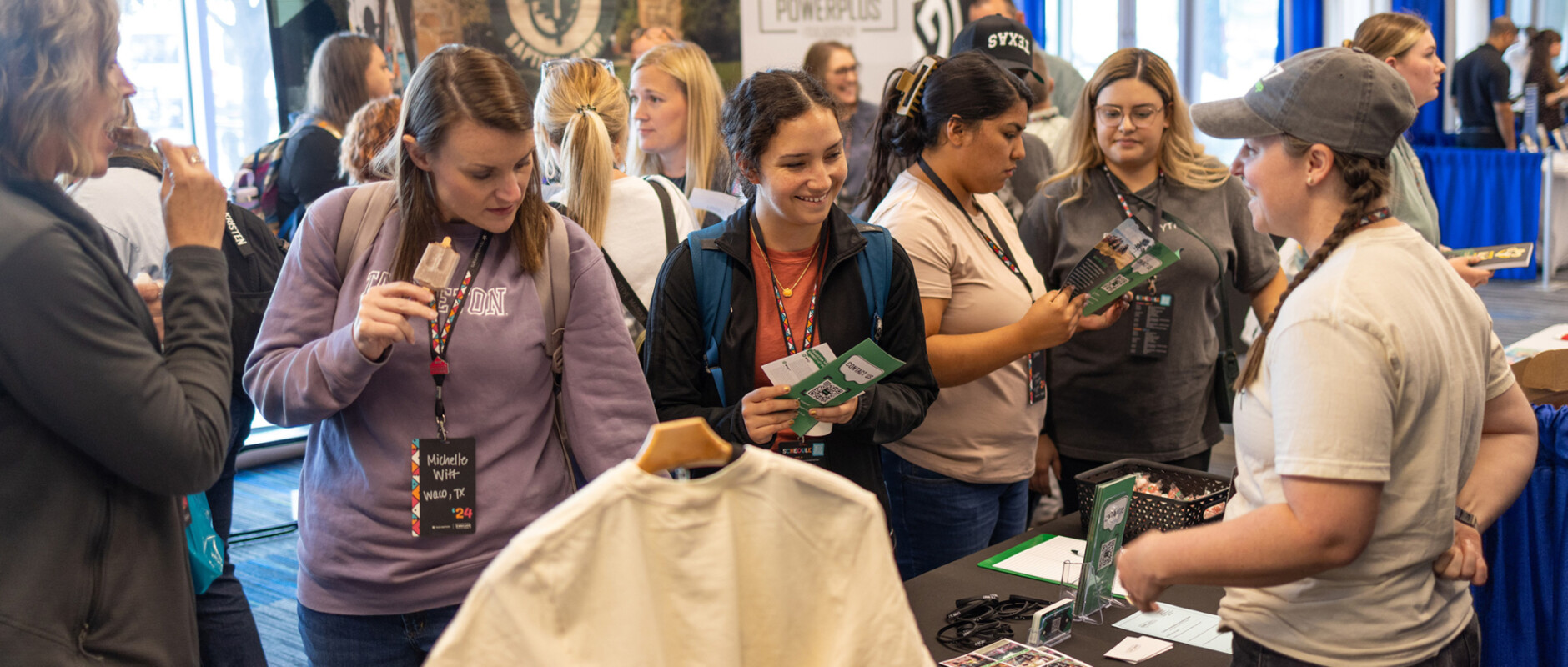
Conclave attendees visit a ministry booth in the exhibit hall. (Texas Baptists Communications Photo)

Conclave attendees had the opportunity to choose from more than 30 breakout sessions on topics such as family ministry, evangelism, ministering to mental health, empowering volunteers and navigating social media.

A specialized “Pastor’s Track” was offered for senior church leaders to learn from and form community with other pastors.

David Gonzalez, Congreso coordinator at Texas Baptists, led a breakout session on “Bridging Generations: Expanding Church Outreach to Connect with a Diverse and Growing Church.”

Leaders can bridge the gaps between generations by empowering students to be involved in ministry and embracing the change that comes with it, Gonzalez said.

Students “want somebody to come tap on the shoulder and say, ‘I think you are capable of being in X, Y, Z ministry.’ And I think it’s a step of faith in you taking the leap of faith and saying, ‘I’m going to put trust in you’ and loosen the reins just a little bit,” he said.

“Sometimes change has to be done for growth to happen … bridging the gap is embracing change. We need to make sure that our younger generation also has a seat at the table.”

Joining God in ministry by looking to the cross
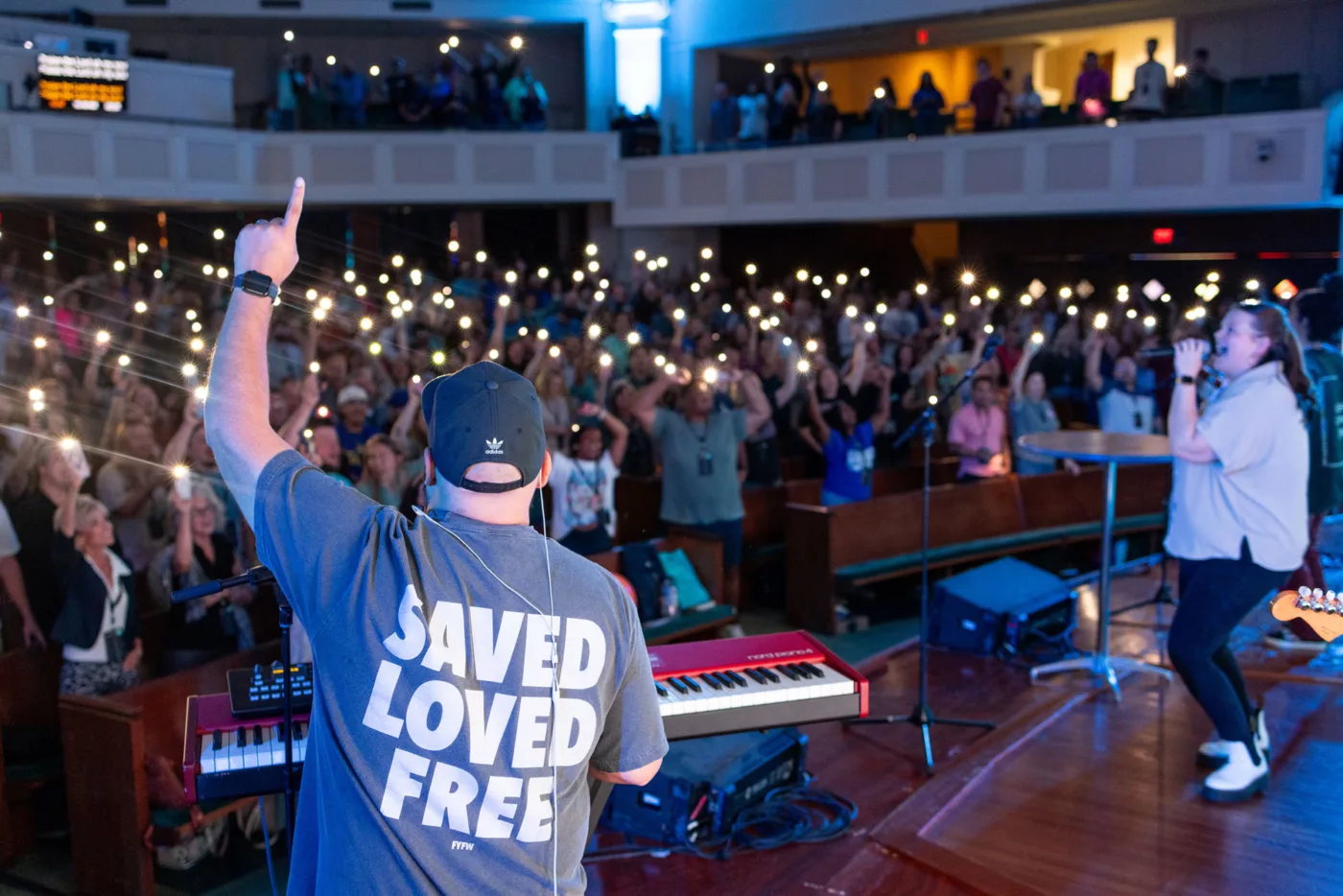
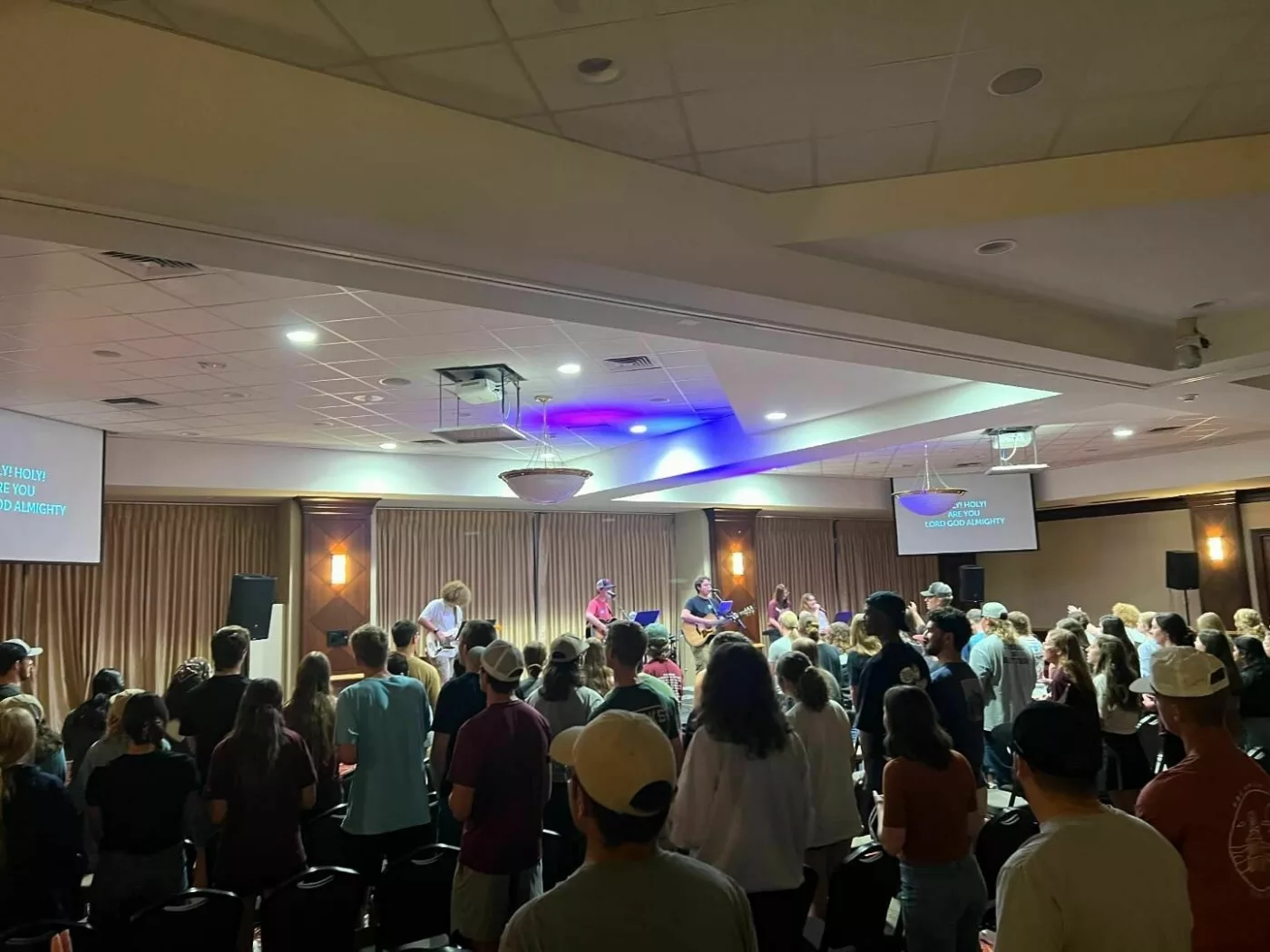
Chris Benites and the worship band lead worship at Conclave NextGen, Oct. 7-8. (Texas Baptists Communications Photo)

Mike Satterfield, founder of Field of Grace Ministries, encouraged leaders with a sermon based on John 19:30. He explained the Greek word tetelestai, meaning “it is finished,” is a word that helps us understand “the past completed act with present, ongoing, permanent effect for all eternity.”

 “It was in John 19 … I learned Jesus tasted bitter vinegar, completely sour, so we can taste the best victory in being completely saved. I’ve been bought with a price. I’m no longer my own. I have been set free,” Satterfield asserted.

Satterfield encouraged Conclave attendees to lay down everything hindering them from resting in Jesus’ words, “it is finished,” and join him where he already is leading their ministry.

“Stop trying to help God, when all you have to do is join him where he’s already at work,” he said.

Displaying the friendship of Jesus

Justin Whitmel Earley, author of Made for People: Why We Drift into Loneliness and How to Fight for a Life of Friendship, spoke about “the holiness and the importance of friendship in ministry.”

He referenced Genesis 2-3, encouraging NextGen ministry leaders to understand they were made for people, and John 15:13-16, emphasizing Jesus showed what it means to be a friend.

“Jesus is demonstrating here not just how to be the best friend that you can be. He is also showing that one way to summarize the gospel is that God has taken the lonely, broken people and made them friends again—friends with God, and thus friends with the world,” said Earley.

Earley asserted friendship is at the center of “what the gospel calls us to,” and encouraged ministers to allow themselves to be fully known and loved by someone, so they can, in turn, fully know and love others in ministry.

“If the call of the New Testament, think of Ephesians 5:10, is ‘to be imitators of God,’ well, if Jesus is friendship made flesh, then to become more and more like him is necessarily to become more and more like a friend,” Earley said.

“So, go into your ministry knowing you were made for people, don’t do it alone, and put the friendship of Jesus on display.”

Investing in holistic church health
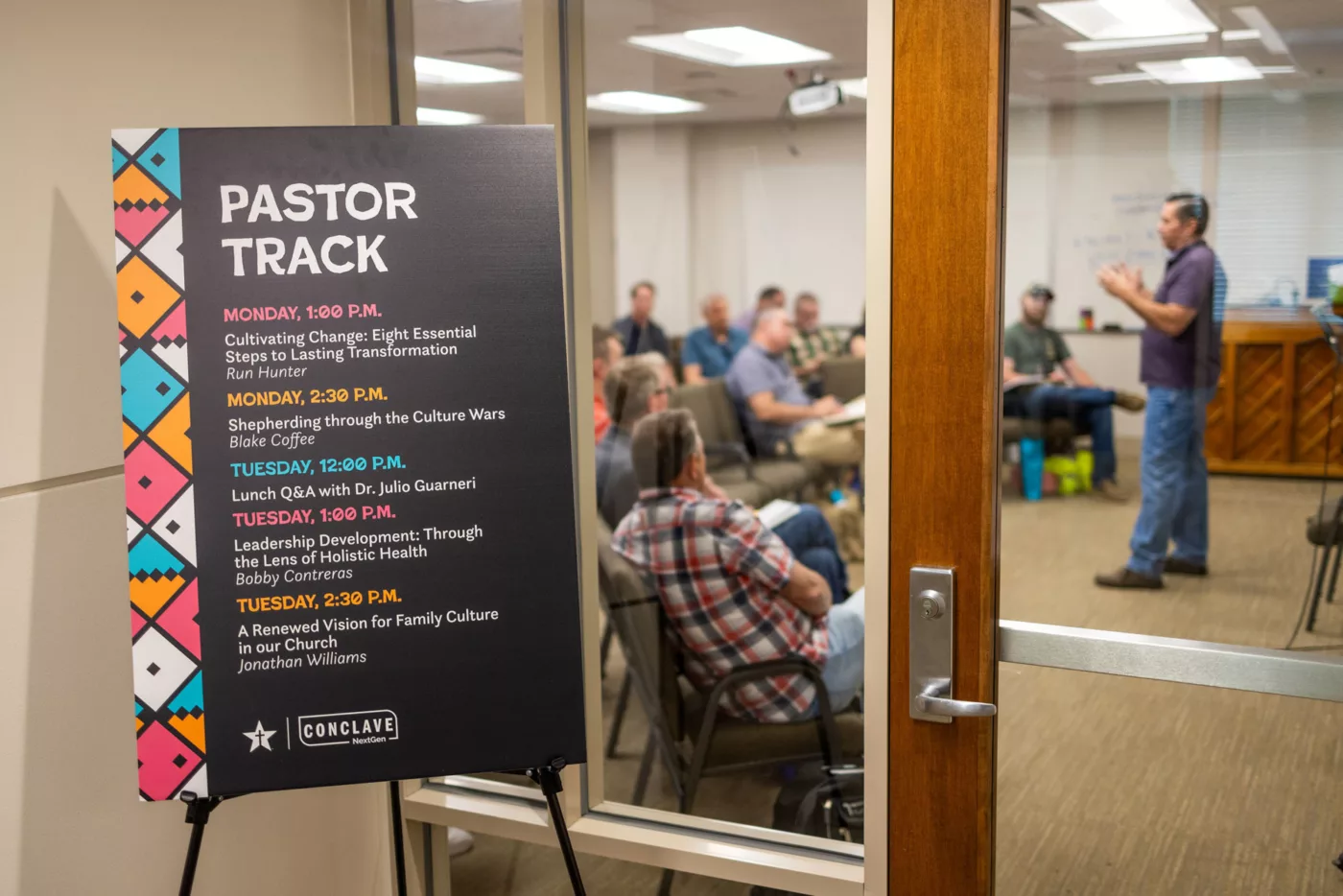
A specialized “Pastor’s Track” was offered for senior church leaders this year. (Texas Baptists Communications Photo)

Bobby Contreras, pastor at Alamo Heights Baptist Church in San Antonio, led a “Pastor’s Track” breakout session on pursuing holistic church health by investing in spiritual, physical, mental/emotional, financial and relational health. He held an open discussion on these five areas.

“Healthy pastor, healthy family equals a healthy gospel community,” Contreras said.

He reminded pastors “using a dull ax requires great strength, so sharpen the blade,” (Ecclesiastes 10:10), challenging them to treat Conclave as an opportunity to “sharpen the blade.” That way they return to their ministry “more intentional and more biblical in how we are leading and how we’re living within our ministry context.”

Contreras gave pastors resources, including pastoral and church health reports from the Baptist Health Foundation and social media pages for Scripture intake, such as ‘The Daily Gaze.’ He invited Olga Harris, director of counseling services at Texas Baptists, to let ministers know about counseling options available for pastors and their families.

“I want you, and Texas Baptists wants you in your ministry context for the long haul … so what we do now matters,” he asserted.

Being a vessel of the Holy Spirit

Ed Newton, lead pastor of Community Bible Church in San Antonio, preached on 2 Kings 4 and charged attendees to empty themselves before the Lord daily, so they can be used as vessels by the Holy Spirit to carry out the Great Commission.

“The oil of heaven flows with empty vessels,” Newton said.

To live in the “overflow of heaven,” Christians must abide in Jesus daily, he said.

“Your daily commitment, every day, John 3:30, ‘You must increase, I must decrease,’” Newton said. “Your daily checklist—every day, put on the full armor of God. Your daily covenant—you’ve got to remind yourself who you are in Christ Jesus … be first with Jesus and [then] ‘Come, follow me,’ (Matt. 4:19).”

Conclave NextGen 2025 is scheduled Oct. 6-7 at First Baptist Church in Arlington. To learn more about Conclave NextGen, visit txb.org/conclave.
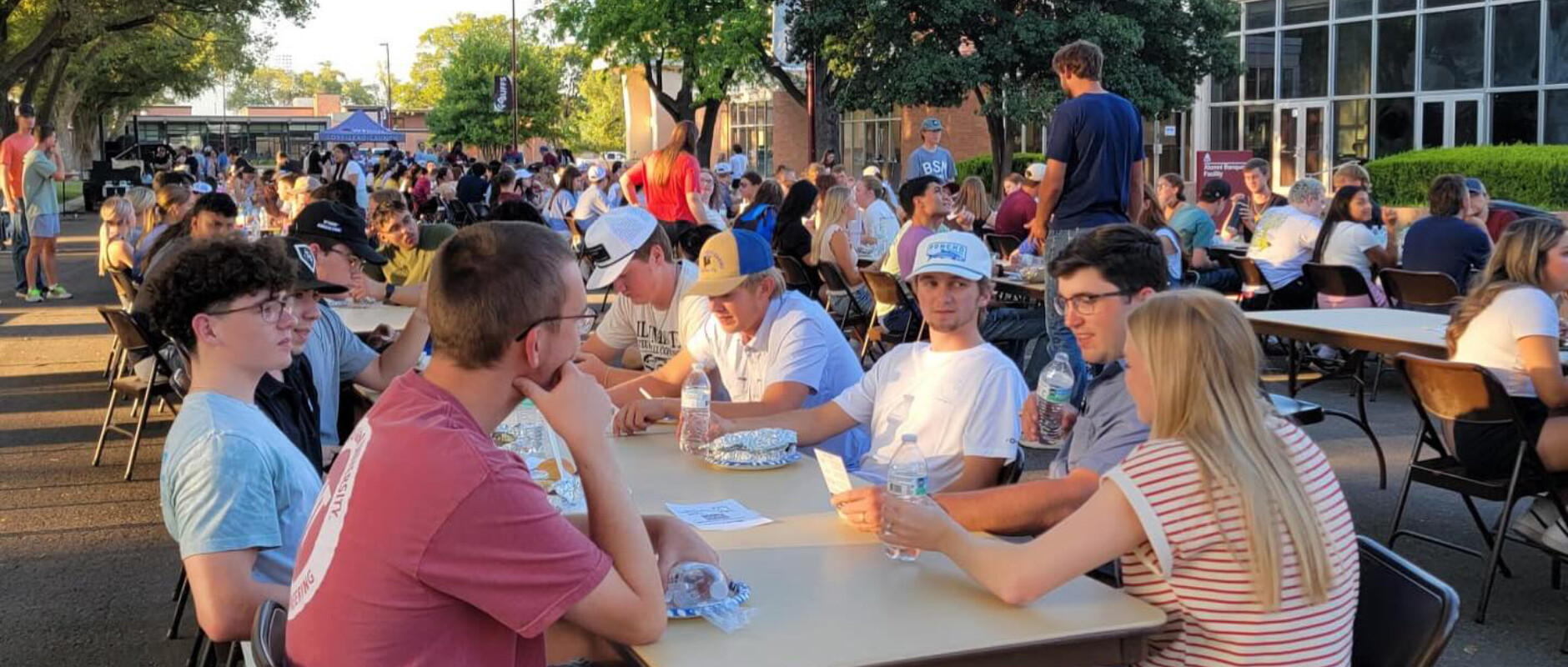


West Texas A&M BSM serves from a temporary home

Macie Groomer, a senior at West Texas A&M University, came to campus her freshman year searching for a community of like-minded believers.

At the invitation of a friend, Groomer participated in Baptist Student Ministry “Welcome Week” events and made strong connections. She decided to stick around.

Groomer said she wouldn’t have learned to take her faith seriously, if the new friends she met there didn’t dive into Scripture with her on a weekly basis that year.

“That first year, anytime we were at the BSM, we were digging into Scripture super deeply, and I was being encouraged by all the people around me [to] spend time in the word and not neglect that and keep going to church,” said Groomer.

“If I hadn’t had that experience of all of these people around me [encouraging me], I wouldn’t have taken my faith as seriously coming to college, because it was my first time on my own, and I [had to choose to] make this faith my own. And so, I think that was really special and really unique. And it just gave me a lot of boldness going into the years after that.”

Groomer learned how to share the gospel for the first time in her freshman year at the BSM, and she said it gave her the boldness to meet new students during Welcome Week in the following years.

“I think that foundation gave me something to stand on now, talking to freshmen and new people, just the willingness and boldness to share the gospel,” Groomer said.

Knowing, following and sharing Jesus

West Texas A&M BSM hosts 99 Cent Steak Night during Welcome Week. (Texas Baptists Photo)

Every August, the West Texas A&M University BSM participates in the campus’ Welcome Week—hosting events each night of the week including Karaoke Night, 99 Cent Steak Night, 806 Worship, and this year’s big finale, the Welcome Dance—to connect with new West Texas A&M University students.

This year, Welcome Week looked a little different for the West Texas A&M BSM, in light of its new building project.

Eric Hunter, director of the BSM, said being in a smaller, temporary building was logistically challenging, but “we enjoy being on campus. It’s good. I think it’s even better to be on-campus [than in the building].”

Welcome Week is the most important week of the year because it sets the tone of the organization with new students, he said.

Current BSM students follow up for the rest of the year with new students they meet during Welcome Week, building relationships and sharing the gospel, hoping to “see multitudes come to Christ, to go from death to life.”

“Our heart and prayer is that … we would see revival; students who come to Christ, turn to Christ, get serious about their faith, that God would move mightily in the lives of believers that they would have a renewed passion and desire to know Jesus, to follow Jesus,” said Hunter.

“And then I think more than anything, that they would have a desire to share with other people.”

Sharing the gospel

Tirzah Miranda, a senior student leader at West Texas A&M BSM, was drawn to the organization after transferringto the school by its unified goal to share the gospel. She said through discipleship and routinely going on campus to share the gospel with her peers, she had learned to make it a priority.

“Through everyone [at the BSM] coming together as a community and going to share the gospel as a normal thing, because that’s what we’re called to do as Christians, I just grew in learning how to evangelize,” said Miranda.

“[Sharing the gospel] was super uncomfortable for me—and it’s still actually kind of uncomfortable for me. It’s a challenging thing. But it’s important, and it’s necessary.”

Miranda said it has been encouraging to see her nonbelieving friends who “maybe wouldn’t necessarily step into the BSM, be interested in the Lord because of how I was equipped through the BSM of just how to share and how to equip other people.”

“They’ve given us the tools, so it’s not like everything is contained in this building. It’s not like: ‘We need to get them into this building so that they can hear the gospel.’ It’s like: ‘No, we’re sending you out so that the campus can hear the gospel.’”

Feeling valued on campus

BSM students participate in worship during West Texas A&M’s Welcome Week. (Texas Baptists Photo)

Hunter said the BSM hopes students will glean two things during Welcome Week: first, that the BSM exists and exists to serve them, and second, that they would “find their people,” hopefully among believers.

West Texas A&M freshman Ally Wilson said she is looking to plug in to an organization that will help her grow stronger in her faith. Throughout Welcome Week, she said she has been drawn to the BSM because she feels pursued by its students.

“What’s making me interested [in the BSM] is them knowing my name, pursuing me, making me feel wanted here,‘cause other ministries on campus are good, but they’re not actively seeking out, wanting me to grow, wanting me to be here with them,” said Wilson.

“I think that’s definitely something that I latched onto and really appreciated—being wanted here.”

Miranda advised West Texas A&M freshmen hoping to invest in their faith in college to be “faithful to Jesus first.”

“We are called to be obedient, but we’re also called to be faithful to him. So, I would just encourage them to be faithful to Jesus first and as they are poured into by the Lord, to pour out,” she said.

“But it comes first from spending time with Jesus, the word [of God], worshipping, being in community, and from that place of being filled, we get to pour out into other people.”

Reaching more students with the gospel

Groomer said she is excited to see how God will use the BSM’s temporary space and on-campus presence to reach more students with the gospel.

“I just expect for the Lord to move in really big ways, being more of an on-campus presence. Not that we weren’t already, but now we’re kind of forced to be there, so I’m hopeful that that will draw people in—and also give us boldness since we’re already there—to just go and reach more people and bring more people, not just to the BSM, but [also] encouraging people to know God and to love God and to worship God.”

The West Texas A&M BSM currently is raising funds to build a new BSM building to fulfill its vision to love, lead and launch students who will form community, hear and respond to the gospel, and become equipped and mobilized as disciple-makers.

To learn more about Texas BSM and the Texas Baptists’ Center for Collegiate Ministry, visit txb.org/collegiate.


Mission Waco answers homelessness with community

Mission Waco has taken the first steps to create a transformational community for previously unhoused people, and the organization is inviting area churches to be part of the transformation.

“Housing alone will not end homelessness, but community will,” said John Calaway, president and executive director of Mission Waco.

Jimmy Dorrell (left), pastor of the Church Under the Bridge in Waco, joins other community leaders at a groundbreaking ceremony for Creekside Community Village, envisioned as “a transformative community” for the previously unhoused. (Photo / Ken Camp)

With that principle in mind, Mission Waco broke ground Oct. 8 for Creekside Community Village, a development of micro-homes and other affordable housing options.

When the community reaches full capacity, it will offer more than 300 formerly unhoused people an opportunity to find permanent housing in an encouraging environment.

Residents—who are required to have lived in McLennan County at least one year and to pay rent for their homes—will be provided opportunities to earn income and will have access to “wrap-around services” and public transportation.

Micro-homes, which do not have plumbing but are accessible to individualized central bathroom facilities, cost about $25,000. Other home styles—including the “park model” which is fully plumbed and capable of housing a family—are more expensive, but all are less than $50,000.

‘On holy ground’

Before he offered the prayer of dedication at the groundbreaking ceremony, Pastor John Durham of Highland Baptist Church in Waco told the crowd: “I’m not going to ask you to take your shoes off. But we are on holy ground. … This is sacred space.”

Jimmy Dorrell, co-founder and president emeritus of Mission Waco, presents the vision for Creekside Community Village, an affordable housing community designed to serve the previously unhoused. (Photo / Ken Camp)

When Jimmy Dorrell, co-founder and president emeritus of Mission Waco, invited area churches to sponsor individual homes, Highland Baptist was among the first, committing funds for three houses.

“God has called us to be part of this effort to care for the poor and the marginalized,” Durham said in an interview. “We see this as an act of biblical obedience.”

First Woodway Baptist Church also committed to provide funds for Creekside Community Village, as did the congregation where Dorrell is pastor—Church Under the Bridge, which includes a significant number of people who live on the streets of Waco.

“We are excited for the impact this project will have on many of our own congregation in the months and years ahead,” Dorrell said.

Other Waco congregations that made significant early financial commitments include Mosaic Church and Antioch Community Church, as well as Austin Christian Fellowship.

Based on conversations with congregational leaders, Dorrell expects at least another five churches to commit funds to the project soon.

In addition to major contributions from several families, individuals and businesses, Christian Mission Concerns and the Christ Is Our Salvation Foundation also provided grants.

‘It’s not just a home. It’s a community.’

This wall hanging appears in a demonstration micro-home at the future site of Creekside Community Village. (Photo / Ken Camp)

Modeled in part after Community First! Village in Austin, launched by Alan Graham’s Mobile Loaves & Fishes ministry, Creekside Community Village will serve the chronically unsheltered who are living in the streets, in a shelter or in low-budget motels.

In June, Mission Waco secured 68 acres for Creekside Community Village less than two miles southeast of the Baylor University campus with the support of the City of Waco and the Don Behringer family.

 “We arrive at this point after three years of praying, planning, plotting and maybe a little panicking,” Megan Snipes, chair of the Mission Waco board, said at the groundbreaking ceremony.

“We want to offer permanent supportive housing with lifegiving community engagement. It’s not just a house. It’s not just a home. It’s a community.”

When it is fully developed, Creekside Community Village will include parks and green space, health care services, a general store, community kitchens, individual centralized bathrooms and a community garden.

In addition to homes for the previously unhoused, 20 percent of the homes will be reserved for “missional residents” who are not formerly homeless but choose to live in community with those who are.

Billy Davis of Waco, chair of the fund-raising leadership team, said Phase One of the project—which will provide housing for 40 individuals—should be completed in less than a year.

The $12 million first phase included the initial land purchase and it includes $6 million to develop infrastructure for the community. About 80 percent of the infrastructure costs already have been raised, he noted.

The development will benefit Waco and McLennan County as a whole, he noted.

“It will be an asset to our community,” Davis said. “It will be transformational for its residents.”


Truett event focuses on police and faith community

WACO—Crime in Waco is at its lowest level in three decades, and Police Chief Sheryl Victorian offers much of the credit to the strong relationship between the city’s faith community and law enforcement.

Victorian, the first African American and first woman to serve as chief of the Waco Police Department, spoke at an Oct. 7 Faith & Blue community gathering at Baylor University’s Truett Theological Seminary.

She applauded faith leaders who hosted Faith & Blue community engagement events that help to build relationships of trust with police officers and “humanize the badge,” she said.

Victorian also expressed appreciation for the prayers local churches offer for the protection of law enforcement officers.

“The prayers of the righteous keep us safe,” she said.

Chaplain Damus Vice explained MovementForward launched the Faith & Blue initiative in 2020 in cooperation with the U.S. Department of Justice Community Oriented Policing Services Office.

“The ties that bind officers and residents must be reinforced if we are to build neighborhoods where everyone feels safe and included. Faith-based organizations are key to building these bonds, because they are not only the largest community resource in the nation, with 65 million participants in weekly events, but also because they are as diverse as our nation,” Vice said.

He applauded the “overwhelming response” of the Waco faith community in building strong ties with law enforcement. The Faith & Blue program in Waco launched in 2022 with 12 events, but more than doubled last year, with 29 events hosted by houses of worship.

This year, Waco’s faith community hosted or helped sponsor 42 Faith & Blue events over 11 days, enabling police officers to have “4,300 positive encounters” with community residents, he said.

‘Jesus knows what it’s like’

John Durham, lead pastor at Highland Baptist Church in Waco, urged police officers not to grow discouraged but to realize, “Jesus knows what it’s like” to deal with people at their worst. (Photo / John Durham)

John Durham, lead pastor at Highland Baptist Church in Waco, urged police officers not to grow discouraged but to realize, “Jesus knows what it’s like” to deal with people at their worst.

He encouraged fellow pastors and church leaders to offer words of encouragement to police officers, to pray regularly for them and offer opportunities for officers to engage with youth at church events.

Durham noted he and Victorian regularly text each other to offer encouragement, addressing one another in their text messages as “Brother Pastor” and “Sister Chief.”

Durham challenged police officers to consider the admonition in Ephesians 4:1 to “live lives worthy of your calling” and in Colossians 3:23 to do their work “as unto the Lord.”

“We see you. We are grateful for you,” Durham said. “Your life’s calling is making a difference in our city.”


Texas Baptists rolls out new sexual abuse help page

When the sexual abuse task force, formed in May of 2023, gave its final report at the Baptist General Convention of Texas Executive Board meeting Sept. 24, the task force chair noted resources need to be accessible on a user-friendly website.

Janice Bloom, sexual abuse task force chair and Texas Baptists Executive Board vice chair, highlighted the impossibility of crafting a standard response to such a complex issue. However, she pointed to a new Texas Baptists webpage rollout as a strong resource for preventing and responding to sexual abuse in Texas Baptist churches.

Bloom explained the task force members discovered they needed to focus in some key areas.

First, they examined how churches could “become much more proactive” in intentionally putting “into practice preventative measures to keep such offenses from happening in the first place.”

Second, the task force needed to present “the best and streamlined practices to a response to such allegations,” so churches would be able to respond appropriately to protect any victim or potential victim in the church.

Third, the task force developed ways to bring much needed awareness to churches that prevention and proper responses are “absolutely necessary.”

Recognizing the current information on the website was not user-friendly in time of crisis, the task force enlisted the aid of Texas Baptists’ Communications department and web designers to update the site to make crucial information easier to access.

Streamlined Sexual Abuse Response page for Texas Baptists. (Screenshot / Calli Keener)

Sexual abuse is traumatizing, impacting many areas of survivors’ lives and can lead to generational trauma and violence, Bloom said. These soul-crushing features of sexual abuse led the task force to envision a response built around life, instead. So, the webpage’s redesigned tabs will be organized under the acronym LIFE.

L for Learn

Under this tab, links are provided to educational information and to MinistrySafe. The people at MinistrySafe are the experts and are most qualified to guide in these issues, so it’s imperative to drive users toward this important resource.

I for Implement

Screening alone is not enough. Background checks as a standalone measure will not prevent abuse. Churches need skillful screening practices, as well as policies and procedures in place to protect the environment. The Implement tab explains skillful screening and how to put sound practice and policies in place.

F for Follow-up 

It’s not possible to be proactive without follow-up. Churches must follow-up year-round to ensure policies and procedures are being implemented consistently.

E for Emergency 

Churches must be ready to respond with immediacy if confronted with an issue of sexual abuse.

While there is no “one-size-fits-all” way to handle individual cases of sexual abuse in churches, Bloom stated, there is one crucial first step in every case—getting the situation into expert hands from the very beginning of the accusation or discovery of abuse.

Because many churches do not have a lawyer with this expertise, the task force recommended an affected church, who cannot afford an attorney of its own, be allowed one emergency hour of no cost consultation with a MinistrySafe lawyer—offered at a reduced rate to BGCT churches—to help protect the victim from further harm and guide the church in an appropriate response.

Churches also have access to six free hours of MinistrySafe training and additional trainings available, Bloom explained.

The task force also recommended Texas Baptists promote an annual sexual abuse awareness Sunday; encourage churches to hold an annual training on sexual abuse prevention and response; and keep a list, by sector, of knowledgeable attorneys willing to be referrals on this issue.

Additional recommendations will be discussed at the annual meeting of the Baptist General Convention of Texas in November and/or implemented through the appropriate committees with the same charge as that of the task force—to empower churches “to create a safe space where predators know that they do not stand a chance,” Bloom insisted.


CLC urges action to regulate Texas prison temperatures

Inmates in Texas prisons and the correctional officers who work there suffer in unbearable heat each summer because of unregulated temperatures. John Litzler, director of public policy for Texas Baptists’ Christian Life Commission, believes conditions persist because most Texans are unaware.

In spite of broad support in the Texas House of Representatives, a bill to address scorching heat in Texas prisons without air conditioning died in committee in the Texas Senate in the 88th Texas Legislature. When questioned, state senators reported their constituents just don’t care about this issue, Litzler said.

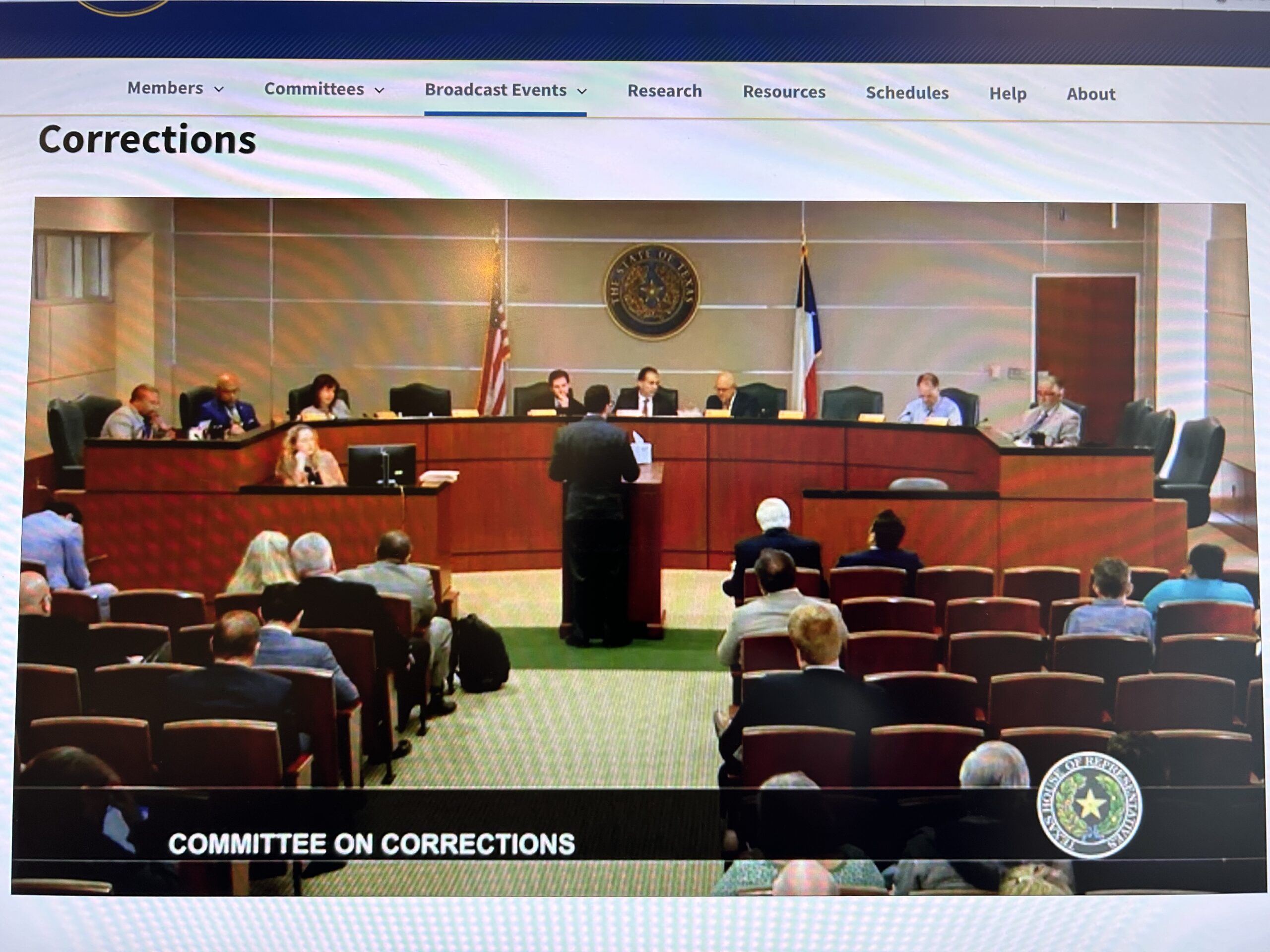
Litzler testifies to the Corrections Committee for H.B. 1708 for the 88th legislative session on March 28. (Screenshot / Calli Keener)

But at a Corrections Committee hearing on a bill to regulate temperatures in Texas prisons, 46 registered as “for” the bill, with 9 of those, including Litzler, providing testimony in support.

Not one person registered or testified against the bill. It was Rep. Terry Canales’ second attempt in a row to get the legislation passed during the legislative session.

Yet, with historic budget surpluses that readily would have funded the preliminary costs of the updates last year, the bill disappeared, and conditions remain untenable, Litzler explained.

Litzler believes most Texas voters—including most Texas Baptists—simply don’t know about conditions in the state’s prisons. But as they learn more, he hopes they will contact elected officials to register their concern.

Conditions for inmates

“We don’t even allow people to treat dogs like this, while we’re doing it to hundreds and thousands of people in Texas,” Canales testified at the March 28 Corrections Committee hearing.

He described being in areas of Texas prisons without air conditioning and sweating through his clothes in under five minutes.

Canales spoke of the dangers caused by fans, to which some inmates have access to while others don’t. The unbearable heat inflames tempers, and violence breaks out over sharing these fans. And the fans are loud, so guards can’t always hear issues over the noise.

The stench in Texas prisons is so thick it can be tasted, Canales said, due to the hygiene problems that persist when inmates, guards and staff are subjected to hours or days at a time in temperatures exceeding 100 degrees, with extremely limited access to cool showers.

Lawsuits over heat-related injury are regular and costly, not to mention the deaths, Canales stated. He and others providing testimony spoke of inmates flooding toilets intentionally to have a drink or water on the floor in which to cool off a bit.

Many offenders are incarcerated for low-level drug offenses, Canales said. Yet “we’re cooking them. We’re literally cooking human beings.”

Temperatures in Texas prisons contribute to inhumane conditions for inmates and prison staff alike.

Conditions for staff

Clifton Buchanan, representing the American Federation of State and County Municipal Employees and Texas Correctional Employees Council with more than 25 years of corrections experience, testified to the toll conditions take on corrections officers.

He explained while Texas Department of Criminal Justice guidelines require incarcerated people to be given breaks or respite to cool down in air conditioning, no such protections are ensured for officers.

In fact, officers not only don’t get breaks because they are so understaffed, but also can be subject to disciplinary action for missing work due to heat related injury, Buchanan stated.

Michael Webber, who testified because he’d worked as an electrical maintenance supervisor for TDCJ for many years, credited his military years in the Middle East as preparation for work in these conditions—preparation his aging coworkers did not have.

He described other staff being physically unable to handle the heat, so they could not do what needed to be done. Maintenance frequently was completed haphazardly, if at all, in ways that wouldn’t last because it’s all they could manage.

His aging coworkers just could not handle “8, 12, 16 hours a day in that heat,” Webber said. “There’s no relief from it.”

Additionally, Webber described corrections officers, his “peers in grey,” being required to wear layers in the heat—pants and stab vests under long-sleeved uniforms. It was not unusual to see them “fall out on a pretty regular basis,” he continued.

If either staff or inmates passed out due to heat-related injury, operations were suspended to deal with the issue. Webber said these happened so regularly, the slowdowns they caused contributed to the difficulty of completing routine maintenance.

Prior to assuming his role with the CLC, Litzler said, though he was embarrassed to admit it, he was unaware regulating temperatures in Texas prisons wasn’t already required. It is required in county jails.

He said he felt it was important to note this lack of knowledge because even as a lawyer he was unaware. On the rare occasions his legal practice took him to prisons, those visits were in a space with air conditioning. But temperatures in living quarters are not regulated, he explained.

Pushing back against legislators’ claims their constituents didn’t care about the issue, Litzler said many lawyers he knows also were unaware. It’s much more likely, in Litzler’s opinion, that voters just don’t know about the lack of temperature regulation in Texas jails and prisons.

Additional testimony spoke of huge turnover in prison staff (21.9 percent annually), with the heat often cited as a factor in resignations. Forty percent of new corrections officers quit within the first year.

As of two weeks ago, 25 percent of the 24,000 corrections officer positions in Texas remain unfilled. A Sept. 20 article in the Texas Tribune about a TDCJ effort to recruit teenagers fresh out of high school to alleviate the shortage highlights problems related to the lack of air conditioning.

How to help

The inhumane conditions in state prisons and jails spurred Litzler to propose a letter-writing campaign for Texas Baptists to help get temperature regulation legislation finally passed in the next legislative session.

A letter he prepared as a guide can be accessed here. But he emphasized it’s important to adjust the letter so legislators will not view it as a form letter they already received and toss it to the side, which can happen when multiple constituents express support for legislation.

An updated letter example will be provided when the next legislative session begins, referencing numbers for the actual bills being submitted.

Representative and contact information is available at Who Represents Me? As prison temperature regulation bills have passed the House the past two sessions, it’s most important to encourage senators to approve legislation, Litzler said.

Seventy percent of Texas prisons still have no temperature regulation. It’s important to note the bills only have asked for the same limits as county jails—no less than 65 degrees and no more than 85 degrees—which still are not comfortable temperatures, another expert testified.

But these regulations will save lives, ill-health effects and money, according to the experienced people who provided testimony.


Texans on Mission rebuild home for tornado victim

Brooke Brandon still fearfully recalls the day—June 21, 2023—the tornado ripped through the West Texas town of Matador. Her town. Her home. The home her parents built in 1963, and she and her siblings inherited.

“All I did was scream and pray,” she said. “I had three cats and was screaming for the cats, and there was a dog out in the storage room. So, all I could think of was the animals, you know?”

She remembers hearing wind and the sound of glass breaking, but “I don’t remember anything else, really. It’s just really loud.”

The tornado touched down about nine miles away from the city and moved quickly over the Texas caprock into Matador, taking out businesses and homes.

She and her neighbors were directly in its path. The home of the couple who lived next door “was leveled,” she said. The wife didn’t survive, and the husband still suffers from injuries he sustained that day.

Tornado survivor Brooke Brandon and her uncle, Stan Martin, express appreciation for the volunteer labor and building supplies provided by Texans on Mission and Southcrest Baptist Church in Lubbock. (Texans on Mission Photo / Russ Dilday)

Sitting at her kitchen table, she is surrounded by the sounds of hammers, drills and sawing. Her kitchen floor is stripped to the baseboards, and the walls are unfinished sheetrock. Still, she’s grateful for the construction all around her, calling it one of many “blessings after blessings.”

The noises around her are being created by a dozen Texans on Mission Rebuild volunteers, a team from Southcrest Baptist Church in Lubbock. Bob Davis of Matador coordinated the project, and he is part of Texans on Mission Builders.

The volunteers worked for a week refurbishing the garage and storage room and placing cement board on the façade, adding to the work already provided by a similar team from Lawn Baptist Church.

‘A bunch of blessings after blessings’

“Well, all I can say is it’s been a bunch of blessings after blessings,” she said. Those blessings started when first responders and her uncle, Stan Martin, found her and the three cats and the dog, all alive, after the tornado. A support fund provided by neighbors helped, too, but the money soon ran out. leaving her with few options to rebuild her destroyed home.

Larry Childers from Southcrest Baptist Church in Lubbock works on a rebuilding project for a Matador resident. (Texans on Mission Photo / Russ Dilday)

But then Rafa Muñoz of Texans on Mission called “out of the blue and says, ‘We’re fixing to come up there and do some stuff,’” she recalled.

That “stuff” was teams working under the Texans on Mission Rebuild banner showing up with materials and manpower to provide construction work.

She said the family was “running low on our money, the donation money we received, when all of a sudden, boom, it’s just happening. It’s been nothing but a miracle since then.

“Y’all just stepped in again and provided,” she continued.

“You can just see God working—the blessings that are here, that didn’t have to be here, but God has provided.”

The response has given her an “overwhelming feeling,” she explained.

Gary Beaty, team leader from Southcrest Baptist Church in Lubbock, works on a tornado-damaged home in Matador. (Texans on Mission Photo / Russ Dilday)

“Not overwhelming in a bad way, but of knowing a joy and happiness to know that,” she explained. “Because I feel like it’s a different situation for me. As far as I know, I’m the only person out of Matador that’s been able to get this type of help.

“It’s the flooding of people coming in and just working in the heat and whatever it is, and having the best attitudes about it as well,” she said about the Texans on Mission teams. “And it’s been fun being able to get to know them, too.”

Stan Martin also has helped the teams with the construction. He says the Southcrest team “is mainly doing the sheetrock and the OSB board in the garage and in the storage room.”

“We didn’t really tell everybody in the world, but we were running out of money and … couldn’t afford to buy any materials anymore,” he said.

“With everything that’s happened, we don’t need to be reminded there’s a God. … But if you’re sitting there wondering, you know, because everyone has these kinds of thoughts, if you just want to give up, or you say, ‘I’m tired of feeling this way,’ God always just comes back and says, ‘Here I am again.’”

Davis, project leader in Matador, said he felt compelled to step in because “there wasn’t any insurance on the house or anything, and they had limited funds to try to get this back where Brooke could live into it.”

Brad Barnes, a member of Southcrest Baptist Church in Lubbock, works on a Texans on Mission rebuilding project in Matador. (Texans on Mission Photo / Russ Dilday)

“I was glad to be a part of it, since I live here anyway,” he said.

Davis said the teams have “come in here and done things that there’s no way this family could have gotten done without them, and they think they’ve had the blessing out of this.

“We told them: ‘You may have, but we’re the ones that really get the blessing—the team members that do the work.’”

Southcrest team lead Gary Beaty, associate pastor of missions for the congregation, agreed.

“We’re trying to finish this project up, so Brooke can get a little bit of comfort and peace and get back to some semblance of normalcy,” he said.

“I’m not sure what her options would have been, but she’d definitely have been looking for another place to live, and I’m not sure what would have been available here for her.

“I think that without God being behind it, we wouldn’t be where we are right now, both with the people coming in and the work that’s been done on the house. Without God’s intervention and direction, this thing would never have taken off.”


Hendrick Health marks 100 years of service to community

Hendrick Health in Abilene has provided vital healthcare services in West Texas for 100 years this September.

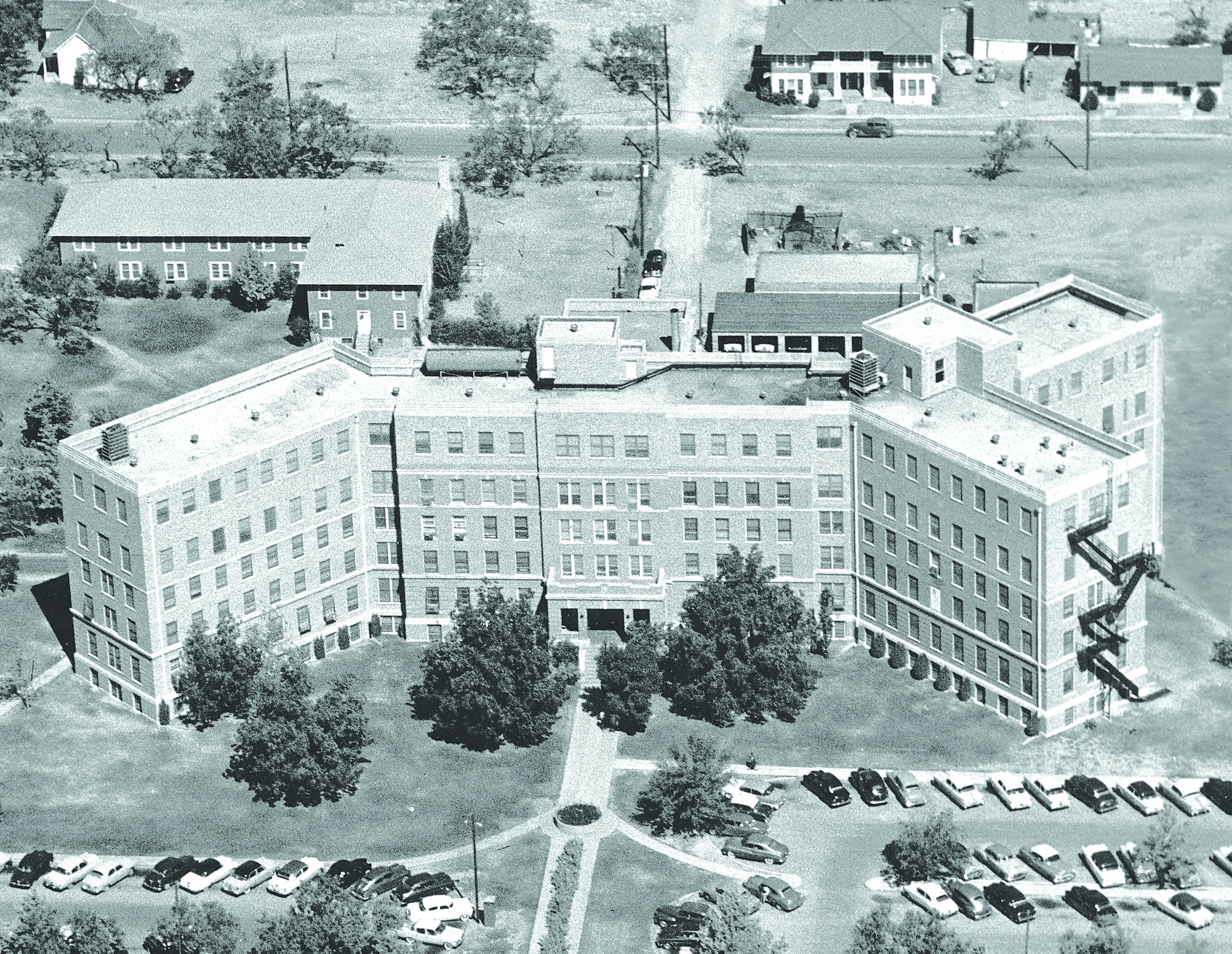
Hendrick opened Sept. 15, 1924, as West Texas Baptist Sanitarium—admitting its first 11 patients the next day.

Millard A. Jenkens, pastor of First Baptist Church of Abilene, campaigned for a charity hospital for the city. (Hendrick Health Photo, circa 1915)

The five-story hospital was the fulfillment of a dream for Millard Alford Jenkins, who served as pastor of First Baptist Church in Abilene from 1915 until his retirement in 1948.

Harry Leon McBeth notes in Texas Baptists: A Sesquicentennial History, the early years of the 20th century saw Texas Baptists start several hospitals and medical training schools, the majority of which were “under the control of associations or local Baptist groups.”

The sanitarium in Abilene followed this trend. Jenkins campaigned for the sanitarium, but Simmons College—now known as Hardin-Simmons University—joined the cause.

In 1921, the college formed a committee to consider a hospital plan three years before its opening, the Hendrick100.org timeline notes.

Designed to equal care in Dallas-Fort Worth—in terms of equipment, services and skilled staff—West Texas Baptist Sanitarium’s completion meant local patients could have most medical needs met in their own community.

 The hospital opened with 52 patient beds (with room for 23 more), 10 nurses and 18 physicians with admitting privileges.

From its beginning, board members were committed to operating a community hospital to serve all, regardless of finances or religious creed. In 1935, the sanitarium affiliated with the Baptist General Convention of Texas, sealing its dedication to working together to heal bodies and souls.

Community donations have been a vital part of the hospital’s history, especially in harder economic times. During the Depression of the 1930s, the hospital struggled financially, even as its beds overflowed.

To continue providing care to destitute patients, the hospital accepted payment in black-eyed peas, chickens and goats. At times, nurses and staff agreed to accept produce in lieu of paychecks.

In 1946, a north wing was added in addition to the previously added east and west wings. Additional floors completed in 1950 grew the first three wings to six floors each. (Hendrick Health Photo, circa 1950)

Relief for the sanitarium’s dire financial situation came from Ida and Thomas Gould “T. G.” Hendrick. In 1936, their $100,000 gift enabled the hospital not only to avoid bankruptcy and pay off its debt, but also to add a much-needed four-story East Wing.

In appreciation of their generosity, West Texas Baptist Sanitarium was renamed Hendrick Memorial Hospital.

Through the end of the 20th century, donors funded more towers and wings. Yet as testament to its legacy, that original five-story building still stands, taller and wider, but still at the center of the hospital’s improvements and expansions.

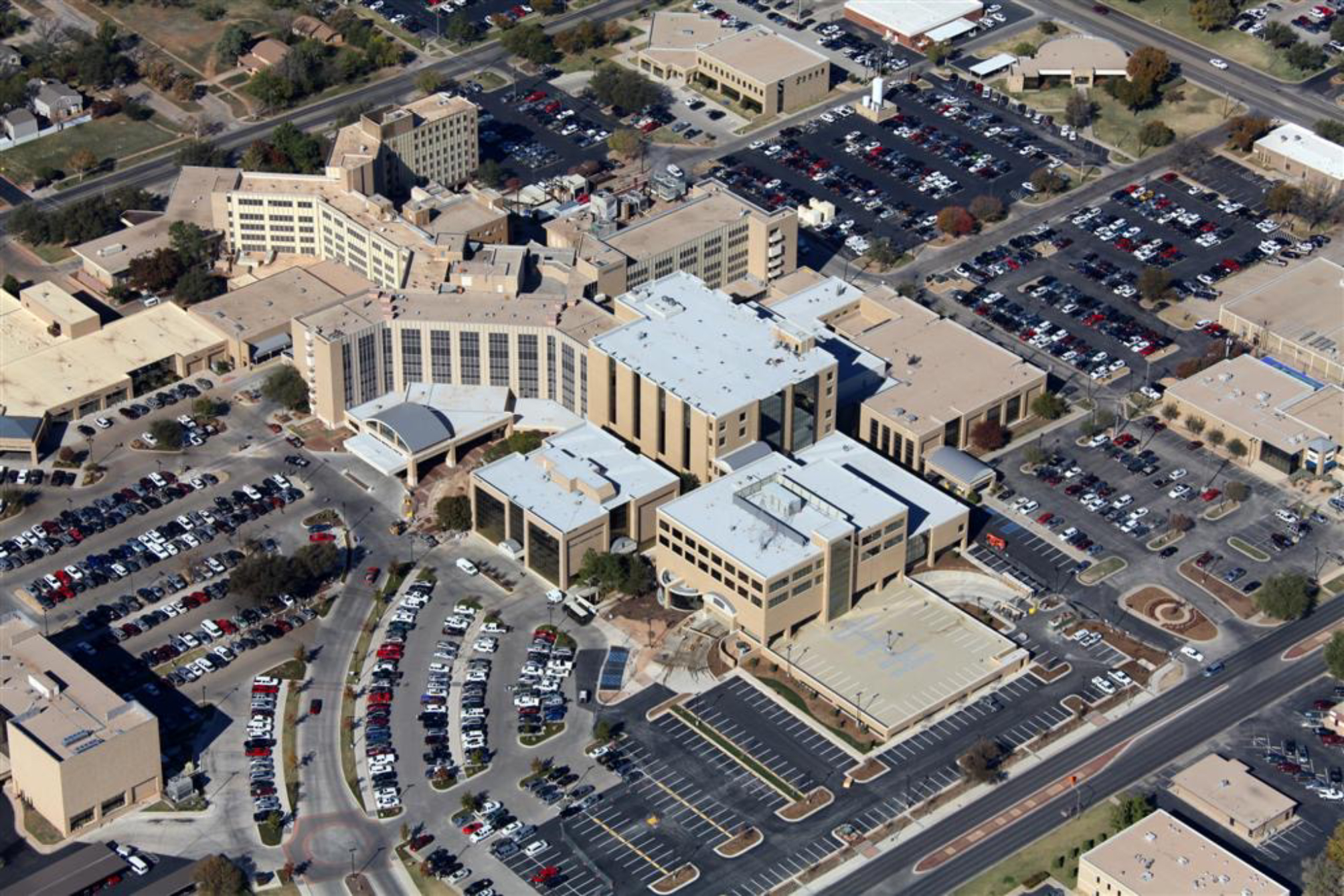
With the completion of its most recent building project in 2012, the hospital added 250,000 square feet of space—approximately 10 times more space than the original hospital building.

Project highlights included relocation and expansion of Hendrick Children’s Hospital, added space for surgical services and a new physician office tower. The name evolved as services expanded to Hendrick Medical Center and later Hendrick Health System.

Project 2010, completed in 2012, ushered in the largest expansion to date adding 250,000 square feet. (Hendrick Health Photo)

In October 2020, the institution’s name became Hendrick Health with the acquisition of Hendrick Medical Center South, formerly Abilene Regional Medical Center in Abilene, and Hendrick Medical Center Brownwood, formerly Brownwood Regional Medical Center, in Brownwood.

Across its facilities, Hendrick Health currently employs approximately 5,400 providers and staff. It has more than 100 service locations and serves 24 counties, encompassing a landmass equal to 9 percent of Texas.

The health system’s approximately 670 medical staff represent 60 specialties.

In addition to being the largest privately-owned organization in Abilene, Hendrick Health also is the largest health system in a Texas metro area not supported by a county taxing district.

For 100 years, Hendrick Health has continued as a nonprofit, faith-based organization guided by a local, volunteer board and affiliated with the Baptist General Convention of Texas. Through medicine, ministry and research, Hendrick Health carries forward its founders’ legacy.

To commemorate the hospital’s founding, First Baptist Church of Abilene held a centennial convocation, Sept. 15.

Ward Hayes, BGCT CFO (right), presents Brad Holland, Hendrick Health CEO (left), with a certificate honoring 100 years of Hendrick Health. (Hendrick Health Photo)

 “We pause briefly today to reflect on Hendrick Health’s rich history of service and our healing ministry, but our continued focus is on meeting the growing health needs of our community for the future,” said Brad Holland, president and CEO of Hendrick Health, during the ceremony.

At a reception following the convocation, BGCT Treasurer/Chief Financial Officer Ward Hayes—a former Hendrick board member—presented Holland with a certificate from BGCT honoring this remarkable milestone.

“We are very excited about celebrating this incredible milestone with our Hendrick family and with the communities we serve,” Holland said.

“Throughout our history, our success has been directly tied to the support of individuals and entire communities,” he continued.

In addition to the convocation and reception at First Baptist Abilene, Hendrick held centennial flag-raising ceremonies at all three of its hospital campuses on Sept. 16, to kick off the next century of healing.

With additional reporting by Calli Keener.


Proximity and cooperation key to justice and compassion

DALLAS—Speakers at a Fellowship Southwest conference challenged participants to think about the intersection between faith and justice.

Attitudes and structures keep justice and compassion outside the central focus of the American church, the speakers agreed.

 But the keys to moving to the center the basic mandates of Christianity to care for the “Quartet of the Vulnerable”—widows, orphans, sojourners and the poor—are proximity and cooperation.

In a world where people learn differences are a threat, it’s difficult to live in solidarity, said Cláudio Carvalhaes, professor at Union Theological Seminary. Particularly in the West, individualism replaces care and compassion.

This fractured and individualistic society creates a tendency to push one’s pain onto people who are more vulnerable—such as immigrants—blaming them for problems they have not created.

Instead, people must live by compassion and “be with the immigrants,” no matter what the world says, he continued. He urged attendees to view immigrants as gifts and to “love our neighbors.” He also questioned whether “we really want to be a Christian,” if there is an option not to care “for the least of these” as Jesus did.

Compassion fuels justice, Carvalhaes stated. All bear the image of God, immigrants included. It’s important to learn the root causes of migration and to be close to migrants, because the more one knows the stories of migrants, the less fearful one becomes of them.

Only together can we engage the issue of immigration, Carvalhaes insisted. “I’m here for you, and we are here for the people who are suffering.”

Rise anew

Justin Jones explains resurrection isn’t a moment, it’s a movement at FSW justice conference. (Photo / Calli Keener)

Justin Jones, Tennessee State Representative for District 52, offered an alternative vision for the South—where it doesn’t rise again, but instead can rise anew, better than it’s ever been before.

To change this country, “we have to change the South,” Jones asserted.

The youngest Black member of the Tennessee legislature described his experience in the Tennessee House, where Republican statesmen expelled him and the other young Black Democrat who spoke out following a shooting that killed six people at the Covenant School in Nashville in 2023, but not the white woman who was with them.

They were reseated by their districts, but as a punishment for his “antics,” Jones was stripped of his committee and assigned to an agricultural committee, though he represented an inner-city district.

Not to be deterred from doing his job, he faced his fear of being a young Black man in rural Tennessee to visit with the farmers he was tasked with considering.

He described being greeted by MAGA hats, American flags and Fox News in the background, but he also found something he didn’t expect to be there—appreciation.

The farmers told Jones he was the only politician who’d ever visited them to find out what their needs were. And if he needed them to back him up at the statehouse, they told him they would be there—with manure to dump on the steps, if necessary.

He told them to hold off on the manure. But he said, “loving our neighbors isn’t just a word, it’s an action.”

People can come together to end centuries old systems, but “resurrection requires proximity.”

Jesus had to be at the tomb to raise Lazarus, Jones said, so he could say: “Move the stone.”

“But if the stone’s removed, there’ll be a smell,” the people warned Jesus.

Parts of resurrection may be unpleasant, but Christians must still “show up” and unbind them, Jones insisted. These “dry bones” can live again.

Barriers to racial justice

Sandra María Van Opstal discusses barriers to racial justice. (Photo / Calli Keener)

Sandra María Van Opstal, executive director of Chasing Justice, discussed barriers to racial justice, the first being distorted and dysfunctional narratives. The stories we tell ourselves, songs and the way we interpret Scripture shape our beliefs, she said. And the stories we tell ourselves shape what we believe about others.

White supremacy and American exceptionalism are two distorted narratives that have become internalized, then externalized in policy and systems until they became “the air we breathe,” she explained.

Likewise, discriminatory policies “affect the way we live with each other.” Christians vote according to their own needs, instead of in light of God’s commandment to care for “the quartet of the vulnerable.”

Furthermore, discipleship problems form barriers to racial justice. Van Opstal said Christians might push the other barriers off onto somebody else, but they can’t blame anyone else for this barrier.

She pointed squarely at Donald McGavran—the father of the church growth movement in the 1970s and 1980s—and his “homogenous unit principal,” or the missiological idea that church planting efforts are more successful when they focus on people of common characteristics.

“It’s our fault” discipleship is a barrier to racial justice, Van Opstal insisted.

McGavran’s idea is why “we have youth ministries, and children’s ministries, and motorcycle ministries,” because it’s easier to get people in the door when they have common traits, Van Opstal continued.

“The problem is, that’s not the way of Jesus. So structurally and systemically, we taught people to be and practice biases. We invited them to always elect to be with people just like them,” she said.

“They said people are more likely to become Christians if they don’t have to cross racial, linguistic or class barriers. Let’s make it easy for them to say ‘yes’ to Jesus. … When that’s the opposite of what we see in Galatians, Ephesians, Colossians,” where Christians came together to the table, regardless of class or where they came from.

“The reason Christians were called Christians is because they didn’t know what else to call them. They didn’t look alike. They didn’t practice the same expressions of faith. They didn’t come from the same places,” she said.

So Christians must “interrogate the stories we believe” and reorient toward Christ. Christians must change how they view people and how they “name them.” People are not criminals, aliens, poor—they are “our neighbors,” she insisted.

Other conference speakers included Mariah Humphries, Mvskoke Nation citizen and executive director for The Center for Formation, Justice and Peace; Cassandra Gould, senior strategist at the Faith in Action National Network; and Jeremy Everett, executive director of the Baylor Collaborative on Hunger and Poverty.


Howard Payne University receives DOE clarification

Howard Payne University won a successful appeal from the Department of Education’s review committee, clarifying ownership and scoring a victory for the Baptist General Convention of Texas and related or affiliated educational institutions.

On July 1, the Department of Education updated Title IV federal regulations regarding program participant agreements with institutions that receive federal loans, Pell Grants and Federal Work Study funds.

The regulation requires the program participation agreement—which must be renewed every 10 years—to be signed by an authorized representative of the institution.

For “a proprietary or nonprofit institution,” the revised regulation also requires the agreement to be signed by “an authorized representative of an entity with direct or indirect ownership of the institution if that entity has power to exercise control over the institution.”

The Secretary of Education considers an entity has power to exercise institutional control “if the entity has at least 50 percent control over the institution through direct or indirect ownership, by voting rights, by its right to appoint board members to the institution or any other entity, whether by itself or in combination with other entities or natural persons with which it is affiliated or related, or pursuant to a proxy or voting or similar agreement.”

Like other institutions affiliated with Texas Baptists, a majority of Howard Payne University’s board of trustees is elected by messengers to the BGCT annual meeting.

However, the BGCT does not exercise control over the institution or its governing board. Howard Payne’s restated articles of incorporation identify it as a Texas nonprofit corporation with “no members.”

HPU sought clarification and appealed

HPU President Cory Hines said the university contacted legal counsel and the Department of Education, and it also participated in a webinar with other universities regarding the change in regulations.

In each instance, the university was told the revised regulations would require the BGCT to sign the program participation agreement—even though it does not reflect a Baptist understanding regarding institutional autonomy and would make the convention potentially liable for any defaulted loans.

The university contacted the BGCT and its general counsel John Litzler to determine next steps to take.

Howard Payne University President Cory Hines

“We contacted our PPA renewal representative, Regina Krob, directly and asked for clarification on this rule,” Hines said. “She directed us to file an appeal with the DOE review committee if we did not believe the regulations were accurate.”

Howard Payne submitted its bylaws, articles of incorporation and secretary of state filings, along with a letter from BGCT Executive Director Julio Guarneri drafted by Texas Baptists’ general counsel, to the review committee.

The committee met Aug. 5 and issued a ruling agreeing with the position held by HPU and the BGCT.

“It has been determined the Restated Articles of Incorporation for Howard Payne University (a Texas nonprofit corporation) ‘has no members,’” the ruling stated. “Therefore, the Level 1 ownership is ‘Howard Payne University” (Texas nonprofit corporation); it has no members, therefore there is only one level of ownership: Howard Payne University.”

Set an ‘important precedent’ for other institutions

Stephen Stookey, director of theological education for Texas Baptists, praised Hines and Litzler for their work in helping to establish what he called “an important precedent” with the Department of Education that will benefit all educational institutions related to Texas Baptists.

Stephen Stookey

“Recent Title IV updates, presumably designed to address fiscal responsibility at for-profit institutions through strict definition of institutional ownership, had the unintended consequence of jeopardizing access to federal financial aid programs at HPU and similar Baptist-affiliated universities,” Stookey said.

“The exemption gained by HPU recognizes the university’s collaboration with Texas Baptists per Baptist understandings of institutional autonomy and ensures access to federal student aid programs and funds.”

Howard Payne was the first Texas Baptist institution to encounter the new Title IV regulations as part of its once-every-10-years reaffirmation of the program participation agreement, but it won’t be the last.

“HPU’s exemption sets an important precedent for institutions related to but not controlled/owned by a denominational partner that appoints 50 percent or more of the institution’s board,” Stookey said.

Texas Baptists partner with 10 universities, most of which also have graduate ministry programs.

“Texas Baptists’ partnerships with these institutions allow the convention to appoint members to the respective boards while neither owning nor controlling these academic institutions,” he said.

“Texas Baptists value the work of our partner universities and their respective efforts to provide quality Christ-centered education. HPU’s exemption ensures students will have access to critical funds allowing academic and vocational preparation to faithfully pursue God’s call to Great Commandment and Great Commission service.”

EDITOR’S NOTE: The 12th paragraph was edited after the article originally was posted to clarify who sent the letter to the DOE review committee.


Board takes steps to create church insurance program

The Baptist General Convention of Texas Executive Board voted to take initial steps to create a Texas Baptist insurance program to enable churches to secure affordable property and casualty, liability and similar insurance coverage.

At its Sept. 23-24 meeting, the board authorized the BGCT to create a corporation to make church insurance available and provide the initial capitalization of an insurance reserve, pending executive committee approval of a feasibility study and approval by messengers to Texas Baptists’ annual meeting.

Since several major insurance carriers have left the Texas market, many churches either have been unable to renew their policies or have been saddled with steep premium and deductible increases.

Texas Baptists already are conducting a feasibility study to explore the possibility of forming a captive insurance pool for partnering churches—a practice some schools and nonprofit organizations already have adopted.

The insurance pool would be administered through a new corporation under BGCT control, and it would function like a co-op.

Keith Warren, executive pastor of North Side Baptist Church in Weatherford. (Courtesy photo)

The baseline premiums are expected to be about 30 percent less than similar insurance on the open market, said Keith Warren, chair of the board’s administrative support committee and executive pastor of North Side Baptist Church in Weatherford. The corporation is expected to be self-sustaining.

Legal requirements demand capitalization of at least 25 percent of the first year’s premiums—projected at between $1.5 million and $5 million, depending on anticipated initial participation.

The Executive Board also elected new officers for the next year—Heath Kirkwood, pastor of First Baptist Church of Lorena, as chair and Suzie Liner, a retired physician and member of First Baptist Church in Lubbock, as vice chair.

Sexual Abuse Task Force presents report

Janice Bloom, incumbent vice chair of the Executive Board and member of First Baptist Church in Garland, reported on the work of Texas Baptists’ Sexual Abuse Task Force, formed in May 2023.

The task force looked at preventative measures and best practices for how churches can respond to sexual abuse, she said. The revised section on Texas Baptists’ website devoted to sexual abuse response will go live on Monday, Sept. 30, with resources in English and Spanish.

In addition to making available a variety of training materials through MinistrySafe, the proposed 2025 BGCT budget includes funds to provide any Texas Baptist church dealing with a sexual abuse issue one hour of consultation with a MinistrySafe attorney.

Other recommendations included developing resources to help churches implement a comprehensive church safety team; develop a model policy for dealing with sex offenders who wish to attend church; develop a code of conduct for staff, board members, volunteers and others related to Texas Baptists; amend the BGCT bylaws to provide disciplinary measures for any Executive Board member who violates the code of conduct; and review the personnel policy manual to address sexual abuse prevention.

Steve Bezner, pastor of Houston Northwest Church, made a motion to create an implementation task force to ensure the recommendations from the Sexual Abuse Task Force are followed. The implementation task force will be appointed by the new chair and vice chair of the Executive Board.

Board recommends $36.7 million Texas budget

The Executive Board also voted to recommend a $36.7 million total Texas budget for 2025, an increase from the $35.29 million budget adopted for 2024. The proposed budget will be presented for approval to messengers at the BGCT annual meeting, Nov. 10-12 in Waco.

The total budget includes a $35.16 million net Texas Baptist budget, up from the $33.79 million in the 2024 budget. It depends on close to $27.8 million in Texas Cooperative Program giving from churches and an anticipated $7.36 million in investment income. It also projects about $1.5 million in additional revenue from conference and booth fees, product sales and other sources.

The board recommended undesignated receipts from affiliated churches continue to be divided 79 percent for the BGCT and 21 percent for worldwide causes.

An anticipated $1.1 million in worldwide missions initiatives and partnerships will be allocated in the same manner as the previous year: $340,000 for missions mobilization, $200,000 for River Ministry and Mexico missions, $100,000 for Texas Partnerships, $55,000 for the Baptist World Alliance, $5,000 for the North American Baptist Fellowship, $50,000 for intercultural international initiatives, $200,000 for Go Now Missions, $100,000 for GC2 initiatives, $20,000 for the Hispanic Education Task Force and $30,000 for chaplaincy.

At the recommendation of the Missions Funding Council, the board voted to increase the maximum amount of church starting funds available to any newly approved church plant from $75,000 to $125,000.

Bringing institution into alignment

In other business, the board adopted restated articles of incorporation for Valley Baptist Missions and Education Center, pending final approval by messengers to the BGCT annual meeting.

The changes bring the center into alignment with the requirements of the BGCT Constitution and Bylaws concerning affiliated institutions, stipulating it is a “no member” nonprofit corporation.

Revisions clarify the existence of Valley Baptist Missions and Education Center as a separate 501(c)(3) from the BGCT, and minimize the potential legal liability possibly incurred by the BGCT on behalf of the center.

The board voted to secure the accounting firm of Batts, Morrison, Wales and Lee to conduct the financial audit, and it approved personnel policy revisions regarding fair employment practices, time away from work and family medical leave.

The board also voted to appoint Bill Arnold, retired founding president of the Texas Baptist Missions Foundation, as interim secretary of the corporation until the BGCT annual meeting, filling the vacancy created by the death of Bernie Spooner.

The board authorized executive leadership to review and adjust staff benefits, tapping unused budget funds for compensation increases.

The board filled vacancies on councils and commissions, electing:

  • Felicia Omoni from African Evangelical Baptist Church in Grand Prairie to the Affinity Ministries Council.
  • George Will Bearden from First Baptist Church in San Antonio; James Robert Pipkin from Calvary Baptist Church in Emporia, Va.; Rochelle Binion from Invitation Church in Sioux Falls, S.D.; and Sara Hester from First Baptist Church in Oneonta, Ala., to the Chaplaincy Endorsement Council.
  • Alice Ward from Westside Baptist Church in Lewisville, Emmanuel Roldan from Primera Iglesia Bautista in Waco, Kalie Lowrie from First Baptist Church in Brownwood, Chad Chaddick from First Baptist Church in San Marcos and Darrin Moore from Truevine Missionary Baptist Church in Spring to the Christian Life Commission.
  • Amy Wilkins from Valley Ranch Baptist Church in Coppell, Justin Hamby from First Baptist Church in Lubbock, Sarah Sensenig from Trinity Baptist Church in San Antonio and Todd Atkins from Salem Institutional Baptist Church in Dallas to the GC2 Press Advisory Council.
  • Jose Gamez from Iglesia Bautista Alfa in Dallas, Enrique Soto from El Buen Pastor in Dallas, Pablo Juarez from First Baptist Church in Kaufman, David Reyes from Fielder Church in Arlington, Joe Rangel from Alamo Heights Baptist Church in San Antonio and Olivia Gomez from Calvary Baptist Church in McAllen to the Hispanic Education Initiative Council.
  • Jill Axton from Indiana Avenue Baptist Church in Lubbock, Gene Potts from First McKinney Baptist Church in McKinney, Larry Post from Sugar Land Baptist Church in Sugar Land and Stacy Leonard from First Baptist Church in Garland to the Institutions Audit Council.
  • Jim Newman from First Baptist Church in Frisco, Jason Davidson from The Heights Baptist Church in Richardson, Janice Bloom from First Baptist Church in Garland, Merritt Johnston from First Baptist Church in Brenham, Ben Raimer from First Baptist Church in Galveston, Pat Hyde from First Baptist Church in Kenedy, Sheri Price from First Baptist Church in Amarillo and David Paul from Sugar Land Baptist Church in Sugar Land to the Texas Baptist Missions Foundation Council.
  • Fernando Rojas from Azle Avenue Baptist Church in Fort Worth to the Missions Funding Council.
  • Dan Upchurch from Sunset Canyon Baptist Church in Dripping Springs and Van Christian from First Baptist Church in Comanche to the Theological Education Council.


Tillie Burgin’s vision: ‘Take the church to the people’

ARLINGTON—For 38 years, Mission Arlington has existed to meet the needs of its community and “take church to the people,” founder and director of Mission Arlington Tillie Burgin explained.

Born in Arlington Aug. 24, 1936, Burgin recently celebrated her 88th birthday. But according to the Mission Arlington/Mission Metroplex Facebook page, she “still arrives early 7 days a week, and leaves late, passionate about serving her Lord and this precious community.”

Burgin does not see Mission Arlington as an organization. Instead, she said, “It is a way of life.” Other times she described it as “a church” or “a family.”

Burgin explained the idea for Mission Arlington grew out of a question she asked herself that she just couldn’t shake, “If you can do missions in Korea, why can’t you do it here?”

How it began

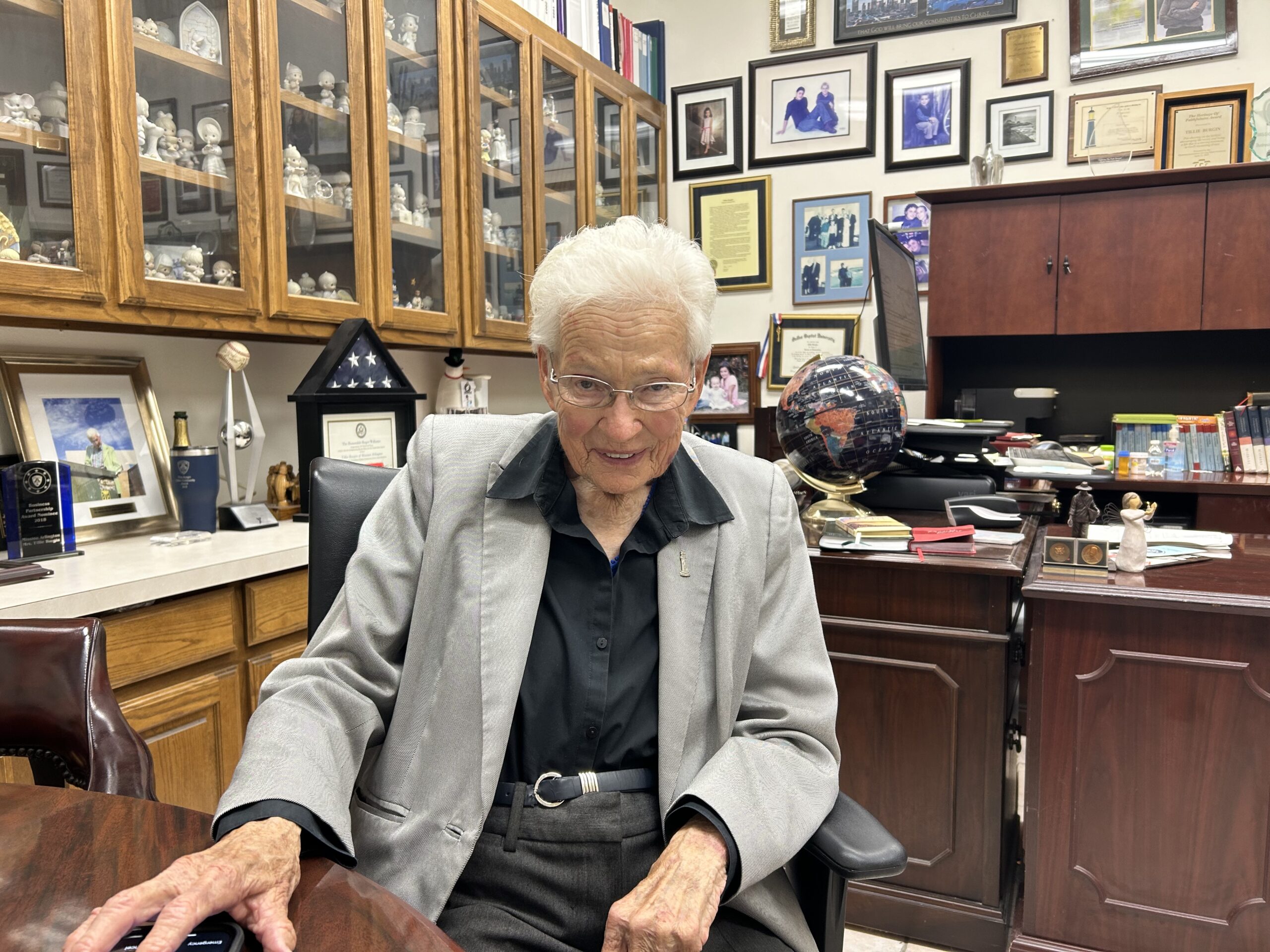
Tillie Burgin in her office. The extensive collection of Precious Moments figurines behind her that people have given Burgin over the years are free to children who come and express an interest. (Photo / Calli Keener)

The history link on Mission Arlington’s website, explains the question goes back to before she and her late husband, Robert, served as missionaries with the Southern Baptist Convention Foreign Mission Board (now International Mission Board), teaching in South Korea.

Her father operated a gas station in Arlington, just around the corner from Mission Arlington. He was Methodist, but as he generally worked on Sundays, he rarely was in church.

He lived out his faith in serving his customers, but he was not on board with Tillie taking her two sons to move with her husband oversees.

He was the one who first posed the question, the mission’s history account explains. He saw no need for his daughter to head to South Korea. There was plenty to be done to care for people right in the family’s hometown of Arlington.

Burgin and her family went anyway. She said: “We didn’t fit then, either.” They were the first missionaries appointed through the Foreign Mission Board to serve as teachers, she explained.

Citing God’s hand in the process, Burgin said IMB hiring personnel told her they would not have considered the Burgins’ application to serve, had a request for teachers in South Korea not just come across the desk the day they received it.

Plans for medical growth

In May, Texas Baptists presented Mission Arlington/Mission Metroplex with $125,000 to expand their health clinic.

Burgin hopes the expanded clinic will make new types of care possible, but “the infrastructure has got to be strong, and that takes resources.”

Mission Arlington leaders are praying about how best to expand the clinic, Burgin said. They have had optometry equipment donated, but do not currently have an optometrist who can use it.

Hearing aid people come, but it’s only every six months. People are grateful when they can hear again after years of not being able to, but vision and hearing treatment are areas where they’d like to see an increase in their ability to provide care, Burgin said.

The clinic has an orthopedic doctor who regularly serves at Mission Arlington every Monday. She said no one goes through his office without hearing the gospel. “It could be me, and I’m going to hear it,” she laughed.

The holistic care Mission Arlington provides is a draw to interns and doctors, Burgin explained. Providers want to serve where they not only can treat a wound but can care for a whole person.

The health care providers are glad to serve knowing their patients’ nutritional and other needs also can be addressed through the mission’s other ministries, Burgin said. It just takes time, prayer and preparation to discern which expansions they are able to support best.

Mission Arlington clinic looks to expand services. (Photo / Calli Keener)

The clinic is always open six days a week and one evening.

Burgin told a story about a young man who came in for help wearing a hoodie in the heat of the summer. Under the hoodie, he had a large growth down to his shoulder that he didn’t want to show. It was interfering with his ability to have a job.

The doctor he saw through Mission Arlington’s clinic was able to remove the growth. With it gone, the young man was able to go back to school, complete school and find employment.

“People find themselves in that kind of trouble, and we always want to be that place for them,” their “home” health clinic. Burgin said.

Burgin explained she prayed about the vision God gave her about doing missions in Arlington for seven years, until she met a lady who needed help with her electricity bill.

“Standing in her apartment, I said: ‘Can we start a Bible study in your apartment? And we’ll get your electricity turned on.’” And the ministry has grown since then, Burgin explained.

There were more people outside the walls of the church than there were inside, Burgin explained. And she knew from their service in Korea that “hanging out” where the people were could lead to ministry opportunities, but she said: “I never had a vision for this. God had the vision, and he just said: ‘Come along.’”

‘God’s Timing. God’s ways.’

The lobby of Mission Arlington, where people ‘triage’ to discuss needs while they watch Billy Graham. (Photo / Calli Keener)

“You can’t explain it,” she added. “All you have to do is experience it—God’s timing, God’s ways.”

Burgin said God had protected them from “so many things she’d wanted to do” with Mission Arlington. And many times, they’d figured they’d “done all they could do,” then God would use the ministry in a new way.

For instance, they were given multiple pallets of bottled water a few weeks ago. She said they set it to the side.

“I said, ‘Something’s going to happen, if we’ve got all this water,’” she recalled.

On Sept. 4, they took 12 to 15 pallets of water to Grand Prairie to help when the city’s water was deemed unsafe due to a foaming agent.

“We are not an organization. It is a way of life,” Burgin said.

They’re still doing things the way they always have, she said—praying about the next ministry, giving people opportunities to serve and give back when they have been served, keeping John 3:16 front and center, taking church to the people.

“And our definition of church is what we do almost 24 hours a day, seven days a week,” she continued.

Then her cell phone rang.

“Excuse me. Let me answer this,” she said.

The young woman on the other end, frantic because she couldn’t get her car started, said she didn’t know if she should call.

“Always call me, OK? Yeah, we’ll send somebody to you,” she said.

Burgin said she tells them: “Always call. And that’s kind of what we do.”

“Whatever it takes,” she said, “that’s what we need to do” to follow God’s calling.