Baylor Alumni Association publishes its account of dispute

WACO—Four months after Baylor University’s chief lawyer sent a letter insisting the Baylor Alumni Association “cease and desist” its use of Baylor’s licensed trademarks, the organization published an issue of the Baylor Line.

The magazine includes a lengthy cover article that purports to tell the “real story” about the longstanding dispute between the association and the university’s board of regents and administration.

baylorline332The Spring 2014 issue of the Baylor Line.“The BAA Executive Committee debated the merits of opening old wounds with a cover story that chronicles this sad history. Ultimately, we decided that it is worthwhile to provide background and context for alumni, parents, faculty and students who may have only seen or heard pieces of the story,” George Cowden III, president of the association, wrote in his column in the Baylor Line. Cowden noted the alumni association’s desire “to start a dialogue about the future” of the organization.

In an interview, he explained the association particularly wanted to facilitate discussion among its members and directors. The association’s annual meeting is May 31 in Waco.

“We wanted to answer the most-asked question asked by our members: How did we get to this point?” Cowden said.

The association did not publish the magazine—or select the topic for its cover story—to provoke a response from the university, he insisted.

“That was not our intent,” he said. “We don’t have any control over what Baylor does. We certainly hope there is not litigation. If Baylor initiates it, we will defend ourselves.”

The Baylor Alumni Association mailed the Baylor Line to about 17,000 households and emailed an electronic version to 18,000 recipients, he said.
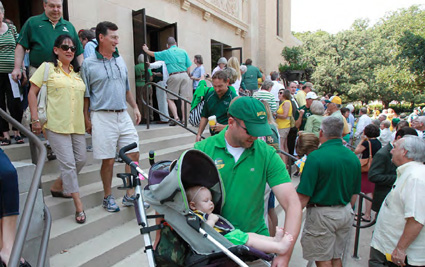
baylor alumni voting425Members of the Baylor Alumni Association vote Sept. 7, 2013 on a proposal that would have terminated the 1993 license agreement, dissolved the BAA charter, and permanently terminated the Baylor Alumni Association name. It failed to gain two-thirds approval. (Baylor Line Photo)John Barry, vice president for marketing and communications at Baylor, said the association had not communicated to the university its plan to publish the issue, and the school “couldn’t possibly comment on something we don’t know anything about.”

The latest issue of the Baylor Line includes a detailed timeline of events in the relationship between the Baylor Alumni Association and the university, beginning in 1978 with the association filing articles of incorporation to become a tax-exempt nonprofit organization separate from the school.

Much of the 12,000-word cover article focuses on the “disintegration” of the association’s relationship with the board of regents and administration during the latter years of Robert Sloan’s tenure as university president—particularly after Baylor created its own alumni relations office and began publishing its own magazine in June 2002.

The article quotes Stan Madden, professor of marketing and director of Baylor’s Center for Nonprofit Studies, who served as vice president for university relations before leaving that post in 2003. When Sloan asked what he would do if he wanted to “get rid of the alumni association,” Madden told the Baylor Line he said, “I would do a Microsoft.”

“What Microsoft has found is that any time they have a competent competitor who has found a market and if they can’t buy them, then Microsoft has enough money to do what the competitor does but just give it away until the competitor can’t afford to do it anymore, and then Microsoft can control the market,” Madden said, according to the magazine article.

robert sloan350Former Baylor University president Robert Sloan was advised to “Microsoft” the Baylor Alumni Association out of existence by offering a similar product for free, according to a story of the controversy in the latest issue of the Baylor Line (Baylor Line Photo)Initially, the Microsoft analogy surfaced within the context of a joke, he said. Sloan reportedly was upset about material the NoZe Brotherhood of campus pranksters published in their satirical publication, The Rope, a spoof of the student newspaper, The Lariat.

“I told him once that if he could not tolerate the NoZe, he could always organize a parallel group. … That was where the discussion actually began. Later, when we were talking about the BAA, I said ‘Microsoft them,’ alluding back to that earlier discussion. I was joking when I said that, but that’s exactly what happened,” Madden told the Baylor Line.

The article includes a recital of perceived steps the university took to cut off the alumni association’s access to graduating seniors and to minimize its presence at university functions.

The Baylor Line also notes last summer, the university demolished the Hughes-Dillard Alumni Center—the alumni association’s on-campus home since 1978—to make way for a plaza leading to a pedestrian bridge connecting the main campus to the new Baylor football stadium. The university provided the association office space in Clifton Robinson Tower until early December, when the group was forced to relocate to an off-campus location in Waco.

The latest issue of the Baylor Line appears nine months after the alumni association failed by the necessary super-majority to approve a transition agreement that would have turned all alumni-engagement functions over to the school, and Baylor University terminated its licensing agreement with the organization.

baylor lines400The Baylor Line began publication in 1946. The Baylor Alumni Association has published a Spring 2014 issue in defiance of the university’s demand to stop using the Baylor name.At a meeting in Waco last September, alumni association members voted 830 to 669 to approve an agreement that would have disbanded the association, turned over all alumni activities to the university and created the Baylor Line Corporation as a separate entity. However, the measure failed because it required a two-thirds vote. The university subsequently terminated its licensing agreement that allowed the alumni association to use the Baylor name and its registered trademarks.

On Jan. 10, Charles Beckenhauer, Baylor’s general counsel, sent a letter insisting the association “cease and desist from the use of Baylor trademarks without its consent.” Beckenhauer’s letter asked the association to provide the university—by the close of business Jan. 27—its plan to stop using Baylor’s licensed marks and “reform its purpose in a manner that is in the best interests of Baylor, its students and its alumni.”

“If such a plan acceptable to Baylor is not forthcoming, Baylor will be forced to consider all options available to it,” Beckenhauer’s letter said.

On Jan. 25, the alumni association’s board of directors—meeting in executive session—granted Cowden authority to appoint a committee “to prepare proposed amendments to the constitution and bylaws to reflect the continued support of Baylor University through the publication of the Baylor Line, existing endowments, any other endowment funds that may be created by the Baylor Alumni Association in the future and other such support as the committee may deem appropriate.” Keith Starr of Tyler chairs the committee. Other members are Jack Dillard and Jim Nelson from Austin, Emily Tinsley of Houston and Tony Pederson of Dallas.




TBM disaster relief responds to Panhandle wildfire

FRITCH—Texas Baptist Men disaster relief responded to varied needs after the Double Diamond wildfire burned about 2,600 acres in the Panhandle and destroyed 225 homes around Fritch.

At its high point, the fire forced more than 2,100 people from their homes.

The shower and laundry unit from First Baptist Church in Amarillo provided service to the community and volunteers as soon as authorities opened the charred area to the public.

A six-person assessment team and a cleanout crew from Paramount Baptist Church in Amarillo expected to begin work in the area May 16.

Volunteer teams trained to remove ash planned to start serving the affected region May 19.

Chaplains were enlisted to accompany the ash-removal and assessment teams.

TBM also deployed two skid-steers and volunteers with cutting-torches to the area to remove debris.

TBM representatives helped staff a multi-agency resource center set up in Fritch by Texas Panhandle Voluntary Organizations Active in Disaster to provide wildfire victims food, short-term assistance and grief counseling.


Christian ministries help women escape sex industry

COLLEYVILLE (RNS)—The smoke, loud music and smell of perfumes trigger uncomfortable memories for Polly Wright.

polly wright300Polly Wright leads “We Are Cherished,” a ministry to sex workers in the Dallas – Fort Worth area.But Wright ignores those reminders of her past as she and a troupe of women make their way to a strip club’s dressing room to deliver gift bags filled with fingernail polish, colorful earrings and handwritten notes with messages such as “I’m praying for you.”

The bags also contain tubes of lip gloss with contact information where exotic dancers can receive help and support. A finger can cover the tiny print so a pimp or abusive boyfriend can’t see it.

“We are in there saying, ‘You are loved, valued and cherished, and you are not alone,’” said Wright, founder and executive director of We Are Cherished, a faith-based organization that regularly visits more than 50 adult entertainment venues throughout the Dallas-Fort Worth area.

Across the nation, dozens of similar ministries, such as Treasures in Los Angeles, Jewels in Salt Lake City and Beauty From Ashes in Fort Myers, Fla., provide emotional support and a potential way out for prostitutes and other sex workers.

Such organizations often partner with law enforcement authorities to identify and help the tens of thousands of women and teens who feel trapped in an X-rated industry that generates billions of dollars a year in profits.

“I use a term in this all the time—easy in, hard out,” said Sgt. Byron Fassett, who oversees the Dallas Police Department’s high-risk child-victims and sex-trafficking unit.

“They don’t want to be doing this. They want out. They just don’t know how to get out. And that takes mentoring. It takes somebody to sit there and help them and try to show them that path.”

While topless bars typically are legal businesses, a recent study commissioned by the U.S. Justice Department found “an underground commercial sex economy in America that is diverse, organized and lucrative, extending far beyond the typical street corner,” researcher Meredith Dank and colleague Kate Villarreal wrote in a blog post.

In Dallas-Fort Worth alone, illicit sex is a $99 million-a-year industry, the Washington, D.C.-based Urban Institute policy research group found.

In just seven urban areas studied, underground commercial sex represents a nearly billion-dollar industry—from a massage parlor in Seattle, to a high-end escort service in Dallas, to a makeshift brothel in California, to a clandestine Internet site, as the Urban Institute’s Dank and Villarreal described it.

The national study was the first to estimate the monetary value of the sex economy in U.S. cities and address its deep complexity, reported Dank, one of the researchers who interviewed 260 pimps, traffickers, sex workers, child pornographers and law enforcement officials.

Shining more light on the industry can motivate communities to help more victims escape the shadows of sex trafficking, the researchers said.

“We need more resources and mandates for law enforcement and service providers not only to find, arrest and convict traffickers, but also to provide services for those who want to leave the life but have few alternatives,” Dank and Villarreal wrote.

newfriends newlife425Supporters of New Friends New Life, a Dallas nonprofit that helped 700 exploited girls and women last year, point to the abuse endured by many who work in the sex industry. (RNS Photo courtesy of Katie Pedigo)In North Dallas—across the highway from Southern Methodist University and the George W. Bush Presidential Library and Museum—New Friends New Life occupies a suite in a high-rise office tower.

Last year, New Friends New Life provided access to education, job training, interim financial assistance, mental health services and spiritual support to more than 700 formerly trafficked girls and sexually exploited women and their children, Executive Director Katie Pedigo said.

The organization grew out of a grass-roots ministry that started 16 years ago when a woman in the sex industry became involved in a women’s Bible study at Preston Road Church of Christ in Dallas.

“We feel like we’re screaming it from the rooftops every day: It’s happening,” Pedigo said of sex trafficking and exploitation. “It’s happening to American girls on every street corner, every bus stop, every mall in our city, and we need to open our eyes, and we need to know it’s happening, so we can fix it and get it out of the shadows.”

In Colleyville, First Baptist Church provides a 3,000-square-foot house that serves as headquarters for We Are Cherished. Every Tuesday evening, up to 25 women meet at what they call The Cherished House to enjoy a home-cooked meal and share stories. Some of the women have left the sex industry. Others still work in it. Some bring their children, since baby-sitting is provided.

katie pedigo newfriends425Katie Pedigo has a law degree but says it’s her passion for human rights that led her to serve as executive director of New Friends New Life, a Dallas nonprofit that helped more than 700 exploited girls and women last year. (RNS photo by Bobby Ross Jr.)The Cherished House also provides a boutique, where the women pick out new and gently used outfits, shoes, purses and accessories.

Wright, a former stripper who now runs the ministry, speaks from experience after a long, rocky road of excessive drinking, drug use and “sex-for-anything-but-love,” until she converted to Christianity after marrying her husband, Rodney, 18 years ago.

Her mother-in-law, Troyce Wright, a Southern Baptist, showed her unconditional love when she did not believe she deserved it, said Wright, who recounted her experiences in the book Cherished: Shattered Innocence, Restored Hope.

Polly Wright traveled to Los Angeles to study the Treasures ministry, founded by former dancer Harmony Dust, author of Scars and Stilettos.

The two share similar backgrounds, Dust said.

“Because she was willing to face her past, to return to the places where she found herself held captive, she is in a position to bring hope to others,” Dust said of Wright. “She hasn’t just overcome the pain from her past; she is serving as a liberator, showing others the path to freedom.”

Now a 41-year-old mother of twin teenagers, Wright attributes the effectiveness of the ministry to the sincere way she approaches the women she meets in topless bars.

“We never ask a woman to leave the industry, because once you take away choice, you take away love,” Wright said. “Of course, my heart is for them to leave, … and they all know that. But that’s in their time.”

That’s what helped Lynn Stevens, who spent 17 years dancing in Dallas strip clubs, find a new path.

harmony dust300Former dancer Harmony Dust, author of “Scars and Stilettos,” praises Polly Wright for overcoming her own difficult past and “showing others the path to freedom.” (RNS Photo courtesy of Harmony Dust)Ministry volunteers listened to her story, offering encouragement instead of finger-pointing, she said.

“The Christians I had encountered in my life had pointed fingers at me and told me I was going to hell,” said Stevens, 45, who eventually quit the industry, married her high school sweetheart and moved to Columbus, Ohio, where she started a satellite branch of We Are Cherished.

And even for Wright, the road to a better life is a lifelong journey.

She still undergoes counseling to help cope with her traumatic past, which included sexual abuse as a child.

“I’m not the one to say, ‘Hey, I am awesome and amazing, and I got it all together,’” she said. “It’s still hard. It’s still a journey. God is still refining me. And I pray that he’ll always be refining me, because in that, I get strengthened in his name.”


A sermon 20 years ago paved way for ministry in Cuba

CENTER—God paved the way for First Baptist Church in Center to minister in Cuba 20 years ago by softening a single heart.

Education Minister John Bender and Mike Brister, former youth minister at the church and now leader of Stepstones Ministry International, travelled to Cuba after a trip Bender made to Cuba two decades ago continued to produce spiritual fruit.

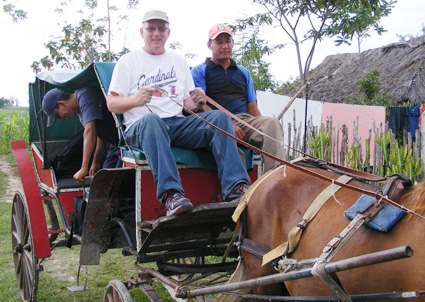
cuba bender carriage425John Bender, minister of education at First Baptist Church in Center, returned to Cuba after first preaching there 20 years ago. His church plans to help First Baptist Church in Baire, Cuba, in its program of training Christian leaders. Bender’s initial invitation to Cuba developed from his relationship with a church in Guadalajara, Mexico, even though he was new to ministry.

“I think I probably only had about four sermons,” he recalled.

While the other Americans on the team worked primarily in the city and stayed in a motel there, Bender and a Mexican pastor journeyed to a rural village. Rather than commute back and forth each day, Bender decided to stay in the village.

“I didn’t know how big a deal that was—that the American was ‘going to stay in my house.’ To me, it wasn’t anything—I was saving gas money. But to them it was huge,” he said.

‘If you died tonight, where would you spend eternity?’

He preached about 35 times that week in various house churches and Bible schools. One man attended one of those services at the persistent urging of his mother. After the service, he returned to his job as a bartender, but a short time later, he witnessed a terrible car wreck outside the entrance to the bar. When he saw the cars and the people involved, he recalled Bender asking, “If you died tonight, where would you spend eternity?”

He rushed back to his mother’s village, spoke with the pastor there and made a profession of faith in Christ.

That man, Victor Manuel, now a pastor and a national Baptist leader in Cuba, contacted Bender about 18 months ago through a pastor in Miami.

Bender invited Brister to that meeting, as well. Brister’s ministry provides training and logistical assistance to prepare churches for hands-on missions involvement.

“We work with churches to help them move either across the street or to the international setting in missions. We’re just trying to mobilize the local church for a global impact,” he explained.

A call to ministry

God began calling him to the ministry while he still was youth minister at First Baptist Church in Center, Brister said. He asked how youth could hear a call to missions service without any exposure to it. His ministry now exposes both youth and adults to missions in Tennessee, Guatemala and Haiti. Soon, Cuba apparently will be added to the list.

cuba happyhour425Cuban children participate in a “happy hour”—a children’s ministry First Baptist Church in Baire, Cuba, offers at several locations in its community.Stepstones not only educates churches about the biblical mandate for missions, but also trains them in cultural differences about the places they will minister, including some language training.

“The ultimate goal is to link them with a missionary they can work with, support and encourage,” Brister said.

Bender and Brister found a vibrant ministry at First Baptist Church in Baire, Cuba, where Manuel is pastor. They took part in four services with 400 to 500 people attending each, from a community of about 6,000.

The church also is engaged in children’s ministry at several locations scattered about the community each week. “He calls them ‘happy hours’—that name probably wouldn’t work here,” Bender quipped.

The church owns a camp where it conducts a retreat ministry. Bender hopes to use the camp for a leadership retreat in September, and Brister hopes to take a team of adults next February to lead a children’s camp.

Cuba restricted religious practice after the communist revolution of 1959, but Baptists maintained a presence in the country.

“The Baptist church has already been established, and they already have communication with the government. It’s a good relationship and they are growing churches,” Bender said.

A need for more training

While the government has loosened its restrictions on religion since 1992, Baptist pastors recognize the newfound freedom led to an increase in false teaching.

Consequently, they consider it imperative to provide greater training for their leaders so they can make stronger Christian disciples.

Both Bender and Brister noted surprises in their experience with churches in Cuba.

“The Cubans were more Americanized than we anticipated. Some of the songs we sang on Sunday mornings there, we haven’t even sung on Sunday morning here—Chris Tomlin and Vineyard music,” Bender said.

Cuba also is more developed than rural areas of Guatemala and Haiti, Brister added.

They were impressed by Manuel’s congregation’s ministry, as well.

“The church is doing things right. They are training leaders and putting them in position. They just need some extra encouragement,” Brister said.

Solving the problem of getting to Cuba

The greatest difficulty is travel to Cuba, the men acknowledged. Cuban documentation was easy, they said, but the U.S. paperwork is more complicated. Because of that, some choose to fly from the United States to Canada or other neighboring countries to enter Cuba, but both men said they were uncomfortable with the ethics of that workaround.

They eventually travelled to Cuba under the auspices of a U.S. ministry licensed by the American government to take volunteers there. Stepstones is in the process of securing its own license.

Cuba will be a good place for the congregation to experience international missions at a more reasonable cost than many overseas trips—about $2,000, Bender said.

“We have a Spanish mission that meets here; we have an African mission that meets here; and we have our Burmese mission, but we’re not really active with them,” he said.

“This would be one place where I think the body could go. It’s really safe. This would be a place where our congregation can know, ‘I can go across the street, but I also have a place I can go fairly cheaply, where I don’t have to be a theological student, but I can bring encouragement.’”

A year of prayer

On their trip to Cuba, Brister learned the Baire congregation had just completed a year of praying for people they knew who had not made a profession of faith in Jesus Christ.

“We had numerous people come to us after services or during the day and say: ‘I’ve been praying and I’ve been sharing Christ with some friends and family, and they’ve not yet become believers. Would you come and share with them one more time?’ That was highly encouraging to me—to see people so passionate to see their friends and family come to Christ,” Brister said.


East Texas woman’s shoebox ministry has global reach

CENTER—Bone and joint disease and arthritis have robbed Sally Smith of many of the ministries she once enjoyed, but God has given her a new way to wrap her arms around children.

“From seminary days, missions has been very close to our hearts, but God never sent us overseas,” Smith recalled.

operation christmaschild300Instead, God called Smith and her husband, Carl, to college campuses across Louisiana, where they served as Baptist Student Ministry missionaries 13 years before First Baptist Church in Center called him to be its minister of education. Now he is retired.

While she has battled health issues throughout her life, the last several years have been particularly difficult. She no longer can travel on mission trips, speak at retreats and women’s groups, or lead Bible studies.

“I have bone and joint disease, and my spine continually deteriorates, which causes horrendous pain,” she said. Three lung diseases make breathing difficult.

“I am on heavy medication, but that doesn’t come close to taking away all the pain. If I were not a believer, I would already have done away with myself, but I know he has a day and a time,” Smith confessed.

“I have only been able to make it to church services three times this year. I used to be up here all the time, but I just can’t do it anymore.”

Bringing joy to children she’ll never meet

What she can do is pack shoeboxes with toys and treats to bring joy to children she never will meet.

As a Girls in Action teacher, she led the girls in her charge to pack shoeboxes for Samaritan Purse’s Operation Christmas Child from the time the ministry started more than 20 years ago.

Smith always packed a few shoeboxes for Samaritan’s Purse, but only a few until she began sharing the experience with her grandchildren. The number escalated as her health began to decline.

In 2012, she packed 60 boxes. In 2013, that number skyrocketed to more than 500.

Last year, the Smiths traveled more than 6,000 miles for appointments with specialists. Those weren’t wasted miles, however, because she was looking for bargains on things to pack in her boxes.

She once saw a buggy of toys included in a sidewalk sale.

“When I got back in the car, I said, ‘Carl, I got each of those little toys for 33 cents,’” she recalled. “And he said, ‘But did you have to get the whole buggy?’ He’s very patient with me.”

A consuming passion

Collecting toys to fill shoeboxes for children around the world became a consuming passion and welcome diversion.

“During the nights when I can’t sleep because of the pain, this has been an emotional and mental release for me. I think I would have gone berserk if I hadn’t had something else to focus on,” Smith said.

By the end of April, she already topped last year’s total.

“They’re not sent off until the end of November, so I don’t know what the Lord has in store,” she said.

As the ministry expanded, she received help from others. Two seamstress sisters—neither of whom attends church—committed to make 500 drawstring bags for girls and 500 stuffed animals for boys. A local business gives her countertop chips to which she adds rhinestones and stickers and then strings on chains to make necklaces. Her son gives her the overruns from his silkscreen T-shirt shop to include in the boxes.

“As people find out, they want to join and help. It’s exciting to see how God is reaching out, and I have no idea where this is going, but I know he gave me that passion. The main thing is for these children to be blessed and for people who are not walking with the Lord to come closer to him,” Smith said.

The biggest obstacle she faces is paying $7 per box for shipping. Last year, several First Baptist Sunday school classes made donations to help, and those covered about half. This year, she will need even more help.

‘God has something for you’

“One of the main things I want people to know is that no matter the situation you are in, God has something for you. Though I am home most of the time, this is my ministry,” she said.

Smith is grateful God has given her a way to bless children.

“We have been overseas on mission trips, and I always loved to put my arms around the little kids,” she said. “I can’t do that anymore. So, through Samaritan’s Purse, my arms are going around them in another way.”


Baylor, BGCT boards consider Baptist Building sale

Baylor University’s board of regents and the Baptist General Convention of Texas Executive Board are considering a proposal for the university to buy the Baptist Building in Dallas.

Baylor regents were slated to vote on the matter at their May 15 meeting. Pending approval, the BGCT board’s administrative support committee will consider a detailed proposal May 19, and Executive Director David Hardage will present the proposed recommendation to the full board that evening.

texasbaptists logoDetails of the proposal will not be released until May 19, after the Baylor regents have met and information has been provided to the BGCT administrative support committee.

The BGCT office building is located adjacent to the Baylor Health Care System’s flagship campus, east of downtown Dallas.

Last year, Baylor University approached the BGCT Executive Board staff leaders about buying the Baptist Building to house Baylor’s Louise Herrington School of Nursing. The nursing school’s building on the Baptist Health Care System campus was at capacity, and several faculty members already used office space at the Baptist Building.

Messengers to the 2013 BGCT annual meeting in San Antonio granted the convention’s Executive Board and an ad hoc committee authority to consider the sale of the Baptist Building.

At the BGCT Executive Board’s February meeting, Hardage reported he received a “multifaceted” proposal from Baylor University concerning the possible purchase of the Baptist Building and expected to bring a full report to the board’s May meeting.

Texas Baptists built the BGCT Executive Board staff office building in 1988 at 333 N. Washington on land leased from Baylor Health Care System. The Executive Board used proceeds from the sale of property in downtown Dallas, combined with trust funds, to pay for construction.

Ten years later, the health care system’s board of directors voted to give the land, valued at $2.5 million, to the BGCT Executive Board. Baylor Health Care System has first right of refusal on any sale of the building, but President Joel Allison gave verbal approval to the proposed sale to Baylor last year.


CommonCall: Friends clown around for Jesus

Suzy Wall and Cherry Peach attended the Sochi Olympics in Russia not for the games, but to do what they enjoy most—sharing Jesus while clowning around.

commoncall may2014issue300The pair of clowns from Hereford have ministered at five Olympic venues—Salt Lake City, Beijing, Vancouver, London and, most recently, Sochi.

“The Russian people were just unbelievably wonderful,” said Wall, who goes by Twinkles while in her clown persona.

“They were real excited that we were there. They don’t smile a lot, and if you don’t smile at them first, you don’t get a smile at all.

“Most of the people who talked to us said they had never met an American. They would come across the restaurant, across a street—anywhere—to talk to you.”

Their trip to Sochi was much more in doubt that their previous forays to the Olympics. The organization they had worked with in the past chose not to participate, but they found another organization—Engage Sochi—through the Woman Missionary Union’s International Initiatives.

The group invited seven WMU women from across the country to join their group.

Wall’s husband, Billy, now is pastor of Avenue Baptist Church in Hereford, but for 35 years, she was a member of Frio Baptist Church in Hereford, where Peach’s husband, James, is pastor.

Their clowning experience grew out of a mission trip Frio Baptist Church took to Honduras in 2000. They traveled to Central America to repair two churches and a clinic that had been damaged by a hurricane, but while working, they noticed there was nothing for the children who lived there.

This excerpt is from an article featured in the May issue of CommonCall magazine. Read more stories like this, plus commentary, news and other resources, by subscribing here.


430-mile Bike Out Hunger ride raises funds, awareness

BOERNE—Forty cyclists from across the state pedaled at least some portion of the way from Boerne to Wichita Falls—with stops in Fredericksburg, San Saba, Brownwood, Abilene and Graham—to raise awareness about poverty and raise money for the Texas Baptist Hunger Offering.

bikeout singleton300Gary Singleton, pastor of The Heights Baptist Church in Richardson, enjoys a downhill ride as part of Bike Out Hunger. (PHOTO/ Kalie Lowrie)The U.S. Census Bureau reports 4.8 million Texans—17.9 percent of the population—live in poverty. Participants in the fifth annual Bike Out Hunger ride spent a week biking 430 miles, raising about $50,000 for the hunger offering.

“Riding across Texas isn’t nearly as hard as not having food to eat,” said Christopher Whitehead from First Baptist Church in Waxahachie. “This is a great ride to be a part of. It’s fun meeting new people who have the same passion for cycling and helping others.”

Many churches provided support and meals throughout the trip, including Trinity Baptist in Kerrville, First Baptist in Fredericksburg, First Baptist in San Saba, First Baptist in Brownwood, First Baptist in Abilene and First Baptist in Wichita Falls.

Seven-year-old Gertie Kate Adair from Dripping Springs was the youngest rider, biking nine miles into Fredericksburg with her father, Ben Adair.

“Come ride with Bike Out Hunger and feed hungry people,” she said, as an encouragement to others to join the cause.

bikeout adairs425Seven-year-old Gertie Kate Adair of Dripping Springs rides along with her dad, Ben Adair, into Fredericksburg. (PHOTO/ Melissa Kibby)John Dennie, education director at North Side Baptist Church in Weatherford, joined Bike Out Hunger for the first time this year. He and fellow staff members Keith Warren, executive pastor, and Eddie Burg, building supervisor, wanted to join the ride to support hunger awareness.

Members of North Side Baptist Church became increasingly aware of hunger needs in their community as they began a weekend feeding program for children two years ago, Dennie explained. Initially, church volunteers prepared an average 20 “packs of love” with food for school-aged children who qualify for free or reduced-price lunches. Before long, they filled 140 backpacks with food each weekend.

“What concerns me is for some reason the poverty is increasing,” Dennie said. “I hope hunger needs will remain a focus for our church as we continue to reach out and help.”

bikeout randolph300Tim Randolph, director of missions for Waco Regional Baptist Association, rides with Bike Out Hunger.  (BGCT PHOTO)Since launching its backpack ministry, North Side has increasingly focused on hunger issues, not only in Weatherford, but also worldwide through gifts given to the Texas Baptist Hunger Offering. Last year, the church raised $29,000 on one day to give to the offering, and church leaders hoped to surpass that total in a Mother’s Day offering this year.

Rodney McGlothlin, pastor of First Baptist Church in Brownwood, and his wife, Debbie, joined the ride for a portion of the trek, along with Greg Church, a professor at Howard Payne University. At First Baptist in Brownwood, riders joined in a meal with members of the congregation and several children from a mission congregation.

After the meal, Tim Randolph, director of missions for Waco Regional Baptist Association, and other Bike Out Hunger participants told the group about passion for riding to end the cycle of hunger and poverty.

“While helping feed the kids this week, this fed my soul,” said Mark Bolt from Clear Creek Community Church in League City.


Texas Tidbits: KCBI raises funds for West students

West graduating seniors benefit from fund-raiser. Listeners of KCBI 90.9 FM, a North Texas Christian radio station, met a $65,000 giving goal for the “Loving West: Class of 2014” campaign. Their gifts meant each of the 65 participating seniors in the 2014 graduating class of West High School receives $1,000. KCBI worked in partnership with the West Independent School District and First Baptist Church of West in the campaign. Since the fertilizer plant explosion that devastated West on April 17, 2013, students at West High School have commuted to neighboring Connally ISD for classes in portable buildings. West High School’s building was condemned due to damage from the blast and torn down. Many families continue to rebuild their homes and lives after the disaster. So, KCBI worked with the church and school district to establish a sponsorship program for the graduating seniors to provide them with money for laptop computers or other school supplies as they begin college. Former Oakland Raiders receiver Tim Brown will headline a celebration of “Loving West: Class of 2014” for the seniors and their families at First Baptist Church in West June 2. Josh Havens and Matt Fuqua of the Christian pop/rock band The Afters will perform.

ETBU trustees OK increased budget. East Texas Baptist University’s board of trustees approved a $37.3 million operating budget for the 2014-2015 academic year, a 9.3 percent increase over the current year’s budget. The budget, which takes effect June 1, includes more than $9.927 million for student scholarships, an increase of 12 percent over the current budget. Trustees also approved a new graduate program leading toward the master of arts in Christian ministry degree. The degree program offers students focused on vocational church-related ministerial service the opportunity pursue graduate education in business, counseling, education or another discipline outside the religion department. Trustees also approved an English-as-a-Second-Language program for international students who meet all admission requirements to the university except for language proficiency. The program will provide the resources to help students improve language skills in reading and vocabulary, writing, grammar, listening and speaking. 


Baylor prof: ‘If heaven is for real, which vision is right?’

WACO—“Heaven is for real,” according to the new movie by that name. But which vision of heaven is true?

greg garrett300Author and pop culture critic Greg Garrett is a professor of English at Baylor University.Several versions of heaven are depicted in art, literature, music and pop culture—some of which don’t mesh with Christian doctrines, said author/pop culture critic Greg Garrett, a professor of English at Baylor University.

Actually, the Bible gives little detail about heaven, and many people rely on imagination, he said.

In the current movie Heaven is for Real—based on the bestseller about a real-life family—a little boy who undergoes an operation for a ruptured appendix takes a trip to heaven, walking hand-in-hand with Jesus and spotting a rainbow horse before returning to earth.

Consider these variations of heaven, Garrett suggests:

Paradise. This is a place where dreams come true, as in the movie Field of Dreams—or perhaps Sports Illustrated swimsuit issues, with photos of lovely women in idyllic locations and the headline “Paradise Found.”

Heaven as haven. This is a place where we’ll be reunited with the people we love. At the end of the movie Titanic, Rose passes through the ranks of passengers lost on the Titanic, ascends the stairs and takes the hand of her beloved Jack, Garrett notes. This vision of heaven is compatible with such hymns as “When the Roll is Called Up Yonder.”

Zion: No Enemies Allowed.  “The closing scene of Les Miserables shows the Paris barricades populated by all who have died and gone before us, singing about how the fallen ‘will live again in freedom in the Garden of the Lord’—all, that is, except for that miserable Inspector Javert,” Garrett said. Then there’s the cabbie in a Marc Cohn song. He looks forward to heaven, where he won’t have to listen to tiresome passengers.

Earth 2.0. Consider it a place where we go on doing what we do. In Heaven Can Wait, Warren Beatty, cast as a player for the Los Angeles Rams, dies before his time, thanks to an over-eager guardian angel. He is cremated, and the search begins for a new body, which turns out to be that of a murdered millionaire who buys the Rams, then pursues Beatty’s dream of leading the Rams to a Super Bowl victory.

Garrett questions what assumptions about these types of heaven say about those who favor them.

heavenisforreal425In the book and current movie Heaven is for Real, a little boy who undergoes an operation for a ruptured appendix takes a trip to heaven.Why would Paradise be a place where people simply achieve what they’ve always wanted, whether keeping off the pounds or taking a permanent vacation? And sure, he said, reuniting with friends and relatives would be wonderful, but shouldn’t union with God be the primary attraction?

As far as a heaven that allows no one we despise, “We seem to want to go on building little gated communities, even in the next life,” Garrett observes. But where does “love your enemies” fit into that picture?

And shouldn’t heaven be more than just a change of address, with life going on as it does now—albeit happier?

Garrett will explore depictions of death and the afterlife in religious and popular literature, film and TV in his upcoming book Entertaining Judgment: The Afterlife in Literature and Popular Culture, to be published in the fall.

Garrett is the author of several nonfiction books, among them The Gospel According to Hollywood and We Get to Carry Each Other: The Gospel According to U2; the novels Free Bird and Cycling; and the memoirs Crossing Myself and No Idea.


Care for Haiti leads Stockdale couple to full-time missions

When Texas Baptist Men sent Ernie Rice to Haiti in 2011 to explore ways the missions organization could help meet continuing needs after a devastating earthquake, he expected to spend a few days assessing the situation, report his findings and move on to other projects.

God had other plans, he discovered.

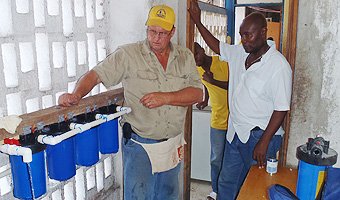
tbm haiti ernierice340Ernie Rice, a Texas Baptist Men volunteer from First Baptist Church in Stockdale, tells an official how to maintain a water purification system at the national police headquarters in Port-au-Prince, Haiti. People who lost their homes to an earthquake lived in a huge tent city immediately adjacent to the police compound. Rice and his wife, Sharon, have moved to Haiti to work with a Christian nonprofit ministry there. (PHOTO/Texas Baptist Men)“I’ve fallen in love with the country and its people,” said Rice, a member of First Baptist Church in Stockdale.

Recently, Rice and his wife, Sharon, moved to Haiti to work full time with We Care Haiti, a Christian nonprofit organization McKinney businessman James Cundiff founded. The couple will return to Texas briefly in September for the expected arrival of their first grandchild but otherwise are setting up permanent residence in Haiti.

Rice worked with We Care Haiti as a TBM representative when he led a building project to construct classrooms and put a new roof on Croix Hillaire Baptist Church and School near Petit Goave.

Rice began to make frequent trips to Haiti and developed a close friendship with Cundiff. The Baptist General Convention of Texas disaster response program has mobilized volunteers to serve with We Care Haiti for the last two years.

We Care Haiti began by providing food for children in the weeks immediately after the 2010 earthquake.

As the ministry expanded, it developed partnerships with 60 organizations to provide for the needs of orphaned or needy children.

haiti children425We Care Haiti partners with and supports several Haitian schools and orphanages.“We’re particularly attracted to partners that care for kids and do it in the name of Jesus,” Rice said.

We Care Haiti developed a five-point wellness program:

Nutrition. We Care Haiti offers high-nutrition food to churches, schools, orphanages and other organizations that care for children.

Water. Texas Baptist Men provided 15,000 water purification systems to Haiti in the immediate aftermath of the earthquake. We Care Haiti continues to rely on TBM to help supply pure drinking water to children.

Vitamins. Many Haitians suffer from malnutrition, and children may be stunted in their development. We Care Haiti offers multi-vitamin nutritional supplements.

Anti-parasite pills. Inadequate sanitation makes parasites a problem, but medication taken once every six months can prevent their growth. “It’s tough getting the food to the people who need it, and we don’t want some worm to get it,” Rice said.

Wellness checks. We Care Haiti is seeking to establish medical and dental clinics to provide preventive care. TBM recently supplied two dental chairs to be used in clinics.

Rice will support those initiatives, as well as serve as construction coordinator for projects to build children’s homes and widows’ cottages. As much as possible, We Care Haiti hires local labor to provide employment and secure a “buy-in” from local communities, he noted.

“Otherwise, it’s just Santa Claus,” he said of direct, low-involvement aid. “We’re committed to a peer-to-peer ministry, working alongside the people rather than coming in and doing the work for them.”

First Baptist Church in Stockdale and Gambrell Baptist Association are providing ongoing support for the Rices and their ministry in Haiti. Texas Baptists’ disaster response office helped create the We Care Haiti website to promote the ministry.

“God gave me a heart for the people,” Rice said. “It’s a matter of the heart, not the head. I never thought I would be doing this at 60. But I’m having the time of my life.”

Editor’s Note: The article was edited after originally posted to correct a reference to “Stockton” rather than “Stockdale” and to include information about the role of Texas Baptists’ disaster response program.


Parents learn skills to raise highly capable children

FORT WORTH—When 29 parents from Manuel Jara Elementary School recently graduated from Parent University, members of Primera Baptist Church in Fort Worth knew they played a role in giving them the tools, skills and confidence to raise healthy, caring and responsible children.

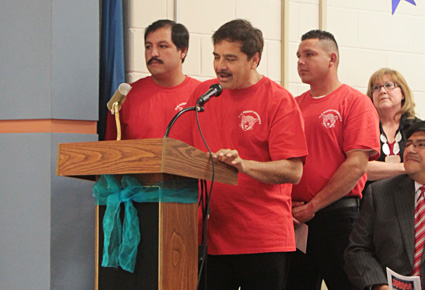
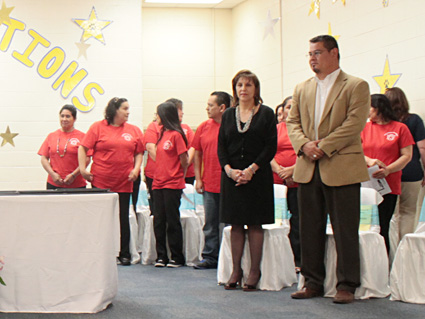
parenting podium425Parents tell how the Raising Highly Capable Kids curriculum affected their lives during the graduation ceremony at Manuel Jara Elementary School in Fort Worth. (Photo by Jonathan Martinez)Primera Baptist Church adopted Manuel Jara Elementary two years ago and began investing in its students and their families. Church volunteers started a well-received tutoring program, and Pastor Rafael Berlanga built a relationship with the teachers and Principal Marta Plata.

The pastor and principal talked several times about the need for parenting classes. Through the Texas Baptist Hispanic Education Initiative, Berlanga learned about the Raising Highly Capable Kids curriculum. He saw it as a great fit for the school’s needs and approached Plata about starting a course in the spring.

What parents needed

“As a pastor, I have seen a lot of times when parents just haven’t had the training on how to raise kids,” Berlanga said. “It was perfect for what I knew parents needed and what the principal was looking for.”

Plata was eager to begin the new program through Parent University, offering incentives along the way to encourage participation. Primera Baptist Church provided funds to purchase workbooks for each parent, and Berlanga taught one of the three courses. Teachers volunteered their time to provide childcare so parents could attend.

 “I was overwhelmed with pride for the parents. When we first started the program, I thought that if I got 10 parents to commit, we would be doing well. We had 29 commit to start and 29 finish the program. It was wonderful,” Plata said.

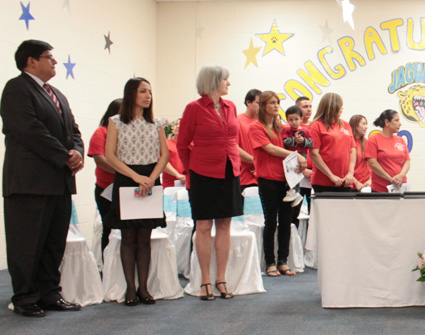
parenting grads425Twenty-nine parents graduated from Parents University at Manuel Jara Elementary School in Fort Worth after completing curriculum on Raising Highly Capable Kids. (Photo by Jonathan Martinez)As the weeks progressed, parents realized the importance of remaining committed and made it a priority. Plata also called each parent every week to remind them of class or to let them know they were missed.

Throughout the program, the parents learned important skills, and open dialogues helped as they worked through new concepts.

“We had good discussions on how our own childhood, our own experiences, some of the things we went through as children can help us in parenting today our own kids,” Berlanga said.

“We had some single moms in my class. One opened up and said she struggled. We were able to share with her to look outside of herself for help when she needs it, whether it’s going to her own family or finding a support structure outside of the family. The church is a great place to turn. That’s why it’s there—to minister to your kids and help you grow.”

Parents are ‘first educators’ for kids

The curriculum placed importance on parents as the first educators of their children. While teachers spend six hours a day with the students, parents have a significant impact on their lifelong development.

“This was such a validation for parents that they are the most important teacher in their child’s life, and we are here to support you and what you are doing with your child,” Plata said.

parenting grads right425The 29 graduates of Parent University completed the Raising Highly Capable Kids curriculum. (Photo by Jonathan Martinez)During the graduation ceremony, many parents described how the class changed their lives.

“I could feel their gratitude for what they learned,” Plata said. “I wish every single school would do it. We are not going to affect real change until we affect the parents, until we affect the home. We need to support the parents and their efforts and what they are trying to do.”

Finishing the course represented a great accomplishment for many participants. One single mom had only a third-grade education and never had experienced a graduation ceremony before.

“For many Hispanic parents, this is the only course or program they will graduate from in their lifetime,” said Gabriel Cortes, acting director of Texas Baptist Hispanic Education Initiative. “Graduating from something makes a lifelong impact in their lives and their families.” 

Impact at school campus

Overall, Plata was extremely pleased with the results of the course and the impact she has seen already on her school campus. Plans are under way to start a new session of Parent University next year through a continued partnership with Primera Baptist Church.

“In public school, we can’t talk about God, but we have to live it,” Plata said. “Pastor Berlanga has been that to us. Not only did their church provide the funds to purchase the program, but he also showed up to teach a class. The parents love him. I know that he planted so many (gospel) seeds in their hearts. Maybe for the first time in their whole life, they saw someone Christ-like, really truly being Christ to them.

“I absolutely admire him and know that truly God sent him to undergird what I am trying to do—what God is trying to do in this school and community.”

The Texas Baptist Hispanic Education Initiative has endorsed the Raising Highly Capable Kids curriculum, and training is available for churches and schools in English and Spanish. 

“Raising Highly Capable Kids is one of the best programs available to get into schools and build relationships with parents and school staff with the goal of sharing Christ’s love with them,” Cortes said.

For more information about the Raising Highly Capable Kids curriculum, email Cortes at gabriel.cortes@texasbaptist.org or call (214) 887-5426.