Presidents: Faith-based universities offer society ‘ethical ammo’

WASHINGTON (BNG)—Faith-based universities in the United States face the challenge of persuading society to invest in higher education that is less about producing students to compete in a global economy and more about instilling the “value of values,” three university presidents told the National Press Club in Washington, D.C.

Baylor University, kenneth starr350Baylor University President Ken Starr. (Photos: Robert Rogers/Baylor Marketing and Communications)the nation’s largest Baptist-affiliated school, sponsored the event on the eve of the National Day of Prayer breakfast. Joining Baylor President Ken Starr were John Garvey, president of the Catholic University of America in Washington, and Richard Joel, president of Yeshiva University in New York.
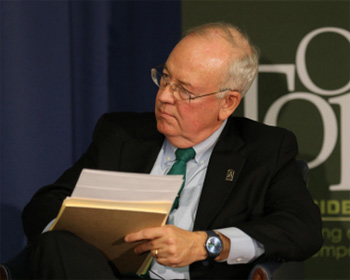
 “We would all agree that education is more than a transmission of information, attending classes, doing lab work. But what is it?” Starr asked.

The three acknowledged difficulties in responding to recent regulations such as the U.S. Department of Health and Human Services’ contraception mandate and government involvement in setting faculty employment guidelines.

They also found troubling a proposed Department of Education “rating system” for universities and colleges. The proposal is “triggering opposition from all institutions that this is a reductionist approach” which “won’t take into account the mission that universities are trying to accomplish,” Starr said.

Tracking those government initiatives comes naturally to the three presidents, each of whom has a law degree. Both Garvey and Starr are former law school deans.
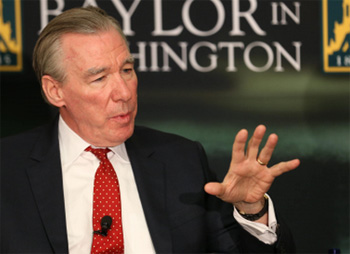
john garvey350Catholic University President John Garvey.But Joel, whose institution is the oldest under Jewish auspices in America, saw a larger issue.

“To me, the major challenge is for parents and students to know that (faith-based higher education) is worthy of investing in,” he said. “The challenge is the degree that society has accepted the notion that education is credentialing for careers, and people look for where they can get the best deal to get the requisite credential.”

Given the cost of tuition at private universities, persuading students “the choice of investing in them is a valuable proposition and worthwhile” can be difficult, he added.

Joel recalled a former U.S. president telling him higher education’s primary aim is to prepare students to compete in a global economy.

“But our motto (at Yeshiva) is that education is meant to ennoble and enable. We need to teach students what are the values they bring to the competition and once they succeed in the competition, what are their responsibilities?” Joel asked.

“The point of education is to help our students advance in both wisdom and virtue,” agreed Garvey, whose school is the only one in the United States overseen by the U.S. Conference of Catholic Bishops. “And they are connected to each other in surprising ways. Virtue makes us aim at the right mark; wisdom helps us choose the proper means. When we learn about topics, we can’t make proper judgments about them without an ethical basis.”

richard joel350Yeshiva University President Richard Joel.Joel voiced concern about where students will find the “ethical ammunition” to develop into responsible American citizens.

“This generation of young students is a gift to us because they want to matter. … The fuel is that you matter because you are a human given the gift of responsibility, and here is a largely selfish life experience called ‘college’ when you can invest in thoughts, explore thoughts, but in an environment which focuses your purpose—not just to have ideas but to know what to do with them,” he said.

Maintaining a robust mix of faith-based and secular higher education is essential to the country’s well-being, the three presidents said.

“One of the glories of the American system of higher education is that we have this kind of plurality,” said Garvey. 

“It’s good for consumers of higher education to have different institutions. You don’t see this in countries with an established church. … In America, because of the First Amendment it has forced institutions like ours to grow up and survive under our own steam. It would be unfortunate if, in the name of diversity, the government were to insist that we all be like one another.”

Despite political dysfunction, the United States never has come close to adopting an authoritarian regime and has remained a “remarkably free society,” Starr concluded.

“It is now our challenge to maintain that in the 21st century.”


Baptist notes improved health among North Korean orphans

DALLAS—A Korean Texas Baptist will travel to North Korea next month to ensure the delivery of 60 tons of corn and 10 tons of wheat noodles to schools, orphanages and a hospital, and he expects to deliver an equally large shipment later in the year.

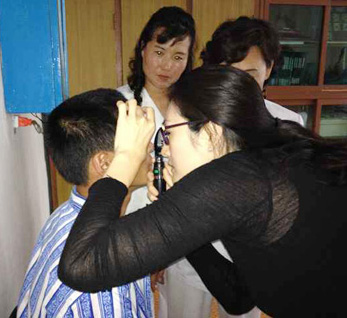
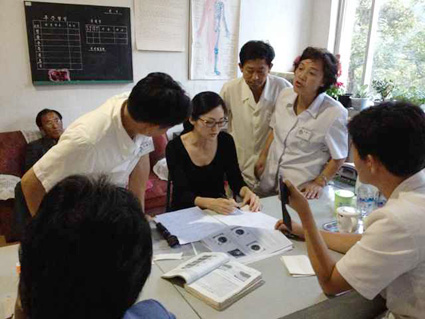
koreans yoon doctors425Ophthalmologist Sara Yoon confers with North Korean doctors at the Kangwon province hospital in Wonsan City, North Korea.Yoo Jong Yoon—director of the Korean-American Sharing Movement of Dallas—has journeyed to North Korea more than two dozen times since 1996. Typically, his trips include supervising delivery of corn and other food supplies provided by Texas Baptist Men and other donors. 

“The Lord has opened many doors to share his love” in North Korea, he said. Texas Baptist Men and several churches and individuals have helped meet needs among orphaned children through food shipments, he noted.

“Their health has been improved greatly because of your love for them,” he said. “They are ‘the least of these,’ whom the Lord has entrusted to you and me.”

koreans yoon examines347Ophthalmologist Sara Yoon examines a patient at a North Korean hospital.Yoon, former Korean mission field consultant with the Cooperative Baptist Fellowship, also plans to deliver medical books and supplies for physicians, as well as accompany two medical teams of eye specialists and dentists to work in the Kangwon province hospital in Wonsan City. Baylor Scott & White Health has provided equipment and supplies to the hospital through its Faith in Action Initiatives.

In September, Yoon traveled to North Korea with his wife, June, and daughter, Sara, who was the first ophthalmologist to visit the hospital in Wonsan City. She examined five patients and conferred with five doctors there.

The Yoons also visited a junior high and high school for orphans in Moon-Chon, about 15 miles north of Wonsan City. Yoon’s ministry helped provide corn noodles to the school since 2012, but the trip marked the first time he was permitted to visit that school.


Religion can help victimized college women trust again, study shows

WACO—College women who have been victimized sexually often have trouble trusting anyone after being assaulted, but religion can help them cope and overcome emotional damage, Baylor University research shows.

The study—“Religious Coping: The Role of Religion in Attenuating the Effect of Sexual Victimization of College Women on Trust”—is published in the journal Review of Religious Research.

‘A huge problem’

“We hear in the news about all sorts of sexual victimization on campuses across America. It’s a huge problem, one that affects people over a long period of time and can result in withdrawing from family and community,” said researcher Jeffrey Tamburello, a doctoral candidate in sociology at Baylor. Co-researchers were Kyle Irwin and Martha Gault Sherman, assistant professors of sociology at Baylor.

“It’s important to find ways for victims to come back to as much of a normal life as they can, and it seems that religious participation can help them do that,” Tamburello said.

Previous research has provided evidence sexual victimization may negatively impact trust and has suggested theological beliefs and taking part in religious organizations may be associated in a positive way with overall trust. In the Baylor study, researchers sought to uncover how these two effects might interact.

One in five college women

About one in five college women are sexual victims each year, with that number including both violent assault and nonconsensual sexual contact, according to recent reports.

Researchers analyzed data from the Longitudinal Study of Violence Against Women, with the sample consisting of 1,580 undergraduate women in a state-supported university. In the first wave of the study, researchers asked freshman women whether and how often they attended religious services. In the second, when the women were sophomores, researchers asked participants whether they had been sexually victimized within the past year. The women also were asked about how much they trusted others.

Religious community boosts trust

To assess an individual’s level of trust, researchers asked respondents the extent to which they agreed with the statement: “Most people are out for themselves. I don’t trust them very much.”

“What we found is that the more you go to church, the more you trust. It’s not just about attendance but about being embedded in a religious social network and about that being a part of your identity. This might help to mitigate some of the negative effects of being victimized,” Tamburello said.


Ebola waning, but food crisis continues in West Africa

DALLAS—Although the spread of Ebola in West Africa has slowed, the food crisis caused by the epidemic continues, a Liberian Baptist leader told the director of Texas Baptists’ Disaster Recovery program.

olu menjay130Olu MenjayOlu Menjay, president of the Liberian Baptist Missionary & Educational Convention and principal of Ricks Institute, a Christian boarding school located about 15 miles from Monrovia, Liberia’s capital, recently met with Chris Liebrum, director of Disaster Recovery for the Baptist General Convention of Texas.

Reports of people infected with Ebola dropped from a peak of 500 cases per week to five cases a week, Menjay reported. He and his family—who were visiting in the United States when the epidemic hit and were not allowed to go home—will return to Liberia soon. He will reopen Ricks Institute, which closed by government order because of the Ebola outbreak.

“Even with the reduction of the illness, the crisis of food and orphan care is still present,” Liebrum said after his visit with Menjay.

Many farmers in Liberia and Sierra Leone who contracted Ebola died, leaving farm laborers without jobs. Food prices throughout the region spiked due to decreased production.

1.5 million meals to Liberia and Sierra Leone

Texas Baptists have sent 1.5 million meals to Liberia and Sierra Leone, and the convention’s disaster recovery ministry hopes to send up to 3 million meals by the end of summer. Liberian Baptists are using churches as distribution points, Liebrum noted.

Texas Baptists have shipped five 40-foot food-filled containers to West Africa. Convoy of Hope and Life Line Ministries donated food for three containers, and two other containers are from Food for Kidz, paid for by Texas Baptist Disaster Recovery funds.

The Texas Baptist Hunger Offering made available $35,000 in 2014 to support hunger relief in West Africa. The funds covered shipping costs for two containers for Liberia and a third container for Sierra Leone. They also provided support to Restore Hope Sierra Leone, a ministry of Global Connections Partnership Network, related to First Baptist Church in Arlington

Three additional containers have been secured and will ship soon.

A call for help

Texas Baptists’ Disaster Recovery is encouraging churches and organizations to sponsor events to help pack two remaining containers. For more information on how to hold a food-packing event or give funds for shipping costs, contact Marla Bearden at (214) 537-7358 or visit www.texasbaptists.org/disaster.

On the Martin Luther King Jr. National Day of Service, Texas Baptist volunteers, working in partnership with Texas Baptist Men and Meals4Multitudes, a ministry based at First Baptist Church in Athens, packed 23,000 prepackaged meals for Liberia—enough to cover two pallets. Twenty pallets will fill a 40-foot shipping container. 

McLane Shipping Company in Houston has committed to cover the cost to send two containers to Liberia.

“All of this is possible because of the caring and cooperative spirit of Texas Baptists,” Liebrum said. “In recent years, when specific needs have been discovered in Haiti, Japan, Philippines and now West Africa, our BGCT family has shown the spirit of generosity—a great example of an association of churches that are equally committed to both the Great Commission and the Great Commandment.”


Debates on definition of marriage nothing new, church historian asserts

WACO—Legislators and judges in the United States who struggle to define marriage find themselves in the unlikely company of 16th century reformers and their Pietist Protestant heirs, church historian A.G. Roeber believes.

A.G. RoeberSome Americans forget disputes about marriage have raged in Europe and beyond more than four centuries, said Roeber, professor of early modern history and religious studies at Penn State University. He addressed an audience at Baylor University, where he spoke at the invitation of the school’s Institute for Studies of Religion.

Martin Luther wanted to elevate marriage to a “primary estate” at the center of both church and society, based on his view of the family as “the little church,” Roeber said. However, Luther’s reluctance to view marriage as sacrament, in contrast to Roman Catholic teaching, muddied his efforts to exalt marriage.

“There was an unresolved tension in Luther’s theology of marriage,” Roeber said.

Furthermore, he noted, Luther wrestled with how to reconcile his views on mutuality in marriage, based on the New Testament model in Ephesians 5, with his insistence on male authority in church and state.

Roeber saw that tension evidenced in subsequent theological statements by Pietist Protestants who were “reluctant to define marriage as sacrament but eager to understand it as more than simply a secular contract.”

On the one hand, he noted, they taught an ideal view of marriage as a picture of the relationship between Christ and his bride, the church. On the other hand, they knew from personal experience the reality of married life often failed to match that model.

Luther’s spiritual heirs found new challenges when they sought to spread their faith—including their views on Christian marriage—through missionary outreach, particularly in India and among transplanted Europeans in North America, he added.

Today, at a time when many Christians in the Global South hold to a traditional understanding of Christian marriage, some North American Protestants seek to expand the definition to include same-sex unions, he observed. 

And debates in the public square about the subject are nothing new, he added.

“There is no way in which marriage has ever not been political,” he said.


Lee Strobel: Gospel truth reasonable, but demands faith commitment

PLANO—When Leslie Strobel became a Christian, she rejoiced in her new life in Christ but felt deeply burdened for her husband, Lee, a self-proclaimed atheist who pursued hedonism and pleasure over spiritual matters. She worried he never would come to faith. 

But within two years—after he sought to disprove the Bible, the resurrection of Jesus Christ and Christianity—he found himself kneeling in his bedroom accepting Jesus as his Savior. 

unapologetic-logo425“I believed based on the data, but I had to receive the free gift of his grace. Then I would become a child of God,” Strobel told a crowd of more than 500 at the [un]Apologetic Conference at Hunters Glen Baptist Church in Plano

Proofs pointing to the reality of Jesus’ resurrection open the door for many skeptics to embrace faith in him, said Strobel, author of more than 20 books and former award-winning legal editor for The Chicago Tribune

He noted evidence documenting the execution of Jesus, including early accounts of his resurrection and the empty tomb, as well as eyewitness testimony, including nine ancient sources inside and outside the New Testament.

mark mittelberg130Mark MittelbergMark Mittelberg, author and strategist in evangelism and apologetics-oriented outreach, outlined 20 “arrows of faith” he found helpful in overcoming obstacles to sharing the gospel.

Touching on topics ranging from Jesus’ miracles to the intricacies of human DNA, Mittelberg provided data to support the existence of God and each person’s need for God.

Confident Christians realize “the gospel is much more than true, but also a message of love and forgiveness for all,” he asserted.

Other conference speakers included Mike Licona, associate professor in theology at Houston Baptist University, and David Naugle, longtime professor of philosophy at Dallas Baptist University.

Regional [un]Apologetic conferences are planned Feb. 27-28 at Trinity Baptist Church in San Antonio and March 6-7 at Tallowood Baptist Church in Houston. For more information, click here


ETBU alum donates kidney to longtime friend

MARSHALL—Shared experiences bond Shane Moore and Joey Sutton—boyhood friendship, growing up at Immanuel Baptist Church in Marshall, student days at Marshall High School and East Texas Baptist University, membership in Pi Sigma Epsilon fraternity and serving as groomsmen in each other’s weddings.

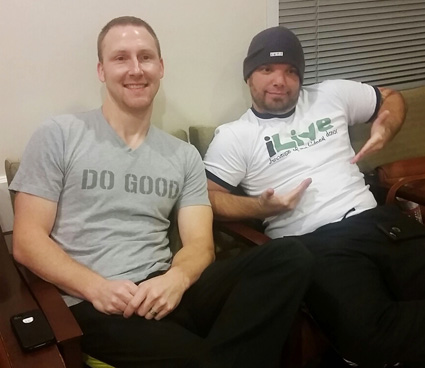
etbu kidney before425Joey Sutton (left) of Hallsville and Shane Moore  of Houston pose for a picture before undergoing transplant surgery at Methodist Hospital in downtown Houston.  The two have been close-friends since age 12, and both graduated from Marshall High School and East Texas Baptist University.  (PHOTO: Moore/Sutton Family)Now they share an even closer bond. Sutton donated a kidney to Moore.

Moore suffers from focal segmental glomerulosclerosis, a genetic disorder that affects the kidneys. In his case, injuries from a car accident triggered the malady to progress at an abnormally rapid pace.

“The trauma to my body was like pouring gas on the fire and caused a lot of stuff to happen in my kidneys, which might have happened a little later in life,” he explained.

Moore, who lives in Houston, underwent dialysis five days a week the past seven months. He needed a kidney transplant to improve his quality of life.

The average wait for someone on the kidney donor list is five years unless the person can find a donor among family or friends. Family members did not match, so Sutton stepped up to the plate.

Moore and Sutton have been friends since age 12, when they played on the same summer league baseball team. After graduating from Marshall High School, the two attended ETBU, where Sutton earned his undergraduate degree in religion in 2003.

“Not too long after Shane’s wreck (several years ago), he got news that he was going to have problems for a while,” Sutton said. “As we would talk about his medical condition, I made the comment one day, ‘Listen, if you ever need a kidney, I’ll give you one.’”

Honoring a pledge

Sutton—who lives in Hallsville and works as director of patient experience with Good Shepherd Health System of Longview—honored that pledge Jan. 27 at Methodist Hospital in the Houston Medical Center.

Transplant surgeons performed laparoscopic surgery to remove one of Sutton’s kidneys. While Sutton was in surgery, another surgical team prepared Moore’s body to receive the organ.

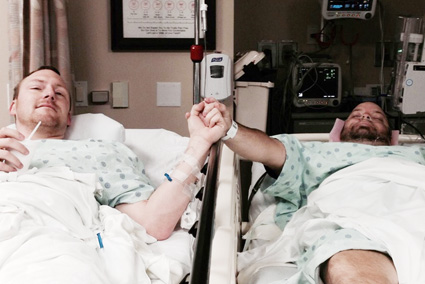
etbu kidney recovery425Joey Sutton (left) of Hallsville and Shane Moore of Houston grasp hands in the recovery room after a successful kidney transplant surgery. Sutton donated his kidney to his lifelong friend Moore,  who needed a transplant. The two grew up together in Marshall and have been close friends since they were 12 years old.   (PHOTO: Moore/Sutton Family)While the two were in the recovery room after surgery, Sutton’s wife, Wendy, posted on social media: “Shane has a new pink, producing kidney. All glory to God. I cannot express the level of gratitude I feel for everyone’s prayers, support and love.”

Moore reflected on his friend’s promise and his willingness to give.

“He was serious when he said it, but also (offered) in a joking manner. … Here we are, years later, and now he is doing that, being able to donate a kidney,” Moore said.

Sutton remembers asking Moore early 2014 about his condition.

“He told me that his kidneys were getting worse,” Sutton said.  Moore’s doctor urged him to look for a donor and prepare to be on dialysis.

“I went down to visit Shane in May and noticed just how tired and weak he was getting. It really bothered me,” said Sutton, a member of First Baptist Church in Hallsville. “I knew his family was being eliminated as possible donors. I told him to let me know how it goes and, if needed, I will be happy to donate one of my kidneys.”

During Thanksgiving week, Sutton traveled to the transplant center in Houston to begin three days of testing.

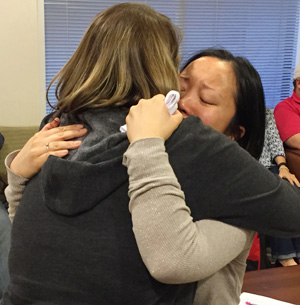
etbu kidney wives300Wendy Sutton (left) and Mary Moore hug after learning the good news that the transplant surgery involving their husbands had been completed successfully. Joey Sutton donated one of his kidneys to his lifelong friend Shane Moore.  The two grew up together in Marshall and both are graduates of East Texas Baptist University. (PHOTO:  ETBU/Vince Blankenship)“The evaluation team works really hard for you not to be a donor,” he said. “They look for all kinds of reasons to eliminate you. I was praying, ‘Lord if this is how it is going to work, and if all works out, let’s just do it.’”

The week before Christmas, Sutton received the news: He was a match. 

“I was at my wife’s office, our two children were with us, and my phone rang. I noticed it was a Houston number,” he said.

Sutton put the phone on speaker to allow his wife to listen: “This is Valerie from the transplant center. I just want to call and let you know that you are going to be a good match for Shane. We want to go forward and set a date.”

“Wendy and I were hugging, high five-ing, and crying a little bit. Our children didn’t know what was going on, and they were saying, ‘Why are you so happy?’”

Sutton asked the caller if Moore had been notified.

“No, why don’t you call him?” she suggested. 

“The phone call took me by surprise at first, because we have had some setbacks with everything,” Moore said. “When Joey told me he was a match, I was happy. But it also broke my heart that somebody cared about me that much to be willing to donate an organ to me.

How do you say thanks?

“How do you say thanks to a guy who is giving you an organ? Joey is an amazing individual who I have looked up to all my life. Anybody who is willing to give freely a piece of themselves to save another’s life is amazing. I hope what Joey is doing will inspire others to have the knowledge to be able to do this as well.”

Both had fears going into surgery—particularly that Moore’s body would reject the kidney.

“My brother asked me, ‘What if my other kidney fails after six months?” Sutton said. “Really, there are no guarantees about anything in life. Driving to work every day or just getting up in the morning, anything could happen to you. I have tried not to allow that to dictate why I should do this or why I should not do this.”

Moore agreed, saying, “I know if we lived in fear, we would never cross a street or get behind the wheel of a car.” He quoted a line from The Shawshank Redemption, a movie he and Sutton enjoyed watching together, “Get busy living, or get busy dying.”

Real fears, real faith

Sutton and Moore acknowledge their fears are real, but they look toward hope because of their faith in Christ. They have dreamed about how they might celebrate next year, if all goes well.

“I have had many physical limitations because of the dialysis. So, I am looking forward to being able to exercise,” Moore said. “We talked about doing a mud run or something like that.”


Texas Tidbits: Lilly Endowment grants $500,000 to Truett

The Lilly Endowment awarded a $500,000 grant to Baylor University’s Truett Theological Seminary to strengthen the quality of preaching. The grant will fund two initiatives at Truett Seminary. The first involves new approaches to teach preaching. Through the use of a peer-coaching model, the student coaches who already have taken classes in preaching will work with small groups in each class. Coaching will make small-group work the primary in-class activity, creating a highly participatory educational experience for students. The second initiative focuses on peer- learning opportunities for seminary graduates who are serving in congregations. In particular, this initiative is designed for ministers who would like to develop preaching skills and deepen their understanding of preaching. Pastors will commit to a two-year intensive program in a peer-learning group led by a preaching coach. Each group will meet four times a year to assess their own preaching and to receive feedback from others. These groups will work through recent literature related to preaching. In addition, participants will be invited to two retreats focused on preaching and worship.

Stepanow named HPU vice president. Edward C. Stepanow Jr. has been named vice president for finance and administration at Howard Payne University. He will oversee business operations, including facilities, planning, finance and human resources. edward stepanow130Edward C. Stepanow Jr.Stepanow has more than 20 years experience in financial management and corporate administration, with specific expertise in education management, accounting, finance, treasury, risk management, financial planning and analysis, strategic development and investor/public relations. He most recently served as executive director of finance, treasury, risk management and strategic planning at American Heritage Charter Schools in San Diego, Calif. Stepanow is a certified treasury professional, certified professional for enterprise risk management and candidate for certified financial analyst. He received a bachelor of arts degree in economics from San Diego State University and is a graduate of the ITT Group School of Management and the CIT Group School of Credit and Administration.

Baylor University and Collin College sign transfer agreement. Baylor University President Ken Starr and Collin College Interim District President Colleen Smith signed a Baylor Bound transfer agreement that will help students transfer more easily between the two institutions and expand educational opportunities for young people. The Baylor-Collin College agreement is the university’s fourth partnership, along with McLennan Community College in Waco, Tyler Junior College in Tyler and Blinn College in Brenham. Students will be able to participate in Baylor Bound at Collin College starting in the fall of 2016, with the intent to transfer to Baylor in the fall of 2017.


CERI responds to flooding in Sri Lanka, 10 years after deadly tsunami

BATTICALOA , Sri Lanka—A few days before the 10th anniversary of a tsunami that claimed more than 226,000 lives and devastated Indonesia’s island nations, Children’s Emergency Relief International received notification of torrential rainfall in Sri Lanka.

ceri essentials300CERI delivered essential supplies to families displaced by flooding in Sri Lanka.Rains sparked massive flooding and mudslides across the region, driving thousands out of their homes—and prompting CERI to action.

Since responding to the tsunami a decade ago, CERI—the overseas branch of BCFS, formerly Baptist Child & Family Services—has operated a foster care program in two of the hardest-hit cities, Batticaloa and Weligama.

The foster care effort focuses on reuniting or finding safe, loving families for orphaned children. In-country staff members conduct trauma and loss counseling for children overcoming loss and hardships. They also distribute microloans to entrepreneurial foster parents looking to break the cycles of poverty in their families and rural communities.

As the waters rose in late December, CERI again found itself searching for children and families through waterlogged streets and helping many of the 100,000 people affected by floods find refuge and food after their homes were destroyed.

CERI South Asia National Director Anita Ramesh sent daily reports to the United States. Flooding damaged three CERI foster homes beyond repair, but every family and child was accounted for. The organization coordinated temporary housing for displaced families, and CERI plans to rebuild the lost homes.

ceri talking camps300CERI also helped victims relocated to government camps after flooding in Sri Lanka.After floodwaters receded, many families asked if they could return to their homes. Sri Lankan custom demands families spend the New Year in their homes, performing thorough cleaning—symbolic of purging the previous year and preparing for a prosperous year to come.

CERI staff helped many families prepare their homes for their New Year’s customs, but other houses were too damaged by the flooding. Those families moved in temporarily with relatives or neighbors.

CERI provided all families who returned to their neighborhoods with dry goods and water for immediate use. CERI staff asked families to list necessary household items destroyed by the disaster, and BCFS was able to replace those items promptly.

“I am always inspired by the bravery and resiliency of those we serve around the world,” said Dearing Garner, CERI executive director.

“In the wake of such tragedy, hope shined as brightly as it did a decade ago thanks to the prayers and support from not only our Sri Lanka staff, but also our many friends and sponsors here in the United States.”


Texas Baptists’ hunger offering supports IMB development ministries

It’s a familiar adage: Give a man a fish, and you feed him for a day. Teach him to fish, and you feed him for a lifetime. Texas Baptists are doing both by providing $103,000 to equip International Mission Board personnel to teach people how to sustain a fish farm in South America and meet other needs around the globe.

amazon hunger meeting425Tending fish farm ponds will help create a job skill for the Bible students, who are training to lead new congregations in the Amazon rainforests. (IMB Image)In preparing proposed allocations for the Texas Baptist Hunger Offering, Gus Reyes, director of Baptist General Convention of Texas’ Christian Life Commission, contacted the IMB’s Hispanic Mobilization team for input. The team responded with five requests for needs in India, Spain, Thailand and Brazil.

One request focused on funds for a fish farming project at Centro de Formação de Líderes, a three-year Bible institute in Brazil. The ministry fits with the Texas Baptist Hunger Offering’s purpose. Funds must be used to alleviate immediate needs or help move people out of poverty—purchasing food, preparing meals, supporting agriculture and animal husbandry development, providing clean water and sanitation, supporting micro-enterprise and income development and helping prepare people for employment.

At the Centro de Formação de Líderes, two ponds are stocked with catfish and tambaqui, two types of fish sold in the local markets that are resistant to rough conditions.

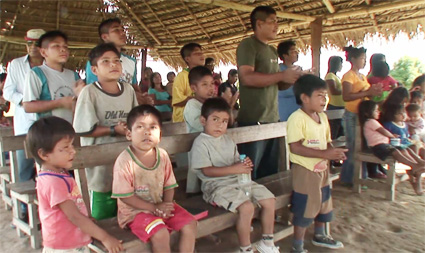
amazon hunger village425The Texas Baptist Hunger Offering funds also will support indigenous tribal training events in villages like the one pictured above, including work with national ministry partners in and around Cruzeiro do Sul, a jungle city of about 90,000 people. (IMB Image)“Taking care of the fish would help create a job skill for the Bible students,” the ministry’s director wrote in his application for the hunger offering funds.

“It would also help put food on the table for the Bible students that live on campus year-round. The sale of the adult fish would help in providing scholarships, pay for school supplies and have possible income to help pay the professors for the first time in five years.”

The center is located in the lowland jungles of Brazil. During the rainy season—November through May—the fishponds fill up, but during the dry season—June through October—ponds become dry. Texas Baptists’ gifts will help fund a project to collect hundreds of gallons of rainwater during the wet season.

The requested funds will help provide huge water containers, PVC, conduits, heavy machinery, water measuring devices, fish nets, small compressor motors, oxygen producing motor, two freezers, food for fish and minnows.

In addition, more than $13,000 funded to the Brazil project will cover a small food-production project where lettuce, tomatoes, greens and other vegetables will be grown in a simple greenhouse that only uses water. The funds also support indigenous tribal training events, including work with national ministry partners in and around Cruzeiro do Sul, a jungle city of about 90,000 people.


Container filled with ministry supplies arrives in Cuba

HAVANA—The world focused on Cuba in recent days, gauging the impact of restored diplomatic relations with the United States after more than 50 years. But for a Waco couple and a Texas Baptist Men volunteer team, a trek to Cuba was business as usual.

cuba dyson exercise425L.M. Dyson from First Baptist Church of Woodway in Waco shows a team member of the Havana Industriales how to use one of the exercise bands a Texas Baptist mission group brought the team. Texas Baptists established a relationship with the professional baseball team after Baylor University’s baseball team traveled to Cuba on a sports evangelism trip. Five members of the Industriales have professed faith in Jesus Christ and become members of Iglesia Bautista El Calvario in Havana. (PHOTO/Ken Camp)TBM agreed in 2012 to enter a ministry partnership with the Western Baptist Convention of Cuba. It includes building and remodeling projects, disaster relief training, water purification, Royal Ambassador training and church renewal. TBM also has provided scholarships for students at the Baptist seminary in Havana, which has educated ministers in Cuba more than a century.

L.M. and Dora Lynn Dyson from First Baptist Church of Woodway in Waco have traveled to Cuba at least 40 times since 1999. The Dysons work in partnership with Cuban Baptists, primarily by facilitating procurement and delivery of shipping containers filled with a wide variety of ministry supplies.

Dyson, who served 35 years on the faculty at Baylor University, handles the logistics and works with multiple partners to fill the containers—at least two dozen in 15 years.

“It takes so many people touching one container to get it to the right place,” Dyson said.

Park Cities Baptist Church in Dallas, working through the Texas Baptist Missions Foundation, provided funds for shipping the container that cleared customs in Havana Jan. 21.

cuba container425David Barrett, a Texas Baptist Men volunteer from Park Cities Baptist Church in Dallas, helps unload a 50-foot shipping container at an elder-care facility in Cuba. (PHOTO/Ken Camp)TBM volunteers filled the 50-foot container at the Dixon Missions Equipping Center in east Dallas. Contents included durable medical equipment—wheelchairs, walkers, crutches and other items—collected by Woman’s Missionary Union of Texas; assorted other medical supplies, including crates of masks and latex gloves; disaster relief supplies and equipment for Cuban Baptists; and a washer and dryer for an elder care facility operated by the Western Baptist Convention of Cuba, donated by senior adults at First Baptist Church of Woodway.

“It’s always a joint effort with many people and many organizations,” Dora Lynn Dyson said. “When people find out you are helping others, they want to be part of that.”

The container included three rolls of artificial turf from Baylor University, provided to the Havana Industriales baseball team for their practice facility. The Baylor baseball team developed a relationship with the Cuban professional team during a sports evangelism mission trip a few years ago. At least five Industriales team members have professed faith in Jesus Christ and now are members of Iglesia Bautista El Calvario in Havana.

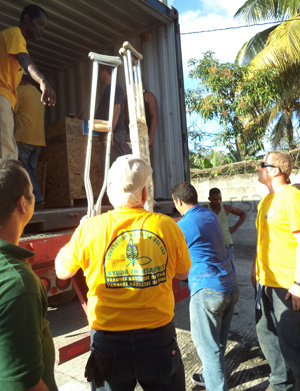
cuba crutches300Texas Baptist Men volunteers unload a 50-foot shipping container in Cuba. It included durable medical equipment collected by Woman’s Missionary Union of Texas. (PHOTO/Ken Camp)The container also included lumber, tools and other construction supplies for a half-dozen TBM volunteers to use to repair and resurface the floor of a gymnasium at El Calvario. The church uses the facility for a youth Sunday School class and various weekday ministries, as well as sports outreach and discipleship.

“We have learned an important lesson from Texas Baptist Men. We want to demonstrate the love of God through more than words,” said Juan Carlos Rojas, pastor of El Calvario. The church, which attracts about 1,200 to worship services at its downtown Havana facility, reaches an equal or greater number each week through 114 house churches.

A TBM missions team unloaded most of the container at the Cuban Baptist elder care home on the outskirts of Havana. Volunteers from El Calvario unloaded the lumber and construction supplies at their church facility—including materials a future TBM mission team will use to rebuild risers in the 113-year-old congregation’s sanctuary balcony.

While the missions team served in Cuba, another shipping container filled with food left the port of Houston bound for Havana. TBM, First Baptist Church of Woodway, Green Acres Baptist Church in Tyler, Lakeside Baptist Church in Fort Worth and others partnered to provide that shipment to supply meals for participants at the annual meeting of the Western Baptist Convention of Cuba, scheduled in March at El Calvario, and for the seminary in Havana.

In addition to ministries in Havana, several team members also delivered ministry supplies to a seminary in Santa Clara and a pastor in Vueltas who works with indigenous missionaries who serve about 100 sites in Central Cuba.

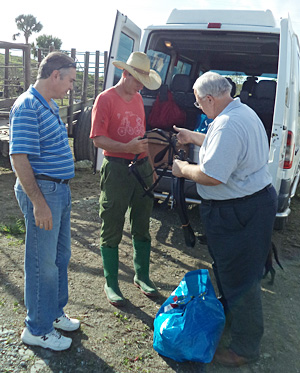
cuba farm300L.M. Dyson from First Baptist Church of Woodway in Waco delivers a harness to farmer/pastor Yoan Ramos near Santa Clara, Cuba. Dario Izquierda, instructor in biblical languages at the Baptist seminary in Santa Clara and doctoral student at the B.H. Carroll Theological Institute, serves as interpreter. (PHOTO/Ken Camp)The volunteers also delivered equipment and supplies to the pastor of a church in Santa Clara who lives with his pregnant wife and their daughter on a demonstration farm launched through the efforts of First Baptist Church of Woodway and Pastor Mike Toby, who died Dec. 29, 2012. Toby envisioned a farm that not only would become self-sustaining, but also would serve as a nursery and breeding facility to start plants and raise livestock that could be given to others to begin farms as ministry outposts.

In less than three years, Pastor Yoan Ramos has cleared more than 30 acres and planted guava, banana, yucca, lemon, peanuts and sweet potatoes, as well as raising cattle, horses, goats, rabbits, turkeys, chickens and guineas.

One TBM volunteer, Ron Wingard from Mimosa Lane Baptist Church in Mesquite, also delivered two duffels to Cuba, filled with children’s shoes provided by Buckner International as part of its Shoes for Orphan Souls ministry.

He presented one shoe-filled bag to Cavidad Arteaga Acosto, administrator of the benevolence program and women’s ministries at El Calvario in Havana. She explained the church’s benevolence ministry not only meets needs among its own congregation and in downtown Havana, but also ministers throughout western Cuba.

After learning about the scope of the ministry and depth of need, Wingard told her he had another duffel filled with shoes he had planned to deliver to the Baptist seminary in Havana the next day. He offered to bring the shoes to her, instead.

“Oh, no,” she said. “Take them to the seminary. Share with them. There are so many pastors’ children who don’t have shoes. They have needs, too.”

EDITOR’S NOTE: The sixth paragraph was edited after the story originally was posted.


Christians’ collaborative passion can change a city, Denison says

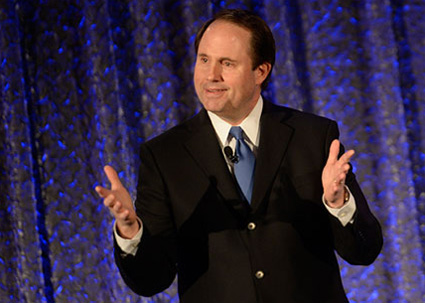
Collaborative passion is the only solution if Christians want to impact the city of Dallas, Jim Denison, founder of the Denison Forum on Truth and Culture, told participants in the second Movement Day Greater Dallas.

jim denison movementday425Jim Denison, founder of the Denison Forum on Truth and Culture.More than 2,500 people attended the event, representing a diverse cultural and ethnic constituency of Christian leadership from business, education, health care, nonprofit organizations, government and churches. The goal of the gathering is to transform the city through the cooperative efforts of God’s people.

Denison began by giving participants some good news: According to the World Christian Encyclopedia, 82,000 people make professions of faith in Jesus Christ every day—the largest rate in history. The bad news: Few of those conversions take place in Europe or North America.

“We are here to celebrate what God is doing in the nations and to pray for it to happen here,” Denison said. “Because as you look at what is happening there and contrast it with what it happening here, it is easy to get discouraged.”

Rather than discouragement, Denison offered hope. The inspiration for that hope can be found in how Jesus provided a role model of service by washing the feet of his disciples, as reported in John 13.

Collaborative passion

“If I could summarize what is going on in the world today—what some are calling the Fifth Great Awakening—I would summarize it in two words, ‘collaborative passion.’ Those two words would picture Jesus and his disciples at their table in collaborative passion,” he said.

“The body of Christ has many members—hands and feet, eyes and ears. Hands don’t do the work of feet; feet don’t do the work of hands. It’s the body together; it’s collaborative passion. Jesus said the body of Christ is a vine with many branches; there are no solos in the book of Revelation. You take the coal out of the fire, and it goes out; you keep the coal connected, and it stays ignited.

movementday logo182“Every image of the church in the New Testament is a collective image, a collaborative image. Not collaboration for the sake of collaboration—collaboration around passion,” he said.

Collaborative passion is easy to see in regions of the world where conversions to Christianity are coming in great numbers, Denison said.

“That’s what we are seeing in South Korea, when they started Yoido Full Gospel Church by going out to knock on doors to ask, ‘How can we pray for you?’

The church proving God’s love

“That’s what I witnessed in Cuba. More than a million Cubans have come to Christ in the last 10 years, and it’s because the church in proving God’s love in their lives. It’s because the church is coming together to meet felt needs to earn the right to meet spiritual needs.

“That’s what you’re seeing in Brazil. That’s what you’re seeing in Australia. That’s what you’re seeing in the underground church in China. That’s what you’re seeing in the Muslim world. You’re seeing the body of Christ, being the body of Christ,” he said.

That collaborative passion is the thrust behind Movement Day, Denison said.

“That’s why God birthed Movement Day to bring the body of Christ together. That’s why 450 different ministries and organizations are partnering together in just a year—not to create new programs, but to bring the body of Christ together to collaborate in a gospel movement with a collaborative passion to the glory of God.

“That’s what God is up to. As a catalyst to spiritual awakening, meeting felt need to meet spiritual need and earning the right to preach the gospel.”