State board approves Bible-infused curriculum

A majority of the Texas State Board of Education gave final approval Nov. 22 to a state-authored curriculum under intense scrutiny in recent months for its heavy inclusion of biblical teachings.

Eight of the 15 board members voted to approve Bluebonnet Learning, the elementary school curriculum proposed by the Texas Education Agency earlier this year. The curriculum will become available in the spring, with schools that choose to adopt the materials expected to begin using them at the start of the 2025-26 school year.
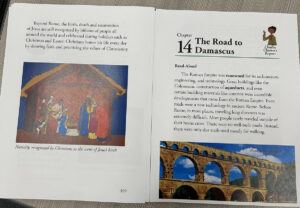
“The Road to Damascus” is a chapter in 4th Grade Reader (student book) ELAR Bluebonnet curriculum. (Photo / Calli Keener)

The curriculum was designed with a cross-disciplinary approach that uses reading and language arts lessons to advance or cement concepts in other disciplines, such as history and social studies.

Critics, which included religious studies scholars, say the curriculum’s lessons allude to Christianity more than any other religion, which they say could lead to the bullying and isolation of non-Christian students, undermine church-state separation and grant the state far-reaching control over how children learn about religion. They also questioned the accuracy of some lessons.

The curriculum’s defenders say references to Christianity will provide students with a better understanding of the country’s history.

Texas school districts have the freedom to choose their own lesson plans, so the choice to adopt the materials will remain with them. But the state will offer an incentive of $60 per student to districts that adopt the lessons, which could appeal to some as schools struggle financially after several years without a significant raise in state funding.

Three Republicans—Evelyn Brooks, Patricia Hardy and Pam Little—joined the board’s four Democrats in opposition to the materials.

Leslie Recine—a Republican whom Gov. Greg Abbott appointed to temporarily fill the State Board of Education’s District 13 seat vacated by former member Aicha Davis, a Democrat who ran successfully for a Texas House seat earlier this year—voted for the curriculum.

Abbott handpicked Recine, who was the deciding vote on the materials, to fill the seat through the end of the year days before the general election, bypassing Democrat Tiffany Clark. A majority of District 13 residents voted this election for Clark to represent them on the board next year. She ran unopposed.

Board members who expressed support for the curriculum said during the week they believed the materials would help students improve their reading and understanding of the world.

‘Establishing cultural literacy’

Members also said politics in no way influenced their vote and that they supported the materials because they believed it would best serve Texas children.

“In my view, these stories are on the education side and are establishing cultural literacy,” Houston Republican Will Hickman said. “And there’s religious concepts like the Good Samaritan and the Golden Rule and Moses that all students should be exposed to.”

The proposed curriculum prompts teachers to relay the story of The Good Samaritan to kindergarteners as an example of what it means to follow the Golden Rule: “Do unto others as you would have them do to you.”  The curriculum teaches other religions have their own version of the Golden Rule.

Brooks, one of the Republicans who opposed the materials, noted the Texas Education Agency is not a textbook publishing company and said treating it like such has created an uneven playing field for companies in the textbook industry.

Brooks also said she has yet to see evidence showing the curriculum would improve student learning and that she was opposed to the state using Texas schoolchildren as “experiments.”

Hardy, a Fort Worth Republican who also opposed the materials, said she did so without regard for the religious references. She expressed concern about the curriculum’s age appropriateness and her belief it does not align with state standards on reading and other subjects.

Little, a Fairview Republican, expressed concern on Nov. 22 that the state would have no way to see its “return on investment” with the materials, considering schools have wide latitude to adopt lessons as they see fit—meaning districts could pair Bluebonnet Learning with other learning materials, making the effectiveness of Bluebonnet as a standalone curriculum unclear.

Little said on social media earlier in the week she supports “the teaching of biblical values in education” but criticized the curriculum for some of its teaching methods, which she said leave “little time for students to practice reading and develop critical skills like fluency and comprehension.”

‘Needs to be … free of any establishment clause issues’

Meanwhile, some of the Democrats who voted against the curriculum said they worried the materials would inappropriately force Christianity on public school children. Others cited concerns about Texas violating the Establishment Clause, which prohibits states from endorsing a particular religion.

 “If this is the standard for students in Texas, then it needs to be exactly that,” said Staci Childs, a Houston Democrat. “It needs to be high quality, and it needs to be the standard, free of any establishment clause issues, free of any lies, and it needs to be accurate.”

The state had until late Nov. 20 to submit revisions in response to concerns raised by board members and the general public before the official vote took place Nov. 22.

Democratic members said, however, their concerns still remained. Childs, who is also an attorney, said she believes if someone were to sue the state for a violation of the Establishment Clause, they likely would succeed.

San Antonio Democrat Marisa B. Pérez-Diaz said she found value in the materials, but the Christian bias kept her from supporting it. Rebecca Bell-Metereau, a San Marcos Democrat, said although the curriculum attempts to reference faith traditions other than Christianity, she doesn’t feel the state did so in a meaningful way.

 “It seems to me like it is trying to place a Band-Aid on a gaping wound,” Bell-Metereau said.

In a statement Friday, Texas Education Agency Commissioner Mike Morath said the approval of Bluebonnet Learning “means that an important, optional new resource will be available for students, teachers and schools.”

“These materials were developed using the best evidence on how to teach reading and math with extensive feedback from teachers and parents to construct a product that is effective, engaging and grade-level appropriate,” Morath said.

“Bluebonnet Learning provides Texas teachers with textbooks and instructional materials that are of the highest quality, aligned to our state’s standards and foundational for student success.”

Abbott called the State Board of Education’s approval of the materials “a critical step forward to bring students back to the basics of education and provide the best education in the nation.”

‘More appropriate for Sunday schools than public schools’

In contrast, the approval drew immediate criticism from both national and local organizations.

Americans United for Separation of Church and State said in a statemen: “Texas’ new Bible-infused elementary curriculum is part of the nationwide effort by Christian Nationalists to impose their religious beliefs on public school students.”

The Texas American Federation of Teachers blasted the state for infusing school lessons with “Bible-based references more appropriate for Sunday schools than public schools.”

“We can anticipate what will come next, whether that’s the erasure of contributions of marginalized populations in social studies or the minimization of climate change in science,” the union said.

Meanwhile, conservative organizations like the Texas Public Policy Foundation, which helped develop the materials, applauded education officials for taking “the next big step toward dramatically improving the quality of education in Texas.”

 “Teachers will be able to spend more of their time doing the critical job of teaching and evaluating students, rather than spending their nights and weekends searching for lesson plans,” said Greg Sindelar, the organization’s CEO. “And parents will get to follow along as their children learn thanks to the online resources that come with the lessons.”

More than 100 Texans signed up to speak for and against the state-authored curriculum.

Courtnie Bagley, education director for the Texas Public Policy Foundation, told board members the Texas Education Agency has made every effort to respond to concerns from the public. She said rejecting the lessons would give other materials not owned by the state an unfair advantage.

“It would create a double standard, as Bluebonnet Learning has been held to a different and more stringent review process than other materials under consideration,” Bagley said.

Opponents argued revisions did not go far enough, and some questioned whether the state’s intentions with crafting a curriculum that leans heavily on Christianity are political.

“I am a Christian, and I do believe that religion is a part of our culture, but our nation does not have a religion. We’re unique in that,” said Mary Lowe, co-founder of Families Engaged for an Effective Education.

“So, I do not think that our school districts should imply or try to overtly impress to young impressionable children that the state does have a state religion.”

Half of panel have history of faith-based advocacy

Education officials say references to Christianity will provide students with a better understanding of the country’s history, while other supporters have stated their belief that the use of religious references does not violate the U.S. Constitution’s Establishment Clause.

Legal experts note recent rulings by the U.S. Supreme Court’s conservative majority have eroded decades of precedent and made it unclear what state actions constitute a violation of the Establishment Clause.

State leaders also say the materials cover a broad range of faiths and only make references to religion when appropriate. Education Commissioner Mike Morath has said the materials are based on extensive cognitive science research and will help improve student outcomes.

Of 10 people appointed to an advisory panel by the Texas Education Agency to ensure the materials are accurate, age-appropriate and free from bias, at least half of the members have a history of faith-based advocacy.

The Texas Tribune recently reported how parents, historians and educators have criticized the ways the materials address America’s history of racism, slavery and civil rights.

In public input submitted in response to the curriculum and in interviews with the Tribune, they have said the materials strip key historical figures of their complexities and flaws while omitting certain context they say would offer children a more accurate understanding of the country’s past and present. Bell-Metereau and other Texans referenced the Tribune’s reporting during public testimony.

In response to those concerns, the Texas Education Agency has said the lessons will provide students with “a strong foundation” to understand more complex concepts as they reach later grades. State officials have also said those materials are written in an age-appropriate manner.

This article originally appeared in The Texas Tribune and is reprinted with permission. It has been edited for clarity.



‘Hope in the Heartland’ brings the gospel center stage

IRVING—Desiring to bring the gospel center stage through an evening of toe-tapping entertainment, award-winning songwriters and worship leaders Chris and Diane Machen, members of Preston Ridge Baptist Church in Frisco, wrote and produced “Hope in the Heartland.”

“For people who attend the show and are not believers, we’re hoping this is a watershed moment for them,” Chris Machen said. “We’re praying that it opens up meaningful faith conversations and that people will meet the Lord in a real, life-changing way.

“We hope that everyone who attends will be encouraged by this story of struggle, friendship, community and faith. We also want believers to remember that the message of Christmas is to be shared, not kept, and that they will bring unbelieving friends to hear how a life can be forever altered by an encounter with Christ.”

Based on personal family stories

For Chris Machen, the idea for this musical started almost a decade ago when he felt the Lord leading him to share his own family’s personal stories of the Great Depression. He recalled the stories his father passed down about how their family’s unwavering faith in Christ helped carry them through the difficult times.

“About 10 years ago, I was trying to come up with an idea for our church’s Christmas dinner theater,” Chris Machen said. “I attended a music conference, but didn’t really find what I was looking for there. I remember praying, ‘Lord, what do I do?’

“Now you might think this strange, but I got the answer as if the Lord was whispering in my ear, ‘Write your own.’ I perked up, because as a songwriter, that sounded like a wonderful challenge. As I sat there pondering, I prayed again, ‘Lord, what story do I tell?’ Again, almost louder than words, I heard in my spirit, ‘Tell your dad’s story.’”

He remembered stories his father told him about growing up during the Great Depression and how his grandfather, an out-of-work carpenter, struggled to provide for his family.

“He literally wore holes in three pairs of shoes walking the streets of Amarillo trying to find work to support his family. It was a difficult time for everyone, but for my grandparents, it was made more difficult by losing infant twins,” Machen said.

“Not only that, in the midst of trying to keep food on the table, they discovered they were expecting another child. They could barely support the three children that they had, including my dad. But what got them through these difficult days was their faith in Jesus.

“I’m here today, walking with Jesus because of the faith my family clung to and passed down to me. The whole time I was writing this musical for our church, I couldn’t get it out of my head that if we could find a way to put the show in secular theaters, then people who might not ever go to church could hear the gospel if someone invited them to this show.”

Machen describes the presentation as “a fun, bluegrass, Broadway-style musical that people will really enjoy,” but he adds, “Its main purpose is to introduce people to Jesus in a unique way.”

“Hope in the Heartland” debuted in 2019 at theaters in the Dallas-Fort Worth area. “And we have been performing it ever since,” Machen said.

Open doors to spiritual conversations

With five performances scheduled Dec. 12-15 at the Irving Arts Center, Machen desires these shows will provide audiences with an encouraging evening for families to enjoy. But most of all, he prays it opens doors for conversations about the reason for the season.
“One thing that has surprised and blessed Diane and me about this production is that not only has it been an outreach to the community, but it’s also been an in-reach to our cast members,” he said.

“We have never stipulated that you have to be a Christian to be in our show. We just searched for the most talented people we could find. As a result, some of our cast members are believers, but every year many who have joined us are not. It’s given us a marvelous opportunity to encourage them, love them, provide a positive environment for them and speak about how deeply God cares for them.

“The theater world can be pretty dark. So, at most rehearsals, I share a word of encouragement based on Scripture. And little by little, we’ve tried to introduce them to the one who loves them the most and can change their lives forever.”

Some of the entertainers have experienced “church hurt” and are reluctant to attend a church service, Machen noted.

“But we’re trying to change that culture and help them see that God loves them and that they are fearfully and wonderfully made, as stated in Psalm 139,” Machen said.

The production involves 32 cast members, a production crew of about 10 and more than 20 volunteers.

“It’s a huge undertaking,” Machen said, “but worth it to see people introduced to Jesus, who is our hope in the heartland.”


Texas Baptist missions leader Joy Fenner died at age 89

Joy Fenner, a Baptist missionary, Woman’s Missionary Union of Texas leader and the first woman elected as president of the Baptist General Convention of Texas, died Nov. 29 in Dallas. She was 89.

Fenner served two decades as executive director-treasurer of WMU of Texas and was named executive director-treasurer emeritus after her retirement. She was elected president of WMU of Texas in 2009.

 “Possessing sterling qualities, such as a deep devotion to Christ and his Great Commission, imaginative creativity, thoughtfulness and a cooperative team spirit, enabled her to lead the Texas WMU productively,” said William M. Pinson Jr., who served alongside Fenner during his time as BGCT executive director.

Joy Phillips Fenner was born March 3, 1935, in Avinger to Samuel and Beulah Mae Phillips and grew up in East Texas. She attended Paris Junior College and what was then East Texas Baptist College.

She was secretary at First Baptist Church in Marshall before she joined the staff of Texas WMU to serve as state director of the Girl’s Auxiliary, now known as Girls in Action, from 1959 to 1966.

Texas Baptist Voices
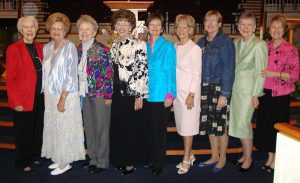
Joy Fenner (2nd from right) and Texas WMU President Gloria Mills (right) are pictured in this 2010 photo with former presidents (left to right) Amelia “Millie” Bishop, Gerry Dunkin, Mary Humphries, Jeane Law, Kathy Hillman, Nelda Taylor (now Hoffman) and Paula Jeser. (File Photo by Kathy Hillman)

Kathy Hillman, who served as president both of Texas WMU and the BGCT, noted she was a GA when Fenner was state director of the program. So, she sometimes joked that she was “a Joy Phillips GA.”

“Later, she referred to me as her first Joy Phillips Fenner GA Texas WMU president, which I assume was true. At least she claimed me,” Hillman said.

“Through the years, many of us had the wonderful privilege of working with Joy and count her as a wise mentor, consistent encourager and dear friend.”

Joy and Charlie Fenner married on Oct. 8, 1966, and they served together as Southern Baptist missionaries in Fukuoka, Japan, until 1980.

Carolyn Porterfield—who served in a variety of roles with Texas WMU—first met the Fenners when they were in Fukuoka and she was a missionary Journeyman based in Kyoto.

“Who could imagine that years later, Joy would invite me to join her staff at WMU of Texas?” Porterfield asked.

“Joy taught me much about missions and being a woman in leadership in Baptist life, which is not always welcomed or easy. At some point, she became more than my boss, but also my friend.”

Executive leader of Texas WMU for two decades

Soon after the Fenners returned to Texas, Joy Fenner became executive director-treasurer of Texas WMU in January 1981.

“Her experience serving on a church staff, then as a member of the Texas WMU staff, and then as a missionary in Japan prepared her in special ways for the role she filled successfully as the executive leader of the WMU of Texas,” Pinson said.

“Leading a highly skilled, hard-working staff in praying for God’s guidance and laboring to follow his direction, she advanced the missionary endeavors of Baptists.”

As chief executive of Texas WMU, Fenner was a key leader in raising funds to start new churches as part of the Mission Texas emphasis. That included the “triple-triple” campaign for the Mary Hill Davis Offering for State Missions, challenging churches to triple one year’s offering and then triple it again the next year.

Fenner also was instrumental in developing the WorldTouch and Touch Tomorrow Today endowments to support mission work through Texas WMU.

Soon after she retired from Texas WMU, she served as interim executive director of Tennessee WMU from 2001 to 2003.

First woman elected as BGCT president

Messengers to the 2007 BGCT annual meeting in Amarillo elected Fenner as president of the state convention. She served previously as BGCT second vice president and then first vice president.

Joy Fenner was the first woman elected as president of the Baptist General Convention of Texas. (File Photo)

BGCT Executive Director Charles Wade served with Fenner first when she was executive director-treasurer of Texas WMU and later when she was a BGCT officer.

When Wade expanded the executive director’s leadership council to include the top executive leaders of Texas WMU and Texas Baptist Men, Fenner was the first woman to serve on that council, where she offered “valued input” and thoughtful counsel, he said.

In all her leadership roles, she “raised the level of any conversation” in which she participated, he said.

“Joy Fenner had a clear-eyed view of what it meant to be a Baptist on mission,” Wade said. “She encouraged, called out, challenged and led by example.”

Fenner was a longtime member of Gaston Oaks Baptist Church in Dallas and served on the board of the Gaston Christian Center.

At various times, she served on the board of trustees of East Texas Baptist University and the boards of the WMU Foundation, Baylor University’s School of Social Work and Healing Hands Ministries.

independence pinson fenner425
Joy Fenner received the Texas Baptist Elder Statesman Award at Independence Baptist Church. (File Photo)

She received honorary doctorates from ETBU and the University of Mary Hardin-Baylor and was named an honorary alumnus of Baylor’s Truett Theological Seminary.

She was named a Texas Baptist Elder Statesman, and she received the Pioneer Award for Service from the Texas Baptist Missions Foundation and the George W. Truett Distinguished Church Service Award from the Baylor Alumni Association.

She was preceded in death by her husband of 50 years, Charlie, in 2017. She will be buried alongside him at the Dallas-Fort Worth National Cemetery at a date to be determined.

A memorial service is scheduled at Gaston Oaks Baptist Church at 1 p.m. on Dec. 19. A reception will follow the service. Memorial gifts can be made to the Gaston Christian Center, c/o Nataly Sorenson, 8515 Greenville Ave., Dallas TX 75243.

EDITOR’S NOTE: The article originally was posted Tuesday morning, Dec. 3.  The last paragraph was revised later that afternoon after arrangements for the memorial service were finalized.


Conexión Esposas ministers to Hispanic pastors’ wives

“There is no area of your heart or your life that escapes the presence of God or that he does not have within the reach of his hand. … The Lord loves us, and we need to be united, have fellowship together, remembering what God has prepared for us,” said Brenda Rincones, director of Conexión Esposas, a ministry of Convención Bautista Hispana de Texas.

“The enemy has already made plans to destroy it. We have to be prepared and united, serving together for the glory of God,” she added.

“Together, faithful and healthy” is the motto of Conexión Esposas (Wives’ Connection), which includes retreats, conferences, connection groups and resources.

“I have been waiting 32 years for this event,” said Martha Aranda, pastor’s wife, who participated in the event. “It was very refreshing to come to South Padre Island away from everything to spend time with God, fellowship and also learn together with my sisters,” she added.

During the retreat, the participants had the opportunity to spend time together, meditate on the word of God, pray together, participate in games, exchange information, walk on the beach, express their opinions on current issues in the ministry, praise and worship God.

According to Rincones, there is a great need to hold this retreat every year. “For several years, we have had a connection for pastors, but the pastors who attended wanted to bring their wives, and I volunteered to minister to them,” Rincones said.

“But thank God, now, for the first time, this Conexión retreat is only for the pastor’s wife,” Rincones continued. “We want them to have companionship, to stay together, faithful and healthy, supporting each other to build lasting relationships,” added Rincones.

Sharing struggles

Lulú Martínez of First Baptist Church in San Antonio, who is undergoing cancer treatment for the second time, prayed for Sunday’s session and encouraged her fellow pastor’s wives to do self-examinations for cancer and to go to the doctor every year to get tested.

“Remember that you are never too young or too old to get tested for cancer,” Martínez said.

Martínez also shared how she accepted her cancer diagnosis, the will of God, and how she continues to serve God with faith and determination.

“I didn’t want to see my cancer as a tribulation, or as a struggle. I want to really use my cancer this time as an opportunity to get closer to God. … I have been able to see God work in me, because sometimes in ministry, we feel so overwhelmed that everything we do becomes a routine and an awakening is needed,” she continued.

Her cancer has served as her awakening. “I know that through this opportunity, this cancer, God has allowed my husband and I to become closer. It has allowed me to get closer to my family, and our prayers have become more meaningful and are no longer empty, because now I have learned to pray specifically,” Martinez said.

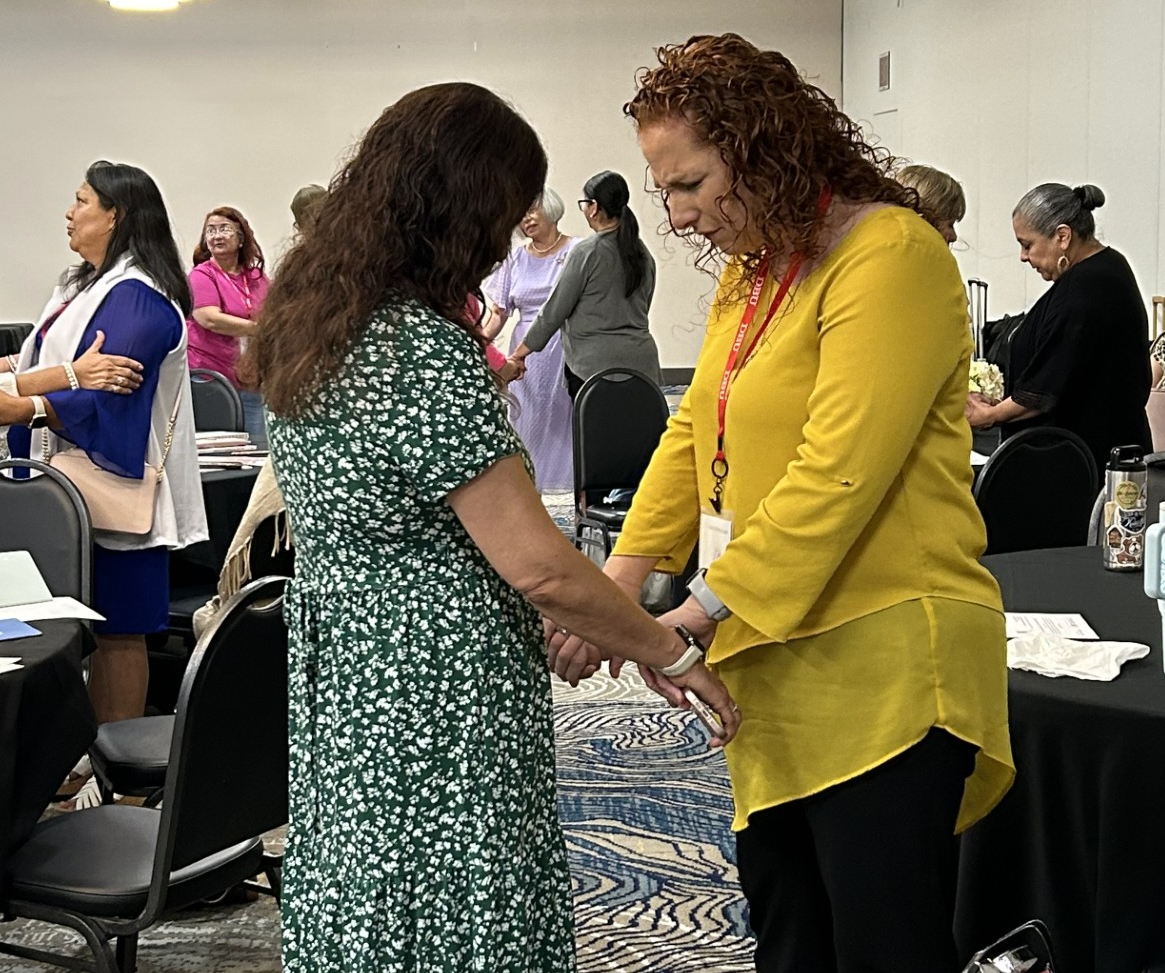
Pastors’ wives praying for each other during Conexión Esposas. (Courtesy photo

Purpose for connecting pastors’ wives

Lydia Martínez-Lara, another pastor’s wife, said: “I feel renewed. We don’t know why God put us in the positions we are in now, as pastors’ wives. We don’t know, but no matter what comes, we praise God for this ministry.”

“Serving God is a blessing. Let’s meet next year to share what God will be doing among us. I am encouraged and ready to go reach and win more souls for God,” Martínez-Lara noted.

Jesse Rincones, executive director of Convención Bautista Hispana de Texas and senior pastor of Alliance Church in Lubbock, welcomed all pastors’ wives. He invited them to be part of a new initiative through the convention that encourages them to start connection groups of pastors’ wives in their community and throughout the state of Texas.

“You need to meet once a month, and we will be offering you financial aid sponsored by the Lily Endowment and our convention” as part of Convención’s Pastors Intiative, said Rincones.

According to Rincones: “The objective of the Conexión Pastors Initiative is to strengthen and support Hispanic Baptist pastors in the state of Texas with the objective of advancing in their ministry, forming a like-minded group of pastors, contextualizing ‘peer groups’ for each network of fellowships (compañerismos), and fostering ongoing relationships that lead to healthy development on a personal and ministerial level.”

Resourcing pastors’ wives

During the retreat, Zoricelis Dávila—professor at Liberty University, professional counselor and native of Puerto Rico—led the wives to examine their emotions and learn to control them based on her book ¡No sé lo que me pasa! (I Don’t Know What’s Happening to me!), published by Mundo Hispano.

With a biblical basis, Dávila offered them tools so they can control their emotions. Being a professional counselor, she spent one-on-one time with some of the women and was part of a panel where pastors’ wives were able to ask her questions about various health topics that affect or could affect their ministries.

Clara Molina—adjunct professor at Southwestern Baptist Theological Seminary and women’s team leader of the National Hispanic Baptist Network, originally from the Dominican Republic—guided the pastors’ wives to consider how they can serve God together.

Molina also helped them to identify seven thorns that could grow in their ministry that can take away their focus from ministering to their families and other women, and badly influence their marriages. Molina also gave each of them her book, ¡Oh no! Mi esposo es el pastor, published by Mundo Hispano (Oh no! I Married the Pastor is published by Thomas Nelson/Zondervan in English).

Convención’s vision for the Conexión Pastors Initiative is “to see healthy pastoral families,” said Jorge Vázquez, who leads the initiative. “As director, my main goal at Conexión is to see pastors and their wives prosper and sustain their relationship in the ministry they already have, offer them resources and minister to them through the events we offer,” Vázquez added.

The retreat took place Oct. 25-27, at the Holiday Inn Resort on South Padre Island, and the next retreat is scheduled for Oct. 24-25, 2025, in San Antonio. For more information visit conventionbautista.org.


Conexión Esposas ministra a esposas de pastores hispanos

“No hay área de tu corazón o de tu vida que se escape de la presencia de Dios o que Él no tenga al alcance de Su mano. … El señor nos ama y necesitamos estar unidas y tener compañerismo juntas, recordando que lo que Dios tiene preparado para nosotras el enemigo ya hizo planes para destruirlo. Tenemos que estar preparadas y unidas, sirviendo juntas para la gloria de Dios”, dijo Brenda Rincones, directora de Conexión Esposas de la Convención Bautista Hispana de Texas.

Conexión Esposas incluye retiros, conferencias, grupos de conexión, ofrece recursos y tiene el lema: “Juntas, fieles, y saludables”.

“Yo he estado esperando 32 años para este evento”, dijo Martha Aranda, esposa de pastor, quien participó en el evento. “Fue de gran refrigerio venir a South Padre Island, lejos de todo para pasar tiempo con Dios y también aprender junta con mis hermanas”, añadió Aranda.

Esposas de pastores orando unas por otras durante Conexión Esposas. (Foto cortesía)

Durante el retiro, las participantes tuvieron la oportunidad de pasar tiempo juntas, meditar en la palabra de Dios, orar juntas, participar en juegos, intercambiar información, caminar por la playa, expresar sus opiniones sobre temas actuales en el ministerio, alabar y adorar a Dios.

De acuerdo con Rincones, existe una gran necesidad para llevar a cabo este retiro todos los años. “Desde hace varios años hemos tenido conexión para los pastores, pero los pastores que asistían quería traer a su esposa y yo me ofrecía como voluntaria para ministrarles a ellas,” dijo Rincones.

“Pero, gracias a Dios, ahora, por primera vez, este retiro Conexión es sólo para la esposa del pastor”, continuó Rincones. “Queremos que ellas tengan compañerismo, que permanezcan juntas, fieles y saludables, apoyándose una a la otra para que construyan relaciones duraderas”, añadió Rincones.

Compartiendo luchas

Lulú Martínez, de la First Baptist Church en San Antonio, quien está en tratamiento de cáncer, oró por la sesión del domingo y animó a sus compañeras a que se auto examinen como prueba de detección del cáncer y que vayan al doctor todos los años a

Examinarse. “Recuerden que nunca eres muy joven o anciana para examinarte para el cáncer”, dijo Martínez.

Martínez también explico cómo fue que ella acepto su diagnóstico de cáncer, la voluntad de Dios y como ellas sigue sirviéndole a Dios con fe y determinación. “No quería ver mi cáncer como una tribulación, o como una lucha, quiero usar este tiempo realmente como una oportunidad para acercarme más a Dios. … He podido ver a Dios obrar en mi porque, a veces en el ministerio, nos sentimos tan abrumadas que todo lo que hacemos se convierte en una rutina y se necesita ‘un despertar’”, dijo Martínez.

Su cáncer le ha servido como éste despertar. “Sé que a través de esta oportunidad, este cáncer, Dios ha permitido que mi esposo y yo nos acerquemos más. Me ha permitido acercarme más a mi familia, y nuestras oraciones se han vuelto más significativas y ya no son vacías porque ahora aprendí a orar específicamente,” añadió Martínez.

Propósito de conectar a las esposas de pastores

Lydia Martínez-Lara, otra esposa de pastor, dijo: “Me siento renovada, no sabemos por qué Dios nos puso en las posiciones que estamos ahora, como esposas de pastor. No sabemos, pero no importa lo que venga, alabamos a Dios por este ministerio. Servirle a Dios es una bendición. Reunámonos de nuevo el próximo año para compartir lo que Dios estará haciendo entre nosotras. Estoy animada y lista para ir a alcanzar y ganar más almas para Dios.”

El director ejecutivo de la Convención Bautista Hispana de Texas, Jesse Rincones, y pastor principal de la iglesia Alliance Church en Lubbock, les dio la bienvenida a todas esposa de pastores. Rincones les ofreció la oportunidad de ser parte de la una nueva iniciativa por medio de la convención, la cual las anima a comenzar grupos de conexión de esposas de pastores en su comunidad y por todas partes del estado de Texas.

“Es necesario que se reúnan una vez al mes, y les estaremos ofreciendo ayuda financiera patrocinado por la Lily Endowment y Convención”, dijo Rincones.

El ministerio para la esposa del pastor es parte de la Iniciativa de Pastores Conexión de Convención y de acuerdo con Rincones: “El objetivo de la Iniciativa de Pastores Conexión es fortalecer y apoyar a los pastores bautistas hispanos del estado de Texas con el objetivo de avanzar en su ministerio, formar un grupo afín de pastores, ‘peer group’ contextualizando para cada red de Compañerismos y fomentar relaciones continuas que conduzcan hacia un desarrollo saludable a nivel personal y ministerial.”

Recursos para las esposas de los pastores

Durante el retiro, Zoricelis Dávila—profesora en la Universidad Liberty, consejera profesional, y originaria de Puerto Rico—dirigió a las esposas a examinar sus emociones, a aprender a controlarlas, basándose en su libro ¡No sé lo que me pasa!, publicado por Mundo Hispano.

Con una base bíblica, ella les ofreció herramientas para que ellas mismas lo puedan hacer. Al ser una consejera profesional, Dávila pasó tiempo individual con algunas de ellas y fue parte de un panel dónde las esposas de pastores pudieron hacerle preguntas sobre diversos temas de la salud que afectan o puedan afectar sus ministerios.

Clara Molina—profesora adjunta en el Seminario Teológico Bautista Southwestern, líder del equipo de mujeres de la Red Nacional Bautista Hispana, originaria de la Republica Dominicana—guio a las esposas de pastor a considerar como pueden ellas vivir sirviendo a Dios unidas.

También las ayudó a identificar siete espinas que crecen en el ministerio que le pueden quitar el enfoque para ministrar a sus familias, a otras mujeres, e influenciar a sus matrimonios. Molina también le

otorgó a cada una de ellas su libro ¡Oh no! Mi esposo es el pastor, publicado por Mundo Hispano.

La visión de la Iniciativa Pastoral de la Conexión es “ver familias pastorales saludables”, dijo Jorge Vázquez, quien dirige la iniciativa. “Como director, mi objetivo principal en Conexión es ver a los pastores y sus esposas prosperar y sostener su relación en el ministerio que ya tienen, ofrecerle recursos, y ministrarle a través de los eventos que ofrecemos para ellos”, dijo Vázquez.

El retiro tomó lugar del 25 al 27 de octubre, en el Holiday Inn Resort en South Padre Island, y el próximo retiro está programado para el 24 al 25 de octubre 2025, en San Antonio Texas. Para más información visite convencionbautista.org.


Baptists support Texas law regulating porn sites

NASHVILLE (BP)—Texas Baptists’ Christian Life Commission, in conjunction with the Ethics and Religious Liberty Commission of the Southern Baptist Convention and the Southern Baptists of Texas Convention has filed an amicus brief in an upcoming Supreme Court case which will consider a Texas law requiring adult websites to verify the age of their users.

The law in question, Texas House Bill 1181, requires websites to verify the age of their users if at least one-third of their hosted content is considered “harmful to minors,” such as pornography. The law also requires such websites to include a warning describing the harmful medical and societal effects of pornography consumption.

The case, Free Speech Coalition v. Paxton, will rule on whether or not the legislation violates the First Amendment by placing a burden on adults’ access to content the plaintiffs believe is protected by free speech.

It involves an adult industry trade organization—Free Speech Coalition—and other plaintiffs suing the State of Texas to prevent the law from taking effect. Texas Attorney General Ken Paxton is named as the defendant in the case.

ERLC amicus brief

The ERLC filed an amicus brief Friday, Nov. 22, in conjunction with the Baptist General Convention of Texas and Southern Baptists of Texas Convention.

The brief explains the advent of free access to pornographic content via the internet should cause the High Court to examine what guidelines should be in place to protect minors.

“The exhibition and distribution of media containing obscene portrayals of sexual conduct is nothing new in America,” the brief states.

“But in the grand scheme of history, what is relatively new is the ubiquitous access that the internet provides to such materials. This gives rise to a host of moral, social, and health concerns, not the least of which is minors’ access to these materials.”

HB 1181 was passed in June 2023. A group of pornography companies, led by Free Speech Coalition, filed a lawsuit a month later to prevent it from going into effect.

BGCT and SBTC support

Baptists in Texas are committed to protecting children, which led to both state conventions’ participation in the brief.

John Litzler, director of public policy and general counsel for the BGCT, said: “In an effort to have courts strike down the age verification law, the pornography industry claims their content is protected by the fundamental right to free speech.

“They are wrong. While Texas Baptists are strong proponents of free speech rights, those rights do not include the freedom to provide pornography to minor children. We are grateful for the opportunity to link arms with our SBC and SBTC brothers and sisters to support the important and constitutional work the Texas Legislature has done to protect children in our state.”

“Churches must always fiercely stand up to protect our children from sexual immorality and pornography,” said Nathan Lorick, executive director of the SBTC.

“The SBTC signed on to this amicus brief because we believe that not only is pornography wrong, offering it to children is atrocious. We support age verification and are grateful for all who have worked to protect our children.”

Texas Attorney General

A district court granted the group’s preliminary injunction, but the Texas Attorney General’s office appealed the ruling, and the injunction was vacated by the 5th Circuit Court of Appeals.

Paxton applauded the decision of the 5th Circuit to uphold the law.

“Texas has a right to protect its children from the detrimental effects of pornographic content,” Paxton said in a press release last year. “As new technology makes harmful content more accessible than ever, we must make every effort to defend those who are most vulnerable.”

The challengers came to the Supreme Court in April of 2024 asking them to intervene, and in October the High Court announced it would take up the case as part of its January term.

U.S. Supreme Court to weigh in

The Supreme Court’s decision will rely on how it determines whether a user’s First Amendment rights have been violated.

The choice is between two methods or tests of interpretation known as the “rational basis” review or the “strict scrutiny” test.

The rational basis method, which was used by the lower court in its decision, looks at whether the law is rationally related to a legitimate government interest.

The challengers argue the strict scrutiny method should be applied instead, which would mean it is up to the government to demonstrate age-verification is the only solution to protect minors from harmful content.

SBC stance

The ERLC’s brief appealed to the 2001 SBC resolution “On The Plague Of Internet Pornography” and the Baptist Faith and Message 2000 to illustrate Southern Baptists’ stance on the dangers of pornography, especially for minors.

“Southern Baptists believe that God gave all of humanity free choice when it comes to questions of morality. But minors often lack the developmental capacity or moral maturity to know how to exercise that free choice responsibly,” the brief continues.

“Thus, Southern Baptists believe it is important to structure society and society’s rules to maximize the ability to educate and train minors on their social and moral responsibilities. … And the States certainly have an important role to play in this process.”

The brief argues the lower court was correct in using the rational basis review method, and the challengers’ argument lacks historical context regarding the First Amendment.

“As originally understood, the First Amendment existed primarily to protect political speech and speech on matters of public concern,” the brief states.

“It was not originally understood to protect obscene expression, especially when such expression might be received by minors. To the contrary, it has been understood from the beginning of the Republic that States have broad discretion to use their police-power authority to protect minors from such expression. The Constitution has long given State policymaking a wide berth in this regard … Given this historical context, rational-basis review is the proper standard here.”

The Supreme Court will hear the case Jan. 15.


2024 B.E.S.T. award recipients announced

Texas Baptists’ Office of Cooperative Program Ministry announced the winners of its 2024 Baptist Educators Serving Texans Award.

The award celebrates Baptist educators who are living out their faith daily among their students and the Texas Baptists institutions where they received their training. Eight award recipients were selected from among the universities that affiliate or relate to Texas Baptists.

The recipients are: Jason Fletcher, a graduate of Baylor University and high school science teacher in Midway ISD; Bailey Jordan Wofford, a graduate of Dallas Baptist University and middle school teacher in Mansfield ISD; Nay Chevalier, a graduate of Houston Christian University and teacher, leader and dean of students in Houston ISD; Sharon Davis, a graduate of the University of Mary Hardin-Baylor and retired former principal liaison at ESC Region 12, executive director for elementary schools and assistant superintendent in Killeen ISD; Amy Moss, a graduate of Wayland Baptist University and choral director in Frenship ISD; Jennifer Jordan, a graduate of Hardin-Simmons University and high school social studies teacher and department chair in Abilene ISD; Brandi Parrish, a graduate of Howard Payne University and high school English teacher in Kilgore ISD; Liliana Virginia Player, a graduate of the Baptist University of the Américas and high school geometry teacher in Schertz-Cibolo-Universal City ISD.

Cooperative Program Director Clay Jacobson and the Office of Cooperative Program Ministry coordinated the award selection process.

“The B.E.S.T. Educators Award is a recognition of the outstanding achievements that an educator has accomplished in their field to the degree that their Texas Baptists alma mater recognizes their work,” Jacobson said.

“Publicly accessible education was born from the Protestant conviction to work for our community’s and society’s common good from a Christian worldview. The collaboration of Texas Baptists churches and our universities serve Texas and beyond towards this goal,” he added.

The annual award is presented to select Texas Baptists institution graduates who currently serve in faculty or administration roles in the Texas Public School System and are members of a church supportive of the Baptist General Convention of Texas. Each university affiliated or related to Texas Baptists has the opportunity to select one graduate.

It is estimated graduates from Texas Baptists universities represent 6 to 8 percent of the more than 357,000 public school educators in Texas. The 2025 Missions and Ministries Budget, which was passed by messengers to the 2024 BGCT annual meeting, Nov. 10-12 in Waco, reflects an investment of more than $6.4 million in base support, student scholarships and ministerial financial aid directed to Texas Baptists educational institutions.

Texas Baptists Cooperative Program celebrates these graduates who share Christ daily in their classrooms and schools through the love and support they show their students. The B.E.S.T. Award was introduced in 2020 to honor the valuable contributions of these educators.


Small Baptist association finds renewed purpose

Several hundred people in North Carolina, who continue to deal with the aftereffects of Hurricane Helene, will be warmer this Thanksgiving due to the generosity of a small Baptist association in Texas.

Keith Blanton, pastor of Cedar Shores Baptist Church in Morgan and new director of missions for Bosque Baptist Association, and Greg Beard of Grace of Giving left from the Baptist General Convention of Texas annual meeting in Waco, Nov. 10-12, to deliver heaters to two churches in the mountains of far west North Carolina.

Greg Beard, Grace of Giving president, loading the heaters in the trailer. (Courtesy Photo)

Beard is a member of Blanton’s church and president of Grace of Giving, a ministry that has delivered needed food and supplies to partners in the Rio Grande Valley since 2004.

When the churches in the association expressed interest in providing support to people affected by Hurricane Helene, Beard had connections in North Carolina who helped identify lack of heating as a serious concern heading into colder weather.

Propane tanks were available in North Carolina in the area the association planned to serve, but the contact noted they did not have access to heaters.

Beard pinpointed a specific type of propane heater that is safe to use indoors and affordable. The association would need to purchase the heaters and hoses to adapt them to the propane tanks for $150 per unit.

The association put out a call for heaters, allowing three to four weeks to collect the contributions before delivery. Blanton set a goal of 30 units for the association, believing it to be a reasonable goal for a small association comprised of small rural churches. With Grace of Giving contributions, they hoped to provide 100 heaters in all.

God had other plans

But the churches responded quickly and generously, providing enough funds for 118 heaters. Grace of Giving collected enough for 104 heaters.

“I know God is in this because every little piece has just fallen into place,” Blanton noted.

Because the initial hoses they purchased didn’t work when they came in, the hoses were exchanged for hoses that were $12 cheaper, reducing the cost per unit to $148. And a donor had offered to close the gap if there was a minimal shortage on the full cost of one unit.

In total, the association collected enough funds to purchase 240 heaters and hoses, the exact maximum number of heaters the trailer could hold. Additionally, the gooseneck of the trailer can fit exactly the number of milk crates needed to hold and transport the individually packaged hoses.

Keith Blanton loads the final heater into the trailer. (Screengrab)

One hundred heaters were delivered to Plumtree Church in Plumtree, N.C., where Ryan Bridgeo is pastor. Fifty of these heaters will be shared with a local Baptist church, Roaring Creek Baptist Church.

One hundred and forty heaters were to be delivered to Matthew Toney, a deacon at The Ark of Western North Carolina, a nondenominational church in Spruce Pine, N.C.

But Blanton explained that while packing the trailer they discovered they could fit 10 more heaters. A last-minute donation to fill the trailer came through, bringing the Spruce Pine donation total up to 150 heaters and hoses.

The heaters will be distributed to those in the greatest need in the local tri-county area, including the local Hispanic community, Blanton noted.

At-risk association

This ministry might not have happened just a couple of years earlier.

On the heels of the COVID-19 pandemic, the dwindling association considered disbanding.

Bosque Baptist Association, comprised of 19 churches from several small towns in Bosque County, near Lake Whitney, particularly was impacted by the COVID-19 pandemic, Keith Blanton director of missions and pastor of Cedar Shores Baptist Church in Morgan, explained.

The rural churches sorted out how to adjust to the constraints the pandemic brought in the way each church felt worked best for the particular needs of its congregation.

The association cancelled its first meeting of 2020 in response to the COVID threat. Then in April of that year, the director of missions resigned to take a pastoral role in one of the churches in the association, Blanton said.

The association attempted to fill the open role, but with limited interest from applicants, struggled to find the right person for the job.

The association continued to hold annual meetings, with officers agreeing to continue their leadership during the interim. But in October of 2022, at the Bosque Association annual meeting, the future of the organization was up for discussion, Blanton explained.

The small group who came to the meeting considered options to “keep going along like we were at the time. One was to perhaps join with another association. Another was to just disband completely.”

The association decided to form a committee to explore ways to revitalize the association and encourage churches to become more active as an association again. Blanton said he wasn’t on that three-person committee but asked to meet with them, because he had some ideas.

The upcoming holidays delayed the start of the new committee. But one committee member, who is a music minister in the association, went ahead and planned for February 2023 an annual music festival the association holds.

Turn out for the festival was good, with 10 of the churches in the association participating, Blanton noted.

The church where the festival was held can hold 210 people, and it was packed, he explained. “So many of our churches came.”

People were singing and worshiping. “It was clear to everyone that was in there that the Holy Spirit was present. And it was really a good time of worship and fellowship between the people in our association,” Blanton said.

When he got up the next day at 5 a.m. to drive his school bus, Blanton said he was still “pumped” from the uplifting associational meeting the night before. As he was driving his bus, he thought to himself, “This association is not dead.”

The Grace of Giving trailer packed with heaters, ready to go to North Carolina. (Courtesy Photo)

“We thought as recently as October that we’re on life support, and it’s just not functioning,” he added. “[But] the people are here. The people are enthusiastic. The people can get excited. If only somebody would step up to lead them, we could do some really great things in ministry.”

When “somebody” is you

Blanton recalled how he’d raised his girls not to be the person who walks past a piece of trash on the ground and thinks, “Somebody ought to pick that up.” But instead, be the person who stops to pick up the litter or do whatever it is that needs doing.

He said it occurred to him: “You are somebody. If you volunteer to lead the association, maybe we could do some really great things in ministry.”

So, Blanton called the secretary of the association and asked to meet with the committee to discuss his willingness to be considered for the director of missions position.

He told the committee that director of missions was not something he’d ever aspired to be and assured the committee if they did not sense God was calling him to that role, “you’re not going to hurt my feelings.”

But the committee members all sensed God was leading that direction and Blanton added DOM to his pastor and bus driver titles in June of 2023.

He began the work with reestablishing connections between the association and the pastors of churches in the association.

In early 2024, the association hosted more opportunities to connect, with missions- and revitalization-focused workshops, than they’d held in a long time.

In the summer, the association worked together on a mission trip to Brownsville to help a church plant. Fourteen people participated and made many beneficial contacts for the church plant.

Several families the Bosque Association team met in canvasing were willing to host Bible studies in their homes and to join in the work of planting the new church.


CLC files complaint against retailers skirting lottery rules

Texas Baptists’ Christian Life Commission filed a complaint with the state attorney general’s office last month against three lottery retailers for selling scratch-off tickets in violation of the Texas Lottery Commission’s rules.

“Texas’ rules for the lottery prohibit the sale of lottery tickets over the phone or other similar devices,” the CLC explained in its latest newsletter.

The CLC sent letters to committee members in both the Texas House of Representatives and the Texas Senate outlining the complaints and noting these online sales of scratch-off lottery tickets violate Texas law.

“Unlike the controversial changes in 2020 to the Texas Lottery draw game rules that introduced new processes and definitions in 401.304 (b) ‘Entry of Plays’ to obscure the sale of Texas Lottery draw games via couriers, there are no such provisions in the Scratch Ticket Game Rules to allow the so-called ‘ordering’ of scratch tickets,” the letter reads.

In recent testimony before the Senate Committee on State affairs, CLC Consultant Rob Kohler explained how the retailers named in the letter “and the so-called ‘couriers’ they share common ownership with are acting in defiance of the legislature and the will of the people of Texas,” the CLC newsletter stated.

This type of lottery ticket sale constitutes an unauthorized expansion of gambling in Texas contrary to the lottery statutes and rules established when the lottery was put to a vote and established in 1991, Kohler explained in a phone call.

The Texas Lottery rules stipulate lottery players must be “physically present” at a licensed terminal location. The language used in the rule specifically prohibits the sale of lottery tickets “by mail, phone, fax, or other similar method of communication.”

Rule changes made by Zoom

But in 2020, during COVID, the lottery commission met by Zoom and changed the rules to delete the “present at the terminal” language and change the definition of what it meant to sell lottery tickets, opening the door to lottery ticket sales by phone or online.

The commission also deleted a rule that said a retailer “shall not accept telephone or mail-in requests to issue a ticket,” Kohler explained, among other changes.

The Texas Lottery Commission has claimed they made the 2020 changes to provide clarity and did not see them as substantive. The commission also claims it has no control over the “couriers.”

But Kohler provided testimony before the Texas Lottery Commission, Oct. 29, explaining the commission has dealt with the sale of Texas lottery tickets through means other than in person at a physical retailer very differently in the past.

Kohler argued a 1995 case of a dispute between the Texas Lottery Commission and “Pick-a-State,” involving phone sales—conducted in the same fashion the online “couriers” utilize—shows the claims Texas Lottery Commission is now making of having no control of couriers doesn’t line up with their history.

Kohler explained in the 1995 case a New Jersey police officer, Scott Wenner, used the vendor Pick-a-State to win a $10.4 million Texas Lottery jackpot, by phone purchase.

The case went all the way to the Supreme Court, Kohler noted. And at the time, the Texas Lottery Commission took a very different stance, threatening to revoke the lottery license of the liquor store that sold the ticket.

In 1995, the lottery commission argued the ticket was sold over the phone across state lines for more than face value, violating regulations requiring that all aspects of the lottery sale happen at the licensed retail location.

The Texas Lottery Commission challenged the win and refused to pay it, before eventually settling with Wenner, Kohler explained.

But in 2023, when an international syndicate bought up almost every possible combination and scored a $95 million Texas Lotto jackpot using online “couriers” the Texas Lottery Commission added extra machines to retail locations to print out mass tickets, making the rigged win achievable. And the commission made no argument against paying out the purse.

“How these actions did not violate Sec. 466.307 prohibiting the influence of the selection of winners is a question I still haven’t gotten the answer to,” Kohler said.

This is a marked contrast to the 1995 case when the commission fought against remote purchase of tickets across state lines, he noted.

While the Texas Lottery Commission legal counsel was familiar with the 1995 case, it appeared the lottery commission was not. That is a significant miss because its relevance is clear, and—as such—the case should have been included in documents submitted to the Sunset Advisory Board in connection with its ongoing Sunset review of the Texas Lottery Commission, Kohler explained.

‘Couriers’ and retailers a turn-key operation

The retailers specifically cited as being “commonly owned” with a courier in the CLC letter are located in Austin. But the companies that own these gambling-specific locations (not typical convenience stores)—Winners Corner and Players Café—are owned by “courier” companies Lotto.com and Jackpocket.com.

These “couriers” are under domestic ownership in New Jersey and Boston, but other “couriers” are owned by companies operating from offshore locations, Kohler explained.

The “courier” companies acquire lottery licenses for a retail location in order to purchase the tickets they sell online. Though they say they don’t sell the tickets online, they just provide a service to then go buy the ticket for the customer who wants one, Kohler explained and public testimony by “courier” representatives confirms.

The “couriers” claim to operate like Uber eats, where when a purchase is made online, it’s not really a purchase until the courier goes to pick up the ticket at a retail location. But that is not what happens in reality, as a CLC video of purchasing an online scratch-off ticket shows.

The “couriers” and the retailers with the lottery license are one-and-the same. Tickets are being sold against the legislative intent of in-person, face-to-face sales as only could have been contemplated by voters in 1991, Kohler noted.

Even so, Texas Lottery Commission Executive Director Ryan Mindell acknowledged to Texas State Senator Mayes Middleton, Oct. 15, not one lottery license was revoked last year.

Texas Baptists’ public policy arm continues to push back against the illegal expansion of gambling in Texas by the Texas Lottery Commission.

“There’s one person that could stop this. And that’s Gov. Greg Abbott,” Kohler asserted. “He appoints those commissioners. He could call those commissioners and say: ‘Knock it off,’ and they’d knock it off. But that hasn’t happened.”

The governor’s office did not respond to email or voicemail requests for comment.


Ministry helps widows overcome loss, find purpose

When the casseroles are gone and friends and family wave goodbye, the woman who has lost her husband now faces the unknown. From that moment forward, a widow must tread through each day alone, facing unfamiliar emotions and situations.

Becoming a widow can be a time filled with grief, fear and anxiety, and it often feels as though no one can understand or help.

Widows find themselves asking so many questions. What is my purpose? What does the future hold? What does being a widow mean?

Beth Campbell, Texas Woman’s Missionary Union communications consultant and the Mary Hill Davis Offering for Texas Missions project manager, found herself asking similar questions during the height of the COVID-19 pandemic.

Her husband Rex developed COVID-19 and had to be hospitalized. Due to regulations at the time, when Rex took his last breath, his wife could not be with him.

Snow fell as she sat in her car while their daughter-in-law, an occupational therapist at the hospital, held the phone to her husband’s ear as he slipped away.

Stunned by the swiftness of what had happened over the prior 10 days, Beth Campbell said aloud to God: “I don’t understand, but I know you have a purpose and a plan. You are present and faithful.”

Through her grief, she clung to the promise of Psalm 119:50, “My comfort in my suffering is this: Your promise preserves my life.” Since her life as a wife suddenly was over, she began to ask God to point her toward a new goal,and she patiently waited for directions.

“I have learned to be patient … waiting for God to reveal his purpose and plan, waiting to be ready to receive it,” she said.

She knew God intended her to work somehow with widows.

Grieving widows become Overcomers

Widowed friends joined her in prayer to discover God’s plan. In October 2021, they sensed it taking shape and becoming clear. Seven months later, Campbell and her friends Phyllis Brower and Connie Hamilton began Overcomers.

Living with their grief but filled with excitement, the three women unveiled a ministry that would focus on encouraging widows to overcome fear, anxiety, loneliness, doubt, adversity and worries about how to provide for themselves—all concerns widows face every day. Overcomers would be a community of women facing widowhood with confidence and grace.

Eighteen women came to the first meeting. Today, Campbell said, the ministry has grown beyond her church, First Baptist in Grand Prairie.

“It is from and of the Lord. It is an affirmation of his presence and faithfulness while being patient in affliction,” she said. The ministry expanded to include women outside the church and widows in all stages of grief and loss.

One member named Lisa, who was widowed at 40, said, “It is really nice to be in a room full of women who ‘get it,’ who understand the heartbreak, the loneliness, the trials and the challenges that come from this journey we are on.”

Another woman, Martha, said: “When I first joined Overcomers, I didn’t think it would really be beneficial to me. … I have come to realize that no matter how long your spouse has been gone, God can use grief in ways that I never thought possible.”

Learning to see the joy of the Lord

Overcomers helped her see beyond the grief and see the joy of the Lord, she added.

Police officers from the Grand Prairie Police Department talk with Overcomers participants about personal safety awareness.

A typical two-hour Overcomers meeting includes games and activities, lunch, work on a mission project, a devotion and prayer. The members also enjoy excursions like a trip through the bluebonnet trails and a visit to a local museum.

Education and awareness are also part of the meetings, with members receiving information from experts about topics such as personal safety and making and updating a will.

Overcomers participants assist with assembling and preparing the church’s donation of 700 Operation Christmas Child shoeboxes.

Overcomers helps other ministries through projects and donations. It partners with Isaiah 117 House, a foster care support ministry, by donating gift cards and hygiene products and making blankets for the children. The group also participates in Samaritan’s Purse’s Operation Christmas Child by assisting the church with shoeboxes.

Before launching Overcomers, Campbell and her friends discussed the ministry with the church’s deacons, making them aware of the needs of widows in their congregation. She encouraged the deacons to prayerfully consider a widows’ ministry for those who need it now and in the future, reminding them, “It could be your wife that will [someday] need this ministry.”

Beth’s pastor, Bill Skaar, said: “The Overcomers ministry helps our church to minister far more effectively to our widows with a consistent ministry focused exclusively on them. The ministry has also helped our deacon body … by identifying practical needs [they] can meet.”

Suggestions for ministry to widows

For churches considering a widows’ ministry, Campbell suggests assigning two or three widowed members to each deacon so widows maintain regular contact with their deacon.

She offers these additional suggestions:

  • Provide practical help. Set a scheduled time for widows to sign up for “handyman” help with repairs, computer and technical support, and financial guidance.
  • Create a point of contact for widows. Widows are sometimes hesitant to call the church or a deacon when they have a need. Ask another widow or women’s ministry leader to be the point person. If a widow has an urgent need, she would contact the person, who would then contact the church.
  • Host a GriefShare group at your church. Campbell believes this is one of the best resources a church can offer in support of widows. It is an opportunity to reach widows outside church. Through GriefShare, Campbell can invite widows to join Overcomers, where they’ll have a place to belong with others who understand.

Overcomers continues to grow and reach widows needing a community that understands.

The ministry operates according to God’s promise of comfort in affliction. First Thessalonians 5:11 says, “Therefore encourage one another and build each other up, just as in fact you are doing.”

Campbell encourages every widow to gather with other widows to find strength and purpose and to be an overcomer.

Tamela Turbeville is a freelance writer, author and director of a Christ-focused pro-life pregnancy center in Arkansas. An expanded version of this article originally appeared in the November 2024 issue of Missions Mosaic. It is republished with permission. Visit wmu.com for more information.


Activist urges mercy for man convicted of killing pastor

The spiritual adviser of Steven Nelson—who was convicted of murdering Arlington Pastor Clint Dobson and is scheduled for execution—not only is pleading for mercy from the state, but also grace from some of those most deeply wounded by his actions.

“We don’t honor the memory of Clint Dobson by killing Steven Nelson,” said Jeff Hood, an anti-death penalty activist who grew up Southern Baptist and now is a priest in The Old Catholic Church.

Clint Dobson

Dobson was killed in March 2011 while serving as pastor of NorthPointe Baptist Church in Arlington, then a satellite mission of First Baptist Church in Arlington.

The 28-year-old minister earned his undergraduate degree from Baylor University and his Master of Divinity degree from Baylor’s Truett Theological Seminary, where he was named 2008 Preacher of the Year.

A Tarrant County jury sentenced Nelson to die after finding him guilty of killing Dobson. Nelson is slated to be executed by lethal injection Feb. 5, 2025.

Hood and Noa Dubois, Nelson’s fiancé, appeared at a Nov. 15 news conference across the street from First Baptist Church in Arlington to call on the courts to halt Nelson’s execution.

At the same time, Hood also urged the church to extend love to an enemy who still is “made in the image of God.”

Nelson was a victim of childhood abuse that left him “broken,” but he is not the “monster” some have labeled him, said Hood, who noted he has spoken to Nelson by phone “five or six times a week” the past few months.

Dubois, who plans to marry Nelson next month, said the person she has grown to know the past five years is a “gentle, caring man” who has moved beyond his troubled past to become a sensitive artist.

Insisting Nelson was not the only person involved in the crime at NorthPointe Baptist Church 13 years ago, Dubois is pleading for the courts to reexamine the case.

Pastor killed during violent robbery at church

Nelson participated in a robbery at NorthPointe Baptist Church on March 3, 2011. Dobson later was found in the church beaten, bound and smothered to death. Judy Elliott, ministry assistant at NorthPointe, was beaten and left for dead but survived her injuries.

Witnesses later saw Nelson driving a vehicle that matched the description of Elliott’s stolen car, and he used her credit card at a local shopping mall. He also sold Dobson’s stolen laptop for $150 on the day of the killing.

Steven Nelson

After his arrest, Nelson admitted to the robbery but claimed two other men involved in the crime killed Dobson. Physical evidence placed Nelson in proximity to Dobson and Elliott, and his fingerprints were found at the scene of the crime.

When a jury found Nelson guilty in October 2012, First Baptist Church and NorthPointe Baptist issued a joint statement in response to the verdict, stating in part: “This has been an unimaginably trying time for two families and two churches. Through God’s grace we have made it this far in what we know will be an ongoing legal process.”

The statement continued: “Most of all, we are grateful to God for holding us up every day since this occurred in March 2011. He will do so in the days to come. His love endures forever.”

In addition to pledging prayer for the Dobson and Elliott families, the churches also promised to “continue to pray for the people responsible for this terrible crime and their families.”

“We will pray that God will work a miracle of healing and peace and change in their lives. As people of faith, as Christians, that is what we must do,” the statement from the churches said.

Later, when the death sentence was handed down, the churches issued another statement: “We have all waited for this day. We have prayed for the people who are charged with the responsibility for the wheels of justice in our society. We have asked God for the truth to be known and for justice to be served. As the Bible teaches us, God has placed the civil authority in our midst so that innocent people can live in freedom without fear and so that guilty offenders can be appropriately punished.”

Stating the trial was conducted “with an incredible level of professionalism and integrity,” the churches concluded: “A jury comprised of members from our community has reached a verdict based on evidence presented in a court of law. We now can confidently say that justice has been served, and we will support the decision of this court.”

Hood: ‘Jesus didn’t kill’

However, Hood wants First Baptist Church in Arlington to extend “the extravagant grace of God” to the man convicted of Dobson’s murder.

“While the mortal heart might be incapable of forgiveness, with God all things are possible,” Hood wrote in an Oct. 31 letter to church leaders at First Baptist in Arlington.

The Baptist Standard contacted First Baptist in Arlington for a response. Church officials did not choose to comment publicly.

While Hood questions Nelson’s exact role at “one moment in time” in March 2011, he acknowledged Nelson was “part of a horrendous crime that deprived the world of an amazing person.”

Even so, he asserted, standing by while the state executes Nelson is not the answer for Christians.

As a spiritual adviser to Death Row inmates, Hood has been present in the death chamber for eight executions in four states.

Insisting, “Jesus didn’t kill,” he challenged Arlington church leaders to join the campaign to stop Nelson’s execution.

“You can’t execute hope,” Hood said.


Hedgepath installed as 14th president of Wayland

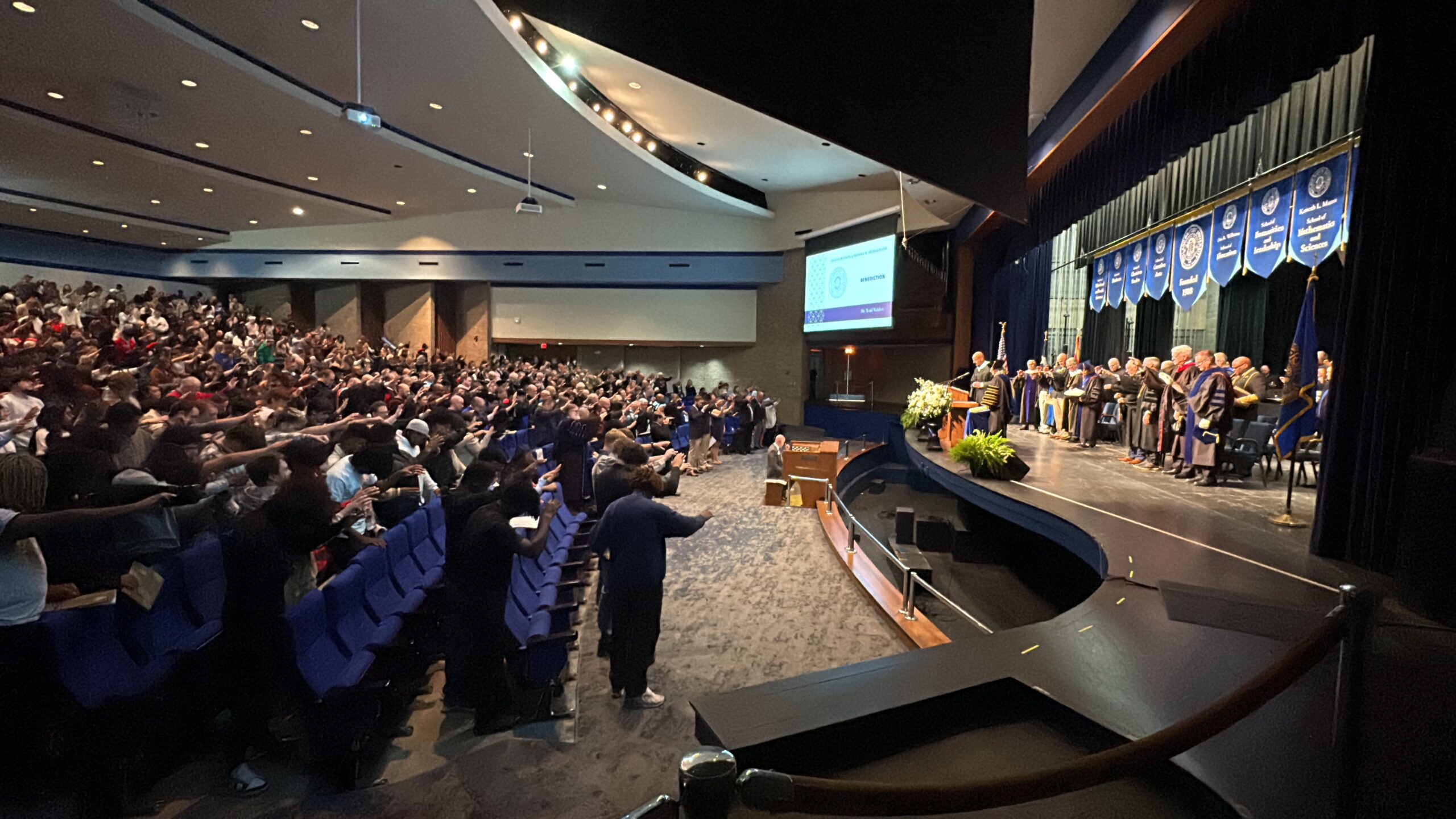
PLAINVIEW—In a ceremony marked with tradition and faith, Donna Hedgepath officially was inaugurated as the 14th president of Wayland Baptist University, Nov. 18, in Harral Memorial Auditorium on the university’s Plainview campus.

In her inaugural address, “Pioneering the Future,” Hedgepath reflected on Wayland’s legacy and outlined her vision for the university. Emphasizing Wayland’s pioneering spirit, she highlighted key moments in the university’s history.

She pointed to the advancements made by Bill Marshall, president of Wayland from 1947 to 1953, who “made several bold decisions that changed the trajectory of the university and in some cases the state of Texas.”

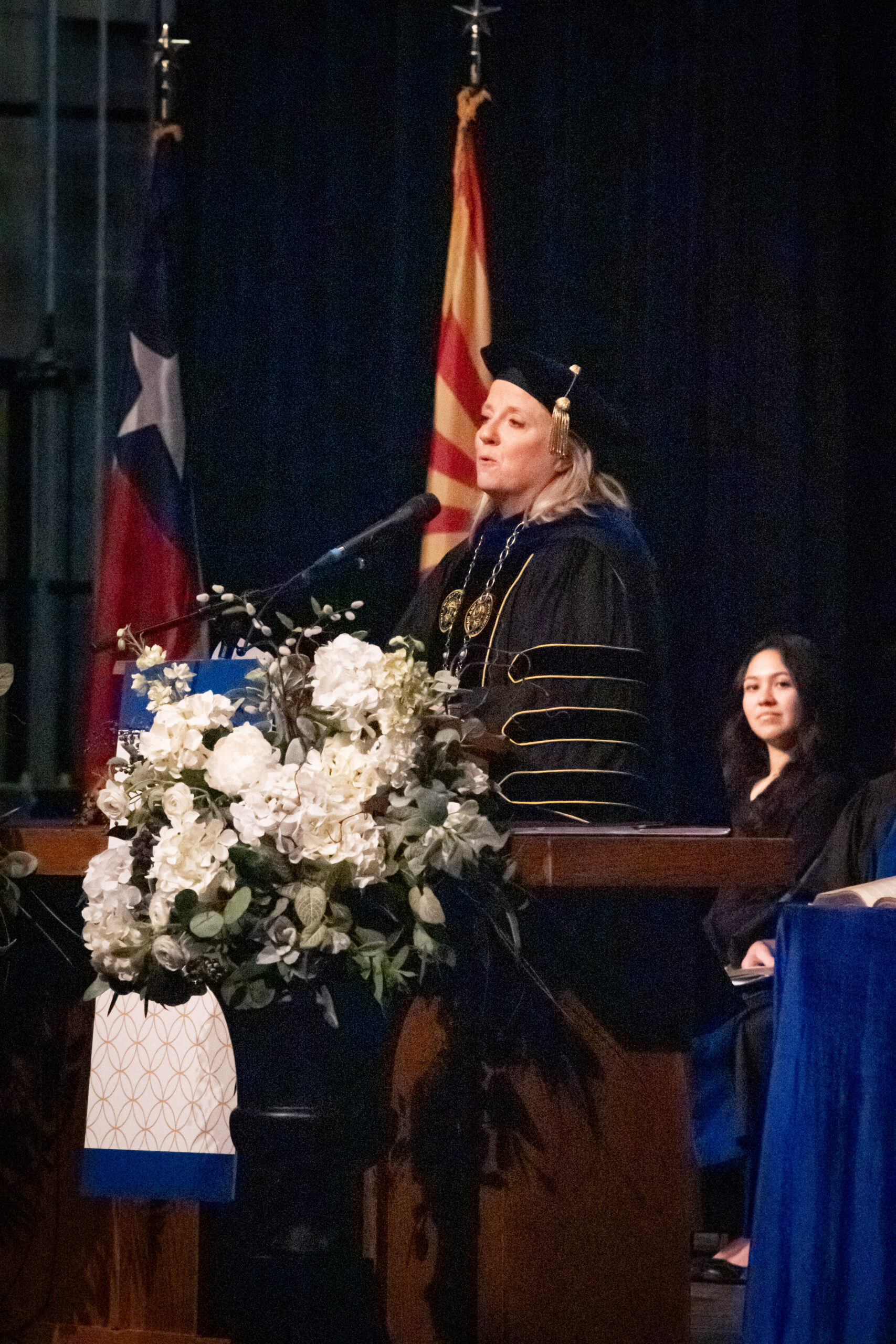
President Donna Hedgepath delivers her inaugural address at Wayland University. (Wayland Photo)

Hedgepath explained Marshall “recruited international students to such a degree that by the time he left, Wayland had a higher percentage of international students than any other college or university in the U.S.” One vehicle for this growth, the International Choir, continues to exist today, she noted.

Likewise, when Annie Taylor, an African American schoolteacher from Floydada, needed some continuing education credits, she “was brave enough to ask Dr. Marshall about coming to Wayland, and he saw an opportunity for a new kind of pioneering,” Hedgepath noted.

“Not only did the board vote, so did the faculty and student body, and guess what? Of course, everyone said, ‘yes!’ Thus, Wayland Baptist College became the first college in the former Confederate South to integrate—voluntarily—three years before Brown v. Board of Education forced the issue on a national scale.”

Taylor commuted to class, but “George May came that fall as the first full-time Black student who lived in the dorms as an undergrad, she explained.

“His sister Janet followed him a few years later and by the middle of the 1950s, was our first Black Homecoming queen.”

Hedgepath noted additional historical moments in Wayland’s past, including the “reign of the winningest women’s basketball team in U.S. history—Wayland’s Hutcherson Flying Queens,” who won 131 consecutive games and hold a place in the Naismith Basketball Hall of Fame for that streak.

Hedgepath outlined plans to advance Wayland’s mission, including upgrading technology, enhancing student success programs and fostering a culture of trust and collaboration.

Call to action

She also underscored her commitment to faith-based leadership, stating: “Wayland must meet the needs of an ever-changing workforce—and we can and will do this through creative programming and degree planning.”

Hedgepath closed her remarks with a call to action for the Wayland community, urging everyone to work together to shape a brighter future.

“Let us commit to a future where our university is not just a place of learning, but a beacon of progress and, most importantly, hope. Together, we will pioneer solutions that transcend boundaries, inspire change and create impact on a global scale.”

Grant Litton, Hedgepath’s nephew, delivers his charge to the incoming president, highlighting her importance to their family. (Wayland Photo)

Hedgepath’s inauguration marks a historic moment for Wayland. As the first female president in the institution’s history, her appointment reflects Wayland’s commitment to continue in the path of inclusivity and innovation the university historically has followed.

At the inauguration, Joe Hopkins, president of Campbellsville University; Grant Litton, Hedgepath’s nephew; Paul Armes, president emeritus of Wayland Baptist University; and H. Keith Spears, chancellor emeritus of Campbellsville University; each offered a charge to the incoming president.

The investiture ceremony included the installation of Hedgepath by Mark Jones, a dedicatory prayer by Julio Guarneri and the formal presentation of the president by Jeanette Parker, interim vice president for academic affairs at Campbellsville University.

Beyond the inauguration

In a Zoom call after the ceremony, Hedgepath explained Wayland’s mission and “its potential to grow” were part of what drew her to Wayland. Since she arrived in July, she noted she has discovered many similarities to her prior institution in Kentucky that have allowed her to feel at home.

Short-term improvements already are underway and include upgrades to technology and facilities, she said.

But, enrollment is always both a long- and short-term goal, “and so we’re already looking at creative ways to get more students,” she said. The best way to increase enrollment, “especially with undergrads” is to “have a campus that is aesthetically pleasing and modern, and offers top-of-the-line accommodations,” she added.

Some of the dorms currently don’t meet that standard, but she said her goal is to develop a campus that feels like “an oasis in the desert,” noting the university already is raising money for improvements and will continue fundraising efforts to that end.

Inauguration attendees offer prayers for Donna Hedgepath, Wayland’s newly installed president. (Wayland Photo)

Strategic planning is underway, with the intent to begin implementation by next summer. She said the university would like to grow, “not by 40 or 50 but by a thousand or two, and we are working on some interesting programs and other ideas to bring in more students.”

“Once we establish and get our foundation strong, and a plan, our strategic plan, it’s easier to dream a little bit. And that’s what we plan to do,” she explained.

Hedgepath said she felt called to education when she served as a high school choir director, and as her path led her to the academy, when her giftedness in training teachers to teach became apparent.

Her path to academic leadership began with that passion for teaching other teachers, and the leadership piece happened organically once she started working at the university.

Hedgepath explained her “heart for students” grew out of that calling and her own experiences of professors and administrators investing in her as a first-generation college student.

She said of students who might be anxious about college—whether the source of their anxiety is financial, relational, loneliness or whatever—“I want to help all of them” to succeed.

“Part of that is my testimony, as well. I want them to know that it’s OK to struggle, because there’s always hope.”