A member of Baylor University’s President’s Council addressed the relationship between racism and greed during Church Under the Bridge’s Annual Racial Reconciliation Worship Service during the Martin Luther King Jr. Day weekend.
This year’s theme focused on “why the love of money is the root of all evil” and “how the church can create a new way forward.”
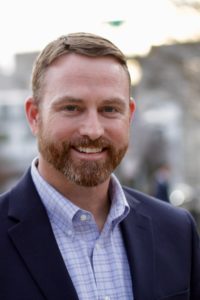
Malcolm Foley, author of the book The Anti-Greed Gospel and special adviser to the president for equity and campus engagement at Baylor University, spoke to a crowd under Interstate 35 in Waco, explaining race and racism is more than about identity and hate. It’s also about greed.
In his book and Sunday’s message, Foley suggested, “The strongest principality in American life is money, and race and racism are a perfect case study for understanding how that works.”
Members and guests of Church Under the Bridge in Waco. (Photo/Kendall Lyons)
“The argument is race and racism are not fundamentally issues of identity, hate, or ignorance,” Foley said. “Rather, it is about greed.”
“If a community wants to be truly anti-racist, it must be anti-greed, inspired by the Holy Spirit to resist the death-dealing and imagination-strangling wiles of racialized capitalism. Race’s historical and social purpose is to justify systems of economic exploitation. So, it can only be resisted by communities that bear witness to Christ’s call for us to share,” Foley said.
“The body of Christ is supposed to be a place where money doesn’t matter,” which makes Church Under the Bridge so pivotal for Waco and the surrounding community, Foley added.
“What is most inspiring about the Church Under the Bridge is the economic solidarity and diversity present in the congregation. In this country, the primary mode of segregation has always been along the lines of money and opportunity,” Foley said.
Modeling anti-greed
Jimmy Dorrell, pastor and founder of Church Under the Bridge and Mission Waco, said his ministry work targets the issue of need and helplessness daily by meeting people with the gospel and service.
“We’ve been doing this for 25 years and it continues to grow,” Dorrell said. “We believe the church needs to be intercultural and break down barriers. We deal with the poor and the unchurched, and we get to be creative and do things we believe are important for the kingdom.”
Dorrell said his goal was not to blame but instead empower Christians to respond to community needs.
“I believe in the church. I love the church. But I believe we lost our way in some ways,” Dorrell said. “My goal is not to blame people and point fingers but show how the church can do something about these things.”
DBU cancels classes, evacuates after receiving threats
January 22, 2026
DALLAS—Dallas Baptist University cancelled classes and evacuated after several threats were made ahead of Thursday morning’s visit by U.S. Housing and Urban Development Secretary Scott Turner.
Turner is a former DBU trustee. He also was an associate pastor at Prestonwood Baptist Church in Plano when he was nominated to be HUD secretary.
Kim Soto, assistant director of media and public relations, confirmed DBU was made aware of the unverified threats and is responding with an abundance of caution.
“Dallas Baptist University has been made aware of several unverified threats involving the campus. While there is no confirmed indication of immediate danger, university leadership is proactively assessing the situation and working closely with law enforcement officials to ensure the safety of our community,” Soto said.
“The safety and well-being of our students, faculty, and staff remain our highest priority. Additional updates will be shared as appropriate, as the situation continues to be monitored,” Soto added.
DBU issued an “emergency response” onFacebookannouncing the cancelation of classes for Thursday, Jan. 22, “out of an abundance of caution.”
The Dallas Morning Newsreported the Dallas Police Department is investigating the reported threats.
DBU released a statement Thursday afternoon announcing the campus will reopen Friday, Jan. 23, HUD Secretary Turner’s visit will be postponed, and cooperation will continue with Dallas Police and the FBI on the investigation.
“We are grateful to share that the Dallas Police Department and the FBI worked alongside our DBU Police Department to investigate the matter, and we can now issue an all-clear. There is no active or ongoing threat to our campus community. Classes and normal University operations will resume tomorrow, Friday, Jan. 23,” DBU Communications said.
DBU, in coordination with local law enforcement officials, said no credible threat was confirmed.
Texans on Mission responding to winter storm
January 22, 2026
UPDATED, Jan. 26, 1:30p.m
Texans on Mission is gearing up for the approaching winter storm that may result in widespread power outages, broken tree limbs, and dangerous below freezing temperatures.
Texans on Mission released a statement on social media verifying they are “on alert” after a winter storm watch was issued for the North Texas region.
“Texans on Mission feeding and chainsaw teams are on alert to serve after a winter storm watch was put in place for North Texas. Feeding teams are also preparing to cook meals for those braving below freezing temps. Please pray for volunteers and for Texas residents as they prepare for the weather,” the Texans on Missions Facebook post reads.
“This is what we are called to do. We’re here to be the hands and feet of Christ to serve those in need. By providing hot meals, we hope to show the love of Christ to those sheltering from the cold,” David Wells, Texans on Mission director of disaster relief, said.
Campus closures
As the winter weather grips the majority of Texas, college campuses are taking an abundance of caution, closing campuses and cancelling classes.
Baylor University is providing updates online with modified hours for varying campus facilities and parking.
Dallas Baptist University announced they will be closed Saturday, Sunday, and Monday. Saturday and Monday classes will take place online, and on-campus facilities like the library, the coffeehouse, and fitness center will open for modified hours.
Houston Christian University will be closed Monday, and all classes and campus activities have been canceled.
East Texas Baptist University cancelled activities for the weekend but will be open for remote online learning Monday.
Hardin-Simmons University cancelled classes on Friday and encouraged their students, faculty, and staff to check their HSU emails, online resources, and campus text notifications for further bulletins.
University of Mary-Hardin Baylor released a statement, closing campus Monday.
Feeding at Fair Park, Dallas
Texans on Mission is coordinating a large-scale relief effort at Fair Park in Dallas, where they will serve two meals per day, totaling 1,800 meals per serving, for a total of 3,600 meals daily.
Meals will be prepared at Texans on Mission headquarters and transported to Fair Park.
Two shower trailers will be deployed to provide hygiene services for those staying on location.
Meals will be scheduled from Saturday evening through Tuesday.
During the storm, Our Calling and Austin Street are providing temporary housing for the unhoused at Fair Park. Texans on Mission will partner with both organizations to provide meals and showers.
Showers were excluded in the provisions due to city code.
La preparación de las iglesias crucial ante la inminente ola de frío
January 22, 2026
Mientras el norte de Texas se prepara para otro importante sistema meteorológico invernal, las iglesias de toda la región se enfrentan a mayores riesgos operativos, de seguridad y de daños a la propiedad.
Los pronósticos indican una mezcla invernal de nieve, aguanieve y lluvia helada a partir del viernes por la tarde, con el mayor impacto previsto en el área de Dallas-Fort Worth alrededor de las 9 p.m.
El Servicio Meteorológico Nacional en Fort Worth pronostica condiciones climáticas invernales peligrosas para el norte de Texas entre el 23 y el 25 de enero. (NWS Fort Worth, captura de pantalla)
Las temperaturas descenderán a menos de 0 °C el viernes por la noche y se prevé que se mantengan bajo cero durante todo el fin de semana, lo que aumenta la probabilidad de cortes de energía, condiciones de viaje peligrosas, como carreteras resbaladizas, y daños a la propiedad. Se insta a los residentes de estas áreas a evitar las carreteras y proteger sus tuberías de posibles daños.
Según un artículo de Associated Press, los meteorólogos predicen que Texas podría ser parte de una tormenta potencialmente catastrófica durante el fin de semana, con fuertes nevadas y lluvia helada peligrosa como resultado del choque entre el aire frío y la lluvia, formando una masa de aire frío ártico.
Los meteorólogos advierten que este sistema podría ser parte de una tormenta más amplia y de alto impacto que afectaría a varios estados, con peligrosa acumulación de hielo e interrupciones en el transporte. Para las iglesias, las implicaciones van más allá de las molestias. Implican la administración de recursos, la seguridad y la continuidad del ministerio.
La concienciación es fundamental
Jacob Robb, meteorólogo de Risk Theory Loss Control, enfatizó que las iglesias se benefician más cuando la información meteorológica es proactiva en lugar de reactiva.
“Es posible que las iglesias no tengan la infraestructura [que necesitan]. Queríamos ayudarlas a [prepararse] de cualquier manera posible, comenzando con avisos de heladas”, dijo Robb.
A través de KingsCover, las iglesias inscritas en el programa para iglesias de Risk Theory reciben avisos anticipados de heladas y condiciones meteorológicas adversas. Estas alertas están diseñadas específicamente para las instalaciones y los equipos de liderazgo de las iglesias, proporcionando pronósticos concisos, expectativas de impacto y orientación práctica para la preparación.
En lugar de depender únicamente de la cobertura general de los medios de comunicación, las iglesias reciben comunicaciones específicas centradas en cómo las próximas condiciones meteorológicas pueden afectar los sistemas de plomería, los equipos de climatización, los techos y la infraestructura hídrica.
“Les enviamos avisos, básicamente explicando lo que pueden esperar, y tratamos de desglosar [la información] para brindarles solo la información que necesitan”, explicó Robb.
Cuando las puertas de la iglesia permanecen abiertas
Las iglesias, que a menudo permanecen abiertas durante condiciones climáticas adversas para servir a la comunidad, pueden correr un mayor riesgo de sufrir daños.
Según el sitio web del bufete de abogados Voss, especializado en seguros en Houston, las iglesias pueden ser especialmente vulnerables a las inclemencias del tiempo invernal debido al uso irregular de sus edificios.
Las iglesias no suelen estar abiertas los siete días de la semana ni permanecen abiertas durante las heladas, lo que hace que las tuberías sean más susceptibles a congelarse cuando no están en uso.
Operar en estas condiciones climáticas plantea problemas de responsabilidad, lo que podría exponer a demandas a las iglesias que no cuentan con un seguro de propiedad adecuado.
En muchos casos, la estructura del edificio no puede soportar grandes cantidades de nieve o hielo. Esto es especialmente cierto en los edificios antiguos, que a menudo no cuentan con la infraestructura o los sistemas de calefacción adecuados para prevenir daños.
Las iglesias antiguas pueden sufrir el deterioro de los materiales, métodos de construcción obsoletos y el desgaste general asociado con el paso del tiempo.
Consejos para prevenir daños
John Murphy, vicepresidente sénior de KingsCover, explicó que muchas pérdidas materiales son prevenibles si las iglesias comprenden y siguen los requisitos básicos de seguridad.
“En casi todas las pólizas de seguro comercial actuales, encontrará una sección de requisitos de seguridad. Esa sección dirá: ‘Exigimos que mantenga la calefacción en sus edificios durante una helada’”, dijo Murphy.
“La calefacción debe estar encendida a una temperatura mínima de, generalmente, entre 55 y 60 grados Fahrenheit. No se puede apagar la calefacción del edificio y no tomar las medidas de seguridad básicas para evitar que las tuberías se congelen”, agregó Murphy.
Estos requisitos suelen incluirse en lo que las aseguradoras denominan una “cláusula de protección”, lo que convierte su cumplimiento en una condición para la cobertura.
Precauciones adicionales, como dejar correr un poco de agua en los puntos clave de la red de plomería, monitorear las salas de máquinas y revisar los edificios desocupados, reducen aún más la probabilidad de fallas en las tuberías.
“Si sabe que se avecina una helada intensa, debe dejar correr un poco de agua en al menos un grifo de cada edificio, para que el agua siga fluyendo. El agua en movimiento generalmente no se congela”, aconsejó Murphy.
Muchos de los problemas que enfrentan las iglesias durante las heladas se deben a la falta de monitoreo rutinario: “El principal problema específico de las iglesias que observamos es que, con frecuencia, la gente no visita muchos de sus edificios con regularidad”, afirmó Murphy.
Según Murphy, las reclamaciones de seguros pueden empeorar considerablemente si el personal o los voluntarios de la iglesia no prestan atención a los posibles problemas en ciertas partes del edificio.
“Podría reventar una tubería de agua y nadie se enteraría durante varios días. Podría inundar varios pisos y causar mucho más daño que si se detectara de inmediato”, dijo Murphy.
La antigüedad también es un factor importante que afecta a las iglesias, ya que muchas iglesias históricas siguen en uso hoy en día.
“Otro problema común es que muchas iglesias utilizan edificios antiguos. Están construidos con menos aislamiento”, dijo Murphy.
Dado que muchas iglesias no cuentan con instalaciones modernas, es fundamental que el personal o los voluntarios supervisen las tuberías y los sistemas de calefacción y aire acondicionado con la mayor frecuencia posible. Esto incluye los edificios anexos, como las guarderías y los salones de usos múltiples.
Murphy señala que muchas iglesias excluyen la cobertura de propiedad de ciertos edificios debido al costo, lo que hace que sea crucial mantener las medidas de seguridad básicas para prevenir daños en estas áreas.
“En los últimos cinco años, más iglesias han optado por excluir la cobertura de propiedad de ciertos edificios debido a preocupaciones por el costo”, dijo Murphy. “Es más importante que nunca, si no se tiene seguro en un edificio y se sabe, tomar las medidas básicas para prevenir daños”.
Servir a la comunidad con confianza
Ante las bajas temperaturas, muchas iglesias optan por mantener sus puertas abiertas, brindando refugio a las personas necesitadas. Si bien esto plantea preocupaciones de responsabilidad civil, Murphy anima a las iglesias a mantener sus puertas abiertas para quienes lo necesiten.
Durante condiciones climáticas adversas, las iglesias a menudo se sienten llamadas a abrir sus puertas para servir a las poblaciones vulnerables. Si bien esto conlleva un riesgo inherente, Murphy enfatizó que los programas de seguros para iglesias bien estructurados pueden respaldar las iniciativas de ayuda.
“Un buen programa de seguros puede brindar cobertura de responsabilidad civil para estas actividades. Sería conveniente asegurarse de tener una póliza específica para iglesias que no excluya nada relacionado con las labores de ayuda en casos de desastre”, dijo Murphy.
“Siempre existe cierta responsabilidad cuando acogemos a personas para ayudarlas. Pero sin duda es algo que animamos a las iglesias a hacer. Si tienen la oportunidad de ayudar a la comunidad, háganlo y compartan el evangelio al mismo tiempo”, dijo Murphy.
La fe y la responsabilidad no son mutuamente excluyentes, continuó Murphy. Cuando una iglesia está preparada, puede servir con confianza, sabiendo que ha tomado las medidas adecuadas para proteger tanto a las personas como a la propiedad, concluyó.
Church preparedness crucial with upcoming freeze
January 22, 2026
As North Texas prepares for another significant winter weather system, churches across the region face heightened operational, safety, and property risks.
Forecasts indicate a wintry mix of snow, sleet, and freezing rain beginning Friday afternoon, with the greatest impact expected in the Dallas-Fort Worth area by 9 p.m.
The National Weather Service in Fort Worth forecasts hazardous winter weather for North Texas, Jan. 23-25. (NWS Fort Worth, screenshot)
Temperatures will drop into the 20s Friday night and are projected to remain below freezing through the weekend, increasing the likelihood of power outages, hazardous travel conditions such as slick roads, and property damage. Residents in these areas are urged to stay off roads and protect their pipes from potential damage.
According to an Associated Press article, forecasters predict Texas may be part of a potentially catastrophic storm over the weekend, resulting in heavy snow and treacherous freezing rain resulting from cold air clashing with rain and forming a cold, arctic air mass.
Meteorologists warn this system could be part of a broader, high-impact storm affecting multiple states, with dangerous ice accumulation and travel disruptions. For churches, the implications extend beyond inconvenience. They involve stewardship, safety, and continuity of ministry.
Awareness is critical
Jacob Robb, meteorologist with Risk Theory Loss Control, emphasized churches benefit most when weather intelligence is proactive rather than reactive.
“Churches may not have the infrastructure [they need.] We wanted to help them [prepare] in any way we could, starting off with freeze notices,” Robb said.
Through KingsCover, churches enrolled in the Risk Theory church program receive advance freeze and severe weather notices. These alerts are designed specifically for church facilities and leadership teams, providing concise forecasts, impact expectations, and actionable preparation guidance.
Rather than relying solely on general media coverage, churches receive targeted communications focused on how upcoming weather conditions may affect plumbing systems, HVAC equipment, roofs, and water infrastructure.
“We send them notices, basically explaining what they can expect, and we try to break down [the information] so that we are giving them just the information they need,” Robb explained.
When the church doors stay open
Churches, which often remain in operation during adverse weather conditions to serve the community, may be at higher risk of suffering damage.
During a freeze that occurred on Sunday in San Antonio, local nonprofits and churches opened their doorsto homeless members of the community, offering shelter, clothes, and warm meals to those in need.
According to the Voss Law Firm website, an insurance attorney in Houston, churches may be especially susceptible to winter weather due to irregular use of church buildings.
Churches may not operate seven days a week or remain open during wintry weather, making pipes more susceptible to freezing while not in use.
Operating during these weather conditions raises liability concerns, potentially exposing to lawsuits churches that do not have proper shelter insurance in place.
In many cases, the building’s structure is unable to withstand large amounts of snow or ice. This is especially true of older buildings, which often don’t have the proper infrastructure or heating systems to prevent damages.
Older churches may suffer from deteriorated materials, outdated construction methods, and general wear and tear associated with age.
Tips for preventing damage
John Murphy, KingsCover senior vice president, explained many property losses are preventable when churches understand and follow basic safeguard requirements.
“In almost every commercial insurance policy that you see today, you’re going to see a required safeguards section. That section will say, ‘We require you to maintain heat in your buildings during a freeze,’” Murphy said.
“The heat needs to be turned on a minimum of, generally, 55 to 60 degrees. You cannot turn the heat off in your building and not do the basic safeguard that will prevent your pipes from freezing,” Murphy added.
These requirements are often included in what insurers call a “protective safeguards endorsement,” making compliance a condition of coverage.
Additional precautions—such as allowing water to flow slightly in key plumbing locations, monitoring mechanical rooms, and checking unoccupied buildings—further reduce the likelihood of pipe failures.
“If you know a deep freeze is coming, you should have the water run a little bit out of at least one faucet in each building, so that water is continuing to flow. Flowing water will not generally freeze,” Murphy advised.
Many issues churches face during freezing weather involve a lack of routine monitoring: “The biggest thing specific to churches that we see as far as a problem, is that so often people don’t go into many of their buildings on a regular basis,” Murphy stated.
Insurance claims, according to Murphy, can get much worse as a result of church staff or volunteers not attending to potential issues in certain parts of the building.
“You could have a water pipe burst, and nobody [would] know about it for several days. It can flood through many stories and do much more damage than if it was caught immediately,” Murphy said.
Age is also a major factor that affects churches, with many historical churches still in use today.
“Another common issue is that so many [churches] use old buildings. They’re built with less insulation,” Murphy said.
Because many churches do not have updated facilities, it is crucial for staff or volunteers to monitor pipes and heating and A/C units as much as possible. This extends to ancillary buildings, such as child care facilities and fellowship halls.
Murphy notes many churches exclude property coverage from certain buildings due to cost, making it crucial to maintain basic safeguards to prevent damage in these areas.
“More churches over the last five years have chosen to exclude property coverage from certain buildings because of concerns with cost,” Murphy said. “It is more important than ever, if you don’t have insurance on a building and you know it, that you do the basics to prevent damage.”
Serving the community with confidence
As churches experience freezing temperatures, many choose to keep their doors open, providing shelter to individuals in need. While this raises liability concerns, Murphy encourages churches to leave their doors open to those in need.
During severe weather, churches often feel called to open their doors to serve vulnerable populations. While this carries inherent risk, Murphy emphasized that properly structured church insurance programs can support outreach efforts.
“A good insurance program can provide liability for [outreach.] It would be worthwhile to make sure you have a church specific policy that doesn’t exclude anything like disaster relief efforts,” Murphy said.
“There is some liability assumed always whenever we take people in to try to help. But it’s certainly [something] we encourage churches to do. If there’s a chance for you to help the community, do it, and share the gospel while you’re at it,” Murphy said.
Faith and responsibility are not mutually exclusive, Murphy continued. When a church is prepared, it can serve confidently, knowing it has taken appropriate steps to protect both people and property, he concluded.
Texans on Mission rebuilds homes in Kerr County
January 22, 2026
The floodwaters that tore through Kerr County last summer are long gone, but the work of rebuilding is not.
Across Kerrville, Hunt, Ingram, and surrounding areas, Texans on Mission volunteers continue to show up through the Revive Kerrville initiative, repairing homes damaged by the July floods and walking alongside families navigating the long road to recovery.
“We’re serving at more than seven homes this week alone,” said Ryan Welch, TXM missions and discipleship coordinator. “Disasters happen fast, but recovery doesn’t. A lot of groups move on. We don’t.”
Crews are tackling everything from roofing and fencing to painting and finishing work, the kind of repairs that often come after emergency response teams leave and insurance timelines slow.
At one home, volunteers rebuilt a fence completely washed away by the river. Inside, others worked to finish painting so the homeowner could move forward.
Driven by God’s love
“God tells us to love one another, and when you see a need to meet it,” said Makenna James, a Texas A&M University student volunteering with Revive Kerrville. “Being here is a way to live that out.”
James said serving months after the flooding has been especially meaningful.
“Right after a disaster, everyone wants to help,” she said. “But later on, when the attention fades, that’s when people are really left dealing with what happened. That’s when it matters most.”
College students from across the state are working alongside experienced volunteers, learning construction skills on the job while building relationships with homeowners and one another.
“We’re helping rebuild a shed that was damaged in the flood,” said Isaac Garcia, a Texas A&M-Kingsville student. “This kind of work costs money. To be able to give our time, skills, and help someone who’s already lost so much—that’s how we show Christ’s love.”
For homeowners, the steady presence of volunteers has brought both progress and encouragement.
“It’s been a real blessing working with a Christian organization,” said Debbie Dossey, a Hunt resident whose home was damaged in the flooding. “They pray with you. They care. And the quality of work has been incredible.”
Joy found in homecoming
Dossey said returning home brought moments of joy and reflection.
“Every day, I find something that survived that I didn’t even remember we had,” she said. “Being back home lets you finally breathe and also start processing everything that happened.”
Brian Keeper, who lives along the river, said the emotional toll of the flood didn’t fully set in until cleanup began.
“The trauma wasn’t just that night,” Keeper said. “It was realizing neighbors were gone, and that the history of my family was stored in this house.”
Working with TXM, he said, made a difference.
“They show up smiling. We pray in and pray out,” he said. “In the middle of all this loss, it’s been people who have given me hope for the future.”
Community amidst tragedy
For students Jonathan Wolf of Texas A&M and Clayton Hargrove of Texas State University, the experience has strengthened both their faith and their understanding of community.
“It shows people they haven’t been forgotten,” Wolf said. “That God hasn’t given up on them.” Hargrove agreed.
“We’re not just here to clear things out and leave,” he said. “We’re here to help rebuild and keep walking with them.”
As recovery in Kerr County continues, Texans on Mission leaders say the work is far from finished and neither is their commitment.
“This is long-term,” Welch said. “We’re here for the whole journey.”
Faith leaders express concerns about SB 11
January 22, 2026
On Jan. 8, over 160 Texas faith leaders wrote an open letter to superintendents and school board members across the state, urging them to not adopt SB 11 in their school districts. The letter is posted on the Baptist Joint Committee for Religious Liberty website.
TX SB 11, a law encouraging a period of prayer and reading of a religious text in public schools, was passed on June 20, 2025. The bill was introduced in the Senate during the 89th Texas Legislature and became effective Sept. 1, 2025, requiring school districts to hold voteson adopting prayer policies.
The sign-on letter is a collectivist attempt to steer school boards away from SB 11, with many faith leaders, including Pastors for Texas Children, asserting the law threatens the religious freedom of students and families, instead placing religious instruction in the hands of government entities.
The letter further raises concerns of faith leaders regarding the administration of public education: “SB11 threatens to drive a wedge into public school communities and create unnecessary administrative burdens.”
Consent forms raise administrative concerns
While voluntary, SB 11 requires any desiring participants to submit consent forms, which include a waiver of legal claims under state or federal law, including those under the Establishment Clause, a U.S. First Amendment clause prohibiting the government from establishing a religion.
Despite the necessity of these forms to monitor student and parental consent, signatory faith leaders view the extra administrative burden of tracking these forms, setting aside designated prayer time and spaces, and ensuring a lack of student coercion to be burdensome and detracting within a system that already protects the religious freedom of its students.
In an interview with Baptist Standard, Rabbi David Segal, Policy Counsel at Baptist Joint Committee for Religious Liberty, expressed these concerns: “One of the most concerning mechanisms is the system of waivers and opt-ins a school district and campus would have to manage if such a policy were adopted. It creates, potentially, an administrative nightmare for the leaders of that.”
Religious liberty is an important factor
BJC is one of the partner organizations responsible for developing the open letter. According to BJC’s website, the committee is dedicated to “protecting religious liberty for all and defending the separation of church and state.”
The principle of religious liberty runs deep within Baptist roots, as Baptists were the first religious group to adopt the separation of church and state in the early 17th century. Segal emphasizes these ideas as fundamentally Baptist and thus interwoven into BJC’s mission: “We are a Baptist organization. We believe deeply in people having a right to pursue a life of faith.
But we also believe what Baptists have believed for our entire history … that the government has no place in interfering in our religious life or a life of conscience.”
Government interference with religious affairs is primarily a concern regarding religious freedom and a seeming inherent lean toward Christian doctrine SB 11 promotes, a concern expressed by supporters of the letter.
SB 11 potentially favors Christianity
Though unbiased on the surface, opponents note SB 11 encourages practices of the predominant faith group, evidenced by a compilation of public comments submitted to the Committee on State Affairs for SB 11.
Following the enactment of the bill, Texas Attorney General Ken Paxton encouraged students to utilize their time of prayer reciting the Lord’s Prayer.
Segal describes this action as a “case in point” concerning SB 11’s perceived Christian bias: “When the Attorney General issued a statement urging school boards to adopt this policy, he ended his press release with a suggestion of which prayer to use, and it’s King James’s version of the Lord’s Prayer, which is a very important prayer for Christians.
“So, that essentially doesn’t have the force of law, but it’s an indication of a kind of bias that can come through when these kinds of things are set up by state officials,” Segal added.
In BJC’s online press release, Blake Ziegler, Texas Field organizer at the Religious Action Center of Reform Judaism, said: “Many of our Jewish ancestors sought refuge in the United States because of its separation between religion and government. We fled nations whose theocratic policies persecuted our people and others who did not share the state’s religion, while arbitrarily favoring those who did.”
Ziegler mentioned concerns over SB 11’s impact on religious pluralism in schools, noting religion separate from government interference as essential to promoting “religious freedom.”
Mounting fears over SB 11’s lack of religious pluralism come after the bill underwent multiple amendments, including those that protect non-participants by prohibiting PA broadcasts of the prayer or study time, and mandating a board vote requirement within six months of the law’s Sept. 1, 2025 effective date.
Texas Baptists Evangelism event bears fruit
January 22, 2026
On Nov. 15, prior to the Texas Baptists Annual Meeting in Abilene, the Texas Baptists Evangelism team, Forgotten Ministries, Broadview Baptist Church, and other churches partnered together to evangelize three Abilene apartment complexes.
Forgotten Ministries is a ministry founded by Jeremiah Herrian, which exists to help churches “rediscover compassion, leave the building and bring the hope of Jesus to the homes that need him most.”
“Outside the comfort of four walls, there is an entire world in anguish, and the church must rediscover the compassion that moves believers to action,” Herrian said.
Since 2007, the ministry has accomplished this with their Grill Walk strategy.
The Grill Walk is a door-to-door evangelism strategy where volunteers are divided into groups of four: two grill cooks and two food preppers, and “as the grill moves down the street, groups stop at houses, knock on doors, and offer free hot dogs.”
This allows volunteers to share the gospel and their testimonies, pray with residents, and invite them to church.
Herrian “framed the day” by emphasizing compassion. He gave volunteers a “final charge” before beginning their Grill Walk in Abilene.
“People are more spiritually lost today, not because they reject Jesus, but because they’ve never truly heard about him,” Herrian said.
“Knock on every door. Offer a hot dog at every door. Share Jesus at every door.”
The Texas Baptists Evangelism team, along with 80 volunteers from nine different churches, delivered 710 bags of groceries, served 700 hot dogs, and provided 600 pairs of socks to families in need. Volunteers knocked on 630 doors, “praying with residents and offering encouragement.” The team saw 21 individuals surrender their lives to Jesus.
“I often ask churches across the state, ‘If your church ceased to exist, would your community miss you?’ God did not call us to just be a church in the community. He called us to be the community church,” said Oza Jones, Texas Baptists’ director of evangelism.
“The Grill Walk allowed us to saturate the community by serving and sharing. [It] helps us to mobilize the local church for maximum impact,” Jones said.
To learn more about Texas Baptists Evangelism and how it can resource your church, visit txb.org/evangelism.
Texas Baptist pastors and ministry leaders learned more about a four-phase plan for partnership between Texas and Ukrainian Baptist churches during a Dec. 18 Zoom call. The partnership launched Nov. 18 with the signing of a memorandum of understanding between Texas Baptists and the Ukrainian Baptist Union.
The Healing Path Initiative is designed to connect congregations in Texas with churches across Ukraine through relationships, prayer, shared mission and eventual expansion.
Brent Gentzel, senior pastor of First Baptist Church in Kaufman, said 42 churches “committed and are on board for the launch” of the partnership.
The partnership begins with a strong emphasis on relationships and encouragement. Texas pastors are paired directly with Ukrainian pastors, many of whom have been leading congregations through years of conflict, displacement and uncertainty.
Churches in Texas and Ukraine also are forming prayer teams, committing to daily prayer at synchronized times—7:07 a.m. in Texas and 3:07 p.m. in Ukraine.
In between the prayers, Matthew 7:7 and John 15:7 are to be considered for reading and reflection.
Later phases include plans for in-person gatherings, joint spiritual growth campaigns centered on the Great Commandment and Great Commission, and monthly financial support for community-based projects identified by Ukrainian churches.
Funds will be distributed through established denominational channels to ensure transparency and accountability.
Organizers also emphasized cultural similarities between Texans and Ukrainians, encouraging participants to focus on authentic relationships while being mindful of security and language differences.
Igor Bandura, vice president for international affairs with the Baptist Union of Ukraine, said Ukrainian pastors are eager to begin building relationships immediately. He noted while the realities of war remain serious, churches continue worshipping, serving and caring for their communities.
Texas no longer is the national capital of capital punishment, but it still is among the handful of states responsible for about three-fourths of the executions carried out in 2025, a report from the Death Penalty Information Center revealed.
With 18 executions carried out this year and another scheduled this week, Florida was responsible for more than one-third of the executions nationwide, according to the center’s report, “The Death Penalty in 2025: Year End Report.”
Florida, Alabama, South Carolina and Texas combined accounted for 72 percent of all executions in the United States in 2025, the report noted.
The Death Penalty Information Center reported 46 prisoners executed in 11 states in 2025, with two more scheduled: Stacey Humphreys in Georgia on Dec. 17 and Frank Athen Walls in Florida the following day.
“The increase in this year’s execution numbers was caused by the outlier state of Florida, where the governor set a record number of executions,” said Robin Maher, executive director of the Death Penalty Information Center.
“The data show that the decisions of Gov. DeSantis and other elected officials are increasingly at odds with the decisions of American juries and the opinions of the American public.”
The center reported public support for capital punishment at the national level is at its lowest point in five decades at 52 percent. Polls also show generational differences, with a majority of people younger than 55 disapproving of the death penalty.
Texas put five prisoners to death in 2025
Texas executed five Death Row prisoners in 2025: Steven Nelson, Richard Tabler, Moises Sandoval Mendoza, Matthew Johnson and Blaine Keith Milam.
Two other men—David Wood and Robert Roberson—were scheduled to be put to death but received stay of execution orders from the Texas Court of Criminal Appeals.
“After decades as the nation’s death penalty pariah, Texas was not the lead executioner this year. … Yet the state continues to waste millions of taxpayer dollars in the pursuit of capital punishment while glaring problems with its application persist,” the report states.
This year, Texas judges set the fewest execution dates in at least 30 years, and prosecutors increasingly waived the death penalty in capital murder trials due to costs and the lengthy and uncertain legal process, the coalition reports.
Embracing ‘mercy and reverence for human life’
John Litzler, public policy director for Texas Baptists’ Christian Life Commission, said he was encouraged by “what appear to be declines across the board of both executions and new death penalty sentences in Texas.”
John Litzler
“The history of capital punishment in Texas is fraught with prejudice, disproportionality and error,” Litzler said. “For that reason, the reduction of capital punishment sentences carried out in Texas shouldn’t be viewed as a rejection of justice, but a state that embraces both mercy and reverence for human life.
“As Texas Baptists continue to share their beliefs that all human life is sacred because every person is made in the image of God, I expect the number of executions in our state to continue to decrease. That’s because living in a community and state that values human life compels us to approach potential death sentences with humility and restraint.
“This is reflected in the practices of our district attorneys who are seeking the death penalty as a punishment less often and also in the decisions of our juries who are more often choosing life without parole as a criminal sentence, even with capital punishment as an option.”
This year, prosecutors in only two Texas counties pursued death sentences, the coalition report notes.
“In Texas, whether a person receives a death sentence continues to be driven not by the underlying crime, but by geography,” the report states. “Only prosecutors in Harris and Tarrant counties pursued new death sentences in 2025, with juries sending three men to death row while rejecting the death penalty in a fourth case.”
‘Past time to kill the death penalty’
Death sentences in Texas have fallen from 48 in 1999 to single digits each of the past 11 years, the report notes.
The coalition report urges policy makers “to examine the collective costs of capital punishment and to follow the lead of Texans who are increasingly abandoning the death penalty as a path to justice.”
Stephen Reeves
“It is well past time to kill the death penalty,” said Stephen Reeves, executive director of FaithWorks, formerly known as Fellowship Southwest. “While the decrease in executions and new sentences in Texas is encouraging, it only highlights the arbitrary and capricious nature of the punishment.
“Even seldom and random state vengeance carried out on the poor, unlucky, marginalized and forgotten members of society does nothing to make us safer and is simply cruel and unjust. Let’s finally abolish the death penalty and get Texas out of the ineffective, expensive and immoral business of killing our citizens.”
Nan Tolson, director of Texas Conservatives Concerned About the Death Penalty, called the death penalty, “a wasteful and expensive system with life or death consequences.”
Costs involved in carrying out an execution—including investigations, trials, appeals, prolonged incarceration and the execution itself—make the death penalty two to three times more expensive than a sentence of life without parole, said Tolson, a Baylor University graduate.
“Texas should embrace a vision of justice that leaves the death penalty behind and reallocates limited public resources to measures proven to improve public safety,” she said.
Texas policymakers need to “examine the collective costs of capital punishment”—including the moral cost of people being executed for crimes they did not commit, she added.
“As conservatives, we don’t trust the government to deliver our mail on time, much less get convictions right all the time in death penalty cases,” Tolson said.
Baylor receives major Lilly grant for Truett Seminary
January 22, 2026
WACO—Baylor University received a $9.76 million Lilly Endowment grant to launch and provide financial support for the Ministry for Life initiative at Baylor’s Truett Theological Seminary.
The Ministry for Life initiative is funded through Lilly Endowment’s Pathways for Tomorrow Initiative. The grant to Baylor University is one of 45 approved in this competitive round of Lilly Endowment funding to support theological schools as they lead large-scale collaborations with other seminaries, colleges and universities, and church-related organizations.
Truett Seminary’s Ministry for Life initiative is based on a collaborative, comprehensive approach to pastoral formation intended to span the ministerial lifecycle.
The program is organized around four related pillars:
Shaping cultures of call.
Educating the called.
Placing the educated.
Supporting the placed.
The grant-funded effort aims to build reciprocal relationships among leaders, congregations, denominations, educational institutions and church-related organizations through the Ministry for Life Center with a view to equipping healthy ministers to lead healthy churches over the long haul.
Addressing a ‘systemic concern’
Todd Still (Baylor Photo)
“For a number of years now, several of my Truett colleagues and I, along with many of our ministerial partners, have grown increasingly concerned about a decreasing number of people embracing and preparing formally for vocational ministry and an increasing number burning out and dropping out of the same,” Dean Todd Still said.
“This generous, indeed transformative, grant from Lilly Endowment, which is the largest such gift Truett Seminary has received to date, enables us to collaborate with others to address this systemic concern.
“At scale, we are convinced that Ministry for Life will have a considerable impact and will help to create and establish virtuous ministerial cycles that will extend the gospel and strengthen congregations.”
Truett’s Ministry for Life program—which is due to become an endowed, permanent center at the seminary—will be supervised by Truett faculty and staff members Angela Reed, associate dean of academic affairs and director of spiritual formation; Jack Bodenhamer, assistant dean of external affairs; and Michael Mauriello, associate clinical professor of youth and family ministry. The five-year grant will allow for staff hires to support the initiative’s work.
Collaborative effort, holistic approach
“We are beyond grateful for this opportunity to build upon the work of teaching and encouraging those with a call to ministry by developing new collaborative degrees and academic certificates, mentoring young people drawn to ministry leadership and walking alongside pastors already serving for the long haul,” said Reed, who is the grant’s principal investigator.
“No theological school does this work alone, and we are very pleased to collaborate with denominations, educational institutions, and nonprofit organizations in this project to support faithful, healthy congregations for God’s purposes in the world.”
Additionally, Bodenhamer, co-investigator on the grant, said Truett Seminary is confident the grant “will help shape the landscape of the church in North America for generations to come.”
“Its holistic approach—supporting ministers, churches, denominations, educational institutions and para-church ministries—positions us to serve individual pastors and congregations while also fostering meaningful change at a broader systemic level,” he said.
Strengthen churches and their leaders
The Ministry for Life initiative reflects Baylor’s “abiding commitment to the church in North America and to equipping future leaders for vibrant, lifelong ministry, not least through our seminary,” President Linda A. Livingstone said.
“We are deeply grateful for the Lilly Endowment’s continued partnership with Baylor University and for their faithful investment in the renewal of the church and support of congregations. We look forward to continuing this good work together to strengthen the church and support its leaders, both for today and for future generations.”
Lilly Endowment launched the Pathways for Tomorrow Initiative in 2021 to help theological schools across the United States and Canada as they prioritize and respond to the most pressing challenges they face while preparing pastoral leaders for Christian congregations now and into the future.
Since then, it has provided grants totaling more than $700 million to support 163 theological schools in efforts to strengthen their own educational and financial capacities and to assist 61 schools in developing large-scale collaborative endeavors.
BUA organiza el retiro ‘Llamados al Ministerio’
January 22, 2026
Bajo la dirección del presidente de BUA, el Dr. Abe Jaquez, el campus de la Universidad Bautista de las Américas en San Antonio, Texas, se llenó de energía y ánimo los días viernes 5 y sábado 6 de diciembre, cuando los bautistas de Texas se reunieron para el retiro “Llamados al Ministerio”.
Este evento de dos días ofreció un espacio acogedor para que los participantes exploraran, afirmaran y respondieran al llamado de Dios a través de sesiones de enseñanza, talleres y tiempo de compañerismo.
Uno de los momentos más destacados del retiro se vivió el sábado, cuando la Dra. Debbie Potter, recientemente elegida presidenta de la Baptist General Convention of Texas y miembro de largo tiempo del cuerpo docente de BUA, dirigió unas palabras a los asistentes y entregó una beca de $500 a John Mendoza, un estudiante prospectivo.
Con entusiasmo, Potter entregó el certificado de la beca, marcando un momento memorable del retiro y subrayando la importancia continua de la educación, el liderazgo y la respuesta fiel al llamado de Dios en todos los ámbitos de la vida.
Presentada por Jaquez, Potter compartió un mensaje que combinó testimonio personal, ánimo y sabiduría práctica para quienes están discerniendo el llamado de Dios.
“Esta es mi primera tarea oficial como presidenta de la Baptist General Convention of Texas, y no podría estar más emocionada de estar aquí porque también es mi hogar”, dijo Potter.
“He enseñado en BUA durante 10 años, de manera intermitente. Mi esposo empezó a enseñar aquí primero, y volvía a casa todos los lunes por la noche comentando sobre los estudiantes y lo increíbles que eran; estaba tan emocionado con ellos.
“Varios de esos estudiantes vinieron a trabajar conmigo en mi iglesia y todavía trabajan conmigo, 10 años después, en Trinity Baptist. Los estudiantes de este campus y los líderes son tan importantes, y eso marca la diferencia. Eso es lo que me encanta de la Baptist General Convention of Texas: que valoramos la educación”, agregó.
Basándose en sus reflexiones sobre el valor de la educación y el impacto de los estudiantes de BUA, Potter animó a los asistentes a confiar en el plan de Dios para sus vidas, sin importar su edad o experiencias pasadas:
“No importa cuántos años tengas, ni lo joven o lo viejo que seas, ni lo que hayas hecho en tu vida, Dios tiene un plan para ti, y esos planes pueden cambiar,” dijo Potter.
“Mi primer llamado fue hacia la educación. Soy educadora. Me encanta enseñar, ya sea a niños o a estudiantes universitarios. Él me pidió que enseñara, y lo hice.
“Así que hoy solo quiero animarte: no dejes que nada te detenga de seguir el plan de Dios para tu vida. Puede que no sepas cuál es; puede que tome varios giros y curvas. Solo di que sí, y Dios abrirá la puerta para ti.
“Solo mira alrededor de esta sala y piensa en lo que puede suceder en nuestro estado si todos decimos sí al llamado de Dios y comenzamos a trabajar en nuestras comunidades y nuestras iglesias.”
El retiro también contó con un programa completo de sesiones generales y talleres. La tarde del viernes comenzó con Victor Rodríguez dirigiendo la sesión “¿Qué significa ser llamado?”, en la que destacó que Dios no necesariamente llama a los más calificados, sino a los dispuestos, y que el llamado puede darse en cualquier área de la vida: la iglesia, el trabajo, la familia o los negocios.
Rodríguez animó a los participantes a asumir la tarea de Dios con fidelidad, recordándoles que las Escrituras reflejan no solo tareas, sino el propósito que Dios tiene para cada persona.
Las sesiones del sábado incluyeron a Bobby Contreras con la enseñanza “Protegiendo tu llamado”, enfocándose en hábitos y disciplinas que sostienen el ministerio, y a Jesse Rincones con “Llegando lejos en tu llamado”, destacando la perseverancia y la resiliencia.
Los talleres estuvieron dirigidos tanto a pastores como a quienes están discerniendo un llamado, abordando temas desde el papel de la iglesia en el desarrollo de líderes emergentes hasta el discernimiento personal y el impacto en el Reino.
Durante todo el fin de semana surgió un tema recurrente: Dios llama a personas de todas las edades y contextos para servir, y responder fielmente puede tener un impacto duradero. Para muchos, la combinación de enseñanza, compañerismo y ver a líderes como Potter en acción brindó tanto inspiración como ánimo tangible para sus propios caminos.