Iniciativa nacional para fortalecer a los líderes pastorales y las congregaciones hispanas

Convención Bautista Hispana de Texas ha recibido una subvención de $1,500,000 de Lilly Endowment para apoyar “Adelante: Developing Capacity in Service of Hispanic Congregations” and Leaders, ” que es un proyecto que se desarrolla en colaboración con la Red Nacional Bautista Hispana.

Convención recibió la subvención a través de de Lilly Endowmentla Iniciativa Nacional para el Fortalecimiento de Líderes Pastorales y Congregaciones Hispanasinitiative .

Su objetivo es apoyar y fortalecer a los líderes pastorales y congregaciones hispanas y edificar y ampliar las capacidades de las organizaciones y redes que apoyan sus ministerios.

La subvención financiará puestos de liderazgo clave en ambas organizaciones, incluido un Director Ejecutivo a tiempo completo y un Director de Comunicaciones/Desarrollo para la NHBN.  Convención contratará a un Director de Desarrollo que se centrará en la recaudación de fondos y el establecimiento de relaciones.

Convención lanzará su Iniciativa de Desarrollo de Jóvenes Líderes Latinos (YLL). YLL proporcionará una oportunidad para que los jóvenes líderes bautistas latinos experimenten una experiencia de cohorte de un año centrada en el desarrollo personal y un proyecto de ministerio en su comunidad.

Los participantes serán entrenados y certificados por la Academia de Liderazgo Hispano en colaboración con el Centro de Liderazgo Hispano. La experiencia de YLL culmina con un retiro en Washington, DC que expone a los jóvenes líderes a diversas organizaciones/líderes que trabajan para abordar los problemas que afectan a sus comunidades hispanas.

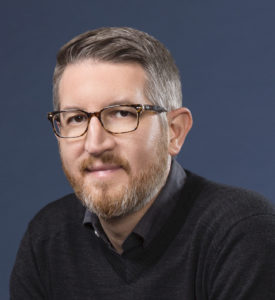
Jesse Rincones

Jesse Rincones, Director Ejecutivo de Convención, afirma: “Esta inversión de Lilly Endowment aumentará significativamente la capacidad de Convención en las áreas de liderazgo, finanzas y administración. Estamos especialmente entusiasmados por poder invertir en la próxima generación de líderes.”

Los fondos para el Desarrollo de Asociaciones permitirán a la NHBN asociarse con líderes estatales y regionales para impulsar oportunidades de formación, salud pastoral, revitalización de iglesias y otros esfuerzos. NHBN planea contratar los servicios de Generis Solutions, LLC. Generis proporcionará una evaluación del desarrollo de los puntos fuertes, las lagunas, las oportunidades y los pasos recomendados para el crecimiento a largo plazo y el rendimiento del desarrollo sostenible.

“La Red Nacional Bautista Hispana está muy agradecida a the Lilly Endowment, ” afirma Bruno Molina, Director Ejecutivo de la Red Nacional Bautista Hispana.

“Esta subvenciónallow nos ayudará a trabajar con la Convención Bautista Hispana de Texas para desarrollar nuestra capacidad de sostenibilidad a largo plazo mientras nos conectamos en misión, contribuimos recursos y celebramos lo que Dios está haciendo entre nosotros.

“En particular, esperamos fortalecer a nuestros pastores y sus familias a través del establecimiento de una iniciativa de apoyo pastoral y el desarrollo de nuestros líderes emergentes. A Dios sea la gloria”.


Board approves NAMB agreement, insurance program

DALLAS—Texas Baptists’ Executive Board adopted a new agreement with the Southern Baptist Convention’s North American Mission Board regarding church-starting in Texas and approved the initial reserve investment, officers and board for the Texas Baptist Insurance Program.

Last May, Baptist General Convention of Texas Executive Director Julio Guarneri told the Executive Board NAMB no longer would fund church starts in Texas of congregations uniquely aligned with the BGCT, since the state convention did not affirm the 2000 Baptist Faith & Message. The 2000 version of the SBC confession of faith limits the role of pastor to men.

In response to a question from a Texas Baptist pastor at the SBC annual meeting in June, NAMB President Kevin Ezell reiterated NAMB would not fund church starts in partnership with the BGCT unless Texas Baptists changed their statement of faith.

When a messenger to the 2024 BGCT annual meeting in Waco made a motion for the convention to affirm the 2000 Baptist Faith & Message, messengers soundly defeated it.

After the annual meeting, BGCT and NAMB leaders met to negotiate a new agreement regarding church-starting in Texas. The NAMB board approved the agreement two weeks before the BGCT Executive Board met.

The approved agreement states:

  • NAMB will make available church planting materials, training resources and coaching identified in other states as “Send Network” resources in a “white label” format.
  • NAMB will provide a $300,000 a year grant to the BGCT exclusively for church planting and will consider the application of any SBC-affiliated church in good standing. Church planters who receive funding will complete an approved assessment process. The church plants will be expected to affirm the 2000 Baptist Faith & Message.
  • NAMB and the BGCT will explore the possibility of conducting planter pathway training events.
  • NAMB and the BGCT will work together to “make sure that pastors, churches and associations have reliable, true and updated information as to how BGCT churches can relate to NAMB.”

Guarneri pointed out NAMB funds represent about 10 percent of what Texas Baptists invest in church starting. Texas Baptists wants to double the number of church starts in 2025 from 2024, he added.

The agreement means if a Texas Baptist church that affirms the 2000 Baptist Faith & Message wants to start a church with NAMB funding, they can do so as a congregation singly aligned with BGCT.

Guarneri said he wanted to “go on record stating that when I started this inquiry, it was not necessarily about asking for more money, but about making sure that our BGCT churches had access to resources without having to join another state convention.”

BGCT still a ‘big-tent’ convention

In a related action, the BGCT Executive Board reaffirmed its existing practice of “receiving into harmonious cooperation churches that affirm traditional Baptist beliefs as generally stated in either the 1963 or 2000 Baptist Faith & Message, or similar confessional statement.”

In his report to the board, Guarneri noted concerns he’d heard after the BGCT annual meeting vote against affirming the 2000 Baptist Faith & Message. Some wondered whether it might mean the BGCT was moving toward the left. Others worried 2000 Baptist Faith & Message churches would no longer be welcome in the BGCT.

Guarneri said he could give a “resounding no” to both of those concerns, asserting the BGCT is still a big-tent convention that serves all Texas Baptist churches.

So, it was important for the Executive Board to affirm the BGCT practice of welcoming churches that affirm various Baptist confessions of faith.

Guarneri also noted a recommendation approved at the 2010 BGCT annual meeting that Texas Baptists review the Baptist Faith & Message in 2020 and every 10 years, in order to keep it “relevant” or “fresh.”

The review did not happen in 2020 because of COVID-19, he noted. Also, some concerns have been voiced about whether the document could be changed or whether it was proprietary to the SBC.

But the preamble affirms Baptists making faith statements as they see fit, Guarneri said, even if the decision is to call it something other than the Baptist Faith & Message. The preamble states “any group of Baptists, large or small, have the inherent right to draw up for themselves and publish to the world a confession of their faith whenever they may think it advisable to do so.”

“It’s a delicate matter,” he acknowledged, saying he felt no urgency to act, but did not want to ignore something BGCT messengers already approved.

“I would like to suggest at the appropriate time that we study what that recommendation means for our day and time,” he said.

Taking steps to make church insurance accessible

In another significant action, the Executive Board approved a recommendation from its executive committee regarding a means to make property, casualty and liability insurance available to Texas Baptist churches.

After receiving the findings of a feasibility study, the executive committee recommended the BGCT Executive Board proceed with forming a captive insurance corporation.

In response to previous action by the Executive Board last September and a motion approved at the BGCT annual meeting in November, the board authorized investing up to $12 million from the convention’s undesignated investment fund in the Texas Baptist Insurance Program to fund the necessary insurance reserve.

The board elected as initial officers of the corporation Craig Christina, associate executive director of the BGCT, as president; Sergio Ramos, director of the GC2 Network, as vice president; and Ward Hayes, BGCT treasurer-chief financial officer, as secretary-treasurer.

The nonprofit corporation’s board will consist of the BGCT associate executive director and treasurer-chief financial officer; one additional BGCT executive leader; the pastor of a BGCT-affiliated church; and the director of missions of a partnering Texas Baptist Association.

The initial board includes Christina as chair; Ramos as vice chair; Ward as secretary; Dennis Young, pastor of Missouri City Baptist Church; and David Bowman, executive director of Tarrant Baptist Association.

The Texas Baptist Insurance Program will be a corporation separate from but controlled by the Baptist General Convention of Texas. The program hopes to begin taking applications in June or July and will be open only to churches affiliated with the BGCT.

When asked where the initial $12 million would come from to fund the needed insurance reserve, Hayes said investments from 2020 COVID-relief in the form of Payroll Protection Plan funds and an employee retention tax credit, along with having stayed under budget in recent years supplies those funds.

In other business, the Executive Board:

  • Elected Cynthia Jaquez from Segunda Iglesia Bautista in Corpus Christi to fill a vacancy on the Committee to Nominate Boards of Affiliated Ministries.
  • Allocated $375,000 in available JK Wadley Endowment Fund earnings with $150,000 earmarked for Baptist Student Ministries campus missionaries, another $150,000 for BSM building maintenance; $50,000 for western heritage churches; and $25,000 for MinistrySafe.
  • Approved the realignment of some sectors from which Executive Board members are elected. Sector boundaries are created based on resident church membership, the number of churches and Cooperative Program giving. Sector boundaries are evaluated every five years.


Texas Baptists committed to finishing the task

DALLAS—The global church is focused on “finishing the task” two millennia in the making, Baptist General Convention of Texas Executive Director Julio Guarneri told the BGCT Executive Board.

In 2033, Christians will mark the 2,000th anniversary of Jesus’ resurrection, the giving of the Great Commission and the giving of the Holy Spirit.

Guarneri summarized the global Christian sentiment: “Shouldn’t it be time, after 2,000 years, that we get the task done, that we finish the homework that he left us to make disciples of all nations?”

He noted Acts 1:8 served as the outline for the rest of the book and his belief God’s people have an opportunity at this key time in history to step by faith into God’s mission.

Texas Baptists are poised to play a strategic role in finishing the task through strengthening and multiplying churches, connecting ministers and developing them, and partnering for missions through missional engagement, Guarneri said.

He continued, “While we want every church who cooperates with the BGCT to feel welcome, affirmed, valued, we must not get distracted from our mission. Our energy and our focus needs to be on the Great Commandment and the Great Commission.”

Boldness and risk taking required

In his president’s address to the Executive Board, Ronny Marriott, pastor of First Baptist Church in Richardson, encouraged board members to look to Daniel, Shadrach, Meshach and Abednego for insight into living as citizens in exile, asking, “What does it mean to be a citizen of the kingdom of heaven?

Marriott said doing something “God-sized” requires bold steps and a willingness to take risks to push back against the pressures to conform to the practices of the place of exile.

With Daniel, Shadrach, Meshach and Abednego, God saved them through the lion’s den and through the furnace, not from them.

When “we do what God is calling us to do, there is going to be opposers,” Marriot said. But “when you take a chance, you’ve got all these other churches (Texas Baptists) in this together with you.”

“We’re better together,” he said. “Let’s not play church. Let’s be the church.”


Center offers sabbath to ministers and spouses

Couples in ministry need sabbath rest more than they realize, Cory and Amy Brand believe. That’s why the Brands created a safe place where ministers and spouses can experience it.

Cory and Amy Brand believe God gave them a vision. They wanted to create a retreat center for ministers and spouses. (Courtesy Photo)

During more than two decades serving on Texas Baptist church staffs in a variety of roles, the Brands witnessed and experienced the challenges that accompany vocational ministry.

Constantly caring for others without taking time for self-care can be draining, they observed.

“The two relationships every pastor needs to work on the most are their personal relationship with God and their relationship with their spouse,” Cory Brand said. “Way too many times, those two things suffer for the sake of the church.”

The Brands believe God gave them a vision. They wanted to create a retreat center for ministers and spouses.

They dreamed of a place where couples in ministry could get away—at no cost—for a few days to rest and simply spend time with each other and with God.

Five years ago, the Brands approached a small group and asked them to pray with them for clear direction. Those individuals became the initial board of directors for The Hiding Place Ministries.

Brand submitted 40-plus pages of paperwork to the Internal Revenue Service to create a nonprofit corporation.

“They told us it would take about six months: ‘Don’t call us. We’ll call you.’” We got that paperwork back in two weeks. And the IRS doesn’t return a phone call in two weeks,” he said.

‘God provided a way’

In 2023, Amy Brand accepted a position as children’s minister at Coggin Avenue Baptist Church in Brownwood. At that point, her husband committed to the fulltime pursuit of developing their ministry to ministers and spouses.

The Sunday when the church voted to call his wife to the ministerial staff, Brand fully grasped the reality of their situation.

“I had a little panic attack there in the pew, because I realized, ‘I don’t have a job anymore,’” he confessed.

“But the next day, I got a phone call from the pastor we work with here in Brownwood. He said: ‘I have a name for you, and I want you to call this gentleman. He wants to talk with you.’”

When they met, Brand discovered the man and his wife already had bought lakefront property in Brownwood and begun making improvements on it with a specific purpose in mind.

“They really felt God had called them to use that property for the encouragement of ministers and missionaries,” he recalled.

Brand toured the property and compared notes with the owner. He discovered the owner’s vision for how the property would be used was almost identical to a business plan he and his board had written for their ministry a year earlier.

“So, we struck up a partnership,” Brand said.

The owner agreed to allow The Hiding Place to use the property to host ministers and spouses for four-night, five-day retreats several times a year.

“I thought I was going to be raising money for five years just to buy property,” Brand said. Instead, God provided a way for The Hiding Place to offer four retreats last year and set aside nine weeks this year, he noted.

Offering ‘radical hospitality’

The ministry makes available to ministers and spouses lodging in a private cabin and meals for individualized retreats at no cost to participants.

“There are a lot of other places people can go, but it’s expensive,” Brand said. “We felt a strong conviction to make it free. We depend on the generosity of Christian believers to fund it.”

The ministry provides breakfast food in each cabin, allowing couples to eat their morning meal at their own leisure. Lunch and dinner are shared experiences with the Brands and other couples.

Conversations after dinner at The Hiding Place sometime last late Into the night. (Photo / The Hiding Place)

“That’s kind of where the magic happens for me,” Brand said. “After those dinners, some of those conversations go into the night. We end up going down to the lake or onto the front porch. A lot of heart is being shared at that point.”

The Hiding Place practices what the Brands call “radical hospitality.” As much as possible, the experience is customized to meet the needs of individual couples, including special dietary needs.

Having served on Texas Baptist church staffs in Monahans, San Antonio, Edna, Corsicana and Midland in roles including youth, education and family ministry, he understands the demands placed on ministers and spouses.

“A lot of ministry leaders are used to giving, giving, giving, and very few times do they receive that type of care,” Brand said. “When they receive that type of care, the walls break down.”

No prescribed program

The Hiding Place offers a retreat “with no agenda” and no prescribed program, he emphasized.

“I tell all our pastors: ‘What I want you to do is just come, rest, spend time with God, and spend time with your spouse,’” Brand said.

He provides couples a five-day devotional guide about sabbath, which they are encouraged to read.

“Other than that, just show up for meals. That’s the only expectation,” he said.

For busy ministers, the adjustment to days of leisure can be difficult initially, Brand acknowledged.

“The first 24 hours, they don’t know what to do,” he said. “But when they hit that second day, it almost never fails. Their bodies start letting down and letting go, and that’s when the naps start happening.”

He encourages ministers and spouses to use their time at The Hiding Place not just as a vacation, but as an occasion to learn the importance of sabbath rest. To avoid burn-out, he urges them to incorporate the rhythms of regular sabbath observance when they return to work.

Many ministers are physically exhausted, but they don’t recognize it until they get away, he said.

“I have the believe that if you’re physically exhausted, you have a hard time hearing God’s voice clearly,” Brand said.

Couples in ministry who wish to apply for a retreat at The Hiding Place in Brownwood can do so by clicking here. Retreats are available to any minister and spouse serving bivocationally or full-time in a church, or as a chaplain, missionary or leader of a Christian nonprofit or parachurch ministry.


Collegiate mission trips spark church revival 

WACO—As college students from Highland Baptist Church in Waco embarked on mission trips around the state and abroad in England, they are helping to spark revival in their church and community by returning with a renewed passion for outreach, ministry and prayer.

“There has been an explosion of outreach burden for those who went on these trips,” said Drew Humphrey, college pastor at Highland Baptist Church.

“They have seen that there are many ministry needs walking by them every single day. They are using what they learned and activated, here on campus and in Waco.”

John Durham, senior pastor of Highland Baptist, agreed and is greatly encouraged by the spiritual fervor taking place in their college ministry and how it spurs on other generations to respond to God’s calling to be on mission.

“Highland Baptist in Waco typically has 1,200 college students in attendance on a Sunday morning, which is one-third of our Sunday attendance,” Durham noted. “Our college students are present influencers and a beloved portion of our church family.”

Church commissioned 110 students last year

On the Sunday before spring break last year, the church laid hands on 110 college students, commissioning them to serve at Beach Reach and in five locations in England.

“Our church family is not only encouraged by the obedience of our college students,” Durham said. “We are challenged by them. College students are not the future church, they are the present church.”

Since returning from the mission trips, Humphrey noted college students at Highland Baptist have sensed a deep urgency and conviction to share the gospel in their everyday surroundings.

“Over the last two years, there has been a sort of a prayer revolution taking place here in Waco amongst our college students,” Humphrey said. “Secret prayer and corporate prayer have grown, and the fruit is being seen.

“Typically, prayer revolutions bloom into outreach momentum, and that is happening now. Not that we are leaving behind prayer but allowing the prayer to fuel a burden for the lost and to be a witness for the Lord.

“There is a group message going on with over 200 students called The Evangers, who coordinate sharing the gospel every day of the week in small groups based on their availability. A requirement of being in the group message is that you go out and share at least one time per week.”

With Highland sending five teams to partner with churches around England, it provided multiple opportunities for college students to assist churches in a variety of settings.

“Each church we partnered with there had different projects for us to assist with,” Humphrey explained. “But much of it focused on community ministry with lower income, adult special needs ministries, sharing the gospel and defending the faith in public high schools.”

While in England, the college ministry from Highland also led nights of worship, prayer and teaching. They also hosted a Texas Night at the churches, where they taught line dancing and invited people from the community to come into the church for outreach.

Beach Reach offers ministry opportunities

During spring break, Highland’s college students look forward to partnering with Beach Reach at South Padre Island. Last year, the trip provided a tremendous opportunity to be the hands and feet of Christ, Humphrey noted.

College students from Highland Baptist Church in Waco participate in Beach Reach. (Courtesy Photo)

“During Beach Reach, students had the opportunity to build friendships with their college peers who were at the beach to party during the day—offering free rides between 9 p.m. and 4 a.m. for those at bars and parties, praying for them, sharing the gospel with them, offering free pancakes late hours of the night to begin conversations,” Humphrey said.

Before these mission trips, students underwent multiple trainings to help equip them as they engaged in conversations with nonbelievers.

“We had times of equipping and going out in outreach here in Waco to prepare and build confidence in our students sharing the gospel with strangers and starting up spiritual conversations for ministry,” Humphrey explained.

Both in England and around the state, students have seen God moving in incredible ways as a result of the mission trips.

“There were salvations in all six cities in the United Kingdom and Texas,” Humphrey said. “Students experienced how God answers prayers that they had sowed into the trip for months prior as they shared the gospel with boldness, met needs of the communities and partnered with local churches across the globe.”

Humphrey also noted the work is only beginning for the students who served on these mission trips and for Highland Baptist Church.

“Anything that has longstanding ministry partnerships is what I suggest for short-term mission trips,” Humphrey said. “We can spin the globe and stop anywhere, then create a trip out of that. But there is so much more fruit when we are standing on the shoulders of a partnership over years and decades with these short-term trips.

“For example, our church has been sending college teams to these same U.K. local churches on short-term mission trips for over 20 years. God really blesses those kind of longstanding partnerships and grows them to be mutually beneficial to both sides of the partnership.”


Builders volunteers come to the aid of one of their own

GRAHAM—Grady Perryman is a Texans on Mission volunteer. He’s certified in disaster relief, and he often takes part in Texans on Mission Builders projects. So, when Grady and his friends faced a challenge recently, other Texans on Mission volunteers came to their aid.

Grady, 31, is intellectually disabled and lives with his parents, Texans on Mission volunteers Jim and Debbie Perryman in Graham. They are members of First Baptist Church in Graham.

“He’s a sweet, lovable kid,” Jim Perryman said. “Everybody in town loves him.”

Grady has trouble with intellectual skills, but he is very sociable, his dad said. Until recently, a state government-funded program provided Grady and others in Graham a place to gather, build their living skills and socialize.

In January 2024, the local service provider Grady and his friends had relied on stopped its “day habilitation” program for people with intellectual and developmental disabilities, or IDD. Categorized by the state under “general funding,” Grady’s program was cut.

The nonprofit Arc of Wichita County came to the rescue in May by helping establish HERO House in Graham for teaching “life and work skills and social development through activities, classes and community outings,” reported KAUZ news in Wichita Falls.

This would provide a new program in a temporary location for Grady and others caught up in the state funding cut.

Graham residents Dennis and Andy Heath created a nonprofit called Graham Friends of The Arc to raise funds for a permanent location. The Graham group bought the former Modern Way grocery store building, and Texans on Mission volunteers kicked off renovations in November.

Grady Perryman helps carry materials for the HERO House build. (Photo / Texans on Mission / Jim Perryman)

The Texans on Mission group erected walls and roughed in the electrical wiring, Perryman said. And work continued this month tiling bathrooms, installing an emergency exit, painting walls and performing minor finishing touches on the 3,800-square-feet facility. Everything is up to American with Disabilities Act standards.

Texans on Mission volunteers stepped up to help the project move forward within the budget. The volunteer involvement “was very important because it reduced the cost of getting it started,” Perryman said.

When state funding ceased for the “day habilitation” program, it “affected a lot of disabled folks,” Perryman said. A number of Graham’s adults with intellectual disabilities “were left with few options for a productive life.”

Since the funding cuts excluded Grady from local programs, Jim noticed his son “sitting around the house and not doing much.” But the concern for the Perrymans went beyond their own son.

Debbie Perryman said these adults “thrive on being together, and the funding cuts left many of them isolated and alone. It also affected their caregivers.

“Single parents or caregivers no longer had someone to watch over their IDD adult, so that they themselves could go to the doctor, go to the grocery store or just take a break,” she said.

“The mental well-being of the IDD adults and the parents/caregivers suffered. It was an untenable situation.”

Community effort

The project has become a community effort. In November, owners of a local pizza restaurant that normally only handles pickup and delivery orders opened their doors to Texans on Mission volunteers and the HERO House members. During the time together, Wayne Pritchard, director of Texans on Mission Builders had an idea.

“There’s like 20 of these special needs adults there [at Pizza Hut], and so I just thought it would be cool if these guys could come and look at their new building,” Pritchard said, even though construction was unfinished.

“And so, I asked the lady who was in charge if they would like to do that. And I thought those kids were going to start crying. And the emotions were just flowing.”

The workers went back to HERO House and “cleaned up anything they might trip on or fall and get hurt on,” Pritchard said.

The HERO House in an earlier stage. Now down to minor finishing touches, everything in the 3,800-square-feet facility is up to ADA standards. (Photo / Texans on Mission / Jim Perryman)

The group arrived that day in a bus, and “they were just coming up and hugging on us and telling us thank you,” he recalled. “It was just an emotional roller coaster.”

As the clients prepared to leave, Pritchard went to the front door and said they could only get out on one condition—a hug. “And they just mobbed me, almost rolling me over.”

Pritchard shared the experience with deep emotions himself. He noted Grady has given all of the volunteers a family title. He is Uncle Wayne to Grady, and the other Texans on Mission workers are uncles, as well.

If all goes as planned, HERO House members will be able to vacate their temporary location and move into their new facility the first part of March, Debbie said.

“The [Texans on Mission] Builders know they are welcome and will be expected to come back this year to see the finished project and join the members in celebration,” she said.


Deadline looming for program to reduce child hunger

Texas missed out on $450 million in federal food aid for children last year, but Texas lawmakers have until March 1 to keep that from happening this summer.

The Summer Electronic Benefit Card program is a U.S. Department of Agriculture program allowing low-income families with school-aged children to receive additional benefits when schools are on summer break. In Texas, the program could benefit 3.7 million children.

Jeremy Everett

The program provides funds for each eligible child on an electronic benefit card that families can use like a debit card to buy groceries. Benefits are federally funded, and administrative costs are shared on an equal basis by state and federal agencies.

The Texas Legislature has until March 1 to authorize budget funds requested by the Texas Health and Human Services Commission for additional personnel and computer support to implement the summer program this year.

Some uncertainty remains, said Jeremy Everett, founding executive director of the Baylor Collaborative on Hunger and Poverty.

“HHSC is understaffed right now. They have not caught up with the pandemic staffing losses,” Everett said.

Even if additional funds are allocated to the commission, hiring staff, building out a new program in three months, and getting school-aged children enrolled in it will be challenging, he noted.

Furthermore, major cuts to multiple federal programs might affect the program at the national level—or not.

“Fortunately, USDA has not been one of the targets of any significant budget cuts,” Everett said. “Their programs are not currently being focused on, and the programs that directly affect the individual are not supposed to be touched in any federal funding freeze.”

At the same time, he noted, USDA at some point likely will be called on to cut some personnel to streamline their agency.

Significant return on investment

“But here’s what we do know. We know Texas right now is the second-hungriest state in the country. We know that there’s a high majority of children in our public schools who are on—or eligible to be on—the free or reduced lunch program,” Everett said.

“We know that hungry children can’t learn. We know that food insecurity is directly tied to diet-related disease and all kinds of health impacts like asthma and depression. We know that food insecurity is not experienced in a vacuum—that it is typically the same household that is experiencing the weight of a number of our broken social systems.”

One child in four in Texas experiences hunger, and child hunger historically has spiked in the summer months when students lose access to free or reduced meals at school.

However, the Summer Emergency Food Program—along with summer meal sites at churches and other locations in urban and suburban areas and home-delivered meals in rural areas—offer “a pathway” to help eliminate child hunger, he noted.

“You’re not going to end child hunger with one approach. Our contexts are too diverse in Texas. So, now we finally have three different ways to address child hunger in the summer. In my opinion, let’s use all three of them, and use them to their fullest capacity,” Everett said. “Those are the kids who need us to come alongside them the most.”

The Summer Electronic Benefit Card program and increased household access to the Supplemental Nutrition Assistance Program not only meet the essential nutritional needs of children, but also provide economic benefits to communities, to farmers and ranchers, and to everyone involved in the food supply chain, he added.

Texas is one of only 11 states currently not enrolled in the Summer Electronic Benefit Card program.

“When it comes to programs like Summer EBT, if you’re leaving $450 million on the table in resources that could benefit approximately 3.7 million kids and that would ultimately have an economic impact of $1.3 billion for the state economy, that’s huge,” Everett said.

“That’s a no-brainer. That’s a marginal investment on the state’s part to get a significant return—first and foremost in food security for children and secondarily in the economic impact it would have on our state.”


Logsdon School of Theology to become college

The university’s board of trustees voted to elevate the Logsdon School of Theology by making it a distinct college, five years after Hardin-Simmons University closed Logsdon Seminary.

Soon after the board voted on Feb. 6, the university announced the Logsdon School of Theology will transition out of the Cynthia Ann Parker College of Liberal Arts, where it has been housed, effective June 1.

The public announcement from the university stated the move will allow for “a stronger focus on ministry education, deeper connections with churches, and a continued emphasis on HSU’s Baptist heritage.”

The Logsdon School of Theology will focus its offerings on undergraduate education “with the intent to thoughtfully and strategically expand.”

The new college will offer a major or minor in Christian studies—with courses in biblical studies, church history, ministry and theology, the release said.

Students majoring in worship leadership within the College of Arts and Media will continue to take Logsdon ministry courses, and the new college will continue to provide the instruction for Bible courses all undergraduate students must take.

“The Logsdon School of Theology has proudly carried its official name since 1983, a tradition that remains unchanged” a follow-up email noted.

“To honor Logsdon’s legacy, the Board of Trustees chose to preserve its name, ensuring continuity and recognition for generations to come.”

With Logsdon’s elevation, the university has six colleges: Logsdon School of Theology, College of Arts and Media, College of Health Professions, Cynthia Ann Parker College of Liberal Arts, Kelley College of Business and Professional Studies, and Holland School of Sciences and Mathematics.

In March 2024, the university named Jacob West associate dean of Logsdon School of Theology. West has a long history with Hardin-Simmons and ministered in several West Texas churches, including an extended time as pastor of First Baptist Church in Plainview.

A dean for the new college is yet to be named, but West will continue to provide leadership for the school until a dean is named.

“HSU has a strong group of students, and I believe God will do a great work in their lives. We have men and women in the Christian studies program eager to share the gospel,” West said.

“Logsdon has a strong partnership with the College of Arts and Media to assist the preparation of worship ministers. Logsdon ministers to nearly 400 students every semester through foundational curriculum courses, in addition to being the host site for campus chapel,” led by Director of Spiritual Formation Shelli Presley.

West also noted Logsdon School of Theology has forged a new partnership with the North American Baptist Fellowship. Additionally, the school will host the Pinson Lectures on April 23. Elijah Brown, Baptist World Alliance general secretary, will provide the luncheon keynote.

“Since its founding in 1983, the Logsdon School of Theology has been an integral part of Hardin-Simmons University,” the university stated.

“Logsdon has remained steadfast in its mission—preparing students for ministry, deepening their understanding of Scripture, and equipping all students across campus with the tools for Christian leadership.

“After much prayer and thoughtful consideration, we look forward to this significant step in meeting the growing demand for well-equipped leaders.”

Background

When the HSU board of trustees voted in February 2020 to begin the process of closing Logsdon Seminary as part of a larger university restructuring, President Eric Bruntmeyer wrote in a letter to the “HSU family” the action was “solely a financial decision,” reached after an extended period of analysis.

Bruntmeyer released his letter after some Logsdon Seminary alumni asserted a “small, but very influential group” had undermined the seminary by accusing its professors of liberalism.

“While theological issues did come up in our discussions, this was solely a financial decision,” Bruntmeyer wrote. He did not elaborate on the nature of the “theological issues” discussed.

“From the very beginning, the seminary lacked appropriate funding,” he wrote.

Over a course of 15 years, when the seminary graduated more than 400 students, funds designated for the seminary had to be moved from the Logsdon School of Theology “to cover the deficits that occurred from the initial and continual lack of funding,” he wrote.

Four years earlier, HSU administrators launched a serious analysis of the university’s financial situation and “created metrics to identify low-performing programs,” he continued.

“In this process, the seminary and School of Theology were identified as low-performing programs,” Bruntmeyer wrote, citing declining enrollment both in Logsdon Seminary and in the Logsdon School of Theology.

A few days later, Bruntmeyer addressed the Baptist General Convention of Texas Executive Board. He told the board the HSU trustees made the decision to close Logsdon Seminary and redirect endowment earnings back to the undergraduate programs in the Logsdon School of Theology because the university could not “keep two financially weak programs going.”

Bruntmeyer said about 300 students would be needed to make the programs financially sustainable. At that time, he reported, 40 to 45 undergraduates were pursuing majors in the Logsdon School of Theology, and the program had experienced a study decline in enrollment.

About 90 students were enrolled in seminary graduate classes in Abilene and San Antonio, but those numbers did not represent full-time equivalency.

In the previous academic year, combined losses from the Logsdon School of Theology and Logsdon Seminary totaled $1.26 million, Bruntmeyer told the BGCT Executive Board.

Looking to the future

HSU did not provide current information about enrollment in the Logsdon School of Theology, but stated: “Logsdon School of Theology has maintained steady enrollment since 2020. However, with churches across the state and nation expressing a growing need for well-equipped leaders, the goal is to expand our reach and cultivate even more high-quality candidates for ministry and service.”

Kyle Tubbs, now state coordinator for the Cooperative Baptist Fellowship of Oklahoma, was president of the Logsdon Alumni Council at HSU when the seminary closed in 2020. He offered a significantly different perspective on the health of HSU today.

“Since the trustees closed Logsdon in February 2020, Hardin-Simmons has experienced an overall student enrollment decline from 2,324 in 2019-2020 to 1,665 in 2024-2025. Losing nearly 30 percent of its population is deeply concerning,” Tubbs wrote in an email.

The university also reported enrollment of 1,665 but noted that represented an increase from the prior year and an 8.5 percent increase in first-time freshmen.

Additionally, the university noted by email it achieved “an 88.51 percent persistence rate for Fall 2024, a 2.67 percent increase from 2023 and higher than the national average of 76.5 percent,” reported by National Student Clearinghouse.

Several new entities came into existence or expanded in the aftermath of the decision to close Logsdon Seminary.

Abilene Christian University launched a Baptist Studies Center within its Graduate School of Theology. ACU named Myles Werntz, formerly the T.B. Maston Chair of Christian Ethics and Practical Theology at Logsdon, as the center’s director.

Baylor University’s Truett Theological Seminary opened an extension campus in San Antonio, offering classes at Trinity Baptist Church—the previous host site of Logsdon Seminary’s San Antonio campus. In addition to its flagship campus in Waco, Truett Seminary also offers courses in Houston at the Lanier Theological Library and Learning Center.

With a start-up grant from the Eula Mae and John Baugh Foundation, the Jesse C. Fletcher Seminary—named for the 14th president of HSU—began offering classes in 2022 at Baptist Temple in San Antonio.

Don Williford, dean of Logsdon Seminary from 2011 to 2017, was the founding dean of Fletcher Seminary. Dan Stiver, a former professor of theology at HSU, succeeded Williford in 2024.

Regarding the future of Logsdon School of Theology, Bruntmyer commented: “Logsdon has long been a cornerstone of Hardin-Simmons University, shaping students with a strong faith, ministry and Christian leadership foundation.

“As we take this next step, we reaffirm our commitment to equipping future leaders with the knowledge, skills, and spiritual depth needed to serve their communities. This transition reflects the board of trustees’ dedication to meeting the evolving needs of our students, churches and the world around us.”

An inaugural open house for the new Logsdon School of Theology, guest lectures with church leaders and theologians, and meet-and-greet sessions with faculty will be announced at a later date.

Additional information may be found on Hardin-Simmons’ Logsdon School of Theology FAQ page.

With additional reporting by Managing Editor Ken Camp

Editor’s note: The story was posted at 5 p.m. on Friday. It will be updated if additional information is made available. The paragraph regarding enrollment figures was edited the next morning to clarify that the 8.5 percent increase was among first-time freshmen.




Worship Initiative a partner in training worship leaders

Founded by Texas worship leaders Shane and Shane, the Worship Initiative equips and encourages thousands of worship leaders and church musicians.

Several Texas Baptist schools have seen the value of partnering with the Worship Initiative.

Robbie Seay, executive vice president of leader development and content at the Worship Initiative, explained when Shane and Shane began the initiative, their “aim was really to come around worship leaders, any men and women who were leading churches, leading college students, college students, high school students, all of the above.”

“How can we come around them and equip them for the work of ministry?” they asked.

The founders also saw a need to encourage worship leaders by providing a space to build community with other worship leaders when they began the Worship Initiative about a decade ago, Seay noted.

Seay described Worship Initiative as “a training and resourcing platform.”

When worship leaders subscribe and login to the platform, “they engage with content that teaches them from the basics of learning a song to the complexities of what it means to actually have a theology of worship.”

Content also answers questions such as: “How do I lead a team? How do I play with a band? How do I grow on my instrument?”

“There’s nothing quite like the training and resourcing platform that we provide,” Seay said.

Texas Baptists-related partnerships

At Houston Christian University, one Texas Baptists-related school that utilizes Worship Initiative, student worship leaders go to the platform to learn hymns and spiritual songs—and the scriptures associated with those songs—to prepare for student-led convocation worship.

HCU students engage the platform “as a team as they lead their peers in worship,” Seay explained.

Dallas Baptist University also subscribes to the Worship Initiative. But in their partnership, a team from the Worship Initiative goes to the campus once a semester for in-person training.

“The drummers are gathering with one of our experts, and they’re talking about what it means to play drums in the context of worship,” Seay gave as an example.

Whether the students are receiving training for chapel or other worship leading opportunities on campus, they are learning and growing through in-person engagement, he said.

At Baylor University, Chason Disharoon, associate director of the Dunn Center for Christian Music Studies in the Baylor School of Music, explained the Dunn Center hosts an annual summer music camp geared specifically toward high school students with an interest in worship leadership.

Worship Lab brings high school students interested in worship leadership together for summer worship camp at Baylor. (Baylor Photo)

He noted 2025 will be the 11th year of the event, called Worship Lab. Through the years, the Dunn Center has partnered with Worship Initiative for Worship Lab in several ways.

 At times, Worship Initiative has offered product trials of their platform to the students. Other times, Worship Initiative team members have talked in-person to campers about Worship Initiative’s products.

 This July, Disheroon said, “Worship Initiative will send a team of leaders to our event to teach in breakout classes on specific instruments within the worship band.

“This partnership is invaluable, in that it allows our students to receive training directly from those who are pouring attention and energy into building the Worship Initiative platform and further championing the equipping of young people,” he explained.

Disheroon noted as an aside that Seay is a past member of the board of advisers for the Dunn Center and “one of the key leaders in the design of our program at Baylor.

“His position at Worship Initiative is a continuation of his passion for educating future ministers and building leaders, starting with the young people who are committed to serving in churches across the country.”

At Hardin-Simmons University, a closer partnership with Worship Initiative is under discussion.

“We are currently in the planning stages of partnering with them to offer more resources and valuable experiences for our worship leadership students at HSU,” said Tiffany Stotts, director of worship leadership, associate director of spiritual formation for worship and instructor of worship at HSU.

HSU developed the worship leadership major in 2020, officially opening it to students in 2021. The degree is custom designed and not offered anywhere else.

In fact, “it’s the only degree in Texas where you can get a full worship leadership degree (as a) major and not just, like, a track or emphasis,” Stotts said.

Stotts also oversees all the worship teams for the whole school. That includes chapel twice a week, with student-led worship. Additionally, the school outsources worship teams to provide worship leadership in the community and at events around the state.

In the past, Stotts explained, HSU used Worship Initiative just as “an amazing resource” for anyone in the worship field.

“They have a great, affordable system that you can just sign up for as a user—where you get access to all of their trainings, and their chord charts and recordings.”

But over time, people she knew well from her work at HSU, and DBU previously, joined the staff of the Worship Initiative. One of these connections, Adam Westlake, served on her worship team at DBU on electric guitar as a freshman.

Westlake now is responsible for much of the electric guitar training for Worship Initiative, as well as running the studio and producing tracks, Stotts explained. Their friendship has led to multiple conversations over the past year about ways their partnership may expand at HSU.

Stotts noted “everything at Hardin-Simmons is really growing.”

HSU recently opened a new College of Arts and Media, which includes the school of music, theater, arts and communications.

“There’s not really another College of Arts and Media in Texas, especially at a Christian college,” she explained. Hardin-Simmons is trying to “offer something here that you can’t get anywhere else,” she said.

While nothing is finalized yet, the two organizations are working out the details of an expanded partnership. One of their main goals is to help HSU worship leadership students build community and have resources when they graduate. So, Stotts sees this as an area where Worship Initiative can provide additional value.

“Because of all their connections at Worship Initiative, … they’re kind of the hub,” Stotts said. “If I need to know something about worship, and I need to talk to people who are professionals in their field, but also love the Lord and who genuinely are doing this with a ministry heart, I’m going to call Robbie Seay.”

‘Worship pastors,’ not ‘worship artists’

Stotts said worship leaders don’t make a relationship with God happen, but they do strive to facilitate an environment where people are invited to come and meet God.

Chapel musicians at HSU grow through Worship Initiative partnership. (HSU Photo)

“We are musicians. And we want it to be done well, but we don’t want it to be a performance,” she said. “We want to be so good at what we do that we kind of disappear.”

“There’s a difference between worship pastor and worship artist,” Stotts explained. It’s a different mindset that the team at Worship Initiative understands, she said.

Tom Tillman, director of music and worship in Texas Baptists’ Center for Church Health, said he has worked with the Worship Initiative team on a number of occasions.

“We are here to help people in their ministries, so we point folks to resources like this all the time,” Tillman said, noting “networking and partnerships are always important.”

The Worship Initiative seeks to address three concerns with their platform: lack of Christ-centered, biblically rooted worship in the church; lack of qualified, passionate and healthy leaders to assume roles of worship leadership in the church; and lack of effective resourcing and training for worship leaders and musicians in the church.

The platform currently serves about 10,000 worship leaders, but expects that number to triple through their expanding partnerships with Texas Baptists-related universities and Baptist seminaries within and outside of Texas, along with other organizations, Seay said.


Convicted killer of Arlington pastor executed in Huntsville

Texas executed Steven Nelson on Feb. 5 for the 2011 murder of Clint Dobson, pastor of NorthPointe Baptist Church in Arlington.

Nelson was sentenced to die after a Tarrant County jury found him guilty of capital murder for beating and suffocating the 28-year-old pastor in his church office during a robbery attempt.

Church secretary Judy Elliott also was beaten severely and left for dead but survived the assault. She died last September.

Clint Dobson

Dobson earned his undergraduate degree from Baylor University and his Master of Divinity degree from Baylor’s Truett Theological Seminary, where he was named 2008 Preacher of the Year.

No members of Dobson’s family witnessed Nelson’s execution, but the Dallas Morning News reported Elliott’s son was present.

Nelson’s wife Noa Dubois also attended the execution, and his spiritual adviser Jeff Hood was in the death chamber when Nelson received a lethal injection.

Steven Nelson

At the time of his trial and in the intervening years, Nelson admitted to the attempted robbery but claimed two other men involved in the crime killed Dobson and bludgeoned Elliott.

Physical evidence placed Nelson in proximity to Dobson and Elliott, and investigating officers found his fingerprints at the crime scene.

His death sentence was upheld after multiple appeals. The Texas Court of Criminal Appeals denied his request for a stay of execution one week before he was put to death. The U.S. Supreme Court rejected his final appeal hours before his execution.

“After years of legal battles, Steven Nelson was punished for his heinous crimes, and justice finally has been served,” Attorney General Ken Paxton said in a public statement released soon after Nelson’s execution.

“My heart is with the family and friends of Pastor Clint Dobson, as well as the loved ones of every victim who suffered at the hands of this monster. Ensuring that Texas law is upheld and capital sentences are carried out is a somber responsibility. Victims deserve justice, and criminals who commit heinous crimes such as this must be punished.”

Nelson’s execution marked the first in Texas this year and the second in the United States in 2025.


Voucher bill goes to Texas House after Senate approval

The Texas Senate approved an education savings account bill that would allow public funds to go to private religious schools. The measure now will be considered in the House of Representatives, where it has faced stiff opposition in past legislative sessions.

Sen. Brandon Creighton, R-Conroe, sponsored Senate Bill 2, legislation to create an education savings account program that he asserted will offer “expanded education freedom.” (Screen Grab)

Senate Bill 2, sponsored by Sen. Brandon Creighton, R-Conroe, passed 19-12 with all but one Republican in favor and all Democrats in opposition. Sen. Robert Nichols of Jacksonville was the lone Republican who voted in opposition.

Creighton asserted the education savings account program the bill creates would offer “expanded education freedom to our students and our families” in Texas.

John Litzler

John Litzler, director of public policy for the Christian Life Commission, noted Texas Baptists’ moral concerns agency “historically opposed vouchers, including Education Savings Accounts, on many grounds, but chief among them is concerns about infringement on religious liberty.”

Senate Bill 2 provides a $10,000 education savings account for an approved student without disabilities and $11,500 for a student with disabilities to attend an accredited private school. Payments are directed by parents but sent directly to the schools.

“Many of the private schools that will receive tax dollars are religious and include religious instruction and worship as part of the curriculum,” Litzler noted.

Supported by governor and lieutenant governor

Both Lt. Gov. Dan Patrick and Gov. Greg Abbott have expressed strong support for the education savings account program.

Patrick made Creighton’s bill a priority item for the Senate, second only to the state budget.

“Texans across the political spectrum agree that parents must have options to choose the school that best fits the needs of their child to ensure their success,” Patrick said.

During his State of the State address Feb. 2 in Austin, Abbott declared “school choice” an emergency item for the 89th Texas Legislative Session. Emergency items can be voted on during the first 60 days of the session, a period typically devoted to forming committees and other organizational matters.

“Government-mandated schools cannot meet the unique needs of every student. But Texas can provide families with choices to meet those needs,” Abbott said.

“We will continue to fully fund public schools and raise teacher pay, while also giving parents the choice they deserve.”

The Senate has passed school voucher-style initiatives in previous legislative sessions, but those bills have been defeated in the Texas House by a coalition of rural Republicans and urban Democrats.

However, Abbott targeted House Republicans who voted against the education savings account bill he supported in 2023. He successfully campaigned to replace 11 House Republicans with new lawmakers who support his voucher-style plan.

Of the $1 billion allocated for the education savings account program in the proposed budget—twice the amount of a similar bill that passed the Senate in the 2023 session before being defeated in the House—the Senate bill makes $200 million available to any students.

The bulk of the funds—$800 million—would be earmarked for special-needs children and “low-income” families, broadly defined as families making five times the federal poverty level.

That means a single parent making $105,000 a year—or a family of four making more than $150,000 a year—would qualify. During the Senate debate, Creighton repeatedly referred to the maximum as the combined income of a firefighter and a schoolteacher.

Opposition voiced

“Pure and simple, this voucher scheme is a scam,” said Charles Foster Johnson, executive director of Pastors for Texas Children.

Charles Foster Johnson

It would benefit “private schools that do not take every child, that do not provide transportation, breakfast and lunch, and that will likely raise their tuition the amount of the voucher anyway,” he said.

A majority of Texas senators long ago “forsook their oath” to support “free public schools,” as required by Article 7 of the Texas Constitution, he asserted.

“So, this is no surprise,” said Johnson, interim senior pastor of Second Baptist Church in Lubbock.

“It is the Texas House that has held the line against private school vouchers session after session, because that is the chamber closest to the people, who clearly do not want their public-school dollars diverted to subsidize private schools far away from them and religious schools that teach religion contrary to their own,” Johnson said.

However, stopping the measure from passing in the House will be “harder than ever,” he acknowledged.

“Out-of-state billionaires wanting to make money off our kids are pouring millions of dollars into Texas elections to defeat pro-public-education candidates,” he said. “The only resistance we have to this filthy lucre are committed people of faith who refuse to bow to Caesar coming into their church schools.”

Jeff Yass, a billionaire school voucher advocate from Pennsylvania, gave a $6 million contribution to Abbott’s campaign—the largest single donation in Texas history.

Litzler said the CLC anticipates the House version of an education savings account “may differ significantly” from the Senate bill, noting House members “have a different perspective from senators on this issue.”

Governor insists on ‘universal’ program

Abbott has stated he will oppose any “school choice” bill that is not a “universal” program. Although the Senate bill prioritizes certain students if the number of applicants exceeds available funding, the education savings account “would be universal in the sense that every student, except for children of legislators, would be eligible to apply,” Litzler noted.

“It’s certainly possible that a bill filed in the House would not be universal and would limit ESA availability based on certain criteria like household income or attendance at a school assigned a failing letter grade by TEA,” he said.

“The House and the Senate would then have to agree on the bill’s language—or reconcile the differing bills. If the Texas Legislature passes a version of an ESA that is not universal, the governor may veto the bill.”

Litzler noted the importance of voters communicating their concerns to elected representatives.

“The most persuasive argument to a state representative is the one that affects you, the constituent, directly,” he said.

“We’ve heard from parents who are concerned because many private schools can’t accommodate their child who has a disability. We’ve heard concern from parents that their public school will be underfunded and may have to cut programs, extracurriculars, or close campuses all together.

“Many of our state representatives are Christians, and several are Baptists. They often share our religious liberty concerns. Legislators want to hear the concerns that their constituents are most passionate about.”


BSM and church key to discerning call to ministry

As a child, Ethan Hollis never dreamed of a life in vocational ministry, but Baptist Student Ministry, an internship and a church-based Calling Out the Called program changed that.

Hollis grew up with inconsistent attendance in church and little understanding of the gospel.

However, after a friend invited him to youth group, he became more engaged with both.

Hollis recalled accepting Christ at a youth camp in middle school, but he said, “The things of the world really choked up my faith.”

Halfway through his first semester at Sam Houston State University, Hollis encountered God in his dorm room after he “hit rock bottom” from years of living a worldly lifestyle.

“I remember praying to God, crying and saying, ‘God, I don’t have anywhere else to go. I don’t have any other reason for life. I need help, and I need you,’” Hollis said.

Gradually ‘fell in love with doing ministry’

A few days later, Hollis received an invitation to the Baptist Student Ministry from a family friend and attended a Thursday night worship service there. He was “immediately welcomed” into the BSM by three “godly young men who are still some of my best friends today.”

“I sat with them week after week, ended up getting discipled, and they just taught me what it looks like to follow Jesus and that being a Christian means accepting forgiveness and loving God and pursuing him,” said Hollis. “My life really changed after that.”

Hollis said he was deeply impacted by how the BSM modeled discipleship and Christ-like community.

“I grew up in a church that was mainly older folks. There just weren’t a lot of young people who were genuine Christians. So, it was hard to follow the Lord during my high school years, [because] I just didn’t know what it was like,” Hollis said.

“But being able to see it modeled … it deeply impacted me. With just one semester, I think everything changed because of the intentionality that they had.”

Gradually, during his time at the BSM, Hollis said he “fell in love with doing ministry.”

Church-based programs formative

Hollis transferred to Stephen F. Austin State University in August 2021 for his sophomore year. His friend Jackson VanDover, now youth minister at First Baptist Church in Center, told him First Baptist Church in Nacogdoches was searching for a youth ministry intern.

Hollis felt God had given him a desire to teach the Bible, so he seized the opportunity and served as the youth ministry intern from January 2022 to April 2024.

He now considers his role as youth ministry intern as formative in further discerning the call he felt God had given him to vocational ministry.

After his time as youth ministry intern, Hollis began the Calling Out the Called program at First Baptist in Nacogdoches.

The program allows young adults who feel called to pastoral ministry to attend seminary fully funded, be discipled and trained by the church’s leadership to eventually be sent out to pastor their own congregations.

Hollis said God has used his time being mentored by Pastor Noel Dear and Associate Pastor Mark McLendon to spur on his desire for pastoring.

“I think that God has used great models like them, church leader models, to create in me a deep desire to [preach],” Hollis said.

“It’s just crazy that God can do something like that in a person and just completely change around everything that you want to do. And [preaching] is the only thing I want to do.”

Making contacts with veteran ministers

Last August, Hollis and a couple of his Calling out the Called classmates attended Discipleship Collective in Mount Pleasant, a ministry of Texas Baptists’ Center for Church Health.

 “One of the greatest [takeaways] was I got to hear [about] the importance and effectiveness of the small-groups settings in churches,” Hollis said.

He also was grateful for the connections he made with seasoned pastors at the event.

“I feel that I can reach out to [these pastors] one day when I become a young, inexperienced pastor … [to] get their wisdom on what to do in certain situations,” he said.

Hollis said he would advise other young people discerning a call to vocational ministry to meditate on Scripture “day and night, so that you may be careful to do everything written in it” (Joshua 1:8 NIV). He also encouraged others to take the time to learn how to be faithful to Christ and the church.

“I think [this] especially [applies to] people who are aspiring to be ministers, because … we can’t lead a church in any capacity if we are not soaked and marinated in God’s word,” Hollis said.

“Take your time. Not all of us should be teachers, but we should all be exemplary Christians. I think one way to learn to do that is just be a faithful member of the church, be a faithful Christian. It takes time to grow and [discern] those desires.”

Hollis also said it is essential for aspiring ministers to seek God and pray for the Lord to build them up in the character and integrity of a “biblically qualified” minister.

He expressed gratitude to all who helped shape his faith and help him discern his call to ministry.

“I’m thankful for Texas Baptists and everything that they do. I’m thankful for the BSM and for the way it has changed so many lives on campuses,” he said.