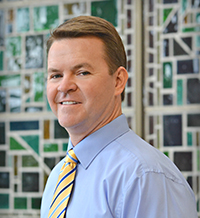
Doug Hodo, Houston Baptist University president emeritus, dies at 81

Edward Douglas “Doug” Hodo, the second president of Houston Baptist University, died Oct.10 at his home in Boerne. He was 81.

Doug Hodo 200During his time as HBU president from 1987 to 2006, HBU developed new academic programs and campus facilities expanded to include the Hinton Center, the Baugh Center, the Husky Village Apartments and the Glasscock Center. In 2006, construction began on the first phase of the Morris Cultural Arts Center, which was dedicated in 2007.

Hodo placed HBU on a firm financial foundation, helped grow the school’s endowment and maintained the university’s Christian commitment. During his tenure at HBU, alumni numbers increased dramatically, and HBU added the renowned Bible in America collection—one of the most significant Bible collections gathered in the last 50 years—to its museum.

In September 2006, the board of trustees honored Hodo and his wife, Sadie, for their 19 years of service to HBU by naming them president emeritus and first lady emeritus. In 2013, HBU honored the couple with the naming of the Sadie and Doug Hodo Residence College.

Hodo was born in Amory, Miss. He served in the U.S. Army from 1954 to 1956. He earned his undergraduate degree, two master’s degrees and a doctor of philosophy in economics and finance degree, all from the University of Mississippi.

In 1972, Hodo became dean of the College of Business at the University of Texas at San Antonio, a position he held until he became president of Houston Baptist University.

He was involved with many for-profit and not-for-profit boards and was a founding board member of USAA Bank, Houston Christian High School, Living Water International and Castle Hills First Baptist School in San Antonio.

He is survived by his wife of 57 years; three children, Allison Hodo Clements of Floresville, Edward Douglas Hodo Jr. of Boerne and Patrick Gunter Hodo of Boerne; 10 grandchildren; and one brother.

“The entire HBU family mourns the passing of Dr. Doug Hodo, but we give God thanks for his faithful service and strong witness for Christ,” HBU President Robert Sloan said. “Dr. Hodo was instrumental in continuing and strengthening the core scriptural commitments of HBU. Much that we are able to do today we owe to him and many others like him among the trustees, faculty and staff who have gone before us. Our prayers are with Sadie and the Hodo family.”

The family has asked in lieu of flowers, consider a donation to the Doug and Sadie Hodo Endowed Scholarship at HBU, the Hill Country Pregnancy Care Center or Faith Comes by Hearing. 


Baylor Scott & White names president-elect

James H. Hinton, who has led Albuquerque, N.M.-based Presbyterian Healthcare Services more than two decades, is the next president and chief executive officer of Baylor Scott & White Health and the first non-Baptist to lead the historically Baptist hospital system.

The Baylor Scott & White Holdings board of trustees announced Hinton’s appointment Oct. 10 after a national search. He assumes the post Jan. 16.

James Hinton Hinton, a Presbyterian, noted he was drawn to Baylor Scott & White because of its mission to serve all people as a Christian ministry of healing, and he would not have considered moving unless it were to a faith-based organization.

Hinton, 57, will succeed Joel Allison, who announced in March his intention to retire. Allison joined the Baylor Health Care System in 1993 as chief operating officer, and he became chief executive officer in 2000. In 2013, he spearheaded the merger of Baylor and Scott & White that created the largest not-for-profit healthcare system in Texas, with 47 hospitals and nearly 1,000 patient access points throughout North and Central Texas.

Hinton has been president and chief executive officer at Presbyterian since 1995, and has been with the organization since 1983.

“During this time of incredible change in healthcare, Jim brings exceptional experience that will help move us into the future,” said Jim L. Turner, chairman of the Baylor Scott & White Holdings board of trustees. “He is one of the few health system leaders in the country who has successfully navigated an organization from a focus on volume to a focus on value, and beyond his impressive accomplishments, those he leads are quick to say he is best known for promoting a caring culture.”

Hinton served on the board of trustees of the American Hospital Association from 2011 through 2015. In 2014, he was the chair of the organization that represents nearly 5,000 hospitals, healthcare systems, networks and other providers of care through advocacy and public policy.

“I have always been impressed with Baylor Scott & White’s reputation for high-quality care, for its dedication to its mission, its service to its communities, and its innovative strategies,” Hinton said. “I am honored to now be in a position to help continue to advance the organization and its move toward population health.”

Hinton has received numerous leadership awards, and he was named one of the 100 Most Influential People in Healthcare by Modern Healthcare magazine in 2013 and 2014.  He holds a master’s degree in healthcare administration from Arizona State University and a bachelor’s degree in economics from the University of New Mexico.

Hinton will move to the Dallas area in December with his wife, Kristen, and their two youngest children, Ethan and Nora. They also have two adult children—Rebecca, a nurse in Albuquerque, and Robert, who works for a New York-area health system.


Baylor study: Fun at home may satisfy more than time together elsewhere

WACO—While family fun often is associated with new and exciting activities, family leisure spent at home in familiar pastimes may be a more effective route to happiness, a Baylor University study indicates.

“That may be because when the brain is focused on processing new information—such as taking part in an unfamiliar activity with unfamiliar people in a new location—less ‘brain power’ is available to focus on the family relationships,” said lead author Karen K. Melton, assistant professor of child and family studies at Baylor.

While research results suggest all quality time together contributes to satisfaction with family life, “all family leisure is not equal,” she said.

“The best predictor of happiness for families may be spending quality time together in familiar activities inside the home. And that’s great news for families who have little time or few resources,” Melton said.

The study—“In the Pursuit of Happiness All Family Leisure is Not Equal”—is published in World Leisure Journal.

Researchers used a sample of 1,502 individuals in 884 families in the United Kingdom. Each family taking part in the online research had at least one child between the ages of 11 and 15. Participants answered questions about whether they participated in family leisure in the past year, and if so, what activities (from 16 categories) they did, how much time they spent doing them and how frequently they did so.

Melton said the catchy expression “The family that plays together, stays together!” carries two misconceptions—all family leisure brings positive results and all family activities are equal.

“Family members also can express stress and conflict as well as pleasure during leisure time,” she said. “The activities alone will not heal the scars of hurting families.”

Melton noted some studies support the idea eating together is one of the best predictors of functioning families, while watching TV is seen as ineffective for individual happiness or family function. But families should question one-size-fits-all notions.

“For some families, quality togetherness is having dinner together or playing games. For others, it may be hobbies, videos or TV, music,” Melton said. “At the end of the day, what matters is that we are social beings who crave a sense of belonging and connectivity.”


Bryan pastor Heiligman nominee for BGCT 2nd VP

BRYAN—Jim Heiligman, pastor of First Baptist Church in Bryan, will be nominated for second vice president of the Baptist General Convention of Texas at Texas Baptists’ annual meeting, Nov. 13-15 in Waco.

“He is a thoughtful and faithful, capable and youthful pastor,” said Todd Still, dean of Baylor University’s Truett Theological Seminary, who announced his intention to nominate Heiligman.

Both during his time as a seminary student and in his service to Texas Baptist churches, Heiligman demonstrated loyalty and commitment to the BGCT, Still said.

“He is coming not as an outsider so he can offer solutions to perceived problems. Rather, he is an insider who wants to serve the convention and to see it continue to flourish,” he said.

Heiligman, 37, has earned the respect of his peers and colleagues, said Still, who added the BGCT should seek to engage “bright, capable young pastors” in leadership.

“He brings the qualities the BGCT needs in its leadership,” he said.

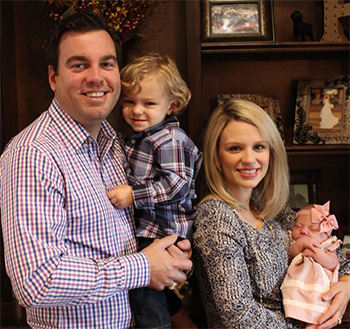
family 350Jim Heiligman is pictured with his wife, Courtney, and their children, Clarke and Camille.As the father of a 2-year-old son and infant daughter, Heiligman acknowledged when he was approached about serving as a convention officer, he initially felt “too busy in life and ministry” to accept a nomination. However, after praying about it, he agreed to serve if elected.

“Texas Baptists have meant the world to me, both in my education and my ministry,” he said.

If elected, Heiligman hopes to use the office as platform to encourage other young ministers to see the value in working cooperatively through the BGCT and to recognize its relevance.

During the next year, he would like to see the state convention do all it can to foster healthy churches and healthy pastors.

“We need strong churches, healthy churches,” Heiligman said. “The church is God’s idea, God’s plan, God’s vehicle to take the gospel to all people.”

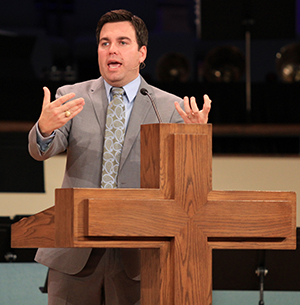
Jim Heiligman 300Jim Heiligman has been pastor of First Baptist Church in Bryan since June 2014.Likewise, congregations need pastors who are healthy physically, mentally, emotionally and spiritually, he added.

“Too many pastors are burned out, overwhelmed and depressed,” he said. “Too often, they are neglecting their health and neglecting their families. When ministers suffer, their ministry suffers and churches suffer. … I want to be a pastor who looks out for other pastors.”

Heiligman has been pastor of First Baptist Church in Bryan since June 2014. Previously, he served nearly six years as pastor of First Baptist Church in Castroville.

He also served as youth pastor at First Baptist Church in Moody, Central Baptist Church in Jacksonville and First Baptist Church in Charlotte, and he was a summer youth intern at First Baptist Church in Holdenville, Okla.

Heiligman earned his undergraduate degree from Texas A&M University in 2004 and his master of divinity degree from Truett Theological Seminary in 2009.

He and his wife, Courtney, have two children, Clarke and Camille.


Baylor names chief compliance officer

WACO—In response to a recommendation from Pepper Hamilton, the law firm that investigated Baylor University’s handling of sexual assault complaints, Baylor named attorney Doug Welch as the school’s chief compliance officer.

Doug Welch 200Doug WelchIn his new role, Welch, who served as associate general counsel at Baylor since 2006, will help identify compliance needs in a range of areas, assess the effectiveness of existing systems, procedures and controls, and create and deliver training to ensure compliance.

Creation of the chief compliance officer post was among the 105 recommendations from the Pepper Hamilton investigation that focused on improving Baylor’s prevention of and response to sexual violence.

In May, Baylor’s board of regents released a 13-page “Findings of Fact” document and a 10-page set of recommendations from Pepper Hamilton. 

 “Doug Welch is a highly qualified attorney with an expertise in the areas of compliance and higher education,” Interim President David Garland said. “His leadership will enable the university to continue to make rapid progress on the recommendations and foster a culture of compliance throughout the university.”

Welch will lead the development of a centralized compliance center to equip and support Baylor’s work in research, athletics, Equal Employment Opportunity, Title IX and Clery compliance.

His additional responsibilities will include developing training and awareness programs for staff, faculty and students in areas of compliance and regulatory oversight; collaborating with university administration, deans and department leaders to design effective policies and processes that ensure compliance with all federal and state statutory and regulatory standards; implementing effective checks and balances; and assessing the overall effectiveness of these initiatives.

The university announced Welch’s appointment two days after Baylor appointed Kristan Tucker as Title IX coordinator to replace Patty Crawford, who resigned from the Title IX post and appeared on national television to air her grievances.

“I am honored to accept the role of chief compliance officer and humbled by the trust the senior administration has placed in me,” Welch said. “I look forward to this new challenge, which will allow me to continue fostering solid working relationships already in place across campus, as well as building new ones in the effort to carry out the university’s mission.” 

Welch graduated from Baylor in 1986 with a bachelor of business administration degree in accounting. After three years in public accounting, he entered law school and earned his law degree in 1992 from Texas Tech University School of Law, where he served as editor-in-chief of the Texas Tech Law Review.

Following law school, Welch served two years as briefing attorney for U.S. District Judge Sam R. Cummings. He is licensed to practice law in Texas and admitted to practice before the United States Fifth Circuit Court of Appeals and United States District Courts in Texas.

He is a member of the American Bar Association and State Bar of Texas in the employment, litigation and appellate sections. In addition, he is a certified public accountant.

Welch joined Baylor’s office of general counsel in 2006 from a private law practice in Lubbock, where he also served as an adjunct professor of law at Texas Tech University School of Law. His primary areas of responsibility have been in employment law, real estate, athletics and international programs.

Welch and his wife, Nadine, a clinical assistant professor in the department of communication sciences and disorders, have three children.


Christian community developers can ‘make America great again’

DALLAS—Christians who work together in community development can become “the ones who actually make America great again,” Jeremy Everett of the Texas Hunger Initiative told participants at the No Need Among You Conference in Dallas.

One American child in five lives in poverty, and more than 40 million Americas are food insecure, meaning they lack reliable access to nutritious food, said Everett, founding director of the Baylor University-based initiative. In Texas, the number of children in poverty rises to one in four, and along the Texas/Mexico border, half of the children live in poverty, he added.

Jeremy Everett 200Jeremy Everett “We can do better than that,” he told the conference at Cliff Temple Baptist Church in Dallas, sponsored by the Texas Christian Community Development Network.

Power of collaboration

As a member of the bipartisan National Commission on Hunger, Everett experienced firsthand the power of collaboration when commission members—half of them appointed by Republican and half by Democratic officials in the U.S. Senate and House of Representatives—reached more than 20 consensus recommendations.

“When we work for justice, it’s important how we do it,” he said.

Describing some of his early “clumsy justice work” as a community organizer, he recalled how attempts to speak prophetically can be perceived a strident and divisive.

“We need to build trust and work collaboratively,” he said. “That brings reconciliation and ultimately healing.”

Community development workers need to keep in mind big-picture policies as well as local needs when they seek solutions to hunger and poverty, Everett said.

“We have to work at the local, state and national levels all at the same time,” he said.

That demands multiple levels of collaboration and cooperation, he insisted.

“When we come together and work together in community, that is when transformation happens,” he said.

Courage required to deliver shalom

Helping vulnerable people demands courage, said Sami DiPasquale, executive director of Ciudad Nueva, a community development organization based in El Paso.

Christians can be deliverers of “shalom,” a Hebrew word often translated as “peace,” DiPasquale noted.

“Shalom is not merely the absence of conflict,” he said. “Shalom is the way God intended our world to be. Shalom is what we want for our communities.”

Delivering shalom requires Christians to stretch beyond their comfort zones for the sake of hurting people and for the sake of the gospel, he said.

“Be willing to enter into places of difficulty and be the presence of Christ there,” he urged.

Tranformational power of education

Damon Lopez, founder of Turn Around Schools and No Excuses University, described his experiences as principal at an elementary school in San Diego, Calif., that moved from the “underperforming” categorization to being ranked as an exemplary National Blue Ribbon School.

Damen Lopez 200Damen LopezNow he helps schools across the country create what he calls “a culture of universal achievement” that enables children to move from generational poverty to become successful students in college.

“There is one thing as powerful as the cycle of poverty, and that is the power of education,” he said.

Lopez sees his work as a divine calling.

“I measure success by how many lives I change,” he said. “God desires to give us purpose—to bring joy to our lives and to the lives of others. … Our greatest rewards are always discovered after we make a bold choice.”

Escaping the ‘iron cage’ of generational poverty

Education can be transformative, but educators need to understand how to communicate with students trapped in generational poverty, said Donna Beegle, founder of Communication Across Barriers.

Beegle recalled growing up in abject poverty, not understanding the words her teachers used in class or the examples they cited. When she told a teacher she planned to drop out of school, the teacher told her she never would be able to get a job without earning her diploma.

“I didn’t want a job,” she said. “I saw people working my whole life, and they were still evicted, and they were still hungry.”

Donna Beegle 200Donna Beegle When the teacher said “job,” she meant a career that would sustain a decent lifestyle. But all Beegle could think about were the people she knew—migrant agricultural workers who labored long hours and died young but couldn’t earn a living wage.

“Growing up, I didn’t know people lived past 60,” she said. “I didn’t know people past 30 had teeth.”

Beegle grew up with five brothers, all of whom spent time incarcerated.

“They were in there for the same kinds of things I did. I just didn’t get caught,” she said. “Poverty doesn’t always allow you to be good.”

By age 26, Beegle was a divorced mother of two living children, having lost one child at age 17. But she enrolled in a transitional program for women that enabled her to earn her GED.

After attending a two-year community college, she continued her education at the University of Portland. where a professor and mentor offered to teach her the language skills she never gained in elementary school. By age 36, Beegle earned her doctorate.

“I am now bilingual. I speak fluent middle-class English,” she said, although she acknowledged she still has a tendency to lapse into bad grammatical patterns when she is fatigued.

American society remains deeply segregated by class, Beegle said.

“We know not everyone has the same chance. So, why do we treat them like they do?” she asked.

“We cannot break the iron cage (of generational poverty) unless we are poverty-informed. … If you are judging, you can’t connect. If you can’t connect, how can you communicate? We don’t teach about poverty. … We need to fight the poverty, not the people who live in it.”

With additional reporting by Editor Marv Knox.


Refugee crisis offers opportunity to show love of Jesus, panelists say

DALLAS—The global refugee crisis presents Texas Christians a tangible, significant opportunity to express the love of Jesus to the world’s most vulnerable people, a panel at the No Need Among You Conference insisted.

“You’re living in the middle of an incredible (refugee) crisis. What will you do? What should we do?” John Parsons, the south regional coordinator of World Relief, asked participants at the conference at Cliff Temple Baptist Church in Dallas, sponsored by the Texas Christian Community Development Network.

Jesus said his followers will be judged by the way they serve six groups of at-risk people—the hungry, thirsty, strangers, naked, sick and imprisoned, Parsons said, adding Texas Christians serve most of those well.

Consider the refugee

“But if you’ve been asking God if there is something you’ve been missing, I want you to consider the stranger, the foreigner, the refugee,” he pleaded.

To be classified as a refugee, a person must meet specific, internationally recognized criteria, Parsons explained. They must face a well-founded fear of being persecuted for reasons of race, religion, nationality, social grouping or political affiliation, and they must live outside their home country.

Even with that high standard, the world refugee population is 70 million, he said, adding 232 million people are classified as “displaced persons,” who have been forced to flee their homes but don’t meet the rigid definition of “refugee.”

The United States ranks No. 1 in receiving refugees and accepts 70,000 of them annually, he said, stressing that number is tiny compared to the need.

Texas a leader in refugee resettlement

 Texas tops the nation in resettling refugees. And even though the state government has decided to stop participating in federal refugee processing, Texans will continue to help refugees find new homes, he said.

“Texas has been active in refugee resettlement 40 years. We’re the No. 1 state,” Parsons said. “That will continue, through churches.”

Resettlement agencies will keep on accepting refugees, and churches, individuals and other groups can help simply by volunteering, he said.

Multiple volunteer opportunities

Those volunteers who want to help refugees don’t need to possess professional expertise to be effective, added Samira Izadi Page, founder and executive director of Gateway of Grace Ministries

Samira 150Samira Izadi PageFor example, many refugees desperately need help with language skills, and English-as-a-Second-Language teachers are in high demand. “You don’t have to be a professional,” she said. “You speak English. If you can spare two to three hours a week, we can use you.”

Gateway of Grace also serves many refugees by providing baby showers, which also offer a natural way to explain God’s love through Jesus, as do family holiday celebrations that include refugees, she said.

“We can share the gospel without being coercive,” she said. “We are God’s plan for sharing the gospel with refugees—by meeting their physical, spiritual and emotional needs.”

Chances of terrorist infiltration remote

While some Americans want to turn back refugees because they fear terrorism, the prospect of terrorists sneaking into the country through refugee resettlement is extremely remote, Parsons said.

“The refugee program is the worst process any terrorist would choose,” he explained. “You would have to pretend to be poor, stay in a refugee camp anywhere from three to 15 years, and then not know the country where you would be resettled. …

“I’ve helped almost 20,000 refugees resettle across 40 years. I’ve not met a terrorist yet.”

“There are so many people in our world who are hurt. It’s up to Christians to help them,” said Jimmy Dorrell, the panel’s moderator and founder of Mission Waco/Mission World. “The call on our lives—we who have been blessed—is to bless others.”


Churches can lead dialogue to bridge racial divide, sociologist says

DALLAS—Because Christians recognize the reality of sin, churches have the potential to lead honest interracial dialogue that could unite a polarized nation, a sociologist told a Texas Christian Community Development Network conference.

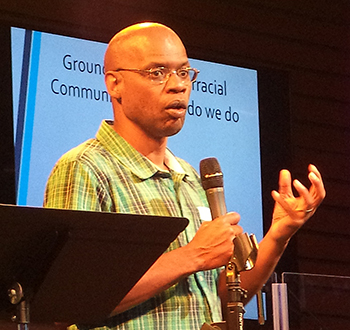
Yancey 350George Yancey, professor of sociology at the University of North Texas in Denton, spoke to the No Needs Among You Conference. (Photo/Ken Camp)“New models of interracial communication coming from the church will strengthen Christians’ witness in an post-Christian society,” George Yancey, professor of sociology at the University of North Texas in Denton, told the No Need Among You Conference at Cliff Temple Baptist Church in Dallas.

Although Christians have been involved to some degree in the political movements that grew around the #blacklivesmatter and #alllivesmatter hashtags on social media, each originated out of a secular mindset that fails to consider the reality of sin and human depravity, Yancey asserted in a keynote address.

In contrast, churches hold a realistic view of human nature that acknowledges sinful motives, attitudes and actions—not only in the other person who is “different,” but also in themselves, he noted.

Reality of a racialized society

“Whatever we have today, it’s not true communication,” said Yancey, an African-American. “We live in racialized society—a society where race matters profoundly for differences in life experiences, life opportunities and social relationships.”

In a racialized society, people hold drastically different views about how to define racism, he insisted. White Americans tend to define racism in terms of overt actions from one individual to another, while people of color generally believe structural and social institutions can perpetuate racism, even when individuals do not intend to be racist, he explained.

Unfortunately, sociological studies indicate deeply entrenched views of racism as exclusively individual or as societal often are even more pronounced in churches than in society at large, he noted.

Polarizing power of social media

For all their differences, the Black Lives Matter and All Lives Matter movements hold some things in common.

“Both groups expect compliance to their ideology,” he said. “Both groups demonize those they disagree with. In both groups, most of the energy in the movement is toward boundary maintenance … (defining) who is with us and who is not with us.”

Rather than facilitating honest communication and meaningful dialogue, social media tends to deepen division, Yancey observed.

“Social media reinforces the view that we are right,” he said. “Boundaries between different groups harden. Each racialized event becomes an opportunity to demonize and fight the out-group.”

Secular sociologists call it “confirmation bias,” but Christians recognize it as humanity’s sinful nature, Yancey said.

“None of us is pure of heart when we talk about race relations,” he said.

Mutual-obligation approach

Yancey proposed what he calls a mutual-obligation approach to improve communication based on two underlying assumptions: “We all have a sin nature, and everyone has an obligation to work toward healthy interracial communication to solve our racial problems.”

If participants in dialogue take those principles seriously, nobody will dictate answers to others, everyone will have opportunities to be heard, and people on both sides can work toward mutually acceptable solutions, he said.

Honest dialogue demands active listening that assumes the best intentions of the other party and requires patience and persistence, he said.

Steps toward solutions

In a conference workshop, Yancey outlined five steps to move toward solutions, using the mutual-obligation model:

  • Define the racial problem. Keep in mind a mutually defined specific problem rather than broad platitudes and lofty goals.
  • Identify the critical core. Find points of potential agreement that could serve as agreed-upon goals.
  • Recognize the cultural or racial differences at work. Keep in mind each participant in dialogue will approach the conversation from a distinct starting point.
  • Develop ideas that address the concerns of racial out-groups. Neither party should presume to know how the other feels, but both should listen actively and attentively.
  • Work toward a solution that can be accepted by all. “If the body of Christ illustrates solutions, the world will notice,” Yancey said.


Corsicana pastor nominee for BGCT president

CORSICANA—Danny Reeves, pastor of First Baptist Church in Corsicana and second vice president of the Baptist General Convention of Texas, will be nominated for president at the BGCT annual meeting, Nov. 13-15.

“For Texas Baptists, he sets a good example of commitment to ministry and missions,” said Jason Burden, pastor of First Baptist Church in Nederland, announcing his intention to nominate Reeves.

“Danny Reeves stands out among his peers as a leader,” said Burden, who has known Reeves since their years as students at Baylor University’s Truett Theological Seminary. “He is the kind of passionate leader our people can rally behind, and I’m proud to be able to bring his nomination to the floor of the convention.”

Reeves possesses the gracious demeanor that makes him easy to relate to, the charisma that inspires others to follow his leadership and the intellect to engage with Texas Baptists of varied backgrounds, Burden noted.

“He is the kind of person we want to represent us as Texas Baptists,” he said.

Danny Reeves 200Danny Reeves Reeves, who described himself as “Texas-born, Texas-bred and part of the Texas Baptist family my entire life,” said he has felt honored to serve as a BGCT officer this year and humbled to be considered as a candidate for president.

If elected, Reeves said, he wants to promote unity, strengthen solidarity and encourage cooperation among Texas Baptists.

“When there is togetherness and unity among God’s people and they are working with the Spirit of God, great things happen,” he said. “That’s what I want to see in our Texas Baptist family.”

The BGCT faces the same challenge individual Texas Baptist churches face—presenting the gospel to a post-modern, increasingly post-Christian culture, he said.

But the challenge also presents opportunity, because Christians today find themselves in a setting similar to the church of New Testament times, he added.

“We face the grand challenge and have the great opportunity to set sail into a societal storm, putting out into high wind and waves,” he said.

The BGCT can help equip churches to face the challenges, and by working together under God’s Spirit, Texas Baptists can present the message of Christ in a way that draws people, he added.

“Jesus was contagious in all the right ways,” he said. “His love was contagious. His compassion was contagious. His grace was contagious.”

Reeves grew up in Monahans, where he was ordained to the gospel ministry by Southside Baptist Church after he responded affirmatively to God’s calling at Paisano Baptist Encampment.

He earned his undergraduate degree at Howard Payne University and both his master of divinity and doctor of ministry degrees from Truett Seminary.

He has been senior pastor at First Baptist in Corsicana since 2011. Previous pastorates include First Baptist churches in Edna and McGregor. He also served on staff of churches in Mart, Big Lake and Blanket.

He and his wife, Charissa, have three children—Courtney, Emily and Ryan.


Updated: Baylor University Title IX coordinator resigns, replacement named

Editor’s Note: This article orginally was posted Oct. 4. It was updated several times Oct. 5 as the story continued to develop.

WACO—Patty Crawford, Baylor University’s first full-time Title IX coordinator, resigned. And in less than 48 hours, the university named Kristan Tucker, formerly senior deputy Title IX coordinator, as her replacement.

Baylor announced Crawford’s resignation in a news release issued at 11:49 p.m. Oct. 3.

patty crawford 130Patty Crawford “Our understanding is that Patty was disappointed in her role in implementing the recommendations that resulted from the Pepper Hamilton investigation,” the university announced, referring to the Philadelphia law firm Baylor’s regents hired to explore how the school handled reports of sexual violence after some Baylor Bears football players were convicted of sexual assault. 

In May, the regents released a 13-page “Findings of Fact” document and a 10-page set of recommendations from Pepper Hamilton. 

“The university is grateful for Patty’s leadership in establishing fair and equitable Title IX processes that are also supportive of the needs of survivors,” the Baylor statement said. “We will always seek to continuously improve and are confident that the very capable Title IX staff will continue the important work of educating, supporting and responding to the needs of those impacted by interpersonal violence.”

Baylor hired Crawford as Title IX coordinator in November 2014. Title IX is the law that states, “No person in the United States shall, on the basis of sex, be excluded from participation in, be denied the benefits of, or be subjected to discrimination under any education program or activity receiving federal financial assistance.”

New coordinator named

At 7 p.m. on Oct. 5, Baylor announced Tucker’s appointment as Title IX coordinator, effective immediately. As depty coordinator, Tucker helped direct the functions of the Title IX office, as well as trained faculty, staff and students on Baylor’s Title IX policy and processes. Her primary roles included managing the day-to-day responsibilities associated with the university’s Title IX compliance obligations.

Additionally, Tucker collaborated across divisional lines to manage safety accommodations, increase awareness and develop policy and a process for complaints alleging sexual harassment, sexual assault, sexual misconduct and relationship violence.

“Kristan Tucker is a capable and experienced Title IX professional, and I have full confidence in her ability to lead our Title IX office,” Interim President David Garland said. “Kristan has been an integral part of our efforts to build a strong and responsive Title IX office, and she serves, alongside her staff members, on implementation teams focused on the recommendations from Pepper Hamilton.

“We have made rapid progress on these recommendations, which have improved the university’s processes and systems to ensure we respond effectively and compassionately when students report incidents of sexual violence and seek our help. We are resolutely committed to continuing our support for Kristan and her team in serving and caring for our students.”

Going forward, Tucker said, the priority for the Title IX office is educating and serving the Baylor community.

“The Title IX office’s focus is on our students and the entire Baylor community, ensuring that we provide the resources, support and assistance they need. It is vital that our systems support a fair and equitable Title IX process,” Tucker said. “Although I may serve as the Title IX coordinator, this is truly a team effort. We are a unified team, committed to the common goal of addressing the important issues of gender discrimination and interpersonal violence impacting the Baylor community. We remain committed to making progress and working with integrity to show leadership through our efforts.”

Prior to joining Baylor, Tucker served as the lead Title IX investigator for East Carolina University, where her primary role included oversight of the student Title IX processes and training for students, faculty and staff in order to increase university compliance. Additionally, she gained experience as senior equity compliance officer within the University of Tennessee system, where she focused on faculty and staff discrimination issues. 

Crawford on national TV

Crawford was unavailable for comment on Oct. 4 but appeared on the “CBS This Morning” program on Oct. 5. In her TV appearance, she asserted her work situation became intolerable due to some senior administrators who were more concerned about “protecting the brand” than protecting students.

“I continued to work hard, and the harder I worked, the more resistance I received from senior leadership,” she said. “In July, I made it clear … that I had concerns and that the university was violating Title IX, and my environment got worse.”

Crawford said she filed a federal complaint to the Office of Civil Rights and human resources. The university did not allow her to fulfill the responsibilities of her job as Title IX coordinator and retaliated against her, she asserted.

“I never had the authority, the resources or the independence to do the job appropriately, which the Department of Education writes in its guidance for Title IX coordinators in universities,” Crawford said. 

Baylor responds

Crawford’s resignation followed after mediation failed. Several Waco media reports cited sources saying Crawford requested $1 million dollars, along with book and movie rights—assertions repeated in a public statement issued by Baylor after Crawford’s TV appearance.  

“Baylor University was surprised by the action taken by Patty Crawford given her public comments in August about the strong support she felt from across the University. Her demands in advance of mediation for one million dollars and book and movie rights were troubling,” the statement said.

Crawford’s attorney, Rogge Dunn, appeared with her on the CBS TV program.

“There was a mediation, and Texas law is quite clear that you cannot commend on what took place at the mediation,” Dunn said.

The statement from Baylor continued: “We are proud of the substantial resources invested in building a strong Title IX office and of the collaborative work the university has been doing and will continue to do in the implementation of the Pepper Hamilton recommendations. Patty led two implementation teams related to Title IX and served on the overarching action team. Members of the Title IX staff are serving on multiple teams and have made tremendous contributions. They will very ably continue this work of sexual assault awareness, prevention and response.  

“It has taken the entire Baylor community, fully engaged in our ongoing efforts, to ensure the university has in place the processes, policies, personnel, and training to prevent acts of sexual violence and respond appropriately with compassion to those who suffer from such acts. We recognize that our work on this front will never be complete, and we will continue to seek ways to improve our response and to actively support survivors.”

Two women join lawsuit

Baylor announced Crawford’s resignation the day after two women who claimed they were sexually assaulted as students at Baylor joined a Title IX lawsuit against the university, originally filed in U.S. District Court in Waco on June 15.

The two women—identified only as Jane Doe 7 and Jane Doe 8—asserted Baylor failed to investigate their cases adequately. Jane Doe 7 claimed her attack by two other Baylor students occurred in 2009, and Jane Doe 8 asserted she was sexually assaulted in 2015.

Baylor reports progress 

In August, Garland reported Baylor had completed or made significant progress on more than three-fourths of the 105 recommendations from Pepper Hamilton. 

Garland noted Baylor doubled the size of its counseling center staff, expanded its Title IX office, created a 24-hour crisis hotline, implemented a centralized reporting system and developed a webpage (http://www.baylor.edu/reportit/) to make reporting easier.

In response to the Pepper Hamilton recommendations, Baylor created two task forces led by high-level administrators. Reagan Ramsower, senior vice president for operations and chief financial officer, heads a sexual assault task force, and Provost Greg Jones leads an initiative focused on spiritual life, Christian character formation and creating a caring culture.

Baylorput into place implementation teams to address Title IX protocols and policies, athletics, engagement and education, centralized reporting and resolution, public safety, counseling, advocacy and other issues.

After expansion, Baylor now has one of the largest Title IX offices in the Big 12 Conference, the university reported.

Baylor also revised its Title IX policies and protocols to include provisions that grant students immunity from disciplinary action for campus policy violations when they report sexual violence. For example, a student who violates prohibitions on premarital sex, recreational drug use or underage drinking and subsequently is sexually assaulted can report the abuse without fear of losing a scholarship or being expelled.

Baylor also developed mandatory training for all coaches, student-athletes and athletics administrative personnel in regard to Title IX policies, sexual assault prevention and bystander intervention.


Korean Texas Baptist delivers soybeans and medical equipment to North Korea

A Korean Texas Baptist minister returned recently from North Korea, where he confirmed delivery of 60 tons of soybeans to two churches, one hospital and five schools for orphans.

Yoon 350Yoo Yoon confirms delivery of soybeans in North Korea.Yoo Yoon, director of the Korean-American Sharing Movement of Dallas, has journeyed to North Korea about 30 times since 1996, typically to supervise the delivery of food and medical supplies provided by Texas Baptist Men and other donors.

Yoon verified delivery of 52 tons of soybeans to four schools for orphans in Wonsan and one school in Moonchun, both in North Korea’s Kangwon Province.

At Yuka-Won preschool, Yoon said, the principal told him, “The soybeans are too good for words.”

A junior and senior high school in Wonsan that serves 1,300 orphans ages 12 to 18 received 20 tons of soybeans. Yoon has visited the school several times in recent years, not only to offer food, but also to provide soccer balls and organize a sports program.

“Since we had visited the school over 10 years, many graduated from this school, all male and some female are in military service, and their service term ranges from eight to 10 years,” Yoon said. “I hope and pray that they remember us when we were with them and why we were there. Their remembering is the work of the Holy Spirit, and we need to pray for them to remember the times and the activities of love and comradeship.”

SaraYoon 300Sara Yoon examines at patient at the hospital in Wonsan.Two churches in Pyongyang, the nation’s capital city, received three tons of soybeans, and the provincial hospital in Wonsan received five tons.

Yoon’s daughter, Sara, an ophthalmologist from New York, delivered medical equipment and supplies to the Wonsan hospital. She also examined patients, consulted with physicians in the hospital’s ophthalmology department and trained them to use the equipment.


McNeal receives award for interim ministry

DALLAS—E.L. “Skip” McNeal received an award Sept. 22 for his contributions in interim ministry in Texas Baptist churches.

McNeal received the MWD Award during a luncheon at a continuing-education event for Texas Baptists’ Interim Ministry Network. The MWD Award is named for three Texas Baptist leaders instrumental in developing the state’s intentional interim ministry program—Dick Maples, Charles Lee Williamson and Jan Daehnert.

McNeal entered interim ministry after he retired as pastor of First Baptist Church in Sanger, where he served 30 years. He completed specialized intentional interim ministry training offered by the Baptist General Convention of Texas.

After he served as a full-time traditional interim pastor at First Baptist Church in Alpine, his first intentional interim pastorate was at First Baptist Church in Huntsville. The intentional interim process is designed to help churches through challenging times, with the pastor serving as coach to a transition team in the congregation.

When McNeal arrived, the Huntsville church’s active membership had declined more that 50 percent, and nearly all the remaining members were senior adults.

The year after McNeal’s tenure, the church had added more than 90 members, primarily young families with children, said Karl Fickling, coordinator of Texas Baptists’ Interim Ministry.

McNeal is completing an intentional interim pastorate at University Baptist Church in Fort Worth. During the interim period, McNeal has led in outreach, shepherded members, modeled ministry for the staff, and helped individuals struggling with life’s most difficult times, Fickling noted.

He also guided the church through a self-study that helps congregations address issues before calling a new pastor.

“UBC is positioned for a positive future with the calling of a new pastor,” Fickling said. “Dr. McNeal is quick to honor the hard work of the transition teams and the members of the churches he has served. He is careful to give all the praise to the Lord Jesus Christ. Nevertheless, it is clear that he is gifted to assist churches during their interim transition time, and he is well-deserving to be the 2016 recipient of the MWD Award of the BGCT.”