Testimonies of changed lives highlight The Gathering in Waco

WACO—Thousands joined to worship on Palm Sunday at The Gathering in Waco, where former NFL player/recovered cocaine addict Miles McPherson urged them to do what the Apostle Peter did when he stepped from a boat into deep churning waves to walk toward Jesus.

Miles McPherson 350Miles McPherson challenges listeners to “get out of the boat” at The Gathering. (Photo/Matthew Minard/Baylor Marketing & Communications)“Maybe you’re in your own boat, in your own little world. … But I’m telling you, your boat is going to sink” without Jesus, said McPherson, pastor of Rock Church in San Diego and a former player for the San Diego Chargers.

Lives dedicated to Christ

Worshipers also heard a videotaped testimony from Jason Ramos, a former drug addict/dealer who leads a ministry to ex-convicts, and a live testimony from Baylor men’s basketball coach Scott Drew.

The event at Baylor University’s McLane Stadium, live-streamed internationally, included a 1,000-voice choir, musicians and a canned-food drive for people in need.

Ramos recounted how he became involved in Bible study. Someone asked whether he had a church in mind to attend after serving his sentence. He didn’t—but he remembered being invited to one while he was high on meth and taking his son trick-or-treating.

He went to the church, joined a life group and urged loved ones to get involved.

“I’ve seen 17 family members give their lives to Jesus,” he said.


Drew: ‘That’s winning’

Drew told the crowd he was born into a Christian family, made his profession of faith in Christ, attended church camp and occasionally read his Bible. But he still did not understand that he could not work his way into heaven.

Scott Drew 350Scott Drew, Baylor men’s basketball coach, delivers his Christian testimony at The Gathering. (Photo/Matthew Minard/Baylor Marketing & Communications)It wasn’t until much later, when he was coaching an Athletes in Action team and traveling overseas, the concept of being saved by grace through faith came alive for him, he said.

“At that point, I started to realize, ‘God really loves me,’” he said.

In his time at Baylor, he has witnessed athletes develop not only athletically, emotionally and socially, but also spiritually, he said.

“We had six players baptized one year,” he said. “That’s winning.”

‘Step out of your boat’

In McPherson’s sermon from the Gospel of Matthew, he recounted Jesus’ miracles of healing a blind man, raising a girl from the dead and feeding a crowd of 5,000 people with five loaves of bread and two fish.

After feeding the thousands, Jesus went to be alone to pray, sending his disciples away in the boat to travel ahead of him. Later, they were frightened when they saw him walking on the water toward them, but he reassured them and urged Peter to come to him.

As Peter began walking toward Jesus on the water, “he started to focus on his circumstances—and he started to sink,” McPherson said. “Some of you have trusted Jesus, but because things didn’t go the way you wanted, you took back control of your lives.

“What storms are you fighting? What boat are you trusting to save you?” McPherson asked. “You’ll never, never, never fix it on your own. … My challenge to you is to let go; step out of your boat.”

During the altar call at the service’s end, hundreds filed to the football field to make professions of faith, rededicate their lives or seek help.

Ramiro Peña, executive director of The Gathering and pastor of Christ the King Church in Waco, urged worshipers to heed Jesus’ words in John 17:21: “Father, make them one as you and I are one, so that the world would believe that you sent me.”

“Together, we have united across all the things that divide us,” Peña said.


Baylor and CBF help churches respond to human trafficking

LAREDO—A Baylor University social work professor and her students worked in partnership with Cooperative Baptist Fellowship field personnel to develop a ministry toolkit to help churches in cities along the Texas/Mexico border combat human trafficking.

About two and a half years ago, a conference on trafficking at South Main Baptist Church in Houston brought together Nell Green, Houston-based CBF field worker; Ben Newell, who serves with CBF in South Texas; and Lorenzo Ortiz, pastor of Iglesia Bautista Emanuel in Laredo.

Together, they began to explore the trafficking connections between gateway cities along the Texas/Mexico border where victims enter the United States and destination cities where victims end up as sex slaves or in labor bondage.

Ortiz invited his new acquaintances to travel to Laredo, its surrounding unincorporated colonias and other communities along the Rio Grande to see for themselves.

“Drive-through convenience stores are common in the area, and some are fronts for sex trafficking,” Newell said. Although some local law enforcement personnel denied the problem, an informal survey of young people revealed “they know it’s where to go for drugs and sex,” he added.

Coalition created to fight trafficking

In time, the concerned Baptists joined with others to develop the Coalition to Combat Human Trafficking, a group committed to break the chain linking desperate people at points where they enter the country and those in urban centers who exploit them. 

The coalition decided to begin its work in Laredo and then expand to other sites along the Rio Grande. The group particularly wanted to equip congregations in border communities to identify and address the problem locally.

Ortiz wanted to know how pastors could rise to the challenge—not only responding when a possible trafficking victim might come to a church seeking help, but also being alert to danger signs and aware of whom they should contact.

“We need to be the eyes and ears in the community,” Ortiz said. “When our people are visiting a drive-through, they need to know how to report it when they see something suspicious and how to connect with local authorities.”

Social work researchers get involved

Green worked to pull together experts and additional partners who could identify needs and problems in the Laredo area, as well as strengths and resources. That’s when the coalition contacted Elizabeth Goatley, assistant professor in Baylor’s Diana R. Garland School of Social Work

Goatley first traveled to Laredo in November 2015 to meet with pastors and a local prosecuting attorney. Six months later, she and a four-member student team of researchers spent a week in Laredo.

The researchers conducted more than a dozen interviews with a variety of people in the community and its churches, as well as personnel at local shelters, a county judge, a representative from the district attorney’s office, a consulate officer and personnel with Immigration and Customs Enforcement.

Familiar patterns emerge

They discovered a pattern, particularly among new arrivals in the United States. People in Latin America travel to the United States to seek a better life economically or to escape violence, often related to drug cartels. To facilitate their journey, they often pay coyotes—human smugglers who help immigrants cross the border into the United States. But the immigrants discover the price they pay is subject to change.

“Once they get to the border, the coyotes demand more money,” Goatley explained.  “That’s how people enter into debt bondage and servitude.”

Often, the immigrants are held in stash houses along the border until they are sent to Houston, Austin and other urban areas where they are trafficked. Victims of sexual trafficking often are groomed for exploitation while they still are near the border, she noted.

“We found more evidence of labor trafficking than sex trafficking in Laredo,” Goatley said. “Among the men who are being trafficked, it is mostly labor trafficking. Among women, it is both sex trafficking and labor trafficking—often debt bondage with elements of sexual exploitation.”

A recently released study by the Institute on Domestic Violence and Sexual Assault at the University of Texas at Austin School of Social Work revealed of the 314,000 human trafficking victims in Texas, about three-fourths—approximately 234,000—are involved in labor trafficking. 

‘Body tax’ paid to enter the country

At the same time, Goatley noted, she and other researchers were moved by stories of women who endured sexual exploitation—both before and after they crossed the border.

“I was surprised by their resiliency, and by the fact they were so open to talking to us,” she said. “Some of the stories we heard were about people who risked their lives to get into the United States. They looked up here and decided it had to be better than what they were leaving behind in their home country.        

“Even in their most dire straits here, they felt it was 10 times better than risking being killed just for walking out their front door in their own country. Mothers prepared their daughters, ‘You may have to be raped along the way.’ They called it the ‘body tax’ women pay.”

Creating a ministry toolkit

To equip churches to respond, the Baylor researchers developed a community asset map, identifying resources available in the Laredo area. Then they created a ministry toolkit for the Coalition to Combat Human Trafficking, with information about how to identify trafficking, guidance for trauma-informed engagement with victims, initial response protocols and a directory of people to contact for assistance. 

Subsequently, the coalition trained 35 church leaders in the Laredo area how to use the toolkit most effectively, overcome fears about getting involved and share the information with others in their congregations.

In the near future, the coalition hopes to expand to Eagle Pass and the lower Rio Grande Valley. That involves not only assessing the resources and needs in each community, but also understanding its distinctive culture.

“Every single border community is different,” Green said.

The coalition also has identified educational resources geared toward prevention, and it particularly is focusing on the link between pornography, sexually oriented businesses and trafficking.

“If you address pornography effectively, you reduce the demand for sex trafficking,” Green said.

For her part, Goatley sees the role of churches as central in eliminating human trafficking in all its forms.

“The church is a great vehicle for dealing with the issue, because Christians have a heart for people,” she said. “If the church is being the church, eradicating the exploitation of anyone will be one of its goals.”


House committee hears testimony on daily fantasy sports

AUSTIN—An attorney general’s opinion declaring daily fantasy sports an unlawful expansion of gambling did not prevent a House committee from hearing testimony on a bill to legalize it in Texas.

The House Licensing and Administrative Procedures Committee held an April 3 hearing on HB 1457. The measure, introduced by Rep. Richard Peña Raymond, D-Laredo, has eight sponsors in the House of Representatives. 

Last year, Texas Attorney General Ken Paxton issued an opinion ruling paid daily fantasy sports violate Texas prohibitions on games of chance. 

“The attorney general got it right,” said Rob Kohler, consultant with the Texas Baptist Christian Life Commission. “We hope members of the House will recognize this as an expansion of gambling, and that would require a constitutional amendment.”

Daily fantasy sports sites permit players to pay a fee to enter a game in which they create a fantasy sports team using real professional athletes. The athletes’ performance in various statistical categories determines how a fantasy league team fares. The fantasy player wins or loses money accordingly, with the sponsor site claiming a percentage.

“Simply put, it is prohibited gambling in Texas if you bet on the performance of a participant in a sporting event and the house takes a cut,” Paxton said.

Opponents of the measure drew a sharp distinction between season-long recreational fantasy leagues—a social activity in which little or no money changes hands—and daily fantasy sports, a huge commercial operation.

Advocates of daily fantasy sports emphasize the skill involved in selecting players.

“If you don’t think fantasy football is a game of skill, then you haven’t played it,” Raymond told the Texas Tribune

However, in Texas, unlike some other states, chance does not have to predominate over skill in order for an activity to be defined as gambling.

“It is beyond reasonable dispute that daily fantasy leagues involve an element of chance regarding how a selected player will perform on game day,” Paxton said—a point Rodger Weems, chair of the Texas chapter of Stop Predatory Gambling, emphasized in his testimony before the House committee.

“This is a high-stakes shell game,” Weems he said.

Furthermore, permitting daily fantasy sports leagues to operate in Texas would open the door to other illegal gambling, he added.

“This will come back to bite you,” he predicted.


UMHB plans 78th annual Easter Pageant

BELTON —The University of Mary Hardin-Baylor will host its 78th Annual Easter Pageant April 12—a Central Texas tradition that draws thousands of visitors to campus each year.

Performances are scheduled at 12:30 p.m., 3 p.m. and 5:30 p.m. in front of Luther Memorial on the UMHB campus. All performances are free and open to the public.

UMHB’s Easter Pageant is student-led and features a cast of more than 300 students and 30 children and grandchildren of university students, faculty and staff.

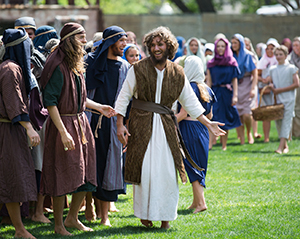
UMHB 2016EasterPageant 300The student-led University of Mary Hardin-Baylor Easter Pageant will be presented April 12 on the UMHB campus. (File Photo/UMHB)The pageant chronicles moments from Christ’s Passion, including his triumphal entrance into Jerusalem, the Last Supper, his trial by Pontius Pilate, crucifixion, death and resurrection.

Each year, UMHB President Randy O’Rear selects a student to serve as the pageant’s director, overseeing the cast and production, as well as choosing students for the roles of Jesus and his mother, Mary, primarily on the basis of their strong Christian faith and character.

Maddie Rarick of Sugar Land is director of this year’s pageant. Sophie Rivera of Round Rock portrays Mary, and Jacob Asmussen of Austin will fill the role of Jesus.

“I was surprised that he would choose me, and I had no idea of the journey that it would take me on throughout the next year,” Asmussen said, describing preparation for the role as transformative. 

“It’s been life-changing. It has transformed my heart and my way of thinking, and it has really helped me develop a stronger relationship with God and his love.”

As director of the pageant, Rarick was responsible for most of the production’s casting decisions, but she encouraged Asmussen to select the students who would fill the roles of disciples. For Asmussen, the task offered an opportunity for ministry.

“I wanted a group of guys that could form a great bond, a brotherhood,” Asmussen said. “But I also wanted guys who were at different stages in their relationship with Christ—guys who could benefit from the experience and be changed by it.”

The young men have grown close over the course of the production, Asmussen said. In fact, the group plans to conduct a baptism ceremony in the near future for members who never have been baptized before or who were christened as infants.

“That’s probably going to be one of the best days of my life,” Asmussen said.

Pageant organizers caution the 5:30 p.m. show is usually the most popular, and visitors are encouraged to attend earlier performances if possible. Audiences also are encouraged to bring sunscreen, because umbrellas are prohibited.


Faith helped Rangers coach battle cancer

ARLINGTON (RNS)—Tony Beasley never lost faith, even when he was diagnosed with cancer. 

“It’s been an opportunity for me to be who I said I am,” said Beasley, third base coach for the Texas Rangers. “My favorite verse is 2 Corinthians 5:7: ‘For we walk by faith, not by sight.’ To have an opportunity to actually live that out was a blessing.”

With a giant U.S. flag unfurled in the outfield grass and a sellout crowd of 48,350 standing to honor America, all attention centered on Beasley on Opening Day, April 3, when he returned full time to the game he loves after a year spent battling rectal cancer.

‘An inspiration to us all’

“An inspiration to us all” is how longtime Rangers public address announcer Chuck Morgan introduced the 50-year-old coach, who was invited to sing the national anthem on opening day.

“You can ask anybody in here just how big an impact Beasley has on everybody as far as his faith and his attitude. It’s just contagious,” outfielder Delino DeShields told a reporter in the Rangers’ clubhouse at Globe Life Park. “Even last year, he came in with a smile on his face and always had positive words.”

Emotional journey

Under blue skies on a 76-degree night, Beasley offered a soulful rendition of “The Star-Spangled Banner”—and couldn’t help but reflect on his emotional journey of the past year.

BEASLEY 350Rougned Odor (left) talks with coach Tony Beasley as players Nomar Mazara and Jurickson Profar watch a game last August. (Photo/Creative Commons/Keith Allison)“I actually closed my eyes when I sang, just to keep in rhythm with the beat and to block out the delay,” the coach said. “But it was an honor. It was a blessing.”

“This time last year, I was undergoing chemotherapy,” added Beasley, who received his cancer diagnosis in January 2016. “And to be able to be back at full capacity, I just thank God for that.”

As he gently swayed his head from side to side as he sang, Beasley said, he concentrated on his gratefulness that God had healed him—with an aggressive 11 months of treatment that included radiation and surgery. He received a clean bill of health in December.

“I’m always thinking in spiritual terms because everything I have and everything I do is because of God’s goodness and his grace,” said the coach, who is married to Stacy and has a son, Tony Jr., 22, an outfielder for Hardin-Simmons University in Abilene. “I don’t have to be here, but because of his mercy, I’m here. So I’m thankful.”

Deeply rooted Christian faith

The roots of Beasley’s faith stretch back to his childhood: He grew up one of eight brothers and sisters born to the late James and Arlene Beasley. His working-class father earned a living as a logger. His mother stayed busy caring for the children.

The family had little in terms of material blessings, but it had everything it really needed, as Beasley recalls.

The Beasleys fed their souls each Sunday at the Jerusalem Baptist Church in rural Sparta, Va. Tony Beasley still worships at that same church in the offseason, and his brother Jared is the pastor.

Jerusalem Baptist is where a young Tony Beasley first developed his vocal talents. He sang in the church youth choir starting at age 11 or 12—he can’t remember which—and became a church deacon at 19.

But Beasley said he didn’t really embrace his Christian faith until he joined the baseball team in 1988 at Liberty University in Lynchburg, Va. Then-Liberty coach Bobby Richardson, who played second base for the New York Yankees from 1955 to 1966, served as a mentor to Beasley.

“At Liberty was when I really understood what it meant to have a personal relationship with Christ and to really surrender,” Beasley said. “And so that’s when I really fully gave my all to him. (Since then), I’ve been trying to walk worthy of God’s glory.”

Close friendship with Rangers’ manager

Beasley was drafted by the Baltimore Orioles in 1989 and traded to the Pittsburgh Pirates in 1991. He played nine seasons in the minor leagues before becoming a coach in the Pirates and Washington Nationals organizations. He came to Texas in 2015 when his longtime friend Jeff Banister was hired as the Rangers’ manager.

Banister faced his own health battle when he was diagnosed with cancer in his left leg as a high school sophomore and underwent seven surgeries. He praised his longtime friend—with whom he rooms during spring training—for confronting the disease with a fighting, confident spirit.

Beasley’s faith definitely made a difference in his approach to cancer, the manager said.

“For Tony, it’s a strong role because it’s a strong faith,” Banister said. “That’s where he draws his overall strength.”

Jared Sandler, a Rangers radio broadcaster, has a torn ACL and is walking on crutches, but he made his way to the dirt area behind home plate to hear Beasley perform the national anthem.

“I was down there just as a subtle sign of respect and appreciation,” Sandler said, suggesting that Beasley’s faith can be seen—in a simple way—in his personal interactions. “He really treats people in a way that I think the people up above would be proud of.”

Enlarged territory

In 1 Chronicles, an obscure Bible character named Jabez asks God to bless him and enlarge his territory—a request that inspired a best-selling book by Bruce Wilkinson in 2000.

Before his cancer diagnosis, Beasley said he—like Jabez—asked God to enlarge his territory.

“Sometimes, you get what you ask for,” the coach said. “My platform has been increased, and my territory has been enlarged by the way of going through cancer. God is receiving the glory … and I’m thankful for every door he opens and every door he closes.”

Never for a moment, Beasley said, did he doubt God would save him from the cancer.

“I believed from Day One that I would be healed,” he said. “I claimed healing in the name of Jesus.”

And now he’s back in the third base coach’s box, focused on the Rangers’ pursuit of a third straight American League West division championship.


Texas House soundly rejects school vouchers

AUSTIN—The Texas House of Representatives rejected school vouchers, voting 103-44 for a budget amendment that would prohibit public money for self-described “school choice” measures.

The April 6 House vote came one week after the Texas Senate voted 18-13 in favor of a bill to create education savings accounts and a tax credit scholarship program to fund private school tuition. In a concession to senators from rural districts, the bill excluded counties with a population less than 285,000, unless voters petition to participate.

Rep. Abel Herrero, D-Corpus Christi, introduced the amendment to the House’s proposed two-year budget.

The amendment explicitly says taxpayer funds “may not be used to pay for or support a school voucher, education savings account, or tax credit scholarship program or a similar program through which a child may use state money for nonpublic education.”

“This is a win for Texas school children and a positive step forward for our neighborhood schools,” Herrero said.

The vote underscores the sharp division between the House and Senate in this legislative session, as personified in the leadership of Lt. Gov. Dan Patrick, R-Houston, an ardent supporter of school vouchers, and Speaker of the House Joe Straus, R-San Antonio.

 Charles Foster Johnson 150Charles Foster Johnson“We are deeply grateful for the leadership of Speaker Straus and the overwhelming majority of Texas House members who realize that Texans love and support their neighborhood and community public schools—and do not want to see them privatized through school vouchers,” said Charles Foster Johnson, executive director of Pastors for Texas Children.

“We pray that the Texas Legislature will cease their dabbling into this violation of God’s gift of religious liberty for all people, and will begin focusing on the real needs of our 5.3 million Texas public schoolchildren. We humbly remind our elected officials that universal education is a fundamental human right for all children, mandated by the Texas Constitution and clearly taught by people of faith everywhere.”


Bears for Leadership Reform supports open meetings legislation

WACO—A group of prominent Baylor University alumni and donors voiced support for legislation that would require private universities receiving $5 million or more annually in Tuition Equalization Grants to comply with the Texas Open Meetings Act.

Bears for Leadership Reform also renewed its call for transparency and accountability by Baylor’s board of regents in the wake of a sexual-assault scandal, calling on regents to respond to questions and remove any board members who failed to fulfill their fiduciary responsibility.

In an April 6 letter to the university’s board of regents, leaders of the reform group said they “remained appalled at the total lack of transparency” by regents.

“The core group running the board of regents has mishandled this crisis for 18 months, and there is no end in sight,” the letter stated. “A handful of board members seem determined to keep the Baylor Family in the dark as a never-ending trickle of bad publicity continues unabated.”

University responds

A statement issued by Baylor University asserted comments by Bears for Leadership Reform “ignore the considerable progress the Baylor board of regents has made to create greater visibility into the governance of the university, as well as to combat the issue of sexual assault.”

The university noted it has implemented a majority of the 105 recommendations from Pepper Hamilton, the law firm that investigated Baylor’s response to sexual violence.

In addition to the departure of Baylor’s president, athletic director and football coach, the university also has dissolved the board’s athletic committee “to bring intercollegiate athletics more in line with the mission of the university” and has provided continued training for board leaders by the Association of Governing Boards and other resources.

Baylor’s statement also pointed out regents adopted recommendations from an independent board governance task force. 

Changes include increasing the size of the board’s executive committee, creating a task force for regent selection and granting voting rights to regents who represent certain constituencies.

However, the university’s statement underscored regents do not support opening their meetings, and the board governance task force agreed, citing “best practices” of national private universities.

“For private institutions such as Baylor, public meetings would preclude robust and frank discussion among the regents about sensitive issues such as sexual assault,” the statement said.

Senate bill calls for open meetings

Bears for Leadership Reform affirmed SB 1092 by Sen. Kel Seliger, R-Amarillo. The bill would require the governing board of any private nonprofit college or university that receives $5 million or more annually in Tuition Equalization Grants to comply with the same open meetings and open records laws that apply to public higher education institutions.

It also would prevent schools from requiring board members to sign nondisclosure agreements restricting access to information required by law.

Two Texas universities meet the $5 million threshold—Baylor and the University of the Incarnate Word in San Antonio.

“This seems like a reasonable approach from a taxpayer’s perspective, but it’s also important to the Baylor Family, since the board has chosen to continue meeting in secret,” the letter from Bears for Leadership Reform said. “Unfortunately, the board’s leadership has responded by hiring high-priced Austin lobbyists to kill the bill.”

‘Let the truth come out’

“Let the truth come out,” John Eddie Williams, a Houston lawyer and president of Bears for Leadership Reform, said in a teleconference announcing the letter his group sent to Baylor’s board.

Regents have “squandered precious resources” that could have benefitted students in an effort to maintain the board’s “cloak of secrecy,” said Williams, a major donor to Baylor, for whom the school’s football field is named.

Williams and others—including Temple businessman and major Baylor donor Drayton McLane and former Gov. Mark White—organized Bears for Leadership Reform last November.

Randy Ferguson, a former Baylor regent who serves on the Bears for Leadership Reform board, pointed to the recommendations from the Pepper Hamilton law firm that investigated Baylor’s response to sexual assault complaints. 

He noted the recommendations included governance issues not addressed in the regents-produced Findings of Fact, and asked why the board did not choose to include any information about its own failures in the document. 

“Is this why the Findings of Fact came from the board instead of Pepper Hamilton?” Ferguson asked. “It really begs the question: Is this intentional? Could it be an intentional cover-up just to protect certain board members?”

Ferguson called on regents to answer several questions:

  • What are the “actual or perceived conflicts of interests” alluded to in the recommendations?
  • How have board members’ conflicts of interest affected the victims of the sexual-abuse tragedy at Baylor?
  • Did the conflicts of interest constitute a breach of board members’ fiduciary responsibilities?
  • Who are the board members—past and present—with conflicts of interests?
  • Has the board failed to exercise due diligence standards in selecting current or former board members?
  • Who are the regents who failed to exercise due diligence in board member selection?
  • Which regents—past and present—were elected outside of due diligence standards?

“Doesn’t the Baylor Family have the right to know the answers to these questions?” Ferguson asked.

“In our opinion, the failure of leadership described in the (Pepper Hamilton) recommendations is enough to suggest a serious breach of fiduciary responsibility on the part of the leaders of the board of regents,” the letter from Bears for Leadership Reform said.

“The failure of leadership has had a profound impact on the victims of this tragedy and the reputation of Baylor. Indeed, Baylor has become the national poster child for sexual assault on campus, due to the lack of proper programs, policies and procedures. More significantly, the board is an example of how failed leadership that operates and deliberates in secret can allow a scandal to continue to engulf a university.”

During the teleconference, Williams continued to question what the sexual-abuse scandal and the board’s handling of it cost Baylor, including money spent to “buy the silence of victims and potential witnesses.”

In December, his organization reported a professional services firm that specializes in business valuation and litigation consulting estimated the cost at up to $223 million. 


Rangers’ spring training yields ‘incredible’ ministry

SURPRISE, Ariz. (BP)—For Major League Baseball players, coaches and fans, Opening Day offers a time to look forward in anticipation of the season ahead. For Jason Griffin, it also was a time to celebrate the work God did during spring training.

Griffin, pastor of Phoenix-area Freedom Valley Church in Surprise, Ariz., and a church planter with the Southern Baptist Convention’s North American Mission Board, serves as chaplain for the Texas Rangers facility in Surprise, where about 400 team personnel descend for spring training each February and March.

More than two dozen professions of faith in Christ

Over four years ministering to the Rangers, Griffin estimates 25 to 30 players and coaches have placed their faith in Christ as Lord and Savior, and countless hours of discipleship occurred.

Baseball chaplaincy is “a lot of opportunity,” said Griffin, who serves under the auspices of the Baseball Chapel organization. “I’m amazed about what God is doing in the organization of the Texas Rangers.”

Texas Ranger chaplain 350Texas Rangers Arizona chaplain Jason Griffin (back left in purple shirt) hosts a cookout for players and their families at his Phoenix-area home. (Photo courtesy of Jason Griffin)Among the highlights of Griffin’s ministry are housing players and their wives in his home each spring, leading team chapel services every Sunday for 30 to 60 players and coaches and being available for individual counseling at the ballpark at least five days per week.

During spring training, he also gathers daily at 6:30 a.m. for prayer and a devotional with about 15 coaches.

Easter worship service last year

When Easter fell during spring training last year, the Rangers’ leadership agreed to shut down all baseball operations so players and staff had the opportunity to attend a 45-minute chapel service. The result was a service attended by 120 players and staff and led by Griffin, along with the Freedom Valley worship and media teams. The service included a gospel message and an invitation to trust Christ for salvation.

“The response was incredible,” Griffin said. “You had Major Leaguers just in tears about how God encountered them.”

He noted a “ripple effect throughout last year” of men coming to Christ in the minor leagues and Major League Baseball as they grappled with truth from the Easter service.

On another occasion, Griffin led a Bible study with several players and a coach on Jesus’ conversation with Nicodemus about being born again. At one point, a participant interrupted Griffin, asking him to “stop talking and tell us how we can be born again.”

Griffin did just that, and six men committed their lives to Christ on the spot.

Chaplain has a ‘pastor’s heart’ for young athletes

Jon Edwards, a pitcher in the Rangers organization from 2012 to 2015, lived in Griffin’s house during 2014 spring training and said the chaplain has a “pastor’s heart” for young players.

Griffin and his wife, Mindy, provided personal discipleship to Edwards and his wife, Katelyn, including Bible studies together and regular family worship. The Griffins replicate that ministry with at least one young couple each spring, attempting to strengthen their marriage in preparation for the rigors of professional baseball.

Griffin “connects with players,” said Edwards, who was traded to the San Diego Padres in 2015 and expects to be out of baseball this year recovering from elbow surgery. “He just lets them talk, and I feel like at the right time, he just fills it in with the truth of the Lord.”

Citing a typical event from Griffin’s ministry, Edwards recalled how the chaplain met a former Ranger at a coffee shop within the past month after the young man was cut from the team and led him to Christ.

Although 2017 spring training has ended, Griffin said, his work with the Rangers will continue, as it does each year. He also is the team’s chaplain for extended spring training, rookie league, instructional league and fall league—all of which occur at the Arizona facility.

The 10 hours per week Griffin typically devotes to baseball chaplaincy during spring training reduce to between six and eight the rest of the year.

Extended spring training (for players deemed not ready for full-season competition) and rookie league (a 60-game summer league for newly drafted players) are among the most fruitful times for ministry, Griffin said. Players often have Sundays off, so Freedom Valley lets them borrow cars or bikes to attend church.

Last year, the congregation gave Bibles with their names engraved to each member of the Rangers’ rookie league team. Griffin was also given 15 minutes to tell the team why the church wanted them to have Bibles.

Although Griffin can tell many similar stories of ministry, the overall impact of his chaplaincy is impossible to quantify, he stressed.

“Texas’ organization is incredibly saturated with guys who love the Lord and want to see their team come to Christ. I just find it a great privilege to partner with them,” he said, noting Baseball Chapel facilitates similar ministry with all 30 MLB franchises.


Texas WMU celebrates lives redeemed, restored and released

MIDLAND—Stacey Williams walked into the Christian Women’s Job Corps office in Dublin in 2001 a struggling single mom desperately seeking help.

She was welcomed into the loving extended family of CWJC, a Woman’s Missionary Union of Texas program. Volunteers encouraged her, fostered her relationship with Christ and equipped her with job skills.

Shirley McDonald 350Texas WMU elected President Shirley McDonald, a member of Green Creek Baptist Church in Dublin.Williams is one of a multitude of lives changed in the 20 years CWJC programs have served women in need. She and her husband worked through their marital issues and reunited. Their children are flourishing. She works as a director of human resources.

“The Christian Women Job Corps is the best thing that ever happened to me,” Williams said during the Texas WMU annual meeting at First Baptist Church in Midland. “I know I wouldn’t be where I am without Denise, Patty and my Bible teacher.”

Stories of tranformed lives

Williams’ story embodies the theme of the meeting held March 31-April 1—“His: Redeemed, Restored, Released.” Participants focused on what God has done for them, how he changed their lives and what they are charged to do in his name.

Texas WMU in the past year has reflected stories of God redeeming people, restoring them and releasing them to serve, said Carolyn Porterfield, the missions organization’s interim executive director.

CWJC served unemployed and underemployed women. Two teams of women built a home for a vulnerable family in the Rio Grande Valley through Buckner International. Women from around the world embraced a relationship with Christ as a result of Texas WMU ministry from Longview to Amarillo. The gospel transformed lives.

“We are to call people to follow Christ,” Porterfield said. “When we know we are his, and we are aware of our own redemption, and we join in that process of restoration, we hear his call to go. He releases us to serve in places where he leads us. It’s not about an organization. It’s not about a program. It’s about following the One who calls us.”

Theme interpreted

Ira Antoine, director of bivocational ministries with the Baptist General Convention of Texas, interpreted the theme for the crowd from across the state. Antoine told a story about his 5-year-old daughter wanting to go to Disneyworld. She asked and asked him to go, so he planned the trip, figured out how to pay for it and made it happen. Then his daughter enjoyed the trip.

Ira Antoine 300Ira Antoine, director of bivocational ministries with the Baptist General Convention of Texas, interpreted the theme of the Texas WMU annual meeting.Christians enjoy redemption made possible by Christ’s death on the cross, Antoine noted. Christ paid the price for people to have a relationship with him.

“When you and I look at the redemption of our lives, we got what someone else paid for,” he said. “It blows my mind that God would send his only begotten Son for us.”

Redemption radically transforms lives, Antoine said. It’s like when someone buys the rundown house down the street. They see potential in it, put in the work and restore it.

CWJC saw Williams’ potential when she first walked into the office. They saw what her life could be and helped her accomplish her goals. Someone saw the potential in each person who becomes a Christian, Antoine said.

“Someone saw something beyond what you could see,” he said. “God gave them that.”

The restoration of a life glorifies God, drawing people to him, he continued.

“Whenever you and I go into a lost world, someone will see you, someone will recognize you, someone will know you from before,” he said. “Now you can show what God has done in your life.”

Emphasis on being a disciple, making disciples

Deirdre LaNoue, an author who also teaches at Hardin-Simmons University’s Logsdon Seminary Dallas-area extension campus, urged the gathered women to have a strong relationship with Christ. If they do, they will make disciples, she said.

“We indeed have a story to tell the nations. And goodness knows, our world needs that story of peace and joy more than ever,” she said. “Ladies, we cannot do that unless we are connected to the vine”—Jesus.

Daniel “Tiny” Dominguez, pastor of Community Heights Baptist Church in Lubbock, encouraged participants to live out God’s command to make disciples around the world.

“When we go and do things, it’s for his glory,” Dominguez said. “It’s for his honor. It’s his command.”

During a business session, Texas WMU elected President Shirley McDonald, a member of Green Creek Baptist Church in Dublin; Vice President Charlotte Watson, minister of missions at First Baptist Church in Georgetown; and Secretary DeRema Dunn, member of Mimosa Lane Baptist Church in Mesquite.

Texas WMU also celebrated the 100th anniversary of Hispanic WMU of Texas.


Senate approves limited voucher-like bill

AUSTIN—After making a concession to rural Republican lawmakers, the Texas Senate voted 18-13 in favor of a bill to create education savings accounts and a tax credit scholarship program to fund private school tuition.

Limited in scope

The substitute version of SB 3 limits the scope of the programs to counties with populations greater than 285,000, unless 5 percent of registered voters petition for access.

It also limits eligibility to students who have attended public school at least one year.

Proponents conceded the changes after rural legislators, whose constituents have fewer education options, objected to the original version.

“It succeeded only after procedural maneuvering and bad-faith legislative manipulation that is beneath the dignity of a democracy,” said Charles Foster Johnson, executive director of Pastors for Texas Children.

Rural senators who agreed to the substitute bill “supported a policy that they would not have for the children of their communities,” Johnson said.

Three Republicans—Sen. Kel Seliger of Amarillo, Joan Huffman of Houston and Robert Nichols of Jacksonville—joined Senate Democrats in voting against the bill. Sen. Eddie Lucio of Brownsville cast the only Democratic vote in favor of the measure.

Accountability and disabilities

Debate on the Senate floor focused primarily on issues of accountability and whether the bill would benefit students with disabilities.

The Senate rejected an amendment from Sen. José Rodriguez, D-El Paso, which would have required private schools to be graded by the recently approved A-F rating system for public schools.

“Essentially, what this bill does is provide a new government entitlement program for poor families to place their children in woefully inadequate private schools far inferior to their neighborhood public schools—all without the proper accountability and oversight that should accompany tax dollars,” Johnson said.

Senators did approve an amendment from Sen. José Menéndez, D-San Antonio, requiring letters to be sent to parents who accept the subsidies, letting them know private schools are not required to serve students with disabilities.

The bill now goes to the House of Representatives, where voucher-like bills have had considerably less success in recent years.


Colorado volunteer, in Texas Baptist church, is Woman of the Year

ARVADA, Colo.—Rebel Rodriguez, who runs a food bank for a Texas Baptist church located in a Denver suburb, is her community’s Woman of the Year.

Rodriguez, director of The Rising Church’s longstanding food-distribution program, is receiving the Arvada Chamber of Commerce’s Woman of the Year award the first week of April.

Recipients are recognized “for their amazing community involvement, generosity and overall impact on Arvada,” the Chamber of Commerce reported in announcing Rodriguez as this year’s winner.

The Rising Church and its food bank are located in the Olde Town section of Arvada, what Pastor Steve Byers calls “an urban oasis in the suburbs” not too far northeast of downtown Denver. The small congregation is affiliated with both the Colorado Baptist Convention and the Baptist General Convention of Texas.

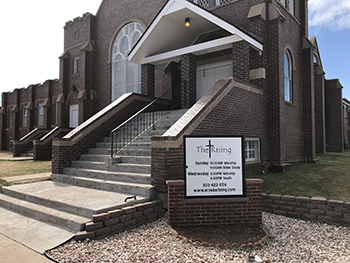
The Rising 350The Rising Church in Arvada, Colo., operates a food bank and robust ministry to homeless people. The congregation is affiliated with the Baptist General Convention of Texas. (Photo courtesy of Steve Byers)The Arvada Chamber of Commerce chose Rodriguez for the city’s service award after receiving her nomination from some of the homeless people who benefit from and participate in The Rising Church’s food ministry.

For love of community

“I started crying when they told me” about the award, she said. “I didn’t know I was in the running. I love Arvada, so I’m very honored to represent the city where I raised my kids, where I work, and where I praise and worship God.”

Rodriguez is the Gloria Pruessner Food Bank’s third director, started by its namesake and then led by former church member Paul Wynn.

In fact, the food bank attracted Rodriguez to the church, she said.

“About five or six years ago—I have been at The Rising 5 years in March—I was in-between churches and wanted to find a church in my community. I prayed to the Lord, asking, ‘Where can I serve in my community?’

“I tend to gravitate to those folks who the world would cross the street to avoid. They seem to be a magnet to me. And so I got to know some of the homeless guys while walking my dog.”

Through her new friends, Rodriguez learned about The Rising’s food bank and found an answer to her prayers.

No-brainer

“I started attending The Rising and volunteered for the food bank,” she said. “Paul needed help, and I had a truck and experience hauling heavy loads. It was a no-brainer for me.”

Byers credits Rodriguez with ramping up the food bank’s effectiveness, in large part by involving some of the recipients in operating the production. “Rebel got a lot of the homeless people to help,” he said.

“The guys asked if we needed help, and I don’t turn down help,” she explained. “Five years later, and they still help out. They maybe needed an opportunity to help, and they needed someone to say, ‘Yes’ to them.”

Through their strong relationship, Rodriguez and the food bank’s homeless clients get other tasks done around the church.

“They help me clean the church,” she reported. “They do food. They’ve very helpful. And it’s not just me. The whole church has gotten to know them. They help some of the older guys in the church with odd jobs.”

Good fit

That’s a good fit for both the homeless and the church, Byers added, noting the church reflects the character and composition of its community.

“We’re not Southern transplants anymore,” he explained. “We call ourselves a church for people who don’t go to church.”

Mostly, that means new Christians and people, like the homeless community, who don’t quite fit anywhere else.

Arvada is the base for a homeless community in part because Denver has sought to remove the homeless from its inner city and also because Arvada is close in and old enough to feel urban itself.

“We’re the only agency besides the police that works with the homeless,” Byers said. “We do a lot of (homeless) triage, trying to get them some help. It’s not just stereotypical—alcoholics, substance abusers and vets. The ones we get heartbroken over are the developmentally disabled. We’ve got three on the property now.”

On a recent Sunday, three homeless men and a homeless family participated in The Rising’s worship service. The church allows homeless people to sleep on its property, and on especially cold, windy or snowy nights, it opens the building to provide shelter.

Rodriguez is the perfect leader of the feeding ministry, he added. Most obvious is her compassion for and natural relationship with homeless people. But also, “she’s one of those people with boundless energy,” he said. “She leads our children on Sunday. She cleans the building, goes to children’s camp, runs the Vacation Bible School.”

All that energy and commitment—multiplied in numerous volunteer positions outside of church—provided ample reason for Rodriguez to be chosen Woman of the Year, Byers affirmed.

About that Texas connection …

An issue that probably had no bearing on Rodriguez’s selection is she’s a native Texan in a Texas Baptist church.

She grew up in Amarillo, where her parents have retired.

And The Rising Church has been affiliated with the BGCT since the early 2000s, the pastor said.

Byers comes by the Texas relationship naturally. He moved to the Lone Star State in 1981 to work for American Airlines. While in Texas, he was licensed and ordained to the gospel ministry by First Baptist Church in Arlington and attended Southwestern Baptist Theological Seminary in Fort Worth.

After living in Virginia awhile, he moved to Colorado 18 years ago, and the church has found a natural relationship to two state conventions.

“We’re a Colorado Baptist church and do the Southern Baptist Convention through that,” he said. “But Texas Baptists is where we fit better. We kind of need more connections. We’re out here all alone.”

In fact, The Rising Church would like to partner with Texas Baptist congregations and can offer an array of missions/ministry opportunities—from the food bank, to the homeless ministry, building construction, Vacation Bible School and more.

“There are a lot of things to do around here,” Byers said.

To learn more about mission opportunities, contact Byers directly by emailing steve@arvadarising.com or calling (303) 422-1174.


New Braunfels church walks through dark time, but not alone

NEW BRAUNFELS—Members of First Baptist Church in New Braunfels felt a flood of emotions following the loss of 13 beloved Christian brothers and sisters in a bus crash, but they never felt alone.

New Braunfels comfort 300Members of First Baptist Church in New Braunfels comfort each other during an April 2 worship service. (Photos courtesy of LAURA McKENZIE | Herald-Zeitung)“We have been strengthened by how others have responded to our grief and to this tragedy,” Pastor Brad McLean said.

Fourteen senior adults from First Baptist Church were returning from a retreat at Alto Frio Baptist Encampment March 29 when a pickup truck collided head-on with their bus in rural Uvalde County. The wreck killed the bus driver and 12 passengers. One other passenger was hospitalized, as was the driver of the truck.

Outpouring of support

“We literally have heard from people around the world,” McLean said. People from as far away as Norway and Germany contacted the church to express sympathy and offer assurances of their prayers, he noted.

Church members felt support from concerned people in distant places, but they saw it firsthand from neighbors who stepped up to serve and stand alongside grieving friends.

“The community has been amazing in its response,” McLean said. “Our sister Baptist churches immediately showed up. Businesses in town have been bringing food for the hundreds of people who have been here since Wednesday night. Everyone has been incredibly compassionate and gracious to us.

“On Thursday (the day after the fatal wreck), leaders of other churches literally put on aprons, worked in the kitchen and served us. It’s a true testimony to walking together in Christ. They said: ‘You’re hurting, so we are hurting. You need help, so we are here to help.’”

Church establishes fund to help families

In response to the many people who offered financial assistance to the families directly affected by the fatal bus crash, First Baptist Church established a relief fund. Contributions can be made online here

“Any funds we receive will go directly to the families impacted by this unfortunate tragedy,” McLean said.

The church also established an online portal for people who want to express sympathy, volunteer or donate food here

‘Work through these losses together’

In planning the first worship service after the fatal wreck, McLean worked with his staff to select appropriate Scripture readings to offer comfort, rather than develop a traditional sermon.

Brad McLean 350Pastor Brad McLean reminds his congregation that those who were killed in a bus wreck are alive in Christ. (Photos courtesy of LAURA McKENZIE | Herald-Zeitung)“That is what will minister to our hearts—letting the Lord speak to us as a church,” McLean said.

In addressing the congregation, he urged members to acknowledge deep wounds take time to heal.

“It is important for us to recognize this morning that our pain is real, our loss is real, our grief is real,” he said. “As a church family, we will have to work through these losses together. It will not be done in one Sunday. It will not be done after one week of memorial services. It will take a little time.”

In his remarks, he reminded church members that while they grieve, they do not grieve in the same manner as those who have no hope.

“Our family members who lost physical life last Wednesday are wonderfully alive in Christ,” he said.

McLean praised his staff and the members of his congregation for ministering to each other during difficult days.

“Our ministry team has worked long hours, doing whatever they needed to do to help the church walk through the process in a way that honors the Lord,” he said. “I’m incredibly proud of our staff. I’m incredibly proud of our church family. They have said: ‘I’m here. I’ll do whatever you need me to do.’ It’s the church being the church.”

Individual ministry for individual loss

While the 13 who died in the bus crash will be linked forever by the tragedy, the church will seek to remember each one individually and minister to the unique needs of each family, McLean said.

“We want to make sure every family is loved, every family is cared for and that attention is given to them,” he said.  “We want to remember the life of their loved one. Each life is vastly different. We want to celebrate and remember those lives as God lived through them.”

The bus tragedy offers members of the church the opportunity to demonstrate tangibly the depth of their faith, he noted.

“These are the moments in which you have to act on what you believe,” McLean said. “We believe in eternal life in heaven. We believe in the hope of resurrection. We believe these things. We have to act on these things.”

Looking ahead a couple of weeks, McLean acknowledged he hadn’t yet had a chance to think about how the tragedy might affect the schedule of previously planned Easter activities. But it will not change the message and meaning of Easter.

“On Easter, we were going to celebrate the resurrection of Jesus Christ. And we are still going to celebrate resurrection,” he said.