Hispanic training center equips lay leaders for service

En Español aqui.

DALLAS—A Dallas Baptist Association training center seeks to meet a critical need in Hispanic churches by equipping laity for service and leadership.

Six out of 10 Hispanic Texas Baptist pastors lack formal theological education, noted Gilberto Santiago, director of the association’s Seminario Teologico Bautista de Dallas. Dallas-area Baptists created the training institute about 80 years ago to address that need and provide biblical and theological training for pastors.

However, when pastors eventually move on to other congregations, finding another trained minister can be difficult—particularly for a small-membership Spanish-speaking congregation.

Often, a dedicated layperson from the congregation may step up to fill the void.

But when untrained lay leaders seek to lead untrained congregations, members seldom grow in Christian discipleship, and churches struggle to survive.

Prepare leaders according to their gifts
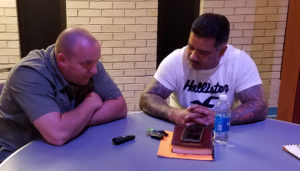
Gilberto Santiago visits with a Seminario Teologico Bautista de Dallas student before class starts. (Photo / Isa Torres)

Last year, Santiago led the Dallas-based training center to refocus its mission on the whole church rather than exclusively on pastors.

“Now our goal is to prepare leaders according to their gifts,” he said.

Santiago sees no shortage of willing workers in Hispanic congregations. However, members need to be equipped for service.

“Because the church did not educate them, people did not have the opportunity to prepare, though they wanted to serve,” he said.

Seminario Teologico Bautista de Dallas offers its program in two levels. The first level includes six courses in general basic training. The second level also offers six courses, but it allows students to concentrate in one of six areas—pastoral ministry, youth ministry, Christian education, worship, evangelism or missions.

Students can complete both levels in two years. To accommodate schedules, Santiago seeks to use varied locations around the greater Dallas area for groups to meet once a week in the evening.

‘Done by faith’

“Everything has been done by faith,” he said. DBA provides some funds for class materials and instructors, but the budget does not cover the costs of securing locations and advertising courses. Still the program has been able to grow.

“Many churches have offered their buildings for the classes,” Santiago said. “And it is always our students who invite others to come and take the course.”

Last year, 22 students attended classes in two cities. This year, about 140 students are enrolled in the classes offered in five locations.

“The worst thing people in the church can do is to think they do not need theological training,” said Santiago. “Maybe there are several things you can stop doing in the church, but one of them cannot be to stop learning.”

From his own experience, Santiago relates well to students who might have had well-meaning mentors, but who may have been taught more about traditions than biblical principles.

Most students face the same challenges to complete their training—time and money. But Santiago insists students end up seeing the program as a valued investment.

“They realize there is a big difference between reading the Bible and actually studying it,” he said.

Pass it on

Samuel and Feli Nuñez

Samuel and Feli Nuñez have attended training institute classes at Lake Pointe Church’s Richland campus in Richardson. Now they are using what they learn as they minister to other families.

“That is the ministry we have been called to do—ministry with families,” Samuel Nuñez said. “These courses give you more knowledge, so you can give a superior lesson to others.”

Their investment in education yields fruit in multiplied fashion, Feli Nuñez added. As she and her husband learn more, they pass it along to the families they work with, so they can teach others, in turn.
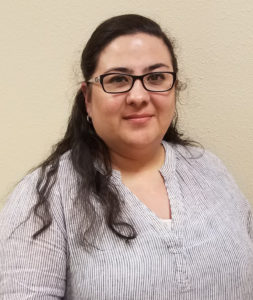
Aida Ortiz

Training institute classes also promote personal spiritual growth, Aida Ortiz noted.

“We learn concepts that we could not spend the time to study during the sermons,” Ortiz said.

Santiago hopes the program one day will grow to reach more people around the Dallas area and influence other denominations, as well.

“Our program is for the local church, and for whatever its need might be,” Santiago said, noting instruction is customized to meet congregational needs. “That is the difference between Cinderella’s glass slipper and a tailor who customizes a suit for a specific person.”

Build relationships with the poor, Baylor professor urges

WACO—Try to talk with Gaynor Yancey about needs and deficits, and before long, she will steer the conversation toward a discussion of assets and opportunities.

Ask her to conduct a community assessment, and where others see overgrown vacant lots, she sees available space churches can use to plant community gardens or develop neighborhood parks.

So, when confronted with a state where one child in four lives in a household that struggles to avoid hunger, rather than become overwhelmed by the need, Yancey grows energized by the possibilities.

“Historically, the church has always cared about hunger,” said Yancey, professor in the Diana R. Garland School of Social Work at Baylor University and director of the Center for Family and Community Ministries.

Most Christians recognize they have a responsibility to feed the hungry, she noted. The challenge rests in helping congregations move from doing ministry for the poor to ministering alongside the poor, she added.

Break bread with the poor

Churches provide a valuable service when they give bread to the hungry, Yancey said. But Christians offer a greater service when they break bread with the poor, she believes.

“If we don’t build relationships, we are feeding bodies, but we are not going deeper,” she said. “We are not doing what we uniquely are called to do.”

She favors what social relief providers call an “accompaniment” model that focuses on developing relationships with individuals and taking the time to learn about them, rather than simply providing services and responding to immediate needs.

Yancey recalled her own experiences years ago as a home missionary serving in inner-city Philadelphia. Transformational change occurred when people who served the poor began to sit down to share a meal with them on a regular basis.

“That’s when relationships start to change. That’s where you hear each other’s stories,” she said.

Church Under the Bridge

The desire to build relationships and learn from the poor has characterized the work of Jimmy Dorrell for a quarter century, both as pastor of Waco’s Church Under the Bridge and as executive director of Mission Waco.

Co-pastors Charles Benson and Jimmy Dorrell of Church Under the Bridge in Waco baptize a new believer during an Easter worship service. (Photo courtesy of Church Under the Bridge / https://www.facebook.com/Church-Under-the-Bridge-105391686233756/)

In fact, Church Under the Bridge grew out of an early morning conversation over a simple meal. Dorrell and his wife, Janet, invited a homeless man who had been sleeping under the I-35 overpass near the Baylor campus to join them for breakfast tacos. They told him they wanted to learn more about his life, as well as the lives of other homeless individuals in their community.

“We’ll be the students. You be the teacher,” Jimmy Dorrell told him.

That conversation led to the formation of the Church Under the Bridge, which marked its 25th anniversary Sept. 17. That attitude also shaped the character of Mission Waco, an interdenominational ministry to the city’s poor and marginalized.

Dorrell insists people who have problems—poverty, homelessness, mental illness, substance abuse issues—need to be involved in shaping the solutions to those problems.

Furthermore, ministry should be conducted alongside the poor, not on behalf of them, he asserts, and that requires relationship-building.

When Christians say they love the poor, Dorrell doesn’t hesitate to challenge them by asking, “What are their names?”

Pastors should know their communities

Not every minister is called to start a church without walls for homeless people. But all ministers need to learn how to understand their communities, Yancey said.

“We need to teach pastors and church staff how to know their communities,” she said.

“We can look at it from a deficit view or from an asset view.”

Rather than majoring on a community’s deficiencies, Yancey hopes pastors will learn to recognize the valuable assets present in every community—no matter how poor it may be.

“Each person is an asset. If we can hear their stories, we can learn what to build on,” she said. “In the process, we can grow to see them as God sees them.”

A minister on the church staff does not have to lead every community ministry a church undertakes, she noted. In fact, many are initiated by laypeople with a passion and sense of calling.

Even so, lay-led community ministries benefit from the blessing of the pastor, and worshippers connect more meaningfully to sermons when the pastor is in touch with the community, he insisted.

“Preaching from the pulpit has to bless what is going on in the congregation’s lives,” she said.

Benefits of collaboration

While churches need hands-on involvement and personal contact with people in their community who face challenges, a single congregation does not have to operate in isolation, Yancey said.

“The benefit of collaboration is that the community sees all the congregations caring for them at one time,” she said.

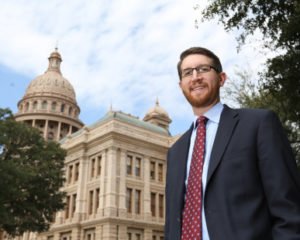
Jeremy Everett, founding director of Baylor’s Texas Hunger Initiative, sees another benefit to collaborative ministries.

Jeremy Everett is founding director of the Texas Hunger Initiative. (Photo / Baylor Marketing & Communications)

“We have opportunities through partnerships together to build relationships across racial lines,” he said.

In fact, if churches fail to work with congregations of other races, they miss opportunities for blessing and for learning, he insisted.

“Are you working with people who don’t look like you?” Everett asks churches.

Beyond working with other congregations, churches also have the capability of bringing together other groups in a community—social service organizations, business, government agencies and educational institutions, he noted.

After all, he noted, church members also are members of Rotary Club, leaders in local businesses, elected and appointed officials, and teachers and school administrators.

“Churches have the capacity to bring communities together to address issues,” he said. “Congregations can play a convening role.”

At one level, working collaboratively simply makes good sense in terms of outcomes, he noted.

“We need a willingness to work with others so we can serve more than we could independently,” he said.

Counting the right things

Obviously, Yancey sees the value in ministry among a greater number of people than a single congregation can accomplish alone. However, she also emphasizes the importance of going deeper in relationships, rather than just moving wider in terms of reach.

Perhaps counting the number of clients served is not the best measure when taken alone, she suggested.

“Are we calculating the right things? How do we show the value of what God is doing in our midst?” she asks. “There’s nothing wrong with efficiency and effectiveness, but God’s measure of efficiency and effectiveness may not be the same as the world’s.”

‘A prophetic witness on behalf of the poor’

In addition to direct ministry, churches also should encourage their members to become advocates for the poor, Everett said.

“The church can be a prophetic witness on behalf of the poor,” he said.

If congregations accept that prophetic role, the rising generation will consider the church a place where they want to invest their lives, Yancey added.

“The church should not be fearful of being involved in advocacy and justice issues,” Yancey said. “Young people are justice-oriented. There is no way they are going to be content to sit back and not be involved.”

Actually, lack of involvement with the poor and hungry cannot really be an option for any Christian, Everett said.

“We are instructed to spend ourselves on behalf of the hungry,” he said, pointing to Jesus’ teaching in Matthew 25. “That’s nonnegotiable, if we want to be among the sheep and not the goats.”

This is part of an ongoing series about how Christians respond to hunger and poverty. Substantive coverage of significant issues facing Texas Baptists is made possible in part by a grant from the Prichard Family Foundation.


Student volunteers help with Harvey recovery

Analiz G. Schremmer / Texas Baptist Communications

HOUSTON–When they walked into the house, one thing was clear to the volunteers from the University of Houston’s Baptist Student Ministry: The homeowners were overwhelmed to the point of paralysis.

“There were dead fish in the house,” said Shannon Rutherford, BSM director at the University of Houston. “The drywall hadn’t been taken down. No progress had been made yet, even though it had been several days since the storm.

‘We can do this together’

“We asked the homeowners how they were doing. They just stared and looked like, ‘I don’t know.’ So we told them: ‘We can do this together. We can take this out, and there is a plan to start over.’”

More than two-dozen students from the University of Houston have been involved in BSM recovery efforts, going to multiple houses and churches to pull out furniture, remove drywall and help homeowners sort through their belongings.

Since Aug. 25 when Hurricane Harvey hit, more than 700 students in 37 teams from 24 Baptist Student Ministries have worked on relief projects in Corpus Christi, Houston, Beaumont and the surrounding areas.

University of Houston students helped one congregation with a predominantly senior membership who couldn’t perform heavy labor, Rutherford said. The students’ efforts saved that church because its building was at risk of being destroyed by mold, he added.

Rutherford was moved by the sweetness the students demonstrated as they worked, showing grace as they quietly and patiently helped residents sort through their possessions or remove the walls from children’s rooms.

“It brings a little bit of life to that family,” she said.

‘The church has stepped up’

Watching the way Christians came together in this time of crisis also had a great impact on Rutherford.

“Someone on radio said that 84 percent of the recovery work has been done by churches or religious groups,” she said. “It’s amazing to think that the church has out-served FEMA or the Red Cross. The church has stepped up. Even that first week there were church groups coming by, asking: ‘Do you need something to eat? Do you need water?’ Maybe not everyone could pull out sheetrock, but there were even children who said, ‘We have a candy bar for you,’ because everybody can do something.”

Aggies from the Baptist Student Ministry at Texas A&M University take a break after working on a home in Kingwood damaged by Hurricane Harvey. (Photo courtesy of Joel Bratcher)

The BSM from Texas A&M University has served in Houston, Kingwood and La Grange, Director Joel Bratcher said.

“Working with students is awesome because they will mobilize really quickly,” Bratcher said. “They are adventurous, and they can go do something for a day and have the energy to do it.”

One project in Kingwood involved helping the family of two of their BSM students, he said.

“We also helped some of their neighbors and had a team provide food for 90 workers and families all in the same day,” he said.

The crew also worked in the Memorial area of Houston, where the destruction was so severe it made Bratcher recall Hurricane Katrina.

“What really struck me there is that everything these people have is sitting in their front lawn. The things of this world really are temporary,” he said, adding that being the body of Christ is crucial in times like these. “When people are at their lowest, what a great place to try to love and show help and concern. It’s hard work, but it’s a blessing to be able to help.

“We helped this one guy who wasn’t a believer, and he was really touched by the work the college students did. He said he couldn’t believe they were volunteering when they could be doing something else. It would have taken his family a week to do what a team of students did in a day. He was curious about our faith. You never know how the Lord will use all that.”


Veteran pursues law degree to help orphans

WACO—Baylor Law School student and U.S. Army veteran Stephen Carl would rather talk about his passion for kids than his experiences on the battlefields of Afghanistan, but he can’t deny the common thread between the two—selfless sacrifice.

During a nine-month deployment to eastern Afghanistan from 2013 to 2014, Carl flew medevac helicopter missions into battle zones, where he’d pick up wounded soldiers and evacuate them to hospitals. In battle, he witnessed a selflessness among his fellow soldiers he described as “second nature.”

“You don’t even think about it. You’re trained to do it,” the 30-year-old Houston native said. “Every soldier in the Army, no matter the job, is taught to never leave a fallen comrade. We are brothers in arms, and we look after one another. It’s just ingrained in us as soldiers.”

No one left behind

Carl, a married father of two biological children and three adopted children, said his Christian faith coupled with his soldier’s conviction to leave no one behind is driving him to become a lawyer devoted to helping abused and orphaned kids find hope—and family.

In recognition of his military service and for his mission to help children, Carl was named a 2017 Pat Tillman Foundation Scholar. Tillman Scholars are U.S. service members, veterans and military spouses chosen in recognition of their service, leadership and potential. Of more than 2,000 applicants, only 60 are named each year.

“Stephen is the most humble person I know,” said his wife, Lindsey. “He often tries to distract any attention he may receive, but he is so deserving of the Pat Tillman Scholarship. The Pat Tillman Scholarship focuses on a committed life of service, which is exactly what Stephen has done.”

After Carl returned from Afghanistan in 2014, his family—including their young son and daughter—turned their attention to fostering and adoption.

“Even before we were married, Stephen and I both knew we wanted to adopt,” Lindsey Carl said. “A couple of years ago, before we entered the adoption process, we chose a Bible verse to define our mission as a family, which is 1 John 4:19, which says, ‘We love because he first loved us.’ This verse is truly one of the core reasons why we pursued adoption. We, ourselves, were orphans spiritually, and yet our heavenly Father chose and adopted us as his children.”

Soon after their approval as foster parents, the Carls welcomed three little girls into their home, all siblings. Those girls eventually became permanent members of the family in 2015.

Lawyers can help ‘change the world’

During the legal stages of the adoption process, something churned in Carl’s heart. He’d been searching for his next steps after the military, and he realized how lawyers can affect change and make things happen.

“My mind was blown by how powerful the legal profession is,” he said. “Not the kind of power that makes you rich and famous, but the kind of power that helps you change the world. The lawyers who helped us helped change the world for my little girls that we adopted.”

After much prayer and consulting his wife and his father, he began exploring law schools. His goal was to find a place that offered a strong commitment to service and one that would help him get the training he needed to help kids like his.

“My heart is with these kids in the Texas child welfare system who don’t have a home, and I know there are a lot of things that can only be solved by lawyers,” he said. “A lot of the issues are legal issues, and so that put the little spark in me to go to law school, get a law degree and help people.”

Stephen visited several law schools, including Baylor Law School.

He and his wife ultimately chose Baylor, he said, because of its proven commitment to service. They packed their belongings, loaded up their five kids and moved to Waco in May. He took his first class this summer.

‘A call to serve’

“The law profession is a call to serve,” he said. “That was made very clear from the first time I visited the school. It’s not just a pitch to get students. It’s taught in the classroom.”

Since 2010, Baylor Law School students have devoted more than 4,000 recorded hours to pro bono efforts and, subsequently, the American Bar Association honored Baylor Law School with the 2015 Pro Bono Publico Award for its commitment to providing volunteer legal services for the poor and disadvantaged.

Among its many initiatives, the law school’s pro bono and public service programs include the Deferred Action Childhood Arrivals Immigration Clinic, the People’s Law School, Pro Bono and Public Service Program, and the Veterans Assistance Clinic.

But the program that interests Carl the most is the law school’s annual Adoption Day, an event organized by faculty, staff and students in collaboration with the Baylor Law Public Interest Legal Society, the Waco-McLennan County Bar Association and the McLennan County office of the Texas Department of Family and Protective Services.

In December 2016, a record-breaking 41 children were adopted during Adoption Day at the law school. Professor Bridgette Fuselier, director of Adoption Day, said she’s excited to have Carl at the law school.

“He already knows—and lives—the meaning of service,” Fuselier said. “He served our country in the military, he served as a foster parent to children he ultimately adopted, and as a lawyer he will serve his community and the justice system. Stephen is dedicated and focused on his calling. He is going to be an incredible Baylor lawyer.”

Carl said he’s a firm believer in God guiding his steps. He said he knew the next step was law school. What follows is unknown.

“I’m stepping in with a desire to help—not knowing how to get to the end result,” he said. “I want to live a life that changes the world by making a difference that outlives me, doing that through helping other people.”


TBM cooked 1 million meals and still going after hurricane

HOUSTON—Texas Baptist Men volunteers and their ministry partners from at least two-dozen other states have prepared more than 1 million meals for Hurricane Harvey survivors, first-responders and emergency personnel.

An Arizona Baptist mud-out crew begins their day with prayer before resuming work on a home in South Houston. (Photo / Ken Camp)

In one month, Baptist disaster relief workers donated more than 150,000 volunteer hours, which the Federal Emergency Management Agency values at $3.5 million in labor.

‘A good kind of tired’

“We’re tired, but like my grandmother used to say, it’s a good kind of tired,” TBM Executive Director Mickey Lenamon said.

While disaster relief continues in some areas, TBM simultaneously is beginning to focus on a long-term rebuilding effort along the Texas Gulf Coast, Lenamon noted.

As a part of that effort, TBM has helped establish Volunteer Villages in several locations with the cooperation of Texas Baptist churches.

Churches near affected areas receive short-term volunteers from other congregations around the state—or out of state—and provide them with basic overnight lodging, typically in a gymnasium or other church facility. Baptist disaster relief teams provide support for the volunteers and coordinate assignments. For more information, click here.

By the numbers

Baptist disaster relief volunteers Jane Faught from Glendale, Ariz., and Roy Lunsford from Mesa, Ariz., remove moldy drywall and damaged flooring from a home in South Houston. (Photo / Ken Camp)

Through Sept. 26, Baptist volunteers completed more than 1,000 mud-out jobs and nearly 500 chainsaw jobs, purified 39,000 gallons of water and provided care for more than 900 children in shelters. They supplied access to about 16,600 showers and washed about 9,800 loads of laundry.

The volunteers distributed about 47,000 boxes, 3,900 Bibles and 1,900 gospel tracts. They made more than 15,000 personal contacts and recorded 200 commitments to Christ, including 157 professions of faith.

TBM involvement along the Gulf Coast began before evacuated residents could return to their homes. TBM volunteers provided meals, access to showers and laundry service to first-responders with Texas Task Force 1 and Texas Task Force 2 search-and rescue teams, along with other emergency personnel.

It also included airlifting 31,000 pounds of supplies to multiple locations along the Gulf Coast, using a historic 1942 DC-3 and coordinating caravans of trailers that delivered hundreds of thousands of pounds of hay to Southeast Texas farmers and ranchers for their livestock.

‘They showed us love’

Jerome and Deborah Scott thank God for the help Baptist disaster relief volunteers provided after their home flooded. (Photo / Ken Camp)

Along the way, Baptist disaster relief workers shared their faith with non-Christians and lifted the spirits of Christians whose lives have been disrupted by the hurricane.

Jerome Scott, who served as a minister until visual impairment limited his ability, saw his home in South Houston devastated by floodwaters.

“My son did the best he could to help, but he couldn’t do what these people are doing,” Scott said, referring to an Arizona Baptist mud-out team working a third consecutive day at his house.

“When I think how good they have been to us, it makes tears come to my eyes. … They showed us love. These people didn’t know us, but they came in as if we were part of their family. … I’ve never seen the church reach out like these people have done.”

Scott, who already had cataracts removed from his eyes and was anticipating retinal surgery a few days after the team worked at his house, hoped the operation would enable him to regain sufficient sight so he could volunteer to assist others.

“I want to help somebody else the way they have helped me. You can’t help but want to pass it on,” he said. “When I get myself back up, I’ll be one of the first to say, ‘Sign me up.’”

Disaster relief efforts along the Texas Gulf Coast not only drew volunteers from out of state, but also inspired out-of-state financial contributors, Lenamon noted.

A Royal Ambassador group from First Southern Baptist Church in Lawrence, Kan., shined the shoes of worshippers on two consecutive Sundays, indicating all tips received would go to Hurricane Harvey disaster relief. TBM received a $206.58 check from the group.

To contribute financially to TBM disaster relief, click here or send a check designated “disaster relief” to Texas Baptist Men, 5351 Catron, Dallas 75227.


BGCT Executive Board OKs $1 million loan to BUA

DALLAS—The Baptist General Convention of Texas Executive Board unanimously approved a $1 million loan, a $250,000 gift and a $250,000 challenge grant to financially beleaguered Baptist University of the Américas.

“BUA is in a critical financial position,” BGCT Executive Director David Hardage said.

Information provided to the executive board indicated BUA has $260,000 outstanding letters of credit, $268,000 outstanding for building maintenance contracts and $180,000 in past-due accounts payable and payroll taxes.

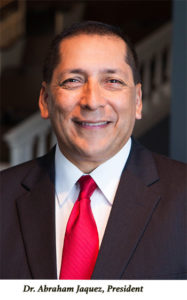
Both Van Christian, chair of the BUA board of trustees and pastor of First Baptist Church in Comanche, and Abraham Jaquez, who has been on the job as BUA president about a month, emphasized the institution’s survival depended on assistance from the BGCT.

Christian, a former chair of the BGCT Executive Board, acknowledged the numerous times in its history BUA has appealed to the convention’s governing board for financial assistance.

“It is hard for me to stand before you this morning,” he said. “I understand BUA fatigue. … But we need your help. The 10 months we were without a president almost destroyed us.”

René Maciel resigned effective Oct. 16 last year as BUA president to become community life pastor at First Woodway Baptist Church in Waco. BUA’s board of trustees elected Jaquez in July and he began work as BUA president Aug. 21.

During the interim between Maciel’s departure and Jazquez’s arrival, the school sustained a $500,000 loss when a major donor withdrew support, and other significant contributors also decreased or suspended their gifts, Christian noted.

“BUA is donor-driven, not tuition-driven,” he explained.

BUA intentionally has kept tuition low—currently $265 an hour—to make Christian higher education available and affordable to students who would not otherwise be able to afford it, Jaquez noted.

However, the school will need to implement incremental increases in tuition over the next few years, while at the same time broadening and deepening its donor pool and expanding its scholarship endowment, he added.

Christian commended Jaquez for bringing to the trustees a detailed business plan with 90-day, six-month and 10-year goals and objectives. Jaquez also instituted an immediate hiring freeze and cost-cutting measures.

The loan to BUA approved by the BGCT Executive Board was modeled after a precedent set in the early 1980s, when Dallas Baptist College faced significant financial challenges, BGCT Treasurer and Chief Financial Officer Jill Larsen noted. At the time, a study committee recommended a loan and gift to the Dallas school with certain stipulations to create fund-raising incentives.

As approved by the board, the BGCT will make a $1 million 10-year loan to BUA, available at no interest for five years and at 5 percent per year for five years. For each $1 million BUA raises in endowment funds in the first five years, the interest will be reduced by 1 percent.

Bill Skaar, pastor of First Baptist Church in Grand Prairie, raises a question about the loan for Baptist University of the Americas. (Photo / Jordan Parker)

The board’s finance committee added to the original recommendation the $250,000 outright gift to BUA to help with its immediate cash-flow crisis and the $250,000 challenge grant to encourage financial development initiatives.

Funds for the loan and gifts are made available from the BGCT wills and trusts distributions reserve fund, which has a $7.7 million investment value.

During discussion at the board meeting, several directors raised questions but echoed the same sentiments: “We need BUA.”

Six out of 10 students at BUA are Hispanic, and about 60 percent of the Hispanic staff in Texas Baptist churches attended BUA. However, 28 countries—including many outside Latin America—are represented in the school’s student body.

“It’s not just about Hispanics. It’s about cross-cultural missions,” said Rolando Aguirre of McAllen, president of the Hispanic Baptist Convention of Texas. “Let’s give them a chance.”

Board proposes 2018 budget

In another major item of business, the BGCT Executive Board also approved a 2018 budget proposal that projects flat Cooperative Program receipts but a slight increase in funds available through investment income and other sources.

Messengers to the BGCT annual meeting Nov. 12-14 in Waco will vote on 2018 budget allocations of $34.25 million, up $250,000 from the current spending plan.

The 2018 budget proposal depends on $29.6 million in Cooperative Program receipts from churches, equal to the amount in the 2017 budget. However, the recommended budget anticipates 4.65 million in investment income, compared to the projected $4.4 million this year.

In addition, the 2017 budget includes more than $2.8 million in additional revenue from the North American Mission Board, conference and booth fees, product sales and other miscellaneous sources.

So, the proposed 2017 operating budget will total $37,135,129, compared to this year’s goal of $36,638,274.

The board also approved continued division of undesignated receipts from affiliated churches, with 79 percent allocated for the BGCT and 21 percent for worldwide causes. Each church determines the recipient or recipients of its worldwide giving. The board proposal approves $1,161,000 for Texas worldwide missions initiatives and partnerships, compared to $1.3 million in 2017.

In other business, the board:

  • Elected as chair Dennis Young, pastor of Missouri City Baptist Church in Houston, and as vice chair Craig Christina, pastor of Shiloh Terrace Baptist Church in Dallas.
  • Authorized the sale of the Baptist Student Ministry facility at the University of Texas at Austin for $8.7 million to a developer. The BSM subsequently will purchase up to 14,000 square feet of property in the building constructed on that site. The BGCT will pay closing costs, lease temporary space, and finish out and furnish the purchased space at a cost not to exceed $2.1 million. At the completion of the project, about $3.8 million in proceeds will be invested in a board-designated endowment to benefit Baptist Student Ministry.
  • Approved $350,000 of investment income from the J.K. Wadley Mission Fund for church starts and $100,000 of current income from the same fund for campus missionary interns in 2018.
  • Recommended a change in relationship between the convention and Baptist Community Services of Amarillo. Messengers to the BGCT annual meeting will be asked to allow Baptist Community Services to change from an affiliated institution to a relationship with the convention by special agreement that allows the foundation greater flexibility in developing programs and electing its directors.
  • Approved changes to the certificate of formation for Dallas Baptist University to bring its language in line with other governing documents.
  • Amended policies to reflect changes to the BGCT Executive Board organizational structure.
  • Amended a request granting the Korean Baptist Fellowship of Texas status as a recognized fellowship of the BGCT until the fellowship asks for recognition and a BGCT review affirms its eligibility. The fellowship previously had requested recognition but withdrew the request after a change in its elected leadership.
  • Agreed to enlist the services of the Weaver & Tidwell accounting firm to conduct the 2017 financial audit at an estimated cost of $49,500.
  • Approved the purchase of new church relationship management software.

The board also filled vacancies on councils, commissions and coordinating teams by electing:

  • Betty Booth from First Baptist Church in Tyler and Jimmy Garcia from First Baptist Church in Duncanville to the Baptist Distinctives Council.
  • Bob Page from River Pointe Community Baptist Church in Richmond, Texas, and Todd Combee from New Bethesda Baptist Church in Mechanicsville, Va., to the Chaplain Endorsement Council.
  • Brenda Rincones from Mighty Fortress Church in San Antonio, Delcia Chisholm from Coastal Bend Fellowship in Kingsville, Elmo Johnson from Rose of Sharon Baptist Church in Houston and Daniel “Tiny” Dominguez from Community Heights Baptist Church in Lubbock to the Christian Life Commission.
  • Darin Wood from First Baptist Church in Midland and Tedye Schuehler from Victory Life Church in Lubbock to the Evangelism Strategic Planning Council.
  • Irma Alvarado from First Baptist Church in Donna, Oliver Martinez from Iglesia Bautista Getsemani in Fort Worth and Rafael Muñoz from Erez Church in Terrell to the Hispanic Education Initiative Council.
  • Dan Turner from Park Cities Baptist Church in Dallas, Laura Edmondson from First Baptist Church in Saginaw, Joe Fields from New Beginnings Baptist Church in Lewisville, Harold Davidson from The Cowboy Church of Corsicana and Patti Jones from South Oaks Baptist Church in Arlington to the Missions Funding Council.
  • Terry Henderson from First Baptist Church in Sachse, state disaster relief director for Texas Baptist Men, to the Missions Mobilization Coordinating Team.
  • Dean Dickens from South Garland Baptist Church in Garland, Bill Brian from First Baptist Church in Amarillo, Malcolm Watson from First Baptist Church in Lindale, Pat Hyde from First Baptist Church in Kenedy, Bob Moore from First Baptist Church in Hamlin, Jim Newman from First Baptist Church in Frisco, David Lake from South Springs Baptist Church in Tyler and JoAnn Botts from First Baptist Church in Plano to the Texas Baptist Missions Foundation Council.
  • Craig Curry from First Baptist Church in Plano and Larry Parsley from Valley Ranch Baptist Church in Coppell to the Theological Education Council.


Pillowcase ministry offers comfort to foster children in Beaumont

BEAUMONT—For foster children who frequently move from home to home, having an item to keep along the way can make them feel at home, which is important when coping with intense emotions.

In 2011, Belinda Gibson and Clarice Miller believed every child in Buckner’s Children’s Village in Beaumont should have something to call their own. So, they decided to give each child a handmade pillowcase with his or her name on it.

“I believe that it is God’s will to do this,” Gibson said. “Getting something with their name on it can make them feel special and give them a sense of belonging.”

Gibson and Miller, both members of First Baptist Church in Groves, started the ministry, making each pillowcase in their homes.

Unique designs

Rhonda Robichau, gift officer for Buckner in Beaumont, sends them the names and ages of every child who comes into the Children’s Village. Immeditely, the two seamstresses pray for each child.

“Following prayer, our Lord reveals in our minds what kind of design to sew onto each pillowcase,” Gibson said.

“No pillowcase is alike. We take a picture of every pillowcase to make sure no design is duplicated.”

To the children, these are more than pillowcases. This is a unique way to say, “This is my bed,” the women noted. The children show their gratitude for the pillowcase ministry by sending them written stories and thank you letters.

One day, Gibson stopped by the Children’s Village for a brief visit, but she was not expecting all the children to recognize her. They ran to her, thanking her.

One of the children recently had arrived at the Children’s Village and had not yet received a pillowcase.

“Will my pillowcase come soon?” she asked.

Something special

That’s when Gibosn learned how important the pillowcases were to the children.

“Rhonda told me there was a little girl who was so tiny, she would cuddle up inside of her pillow case and use it as a sleeping bag while she watched TV,” Gibson said.

Not only are the pillowcases special to the children, they are special to their creators, as well. It is something they do to fulfill God’s will and show the children they care about them.

“Making these pillowcases became special to us very quickly,” Miller said. “Kids are very important to me. I’ve been looking for a way to help children, and God showed me this is it.”

Since they started the pillowcase ministry, the two women have sewn 540 pillowcases and plan to start making blankets for the infants in the Children’s Village. They hope the pillowcase ministry will plant seeds of hope, enable the children to sense God’s presence and recognize his redemptive purpose for their lives.

“We are going to continue doing this until the Lord tells us to stop,” Gibson said. “And even then, I hope someone will take over and continue what we started.”

Odufa Atsegbua served as a summer intern with Buckner International.

EDITOR’S NOTE: This article originally was published Sept. 27, 2017. It was revised Oct. 5, 2017 to clarify and correct several items.


Huffman provides shelter and hope in midst of recovery

HUFFMAN—Soon after darkness fell and waters rose as Hurricane Harvey made landfall, Christians came together to offer Texans a glimmering beacon of hope.

Mike Martin, pastor of First Baptist Church of Huffman, made several visits around his community before heavy rains hit. He stopped at the local volunteer fire department and told them the church wanted to help. Within an hour, the fire department contacted him and asked if the church could be used as a shelter.

Church rallies to meet needs

By the time the storms arrived in Huffman, northeast of Houston, church members had gathered blankets, water and clothing for the hundreds of people from their community who showed up to the church doors seeking shelter from the storm.

First Baptist Church in Huffman transitioned from serving as a shelter to operating as a distribution center for emergency supplies after Hurricane Harvey. (Photo courtesy of Mike Martin)

By Sunday night, Aug. 27, the Harris County Sheriff’s Department made First Baptist in Huffman into not only a shelter, but also a temporary headquarters.

The water continued to flow for the next 24 hours, as volunteer firefighters and civilians began going into neighborhoods to rescue people from their homes and bring them to the church.

“People were coming off of boats, waist-deep in water,” Martin recalled.

Along with hundreds of people, the church also sheltered about 100 animals. Even though the church building sustained significant damage from the weather, members did not give a second thought to helping others.

“People needed the help, the safety and the hope that our church gave them on those first nights. There was such a great need, that we had to be a shelter,” Martin said. “God’s people responded to our needs from all over the country.”

First Baptist received supplies and assistance from other churches as the congregation provided neighbors food and shelter.

“Those first two nights, I watched as hero after hero did their part—whether it was cooking in the kitchen or going out into the waters,” Martin said. “I saw all denominations and races come together. It was a time of disaster and tragedy, but our community and churches and schools came together to shelter over 600 people.”

Serving as a distribution center

After four days as a shelter, the church began transporting the flood victims to a stadium in Houston that offered better facilities and more resources. At that point, First Baptist transitioned from a shelter to a distribution center.

As a drive-through distribution center for emergency supplies, First Baptist Huffman served about 500 cars a day for two weeks. (Photo courtesy of Mike Martin)

First Baptist continued to feed hot meals to people in their community. Meanwhile, as a drive-through distribution center for bottled water, groceries and cleaning supplies, the congregation served about 500 cars a day for two weeks.

In mid-September, a care team from the church went out into the community, surveying neighborhoods to assess the physical, emotional and spiritual needs of the people, Martin said.

“Since many in our community do not have flood insurance, we’re partnering individual homeowners that suffered from the hurricane with willing churches to help rebuild their homes,” he said. “We can’t remodel Houston, but we can help them with labor and materials as we’re able to.”

While all of this is happening, Martin and volunteers from his congregation worked feverishly to refurbish their church from the storm’s damage in order to get their Sunday school program up and running again.

Showing love and sharing faith

First Baptist is working not only to help rebuild the town, but also the people living in it. Church leaders held countless spiritual conversations with storm survivors, many of whom made new or renewed commitments to Christ.

Clearly, God was making something beautiful out of a disaster, Youth Pastor Josh Campbell observed.

“Through the heartbreak and pain, everyone had this hope in the midst of despair, because of what Christ had done for them. Even through all of this, God’s still good and he’s going to fix things, whether that means building houses or mending relationships,” he said.

First Baptist in Huffman did not wait for instructions or direction to meet needs in their community. Instead, as they made themselves available, God rescued lives and saved souls through their efforts. The tragedy became a platform for the church to tell people about the love of Jesus.

“There are a lot of pastors right now in the Houston area that have worked tirelessly in their communities. I would encourage the churches to remember these ministers and remember their churches in prayer,” Martin said.

“The love of God’s people here in Texas for me and my church is evident just by the outpouring of people reaching out. I just want to say ‘thank you’ to Texas Baptists and my friends.”

For more information on how to help people affected by Hurricane Harvey, visit http://texasbaptists.org/harvey-response.


BUA posicionada para afrontar nuevos retos, dice nuevo presidente

SAN ANTONIO—La visión que los bautistas en Texas tenían para la escuela que ahora se conoce como Universidad Bautista de las Américas (BUA, por sus siglas en inglés) ha cambiado desde su creación en 1947—esto no es un retroceso, sino una inversión.

Hace sesenta años, los bautistas en San Antonio fundaron la escuela para enseñar a México-Americanos que buscaban servir en el ministerio. Ahora BUA prepara a personas de diferentes antecedentes para servir a Cristo en contextos multiculturales.

La institución que la Asociación Bautista de San Antonio creo como el Instituto Bíblico Mexicano Bautista tomó otros nombres al pasar de los años. En el 2003 se convirtió oficialmente en BUA, cuando también empezó a ofrecer licenciaturas.

BUA ofrece cinco licenciaturas y un título asociado.

Pero para Abraham Jaquez, hay cosas nuevas que están empezando en la escuela.

Hace un mes que Jaquez se convirtió en el octavo presidente de BUA. El antes había servido como director executivo de los servicios de Buckner para infantes y familias en Dallas.

“Nuestra meta es educar a estudiantes bilingües y de dos culturas,” Jaquez dijo.

Un significativo segmento de la población en Texas ha sido ignorado—jóvenes hispanos que tienen que decidir si continúan su educación o ayudan a sus familias económicamente, él dijo.

BUA existe para proveer una oportunidad a los estudiantes quienes, “por una variedad de razones no pueden continuar sus estudios,” Jaquez dijo.

La meta es entrenar a “pastores hispanos para que tengan la oportunidad de estudiar y las herramientas que la educación da,” el agregó.

Muchas iglesias hispanas han tenido que depender de ministros que no tenían la educación necesaria, Jaquez observó.

Cerca del 60 por ciento de los hispanos que trabajan en las iglesias en Texas, fueron estudiantes de BUA, una buena muestra del trabajo de una universidad que ha existido por 14 años. Pero Jaquez insiste que BUA todavía tiene mucho que aprender.

Jaquez sabe que vienen muchas pruebas, y que BUA está preparada para enfrentarlas. San Antonio y Austin están creciendo—se están expandiendo una hacia la otra para convertirse en la siguiente metrópolis de Texas.

Con la presencia de la Convención en San Antonio, Jaquez cree que BUA va a estar posicionada estratégicamente para convertirse en un eje del ministerio hispano en Texas.

Pero el enfoque no solo es con los hispanos.

Como se ha visto recientemente, los colegios con carreras de dos años han crecido, y muchos ven la necesidad de universidades con más bajos costos en Texas. BUA es reconocida como una de las escuelas más económicas del estado, y Jaquez entiende porque más y más jóvenes quieren una escuela que les haga creer que “la educación superior es posible.”

Este semestre, 238 estudiantes se inscribieron en BUA, y Jaquez quiere estar disponible a ellos y conectar con sus necesidades. Es por eso que él y su familia viven en el campus, dijo Jaquez.

BUA recibe a estudiantes internacionales—no solo de América Latina, pero también de otras partes del mundo. Así que Jaquez y el resto de la facultad de BUA reconoce que la educación que proveen es una inversión para las iglesias en todas partes del mundo.

Ya sea en Texas, México, o Sudáfrica, BUA quiere “proveer trabajadores para las iglesias alrededor del mundo,” y esto se hace por medio de la educación que se da a los estudiantes que vienen de esos lugares, Jaquez dijo.

La interacción con las iglesias no puede solo empezar hasta que los estudiantes se gradúen, Jaquez agregó. BUA se tiene que asociar con las iglesias, para que los pastores ayuden a formar y guiar a los jóvenes, y se pueda confiadamente recomendar a BUA a aquellos que están pensando en su futuro.

BUA desea ser la escuela para las personas que quieran ser líderes en las iglesias que los necesitan, Jaquez dijo.

“Veo ese deseo en sus corazones,” él dijo. “Solo queremos ayudar a desarrollar su perspectiva bíblica y teológica.”


La Convención hace cambios para atender nuevas necesidades

El trabajo de la Convención General Bautista de Texas con los hispanos existía antes que la Convención Hispana Bautista de Texas estableciera sus oficinas con un director executivo siete años atrás. La Convención, un nombre que muchos usan para referirse a la Convención Hispana, quería hacer mucho más para responder a las necesidades que había, dijo el director executivo, Jesse Rincones.

Rincones ve a BGCT como una organización líder en el ministerio para hispanos. De hecho, él ve a BGCT como un modelo que otras convenciones Bautistas pueden seguir cuando se trata de hacer trabajo que conecte con los hispanos.
Aun así, existían vacíos que se tenían que llenar, dijo Rincones. Cuando la Convención empezó a actuar como socio independiente de BGCT hace siete años, Rincones piensa que se dio el mejor paso que se pudo haber dado después de 50 años de relación.

En los años ‘60s, bautistas del estado, tanto los anglos como los hispanos, creían que se había desarrollado buen trabajo en Texas. Existía la Academia en el Valle, y el Instituto Mexicano Bautista en San Antonio.

Pero para que el trabajo de los hispanos en Texas avanzara, los líderes de lo que antes era la Convención Mexicana Bautista de Texas decidieron entrar bajo el liderazgo de BGCT. Así, BGCT y la Convención firmaron el Acuerdo de Unificación de 1963.

El acuerdo sí ayudó a los hispanos bautistas en Texas de muchas maneras, pero no era un acuerdo sin errores, Rincones clarificó.

La estructura de Convención tenía problemas, ya que los presidentes eran elegidos por un periodo de dos años, con la posibilidad de reelección por un tercer año. Pero los presidentes eran ya pastores que ahora tendrían “dos trabajos de tiempo completo,” Rincones dijo.

“Tampoco había fondos para cubrir los viajes de los presidentes, ni para que ellos se comunicaran con las iglesias,” agregó.

Cuando la junta anual llegaba, los presupuestos que ya habían quedado hacían muy difícil que los presidentes pudieran proponer nuevas metas.

BGCT y la Convención revisaron el Acuerdo de Unificación tres veces después de que se hizo en 1963. Finalmente en el 2010, Rincones dijo, miembros del comite se dieron cuenta que las circunstancias habían cambiado.

Algunos proponían que Convención regresara a lo que era antes de 1963, una organización independiente con poca relación con BGCT. Otros sugirieron que continuara bajo BGCT, en el departamento de Ministerios Hispanos.

Rincones veía una tercera opción.

El reconocía que si los presidentes de Convención no podían encontrar fondos para viajar y comunicarse con las iglesias, entonces ese trabajo no funcionaria. Y aunque se pudieran presentar nuevas metas, no existirían los recursos para alcanzar esas metas.

Traería menos resistencia quedarse donde estaban y simplemente ir a las iglesias cada año y decirles que no había dinero para cubrir los costos de los programas que ellas habían sugerido. Pero Rincones sabía que una opción que se veía más difícil era también la mejor opción.

“Teníamos que ir a las iglesias y decirles, ‘si ustedes quieren llevar a cabo ésta iniciativa, entonces van a tener que dar los fondos para poder hacerlo,’” dijo Rincones. Para que eso pasara, la Convención tenía que hacerse su propia entidad.

En el 2010, la Convención celebró su centenario, y en muchas maneras, también celebró su nuevo nacimiento. Ya no era un departamento de BGCT, pero tampoco era una organización sin relación con BGCT. La Convención era ahora un socio de BGCT.

El censo del 2010 reportó que el 52 por ciento de las personas de 18 años y menos está en Texas, y el 49.3 por ciento de ese total son jóvenes hispanos. Eso va con un crecimiento del 39 por ciento en hispanos jóvenes de 18 años y menos, mientras que los anglos disminuyeron por un 7.4 por ciento.

Rincones pudo ver la necesidad de más trabajo con iglesias hispanas, y eso no era nada nuevo. El recuerda cuando era joven y notaba que en muchas iglesias hispanas no se tenía la misma calidad de trabajo que en las iglesias anglas

“Tenía la carga al ver que los jóvenes hispanos no recibían la misma atención por la circunstancias en las que estaban, o porque las iglesias no sabían cómo hacer ministerio con ellos,” dijo Rincones.

Seis de cada 10 Mileniales (jóvenes adultos que se hicieron mayores de edad alrededor del año 2000) y miembros de la Generación Z (la generación que viene después de los Mileniales) son hispanos, y muchos de ellos no han asistido a los servicios de iglesia en los domingos.

Los Hispano-Bautistas de Texas tienen que invertir en estos grupos ahora, Rincones insistió.

Conferencias como “Shine! Girls!” para jóvenes y niñas latinas, el programa de Liderazgo Joven Latino, y las becas que Dallas Baptist Universtity y East Texas Baptist University ofrecen a estudiantes hispanos, muestran la visión que la Convención tiene para el futuro. El seminario, Truett Theological Seminary de Baylor, ofrece ya también una beca, y está aceptando aplicaciones hasta el 15 de Octubre.

La Convención ofrece también a jóvenes líderes la oportunidad de desarrollar otras prácticas. Tres de los cinco miembros de la mesa directiva de la Convención son jóvenes latinos.

Ahora no es el tiempo para que las iglesias pierdan a otra generación de líderes hispanos, solo porque “no sabían cómo ministrar a esa generación,” Rincones dijo.

El ministerio hispano incluye a los de primera generación, quienes tal vez solo hablen el español. Pero la barrera del idioma desaparece cuando se trata de la segunda y tercera generación de hispanos. Rincones dice que las iglesias que quieran trabajar con hispanos tienen que ver a la cultura y no tanto el lenguaje.

Esos elementos culturales que distinguen a hispanos entre otros bautistas son el fuerte sentido de familia, y la preferencia de una alabanza vibrante.

En lugar de confiar en anticuados modelos de ministerio, las iglesias que quieran trabajar con hispanos tienen que entonces deshacerse de viejas ideas y usar modelos nuevos, dijo Rincones.

“Antes había misiones de 40 años que tenían una relación co-dependiente con las iglesias que patrocinaban esas misiones,” Rincones dijo. Pero cada decisión importante que se tenía que tomar en la misión, tenía que ser aprobada primero por la iglesia patrocinadora.

Calvary Baptist Church en McAllen ofrece un mejor modelo, Rincones reconoció. Rolando Aguirre, presidente de la Convención, sirve como pastor de Calvary en español.

“Con este modelo, los pastores de las iglesias de habla hispana son igualmente parte del equipo, y comparten los mismos recursos con el resto de la iglesia,” Rincones dijo.

Siete años después de que la Convención obtuviera su propia identidad, Rincones todavía tiene que explicarles a las iglesias qué es la Convención. Muchos ven a la Convención como un departamento de BGCT. Otros saben que la Convención y BGCT no son lo mismo, pero también hay quienes necesitan entender que las dos convenciones necesitan actuar como socias que buscan ayudar y asistir a las mismas iglesias.

“Nuestra iglesias van a ser más bendecidas cuando la Convención y BGCT trabajen juntas,” Rincones dijo. Eso se ve en el mensaje que Rincones da cuando visita a una iglesia: “No hay mejor inversión que en los ministerios de BGCT, así que ofrenden al Programa Cooperativo.”

La meta de la Convención es ayudar a que las iglesias hispanas crezcan más fuertes, y para que eso sea posible, se requiere de un compañerismo con BGCT, Rincones concluyó.


Despite Harvey’s horrors, survivors experience God’s grace

HOUSTON—Survivors of Hurricane Harvey have experienced God’s grace in the aftermath of one of the worst natural disasters in U.S. history.

“Harvey was one big, bad storm, but so many good things have come out of it,” said Panha Mey, pastor of Cambodian Baptist Church of Houston.

The congregation has ministered to Cambodian refugees in nearby Rosharon, where the hurricane flooded nearly the entire community.

“We’ve seen neighbors talking to neighbors, churches working with churches,” Mey said. “That’s the redeeming work of Christ.”

Angels followed after storm’s devilish blow

Ana Garcia, community ministries leader at Templo Bautista de South Houston, and Joyce Deffern from First Baptist Church in Abilene work together on Hurricane Harvey recovery. (Photo courtesy of Ana Garcia)

Ana Garcia, a community ministries leader at Templo Bautista de South Houston, knows Harvey dealt a devilish blow to the Texas Gulf Coast. But she’s sure she’s seen angels following in his path.

Cambodian Baptist and Templo Bautista, both located near Hobby Airport southeast of downtown Houston, have helped with Cooperative Baptist Fellowship-sponsored recovery projects conducted by volunteers from upstate churches.

Members from Broadway Baptist Church in Fort Worth, DaySpring Baptist Church in Waco, First Baptist Church in Austin and Park Cities Baptist Church in Dallas conducted a variety of disaster recovery chores the week of Sept. 10. Then volunteers from First Baptist Church in Abilene followed on their heels.

Templo Bautista and its members felt Harvey’s wrath, Garcia reported.

“The church suffered between five and six inches of water in our buildings,” she said. “We had just passed all the inspections to operate a daycare—after a year and a half—and it opened two weeks before Harvey hit. We had to shut it down.

“We also had 23 families from our congregation who were affected in varying degrees. All had to muck-out their homes.”

Upstate volunteers tackle dirty jobs

The congregation’s first priority was to help those families, and they also wanted to begin repairing the church buildings, Garcia said. So, they were delighted when Baptist sisters and brothers from other parts of the state arrived to help.

Volunteers scrape up and remove soaked flooring from a flood-damaged building. (Photo / Courtesy of Dan Freemyer)

David Deoluseo, pastor of Templo Bautista, and Butch Green, a CBF field personnel based in Houston, surveyed the damage. Green, who is coordinating CBF recovery work in the Houston area, initially dispatched the volunteers to help pull out carpets, remove content and cut out sheetrock from several flooded homes. Then they set out to do the same work inside the church facility, she said.

The volunteers’ efforts supported the work of exhausted Templo Bautista members, whose energy had been depleted by attempting to save both homes and church buildings, Garcia said.

What did the presence of volunteer workers mean? “Angels,” she said. “They are angels.

“The first time (church members worked on the church), we had 44 people from our own church. The next time, we had 22. Some of these people had even higher water in their homes than we had in our church. So, to have someone come from another town, another city and just put hands to the work—to say, ‘Tell me where I can work and what I can do,’—it was like answered prayers.”

Cambodian Baptist Church members also appreciated assistance from their upstate sisters and brothers, Mey added. He learned about severe flooding experienced by a community of Cambodian refugee farmers in rural Rosharon, south of Houston, halfway to the coast.

“We went to visit the people in the community, and one of them took us around,” he said. “That’s when we realized the magnitude of the problem. The whole community got hit. About 95 percent got water in their homes.”

The flooding dealt a devastating blow to the farmers, who raise water spinach, a common Asian vegetable, as a cash crop, he reported.

Giving shelter

Baptist volunteers provide tents to offer temporary shelter to families who are rebuilding their homes after Hurricane Harvey. (Photo / Courtesy of Dan Freemyer)

Even though some of the farm families’ homes had been condemned, they continued to live in them, fearful of loss if they abandoned their property. So, their new Baptist friends provided tents for temporary—or, unfortunately, longer-term—housing.

Members of Cambodian Baptist Church and the upstate volunteers pitched tents in the displaced families’ yards.

The group of a dozen volunteers from Broadway, DaySpring, First Austin and Park Cities “ended up being ideal size for the work that Butch had lined up,” noted Dan Freemyer, director of community ministries at Broadway and organizer of the trip. It also was an ideal inaugural group for Baptist Temple, an Anglo congregation in The Heights area of Houston, which provided volunteer lodging in its facilities.

And the trip provided a blessing unrelated to Harvey and disaster relief, Freemyer said.

“We had folks from Broadway, DaySpring, FBC Austin, Park Cities and Baptist Temple working, praying, eating, drinking, lodging and talking together,” he explained. “While our congregations represent varied perspectives and positions on issues in Baptist life which we were able to discuss openly, we ended the trip talking mostly about how we can partner together for ministry projects.

“We cooperated successfully in ministry with folks in tremendous need, joyfully celebrated our Baptist identities, and enjoyed engaging fellowship in spite of—or maybe even because of—our differences.”

CBF response to Hurricane Harvey will continue for months. To volunteer to help—or to record a need—visit the Harvey response website: http://www.cbf.net/harveyvolunteer/.


Convención changes to meet changing needs

En Español aqui.

Texas Baptist work among Hispanics predated the Hispanic Baptist Convention of Texas establishing its own office with an executive director seven years ago. But the Convención wanted to do more to meet needs and respond to opportunities, the group’s chief executive officer noted.

Jesse Rincones, executive director of the Hispanic Baptist Convention of Texas

Jesse Rincones, executive director of Convención, views the Baptist General Convention of Texas as a national leader in Hispanic ministries. In fact, he sees the BGCT as the model other state Baptist conventions follow when it comes to ministry that connects with Hispanics.

Even so, gaps needed to be filled, Rincones said. When Convención began to relate to the BGCT as a freestanding partner seven years ago, it marked the next logical step in a progression nearly 50 years in the making, he noted.

Unification Agreement of 1963

In the early 1960s, Anglo and Hispanic Texas Baptists alike recognized good work had developed in the state, such as Valley Baptist Academy in Harlingen and the Mexican Bible Institute in San Antonio.

But for Baptist work among Mexican-Americans in Texas to advance, leaders saw the wisdom in allowing what was then called the Mexican Baptist Convention of Texas to come under the guidance of the BGCT. So, the BGCT and Convención signed the Unification Agreement of 1963.

The Unification Agreement served Hispanic Texas Baptists well in some respects but certainly not flawlessly, Rincones noted.

The structure of Convención was problematic since presidents of the organization were elected for a two-year-term, with a chance to be re-elected for a third year, he observed. Elected officers were pastors who “basically had two full-time jobs,” Rincones said.

“There was also no funding to cover for the president’s travel expenses, or to send reports to communicate with churches,” he added.

By the time the next annual meeting rolled around, budgets already had been set, making it difficult for presidents to achieve any goals they might have had in mind, he observed.

The BGCT and Convención revised the Unification Agreement three times since 1963. When committees from Convención and the BGCT met to revise it once again in 2010, Rincones said, most members realized the agreement did not apply to the circumstances anymore.

A third way—partnership

Some suggested Convención go back to its pre-1963 status as an independent body that had little to do with the BGCT. Others wanted Convención to fall under BGCT Executive Board staff direction within Texas Baptists’ department of Hispanic ministries.

Rincones saw a third way.

He recognized unless Convención presidents could fund their own travel and communication, the job was not going to ever perform well. And even if the presidents successfully presented their goals, funding would not exist to move forward their agendas.

The path of least resistance would have been to maintain the status quo and continue going back to Hispanic churches each year, telling them there was no funding to cover the costs of a program, he realized. But Rincones believed a more difficult course offered a better option.

“We had to go back to our people and say, ‘OK, if you want to do this initiative or this project, then we need to fund it,’” Rincones said. For that to happen, Convención had to become its own entity.

In 2010, Convención celebrated its 100th year anniversary, and in many ways, it began its rebirth as well—as neither a department within the BGCT organizational structure, nor as a separate entity unrelated to the BGCT. Instead, Convención now works as a partner with Texas Baptists.

The next generation

The 2010 Census reported 52 percent of the U.S. population growth among persons under age 18 came from Texas, and Hispanics in Texas comprised 49.3 percent of that sub-group. That represented an increase of 39 percent of Hispanics ages 18 and under in Texas, while Anglos in that category declined 7.4 percent.

Rincones could see the need for more work to be done for Hispanic churches, but that was nothing new. He saw it when he was young and noticed the work in many Hispanic churches did not match the quality of work done in Anglo churches.

“I had the burden of seeing young Hispanic teens not get the same quality just because of their circumstance, or because a church does not know how to minister to them,” Rincones said.

About six out of 10 Millennials (young adults who came of age around the year 2000) and members of Generation Z (the rising generation who followed Millennials) are Hispanic, and many of them long have been missing from Sunday morning worship services, he noted.

Hispanic Texas Baptists must invest in that group right now, Rincones insisted.

Conferences like “Shine! Girls” for Latina teens and girls, the Young Latino Leadership Program, and the scholarships that Dallas Baptist University and East Texas Baptist University offer Hispanic students show Convención’s vision for the future. Baylor University’s Truett Theological Seminary recently announced it also has launched a Hispanic Texas Baptist scholarship and is accepting applications through Oct. 15.

Convención also is offering young leaders hands-on experience to develop their skills. Three out of five of Convención’s board members are young Latino officers.

Now is not the time for churches to lose generations of Christian Hispanic leaders just because “we did not know how to minister to that generation,” Rincones asserted.

New models for ministry

Hispanic ministry also involves working with first-generation Hispanics who may only speak Spanish. But the language barrier in ministry disappears among second and third generation Hispanics, Rincones noted, adding churches need to consider culture rather than language as the defining element.

Cultural traits that distinguish Hispanic Baptists include a strong sense of family and vibrancy in worship, he observed.

But instead of relying on outdated approaches to ministry, churches that want to work with the Hispanic population need to consider throwing away the old playbook and using new models, he said.

“Before, you had 40 year-old missions that had developed co-dependent relationships with their sponsoring churches,” Rincones said. Any major decisions involving the mission required the approval of the sponsoring congregations.

Calvary Baptist Church in McAllen offers a better model, Rincones asserted. Rolando Aguirre, president of Convención, serves as the pastor of the church’s Spanish congregation, Calvary en Español.

“In this model, you see that these pastors are an equal part of the staff, and the congregations share the same resources with the rest of the church” Rincones said. “The Spanish ministry is the church.”

Seven years after Convención gained its own identity, Rincones still finds himself having to explain it to churches. Many see Convención as a department of the BGCT. Others know Convención and BGCT are separate, but those individuals need to understand the two conventions are partners who seek to assist and help the same churches.

“Our churches are going to be most blessed when Convención and Texas Baptists are strong partners,” Rincones said. That can be seen in the message Rincones first delivers when he visits a church: “There is no better place to invest than the ministries of Texas Baptists, so give to the Cooperative Program.”

Convención’s goal is to help Hispanic churches grow stronger and healthier, and that that will be possible only if there is a strong partnership with Texas Baptists, Rincones insisted.