Particularities of religious communities form character

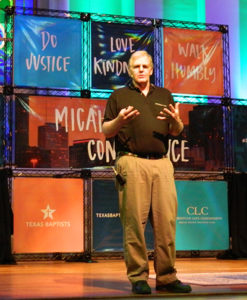
WACO—Communities grounded in the particularities of religion have the capacity to form moral character substantive enough to deal with life’s ethical challenges, cultural analyst James Davison Hunter told a Baylor University crowd.

Hunter, a professor at the University of Virginia and executive director of the Institute for Advanced Studies in Culture, delivered the Bill and Roberta Bailey Family Lecture in Christian Ethics, sponsored by Baylor’s Institute for Faith and Learning.

Hunter spoke on “Good Kids: Thinking Anew about the Moral Formation of Children,” acknowledging that in many circles, discussions about character development seem awkward, he said.

“Precisely because we live in an increasingly pluralistic world, the question of character and its importance is simply no longer self-evident,” Hunter said.

 ‘Carry the weight’ of ethical challenges

Some see the concept as outdated, while others see it as politically charged, he observed. However, character signifies how people “carry the weight” of ethical challenges and the burden of sorrow in everyday life, Hunter asserted.

“What resources do we have to bear the moral burdens that permeate our personal and shared lives? Are those resources enough?” he asked.

If those resources are grounded only in secular psychology and its underlying emphasis on individualism, they ultimately will prove to be “too thin” to bear the weight of life’s moral challenges, he said.

In America’s colonial period, Calvinist religious doctrine—with its emphasis on virtues of obedience, honesty, industry and piety—provided the foundation for children’s moral instruction, he noted. Enlightenment thinkers such as John Locke likewise emphasized virtues such as piety, loyalty, industry and temperance, grounded in a belief in the Creator, he added.

“To the 17th century mind, there could be no morality without God,” Hunter said. “Virtues would not exist without reverence for God.”

Paradigm shift

However, particularly within the last century, the educational approach to teaching morality took a decidedly different turn, he insisted.

“The entire social and moral ecology of (character) formation has been transformed,” he said. “The content of moral instruction has changed from the objective moral truths of divine Scripture and the laws of nature to the conventions of a democratic society and, today, to the subjective values of the individual person.”

The paradigm shifted from moral instruction centered on the home and the church to one dominated by the public school and popular culture, and one dominated by psychology, he observed.

Psychology gained dominance because it appears as neutral objective science and as inclusive of all people, in contrast to the particularity of religious and theological belief, he said. Therefore, it offers a “safe morality” that presumably presents less potential for conflict and avoids legal challenges, he added.

Problematic approach

However, such moral instruction is problematic on logical grounds, he asserted.

“In an effort to establish a neutral and inclusive moral paradigm, the moral universe is emptied of all particularities that make in binding on the conscience,” Hunter asserted. “It might be a safe morality, but it has little or no attraction. An inclusive morality tends to reduce morality to the thinnest of platitudes.”

Virtues lifted out of the framework of moral traditions lose their meaning and substance, he noted.

“The denial of particularity so pervasive in the dominant paradigm leaves us mute in response to the ‘why’ questions behind all moral agency,” Hunter said.

The prevalent paradigm also falls shore because it views children as individualized autonomous moral agents outside of community, with its belief, rituals and moral practices, he insisted.

No ‘generic values’

“The problem in a nutshell is that never before in history have there been generic values,” Hunter said. “Insofar as I know, there has never been a person or child in history who lived his life outside the particularities of a time, a place, a community, a social and political order, an ethos—outside the influence of exemplars of right and wrong, of justice and injustice. Such people don’t exist.

“Practically, the psychological strategy of character formation may be set up to affirm certain behaviors like altruism or empathy or kindness. By the same stroke, it may also be set up to oppose certain behaviors like the use of drugs, sexual promiscuity or stealing. But there is nothing intrinsic to the strategy itself that leads to those ends.”

Moral development according to the psychological paradigm can increase utility and capacity but does not provide the resources for character development substantial enough to help people face ethical challenges, he insisted. Rather, those resources are found in virtuous communities.

“Human beings are inextricably formed within the social environment of particular communities and the cultures that define them,” Hunter said.

Political rhetoric exalts diversity not just as a social reality, but also as an aspirational ideal, he asserted. However, because people fear diversity, they seek to “domesticate the troubling particularities” of groups in a pluralistic society, he noted.

‘Discover commonality through particularity’

Hunter offered a different vision.

“Instead of forcing commonality in our moral discourse at the expense of particularity, we would discover commonality through particularity,” he said.

Hunter emphasized the importance of finding common ground in a democratic society in light of—not in spite of—particular religious and philosophical contexts.

“Creating space for different moral communities to flourish in public and private life might very well be the conditions that are conducive to the growth of people of ethical seriousness and, very possibly, good character,” he said.

Moral character in children is developed not from sterile abstractions and vague generalities but from tangible moral examples, he asserted.

“It will be found in communities where prudence, wisdom, faith, courage, hope, justice and love are—however imperfectly—modeled by everyday exemplars and woven into the practices that define their everyday life. It is in such communities, and only in such communities, where good kids will be formed,” Hunter said. “At its best, the Christian community is such a community.”


Leighton Flowers named Texas Baptists’ evangelism leader

DALLAS—The Baptist General Convention of Texas named Leighton Flowers leader of its evangelism team, effective April 2.

Flowers has served on staff with the state convention since 2003, overseeing evangelistic ministry initiatives including Super Summer, Youth Evangelism Conferences, Hot Hearts, See You At the Pole and (un)Apologetic conferences.

“Leighton Flowers is the right person to lead Texas Baptists in evangelism at this time,” BGCT Executive Director David Hardage said. “I’m excited about his heart for the lost and his ability to communicate the gospel. I’m grateful for the leadership Dr. Delvin Atchison, Great Commission Team director, has shown in filling this vital role for our BGCT family.”

Two decades of ministry experience

Flowers has two decades of ministry experience across Texas Baptist life. He was student minister at University Baptist Church in Abilene, senior pastor of First Baptist Church of Era and student minister at Colonial Hills Baptist Church in Cedar Hill.

He served in interim preaching roles at Hunters Glen Baptist Church in Plano, The Oaks Baptist Church in Grand Prairie, Culleoka Baptist Church in Princeton and First Baptist Church of Richardson. He has been a frequent speaker at camps, retreats and training events.

In his new role, his vision is to challenge, equip and train Texas Baptists to fulfill God’s call to reach all people with the gospel.

‘Pride of our past … promise of our future’

“Leighton is one of the brightest stars in Texas Baptist life,” said Delvin Atchison, director of the Great Commission Team. “He grew up in the BGCT. He is the pride of our past and the promise of our future. We are fortunate to have him as our evangelism lead.”

A LifeWay Research study in 2012 revealed 61 percent of Christians had not shared their faith in the previous six months. Two years later, that number rose to 78 percent.

“The reason so many people see their churches as being evangelistic, despite the facts, is that there are programs, themes, slogans and talk on the stage about evangelism and the need for it, but there is very little practice of personal evangelism,” Flowers said.

“The focus has to shift back to the individual—calling the individual to compassion for the lost, to connection with the lost and to a long-term commitment to see the lost come to know Christ.”

Share truth in a persuasive way

Under Flowers’ direction, Texas Baptists’ evangelism team will connect with churches to provide evangelism consultation, encouragement and training including Super Summer, Congreso, Pray 4 Every Home and Take the 4xFour Challenge.

Flowers also views apologetics as an indispensable aspect of evangelism. Just as the Apostle Paul engaged in persuasion throughout much of the New Testament, Flowers noted, 21st-century believers should engage in similar strategies.

“Sometimes we can over-spiritualize things, saying it’s our job to proclaim the truth and let God do the rest,” he said. “That’s not what Paul thought, because he didn’t act that way. He acted as if it depended on him being persistent and committing himself to sharing that truth in a persuasive way and helping win people over.

“The concept of ‘winning the lost’ versus ‘proclaiming the truth to the lost’ is a really important aspect that needs to drive how we do evangelism.”

As an adjunct professor at Dallas Baptist University, Flowers has noticed students come alive when the doctrine of salvation is discussed in class. Several students have asked for additional resources, and he has made them available through online learning platforms. At a student’s urging, Flowers turned some of the course materials into a podcast titled “Soteriology 101.” The weekly YouTube and iTunes podcast averages 10,000 downloads per episode.

Flowers earned a bachelor’s degree from Hardin-Simmons University, a master’s degree from Southwestern Baptist Theological Seminary and a doctorate from New Orleans Baptist Theological Seminary. He and his wife, Laura, and their children live in Garland


Houston pastors seek to train other Hispanic ministers

HOUSTON—Two Houston pastors are committed to multiplying their ministry by investing in the theological education of other Hispanic ministers in the area.

Equip pastors to minister

Bulmaro Luna, pastor of Iglesia Cristiana Bautista Peniel, and Johnnie Musquiz, pastor of Iglesia Bautista Houston, want to equip pastors for the ministry to which God has called them.

“The vision of ministry can get stuck in one area when leaders do not have preparation,” Luna said.

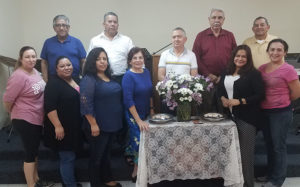
A Seminario Teologico Bautista Peniel class is pictured with Director Bulmaro Luna (top left) and professor Nehemias Ake (top right). (Photo / Isa Torres)

With support from Seminario Bautista Teologico Mexicano, Luna started Seminario Teologico Bautista Peniel nine years ago, and three graduating classes have completed studies.

The most recent graduating class earned 85 credit hours at Louisiana Baptist University, which began a partnership with Seminario Teologico Bautista Peniel in 2015.

Houston has the third-largest Hispanic population of all metropolitan areas in the United States. The Spring Branch school district, where the seminary is located, is 60 percent Hispanic.

Programs of theological education like Seminario Teologico Bautista Peniel are important because the need already exists, and because that need does not show signs of slowing down, Luna noted.

Prepare other ministers to respond to God’s call

Like Luna, Musquiz saw the need to offer theological education to ministers in the Houston area. In fact, he grew up with it. Musquiz remembers being one of the few Hispanics in college and seminary.

Johnnie and Melida Musquiz are pictured with a Baptist Bible Institute Class at Iglesia Bautista Houston. (Photo / Isa Torres)

Since he committed his life to ministry in 1975, Musquiz has seen one aspect of his calling as preparing others to respond to their own call from God.

Iglesia Bautista Houston partnered with Baptist University of the Américas to offer Baptist Bible Institute certification, a 60-hour program that trains ministers in their own location at a low cost.

Most students are bivocational ministers who have to pay for their own materials and for the cost of the classes, without any financial assistance for education from the churches they serve.

“For someone to come and study here is a big sacrifice,” Musquiz observed.

Meeting a need

Programs such as Seminario Teologico Bautista Peniel and the Baptist Bible Institute program at Iglesia Bautista Houston make a big difference to Hispanic ministers who cannot afford to attend seminary and may not be able to meet their academic requirements, some participants noted.

Judith Espinal (right) and her husband Jose Espinal are students at the Seminario Teologico Bautista Peniel in Houston, along with Susy Salgado (left). (Photo / Isa Torres)

“There are so many requirements for one to study in theological schools,” said Judith Espinal, who attends Seminario Teologico Bautista Peniel.

“Those schools are not at our reach, so this is a good opportunity,” her husband, Jose Espinal, added.

Even after ministers have served churches many years, some realize they need more training to serve better.

“There are times when one reads the Bible but does not understand what it is saying or whom the message is for,” said Luisa Mondragon, who has been in ministry 19 years, and started taking BBI courses at Iglesia Bautista Houston two years ago.

Mondragon believes God has called her to serve and teach other, and she wants to be equipped for that task.

“You can only teach your people what you know,” Musquiz said.

Both Luna and Musquiz receive help from family and other church members to run their congregations’ theological education programs. Luna’s daughter, Heidy, takes care of administrative tasks of Seminario Teologico Bautista Peniel. Musquiz’ wife, Melida, does the same for the BBI program at Iglesia Bautista Houston.

At both programs, volunteers help provide a dinner every week for the students, since many have to attend class immediately after work.

The programs depend on the support of other pastors. For instance, Moises Flores of Iglesia Bautista del Redentor in Houston teaches at Seminario Teologico Bautista Peniel and directs a theological school called Instituto Biblico Ministerial.

Church-based theological training schools face challenges. Both Luna’s and Musquiz’ programs need better resources, such a theological library for students to use. At this point, when students conduct research, they must rely on their teachers’ books.

Still, Luna insists, the work of the theological education programs is possible thanks to God’s provision. Often, that has been manifested through the sacrifice of the teachers who, although are offered reimbursement for their travel expenses to and from the school, often choose not to accept any compensation for their service.

Hispanic Texas Baptist churches need ministers to serve their congregations, and those ministers need to be theologically prepared, Musquiz said. As the Hispanic population in Texas continues to grow, that need likely will increase, he added.

“We need a hundred more of these for our people,” Musquiz said.


Sutherland Springs church launches building project

SAN ANTONIO (BP)—First Baptist Church in Sutherland Springs, the congregation whose members were targeted by a gunman in one of the worst mass shootings in U.S. history, will begin construction of a new worship center and education building in May.

Pastor Frank Pomeroy announced plans for building March 27. The Southern Baptist Convention’s North American Mission Board will accept donations for the project. If donations do not cover all of the construction expenses, NAMB will cover any remaining costs.

‘We want to be a lighthouse’

“Our primary goal is to lift up Jesus in our community,” Pomeroy said. “Sutherland Springs has a certain distinction because of the enormity of the tragedy that took place at our church, but every community is touched by tragedy. Every family and every person has hurts and sorrows. We want to be a lighthouse. The light of the gospel shines hope, even in the deepest darkness.”

The new facilities will put the church in an even better position to serve others, Pomeroy said.

“We are grateful for the outpouring of prayers, for the love that we have felt,” he said. “So many have done so much for us, and it has been a huge blessing. The purpose of these new buildings will be to serve God and serve others. That is why we exist.”

NAMB President Kevin Ezell raised the issue of a new building with Pomeroy in a conversation near the end of 2017. NAMB officials asked Myrick Gurosky and Associates in Birmingham, Ala., to lead in the development, design and construction of the buildings. The firm has worked closely with Pomeroy and leaders of the church in developing designs.

‘A small part in the healing journey’

“We are grateful to play a small part in the healing journey for our brothers and sisters in Sutherland Springs,” Ezell said. “Southern Baptists were devastated by what took place last November.

“We immediately knew that, as their Southern Baptist family, we wanted to lock arms with them, doing whatever we could to help restore hope. We know a lot of people want to help, and fortunately our experience in facilitating and mobilizing partners, volunteers, donations and prayer support in times of crisis has prepared us well to lead in a time such as this.”

The planned worship center features an exterior of stone and glass. Two towers on the corners of the building will emanate glowing light. Inside, the worship center will provide seating for 250 people. A memorial to the 26 people who lost their lives in the attack will be located in space between the worship center and the education facility.

The education building is designed to host classrooms for infant through adults. Outside, a lighted, paved parking lot also will be included.

Two-phase construction planned

MG&A and their consultants have donated hundreds of thousands of dollars in development and design work. Gurosky said cost of the two buildings will be approximately $3 million, but they anticipate that donations of materials and services will significantly reduce the final total.

“We have already been approached by several companies that want to help the people of this church and town,” Gurosky said. “We want to give as many people as possible that opportunity, and it’s our goal to find partners to help us complete the planned facilities so that actual cost of the work is minimal.”

Construction on the property is being split into two phases. Phase 1 will include a worship center and education building. Funding for this phase is backed by NAMB with construction expected to begin in early May and a completion date anticipated for early 2019. Plans for Phase 2 of the project include a multi-purpose community and activity center and will be funded from other sources.


Baylor alum recalls events surrounding MLK assassination

Fifty years after the assassination of Martin Luther King Jr., Theo Brown still vividly remembers the events of that evening and the days that followed—as well as how they shaped his life as an advocate for racial reconciliation, peace and social justice.

On April 4, 1968, Brown was eight weeks shy of graduation from Baylor University and working as youth director at Seventh and James Baptist Church in Waco. About 5:30 p.m., he was at church making phone calls to Baylor students, trying to enlist chaperones for an upcoming youth activity.

One young woman he called asked if he had heard the news: Martin Luther King Jr. had been shot in Memphis. Brown recalled her saying she didn’t really care much about him, but she was worried about the rioting and violence that might follow.

“Her insensitive comment irritated me and led me to mumble something about how much I loved King before I hung up and ran into the pastor’s office to turn on the radio,” Brown wrote recently in a personal remembrance he sent to fellow Baylor alumni.

“I was as shocked and stunned as I had ever been in my life as I paced in the pastor’s office and listened to the news bulletins about King having been shot. … Over the past year and a half, King had become my hero and my inspiration, and, more than anything, I had decided I wanted to model my life after his. For several years, I had been planning to be a Baptist preacher, and he had inspired me to want to be one that worked for justice and racial reconciliation.”

‘Sad, lonely and lost’

Within a short time, Brown heard the announcement King had been pronounced dead of his wounds.

“I felt indescribably sad, lonely and lost and needed to do something with my grief,” Brown recalled.

He noted his sense of loneliness was compounded by the absence of his roommate, Paul Malone, who shared his admiration for King but was out of town.

Theo Brown

“It was Paul who had taken the lead in mentoring kids in the black neighborhood south of LaSalle (Avenue) and Paul who had come up with the idea of us moving into that neighborhood during our final semester at Baylor,” Brown wrote. “He was my soul mate in the spiritual transformation King had created in our lives, and I ached that I couldn’t talk with him.”

Brown began to walk around campus and eventually sat by a fountain and wept.

“As I sat there, I had the first stirrings of a strong feeling that would grow throughout the next several days—the need to do something, to take some action,” he recalled.

In a notebook, he began writing a two-page letter to Coretta Scott King.

“I poured out my sadness and the details of how much I had been inspired by her husband,” he said. “I wrote how he had become my hero and told her that I and many others would carry on his work. I pledged to dedicate my life to do what I could to advance King’s teachings.”

Memorial meal, memorial service

Wanting to connect with like-minded students, he walked to the apartment of two friends, Steve Ober and Tim Barrett. Within a short time, about a dozen students assembled in the apartment, watching televised news reports about King’s assassination. After an hour or so, Ober suggested they observe the Lord’s Supper together.

“I was a bit surprised by that, since I had never thought of the Lord’s Supper as something you could do anywhere outside of a Baptist church,” Brown wrote.

With no grape juice or unleavened bread available, the students used water and white bread.

After sharing communion and praying together, they began to talk about organizing a memorial service for King the next morning near the Baylor campus. One student made a late-night call to Bob Weissinger, associate pastor at Seventh and James Baptist Church, and received permission to use a room at the church. Another contacted the Baylor Lariat, and its editors agreed to include a notice on the front page of the next day’s newspaper. Yet another student designed a handbill to copy and distribute on campus, promoting the event.

The next morning, about 50 students arrived at the church for the memorial service. Someone read 1 Corinthians 13, and then Brown and another student took turns reading from King’s Letter from Birmingham Jail. A soloist sang “I Know that my Redeemer Liveth” from Handel’s Messiah. At the send of the service, students linked arms and sang “We Shall Overcome.”

Driving through the night to Memphis

After Sunday evening worship, Brown went to eat with a fellow student, Eric Morris, to discuss what else they could do to honor King. As they talked about the sanitation workers’ strike in Memphis, they determined they should join the striking workers in their march.

A diorama at the National Civil Rights Museum in downtown Memphis depicts the Sanitation Workers’ Strike. (Photo / Adam Jones / CC BY-SA 2.0)

They spent a couple of hours contacting other friends, loaded two cars to capacity and began a 550-mile trip to Memphis. The students took turns driving through the night, and they arrived about 8:30 on Monday morning. After breakfast, they went to the assembly point for the march.

“We could see people streaming tougher from many directions and followed the movement toward the back of the line, so we could join the march that had just started,” Brown recalled. “As we approached, we were given signs to carry, and most of us ended up with the now-iconic signs that the sanitation workers had been carrying during their long battle with the city that said, ‘I Am A Man.’”

Eventually, they reached a park where a rally was scheduled.

“We arrived just in time to hear Coretta Scott King, and her wise and courageous speech left us wondering where she got the strength to keep going,” Brown recalled.

A speech by Ralph Abernathy followed. After about an hour, the rally ended, and the students returned to their cars and drove back to Waco.

“We were exhausted but also elated by the experience of marching for Dr. King in Memphis and being a part of history,” Brown wrote.

Hopeful sign

When the group arrived in Waco, they learned a memorial service for King was in progress at Minglewood Bowl, a popular gathering spot on the Baylor campus.

“We hurried over to the program and were surprised—and elated—to see a large crowd,” Brown recalled. “The service was ending, and at least 200 to 300 people from every part of the Baylor community were standing and singing, ‘We Shall Overcome.’

“Black maintenance workers and white faculty members were linking arms with students and the maid who cleaned their rooms. I had sung ‘We Shall Overcome’ several times during the past few days, but this was the most meaningful.”

Brown saw it as a hopeful sign of “a new Baylor that would emerge in the years to come.”

“I never mailed the letter to Coretta Scott King that I wrote on April 4, 1968, but it may have been the most important letter I ever wrote,” Brown said, adding he never forgot the commitments he made in the letter.

“After Baylor, those commitments led me to two years of teaching in West Africa (as a Southern Baptist Journeyman missionary), divinity school (at Duke University) and then a life spent as an organizer for groups working for social justice,” he wrote.

Brown has worked four decades as an organizer, facilitator and trainer for organizations focused on peace, justice and reconciliation, most recently with Public Engagement Associates.

“Through it all, I realize that what I learned about Martin Luther King Jr. while at Baylor—and the intense experiences I had after his murder—shaped my life more than anything else I had ever done,” he said.


Valley church recognized God called Melba Zapata to pastorate

LA FERIA—When Melba Zapata accepted the call as lead pastor of New Wine Church in La Feria this year, she became one of the first Hispanic Baptist women pastors in Texas.

But Zapata insists her calling is not so much about who she wanted to be, but who God wants her to be.

An uncle’s influence

Jorge Zapata, now the associate coordinator of missions and Hispanic ministries for the Cooperative Baptist Fellowship of Texas, founded the New Wine Church in 1999.

At the time, Hispanics between the ages of 18 and 28 made up 68 percent of the population in the area, but he was not seeing churches reach out to them.

The name of the church was chosen to remind people of the words of Jesus and to represent his calling to leave old traditions in order to start a new ministry for a new generation.

Even before he started New Wine Church, he mentored his niece and advocated she respond to God’s calling to ministry. By age 15, Melba Zapata knew God was calling her to youth ministry. She planned to attend Howard Payne University after graduating from high school, since it offered a degree in youth ministry.

Closed door creates resentment

But during her senior year in high school, she and her father experienced medical issues that brought expensive bills. She began working to help out the family financially, and college ceased to be an option.

She found it hard to understand why God would call her to ministry and then shut the door of opportunity to prepare for that calling. She acknowledged feeling some resentment, and that led her to leave the church for an extended time.

One day, she experienced spiritual tension. She felt God was calling her, but she believed Satan tried to prevent her from responding to that call by telling her she was not worthy.

She wrestled with the issue, aware of the strong feeling God was calling her to come back to his service. She finally stopped at her uncle’s house. He prayed for her and invited her to attend Avondale Baptist Church, where he was pastor at the time.

Later, she learned her uncle had been praying for God to bring a youth minister to the church. He became convinced God wanted his niece to serve in ministry, but he left the matter in God’s hands.

“God, if you want her here, then you are going to have to be the one who brings her,” he prayed.

She accepted the role, and her uncle mentored her at Avondale.

Expanded opportunities to minister

In 1999, she followed her uncle to help start New Wine Church, where she accepted new ministerial responsibilities beyond youth ministry.

When her uncle experienced health problems, she covered his responsibilities as needed.

“He would call me because he was so sick, and he needed me to preach for him,” she recalled.

Her uncle always supported her in every ministerial role she performed, even when some people questioned it.

“His response to those who came to him to tell him I could not preach was that he would always use who God told him to use,” she said.

‘We believe God has called you’

The commitment and faithfulness she demonstrated led the church to ordain her in 2009, saying, “We believe God has called you.”

So, the congregation, in turn, called her as associate pastor in 2016 and as pastor this year.

While some people outside the church oppose her serving as pastor, she has confidence God has called her because it has been affirmed by those who know her.

“When you have people as strong as them (her uncle and New Wine Church), supporting you, then what others say is not that much of a problem,” she said. “I have to answer to God about my calling, not to other people.”

To prepare for the challenges of the pastorate, she enrolled in ministry certificate program classes at Wayland Baptist University, and she hopes to complete her studies soon.

Investing in the future

At New Wine Church, she continues to lead the congregation to work with children, youth and their families. In a few months, the church will hold its annual back-to-school drive, providing backpacks, clothes, haircuts and school supplies for children in the area.

Members of the church also visited some neighborhoods of La Feria last year to offer medical clinics for families who cannot afford healthcare, and they plan to do it again this year.

The church serves as the headquarters for Hearts4Kids, an organization her uncle started to improve the quality of life for children and their families in the Rio Grande Valley.

While Melba Zapata now is pastor of people representing different age groups with different backgrounds, she uses her strengths learned in youth ministry to lead the church.

“Our vision has always been to transform lives from darkness to God,” she said. “We believe God will use New Wine to reach La Feria.”

That starts in investing in younger generations, she believes. Three of the youth she discipled when she was youth pastor now are pastors of churches in the area, and she continues to support that ministry as lead pastor.

Perhaps now, she said, young women will see her example and respond to the call God has given them.

She wants those young women to experience the same affirmation she received when New Wine told her, “We believe God has called you.”


Address same-sex relationships with grace and truth

SUGAR LAND—Christians who believe the Bible will not allow them to bless same-sex unions have a responsibility to become family to LGBT individuals, a Houston pastor told participants at a Texas Baptist conference.

“God’s answer for loneliness in creation is marriage. God’s answer for loneliness in the new creation is the church,” said Steve Wells, pastor of South Main Baptist Church in Houston.

Christians who struggle with same-sex attraction but choose to remain celibate need the support of the family of God to journey beside them as they “walk a terribly hard road,” he said.

During the Micah 6:8 Conference at Sugar Land Baptist Church, near Houston, Wells led a session on addressing same-sex relationships with grace and truth. The Texas Baptist Christian Life Commission sponsored the conference.

Biblical model of marriage

When churches make their response to the LGBT community central to their identity and focus on issues of sexuality and gender identity, they are allowing that emphasis to displace the message that God in Christ is reconciling the world to himself, he insisted.

“In our culture, the issue is central and unsettled. In the Bible, it is settled and peripheral,” Wells said.

The picture of marriage as presented in Genesis 2 and affirmed by Jesus in the Gospels is one man and one woman for the duration of life, he said.

“That is the only pattern the Bible blesses,” he said, noting it also is the picture the New Testament uses to describe the relationship between Christ and his church.

The Bible faithfully records other practices, such as polygamy, but only affirms a monogamous relationship between a man and a woman who mutually submit to each other, he added.

“The Bible speaks with one voice” on the subject of marriage, he said. “There is not an arc of inclusion that says someday it will be different. There is no passage that blesses same-sex relationships.”

Avoid shaming people

Wells, whose church is located near Houston’s Montrose neighborhood, an area with a large LGBT population, told several stories about seeking to minister both with grace and truth to members and guests who live in that context.

“If we are going to disciple people, we receive them where they are,” he said.

Guilt about behavior that is outside God’s plan can lead people to repentance, but shame—“bad feelings about who I am”—only drives people deeper into sin, he said.

Too often, Christians have sinned against people who wrestle with same-sex attraction by shaming them, he asserted.

“What the LGBT community often has heard from the church of Jesus Christ is, ‘You should be ashamed,’” Wells said. “And that is sin.”


Justice and kindness inconsistent with protecting privilege

SUGAR LAND—Christians cannot cling to privileged positions and honestly claim to “do justice, love kindness and walk humbly with God,” an African-American pastor from Philadelphia told the Micah 6:8 Conference.

Eric Mason, founding pastor of Epiphany Fellowship in Philadelphia, pointed to “an abandonment of evangelicalism” by many African-Americans due to the flawed witness of many evangelical churches.

‘Prophetic voice’ or ‘pathetic voice’

Black Americans are not rejecting orthodox Christian doctrine, he said. However, they are rejecting a brand of Christianity that is “captive to a political ideology” and focused on protecting the privileges some enjoy at the expense of others, Mason told the conference at Sugar Land Baptist Church near Houston, sponsored by Texas Baptists’ Christian Life Commission.

Rather than offering a “prophetic voice” that speaks against injustice, too often evangelical Christians have demonstrated “a pathetic voice,” he asserted.

Christ’s church is called to be distinct from prevailing culture—a “community of love” committed to justice for the oppressed, Mason insisted.

“An act against my neighbor is an act against me,” he said.

Love immigrant neighbors

Jenny Yang, vice president of advocacy and policy at World Relief

Jenny Yang, vice president of advocacy and policy with World Relief, described how growing up as the daughter of Korean immigrants shaped her consciousness and identity both as an American citizen and as a follower of Jesus Christ.

“Behind every statistic and policy discussion there is an individual story,” she said.

Yang offered a brief history of immigration policy in the United States, as well as an overview of global migration and the plight of refugees.

“The world is experiencing the worst refugee crisis since World War II,” she said.

Out of the estimated 11 million undocumented aliens in the United States, between 40 percent and 50 percent entered the country lawfully, but they overstayed their visas, she noted.

‘It’s a biblical issue’

Immigration has a direct impact on the church, she asserted.

“It is a biblical issue,” Yang said. “It is a church issue. It is a missional issue.”

From the patriarch Abraham in the Old Testament book of Genesis to the experience of Jesus and his parents fleeing to Egypt to escape Herod’s slaughter of innocent children, the Bible chronicles the stories of immigrants and refugees, she said.

The word that most accurately could be translated “immigrant” appears 92 times in the Old Testament, she noted. The New Testament commands to “love your neighbor” and care for the most vulnerable include immigrant neighbors, she added.

“Christians are called to hospitality and love for strangers,” Yang said.

While the government’s legitimate role includes ensuring the safety of citizens and promoting the common good by regulating borders, the church’s role is to love unconditionally, she insisted.

God is bringing people from countries where the proclamation of the gospel is stifled to the United States, giving American Christian opportunities to “make disciples of all nations” without every leaving home, Yang said.

Some of those new believers from other nations are the most fervent and effective evangelists for reaching their own people, she observed.

“The immigrant population is infusing life and vitality into the church,” she said. “Migration is not just changing the face of our country. It is changing the face of Christianity.”

Develop a theology of poverty

Steve Corbett, co-author of When Helping Hurts, encouraged Christians to develop a theology of poverty.

Steve Corbett

“How we define poverty determines the solutions we propose,” he said.

The Triune God is inherently relational, and human beings bear the Creator’s image, he said.

“We are created to be other-centered,” he said.

People are affected by economic, political, social and religious systems, he said. The fall of humanity not only resulted in breaking the individual’s relationship to God, but also affected all the relational systems involving humankind, he observed.

“Poverty alleviation is about reconciling relationships,” he said.

If poverty is viewed in terms of relationships that do not work or that are not harmonious, then poverty affects everyone, he noted. At the same time, he warned against minimizing the plight of people who lack essential resources.

“We are all poor, but our material realities are different,” he said.

Christians are called to a “ministry of reconciliation … walking with the poor,” he said.


Community needs too great to minister in isolation, panel says

SUGAR LAND—Both the kingdom of God and the needs of communities are too great for any single congregation to operate in isolation, panelists told participants at a conference sponsored by Texas Baptists’ Christian Life Commission.

Importance of relationships

“Don’t try to do it all by yourself,” said Elmo Johnson, pastor of Rose of Sharon Missionary Baptist Church in Houston’s Fourth Ward for 33 years. “It’s all about relationships, relationships, relationships.”

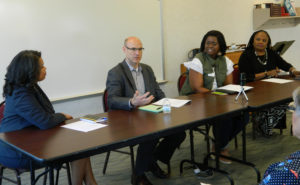
Johnson participated in a panel discussion on “community partnerships for the common good” during the Micah 6:8 conference, along with Bryant Lee, pastor of Higher Expectations Church in Humble and Marilyn Lee, executive director of Loving Houston.

Rose of Sharon—a small-membership inner-city congregation—welcomes suburban congregations with greater resources who want to partner with them in ministry, Johnson said.

To ensure the mission partners understand the community and the vision of the church in that neighborhood, Johnson makes the effort to develop friendships with leaders of those congregations.

“When it comes to partnerships, you have to build relationships first with the pastor or the mission pastor,” he said.

‘Put skin in the game’

God gets the glory when people humbly work together to accomplish his purposes, Bryant Lee noted.

“When you are in relationship, it’s not your ministry. It’s God’s ministry,” he said.

Higher Expectations Church requires representatives of congregations from outside his community to spend a couple of days in the community before entering into a missions partnership, Lee noted.

Higher Expectations does not want a church to just write a check or make a one-time drop-in visit without committing human resources for at least three years to establish relationships, he explained.

“We will not partner with anybody who will not put skin in the game,” Lee said.

Transformed lives

The church knows it is succeeding in its work when former gangbangers surrender their weapons and show up for worship on Sunday, he noted.

“We measure our success by transformed lives,” he said.

Lives are changed when churches humbly listen to people in their communities to discover needs, Lee said.

“Don’t assume what people need. Ask them,” he said.

Loving Houston seeks to mobilize churches in the Houston area to collaborate with school districts and non-profit organizations to meet needs, Marilyn Lee explained.

“Our mission is advancing community transformation by helping churches serve local schools,” she said.

Communities are changed over the long haul when children reach their full potential, she noted. So, Loving Houston strategically focuses on meeting the needs of children and their families.

“We take the long view,” she said.

Justice and redemption

Panelists (left to right) Tiana Sanford, prosector in Montgomery County; Doug Smith, policy analyst with the Texas Criminal Justice Coalition; Kathryn Freeman, director of public policy for the Christian Life Commission; and moderator Carolyn Clay Pickens from Brentwood Baptist Church discuss how the church can support criminal justice reform. (Photo / Ken Camp)

In another panel discussion, a prosecutor, a public policy specialist and a criminal justice reform advocate discussed the church’s role in bringing about meaningful positive change in the criminal justice system.

Churches can help ex-offenders be restored to society by welcoming them and help them overcome barriers such as getting a job and finding housing, as well as advocating for policies that make re-entry easier, said Kathryn Freeman, director of public policy with the CLC.

“If anybody understands redemption, it is the people of the cross,” she said.

Doug Smith, policy analyst with the Texas Criminal Justice Coalition, told how he connected with a faith community during the five years and eight months he served time in Texas Department of Criminal Justice facilities.

“It changed my life,” he said.

Now Smith’s faith motivates him to advocate for policies to reduce mass incarceration and to help ex-offenders re-enter society.

Seek justice

Tiana Sanford, district court chief prosecutor for Montgomery County, emphasized the importance of prosecutorial discretion in ensuring justice.

“The prosecutor’s job is not to convict but to see that justice is done,” she said.

Sanford encouraged Christians to “give cover” to elected officials—particularly district attorneys—who are opposed in elections by candidates espousing “tough on crime” rhetoric.

Sanford advocates for community-based prosecution, which involves long-term partnerships between the prosecutor’s office, law enforcement, the community, and public and private organizations.

She outlined key principles of community-based prosecution:

  • Recognize the community’s role in public safety.
  • Engage in problem solving by focusing not only on individual crimes, but also on the contexts in which actions occur.
  • Establish and maintain the partnerships.
  • Evaluate outcomes.


Students rebuild homes and share faith during spring break

More than 1,400 middle school, high school and college students served across the United States in Texas Baptist mission endeavors over spring break.

Projects included rebuilding hurricane-damaged homes in Houston, providing free van rides to fellow college students in South Padre Island and engaging in evangelistic efforts alongside church planters in New York City.

Helping Houston ‘Bounce’ back

In response to Hurricane Harvey, Bounce—Texas Baptists’ student disaster recovery program—focused on serving the Texas Gulf Coast. About 500 middle school and high school students from 25 Texas Baptists churches spent a week helping Houston bounce back from disaster. They completed projects on 27 sites installing drywall, insulation, siding, painting and flooring involving 14,310 man-hours.

“I really wanted to help the people in need, rebuilding their houses,” said Hudson Grace, seventh grader from First Baptist Church in Corsicana. “I’ve seen why people have had to abandon this neighborhood and why they’re trying to rebuild it as fast as they can. God has really pushed us to help and has taught me to be grateful for the things you have, because in an instant they can be gone.”

Students presented the gospel at least 37 times, resulting in 15 faith commitments to Christ.

“I’m very encouraged by the highly motivated students we have with us at Bounce,” said David Scott, director of Bounce. “They are working hard without complaint as they serve the residents of Houston. As always, it is our hope that this won’t be something that our students do for a couple of days at spring break, but that missions will become a part of who they are.”

Evangelism in New York

Through a partnership between Go Now Missions and the Metropolitan New York Baptist Association, Texas Baptist students partnered with church planters in evangelistic efforts New York City.

For spring break this year, Go Now Missions coordinated 10 groups involving 125 students and leaders in New York. Over the week, students partnered with local church planters, ethnic ministries and a human trafficking ministry across the city’s boroughs.

While prayer walking around the Woodside neighborhood in Queens, Keeley McKinney, a student from Howard Payne University, was feeling discouraged one day. She walked into a local restaurant with a few teammates and met two people. After listening to their stories, McKinney was able to pray for them.

“I felt so called by God,” she said. “In that moment, God said, ‘This is why you are here, and this is your place to pray for them.’”

Beach Reach

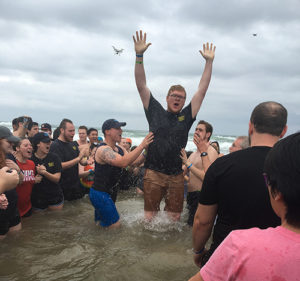
Students were baptized in the Gulf of Mexico following a week of ministry at Beach Reach. (Texas Baptist Communications Photo)

Beach Reach at South Padre Island—begun in 1980 with 20 students—involved 676 student missionaries this year. Each night, student missionaries offered free van rides to students, ensuring their safety while providing opportunities for gospel conversations.

Supported by two Texas Baptist Men disaster relief cooking teams, they also served free pancake breakfasts.

This year, Beach Reachers provided 13,897 van rides and served 10,010 pancakes. They engaged in 8,934 gospel conversations, which resulted in 167 professions of faith in Christ, 55 baptisms and 47 recommitments to Jesus.

“Going on Beach Reach shows you that it’s hard to share your faith for a number of reasons, whether that’s fear of man, lack of faith or limiting the power of the Holy Spirit,” said Jaycee Porter, a student at Dallas Baptist University. “But this week, through my van, I learned what it truly looks like to plead with the Lord on behalf of someone else, to plead for their very soul.

Students from the Baptist Student Ministry at East Texas Baptist University served at Beach Reach. (ETBU Photo)

“Although I didn’t get to witness anyone put their faith in Jesus, my perspective on the power of the gospel and the ability I have to beg the Lord for salvation has been forever changed.”

Another missions effort through the BSM at the University of Texas at Arlington involved community ministry in San Antonio.

“We took a number of international believers for their first missions experience. They got great training and first-hand experience in gospel sharing that they can take back to their home countries,” said Gary Stidham, UTA BSM director.

Other BSM groups served through Mission Arlington, worked with refugees in the Dallas-Fort Worth area, provided disaster recovery in Rockport, assisted with Vacation Bible Schools in Nacogdoches and New Orleans, and took part in community ministry in Sherman and San Antonio.


Tarrant Baptists seek to reduce infant mortality

FORT WORTH—The Fort Worth area leads the state in infant mortality, but Tarrant Baptist Association is working in cooperation with churches and social service agencies to save young lives by providing babies a safe sleep surface.

With the help of a start-up grant from Texas Baptists’ Christian Life Commission, Tarrant Baptists have distributed 300 travel cribs so far to families, working through Mission Arlington, Cornerstone Assistance Network, Child Protective Services, churches, pregnancy centers and other service providers.

Becky Biser

The association is collaborating with Cook Children’s Medical Center, John Peter Smith Hospital, Baylor Scott & White, Texas Health Resources and other agencies to educate parents about the risk of accidental suffocation and “set up an infant safety net across Tarrant County,” said Becky Biser, director of leadership development at Tarrant Baptist Association.

Wake-up call from God

The program grew out of relationships Biser developed after an early morning epiphany.

“The Lord woke me up at 3 in the morning,” she recalled.

Biser believed God told her he had people in strategic places throughout the community for a purpose, and she needed to reach out to them. So, she began to contact officials in city government, law enforcement, social services and other areas.

“I was sending about 20 notes of encouragement a month,” she said.

Biser developed a relationship with pediatric anesthesiologist Dyann Daley, who at that time directed the Center for Prevention of Maltreatment of Children at Cook Children’s Medical Center.

Preventable infant deaths

From Daley, she learned about the high rate of infant deaths in the Fort Worth area. In 2014, Tarrant County had the highest infant mortality rate among Texas counties with 10,000 or more live births—7.2 deaths for every 1,000 births, compared to state and national averages of 5.8.

She also learned from Daley suffocation is the leading cause of injury-related death in infants.

“We don’t want that to happen on our watch,” Biser said.

While Baptist churches in Tarrant Count could not effectively deal with all the complex factors contributing to infant mortality, they could help promote safe sleep, she concluded.

“This one seemed to be something that should be more simple to address and make a big difference,” she said.

Safe Sleep Initiative

She worked with Breanna Anderson, program manager at the Center for Prevention of Maltreatment of Children, and representatives from Fort Worth Neighborhood Services, the Fort Worth mayor’s office and other community leaders to develop a strategy to support the Fort Worth Safe Infant Sleep Initiative.

She consulted with officials at the Fort Worth Pregnancy Center and Presbyterian Night Shelter to select the proper travel crib to promote safety and meet the needs of at-risk families.

With the Texas Baptist community care start-up grant, Tarrant Baptist Association purchased the first 50 travel cribs and distributed them to families through Cornerstone Assistance Network and Mission Arlington. Since then, the program has expanded rapidly in a few months.

Becky Biser, director of leadership development at Tarrant Baptist Association, facilitates a training event on infant safety at the associational office in Fort Worth. (Photo / Ken Camp)

“It all started from just doing what God said to do. He opened the doors,” Biser said. “It’s all God, not me.”

About 30 individuals representing law enforcement, children’s advocacy, social services, healthcare, refugee resettlement and the faith community attended a two-hour safe-sleep training event March 19 at the Tarrant Baptist Association office building.

In addition to learning the latest findings and recommendations from the Center for Prevention of Maltreatment of Children, participants discussed ways the training module could be improved and adapted for use in various settings.

Key points included:

  • Pillows, bumper pads and toys never should be included inside an infant’s crib.
  • Infants should sleep in a crib, not in a bed with parents. A study of more than 8,200 sleep-related deaths between 2004 and 2012 revealed 69 percent were due to sharing a bed with parents or caregivers.
  • Infants should sleep on a firm surface with tightly fitted sheets.
  • Parents always should place a baby on his or her back to sleep. The infant’s face should be visible, and the nose and mouth should be clear of obstructions.
  • Use a sleep sack or long-sleeved one-piece bodysuit—not a blanket—to help keep an infant warm while sleeping.

Danielle Biser

Empower moms to say ‘no’

Biser’s daughter-in-law, Danielle, preschool ministry director at Southcliff Baptist Church in Fort Worth, emphasized the importance of relying on the latest recommendations from the American Academy of Pediatrics.

Some of those up-to-date recommendations may differ from what mothers learned 40 or even 20 years ago, she noted. That can create a difficult situation for young mothers who know the latest information but don’t want to be disrespectful when well-meaning relatives have other ideas—underscoring the need to inform other caregivers about best practices for infant safety.

“Nobody wants to be ‘that mom,’” she said. “But we need to empower mothers to say ‘no’ in love to mothers and grandmothers who believe babies should sleep on their stomachs.”


Texas School Breakfast Report Card shows improvement

WACO—Texas has become a national leader in school breakfast participation, moving up to 10th in the state rankings, thanks in part to the passage in 2013 of Texas Senate Bill 376—the “Universal Breakfast Bill.”

That’s one finding from the Texas School Breakfast Report Card produced by Baylor University’s Texas Hunger Initiative.

Released to cap off National School Breakfast Week, the 2016-17 edition of the Texas School Breakfast Report Card captures breakfast participation data for Texas counties and more than 1,000 school districts.

The report continues to be a powerful example of how data can be used to fight hunger, said Kathy Krey, director of the Texas Hunger Initiative.

“We’re able to step back and look at this data as a whole, which allows us to see which schools are having success and how to replicate that,” she said. “Then we’re able to offer guidance and resources to help schools across Texas—and the U.S.—increase participation in school breakfast, improve their performance, and ultimately, reduce childhood food insecurity.”

Now in its fourth edition, the Texas School Breakfast Report Card provides an overview of the school breakfast program, the benefits of school breakfast, creative models for serving breakfast and proven success strategies.

This edition looks back at breakfast participation over the last several years, highlighting successes and opportunities to increase participation over the next few years.

It also compares 2016-17 school breakfast participation to participation in 2013-14. It also shows the potential for growth, both in number of students served and reimbursements gained, if each Texas school district had the 70 percent benchmark, a national goal set by the Food Research and Action Center.

Key findings include:

  • According to the USDA Food and Nutrition Service, 314 million breakfasts were served in Texas schools in 2016-17, which led to a $558 million reimbursement for Texas schools.
  • 62.8 percent of students eating free or reduced-price lunch are eating school breakfast.
  • 32 percent of public districts and charters have met the 70 percent benchmark.
  • Texas could reach an additional 184,000 students and accrue $51 million in reimbursement if the state met the 70 percent benchmark.
  • As a result of SB 376 passed in 2013, Texas has seen a 4 percent increase in school breakfast participation, serving an additional 10.5 million meals.

The Report Card also provides recommendations for ways schools, agencies and the state legislature could increase participation in school breakfast:

  • Implement alternative service models at schools, such as Breakfast in the Classroom, Grab-and-Go and Second Chance Breakfast;
  • Develop a statewide system to track the use of various service models;
  • Incorporate school meals into state plans, such as TEA’s Every Student Succeeds Act.
  • Pass Breakfast-After-the-Bell statewide legislation.

“We’re excited that we’ve seen increased participation and progress toward our goal over the last several years,” Krey said. “In particular, the increase since the Universal Breakfast Bill was passed demonstrates that, when school districts, state agencies and elected officials work collaboratively, significant change can be made. We look forward to continuing this collaboration and bringing an end to food insecurity in Texas.”

Recent empirical studies published in Frontiers in Human Neuroscience and AMA Pediatrics and conducted by Sodexo Foundation, FRAC and No Kid Hungry continue to show the role school breakfast can play in improving nutrient intake, increasing attendance and improving test scores among students.

A 2011 research study published in the Journal of Nutrition suggests state policies requiring school breakfast reduces food insecurity among elementary students.

Educational and health benefits noted

Regular consumption of breakfast is associated with educational benefits such as:

  • Improved school performance.
  • Higher attendance rates.
  • Better concentration and alertness.
  • More energy and better attention.
  • Short-term benefits in improving selected learning skills, particularly memory.

School breakfast participation also is linked to these health benefits:

  • Lower body mass index and lower probability of obesity and being overweight
  • Fewer visits to the school nurse.
  • Improvements in children’s mental health, including reducing behavior problems, anxiety and depression.
  • Better eating habits among children.
  • Fewer vitamin deficiencies.
  • Decreased likelihood of experiencing chronic illnesses.

For more information on the Texas Hunger Initiative’s work and to read the full Texas School Breakfast Report Card, click here.