BGCT Executive Board condemns violence

DALLAS—In the wake of a Texas school shooting that claimed 10 lives and the growing #MeToo movement to end abuse of women, the Baptist General Convention of Texas Executive Board condemned violence and pledged to seek solutions.

A gunman opened fire May 18 at Santa Fe High School May 18 in Galveston County, killing eight students and two teachers and wounding 13 others.

At the BGCT Executive Board meeting in Dallas three days later, Executive Director Hardage presented a wide-ranging statement encompassing violence in varied contexts. The next morning, the board unanimously voted to affirm and support his statement.

“Heartbreaking violence has once again come to the forefront in our society,” Hardage said, noting specifically the school shooting in Santa Fe.

“Violence continues to be a significant problem in every area of life—at home, school, the workplace and churches. Violence also is affecting relationships with family, friends, neighbors and strangers. Texas Baptists are committed to work for answers and solutions.”

Every person is “to be treated with dignity” because the Bible teaches all people are made in God’s image, he noted. Furthermore, the Bible calls on God’s people to pursue peace, justice, kindness and humility.

“Domestic violence, especially against women and children, has no place in our society, and is a direct contradiction to God’s word and way. Texas Baptists have and will speak against abuse,” Hardage said.

He reiterated Texas Baptists’ commitment to a more peaceful society, safe environments and wholesome relationships, and he condemned violence of all its forms.

“We commit ourselves to protecting the dignity of every person, especially the vulnerable among us,” he said. “We will continue to pursue safe and healthy homes, schools, workplaces and churches.”

Exploring changes in health insurance

During its business session, the board granted its finance committee decision-making authority before the board’s next meeting regarding a possible change in employee and retiree health insurance.

Rollie Richmond, director of human resources with the BGCT, reported healthcare premiums have increased more than 50 percent over the last three years.

Richmond called the current situation “unsustainable” and the national healthcare environment “unstable.”

“The staff understands we can’t keep doing what we’re doing,” he said.

Due to budget cycles and insurance enrollment deadlines, any major change would require action prior to the next regularly scheduled BGCT Executive Board meeting.

So, the board delegated to its finance committee authority to review, consider and approve moving from GuideStone Financial Resources to a self-funded healthcare insurance model if the committee considers that the most effective way to provide coverage for employees and retirees.

In recent months, the human resources office enlisted an independent consultant to investigate ways to lower healthcare costs while maintaining quality benefits for employees and retirees. The office also worked with GuideStone to explore possibilities of cost savings and consulted with other state conventions, Richmond reported.

The office will continue to compare benefits and evaluate the degree of disruption for employees and retirees, with a goal of completing the evaluation in June and making a recommendation to the finance committee, he added. If the committee agreed to move to a self-funded model, it would limit BGCT liability by securing stop-loss insurance.

In other business, the board:

  • Re-elected Dennis Young, pastor of Missouri City Baptist Church in Missouri City, as chair and Craig Christina, pastor of Shiloh Terrace Baptist Church in Dallas, as vice chair.
  • Designated the University of Mary Hardin-Baylor as the beneficiary of a portion of the James R. Johnston estate previously designated to the Baptist Foundation of Texas, now HighGround Advisors. HighGround understood the donor intended for UMHB to benefit from estate, according to a finance committee recommendation.
  • Approved Thomas Faught from First Baptist Church in San Antonio to fill a vacancy on the Baptist Student Ministry Council and Casey W. Celum from Northside Baptist Church in Victoria to fill a vacancy on the Chaplaincy Endorsement Council.
  • Approved Jason Bell from First Baptist Church in Mount Pleasant to serve on the East Texas Baptist University board of trustees, and Scott Williamson from First Baptist Church in Lewisville and Carlton Reyes from First Baptist Church in Los Fresnos to serve on the Valley Baptist Missions and Education Center board of trustees.
  • Amended policies to set a maximum number rather than prescribed number of at-large members to BGCT councils and amended policies to reflect the change in name from Committee on Convention Business to Committee on the Annual Meeting.




Couples urged to begin communication by expressing gratitude

En español, aquí.

FORT WORTH—Couples must strengthen communication to strengthen their relationship, the founders of Fully Alive Health told a session at the Fort Worth Community Health Fair, organized by Iglesia Victoria en Cristo.

Jesus Gras and Maria del Carmen Uceda, co-founders of Fully Alive Health, led a a session at the Fort Worth Community Health Fair, organized by Iglesia Victoria en Cristo. (Photo / Isa Torres)

Maria del Carmen Uceda and Jesus Gras said one way to improve communication is by practicing gratitude. It is also is important to make sure the message is properly understood, they added.

“Communication is important because not only do we know each other better, but we also get to grow together,” Gras said.

That is important because humans always are in relationships, and they need to practice how to strengthen them, Uceda said.

“We are born in relationships, grow in relationships, and we are also hurt in relationships,” Uceda explained. “In God, we can heal those relationships.”

To do that, she said, it is helpful to look at conflict with a different understanding. Instead of seeing it as an unresolved misunderstanding, conflict should be seen as an opportunity for growth.

“If conflict arises, then that means there is an need that is not being properly expressed,” Gras said. “We can provide that help to one another.”

While couples benefit from the communication when they have differences, so can families, the local church and society in general, he said.

Negativity seems to be present everywhere, Gras noted. While negativity may seem the easiest way to respond to conflict, he said urged his audience to look for the healing God wants people to experience.

“When we feel threatened, it is natural to put barriers against one another,” Gras said. “You can be sure that if you feel tension, then the other person feels tension as well.”

As couples actively practice expressing gratitude to one another, then they will gradually begin to take the easy way less and less, and instead thrive in looking like Christ more and more, he remarked.

After gratitude is expressed, then the listener—or the receiver of the message—must repeat back that message to ensure it has been correctly understood, Uceda said.

“This is what can help create a safe space of communication, where one can share needs and feel assured those needs will be safely met,” she said.

Safe communication brings healing to others and to oneself, Gras said.

“After we practice and live in this healing, we then can also go and teach it to others,” Uceda said.


Churches that promote health bring life to neighbors

FORT WORTH—To bring health services to the community and help churches discover ways they can promote health, Iglesia Victoria en Cristo served as host to the Fort Worth Health Fair.

Carlos Valencia, pastor of Iglesia Victoria en Cristo in Fort Worth

“We want to promote to access to health services, help churches identify the resources in the community and encourage church members to practice ways to prevent health issues,” said Carlos Valencia, pastor of Victoria en Cristo and coordinator of Faith Community Health of West Dallas at Baylor Scott & White.

Through the connection of Faith Community Health and local churches, Valencia said, pastors can encourage church members to practice healthier lifestyles, as well as provide knowledge about available health services.

“The program began with the aim of reducing the number of patients who have to return to the hospital after they have been treated,” Valencia said.

While the concept started at a medical center, Valencia also mentioned the importance of promoting health from the pulpit.

“Churches have to be agents of change,” he said. “We have to be agents of change in the lives of our neighbors.”

When churches aim to bring change to the whole person, then they look more like the church Jesus calls them to be, said Valencia.

“We have to look at the whole person,” he said. “The care must be for the soul, spirit and body of a person.”

This type of care brings transformation to the person and then also transforms others in the community, Valencia noted.

“That is what an integral gospel does,” he said.

The fair offered screenings for diabetes, cholesterol and high-blood pressure, as well as mammograms. It also included workshops on physical, emotional and mental health, as well as classes on financial health

Valencia particularly wants to help other pastors of churches that may lack large budgets by pointing them to available resources.

“God does call us to act, but that call does not come without him providing us with the resources,” Valencia said.

By tackling health issues in the community surrounding the church, a congregation brings more life to its neighbors, Valencia noted.

“Our vision has to bring a revolution to our surroundings,” he said. While that may look like a difficult challenge, Valencia said, the church can trust “God will provide the resources needed to do so.”

Hundreds of people received health screenings and visited other health nonprofit organizations represented at the fair, Valencia said.

“We can see there are always other people who want to be a blessing to others,” he added. “By blessing others, we ourselves are also blessed.”


CommonCall: School Fuel provides ‘hope in a paper bag’

SAN MARCOS—Every week, students at six San Marcos elementary schools look forward to Friday—and not just because it signals the start of the weekend. That’s the day the children receive a paper sack filled with food, made possible by an organization First Baptist Church birthed.

Each Thursday, volunteers with School Fuel San Marcos fill 671 sacks with enough food for two full meals a day for the weekend, plus snacks. Every Friday morning, parent liaisons at the elementary schools place those sacks in the backpacks of children who rely on the free breakfast and lunch programs at school on weekdays.

‘Important for these kids to know someone cares’

“We serve 115 children every Friday at our school, and they are usually all there that day,” said Connie Perez, parent liaison at Travis Elementary School in San Marcos. “They have figured out they have to be there to receive the food.”

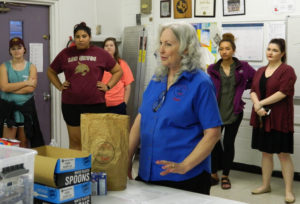
Kathy Hansen, who serves on the San Marcos school board, fills sacks with food for children. (Photo / Ken Camp)

Kathy Hansen, a member of the San Marcos school board, was among the volunteers who helped pack the paper sacks for School Fuel recently.

“It’s unbelievable how important it is for these kids to know somebody cares,” she said.

From her 30 years experience as a classroom teacher, she knows what happens when students lack access to healthy food.

“They have headaches. They are angry and irritable. They want to sleep,” she said. “Food is a basic need. If we can help meet that need, we are equipping them to excel.”

A church with a strong missional mindset

School Fuel already was a thriving program when Chad Chaddick arrived at First Baptist Church as pastor three years ago.

“I inherited a church with a strong missional mindset,” Chaddick said. “Our folks see this as a natural extension of the church loving its neighbors. It’s a way to fulfill our call to feed the hungry. It’s an opportunity to give hope in a paper bag.”

Six years ago, Chaddick’s predecessor—Pastor Mark Newton—led a Wednesday evening missions class in which he challenged members to consider ways they could make a positive impact on lives in their community.

School Fuel San Marcos, a program birthed by First Baptist Church, provides weekend food for students at six elementary schools.

As the participants began to research community needs and potential ministries, they discovered more than seven out of 10 students in the San Marcos school district qualified for free or reduced lunches due to family income. They also learned many of those students lacked access to food most weekends.

Proven success

In spring 2013, First Baptist Church launched a three-month pilot ministry with a select group at Mendez Elementary School, where 86 percent of students participate in the free or reduced school lunch program.

The church provided food-filled sacks to 31 students each Friday, and then they evaluated the results. Among 30 of the 31 students, teachers reported improvement in their attitude, grades and attendance, and Monday visits to the school nurse became virtually nonexistent.

Encouraged by the results, representatives from the church met with community and school leaders during the summer break, raising money and enlisting volunteers to launch School Fuel at the beginning of the next school year.

During its first year as a ministry of First Baptist Church, School Fuel served 260 students at two schools—Mendez Elementary and De Zavala Elementary.

Open doors

School Fuel’s leaders soon realized the program could be more effective as a nonprofit organization distinct from First Baptist Church. As an independent nonprofit, School Fuel could apply for grants and receive donations from businesses that would not contribute to the ministry of a single church.

Jenny Mangrum, director of School Fuel and a member of First Baptist Church in San Marcos, provides instructions to volunteers. (Photo / Ken Camp)

“That opened a lot of doors for us,” said Jenny Mangrum, a member of First Baptist Church and director of School Fuel.

Even so, everyone involved remains aware of the motivation behind the program.

“We pray before we pack every week, and the volunteers know that,” Mangrum said. “God has blessed, and we have grown every single year since we started.”

Still, Mangrum sees the need for expansion. She cannot bear the idea that some of this year’s students will lack food next year when they leave elementary school.

“We’ve got to get into the middle schools,” she said.

Broad base of community support

From September to December last year, School Fuel attracted 647 volunteers and support from 47 groups, including businesses, a local hospital, university fraternities and sororities, at least a half-dozen churches, service organizations, Boy Scouts and Girls Scouts.

School Fuel San Marcos, a program birthed by First Baptist Church, provides weekend food for students at six elementary schools.

It costs $215 to feed one child every weekend for one school year, said Nancy Smith, a member of First Baptist Church and treasurer for School Fuel.

Smith, who retired after more than three decades in public education, understands the importance of providing students with the food they need to grow and remain alert and attentive.

“The teachers are excited,” she said. “They say, ‘I don’t have to keep protein bars and peanut butter crackers in my desk any more for students who come to school hungry on Monday morning.’”

Likewise, School Fuel receives positive reports from parent liaisons who interact with students at each of the schools they serve.

“The children think it’s Christmas every Friday,” Smith said.

‘God always provides’

Smith’s husband, Larkin, handles logistics for School Fuel and continues to look for ways to improve efficiency. Originally, the group had to enlist drivers with trucks, vans and sports utility vehicles to deliver the food-filled sacks to schools each Friday morning. Now a moving company—Ace Relocation—pays its drivers to transport the food every week.

Larkin Smith, a member of First Baptist Church in San Marcos, stocks the pantry at School fuel. (Photo / Ken Camp)

Smith helps his wife receive many of the in-kind donations local residents bring to School Fuel. Because items distributed to the schoolchildren must be uniform size, not every family-sized jar or can finds its way into a student’s sack. But nothing goes to waste.

“We all know where it’s coming from,” he said, pointing heavenward. “Those unusual donations go to meet unexpected needs that arise. We don’t know what the needs are yet, but God does. God always provides.”

School Fuel has received financial support from the Texas Baptist Hunger Offering, and an annual fund-raising banquet and silent auction for the program is held at First Baptist Church.

‘Seek the common good’

The fund-raiser originally filled the church’s atrium. When it outgrew that space two years ago, it moved into the sanctuary—and it may have to find a larger venue next year.

“It has grown exponentially in the last couple of years,” Chaddick said.

Recently, children at First Baptist Church in San Marcos participated in their own fund-raiser for the program. The children painted soup bowls that were auctioned, and all proceeds went to School Fuel. The activity not only raised $1,039, but also raised awareness.

“Most of our kids are not the ones in the school lunch programs—but there probably are a few that are,” said Melinda Hall, minister to preschool and children at First Baptist Church in San Marcos.

Members of First Baptist Church—those who volunteer with School Fuel and those who support it financially—recognize the importance of helping schools and the children they serve, Chaddick noted.

“It’s a practical expression of what God would have us do—to seek the common good,” he said. “It’s clearly an advantage to have an educated population that feeds into the community. That serves the good of the community. It seems obvious to us. …

“It’s just a natural fit for our church. I don’t think there was ever any theological angst about whether it was something we ought to be doing. It’s an obvious need, and it’s a way to show love for our neighbors.”

To view a video about School Fuel and the support the Texas Baptist Hunger Offering provides, click here.

This is part of an ongoing series about how Christians respond to hunger and poverty. Substantive coverage of significant issues facing Texas Baptists is made possible in part by a grant from the Prichard Family Foundation.

Read more articles like this in CommonCall magazine. CommonCall explores issues important to Christians and features inspiring stories about disciples of Jesus living out their faith. An annual subscription is only $24 and comes with two free subscriptions to the Baptist Standard. To subscribe to CommonCall, click here.


CommonCall: San Marcos church blessing backpacks

SAN MARCOS—First Baptist Church in San Marcos wants to bless local students and teachers—in every way possible.

Melinda Hall, minister to preschool and children at First Baptist, saw an idea on social media a couple of years ago she wanted to bring to her congregation.

Another children’s minister had suggested blessing backpacks of students and teachers immediately prior to the beginning of the school year.

Prayers for students and teachers

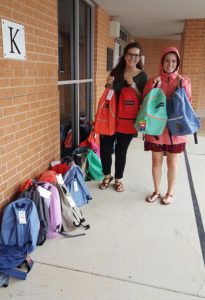
Members of First Baptist Church in San Marcos delivered 50 filled backpacks to Travis Elementary School and 46 to Mendez Elementary School. (Photo / Courtesy of Melinda Hall)

First Baptist produced laminated tags for the backpacks—one for students and the other for educators. One side of each tag includes affirmation the backpack “has been blessed by a congregation that loves and supports” students and teachers. A prayer is printed on the reverse side.

The prayer for students says: “Dear Lord, open my eyes to see new friends. Open my ears to hear my teachers. Open my mind to learn new things. Open my heart to love others like you do. I want to shine your light in my school. Amen.”

The prayer for educators says: “Dear Lord, enable me to teach with wisdom, for I help shape the mind. Equip me to teach with truth, for I help shape the conscience. Encourage me to teach with vision, for I help shape the future. Empower me to teach with love, for I help shape the world. Amen.”

The blessing of the backpacks proved so popular, teachers who had no other contact with the congregation began to ask to be included.

Fill backpacks with school supplies

This year, First Baptist also blessed students in need at two low-income schools in San Marcos with the gift of backpacks and school supplies.

Hall initially contacted the principal at Travis Elementary, a predominantly Hispanic school where eight out of 10 students qualify for free or reduced lunches based on family income. The principal agreed to identify students who would benefit from backpacks filled with a dozen of the most essential school supplies.

By purchasing 48 backpacks wholesale and buying the school supplies on sale at a discount store, Hall was able to keep the cost per filled backpack under $15.

She set up a table at First Baptist promoting the program and asked members to sponsor a student by purchasing a backpack volunteers would fill with supplies. Members immediately snapped up sponsorships and asked if they could help additional students.

Backpacks sponsored, stuffed and delivered

Hall purchased an additional 24 backpacks, which sold quickly. So, she purchased 24 more backpacks, and members also sponsored them.

“Our people are good about giving,” she said.

She contacted the principal at Mendez Elementary, where 84 percent of the students are Hispanic and 86 percent qualify for free or reduced lunches. The principal eagerly agreed to identify students who would benefit from the backpacks.

Volunteers deliver filled backpacks to a San Marcos elementary school. (Photo / Courtesy of Melina Hall)

Volunteers stuffed the backpacks during an intergenerational missions emphasis weekend at First Baptist Church.

“We delivered 50 backpacks to Travis and 46 to Mendez Elementary on the rainiest day in August,” Hall recalled, noting she had received thank you notes from both schools.

Before the students received the backpacks, members of First Baptist Church joined in praying for those students.

“This year, we not only blessed our own kids’ backpacks, but also all the ones we sponsored,” Hall said. “Our people really got behind it.”

This is part of an ongoing series about how churches can support public education and the common good. Substantive coverage of significant issues facing Texas Baptists is made possible in part by a grant from the Prichard Family Foundation.

Read more articles like this in CommonCall magazine. CommonCall explores issues important to Christians and features inspiring stories about disciples of Jesus living out their faith. An annual subscription is only $24 and comes with two free subscriptions to the Baptist Standard. To subscribe to CommonCall, click here


Little is much in God’s hands, Laredo pastor insists

LAREDO—A church without a lot of resources or large membership still can be a missional congregation, a Laredo pastor insists.

Dalila Martinez is pastor of Casa de Dios de Laredo in Laredo. (Photo / Isa Torres)

Dalila Martinez, pastor of Casa de Dios de Laredo, noted her church began when her late mother, Julia Barba, started a mission in El Cenizo in the 1990s. The mission later relocated about 20 miles north to Laredo.

Barba helped start the mission with the assistance of Iglesia Bautista Redencion in Houston. She did not live to see the mission become a self-supporting church in 2017.

But Martinez followed her mother all along. Her parents first heard about Christ when she was about 15 years old, and after she accepted Christ, she continued to grow in faith alongside them.

Martinez concluded her theological studies in Monterrey, Mexico. She graduated along with her mother.

Missions important to church’s identity

Missions has been an important aspect of Casa de Dios’ identity, said Martinez. Even when the congregation still was a mission, Martinez pointed out their past efforts in missions, especially with children.

“Children’s ministry is one many don’t want, but is the most important one in the kingdom of heaven,” Martinez said.

When her mother was the pastor of the mission, Martinez served as the minister to children and youth.

“Reaching and working with children has been so wonderful to me,” she said. “It is through children we are still able to reach new families.”

Her background in children’s ministry has been essential now that she is the pastor of a missional church, Martinez said.

“We continue to minister to new children in the faith—that is, people who have never heard the gospel,” she said.

Making disciples

Through relationship and discipleship, new believers have a chance to grow in their faith, she said.

“How can we preach, ‘So if anyone is in Christ, there is a new creation: everything old has passed away; everything is made new?’” Martinez said. “We do so by teaching them a new way of life.”

As the church preaches the gospel, Martinez said, members have come to love families previously trapped in vicious cycles of crime, poverty and dysfunction.

“When someone in a family comes to know Christ, that person brings a change to the family that no one was aware of,” she said.

Equipping new believers for new life

Fathers who were in jail, mothers who were prostitutes and numerous families with low income are those whom Jesus came to save, regardless of legal immigration status, Martinez noted.

As the church teaches about Christ, it also must teach about new ways of life and new paths to maintain that life, she added.

“If a woman who was a prostitute wants to make a change, how are you going to help her do that?” Martinez asked. “You have to be ready to help her find her talent and teach her that vocation. It can be doing nails or decorating cakes or something else.”

It is important that a person does not have to say, “OK, I have met Christ, and now what how am I going to make it?” Martinez said.

New believers need to be fully discipled so they can experience a complete change, she stressed.

Casa de Dios now helps people find answers to immigration problems, as well as work with organizations to provide job training, school tutoring and English classes, Martinez said.

“This is the church using all of itself to give to others and lead others to do the same,” she said.

Modeling missions and ministry

As church members grow in the faith, they learn to also practice what they have seen, Martinez added.

Children in the church started bringing cans of food, which they put in bags to give to friends who have little to eat. Field workers in El Cenizo, where the mission first began, bring the first fruits of their lands to share with people in the church who may need it, she said.

The church may still be made up of a small congregation, Martinez said, “but we are still in our first love.”

Even as some other churches and leaders have refused to work with her for being a woman in ministry, Martinez said, she knows who has called her.

“One has to first answer to God,” she said. “Nothing can stop the will of God.”

Any opposition she faces is not as important as seeing a child in the church stand up and lead the church in Bible reading or a prayer, Martinez said.

“We learn to give to God everything that frustrates us and everything we are desperate to see changed,” she said.

The church may not be very big, and it requires a big effort for many members to attend worship services after a long day of work, she noted.

But after every church service, every person in the building comes together to have a meal. People bring food and share it with each other. Even when church members may be going through hard times, Martinez said, the church strives to remember to serve each other.

“What is little can be a lot in the hands of God,” she said. “I know in Christ we are able to continue to preach the gospel, because Christ is for everyone.


Truett Seminary in Houston distinctive to its context

Leaders of Baylor University’s Truett Theological Seminary view the courses they will offer in Houston next fall as more than an extension of the Waco campus.

todd still 130
Todd Still

“It is in Houston for Houston,” Dean Todd Still said. “Some identify Houston as the most diverse city in the United States. It’s a crowded market, but we believe it’s not so crowded that there isn’t space for what we can offer.”

Highly contextualized

The Truett in Houston campus, housed at Tallowood Baptist Church, will provide highly contextualized instruction that meets specific needs in the nation’s fourth-largest city, said John Burk, assistant dean for strategic initiatives at Truett Seminary.

“We recognize there are a number of theological offerings available in the Houston market, and we’re not trying to compete with them,” said Burk, who will direct Truett in Houston. “We want to come alongside them and offer a theological education that uniquely fits Houston.”

Distinctive course offerings will provide instruction in ministry to resettled refugees and to the incarcerated population, as well as classes in theology and the arts. A community health track offered in partnership with Baylor’s Diana R. Garland School of Social Work will provide learning opportunities specific to Houston’s medical district. Later, Truett in Houston hopes to offer courses related to anti-human trafficking initiatives.

“We are committed to meeting both the needs of the students and the needs of the city,” Burk said.

Offer two graduate degrees

Truett in Houston will provide classes leading to two graduate degrees.

The 60-hour Master of Arts in Christian Ministry is designed particularly for individuals who likely are serving in vocational Christian ministry already, and it includes a field experience requirement with an approved mentor.

The 48-hour Master of Theological Studies is geared toward laypeople who desire a deeper theological understanding. It does not require mentorship or field experience.

Truett is committed to making theological education accessible and affordable for working students in Houston, Still said. The average age of Truett students at the Waco campus is 26.4 years old, while the average student age in Houston likely will be in the mid-40s, he said.

“In terms of scheduling classes, we will be as creative as our students demand,” Burk said.

While many older students in established careers may find it difficult to relocate, for those who want to pursue a Master of Divinity degree at Truett’s Waco campus, all but one year of the program can be completed in Houston, Still added.

Truett in Houston also plans to work with the Lanier Theological Library in Houston to give students opportunities to hear to distinguished guest lecturers. New Testament scholar N.T. Wright will lecture from 7 to 9 p.m. Nov. 16.

For more information about Truett in Houston, click here.


Eric Black named Baptist Standard executive director/publisher

DALLAS—The Baptist Standard Publishing board elected pastor and professor Eric Black as executive director and publisher, effective June 11.

At its May 10 meeting in Dallas, the board approved Black to succeed Marv Knox, who served the Baptist Standard 22 years, including about 19 as editor and publisher.

Varied ministerial experience

Black, 43, has been pastor of First Baptist Church in Covington since 2010. During his time at the church, he supervised construction of a new campus and relocation of the congregation.

Previously, he was associate pastor for youth ministries at First Baptist Church in Galax, Va., and associate director of GraceLife Baptist Student Union at the University of New Mexico in Albuquerque.

Since 2008, he also has been a resident fellow at the B.H. Carroll Theological Institute, teaching philosophy of Christian education.

He earned his bachelor’s degree from Hardin-Simmons University, where he graduated magna cum laude. He holds a Master of Arts in Christian Education degree from Southwestern Baptist Theological Seminary and Doctor of Philosophy degree from the B.H. Carroll Theological Institute.

He was licensed to the gospel ministry by Hoffmantown Baptist Church in Albuquerque and ordained by Acton Baptist Church in Granbury.

‘Experience, education and equipping’

“Eric’s experience, education and equipping combine to uniquely qualify him for this position at this time,” said Jay Abernathy of Lubbock, chair of the Baptist Standard Publishing board and its search committee.

“His sincere and humble acknowledgement of his salvation and earnest devotion to his faith are evident in his considered, compassionate approach to ministry.”

Black has served on the Baptist Standard Publishing board since 2015, and he also served on the governing board for the Cooperative Baptist Fellowship of Texas.

Recognizes challenges, excited about the future

Black acknowledged he approaches his new responsibility both with excitement and trepidation.

“Being the face of the Standard, given its long history, tradition, reach and influence is daunting, and I take the responsibility with the utmost seriousness,” he said. “I spent countless hours seeking the Lord’s guidance about holding this privilege.”

“Getting to steward the Baptist story as part of the greater story of Christ and his kingdom is thrilling,” Black said, adding he hopes to spark excitement among loyal readers and supporters, “encouraging them to secure our continuing ability to communicate the Baptist story well into the future.”

“At the same time, I look forward to igniting new interest in the Baptist story among Millennials and younger generations, exhorting them to live the Baptist story and thereby carry it with them into the future,” he said.

“And what is the Baptist story? First and foremost, the Baptist story is making disciples of all people, teaching them to follow all Jesus commanded us. Then there are the particular ways Baptists live out this larger story through our commitment to common Christian beliefs and historic Baptist principles.”

Black and his wife, Dalese, have two children, Allen, 11, and Caroline, 7.


Ellis retires as HPU president, named chancellor

BROWNWOOD—Bill Ellis will retire as president of Howard Payne University May 31 and assume a new role as the university’s chancellor.

Ellis made the announcement the week after the close of Howard Payne’s spring semester.

“I am honored to have served as president of this treasured institution,” Ellis said. “I look forward to seeing what great things God has in store for HPU in the years ahead.”

Ellis, the 19th president in HPU’s 129-year history, joined the university’s administration in 2009. During his years as president, HPU welcomed its largest new-student class in more than three decades, made a variety of facility upgrades including an extensive renovation of the Mabee University Center, and expanded operations to create an extension center in New Braunfels.

“Dr. Bill Ellis is a distinguished proponent of Christian higher education and has a great love for Howard Payne University,” said Ray Still, chair of HPU’s board of trustees. “I am grateful for his service to HPU as president, and I appreciate his continued involvement as chancellor.”

Ellis’ primary duties as chancellor will be to work with major donors and to develop HPU’s extension centers in El Paso and New Braunfels.

“The work our university is doing at all three locations is vital,” said Ellis, referring to its main campus in Brownwood and its two extensions. “I am excited to be able to focus all of my attention on growing the financial resources to support these efforts.”

Prior to his role as HPU president, Ellis was provost and chief academic officer at Hardin-Simmons University in Abilene. His experience in higher education also includes positions at Ouachita Baptist University in Arkadelphia, Ark.; Mississippi College in Clinton, Miss.; Louisiana College in Pineville, La.; and Clarke College in Newton, Miss..

HPU’s board of trustees named Paul W. Armes as interim president. Armes, who will take office June 1, was president of Wayland Baptist University and San Marcos Baptist Academy. He also held numerous faculty roles, pastorates and leadership positions in denominational service.


Christian environment key part of Baylor strategic plan

WACO—Baylor University’s newly approved academic strategic plan includes a foundational goal to develop a community known for its “unambiguously Christian educational environment.”

Baylor’s board of regents approved a plan to implement Illuminate, the university’s academic roadmap for the next five years, at its May 11 meeting in Waco. The board also approved a doctor of philosophy in preaching degree program at Baylor’s Truett Theological Seminary.

In addition to the goal regarding an “unambiguously Christian” environment, the other three pillars of Baylor’s plan are to create a community recognized for:

  • “Transformational undergraduate education.”
  • “Research and scholarship marked by quality, impact and visibility.”
  • “Nationally recognized programs in human performance through the arts and athletics.”

Christian missions ’embedded’ in plan

An earlier draft of the four pillars included references to “deep faith formation in the Christian and Baptist tradition” and “excellence in teaching and mentoring.”

Linda Livingstone

President Linda Livingstone emphasized Baylor remains “deeply tied to its Baptist tradition” and that the university’s Christian educational environment and Christian mission “flow out” of its Baptist heritage.

She also noted the reference to excellent “teaching and mentoring” is one aspect of a “transformational undergraduate education.”

“Elements of Baylor’s Christian mission are embedded in all aspects of the plan,” Livingstone added.

Joel Allison

Joel Allison, who was elected to a second term as chair of the board of regents, reiterated one of the “non-negotiable” considerations for any decision made by the board or administration is that it “keeps Baylor a Christ-centered institution.”

Signature academic initiatives outlined

Regents approved five signature academic initiatives related to the plan, which Livingstone identified as “building on Baylor’s strengths” while addressing critical needs in society:

  • Health—Focus on environmental, family and community factors in health, biomedical research, health policy, law, leadership and ethics, and undergraduate health and medical education.
  • Data Sciences—Focus on biomedical informatics, cybersecurity and business analytics, with an overarching theme of ethical uses of large-scale data.
  • Materials Science—Focus on technologies that make products faster, stronger and lighter, providing solutions for enhanced quality of life.
  • Human Flourishing and Ethics—Focus on understanding the conditions by which humans, communities and societies flourish.
  • Baylor in Latin America—Focus on health and disease prevention; business development and international trade; human capital formation and education; immigration, migration and human trafficking; congregational development; democratic governance and economics; and culture and arts.

Doctorate in preaching degree approved

The newly approved doctorate in preaching at Truett Seminary—one of five degree programs regents approved—will help prepare “the next generation of pastor-scholars,” as well as equip preaching professors, said Todd Still, seminary dean.

“I am grateful for our university’s approval and support of this strategic doctoral program—the first Ph.D. program for our relatively young seminary,” Still said. “Over time, we trust that this program will produce a steady stream of homileticians who ‘divide the word of truth’ with conviction, clarity, creativity and care.”

Scott Gibson, who joined the Truett faculty from Gordon-Conwell Theological Seminary, will direct the program, expected to launch in fall 2019. It is the only one of its kind in the free-church tradition offered at a major research university, Baylor officials noted.

“The final step of approval by the board of regents of the Ph.D. in preaching signals the beginning of an exciting future for homiletics at Baylor and Truett,” Gibson said. “I look forward to directing the program and to the valuable contributions future students make to the church and to the academy.”

Other professors in the program include Jared Alcantara, formerly from Trinity Evangelical Divinity School, and Joel Gregory, who holds the George W. Truett Endowed Chair in Preaching and Evangelism.

“This is the outcome of more than 10 years of discussions, drafts, rethinking and revising,” Gregory said. “Along with our distinguished new faculty, it marks Truett as one of the national centers of homiletics.”

In other business, regents:

  • Approved a $660.1 million operating budget for 2018-19, which includes an additional $9.9 million for scholarships.
  • Re-elected Allison as chair and Daniel Chapman of Dallas, Jerry Clements of Austin and Mark Hurd of Redwood Shores, Calif., as vice chairs.
  • Elected leaders for various committees, including Dennis Wiles, pastor of First Baptist Church in Arlington, as vice chair for the student life committee.
  • Approved the U.S. Army Graduate Program in Anesthesia Nursing that culminates in a Doctor of Nursing Practice degree program, a Master of Arts in Teaching and joint Bachelor of Science/Master of Arts in Classics degree program; and a Doctor of Occupational Therapy degree program.
  • Elected Michael McFarland of Crowley and Todd Reppert of Houston as at-large regents.
  • Welcomed Katie Joe Baumgardner Luningham of Atlanta, Ga., and Gordon Wilkerson of Lubbock as regents elected by Baylor alumni.
  • Confirmed three regents elected by the Baptist General Convention of Texas—Allison, Rene Maciel from First Woodway Baptist Church and Jennifer Walker Elrod of Houston.


Texas Baptist Men trailblazer Bob Dixon dies at age 90

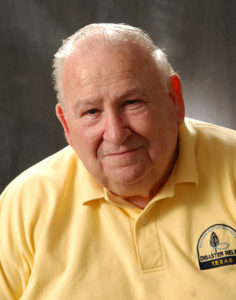
Robert E. “Bob” Dixon, who led Texas Baptist Men three decades and pioneered disaster relief ministry among Southern Baptists, died May 10. He was 90.

Bob Dixon

Dixon led the missions organization to blaze a trail for Baptists in disaster relief ministries after Hurricane Beulah hit the Texas Gulf Coast in 1967.

Under his leadership as executive director, TBM created a network of trained volunteers and developed a fleet of response vehicles that became a prototype for disaster relief ministry throughout the Southern Baptist Convention.

Responded to ‘invitations from the Father’

He also led the organization to respond to what he called “invitations from the Father” to minister globally, from disaster relief throughout Latin America to refugee relief among Kurds in Iran.

Those who served alongside him noted Dixon always recognized TBM’s vast array of ministries as assignments from God, not evidence of human achievement.

“I’m grateful the Father taught me early on that it’s his work and his kingdom. I’m just a recruiting director,” he often said.

‘A spiritual giant’

Dixon “would be the last person to tell you how much he shaped and influenced TBM,” TBM Executive Director Mickey Lenamon said.

“He was a spiritual giant and has literally touched millions of lives through TBM,” he said.

Lenamon counted Dixon as his spiritual mentor since the mid-1970s, when they traveled together to St. Cloud, Minn., to help start a church.

“Bob taught me to read the Book and talk with the Father on a daily basis,” Lenamon said. “Other than my parents, Bob Dixon has had the most influence on my life.”

He credits Dixon with teaching him an important leadership principle—to ask, “Who can do the job better than me?”

“He taught me to look for other’s spiritual gifts and empower them to serve,” Lenamon said.

Preparation for ministry

Dixon was born in eastern Tennessee and professed his faith in Christ at age 11.

He served in the Sixth Naval District during World War II. While in the armed forces, he played on a Navy baseball team, and he spent two years later as a catcher on the Washington Senators AA club.

Dixon next worked for the Tennessee Valley Authority, where he received disaster relief training from the U.S. Bureau of Mines—experience that later proved valuable in ministry.

When he felt God calling him into youth ministry, he and his wife Jean moved to Fort Worth, where he attended Southwestern Baptist Theological Seminary and served on staff at College Avenue Baptist Church.

He went on to serve in church recreation and youth ministry at churches in Mississippi and Tennessee before he was invited in 1966 to return to Texas to become state director for the Royal Ambassadors missions program for boys.

Three years later, he became TBM executive director, a post he held 29 years. After he retired from the staff position, he was elected TBM president.

‘A courageous visionary’

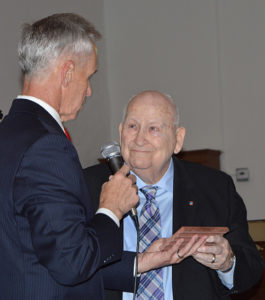
David Hardage (left), executive director of the Baptist General Convention of Texas, presented the Texas Baptist Legacy Award to Bob Dixon during a 2014 service at the historic Independence Baptist Church, near Brenham. (File Photo)

“Bob Dixon was a man of vision, who was able to see what others don’t,” said John LaNoue, who served alongside Dixon on the TBM staff.

Before he went to work for TBM, LaNoue designed and built the first Baptist disaster relief mobile unit, working closely with Dixon, who secured funding for the project and handled organizational details.

“Bob always had an amazing insight into what we would need next,” LaNoue said.

He marveled at Dixon’s capability to energize and mobilize men to respond when God presented an opportunity to serve, as well as Dixon’s spiritual sensitivity.

“He was a courageous visionary who had the ability to inspire others to do God’s work,” LaNoue said.

Man of prayer

Don Gibson, retired executive director of TBM, first joined the organization’s staff in 1982 as lay renewal director. He assumed the position before there was any budget for it, but Dixon gave him the job, trusting God would provide.

Dixon always gave God the glory for anything TBM accomplished, Gibson noted, and he made it his life’s work to fulfill the Apostle Paul’s admonition in Colossians 4:17 to “complete the work you have received in the Lord.”

Gibson characterized Dixon as a man of prayer who was open and obedient to God’s leadership.

“Bob helped me, encouraged me, taught me, and I know he prayed for me and the others on our staff,” he said. “He prayed over all the assignments he believed God gave TBM to fulfill.”

‘Down-to-earth servant leader’

Bill Pinson, executive director emeritus of the Baptist General Convention of Texas, likewise marveled at Dixon’s prayer life.

“When you heard him talk with the Father in prayer, it was listening to an intimate conversation of a person with Someone he loved with all his life,” he said.

Pinson called Dixon “one of the greatest, and yet humblest, persons I have known—a truly godly man.”

“Yet when I think of him, I do not think of a halo but of the warm smile of a terrifically practical, down-to-earth servant leader,” he said.

“Constantly searching for God’s leadership, he became an amazingly creative leader, constantly charting new directions for Texas Baptist Men. As a result, TBM became one of the most effective ministry organizations in the world, and Dixon always gave God the credit. …

“Heaven’s population is greater and earth is better because of the life and ministry of Bob Dixon.”

A memorial service is scheduled at 2 p.m. May 19 at the TBM Robert E. Dixon Missions Equipping Center in east Dallas. Dixon requested that volunteers who serve with TBM wear their ministry uniform to the service. In lieu of flowers, the family requested memorial gifts to TBM, 5351 Catron Dr., Dallas, TX 75227 or click here to make an online donation.


Retreat offers biblical stewardship education

HOUSTON—Texas Baptists offered pastors and other church leaders reminders about biblical stewardship, including education in personal and church budgeting, at a one-day Giving Your Money Purpose retreat at Houston Baptist University.

The event, one in a series sponsored by the Baptist General Convention of Texas Center for Ministerial Excellence, was designed to encourage ministers and provide strategies to allay the financial pressures pastors and their families often experience.

The initiative is made possible by the Lilly Endowment, which aims to improve the financial literacy and management skills of pastoral leaders, as well as help develop and strengthen each pastor’s ability to provide fiscal leadership and bolster church members’ knowledge of scriptural giving principles.

Provide for the shepherds

Many pastors lack adequate pay, not to mention benefits like insurance and retirement plans, said Tammy Tijerina, director of the Center for Ministerial Excellence.

“We’re trying to remind people to not neglect pastors and their families. We want them to be financially supported,” she said. “It’s God’s plan that the pastors—shepherds—are provided for. Pastors across the nation are facing economic challenges. We are saying: ‘We hear you. Let’s work together so that Baptist churches are there in the future.’”

Ward Hayes, senior pastor of Valley Grove Baptist Church in Stephenville, who presented workshops at the retreat with Larry Post, a certified public accountant and deacon at Sugar Land Baptist Church, emphasized the significance of talking about financial issues in the church.

“It’s not just about managing funds, but about giving them purpose and making them a strength,” Hayes said.

Presented from a biblical basis

Workshop topics included tithing, savings, Sabbath rest, budgeting, and formulating individual and church resources plans.

“There is disparate financial information out there,” Post said. “We are presenting it from a biblical perspective. There is a biblical basis, and God has a plan.”

That biblical emphasis prompted Joe Theus, pastor of Canaan Missionary First Baptist Church in San Antonio, to make the trip to Houston.

“We came to refocus and get back to the basic principles of church stewardship and discipleship. We want to align ourselves biblically,” he said. “For me, it’s confirmation that we’re going in the right direction.”

‘Help the pastor … help the church’

Theus emphasized his congregation will benefit from his involvement.

“If you help the pastor, you’re going to help the church,” he said.

Graceland Community Church Pastor Rivers Glover likewise said his Missouri City congregation will benefit from the material presented at the retreat.

“It’s something that our church needs retraining on—the things that God has made us accountable for,” he said. “I think the main thing I’ve gotten out of it is wherever you are, be all there. Give God all.”

Additional Giving Your Money Purpose retreats are scheduled May 19 in Plainview, June 2 in San Antonio and Sept. 8 in El Paso. For more information, click here.