Student-led discipleship impacts Tarleton University

The Paradigm college ministry at First Baptist Church in Stephenville has seen tremendous growth this year. A story featuring pastoral staff perspectives on the ministry can be read here. How do Tarleton students describe the impact of the ministry?

Ella Murray is a senior at Tarleton, set to graduate in December with a degree to teach special education. She has served as a challenge group leader—small discipleship groups for college students that take place around the Tarleton campus and Stephenville—for a couple of years, and she works in the children’s ministry at First Stephenville.

Murray grew up in Stonegate Church in Midland and attended a private Christian high school. However, she didn’t always feel like she understood all that Christianity was or could be before she went to college and a friend invited her to a Paradigm service.

The ministry has helped her to grow in her faith and specifically has helped her understand how to study the Bible effectively, she said.

Ella Murray leads a Challenge group through First Baptist Stephenville’s Paradigm college ministry. (Courtesy Photo)

Murray’s first visit to the Paradigm worship service showed her what worship can be like when everyone who is there is intentional about worship, serious about knowing Jesus and really wants to be there.

She was anxious to become more involved with a ministry like that, she explained.

Becoming involved with Paradigm and First Baptist Stephenville changed her life, Murray asserted.

“I don’t think my life would look the way it does now,” she said, if she hadn’t “gotten plugged in” to Paradigm and First Baptist Stephenville.

She expected to go to college “and party and have all this freedom,” but she’s grateful for God’s compassion in showing her a different path, she said.

Murray believes finding her place in Paradigm hasn’t just changed her time in college, but the overall trajectory of her life.

Murray expects to make disability inclusion in the life of the church a big part of her future. She sees it as a “certain call” now that she “didn’t have before this.”

Catalyst for growth

 She also noted she’s learned to be more intentional about seeing opportunities to share her faith with the people she meets. She doesn’t miss a chance to tell someone she bumps into about Jesus.

The “immense growth” the ministry has seen this year has been notable, she said.

She’s thought about what might have been the catalyst for the extreme growth, and she believes Drake Wayland stepping into the college minster role at First Baptist Stephenville after a period of time without a dedicated college leader has been a key element, she said.

He had vision to focus on sharing Christ with others and “he’s passing that on to us.” She noted, “you can tell it’s not coming from a place of pride,” but a sense of assurance that “God is going to do this through the ministry.”

“It’s just been so cool and exciting,” to see the vision spread and the ministry grow, she noted. “I’ve just never seen anything like it.”

God is moving

Luke Torbert, far right, poses with three other Paradigm ministry mission trip participants. (Courtesy Photo)

Luke Torbert is a sophomore who also has been serving as a challenge group leader this year. He grew up in a Baptist church in Crawford, but he said college is where he began to get more serious about his faith.

He remembers asking God to give him a purpose in college, and “for the rest of my life.” He sees leading a challenge group for freshmen this year as “that purpose being fulfilled.”

“God has just been moving on the campus,” he said. The Paradigm worship service has grown so much it’s had to move out of the Paradigm building where it had been housed and into the worship center at First Baptist Stephenville to accommodate all the students, Torbert noted.

And he personally had several opportunities to have gospel conversations with students this year. He said even people who have no church background at all are demonstrating an openness to Jesus and a “willingness to go all in.”

Torbert said it’s been neat to see the relationship between the older people in the church and Paradigm.

Some adults from the congregation come to Bible study in the Paradigm building with the college students on Sunday mornings. He said he’s never seen that before and he appreciates the wisdom they bring.

The Paradigm ministry at First Baptist Stephenville has made a huge difference in his life, Torbert said. He learned how to lead his brother to Christ, something he noted he didn’t think he ever would have done without the training he received from Paradigm.

He’s also learned how to build discipleship relationships with new believers and “help them in their new walk,” Torbert explained. The new believers’ faith and Torbert’s faith continue to grow through those connections.

Redefining the college experience for a campus

First Baptist Stephenville has become “the place to be on a Sunday morning,” so he has plenty of opportunities to keep building relationships with other dedicated disciples of Jesus.

“I think Paradigm has redefined the college experience,” Torbert said.

People think college is “getting drunk and doing all the drugs and doing all the things,” but Paradigm, “for Tarleton, is turning that culture around.”

“It’s noticeable,” Torbert asserted. Spiritual conversations can be heard all around the campus. Students are wearingshirts with Christian messages. Students are reading the Bible.

“We’re just flipping that culture of, you know, doing all the things that are supposed to be fun” and life-giving and trading them for “what does God say about life?”

And both students are grateful they got to be a part of that at Tarleton this year.


Stephenville college ministry sees major growth

This past school year, the college ministry of First Baptist Church in Stephenville has hosted 400 to 700 Tarleton State University students each Thursday for its Paradigm worship service.

The ministry also has seen more than 136 students make professions of faith.

Students and staff involved in Paradigm college ministry are thrilled to see so many students get serious about faith, said Ken May, senior pastor, and Drake Wayland, minister to college.

Paradigm has been part of First Baptist Stephenville since 2006, when the late Jon Randles who originated the model, helped start a Paradigm ministry at the church. Randles launched Paradigm at Texas Tech in Lubbock and worked in evangelism for the Baptist General Convention of Texas.

Randles discipled a minister at First Baptist Stephenville, who discipled another minister and so on, down to the present college minister, Wayland, May explained.

“It’s just been an incredible pipeline of leadership,” he said. The ministry long has experienced year-over-year growth, but this year has seen “more growth than ever,” he noted.

Wayland said the jump in growth began with the fall 2024 semester.

How Challenge groups work

Twenty-six challenge groups—smaller-group discipleship cohorts—have been meeting weekly on Tuesdays and Wednesdays around Stephenville this year, discipling more than 300 Tarleton students.

Some of the student-led challenge groups are comprised of freshmen. These groups meet on the Tarleton campus and minister to more than 100 faithful, first-year students.

Upperclassmen challenge groups often are held in host homes of church members. Group leaders are selected from Tarleton students who are members of First Stephenville and who were faithfully committed to a challenge group the preceding year.

Leading a challenge group is a yearlong (school year) commitment, and the leaders must apply and pass several weeks of interviews and vetting.

Leaders of the next year’s groups are selected before summer break, May and Wayland explained.

In addition to challenge group leaders, service groups also are formed to help setup for events, help with security or other more task-oriented service.

All the leaders and staff help move students into dorms in the fall and invite new students to attend Paradigm worship and join a challenge group.

Challenge group leaders who show exceptional leadership may move into a leader-to-leader position. These students are responsible for helping Wayland and his college ministry associate disciple and train the challenge group leaders and help them prepare each week’s discussion.

Some students who have been involved in challenge groups since freshman year join the church staff in their senior year as ministers-in-training—interns with a stipend.

“And then we’ve had probably a dozen of them head on to seminary or to some ministry,” May noted.

He explained the congregation has established a relationship with a church in Fort Worth to help it begin a Paradigm ministry for students at Texas Christian University and other college campuses in Fort Worth.

Wayland said he and his staff and Tarleton BSM director Megan Trotter and her staff have been praying together all year on Thursdays, since Trotter reached out about establishing a cooperative prayer time.

Wayland said they pray for each other and for the Tarleton “campus to be reached for Jesus.” But, he noted, while the BSM is campus-based, Paradigm is church-based “to connect every college student to a local church, so they don’t just have faith in college, but they can be trained up and have faith for a lifetime.”

What makes Paradigm unique

“We don’t want to just put on a worship service,” Wayland said, which he noted is different from a lot of growing college ministries garnering attention recently that are strictly campus-based.

Paradigm Worship hosted 400-700 Tarleton students on Thursdays for worship this year. (Courtesy Photo)

They “do the worship service,” at First Baptist Stephenville, Wayland pointed out, but the student-led discipleship groups that intentionally drive students to the local church and intend to “train-up” the students into mature, life-long disciples, set the ministry apart.

“Because not only do we have the ministry and the funding and all that stuff to support the students, but we have the people to support them as well—the church—that will do everything they can to lift up these students,” Wayland said.

He pointed out the congregation’s investment in college students affects not just the campus but the community because of how big a part of Stephenville the university is.

The posture the congregation has taken of being “deeply committed” disciples who make disciples has helped to reduce frustrations in the greater community about the changes that come with Tarleton’s growth, Wayland noted.

Quite a few of the college students involved in Paradigm also are serving in children’s ministry, youth ministry or on the worship team at the church, May noted, “so it’s been neat to see the college kids really integrate into the church and not just attend Paradigm or hang out with just college students.”

Wayland and May agreed that real life is “intergenerational or multigenerational,” and appreciate the way the Paradigm model is a move away from the “affinity groups” that often have characterized church plants in recent years, back toward a multigenerational church setting.

Tarleton is expecting an enrollment of 20,000 next year, May said the university president had informed him. And Stephenville also is growing. Some students are choosing to remain in town at First Baptist Stephenville after they graduate.

But the ministry also has seen many of its alumni go out from Stephenville to build “co-missions” in partnership with churches near colleges lacking a strong Christian presence or a Baptist, Bible-based college ministry on campus, May and Wayland explained.

These “co-missions” are a network of Paradigm-like ministries who work with established churches, or sometimes church plants, but they are not part of First Baptist Stephenville.

They are new ministries established by leaders, “about a dozen guys,” May said, who were discipled and provided discipleship to others through First Baptist Stephenville’s Paradigm ministry. The co-missions are in Texas and in other parts of the country, including Bowling Green, Ky., and Washington, D.C.

“It’s just churches starting churches,” he noted, “which is what Baptists have always done,” May said, and with First Stephenville serving in the role of “sending church,” Wayland clarified.

A full-circle answer to prayer

Wayland noted when the Paradigm ministry was established in 2006, its founders prayed for it to flourish and grow. The incoming freshman last year were born in 2006, so he sees the growth this year as a “full-circle moment,” and as an answer to the 2006 prayers.

The vision for the year was to see 1,000 gospel conversations and see 100 students saved, May and Wayland said. The ministry has recorded more than 800 gospel conversations this year, resulting in 136 decisions for Christ.

Wayland said, “It’s been incredible to watch.” He explained how Paradigm and First Stephenville had been transformative in his own life when he was a student at Tarleton.

He felt called into ministry through all of this, he said, and he “didn’t want a single student” to walk across the campus of Tarleton and “not know who Jesus is and how they need to follow him for a lifetime.”


Dallas soccer outreach scores goal of sharing the gospel

The Dallas Cup Hospitality Center in mid-April received more than 2,000 visits from youth soccer players and coaches from around the world.

It also presented the opportunity for those athletes and their families to see Christians working together for a common goal as volunteers from local churches provided meals and engaged in conversations through an outreach sponsored by the Dallas Baptist Association.

“The nations came to us, and I am proud that our denomination was ready to meet their physical and spiritual needs,” said volunteer Joy Mooneyham of Rockwall. “It was a blessing to be a small part of that.

“My favorite part of this event was getting to be the hands and feet of Jesus. Serving with this team was like getting to take an international mission trip without ever leaving DFW.”

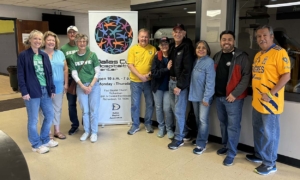
Several Dallas-area Baptist churches covered shifts and provided volunteers to be onsite throughout the week at the Dallas Cup Hospitality Center in mid-April. As a result, 375 decisions were made decisions to follow Christ, and 500 Bibles were given out. (Courtesy Photo)

Several local churches covered shifts and provided volunteers to be onsite throughout the week at the hospitality center, including First Baptist Church in Richardson, First Baptist Church in Rockwall, Hillcrest in Español in Cedar Hill and North Irving Baptist Church.

“We typically have about 75 church volunteers that are utilized throughout the week, just serving at the center,” said Chelsi Hoard, who serves the director of strategy for the Dallas Baptist Association.

“We have eight different shifts, and different churches will take the lead on each shift. We also have a countless number of volunteers at local churches that help prepare meals, donate Bibles, give and specifically pray for this event.”

‘Volunteers represented Christ well’

The outreach event could not have happened without local church volunteers,” she said.

“Volunteers prepare and serve meals, greet teams, set up chairs, clean tables, take out trash, sweep, mop, mix Gatorade and lemonade, refill ice chests, pick up and sort the many Uno cards, checkers, pickleballs and Connect Four pieces that are used, make coffee for the coaches, help with chapel services, go on grocery runs and wash dishes,” Hoard said.

“Most importantly, our volunteers represent Christ well. They create a welcoming environment and connect with the teams that walk through the doors of the center.”

As a result, 375 decisions were made to follow Christ, and 500 Bibles were given out.

“From watching friendships form amongst athletes from different countries over a game of Giant Jenga, teams running to greet familiar volunteers, to someone excitedly looking through a new Bible, there are so many great moments that happen at the hospitality center,” Hoard said.

“One of my favorite things is watching churches come together to tangibly demonstrate the love of Christ to people from so many nations and then seeing these teams experience that love, some for the very first time.

“All throughout the week we hear comments about how the churches are so welcoming, kind, generous and loving. It is so great to watch people from so many nations experience God’s love in this way.”

Seeing God at work

Hoard noted one of the most exciting things during the soccer outreach was seeing how God was at work throughout the week and continuing to make connections with athletes they met last year.

“All throughout the week, we have the privilege of seeing God move, as people make faith decisions, pray together, attend chapel with our chaplain, develop cross-cultural friendships, receive and read Bibles,” Hoard said.

A few returning athletes who had received a copy of the Scriptures from volunteers the previous year returned to say they read the entire Bible, she added.

“We also get to see glimpses of God’s goodness and provision as we start to run out of a specific item during a shift and then see that the previous shift had left just enough extra behind,” she noted.

On some occasions, a volunteer who had been to a specific country was serving “right when a specific country’s team comes through and they are able to talk and connect,” Hoard said.

Other times, the volunteers had “the exact number of chicken sandwiches left for a group that came in at the last minute,” she noted.

“In big and seemingly small ways, God continues to bless.”

Volunteers greatly enjoyed participating in the outreach and look forward to future opportunities to serve at events like this one.

“The gospel was clearly presented to all who would hear, and we were able to show the love of Christ to each person who came through the line,” Mooneyham said.

“We were able to do the hands-on work and provide hospitality and smiles so that others could effectively and boldly present the gospel in the heart language of the players.”


Senate approves bill to move lottery administration

The Texas Senate unanimously approved a bill to abolish the Texas Lottery Commission and move administration of the state lottery to a different state agency.

The Senate voted 31-0 in favor of SB 3070. The bill would dissolve the Texas Lottery Commission and transfer oversight of the lottery—as well as charitable bingo—to the Texas Department of Licensing and Regulation. It also establishes a lottery advisory committee.

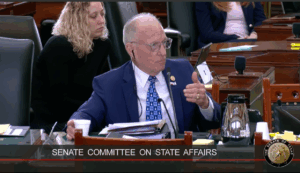
In presenting his bill to abolish the Texas Lottery to the Senate Committee on State Affairs, Sen. Bob Hall laid out a detailed recounting of how the Texas Lottery Commission in recent years failed to abide by state laws. (Screen capture image)

Sen. Bob Hall, R-Edgewood, author of SB 3070, previously had introduced legislation to do away with the state lottery altogether. In presenting SB 3070 in a Senate Committee on State Affairs hearing on May 13, Hall called the current bill “the next best thing.”

The measure places limits on the number of lottery tickets a retailer may sell to one individual in a single transaction and limits the number of lottery terminals any given licensed retailer can have.

It also encompasses provisions of SB 28, a bill Hall introduced early in the legislative session. That bill bans lottery couriers—third-party vendors who enable buyers to purchase lottery tickets through their websites or mobile apps. The Senate unanimously passed SB 28 in February.

Bill moves to Texas House

The measure to abolish the Texas Lottery Commission and move its regulation now moves to the Texas House of Representatives, where it must pass out of committee by May 23 for the House to vote on the bill before the end of the legislative session.

FILE – A Texas Lottery sales terminal shows the jackpot amounts up to win at Fuel City in Dallas, Wednesday, Feb. 26, 2025. (AP Photo/LM Otero, File)

The House already had eliminated funding for the Texas Lottery Commission in the budget it approved for the next two years.

The bill mandates a limited-scope Sunset Advisory Commission review of the state lottery during the next fiscal biennium. Unless the lottery is continued at that time, it will be abolished.

If the lottery operates under the administration of the Texas Department of Licensing and Regulation, it will “be under a bright light for the next two years,” said Rob Kohler, consultant with Texas Baptists Christian Life Commission.

The Texas Lottery Commission currently is the subject of several investigations and lawsuits.

In February, Gov. Greg Abbott ordered the Texas Rangers to investigate both an April 2023 bulk purchase of lottery tickets that enabled a group to claim a $95 million jackpot, as well as a more-recent $83.5 million win involving lottery couriers.

Attorney General Ken Paxton also announced his office was launching its own investigation into the Texas Lottery to determine whether any state or federal laws were broken.


HSU therapy program unlocks Parkinson voices

Hardin-Simmons University’s speech-language pathology program will adopt a new therapy program in the fall to support individuals living with Parkinson’s and related neurological disorders.

After completing the necessary training to become a certified Speak Out Therapy Program provider through the Parkinson Voice Project,  HSU will launch the Speak Out Therapy Program—expanding services, empowering students and filling a vital gap in West Texas.

“Our goal is just to help individuals with Parkinson’s have all the tools they need to maintain their speech over the course of their disease,” said Christine Sanchez, instructor of speech language pathology and assistant graduate program director for Hardin-Simmons University.

The program began at HSU with a conversation between the university’s physical therapy and speech-language pathology departments.

Jill Jumper, program director and associate professor for the Department of Physical Therapy, recognized a need for speech services among the Parkinson’s community and approached Sanchez about a potential partnership.

“I looked into getting Speak Out certified and saw that they had a clinical grant that universities could apply for. I waited until that grant opened in January, applied and got it,” Sanchez explained.

The grant allowed two HSU faculty members to be certified in the program and gives students free access to professional-level training—opening new clinical opportunities for both students and patients.

What sets Speak Out apart

Unlike general speech therapy models, the new program specifically is designed for individuals with Parkinson’s disease.

Built around the concept of “speaking with intent,” the therapy focuses on helping patients strengthen their voices through purposeful effort.

“It’s very structured and very targeted for people with Parkinson’s disease,” Sanchez noted. “There’s a lot of research on it, which is nice because there are a lot of techniques that we can use and apply to many different people.”

Compared to other programs, the Speak Out program is shorter in duration yet delivers similar outcomes, making it more accessible for patients.

“The thing about Parkinson’s is these people are going to have to exercise for the rest of their lives. If they stop the exercise process, they will return to baseline,” Sanchez said.

“Speak Out creates a motivating community that helps patients continue to work on their speech so they don’t lapse back.”

Building a community of support

Although weekly group sessions are not set to launch until fall, the therapy model begins with six weeks of one-on-one sessions, followed by a weekly maintenance group.

These ongoing group meetings offer encouragement and accountability, helping patients stay consistent with their vocal exercises and sustain long-term progress.

“It’s not just about therapy. It’s about giving people a space where they can keep working on their speech and feel supported,” Sanchez shared.

HSU’s collaboration between speech and physical therapy services also creates a coordinated care model, offering a one-stop location for multiple types of rehabilitation.

“We have a gentleman who was going to the PT program, and he complained about his speech. So now, he comes to speech therapy and then goes straight to exercise,” Sanchez said.

“It’s nice that it works out for his schedule and that our services are treating the whole person, not just part of the problem.”

Sanchez noted that speech-language pathology, at a basic level, is focused on restoring relationships through communication.

“Relationships with God and neighbor are what this life is all about,” she observed.

So, at HSU, the therapy also incorporates faith. Therapy providers utilize Scripture as stimuli.

“At Easter, one of my graduate student clinicians was working with a gentleman with Parkinson’s disease on improving his speech and voice,” Sanchez said.

“She used the final words of Jesus as stimuli for him to practice speaking with intent. This allowed him to engage with the session in a more meaningful way.”

Sanchez said she’s thankful for HSU, where “our students have the opportunity to provide spiritual support to the clients we serve in our university clinic.

“In our aphasia support group,” she noted, “students pray with clients, sing hymns with them, and work to promote the dignity of each person as a child of God.”

Taking this approach allows clients with communication barriers to “feel seen, known, and loved in our clinic.”

A growing impact

The new speech therapy program expands HSU’s clinic, which launched an aphasia support group for stroke survivors and their care partners in 2022. With Parkinson’s services added, the clinic is reaching a broader population.

“Parkinson’s is the second most common neurodegenerative disease, and there are a lot of people in the Abilene region who aren’t being served,” Sanchez explained.

Along with helping the broader region gain access to therapy services, HSU’s Speak Out program is transforming education.

Graduate students now can receive training that mirrors professional certification, preparing them to enter the workforce with specialized clinical skills.

“You can’t be officially certified as a student, but you can go through the exact same training as a certified SLP [speech language pathologist],” Sanchez explained.

“When they graduate, they’ll have that experience, and it will make them more marketable.”

How to get involved

Individuals diagnosed with Parkinson’s or related disorders are encouraged to reach out for therapy services. Enrollment will be handled through direct faculty contact to ensure each participant is matched appropriately with services.

“This is about making sure people can live their fullest lives,” Sanchez said. “It’s about keeping people connected to their families, to their communities, and to their voice.” 

With additional reporting by Calli Keener. The second paragraph was revised after the article originally was posted.


Senate bill introduced to move lottery administration

The Texas lawmaker who authored a bill to abolish the Texas Lottery filed alternative legislation May 13 that would dissolve the Texas Lottery Commission and move regulation of the lottery to another state agency.

 “If there isn’t enough of an appetite to get rid of the lottery outright, then this bill represents the next best thing,” Sen. Bob Hall, R-Edgewood, said as he presented SB 3070 in a Senate Committee on State Affairs hearing, where the bill was left pending.

Hall briefly reiterated ways key leaders of the Texas Lottery Commission failed to abide by state laws.

“You already understand the Lottery Commission’s long list of wrongful and illegal acts,” Hall told members of Senate Committee on State Affairs.

“The Lottery Commission changed its administrative rules to help criminals rig the lottery. Most of these changes were made in direct contradiction to existing law.”

Give TDLR authority to oversee the lottery

The Texas Lottery Commission needs to be abolished, Hall insisted.

His new bill, SB 3070, would dissolve the Texas Lottery Commission and transfer the administration of the lottery—as well as licensing and regulation of charitable bingo—to the Texas Department of Licensing and Regulation.

The bill mandates a limited-scope Sunset Advisory Commission review of the state lottery during the next fiscal biennium, ending Aug. 21, 2027. Unless the lottery is continued at that time, it will be abolished Sept. 1, 2027.

SB 3070 places limits on the number of lottery tickets a retailer may sell to one individual in a single transaction and prohibits the purchase of lottery tickets by phone or through the internet. It also establishes a lottery advisory committee and limits the number of ticket-printing lottery terminals any given licensed retailer can have.

The bill also encompasses provisions in SB 28, a bill Hall introduced early in the legislative session, which bans lottery couriers—third-party vendors who enable buyers to purchase lottery tickets through their websites or mobile apps. The Senate unanimously passed SB 28—a priority bill of Lt. Gov. Dan Patrick—in February.

SB 3070 also establishes a department of security within Texas’ Financial Crimes and Intelligence Center to identify and respond to criminal activities associated with the lottery and charitable bingo.

Further reforms to be introduced

As he laid out SB 3070, Hall mentioned several amendments that will be introduced once the bill reaches the Senate floor.

They would increase criminal penalties for illegal ticket sales; restrict where tickets can be purchased; require individuals—not businesses or limited liability corporations—to cash in winning tickets; and deputize the governor, lieutenant governor, attorney general and speaker of the House of Representatives as authorized inspectors for the lottery.

Rob Kohler, consultant with Texas Baptists’ Christian Life Commission, testified in support of SB 3070.

In a phone interview, Kohler identified SB 3070 as “another option” lawmakers have in this session to prevent the kind of abuses that have occurred under the Texas Lottery Commission in recent years.

“The fact that SB 3070 was introduced and scheduled for hearing the same day indicates there is momentum behind it,” he observed.

If the lottery does continue to operate under the administration of the Texas Department of Licensing and Regulation, it will “be under a bright light for the next two years,” Kohler said.

“Legislators are taking seriously a lot of the concerns that have been raised by the CLC for years,” he said.


God sustains in times of drought, Truett student proclaims

Jessalyn Brown, recipient of the 2025 Robert Jackson Robinson Outstanding Student Preacher award, preached the final chapel sermon of the semester at Baylor University’s Truett Theological Seminary on May 6.

Taking as her text 1 Kings 17:8-16, the story of Elijah and the widow of Sidon, Brown assured chapel participants God will provide in times of spiritual drought.

Brown read the text, which recounts Elijah’s trip to Sidon during a time of drought, where God said he would find a widow who would provide him with water and food.

In the text, the widow tells Elijah she has only enough oil and meal to feed her son and herself one last meal before they die. But God allows the meal and the oil to last, sustaining all three of them until rain finally comes, “according to the word of the Lord that he spoke by Elijah.”

Brown noted since she came from Kentucky, a far less arid state, she was unfamiliar with the practice of praying for rain until she arrived at Truett.

Understanding drought

But after one summer in Texas, she said she understood why it is a practice. And she also gained a greater understanding of the biblical setting where drought was a constant threat.

“It makes sense,” she noted. And as regions can be arid, souls also experience drought at times.

“Just as certain environments have their dry seasons,” Brown said, “there are also dry seasons within our lives. Seasons where we feel empty,” exhausted or when “joy feels distant.”

There are seasons “when we pray not for physical rain, but for spiritual rain.”

In those times, Brown noted, “We wonder, ‘Will I be nourished as I await the rain?”

The widow of Zarephath likely had the same question, as she ran out of meal and oil, Brown observed. “Like us, she knew what discouragement felt like. … She understood the harsh impacts of drought.”

“But drought was not the whole of her story.” The widow experienced nourishment as she waited for the rain.

“This chapter of her life offers us encouragement and clarity, even for our souls’ most severe droughts,” Brown said.

The widow was “commissioned by God to provide hospitality” and share sustenance with Elijah, a commission Brown said “should be familiar to us.”

Elijah got right to the point of what he needed.

“He was thirsty,” Brown noted. That was a request the widow could handle. “That request was doable.”

However, she knew she could not help with his request for food. She could not even continue to provide for her own household. She had only enough to prepare their own “last meal” before they died.

“She was sure that the contents of her jar and jug were insufficient,” Brown said. “Not even enough for her and her son to carry on.”

Brown wondered how many in the room had dealt with “feelings of insufficiency.”

“Many of us come to work and school and ministry tasks saying: ‘I only have a handful of skills and a little bit of talent. I only have a handful of funds and little bit of support, … a handful of strength and a little bit of courage.’

In God’s hands, our little is enough

“In our hands, our handful is never enough,” Brown noted. “But in the hands of God, our little bit is sufficient.”

Elijah assured the widow God’s word had said the jar and jug would not fail, and when she moved beyond her doubts, the widow learned “God supplies an abundance.”

Brown noted this abundance is like the leftover loaves and fishes in the Gospels, when Jesus told the disciples to use five loaves and two fish to feed a multitude.

Like the widow’s portion increased, so did the disciples,’ she asserted. And “like Elijah was fed,” so was the crowd.

“In the hands of God, our less turns into more. What we think is insufficient, God sees as enough,” Brown said.

She encouraged chapel participants to look beyond “what you seem to lack.”

The widow could give Elijah what he needed because God was “the one making provisions.”

Christians can take inventory of what is lacking in their lives and “spiral in feelings of insufficiency and inadequacy,” having lost sight of God’s power to see us through.

But, “let us not forget who first called us,” Brown urged.

“God has commissioned us,” and that commissioning is backed by God’s faithfulness. He will provide the increase.

“All we are called to do is walk with obedience. While you await the rain,” Brown said, “you will be nourished through God’s provision.”

Elijah had a history of God providing for him even before he arrived at the widow’s house in Sidon. With faith, he followed God’s commands to go to Sidon, when the wadi he’d been drinking from in 1 Kings 17:1-7 dried up. He knew he could trust God to continue to provide.

And the woman was prepared for her and her son to die before Elijah showed up and hope walked in.

“She was looking towards death, while Elijah came expecting more life.” Elijah’s faith had an impact on the widow, Brown noted. Her response to Elijah’s requests shows “that Elijah’s faith brought an attitude of possibility to a space that had the lowest of expectations.”

Brown noted the love and worship of God expressed by “saints who have been kept by God is contagious.” The joy of people of great faith spreads to everyone they encounter, she observed, so in times of drought, “allow God to sustain you through the resilient faith of others.”

Elijah and the Sidonian woman were “witnesses to the goodness of God,” and “the lasting elements of the jug and jar serve as tangible evidence that God’s promises are kept.”

God promised the meal and oil would not run out and he promised future rain. They didn’t know how long the drought would last, but “rain was on its way. The drought wouldn’t last forever.”

The promise of life

Drought is a constant threat in the Bible, Brown observed, citing Walter Bruggeman. But with the threat of drought, there is also “always the promise of life” seen most clearly in Jesus coming to provide “living water … gushing up into eternal life” and to be the bread of life.

If “we are not certain about anything else, let us be certain that God feeds and strengthens God’s people,” she urged.

“As you await the rain, you will be sustained by God’s promise.” God will nourish and sustain in dry seasons. Brown assured, “God has not forgotten about you.”

Let the truth revealed to the widow “be the same truth revealed to you,” she said.

“You have enough to carry on. … And you have enough to carry on because God is enough.”

God is a god who keeps jugs and jars “full through provision, testimony and promise.”

So “hold onto this,” Brown urged, “as the Lord your God lives, you will be nourished, even as you hold out for rain.”

The full chapel service can be viewed here.


New volunteer makes an impact with Texans on Mission

Javier Jacobo is new to Texans on Mission disaster relief. Now, six people living in the Rio Grande Valley are new followers of Christ thanks to Jacobo’s efforts after spring flooding.

The Midlothian resident and home inspector trained in Weatherford one weekend, then headed to the Valley early the next week where he was assigned to the Waco box unit.

When Jacobo first heard about box ministry during orientation, he said, “I was like, who the heck needs empty boxes in the middle of a disaster.” He learned boxes become highly valuable when a person’s life has been disrupted.

“I think people who haven’t been involved in disasters don’t realize how much of a ministry that is,” he said regarding box units.

As Jacobo went with the team to houses in the Valley, he learned virtually everyone needed boxes.

The team brought them boxes. And they brought them more—their faith. And Jacobo became amazed at how open people were to following Christ.

They delivered boxes to between 40 and 50 people and had six people profess faith in Christ. Four came to faith in Christ after conversing with Jacobo in Spanish and two in English.

Jacobo is a member of First Baptist Church in Dallas and teaches English as a Second Language classes.

His ability to speak Spanish was “a big part” of why Jim Lawton, incident commander, asked Jacobo to be part of the Valley response.

Lawton and Jacobo have known each other for years but had lost touch. Then, earlier this year, they reconnected at a funeral for “one of the pillars” of their former church, First Church of God in the Oak Cliff neighborhood of Dallas.

Jacobo asked Lawton what he was doing, “and I told him I volunteered for Texas Baptist Men,” which is the historic name of Texans on Mission.

“He said, ‘Oh, I’d like to get involved in that.’ And I said, ‘If you’re serious, I can help you do it.’”

Lawton connected Jacobo with the March 28-29 “yellow cap” training in Weatherford, and the young man traveled the 60 miles to be trained.

After the training, Lawton said he knew Javier was “young and strong and speaks Spanish,” and Lawton realized he would be a “real asset” in the Valley.

‘Divine appointments’

On the deployment to the Valley, Jacobo said he found in the aftermath of the flood an “openness of the people down there to receive Christ. I was just surprised about that,” he said.

“I think it’s a spiritual thing happening where people are more open to spiritual conversations. They’re more in touch with their mortality, I think.”

Conversations came easily, he said. Jacobo makes a habit of talking with people about faith, but he doesn’t have a set approach. He just takes people where they are, listens and talks.

Referring to his Valley experience, one phrase surfaced regularly—“divine appointment.”

For instance, “the first person we ministered to received Christ,” he said. And Jacobo said God orchestrated the encounter.

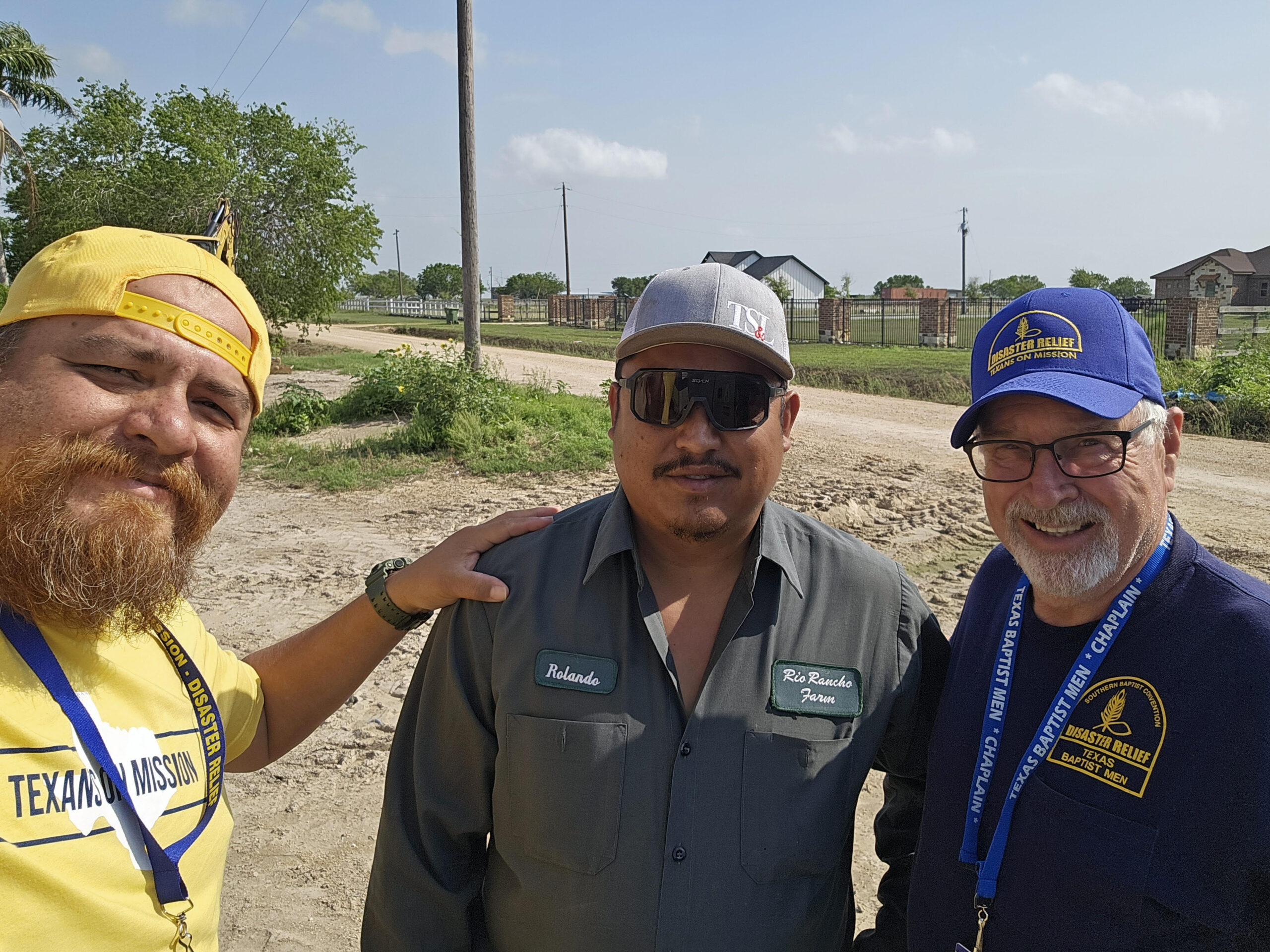
Volunteers Javier Jacobo (left) and Johnny Thompson (right) pose with a Rio Grande Valley resident who was impacted by recent flooding. (Texans on Mission Photo)

On the way to a specific house, the GPS map sent the box unit in the wrong direction. They had to “double back,” and “that’s where we met a guy named Tommy,” who was helping a friend, Jacobo recalled.

After talking for a while, Jacobo asked them a question he often asks: Have you ever received Christ in your heart?

Jacobo said he often gets a “yes” answer to that question because “everybody says yes to get me off their back.” But Tommy “just looked at me straight” and said “no.”

Then came a second question: Would you like to receive Christ today as your personal Savior right now?

“That’s the harder part for people to answer ‘yes’ to,” Jacobo said. “But then this guy just said: ‘Yeah, absolutely. I’ll accept Christ today.’

“And he’s just, you know, a big old dude, … blue-collar worker kind of guy. … He just gave his heart to Christ right there,” the Texans on Mission volunteer said. “Oh man, that was a neat experience.”

And it was especially so because the team would not have met Tommy if the GPS had not sent them in the wrong direction, he pointed out.

It started with delivering boxes

Jacobo saw God at work in all of his conversations, telling each story about how God brought about encounters that led to new faith. It all happened in the context of delivering boxes as part of a broader disaster relief effort.

“Texans on Mission volunteers love to physically help people, and they are always looking for the Lord to open the door to share the gospel,” said David Wells, Texans on Mission disaster relief director. “This is the whole purpose for being there, to bring help, hope and healing to a hurting world.

“If we can make an eternal difference in someone’s life, that is victory. By the end of this deployment, 22 people came to know the Lord, and I do not think he is done yet.”

On his first Texans on Mission Disaster Relief callout, Jacobo was taken with the “really great camaraderie” among the volunteers. “They were seeing the same faces (from past deployments). They were seeing the same friends.” And “everything was very well orchestrated.”

“It was pretty neat to have that,” he said about the efficiency of the effort. The experienced volunteers said, “Everybody knew what they were doing.”

And that was how Jacobo connected with the Waco box unit. Lawton connected the young man with Johnny Thompson because he’s a “real good guy” and “really excited about box ministry. … As you can tell, they did a great job.”


Telehealth certificate at HSU strengthens rural health care

As Hardin-Simmons University put together the new nursing school, the university saw an opportunity to address lack of access to medical care across rural West Texas by adding a telehealth certificate.

Access to timely, quality health care has become an urgent topic of discussion in the region—where geographic isolation, provider shortages and limited transportation continue to create barriers that leave many communities underserved.

National statistics underscore the seriousness of the issue. According to the U.S. Census Bureau, nearly 20 percent of Americans live in rural areas, where they face disproportionately higher health risks.

Data from the Centers for Disease Control and Prevention also shows unintentional injury death rates are about 50 percent higher in rural areas compared to urban settings—often due to motor vehicle accidents, falls and opioid overdoses.

But rooted in a Christ-centered mission and a deep commitment to health equity, faculty at Hardin-Simmons University viewed these realities not as limitations, but as opportunities to innovate.

In designing the new on-campus nursing curriculum, advising faculty devised a telehealth certificate to prepare students to deliver care to those who need it most, no matter the distance.

Technological shifts in nursing

Whether across town, across the state or through a screen, HSU Nursing is blending foundational clinical training with digital communication and virtual care skills.

These changes give future caregivers tools to have a meaningful edge in today’s health care workforce.

“Telehealth is no longer a niche offering—it’s a core competency,” said Katie Martin, instructor of nursing and simulation lab coordinator.

“Especially in areas like ours, where Abilene is seen as the medical hub for the 16-county labor shed. We want our students to graduate knowing how to serve those patients confidently and compassionately, no matter the setting.”

Rather than limiting telehealth training to one course, the HSU nursing faculty embedded it throughout the curriculum.

Students begin learning virtual care techniques early in their studies and continue refining those skills through simulations, clinical placements and real-world practice.

“From early on in the program, our students are introduced to telehealth concepts,” Martin explained. “They learn how to conduct virtual assessments, document care digitally, navigate patient privacy laws, and build rapport through a screen.

“These are essential, everyday skills now,” she noted.

Martin also highlighted the intentional integration of specialized modules into the program.

“Students don’t just get one certificate. They will graduate with multiple certificates earned through integrated online training modules in various areas of study, such as rural health, mental health, and chronic disease management,” she said.

“These online modules mirror what’s happening in the field and allow our students to graduate with multiple telehealth credentials that speak directly to what employers are looking for.”

Martin explained national nursing education standards are shifting toward digital fluency and remote care readiness. Hardin-Simmons’ new nursing program prepares students to meet the changing expectations.

“Employers are seeking nurses who are not only clinically competent but also tech-savvy,” Martin said.

“Clinical partners have expressed strong support for integrating telehealth training, emphasizing that it directly addresses gaps they’re seeing in current nursing applicants.”

HSU’s telehealth program has a sound curriculum, but also benefits from the university’s partnerships with local hospitals, clinics and rural healthcare providers.

These collaborations bring classroom training to life.

“Our strong partnerships with healthcare providers like Hendrick Health allow students to see how telehealth is used in both acute and community settings. These real-world connections help reinforce classroom learning with hands-on experience,” Martin explained.

Looking ahead, HSU remains committed to keeping its program on the cutting edge.

“From hospital follow-ups to rural urgent care, HSU is staying ahead by ensuring our curriculum evolves with the field, preparing students not just for today’s health care, but for tomorrow’s innovation,” Martin said.


Senate committee considers bill to abolish Texas Lottery

The Texas Senate Committee on State Affairs heard public testimony May 5 on a bill calling for the Texas Lottery to be abolished.

In presenting his bill to abolish the Texas Lottery to the Senate Committee on State Affairs, Sen. Bob Hall laid out a detailed recounting of how the Texas Lottery Commission in recent years failed to abide by state laws. (Screen capture image)

“There is no way to reorganize, restructure or restore the integrity of the government-run Texas Lottery,” said Sen. Bob Hall, R-Edgewood, who introduced SB 1988. Hall’s bill calls for the abolition of the Texas Lottery, effective Jan. 1, 2026.

In presenting his bill—which the Senate Committee on State Affairs left pending—Hall laid out a detailed recounting of how the Texas Lottery Commission in recent years failed to abide by state laws.

Without legislative approval, the commission changed rules to enable “a private/public syndicated crime partnership” to “engage in a criminal conspiracy to defraud Texans,” he asserted.

‘Serious breach of trust’

“I and those who know the details even as they continue to evolve are convinced that this organized crime scandal that has been operating behind the shield of being a Texas state government agency is probably the most serious breach of trust since the Sharpstown scandal in 1971 and 1972,” Hall told the committee.

The Sharpstown scandal Hall referred to was a stock-fraud scandal that resulted in charges being brought against nearly two dozen state officials and former officials.

Among other abuses, Hall described how the Texas Lottery Commission enabled out-of-state investors to purchase practically every combination of numbers to rig the lottery to win a $95 million jackpot.

“Multiple investigations into the lottery’s criminal operations are ongoing and evidence of multiple crimes against the people of Texas continue to be uncovered,” Hall said.

In response to a question about how much the lottery contributes to public education, Hall noted it funds three days of public-school operations in the calendar year, which he characterized as “chump change.”

Lottery is ‘the antithesis of Texas values’

Rob Kohler, consultant with Texas Baptists’ Christian Life Commission, testified in favor of SB 1988.

Rob Kohler, consultant with Texas Baptists’ Christian Life Commission, testified in favor of SB 1988, which would abolish the Texas Lottery. (Screen capture image)

When Texas approved the creation of a state lottery in the early 1990s, proponents presented it as a voluntary alternative to a regressive sales tax, Kohler noted.

The lottery “would make a sales tax blush in terms of regressivity,” he asserted.

Kohler presented data demonstrating the correlation between areas where incomes are low and purchases of “immediate gratification” scratch-off ticket sales are high.

“They’re selling $100 scratch-off tickets now in convenience stores. They’ve gone from the price of a Snickers bar at a dollar to the most expensive product in the store,” Kohler said.

John Litzler, public policy director for the Christian Life Commission, also testified in support of SB 1988.

Texas Baptist churches are “on the front lines” of helping people who suffer due to financial crises “caused at least in part by the Texas Lottery,” he noted.

He called the Texas Lottery “the antithesis of Texas values” and said the time has come for the Texas Lottery Commission to be abolished.

“We support legislation that promotes both fair and just financial practices and legislation that promotes human flourishing in Texas,” Litzler said. “We believe this bill does both of those things and that the Texas Lottery games don’t do either of those things.”


Lowrie named dean of HPU School of Christian Studies

BROWNWOOD—Howard Payne University appointed David Lowrie, longtime Texas Baptist pastor and former president of the Baptist General Convention of Texas, as dean of the School of Christian Studies.

Lowrie brings more than 43 years of ministry experience and leadership to the role and will begin the position in August. Gary Gramling, current dean of the School of Christian Studies, will continue to serve as director of Christian studies graduate programs and professor of Christian studies.

 “I am excited to welcome Dr. David Lowrie to this new leadership role at HPU,” said HPU President Cory Hines. “Dr. Lowrie is passionate about equipping young leaders to be faithful and effective pastors and ministers.

“He brings tremendous ministry experience and has provided leadership for 20 years through our board of trustees. We look forward to Dr. Lowrie and his wife Robyn joining the HPU family.”

Lowrie has served First Baptist Church of Decatur as senior pastor for the last eight years. His career in ministry spans four decades and encompasses rural and urban settings, as well as church planting and mission work. He was pastor in El Paso, Canyon, Mabank, Lewisville and Roanoke, as well as Milwaukee, Wisc.

He has led mission teams to Mexico, Paraguay, Brazil and East Asia.

He was president of Texas Baptists for two years and has served in numerous Baptist associational and state leadership positions.

‘Equip and train the next generation of ministers’

Lowrie served on the HPU board of trustees since 2005, including as chair for two years. He previously taught several Christian studies courses at HPU’s extension center in El Paso when he served as pastor of First Baptist Church in El Paso. He also assisted in the relocation of the extension center to the First Baptist location during his time there.

He holds a Bachelor of Arts degree from Baylor University, a Master of Divinity degree from Southwestern Baptist Theological Seminary and a Doctor of Ministry from Bethel Seminary in St. Paul, Minn.

“I am deeply humbled to be given the opportunity to build on the great legacy of the School of Christian Studies,” Lowrie said. “For decades, HPU has turned out world changing leaders.

“The Lord has given me a calling to join this mission to equip and train the next generation of ministers with spiritual depth, intellectual rigor and practical tools to be effective in leading churches to change the world.”

Robyn Lowrie has served as an adjunct professor at HPU. The Lowries have four daughters—Kalie Lowrie, Lorin Scott, Jamie Villanueva and Madison Lowrie—and six grandchildren.

 “Robyn and I love HPU. We cannot wait to plant our lives in Brownwood. In many ways, HPU is our ‘family business,’” Lowrie said.


Governor signs education savings account bill into law

Gov. Greg Abbott signed into law a bill establishing an education savings account program that allows families to direct public funds to private—often religious—schools.

“I am signing this law that will ensure Texas families, whose children can no longer be served by the public school assigned to them, have the choice to take their money and find the school that is right for them,” Abbott said during a May 3 signing ceremony at the Governor’s Mansion in Austin.

The $1 billion program—Abbott’s top legislative priority—will provide about $10,000 to each participating private school student and up to $2,000 to each participating homeschool student.

It dedicates 80 percent to students with disabilities and—broadly defined—low-income families. The general population, including families with students already enrolled in private schools, can apply for the remaining 20 percent.

Cost of the program considered

The Legislative Budget Board estimates the education savings account program’s cost will grow from $1 billion in 2027 to more than $3.75 billion from general revenue in 2030, plus an additional $805 million from the Foundation School Fund.

Charles Foster Johnson

The cost to the principles of justice and the separation of church and state are even higher, said Charles Foster Johnson, founding executive director of Pastors for Texas Children.

“An old preacher told me a long time ago that God’s justice was figuring out what belongs to others and giving it to them. Universal education for all children is God’s justice. A $1 billion voucher subsidy program for children already in private schools—mostly religious schools that use Caesar to support their religion—is not,” Johnson said.

The same day Abbott signed the education savings account bill, Johnson noted signs of strong voter support for public education in local elections throughout Texas. Voters approved public school bond proposals and elected school board trustees supportive of public schools, he said.

House joined Senate in backing the bill

Lt. Gov. Dan Patrick—a longtime proponent of school vouchers—called the enactment of the educational savings account program “one of the hallmark policy victories of my career.”

“The Texas Senate and I have passed school choice six times since 2015, because we firmly believe in this principle,” Patrick said.

In previous legislative sessions, a coalition of rural Republicans and urban Democrats defeated each of the Senate-backed school voucher bills.

Jeff Yass, cofounder and managing director of the Philadelphia-based Susquehanna International Group and supporter of “school choice,” made the largest single campaign donation in Texas history to Abbott.

Abbott subsequently supported the primary opponents of rural Republicans who defeated a voucher-style bill in the 2023 legislative session, changing the makeup of the Texas House.

“This session, the Texas Legislature worked together to deliver what parents have long been asking for—more opportunities for our students to reach their full potential,” House Speaker Dustin Burrows said.

“School choice, paired with the House’s additional proposal to initiate the largest increase in public education funding in Texas history, will elevate the overall quality of our educational system and make a generational impact on our state.”

Step still missing

The Texas House approved a public education funding bill increasing the basic allotment per public school from $6,160 to $6,555, with 40 percent earmarked for school staff salaries. The bill includes close to $2 billion in special education funding and $750 million to increase teacher pay.

Burrows touted House passage of the education savings account bill and its school funding legislation as the “Texas two-step.”

John Litzler

“While the voucher bill was signed into law by Gov. Abbott this weekend, the school funding bill has yet to be scheduled for a hearing in the Senate,” said John Litzler, public policy director for Texas Baptists’ Christian Life Commission.

“Proponents of school vouchers often state that Texas can fully fund both public education and a voucher program. But the second step of the legislative plan for improving educational outcomes is already lagging behind.

“The Christian Life Commission urges the Texas Senate to pass HB2 and cultivate the flourishing of the 5.5 million public school children in Texas.”