




A federal district judge in San Antonio blocked implementation of a law mandating the display of a prescribed version of the Ten Commandments in every Texas public school classroom.

U.S. District Court Judge Fred Biery issued the preliminary injunction Aug. 20 in Rabbi Mara Nathan, et al, v. Alamo Heights Independent School District, et al.
Biery ruled SB 10, due to take effect Sept. 1, violates both the Establishment Clause and the Free Exercise Clause of the First Amendment and “crosses the line from exposure to coercion.”
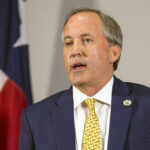
Texas Attorney General Ken Paxton called the Ten Commandments “a cornerstone of our moral and legal heritage” and “a reminder of the values that guide responsible citizenship.” Paxton said the state will appeal the court’s “flawed decision.”
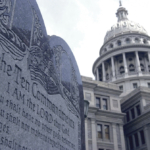
SB 10—signed into law by Gov. Greg Abbott on June 21—requires a donated poster or framed copy of the Ten Commandments at least 16 by 20 inches to be displayed in every Texas elementary and secondary school classroom.
Law stipulates state-approved language
The state-approved language of the Ten Commandments is an abridged version of Exodus 20:2-17 from the King James Version of the Bible.
Opponents of SB 10—and plaintiffs in Rabbi Nathan v. Alamo Heights—pointed out Jews, Catholics and Protestants number the commandments differently, and their wording varies. So, they asserted, the required language favors the Protestant approach as the state-sanctioned version.
In addition to Alamo Heights ISD, the legal action also names the North East, Lackland, Northside, Austin, Lake Travis, Dripping Springs, Houston, Fort Bend, Cypress Fairbanks and Plano school districts in the San Antonio, Austin, Houston and Dallas metro areas as defendants.
Plaintiffs represent a broad cross-section of families from a variety of religious traditions—including Jewish, Protestant, Hindu and Unitarian Universalist families—as well as atheists and agnostics.
Sign up for our weekly edition and get all our headlines in your inbox on Thursdays
Austin pastor among plaintiffs
James Griffin Martin, pastor of First Baptist Church in Austin, and his wife Abigail are among the plaintiffs, along with Mara Richards Bim, a justice and advocacy resident and candidate for ordination at Royal Lane Baptist Church in Dallas.
In summarizing the Martins’ objections to the mandated display of the Ten Commandments, Biery wrote: “The Martins believe that scripture, including the Ten Commandments, must be taught—especially to children—within the context of a family’s church and particular faith tradition. Learning about and navigating scripture within the context of their faith is critical to ensuring that their children’s understanding of religious texts aligns with the Martins’ Baptist teachings, religious beliefs, and values.”
In presenting the Martins’ position, Biery also stated: “Baptist faith tenets oppose the imposition of religious doctrine in schools and counsel instead that it be taught at church and within the family. Indeed, separation of church and state is a core Baptist principle and one of the Four Fragile Freedoms of the Baptist tradition.”
In his decision, Biery compared SB 10 to a similar Louisiana statute, which was struck down by the Fifth Circuit Court of Appeals as unconstitutional.
“The Texas and Louisiana statutes require the display of the same specific version of the Ten Commandments in public school classrooms,” Biery wrote.
Biery rejected the school districts’ motion to dismiss the plaintiffs’ First Amendment claims. In his decision, he quoted statements by Texas legislators that made clear the religious purpose behind SB 10. He also determined the plaintiffs “sufficiently stated their Establishment Clause and Free Exercise claims.”
Judge offers rationale for blocking SB 10
In granting the preliminary injunction, Biery stated, SB 10 “impermissibly takes sides on theological questions and officially favors Christian denominations over others.”
The classroom displays of the Ten Commandments “are likely to pressure the child-plaintiffs into religious observance, meditation on, veneration, and adoption of the State’s favored religious scripture, and into suppressing expression of their own religious or nonreligious backgrounds and beliefs while at school,” Biery wrote.
The school districts failed to meet the burden of strict scrutiny by demonstrating a “compelling interest” in infringing on a constitutional right and doing so in a “narrowly tailored” manner, he determined.
“There are ways in which students could be taught any relevant history of the Ten Commandments without the state selecting an official version of scripture, approving it in state law, and then displaying it in every classroom on a permanent basis,” Biery wrote.
In conclusion, he added: “Ultimately, in matters of conscience, faith, beliefs and the soul, most people are Garbo-esque. They just want to be left alone, neither proselytized nor ostracized, including what occurs to their children in government-run schools.
“Even though the Ten Commandments would not be affirmatively taught, the captive audience of students likely would have questions, which teachers would feel compelled to answer. That is what they do.”
Plaudits from advocates for church-state separation
Plaintiffs in the case were represented by Americans United for Separation of Church and State, the American Civil Liberties Union, the ACLU of Texas and the Freedom from Religion Foundation.
Lead plaintiff Rabbi Mara Nathan welcomed the ruling, saying, “Children’s religious beliefs should be instilled by parents and faith communities, not politicians and public schools.”
Rachel Laser, president and CEO of Americans United for Separation of Church and State, also applauded the judicial decision.
“Today’s decision will ensure that Texas families—not politicians or public-school officials—get to decide how and when their children engage with religion,” Laser said.
The decision sends “a strong and resounding message across the country that government respects the religious freedom of every student in our public schools,” she added.

Holly Hollman, general counsel and associate executive director of the Baptist Joint Committee for Religious Liberty, affirmed the federal court decision.
“This ruling affirms a core constitutional principle: public schools cannot be used by the government to impose religion on children,” Hollman said.
“Faith is most deeply formed in families and religious communities, not by state mandates. Government-imposed displays of sacred texts risk coercing students into religious practice and undermine the religious freedom of every family.
“We urge Texas officials to respect this ruling and the First Amendment’s promise that all children can attend public schools without pressure to adopt a state-endorsed faith. Religious liberty is strongest when the government stays neutral in matters of religion, leaving these sacred choices where they belong; with parents, communities, and individuals.”
Victory for religious freedom protections
John Litzler, public policy director for Texas Baptists’ Christian Life Commission, affirmed the importance of the Ten Commandments—and the importance of protecting the religious freedom of all people.

“We believe the Ten Commandments to be a divine revelation from God to his people, and we strive for all people, including Texas school children, to know and embrace God’s truth. However, today’s ruling echoes many of the same concerns we discussed with legislators as they sought to pass this legislation,” Litzler said.
“Specifically, posting religious texts in public schools, whether from the Christian faith or another religion, can infringe on student’s religious freedoms. SB10 picks winners and losers, even from faith traditions that hold the Ten Commandments sacred, by elevating a particular Protestant version of the text while excluding Jewish and Catholic versions.
“It can be a slippery slope to allow the government to decide which religious teachings from various faiths are required to be displayed in public schools. The court’s ruling is in line with U.S. Supreme Court precedent regarding the Ten Commandments and religious freedom, and it follows a recent opinion from the United States Court of Appeals for the 5th Circuit addressing a law in neighboring Louisiana that is very similar to SB10.”
Paul Brandeis Raushenbush, president and CEO of the Interfaith Alliance, called the ruling “a victory for the Constitution, for Texas families, and for true religious freedom.”
“Public schools should never be used to impose one religious viewpoint on all students,” Raushenbush said.
“By rejecting SB10 as a violation of the First Amendment, the court ensures that public schools remain places where every student belongs, regardless of their and their families’ particular religious belief. And that the home and house of worship be the location for religious instruction, not outsourcing that sacred responsibility to the public school.
“As a pastor, a parent of children in public school, and an American, I applaud the court for defending the constitutional promise of religious freedom for all.”

Charles Foster Johnson, founding executive director of Pastors for Texas Children, offered a word to the Texas lawmakers who supported the Ten Commandments displays in public schools
“All this Ten Commandments legislation is about one thing and one thing only: politics,” Johnson said. “It has nothing to do with moral or spiritual uplift. It is an attempt to use the public institutions of our community and neighborhood schools to advance a narrow political agenda.
“If the Texas Legislature worked half as hard on keeping the Ten Commandments as they do on flashing them around for political power, Texas would be a much better state.”








We seek to connect God’s story and God’s people around the world. To learn more about God’s story, click here.
Send comments and feedback to Eric Black, our editor. For comments to be published, please specify “letter to the editor.” Maximum length for publication is 300 words.