


DALLAS—Every child deserves a place in a congregation’s education and discipleship efforts, the keynote speaker told the Baptist General Convention of Texas and Dallas Baptist University Children’s Ministry Summit.
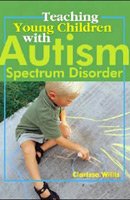
Clarissa Willis, the author of this book, was the keynote speaker at the Baptist General Convention of Texas and Dallas Baptist University Children's Ministry Summit.
|
Clarissa Willis, author of Teaching Young Children with Autism Spectrum Disorder, encouraged ministers and children’s ministry leaders to nurture and empower boys and girls from all backgrounds—including children from broken families, at-risk children and those with mental or physical issues.
That means being open and flexible enough to meet the needs of each child who walks into a classroom, yet being able to provide the consistent structure each child needs, Willis said. In an environment where they are encouraged and comfortable, children can develop naturally.
Research suggests the character development that occurs between ages 3 and 5 lays the groundwork for what people will be like as adults, Willis noted.
Some young people are rushed through these developmental years and develop anxiety disorders as early as pre-kindergarten.
To ensure a place for proper development, Willis said church education and discipleship programs should encourage children to dream, have fun and feel loved. But they also must provide a place where children understand what is taking place and how to function in that arena.
Throughout the BGCT Children’s Ministry Summit, children’s ministry leaders learned how to hone their programs to grow, encourage and instruct their students in such a structure. Practical seminars helped people discuss how to best arrange a room for optimal organization and functionality; development stages of young people; choosing and planning lessons; and assisting parents and grandparents in raising children.
“God has given churches a responsibility to reach everyone in the community, even children with special needs,” said Diane Lane, BGCT preschool and children’s ministry specialist.
Sign up for our weekly edition and get all our headlines in your inbox on Thursdays
“When we open our hearts and doors, we are telling the community that we care and we are willing to partner with families through their crisis.”
No matter what special needs a student may have, it is important that each child has the same rights—and responsibilities—as everyone in a class, Willis said. Children learn in part by attempting to do for themselves, finding they can accomplish many tasks on their own.
As children learn, they share what they’ve learned with their parents, Willis said. In turn, lessons taught to students can affect entire families.
Together, families can cherish and celebrate growth and accomplishments—moments that communicate the love of Christ to a community, she noted.
“It’s amazing when you’re working with families and children how many other lives they can touch,” Willis said.
A congregation that loves and cares for all children is a powerful reflection of Christ’s love, said Tommy Sanders of Dallas Baptist University.
“When leaders understand the true nature of special needs, they will begin to realize that every person has some special need or learning approach and the church can be a great place to meet these needs,” Sanders said.









We seek to connect God’s story and God’s people around the world. To learn more about God’s story, click here.
Send comments and feedback to Eric Black, our editor. For comments to be published, please specify “letter to the editor.” Maximum length for publication is 300 words.