




“Everything was so different then,” Patsy Davis said, reflecting on her time working at the Baptist Standard in the 1950s. “And it was a really good time to be alive.”
Davis was hired as an editorial assistant at the Baptist Standard in December 1951 at age 20, fresh out of Baylor, where she had been editor of the Baylor Lariat.
When Davis entered the bustling newsroom of the year-old Baptist Standard building at San Jacinto and Crockett, the Standard took up the second floor, and the E.J. Storm Printing Company was housed on the ground floor.
“This was before all the dissensions, public dissensions in Baptist life and all the fundamentalists and all,” she said. “We’re talking 72 years ago. For the next 10 years, there was such a growth in the Baptist denomination and in all the churches, and everything was very positive.
“I’m sure there were dissensions in Baptist life, but as I was writing there and keeping up with the different churches, … I don’t remember much about dissension.”
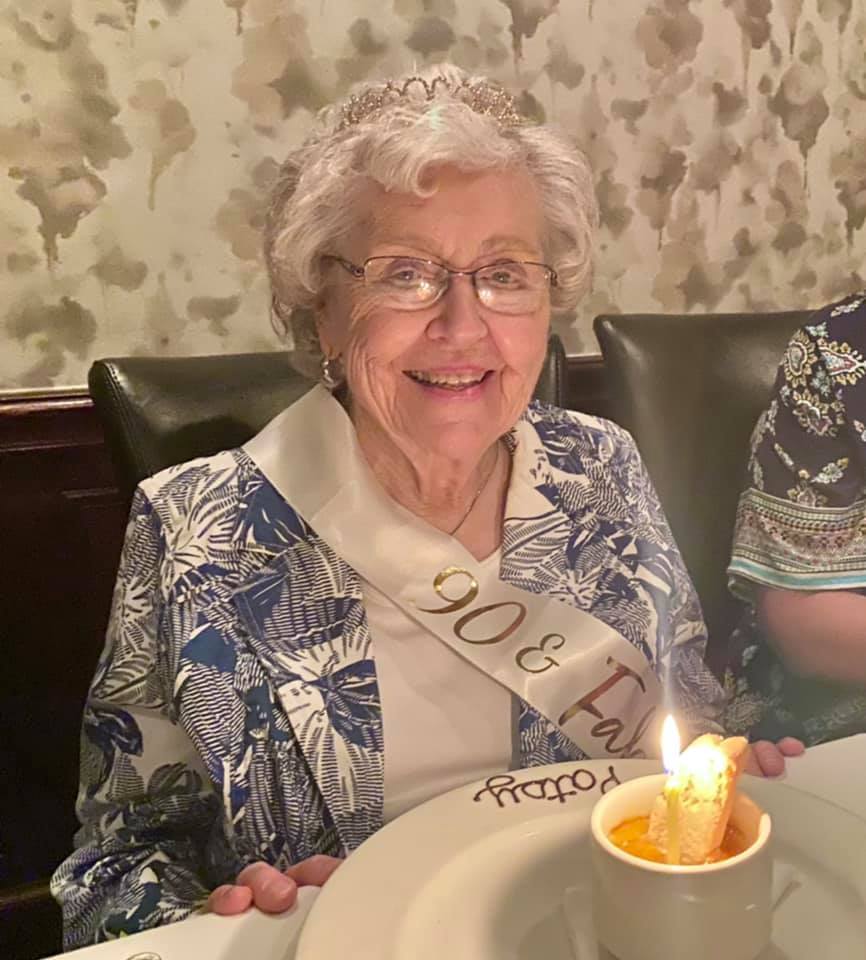
Remembering the hopefulness that characterized the 1950s, she said: “People were coming back from the war. And they were thankful to get home. And they wanted to get married and have a family.”
A month shy of 93 years, Davis recounted much of that history. The rest is from the now out-of-print Prophets with Pens: A History of the Baptist Standard by Presnall Wood and Floyd Hatcher.
“I worked under Walker Knight,” associate editor of the Baptist Standard who later went on to work for the Home Mission Board, Davis said. “I even had my own office. Not everybody did.”
She recalled meeting David Gardner, editor of the Standard, only a couple of times.
Sign up for our weekly edition and get all our headlines in your inbox on Thursdays
“He didn’t interact for the day-to-day activities,” Davis explained.
Davis was born in April 1931. She made her profession of faith in Christ at Gaston Avenue Baptist Church at age 8. But not long after she was baptized, her family left to help start a new church.
Early Life
“In 1939, my parents and I lived on Bryn Mawr in University Park, and the area was growing,” Davis said.
“So many Baptist leaders said there needed to be a church in University Park. And so they started Park Cities Baptist in my grade school, University Park grade school, in the fall of 1939 or ’40,” Davis continued.
In 1945, when World War II ended, her family moved to Paris, her parents’ hometown.
“My dad was a petroleum engineer, and he was frozen to his job during the war, because, of course, oil was so important,” Davis explained. “And then when the war was over, he said he was tired of living in the big city and wanted to move back home.”

But Davis fondly recalled her early years in Dallas and warmly remembered the first pastor of Park Cities Baptist Church, Alton Reed. She believes a recommendation from him might have been the reason a young Baylor graduate snagged a job at the Baptist Standard, immediately after her fall graduation, with a bachelor of arts in journalism.
Davis’ time at the Standard was short, only around 4 to 5 months.
She explained she had met Norman Davis, who was finishing up his schooling at Sam Houston State University. They hoped to get married, so she finished her degree at Baylor in three and a half years. It was a quarter system there at the time, which is how she graduated in November.
“I had really wanted to work for the Standard, because I was a Baptist and I had all the Sunday School, Training Union, GAs, Bible study, Baptist heritage. I was really anxious to work for the Standard, and I was very fortunate to get the job,” Davis said.
They thought when Norman finished school, he would work in the Dallas area. But the Dallas job didn’t pan out. So, Davis left when she married and moved to Victoria.
“When I went to work for the Standard, I certainly didn’t plan to be gone in just a few months. I was so excited about my own job, but I wanted to get married more,” Davis said.
Life at the Standard
The archival Baptist Standard article announcing her hiring states she replaced Hazel M. Rodgers, who left to become “news editor of the Public Relations department of the Texas General convention and as Baptist Standard representative at the Baptist building.”
There were several women working at the Baptist Standard then, Davis recalled.
“I don’t know if they were all writers. Some of them were copy editors,” she said. “I mean we edited, we wrote headlines, everybody did kind of everything, but I did get news stories, occasionally, and I did get a few bylines.”
The editorial assistants were responsible for proofreading the long proof sheets from the print shop and marking mistakes before they went to print.
Davis designed the church pages that were included as back cover of the Standard for some churches. The churches would send her the copy to edit and put together.
“The Baptist Standard really meant a lot to a lot of people,” she said.
Davis said she never felt any sort of bias toward her as a woman. If anyone did look down on her there, it was because she was young, she sensed, not because she was a woman.
Baptist Standard Influence
She really enjoyed her months at the Standard, saying: “I remember feeling like I was a part of something really important. …There was a good feeling of camaraderie and that we were wanting to continue to make the paper the best, which at that time I would say it was very important to Texas Baptists.”

Davis said she “wouldn’t say Baptists ‘ruled the roost,’” but they were definitely the dominant denomination in Texas in the 1950s. Many important state leaders were Baptist, and the Baptist Standard commanded a strong measure of respect and influence among Texas Baptists and beyond, she explained.
Davis noted the influence of the Baptist Standard at that time and the years that followed. She pointed to President John F. Kennedy’s White House invitation to E. S. James, the editor who succeeded David Gardner.
Despite losing her husband in 2022 after 70 years of marriage, Davis said she is enjoying retirement with her four grown children, 11 grandchildren and 20 great-grandchildren. But she has stayed connected to journalism and the Standard through the years.
She said she wished the paper could still be in the hands of every member of every Texas Baptist church, but acknowledged with all the other choices of media available today, just putting it in their hands wouldn’t mean they’d read it.







We seek to connect God’s story and God’s people around the world. To learn more about God’s story, click here.
Send comments and feedback to Eric Black, our editor. For comments to be published, please specify “letter to the editor.” Maximum length for publication is 300 words.