




ABILENE—For Jim Denison, the practical and ethical implications of precision medicine aren't just topics of conversation among scientists and ethicists.
As theologian-in-residence with the Baptist General Convention of Texas and founder of the Denison Forum on Truth and Culture, he is deeply involved in those conversations. But his interest took a dramatic turn in January when his son, Ryan, was diagnosed with a malignant tumor on his neck along the jaw line.
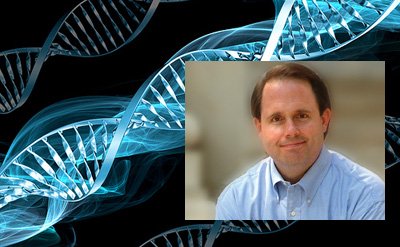
Jim Denison
|
The mass was removed in February, and Ryan began proton radiation therapy the week of March 19. He has been told there is a 20 to 30 percent chance the malignancy will return, and he must have a CAT scan every six months for the rest of his life.
As precision medicine, based on genetic makeup, advances, the day may come when surgery, radiation, chemotherapy and other forms of cancer treatment are a thing of the past.
"Don't we all look forward to the day when all of that is history?" Denison asked during a Forum on Faith and Intellect at Hardin-Simmons University. "That day may be coming. For my son, it can't come soon enough."
But, Denison warned, the exciting promises of precision medicine, which tailors treatment based on an individual's genetic map, also must be viewed from an ethical standpoint.
"I am so grateful for the technology," Denison said, "and so desirous that it be practiced within a proper ethical framework."
Denison and Dr. Peter Dysert II, chief of pathology at Baylor University Medical Center in Dallas, were the two keynote speakers for the recent forum at Hardin-Simmons focused on bioethics.
Sign up for our weekly edition and get all our headlines in your inbox on Thursdays
Over two days, participants heard from Denison and Dysert, as well as others in science and academia discussing the practical and ethical implications of precision medicine.
Denison noted his interest in precision medicine started from reading The Language of God: A Scientist Presents Evidence for Belief by Francis Collins, who describes himself as an atheist who came to believe in God through his scientific endeavors.
Collins is the former director of the National Human Genome Research Institute and oversaw the Human Genome Project, which mapped human DNA.
Denison was hooked as soon as he started the book.
"We are on the cusp of what experts unanimously believe is the greatest revolution in the history of medicine," Denison said, "with implications in every direction and ethical implications of enormous significance."
Denison believes the ethics of precision medicine must align with "kingdom ethics." Without that ethical framework, he fears that precision medicine could have limitless bad outcomes.
For example, what if the day comes when preconception genetic screenings for disease also reveal capabilities? Will couples decide not to have children if they fear the child won't be a great athlete or student or musician?
"Will we see a day when genetic profiles are a part of dating and marriage decisions?" he asked.
Despite federal law prohibiting discrimination based on genetic information, Denison wonders how that information might be used by insurance companies or employers.
The list of possible nightmare scenarios is endless, but the promise of huge advancements in medicine also is a reality. Precision medicine must be practiced within an ethical framework, Denison said, to ensure those nightmares don't become reality.
Denison quoted King Solomon, who said, "The fear of the Lord is the beginning of wisdom." Denison wondered how wise practitioners of precision medicine will be as its possibilities increase.
"That, to me," he said, "is the question of the day."
Prior to Denison's keynote address, breakout sessions featured scholars and doctors talking about various aspects of bioethics.
Dan Stiver, a professor of theology at Hardin-Simmons, posed a question that he says must be answered before the larger ethical issues such as cloning and genetic manipulation to produce "designer children" can be addressed.
The question, he said, is what kind of language to use in the discussion.
"Is the debate and the discussion going to be posed basically in scientific language," he asked, "or, is there an essential role for the first person or personal language?
The tendency to think that only scientific language is valid was evident even at the Baptist-affiliated college that Stiver attended. He recalled that in his psychology lab, "brain waves" could be discussed, but not "feelings."
His own conclusion, Stiver said, is that scientific language cannot adequately cover ethical issues.
"We need the personal knowledge, the language of human experience, motive, desire, and morality," he said. "It's irreplaceable and essential for us to be able to handle these things."







We seek to connect God’s story and God’s people around the world. To learn more about God’s story, click here.
Send comments and feedback to Eric Black, our editor. For comments to be published, please specify “letter to the editor.” Maximum length for publication is 300 words.