Class-action suit filed to halt Ten Commandments displays

Eighteen families filed a class-action lawsuit Dec. 2 to stop the display of a prescribed version of the Ten Commandments in all classrooms of every Texas school district not already involved in related litigation or subject to an injunction.

Ashby v. Shertz-Cibolo-Universal City Independent School District is the third lawsuit—and first class-action suit—challenging S.B.10.

As approved by the Texas Legislature and signed into law by Gov. Greg Abbott, S.B. 10 requires a donated poster or framed copy of the Ten Commandments at least 16 by 20 inches to be displayed in every Texas elementary and secondary school classroom.

The Ten Commandments are “ingrained into who we are as a people and as a nation,” said Sen. Phil King of Weatherford, who introduced S.B. 10.

“Today, our students cry out for the moral clarity, for the statement of right and wrong that they represent. If our students don’t know the Ten Commandments, they will never understand the foundation for much of American history and law.”

First Amendment violations asserted

The plaintiffs assert the state-mandated displays in classrooms violate the Establishment Clause and Free Exercise Clause of the First Amendment.

This 5-foot tall stone slab bearing the Ten Commandments stands near the Capitol in Austin, Texas, in this July 29, 2002 file photo. (AP Photo/Harry Cabluck, File)

The families represent a range of faith traditions, as well as some interfaith families and families that identify as nonreligious.

Americans United for Separation of Church and State, the American Civil Liberties Union of Texas, the national ACLU and the Freedom from Religion Foundation brought the class-action suit on behalf of families whose children attend schools in 16 districts not named in two previous lawsuits.

Named defendants are the Argyle, Birdville, Carroll, Clear Creek, Deer Park, Fort Sam Houston, Hurst-Euless-Bedford, Katy, Liberty Hill, Magnolia, Medina Valley, Pearland, Prosper, Richardson, Schertz-Cibolo-Universal City and Wylie school districts.

However, the suit contends the plaintiffs represent “a statewide class consisting of all parents, legal guardians, and their minor children suffering from constitutional harms as a result of Defendants’ posting of religious displays as required by S.B. 10.”

“If Plaintiffs are compelled to pursue relief in multiple counties—or even federal districts—across Texas, the same core facts and legal theories could yield divergent outcomes, on different timelines, resulting in both confusion among defendants and a needlessly increased risk that members of the Plaintiff Class will suffer violations of their constitutional rights,” the lawsuit states.

State has ‘zero legitimate interest in religion’

The state-approved language of the Ten Commandments as stipulated in S.B. 10 is an abridged version of Exodus 20:2-17 from the King James Version of the Bible.

Parents who objected to the classroom displays pointed out Jews, Catholics and Protestants number the commandments differently, and their wording varies. So, they asserted, the required language favors the Protestant approach as the state-sanctioned version.

“S.B. 10 is not neutral with respect to religion,” the class-action lawsuit states. “On its face, it expressly requires the display of religious scripture—the Ten Commandments—in every public-school classroom.

“It also requires that schools post a specific, state-approved version of that scripture that is associated with certain Protestant faiths, weighing in on theological questions regarding the correct content and meaning of the Ten Commandments and enshrining in state law an official denominational preference.”

Charles Foster Johnson

Charles Foster Johnson, founding executive director of Pastors for Texas Children, agreed the state has no legitimate role “weighing in” on religious issues or giving preferential treatment to one faith group.

“The American experience is uniquely shaped by religious liberty and the ‘wall of separation,’ as Thomas Jefferson put it, between the church and the state. It was the church that shaped this American experience—small, dissenting, separatist churches in every village that trusted the word of God rather than the power of the state,” Johnson said.

“Fast forwarding almost 250 years, true Texas Americans still believe that the State of Texas has zero legitimate interest in religion. Eighteen of them have sued for remedy in this egregious violation of their—and millions of others’—religious liberty. Pastors for Texas Children hopes the federal courts will put a quick end to this infringement of faith freedom.”

Lawsuits, injunctions and appeal

Two federal judges already blocked 25 Texas school districts from displaying a state-prescribed version of the Ten Commandments in public school classrooms, citing constitutional concerns.

In August, U.S. District Court Judge Fred Biery issued a preliminary injunction blocking classroom Ten Commandments displays in 11 school districts.

In November, U.S. District Judge Orlando Garcia granted a preliminary injunction to block the classroom displays in 14 school districts.

Last month, Texas Attorney General Ken Paxton announced he filed suit against the Round Rock and Leander school districts for refusing to comply with the mandated Ten Commandments displays.

“These rogue ISD officials and board members blatantly disregarded the will of Texas voters who expect the legal and moral heritage of our state to be displayed in accordance with the law,” Paxton said.

Previously, Paxton sued the Galveston Independent School District after its board refused to display donated posters of the Ten Commandments in classrooms.

The U.S. Court of Appeals for the 5th Circuit will hear arguments on the constitutionality of S.B. 10—and a similar case in Louisiana—on Jan. 20. Court injunctions blocking the classroom displays of the Ten Commandments remain in effect while the appeal is pending.


Coppell church’s Christmas Store serves families

COPPELL (BP)—For one week each December, the fellowship hall at Valley Ranch Baptist Church in Coppell turns into a Christmas shopping destination through its annual “Christmas Store.”

Desiring to be the hands and feet of Jesus and provide tangible resources for families during the holidays, the church hosts the Christmas Store, which allows parents and guardians of children in need the opportunity to “shop” for Christmas gifts for free.

Valley Ranch Associate Pastor Arthur Mendes said he hopes everyone who participates in this ministry sees the gospel in action.

“This is so encouraging to our church,” Mendes said. “It’s definitely our biggest ministry and the church always responds so well to it, not only giving financially, but also serving during the Christmas Store season. It’s impressive to see commitment of our church towards this ministry, but also a blessing to have so many people who are willing to serve.”

The store features wrapped gifts, gift cards for groceries, toys and clothing families in need can pick up at a designated time.

Upon arrival at the Christmas Store, families are greeted by Valley Ranch Church members who take time to learn more about their story, share a meal together and build friendships.

The Christmas Store will be open the week of Dec. 7-13 this year, and preparations are underway to get everything set up and create an engaging experience for families to enjoy.

Opportunity to share the gospel

Each year, around 300 families participate in the Christmas Store, and organizers anticipate an even greater need this year amid lingering effects of the long federal government shutdown this fall.

Organizers recognize the tremendous opportunity the Christmas Store presents to share the gospel with their neighbors.

Families are referred to Christmas Store through church connections as well as local school counselors and nurses.

“These families receive an invitation letter and instructions about coming to register at our church for the Christmas Store,” Mendes said.

“Then, on designated dates, when they come up to the church, they have the opportunity to select two gifts for their children, and they also have the opportunity to hear about the gospel message and see the gospel in action through the love of Christ.

“At Valley Ranch Baptist Church, we consider it a privilege to serve our community and by providing tangible and physical needs for families, we hope to introduce them to Jesus, the one that can provide all of our needs.”


Operation Christmas Child volunteers go the distance

IRVING—For Debbie Fogg, a member of The Church at Quail Creek in Amarillo, the 5-hour drive to Irving is worth it when she thinks about the joy on the children’s faces as they receive their shoeboxes from Operation Christmas Child.

For the past five years, Fogg has made this an annual tradition as she travels to the Dallas-Fort Worth area to serve at the Operation Christmas Child drop-off location at Plymouth Park Baptist Church in Irving and spends time with her family.

“I love this part, but I love the shopping part because you start thinking about the age of each child and what they might enjoy and could use,” Fogg said.

“I love to give back and when I can, I do. A lot of these items like the shirts and pens, I was able to get donated from different places. My car was so loaded down that my husband had to air up my tires before I could take off.”

Spreading the love of Christ to children

During the National Collection Week for Operation Christmas Child, Nov. 17-24, Plymouth Park Baptist Church was one of two churches in Irving serving as collection sites before the shoeboxes were taken to the processing center in Coppell to ensure safety and security before being shipped out.

Every year, National Collection Week takes place the third week in November when more than 4,500 drop-off locations are open across the United States.

Since its inception in 1993, Operation Christmas Child, a project of Samaritan’s Purse, has sought to spread the love of Christ to impoverished children around the world through shoeboxes full of small gifts at Christmas.

Last year, more than 11.9 million shoeboxes were collected globally for this project and 1.2 million were collected at the processing center in Coppell from around the Dallas-Fort Worth Metroplex.

The gift-filled boxes contain an assortment of fun items for children to enjoy such as soccer balls, coloring books, crayons and sensory toys, along with personal care items, washcloths, toiletries and school supplies.

All ages participate in Operation Christmas Child, and many people make it an annual tradition by packing boxes or volunteering at the distribution sites.

Local churches in more than 100 nations hand out these Operation Christmas Child shoebox gifts at festive outreach events where the gospel is presented in a child-friendly way.

Making an impact globally

Through these efforts, participants and volunteers realize the opportunity to have a big impact around the world.

Pastor Brian Hale of North Irving Baptist Church said their location had 20 volunteers helping to receive boxes, and their location typically receives 700 boxes each year.

“Most of these kids that we’re sending these boxes to have never had a gift,” Hale said. “This is a ministry that I live for, and I absolutely love it. We try to do everything we can to help with it. These shoeboxes are trying to change kids’ lives for the better.”

At Plymouth Park Baptist Church, a team of volunteers greeted people as they drove up and dropped off their shoeboxes, while another team helped pack boxes with an assortment of items that had been donated. This location received more than 1,000 boxes.

‘It’s part of my Christmas tradition’

Susan Addy, a member of Plymouth Park Baptist Church in Irving, has fun with some of the toys and other gifts as she packs shoeboxes for Operation Christmas Child and helps get them ready for distribution. (Photo by Leann Callaway)

For volunteers like Justina Anni, who has been a member of Plymouth Park five years, participating in this project has allowed her to better connect with the church and community.

“This is my second year helping with Operation Christmas Child,” Anni said. “I enjoyed doing this last year and wanted to be involved again.

“I love volunteering, helping out and knowing that the kids will receive these gifts. Through volunteering, it’s helped me to get to know other people at the church.”

As a retired schoolteacher and a long-time member of Plymouth Park, Becky Christenberry has enjoyed the opportunity to help with this ministry for more than 10 years both at her home church and also at the Operation Christmas Child processing center in Coppell.

“There’s a special feeling at the distribution center when you see all these people gathering together from all over the nation and when you pray over these boxes,” Christenberry said.

“Your heart just gets so full knowing that what you’re doing matters, and it is going to change lives. My Christmas is not complete without Operation Christmas Child. It’s part of my Christmas tradition.”


Ken Camp, longtime Baptist journalist, to retire

Baptist Standard Managing Editor Ken Camp will retire Dec. 31, 2025, bringing to a close a decades-long era of reporting on Texas Baptists.

camp
Ken Camp, 2015

During the last 40-plus years, Camp has reported on every part of the Baptist General Convention of Texas. He also has covered the Southern Baptist Convention, Cooperative Baptist Fellowship, Baptist World Alliance and other Baptist entities.

“Ken Camp has always been a torchbearer for the truth,” John Hall, chief mission officer for Texans on Mission, said. “He has always believed Christians will respond when they know about opportunities to share the gospel in their own communities, across their state and around the world.

“Over the years, I’ve seen time and again he is correct,” Hall continued, “and many, many people got involved in ministry because of the stories Ken shared clearly, concisely and compassionately. I know. I’m one of them.”

Reporting these stories has taken Camp all around Texas and to several places around the world. He has had a front-row seat to some of the most consequential events in Texas Baptist and Southern Baptist history.

“I’ve been in the same room with four United States presidents or former presidents,” though “some of the rooms were pretty big,” Camp noted.

“But the people who made the deepest impression were folks like a West Texas pastor who visited almost every patient in the local hospital every morning except Sunday for 40 years and a Central Texas pastor who has served the same small, rural congregation for 60 years and counting,” Camp recalled.

Early days in journalism

Camp’s name has appeared in bylines for more than 50 years, first as the editor of his high school newspaper and as the writer of a weekly column about school news for the Greenville Herald Banner. The summer after he graduated, he worked the evening sports desk part time for the local newspaper.

Despite his high school experience in journalism, Camp had other career plans. He began college with a double major in English and history, with plans to go to law school.

“My plans changed after I attended a free lunch at the Baptist Student Union at East Texas State University,” Camp wrote.

“A missions speaker was talking about how Christian vocational service involved more than preaching, and people with specialized skills—including journalism—were needed on the mission field,” he continued.

Though he didn’t feel called to foreign missions, he did have “a clear sense God was calling me to Christian service as a writer. I changed my second major from history to journalism.”

Becoming a Texas Baptist journalist

To prepare for Christian service, Camp attended Southwestern Baptist Theological Seminary. Upon his arrival, he learned Southwestern was launching a communications program. The program required an internship, which he found with the Texas Baptist Public Relations Association, working at the BGCT during the summer of 1983.

When Camp graduated from seminary in 1984, he went to work for Tom Brannon and Orville Scott in the BGCT public relations (communications) office.

At the BGCT, Camp wrote news and feature stories on Texas Baptist Men, Woman’s Missionary Union of Texas, the Christian Life Commission, River Ministry, Church Extension (church starting) and more for 19 and a half years.

“Our primary vehicle for communicating with Texas Baptists was through the Baptist Standard. So, I was in daily contact with Toby Druin,” Camp wrote, referring to the Standard’s managing editor at the time.

“Our office also served as the Dallas Bureau for Baptist Press. That meant I was in contact several times a week with Dan Martin and Marv Knox at BP,” he added. Knox later became editor of the Baptist Standard.

When Orville Scott retired, Camp became the news and information director for the BGCT. In his supervisory role, he worked with Baptist journalists John Hall, Ferrell Foster and Dan Martin. He also was in charge of the newsroom at BGCT annual meetings, which hosted religion reporters from newspapers around Texas.

When Tom Brannon retired, Camp served more than a year as the BGCT’s interim communications director.

Memorable experiences during his BGCT years

Camp described working the newsroom at the 1985 SBC annual meeting in Dallas as his “baptism by fire.” The meeting “drew 45,531 messengers,” he reported.

“Charles Stanley was elected president, defeating Winfred Moore [pastor of First Baptist Church in Amarillo] in a 24,453 to 19,795 vote marked by multiple irregularities. On the row in front of where my wife and I were seated, we saw a couple casting ballots for their children—including an infant,” Camp recalled.

A few months later, in the immediate aftermath of the Mexico City earthquake, Camp traveled there with the initial TBM disaster relief team at the request of the National Baptist Convention of Mexico.

“From the field kitchen set up outdoors in downtown Mexico City—where thousands of people were sheltered in a tent city—the TBM volunteers served about 2,000 meals an hour for the first four hours,” he wrote.

Camp also reported on Partnership Missions in Australia and Mexico, as well as River Ministry along the Texas/Mexico border. When the BGCT launched its Mission Texas initiative to start 2,000 new churches in Texas within five years, Camp made day trips to churches around the state for feature articles about church starting.

Reporting from Oklahoma City at the request of Associated Baptist Press in the days immediately following the bombing of the Murrah Federal Building on April 19, 1995, was a particularly moving experience for Camp.

“I saw a city sustained by their faith in God and by his grace,” Camp stated. “Over the course of several days, I was able to attend a prayer gathering at a local church, interview chaplains who served first responders at the bombsite, interview survivors of the blast, and attend the community-wide prayer service where Billy Graham and President Bill Clinton spoke.”

Working with giants

Of particular note to Camp during his years at the BGCT was “the rare privilege of working with and learning from giants: Phil Strickland and Weston Ware at the Christian Life Commission, Bob Dixon and John LaNoue at Texas Baptist Men, Joy Fenner at Texas WMU, Elmin Howell at River Ministry and many more. I’ve been blessed to tell their stories.”

Referring back to his trip to Mexico City, Camp recalled spending part of the trip there riding in a truck with John LaNoue.

“I remember asking him late at night what his motivation was for all the work he had done—creating the first disaster relief mobile unit and serving as on-site coordinator at disasters far and wide,” Camp recalled.

“He told me Jesus did two things throughout his public ministry—he met human needs where he found them, and he pointed people to God,” Camp continued.

“That’s what disaster relief ministry does, and reporting on God’s work through the volunteers the past four decades has been one of my great joys,” he concluded.

Joining the Baptist Standard

Ken Camp in 2003 when he was named Baptist Standard managing editor. (File photo)

Camp was named managing editor of the Baptist Standard in December 2003, beginning work effective Jan. 1, 2004. He followed Mark Wingfield, who resigned to become associate pastor at Wilshire Baptist Church in Dallas.

The Baptist Building—as the BGCT office building at 333 N. Washington Avenue east of downtown Dallas was known—was a busy place in the 1980s and 1990s, “a constant stream of people in and out of our office,” Camp recalled.

Camp’s move from BGCT communications to the comparatively quiet Baptist Standard office at 2343 Lone Star Drive west of downtown Dallas enabled him “to concentrate on writing and editing, rather than having to attend all the meetings required at the Baptist Building.”

“Serving as managing editor at the Standard had been my dream job since I was in seminary,” Camp said, “and I was eager to have the opportunity to work on a daily basis with Marv Knox, who was a good friend and for whom I always have had the greatest respect.”

“Hiring Ken was one of the best day’s work I put in across almost two decades of editing the Standard,” Knox, retired editor of the Baptist Standard, noted.

“He always helped the Standard maintain its core mission—inform Texas Baptists about the opportunities, challenges, issues and developments that impact their churches, as well as the Baptist General Convention of Texas,” Knox added.

Reporting for the Baptist Standard

During his two decades as reporter and managing editor of the Baptist Standard, Camp had numerous interesting experiences, such as interviewing Texas Death Row inmates and ex-convicts.

Camp traveled to Ethiopia and Kenya with Buckner International and to Cuba and Uganda with Texas Baptist Men (now Texans on Mission) to report on their work in those countries.

He also reported on Baptist World Alliance Congresses in Birmingham, England; Honolulu, Hawaii; and Brisbane, Australia; and BWA annual meetings in Birmingham, Ala., and Stavanger, Norway.

Camp regularly reported on the work of the Christian Life Commission, “from public advocacy in the Texas Legislature to the support of human-need ministries around the state and the globe through the Texas Baptist Hunger Offering.”

“My greatest delight has been the people with whom I’ve worked and the wonderful folks I have met around the state,” Camp stated.

“It’s people like Jimmy and Janet Dorrell, who have lived among and served the poor in Waco for more than four and a half decades,” Camp recounted. “It’s volunteers who dig water wells, build churches, teach English-as-a-Second-Language classes, minister to children, and stock the shelves of food pantries.”

Challenges in reporting

Working in the BGCT’s public relations office came with some inherent tension.

To overcome the tension, “I leaned hard into the advice that the best public relations is to tell the truth and be as forthcoming as possible,” Camp said.

Having the Baptist Standard as a check also helped, Camp noted, saying if he didn’t report on a matter, the Standard could and probably would report on it.

Standard editors
Presnall Wood (center), who served the Baptist Standard as its most long-tenured editor, died March 10. Editorial leadership of the Baptist Standard spanning more than four decades gathered for a reception to mark the departure of Marv Knox as editor in 2017. They included, from left, Ken Camp, managing editor, 2004-present; Mark Wingfield, managing editor, 1999-2003; Wood, editor, 1977-95; Knox, associate editor, 1995-98; editor, 1999-2017; Toby Druin, associate editor, 1976-1995; editor, 1996-98. (Photo by David Clanton)

At the Standard, reporting the investigation into a church-starting scandal involving phantom churches in the Rio Grande Valley was a particular challenge, Camp recalled.

“Texas Baptists sunk more than $1.3 million into start-up funding and monthly support for three pastors in the Valley who reported 258 church starts between 1999 and 2005,” he reported.

“Investigators said up to 98 percent of those churches no longer existed in 2006, and many of them never did—except on paper,” he added.

“It was not a good time for the BGCT, but it needed to be reported, and we did it,” Camp stated.

Given the Baptist Standard is a denominational news source, the decline of denominational loyalty and “a rapidly shrinking market for honest reporting” presented a continuous challenge during Camp’s tenure with the Standard.

Transitioning from the printed newspaper to an online-only publication was a personal challenge for Camp. In addition to learning new technology, “the news cycle changed drastically,” he noted.

“Instead of producing in-depth, long-form articles for a newspaper printed every other week or human-interest feature stories for a monthly magazine, we’re now providing relatively brief breaking news on a daily basis—actually, multiple times a day,” Camp wrote.

“Providing content for the internet is like trying to feed a ravenous beast always craving more. I won’t miss that part,” he concluded.

Camp as a mentor

Reflecting on his early career working with Camp, John Hall recalled: “I learned to write as a result of Ken’s editing and instruction. He didn’t just edit a piece and hand it back to you to correct. He made the editing marks and then went through each one of them with you. He educated me by walking beside me. He was a mentor in the best sense of the word.”

Camp is more than a reporter and writer, however, Hall noted. “It’s what he did beyond the written word that has most impacted me.

“When I moved to Dallas and knew few people, Ken would stay late, somehow knowing I needed a friend. I saw him get excited about ministry in his church, raising his sons and people coming to faith. In many ways, I didn’t just learn how to be a journalist from Ken. I learned what it truly means to be a Christian.”

“The first assignment Ken gave me when I was 23 was to cover a cutting-edge church in Houston. I remember it vividly,” Hall recalled.

“I was so excited to go on the trip by myself. I was a grown up, and he asked me to write an article and shoot photographs of the service. I was going to nail it.

“I did all the interviews. The quotes were fantastic. … I took photo after photo after photo of a highly visual service. There was so much to shoot, that I just kept shooting.

“I turned in the story shortly after and gave Ken back the camera. That’s when I realized I never put film in the camera. I had no photos, and I was standing before this man I’d read faithfully for years.

“I apologized profusely [and] braced myself for a severe talking to. Instead, Ken took a breath and sighed. Then, he let out a laugh that could only be Ken’s.

“‘Don’t worry,’ he told me. ‘I did it on my first assignment, too. We’ll figure out something.’”

Hall described Camp’s response in two words: “Grace. Kindness.”

“Then,” Hall continued, “Ken quickly followed it up with, ‘But you only do it once.’

“An opportunity to learn and grow. That’s Ken Camp,” Hall concluded.

Baseball and family

Camp is not shy about his love for his family and for Texas Rangers baseball.

Ken Camp with grandsons at a Texas Rangers baseball game. (Photo used by permission)

“You can’t talk about Ken Camp without mentioning the grandkids and baseball. I’m pretty sure the grandkids come first, but baseball is a close second,” Scott Collins, retired vice president of communications for Buckner International, wrote.

“I remember sitting next to Ken for entire games and saying few words, because Ken was keeping score,” Marv Knox recalled.

“However, he could provide a perfect recitation of the turning points of the game and analysis of how his beloved Rangers were doing in any given year. This not only reflects Ken’s love of baseball, but also his meticulous attention to detail, which made him a splendid reporter,” Knox wrote.

Camp’s colleagues remember him bringing his family to BGCT annual meetings. However, his children remember it best.

“When my brothers and I were little, BGCT annual meeting happened to fall on or around Halloween,” Daniel Camp recalled. “So, Dad and Mom dressed us up in our costumes, and we trick-or-treated through the newsroom.

“Dad said he remembers going around to all the reporters beforehand, giving them all candy, so they’d have something to hand out, and telling them to put out their cigarettes for a minute,” Daniel continued.

Reflecting on a career

As Camp nears retirement, he reflected on his more than four decades reporting on Texas Baptists: “It’s been an honor to have worked for organizations committed to historic Baptist principles—the Lordship of Jesus Christ, biblical authority, soul competency, the priesthood of believers, religious liberty, and the separation of church and state.

“I have loved to tell the stories of how God is at work in and through Texas Baptists. I hope I’ve been able to bear witness faithfully to what the Lord has done and continues to do.

“In recent years, it’s been amazing how many opportunities we’ve had to report on international religious freedom issues, thanks to contacts with the Baptist World Alliance and the 21Wilberforce human rights organization.

“At times, those stories have attracted the attention of government officials—in the United States and in foreign countries. I never dreamed I’d be involved in something like that.”

Expressing his decades-long commitment to accurate, thorough and fair reporting, Camp said: “Texas Baptists need the Baptist Standard. Self-governing organizations like the BGCT need informed constituents to make wise decisions. That requires a credible, honest, independent source of information.”

*******

Family and colleagues describe Ken Camp

Daniel Camp, Ken’s son and pastor, South Garland Baptist Church

Praising Ken’s objectivity and fairness, Daniel said: “He is not an editorial writer and doesn’t try to be. You won’t catch him sneaking his own opinions into his reporting.

“He is there to report on what has happened, providing meaningful context where it’s helpful, but he is not there to convince or persuade. He’s a reporter first.”

Daniel noted Ken’s attention to detail: “I’ve seen him reporting and am always impressed by how fast his pen is moving when facts and figures are being thrown around. He’s not going to miss one.”

Daniel also noted Ken’s eye for a good story: “He knows what kind of stories he wants to read and what our churches need to hear, and he gravitates toward those.”

Toby Druin, editor emeritus, Baptist Standard

“I remember the first time I saw Ken Camp’s byline on a story I received at the Baptist Standard from the BGCT public relations office. It was tight and required little editing—just like the flood of stories Ken has written over the years.

“Ken has been an excellent presenter of the Texas Baptist story. Baptist Standard readers have always been able to depend on him to give them the information they need to be informed [and] to be better Baptist Christians.”

Marv Knox, retired editor, Baptist Standard

“Ken is full of integrity. … He’s also careful and conscientious.

“As a thoughtful, lifelong Texas Baptist, he always has been able to write articles in context, helping readers understand the setting and impact of the events he covered.”

His reporting “always put the Standard in a good light—even, or maybe especially, among people who didn’t particularly care for the Standard’s editorial positions.

“Because he is so disciplined and focused, he enabled the Standard to move easily into the era of digital news coverage. He would finish gathering information and immediately sit down and write an article. We often posted stories about Texas Baptist events before the people involved in those events even got home.”

John Hall, chief mission officer, Texans on Mission

“Watching Ken work is inspiring. He can turn a story in minutes, make any piece worthy of publishing through masterful editing and communicate complex topics in ways everyone can understand.”

“He was fair to everyone and everything he covered. He wanted people to hear all sides of a conversation.”

Scott Collins, retired vice president of communications, Buckner International

“When I think of Ken Camp as a reporter, the first word that comes to mind is ‘thoroughness.’ I’ve always known when I read a story with Ken’s byline that he covered the whole thing. There was no need to ask, ‘What else?’”

Like Daniel Camp, Collins also described Ken as accurate and fair: “Ken has always been driven by his ethics when it comes to reporting. So, I know when I read something he has written, he is reporting with fairness.

“Because of Ken’s experiences in Baptist life over the past four decades, he has provided a perspective for Standardreaders he is uniquely qualified to provide.”

“Ken is … probably the most reliable person in Baptist communications today.”


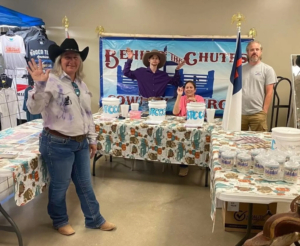
Cowboy church disciples men

In 2011, Montague County Cowboy Church Pastor Joe Caballero took a camping trip with his family, along with two other families, to Carson National Forest in New Mexico.

While camping, they met the man who cares for the cattle grazing in that area.

“The [cattle owners] hire a guy they call a ‘rider’ to stay in the mountains with the cattle all summer, keep an eye out, ride fences and so forth. Well, we were camped right where he was because there’s some horse pens up there [and] we made friends with him,” explained Caballero.

The rider introduced Caballero to the cattle owners Jeff Martinez of Rio Vega Ranch and Jeff Larsen of Don Larsen Land & Cattle Co., both located in Alamosa, Colo.

Caballero learned that Martinez and Larsen “round [the cattle] up in October” when he and a friend were in Alamosa the next weekend to retrieve some misplaced equipment from their camp, and the two volunteered to help “drive [the cattle] out of the mountain.”

Caballero said this “turned into an annual thing.”

“Now I know why Jesus left and always went into the mountains to pray and get re-energized and then come back and start ministering again,” said Caballero.

Over the years of returning to Carson National Forest to help Martinez and Larsen drive cattle, God was laying it on Caballero’s heart that he could involve more men in the experience.

In 2020, he said the Lord “really started pushing” the idea for The Drive, a week of worship, discipleship and driving cattle for Montague County Cowboy Church men.”

“I was thinking, ‘No one’s going to want to do this’ … [but] God just kept on and on, and finally I said: ‘Okay I’ll bring it before the church. We’ll see if anybody’s interested,’ and when I made the announcement about ‘The Drive,’ [there was a great response],” said Caballero.

Caballero said God gave him an analogy for what would be the mission of “The Drive:” to help get men to Jesus “from wherever they are.”

“On the last day [of The Drive], we drive them like 20, 21 miles out of the mountains, all the way down to the shipping pens,” explained Caballero.

“The analogy of it is if we don’t get the cattle out before winter hits, the first snow, they’re going to be snowed in, and the cattle, they’re going to die. Same thing with our men today. Sometimes you don’t even realize you’re in a desolate area, but you need people to come and gather you up and move you to a better place [which] is being with Christ.”

In October 2023, men from Montague County Cowboy Church traveled to Carson National Forest for the inaugural trip of The Drive, which served as a training year for the Wranglers, men who care for the camp and horses, and also serve as ministers to the guests.

Caballero said he was encouraged by the change he saw in the men when they returned from The Drive.

“It set these guys on fire, the ones that were up there for the training. It created a camaraderie of men that now are friends and coming back after that week together, how they acted in church was totally different,” said Caballero.

Discipling while driving cattle

Every Oct. 1-6, 30 men are invited to participate in The Drive, 12 as guests and the rest come to serve as Wranglers, chuckwagon cooks or video crew for the week.

Guests arrive at the camp on the evening of Oct. 1 and are briefed on the week ahead. The next two days, participants will gather for their morning tent meeting, where they will hear a devotional “to reflect on throughout the day” and prepare for the evening tent meeting, which will be a worship service.

Between tent meetings, guests will pair up with a Wrangler and gather cattle into The Beaver, a 12,000-acre pasture where the cattle are contained on the mountain.

Caballero said pairing up guests with Wranglers is intentional for both safety and discipleship.

“Everybody has a partner, that way if something happens, somebody is there to help them. So, we always do two by two, just like Jesus sent his disciples out, we send the guys out two by two,” explained Caballero. “So, these Wranglers have the opportunity to minister to them all day long while they’re gathering cattle.”

After taking an “off day” on the third day, guests “do the big gathering where we go over into The Beaver [and] gather all the cattle that day that are in that pasture, and we put them in this trap. Then the next day, we’ll get up and we’re going to drive them all the way down the mountain.”

The Drive is concluded with “a big church service” to focus on how Caballero and the Wranglers “can help these guys get out of the [spiritual] predicaments that they’re in.”

Caballero said the powerful part of the week is hearing how God moved in the guests’ lives.

“We have a video crew that goes with us, and they interview every guest. The night [guests] get there, [the video crew will] interview and say: ‘What are you here for? What do you expect?’ Those are your two main questions. Then on the last day, they’ll interview [guests] again and say, ‘So, did you get what you were looking for?’ … That’s where the power is,” said Caballero.

Becoming a ‘night-and-day different man’

Dewey Hill’s was a particularly powerful testimony from The Drive for Caballero.

Hill went on the first Drive in 2023 after reconnecting with Caballero and beginning to attend Montague County Cowboy Church.

“I’ve known him since he was a kid [and] I hadn’t seen him in years, and then all of a sudden, Dewey pops up again and [was] living a life that was taking him nowhere … [So] I said, ‘Well, if I get him on this Drive, maybe it’ll grab a hold of him [spiritually],’” explained Caballero.

Caballero said the first year he “just walked around with a cup of coffee in his hand” and didn’t participate. But he decided not to give up on Hill and invited him to attend The Drive again in 2024.

“The second year, [Hill was doing] the same thing, and I told the guys, I said: ‘I’m going to have to [not invite] him [back] because as much money as this costs us, I need guys that are serious and who are going to be all in,” explained Caballero.

Caballero said the next night, Hill returned from taking a call after the tent meeting was over and said, “You’re going to have to preach that sermon again. … I’ve got to know what y’all talked about.”

“I preached that sermon all over again and he surrendered himself right there, gave himself to the Lord [and] got baptized the next day,” said Caballero. “It’s been the most miraculous thing to see the power of God change the men that you think are a hopeless case, but the Lord says, ‘No, I’ve got him.’”

Hill asked Doug White, a chuckwagon cook on The Drive, to baptize him. He said over his two years of attending The Drive, White became a “father figure” to him.

“I don’t think that Doug and I had ever even shaken hands or exchanged conversation at church before we got up [to New Mexico]. But from that year to the following year, we did develop a relationship,” explained Hill. “[He’s had] an amazing impact on my life.”

Hill said since accepting Christ, he’s a “night-and-day different man.”

“I totally said: ‘Here you go. I’m done. I want to live for you … and I’ve never looked back,’” said Hill. “I hope the way I live is evident to those around me.”

Caballero said he witnessed Hill go through a transformation he doesn’t see often.

“[Hill’s] on fire. I’m so excited about him, because I’ve seen him grow up and the lifestyle that he lived, and what he’s doing now, this transformation, I’m telling you, doesn’t happen like this very often,” said Caballero. “He said: ‘The Lord says now. So, I’m in,’ and he has changed everything. It’s just unbelievable.”

Making more men of God

Caballero said, “It’s been a blessing to see the change in the men that have come up here.”

“[God] just keeps sending the right guys every time,” said Caballero. “Most of the guys come from our church, so it’s been a real pleasure seeing them when they come back. Now, they’re involved in church, and they’re getting involved in different parts of the ministries within the church. They’ve got this tight brotherhood now [and] are just having the best time of their life.”

Caballero said he’s looking forward to The Drive 2026 looking a little different.

“So, this year, we’re going to send out to the cowboy churches, and we’re going to try to get the churches that maybe sponsor two guys from each church,” explained Caballero. “I’m hoping it’s going to be a good mission outreach for their men, because we need to get our men back in the game.”

Caballero said he’s excited to get other churches involved in The Drive.

“I’ve seen [men] change, and that’s been the blessing about it. So, what I look forward to is the next change,” said Caballero.

Caballero said cowboys are “tough, set in their ways,” but are looking to stand up for the truth.

“They’re going to tear everything down to make sure that whatever you tell them is the truth,” said Caballero. “Once they get a hold of the truth, the Bible, they’ll fight for it, they’ll stand up.”

“They don’t care what anybody thinks. That’s what I’m looking forward to: making more men of God.”

You can learn more about The Drive and hear stories of life change on YouTube.


Baylor football team Bible study yields baptisms

Ten athletes on the Baylor Bears football team publicly expressed their faith commitments to Christ by being baptized in the university athletic facility’s hydrotherapy pool in early November.

Some recently accepted Jesus as Lord and Savior. Others made a past faith commitment to Christ but never had been baptized. Some had been baptized at an early age but wanted to be baptized as believers as a reaffirmation of their faith.

All of the newly baptized believers participate in a Tuesday evening player-led Bible study in the Baylor University football team meeting room.

“We meet at 6:30, share a meal together and then dive into the word [of God], splitting up into small groups,” said safety Michael Allen, one of the small-group leaders who baptized three of his teammates.

Sawyer Robertson, starting quarterback for the Baylor Bears and a small-group Bible study leader, baptizes a teammate. (Baylor Athletics Photo)

Other small-group Bible study leaders are starting quarterback Sawyer Robertson, wide receiver Josh Cameron, outside linebacker Kyler Jordan, safety Jacob Redding, defensive lineman Dylan Shaub, tight end Matthew Klopfenstein and quarterback Walker White.

In addition to the Tuesday evening meetings, some players—particularly new believers—also get together for regular one-to-one discipleship times with their small group leaders and participate in an online group chat, Allen added.

“I’m getting the chance to walk through Proverbs with two of the guys right now,” he said.

At least one-third of players involved in Bible study

Allen and former teammate Garrison Grimes, who later transferred to Brigham Young University, started the Bible study in spring 2024 with about a half-dozen other players.

The group now numbers 35 to 40 on a typical Tuesday evening—at least one-third of the players on the Baylor football team roster.

Landrie Walsh, director of football operations at Baylor, helps secure food for the weekly gatherings, Allen noted.

“One of the biggest ways to incentivize 300-pound linemen is to have food at the Bible study,” he quipped.

The small groups recently completed a character study of Joseph from the book of Genesis, focusing on themes of forgiveness, patience, perspective and leaving a legacy of faith.

While the Bible study is not sponsored by a specific congregation, several players worship together regularly at Harris Creek Baptist Church, and the congregation provided some curriculum initially, Allen noted.

Baptisms mark significant step

“We have baptisms offered at the end of every study every semester,” he said.

Ten athletes on the Baylor Bears football team publicly expressed their faith commitments to Christ by being baptized in the university athletic facility’s hydrotherapy pool in early November. (Baylor Athletics Photo)

Kevin Washington, associate athletics director for mission impact and enrichment at Baylor, presents a devotional about baptism the week before each scheduled baptism, explaining its significance, Allen said.

The 10 most-recent baptisms account for about half of all those performed since the Bible study launched.

Allen maintains contact with some of the players involved in the Bible study who have graduated and moved on to their careers. He specifically noted Treven Ma’ae, now a defensive tackle with the Las Vegas Raiders.

“He got baptized here, and it was kind of his first introduction to Christianity,” Allen said.  “I text him every once in a while, just to see how he’s doing. It’s cool to have relationships that are way beyond football. Those are the things that are going to last.”

Bible study creates connections

The ongoing weekly Bible studies have affected the culture of the Baylor Bears football team positively, Allen said.

“I can’t say enough about the small-group discussions,” he said, particularly for players who live in a culture “where everything is judged by how you perform on a football field.”

The Bible study offers players the opportunity “to dive into our faith and understand that whatever happened that past Saturday does not define us as individuals,” Allen said.

Without minimizing the importance of doing their best in competition, players gain perspective and learn football “isn’t the end-all and be-all,” he said.

“We understand that football is going to end at some point, and very soon for a lot of us. So, it’s who are we going to be—as Christ followers, as men, as husbands and fathers. An opportunity to talk about those things in a group that you’re really, really close with fosters a ton of connection among the team.”

Allen particularly noted a deeper personal and spiritual connection between Robertson and a member of his small group—tight end Michael Trigg.

“I’ve seen their relationship flourish and connect on a deeper level,” he said. “They dive into the word [of God] together every Tuesday evening, and then then go out there [on the gridiron] and have a connection on Saturday.”

Honest and vulnerable discussions

The honesty expressed in the small-group discussions has built trust and developed deeper bonds between teammates, he said.

“We’ve had a lot of guys open up in those small groups. It’s a pretty vulnerable space,” Allen said.

Players come from varied backgrounds, and many did not grow up in strong Christian homes, he noted. They freely discuss their upbringing, as well as “sin struggles” common to young men, he added.

“We’ve all had different walks to faith,” Allen said. “For some guys, this may be the first time they’ve heard a real explanation of the gospel.”

Players also “talk a lot about who we want to be—as men and as leaders,” he added.

Helped clarify calling

Allen, who completed his undergraduate degree in finance and is pursuing a Master of Business Administration degree, said taking a leadership role in the team Bible study has helped him find direction beyond school.

Michael Allen, who was instrumental in launching a Tuesday evening Bible study among players on the Baylor Bears football team, baptizes a teammate. (Baylor Athletics Photo)

“I’m probably not going to use my major, to be completely honest. I’m thinking about going into coaching,” he said. “I see an incredible opportunity for building relationships.

“This is a great ministry opportunity, having the ability to mold people, to see the best in somebody and challenge them to be the best they can be.”

In a sense, that’s what the player-led Bible study does—meeting student-athletes where they are in their faith journey and helping them grow spiritually, Allen said.

“Honestly, through this Bible study, I feel like it has helped clarify my calling to coach,” he said. “That’s what coaching is. It’s servant leadership.”


Judge blocks Ten Commandment classroom displays

A federal judge blocked 14 Texas school districts from displaying a state-prescribed version of the Ten Commandments in public school classrooms, citing constitutional concerns.

In a Nov. 18 action, U.S. District Judge Orlando Garcia granted a preliminary injunction to block the classroom displays in the Arlington, Azle, Comal, Conroe, Fort Worth, Flour Bluff, Frisco, Georgetown, Lovejoy, Mansfield, McAllen, McKinney, Northwest and Rockwall school districts.

With the latest court ruling, the Ten Commandments classroom displays—mandated by S.B. 10, a bill passed in the most recent Texas Legislature—are blocked in more than two-dozen school districts.

In August, U.S. District Court Judge Fred Biery issued a preliminary injunction in Rabbi Mara Nathan, et al, v. Alamo Heights Independent School District, et al, blocking classroom Ten Commandments displays in 11 school districts.

Violation of First Amendment rights asserted

In the case in which Garcia ruled, more than a dozen families of public-school children—Christian, Jewish, Baha’i, Hindu, atheist and agnostic—sought the preliminary injunction. They asserted the classroom displays would violate their rights under the First Amendment to the U.S. Constitution.

Plaintiffs in Cribbs Ringer v. Comal Independent School District asked the court to declare the state-mandated Ten Commandments classroom displays a violation of the Establishment Clause and Free Exercise Clause of the First Amendment.

 “The displays will pressure students, including the minor-child Plantiffs, into religious observance, veneration, and adoption of the state’s favored religious scripture,” the lawsuit stated.

“The displays will also send the harmful and religiously divisive message that students who do not subscribe to the Ten Commandments—or, more precisely, the specific version of the Ten Commandments that SB 10 requires—do not belong in their own school community, pressuring them to refrain from expressing any faith practices or beliefs that are not aligned with the state’s religious preferences.”

In ruling on behalf of the plaintiffs, Garcia cited Stone v. Graham, a 1980 case in which the U.S. Supreme Court said displaying the Ten Commandments on the wall of a public-school classroom, “in the absence of any legitimate educational purpose,” violates the Establishment Clause of the First Amendment.

Garcia agreed with the plaintiffs assertion that “displaying the Ten Commandments on the wall of a public-school classroom as set forth in S.B. 10 violates the Establishment Clause.”

“It plainly serves the public interest to protect First Amendment freedoms,” Garcia wrote.

Paxton sues noncompliant districts

Garcia issued his ruling the same day Texas Attorney General Ken Paxton announced he filed suit against the Round Rock and Leander school districts for refusing to comply with the mandated Ten Commandments displays.

“These rogue ISD officials and board members blatantly disregarded the will of Texas voters who expect the legal and moral heritage of our state to be displayed in accordance with the law,” said Attorney General Paxton.

“Round Rock ISD and Leander ISD chose to defy a clear statutory mandate, and this lawsuit makes clear that no district may ignore Texas law without consequence.”

Previously, Paxton sued the Galveston Independent School District after its board refused to display donated copies of the Ten Commandments in classrooms.

In August, Paxton issued an order to all school districts not enjoined by ongoing lawsuits to display the Ten Commandments in all classrooms.

‘Their goal is political chaos’

Charles Foster Johnson

Charles Foster Johnson, founding executive director of Pastors for Texas Children, expressed little surprise that two federal judges ruled in favor of blocking the state-mandated religious displays.

“Such establishment of religion violates our United States Constitution and God’s moral law,” Johnson said. “The legislature knew from the get-go that this statute would be contested, which is why the extremists filed the bill in the first place. Their goal is political chaos— not moral order or character.

“Texas public school teachers live out lessons of decency and integrity all day long every day for our children. They don’t need loud and loony rightwing legislators telling them how to act in front of our kids. Instead of bloviating about Ten Commandments on classroom walls, Texas legislators would do well simply to keep them.”

SB 10—signed into law by Gov. Greg Abbott on June 21—requires a donated poster or framed copy of the Ten Commandments at least 16 by 20 inches to be displayed in every Texas elementary and secondary school classroom.

The state-approved language of the Ten Commandments as stipulated in S.B. 10 is an abridged version of Exodus 20:2-17 from the King James Version of the Bible.

Parents who have objected to the classroom displays pointed out Jews, Catholics and Protestants number the commandments differently, and their wording varies.

So, they asserted, the required language favors the Protestant approach as the state-sanctioned version.


Muslim civil rights group sues Texas officials

(RNS)—The Council on American-Islamic Relations has sued Texas Gov. Greg Abbott and Attorney General Ken Paxton for labeling the Muslim civil rights group as a foreign terrorist organization.

On Nov. 18, Abbott filed a “proclamation designating the Muslim Brotherhood and CAIR as Foreign Terrorists and Transnational Criminal Organizations under the Texas Penal and Texas Property Codes.”

In doing so, Abbott asserted he could allow the state to shut down CAIR’s Texas chapters and ban them from purchasing land in the state.

The federal lawsuit filed Nov. 20 argues Abbott improperly used his office to target the domestic nonprofit without due process and in violation of federal law.

Attorneys representing the Texas chapters also allege Abbott’s designation is retaliatory, meant to silence CAIR after the group won three lawsuits against the governor in recent months.

“This attempt to punish the nation’s largest Muslim civil rights and advocacy organization simply because Governor Abbott disagrees with its views is not only contrary to the United States Constitution, but finds no support in any Texas law,” lawyers wrote in the suit filed in U.S. District Court for the Western District of Texas.

In recent years, several bills have been proposed in Congress to designate CAIR as a terrorist group, but none have passed. The U.S. State Department, under federal law, alone has the power to designate foreign terrorist organizations.

States do not have the authority to make such a designation at a federal level, and Abbott appears to be the first governor to attempt to do so at a state level.

“Governor Abbott decided to appropriate that power to himself to retaliate against CAIR,” said attorney Charlie Swift of the Muslim Legal Fund of America, one of the groups suing Abbott and Paxton.

Links to Hamas and Muslim Brotherhood alleged

In Abbott’s proclamation, he alleged CAIR had ties to Hamas, which is designated as a terrorist group by the State Department. CAIR denies any such connection.

“Despite all the conspiracy theories, CAIR has always been an American organization,” said Edward Mitchell, CAIR deputy director. “We’ve never been an offshoot, a partner, an agent, a pen pal of any foreign organizations.”

Abbott also claimed CAIR wanted to advance Sharia—Islamic religious law—in the country and called on local district attorneys to investigate alleged Sharia “courts” in Texas.

“The Muslim Brotherhood and CAIR have long made their goals clear: to forcibly impose Sharia law and establish Islam’s ‘mastership of the world,’” Abbott said in a press release.

Mitchell called Abbott’s allegation about Sharia courts “unhinged,” saying private arbitration courts are legally allowed to resolve civil cases.

“No one is trying to impose Islamic law on America,” Mitchell said. “This conspiracy theory is used by anti-Muslim extremists to whip up fear of Muslims, and in Governor Abbott’s case, he is whipping up this fear because he wants to silence Muslims because so many American Muslims have been critical of the Israeli government.”

Abbott’s designation amassed condemnation from elected officials. The Texas Democratic Party called on Abbott to reverse the designation.

In a joint statement signed by 28 Texas Democratic state representatives, state Rep. Salman Bhojani wrote that the governor’s action singles out Muslim Texans and treats them with suspicion.

“​​The governor’s action will only further fuel hostility toward Muslim families, business owners, and educators who strengthen our communities every day,” wrote Bhojani, one of the first Muslims to serve in the Texas Legislature.


Texas/Ukraine church partnership launched

Leaders from the Baptist General Convention of Texas and the Ukrainian Baptist Union signed an agreement Nov. 18 establishing church-to-church partnerships between Texas and Ukrainian Baptist churches. The event was hosted by Hardin-Simmons University in Abilene.

Event attendees heard from Nina Tarasovets, a Ukrainian Baptist and student at Hardin-Simmons; Texas Baptist pastors already involved in the partnership; and leaders of the Ukrainian Baptist Union.

Near the conclusion of the event, Ukrainian Baptist Union President Valerii Antoniuk and BGCT Executive Director Julio Guarneri signed a memorandum of understanding between their respective organizations.

The MOU establishes a pathway for pastor-to-pastor and church-to-church partnerships for the purpose of friendship, prayer and shared ministry focused on trauma healing, discipleship, worship and church planting.

Currently, 36 Texas Baptist churches have committed to the partnership. Organizers are looking for 14 more churches by Dec. 15 to round out the 50 churches they would like to pair with 50 churches in Ukraine.

Igor Bandura, vice president for international affairs with the Ukrainian Baptist Union, expressed his hope churches would join the partnership, pointing to Scripture.

“Ask and it will be given to you; seek and you will find; knock and the door will be opened to you,” he said, citing Matthew 7:7.

Also, “If you remain in me and my words remain in you, ask whatever you wish, and it will be done for you” (John 15:7).

Called to partnership

For Brent Gentzel, senior pastor of First Baptist Church in Kaufman, the call to shape a church-to-church partnership between Texas and Ukraine began in spring 2025. His church supported his call, he said.

As with himself, the call is “going to have to begin in you. The very nature of this partnership begins pastor to pastor, and then church to church, and then [out] from there,” Gentzel said.

“We come into this in the deep belief that the local church is the hope of the world,” he added.

God has given Ukrainian Baptists the ministry of suffering, forging strength and resilience in them, Gentzel said. “They’re allowing us into their suffering, and it is a ministry to us.”

Stories of suffering

Nina Tarasovets

“I’m really passionate about serving others,” Nina Tarasovets, HSU senior and student body president, said. Her father is a Baptist pastor in Ukraine, and her mother serves in women’s ministry. Nina serves in preschool ministry at Pioneer Drive Baptist Church in Abilene.

Born and raised in Ukraine, Nina came to Texas for high school in 2019. “My plan was to go home and continue my education there, but my senior year in high school was the year that the war in Ukraine started,” she said.

Unsure where to go, Nina started looking at different universities in Texas. After applying to several, HSU President Eric Bruntmyer called her, saying: “Nina, don’t worry. We’ll take care of you. Come here. You will be a Cowboy.”

In Ukraine, her parents and other Christians became “heavily involved in serving others.”

“Even in dark times, [God] showed so many different miracles about how people were getting saved,” Nina recalled.

“We don’t have all the answers, but we know that God has a plan for this, and he is using this war for something for his plan,” she said.

Pointing out February 2026 will mark four years of war: “People are exhausted. People are tired, but they’re continuing to work every single day,” and the church continues to serve, Nina said.

“Every summer I go home, and I serve on the kids’ ministry team, and I plan and help organize summer camps for those kids who have lost their parents,” she said. Many of those children tell stories of attending their mothers’ funerals, she added.

Valerii Antoniuk

“Paul said, ‘Whenever one part of the body hurts, the rest of it hurts,’” Valerii Antoniuk, president of the Ukrainian Baptist Union, said as Tarasovets translated.

“Well, part of the body is hurting, and the other part of the body comes to it. And it’s something that we feel today,” Antoniuk said, pointing to an image of Texas and Ukraine projected on the wall.

Since 2014, he has gone to the front lines many times, he said. “I see a lot of blood. I see a lot of pain.” And he cries a lot, he noted.

“We thank you that you are feeling our pain,” he said. “The closer we get to the coming of Jesus Christ, the more pain we’re going to experience on the Earth, and we will have to react to it,” he continued, holding up the church as the answer.

Characterizing the war, not as political or business, but as spiritual, “today, we are looking right at the devil’s mouth … and it’s not easy,” Antoniuk said.

“We are inviting you to a place that’s not safe,” he said. “And we really want you to be with us.”

Antoniuk reported 320 churches are under Russian occupation, 120 churches are closed, 650 pastors and ministers left Ukraine—along with “thousands and thousands of church members”—and more than 70 churches are destroyed.

Even so, God is blessing the Ukrainian church during the war, Antoniuk said.

“Over the past three years, we have baptized over 10,000 people. We got over 1,000 new deacons and pastors,” he said.

“It’s really weird for me to stay the night here, sleep and not hear the air sirens, missiles flying by. It’s not something that I’m used to anymore,” Antoniuk admitted.

“At night, whenever [my 6-year-old grandson] hears the explosions and missiles flying by and drones and everything exploding, he runs to [me] and says, ‘Let’s pray together,’ and we pray together at night, and our faith becomes stronger.”

Structure of the partnership

Organizers hope to have a prayer team ready in each partnership church by Jan. 1, 2026. The prayer team “is not just pastor-to-pastor, but it needs to be people-to-people,” Gentzel explained, suggesting groups of three-to-five people who will commit to pray with their Ukrainian partners through the duration of the partnership.

Brent Gentzel, senior pastor of First Baptist Church in Kaufman, explaining the vision and structure of a partnership between Texas and Ukrainian Baptist churches, Nov. 18. (HSU photo)

Additionally, Texas churches will be asked to provide some monthly financial support to their Ukrainian partners beginning in January. For safeguarding and accountability, funds will be sent to the BGCT, who in turn will send them to the Ukrainian Baptist Union to disperse to the respective churches.

Churches also are asked to give $10,000 per year for the next three years “to handle general expenses of infrastructure and curriculum and equipment,” among other needs, Gentzel said.

“This isn’t all about money, but the financial piece is going to matter in a time when things are difficult in Ukraine,” Gentzel said. “We don’t want money to keep anybody from doing this, but we are going to need resources to make this go.”

Ukrainian leaders also are seeking a deep connection between partner churches built on Bible study, sermons and devotionals. So, organizers also are working with the Baptist seminary in Odesa, Ukraine, “to write a [seven-week] Great Commission, Great Commandment spiritual growth campaign” to be rolled out in fall 2026.

“Bible studies [and devotionals] would be shared by Zoom between churches,” Gentzel explained, noting they are seeking devotional writers.

The goal is to develop strong relationships now between Texas and Ukrainian churches, so when the war ends, the churches will be able to mobilize quickly to meet the specific ministry needs created by the war. Church partners will contextualize their own mobilization strategies.

For example, some churches in Ukraine aren’t singing in worship because they don’t have anyone to lead them. Partner churches might be able to provide that leadership.

A further goal is to expand partnerships to other churches in Ukraine over time.

Baptists have “led so heroically” during the war “that the Ukrainian nation is aware that the Baptist church has been the spiritual backbone of the country through the battle,” Gentzel said.

“And their importance in the community, in that nation, has risen across these four years in a way” that is even recognized by Ukrainian President Volodymyr Zelenskyy, he added.

Importance of partnership

“Sometimes, I think that we think that evangelism is about some kind of recitation of a gospel presentation, that people have to pray this sinner’s prayer, and then it fixes everything,” Guarneri said.

“But I think the gospel that we have in Jesus is more than just words,” he continued. “The gospel of Jesus is incarnational. It’s about a God who came to our suffering. And when we live out that gospel, we have to be incarnational.”

Being incarnational means “going where the pain is and the hurt is and loving” people there, Guarneri said.

The partnership between Texas and Ukrainian Baptists is not paternalistic, but is “a two-way street,” he said.

“I believe this is a cause worth giving our churches to, and I believe strongly that to whom much is given, much is required. That’s why our church is all in. That’s why we’re ready to go. That’s why we’re figuring it out on the fly,” John Whitten, senior pastor of Pioneer Drive Baptist Church in Abilene, said.

To learn more about this partnership and how to be involved, visit https://www.healingpathmovement.com or email healingpath@fbckaufman.org.


Affordable, sustainable insurance for churches introduced

Texas Baptists leaders highlighted the launch of a new statewide insurance solution during a luncheon presentation of the Texas Baptists Indemnity Program—known as TBIP—and its partnership with KingsCover Insurance.

The event included detailed explanation of how the program aims to meet the growing insurance needs of churches.

The program was created to offer churches a more sustainable and affordable alternative amid rising premiums across the state, Craig Christina, associate executive director of the Baptist General Convention of Texas and president and board chair of TBIP, said.

“Our original vision was caring for BGCT churches in Texas and taking a few hundred the first year and adding more, but God had a much bigger plan,” Christina said.

KingsCover leaders John Uminski, senior vice president of KingsCover, and Michael Conover, head of underwriting, described the structure of the new partnership.

The program launched Nov. 1 and is backed by $12 million in available capital from the BGCT, along with national-level underwriting support through Amherst Specialty Insurance.

This allows the program to scale from its initial vision of serving a few hundred churches to potentially serving congregations nationwide.

KingsCover emphasized the program uses licensed agents who respond to inquiries, rather than earning commissions by soliciting churches.

To date, leaders have promoted the program through 30 to 40 associational meetings.

They also highlighted features such as automatically included pastoral library coverage and a managed-repair claims model designed to provide fast, hassle-free service.

Christina and Ward Hayes, Texas Baptists’ chief financial officer, encouraged churches to begin the application process early, noting quotes typically require declaration pages, loss runs and basic property information.

KingsCover representatives assured pastors both BGCT and Southern Baptists of Texas churches are eligible, and priority will be given to churches currently uninsured or nearing renewal deadlines.

TBIP leadership

The BGCT associate executive director is president and board chair of TBIP, and the BGCT chief financial officer is treasurer and secretary. Currently, this is Craig Christina and Ward Hayes, respectively. Sergio Ramos, Texas Baptists’ director of GC2 network, is vice president.

David Bowman, executive director of the Tarrant Baptist Association in Fort Worth, and Dennis Young, pastor of Missouri City Baptist Church, were elected as directors by the BGCT Executive Board.

Q&A regarding coverage

KingsCover is a full-service brokerage with the capability of providing full coverage for churches, Uminski said when answering a question about coverage options.

“Our first and foremost priority is protecting your church,” Uminski said. “We are concentrated on bringing you a property solution and a general liability solution. That being said, those other things—commercial auto, wind and storm insurance—we can handle that.”

One pastor asked how long a quote for an estimate was good for, and how soon would a church need to reach out to request a quote before their present coverage lapses.

“Ideally, we would like to get you in front of your policy 30 to 45 days in advance prior to renewal. It might take us 15 to 20 days to get all the information we need, and you provide [documentation]. Our quotes are good for 30 days,” Uminski said.

KingsCover representatives added that BGCT affiliated churches outside of Texas are also included in the coverage.

One ministry leader asked about their stand-alone liability versus stand-alone property. KingsCover will not write stand-alone liability, but only stand-alone property.

“We are going to individually underwrite every property, which not every carrier does,” Uminski said.

Churches interested in getting a quote can contact KingsCover Insurance at info@kingscover.com.


Texas Baptist affinity groups celebrate ministry and leadership

EDITOR’S NOTE: The following reports have been edited for inclusion in the Baptist Standard as a single report.

Culp Banquet honors pastor Kenneth Johnson

By Jessica King / Texas Baptists

Members of the African American Fellowship of Texas and others gathered Nov. 16 ahead of the 2025 Texas Baptists annual meeting for the Culp Legacy Sneaker Ball Banquet at the Abilene Convention Center.

The banquet was an occasion for worship, teaching and celebration honoring Kenneth Jackson, pastor of New Light Baptist Church in Lubbock and former African American Fellowship president.

“The kingdom of God is a kingdom of beauty and diversity, and Texas Baptists is richer because of our African American churches,” Julio Guarneri, Texas Baptists executive director, said, expressing his gratitude for African American Ministries and Jackson.

“It is interesting that Paul, at the close of his life, lists the names of people who do not make history, but they do make his story,” Delvin Atchison, senior pastor of Westside Baptist Church in Lewisville and African American Fellowship president, said, referencing 2 Timothy 4:21.

“Pastor Jackson, we’re here tonight, and we can honestly say, ‘We don’t know what history will say about you, but none of our stories would be complete without your story,’” Atchison said.

“We thank you all. Words are just inadequate to express our appreciation for all the kindness, the kind words and the opportunities [you’ve provided] for us,” Jackson said.

Full report available here.

Texas Baptists en Español rally to live out GC2

By Teresa Young / Texas Baptists

“The Great Commission has not been paused, postponed or rewritten. It still calls us to go, to love and to make disciples,” Sergio Ramos, Texas Baptists director of GC2 network, told those gathered at the Abilene Convention Center for the Texas Baptists en Español rally ahead of the 2025 BGCT annual meeting.

“What would it look like if every church, every pastor and every believer lived out the Great Commandment and the Great Commission together in this generation?” Ramos asked.

The need is clear, says Ramos, as many in Texas do not have a personal relationship with Jesus Christ. At the same time, he said, many churches are closing their doors due to low attendance. This great need should compel believers to step out and make an impact for the gospel, he urged.

“Brothers and sisters, the spiritual condition of our state cannot leave us indifferent. We cannot become accustomed to seeing empty sanctuaries and cold hearts,” Ramos said.

“That is why the need for a strong GC2 initiative is vital, because it seeks to serve, strengthen and walk alongside every affiliated church, regardless of size, language or cultural context, in order to fulfill God’s mandates.”

The movement is only sustained by the Holy Spirit’s empowerment and direction, Ramos pointed out.

“The world is changing fast, but the word of God is unchanging. The culture is noisy, but the voice of Jesus is still clear. And the mission remains the same: Love God, love people, make disciples,” Ramos said.

Pastor Robert Cuellar of Primera Iglesia Bautista in San Angelo and former Texas Baptists strategist, was recognized for 31 years of ministry service. Gus Reyes presented Cuellar with the Gary Cook Servant Leadership Award in recognition of his many years of ministry.

Full report available here.

Celebrating 25 years of cowboy churches

By Meredith Poe / Texas Baptists

Cowboy church pastors and ministers from across the state gathered Sunday evening for a rally to celebrate 25 years of the Cowboy Church Movement and kick off the 2025 Texas Baptists annual meeting.

“Thank you, Texas Baptists. Thank you for what you have done in praying for us, supporting us, teaching us, mentoring us,” said Wes Brown, pastor of Cowboy Church of Collin County, alongside a group of other cowboy church pastors.

“Eighteen years ago, we saddled up to start Cowboy Church of Collin County. What we desperately needed was a partner in our mission, and that turned out to be Texas Baptists,” Brown said.

“Their resources, guidance and spiritual encouragement were the foundation on which we built our ministry. They didn’t give us a boost—they equipped us to stand on our own two feet,” Brown continued.

“Too many Christians have conformed to this world, instead of being transformed by the power of God. … If there was ever a time that this world needed the cowboy church, it’s now,” Derek Rodgers, pastor of Cowboy Church of Corsicana, said.

“I grew up rodeoing when there was no such thing as cowboy churches. These pastors would show up around the rodeos when it wasn’t popular to preach … and I saw people would get radically saved by their messages,” Rodgers said, reflecting on the history of cowboy churches in Texas.

Full report available here.


Texas Baptists challenged to live out GC2

In keeping with the theme “Live out GC2,” speakers challenged attendees of the 2025 Baptist General Convention of Texas annual meeting to embody Old and New Testament Scripture as a way of life.

“We live in a world that is in desperate need of the gospel. The problem that we are addressing with GC2 Strong is lostness,” BGCT Executive Director Julio Guarneri said, regarding the emphasis on fulfilling Christ’s Great Commission and Great Commandment.

“It’s been almost 2,000 years since the Lord Jesus gave us the Great Commission, and we still haven’t finished the task.”

“One day, we will give an account to him [Jesus] of our lives and our ministries. I don’t think he’s going to ask us on that day what our average attendance was in worship. I don’t think he’s going to be asking us what the size of our budget was.

“I don’t think he’s going to be impressed by how many buildings we erected in his name,” he continued.

“But I have a pretty good feeling that he is going to ask us: ‘Did you love me with all your heart, with all your strength, and with all your mind? Did you love your neighbor as yourself? Did you take every opportunity to make disciples of all nations?’ I would like Texas Baptists to answer affirmative to all three of those questions on that day,” Guarneri concluded.

Based on an assessment of BGCT churches finding “about 75 percent … are either plateaued or declining when it comes to membership or worship attendance,” Guarneri called for a GC2 awakening.

Guarneri asked his hearers to imagine a future in which Texas Baptist churches are actively living out the Great Commandment and Great Commission.

“How about 2,030 churches praying for the lost on a regular basis … experiencing vibrancy and power in worship … loving God through obedience and surrender to his will … showing love for neighbors through intentional ministries [and making] disciples who make disciples?”

He continued imagining leaders strengthened, pastors growing, churches adopting missionaries, Bible translation projects, and Christian students involved in theological education in a leadership pipeline preparing them to serve in Texas Baptist churches, campus ministries, missions and Baptist institutions.

He also addressed the 20-year downward trend in Cooperative Program giving: “Can we also imagine perhaps in five years increasing our Cooperative Program giving by 20.3 percent? … We could add $5 million to do this kind of ministry.”

Along with GC2 Strong, Guarneri will build three different teams to address needs in the convention: a prayer advisory team, a constitution and bylaw task force, and a Cooperative Program giving study group.

A Psalm 1 person

A Psalm 1 person is a person who loves God, Dennis Wiles said. But, he asked, how would such a person be described? Wiles is senior pastor of First Baptist Church in Arlington.

Dennis Wiles, pastor of First Baptist Church in Arlington (Texas Baptists photo)

“You can recognize a person who loves God by how that person behaves … by what that person believes [and] by who that person becomes,” Wiles explained.

Such a person “refuses the advice of the wicked,” “refuses to stand in the way that sinners take” and “does not sit in the company of mockers,” even though we live among the wicked, sinners and mockers, he proclaimed.

Such a person goes straight to God’s word, meditates on God’s word and saturates in God’s word. “You give God the opportunity to speak to you, shape your mind, heal your heart, guide your path,” Wiles said.

“In our day, there are too many believers guided by their own inclination rather than God’s inspiration,” he added.

A Psalm 1 person is like a tree planted intentionally next to living water, “growing strong and vibrant, flourishing in every season, providing shade … and bearing fruit to the glory of God,” Wiles declared.

“We need to plant some trees in Texas. … I’m talking about some Psalm 1 trees,” Wiles said.

Doing, loving, walking

“Justice is not an idea we applaud but the way we live,” Rolando Aguirre declared, urging believers to make things right and to do justice, not only admire it. Aguirre is associate pastor of teaching and Spanish language ministries at Park Cities Baptist Church in Dallas.

Rolando Aguirre, associate pastor of teaching and Spanish language ministries at Park Cities Baptist Church in Dallas (Texas Baptists photo)

Preaching from Micah 6:8, Aguirre encouraged messengers to love their neighbors by living God’s justice.

“Ask yourself, ‘Where can I make wrong things right today?’” Aguirre said.

“Maybe in a conversation that needs truth? In a hospital room that needs prayer? In a kitchen that needs forgiveness? In a neighborhood that needs presence? Brothers and sisters, there is so much that God can do because there is so much that he can do through us,” he continued.

Likewise, mercy is to be a way of life, Aguirre asserted.

“To love mercy is not to do kindness now and then. It is to delight in covenant love. It is love that holds fast when everything else lets go. Mercy is how truth learns to hold a hand,” he said.

Like Jesus, humility should be practiced by daily walking with God in a rhythm of dependence, Aguirre said.

“The Lord Jesus is Micah 6:8 in flesh and blood. He makes wrong things right. He makes mercy his way, and he walks humbly with the Father. We are not saved by living Micah 6:8, we are freed to live it out,” he concluded.

‘Leading like Jesus’

To lead like Jesus, four things are necessary, Delvin Atchison proclaimed. Atchison is the senior pastor of Westside Baptist Church in Lewisville.

Delvin Atchison, senior pastor of Westside Baptist Church in Lewisville (Texas Baptists photo)

A person must have “the humility to serve,” “the vulnerability to suffer,” “the tenacity to stand” and “the certainty of success,” he declared, preaching from John 13:1-5.

“If we are too big to serve, we are too small to lead,” he said.

“God doesn’t give us the option of only serving the people we like. Love says, ‘I give you the option to hurt me,’” Atchison noted, referencing Jesus washing Judas’ feet while knowing his betrayal was at hand.

“Texas Baptists, the time has come for us to stand up” for what is right and eschew “little understanding” and “fickle convictions,” Atchison declared.

Atchison asserted leaders should have the tenacity to stand, noting it is always the nature of people with little understanding to have fickle convictions.

Humility to serve, vulnerability to suffer and tenacity to stand are possible because of a Christian’s certainty of success, Atchison said.

“You are not fighting for a victory. You are fighting from a place of victory,” he said. “We already know how it’s going to turn out. … When the dust settles, it will be all right.”

Pentecost again 2,000 years later

Pointing to the church at its birth as described in Acts 2, “We believe our mundane can become God’s miraculous. Our simple can become God’s supernatural. Our ordinary can become God’s extraordinary in God’s kingdom,” Elijah Brown proclaimed. Brown is general secretary of the Baptist World Alliance.

Elijah Brown, general secretary of the Baptist World Alliance (Texas Baptists photo)

He pointed to “a church without borders or boundaries that does not give in to the Babylons in this world, but [believes] that the word of God is powerful and alive, even when it is countercultural—such as BWA’s holding to a “biblical definition of marriage as a covenant union between one man and one woman for life,” Brown noted.

Brown recounted stories of Christianity’s exponential growth in Asia and Africa as he asked the Lord to do again today what he did 2,000 years ago at Pentecost.

He laid out five paths, based on Acts 2:41-47, calling for an “unprecedented, collaborative, global mission” to evangelize the world by 2033. The paths are witness, Bible, care, freedom and justice, and neighbor.

By 2033, the Acts 2 Movement’s goal is for Baptists to have:

• shared 450 million personal testimonies,
• engaged 1,159 Bible translations with prayer and support,
• performed 1 billion intentional acts of service,
• gathered 1 million signatures on the Covenant of Religious Freedom, and
• engaged 500,000 neighborhood lay chaplains.

“God, what you did in Acts 2, would you do it again for this 2,000th anniversary, and would you let it begin right here?” Brown prayed.