Arabic church helps refugees start over in a new land

RICHARDSON—Jalil Dawood has been here before—no clothes, nowhere to live, no way to get around and no friends to help. Starting life in another country can be like living on a deserted island—lonely, isolated and helpless.

If he can help it, no one else will have to fight through that alone.

The pastor of Arabic Baptist Church, an Iraqi political refugee who came to the U.S. more than 20 years ago, is using his experience to connect with a surge of Iraqi refugees coming into the suburbs north of Dallas.

Many have come to the United States without the bare essentials for life—clothes, pots and pans, a place to live. Some don’t speak English. Most know few, if any, people in the area.

The church’s outreach means as much to these refugees for its hand extended in friendship as for its hand lifting them up, Dawood said. Church members let refugees know someone cares for them.  Christians help them find a place to live, employment and a place in society.

“We are working with some of them,” he said. “We’re trying to reach out to them, help them in a spiritual way and their physical need as well.”

The church’s outreach embodies Texas Hope 2010, a Baptist General Convention of Texas initiative to share the hope of Christ with every Texan by Easter 2010. In early March, the congregation ministered to five refugee families but anticipates assisting more. It is looking for other churches in the area willing to partner with them to reach the growing Iraqi refugee population.

The church bases its ministry to refugee families on the pattern it sees in Jesus’ ministry, Dawood said. Christ met people where they were and sought to meet their physical needs. Then he used that as an opening to address their spiritual needs, he said.

“When you are out of your comfort zone, when you are in another country, when you are struggling to make ends meet, that is the best time to trust the Lord Jesus,” Dawood said. “Because when there is a need, that need can be met with the Lord Jesus.”

The church has helped families settle in, make appointments and become accustomed to the city. Church members become a circle of friends upon whom refugees can lean. The congregation is a springboard for families coming to this country.

As a result, people’s lives are changed. They have what they need physically and some have responded to the outreach by accepting Christ as Lord. In early March, the church baptized an Iraqi refugee.

“We’re helping these people settle in and helping them start their life well,” Dawood said.


‘Bring your umbrella’ when Texans meet at Capitol to pray for rain

A San Marcos pastor is calling on Christians from around the state to join Texas lawmakers in praying for rain.

Jeff Latham, pastor of Westover Baptist Church in San Marcos, is organizing an hour of prayer and fasting at 12 noon, April 6, on the south steps and lawn of the Texas Capitol.

“Bring your umbrella with you,” Latham said in invitations to the prayer rally.

Sen. Jeff Westworth, R-San Antonio, is providing official sponsorship of the event on the Capitol grounds.

“We are experiencing drought, and our farmers and ranchers are hurting,” Latham said.

Pastor from throughout Central Texas will lead in prayer—not only for rain and drought relief for farmers and ranchers, but also for the economy and for Texans still recovering from hurricane damage. Pastors also will offer prayers for firefighters, law officers, military personnel, schoolteachers, parents and elected officials.

For more information, call (512) 557-0101, e-mail Jeff_Latham@yahoo.com or visit www.westoverbaptistchurch.com .


Evangelical baptism center opens in Jordan

AMMAN, Jordan (ABP) — Baptist leaders and other dignitaries — including former British Prime Minister Tony Blair — took part in a ceremony dedicating a new evangelical Christian baptism center at the Jordanian spot traditionally regarded as the site of Jesus' baptism.

Blair at Jordan

Former British Prime Minister Tony Blair participated in a dedication service for a baptism center in Jordan. Blair, now a special envoy to the Middle East on behalf of the United Nations, European Union, United States and Russia, said it “took courage and leadership” for Jordan to allow the baptism site in a part of the world often torn by sectarian strife.

The afternoon celebration at the Baptism Center at Bethany beyond Jordan included more than 120 baptisms by immersion in the Jordan River. They were conducted by pastors from the Jordan Baptist Convention.

Eron Henry, associate director of communications for the Baptist World Alliance, said in a travel blog it is the first time Baptists in Jordan have received such prominent coverage in Jordan's major media outlets.

One of several new churches being built along the Jordan River at about the location Christian pilgrims have long believed Jesus was baptized by John the Baptist, the center is intended to cater to Christian traditions that practice believer's baptism by immersion.

BWA General Secretary Neville Callam, in the day's major address, called the center "a place where people from all parts of the world may assemble for a journey and an experience." He expressed hope that "the waters of the Jordan extinguish the crippling fires of hopelessness that burn in the hearts of those who have no knowledge of God."

Rick Warren, author of The Purpose Driven Life and pastor of Saddleback Church in Lake Forest, Calif., sent a congratulatory letter saying he could not attend the dedication ceremony, but plans to make a pilgrimage there when he next visits the Middle East in 2010.

Jordan sign

During a dedication service for a new baptism center in Jordan, Baptist World Alliance President David Coffey read greetings from two former United States presidents— Jimmy Carter and Bill Clinton, both Baptists—and presented a gift on the behalf of the BWA to Jordan’s Prince Ghazi. A plaque to be placed on the building upon its completion was unveiled at the ceremony. (PHOTOS/Courtesy of the Alabama Baptist/Bob Terry)

BWA president David Coffey read greetings from former United States presidents Jimmy Carter and Bill Clinton, both Baptists, and presented a gift on the behalf of the BWA to Jordan's Prince Ghazi.

A plaque to be placed on the building upon its completion was unveiled at the ceremony. The plaque reads, "The Commission of the Site of the Baptism of Jesus Christ welcomes here visiting pilgrims from the member churches of the Baptist World Alliance."

Also participating in the event were Imad Maayah, a Baptist and former Member of the Jordanian Parliament; Toma Magda and Tony Peck, president and general secretary of the European Baptist Federation; and Nabeeh Abbassi, former president of the Jordan Baptist Convention and chief organizer of the dedication and opening.

An estimated 1,700 persons attended the dedication and opening ceremony.

Blair, now a special envoy to the Middle East on behalf of the United Nations, European Union, United States and Russia, said it "took courage and leadership" for Jordan to allow the baptism site in a part of the world often torn by sectarian strife. The founder of the Tony Blair Faith Foundation said it also modeled the spirit of compassion and justice that run through the teachings of Jesus, the Old Testament prophets and Islam's founding prophet, Muhammad.

Jordan is about 92 percent Muslim, but relations between Muslims and a Christian minority estimated at 6 percent are generally good. While Islam is the state religion and proselytization of Muslims and conversions from Islam are prohibited, the Jordanian Constitution promises religious freedom as long as rites do not violate public order or morality, and recognizes several Christian denominations.

Founded in 1957, the Jordan Baptist Convention consists of 20 churches with combined membership of about 2,000. It operates two schools.

The offer of a designated plot of land for a baptism center came from Jordan's King Abdullah II during a meeting he held with Coffey in September 2007. In 2008, Coffey visited the site and met with Prince Ghazi, who chairs an independent trustee board that runs the site as a national park. The board facilitated the construction.

"In our Baptist faith and order, the baptism of Jesus is of central importance to our understanding of the baptism of Christians," Coffey wrote in a 2008 letter affirming the authenticity of the baptism site. "We believe baptism rests on the command of the risen Lord and is integrated with his command to preach the good news to the world; and this command is given authority by his own example at the beginning of his messianic ministry."

Bethany beyond Jordan — not to be confused with the village near Jerusalem the Bible says was home to Lazarus, Mary and Martha — was on a pilgrimage route between Jerusalem and Bethlehem to the west and Mount Nebo to the east. It is regarded one of Christianity's three holiest sites, along with the Church of the Holy Sepulchre in Jeruslam and Bethlehem's Church of the Nativity.

It was a military border zone until the 1994 peace treaty between Israel and Jordan and today is regarded one of the most important recent discoveries in biblical archaeology. Excavations didn't begin until 1996, and so far more than 20 churches, caves and baptismal pools dating from Roman and Byzantine times have been uncovered.

Churches of various Christian denominations — including Anglican, Catholic, Coptic and Russian Orthodox — have been constructed or are in the process of being built nearby.

Pope John Paul II was the first Roman Catholic pontiff to visit the site, making his pilgrimage there in March 2000. Pope Benedict XVI is expected to visit the holy site in May.

Bethany beyond Jordan is also sacred to Jews and Muslims. In addition to Jesus' baptism, it's said to be the spot where Joshua first led the Israelites into the Promised Land and where the prophet Elijah was taken to heaven in a chariot of fire.

While in Jordan, the BWA delegation met with Islamic journalists and scholars to discuss the BWA response to A Common Word Between Us and You, a letter written by 138 Muslim scholars and leaders to Christians in October 2007.

Callam later crossed over into Turkey to preach at the Izmir Baptist Church. Today Turkey's third-largest city, Izmir in ancient times was called Smyrna, a place mentioned the second chapter of Revelation among seven towns and cities in the area then known as Asia Minor.


–Bob Allen is senior writer for Associated Baptist Press.


Calling–not ordination–the crucial question on women in ministry

MOUNT OLIVE, N.C. (ABP)—Asking whether women should be ordained to the ministry is the wrong question, Baptist professor Curtis Freeman insisted.

“The question is, ‘Who is being gifted in the church?’” said Freeman, research professor of theology and director of the Baptist House of Studies at Duke Divinity School. “Where are those gifts being displayed?”

Freeman was guest lecturer for the Vivian B. Harrison Memorial Lecture at Mount Olive College in Mount Olive, N.C.

Ordination doesn’t give one the gift of preaching; rather, ordination is the church recognizing that gift, he said.

Curtis Freeman

“The point is, the church doesn’t really call people into ministry,” he said. Instead, “We help people discern God’s call on their life.”

The lectures included an overview of four 17th-century Baptist women who wrote about their experiences, producing at least 748 pages of material—much of it in pamphlets, which were cheaply reproduced and available to a wide audience.

“The pamphlet was like the 17th-century Internet,” Freeman said.

Historical records indicate the women influenced early English General and Particular Baptists, according to Freeman.

“Through their writings, they surely attained an even wider audience,” he said. “Yet there was also a tension between the prophetic voices of these women, the gathered churches and the wider society that eventually refused to swallow their prophetic pill.”

Freeman said revolutionary forces in England at the time had destabilized governmental power and other forces that “long had kept women in their place.”

“The social spaces that opened up enabled women not just to think freely but to speak their minds freely,” he said. “Yet, as the Baptist movement became organized and institutionalized, many of the more egalitarian expressions of the early days dissipated.”

These and other women who spoke out were on the fringes of the early Baptist churches, Freeman said.

“Maybe these women standing on the edge see something those of us at the center of the church can’t see,” he said.


WMU board sets Texas missions goal, hears update on personnel issues

DALLAS—The Woman’s Missionary Union of Texas board approved a $5.167 million giving goal for the Mary Hill Davis Offering for Texas Missions—and a list of allocations that restored some familiar ministries initially left out or dramatically reduced last year.

“A Legacy of Hope” is the theme of the 2009 Week of Prayer for Texas Missions, Sept. 13-20, marking the centennial of the Mary Hill Davis Offering and what is now known as the Hispanic Baptist Convention of Texas.

Contract consultants with Woman’s Missionary Union of Texas are (left to right) Frankie Harvey, DeRema Dunn, Mary Lou Serrat, Amanda Gay, Shirley McDonald and Cindy Burr. Not pictured is Angela Kim.

The list of allocations for the 2009 offering includes 99 line items organized around the three key emphases of Texas Hope 2010—prayer, care and share. The 2009 offering includes:

• $1,283,000 for church-starting efforts and $148,000 for the Key Church program that provides resources for ministers of missions.

• $628,000 for associational missions and camps, including special associational missions projects and Mega Focus ministries in the state’s largest and most ethnically diverse urban counties.

• $282,000 for River Ministry, including support for field service coordinators, healthcare ministries, community ministries and leadership development along the Rio Grande.

• $268,248 for local transformational missions, including development programs to help left people out of poverty, restorative justice ministries, programs for at-risk children and youth, and ministries to families in crisis. Last year’s offering allocations as approved by the board initially reduced community ministries funds and cut programs for at-risk children and youth altogether, but some funding for the ministries was restored later in the year.

• $235,000 for Texas Partnerships, including the Impact New England missions partnership, support for indigenous missionary families working with the European Baptist Federation and programs to link Texas churches to international missions activities.

• $157,000 for collegiate ministries, including Go Now student missionaries, cross-cultural campus missionaries and harvest workers on community college campuses that do not have Baptist Student Ministries programs.

• $106,000 for intercultural ministries, including language materials, training events, ministries to refugees, youth and children’s interns, and Asian and African youth camps.

• $85,000 for Mary Hill Davis Ethnic Scholarships and $59,500 for programs related to Baptist University of the Americas.

• $65,000 for African-American ministries, including camps for children and urban youth.

• $65,000 for Christian Woman’s Job Corps and Christian Men’s Job Corps programs to provide job training and teach life skills to unemployed or underemployed people within a Christian context.

• $44,500 for bivocational and small-church congregational relations, including funds for a statewide meeting, regional conferences and a pastors’ mentoring network.

• $1,015,000 for the Woman’s Missionary Union of Texas budget and $41,602 to promote missions education related to the Mary Hill Davis Offering. Texas WMU promotes the Cooperative Program but receives no Cooperative Program funding.

The 2008 Mary Hill Davis Offering allocations approved last year by the Texas WMU board initially dropped funding for several longtime ministries, including literacy missions and the Special Friends Retreats for mentally challenged individuals and their families. Some funding was restored later in the year. The 2009 offering includes $102,000 for Literacy ConneXus and $30,000 for Special Friends Retreats.

In her report to the board, Interim Executive Director Nelda Seal stressed Texas WMU is “doing much better” and “focusing on the future.” Seal was named interim executive director last June after Carolyn Porterfield unexpectedly resigned the previous October and interim Nina Pinkston was abruptly fired in May by the board’s executive committee.

At the time, Pinkston spoke of division among the Texas WMU staff. None of the program staff employed at that time currently serve Texas WMU.

“It is time for us to focus on the future and put the past to rest, no matter what has been said or done,” Seal told the board.

“We must learn from the lessons of the past and never repeat the same mistakes. God has blessed us with the ability to learn from the past, to anticipate the future, to grasp the opportunities the future presents and to plot our course. … It is time for WMU of Texas to resolutely march forward in mission advance.”

In consultation with WMU President Paula Jeser and the chairs of the finance, personnel and executive committees, Seal employed contract consultants for age-level and ethnic missions through Dec. 31.

The contract consultants are: Mission Friends, DeRema Dunn of Mimosa Lane Baptist Church in Mesquite; Girls in Action/Children in Action, Amanda Gay of First Baptist Church in Amarillo; Acteens/Youth on Mission, Cindy Burr of Casa View Baptist Church in Dallas; Women on Mission, Shirley McDonald of Green’s Creek Baptist Church in Dublin; African-American, Frankie Harvey of Nacogdoches Bible Fellowship; Multicultural, Mary Lou Serrat of First Baptist Church in Amarillo; Christian Woman’s Job Corps/Christian Men’s Job Corps, Becky Ellison of First Baptist Church of Woodway in Waco; and Korean, Angela Kim of Tallowood Korean Baptist Church in Houston.

At this time, Seal will relate directly to Hispanic WMU in the absence of a Hispanic consultant.

Seal also reported results from a study by Clay Price, information analyst with the Baptist General Convention of Texas, on giving patterns of Texas Baptist churches.

Research demonstrated missions giving in churches of all sizes is positively affected—both in total dollars and per capita giving—by the presence of WMU organizations in those congregations.

“The study proves the value of mission education organizations and suggests that to adequately fund Baptist mission work in Texas, the nation and the world, WMU organizations are vital to every church,” Seal said.

Pointing to other research, Seal noted the number of women in the workforce peaked in 1999, and the Baby Boomers will reach full retirement age in 2010 and 2011.

“What are we in WMU going to do to utilize this valuable resource of their time, interest and skills?” she asked.

“They will be women that are active and want to do something worthwhile with their time and energy. To invite them to a meeting is not likely to capture their interest or imagination. We must be innovative in our programming and offer them mission projects and ministries that challenge them to invest their time and talents.”


Vela announces bid for Hispanic Baptist presidency

Angel Vela, pastor of Iglesia Bautista Westway in El Paso, has announced he will allow his nomination for president of the Hispanic Baptist Convention of Texas.

Vela expressed his desire to “join efforts with the Baptist General Convention of Texas and churches all around the state to … have a more effective plan of discipleship for our new believers.”

Angel Vela

He also hopes to keep the Convencion updated about available programs that can help enable church leaders to reach their goals in their communities.

Vela is a former first vice president of the Convencion, and he has held several offices in El Paso Baptist Association, including president of the Hispanic Fellowship and Pastors’ Conference and associational executive board moderator.

In his 32 years as a pastor and missionary, he has served churches in El Paso, Pecos and Ciudad Juarez.

Under his leadership, Congregacion Hispana First Baptist Church in El Paso and Iglesia Bautista Westway each started two missions that have constituted as churches.

Vela is a graduate of the Southwestern Baptist Theological Seminary extension center in El Paso.

His wife of 47 years, Delia, is a former president of Women Reaching Texas. They are the parents of seven adult children—four sons and three daughters.


Texas Hope 2010: Richardson students help homeless

During a Disciple Now weekend, students at First Baptist Church in Richardson took time to show their community they cared about it.

The effort, part of the church’s ministry related to Texas Hope 2010, a Baptist General Convention of Texas initiative to share the gospel with every Texan by Easter 2010, involved middle school and high school students investing time in caring for other people.

Seventh- through tenth-grade students went door-to-door collecting items that Buckner International later distributed. The young people collected about 1,000 pounds of food, 100 bags of clothes, 20 blankets, a teddy bear and a coffee maker.

Older students spent part of the weekend with Cornerstone Baptist Church in Dallas, feeding and visiting homeless people. Youth Minister Randy Johnson said the students enjoyed being able to help people who need it, and some of the older students told him they hope to volunteer at Cornerstone regularly.


TBM Builders construct furniture for Bulgarian ministry to youth

Texas Baptist Men Builders constructed 48 pieces of solid oak furniture recently for a residential program for at-risk teenaged young men in Bulgaria.

Jack Tennison, a longtime volunteer with Texas Baptist Men Builders, works on furniture in a woodworking shop near Burleson.
   

Eugene Esters of Texas Baptist Men Builders works on furniture in his woodworking shop, south of Burleson. Also pictured is Christine Williamson.

Missionaries Paul and Judy Ridgway presented the need for furniture to Williams Trace Baptist Church in Sugar Land. The church contacted the TBM Builders and agreed to provide shipping for the completed items.

Williams Trace Baptist Church has provided support for ministries in Bulgaria for several years.

The bunk beds, desks and wardrobes will be used in the Bulgarian Training and Transitional Center. The center’s residential program includes a living and learning center, life skills training and vocational education.


Money raised, no one voted off the ranch during Survivor weekend

SAN MARCOS—Participants in Texas State University’s Baptist Student Ministries recently were able to incorporate fun and a bit of derring-do into an effort to raise money for missions.

Each of 10 small groups with the TSU BSM chose one representative to participate in Survivor Ranch—a weekend on a remote site north of Blanco.

“They each made their own list of things they would want to take—a tent, pillow, food—and then for each $20 raised for missions one of those things was knocked off,” BSM Director Abe Jaquez explained.

This year, students raised $1,200 for missions. In the three years the Texas State BSM has held the event, $5,500 has been raised.

“In years past, we’ve raised a little more than we did this year, but I think that has a lot to do with the economy and with college students having a little less money than they might have had in the past,” Jaquez said.

“It’s a guys against girls event, and this year the girls raised more money, so the guys got to bring less stuff with them. As a matter of fact, the only thing the guys had was a tarp.”

The girls had the opportunity to bring a little more equipment, but that didn’t quite work out as planned, either.

“The girls had a tarp, a machete and a tent, but no poles. They were so excited about having a tent, but when they got out there, they discovered no one had brought the poles to put it up,” he said with a laugh.

Since both teams lost their food and water, Jaquez provided each person with water and a granola bar.

Throughout the weekend, the teams competed against one another in various challenges. They competed in a balance competition where a 4×4 beam was hung with ropes between trees and participants attempted to be the last one on the beam. They rolled a large rock down a hill and tried to knock down bowling pins set up at the bottom.

Contestants also had to run to one end of a large field, look a various pieces of art, run back and try to put similar pieces of art in the same order as the ones on the other end. Another event featured an obstacle course with puzzle pieces at the end that had to be put together.

The girls outperformed the guys on the challenges and were rewarded with a supper of half a peanut butter sandwich, a banana and a sports drink.

“More than anything, it was a chance for us to have a little fun and raise money for missions,” Jaquez said.


Prayers become reality for collegiate ministry

TYLER—What was once a hope and a prayer has become a reality at the University of Texas at Tyler.

More than 20 years ago, Bob Mayfield, director of the Tyler Junior College Baptist Student Ministries, looked at the campus and began praying for a place where students could discover, encounter and grow in God. He began prayerwalking the campus and the area around it. His successor, Mark Jones, did likewise, searching for the places where God wanted them to minister.

In the 1980s, the first Bible study was started on the UT-Tyler campus. A free lunch was launched on campus, drawing 15 to 20 students each week. Then the campus exploded with growth, becoming one of the fastest-growing schools in the state and serving roughly 6,000 students.

Increased ministry opportunities

With the growth came increased ministry opportunities. The free lunch grew to serve about 50 students a week, then 100 in 2004. At that point, a student leadership group was established, and small-group Bible studies were launched.

Five years later, lunch attendance has multiplied to more than 250 and four Bible studies are going on across the campus, involving 30 to 40 people.

And now the ministry has a home on the very land Jones prayed over. Recently, Jones and Joe Osteen, who now directs the UT-Tyler BSM, joined a host of area leaders to dedicate a facility that could house worship services, Bible studies, leadership meetings and other ministries.

“We are part of a continuing and unfolding heritage of God using students and others,” Jones said. “God has been ahead of us every step of the way.”

The building sends a message to students as well as the campus, Osteen said: The BSM is here to share a life-changing message for as long as the campus continues.

Permanent presence 

“The growth of the university has created a need for us to establish a permanent presence here to serve the students here,” Osteen said in an interview. “This is a statement to the students and the university that we’re here for you.”

The facilities can serve as place of refuge, Osteen continued. Students can go there to rest, spend time in the prayer garden or relax and let their guard down. In that environment, personal relationships can be built and the gospel openly shared.

“Students know they can come there. We can spend time with them. That allows us to spend a different kind of time with them.”

Bruce McGowan, director of Baptist General Convention of Texas collegiate ministries, said the increased ministry on the UT-Tyler campus exemplifies the spirit of Texas Hope 2010, a Texas Baptist initiative to share the gospel with every person in the state. As a result of the BSM’s efforts, students will come to know Christ and lives will be changed, he stressed.

McGowan encouraged people who attended the building dedication to pray for the BSM and for the campus. In his perfect timing, God may answer those petitions, just as he did prayers over the last two decades, he said.


Student ministries serve state, Baptist schools, but not in same way

Baptist Student Ministries serve a different role in the lives of students at Baptist universities than at state schools—and somewhat different than what alumni may recall from their long-ago Baptist Student Union days. But different doesn’t mean less important, collegiate ministry leaders insist.

“At state schools, Baptist Student Ministries is a student organization on the same level with any other. At our Baptist schools, BSM is working alongside and is interconnected with the spiritual life emphasis of the school,” explained Bruce McGowan, collegiate ministry director for the Baptist General Convention of Texas.

Many Baptist Student Ministries leaders insist college students want “on-the-job” discipleship—growing in their faith as they share their faith with their peers, both on campus and through events such as Beach Reach.

Baptist Student Ministries both at Baptist and state schools depend on financial support from the BGCT and are accountable to the state convention. But on Baptist campuses, that accountability also extends to the institution that provides program money and space on campus; at state schools, Baptist Student Ministries are accountable to local advisory boards of churches and associations that provide funds, and the ministry is housed off-campus, McGowan added.

At state schools, the BSM is on equal footing with other student organizations—not only other religious entities, but also groups ranging from the chess club to Young Republicans. At the University of Texas at Arlington, for example, Baptist Student Ministries is one of more than 200 student organizations, BSM Director Gary Stidham noted.

“We have a positive relationship with the university. The university is supportive in that it wants students connected in relationships that build campus life and develop students as whole persons, not just academically,” Stidham said.

“The school treats religious organizations even-handedly. Where other student organizations have privileges, the same are given to us. But no special privileges are given to any group.”

At Baptist schools, on the other hand, Baptist Student Ministries relate to the university administration and its ongoing emphasis on spiritual development of students.

At Baylor University, for instance, a relatively recent restructuring places Baptist Student Ministries within the school’s larger spiritual life emphasis. BSM leads the spiritual formation component, while other areas include chapel, missions and pastoral care.

“The model we’re working to develop might be best described as integrated,” explained Burt Burleson, university chaplain and dean for spiritual life at Baylor. “We’re trying to be a resource on campus, a voice speaking into the life of the campus.”

BSM Director Kristen Richardson serves as an associate chaplain on the Baylor spiritual life staff and as director for spiritual formation.

“Spiritual formation happens in all the programs that we do,” both through Baptist Student Ministries and through new-student orientation and various other events, Richardson said. “We are intentionally integrated into student life.”
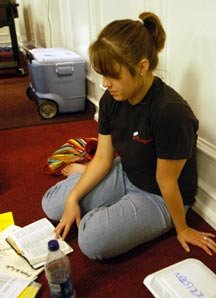
Discipleship continues as a major focus of Baptist Student Ministries through its programs to equip and develop Christian leaders.

About two-thirds of Baylor’s students are not Baptist, and university life reflects that diversity, with groups ranging from thriving parachurch ministries to groups such as Baylor’s Catholic Student Association.

“There’s a larger menu of spiritual activities available from a wide range of sources than there was 20 or 30 years ago,” Burleson noted.

But while Baptist Student Ministries do not possess a monopoly on student spiritual life at Baylor, BSM does enjoy privileged status in terms of decision-making and planning spiritual emphases that potentially affect all students, Burleson noted.

“BSM has a seat at the table. It is more integrated into campus life and all the programming that takes place,” he said.

At East Texas Baptist University, Baptist Student Ministries similarly fall within the spiritual development office, along with international student programs, church and denominational relations and the Great Commission Center.

“In many ways, I relate to the university as any other department director would do, and we’re involved in long-range planning and budget decisions,” BSM Director Mark Yates said.

Baptist Student Ministries work closely with other areas to plan spiritual development emphases on campus, such as a Missions Expo, he noted. The Great Commission Center works to equip and mobilize the general campus population for missions and ministry, working with athletic teams, academic departments and others groups to plan missions outreach.

In contrast to Baylor, at ETBU, 69 percent of the students are Baptist. With the exception of a couple of Christian service organizations, Yates noted: “We have a monopoly. BSM is the only Christian organization on campus.”

BSM plans its own missions and ministry activities “led by and for students,” Yates said. With 14 ministry teams in place, some students may participate in specific activities such as Habitat for Humanity building projects or Kids Club ministries without realizing they are BSM-sponsored, he noted.

At Baylor, Baptist Student Ministries coordinate the Go Now student missions program through the BGCT, but other missions opportunities—such as discipline-specific mission trips for various departments—are facilitated by another associate chaplain on the spiritual life staff.

That kind of overarching spiritual emphasis—and the opportunity for missions service through academic departments—creates a different playing field for Baptist Student Ministries on Baptist campuses than at state schools, McGowan noted.

“State schools are not all the same, but generally speaking, there’s a broader spiritual base at Baptist schools,” he observed. “On the Baptist school campuses, there are chapels, missions opportunities outside of BSM and students who are training to be pastors and missionaries.”

At both Baptist schools and state schools, BSM focuses on equipping and developing Christian leaders, McGowan emphasized.

But at state schools like UTA, the discipleship takes a more on-the-job approach as students come to faith in Christ and then are challenged to share their newfound faith with other students, Stidham noted.

“It’s a different level of discipleship,” he explained. “We disciple students within the context of evangelism. We’re explicitly evangelistic, and we want to help believers see themselves as being on mission and to see their campus as their mission field.”

Rather than mobilizing Christian students for service in the community surrounding the campus and in missions around the world, as the BSM might do on a Baptist school campus, Stidham said, he focuses first on mobilizing Christians to become missionaries on campus.

“We challenge every student to live on mission among a specific pocket of people,” he explained. “Rather than sending them out, we send them in.”

Yates—who served in collegiate ministry at California State Univer-sity in the mid-1980s, long before he went to work at ETBU—agreed the opportunities for evangelism within the student body are greater at a state campus. But he also stressed Baptist Student Ministries at Baptist schools have an evangelistic role on campus, as well.

“I think we have a balanced approach, with leadership development, discipleship and mobilizing students for missions and ministry. Within each of those three areas, there’s an emphasis on evangelism,” Yates said. “At our Baptist schools, the challenge we face is to remember to view our campus as part of the (evangelistic) harvest as well.”


Presidential prayer effort proves to be bipartisan

WASHINGTON (RNS)—A national grassroots network that came together after the 9/11 terrorist attacks for the sole purpose of praying for the president has lost more than 25,000 members since Barack Obama’s election last November. But more than 41,000 new members have signed up.

For John Lind, president of the Scottsdale, Ariz.-based Presidential Prayer Team, those figures indicate the ministry that claimed to be—and aimed to be—nonpartisan when it began in 2001 has lived up to its mission.

“The only … president we’ve been under has been (George W.) Bush, so you’ve got to be realistic and say, ‘Wow, this could be a substantial dip in our database,’ but it wasn’t,” he said in an interview. “I think it’s a positive. It’s almost two-to-one new member to unsubscribed.”

John Lind, president of the Presidential Prayer Team, is moving his organization to pray for Barack Obama.

That doesn’t mean it’s been a smooth transition for nearly half a million members who receive weekly e-mail updates guiding them in how to pray for the president. Some have sent the ministry messages saying that it has been “very difficult” to move from praying for Bush to praying for Obama.

“I did not want to pray for Obama because I didn’t vote for him, but then I realized that I had to pray for him, and it has literally changed my life to pray for him,” wrote a woman who only signed her name as “Betty.”

“God really changes our hearts if we allow him to do so. So, thank you for your part in getting us all together.”

Other team members, like Barbara Brown from Foresthill, Calif., said they realized they needed to put prayer ahead of politics after Election Day.

Brown was quoted in a recent profile on the ministry’s website: “I still have to remind some of my Democrat friends that no, President Obama did not inherit all of our nation’s problems from President Bush’s administration, and I have to remind some of my Republican friends that even though we did not vote for President Obama, he is now our president and he deserves our respect, honor and prayers as commanded by God.”

Since the ministry went online in 2001, Lind said, it has had 1.7 million people take part in its initiatives, which include praying not only for the president and his administration, but also military members and grandparents.

The site featured several “40 Days to Pray the Vote” projects leading up to the election and “77 Days of Prayer” between Election Day and Inauguration Day.

The latest initiative is “Praying Through the 1st 100 Days” of the Obama presidency; more than 31,500 people have signed up for a daily e-mail that provides them with a verse of Scripture and a short prayer at the start of each day.

“It just kind of jump-starts their day,” Lind said.

Officials of the ministry say they don’t have specific information about the party or church affiliation of their members, but they believe most have been evangelical Christians.

Peggy Gustave, who directs member services, estimates about 95 percent are Christian. She is aware of some Jewish members and at least one Baha’i member. On a recent day, she received 1,500 e-mail messages.

“I think with some people, they kind of want to be encouraged to pray for this president, even if they see that some of his agenda may not follow their bent,” she said.

“We refer them back to our mission Scripture, … which says to pray for those in authority over us. Period.”

Lind offered similar encouragement when he recorded his latest message for “Presidential Club” members who donate $25 or more a month to the ministry, saying the prayer efforts for the Obama administration are necessary.

“He and his administration are facing … enormous things on their plate,” Lind said he told them. “We can’t let our guard down.”

In that message, Lind also mentioned that he and six board members prayed with Bush in person during a 26-minute visit to the Oval Office on his last full day as president.

He called the meeting “just a terrific time.”

Bush spokesman Rob Saliterman confirmed that team members met with the former president Jan. 19.

Team officials hope to have the same opportunity with Obama, Lind said.

“We’ve tried to kind of let the dust settle a little bit,” he said. “We want an appointment with President Obama.”