Baptist newspaper apologizes for misusing governor’s signature

OKLAHOMA CITY (ABP) — A Baptist newspaper in Oklahoma has apologized for publishing a graphic illustration digitally edited to make it appear a controversial proclamation declaring America a Christian nation was endorsed by the state's Baptist governor.

The Baptist Messenger, official news journal for the Baptist General Convention of Oklahoma, covered a July 2 rally at the State Capitol promoting the "Oklahoma Citizen's Proclamation for Morality." The driving force behind the document is Sally Kern, a state legislator best known for commenting that homosexuality is a greater threat to America than terrorism.

The document was scanned and posted in three parts at the Lost Ogle.com.

The newspaper published the report in its July 16 issue, alongside artwork carrying the full text of the proclamation appearing on official state letterhead and signed by Gov Brad Henry and Secretary of State Susan Savage.

Problem is, Henry, an ordained deacon and Sunday school teacher at First Baptist Church in Shawnee, Okla., did not endorse the proclamation, which has been at the center of a controversy about separation of church and state.

Baptist officials said a graphic artist superimposed the statement over the actual text of a real proclamation signed by Henry and Savage on July 2 without noticing the signatures and official governor's seal.

Media reports said the newspaper apologized to the governor's office. Kern told the Oklahoman she was the first to alert the newspaper about the error, which she saw when her husband, a Baptist pastor, brought a copy home.

Doug Baker, who takes over as editor of the Baptist Messenger on Aug. 1, said it was an artwork procedure and a mistake. He said the paper's staff apologized and it would not happen again.

Baker, 40, was recently named communications team leader and executive editor of the Baptist Messenger. He comes from the Baptist State Convention of North Carolina, where he worked as director of public relations and executive director of the Council on Christian Life and Public Affairs since 2007. Asked for additional comment, Baker referred a reporter to quotes attributed to him by the Associated Press. 

The Baptist Messenger website carried a message labeling the graphic "misleading" and apologizing "for the oversight and error."

A spokesman for the Baptist General Convention of Oklahoma said the paper would run a retraction in both the July 23 and July 30 editions.

A spokesman for the governor said the paper's editors "apologized profusely."

"We understand that people are human and they make mistakes," said Paul Sund, Henry's director of communications.

Kern's proclamation blames a number of social ills on departure from the "rich Christian heritage upon which this nation was built." It also criticizes President Obama for scaling back National Day of Prayer ceremonies and issuing a proclamation declaring June "Lesbian, Gay, Bisexual and Transgender Pride Month, 2009."

Critics say the proclamation is riddled with revisionist history and accuse Kern of trying to use religion for political gain.

According to media reports, the July 2 gathering at the state Capitol turned into a shouting match between protesters chanting "Shame on you!" and "Love thy neighbor" and those supporting the proclamation drowning them out by singing "God Bless America."

Kern, a Republican, is a member of Olivet Baptist Church in Oklahoma City, where her husband, Steve Kern, is pastor.

She made national headlines in March 2008 with comments posted on YouTube that compared America's "gay problem" to "cancer or something on your little toe," that unless stopped will eventually destroy the nation.

"Studies show that no society that has totally embraced homosexuality has lasted more than, you know, a few decades," she said. "So it's the death knell of this country."

"I honestly think it's the biggest threat our nation has, even more so than terrorism or Islam, which I think is a big threat," Kern said.

Kern's political opponents accuse her of using anti-gay rhetoric to win votes among conservative evangelical voters.

Henry, a Democrat, belongs to a church that supports the Cooperative Baptist Fellowship, an organization started in 1991 in part to distance moderate Baptist churches from the Southern Baptist Convention's realignment with the Religious Right.

Henry is scheduled to speak at the upcoming New Baptist Covenant Midwest Region gathering in Norman, Okla. Other featured speakers at the Aug. 6-7 meeting at the Norman Convention Center and Embassy Suites Hotel include former President Jimmy Carter, former Congressman J.C. Watts, Gaza Strip pastor Hanna Massad and Wade Burleson, an Oklahoma pastor who resigned as a member of the SBC International Mission Board after criticizing decisions and internal politicking by the board of trustees in a widely read blog.


–Bob Allen is senior writer for Associated Baptist Press.


Youth minister hurt in bus wreck released from hospital

SHREVEPORT, La. (ABP) — A Baptist church youth minister is recovering at home from injuries he received July 12 when a bus carrying his youth group to a church camp rolled over on a Mississippi interstate injuring 23 passengers, one fatally.

Jason Matlack, minister of youth at First Baptist Church in Shreveport, La., was released July 18 from Rush Foundation Hospital in Meridian, Miss. He continues to recuperate at his home, where he and his wife, Sarah, are accepting visitors on a limited basis.

Matlack fractured his C7 vertebra and had artery injuries that caused serious loss of blood. His pastor, Greg Hunt, said it took doctors a while to figure out why he was losing so much blood and to get him stabilized. 

One of the teenagers hurt in the accident, Sarah Smith, went home from the hospital July 15. She was taken to University Medical Center in Jackson, Miss., with fractures in the neck and upper back.

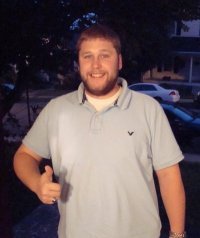
Jason Matlack gives a "thumbs up" in his profile photo on Facebook.

Two victims were expecting to be transported to Shreveport for more treatment.

Kyle Kelley, an adult sponsor who works for the Cooperative Baptist Fellowship of Louisiana, hoped to be moved July 20 to an intermediate-care facility. His injuries included broken bones.

Lauren Murchison was scheduled to be taken to a rehab facility in Shreveport on Tuesday. She had surgeries to repair fractures including her femur, clavicle and face.

Maggie Lee Henson, daughter of a member of the church's ministerial staff, remained in critical condition a week after the accident, suffering from severe head injuries. She has gained some stability but as of July 20 doctors continued to be concerned about fluctuations in her intracranial pressure (ICP), a critical benchmark in treatment and recovery from brain injury.

"She continues to be in a very fragile state of health," Hunt said. He said it is still "way too early" to be talking about long-term recovery. "Right now it's a survival question," he said.

One youth, Brandon Ugarte, 14, died on the way to the hospital after being ejected from the bus that blew a tire and rolled three times in the eastbound lanes of Interstate 20/59 near the Alabama Welcome Center in Sumter, Ala.

Most of the 17 youth and six adults injured in the accident were treated and released the night of the wreck. They were headed toward a camp sponsored by Passport, a ministry partner of the Cooperative Baptist Fellowship, held on the campus of Mercer University in Macon, Ga.

First Baptist Church in Shreveport has established an accident assistance fund to help with family expenses related to the accident.


–Bob Allen is senior writer for Associated Baptist Press.


Asian churches meet needs of refugees from Bhutan

HOUSTON—When Bishnu Dhaurali heard about free medical treatment offered in Houston, his first concern was for his parents. His father, Dhan, suffers from acute back pain due to severe attacks he endured while imprisoned in Bhutan, and his mother, Dharma, also was beaten by government soldiers.

New Song volunteer Sue Kim works in the free clinic checking blood pressure of Bhutanese refugees. (PHOTOS/Joshua Winata)

Dhaurali also was concerned for the health of his wife and daughter, who grew up in the squalid quarters of a Nepali refugee camp before the family was resettled in the United States last year.

Dhaurali and his family—like many other Bhutanese-born Nepali—were forced to leave behind comfortable agricultural lifestyles and homes and flee Bhutan in 1992 after the government began a nationalistic drive to expel people of Nepali origin and staunch the immigration flow.

Together with about 200 Houston-based Bhutanese refugees, Dhaurali’s family received medical and dental treatment during a recent mission trip organized by Carrollton-based New Song Church, a church predominantly composed of first-generation Korean immigrants, and hosted by Asian-American Church of Houston, which is geared toward second-generation Asian-Americans. Both churches are affiliated with the Baptist General Convention of Texas.

Such outreach efforts made by ethnic ministries in the U.S. are redefining “local” missions in a way that is in a sense more international than any overseas trip as people representing diverse racial backgrounds gather together to spread the gospel.

Bhutanese refugees wait outside the makeshift pharmacy where pharmacist Michelle Bang, left, and pharmacy student Laura Paik, right, of Asian-American Church of Houston dispense generic medications. (PHOTOS/Joshua Winata)

As relative newcomers to the U.S., many members of the Korean congregation had a keen understanding of the refugee’s plight and were eager to reciprocate the assistance they themselves had received.

“We came here saying the same thing: ‘Please help us. Please help our families,’” said New Song church member Steve Lee. “They just need help.”

Due to the language barrier, Lee did his best to communicate the gospel by repeating “Jesus loves you” to every person he met. Several refugees who spoke English were asked to serve as translators and present the gospel to their colleagues. Others received gospel tracts translated into their native tongue that were read aloud.

“I used hand motions and body language to reinforce what they just read, then told them Jesus—Yeshu Christ is how they pronounce it—is the only way for us to relieve our sin,” said Joseph Park, New Song education pastor. “I learned a couple words through our short encounter.”

George Tak, New Song’s director of local missions and the trip coordinator, said his team brought evangelism books in three languages—English, Nepali and Korean.

After hearing the gospel, each visitor went on to receive dental care, many for the very first time, from four licensed dentists, who performed cleanings, extractions and cavity fillings at a makeshift clinic set up in a Sunday school room.

In a neighboring building, church volunteers checked patients for diabetes and high blood pressure, and Dr. Min Yi, an internist with Harris Methodist Hospital of Fort Worth, provided free examinations with assistance from two medical students from Asian-American Church. Yi said he has been on many international medical mission trips, but this was his first local one.

Bhuwan Phuyel, 12, cradles his sleepy brother, Basanta, 4, as they wait for their medical check-up. (PHOTOS/Joshua Winata)

“It kind of opened my eyes to people who are in need in my own backyard,” Yi said. “There are a lot of people who are in need, and you don’t have to travel thousands of miles to help them.”

Bhutanese attendees were also served a hot meal by Asian-American Church and received donations of food, clothing and other supplies brought by New Song church members. The outreach concluded with a short worship service and a screening of the Jesus film in the Nepali language. During the invitational that followed, eight Bhutanese refugees indicated a desire to accept Christ.

The mission trip added to growing church movement in Houston among Bhutanese refugees that started in 2008, when the first wave of nearly 5,000 refugees arrived in the U.S. from Nepal. Houston currently hosts around 400 refugee families, but that number is expected to swell to about 5,000 within the next few years thanks to United Nations resettlement programs.

So far, 25 home Bible study groups for the Bhutanese refugees have sprung up in Houston, and dozens have come to know Christ.

Margie Randall, a missionary who has been working full-time with Bhutanese refugees in Houston since December, has seen a tremendous response from the newly settled immigrants. She delivers food and clothing to families throughout the city and is working to develop both spiritual and assistance programs for the refugees.

“We don’t just say, ‘Oh, you need to have Jesus.’ In Asia, you must build a relationship first. Yes, you need Jesus, but your stomachs are empty, your worried about how to get a job, your tooth is hurting, your kids are crying, everybody wants to go back home,” Randall said. “They’ve come to the land of opportunity in the worst economic in 25 years.”

Dentists Dan Hong (left) and Ellen Hong (right) with help from dental student Juri Huh, perform a dental cleaning on a Bhutanese refugee man. (PHOTOS/Joshua Winata)

The greatest need for the refugees is skills development, especially since self-sufficiency is a key component of successful resettlement, Randall said.

“The church’s role is to support them and not to give them handouts,” she said.

Even the refugees themselves agree they can only subsist so long on donations. However, services like the ones offered during the medical mission trip are helpful in giving refugees a head start while they find their bearings.

Bhadra, a 25-year-old refugee who is spearheading the development of a Bhutanese church in Texas, said such events are a way of showing God’s generosity to his people even in the midst of troubling times and are a good witness to many in the Hindu-steeped culture.

Bhutanese refugee Dibya Bhayati sorts through clothing donated by New Song Church of Dallas. (PHOTOS/Joshua Winata)

“We can help them and also show the love of Christ, the Christian love, to them and give them some way to salvation,” “Whether they want to accept it or not, let them hear the gospel of God.”

Through such efforts, people like Dhaurali have become Christians and are in turn beginning to minister to their own people. Dhaurali has opened his apartment for Bible studies, even as he continues his struggle for survival in a new land and culture.

“I study the Bible continuously, and I have come to know Jesus now,” he said. “We know now God.”


Pastors of small churches get big boost at Truett Seminary

WACO—Auctioneer/cowboy pastor Paul “Hoot” Wibbeler sees parallels between the ministry and the cattle industry.

“In the cattle business, you’ve got your mega-ranches,” said Wibbeler, 52. “But most of the steaks you eat come from farmers with less than 25 head of cattle.”

Roy Jackson of Temple (2nd from left)—flanked by (left to right) Cody Schwartz of Mansfield, Steve Belote of San Angelo and Danny Stanford of Linden—listen intently during a conference for small-church pastors at Truett Theological Seminary. (PHOTOS/ Matthew Minard/Baylor University)

On the church front, megachurches — those with 2,000 or more members — attract a lot of attention and more than a third of Baptist churchgoers. But they account for less than 2 percent of Texas Baptist churches. What’s more, 70 percent of Baptist congregations have fewer than 100 regular worshippers, according to figures from the Baptist General Convention of Texas.

Pastors of tiny churches often are bivocational, with few financial, educational or staff resources for their ministry, leaders at Baylor University’s Truett Theological Seminary noted. So, the seminary in 2005 began offering a self-paced, online certification program for those pastors or wannabe pastors.

“We tend to think about things being big in Texas,” said Larry Givens, program coordinator. “But I don’t find it phenomenal that there are so many smaller churches.

“My theology is that Christ preached to a lot of people. But he ministered one on one: ‘Zach, get out of that tree. I’m gonna eat supper with you.’”

Wibbeler wants that kind of intimate ministry. He was awarded his certificate at Truett in June after his final step in the training, a weeklong workshop on preaching skills.

Paul Stripling, retired associational director of missions, leads a preaching skills workshop in a program at Baylor University’s Truett Theological Seminary tailored to the challenges of pastors of small churches and bivocational pastors. (PHOTOS/ Matthew Minard/Baylor University)

“If I had my druthers, I’d love to be able to go to seminary, but I’ve got to make a living and don’t have the money,” said Wibbeler, lay pastor of Ranchhouse Cowboy Church in Maypearl.

“This is wonderful,” he said. “It’s not a seminar in a hotel for two hours; it’s much deeper than that.”

The $1,400 program, which usually takes two years to complete, grew out of a brainstorming session between Truett Dean Emeritus Paul Powell and Givens, a retired Air Force major.

“Not everyone who wants to be a pastor has the money or time to go to seminary, and not everyone wants to be the pastor of a big church,” Givens said.

But lack of training can be challenging for pastors—and their congregations, Powell and Givens agreed.

“In the Baptist denomination, there are not requirements to be a minister,” Powell said. “You just have to say, ‘I’ve been called to preach’ and find a church that will take you.”

Powell said he had long desired to help train people who cannot go to seminary, but “I couldn’t find the right person to do it.”

Then he met Givens.

“He’s a living example of the kind of person this could help, so he had the heart for it,” Powell said.

Givens, who was 46 when he felt called by God to be a pastor, began his ministry at a 20-member Baptist church near Taylor. He was trivocational: an elementary school teacher, a bus driver and a pastor.

Paul “Hoot” Wibbeler (center) shows his wife, Becky, a photo on his digital camera. Wibbeler, lay pastor of Ranchhouse Cowboy Church in Maypearl, has participated in the certificate program Baylor University’s Truett Theological Seminary offers for bivocational and small-church pastors. (PHOTOS/ Matthew Minard/Baylor University)

“That was tough, but it was good, because I was out there in the workforce,” said Givens, who has been pastor of two small churches.

“The key to pastoring is to being in touch with people, to avoid being insulated,” he said. “When you think about bivocational ministries, think about Paul and his tents.”

The ranks of the more than 300 pastors and potential pastors who have enrolled since 2005 include attorneys, cowboys, engineers, social workers, truck drivers and a helicopter pilot who served in the Vietnam War.

Several students from other states have enrolled, and 49 people have earned certificates, Givens said.

Givens wants to reach even more people. He will begin offering the course in Spanish in the fall with the help of a graduate assistant/translator, he said.

The first to complete the program was Carol Raulston, pastor of Abbott United Methodist Church, the boyhood church of country music icon Willie Nelson. Nelson purchased the church in Abbott, population 300, in 2006 after it closed. He wanted to preserve it, although its congregation had dwindled to a handful of people who were merging with another church.

Nelson helped bring the church back to life, and Raulston has helped keep it vibrant. It has grown to about 40 congregants since Raulston became its primary volunteer pastor in December 2007, nine months after receiving her certificate, she said.

Wibbeler hopes eventually to become a pastor full time, “even if it’s not much money. That’s not why you’re doing it anyway.

“I’m going to leave it up to God,” he said. “I’m available for whatever needs come up.”

Another recent graduate began his training behind bars.

“I would never have thought I’d end up here,” said Michael Ray Hayslip, 39, of Haltom City.

He spent 16 years in prison for drug-related crimes, he said. Addiction, the stress of his mother’s death and a foundering marriage made him turn to God.

“I went into the shower and cried out: ‘God, save me. I can’t live this life any longer,’” he said.

That was Oct. 13, 2006. Later, Hayslip felt a call to the ministry. While in prison, he began taking the Truett correspondence classes.

“It kept me grounded,” he said. “If God puts me in a pulpit, I’ll preach. I’m not quite sure where he wants me, but he’s brought me so far. I have my wife, my child and a home. I don’t have a drug addition. I don’t have a full-time job yet, but God has brought me from darkness to light.”

For now, he takes part in a prison ministry.

“Nobody there can say, ‘You don’t know what I’m going through,’” he said.

Students receive an overview of the New Testament, the Old Testament and Christian and Baptist beliefs during the correspondence classes, but, “preaching skills is one of those things you can’t learn from a book,” Powell said. “I wanted them on this campus at least one week.”

The preaching skills workshop in June was a special week for Michelle Pullen, 40, of Waco, a former officer at a juvenile detention center. She is the associate pastor at Pleasant Olive Baptist Church in Waco.

“I’ve been taking Greek at a seminary in Nolanville, too, but I like to hear others’ experiences, and this gave me a chance,” she said.

Paul Stripling, a former pastor and executive director emeritus of Waco Regional Baptist Association, finished the week with some practical suggestions for the group.

Don’t try to be Billy Graham; be yourself, he said.

Don’t make the mistake of thinking you can be heard just because you’re in a small church. It may have bad acoustics, so “preach from the diaphragm,” Stripling said.

One last thing.

“Friends,” Stripling said, “Your congregation may have five people, 500 people, or 5,000 people. The important thing to remember is that each one has a soul.”


White House advisory council maps out faith-based plans

WASHINGTON (RNS)—Members of a new White House advisory council have mapped out plans to link government and religious groups, from interfaith service projects to regional town halls on fatherhood.

Eboo Patel, founder of Chicago-based Interfaith Youth Core, said his task force of the Advisory Council on Faith-based and Neighborhood Partnerships will work to advance President Obama’s discussion about interfaith cooperation by fostering hands-on activities.

“Can we have interfaith service projects on 500 campuses?” he asked fellow leaders on the 25-member council. “Can we work with 25 State Department embassies to have interfaith service projects?”

Council members discussed the priorities of six task forces, which range from reforming the faith-based office to addressing the economic crisis.

Melissa Rogers, an expert on religion and public affairs at Wake Forest University School of Divinity, said the task force charged with reforming the office will examine everything from executive orders to PowerPoint presentations to ensure church-state restrictions are clear when religious organizations partner with the government.

Several council members told administration officials they want to make sure government partnerships extend to the city and county level—in part to ensure that economic recovery funds reach struggling grassroots nonprofits.

Joshua DuBois, executive director of the office, said he expects intergovernmental outreach to increase, but he is seeking recommendations from the advisers on best approaches for that cooperation.

Many of the advisers’ proposals will be developed into a report to the White House next year. Some of their work will be evident before then, such as regional town hall meetings on fatherhood scheduled for later this year.


DBU students discover meaning of ‘pure and undefiled religion’

XELA, Guatemala—A 15-member team of students, faculty and staff from Dallas Baptist University learned what it meant to practice what the New Testament epistle of James called “pure and undefiled” religion when they ministered to 75 orphans in Guatemala.

The trip marked DBU’s seventh to Guatemala in partnership with Buckner International.

Christy Gandy (left), Dallas Baptist University assistant director of spiritual life, and Emily House, a DBU sophomore, enjoy a special moment with a girl from the orphanage in Xena, Guatemala. (PHOTOS/Courtesy of Dallas Baptist University)

“It was amazing to spend time loving on these kids who don’t get very many hugs, touches, or words of encouragement,” explained trip leader Christy Gandy, DBU assistant director of spiritual life.

“To see their faces light up with joy when we walked in was always so special. It was amazing how quickly they would attach themselves to us.”

DBU students developed a Vacation Bible School program, using Bible stories, recreation and crafts to teach children about the fruit of the Spirit—love, joy, peace, patience, kindness, goodness, faithfulness, gentleness and self-control.

In addition to the Vacation Bible School program, DBU students hosted a birthday celebration in which every child at the orphanage received a gift.

“The best thing about the trip was just loving on the kids,” DBU sophomore Elizabeth Lopez said.

Chrisy Gandy,DBU assistant director of spiritual life, enjoys time with three girls from the orphanage in Xena, Guatemala. (PHOTOS/Courtesy of Dallas Baptist University)

A special focus of this trip was the intentional inclusion of graduate-level students. Under the supervision of Shannon Wolf, DBU assistant professor of counseling, three graduate students shared basic counseling principles with the workers at the orphanage, such as dealing with neglect and active listening techniques.

The mission trip fit into DBU’s service-learning emphasis, where students are encouraged to apply the knowledge they learn in the classroom to real world settings.

“The service-learning trip to Guatemala has been a highlight in my counseling studies,” graduate student Erika Wiegand said. “All these conversations and experiences further advanced my understanding of multicultural perspectives in counseling in a way that could not have been achieved in only the classroom.”

Dallas Baptist University sophomore Elizabeth Mullins plays with a girl at the orphanage in Xena, Guatemala. (PHOTOS/Courtesy of Dallas Baptist University)

Another graduate student, Lori Ryan, added: “I truly believe I will be a better counselor because of my experience, and I will have a special tenderness and understanding of cultural differences and how the differences impact the counseling process.”

While the students made an impact on the lives of children in Guatemala, the mission volunteers “walked away changed, as well,” Gandy observed.

“It was a reminder to be thankful for all we’ve been given—for friends and parents who love us—and to remember how blessed we truly are,” she said.


Jimmy Carter says religion used to subjugate women

ATLANTA (ABP) — Former President Jimmy Carter has urged religious leaders to repudiate teachings that he says justify cruelty to women.

Carter, a Nobel laureate and 39th president of the United States, described in an article in the British newspaper The Observer his "painful and difficult" decision in 2000 to leave the Southern Baptist Convention after six decades. 

Carter, who teaches Sunday school at Maranatha Baptist Church in Plains, Ga., said the decision became "unavoidable" when SBC leaders adopted a new consensus faith statement "quoting a few carefully selected Bible verses and claiming that Eve was created second to Adam and was responsible for original sin, ordained that women must be 'subservient' to their husbands and prohibited from serving as deacons, pastors or chaplains in the military service."

Jimmy Carter

Carter said that went against his belief "that we are all equal in the eyes of God."

Writing on behalf of a group of world leaders convened by Nelson Mandela called the Elders, Carter said viewing women as inferior to men is not limited to one religion and is not confined to the walls of the church, mosque or synagogue.

"This discrimination, unjustifiably attributed to a Higher Authority, has provided a reason or excuse for the deprivation of women's equal rights across the world for centuries," he said. "The male interpretations of religious texts and the way they interact with, and reinforce, traditional practices justify some of the most pervasive, persistent, flagrant and damaging examples of human rights abuses."

At its worst, Carter said the belief is used to justify slavery, violence, forced prostitution, genital mutilation and national laws that omit rape as a crime. But he said discriminatory thinking is also behind the continuing gender pay gap and why so few women hold public office in Britain and the U.S.

"It is simply self-defeating for any community to discriminate against half its population," Carter wrote. "We need to challenge these self-serving and out-dated attitudes and practices — as we are seeing in Iran where women are at the forefront of the battle for democracy and freedom."

Carter acknowledged that some New Testament teachings can be used to support male superiority, but he countered that carefully selected Bible verses can also be used to defend slavery.

"The truth is that male religious leaders have had — and still have — an option to interpret holy teachings either to exalt or subjugate women," Carter said. "They have, for their own selfish ends, overwhelmingly chosen the latter."

Carters said the Elders, an independent group of eminent global leaders bringing their collective influence and experience to support peace and human rights, were "calling on all leaders to challenge and change the harmful teachings and practices, no matter how ingrained, which justify discrimination against women."

He called on leaders of all religions to "acknowledge and emphasize the positive messages of dignity and equality that all the world's major faiths share."

Carter said religion that demeans women "provides the foundation or justification for much of the pervasive persecution and abuse of women throughout the world."

He said that violates not only the Universal Declaration of Human Rights "but also the teachings of Jesus Christ, the Apostle Paul, Moses and the prophets, Muhammad, and founders of other great religions — all of whom have called for proper and equitable treatment of all the children of God."


–Bob Allen is senior writer for Associated Baptist Press.


BCFS enables teens to embark on ‘road to independence’

SAN ANTONIO—More than 125 San Antonio teenagers took their first steps toward a college degree and brighter future by participating in “The Road to Independence”—a self-sufficiency conference and job fair sponsored by Baptist Child & Family Services.

Employers throughout San Antonio, including the San Antonio Fire Department, gathered to help educate local foster youth on opportunities for their future. (PHOTOS/BCFS)

For 10 years, the BCFS transitional living program has sponsored the conference for young adults aging out of the foster care system, answering questions about how to build and maintain relationships, find housing and employment, apply to college and receive financial aid, and manage money.

This year, BCFS added a job fair to the conference to help connect foster teens with local employers.

“Before I got involved in the BCFS program, I thought maybe I could be a mechanic. But now I’m in college, and have the confidence to start a foundation to help the homeless,” said Michael Ramirez, age 18.

The hardest thing about aging out of the foster care program is feeling that nobody understands what foster children are going through, he said.

“Because of the BCFS program, I can be a living testimony for other kids,” said Ramirez, a Northwest Vista College student. “There are people out there who do understand and who can help.”

San Antonio teens spent a Saturday investing in their future at the Road to Independence conference sponsored by Baptist Child & Family Services. (PHOTOS/BCFS)

Ernesto Olivares found that help through the BCFS transitional living program.

“You have people who are working with you to make things better,” he said.

While on some levels the youth participating in BCFS’ conference and job fair are typical teenagers, they have had to deal with many issues that are foreign to most young adults. The BCFS transitional living program has helped thousands of teenagers overcome great challenges and will continue support in the future.

When asked what advice he had for young adults about to transition out of foster care, Ramirez grinned and said: “Simple—stick with the program. Those three hours a week will be worth your time. They’ll change your life.”

To find out more about the BCFS’ Transitional Living program, visit www.bcfs.net/transitionalliving.


Bivocational minister’s conference celebrates family, friends & Christ

BELTON—Bivocational ministers and their spouses gathered at the University of Mary Hardin-Baylor to discuss “Simple Solutions for Tough Times: Living By Faith” during the annual Bivocational Smaller Church Ministers and Spouses Statewide Conference.

In addition to times of networking and fellowship, the gathering included seminars on such topics as conflict management, the use of technology in ministry, counseling and evangelizing communities, how to juggle a career, ministry and family and how to equip church leaders to serve congregations.

“I hope families had good experiences in our workshops and learned a lot through them,” said Cecil Deadman, Baptist General Convention of Texas small church/bivocational consultant. “I also hope that (participants) were able to spend time together and enjoy some relaxation.” 

New officers of the Texas Baptist Bivocational Ministers and Spouses Association are (left to right) Treasurer Danny Rogers of Living Proof Baptist Church in Cleburne, President Tony Tawater of Lone Willow Baptist Church in Cleburne, Secretary Ellen Goodson of Highland Baptist Church in Denton, First Vice President Rosalind Ray of Fairy Baptist Church in Fairy and Second Vice President Richard Ray of First Baptist Church in Wink. (PHOTO/Courtesy of Texas Baptist Bivocational Ministers and Spouses Association)

A teen conference also was held for children of pastors, deacons, music leaders and administrators. The Nick Gainey Band led worship, and Emily Prevost , associate director of the BGCT Congregational Leadership Team and young leaders consultant, was the keynote speaker.  Prevost’s message challenged students to train themselves spiritually by praying and dwelling on Scripture by reading it habitually and focusing on key words.

“The talks were really good,” said Laurel Luedecke, a Bell Baptist Association summer missionary who helped lead the youth portion of the conference. “I hope it enriched their worship experience, and that they realized worship goes outside the normal church service.”

She believes it is beneficial for youth to network with other students with common backgrounds.

“It is important youth have this opportunity to mingle with kids that are in their same situation,” Luedecke said. “They’ve made good friendships, and hopefully realized they’re not the only ones going through their particular situation.”

Scholarship were presented to Joao Chaves of Grace Point Church in San Antonio, a Baptist University of the Americas student, and James Han of New Song Church in Carrollton, a Baylor University student, from the Claude and Ilene Slate Memorial Scholarship Fund.  The scholarship fund is made possible through individual contributions and a pre-conference golf tournament each year. 

“I think God worked through people like you,” Chaves said in receiving the scholarship. “It’s amazing how God has been faithful to me and my family.”

Both scholarship recipients are going into bivocational ministry, and the money will be used for their education.

“God is a great provider,” Han said. “Because of you, the Lord has pulled through in my life again.”

Leonardo Diaz of Primera Iglesia Bautista in Hitchcock was named Exemplary Bivocational Pastor of the Year because of his committed leadership to both the church and his community. He was recognized for his service during the Hurricane Ike recovery period as he encouraged the community through work projects, block parties and worship services.

Others honored included Jimmy Young of Streetman Baptist Church as the Exemplary Bivocational Music Minister of the Year and Derrell Monday of the Bi-Fork Baptist Area as the Exemplary Director of Missions. The association also provided a plaque expressing appreciation for Randy Rather as president of the Texas Baptist Bivocational Ministers and Spouses Association since 2007. 

The group elected a new slate of officers: President Tony Tawater, pastor of Lone Willow Baptist Church in Cleburne; First Vice President Rosalind Ray of Fairy Baptist Church in Fairy; Second Vice President Richard Ray, pastor of First Baptist Church in Wink; Treasurer Danny Rogers of Living Proof Baptist Church in Cleburne; and Secretary Ellen Goodson of Highland Baptist Church in Denton.


Truett grad with cerebral palsy needs missionary companion in India

Just like the Apostle Paul needed Luke the physician as his traveling companion on missionary journeys, a wheelchair-bound young woman who feels called to India needs someone to serve alongside her.

Heather Herschap worked in Bangalore on two month-long mission trips— during the summers of 2005 and 2006—with the help of classmates at Baylor University’s Truett Theological Seminary and WorldconneX, a missions network the Baptist General Convention of Texas launched.

Herschap, who has cerebral palsy, served with proVision Asia, counseling and ministering to physically challenged people.

Heather Herschap worked in Bangalore, India, on two month-long mission trips when she was a student at Truett Theological Seminary. She feels called to return for a one-year missions commitment, but she needs a caregiver to serve with her. (PHOTO/Ken Camp)

Since her graduation from seminary, she has dreamed of returning to India for an extended one-year missions experience.

But finding a classmate who could receive field-experience credit for a one-month missions trip proved easier than enlisting a long-term traveling companion. After more than 18 months, she has been unable to find a caregiver to accompany her.

“There have been possibilities along the way, but they all fizzled out for a number of reasons,” she said.

While she has found it “very difficult to wait,” Herschap noted her physical limitations make it essential that someone to travel with her.

“Cerebral palsy is caused by a lack of oxygen to the brain at birth. That means my body is spastic—tense and contracted—affecting my extremities with complete feeling in my entire body. There is a loss of hand-eye coordination and fine motor control,” Herschap explained.

As a result, she needs help with bathing, grooming, basic hygiene and transportation.

“I need to be pushed in a manual wheel chair, but I can drive an electric one on my own,” she added.

If she can find a caregiver, both she and her traveling companion would serve with proVision Asia under the auspices of the Mission to Unreached Peoples missions-sending organization.

“I need someone not only to take care of my basic needs, but also to be my missions partner, going and serving as a missionary, as well,” Herschap explained.

Responsibilities include providing respite care for parents of children with physical disabilities, as well as helping disabled people with vocational training, physical therapy, job placement and English-language skills.

The caregiver would not have to be a seminary graduate, but she would need to complete training provided by Mission to Unreached Peoples. Herschap remains confident she has enough financial support to cover her caregiver’s expenses and provide some compensation, as well.

Anyone interested in more information about serving as Herschap’s caregiver in India can e-mail her at herschapah@gmail.com.

Waiting and searching unsuccessfully for a missions companion has proven frustrating, Herschap admits. But she remains confident God has a plan and purpose.

“I’m completely out of ideas. It’s all in God’s hands,” she said. “I’ve given it back to him.”


Parents of missionaries given safe place to talk

HOUSTON—Parents of missionaries support their children’s ministry, but they also need support from other missionary parents who understand the hardship of being apart from their children.

Susan Kilcoyne, who attends South Main Baptist in Pasadena, works as the state coordinator for the Missionary Parents’ Fellowship and participates in the fellowship’s Houston group. She serves as the connection among the missionary parents’ groups in Texas.

Amber Hill Beck, who grew up in Thailand where her parents served as missionaries, enjoys time with grandmother, Betty Price of Carrollton. (PHOTO/Courtesy of Missionary Parents Fellowship)

The International Mission Board started seven groups composed of 475 family units, including parents, grandparents, aunts and uncles. The families come together in their areas in homes, restaurants and churches to share common concerns.

Those concerns become particularly acute for families when missionaries serve in places closed to overt Christian missions.

“A lot of parents of missionaries now can’t talk to anyone about what their children are doing,” Kilcoyne said. “It’s a good place for them to come and see that other parents have the same feelings.”

Parents whose children recently went overseas need to hear from parents who have gone through these experiences for 15 years or more, Kilcoyne said.

“It’s an encouragement, especially for parents who are new to this,” she said.

The groups meet and share information from the International Mission Board, prayer requests, praises, things going on in the lives of their children and if someone has visited his or her children. They also pray together.

“We always, always have a time of prayer for the children and the other missionaries on the mission field,” Kilcoyne said.

Kilcoyne can relate to parents in this group. Her son and daughter-in-law serve, along with her granddaughter, as missionaries in France. Although she does not see them as often as she would like, advances in technology have helped bridge the distance gap.

“I can’t imagine not being in contact with them,” Kilcoyne said. She uses Skype—with a computer and webcam—to see and talk to them. “We don’t get to see them (in person) as much as a normal parents or grandparents.”

The distance and dangers involved can be tough issues for parents at home. Parents sometimes have difficulty understanding their children’s call to missions when they have not felt this call themselves, Kilcoyne said.

“I have to let them do what God has called them to do,” Kilcoyne said about her son and daughter-in-law. “I know in my heart-of-hearts, if the Lord has called them to go to another country, I cannot stand in their way.”

The group addresses concerns like these and would love to have as many parents as possible involved in their efforts, Kilcoyne said. The group also communicates to parents through e-mail, but getting together can be more rewarding, she said.

“I think it gives the parents a feeling of not being alone, not being in a situation where no one knows what they’re going through,” Kilcoyne said.

Groups meet in Fort Worth, San Antonio, Brownwood, Tyler, Houston, Northeast Texas and North Dallas. For security reasons, the group does not encourage people who do not have children in missions to come.


Church loses everything, gains ministry opportunities

HITCHCOCK—Last fall, Hurricane Ike left Primera Iglesia Bautista with nothing. One building was filled with two feet of water. Another building filled with four feet of water. Everything was damaged and needed to be replaced.

Carolyn Porterfield (left), multicultural consultant with Woman’s Missionary Union of Texas who coordinated recovery efforts for the Baptist General Convention of Texas following Hurricane Ike, presents a check from the WMU Foundation to Primera Iglesia Bautista in Hitchcock. Pastor Leonardo Diaz (right) said the funds paid for new tile in the church’s sanctuary. (PHOTOS/Courtesy of Primera Iglesia Bautista, Hitchcock)

But Pastor Leonardo Diaz said God delivered the congregation. It managed to be a source of calm in its neighborhood following the storm and rebuild its facilities with the help of friends across the state. The congregation recently rededicated its facilities.

Churches statewide discovered the congregation’s needs, Diaz said. Some connected through the Baptist General Convention of Texas. Others did so through the Galveston Baptist Association. Often, connections were made through friends of friends.

First Baptist Church in Paris partnered with Primera Iglesia Bautista in the recovery process. The Paris church raised $18,000 for its Southeast Texas brethren for building supplies as well as teams to do the construction.

“They’re the ones God had in mind who would not give up in faith, because we have no flood insurance. When we saw the devastation, we knew it would take a God-sized miracle,” said Diaz, who recently was honored with the Texas Baptist Exemplary Bivocational/Smaller Membership Church Pastor Award.

The choir at Primera Iglesia Bautista in Hitchcock leads in worship at a rededication service for the church facilities after the building was severely damaged by Hurricane Ike. (PHOTOS/Courtesy of Primera Iglesia Bautista, Hitchcock)

Bill Kennedy, a member of First Baptist Church in Paris, said the church cherished the opportunity to build a relationship with Primera Iglesia Bautista. “I feel like we were doing what God wanted us to do. There have been a number of times in my life when I felt I was in God’s will. That’s how I felt throughout this.”

The assistance helped the church rebuild as well as reach out to its neighbors. Members of Primera Iglesia Bautista handed out bottled water following the storm. They also provided backpacks and school supplies to area children and offered mounds of clothes to the community. Most recently, the church held a Vacation Bible School in an effort to share the gospel.

The congregation’s commitment to reaching its community embodies the spirit of Texas Hope 2010, a Baptist General Convention of Texas initiative to share the hope of Christ with every Texan by Easter 2010.

“I always thought that God has a purpose for us just being there because the people need to know about Jesus,” Diaz said. “We need to be the light there. We’ve been really blessed by the help that has been coming in.”