Christians embrace holistic ministry to make impact on poverty

WACO—Rather than responding to the needs of poor people by simply offering short-term relief, sponsors of the No Need Among You Conference challenged participants to move toward a biblical approach of holistic ministry with the poor. 

Jimmy Dorrell, executive director of Mission Waco, celebrates with Darlene, a woman whom the ministry serves, as she holds up a coin she received at an Alcoholics Anonymous meeting earlier that day. Darlene received the coin because she has remained sober 95 days.

The three-day conference at Baylor University focused on helping churches and individuals become aware of and engaged in holistic community ministry that helps and empowers people caught in poverty, suffering from mental illness and victimized by human trafficking.

“The Lord comes not only to save us for a relationship with him. He also is concerned with our whole person,” said Gerald Davis, community development director at the Baptist General Convention of Texas.

“He’s concerned about us entirely—concerned about our health, how we love one another, where we live and how we are making a difference for his name’s sake. All of that is wrapped up into being saved and being in a right relationship with God.”

The conference provided an opportunity for people to examine what it means to be marginalized and look at other issues related to poverty within a biblical context—issues that often aren’t discussed in a local body of believers, said Jimmy Dorrell, executive director of Mission Waco and pastor of Church Under the Bridge.

Participants pray at the conference.

“It’s about being prophetic in a culture that is losing its way without giving up your faith, but at the same time loving people,” Dorrell said.

“We consider ourselves biblical and trying to bring together the whole gospel again. This kind of conference is so fresh and encouraging for the evangelical community that they are learning again that you can’t just throw tracts in people’s faces and preach at them. Real love is always going to mean doing what the Good Samaritan did. The whole gospel is loving people in their need.”

Until the early 1900s, the American church had a social consciousness and a holistic approach to ministry, Dorrell said. The Great Reversal occurred when conservative and liberal churches became polarized over their response to the Social Gospel. Social justice became associated with the liberal church in a way that essentially scared the conservative church into underplaying ministry and strongly emphasizing evangelism in reaction. 

“The gospel has always been holistic. Evangelism and social action go together,” Dorrell said. “When you move more into a kingdom-of-God theology, you learn that God not only cares about us individually, but he also cares about the systems that he put in place so the children do get education and people don’t go hungry. Then, we realize those are tainted with sin, and we can fight for social justice. That isn’t liberal thinking, but it’s basic Christian stuff.”

Kathy Flowers (right), a member of Antioch Community Church in Waco, prays with a woman who attended the Friday morning homeless breakfast organized by Mission Waco.

To bring lasting change, the church needs to approach the poor on a holistic level, dealing with their problems, struggles and injustice that occurs on the physical, mental and spiritual levels, Dorrell said.

Keynote speaker Ray Rivera, director of Latino Pastoral Action Center in the Bronx, believes holistic ministry cannot begin until a church or individual receives a transcendent vision from God that will bring people out of their captivity.

“You have to see beyond the reality,” Rivera said. “A transcendent vision is one that transcends space and time and points us to the kingdom of God. It speaks a word that’s relevant to the situation and is impacting.”

Holistic ministry must have prophetic integrity and be incarnational, just as Jesus was when he came to earth, Rivera added. This allows the church to be part of a community so Christ can touch and transform people through them.  

“From a prophetic perspective, there are things that we can’t compromise on even when it’s not popular,” he said. “Sometimes as Chris-tians, we can’t bow, no matter what the institutional church or culture says.”
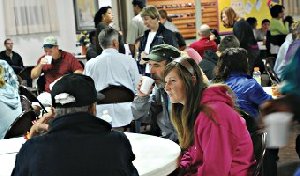
Breakfast at the No Need Among You conference.

For Matthew Stanford, professor and graduate program director of psychology at Baylor University and author of Grace for the Afflicted, the conference provided a way to encourage the church to address mental illness and pastors to realize the position of influence and ministry they hold. 

“Psychologists have known for 50 years that someone with a mental disorder is more likely to go to a pastor or clergy than a doctor,” Stanford said. “Part of this is accessibility. If you cannot afford the help you need, you will go to the highest-trained person around, and that is usually a pastor.

“Religious social support has been shown to help an individual recover quickly and effectively. When they have a system of family and friends to help them during the process, they recover more quickly and effectively.”

Once a church or individual has moved toward holistic ministry, the approach and mindset must be examined if it is to be put into place successfully, said Scott Talley, community minister at Crestview Church of Christ in Waco.

Often, people attempt to help the poor with a middle-class approach and expect them to respond positively and effectively, even though they know little about the hidden rules of middle-class society, Talley said.
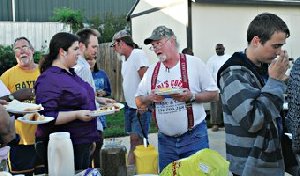
To bring lasting change, the church needs to approach the poor on a holistic level, speakers said.

“Those of us in the middle class attempt to help, but we do it in our middle-class method,” Talley said during a presentation of the Ruby Payne’s Bridges Out of Poverty training.

“We can’t talk to people in poverty with this mindset. We need to understand each other enough to know what motivates people. It’s not about embracing the differences, but understanding them so that we can help.”

The training identifies hidden societal rules and key ideas about money, time, possessions and power among those in wealth, middle class and poverty. Once these are learned, ministry volunteers can approach those in poverty in a way that will help and motivate them to choose to better their situation.

“Hidden rules aren’t a matter of identity but choice,” he said. “We try to tell people in poverty how to fix their problems without even inviting them to take part and share what they think needs to happen. Knowledge of the hidden rules leads to access, and access leads to power” to change.

As churches and individuals begin to embody this holistic gospel theology, results will look different, Rivera said. It can be a long journey, he said, but Christians should be encouraged in knowing that God is faithful as people are obedient. 

“Holistic ministry isn’t a call to success but to faithfulness, because you don’t define success by the world’s standards,” he said.

To immediately put teachings from the conference into practice, some participants served at a homeless breakfast, and others attended a cookout at My Brother’s Keeper, a shelter run by Mission Waco.

Twelve students from the Baptist University of the Americas also attended Poverty Simulation, a weekend where participants become homeless to understand the issues driving poverty as they gain a first-hand glimpse of what it is like to be poor.




Hospital serves up gospel tray liners along with food

BEAUMONT—Baptist Hospital of Southeast Texas is serving hope to people who eat in its facilities.

As part of its participation in Texas Hope 2010, the hospital is using 15,000 tray liners that encourage Christians to pray for people around them, care for those in need and share the gospel—the three pillars of the Baptist General Convention of Texas initiative aimed at sharing the hope of Christ with every Texan by Easter 2010.

David Cross, director of the hospital’s chaplaincy department, said he hopes the liners not only inspire Christians, but also catch the eye of nonbelievers, creating avenues through which the gospel can be shared or lowering barriers so others can share the hope of Christ.

“This is a way to emphasize the concepts of praying, caring and sharing,” he said. “We intend for it to heighten the curiosity of patients or family members who might be standing there feeding a patient so when they are exposed to other materials such as a CD passed out in their neighborhood, a light bulb might go on that we are loving them by serving them.”

For more information about the Texas Hope 2010 initiative, visit www.texashope2010.com .


Church called pastor 60 years ago; he never heard God say, ‘Move’

PRAIRIE HILL—Some people search their entire lives for their purpose, but Fred Sain found his as a 20-year-old junior at Baylor University.

Called as pastor on Aug. 14, 1949, he has been the shepherd of the congregation of Prairie Hill Baptist Church 60 years. And that suits him just fine.

“In times gone by, I’ve had opportunities to leave—not many in recent years, but in the earlier years. But each time, I’ve felt this was the place the Lord wanted me, and I’ve stayed here because of that,” Sain said.

{youtube}NqIo9-7CeQQ&hl=en&fs=1&rel=0{/youtube}
Fred Sain has served 60 years as pastor of Prairie Hill Baptist Church, northeast of Waco.

God’s direction to stay was not through any great sign, he said, but rather through grace-filled encouragement.

“He makes you content in your service, and he motivates your service in this place. And he gives you love for the people that live here. I’ve sought to have a pastor’s heart, and I certainly have found that here,” he said.

“This church is like a family to me. When we have a death of one of our members, it’s like a member of the family.”

And over the course of his six decades as pastor, he has ministered to more than 500 people at their deaths, but he also has presided at a similar number of weddings.

By Church Clerk Carol Webb’s count, he has preached about 8,000 sermons and conducted 52 revivals. He also went to Russia in 1991 and 1992, preaching in Moscow, St. Petersburg, Kiev and Norsgard.

In 1994, the church paid for Sain and his wife, Sally, to tour the Holy Land, and Sain preached a sermon at the Sea of Galilee.

All of that is not what has made Webb love her pastor for the more than half century she has been a member of Prairie Hill.

“In 2001, I had a very serious surgery and almost died. I was home and ready to give up and die. He was down on his knees and saying, ‘Carol, you’re stronger than that,’ she recalled.

"This church is like a family to me"

“Somebody like that, who will be with you when you’re at your lowest and help you back up, he’s so special. Every time we need him, he’s right there. He’s 80 years old, but he’s right there.”

While Sain’s pastoral skills are loved, Webb said he also is a talented preacher.

“He’s such a wonderful pastor. He explains things to you. He’s such a wonderful teacher, you can’t help but learn,” she said.

The population of Prairie Hill—a Limestone County community northeast of Waco—has dwindled to the point where the Baptist church is the only congregation still meeting, so people of other denominations also come to hear Sain preach, Webb said.

The population decrease has had its impact on the church, Sain admits.

“When I came here, there was a farmer and his family on every 80 acres,” he recalled. He said one wealthy person came to town and bought 44,000 acres, so there are far fewer families living in the area.

When Sain came to Prairie Hill 60 years ago, about 100 people generally filled the pews. Now it’s about 35, with only about 15 attending Sunday school.

Still, he’s very pleased with his congregation’s faithfulness. The church’s Mary Hill Davis Offering for Texas Missions goal was $3,000, and he felt certain they would meet that. Also, 58 percent of the church budget goes to the Cooperative Program.

Many visitors were on hand for his anniversary celebration, but it was not a retirement party. He doesn’t feel any release from the call he received six decades ago.

“It’s just like the same way you go home. I don’t think I could ever feel comfortable attending another church and listen to another preacher,” he said with a chuckle.

“My life has been this place, and it’s been his purpose. It’s been a good life. If I could go back and look over it, I believe I’d do it all again.

“I feel like the Apostle Paul. His life was not one any of us could emulate, but when he finished, he said his mission was accomplished. That’s how I feel about mine. This is the mission the Lord gave me, and I’ve tried to be faithful to it.”


Port Arthur church shares transformational hope

PORT ARTHUR—In the 35 years since Procter Baptist Church was planted, people have come and gone. The neighborhood has changed. But the gospel continues to change lives.

In recent years, the community around the church has changed ethnically and socio-economically. Apartment complexes have sprung up. Children grew up and left, as did their parents. Now, a new generation of young people is moving into the area.

The changes have been challenging to the congregation, which saw attendance drop significantly over several years as a result of a variety of factors. The church kept fighting to share the hope of Christ with the people living near it.

Whether it’s been refugees from Hurricane Katrina, new residents in the apartment complexes or families in homes, the congregation is seeking to spread the gospel first by meeting people’s needs and building relationships.

Members of the church have given out free blankets, food, clothes and flu shots in an effort to connect with people in the community.

“There are a thousand ways to get to meet people,” Pastor Rick Erwin said. “If you offer them something, they will come.”

The congregation is seeing God’s kingdom expand as a result of his working through their efforts, Erwin said. The church has baptized 28 people in the past few months. Sunday school attendance has increased from about 110 people a week to roughly 150.

“We’ve had whole families that we’ve baptized,” Erwin said. “We had two professions of faith yesterday.”

The church hopes the growth is only the beginning. As part of its participation in Texas Hope 2010—an initiative to share the gospel with every person in Texas by Easter 2010—the congregation is trying to share the hope of Christ with the nearly 7,000 who live within one mile of its facilities by next Easter.

The church hopes to pass out 3,000 bags filled with information about the congregation and gospel tracts to the community.

“Most of all, it’s building personal relationships,” Erwin said. “It’s meeting your neighbors, getting to know them.”

Through those relationships, Erwin prays that people will be connected to the transformational message of Christ.

“This is our goal’—that we will see our sanctuary filled twice Easter Sunday morning—not with just people visiting once, but with people we’ve met, we’ve gotten to know and we’ve built a relationship with,” he said.


BGCT forms Center for Effective Leadership

DALLAS—The Baptist General Convention of Texas has formed the Center for Effective Leadership to provide resources for pastors and other congregational leaders to develop leadership skills and practices. 

The center will help Texas Baptists develop leadership skills that will help congregations thrive, making an impact on their communities and the world, BGCT Executive Director Randel Everett said.

“The key to church and institutional health is the right kind of leadership. The Cen-ter for Effective Leadership was created to allow us to deal with this essential principle in pragmatic ways that provide tools and evaluations for our Texas Baptist leaders,” he said.

The center aims to help Texas Baptists increase their leadership abilities by pointing them to resources that are strong theologically as well as practically useful. Sometimes that will entail pointing individuals to existing resources.  Other times, the center will create resources by bringing Texas Baptists together who are passionate about a particular leadership issue, Center Director Ron Herring said.

By bringing Texas Baptists together, the center can create contextually accurate resources that provide the theological foundation for leadership, as well as practical leadership skills that will work in Texas Baptist churches.

“We want to assist churches and church leaders right where they are,” Herring said. “The resources we point people to and the resources we will create will help people better develop their leadership skills.”

The center is beginning its work by seeking feedback from Texas Baptists about where they find their leadership resources and what they would like to see created.

Listening is often the first step in effective church leadership, said Emily Prevost, the center’s associate director. It seems to be a logical point for starting the center’s ministry as well.

“If you walk in saying you have all the answers, you’re going to fail,” she said.

“In order to create significant solutions for leadership issues across the state, we need to make sure we’re addressing issues that actually exist. From that point, we can begin to bring people together to tackle the problems that Texas Baptists believe are most critical.”

In creating the center, Bivocational Specialist Cecil Deadman and Pastorless Church Consultant Karl Fickling were moved to the BGCT Christian Education/ Discipleship Center. Bill Claiborne, who primarily worked with Texas.E-quip.net, became a congregational strategist. The position held by Julie Sadler will be eliminated Oct. 31 as part of this strategic change.

The center’s budget will consist of limited BGCT cooperative funds and is intended to become self-supporting within a few years.


Austin ministry to internationals marks 40 years

AUSTIN—Friendship International recently celebrated 40 years of service to women from all over the world—and making friends for Jesus.

Women meet weekly to learn American cooking, citizenship requirements and procedures, computer and other technological skills, creative writing, jewelry making, cardmaking and crafts, a wide variety of needlework skills and English.

While they are learning new skills and making new friends, a childcare team supervises their children.

{youtube}iSeicG-rDHc&hl=en&fs=1&rel=0{/youtube}
Since 1969, Friendship International has been reaching out to women from all over the world.

Women from Iran, Turkey, Argentina, China, Japan, Iraq, Taiwan, Brazil, South Korea, Morocco, Peru, Mexico, India and France attended the first meeting of the year.

Women from 14 Austin churches volunteer to support the ministry that meets each week at Hyde Park Baptist Church, as it has for all four decades of the ministry.

“Getting to Know You” is the theme song of the group, and Director Virginia Kreimeyer said relationship-building has been one of the focuses of the group since its inception.

The group has its genesis in tragedy, she related.

In 1968, a doctoral student from India was pursuing his studies at The University of Texas, leaving his wife at home in their Austin apartment for long hours each day. One day, her loneliness reached its nadir. She walked to the Congress Avenue bridge over Interstate 35 and jumped, committing suicide.

In response, the Baptist Student Union director called a meeting of area pastors, telling them something had to be done to minister to the increasing number of internationals studying in Austin.

In 1969, Friendship International began reaching out to women from all over the world. The number of women varies from year to year and week to week, Kreimeyer said. There have been more than 500 women in attendance and as few as 80, but the number is not the important part, she said.

Virginia Kreimeyer directs Friendship International in Austin, where women of all ages from around the world find a place to belong. (PHOTOS/George Henson)

“We teach English, but we teach so many other things,” she said. “Mostly, we are a bridge to share Christ.”

Eddie Smith has been a part of the ministry almost since its inception. She has been meeting with women from all over the world 38 years. She has led the hospitality committee the last seven years.

“What got me here was living in another country and being that person who didn’t know the language, didn’t know the culture, didn’t have many friends. I had been that person living in another country,” Smith said.

“I feel like God has brought all these ladies to Austin, and if we can get to know them, the very first witness is as a friend.

“When the internationals come, some stay and some go back home. If we’ve planted the right seeds, they go back home with at least that seed of knowing who Christ is, and we don’t know what he’ll do with that. We don’t know how they will effect the people there.”

One of the former participants was known to have helped missionaries in Africa escape during a violent uprising.

The motivation to share Christ and change lives is what keeps the volunteers coming back year after year, Kreimeyer said.

“Our workers are some of the most faithful, committed women you can imagine. They are prepared—they don’t just show up. But most of all, they come ready to share friendship and the love of God with whoever is here,” she said.

Some women who were involved in the ministry have started similar ministries in the locations where they moved. Friendship International ministries have sprung up in Tyler, Houston and Kentucky.

“This is where the rubber meets the road,” Kreimeyer said. “You can be a missionary on Thursday morning and go home for lunch. I feel honored God has given me an opportunity to be a part.”


Students transform communities through Focus Hope weekends

Baptist Student Ministries across the state are directing attention toward meeting needs in their own communities during Focus Hope weekends.

The weekend events offer times of worship and discovery as students learn firsthand how to live out their calling through missions and evangelism, while making an impact on the world around them.

Students from the Stephen F. Austin BSM deliver Texas Hope 2010 multimedia gospel compact disks to apartments near campus during a Focus Hope weekend.

The events—scheduled in lieu of statewide or regional Focus events offered in recent years by the Baptist General Convention of Texas collegiate ministry team—are designed so each BSM group could minister to its own campus and city as part of Texas Hope 2010, a BGCT emphasis for Christians to pray for the lost, care for the hungry and hurting and share the gospel with every Texan by Easter Sunday 2010.

“When we sat down and planned the year, we knew God wanted something different,” said Joyce Ashcraft, a priority resource and regional coordinator for the BGCT Collegiate Ministry.

“We had long sensed a need as we looked at Focus, and we didn’t know what God had in store. At the time we started to ask those questions, Texas Hope 2010 was beginning, and it just seemed like a good fit to emphasize this for Focus.” 

Stephanie Gates, interim BSM director at the University of North Texas, noted her students joined with three other collegiate ministries to have a weekend of worship and ministry in the Dallas-Fort Worth area.

Jennifer Williams, a student at Amarillo College, hugs children at the ackyard Bible Club the Baptist Student Ministry at Amarillo College held in Eastridge, a low-income, multicultural neighborhood in Amarillo. Other members of the group painted a house, ministered at a widow’s banquet and hosted a missions awareness night as part of the BGCT Focus Hope collegiate weekends. (PHOTO/Justin Adams)

As the 60 students spent Saturday helping paint a house, working at a Habitat for Humanity store and delivering furniture to international students, many were stretched to become more vocal in sharing their faith, she said.

“I saw one of my students who worked at Habitat who said she was amazed at how easy it was to talk to people” about the gospel, Gates said. “Some of the students were able to talk to other volunteers who were there to work off prison hours. They asked why we were there, and we were able to explain we were there because Jesus loves them. It was neat to see them discover that it isn’t hard to have a spiritual conversation with someone.”

When rain thwarted block-party plans of the BSM at Texas A&M Kingsville, students delivered the block party door-to-door.

“God changed our plans,” said Mike Cervantes, director of the Texas A&M Kingsville BSM. “We went old-school and walked door-to-door, passing out hot dogs and sharing the message of Jesus. Before we knew it, we had kids praying through neighborhoods and sharing the message of the cross. One student noticed every home they went to had people who were critically ill in some way. They quickly began to realize it was not a coincidence, but they were all divine appointments.”

The Stephen F. Austin State University BSM joined three other schools to partner with local ministries in delivering multimedia gospel compact discs that provide the New Testament in more than 300 languages.

Stephanie Williams and Justin Barrett with the University of Texas at Dallas Baptist Student Ministry help paint the interior of a house during a Focus Hope weekend. The UTD BSM joined with three other BSMs for a weekend of worship and service during Sept. 11-13. (PHOTO/ Stephanie Gates)

“I hope that they just catch a sense of getting involved and not just being complacent and content just to go to class,” said BSM Director Gary Davis. “I hope they not only see the need from other organizations and the need to go and serve, but they see ways they can get involved, help out and not just be students, but be servants as well. I think that came across, and they are trying to do that.”

Other groups saw changes internally as community was built and students refocused their relationships with Christ. Taylor Davies, director of the Amarillo College BSM, said he saw this happen in his students.

“I think they put themselves in a place where they wanted to hear God’s call for missions in their lives,” Davies said.

“I know God spoke to several of them. There were two students who joined us who weren’t believers. As they spent time in community, I think God spoke to them and showed them his heart for them, and they since have become believers.”

Brittany Vargas, a sophomore biology major at Amarillo College and one of the students who began a relationship with Christ, said her decision to follow Christ and participate in Focus Hope was partly from BSM students and staff consistently loving her and showing her how they were in love with Christ.

“After I heard about Focus Hope, I told myself that I would go there with the intention of finding something that will give me enough strength to help be become a better person again,” Vargas said.

“It wasn’t until the whole thing was over and we went back the BSM and had a mission fair that I realized I did want to commit my life to Christ and become a better person. I’ve never in my life been so in love with Christ. They have rubbed off on me. I am really in a different place now.”

Twenty-two Focus Hope weekends have been completed, and another 12 are scheduled to take place by the beginning of November. As students participate in the remaining weekends, Ashcraft hopes to see students take what they learn and transplant it into their daily lives.

“I think our No. 1 hope is that people will be served—whether that is through helping a church care for elderly members through cleaning a yard or painting, or helping a church host a block party,” Ashcraft said.

“I want college students involved in ministry to Texas. I think sometimes missions is so seen as something that happens in another country and somewhere else.

“Whether we see ourselves as missionaries or not, we need to see our responsibility as right around us. And I think that these Focus Hope weekends help with that.”


Study says SBC funding plan inadequate to achieve stated goals

CHAMPAIGN, Ill. (ABP) — The Southern Baptist Convention has identified a missionary-sending goal big enough to accomplish the nearly 2,000-year-old task of the Great Commission — but lacks a clear fund-raising plan for meeting it, according to an upcoming annual report on Christian stewardship.

The State of Church Giving Through 2007 report, set for release Oct. 15 by empty tomb, inc., a Christian service and research organization based in Champaign, Ill., uses the nation's second-largest religious body as a case study to discuss money and the church.

Authors John and Sylvia Ronsvalle applaud the SBC for articulating a clear goal for engaging all unreached people groups on Earth. To do that, leaders say the SBC's International Mission Board would need to increase its present missionary force of 5,300 to about 8,000.

The Ronsvalles say Southern Baptists are not effectively meeting the goal, however, because there is no clear plan in place for raising additional money to support the new missionaries.

When the Southern Baptist Convention announced 2,800 as "the number of additional IMB missionaries needed to engage the unreached people groups around the world with the gospel" in the September 2007 issue of the denominational magazine SBC Life, no cost estimate was included for those who might be interested in meeting the need.

Using a figure on the SBC website that it costs $40,931.64 a year to support each missionary, it would require another $114,608,592 annually to pay for 2,800 additional missionaries.

SBC Life did not use that cost estimate, however, because the bottom half of the full-page ad in which the goal appeared promoted the funding channel for meeting it as the Cooperative Program. CP is the SBC's unified funding plan that simultaneously funds state and national Baptist conventions. Half of CP funds collected at the national level go to the IMB; the rest fund other denominational causes such as theological seminaries and public-policy advocacy.

All denominations use international missions as a marketing tool to encourage general giving that supports the entire denominational structure, the Ronsvalles admit, but they contend that current funding practices of the SBC are failing to keep up with stated goals.

If the SBC is serious about its goal for global evangelism, the authors suggest it would be more effective to raise new money for missions through the annual Lottie Moon Christmas Offering, which is designated 100 percent for the IMB.

The Lottie Moon goal increased from $165 million in 2007 to $170 million in 2008, with no mention of the goal of expanding the mission force. The 2008 offering failed to reach even that goal, totaling $141 million, $9 million less than the final 2007 amount.

The shortfall prompted IMB trustees in June to suspend new appointments to both the International Service Corps and Masters programs — two-to-three-year missionary appointments geared for younger and older adults, respectively. They also approved reducing the number of new appointments to the career, apprentice, associate and journeyman missions-personnel programs.

One proposal to remedy underfunding of the IMB is to strengthen the Cooperative Program by changing its percentage allocation. Traditionally the standards have been for congregations to forward 10 percent of their undesignated receipts to the state convention and for 50 percent of the money that comes into state conventions to be sent on to the SBC.

Even if that model were followed — the current average state conventions forward to the SBC is closer to 38 percent, and only a fraction of SBC-affilated churches give a full 10 percent to CP — congregations would need to direct $330 million more to the CP to generate an additional $114 million for international missions. State conventions and non-IMB entities at the national level would receive equal amounts.

The Ronsvalles say that seems unlikely with long-term trends showing smaller, not larger, percentages of congregational undesignated gifts being directed to the unified budget. A proposed benchmark of 10 percent for CP giving from the churches with which SBC leaders are affiliated — discussed at the SBC annual meeting in 2007 — prompted considerable debate within the denomination.

"The case study of the Southern Baptist Convention describes a denomination with a clearly stated goal that is not meeting that goal," the couple writes.

They say it would take "a relatively small amount of dollars" — about $7 for every member of a Southern Baptist church — to raise the $114 million needed annually to support 2,800 additional missionaries.

That could be done by mobilizing "retail billionaire philanthropists" — small donors who combine in large enough numbers to support multi-billion-dollar institutions — who have traditionally funded SBC mission work. The question, they say, is how to attract increased giving.

One scenario is to enlist one or more "wholesale billionaire philanthropists," large-capacity donors, to announce they would match every dollar of the 2009 Lottie Moon offering that exceeds the previous year's offering up to a specified amount.

The stated goal would be to increase the offering to a level adequate to fully fund current IMB operations, recover ground lost with the 2008 decline and, especially, to field the additional 2,800 missionaries needed to engage all unreached people groups.

The Ronsvalles calculate the new total at $265 million — an increase of $124 million over the most recent amount. Based on 2008 membership figures, the increased offering from congregations would cost each member an extra $3.82 to raise the $62 million to be matched by wealthy philanthropists.

They say resistance would most likely come from agency heads fearing that churches would increase designated giving by reducing undesignated gifts — the notion of "robbing Peter to pay Paul."

The Ronsvalles contend, however that it is "not improbable" that the "money follows vision" formula would come into play, providing sufficient funds for other convention ministries as well.

They point out that church members are willing to support the general structure of the denomination, evidenced by the amounts of support they give to the Cooperative Program, but the percentage of donations leaving the local church has been declining since the 1980s.

"Denominational officials may take courage in the biblical affirmation that 'perfect love casts out fear' (I John 4:18), and choose to love those in desperate spiritual and physical need at the risk of the preservation of their own structures," they conclude.

"Current giving trends suggest that continuing in the same pattern will not protect those structures," they continue. "The perceived risks associated with expanding missions may be well worth taking."


–Bob Allen is senior writer for Associated Baptist Press.


On the Move

Jack Bodenhamer has resigned as minister of youth/education at Trinity Church in Sweetwater.

Mike Carper to Papalote Church in Sinton as pastor.

Tim Cheatham has resigned as pastor of Bethany Church in Hearne.

Sammy Elliott to First Church in Levelland as pastor.

Larry Embry has been named pastor emeritus at First Church in Somerville.

Mary Embry to First Church in Somerville as minister of music.

Randy McDaris to First Church in La Vernia as youth minister.

Jesse Motley has been called as youth minister at First Church in Lake Dallas.

Drew Null has resigned as associate minister to students at First Church in Denton.

Tim Penney has resigned as youth minister at First Church in Gonzales.

Kenny Rawls to Skyline Church in Killeen as pastor from First Church in Nixon.

Lucian Rudd to First Church in Rankin as interim pastor.

Randy Samuels to First Church in Sinton as pastor from First Church in Three Rivers.

Jack Shuford to Leesville Church in Leesville as interim pastor.

David Silva to First Church in Pettus as pastor.

Rick Stewart has resigned as youth minister at McQueeney Church in McQueeney.

Seth Summers to First Church in Chilton as pastor.

Pat Voce to Lawn Church in Lawn as pastor.

Jonathan Waller to First Church in Runge as pastor, where he had been youth minister.

Morgan Woodard to First Church in Golinda as pastor.

Roger Yancey to First Church in Conroe as interim pastor.


Around the State

Wayne Shuffield, director of the Evangelism/Missions Center for the Baptist General Convention of Texas, will speak on “Go, Speak and Deliver Hope” for Texas 2010 at the 9th annual Hispanic Baptist Convocation of the Laity, Oct. 9-10, at Camp Buckner Hill Country Retreat near Burnet. Other key speakers include President Victor Rodriguez and Vice President Manuel Rios of the Hispanic Baptist Convention of Texas; Baldemar Borrego and Alcides Guajardo, former presidents of the Hispanic Baptist Convention; Lorenzo Pena, director of associational missions for the BGCT; Alfonso Flores Jr., pastor of First Mexican Baptist Church in San Antonio; and Damon Hollingsworth of Texas Baptist Men. Aida Morales, former president of the Pastors’ Wives Conference, will speak at the women’s conference. For more information, contact Eli Rodriguez (214) 341-9435.

Johnny Dammon

Kathy Dammon

Two couples with Texas ties have been appointed as missionaries by the International Mission Board of the Southern Baptist Convention. John and Kathy Dammon will serve in evangelism and church starting among the people of Southeast Asia. Both are graduates of East Texas Baptist University. He previously was pastor of First Church in Fairfield and was pastor of Fredonia Hill Church in Nacogdoches at the time of their appointment. They have three grown children.

Doug Taylor

Kathryn Taylor

Doug and Kathryn Taylor will serve in evangelism and church starting among the Sub-Saharan peoples of Africa. He has served in youth ministry at Central Church in College Station, Meadowbrook Church in Rockdale, Prestonwood Church in Plano, Sugar Creek Church in Sugar Land, Pinelake Church in Brandon, Miss., Istrouma Church in Baton Rouge, La., and Bear Creek Church in Katy. They consider First Church in Yoakum as their home church. They have three children—Kylie, 7; Karis, 5; and Caleb, 3.

Baylor University’s Louise Herrington School of Nursing has dedicated the Barnabas Success Center and the Diane Roose Brinkman Study Room to position nursing students for success in the academic and professional lives. The dedication was part of a series of events marking the nursing school’s centennial this fall . A reunion to commemorate the 100th anniversary of the nursing school will be held Oct. 9-11 at Sheraton Hotel in Dallas. Check-in is from 2 to 6:30 p.m. The initial mixer event begins at 4 p.m. Friday. Rooms still are available at (888) 627-8191, mentioning Baylor nursing for a discounted rate.

Hardin-Simmons University’s Logsdon Seminary will be the site of a conference titled “Baptists @400: Celebrating the Past. Imagining the Future” Oct. 12-13. The first session is at 2:30 p.m. Monday. Among the presenters are Tommy Brisco, Pam Durso, Jesse Fletcher, George Mason, Ellis Orosco, Keith Parks, Ronnie Prevost, Dan Stiver and Bill Tillman. The conference is free, including meals, but reservations are requested so adequate preparations can be made. For more information, go to www.logsdonseminary.org. To make reservations, call (325) 670-2194.

Dillon International will present a free adoption information meeting from 6 p.m. to 7:30 p.m. Oct. 20 at Buckner Children’s Home in Dallas. An overview of adoption from China, Korea, Haiti, India, Hong Kong, Ethiopia, Russia and Honduras will be given. A domestic program for Texas families and new opportunities in Ghana and Nepal also will be highlighted. For more information or to reserve a spot for the meeting, call (214) 319-3426.

The National Center for Church Architecture will hold a workshop from 9 a.m. to 4 p.m. Oct. 31 at Dallas Baptist University to equip church leaders considering or planning a relocation of their church. In addition to the stages of a move, participants will learn how to compare the potential of their current location to the potential of a future location. The $200 fee includes lunch and syllabus. The fee is discounted to $150 for registrants prior to Oct. 16. For more information, call (817) 937-8292.

Howard Payne University students will join with The Good Samaritan of Brownwood in an event that will raise awareness and money for hunger needs Nov. 6. The event will be held at Brownwood’s Depot and Civic Cultural Center from 11 a.m. to 7 p.m. and will feature musical presentations each half hour, a silent auction and soup. The cost is $10 per person. Ninety percent of the proceeds will go to fight hunger locally while a tithe will go to Heifer International to combat international hunger issues. For more information, call (325) 643-2273.

Peter Williams will give a lecture at Houston Baptist University’s Dunham Bible Museum Nov. 16 at 7 p.m. on “Moral Objections to the Old Testament.”

Larry Baker has been appointed director of the doctor of ministry program at Hardin-Simmons University’s Logsdon Seminary. In addition to 25 years of pastoral ministry experience, Baker was a professor of Christian ethics and pastoral ministry at Southwestern Seminary and Midwestern Seminary.

J. Gordon Melton has been named a distinguished senior fellow at Baylor University’s Institute for Studies of Religion. The author of more than 40 reference and scholarly books, he is noted for his Encyclopedia of American Religions, first published in 1979 and now in its eighth edition.

The Texas Education Agency has approved East Texas Baptist University to begin offering a special education supplemental certification to its students in the School of Education. ETBU teacher education students who seek this certification will be able to teach special needs students in their primary area of certification.

In recognition of September as “Infant Mortality Awareness Month,” Baptist Children & Family Services’ Healthy Start program held informational forums at community centers throughout Laredo, focused on protecting babies’ lives by mitigating dangerous circumstances in the home. In addition to the educational pieces given to parents, BCFS also distributed nearly 100 home fans to families living in the colonias to protect children from the South Texas heat.

Anniversaries

First Church in Aransas Pass, 100th, Oct. 15-18. On Thursday at 7 p.m., the Singing Men of South Texas will present a concert followed by an ice cream social. A reception will be held Friday from 5 p.m. to 7 p.m. Saturday will include gospel music from 2 p.m. to 5 p.m., meal at 5:30 p.m. and words from former pastors. A bonfire on the beach also will be held for youth. Sunday will begin with a continental breakfast at 9:45 a.m. The morning service will feature the recognition of former staff and leaders. Marshall Johnston is pastor.

First Church in Onalaska, 100th, Oct. 25. A meal will follow the morning service, with singing from 2 p.m. to 4 p.m. History books will be available for $13. Don Wilkey is pastor.

Lino Castaneda, 10th, as pastor of New Jerusalem Mission in Sherman.

First Church in Blanco, 150th, Nov. 8. A reception will begin at 8:45 a.m. For more information, call (830) 833-4632. A barbecue lunch will follow the morning service. Rusty Hicks is pastor.

Ordained

Jeremy Labelle, Joe Pickle, Bill Plummer, Scott Reib, Chris Sale, Roger Segars, Richard Stephens, Jeff Thomas and Brian Wood as deacons at First Church in Denton.

Revivals

LakeView Church, San Angelo; Oct. 4-7; evangelist, Robert Barge; pastor, Mike Dorman.

Springlake Church, Paris; Oct. 14-16; evangelist, Rick Perkins; music, Teresa Harmening; pastor, Michael Redus.


Executive Board recommends reduced BGCT budget for 2010

DALLAS—For the second consecutive year, the Baptist General Convention of Texas Executive Board approved a budget proposal reduced from the previous year.

Messengers to the BGCT annual meeting in Houston will consider a $44,029,505 budget for 2010. The total budget calls for $38,865,000 from Texas Baptist cooperative giving and $2,135,000 from investment income, with the balance in revenue provided by conference and booth fees, funds from the Southern Baptist North American Mission Board, product sales and other sources.

The proposed budget—a 9.8 percent decrease after adjustments for organizational realignment—includes no cost-of-living increases for BGCT Executive Board staff, and most open positions are not budgeted. One position in the Center for Effective Leadership related to women in ministry has been eliminated.

Developing a 'realistic' budget

“As we went into this process, we wanted a realistic, pretty conservative budget,” BGCT Treasurer and Chief Financial Officer Jill Larsen said.

All parties involved in developing the budget proposal wanted to avoid creating a budget that would require adjustment later, and they wanted to minimize staff reductions, she said. Also, since the amounts BGCT-affiliated institutions receive from the Cooperative Program are based on a percentage of receipts, budget planners wanted to provide a realistic projection of anticipated income.

Over the past 16 months, the budget has been reduced 20 percent, Larsen noted. The total number of BGCT employees—including part-time staff and Baptist Student Ministry personnel—has been cut from 406 in 2006 to 272 in 2009.

The recommended budget also cuts staffs’ non-matched employer-provided retirement contribution from 10 percent of salary to 5 percent, resulting in a savings of about $630,000. It leaves in place the matching-fund benefit whereby the BGCT matches an employee’s contribution of 1 percent of salary for every three years of service, up to 5 percent.

The board also authorized in 2010 the use of up to 1 percent of investment earnings from endowment accounts—beyond the amount normally distributed by the Baptist Foundation of Texas—up to $470,000. Of that total, $235,000 was included in the recommended budget.

The additional 1 percent added to the foundation’s distribution would bring the total draw to 5.5 percent, still below the 7 percent allowed by the Uniform Prudent Management of Institutional Funds Act of 2007, Larsen noted.

Worldwide portion of receipts

She projected income from the church-directed worldwide portion of cooperative giving would provide $1,518,000, with $1,143,000 directed to Texas Baptist initiatives and partnerships.

The 2010 proposed budget—with estimated worldwide receipts—would direct 48 percent to evangelism/missions, 27 percent to education/discipleship, 10 percent to advocacy/care and 15 percent to administration.

The 2010 recommended allocation for the worldwide portion of the budget includes continued funding for River Ministry and Mexico missions, missions mobilization, Texas Partnerships, Baptist World Alliance, Texas Baptist Men’s international ministries and international/intercultural missions. It adds ongoing funding for Go Now student missions and promotion of the Texas Baptist Offering for World Hunger.

It also includes limited-time funding for western-heritage churches outside Texas, Baptist University of the Americas, the Hispanic Education Task Force and Texas Hope 2010.

Final approval yet to come

Ed Jackson from First Baptist Church in Garland reminded his fellow board members that neither they nor messengers to the BGCT annual meeting had the final authority over the budget.

“Our churches have the final vote. And in effect, our churches have voted down the last two budgets,” he said. He noted about 2,000 churches affiliated with the BGCT gave nothing through the Cooperative Program.

Larsen reported as of July 31, Texas Cooperative Program receipts were at 94.75 percent compared to the same period in 2008 and were at 88.89 percent of budget. Expenses were at 91.2 percent of budget. To cover the overage, the BGCT accessed $1 million from reserves with board approval.

Texas Hope 2010 on track

BGCT Executive Director Randel Everett, in his report to the board, opened the floor for questions, and he responded to a query about whether Texas Baptists are on schedule or lagging behind in meeting the Texas Hope 2010 challenge. Texas Hope is an emphasis on praying, meeting the needs of hungry people in Texas and sharing the gospel with every person in the state by Easter 2010.

“I feel like we’re in the fourth quarter—the time when the game gets exciting,” Everett said. “It’s crunch time. It’s time for action. We’ve got to call our churches to prayer. … It’s going to take all of us.”

BGCT President David Lowrie, pastor of First Baptist Church in Canyon, focused on the Texas Hope 2010 goal of making sure every child in Texas has a nutritional meal each day.

“How can someone have hope if their children are hungry?” he asked.  

Eliminating hunger in Texas may seem to be an impossible task humanly speaking, but God can multiply resources when they are given to him, Lowrie stressed.

“If Jesus has ever asked you to do something impossible, it’s because he believes in you,” he said. “What do we have in our hands? We need to turn loose of what we have in our hands and put it in the hands of the Lord.”

Future Focus Committee

Stephen Hatfield, pastor of First Baptist Church in Lewisville and co-chair of the long-range planning Future Focus Committee, told the board his committee would present its report—“Living Hope”—to the BGCT annual meeting in Houston.

The committee determined early “we needed change sooner rather than later,” he said. The report will include seven affirmations about BGCT operations and nine findings and recommendations.

The Executive Board dealt with one recommendation the Future Focus Committee presented to the 2008 BGCT annual meeting—a proposed name change for the state convention.

After exploring several options—a formal name change, a “doing business as” option or a “branding” option—the board voted to recommend that the BGCT adopt the trademark “Texas Baptists” to gradually replace the term “Baptist General Convention of Texas” in common usage. The convention’s formal and legal name will not change, but the BGCT will use the trademark as its logo and public image.

Board nixes schedule change

The Executive Board rejected a proposal that would have changed its format for at least one meeting in 2010.  The board normally meets in Dallas three times a year for two-days meetings—the first day filled with subcommittee and committee meetings and the second day devoted to a meeting of the full board.

Due to overnight lodging and meals, the two-day board meetings cost about $40,000 each.

The proposal would have changed the May 2010 gathering to a one-day board meeting. All committee meetings were to take place during the month before—electronically if possible.

Bruce Webb, pastor of First Baptist Church of The Woodlands, warned the measure could have the “unintended consequences” of decreasing involvement and discussion in committees. Other board members also voiced concerns about the proposal, pointing to the value of face-to-face interaction in committee meetings. The board rejected the recommended change.

Multiple other actions

In other business, the Executive Board:

  • Elected officers Debbie Ferrier from Tallowood Baptist Church in Houston as chair and Van Christian, pastor of First Baptist Church in Comanche, as vice chair.
  • Authorized subordinating the BGCT’s lien on the original campus of Baptist University of the Americas to Frost Bank to secure the school’s $2.25 million loan. It will permit refinancing that will allow amortization of the loan over 15 years. The board also authorized the BGCT to obtain a first lien on the unencumbered land of the new campus.
  • Approved a revised relationship agreement with Valley Baptist Health System, to be presented to the BGCT annual meeting for consideration.
  • The new agreement calls for the BGCT’s primary governance influence to be moved to a subsidiary entity of the health care system—Valley Baptist Hospitals Holdings Inc.  At least one-fourth of that board would be Baptist, with the BGCT electing a majority of those individuals. The Valley Baptist Health System board would become self-perpetuating, with one BGCT-elected trustee of the subsidiary board serving as a member.
  • Approved a recommendation that messengers to the annual meeting approve a merger of Baptist Memorials Ministries and Baptist Memorials Services, both of San Angelo, into a single entity that would become affiliated with Buckner Retirement Services.
  • Authorized a recommendation to the BGCT annual meeting that would amend the agreement between the BGCT and the Baptist Church Loan Corporation. The proposal provides for financial separation between the Baptist Church Loan Corporation and the BGCT. The change would enable the corporation to borrow and repay its obligations on its own financial capabilities, and it would reduce the potential liability of the BGCT. The Baptist Church Loan Corporation would continue to be run by its board of directors, all of whom must be members of BGCT-affiliated churches. The BGCT would have the right to elect one-third of the board. The Baptist Church Loan Corporation would release the BGCT from any and all guarantees of loans—past, present and future.
  • Approved a recommendation to the BGCT annual meeting calling for creation of a 12-member commission to work with representatives from the Hispanic Baptist Convention of Texas to review and revise the unification agreement between the two conventions. Commission members would be appointed by BGCT officers elected at the annual meeting in Houston.
  • Approved a one-time exception to the BGCT annual meeting exhibitor policy for LifeWay Christian Resources. According to policy, prospective exhibitors at the annual meeting must provide a letter affirming support for the BGCT, its mission and its leadership.
  • LifeWay met all other requirements but declined to provide the letter of affirmation. LifeWay President Tom Rainer informed BGCT officials LifeWay exhibits in a variety of venues, and its policy does not allow for an official endorsement of any entity where it exhibited. The board agreed to a one-year, one-time exemption to allow time for that matter to be resolved.
  • Authorized the Executive Board chair to appoint a special committee to evaluate the level of institutional funding by the BGCT and to study how those funds are allocated to BGCT-affiliated institutions. A report by the committee will be presented to the May 2010 Executive Board meeting.


Baptists appeal for aid after typhoon hits Southeast Asia

FALLS CHURCH, Va. (ABP) — Baptists in the Philippines are appealing to the global Baptist community for donations as they gear up for relief efforts in the wake of a Sept. 26 typhoon that has killed 300 people there and elsewhere in Southeast Asia.

"For Christians, every disaster is a call to action," said Joel Raner, president of the Luzon Baptist Convention, a regional body affiliated with the Baptist World Alliance that serves in an area of the Philippines hard hit by Typhoon Ketsan. "We are called to help those who are suffering when they need it, and this is certainly the time of most need."

Baptist World Aid, the BWA's relief-and-development arm, urged Baptists around the world to respond to drastic needs of victims of flooding.

"We are also concerned that Typhoon Ketsana is now heading for the Mekong Delta in Vietnam," said Paul Montacute, BWAid director. Montacute said the BWA has also relationships with some Baptist groups in Vietnam, and BWA president David Coffey has visited with Baptist leaders there.

BWAid's Rescue 24 team, operated by Hungarian Baptist Aid and made up of trained international volunteers, is trying to work out details to offer services to the Philippine government, the Luzon convention and Vietnam.

Donations can be made online at the BWA website.