Executive Board authorizes GC2 study group

With an eye toward potential fallout from the Southern Baptist Convention 2024 annual meeting, the Baptist General Convention of Texas Executive Board affirmed the creation of a study group concerning out-of-state churches that want to affiliate with Texas Baptists’ GC2 network.

The Executive Board approved by 87 percent the recommendation regarding GC2 from its senior staff leaders and Executive Committee.

The board convened May 20-21 in a hybrid-format meeting—held both online and in-person, originating from the campus of the University of Mary Hardin-Baylor in Belton.

The Executive Board affirmed the creation of “an Executive Director’s GC2 Study Group including a new staff position to assist in exploring the issues involved in giving further structure to this ministry.”

“We need to be ready to welcome churches who want to be a part of what God is doing through Texas Baptists,” Executive Director Julio Guarneri said.

Guarneri emphasized the goal is not to compete with the Southern Baptist Convention or create another national convention or missionary-sending agency.

Rather, the GC2 network seeks to “complement” what the SBC is doing, to affirm “displaced churches” and to “walk alongside” women in ministry who “feel vulnerable and hurt,” he said.

‘Provide clarity’ in anticipation of SBC action

The BGCT needs to be able to “provide clarity” about how and if GC2 churches are represented in decision-making, how they are served by Texas Baptists’ staff, and whether their students qualify for ministerial financial assistance at BGCT-affiliated schools, Guarneri said.

Messengers to the 2024 SBC annual meeting in Indianapolis next month will vote on final passage of the Law Amendment, which essentially would declare churches with women serving as a pastor in any role to be outside the bounds of friendly cooperation with the national convention.

The GC2 network predated by several years any discussion about the SBC constitutional amendment. Former Executive Director David Hardage, who retired in December 2022, launched the GC2 initiative, focused on the Great Commission and the Great Commandment.

In part, GC2 provided an avenue for churches beyond Texas to partner in Texas Baptists’ efforts to “share Christ” and “show love.”

To date, about 70 churches outside the state affiliate with the BGCT—some identifying as Texas Baptists and many identifying as GC2 congregations.

Guarneri reported inquiries regarding GC2 have “increased significantly” in recent months, prompting the need for greater clarity about the purpose and organizational structure of the GC2 network.

Group already exploring strategic vision

He asked the board to “bless” a task force that already has been at work to explore and articulate a strategic vision for Texas Baptists.

Chairman Bobby Contreras of San Antonio presides over a meeting of the Baptist General Convention of Texas Executive Board. (Screen capture image)

Currently, convention officers and pastors working with the group are BGCT President Ronny Marriott of Burleson, BGCT First Vice President Debbie Potter of San Antonio, Executive Board Chair Bobby Contreras of San Antonio, African American Fellowship President Henry Batson III of Faith Fellowship in Red Oak, Darin Wood of First Baptist Church in Midland, Jeff Warren of Park Cities Baptist Church in Dallas and Joe Barber of St. Luke Baptist Church in San Antonio.

BGCT staff serving with the group are Craig Christina, associate executive director; Ward Hayes, treasurer and chief financial officer; Joshua Minatrea, director of communications; Katie Frugé, director of the Center for Cultural Engagement and the Christian Life Commission; David Miranda, director of the Ministers Development and Missional Network; and Guarneri.

A related advisory team includes Sergio Ramos, president of the Hispanic Baptist Convention of Texas; Steve Bezner, pastor of Houston Northwest Church; and Michael Evans, pastor of Bethlehem Baptist Church in Mansfield, along with a possible representative from BGCT intercultural ministries.

Texas Baptists need to be able to present a “clear, comprehensive and compelling” vision consistent with Jesus’ agenda as presented in the Gospels, Guarneri said in his report to the board.

“We want every Texas Baptist church, every institution that relates to us, every partner that we work with, and everyone who is considering whether they want to be part of what we’re doing to have a clear sense of who we are and what we are about,” he said.

Texas Baptists have “spent too much energy and effort” focusing on churches that have chosen to cut their ties to the BGCT, he asserted.

“I think it’s time for us to get our eyes on Jesus and his mission and then let people who want to be part of that join us,” Guarneri said.

‘We are centrists’

In a changing culture, a shifting denominational landscape and a period of rapid technological advancement, Texas Baptists remain steady in their commitment to Scripture, submission to the lordship of Jesus Christ, faithfulness to historic roots, a focus on the Great Commission and willingness to stand on biblical ethics, he said.

When some groups gravitate toward extremes, Texas Baptists have maintained true to historic Christian beliefs and practice, he noted.

“We are orthodox. The basic doctrines of the Christian faith are the ones we hold to,” Guarneri said. “We are centrists.”

Texas Baptists value local church autonomy and voluntary cooperation, he added.

“That means for us that statements of faith are supposed to be expressions of what we hold in common and not creedal statements that are imposed on the churches or on any convention or association,” Guarneri said.

“Doctrine is important. To agree on the basics is important. But our purpose is not doctrinal uniformity. It is to obey God’s mission in the world today.”

Guarneri noted churches increasingly are forming networks to accomplish God’s mission.

“We can sit and watch that from a distance, or we can join in and lead,” he said.

NAMB already cutting church starting funds to BGCT

Guarneri also frankly acknowledged if the Law Amendment passes at the SBC annual meeting, churches with women on staff who carry the title “pastor” will face decisions to “either change their titles, change their positions or change their affiliation.”

He also reported the North American Mission Board no longer will fund any church starts in Texas that are uniquely aligned with the BGCT, because the state convention has not officially adopted the 2000 Baptist Faith & Message.

Guarneri pointed out the discontinued funding will occur even though BGCT-affiliated churches last year contributed $3.3 million to the Annie Armstrong Easter Offering for North American Missions and $2.2 million to NAMB through the Cooperative Program.

Texas Baptists “stand fast” in support of local church autonomy, specifically regarding the role of women in ministry, Guarneri said.

The BGCT includes churches that hold to a complementarian position that reserves the role of pastor to men alone, while other churches hold a fully egalitarian belief that both men and women can serve in any ministerial role, he noted.

“Local church autonomy in this matter means complementarian churches do not impose their view on other churches. It also means egalitarian churches do not impose their view on other churches,” he said.

“It implies that we respect each other and that we work together. We don’t believe that the topic of women in ministry is a matter of scriptural authority. We believe it is a matter of scriptural interpretation.”

Guarneri took issue with those who criticize the BGCT as “tolerating error” out of a desire to remain neutral.

“We are not neutral. We are pro-church,” he said.

In other business, the Executive Board:

  • Authorized the creation of networking events for women in ministry, along with mentoring opportunities, leadership training and resource development. See the related article here.
  • Heard an update from Texas Baptists’ sexual abuse response task force, including a report that the group was expanded to include members with counseling and legal expertise.
  • Learned the Theological Educational Council and Institutional Relations Committee endorsed multiple ministry-related graduate degree programs at East Texas Baptist University and B.H. Carroll Theological Seminary, contingent upon the merger of the two institutions. See the related story here.
  • Elected Lanette Jones from Schwab City Baptist Church in Livingston, and Jose Carreno from Northside Baptist Church in Baytown to fill vacancies on the Executive Board.
  • Revised a policy regarding a retirement gift from the BGCT, eliminating the gift to employees who leave Texas Baptists to take immediate full-time employment with another organization.

EDITOR’S NOTE: The vote total in the second paragraph was edited May 24 based on additional information from BGCT CFO Ward Hayes. The 76 percent affirmative vote originally reported included only those who voted via Zoom and not those who registered their votes in person.


Board approves recommendations about women in ministry

The Baptist General Convention of Texas Executive Board voted in favor of Executive Committee recommendations on women in ministry in Texas. The measure was approved by three-fourths (75 percent) of the board.

Executive Board Chair Bobby Contreras presented three recommendations to the board May 20:

  • Texas Baptists host a networking event for women in ministry at Texas Baptists’ annual meeting beginning in 2024 and host regional networking events across Texas, beginning in 2025.
  • Executive leadership identify and resource a new or current BGCT staff member to expand, develop and implement mentoring and leadership training opportunities for women in ministry in Texas Baptist churches and institutions.
  • Executive leadership resource a BGCT staff member to explore all current opportunities available for women in ministry and leadership in Texas Baptist churches and institutions to catalog resources and provide suggestions on ways to streamline and expand programs without duplicating.

Ward Hayes, BGCT treasurer and chief financial officer, spoke to a question on funding these recommendations. For the remainder of this year, there is room in the budget for the recommendations, and building the 2025 budget currently is in progress, he said.

The plan is to have a current staff person take on this exploratory work, though that person has not yet been pinpointed.

In response to a question about whether cooperative giving resources will be used to act on a matter that is an issue of local church autonomy, Hayes responded, “We don’t believe these recommendations violate local church autonomy at all.”

Cooperative Program dollars will be used in this exploration, he explained, but “it is, we think, in meeting all the needs of our churches as we do this.”

A posture of listening

In response to a motion from last year’s Texas Baptists’ Family Gathering in McAllen, the Executive Board has “taken a posture of listening” over the past several months, hosting listening sessions to help grasp the current experience of women serving in Texas Baptist life, said Katie Frugé, director of the Center for Cultural Engagement and the Christian Life Commission.

With the goal of “capturing with clarity the voice of women in ministry in Texas,” these sessions were led by Frugé, who reported her impressions to the board.

The sessions included BGCT staff women, women serving in BGCT-affiliated institutions, women serving on staff in Texas Baptist churches, and women serving in volunteer positions that strengthen their local church and convention.

The listening sessions found some common themes.

“Every single woman in attendance expressed a desire to be a positive influence that celebrates and uplifts one another,” Frugé said.

Participants shared candidly about weariness in serving in ministry, across areas of service. Many women in ministry in Texas are weary and feel invisible. Serving in ministry can be spiritually, emotionally and physically exhausting, which does create a unique weariness, Frugé said.

“Bearing one another’s burdens is difficult, if we do not see each other’s load,” one participant in a listening session said.

Relational and educational resources needed

The listening sessions showcased a need for relational and educational resources.

“Relationally, we heard a deep desire for mentoring of women in ministry in Texas. There is a yawning gap in the lack of professional mentors for women serving in various ways to build the kingdom of God,” Frugé said.

While some churches offer mentoring, the demand continues to outpace the supply. Women are hungry for biblically grounded and accomplished mentors in their unique professional spheres, she continued.

Session participants expressed a desire to build ministry relationships with other women serving across the Texas Baptist landscape. Frugé suggested expanding network capacity and relationship building is the antidote for some of the weariness participants expressed.

Participants desired networking opportunities, while expressing the difficulties of building such networks given the day-to-day grind of the never-ending daily demands of ministry.

Other fields provide ongoing professional development, but “we need more training and professional development available for women after seminary or college graduation in their field,” Frugé said.

Some educational opportunities for women who are professional ministers exist currently, but it may be necessary to streamline and refocus to make them more accessible to the most people, she continued.

They want to be ‘seen’

“Women we heard from faithfully served their local church and ministry assignment with dignity and integrity. They are often the first to arrive and the last to leave. They volunteer, they do the work, and they have no agenda beyond serving the kingdom of heaven.” Frugé said.

Women emphatically did not want a focused campaign highlighting only women. Instead, they communicated a desire to be seen in the natural and diverse makeup in the fabric of the convention.

Frugé urged continued action on addressing the needs of Texas Baptist women in ministry, “as we work to fulfill our convention constitutional objective—to awaken and stimulate among the churches the greatest possible activity in evangelism, missions, Christian education and benevolent work and enterprises to cultivate a closer cooperation among the churches and promote harmony of feeling and concert of action in advancing all the interests of the Redeemer’s kingdom.”

At the 2023 Family Gathering, Meredith Stone, executive director of Baptist Women in Ministry and messenger from Calvary Baptist Church in Waco, presented a motion: “I move that the Baptist General Convention of Texas Executive Board be instructed to have staff create programs, resources, and initiatives to assist churches in affirming, appointing, and employing women in ministerial and pastoral roles.”

Dustin Slaton, pastor of First Baptist Church in Round Rock, brought an amendment to Stone’s motion: “I move that we request the BGCT Executive Board to resource BGCT staff to continue developing more strategies, resources, and advocacy initiatives to assist churches in affirming, appointing, and employing women in ministerial and leadership roles.

Messengers at the 2023 Family Gathering passed the amended motion.

EDITOR’S NOTE: The vote total in the first paragraph was edited May 24 based on additional information from BGCT CFO Ward Hayes. The 70 percent affirmative vote originally reported included only those who voted via Zoom and not those who registered their votes in person.


BGCT committee endorses B.H. Carroll degree programs

Texas Baptists’ Theological Education Council and Institutional Relations Committee endorsed nine master’s degree programs, a doctor of ministry degree and three Ph.D. degree programs that will be offered by B.H. Carroll Theological Seminary at East Texas Baptist University.

Contingent on a merger between the seminary and ETBU being approved by accrediting agencies in June and by the boards of the two institutions in July, students pursuing the degrees will qualify for ministerial financial assistance through the Baptist General Convention of Texas.

Pending final approval of the merger, B.H. Carroll students will be eligible to receive the grants if they are pursuing the Master of Divinity degree, any of eight ministry-related Master of Arts degrees, the Doctor of Ministry degree or the Doctor of Philosophy degree in Scripture and witness, in faith and heritage, or in ministry and formation.

The BGCT Executive Board learned about the May 20 action by the Theological Education Council and Institutional Relations Committee during its hybrid-format meeting, conducted online and in-person on the campus of the University of Mary Hardin-Baylor.

‘Educating the next generation of Christian servant leaders’

ETBU President J. Blair Blackburn expressed appreciation for the “dedication and support” of the Theological Education Council and the Institutional Relations Committee.

“The BGCT’s approval, enabling B.H. Carroll ministry students to receive support from the Texas Baptists’ Ministerial Financial Assistance program, is crucial for supporting graduate theological education students,” Blackburn said.

“We are committed to educating the next generation of Christian servant leaders, men and women trained and equipped for the transformational ministry they have been divinely called to serve and lead.”

Gene Wilkes, president of B.H. Carroll Theological Seminary, similarly expressed his gratitude.

“Our students have not had access to financial aid like this before. This, another gracious gift from the Lord, will expand the reach of B.H. Carroll as it seeks to fulfill its mission for Christ and his church,” Wilkes said.

He also expressed appreciation to Blackburn, ETBU Provost Tommy Sanders and Dean Sandy Hoover of the ETBU School of Christian Studies and Humanities “for their help in the merger process and this opportunity to help our students.”

The Theological Education Council and the Institutional Relations Committee also endorsed the Master of Arts in chaplaincy and pastoral care degree program at Dallas Baptist University, and they reaffirmed the Master of Ministry degree program at Stark College and Seminary.

Stephen Stookey, director of theological education for Texas Baptists, reported 937 students—506 pursuing undergraduate degrees, 369 pursuing master’s degrees and 62 seeking doctoral degrees—received $1.48 million in ministerial financial assistance during the 2022-2023 academic year.

Currently, B.H. Carroll Theological Seminary has 124 students enrolled in degree programs, including 37 seeking doctoral degrees, Stookey noted.


Increased corporate attention shown to religious diversity

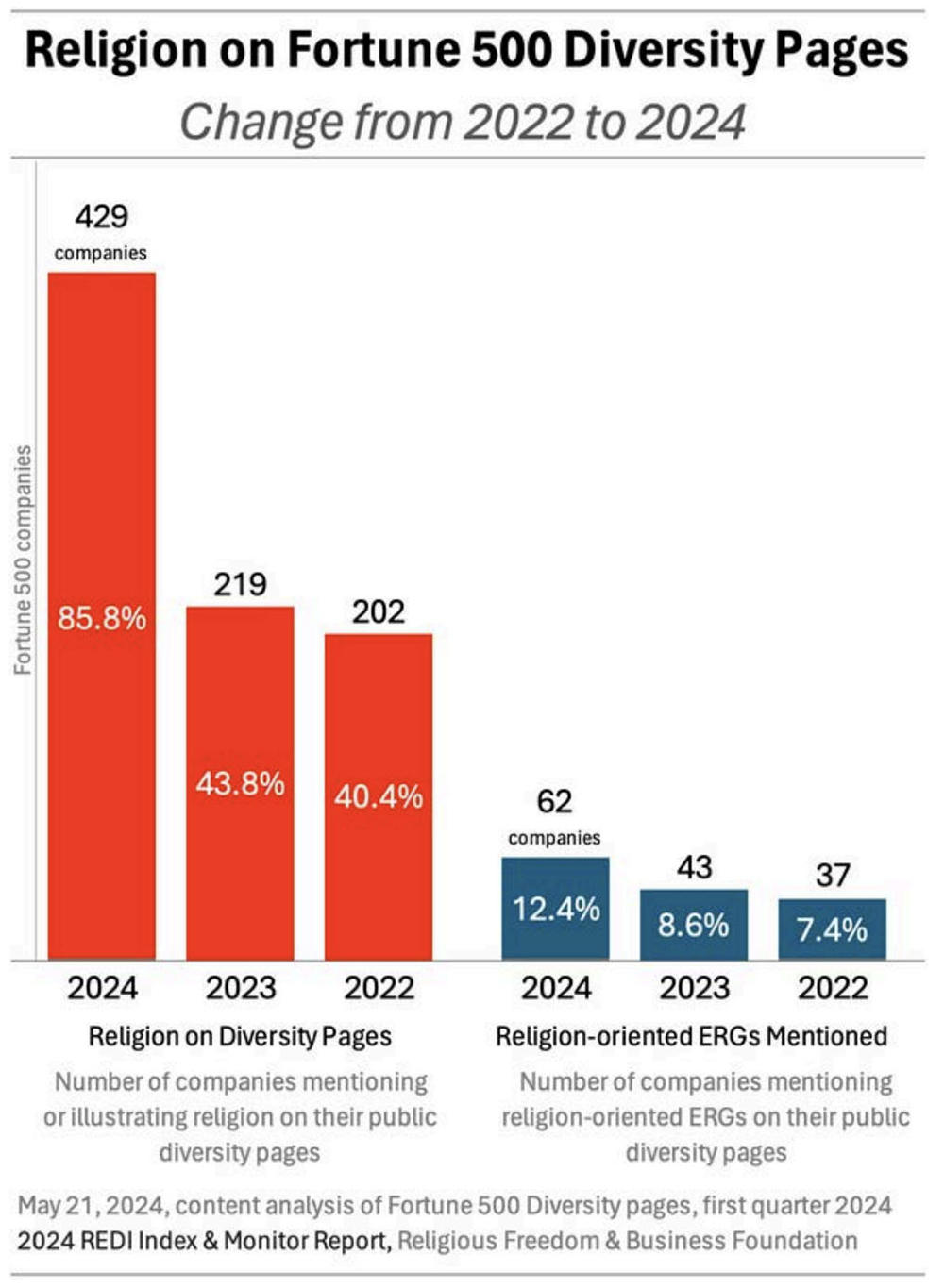
WASHINGTON (RNS)—Once taboo in the corporate world, religion is gaining traction in Fortune 500 diversity efforts, according to a new report from the Religious Freedom and Business Foundation.

More than 85 percent of Fortune 500 companies (429 companies total) now include religion in their commitment to diversity, more than twice the number that did in 2022, according to the 2024 Corporate Religious Equity, Diversity & Inclusion Index and Monitor.

And 62 Fortune 500 companies (12.4 percent) now showcase faith-based employee business resource groups, up from 7.4 percent in 2022.

These numbers represent a “tipping point,” said Religious Freedom and Business Foundation President Brian Grim, in the number of companies embracing religion as a core component of diversity.

This year, he added, companies especially were attentive to how people of faith responded to global news, including the Israel-Hamas war.

“That has meant paying a little bit more attention than they did in the past to faith identities,” he said. “A number of companies have reached out and relied on their faith employee resource groups to help in the navigation of these types of issues.”

The organization released its 2024 benchmark assessment of corporate America’s religious diversity efforts May 20. This year, Accenture and American Airlines tied as the most faith-friendly Fortune 500 companies, both earning perfect scores on the index, which assessed more than 30 faith-friendly companies via an opt-in survey.

The survey evaluated companies in 11 categories, including their religious accommodations, spiritual care/chaplaincy services and procedures for reporting discrimination. Equinix, Dell Technologies, Intel Corporation, Salesforce and Tyson Foods all followed close behind the top scorers.

Grim said Accenture stood out for proactively creating a corporate culture hospitable to religious identity.

American Airlines, which also topped the REDI Index in 2022, brings great global sensitivity to its religious diversity efforts thanks to its international reach, Grim added.

“At American Airlines, our purpose is to care for people on life’s journey, including our customers and our 130,000 team members,” said Cedric Rockamore, the vice president of global people operations at American Airlines. “Our team members, across all faiths and beliefs, help us better understand and serve our customers around the world.”

Among the 32 top companies assessed via the REDI Index, 100 percent reportedly celebrate their employees’ holy days in an equitable manner, according to the report.

Seventy-two percent match employee donations to religious charities, and 87 percent provide chaplains or other forms of spiritual care for their employees.

Companies that didn’t take the survey were ranked separately on their religious diversity efforts via the REDI Monitor, which was based on publicly available information.

Grim said companies’ approach to religious diversity is often counter-cultural. Businesses that might otherwise be in competition are quick to share best practices for religious inclusion and collaborate on events.

The Christian and Black employee resources groups at Intel and Microsoft, for example, recently teamed up to host a Martin Luther King Jr. Day celebration, he said.

On May 22, Dell Technologies’ interfaith employee resource group is working with Merck, CVS Health and three local faith groups to host a hands-on food packaging event in Washington, D.C.

“I think that’s a very hopeful trend in these polarizing times,” Grim said.

The interest in corporate religious diversity is also spreading globally, Grim added. He noted the Religious Freedom and Business Foundation held an international conference in India in December and released REDI Index and Monitor findings for companies in the United Kingdom in March.

On May 21, the foundation’s annual “Dare to Overcome” conference will bring hundreds of leaders from Fortune 500 companies to Washington, D.C., to discuss topics like workplace chaplaincy, research on faith and faith accommodations in the workplace.


SBC presidential nominees at a glance

With the current count standing at six nominees for president of the Southern Baptist Convention, here is a bullet-point guide to where the nominees stand on some key issues.

Information is compiled from Baptist Press interviews and articles, Baptist Standard articles about the nominees—Clint PressleyMike Keahbone, Jared MooreDavid AllenBruce Frank, and Dan Spencer—and a brief email interview with one of the later nominees.

Nominations may continue up to the vote, but no new nominations have been put forward since April. Nominees are listed in order of announcement.

Clint Pressley (Screen capture image via BP)

Clint Pressley— Pastor of Hickory Grove Baptist Church in Charlotte, N.C. (2,632 average attendance). Met his wife at Southwestern Baptist Theological Seminary, but moved to New Orleans Baptist Theological Seminary to complete his Master of Divinity degree.

  • For the Law Amendment.
  • Against funding the Abuse Reform Commission—admitted it made him “a little nervous” that entity heads “were slow to get behind” the group—Send Relief announced its original financial gifts to sexual abuse reforms would not be going to the Abuse Reform Commission—“We want to support what is good. We’re just not convinced yet that that’s the right thing to do,” Pressley said.
  • For increased financial transparency, but trust the trustees.
  • Said there was a “fog” around the issue of sex abuse in the SBC initially, but “with that fog clearing up a little bit, we are seeing this is not a system-wide crisis. It is a crisis, but it’s not showing up in every church. However, every church needs to be prepared. Every church needs to react.”
  • Using the influence of the office, he would “love to pull down or cool off some of the rhetoric” heard in the SBC. As president, he’d like to remind SBC members that even though they do have some housekeeping to do, they’ve got a great house.

Mike Keahbone (Screen capture image via BP)

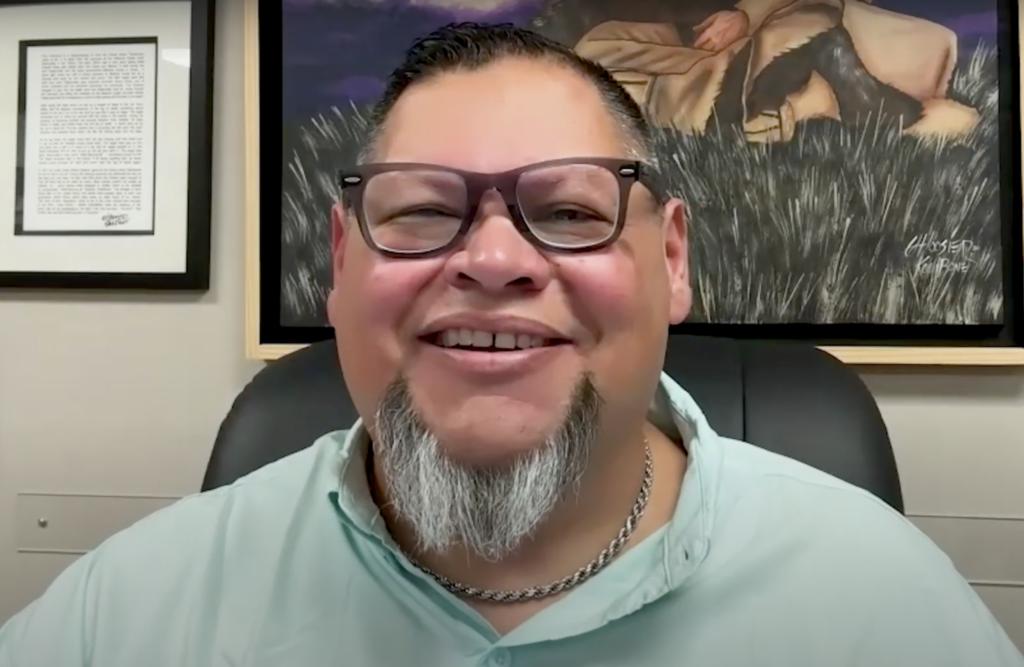
Mike Keahbone—Pastor of First Baptist Church in Lawton, Okla. (Average weekly attendance of 623). Native American of Cherokee, Comanche and Kiowa descent. No published Texas connection. Served on the Sexual Abuse Task Force and as vice chair of the Abuse Reform Implementation Task Force.

  • Against the Law Amendment—though devoted to complementarianism and the role of pastor being reserved for men, he believes the SBC’s current system for removing churches with women pastors has proven itself adequate.
  • For funding the Abuse Reform Commission—strongly supports the commission as “a great step” for how the SBC needs to continue its sexual abuse response. Various SBC leaders told the Abuse Reform Implementation Task Force necessary steps to fulfill messengers’ recommendations could not be taken within the convention. Keahbone is among the commission’s incorporators.
  • For increased financial transparency, form 990-type reporting.
  • Does believe sexual abuse is a crisis among SBC churches—questioned a reluctance to call sexual abuse in the SBC a crisis, while being willing to label the issue of women pastors a crisis.
  • Would appoint committee members “to make sure that every voice is represented and try to make every voice represented equally.”

Jared Moore (Screen capture image via BP)

Jared Moore—Pastor of Homesteads Baptist Church in Crossville, Tenn. (150-170 average attendance). No published Texas connections.

  • “100 percent for the Law Amendment.”
  • Against the Abuse Reform Commission, but supports a sexual abuse convictions database overseen by the SBC Executive Committee in cooperation with state conventions and local associations.
  • For IRS form 990-type institutional financial transparency.
  • Regarding sexual abuse: “It’s a heinous sin. … but no, the short answer is there is not a sex abuse crisis in the SBC.”
  • Moore sees appointment of Committee on Committees members as a key function of the SBC president and has a list of standards for those appointed, including believing only men can be pastors and rejecting all forms of critical race theory.

David Allen (Screen capture image via BP)

David Allen—Professor and dean at Mid-America Baptist Theological Seminary in Cordova, Tenn. Studied at Southwestern Baptist Theological Seminary and was a charter member and first staff person hired at Prestonwood Baptist Church in Plano. Pastored churches in Texas and taught at Southwestern Baptist Theological Seminary for almost 20 years.

  • For the Law Amendment—churches need women but not as pastors, and the constitution of the SBC needs to clarify so.
  • Against funding the Abuse Reform Commission: “I’m concerned, since this group is independent and not under any accountability control of the SBC … of any money going to that group,” he said.
  • For increased financial transparency—wants to know why the trustees of SBC institutions don’t trust SBC members to know how funds are spent.
  • Does not believe sex abuse can “legitimately be described as a crisis in SBC churches.” It is important to address but mostly handled at the local church level.
  • As president, he’d deal with issues, but he said they’ve become distractions for some. He wants to focus on the main thing: The main thing is missions, evangelism, preaching and church planting.

Bruce Frank (Courtesy Photo)

Bruce Frank— pastor of Biltmore Baptist Church in Asheville, N.C. (7,331 members across eight multisite locations). Served as chair of the Sexual Abuse Task force in 2021-22, overseeing the independent investigation of the SBC Executive Committee’s handling of abuse reports.

Holds a bachelor’s degree from Texas Tech University and an M.Div. degree from Southwestern Baptist Theological Seminary. Previously pastored in Texas.

Frank’s responses came from an email. He did not participate in an online forum with some other candidates, as it took place before his nomination, and he had no individual interview published in Baptist Press at the time of writing.

  • Against the Law Amendment—Less than 1 percent of SBC churches have a female pastor of any kind, so that is considered “statistically insignificant” and not a “crisis,” he said. “I am in favor of providing clarity to our complementarian theology, but not the Law Amendment, as it raises more questions than it answers and will lead to extrabiblical action.”
  • Abuse Reform Commission—“I do believe we need a ministry check database to safeguard our churches from the vast majority of abusers who wouldn’t show up on a simple background check. If that is outside SBC, then funding would probably come from outside—if inside SBC, then come from inside.”
  • On financial transparency—“Where trust is missing, more transparency and information are needed.  I have no problem on the messengers voting in a 990-type form [requirement].”
  • Regarding sexual abuse: “There is a sex abuse crisis in our culture, and that doesn’t stop at the doors of a church. Some good progress has been made in the SBC in the last 5 years, but much work remains to be done in this important area.”
  • Would focus on the Great Commission and sexual abuse reform as his first two priorities as president of the SBC.

Dan Spencer (Screen capture image via BP)

Dan Spencerpastor of First Baptist Church, Sevierville, Tenn. (Church website reports membership of over 4,000 and Sunday small group attendance of 1,200). The church is a leader in baptisms and CP giving. Spencer is the great-great nephew of M.E. Dodd, the “father of the Cooperative Program.” No published connection to Texas.

  • Noncommittal on the Law Amendment—He has no issue with its theology but thinks the 2000 Baptist Faith and Message is sufficient. Yet, it “wouldn’t break his heart” if messengers pass it.
  • Abuse Reform Commission—unclear if for or against, but said “the way the SBC messengers have responded to the SATF and ARITF shows that as a Convention, we want to do everything we can to help churches with prevention.”
  • Against form 990-type disclosures. “We have a system in place that provides transparency to the trustees of our entities, and I trust that system. …as long as trustees are getting the information they need from our entity administrators, I’m content.”
  • “Sexual abuse is an unthinkable evil no matter the age or gender of the victim. My heart breaks for individuals and families who have suffered. I can get behind anything that makes our churches safer, especially for children.”
  • About his view of making committee appointments as president, he said, “I would want to seek input from grassroots Southern Baptist associational leaders, state convention staff and find those people who have demonstrated commitment to Southern Baptist causes, to Great Commission work, who are involved in Cooperative Program giving and then Southern Baptists who understand our polity and who are committed to our cooperative mission.”


How many churches use background checks?

WASHINGTON (RNS)—About 10 years ago, when Pennsylvania passed a law requiring a background check for anyone who worked with children, Megan Benninger volunteered to help her church comply.

At the time, Benninger and her husband were members of a small Southern Baptist church, where the nursery was run by volunteers and things were a bit disorganized.

“Everything was loosey-goosey,” she said. “I don’t know if we even had a schedule for the nursery.”

Before they got started organizing the background checks, Benninger said a church leader pulled her aside and told her not to include the church’s pastors. None of them worked with kids. Besides, they were pastors and so above reproach.

“They said, ‘Don’t even think about the pastors,’” she said. “So I didn’t.”

Years later Benninger learned that one of the pastors, a former Christian school principal, had been convicted of abusing a minor—a revelation that tore their little church apart.

Benninger left that church and now runs BaptistAccountability.org, a website that posts links to news stories about abusive pastors. She says churches never can be too careful.

“I never trust anyone anymore,” Benninger said. “You just never know.”

Since the Catholic sex abuse scandal of the early 2000s, many congregations have moved to make their churches safer for kids, passing new policies and procedures designed to screen out abusers and to report any abuse to authorities. But few denominations check to see if churches follow those procedures or track those who do.

Difficult to find hard data

A recent report on Southern Baptist churches from Lifeway Research found that about 58 percent of those congregations said they do background checks on staff who work with kids, with small congregations—those with fewer than 50 people—least likely (35 percent) to do those checks. Large churches, those with 250 people or more, are much more likely (94 percent).

The Lifeway data was limited—only 29 of the Southern Baptist Convention’s 41 state conventions collected data on abuse prevention in churches—and churches were not required to answer those questions.

Dealing with abuse has been difficult for the SBC, as all of its congregations are autonomous and there is no hierarchy to require them to follow safety policies for children.

But even denominations with hierarchical structures—like the Episcopal Church or the Evangelical Lutheran Church in America—don’t track what happens on the local level.

Instead, that is left to the local congregation or diocese.

A spokesperson from the ELCA provided a link to suggested policy for congregations but said the denomination does not know what local churches are doing.

A spokesperson from the Episcopal Church also provided a link to a General Convention decision to produce safe church training materials but said “​decisions on implementation are local.”

Evangelical denominations take a similar approach to how churches deal with child safety.

“Assemblies of God has a well-established history in creating resources on this topic and urging urging all churches to adopt best practices to protect the vulnerable,” said a spokesperson for the Assemblies of God.

“Assemblies of God churches are autonomous and the General Council of the Assemblies of God does not have the ability to create policy for local churches.”

Develop a culture that cares about children’s safety

Darrell Morgan, the pastor of CrossWinds Community Church in Stillwater, Minn., part of the Converge denomination, said his congregation background-checks all volunteers who work with kids. A church member who is a former investigator helps coordinate those background checks, he said.

A former therapist with experience in social work, Morgan said those background checks are just a first step. The church also does not let volunteers be alone with children and tries to be selective about who gets to volunteer.

“We want a safe environment that is accountable and protects everyone,” he said.

Emily Garcia, assistant rector at Church of Our Redeemer in Lexington, Mass., has worked with children’s ministries about 15 years, starting before she entered the ministry. She said the local Episcopal diocese requires them to report details of its safe church programs on an annual basis.

Volunteers who work with children must pass a background check, Garcia said, and be an active part of the church for at least six months before starting the screening process.

“Someone came in on their first Sunday and said, ‘I want to work with the children,’” she said. “And we said, ‘OK, talk to us in six months.’ Stick around for a while.”

Garcia said potential volunteers also spend time observing with experienced volunteers—and then the more experienced volunteers give their feedback—just to make sure they feel OK with how the volunteer interacted with kids. Volunteers also are required to do a series of trainings.

She said the church has developed a culture that cares about the spiritual formation and safety of children. Having set policies and doing background checks helps maintain that culture, she said.

“The sense is that no one is above a background check,” she said.

Among Southern Baptists, Lifeway found that churches in the Northeast were most likely to do training on how to report abuse and that churches in the Northeast and the West are most likely to do training on how to care for victims of abuse. Churches in the South were least likely.

Lifeway also found that some Baptist state conventions, like the Baptist General Convention of Texas, the Pennsylvania-South Jersey convention and the Minnesota-Wisconsin convention, had the highest levels of doing background checks and abuse training.

‘Need to remain diligent and vigilant’

Ward Hayes, BGCT treasurer and chief financial officer, reports to Texas Baptists’ Executive Board.  (Photo courtesy of Texas Baptists)

Starting in 2015, leaders in the Baptist General Convention of Texas decided they wanted to tackle the issue of abuse prevention head-on, said Ward Hayes, Texas Baptists’ treasurer and CFO. That led to a greater emphasis on background checks and training.

“We have made progress,” he said. “We still need to remain diligent and vigilant.”

Hayes said more data is needed to know how much progress has been made and how much work still needs to be done. The state convention only knows how churches are doing with abuse prevention if they report those programs.

There are some signs that congregations nationwide are addressing abuse and prevention.

The 2020 Faith Communities Today Survey found that 96 percent of Catholic and Orthodox congregations do background checks, and 94 percent do training for those who work with children.

Seventy-one percent of Mainline congregations and 70 percent of evangelical churches in the study said they did background checks, while 65 percent of Mainline congregations and 68 percent of evangelical churches did training for those who work with children.

Background check only the first step

Stephanie Nelson, pastor of the Covenant Church of Thomaston, Conn., said all volunteers with kids are background-checked.

“On my second day on the job, I filled out a background check,” she said.

But she said that is just a first step. She worries some churches may think a background check is enough to make a ministry safe.

It’s not, she said.

“All they tell you is that someone has not been convicted,” she said.

She said volunteers at Thomaston Covenant have to be part of a church for a year before they work with kids. She also said two adults are required in every church classroom, and the doors to classrooms are always kept open.

Nelson, who worked with children and youth at several churches before becoming a senior pastor, said the church stressed safety is part of caring for the spiritual formation of kids.

“We are here to serve them,” she said. “And our primary goal is to keep them safe.”


Baylor regents approve expanded university motto

Baylor University’s board of regents approved revising the university’s motto, which has been unchanged for more than a century and a half.

At its May meeting, regents voted to expand Baylor’s longstanding motto—Pro Ecclesia, Pro Texana (For the Church, For Texas)—by adding Pro Mundo (For the World).

The historic motto is part of the Baylor University seal, which appears on class rings, the medallion the Baylor president wears at commencement services, and at various places throughout the campus.

The updated motto will begin appearing on new campus installations beginning this summer.

“Now that Baylor has risen to a Christian Research 1 university, we have an opportunity to shine God’s light around the world and serve others in even more significant ways,” President Linda Livingstone said.

“Our world is becoming increasingly complex and challenging, and we must lead in emerging fields and remain competitive in academics and athletics. Baylor brings an important Christian perspective to help solve grand challenges, particularly at the intersection of health and engineering.

“Our students will always remain our top priority, and we must prepare them to lead now and into the future in an ever-changing global environment.”

‘Baylor Family’ reacts on social media

While not directly criticizing the action, former regent Ella Prichard commented on Facebook: “My first reaction: Will they jack-hammer the terrazzo floor in Pat Neff to remove the old motto?”

The change predictably brought criticism from some Baylor alumni and supporters on social media.

“Regents are getting in really bad habit of changing things just to change them,” one person on Sic’Em365 posted.

“The only thing more dangerous than not being able to adapt and change is change for the sake of change. If it ain’t broke, don’t fix it,” another individual posted on the same online forum.

However, the change received implied support from one person who commented, “Maybe it had something to do with John 3:16.”

About the same time reactions to the regents’ action prompted the online discussion, Baylor also briefly had to weather a different social media firestorm outside its control.

A parody post on X—formerly Twitter—by @derrico_henrio falsely reported 22 Baylor football players were indicted for illegal gambling on Baylor gridiron games during the 2023 season.

While the bio for the TCU graduate identified it as a parody account, the display name and image included the CBS Sports logo. The satirical post quickly went viral on social media and was picked up by 24/7Sports.

The X platform subsequently posted a notice the parody account was “temporarily suspended” due to “some unusual activity.”

In other business, Baylor regents:

  • Approved a $962.7 million university operating budget for 2024-2025—an increase of $62.4 million (6.9 percent) from the previous fiscal year.
  • Re-elected Bill Mearse of Houston as chair of the board and Melia Purdy Mines of Austin as vice chair.
  • Elected Waco attorney Kyle Deaver and Charles E. Williams, a regional president of Baylor Scott & White Health, as at-large regents.
  • Confirmed Baptist General Convention of Texas-named regents Tyler Cooper of Dallas, Diane Dillard of Houston and René Maciel of McGregor.
  • Re-elected five regents to three-year terms: Jay Brown of Houston, Michael Heiskell of Fort Worth, Don R. Willett of Austin, Michael McFarland of Crowley and Todd Reppert of Houston.

Based in part on reporting from the Baylor Office of Marketing and Communications.


New unit enables expanded disaster relief ministry

Thanks to the creativity of a Mississippi layman and a gift from California Baptists, Texans on Mission provided an expanded service to Southeast Texas families affected by recent flooding.

Texans on Mission volunteer Susanne Herrington works in the mobile laundry unit in Conroe. (Texans on Mission :Photo)

Not long ago, the California Southern Baptist Convention offered Texans on Mission—formerly Texas Baptist Men—a seldom-used high-capacity mobile laundry unit that needed minor repairs.

After securing the unit in Sacramento and transporting it to Dallas, volunteers began looking for paperwork related to the equipment in it and discovered a business card for Ken Morris.

A Texans on Mission representative called the number on the card, hoping Morris might have some information about the repair and maintenance of the six washing machines and six commercial dryers on the unit.

“He didn’t just know about the equipment. He was the person who designed and built the unit,” said Texans on Mission volunteer Phil Elery of Athens.

Morris had created the laundry unit at his own expense and had maintained the equipment when he lived in California, but he never had the opportunity to serve with it in a disaster. He subsequently had moved to Mississippi.

Texans on Mission volunteer Phil Elery, on-site coordinator for the mobile laundry unit, returns freshly cleaned laundry to a Conroe resident whose home was flooded. (Texans on Mission Photo)

Texans on Mission brought Morris to Dallas, where he familiarized volunteers with the unit, which the organization dedicated in his honor.

When the laundry unit was deployed to West Conroe Baptist Church as part of a flood recovery mission, Texans on Mission not only used it to wash and dry the clothes of volunteers. They also let families affected by the floods know the free laundry service was available to the public.

When volunteer flood-recovery teams worked on homes—removing wet carpet and flooring, damaged drywall and saturated insulation—volunteer chaplains informed homeowners laundry unit volunteers were available to wash and dry flood-soaked clothing and linens.

Three families quickly responded to the offer.

“One pickup truckload had 35 bags of laundry,” Elery said.

The next day, the crew received another 14 bags of laundry.

“We washed and dried 71 loads of laundry,” Elery said. “And it was swamp laundry—with critters in it. It was a full day’s worth of work.”

Texans on Mission volunteers return neatly washed, dried and folded laundry to a Conroe resident whose home was flooded. (Texans on Mission Photo)

In fact, the plastic bags filled with wet laundry had so many roaches in them, the crew had to set off a “bug bomb” fogger overnight to kill them all.

Texans on Mission volunteers washed, dried and folded all the laundry, placing it in clean, dry plastic bags for the families.

Chainsaw crews and mud-out teams often are able to interact with people in the field, Elery noted.

“On the laundry unit, we normally serve in a support role for them,” Elery said. “But by doing public laundry, now we have that opportunity. It’s another opportunity for a personal contact with people in need.”


Williams sees family ministry as catalyst for revival

FORT WORTH—While serving as pastor of Wilcrest Baptist Church in Houston for a decade, Jonathan Williams felt a strong burden to help families combat the significant spiritual attacks, sins and struggles today’s families face.

Realizing the great need to equip churches in family ministry, Williams transitioned from his pastoral role and launched Gospel Family Ministries in 2014. He focused on conferences and resources designed to provide practical and effective tools to help strengthen families by directing them straight to the Bible as their weapon of defense.

Growing up as the son of a Baptist pastor, Williams was raised in church, but it wasn’t until he was 18 years old that he surrendered his life to the Lord.

“My dad, David Williams, was the pastor of First Baptist Church in Flower Mound for 19 years and my mom, Donna Kay, served at the same church as the music minister for 24 years,” he said.

“Even though I grew up in church, I was living for myself and not living for the Lord. I gave my life to Christ when I was 18 years old. It was right before I went to college after graduating high school. My dad baptized me a few weeks later, and pretty early in college, God called me into ministry. Probably when I was 20 or so, I felt like God called me into ministry, and I started pursuing that.”

When Williams and his wife Jessica married, they both had a “great heart for missions and for the nations,” he said. They expected God to call them to international missions.

“In a unique way, the Lord did send us to the nations,” Williams said. “After we had been married for about five years, the Lord called me to be the pastor of Wilcrest Baptist Church in Houston, which is a really unique church, a multi-ethnic church with more than 50 nations represented. So, the Lord did use my heart for the nations to pastor a church for the nations.”

God used his experience at Wilcrest Baptist to clarify his calling to family ministry.

“Within my first year or two of pastoring all those families from all those different nations, I started to see what was going on in homes—some of the hurts and some of the sins and struggles, some of the spiritual attacks, marriages, parenting and grandparenting, prodigal children, all those things that families were facing,” he said.

“The conviction the Lord kept refining in my heart is no matter what we do on Sunday morning or how good something looks on Sunday morning, if families are drifting from the Lord and diving into sin and putting their faith on cruise control Monday through Saturday, then we are not really a healthy church, because that is the church.”

‘The Lord started opening up a lot of doors’

He began praying for a vision to reach families in a proactive way, rather than responding “once there’s an emergency and marriages are falling apart,” he said. Williams wanted to put into practice a biblical vision of family ministry and concentrate on getting the gospel into homes.

In addition to his role with Gospel Family Ministries, Jonathan Williams serves as an adjunct professor at Southwestern Baptist Theological Seminary in Fort Worth and is the managing editor of the Southwestern D6 Family Ministry Journal. He and his wife are members of Wedgwood Baptist Church in Fort Worth. (Courtesy Photo)

“From there, the Lord started opening up a lot of doors,” he said.

Today, in addition to his role with Gospel Family Ministries, Williams serves as an adjunct professor at Southwestern Baptist Theological Seminary in Fort Worth and is the managing editor of the Southwestern D6 Family Ministry Journal. He and his wife Jessica are members of Wedgwood Baptist Church in Fort Worth.

While traveling around the state speaking at churches, conferences and workshops, Williams desires to provide families with tools and resources to assist in implementing family worship as part of their daily routines and rhythms.

“That’s the heart behind our ministry,” Williams said. “We want to strengthen family ministry within the church and encourage family worship in the home. The heart of our ministry is to come alongside the local church. We try to come alongside local churches and ask them, ‘How can we strengthen your family ministry?’”

Williams noted each conference and teaching session is designed to meet the needs of the specific needs of individual churches.

“A lot of times when I do Gospel Family workshops or conferences, we’ll do a Friday night and Saturday session. I’d say about two-thirds of the time, I come back to the church on Sunday morning and preach their Sunday morning services and sometimes even do a joint Sunday school class.”

Importance of family worship

During the Sunday morning sessions, Williams typically offers a public invitation for families to come pray together for their children, their grandchildren and especially their prodigal children.

“We pray for the next generation, because I think this speaks to even those who aren’t married or don’t have kids,” he said. “I would say one-fourth of the time that we do that, I’ll have a married couple come up to me and say, ‘We’ve been married 5 years or 15 years, whatever it is, and outside of mealtime, that was our first time to ever pray together as a family.’

“So, you see these little testimonies of God moving, and yet, they are small starting points that a year later families can see that was the point when God brought about radical transformation in their homes.”

As a resource to assist families, Williams has written the books, A Practical Theology of Family Worship: Richard Baxter’s Timeless Encouragement for Today’s Home and Gospel Family: Cultivating Family Discipleship, Family Worship & Family Missions.

Following the conferences and workshops, Williams often receives testimonies from families about the impact of implementing family worship. Many families have told him how transformative it is in bringing about positive changes in their homes as they spend intentional time reading the Bible, singing and praying together.

“Hearing testimonies from families after years of praying for their prodigal child or grandchild that the Lord has brought them back to faith, that continues to encourage me,” Williams said.

“I really do love partnering with local churches. I get to see anywhere between 30 to 50 local churches every year and meet with pastors and hear their hearts and vision. There are a lot of healthy and strong churches with pastors who have hearts for family worship, and that gets me fired up and encourages me.”

‘Go to prayer’

As Williams reflects on troubling statistics about the next generation and the church, he feels a deep burden and conviction to equip families.

“In our world today, there are all these discouraging things taking place culturally,” Williams noted. “It can be very disheartening and very discouraging when you see the spiritual attacks on the family and the spiritual attacks on the home. … So, you have all these heavy things that break our hearts and lead us to prayer.

“But what the Lord is teaching me is that those things should not lead us to fear, anger, depression or discouragement near as much as they should lead us to prayer. Those things should lead us to our knees and what the Lord has been reminding me is that he is still moving, and he is able, even with all these attacks on the family and all these cultural things going on.”

Williams considers the challenges his own children—ages 10, 12 and 14—will face.

“Every piece of research I’ve seen tells us that the next generation is the most depressed, isolated and loneliest generation ever and tells us that if nothing changes, we will lose the next generation here in America when it comes to our faith,” he said.

 “But what the Lord has been reminding me is that he can turn the tide. God can change all that and bring revival. … God has been teaching me: Don’t go to fear. Go to prayer.”

He quoted Richard Baxter, a Puritan pastor in England in the 1600s: “If you want to see reformation in the church, first you need deep reformation in the home. You are unlikely to see it in the church unless you first see it in the home.:

“I think it’s fitting for our ministry and others like ours to pray for revival in the home and believe it will bless the church and community,” Williams said. “And eventually, it will bless our nation.”


Lawmakers unveil statue of Billy Graham in Capitol

WASHINGTON (RNS)—Dozens of lawmakers and faith leaders gathered in the U.S. Capitol on May 16 to celebrate the installation of a statue honoring evangelist Billy Graham, whose likeness will now represent his native North Carolina in the building’s Statuary Hall.

House Speaker Mike Johnson, himself an evangelical Christian, spoke multiple times during the unveiling of the 7-foot tall bronze statue, which features Graham gesturing with one hand toward an open Bible in his other.

Addressing the crowd of dignitaries, Johnson alluded to another statue gracing the Capitol: that of John Winthrop, who famously declared that the Massachusetts Bay Colony he founded in the 17th century could be a “city upon a hill”—a reference to Scripture.

A newly unveiled bronze sculpture of the Rev. Billy Graham in Statuary Hall at the U.S. Capitol in Washington, where it will stand on behalf of Graham’s native North Carolina, May 16, 2024. (RNS photo/Jack Jenkins)

“Our newest statue is a man who shares that same vision, and who believes that same gospel,” Johnson said. “A man who looks back at where we were, and prayed and served endlessly for what we could become again: that shining city upon a hill.”

Johnson noted that Graham, who died at age 99 in 2018, is one of only four people who have received all three of the highest honors Congress can offer: the Congressional Gold Medal, lying in honor at the Capitol and having a statue of their likeness erected in the building.

Graham, who once drew crowds of hundreds of thousands at his evangelistic crusades, now joins the ranks of Presidents Gerald Ford and Ronald Reagan, as well as Rosa Parks.

Later in the program, Johnson noted that the Bible in the statue is open to Galatians 6:14: “May I never boast except in the cross of our Lord Jesus Christ, through which the world has been crucified to me, and I to the world.”

The House speaker then grew visibly emotional as he lifted aloft Graham’s personal study Bible, its pages marked with handwritten notes, open to the same verse.

“This is the verse that Reverend Graham put on the banner of his life and in his final years,” Johnson said.

Graham’s statue replaces one of Gov. Charles Aycock, a North Carolina segregationist, which the state formally requested in 2018 be removed.

Focus on Jesus

In his own address to the assembly, Franklin Graham praised the inclusion of Scripture along the base of the statue—John 3:16 and John 14:6—but said the sculpture would likely have made his father “a little uncomfortable.”

“He would want the focus to be on the one that he preached,” the younger Graham said. “He would want the focus to be on the Lord Jesus Christ, the Son of God.”

Another speaker, North Carolina Sen. Ted Budd, also referenced the Scripture passages along the bottom of the statue, and appeared to embrace the elder Graham’s evangelistic fervor.

“Friends, God’s grace is undeserved,” Budd said as he concluded his remarks. “But through righteousness, it is freely given and it is by trusting in Christ’s sacrifice, that we are saved. If you’ve not made that decision for yourself, I hope, I pray that you will.”

Multiple speakers pointed out that the process of establishing the statue took years, but Johnson noted that the artist who made it, Charlotte-based sculptor Chas Fagan, also fashioned a nearby likeness of Reagan.

“That’s pretty awesome,” Johnson said.

Other speakers included North Carolina Gov. Roy Cooper, who called Graham one of his state’s “finest treasures”; Sen. Thom Tillis; and Reps. Virginia Foxx and Patrick McHenry. Former Vice President Mike Pence and Sen. James Lankford of Oklahoma were also in attendance, as were evangelical leaders such as John Hagee, head of Christians United for Israel, and Ralph Reed, founder of the Faith and Freedom Coalition.

Met with some criticism

But while those in attendance at the ceremony celebrated the statue, the news was met with criticism by some secular-minded advocates.

Rachel Laser, who heads the group Americans United for the Separation of Church and State, argued that erecting a monument to a Christian evangelist in the U.S. Capitol was an inappropriate intrusion of faith into “the People’s House—a potent symbol of American democracy and its constitutional promise of church-state separation.”

Franklin Graham was dismissive of such criticisms in a conversation with reporters after the ceremony, saying “my father had critics all his life.” He also noted that his father is not the first faith leader to be represented in the Statuary Hall. A statue of Brigham Young, the second president of the Church of Jesus Christ of Latter-day Saints, stands a few feet away, representing Utah, and a sculpture of Fr. Junipero Sera, a controversial Catholic missionary, represents California and holds a cross aloft on the other side of the room.

He added: “Faith has been part of the foundation of this nation since it was first established.”

But for Laser, adding Billy Graham to the hall was inappropriate for other reasons, as well. She pointed to the evangelist’s history of advocating against same-sex marriage, bringing Christianity into politics, and what she characterized as his inconsistency on civil rights. While Graham preached racial tolerance, he was at times dismissive of activists, such as Martin Luther King Jr., and racial justice protests, such as the March on Washington.

Laser also noted how controversy erupted when, in the diaries of a White House aide made public in 1994, Graham appeared to have made antisemitic remarks during a conversation with President Richard Nixon in 1972, such as discussing the “total Jewish domination of the media.”

The National Archives made a tape of the conversation public in 2002. In the recording, Graham can be heard saying Jews had a “stranglehold” on the media, as well as suggesting that if Mr. Nixon were re-elected “we might be able to do something.”

“I mean, not all the Jews, but a lot of the Jews are great friends of mine, they swarm around me and are friendly to me because they know that I’m friendly with Israel,” Graham said in the recording. “But they don’t know how I really feel about what they are doing to this country. And I have no power, no way to handle them, but I would stand up if under proper circumstances.”

Graham later publicly apologized.

“Recognition in the U.S. Capitol’s Statuary Hall is a unique honor that should be reserved for those who most purely embody our American ideals of freedom and equality for all,” Laser said. “The late Rev. Billy Graham—with his history of advancing Christian nationalism, making antisemitic statements, crusading against LGBTQ+ equality and a less-than-stellar record on civil rights for Black Americans—does not deserve this honor.”

Other organizations, such as the liberal-leaning advocacy group Faithful America, accused Graham of representing Christian nationalism, as did the Freedom From Religion Foundation.

“As our nation faces unparalleled threats to our secular democracy,” Dan Barker, co-president of the Freedom From Religion Foundation, said: “It’s unfortunate to see the personification of white Christian nationalism given such an honored perch inside the seat of our democracy.”


Vision trips help churches see mission opportunities

Texas Baptists believe Texas continues to be a mission field, but it also is a mission base from which Christians are sent to go and make disciples. So, Texas Baptists’ Center for Missional Engagement is helping churches explore mission opportunities both across the street and around the nation.

Through partnerships with Northwest Baptists and the Metro New York Baptist Association, recent vision trips to the Pacific Northwest and New York City gave church leaders the opportunity to observe and connect with ministry work beyond the state’s borders.

Tom Howe, associate director for the Center for Missional Engagement, accompanied the Seattle-area group that included 13 Texas Baptists church leaders. He noted vision trip attendees witness a multitude of ministry opportunities in the cities they visit.

“Some are established ministry sites, some are church plants, and some needs are for training and other things we can provide there on site,” he said.

Howe also pointed out the groups from Texas foster a sense of humility and often learn from others as much as they support them.

“We want these partnerships to be reciprocal,” he said.

‘My eyes opened’

Noe Treviño, director of the Missionary Adoption Program for Texas Baptists, led the New York trip that visited church plants in Queens, Brooklyn, the Bronx and Long Island. There, the need for congregations from Texas to partner for Vacation Bible Schools, Christian counseling and pastoral encouragement was clear.

“Lots of times, the pastor and staff feel like they are on their own with lots to do, and they feel like they see very little progress. But as we listened to their stories, the pastors on the trips were surprised and pleased to hear what was happening. There’s actually a lot taking place,” Treviño said. “A lot of churches have committed to going back and joining what’s taking place there.”

Jeff Covington, associate pastor at Oakwood Baptist Church in New Braunfels, participated in the New York vision trip. While his church is actively engaged in church plant support in various places, they no longer have any northeast partners other than Washington, D.C.

“I was really moved and had my eyes opened to Long Island and the needs there,” said Covington. “We spent one day there and met several church planters.”

Covington particularly was impressed with the Cornerstone Bible Church, a congregation that committed part of their building to house smaller church plants until they grow into their own spaces.

Learning that two counties had only 23 churches to reach a population of 3 million residents really solidified his understanding of the great need for help in the New York area.

“Support can depend a lot on the church planters and what they need. For some, it’s definitely financial support; some are very willing to have teams come in and help with projects. Sometimes it’s bringing those folks here to be in front our people and let them hear what God is doing there,” Covington added.

“I think it’s a good reminder for those of us in the Bible Belt of Texas that there are pastors in churches that are in more challenging areas, and they are forced to focus on the main things and not get distracted. They also need our encouragement since they are often in areas without many Christians at all.”

‘Need to look outside ourselves’

For Nathan Adams, pastor at First Baptist Church in Hereford, the trip to Seattle was equally eye-opening. As a third-generation pastor, Adams said hearing the numbers of unchurched and the challenges they faced was difficult.

“What stuck out to me was the intentional disciple-making…intentional in the sense that they are making disciples to really go make other disciples. They really are preparing them to be sent out. They have helped inspire me as a pastor to be more about sending people into the world,” Adams said. “It’s easy to focus on ourselves, and that was a big impact in my life.”

The trip interested Adams, who has family in the Northwest, and he looks forward to discovering how Hereford will get out beyond their community to serve.

“We’re praying about where God might have us to go and what to do. We’re thinking about how we could send a team to lead VBS or something like that. Or maybe we could support one of those pastors somewhat since they make so little and the cost of living is so much there,” he said. “We need to look outside of ourselves and see the global church at work and how we can get involved.”

The global church is one thing Mike Rubino, pastor at Cornerstone Bible Church, said the Northeast can offer visiting churches first-hand.

“There is a global impact when you work in New York. Twenty percent of people that live here are first-generation Americans or foreign-born,” Rubino said. “We’re working with Vietnamese churches, Haitian churches, and Pakistani, Indian-American and Latino church planters, among others.

“Our church has seen four dozen people saved since January, and they are engaged and ready to serve. Our ultimate plan is to raise up leaders and plant churches out of that.”

Rubino said the vision trips coordinated by Texas Baptists are helpful for his church to show a glimpse of the different challenges that New York churches face.

He is praying God will bring like-minded churches with a desire to live in openness and share resources out of a relationship that brings a sense of home and family.

‘A mission lab’

Kevin Cabe, partnership coordinator with the Metro New York Baptist Association, echoed the desire to see the added partnerships with Texas Baptists’ churches become a reality.

“We’re excited about a partnership with Texas Baptists because we love resourcing our local churches. We also see it as a stewardship issue to help churches to mobilize and be sent out from their own context,” Cabe said.

“We see New York City as a missions lab for the entire world. You can serve in an urban context but get an international feel as well. It has something for everyone.

“It’s always exciting to have churches [in New York] for the first time. They are enamored of the tall buildings and bright lights, but New York is home to eight and a half million people in the city proper and 22 to 23 million within a 75-mile radius of Times Square.

“It’s exciting to see them experience the subway for the first time and to ask hard questions about how to reach all these people here.”


Obituary: Raymond Gerald Dunkin

Raymond Gerald Dunkin, former Texas Baptist pastor and associational director of missions, died May 6 in McKinney. He was 89. He was born to Raymond H. Dunkin and Arlene Osborn Dunkin in Houston on June 19, 1934. He preached his first sermon at age 15 at the Star of Hope Rescue Mission in downtown Houston. After graduating from Milby High School in Houston, he went on to earn his undergraduate degree from Baylor University and a Bachelor of Divinity degree from Southwestern Baptist Theological Seminary. While in seminary, he served two churches as pastor: Little Cedar Baptist Church near Antlers, Okla., and Mount Vernon Baptist Church in Ratcliff. He went on to become pastor of Parkview Baptist Church in Lufkin, First Baptist Church in Quitman and Bellmead First Baptist Church of Waco. In August 1988, he was asked to become director of missions for Unity Baptist Association in Lufkin, where he served until his retirement. Highlights of his ministry include his leadership in an evangelistic citywide crusade resulting in hundreds of professions of faith; leading in two mission ventures in Winona, Minn., and Chihuahua City, Mexico; developing a senior adult ministry and criminal restorative ministry; serving on the Human Welfare Coordinating Board for the Baptist General Convention of Texas; and, in association with Texas Partnerships, taking a team to Homebush, Australia, to lead in an evangelistic crusade. Upon his retirement, he became a regional consultant with Texas Partnerships. Throughout his retirement, he conducted numerous revivals, conferences and interim pastorates. He was preceded in death by his wife Gerry Jane, a former president of Woman’s Missionary Union of Texas. He is survived by his daughter, Cindy and her husband Dale Long of McKinney; son Carl and his wife Lynn of Chattanooga, Tenn.; son Chris and his wife Amber, of China Spring; eight grandchildren; 19 great grandchildren; his sisters Carol Hedgepath of Burleson and Nelda Rothermel of Fort Worth; and his brother Ron of Cement, Okla. A funeral service will be held at noon on May 24 at Turrentine-Jackson-Morrow Funeral Chapel in Allen. The service will also be livestreamed at TJMfuneral.com by clicking on https://celebrationoflife.tv/. Memorial donations may be made to Lottie Moon Christmas Offering of the International Mission Board at https://www.imb.org/generosity/lottie-moon-christmas-offering/.