Former ‘Baptist Hour’ preacher Charles Wellborn dies

GEORGETOWN, Ky. (ABP) — Former "Baptist Hour" radio preacher Charles Wellborn died Oct. 1 at his home in Georgetown, Ky.

Contemporaries described Wellborn, 86, as one of the best preachers they ever heard and the clearest voice of conscience among his generation of Baptists.

Wellborn accepted Christ at age 23 amid the Southern Baptist youth revival movement of the 1940s and 1950s. He began preaching on the "Baptist Hour," a weekly program produced by what was then called the Radio Commission of the Southern Baptist Convention, in 1948 while still a student at Southwestern Baptist Theological Seminary.

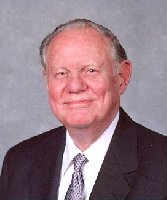
Contemporaries described Charles Wellborn, who died Oct. 1 at age 86 as one of the best and most prophetic preachers of his generation.

After graduating from seminary Wellborn served 10 years as pastor of Seventh & James Baptist Church, adjacent to the Baylor University Campus in Waco, Texas. After the congregation voted to open its membership to people of all "races and colors" in 1958, the young pastor received threatening phone calls and a cross was burned on the lawn of the parsonage.

Wellborn left Seventh & James in 1961 to begin doctoral studies at Duke University, where he received his Ph.D. in 1964. He taught at the Baptist-affiliated Baylor — his alma mater — and Campbell College in Buies Creek, N.C., until his marriage ended in divorce, effectively ending his preaching and teaching career in Southern Baptist ranks. He found a niche at Florida State University, first as chaplain to the university, then as professor of religion and finally as dean of FSU's British campus in London before his retirement in 1990.

Influenced by seminary professors including T.B. Maston, Southwestern's legendary professor of Christian ethics, Wellborn continued to speak to Southern Baptists through his writing. Over the years he wrote seven books, two plays and more than 100 articles in scholarly and popular journals.

He was a frequent contributor to Christian Ethics Today, an independent journal started in 1995. In 2003 Smyth & Helwys published a book of Wellborn's essays and sermons collected over 50 years under the title of one of his writings, Grits, Grace, and Goodness.

Wellborn was a member of Faith Baptist Church in Georgetown, Ky. His memorial service is scheduled there at 1 p.m. on Oct. 10. Visitation before the service begins at noon. Burial will be in Texas at Waco Memorial Park. Memorial gifts are suggested to the Charles T. Wellborn Endowed Lecture Series account at Florida State's religion department. 


–Bob Allen is senior writer for Associated Baptist Press.


White House concerned about spreading flu in churches

WASHINGTON (RNS)—The White House and federal health officials have released guidelines recommending that worshippers take precautions against spreading germs to reduce the risk of contracting swine flu.

The guide, released by the White House Office for Faith-based and Neighborhood Partnerships and the Department of Health and Human Services, suggests that houses of worship encourage congregants to wash their hands often, use hand sanitizer, avoid crowded situations and interact without physical contact when possible.

It also urges religious leaders to keep in contact with local health organizations and closely adhere to their recommendations.
Joshua DuBois, the director of the faith-based office, said in a news release that faith leaders have significant power to help spread the word on how to stay healthy.

The National Association of Evangelicals e-mailed its member congregations to suggest preparations for flu season by following the White House guide, which can be found online at www.flu.gov.


Court turns away attempt to force ‘Choose Life’ plates on Illinois

WASHINGTON (ABP) — On the opening day of their 2009-2010 term Oct. 5, the justices of the Supreme Court turned away an anti-abortion group’s attempt to force Illinois to offer special license plates that support the pro-life cause.

The court declined, without comment, to hear arguments in Choose Life Illinois v. White. Choose Life Illinois, Inc., had appealed a decision by the 7th U.S. Circuit Court of Appeals upholding the state’s right to refuse to wade into the abortion controversy in its specialty license-plate offerings.

State officials had refused to offer the plates despite being presented a petition by supporters of the effort — and even though other appeals courts have upheld similar programs elsewhere in the country. So far, according to Choose Life, 24 other states have approved such specialty license plates. Fees for the plates would have gone to support adoption services.

Attorneys for Choose Life sued the state, arguing that Illinois motorists had a First Amendment right to sport the message tags. The high court, however, has repeatedly refused to rule on other similar cases.

The Supreme Court also declined Oct. 5 to hear a case involving the increasingly heated dispute over whether congregations are allowed to keep their buildings when they leave a parent denomination that has ultimate control over the property. The justices also did not comment in their decision to turn away an appeal in Rector of St. James Parish, et al., v. Los Angeles Episcopal Diocese.

Such disputes have been cropping up in state courts in recent years as conservative parishes have begun disassociating themselves from the Episcopal Church USA in a dispute over homosexuality and other doctrinal matters.


–Robert Marus is managing editor and Washington bureau chief for Associated Baptist Press.


Critics question Obama’s commitment to international religious freedom

WASHINGTON (RNS)—When the Dalai Lama came to Washington two years ago, he was feted with the nation's highest civilian honor, the Congressional Gold Medal, as President George W. Bush and a bipartisan delegation looked on.

But as the exiled Tibetan leader returns for another visit to the nation's capital this week, there is a White House-sized hole in his itinerary.

President Obama will not meet with the Dalai Lama, breaking a precedent that dates to President George H.W. Bush in 1991. Obama will not convene with the famed Buddhist monk until after the president returns from a summit in Beijing in November, the administration has said.

dalai lma

Tenzin Gyatso, the fourteenth and current Dalai Lama, is the leader of the exiled Tibetan government in India. He was awarded the Nobel Peace Prize in 1989. (Photo/ Luca Galuzzi – www.galuzzi.it)

The perceived snub has angered human rights advocates, who say it reflects an early pattern in Obama's foreign policy to sideline religious freedom in favor of other issues like trade and climate change.

“Not only does (Obama) risk saying that, he comes very close to saying it outright,” said Thomas Farr, who was director of the State Department's Office of International Religious Freedom from 1999-2003.

“They do seem to be saying that religious freedom is important—but not as important as these other issues, and I think that is a serious error.”

The Chinese government is severely critical of the Dalai Lama, who was awarded the Nobel Peace Prize in 1989, calling him a “splittist” who aims to undermine Beijing's control of Tibet. They also discourage heads of state from meeting with the Dalai Lama, who says he is seeking more autonomy for Tibetans—not a split from China.

Rep. Frank Wolf, R-Va., co-chair of Congress' Human Rights Commission , which held a hearing on China on Sept. 29, called Obama's decision not to meet with the Dalai Lama “an embarrassment.”
    
“Whenever you sell a global religious leader out for an export deal, that's very bad. Economics should not trump human rights. You can do them both together and do them respectfully,” Wolf said in an interview.

Farr, too, said not meeting with the Dalai Lama sends a “very, very bad message” that the U.S. is willing to back down on religious freedom.
    
Though Obama has drawn praise for talking about the importance of religious rights— most notably in a speech in Cairo last June—critics say his policies do not match his rhetoric.

“It got some lines in the Cairo speech, but we haven't seen any pressing on the issue so far,” said Michael Cromartie, a member of the U.S. Commission on Religious Freedom , an independent, bipartisan panel created by Congress in 1998. “Snubbing the Dalai Lama is another indication of that.”
    
In May, the USCIRF issued a stinging rebuke of the Chinese government, saying it “engages in systematic and egregious violations of the freedom of religion or belief.” The report also said that “in Tibetan Buddhist areas, religious freedom conditions may be worse now than at any time since the Commission's inception.”
    
The U.S. State Department has also criticized China, labeling it a “country of particular concern” not only for its treatment of Tibetan Buddhists, but also of Muslim Uighurs, Christian house churches, and Falun Gong practitioners.
    
But Secretary of State Hillary Clinton has seemed to downplay disagreements with China over religious freedom, saying last February such issues “can't interfere” with efforts to broker deals on climate change, security and trade.

Moreover, the White House has begun to engage regimes in Sudan, Myanmar and Cuba that have spotty human rights records; failed to criticize abuses in Iran and Egypt; and left vacant the post of ambassador-at-large for religious freedom.

“If this administration has a considered approach to these issues, we're all waiting to hear it,” said Sophie Richardson, Asia advocacy director for Human Rights Watch. “Until they make their intentions, tactics, and priorities clear, it's very hard not to conclude that these guys are not going to do a great deal on the issue of human rights in China.”

The Obama administration refused repeated request for comment about its policies on religious freedom or the Dalai Lama's visit to Washington.
    
Senior White House Advisor Valerie Jarrett and a State Department official met last month with the Dalai Lama in Dharamsala, India, the seat of the Tibetan government-in-exile. In a statement after the meeting, the Dalai Lama's office said Jarrett “reiterated President Obama's commitment to support the Tibetan people in protecting their distinct religious, linguistic, and cultural heritage and securing respect for their human rights and civil liberties.”
    
Mary Beth Markey, vice president for advocacy at the International Campaign for Tibet , said the Dalai Lama had a role in the decision not to meet with Obama in Washington. For years, she said, presidents have been meeting with the exiled Buddhist leader, but China hasn't budged.

In fact, the situation in Tibet has worsened.

“My true sense is that the decision was based on switching things up,” Markey said. “And if the Chinese appreciate the gesture of postponing or not engaging the Dalai Lama before the president goes to China, maybe that's a better first step.”


Global Baptists responding to Pacific Rim disasters

FALLS CHURCH, Va. (ABP) — Baptist relief agencies worked on several fronts to respond to humanitarian needs created by a series of tsunamis, earthquakes and tropical storms in Southeast Asia and the Pacific islands.

Paul Montacute, director of Baptist World Aid, said Baptists around the world are praying for disaster victims, but prayers alone aren't enough. "We need your financial giving," the head of the relief-and-development arm of the Baptist World Alliance appealed in a news release.

Montacute said New Zealand Baptists are working through links they have with a network of Baptist churches in American Samoa, which is part of the Southern Baptist Convention-affiliated Hawaii Pacific Baptist Convention. At least 169 people in Samoa died in massive destruction caused by an earthquake and tsunami that struck the South Pacific island and other nearby islands Sept. 29.

In the Philippines, which was bracing Oct. 2 for its second major typhoon in less than a week, local churches provided shelter and relief. Record rainfall killed at least 293 people in the country Sept. 26. A second storm, Typhoon Parma, was expected to hit the island's northeast coast Oct. 3, packing winds of up to 120 miles per hour.

A team of three North Carolina volunteers, including one doctor and two EMTs, left for the Philippines Oct. 1 at invitation of Hungarian Baptist Aid. The team plans to work in cooperation with Baptist volunteers from Hungary and the Philippines' Luzon Baptist Convention. Montacute said it will take "many months" for people there to rebuild.

Field personnel of the Cooperative Baptist Fellowship left Oct. 2 for the Indonesian island of Sumatra to deliver supplies and offer help to victims of Sept. 30 and Oct. 1 earthquakes that left more than 1,100 dead. Rescue workers from BWAid also headed toward the region.

Montacute said Baptists in the area are trained and prepared to respond, primarily because of previous experience following the 2004 Indian Ocean tsunami, the deadliest in recorded history.

Local Baptist relief efforts are being supported by a second international BWAid Rescue Team headed for the Indonesian city of Padang from Hungary and Germany. The 12-member team includes technical rescuers, dog handlers and doctors. They will work alongside a second three-member search-and-rescue team from North Carolina Baptist men, also deployed Oct. 1.

Officials expect Indonesia's death toll to rise, as rescuers continue to search for survivors amid rubble.

Montacute and Bela Szilagyi of Hungarian Baptist Aid have taken the lead in coordinating Baptist relief efforts, joining with other Baptist leaders around the world.

Directions for designating donations for Pacific Rim disaster relief are available at the Baptist World Alliance website.


–Bob Allen is senior writer for Associated Baptist Press.


Christians embrace holistic ministry to make impact on poverty

WACO—Rather than responding to the needs of poor people by simply offering short-term relief, sponsors of the No Need Among You Conference challenged participants to move toward a biblical approach of holistic ministry with the poor. 

Jimmy Dorrell, executive director of Mission Waco, celebrates with Darlene, a woman whom the ministry serves, as she holds up a coin she received at an Alcoholics Anonymous meeting earlier that day. Darlene received the coin because she has remained sober 95 days.

The three-day conference at Baylor University focused on helping churches and individuals become aware of and engaged in holistic community ministry that helps and empowers people caught in poverty, suffering from mental illness and victimized by human trafficking.

“The Lord comes not only to save us for a relationship with him. He also is concerned with our whole person,” said Gerald Davis, community development director at the Baptist General Convention of Texas.

“He’s concerned about us entirely—concerned about our health, how we love one another, where we live and how we are making a difference for his name’s sake. All of that is wrapped up into being saved and being in a right relationship with God.”

The conference provided an opportunity for people to examine what it means to be marginalized and look at other issues related to poverty within a biblical context—issues that often aren’t discussed in a local body of believers, said Jimmy Dorrell, executive director of Mission Waco and pastor of Church Under the Bridge.

Participants pray at the conference.

“It’s about being prophetic in a culture that is losing its way without giving up your faith, but at the same time loving people,” Dorrell said.

“We consider ourselves biblical and trying to bring together the whole gospel again. This kind of conference is so fresh and encouraging for the evangelical community that they are learning again that you can’t just throw tracts in people’s faces and preach at them. Real love is always going to mean doing what the Good Samaritan did. The whole gospel is loving people in their need.”

Until the early 1900s, the American church had a social consciousness and a holistic approach to ministry, Dorrell said. The Great Reversal occurred when conservative and liberal churches became polarized over their response to the Social Gospel. Social justice became associated with the liberal church in a way that essentially scared the conservative church into underplaying ministry and strongly emphasizing evangelism in reaction. 

“The gospel has always been holistic. Evangelism and social action go together,” Dorrell said. “When you move more into a kingdom-of-God theology, you learn that God not only cares about us individually, but he also cares about the systems that he put in place so the children do get education and people don’t go hungry. Then, we realize those are tainted with sin, and we can fight for social justice. That isn’t liberal thinking, but it’s basic Christian stuff.”

Kathy Flowers (right), a member of Antioch Community Church in Waco, prays with a woman who attended the Friday morning homeless breakfast organized by Mission Waco.

To bring lasting change, the church needs to approach the poor on a holistic level, dealing with their problems, struggles and injustice that occurs on the physical, mental and spiritual levels, Dorrell said.

Keynote speaker Ray Rivera, director of Latino Pastoral Action Center in the Bronx, believes holistic ministry cannot begin until a church or individual receives a transcendent vision from God that will bring people out of their captivity.

“You have to see beyond the reality,” Rivera said. “A transcendent vision is one that transcends space and time and points us to the kingdom of God. It speaks a word that’s relevant to the situation and is impacting.”

Holistic ministry must have prophetic integrity and be incarnational, just as Jesus was when he came to earth, Rivera added. This allows the church to be part of a community so Christ can touch and transform people through them.  

“From a prophetic perspective, there are things that we can’t compromise on even when it’s not popular,” he said. “Sometimes as Chris-tians, we can’t bow, no matter what the institutional church or culture says.”
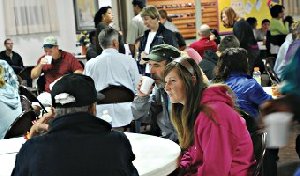
Breakfast at the No Need Among You conference.

For Matthew Stanford, professor and graduate program director of psychology at Baylor University and author of Grace for the Afflicted, the conference provided a way to encourage the church to address mental illness and pastors to realize the position of influence and ministry they hold. 

“Psychologists have known for 50 years that someone with a mental disorder is more likely to go to a pastor or clergy than a doctor,” Stanford said. “Part of this is accessibility. If you cannot afford the help you need, you will go to the highest-trained person around, and that is usually a pastor.

“Religious social support has been shown to help an individual recover quickly and effectively. When they have a system of family and friends to help them during the process, they recover more quickly and effectively.”

Once a church or individual has moved toward holistic ministry, the approach and mindset must be examined if it is to be put into place successfully, said Scott Talley, community minister at Crestview Church of Christ in Waco.

Often, people attempt to help the poor with a middle-class approach and expect them to respond positively and effectively, even though they know little about the hidden rules of middle-class society, Talley said.
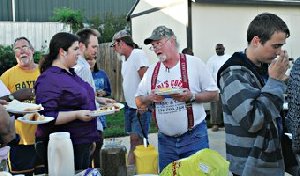
To bring lasting change, the church needs to approach the poor on a holistic level, speakers said.

“Those of us in the middle class attempt to help, but we do it in our middle-class method,” Talley said during a presentation of the Ruby Payne’s Bridges Out of Poverty training.

“We can’t talk to people in poverty with this mindset. We need to understand each other enough to know what motivates people. It’s not about embracing the differences, but understanding them so that we can help.”

The training identifies hidden societal rules and key ideas about money, time, possessions and power among those in wealth, middle class and poverty. Once these are learned, ministry volunteers can approach those in poverty in a way that will help and motivate them to choose to better their situation.

“Hidden rules aren’t a matter of identity but choice,” he said. “We try to tell people in poverty how to fix their problems without even inviting them to take part and share what they think needs to happen. Knowledge of the hidden rules leads to access, and access leads to power” to change.

As churches and individuals begin to embody this holistic gospel theology, results will look different, Rivera said. It can be a long journey, he said, but Christians should be encouraged in knowing that God is faithful as people are obedient. 

“Holistic ministry isn’t a call to success but to faithfulness, because you don’t define success by the world’s standards,” he said.

To immediately put teachings from the conference into practice, some participants served at a homeless breakfast, and others attended a cookout at My Brother’s Keeper, a shelter run by Mission Waco.

Twelve students from the Baptist University of the Americas also attended Poverty Simulation, a weekend where participants become homeless to understand the issues driving poverty as they gain a first-hand glimpse of what it is like to be poor.


Hospital serves up gospel tray liners along with food

BEAUMONT—Baptist Hospital of Southeast Texas is serving hope to people who eat in its facilities.

As part of its participation in Texas Hope 2010, the hospital is using 15,000 tray liners that encourage Christians to pray for people around them, care for those in need and share the gospel—the three pillars of the Baptist General Convention of Texas initiative aimed at sharing the hope of Christ with every Texan by Easter 2010.

David Cross, director of the hospital’s chaplaincy department, said he hopes the liners not only inspire Christians, but also catch the eye of nonbelievers, creating avenues through which the gospel can be shared or lowering barriers so others can share the hope of Christ.

“This is a way to emphasize the concepts of praying, caring and sharing,” he said. “We intend for it to heighten the curiosity of patients or family members who might be standing there feeding a patient so when they are exposed to other materials such as a CD passed out in their neighborhood, a light bulb might go on that we are loving them by serving them.”

For more information about the Texas Hope 2010 initiative, visit www.texashope2010.com .


Church called pastor 60 years ago; he never heard God say, ‘Move’

PRAIRIE HILL—Some people search their entire lives for their purpose, but Fred Sain found his as a 20-year-old junior at Baylor University.

Called as pastor on Aug. 14, 1949, he has been the shepherd of the congregation of Prairie Hill Baptist Church 60 years. And that suits him just fine.

“In times gone by, I’ve had opportunities to leave—not many in recent years, but in the earlier years. But each time, I’ve felt this was the place the Lord wanted me, and I’ve stayed here because of that,” Sain said.

{youtube}NqIo9-7CeQQ&hl=en&fs=1&rel=0{/youtube}
Fred Sain has served 60 years as pastor of Prairie Hill Baptist Church, northeast of Waco.

God’s direction to stay was not through any great sign, he said, but rather through grace-filled encouragement.

“He makes you content in your service, and he motivates your service in this place. And he gives you love for the people that live here. I’ve sought to have a pastor’s heart, and I certainly have found that here,” he said.

“This church is like a family to me. When we have a death of one of our members, it’s like a member of the family.”

And over the course of his six decades as pastor, he has ministered to more than 500 people at their deaths, but he also has presided at a similar number of weddings.

By Church Clerk Carol Webb’s count, he has preached about 8,000 sermons and conducted 52 revivals. He also went to Russia in 1991 and 1992, preaching in Moscow, St. Petersburg, Kiev and Norsgard.

In 1994, the church paid for Sain and his wife, Sally, to tour the Holy Land, and Sain preached a sermon at the Sea of Galilee.

All of that is not what has made Webb love her pastor for the more than half century she has been a member of Prairie Hill.

“In 2001, I had a very serious surgery and almost died. I was home and ready to give up and die. He was down on his knees and saying, ‘Carol, you’re stronger than that,’ she recalled.

"This church is like a family to me"

“Somebody like that, who will be with you when you’re at your lowest and help you back up, he’s so special. Every time we need him, he’s right there. He’s 80 years old, but he’s right there.”

While Sain’s pastoral skills are loved, Webb said he also is a talented preacher.

“He’s such a wonderful pastor. He explains things to you. He’s such a wonderful teacher, you can’t help but learn,” she said.

The population of Prairie Hill—a Limestone County community northeast of Waco—has dwindled to the point where the Baptist church is the only congregation still meeting, so people of other denominations also come to hear Sain preach, Webb said.

The population decrease has had its impact on the church, Sain admits.

“When I came here, there was a farmer and his family on every 80 acres,” he recalled. He said one wealthy person came to town and bought 44,000 acres, so there are far fewer families living in the area.

When Sain came to Prairie Hill 60 years ago, about 100 people generally filled the pews. Now it’s about 35, with only about 15 attending Sunday school.

Still, he’s very pleased with his congregation’s faithfulness. The church’s Mary Hill Davis Offering for Texas Missions goal was $3,000, and he felt certain they would meet that. Also, 58 percent of the church budget goes to the Cooperative Program.

Many visitors were on hand for his anniversary celebration, but it was not a retirement party. He doesn’t feel any release from the call he received six decades ago.

“It’s just like the same way you go home. I don’t think I could ever feel comfortable attending another church and listen to another preacher,” he said with a chuckle.

“My life has been this place, and it’s been his purpose. It’s been a good life. If I could go back and look over it, I believe I’d do it all again.

“I feel like the Apostle Paul. His life was not one any of us could emulate, but when he finished, he said his mission was accomplished. That’s how I feel about mine. This is the mission the Lord gave me, and I’ve tried to be faithful to it.”


Port Arthur church shares transformational hope

PORT ARTHUR—In the 35 years since Procter Baptist Church was planted, people have come and gone. The neighborhood has changed. But the gospel continues to change lives.

In recent years, the community around the church has changed ethnically and socio-economically. Apartment complexes have sprung up. Children grew up and left, as did their parents. Now, a new generation of young people is moving into the area.

The changes have been challenging to the congregation, which saw attendance drop significantly over several years as a result of a variety of factors. The church kept fighting to share the hope of Christ with the people living near it.

Whether it’s been refugees from Hurricane Katrina, new residents in the apartment complexes or families in homes, the congregation is seeking to spread the gospel first by meeting people’s needs and building relationships.

Members of the church have given out free blankets, food, clothes and flu shots in an effort to connect with people in the community.

“There are a thousand ways to get to meet people,” Pastor Rick Erwin said. “If you offer them something, they will come.”

The congregation is seeing God’s kingdom expand as a result of his working through their efforts, Erwin said. The church has baptized 28 people in the past few months. Sunday school attendance has increased from about 110 people a week to roughly 150.

“We’ve had whole families that we’ve baptized,” Erwin said. “We had two professions of faith yesterday.”

The church hopes the growth is only the beginning. As part of its participation in Texas Hope 2010—an initiative to share the gospel with every person in Texas by Easter 2010—the congregation is trying to share the hope of Christ with the nearly 7,000 who live within one mile of its facilities by next Easter.

The church hopes to pass out 3,000 bags filled with information about the congregation and gospel tracts to the community.

“Most of all, it’s building personal relationships,” Erwin said. “It’s meeting your neighbors, getting to know them.”

Through those relationships, Erwin prays that people will be connected to the transformational message of Christ.

“This is our goal’—that we will see our sanctuary filled twice Easter Sunday morning—not with just people visiting once, but with people we’ve met, we’ve gotten to know and we’ve built a relationship with,” he said.


BGCT forms Center for Effective Leadership

DALLAS—The Baptist General Convention of Texas has formed the Center for Effective Leadership to provide resources for pastors and other congregational leaders to develop leadership skills and practices. 

The center will help Texas Baptists develop leadership skills that will help congregations thrive, making an impact on their communities and the world, BGCT Executive Director Randel Everett said.

“The key to church and institutional health is the right kind of leadership. The Cen-ter for Effective Leadership was created to allow us to deal with this essential principle in pragmatic ways that provide tools and evaluations for our Texas Baptist leaders,” he said.

The center aims to help Texas Baptists increase their leadership abilities by pointing them to resources that are strong theologically as well as practically useful. Sometimes that will entail pointing individuals to existing resources.  Other times, the center will create resources by bringing Texas Baptists together who are passionate about a particular leadership issue, Center Director Ron Herring said.

By bringing Texas Baptists together, the center can create contextually accurate resources that provide the theological foundation for leadership, as well as practical leadership skills that will work in Texas Baptist churches.

“We want to assist churches and church leaders right where they are,” Herring said. “The resources we point people to and the resources we will create will help people better develop their leadership skills.”

The center is beginning its work by seeking feedback from Texas Baptists about where they find their leadership resources and what they would like to see created.

Listening is often the first step in effective church leadership, said Emily Prevost, the center’s associate director. It seems to be a logical point for starting the center’s ministry as well.

“If you walk in saying you have all the answers, you’re going to fail,” she said.

“In order to create significant solutions for leadership issues across the state, we need to make sure we’re addressing issues that actually exist. From that point, we can begin to bring people together to tackle the problems that Texas Baptists believe are most critical.”

In creating the center, Bivocational Specialist Cecil Deadman and Pastorless Church Consultant Karl Fickling were moved to the BGCT Christian Education/ Discipleship Center. Bill Claiborne, who primarily worked with Texas.E-quip.net, became a congregational strategist. The position held by Julie Sadler will be eliminated Oct. 31 as part of this strategic change.

The center’s budget will consist of limited BGCT cooperative funds and is intended to become self-supporting within a few years.


Austin ministry to internationals marks 40 years

AUSTIN—Friendship International recently celebrated 40 years of service to women from all over the world—and making friends for Jesus.

Women meet weekly to learn American cooking, citizenship requirements and procedures, computer and other technological skills, creative writing, jewelry making, cardmaking and crafts, a wide variety of needlework skills and English.

While they are learning new skills and making new friends, a childcare team supervises their children.

{youtube}iSeicG-rDHc&hl=en&fs=1&rel=0{/youtube}
Since 1969, Friendship International has been reaching out to women from all over the world.

Women from Iran, Turkey, Argentina, China, Japan, Iraq, Taiwan, Brazil, South Korea, Morocco, Peru, Mexico, India and France attended the first meeting of the year.

Women from 14 Austin churches volunteer to support the ministry that meets each week at Hyde Park Baptist Church, as it has for all four decades of the ministry.

“Getting to Know You” is the theme song of the group, and Director Virginia Kreimeyer said relationship-building has been one of the focuses of the group since its inception.

The group has its genesis in tragedy, she related.

In 1968, a doctoral student from India was pursuing his studies at The University of Texas, leaving his wife at home in their Austin apartment for long hours each day. One day, her loneliness reached its nadir. She walked to the Congress Avenue bridge over Interstate 35 and jumped, committing suicide.

In response, the Baptist Student Union director called a meeting of area pastors, telling them something had to be done to minister to the increasing number of internationals studying in Austin.

In 1969, Friendship International began reaching out to women from all over the world. The number of women varies from year to year and week to week, Kreimeyer said. There have been more than 500 women in attendance and as few as 80, but the number is not the important part, she said.

Virginia Kreimeyer directs Friendship International in Austin, where women of all ages from around the world find a place to belong. (PHOTOS/George Henson)

“We teach English, but we teach so many other things,” she said. “Mostly, we are a bridge to share Christ.”

Eddie Smith has been a part of the ministry almost since its inception. She has been meeting with women from all over the world 38 years. She has led the hospitality committee the last seven years.

“What got me here was living in another country and being that person who didn’t know the language, didn’t know the culture, didn’t have many friends. I had been that person living in another country,” Smith said.

“I feel like God has brought all these ladies to Austin, and if we can get to know them, the very first witness is as a friend.

“When the internationals come, some stay and some go back home. If we’ve planted the right seeds, they go back home with at least that seed of knowing who Christ is, and we don’t know what he’ll do with that. We don’t know how they will effect the people there.”

One of the former participants was known to have helped missionaries in Africa escape during a violent uprising.

The motivation to share Christ and change lives is what keeps the volunteers coming back year after year, Kreimeyer said.

“Our workers are some of the most faithful, committed women you can imagine. They are prepared—they don’t just show up. But most of all, they come ready to share friendship and the love of God with whoever is here,” she said.

Some women who were involved in the ministry have started similar ministries in the locations where they moved. Friendship International ministries have sprung up in Tyler, Houston and Kentucky.

“This is where the rubber meets the road,” Kreimeyer said. “You can be a missionary on Thursday morning and go home for lunch. I feel honored God has given me an opportunity to be a part.”


Students transform communities through Focus Hope weekends

Baptist Student Ministries across the state are directing attention toward meeting needs in their own communities during Focus Hope weekends.

The weekend events offer times of worship and discovery as students learn firsthand how to live out their calling through missions and evangelism, while making an impact on the world around them.

Students from the Stephen F. Austin BSM deliver Texas Hope 2010 multimedia gospel compact disks to apartments near campus during a Focus Hope weekend.

The events—scheduled in lieu of statewide or regional Focus events offered in recent years by the Baptist General Convention of Texas collegiate ministry team—are designed so each BSM group could minister to its own campus and city as part of Texas Hope 2010, a BGCT emphasis for Christians to pray for the lost, care for the hungry and hurting and share the gospel with every Texan by Easter Sunday 2010.

“When we sat down and planned the year, we knew God wanted something different,” said Joyce Ashcraft, a priority resource and regional coordinator for the BGCT Collegiate Ministry.

“We had long sensed a need as we looked at Focus, and we didn’t know what God had in store. At the time we started to ask those questions, Texas Hope 2010 was beginning, and it just seemed like a good fit to emphasize this for Focus.” 

Stephanie Gates, interim BSM director at the University of North Texas, noted her students joined with three other collegiate ministries to have a weekend of worship and ministry in the Dallas-Fort Worth area.

Jennifer Williams, a student at Amarillo College, hugs children at the ackyard Bible Club the Baptist Student Ministry at Amarillo College held in Eastridge, a low-income, multicultural neighborhood in Amarillo. Other members of the group painted a house, ministered at a widow’s banquet and hosted a missions awareness night as part of the BGCT Focus Hope collegiate weekends. (PHOTO/Justin Adams)

As the 60 students spent Saturday helping paint a house, working at a Habitat for Humanity store and delivering furniture to international students, many were stretched to become more vocal in sharing their faith, she said.

“I saw one of my students who worked at Habitat who said she was amazed at how easy it was to talk to people” about the gospel, Gates said. “Some of the students were able to talk to other volunteers who were there to work off prison hours. They asked why we were there, and we were able to explain we were there because Jesus loves them. It was neat to see them discover that it isn’t hard to have a spiritual conversation with someone.”

When rain thwarted block-party plans of the BSM at Texas A&M Kingsville, students delivered the block party door-to-door.

“God changed our plans,” said Mike Cervantes, director of the Texas A&M Kingsville BSM. “We went old-school and walked door-to-door, passing out hot dogs and sharing the message of Jesus. Before we knew it, we had kids praying through neighborhoods and sharing the message of the cross. One student noticed every home they went to had people who were critically ill in some way. They quickly began to realize it was not a coincidence, but they were all divine appointments.”

The Stephen F. Austin State University BSM joined three other schools to partner with local ministries in delivering multimedia gospel compact discs that provide the New Testament in more than 300 languages.

Stephanie Williams and Justin Barrett with the University of Texas at Dallas Baptist Student Ministry help paint the interior of a house during a Focus Hope weekend. The UTD BSM joined with three other BSMs for a weekend of worship and service during Sept. 11-13. (PHOTO/ Stephanie Gates)

“I hope that they just catch a sense of getting involved and not just being complacent and content just to go to class,” said BSM Director Gary Davis. “I hope they not only see the need from other organizations and the need to go and serve, but they see ways they can get involved, help out and not just be students, but be servants as well. I think that came across, and they are trying to do that.”

Other groups saw changes internally as community was built and students refocused their relationships with Christ. Taylor Davies, director of the Amarillo College BSM, said he saw this happen in his students.

“I think they put themselves in a place where they wanted to hear God’s call for missions in their lives,” Davies said.

“I know God spoke to several of them. There were two students who joined us who weren’t believers. As they spent time in community, I think God spoke to them and showed them his heart for them, and they since have become believers.”

Brittany Vargas, a sophomore biology major at Amarillo College and one of the students who began a relationship with Christ, said her decision to follow Christ and participate in Focus Hope was partly from BSM students and staff consistently loving her and showing her how they were in love with Christ.

“After I heard about Focus Hope, I told myself that I would go there with the intention of finding something that will give me enough strength to help be become a better person again,” Vargas said.

“It wasn’t until the whole thing was over and we went back the BSM and had a mission fair that I realized I did want to commit my life to Christ and become a better person. I’ve never in my life been so in love with Christ. They have rubbed off on me. I am really in a different place now.”

Twenty-two Focus Hope weekends have been completed, and another 12 are scheduled to take place by the beginning of November. As students participate in the remaining weekends, Ashcraft hopes to see students take what they learn and transplant it into their daily lives.

“I think our No. 1 hope is that people will be served—whether that is through helping a church care for elderly members through cleaning a yard or painting, or helping a church host a block party,” Ashcraft said.

“I want college students involved in ministry to Texas. I think sometimes missions is so seen as something that happens in another country and somewhere else.

“Whether we see ourselves as missionaries or not, we need to see our responsibility as right around us. And I think that these Focus Hope weekends help with that.”